Consumption and cognitive dissonance - lick cluster sizes
 Studied by 0 people
 Call with Kai
 Learn
Learn Practice Test
 Spaced Repetition
 Match
Match Flashcards
 Knowt Play
1/32

Earn XP
Description and Tags
Dominic Dwyre
Name | Mastery | Learn | Test | Matching | Spaced | Call with Kai |
|---|
No analytics yet
Send a link to your students to track their progress
33 Terms
What is the overall process of the research?
Looking into how consumption as a way of studying hedonics in rats could lead to an animal model of depression, with potential to help develop new treatments
for this, we need a sad rat
Background on the researcher
spent much of his career investigating emotions in other animals to understand emotions in humans
What is consumption and its link to hedonics
It is true for every species that if we didn’t eat, we would die
We eat things that we like and avoid things that we dislike - a lot of what we eat is determined by emotion
Hedonics is the study of pleasure and displeasure, so closely linked here
therefor consumption can be used as a way to assess an animal model of depression
what were the motivations for the research?
universal hedonic reactions
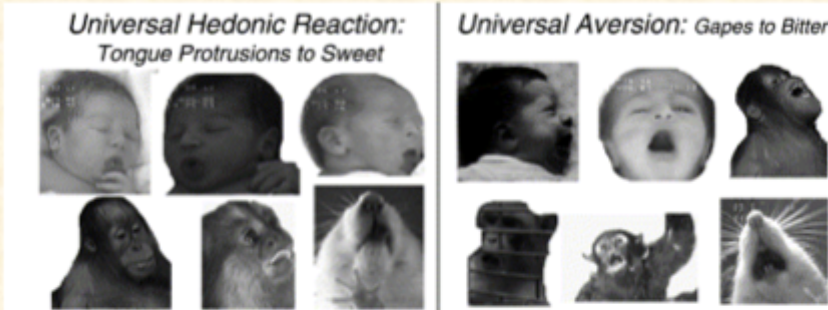
At a very basic level, facial expressions can be used to assess hedonics
If you give an infant sugar water, they will make a face of pleasure, and if you give them something bitter, they will make a face of displeasure
This is also true of animals such as rats
This method can be helpful in determining what they like and dislike, but practically difficult as rats move fast
may need to video their reaction and slow it down to truly see
This is not practical
however if you look at lick cluster sizes, this is far more practical
John Davis in 70s investigated this and found that the mean size of lick clusters is directly related to what the rats are drinking
This can be used as an assessment for an animal model of depression
Depression is a very common, and in severe cases, resistant illness that hasn’t had new drug treatments in years. One of the best ways to find a new development in the treatment of it is to find a good animal model
leon festinger’s work
How can licking be an indicator of hedonics in rats?
When a rat has the chance to drink, they will lick at it in a regular pattern
6-7 licks per second with regular intervals between them, separated by pauses
John Davis = low lick cluster sizes when they are drinking dilute sucrose and high lick cluster sizes when they are drinking concentrated sucrose
size of the licking cluster tells us something about what the rats do and don’t like
can be objectively measured
What is anhedonia and how can it display in rats?
struggling to find pleasure in something that was once enjoyable
This is a key symptom of depression
This is common in the WKY rats that were bred for control testing, but they seemed to be unhappy, and react very badly to stress = they could be a good model of human depression that would be really useful
they show an interaction between environmental and human factors, as they are stressed easily (environmental), and they are naturally anhedonic
Why is this an interesting problem?
Research into animal hedonics - specifically rats - can help us understand humans
however need to find ways that are practical and accurate in assessing
eg looking at rats ’s facial expressions and analysing them can take days
lick cluster sizes can be used in an objective manner to actually see what the rats do and don’t like
Specifically using this in WKY rats could be a really effective model of human depression
What is cognitive dissonance, and what were Leon Festinger’s insights into it?
a state of psychological discomfort that occurs when there is a conflict between a person’s attitudes and actions
We want to reduce this dissonance; however, it is hard to reduce it when you have already begun doing something
therefor LF decided that this can be resolved by changing attitudes
effort justification refers to people typically placing greater value on things they have worked hard for than on things that they get for free
Work hard to achieve something, and you will like it more if you just got it for free
LF stated it could be inconsistent to work hard for something that you don’t value, so instead people can just say that they do value it
Cognitive dissonance is reduced by people changing their views to be consistent with their actions
How can cognitive dissonance be observed in rats?
Festinger believed that it could be observed in rats, but it turned out that his lack of previous work with animals meant he was misinterpreting the rats’ behaviour.
Nick did not know that there was no cognitive dissonance in rats, but rather there is no evidence for this in rats
until dominic looked at the lick cluster sizes
What were the hypothesis?
large lick cluster sizes for high concentration (pleasure), low lick cluster sizes for low concentration (displeasure)
If lick cluster sizes were small in a high concentration of sucrose, that may be an example of anhedonia
What was the research design used to investigate consumption for an animal model of depression?
got a group of WKY rats and a group of other animals and subjected them to a minor stress procedure (eg. change their housing daily, leaving lights on, etc)
4 groups
2 of the WKY rats (one stressed and one not)
2 of the control groups (one stressed and one not)
after this got them to drink sucrose of different concentrations
What was the research design for investigating cognitive dissonance in rats?
In an unrelated experiment, rats were being taught to press a lever to receive sucrose
this difficulty was being increased over time (1 press = sucrose, 10 presses, 20 and so on)
It was observed that as the difficulty of the task to receive the reward was getting harder, the rats were increasing their lick cluster size
looks like effort justification
thought that this could just be the rat getting more used to the apparatus, but if that was true, a decrease in the effort that they were having to put in should not affect the increase in lick cluster sizes
repeated this a few times for reliability
however needed to check the effect of time, as more presses take longer, meaning they may just want it more after a longer period of time
So they took two high effort groups and two low effort groups, one of each still had to use the lever 10 or 50 times, depending on the group
and 1 of each did not have to use a level at all, but was rewarded at the same time as their corresponding group
What were the results of the cognitive dissonance in rats experiment?
When the difficulty of the task was dropped back, cluster sizes decreased, therefore giving evidence for effort justification and cognitive dissonance in rats
This was consistent across all the replications
very reliable study
There was a small effect of time, that is, the longer they had between rewards, the higher the lick cluster size, but generally, the amount of effort was more responsible
What were the conclusions of the cognitive dissonance in rats’ findings?
This may be an observation of cognitive dissonance in rats, however
it could be something simpler, such as contrast effects
the experience of the sucrose is based on what they have had before, eg if they go from 2% to 8%, it will taste great, but if they go from 15% to 8 it won’t
could also be a contrast in internal state and stimulus, if you feel really bad, something nice will make you feel good, but if you are feeling really good and get something that is pretty good, you may not feel much of an effect
working hard may put the animals in a negative state and makes a big contrast to the sucrose
There are two explanations
should note that the time should not affect dissonance but it does affect contrast, and a gap between effort and reward did affect the lick cluster sizes
Contrast is a better explanation
What are the strengths and weaknesses of the design used?
How was the data analysed and why?
counting of lick cluster sizes and then displaying these results in a bar chart
what were the results
Looking at consumption, all of the rats look pretty normal and similar, and drink more of the higher concentrations
The effect of stress suppresses consumption in both the WKY and control animals
then looking at lick cluster sizes - the normal animals behaved as expected, and higher lick cluster sizes for higher concentration
however WKY lick cluster sizes are not as large across the concentrations, despite being able to pick up on the difference in concentration
What conclusions came from those results?
The results were exactly what you would expect
Stress leads to less consumption across both groups
lick cluster sizes vary with concentration for both of the groups
and for the WKY group, the lick cluster sizes were smaller overall
concludes that this is exactly what we would expect from anhedonia - more evidence for a model of depression
We don’t see this anhedonia in consumption specifically (the WKY and the control drank the same amounts, but within the aspects of consumption you can see there is a significant difference in pleasure.
Did the results support the hypothesis?
they supported all of the hypothesis for the study showing a promising opportunity for an animal model of depression
Why are these findings interesting?
Interesting that cognitive dissonance does not exist in rats - just looked like it - therefore maybe we are getting this wrong with people too, it may actually be just a simpler explanation
people with amnesia, who cannot remember how hard they worked, still show effort justification - maybe there is an explanation in terms of contrast
Are there any consequences/real world applications of these results?
How was the finding received?
What could be done to extend this research?
looking at if a less valuable reward leads to more cognitive dissonance - AKA higher lick cluster sizes due to a greater inconsistency between attitude and behaviour
How does this study compare to previous ones?
 Note
Note  Flashcards (102)