Bio Honors Unit 9
 Call Kai
 Learn
Learn Practice Test
 Spaced Repetition
 Match
Match Flashcards
 Knowt Play
1/78

There's no tags or description
Looks like no tags are added yet.
Name | Mastery | Learn | Test | Matching | Spaced | Call with Kai |
|---|
No analytics yet
Send a link to your students to track their progress
79 Terms
Growth in multicellular organisms, Repair and regeneration of tissues/organs, Asexual repro in multicellular organisms , Asexual Reproduction of unicellular organisms
what is mitosis used for by organisms? (g,r,a,a)
prophase,metaphase, anaphase, telophase.
4 steps of mitosis? in order
interphase
which mitosis step: Nuclear membrane visible; no chromosomes present
prophase
which mitosis step: Nuclear membrane disappears, chromosomes appear
mitotic spindle begins to appear; centrioles on animals appear and migrate
towards poles of cell
metaphase
which mitosis step: Chromosomes in single line along equator of cell; mitotic spindle formed
anaphase
which mitosis step: Sister chromatids separate; migrate to poles of cell
telophase
Sister chromatids (now called individual chromosomes) clustered at poles
of cell; nuclear membrane begins to reform, mitotic spindle disappearing
cytokinesis
Cleavage furrow (animal) or cell plate (plant) visible; chromosomes
disappearing or invisible; nuclear membrane reformed
energetically cheap, fast
advantage of asexual reproduction:
lack of genetic diversity
disadvantages of asexual reproduction → ?
Produces two clones of the original cell
mitosis produces:
2 diploid (2N) somatic cells
mitosis produces: 1 diploid (2N) somatic cell ----->?
identical, point mutations
the two clone cells mitosis produces should be ____ except for ______ _____
crossing over, random fertilization of gametes, independent assortment
3 main ways sexual reproduction causes genetic variation :
cleavage furrow
_____ occurs during animal cell division, pinching the membrane inward using a contractile ring,
cell plate
____ occurs in plant cells, forming a new cell wall from the inside out to separate cells
synapsis
“crossing over” occurs during ____
synapsis
The process where homologous chromosomes pair up.
tetrads
Comprised of four chromatids (two homologous chromosomes, each with two sister chromatids)
crossing over, genetic variation, chromosome separation
tetrads facilitate ____ to create ____ and ensures correct ______ ______
tetrads, metaphase I
the homologous pairs (____) line up, with each chromosome facing opposite poles. - process of _____
random arrangement
significance of metaphase I of meiosis - ______ (e.g., paternal on left or right) means each daughter cell receives a unique mixture of maternal and paternal chromosomes.
anaphase I
Homologous pairs separate; whole chromosomes migrate to poles, Random distribution of maternal/paternal chromosomes to poles ensures “independent assortment” of genetic information
- ______ #_ of meiosis
telophase I
Chromosomes collected at poles; mitotic spindle disappears, Nuclear membrane reappears - ____ #_ of meiosis
cytokinesis I
Cleavage furrow/cell plate appears, cell divides into two - _____ #_ of meiosis
interkinesis
brief interphase between meiosis 1 and meiosis 2 is known as _____
chromosomes disappear
what happens during interkinesis ?
interphase
what is this plant cell going through
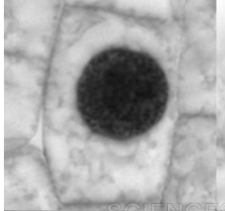
prophase
what is this plant cell going through? - mitosis
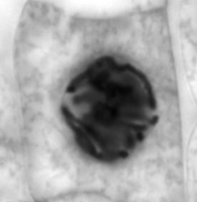
metaphase
what is this plant cell going through?
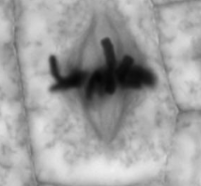
anaphase
what is this plant cell going through?
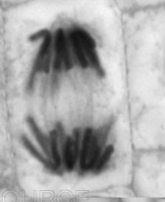
anaphase
what is this plant cell going through?
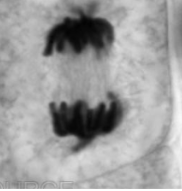
telophase
what is this plant cell going through?
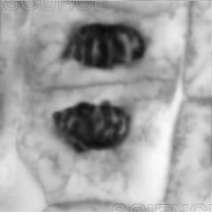
cytokinesis
what is this plant cell going through?
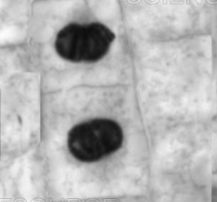
crossing over
- Exchange of genetic information between homologous chromosomes during meiosis
Spermatogenesis
the biological process of producing mature sperm cells (spermatozoa) from stem cells in the male testes, starting at puberty
oogenesis
the biological process of creating, developing, and maturing female gametes, or egg cells (ova), within the ovaries
fertilization
union of an egg and sperm
zygote
- result of fertilization; full set of genetic information
cytokinesis
Cleavage furrow/cell plate appears, cell membrane/cytoplasm splits - occurs 2 times in meiosis and once in mitosis
2
homologous chromosomes can line up in __ ways during metaphase of meiosis
interphase
Chromosomes are not visible -
Interphase
Prophase
Metaphase
Anaphase
Telophase
telophase
Two separate groups of chromosomes visible; cell plate/cleavage furrow appears?
Interphase
Prophase
Metaphase
Anaphase
Telophase
prophase
Nuclear membrane disappears; chromosomes appear -
Interphase
Prophase
Metaphase
Anaphase
Telophase
anaphase
Sister chromatids separate and begin to migrate to the poles of the cell
Interphase
Prophase
Metaphase
Anaphase
Telophase
metaphase
A single line of chromosomes are visible along the equator of the cell
Interphase
Prophase
Metaphase
Anaphase
Telophase
prophase
Centrioles begin to migrate to opposite poles as spindle fibers appear
Interphase
Prophase
Metaphase
Anaphase
Telophase
telophase
Chromosomes begin to disappear as two, new nuclear membranes appear
Interphase
Prophase
Metaphase
Anaphase
Telophase
Prophase I
Homologous chromosomes pair up (synapsis); tetrads observed
Telophase II
Nuclei in 4 haploid cells begin to reform around single stranded chromosomes
Metaphase I
Tetrads line up along the equator of the cell
Prophase I
Crossing over occurs
Metaphase II
Double stranded chromosomes line up along the center of the cell
Anaphase I
Homologous pairs of chromosomes are separated
Anaphase II
Chromatids of doubled chromosomes (sisters) are separated
telophase I
Nuclei reform around a haploid number of doubled chromosomes in
two new cells
prophase I
A diploid number of doubled chromosomes first become visible.
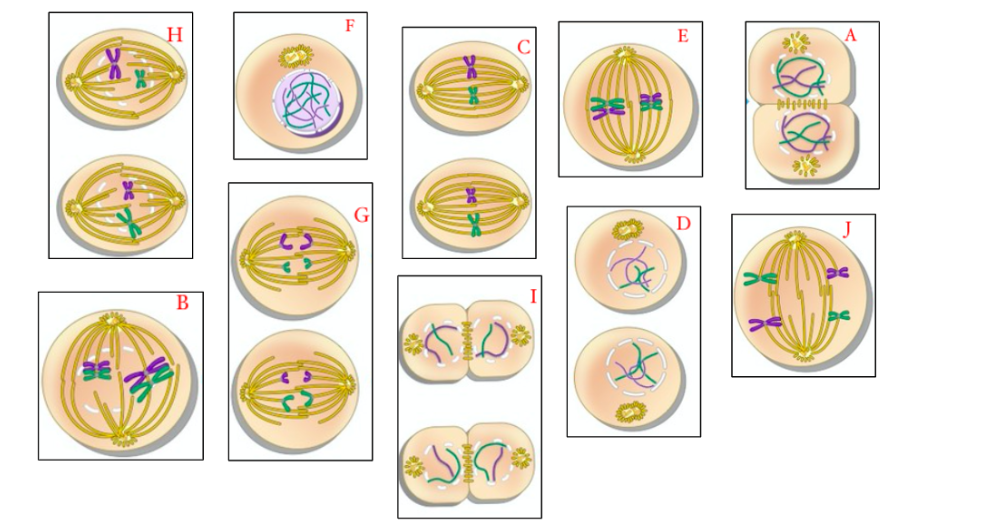
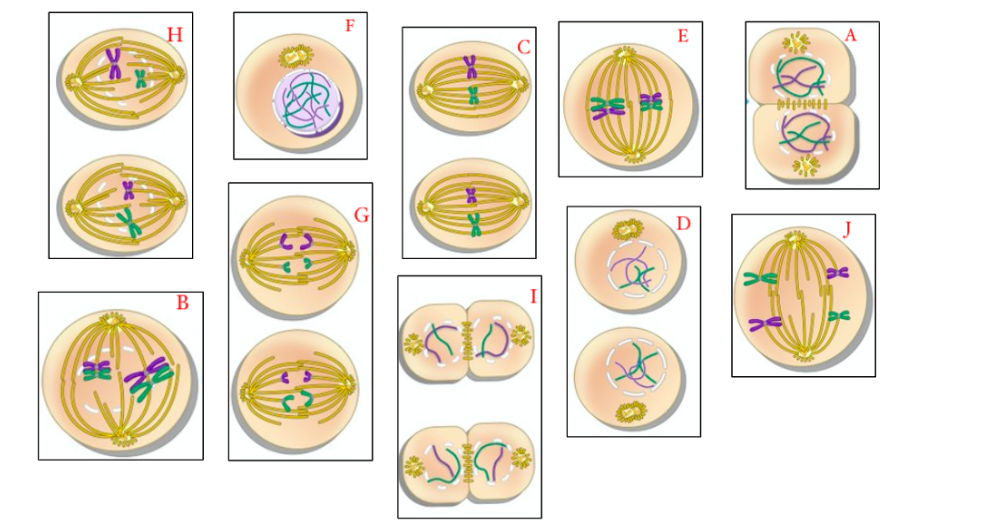
F
put these steps in order : first one
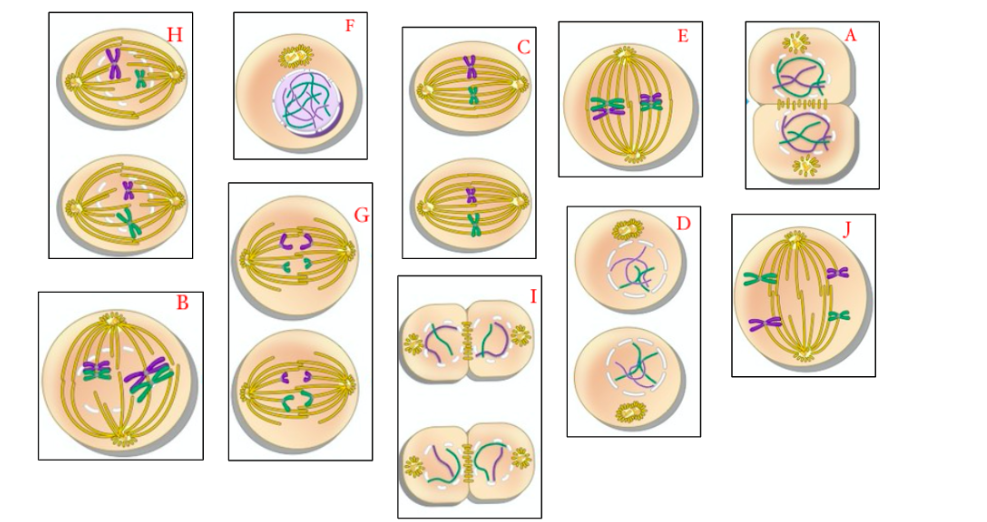
B
put these steps in order: 2nd one
I
put these steps in order: last one
chromatin
The relaxed, thread-like form of DNA complexed with proteins that exists during interphase, allowing transcription and replication to occur.
interphase
Centrosomes (microtubule-organizing centers containing centriole pairs) replicate - what stage
interphase
Preparation for Division
Prophase
Mitosis Begins
prometaphase
: Spindle-Chromosome Connection
metaphase
Chromosome Alignment
anaphase
Separation of Sister Chromatids
telophase
Nuclear Re-formation
cytokinesis
Physical Cell Division (Animal Cells)
polar microtubules
Overlapping microtubules pushing poles apa
kinetochore
Protein complex on centromere for microtubule attachment
centromere
Region linking sister chromatids
synapsis
The intimate physical pairing of homologous chromosomes that enables genetic exchange between non-sister chromatids.
homologous pairs, sister chromatids
In metaphase I, _______ align, and ______ remain attached — unlike mitosis where individual chromosomes (each with two chromatids) align with bipolar attachment.

