ACTIVITY 7.2 THE SHOOT SYSTEM OF PLANTS: THE LEAF
 Call Kai
 Learn
Learn Practice Test
 Spaced Repetition
 Match
Match Flashcards
 Knowt Play
1/28

There's no tags or description
Looks like no tags are added yet.
Name | Mastery | Learn | Test | Matching | Spaced | Call with Kai |
|---|
No analytics yet
Send a link to your students to track their progress
29 Terms
photosynthesis; transpiration
Leaves are shoot appendages of vascular plants that are typically green and flattened, primarily functioning for _____________ (through chloroplast-containing cells) and ___________ (through stomata).
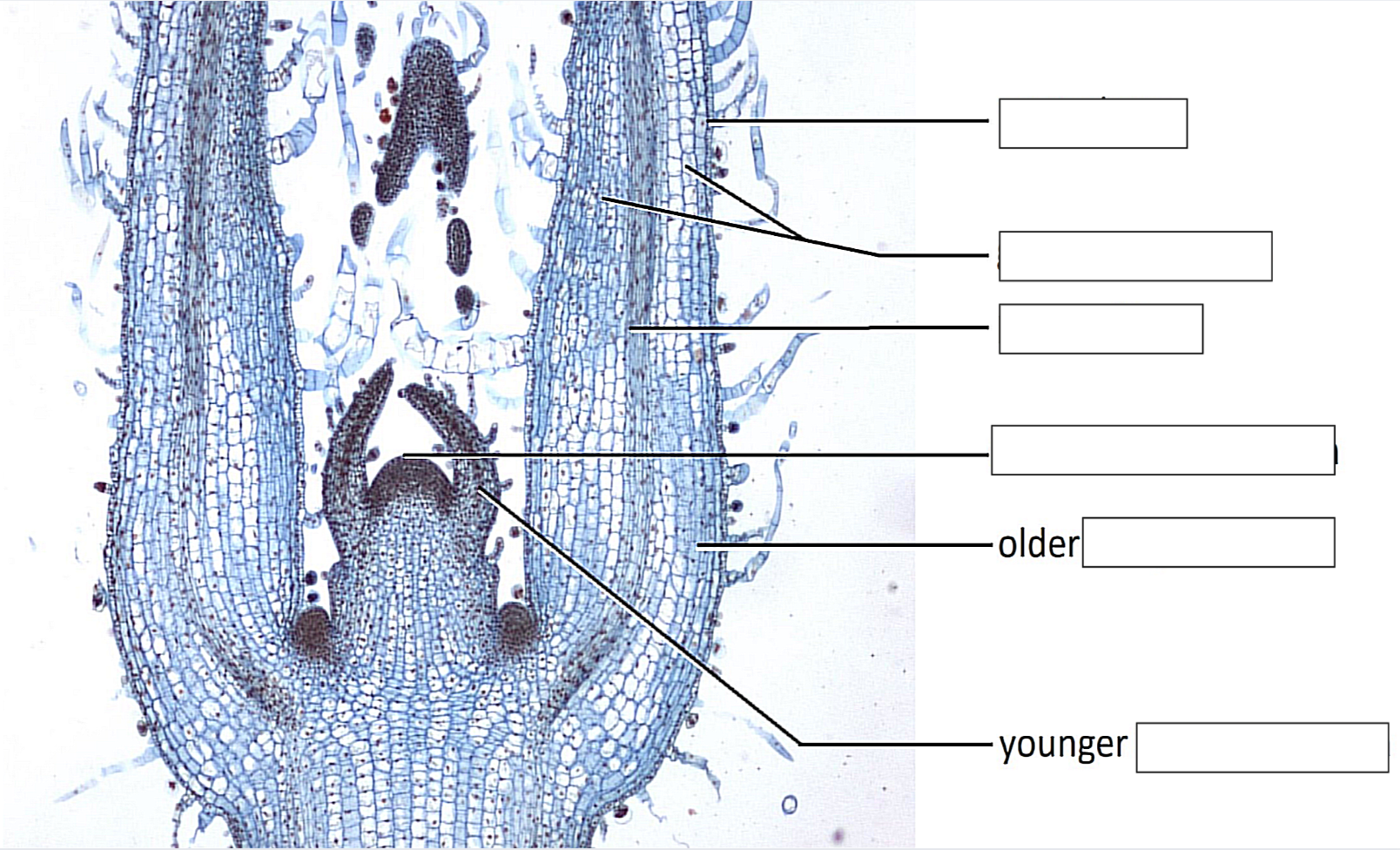
primordia; shoot apex
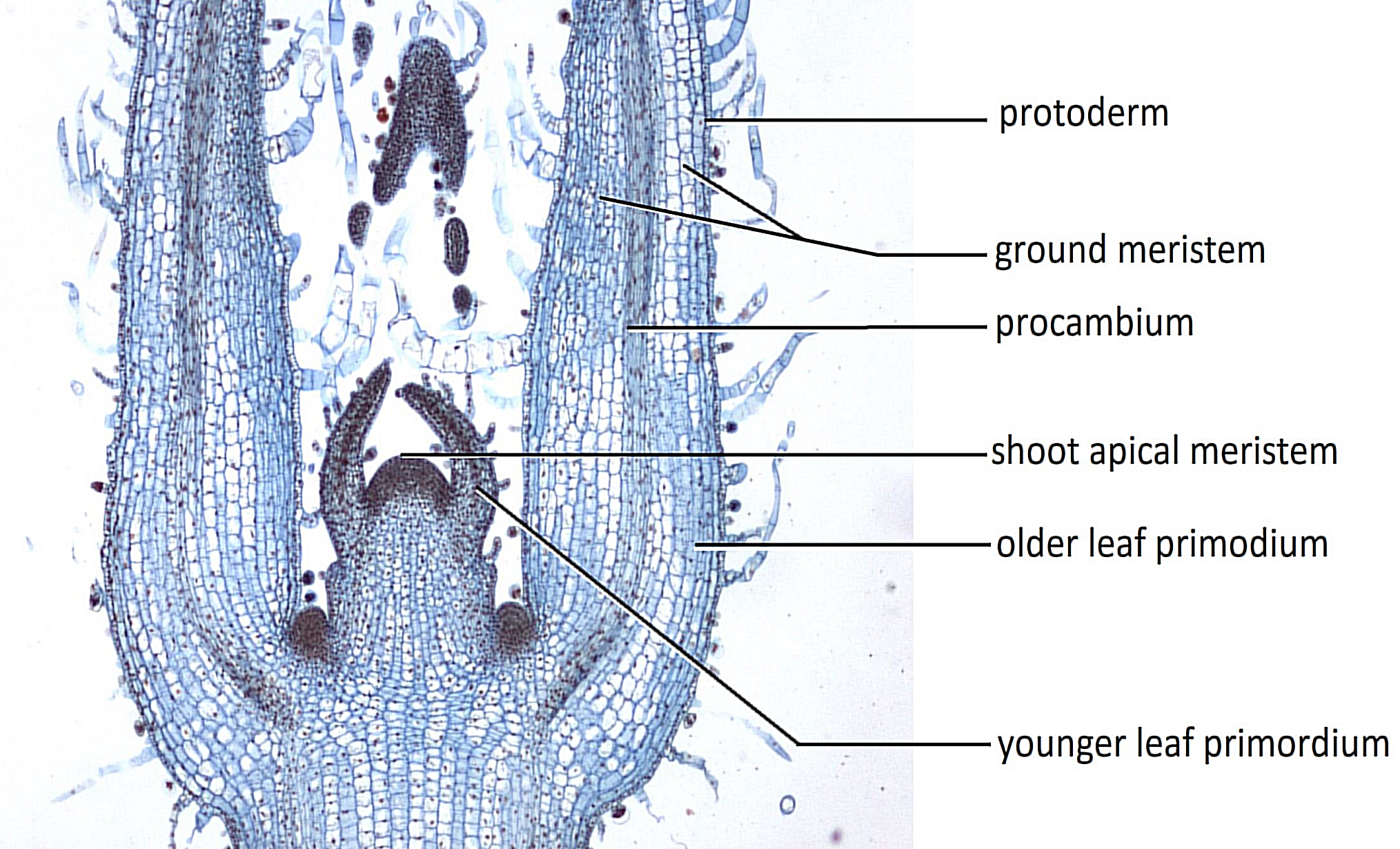
The leaf ____________ of the _____________ give rise to the leaves.
microphyllous; parenchymatous; megaphyllous
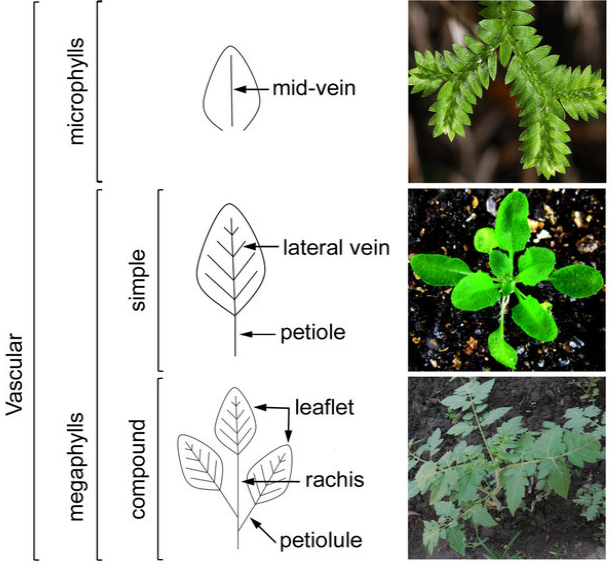
Leaves are either _____________, having a single vein connected to the stem without associated leaf gap (________________ tissue above the connection between the vascular tissues of stem and leaf), or ______________, having multiple veins and associated leaf gap.
primitive vascular
Microphyllous leaves is common among _________________ plants such as lycophytes while megaphyllous leaves is common among ferns and seed-bearing plants.
shape; arrangement along the stem; pattern of veins
Angiosperm leaves exhibit diversity in terms of morphological features. Plant taxonomists utilize various leaf characteristics such as _________, ________________________, and ___________ in classifying plants.
leaf blade; lamina
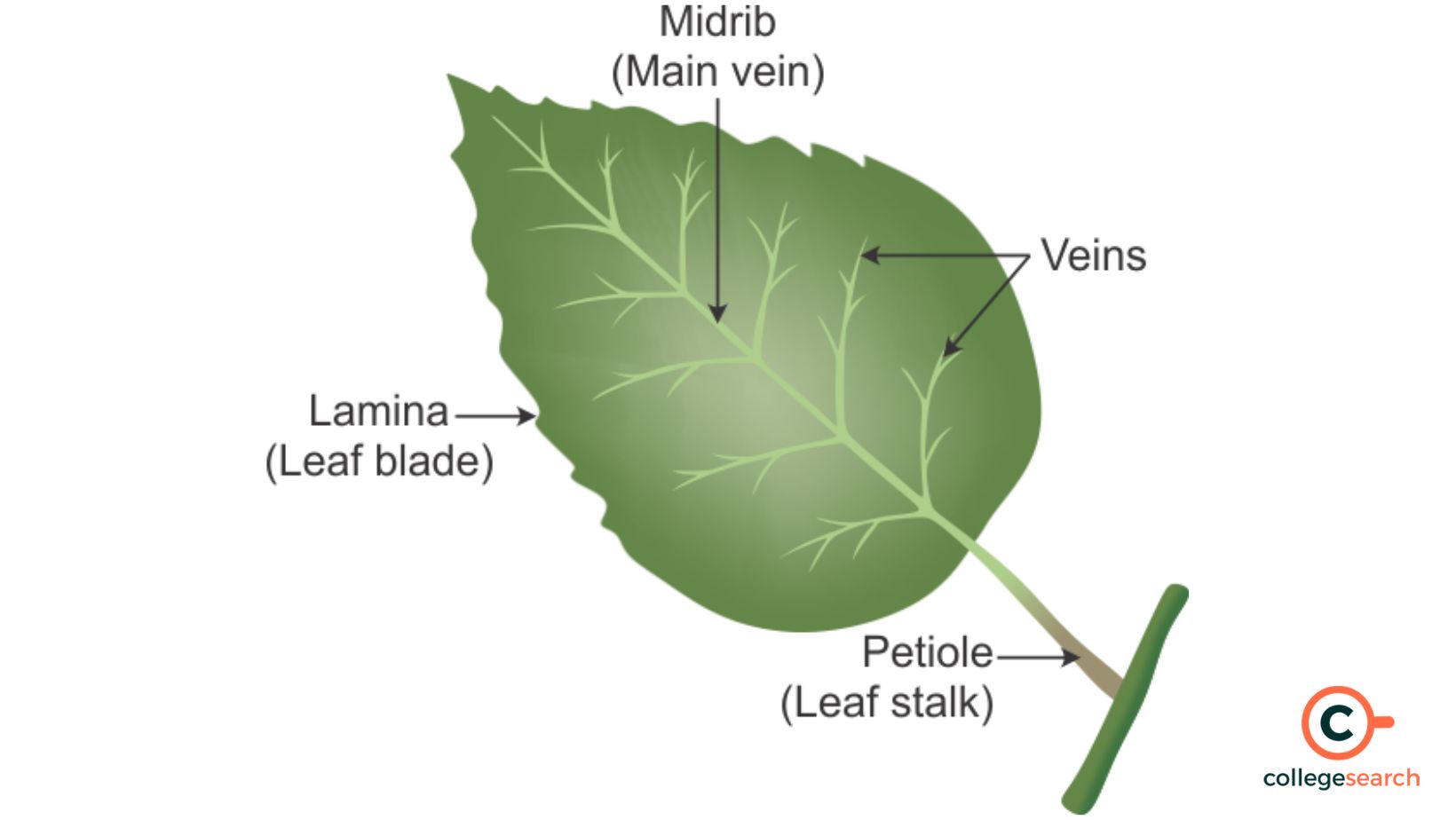
Examine a leaf of the dicot plant that you collected. The flat portion is the ____________ or ________.
apex; base; bifacial; unifacial
The end of the lamina farthest from its point of attachment is the _________ while the opposite end is the ________.
Observe the adaxial (upper) and abaxial (lower) sides of the lamina. If the two sides differ morphologically, the leaf is __________ or dorsiventral. Otherwise, it is ____________ or isobilateral.
midrib; petiolate; sessile
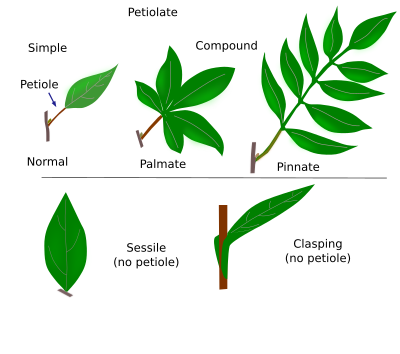
Notice the central vein of the leaf called the ___________. From the midrib, smaller veins are branching. The veins of the leaf contain the vascular tissues.
Most leaves are attached to the stem through a stem-like structure called petiole. Leaves that have petiole are described as ___________ while leaves that do not have it are ____________.
stipules; stipulate; exstipulate
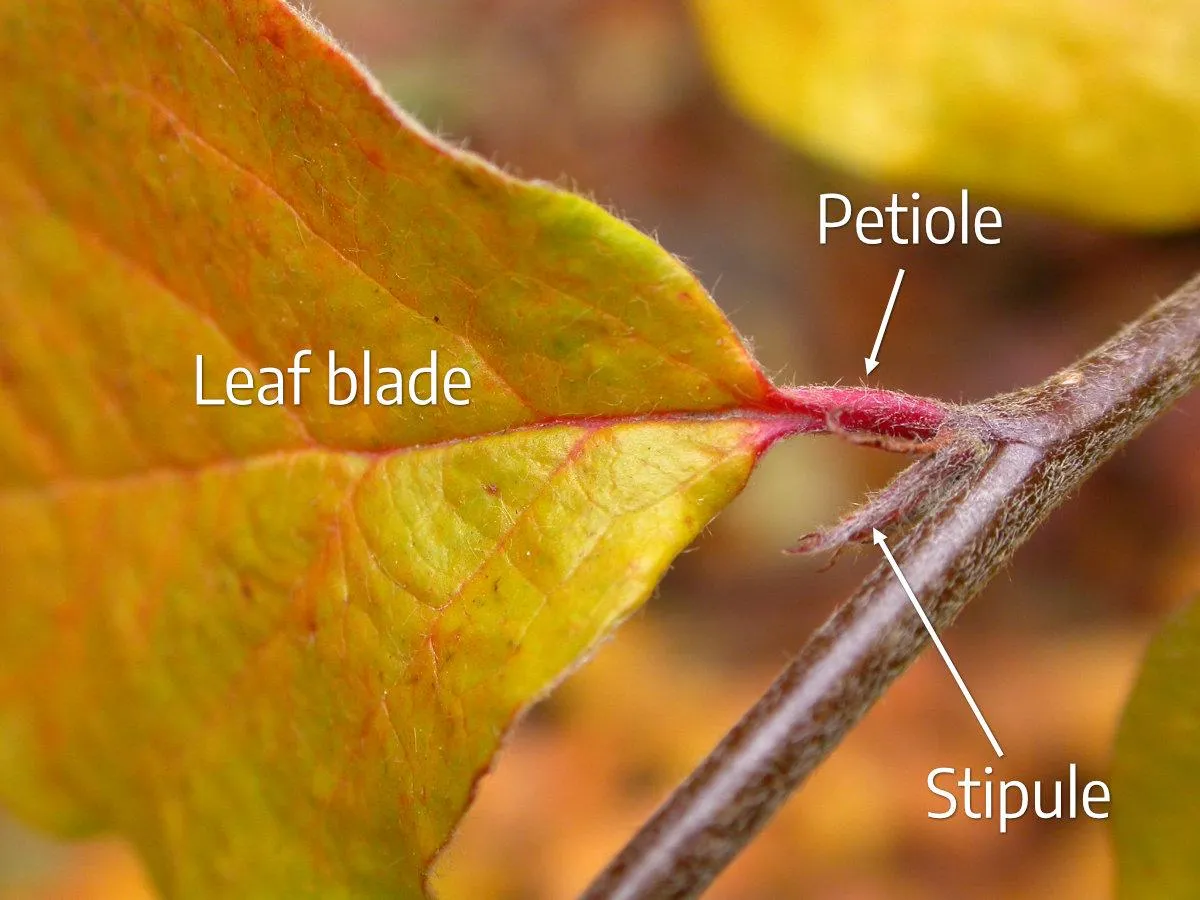
Some leaves have a pair of leaf-like appendages (which may be modified into spines or glands) called __________ at the base. If a leaf has stipules, it is ____________. Otherwise, it is _______________.
leaf sheath; ligules
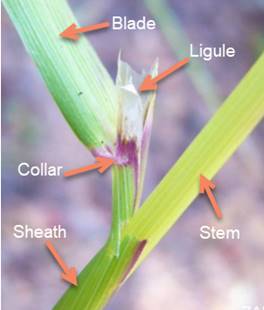
Recall the ________________ (a structure at the base that fully or partially wraps around the stem, above the node where the leaf is attached) from the previous activity. Detach this part from the stem. This part is common among monocots although it is also present in some dicots belonging to the carrot family. In some cases, the leaf sheath is connected to the petiole.
Find the outgrowths at the junction of the leaf sheath with the lamina. These outgrowths are called ____________ which are common among grasses and sedges.
venation; parallel; pinnately netted; palmately netted
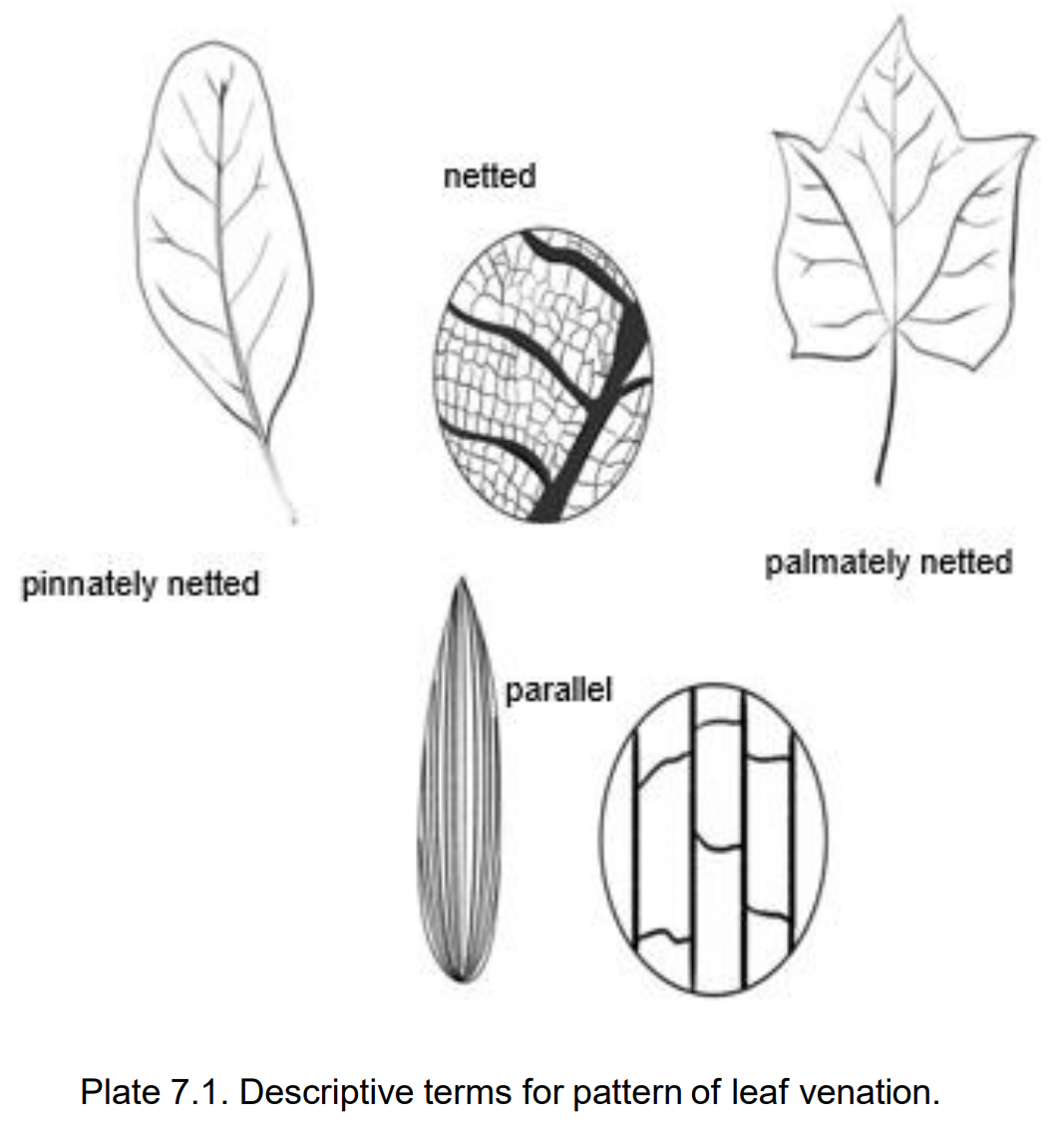
There are other criteria by which leaves can be described. One is pattern of ___________ (Plate 7.1). Some common descriptive terms for this include ______________ (primary and secondary veins are more or less parallel to one another) and (ultimate veinlets form a net-like pattern) which could be ________________ (secondary veins arise along the length of the midrib) or ____________ (at least three primary veins arise from a common point at the base of the lamina).
overall shape
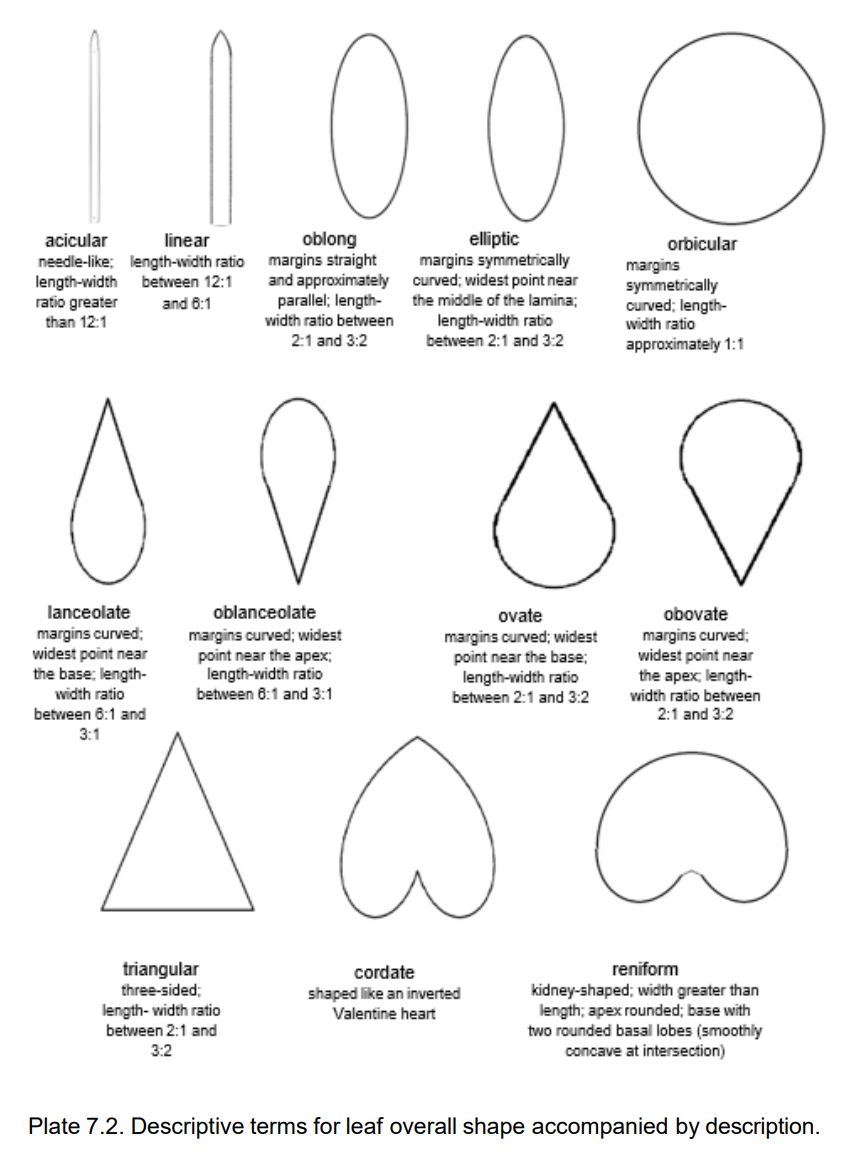
Another criterion by which leaves are characterized is ______________. This refers to the two-dimensional shape of the lamina. Some standardized descriptive terms for this are shown in Plate 7.2.
margin; division
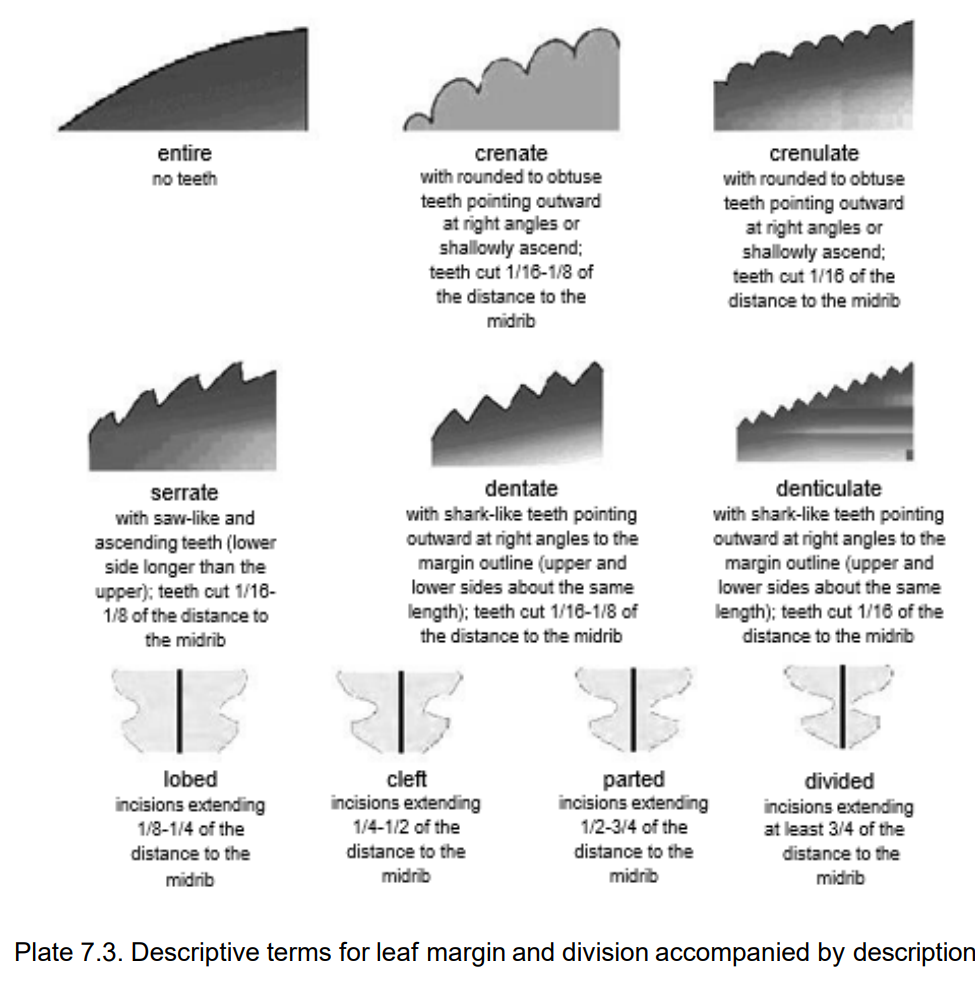
Leaves can also be described based on the ___________ and ___________. This refers to the sides of the lamina. Some standardized descriptive terms for these are shown in Plate 7.3
Leaves can also be characterized based on the apex and base shapes. Some standardized descriptive terms for these are shown in Plate 7.4.
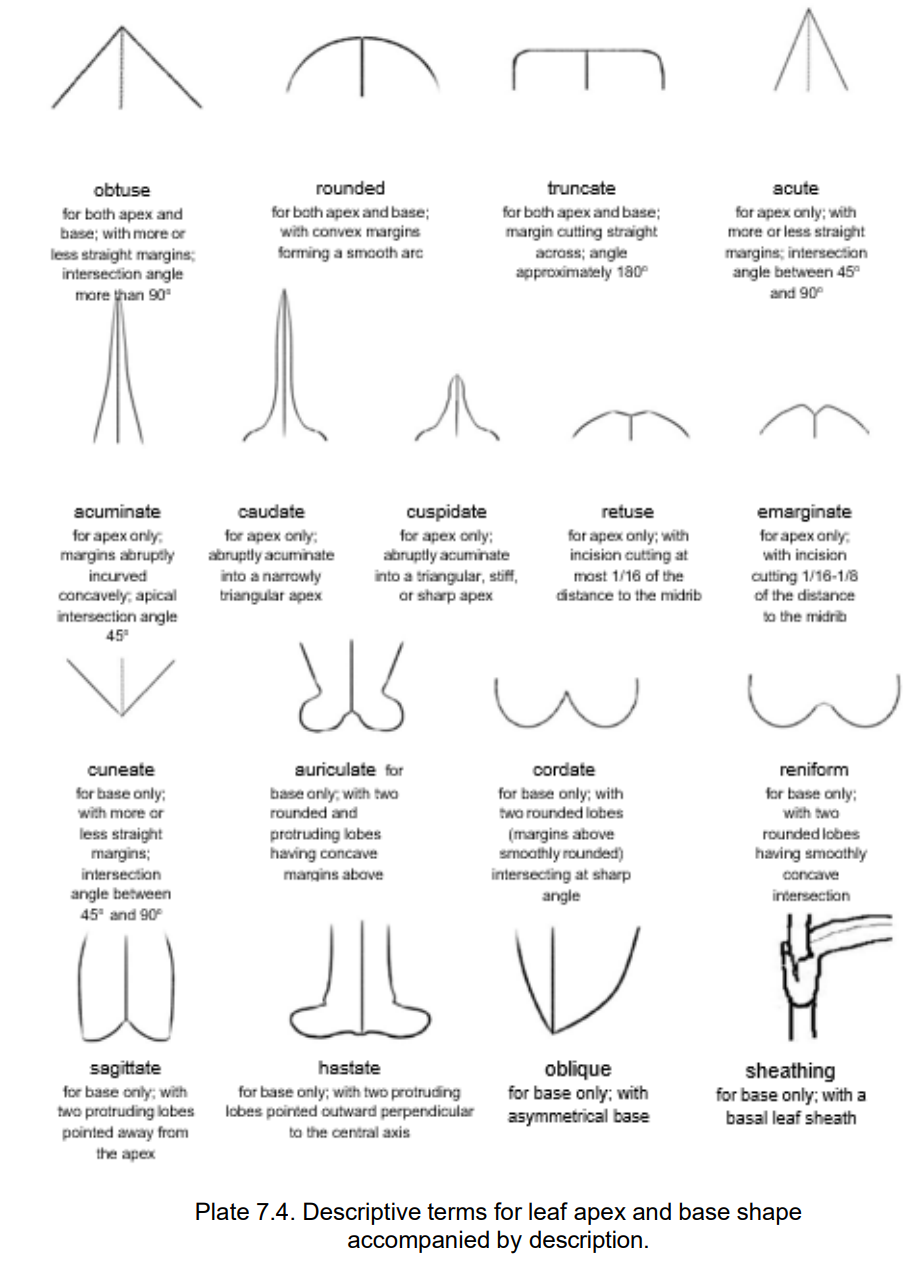
Leaves can also be characterized based on the apex and base shapes. Some standardized descriptive terms for these are shown in Plate 7.4.
simple; compound; leaflets; petiolule; stipels
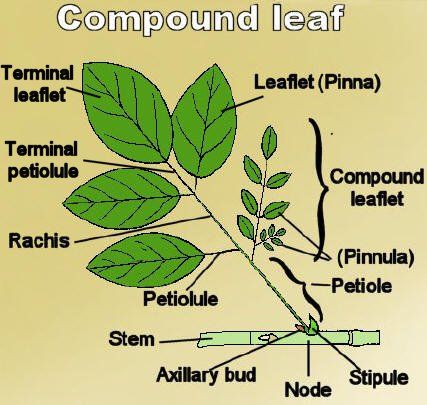
Leaves can also be described based on composition (Plate 7.5). A leaf is ___________ if the lamina is not divided into more than one blade. Otherwise, it is ___________.
A compound leaf is composed of ___________ which may or may not have a ____________ (counterpart for petiole in simple leaf). Instead of stipules, ___________ may be found at the base of a leaflet.
trifoliate; palmate; pinnate; bipinnate; polypinnate
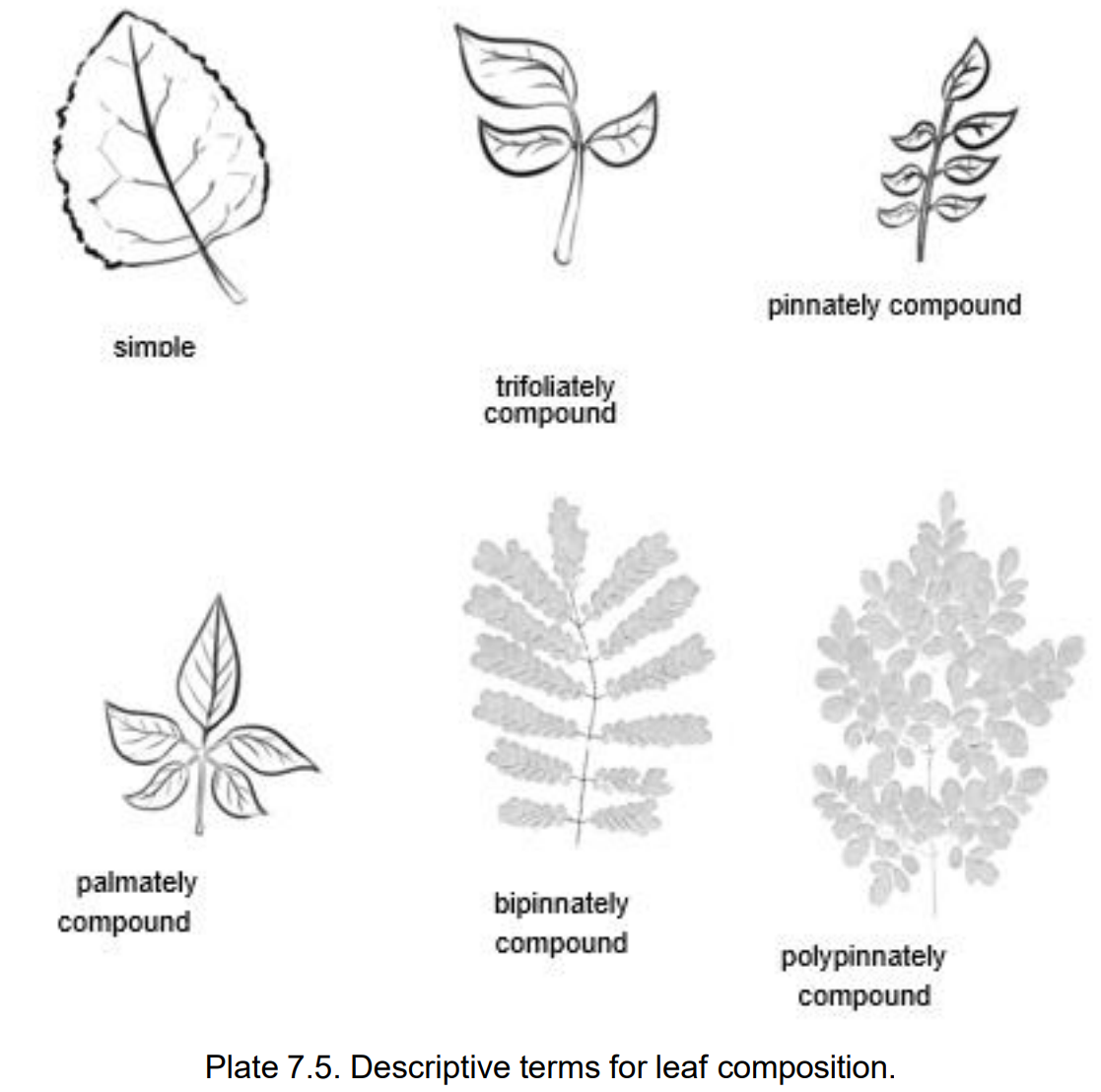
Specific types of compound leaf include __________ (three leaflets attached to a common point), _________ (four or more leaflets attached to a common point), ____________ (leaflets arranged along a central axis called the rachis), ___________ (pinnately compound leaf with two orders of axes), and ___________ (pinnately compound leaf with three or more orders of axes).
phyllotaxy; alternate; opposite; whorled
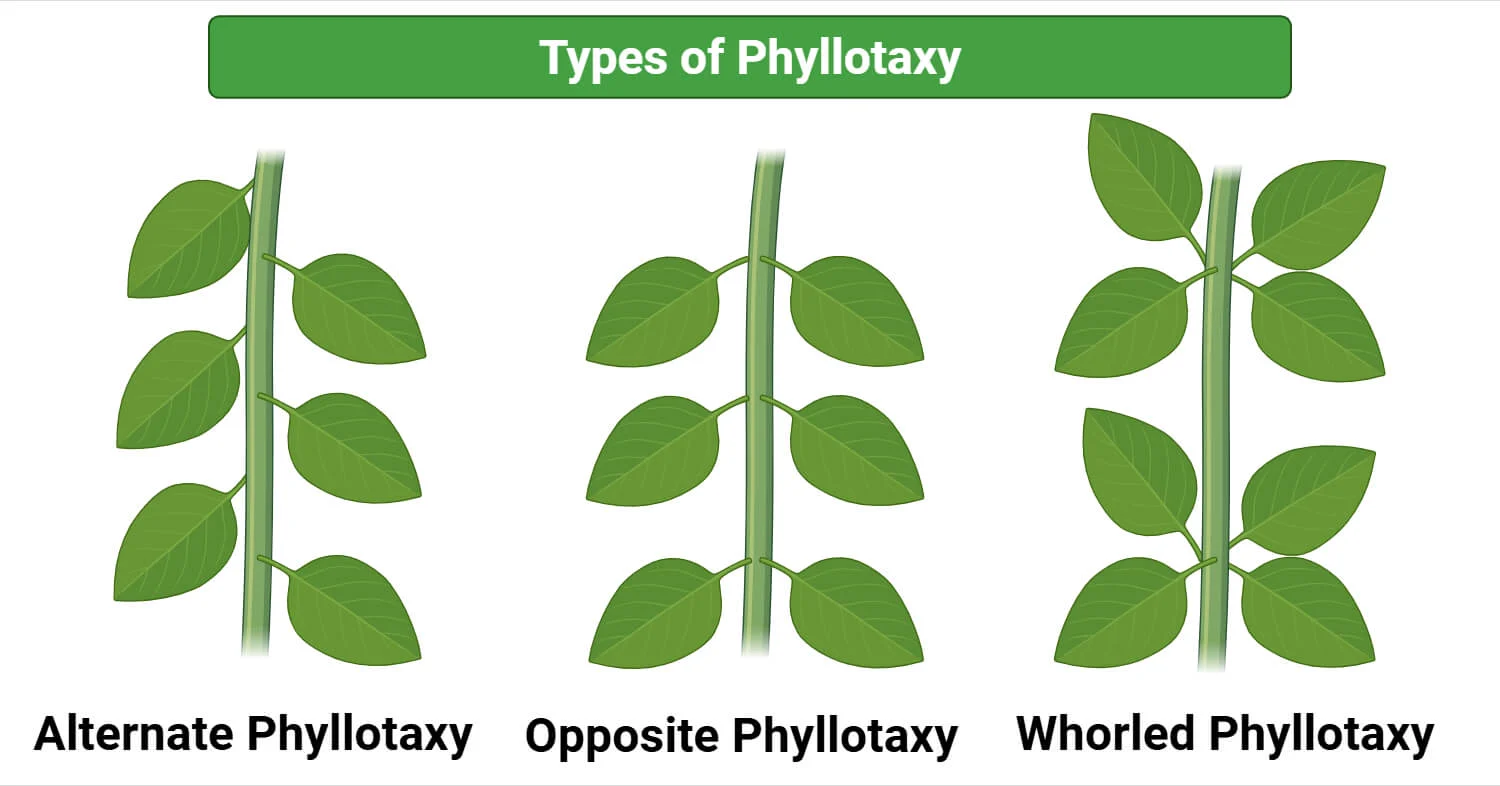
Leaves can also be described based on their arrangement along the stem or ___________ (Plate 7.6). Descriptive terms for phyllotaxy include _____________ (only one leaf in each node), ___________ (two leaves in each node), and _____________ (three or more leaves in a single node).
spiral; distichous; decussate; non-decussate
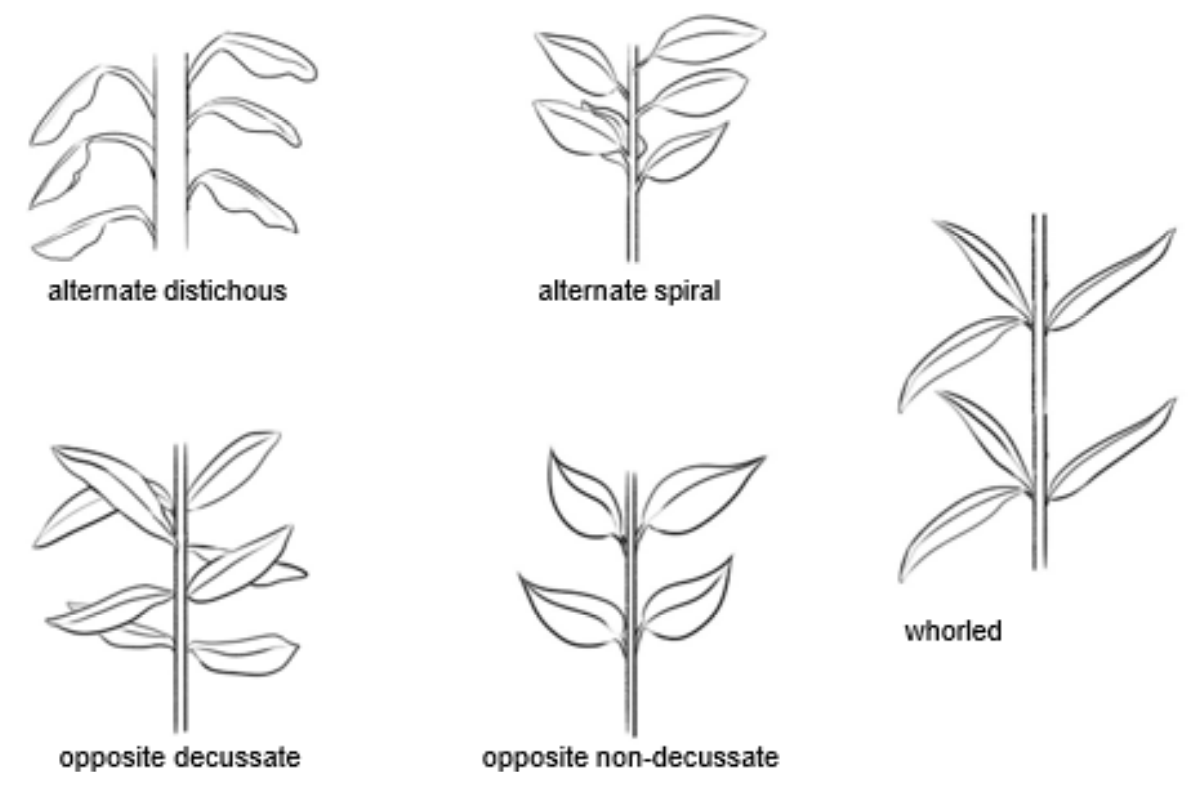
Alternate leaves could by __________ (each leaf with adjacent leaf slightly rotated from the node) or ____________ (each leaf parallel to the next leaf) while opposite leaves could by ______________ (each leaf pair perpendicular to the next pair) or ________________ (each leaf pair parallel to the next pair).
Bract
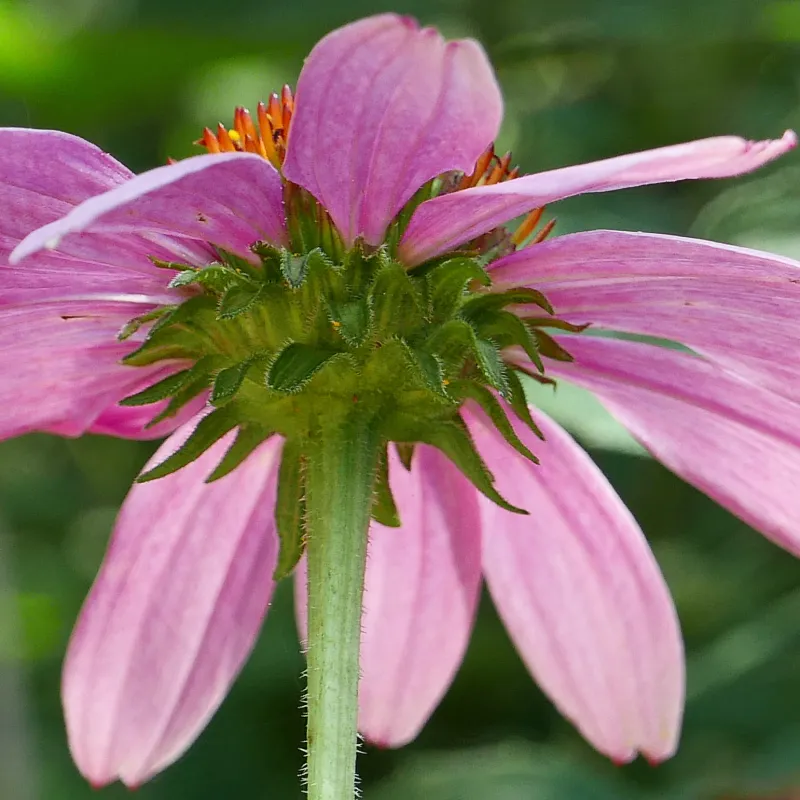
In certain species of plants, the leaves are modified and are able to perform different functions that allow survival. Some examples of modified leaves are:
____________ - leaf different from main photosynthetic leaves and often associated with flowers or inflorescences
Bulb scale
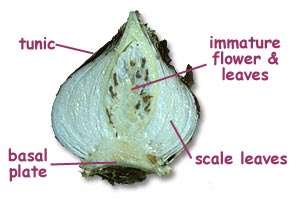
In certain species of plants, the leaves are modified and are able to perform different functions that allow survival. Some examples of modified leaves are:
_____________ - scale-like storage leaf attached to bulb
Spine
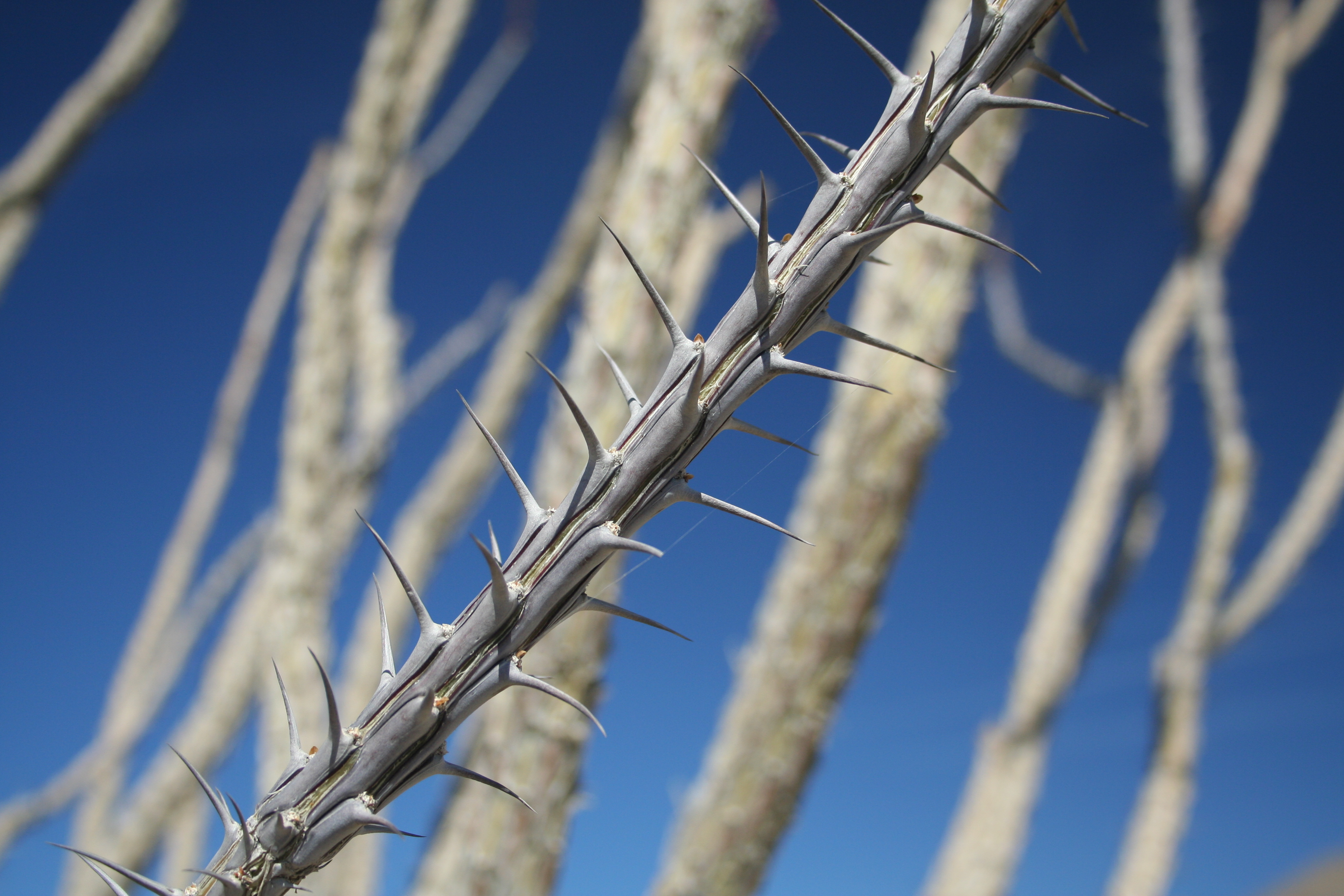
In certain species of plants, the leaves are modified and are able to perform different functions that allow survival. Some examples of modified leaves are:
____________ - sharp-pointed leaf or leaf part
Swollen petiole
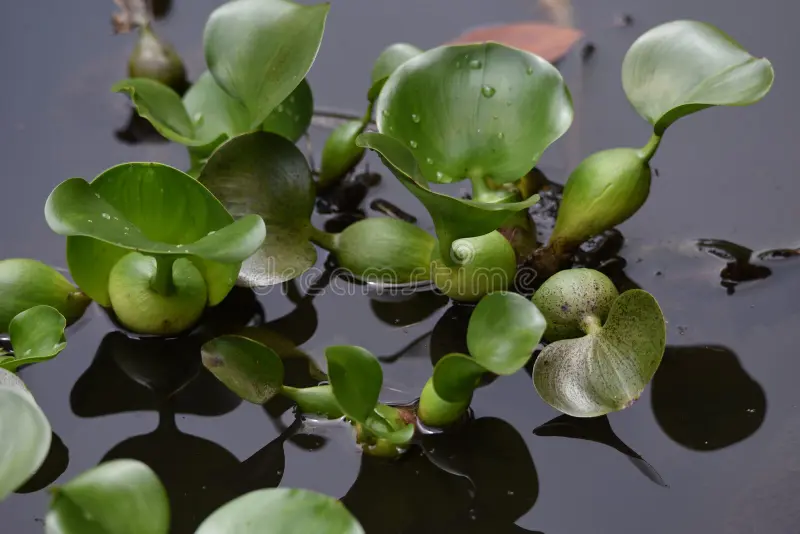
In certain species of plants, the leaves are modified and are able to perform different functions that allow survival. Some examples of modified leaves are:
_________________ - enlarged and buoyant petiole
Bud scale
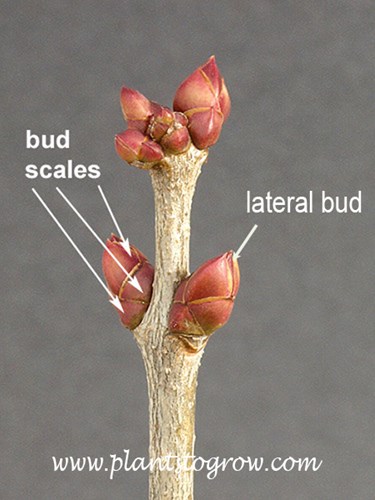
In certain species of plants, the leaves are modified and are able to perform different functions that allow survival. Some examples of modified leaves are:
_______________ - small leaf forming a tight layer around stem tip
Leaf tendril
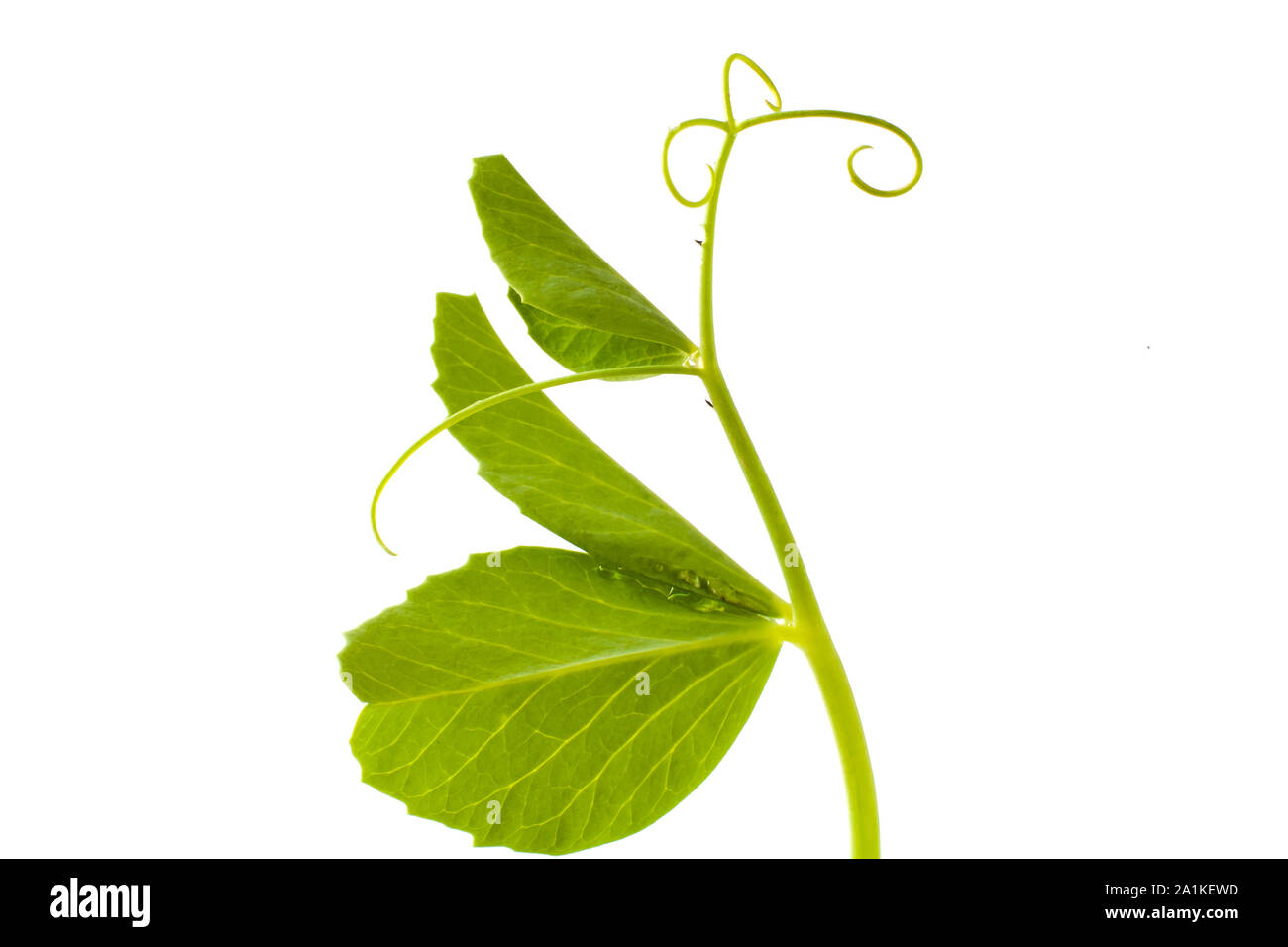
In certain species of plants, the leaves are modified and are able to perform different functions that allow survival. Some examples of modified leaves are:
_______________ - coiled and twining leaf or leaf part
Pitcher leaf
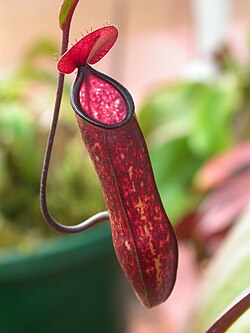
In certain species of plants, the leaves are modified and are able to perform different functions that allow survival. Some examples of modified leaves are:
_______________ - leaf shaped like a container
Pseudostem
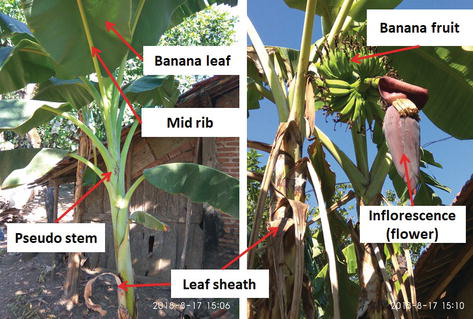
In certain species of plants, the leaves are modified and are able to perform different functions that allow survival. Some examples of modified leaves are:
_______________ - structure formed by overlapping leaf bases
Succulent leaf
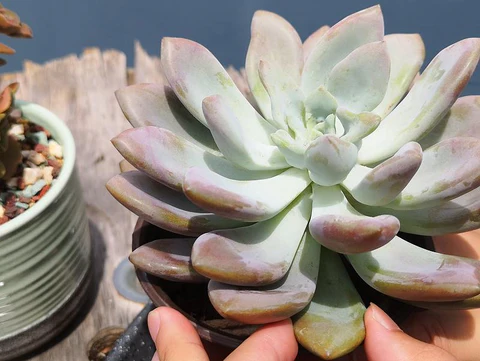
In certain species of plants, the leaves are modified and are able to perform different functions that allow survival. Some examples of modified leaves are:
_______________ - thick and fleshy leaf with low surface-to-volume ratio

