ARH 316 - Gothic Architecture - Midterm 1
 Studied by 0 people
 Call Kai
 Learn
Learn Practice Test
 Spaced Repetition
 Match
Match Flashcards
 Knowt Play
1/83

There's no tags or description
Looks like no tags are added yet.
Name | Mastery | Learn | Test | Matching | Spaced | Call with Kai |
|---|
No analytics yet
Send a link to your students to track their progress
84 Terms
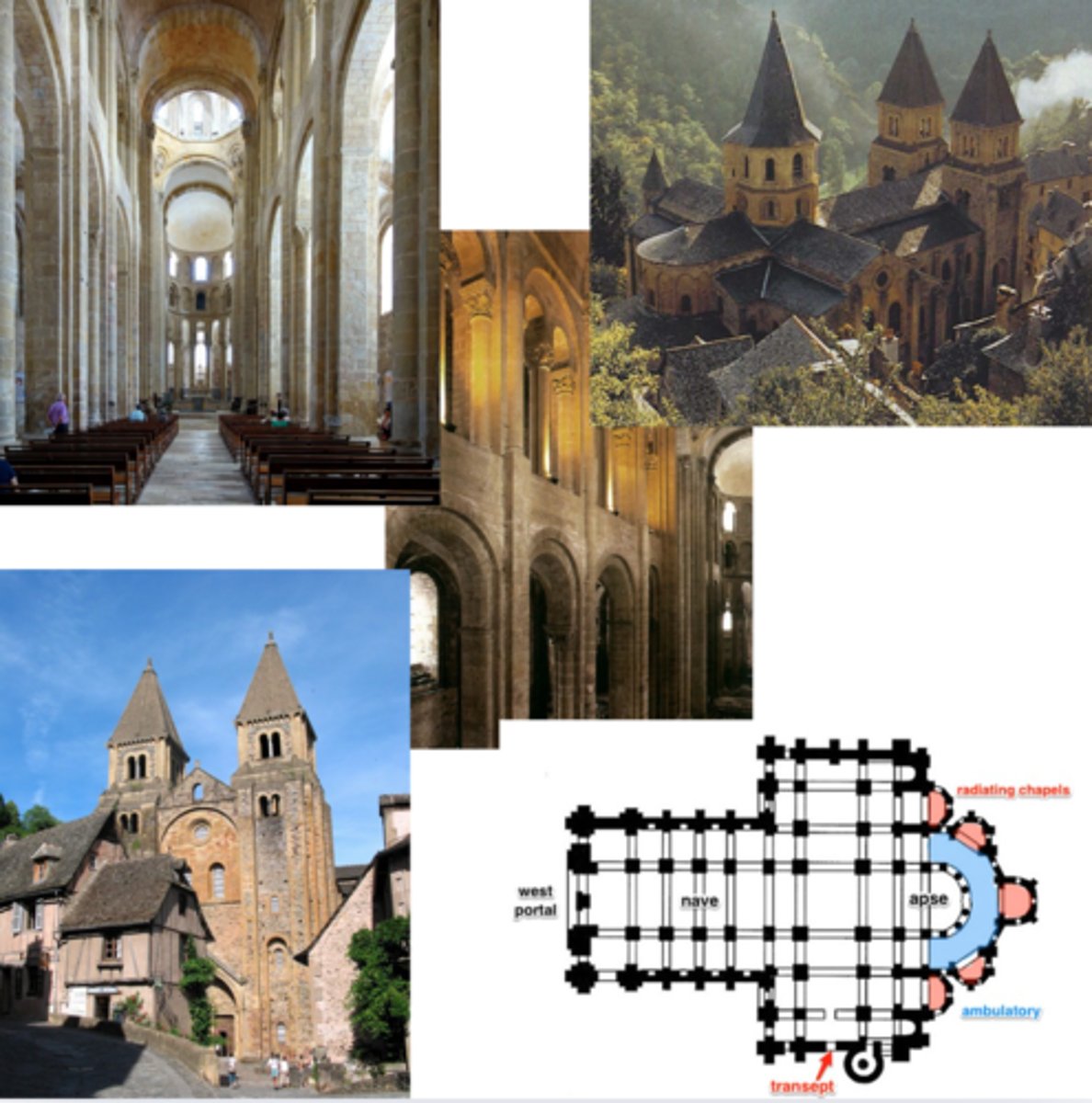
Church of Sainte-Foy. Conques, France. 1050-1120.
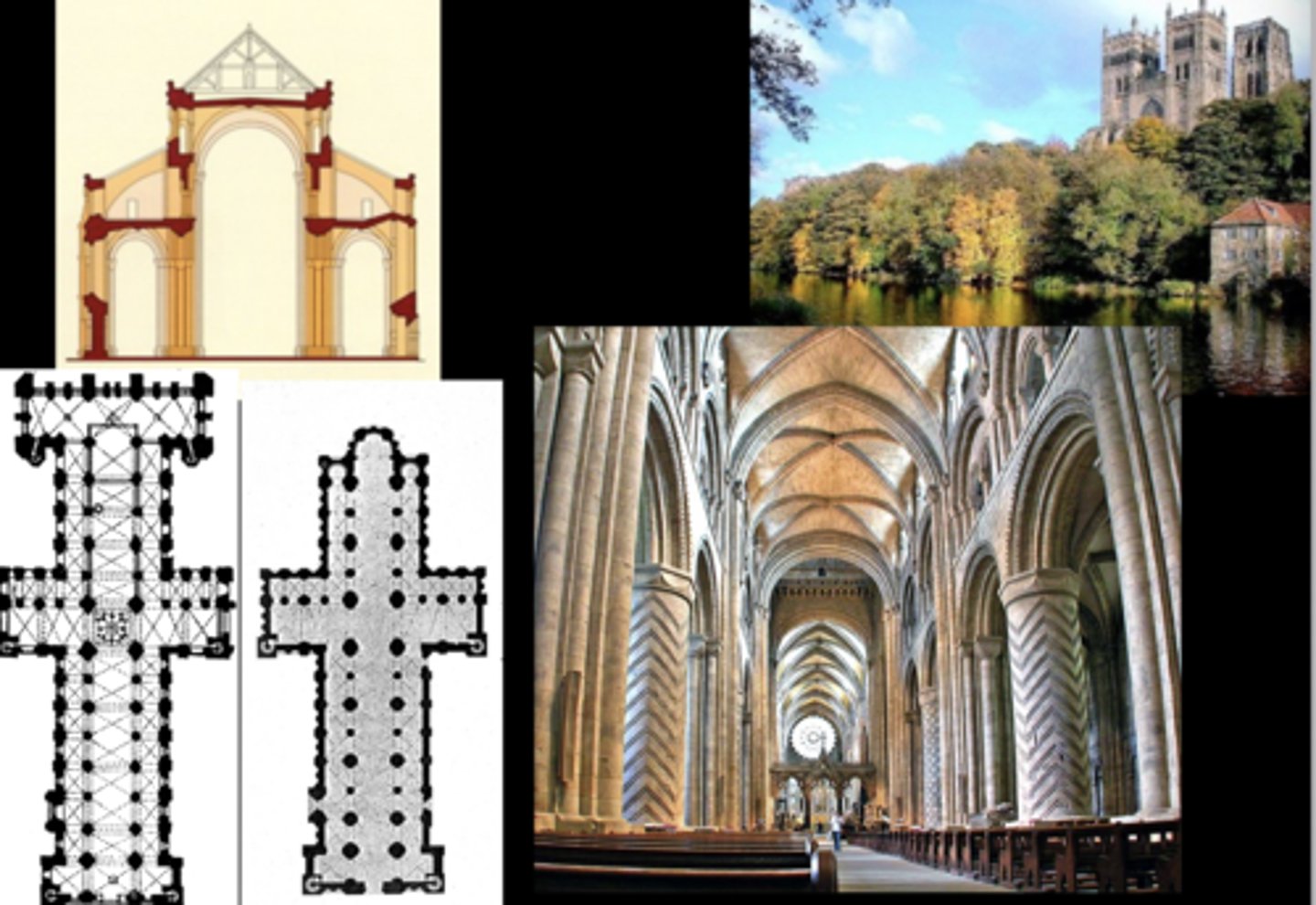
Durham Cathedral. Durham, England. 1093-1130.
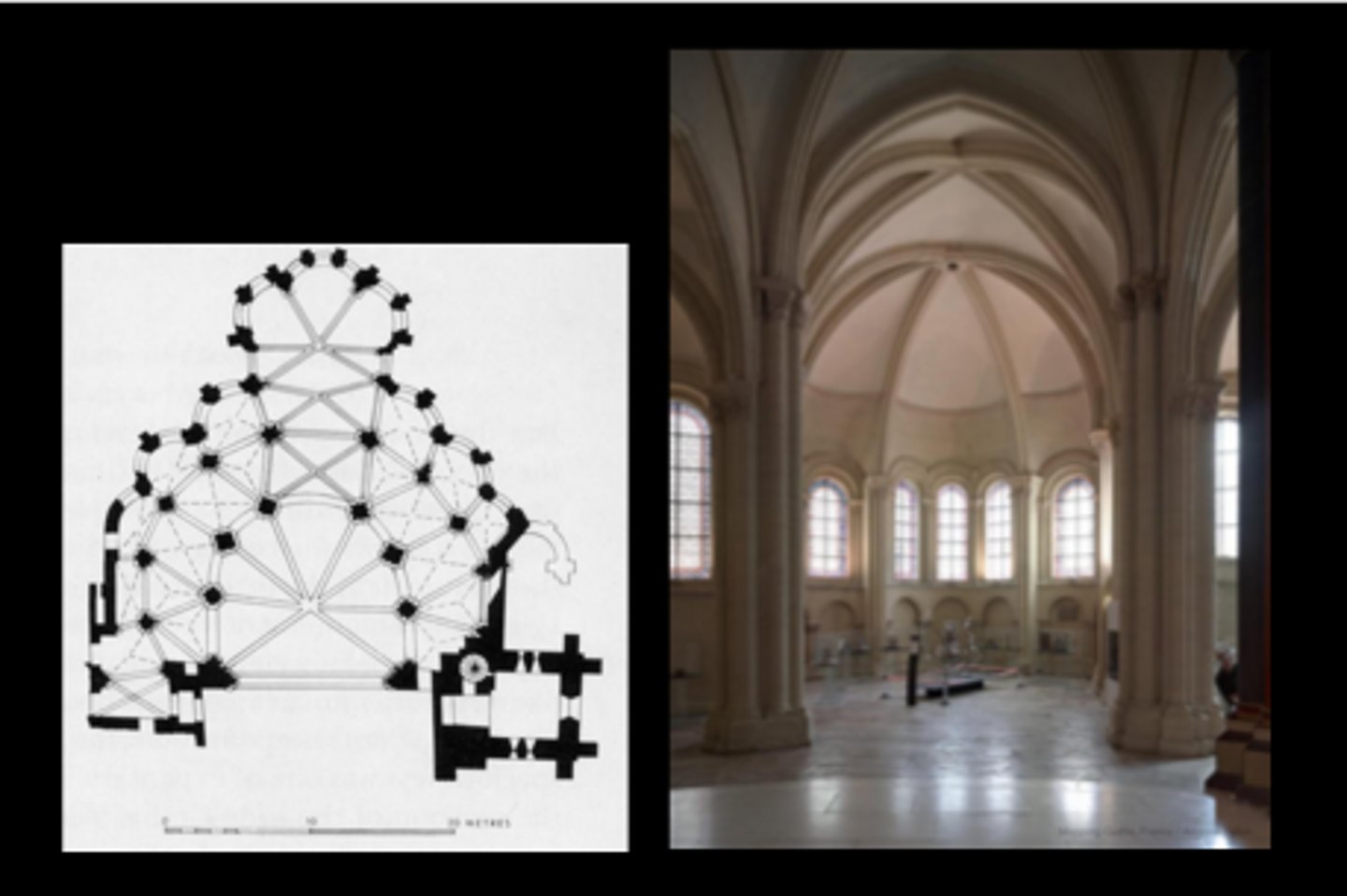
Church of Saint-Martin-des-Champs. Paris, France. c. 1135. (interior)
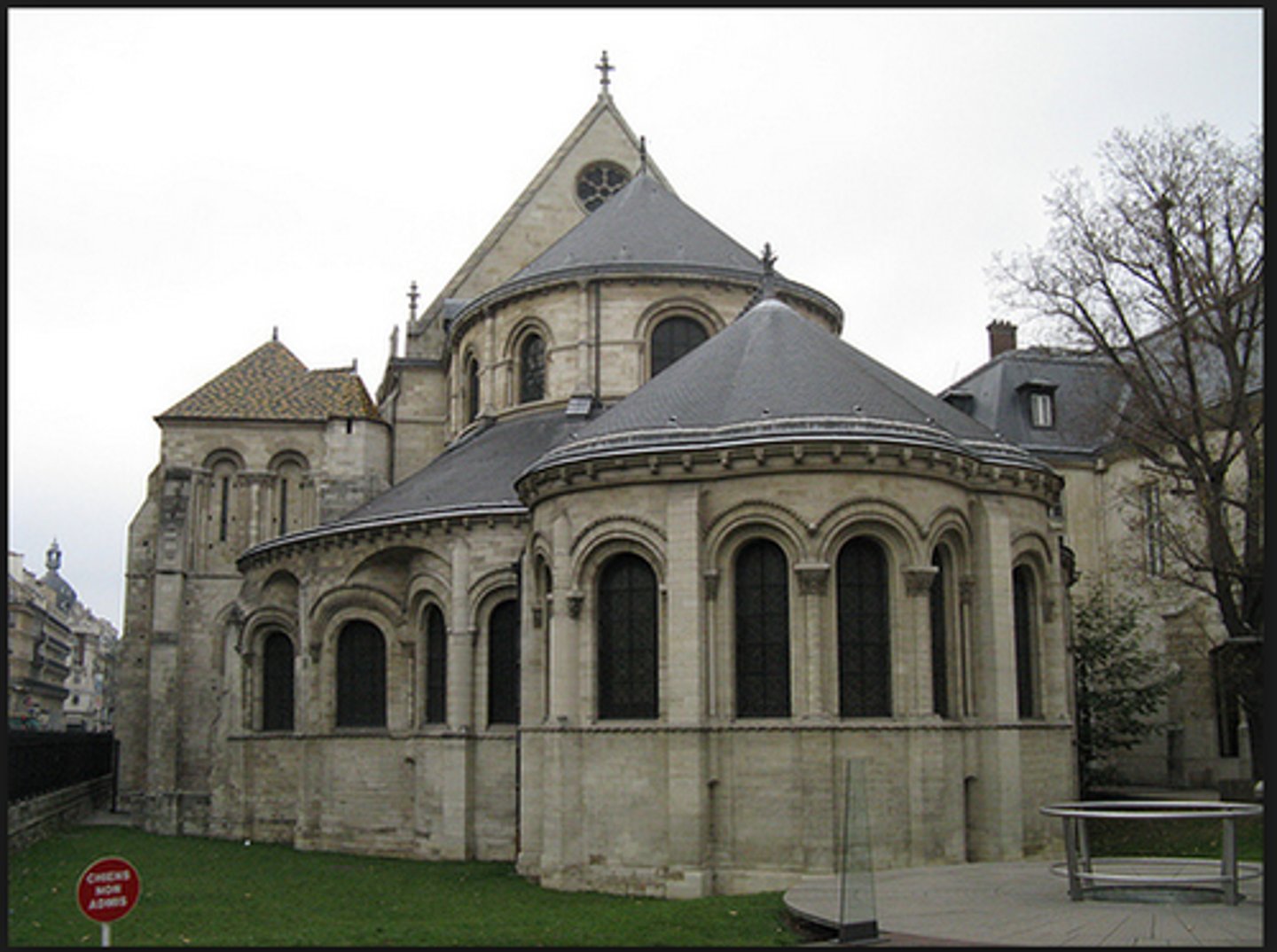
Church of Saint-Martin-des-Champs. Paris, France. c. 1135. (exterior)
Abbot Suger
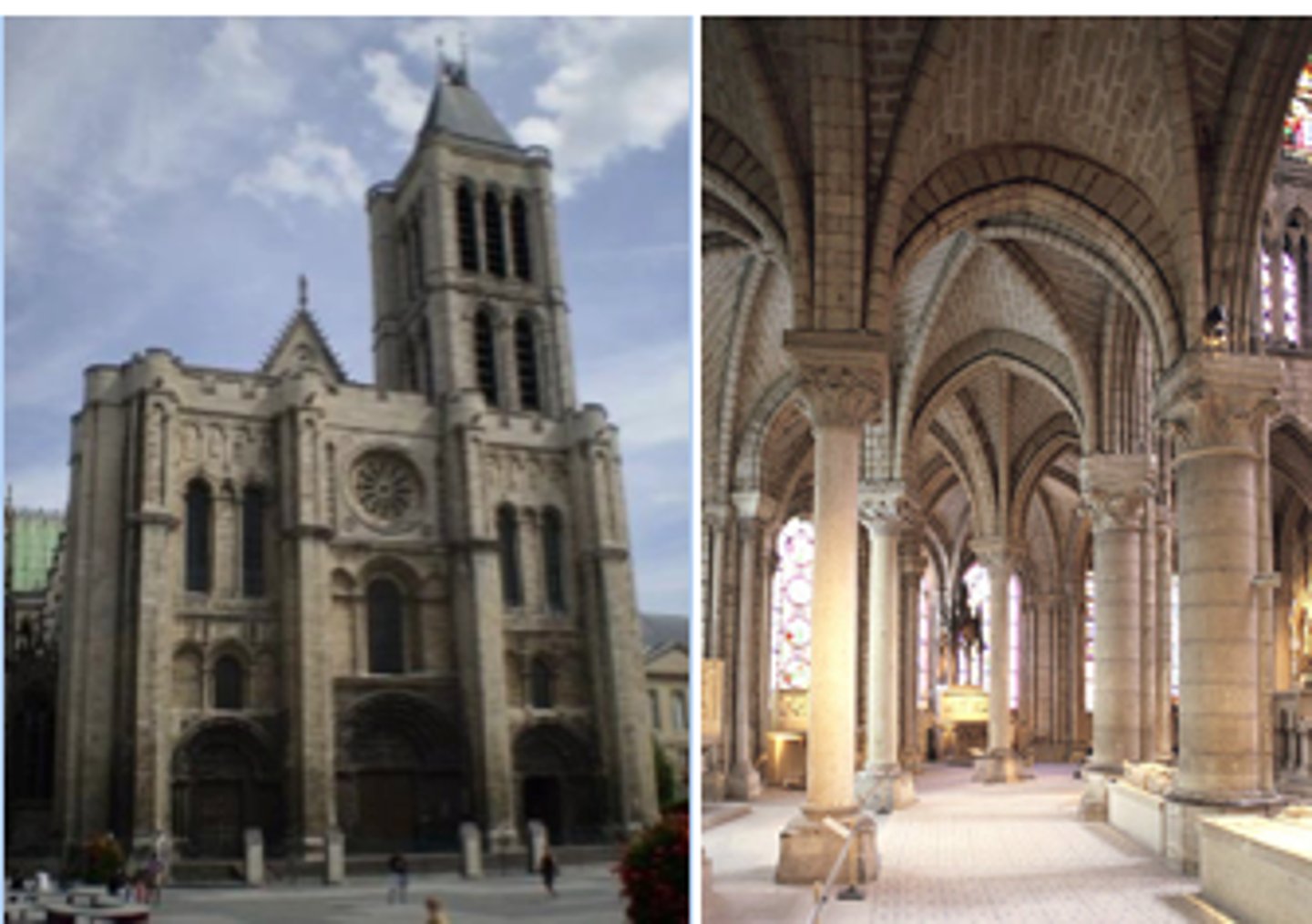
Associated with the Basilica of Saint-Denis, where he oversaw a major rebuilding project that is considered the birthplace of the Gothic architectural style. His work between 1137 and 1144 included innovative features like pointed arches, ribbed vaults, and flying buttresses, which allowed for higher ceilings and more light to fill the interior. motivations were both spiritual and political. He aimed to create a church that reflected the growing power of the French monarchy and also to create a space filled with light to inspire spiritual transcendence.
Abbey Church of Saint-Denis. Saint-Denis, France. Narthex 1135-40 and Choir 1140-1144.
Giorgio Vasari
wrote about Gothic architecture in his book, The Lives of the Most Excellent Painters, Sculptors, and Architects (first published in 1550). He is credited with coining the term "Gothic," but he used it as a pejorative, associating it with the "barbaric" and "Germanic" style that he believed followed the destruction of classical Roman architecture.
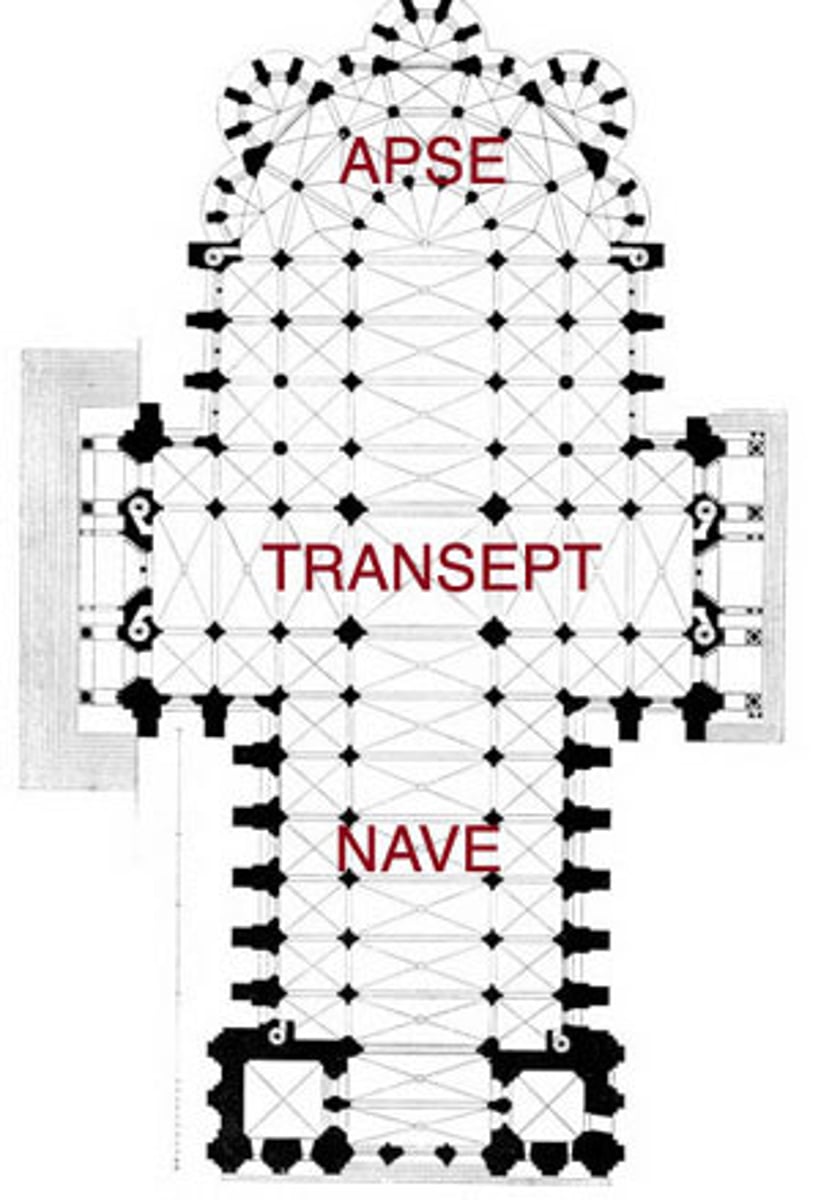
Nave
the central and main body of the church, extending from the entrance to the transepts or chancel, where the congregation gathers.
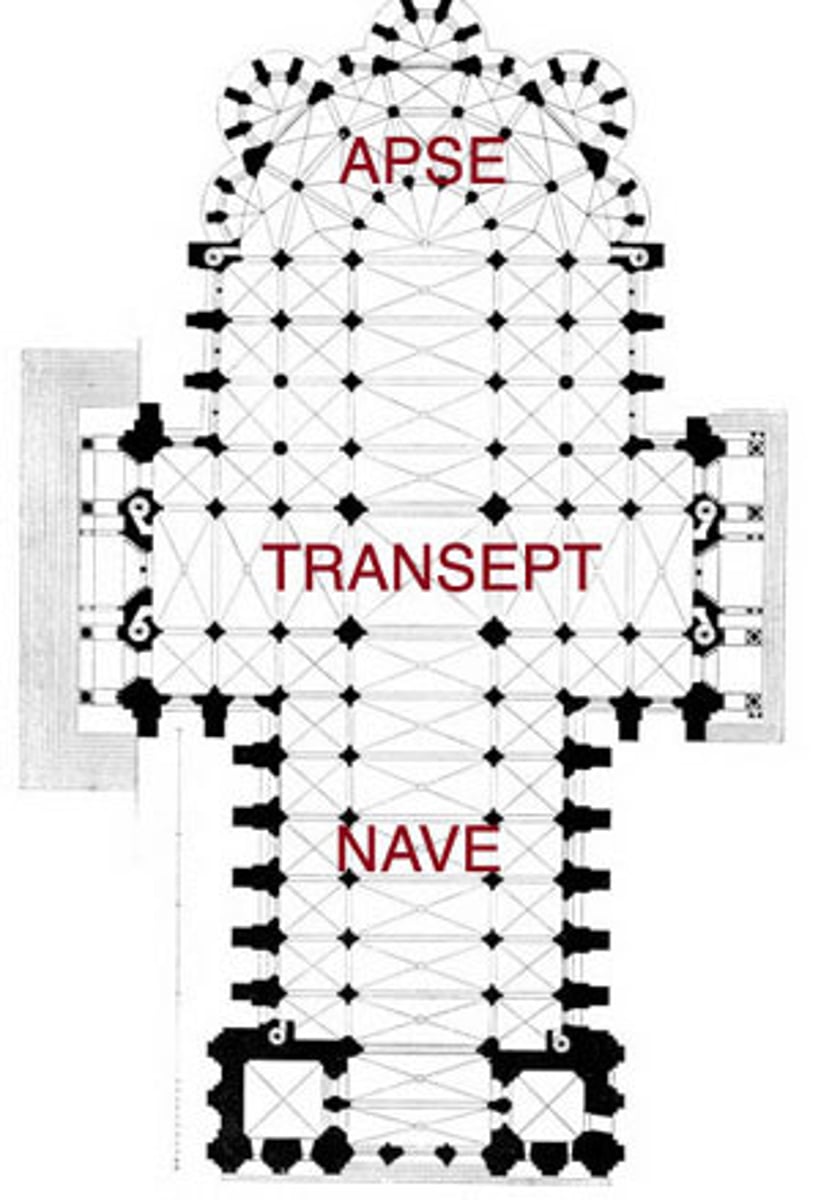
Transept
a transverse section of a church that extends perpendicularly from the main body (nave) and chancel, creating a cross-shaped floor plan. This feature, common in both Romanesque and Gothic styles, allows for additional space for seating or chapels, and the area where the transept intersects the nave and chancel is known as the "crossing"
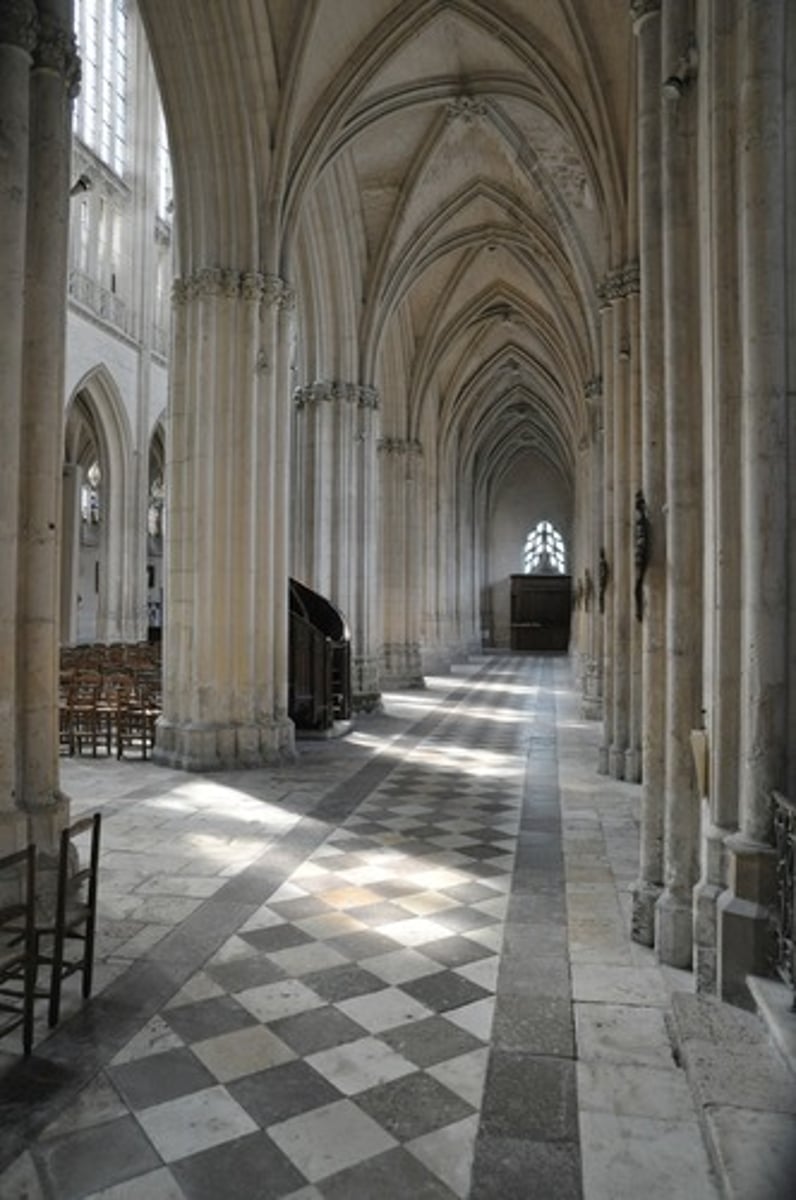
Aisle/Side Aisle
a passageway on the side of the nave (the central area of a church) separated by a row of pillars or columns. These side aisles are lower than the nave, which allows light to enter through the clerestory windows and illuminate the central space. The term "aisle" comes from the Latin word for "wing," and in addition to providing circulation and additional seating areas, side aisles in Gothic churches became a functional and visual component, allowing for greater height and light in the nave
Apse
a semicircular or polygonal recess, typically at the eastern end of a Gothic cathedral, which houses the altar. In Gothic architecture, the apse is characterized by its soaring, high vaults, and often has a surrounding aisle called an ambulatory with radiating chapels known as a chevet. The ___'s vaulted structure, pointed arches, and the surrounding ambulatory with radiating chapels are all key features that create a dramatic, light-filled, and ceremonial space
Ambulatory
a circular or semi-circular passageway behind the high altar of a cathedral that allows movement around the choir and provides access to radiating chapels. This feature allows for the movement of pilgrims and clergy during services without disrupting the main liturgy. In Gothic cathedrals, ________s are known for their height and intricate design, featuring pointed arches, ribbed vaults, and large stained-glass windows, a significant development from their more subdued Romanesque predecessor
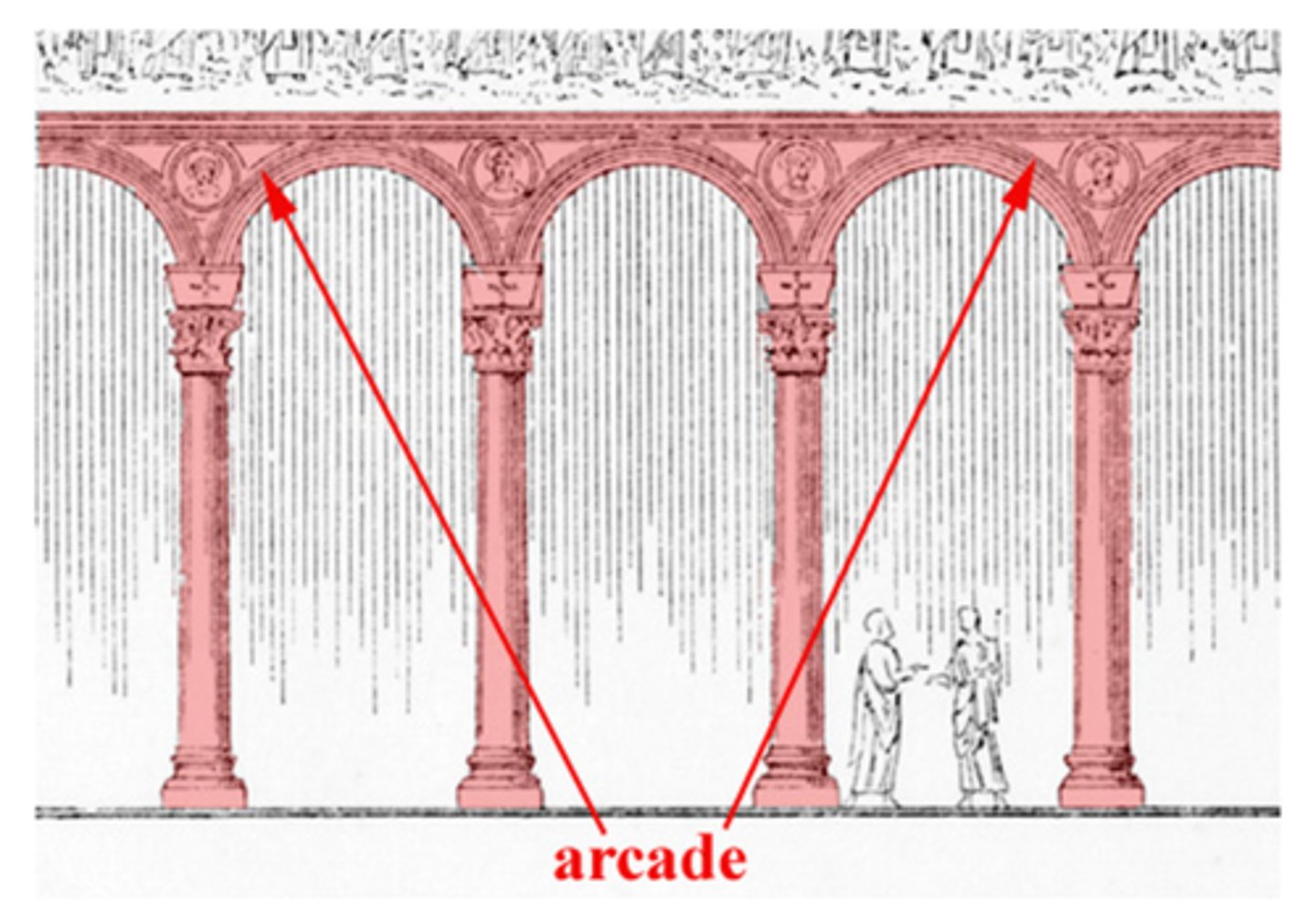
Nave arcade
Think of it as the "bottom" of the 3 major components of the interior wall. (associated with the "pointed arches" at the bottom)
a series of arches that forms the lowest horizontal section of a church's interior wall, separating the central nave from the side aisles. These pointed arches, supported by columns or piers, are a structural and decorative element that allows for a more open and lighter space by supporting the weight of the upper walls and vaulting, and enabling the inclusion of large windows (clerestory) above
Tribune Gallery
An upper-story gallery or level that is open to the main nave of a church, built above the side aisles. Feature of Early Gothic cathedrals, was often replaced by the triforium in later Gothic periods.
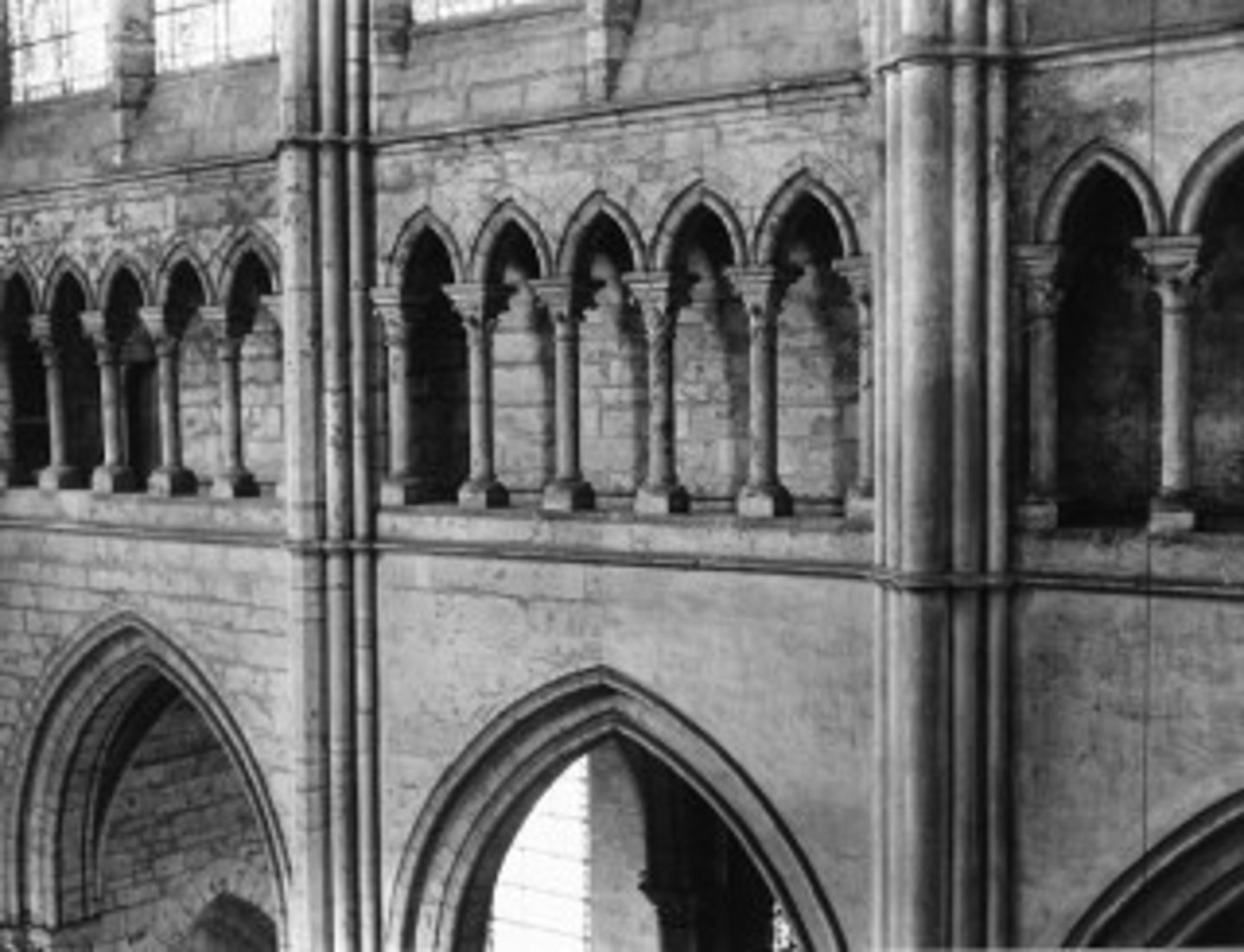
Triforium
A shallow, arcaded passageway or gallery in a Gothic cathedral, located between the large nave arcade on the ground floor and the clerestory windows high above. It is a key part of the cathedral's three-part vertical elevation (arcade, triforium, clerestory) and can be a blind arcade with no internal passage, or contain a narrow, hidden walkway. Its primary functions are decorative, contributing to the sense of verticality and lightness, and historically, it served a structural role as a passage for workmen to access the roof space. (this tended to replace nave arcade)
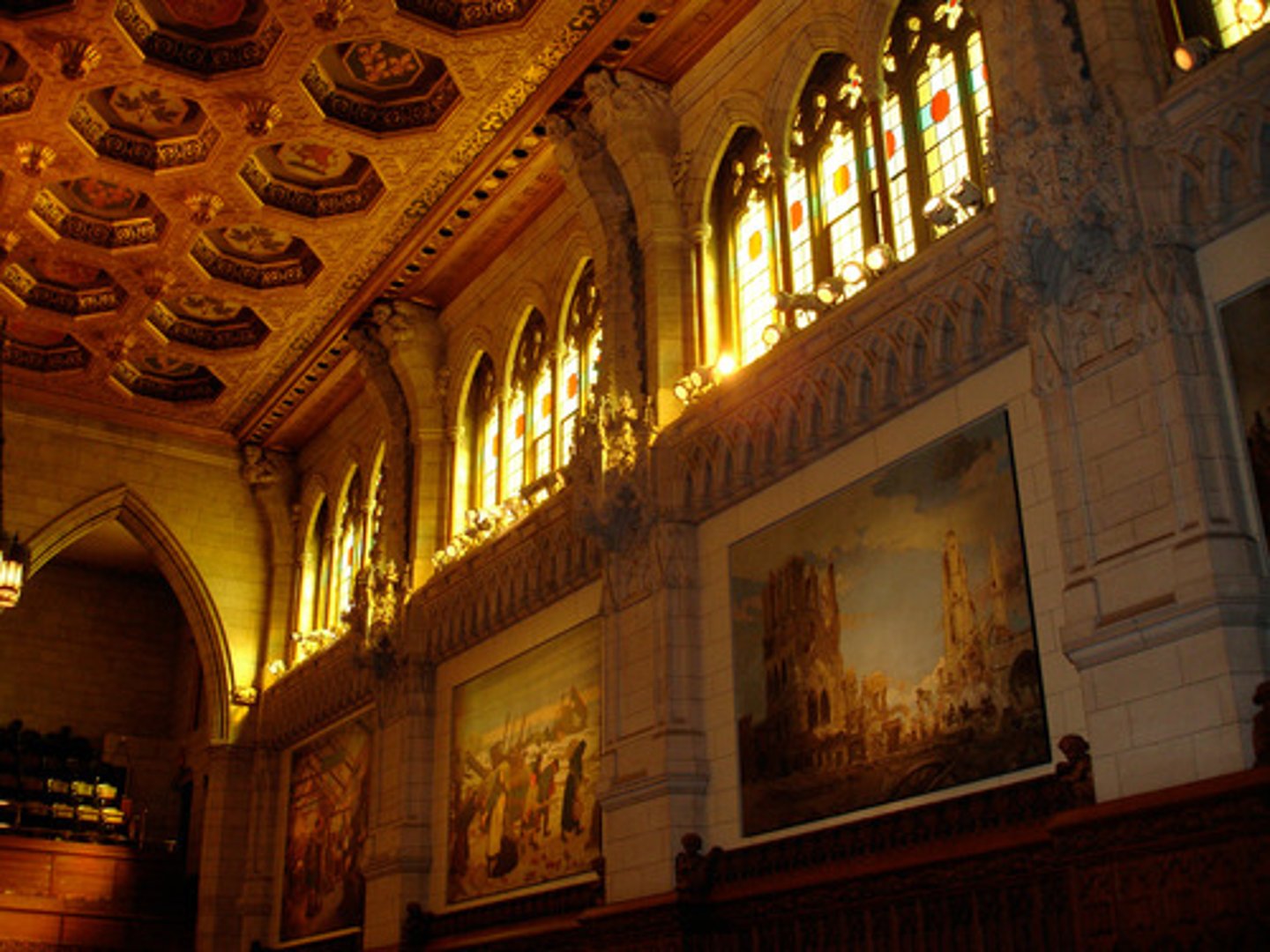
Clerestory
Top part of the "3 basic sections" of a wall. A high section of wall that contains windows above eye-level. Its purpose is to admit light, fresh air, or both.
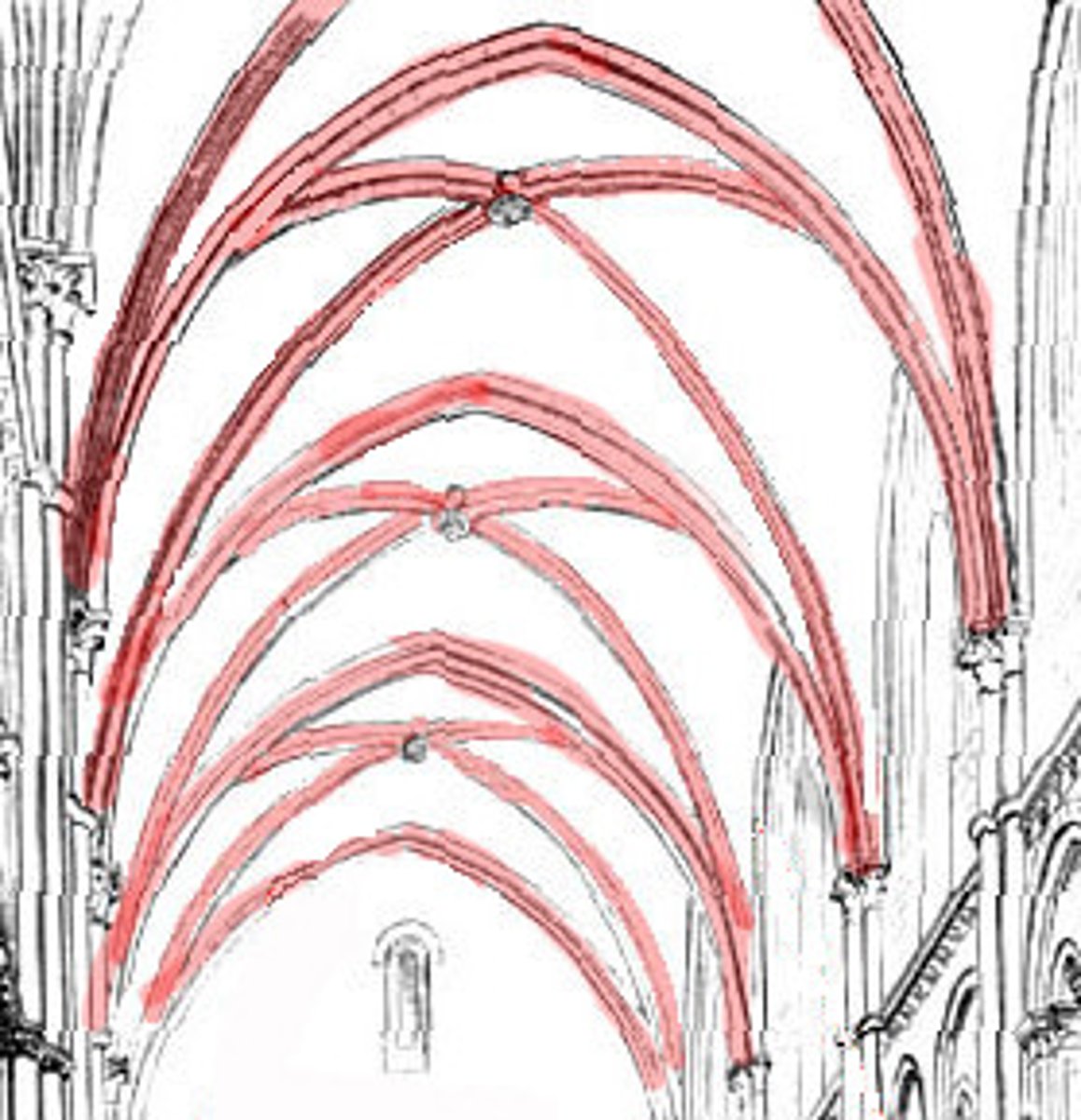
Rib vault
This design creates a web-like pattern and allows architects to build higher, with lighter and thinner walls that can accommodate large windows. The ____s channel the weight of the ceiling down to slender piers, creating a strong and visually dynamic structure.
Groin vault
a ceiling formed by the intersection of two barrel vaults at a right angle, creating a curved, arched ceiling where the two vaults meet. In Gothic architecture, this evolved into a more complex ribbed vault which concentrated the weight onto piers and buttresses, allowing for taller buildings with large windows and pointed arches.
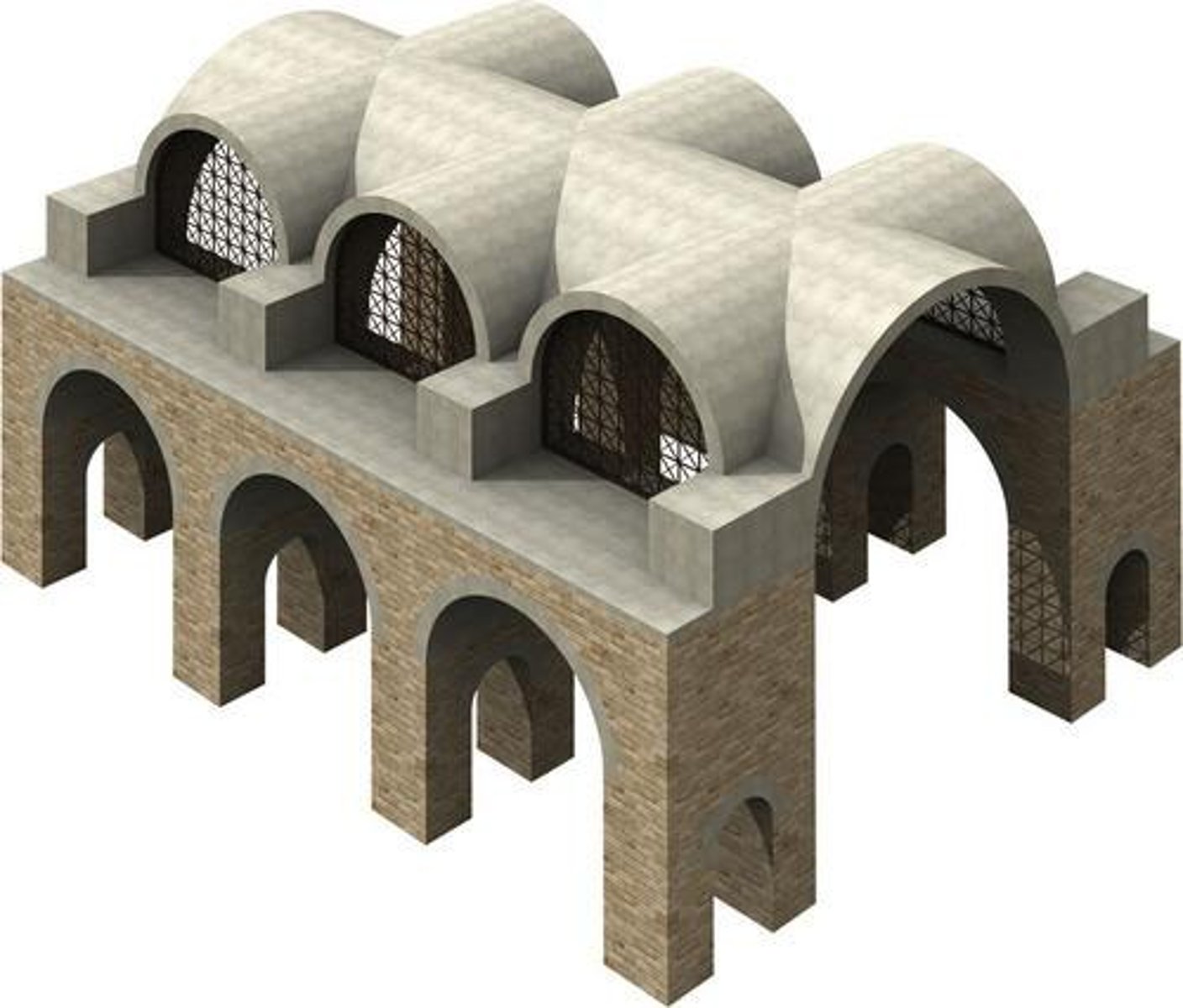
transverse arch
a supporting arch that runs across the width of a vaulted bay, from one side to the other, to divide it from the next. In Gothic architecture, these arches, often paired with diagonal arches, form the skeletal framework of the ribbed vault, channeling the weight down to slender piers. This innovation allows for thinner vault shells and large expanses of wall space for stained glass windows.
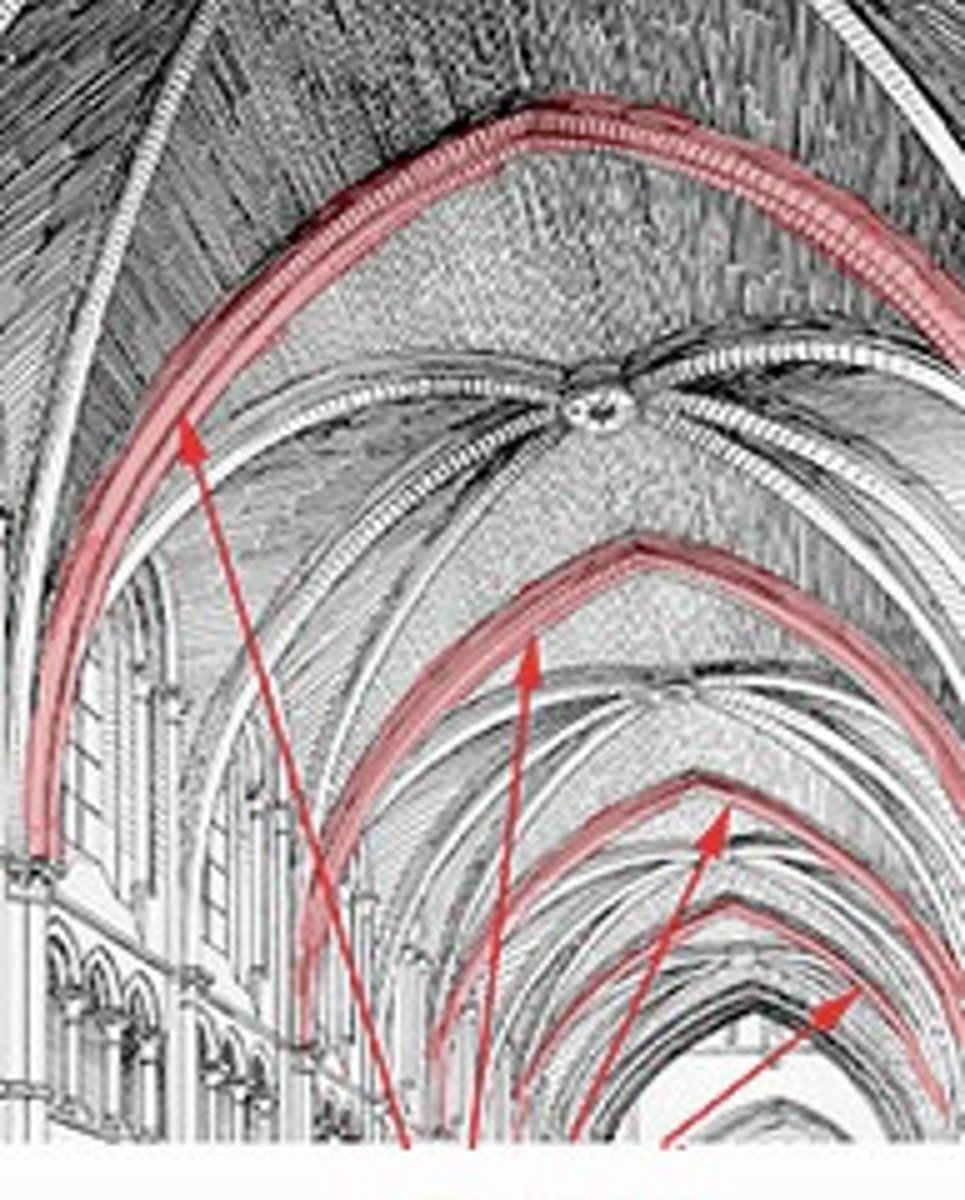
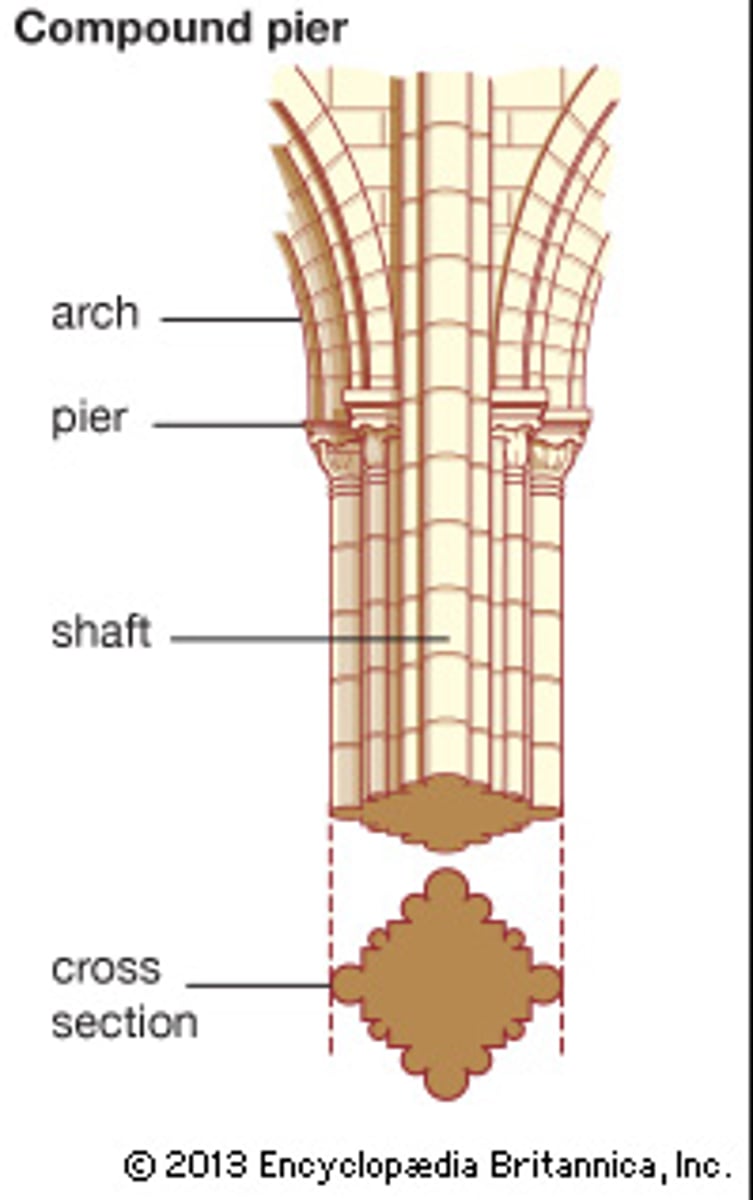
Piers
a substantial vertical support, often a compound pier, designed to support arches, vaults, and the weight of the ceiling.
W/ gothic, tends to be made into a "compound" - a cluster of attached shafts that visually break down the immense load from the ribs of the vault, distributing it down to the ground.
Also tend to be daintified with "colonettes" so it feels skinnier.
West Facade
the elaborate, ornate front of a cathedral that faces west, featuring multiple portals, a central rose window, and two towers that house bells. It served as the main entrance, allowed western light into the building, and showcased the building's narrative through intricate sculpture and architectural design, creating a harmonious blend of vertical and horizontal lines.
narthex
An enclosed passageway or vestibule at the western entrance of a church, serving as a transitional space between the exterior and the nave. In early Christian and Byzantine architecture, it was historically a space for those not yet allowed into the main worship area, like catechumens and penitents. While ______ were common in these earlier styles, they continued to be used in Gothic churches and other religious structures as an entrance foyer or lobby.
Chevet
The eastern end of a church, which includes the choir, an ambulatory that encircles it, and radiating chapels that open from the ambulatory. This design, particularly elaborate in French Gothic cathedrals, was developed from earlier Romanesque styles and became a defining feature of many Gothic structures, creating a flowing, multi-faceted space around the high altar. (The termination of a Gothic church with an agglomeration of small vaulted unity, as is seen at Saint-Martin-des-Champs or Saint-Denis)
Gothic Choir
the area of a church between the transept and the altar, which was historically designed for liturgical singers and clergy. A key feature was the use of choir stalls for seating, often facing each other and perpendicular to the altar, a design enabled by structural innovations like the pointed arch and rib vault. These innovations allowed for taller, lighter structures with large windows, and the choir itself was the birthplace of Gothic architecture at the Basilica of Saint-Denis in France
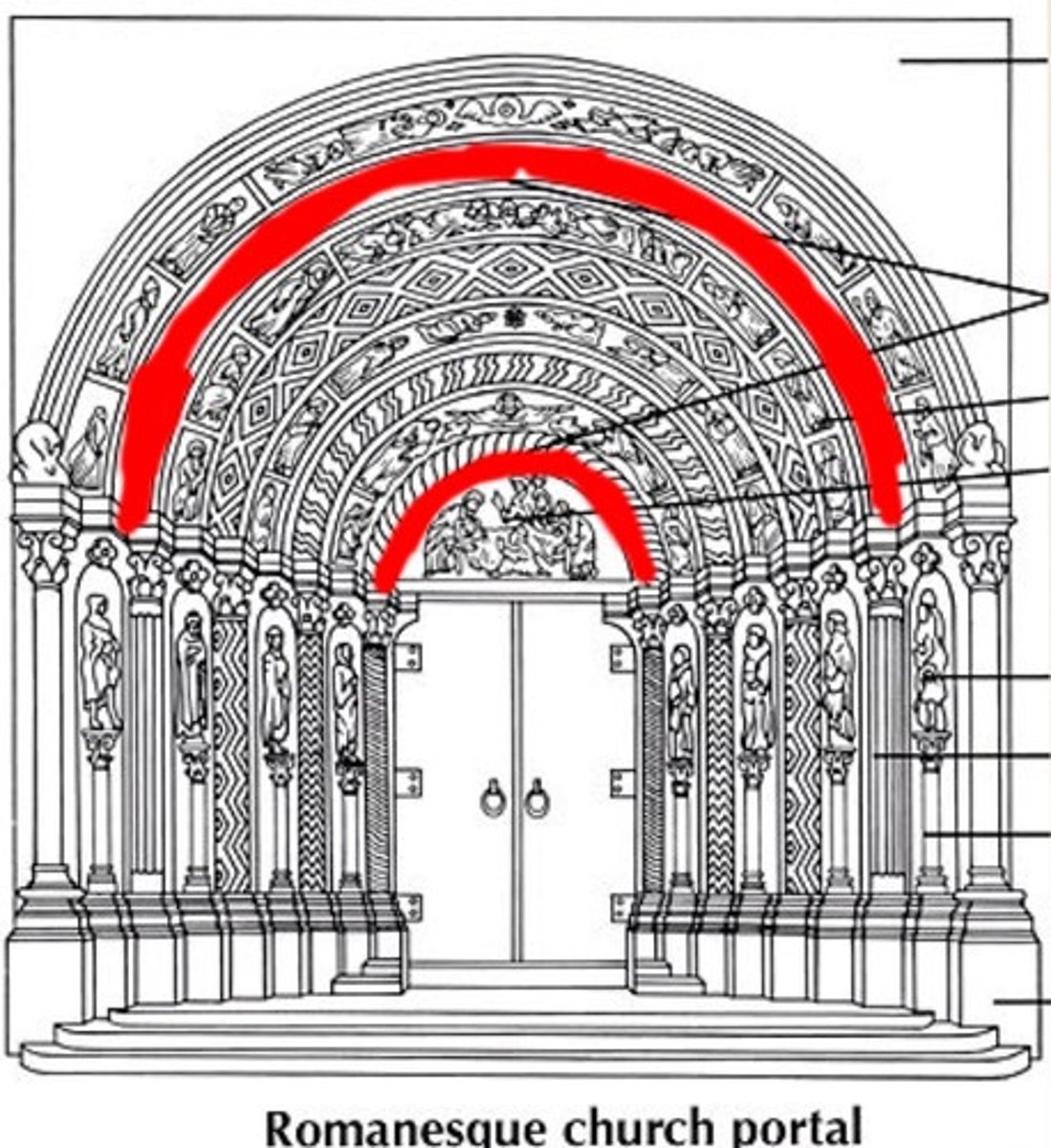
Archivolt
a series of concentric, molded bands that surround a Gothic archway, typically found above a doorway and often richly decorated with sculpture.
In Gothic architecture, these archivolts are made of wedge-shaped stones called voussoirs and are a key feature of the intricately decorated portals, featuring pointed arches and a variety of sculpted figures, biblical scenes, and decorative elements.
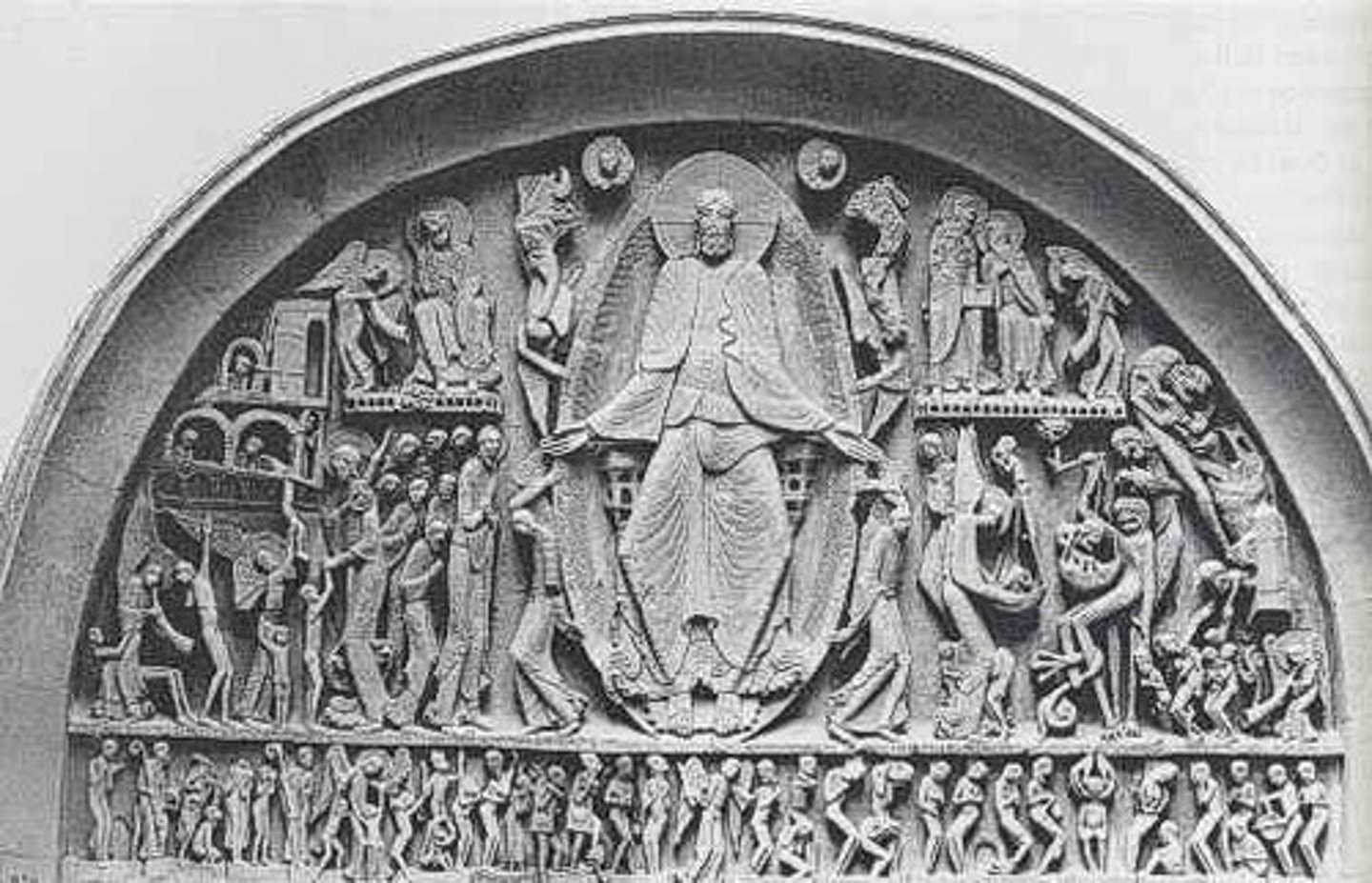
Tympanum
the triangular-shaped space above a doorway, inside the arch, that is decorated with relief sculpture. These are typically found above the main entrances of medieval churches and serve an artistic and educational purpose for worshippers, often depicting religious scenes like the Last Judgment.
Column Statue/Jamb Figure
a carved human figure, often a biblical personage, saint, or king, that is attached to the columns or piers flanking a cathedral doorway in Gothic architecture. These statues serve a decorative and symbolic purpose, creating a visual narrative that guides viewers and represents the saints as the foundation of the church.
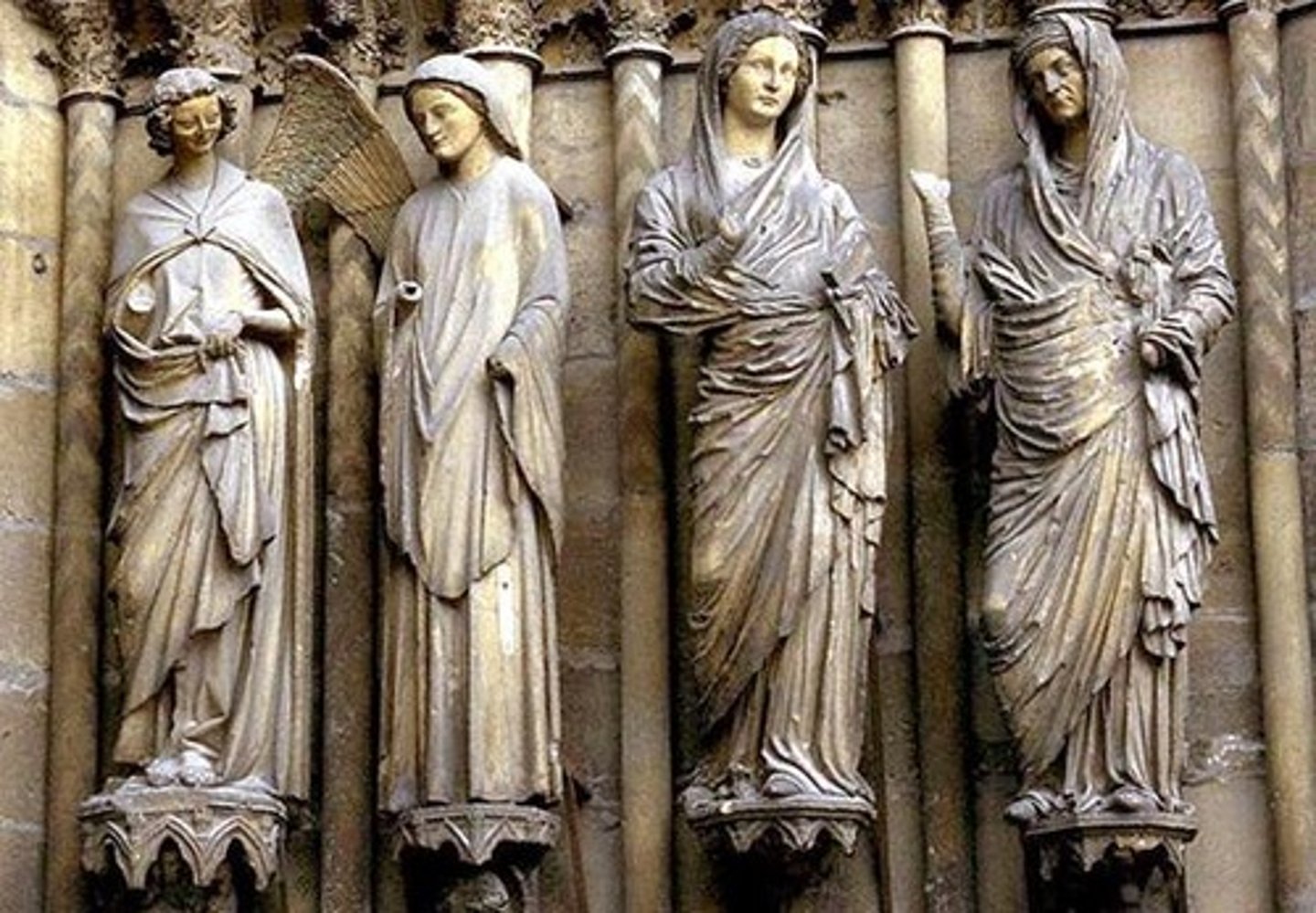
Jamb (gothic)
the vertical side elements of a doorway or window, and in Gothic architecture, they often feature sculpted figures
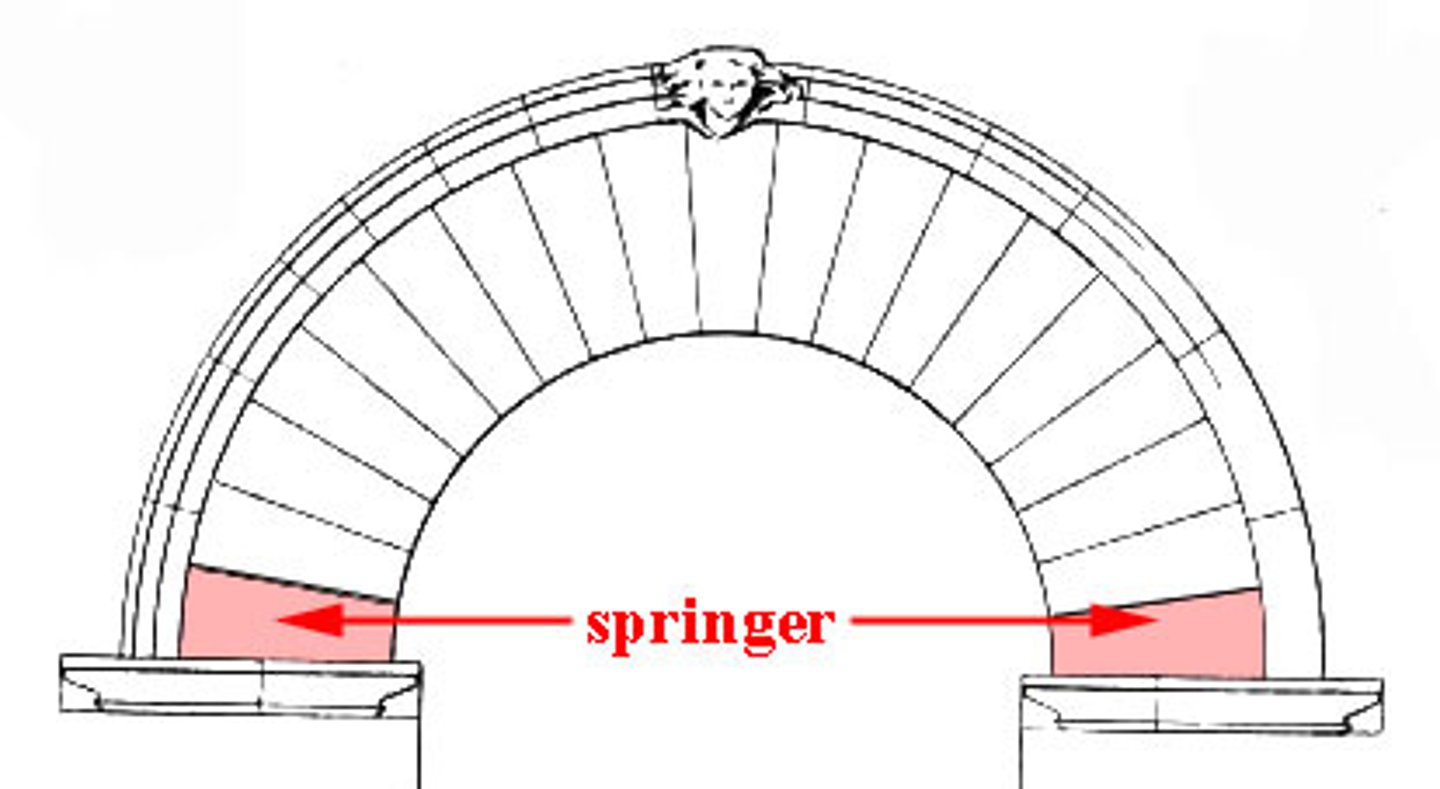
Springing of an arch
the point where the arch begins to curve upwards from its vertical supports, or the springers, which are the lowest wedge-shaped stones of the arch. It is the base of the curve, where the arch's thrust begins to transfer to the ground via the supporting pier or impost. This point is crucial for Gothic vaults and arches because it allows them to distribute weight and forces in a unique way that is fundamental to the style's structural innovation and soaring heights.
Composite Pier/Compound Pier
a clustered column or pier that supports arches and ribs by combining a central mass with attached shafts or semi-detached columns. These piers are designed to visually and structurally connect the parts of a vaulted ceiling or archway, with each shaft often supporting a specific arch or rib from above.
Gervaise of Canterbury and his De combustione et reparations Canturariensis ecclesia (On the Burning and Repair of the Church of Canterbury)
Binksi reading was about this!
English chronicler and a monk of the Benedictine priory of Christ Church, Canterbury.
present during the fire and the entire reconstruction process, providing a unique, first-hand historical record.
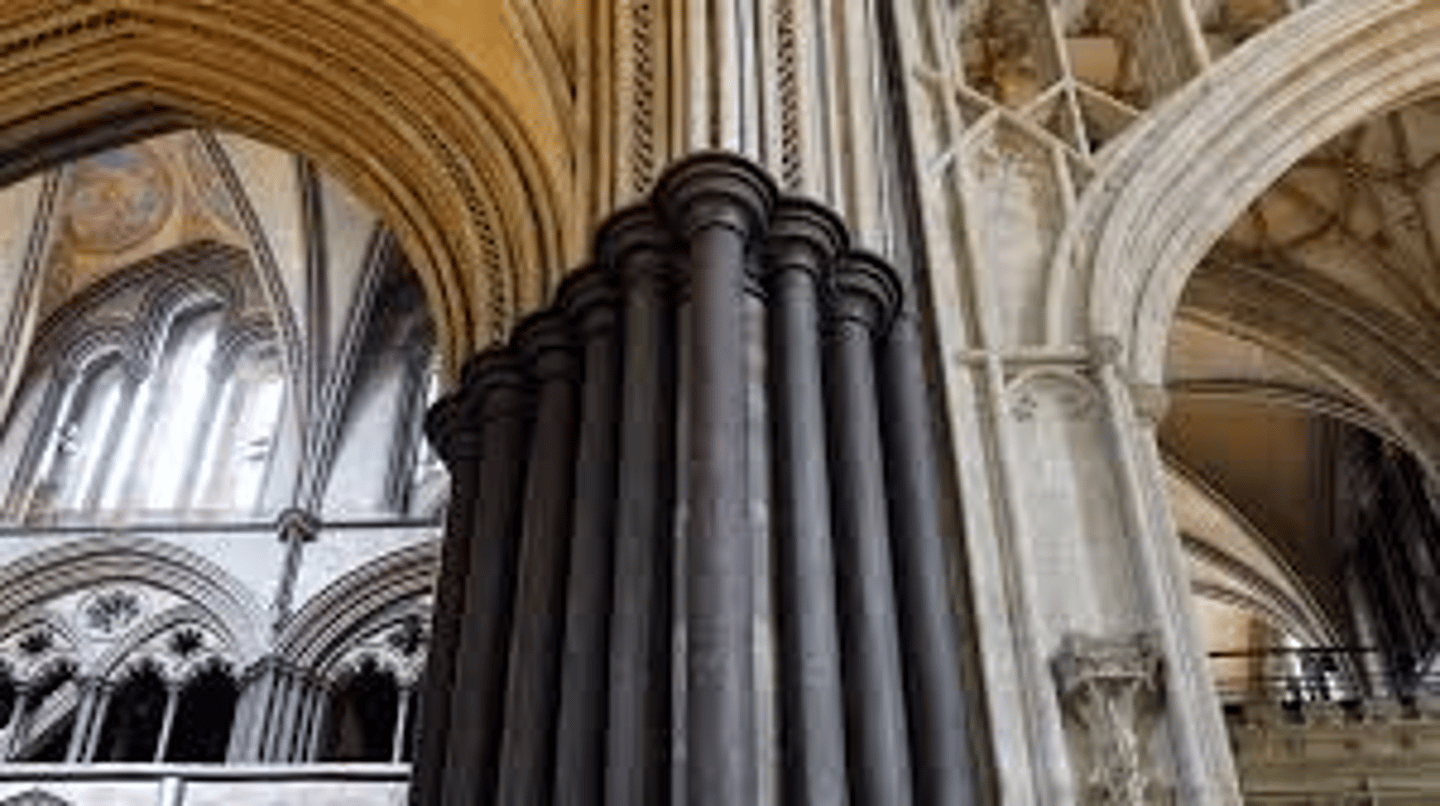
Purbeck marble
a key material in English Gothic architecture, particularly from the 12th century onwards, prized for its polished, dark appearance that contrasted with lighter stone.
Thomas Becket
linked to Gothic architecture primarily through Canterbury Cathedral, where he was murdered in 1170 and his shrine became a major pilgrimage site. Following a fire in 1174, the cathedral's eastern end was rebuilt in a pioneering Gothic style, and later, other parts of the cathedral were also converted to Gothic, featuring pointed arches, rib vaulting, and flying buttresses. The importance of the shrine fueled further development and decoration of the cathedral, including significant stained glass work.
became a potent symbol for medieval spirituality, and the art and architecture created in his honor reflected this, moving towards a more physical and visual representation of his martyrdom.
Sexpartite (6-Part) vaulting
feature that divides each bay of a vault into six parts using two diagonal ribs and three transverse ribs. This six-part division, a type of rib vault, was an early Gothic design characteristic of buildings like Notre-Dame de Paris and required alternating columns and piers on the ground floor for support. It contrasted with later, simplified four-part quadripartite vaults used in subsequent Gothic cathedrals like Chartres, Amiens, and Reims.
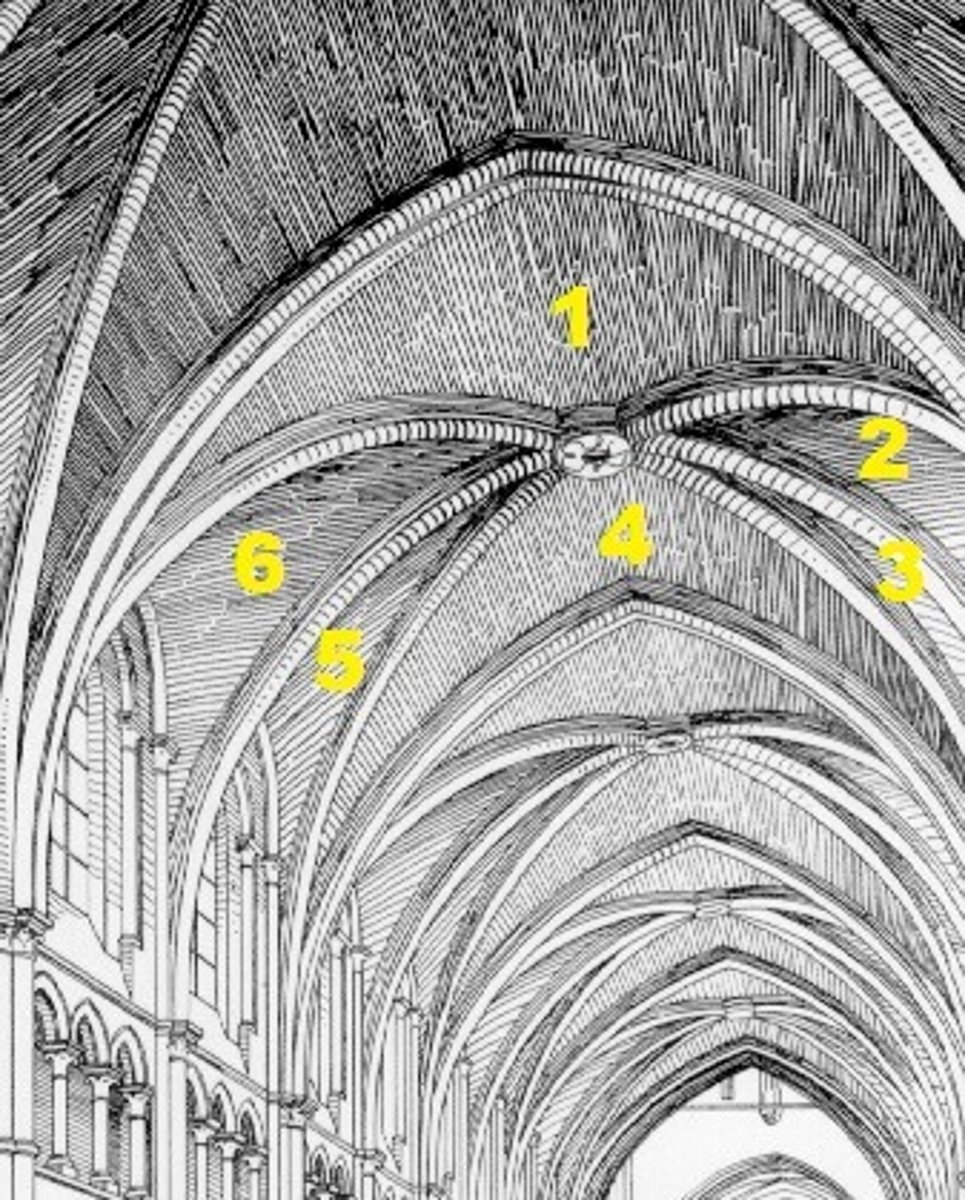
Alternating supports
a feature of Romanesque architecture that was largely abandoned in favor of a more uniform pier system in the development of Gothic architecture. While some early Gothic structures, like Notre-Dame de Paris, continued to use alternating supports for a time, the later, four-part rib vaults distributed weight more evenly, allowing for thinner, more consistent piers
Oculus
While the ______ is a simple circular opening from classical architecture, the Gothic rose window is a large, ornate stained glass window with a stone framework, designed to let in light. The term _____ is sometimes used more broadly in Gothic to describe smaller round or oval windows, and in the late Gothic period, large circular windows were common in Italy, sometimes used in place of traceried windows.
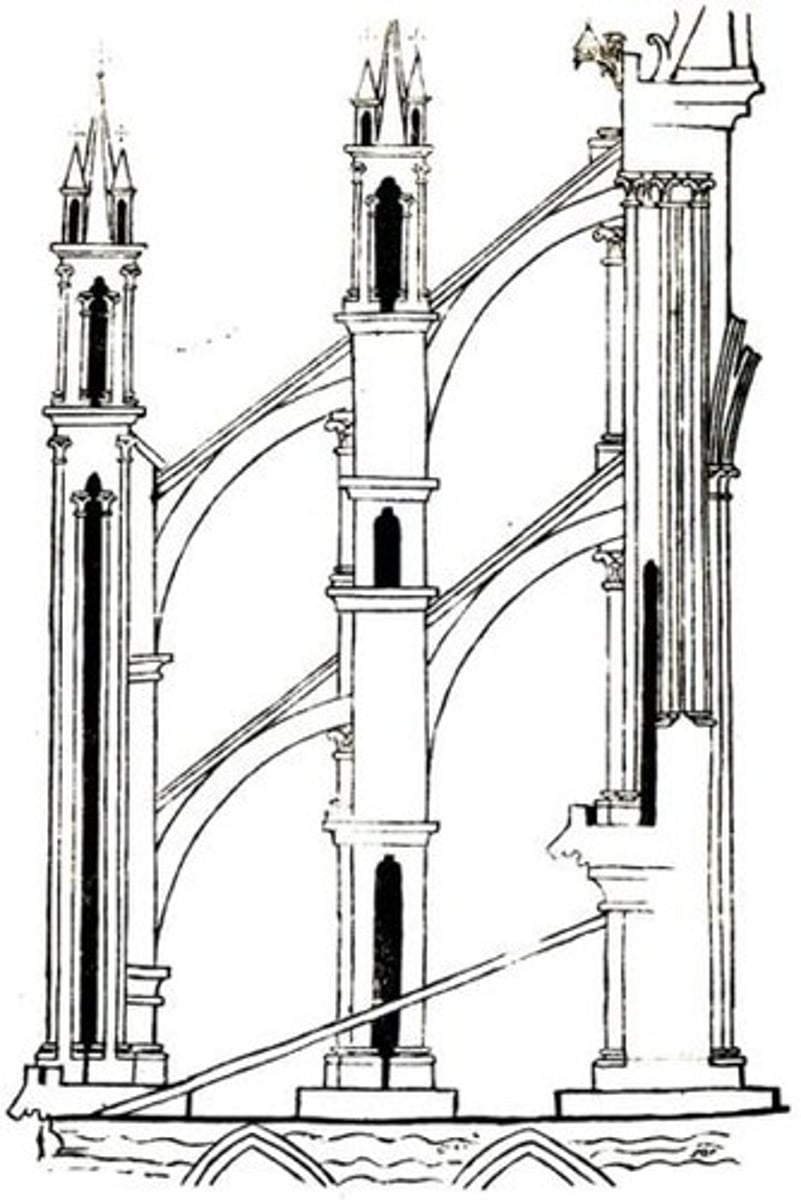
Flying buttress
defining feature of Gothic architecture that transfer lateral forces from high walls and vaulted ceilings to the ground, a process that allowed for taller, thinner walls and large stained-glass windows. They consist of a masonry block (the buttress) and an arch (the "flyer") that spans from the wall to the pier, pushing the roof's weight outwards and downwards.
Early Gothic and its defining characteristics
-12th century France
-Defined by its pointed arches, ribbed vaults, and flying buttresses
-key characteristics including grand scale, verticality, elaborate stained glass, and complex floor plans.
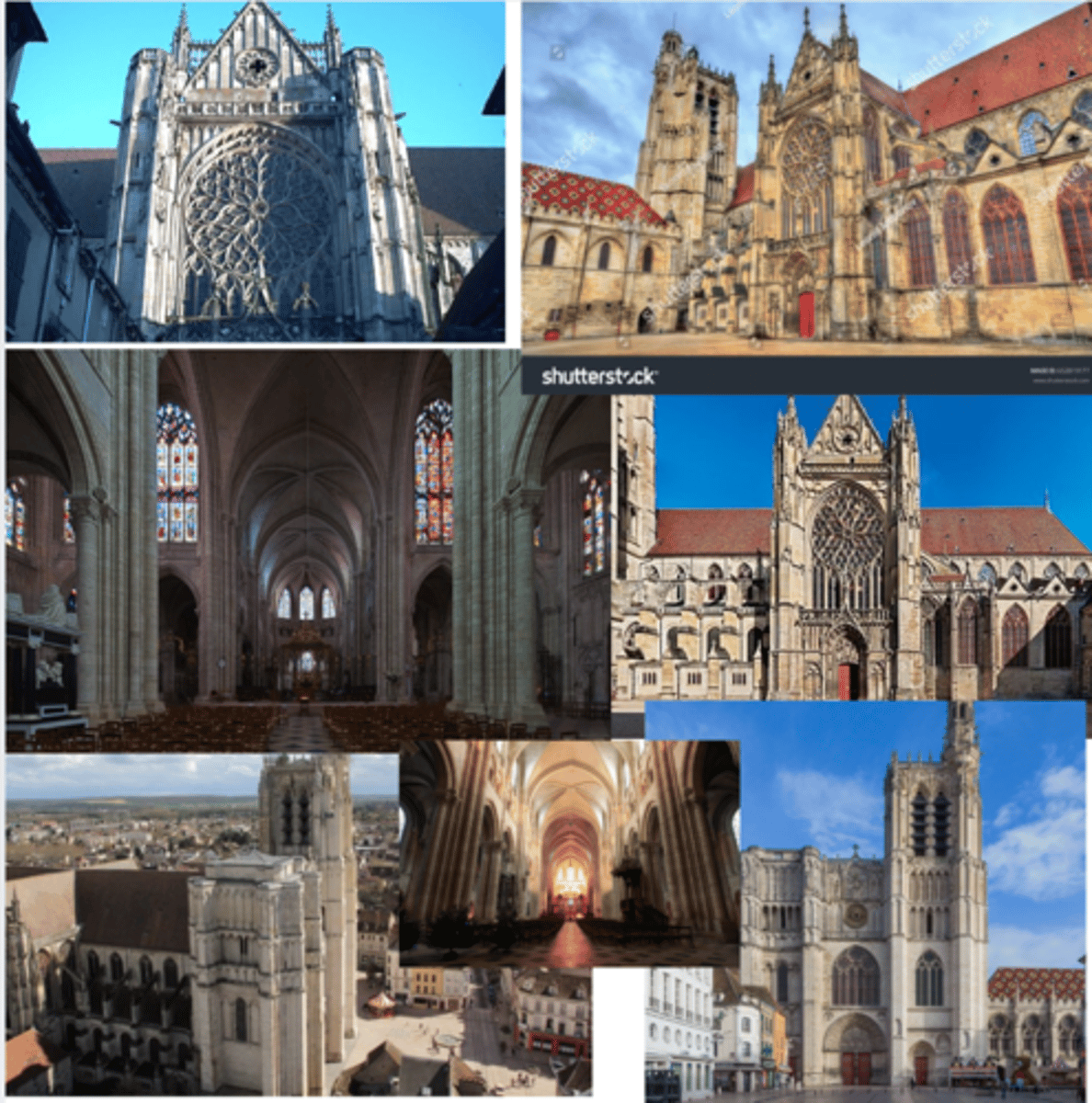
Cathedral Saint-Étienne, Sens, France. ca. 1140-1180 (clerestory windows modified in the 13th century)
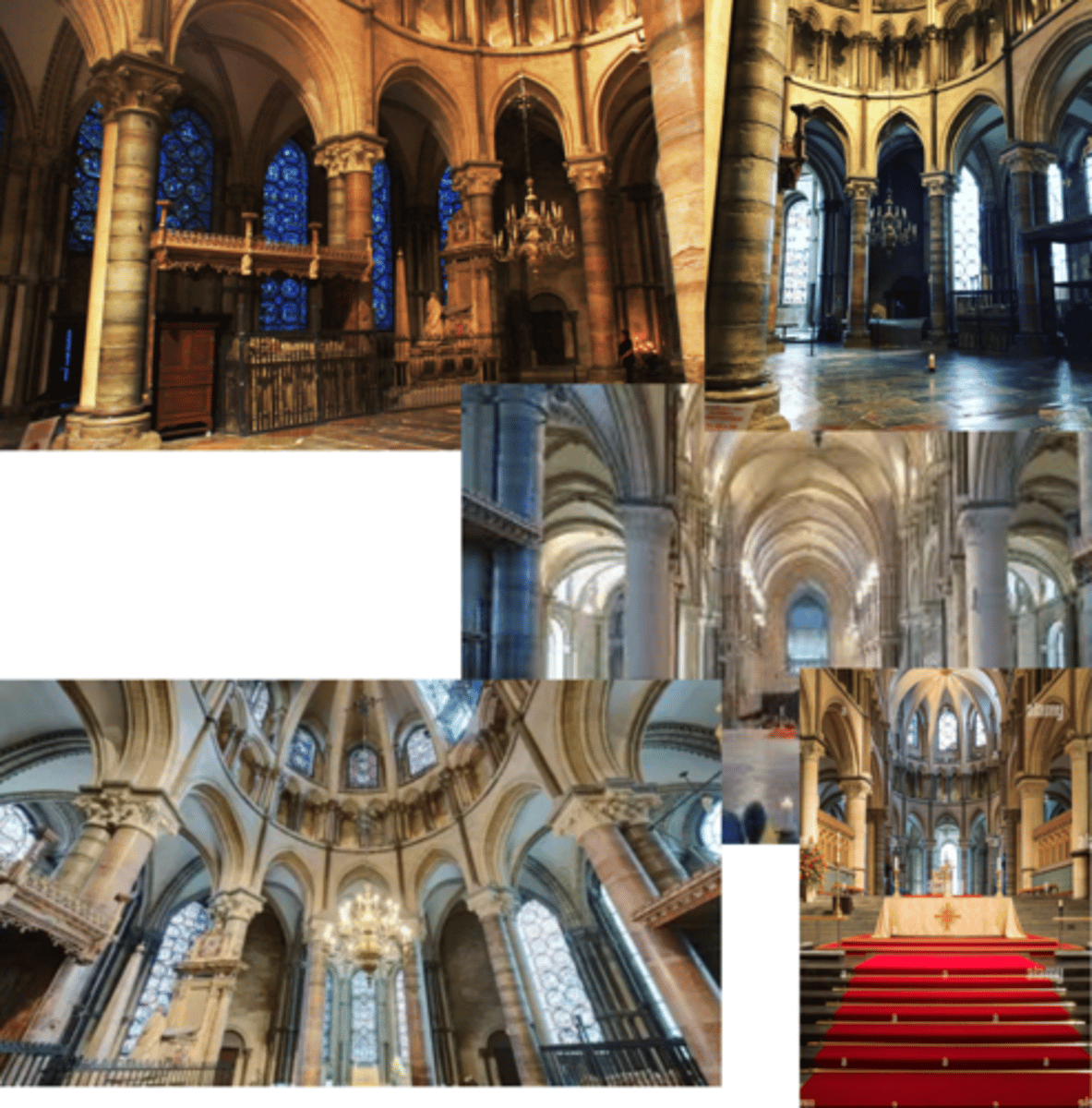
Cathedral of Christ Church, Choir and Trinity Chapel (Becket's Shrine), Canterbury, England, ca. 1174-84.
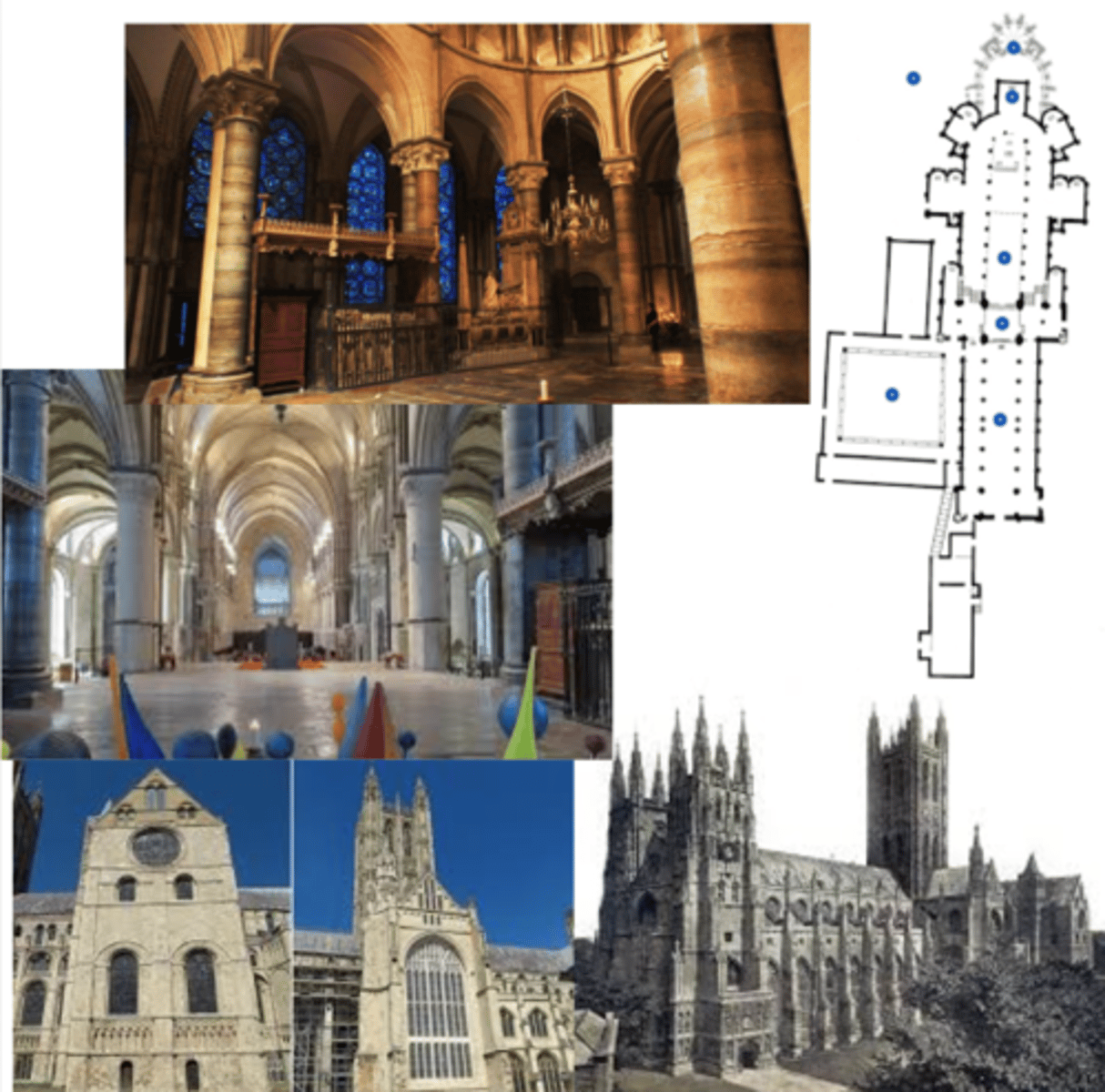
Cathedral of Christ Church, Choir and Trinity Chapel (Becket's Shrine), Canterbury, England, ca. 1174-84. (interior!!)
Which Cathedral is this the interior of?
Cathedral Notre-Dame, Laon, France. ca. 1175-90
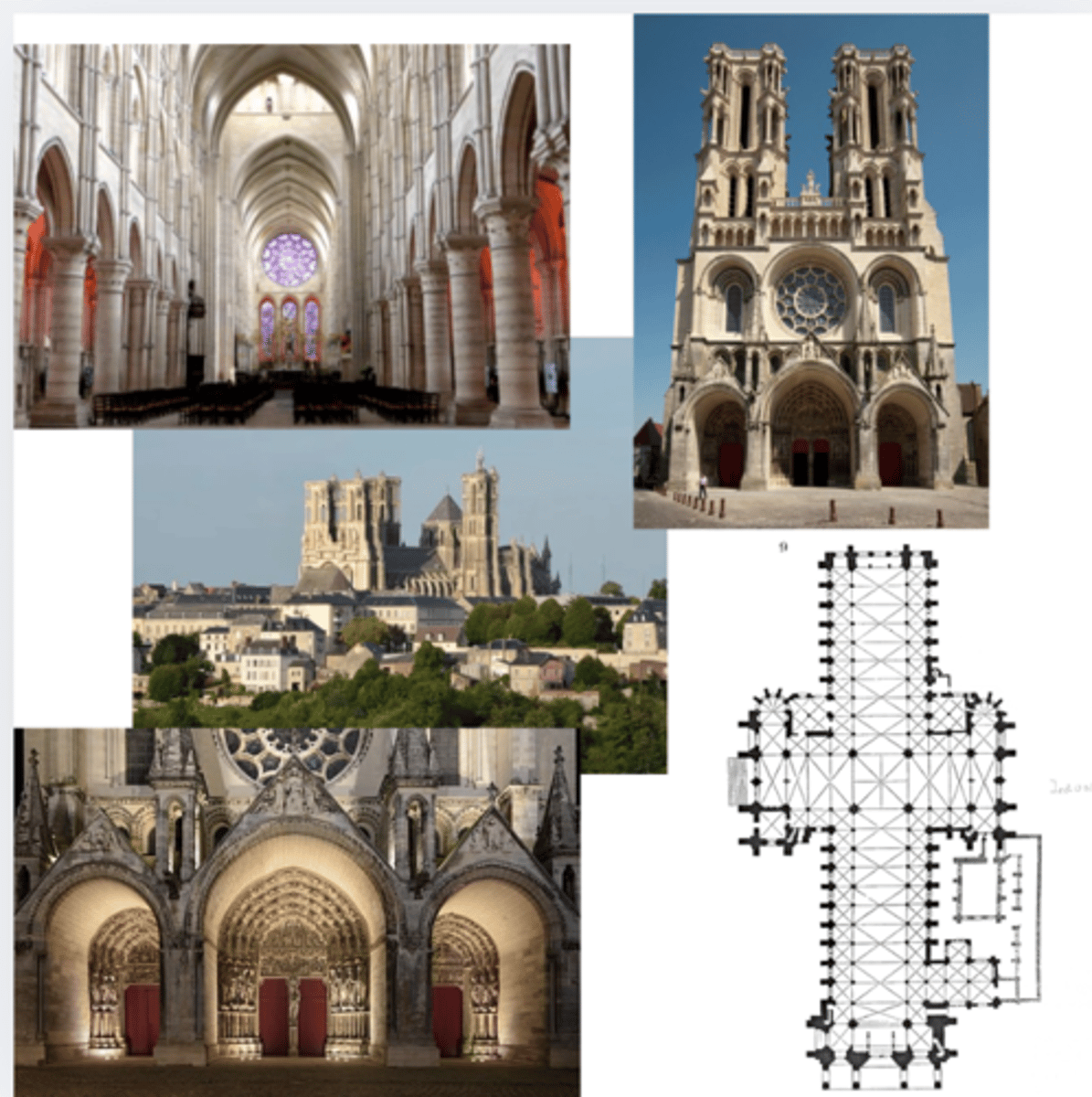
Cathedral Notre-Dame, Laon, France. ca. 1175-90. (interior)
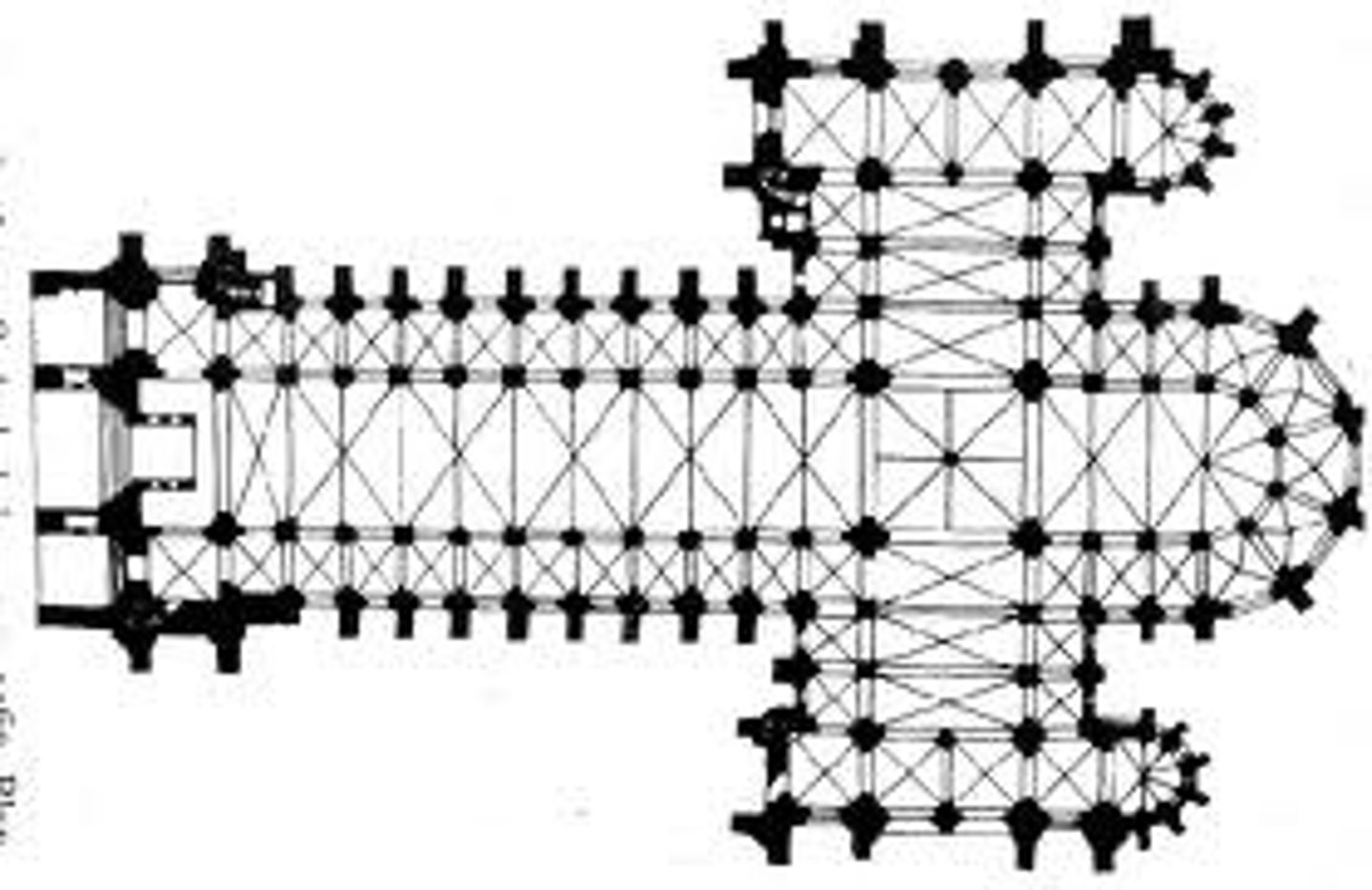
Liturgy
A body of rites prescribed for public worship
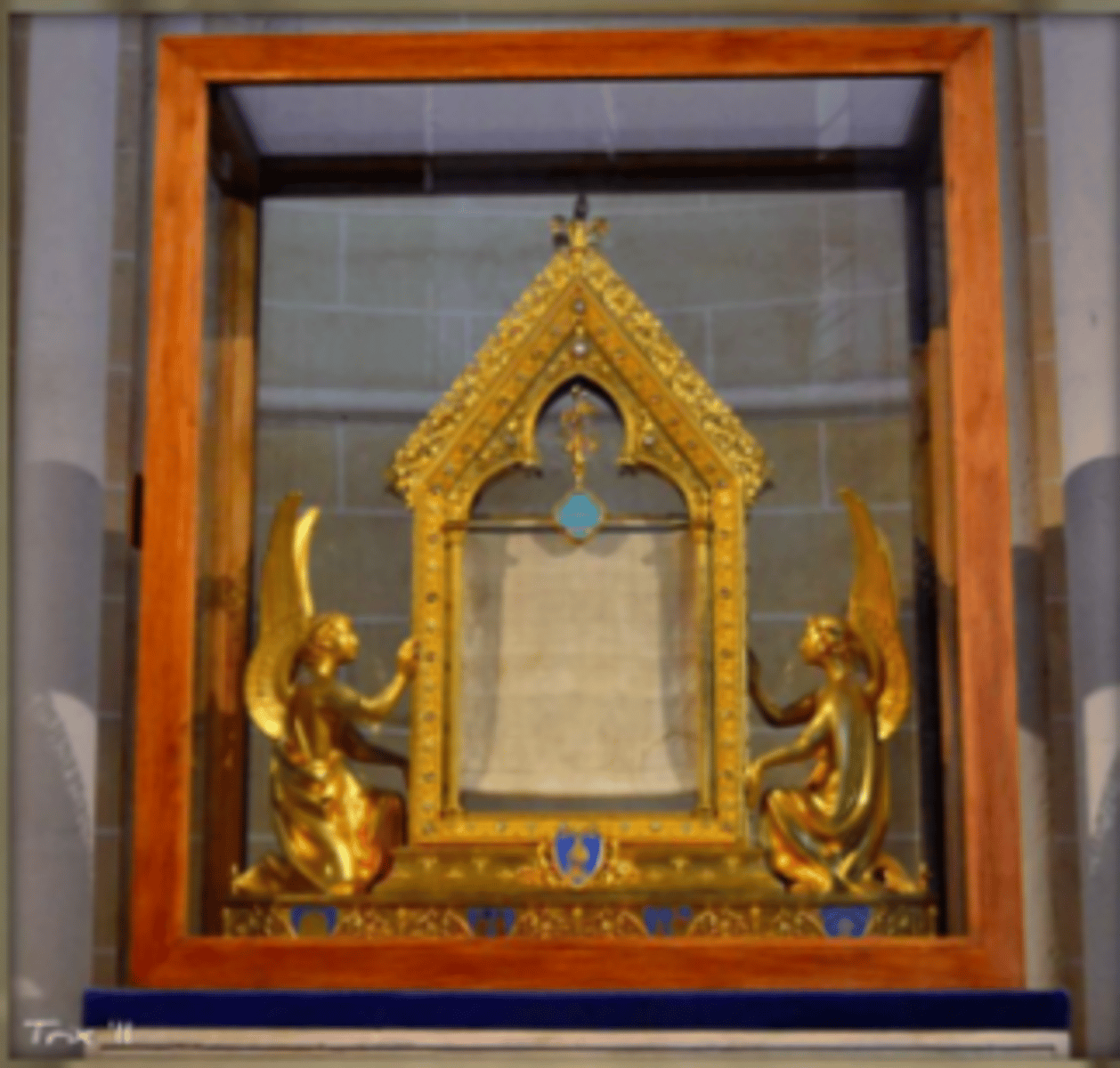
Tunic of the Virgin
(a particular relic held by Chartres Cathedral)
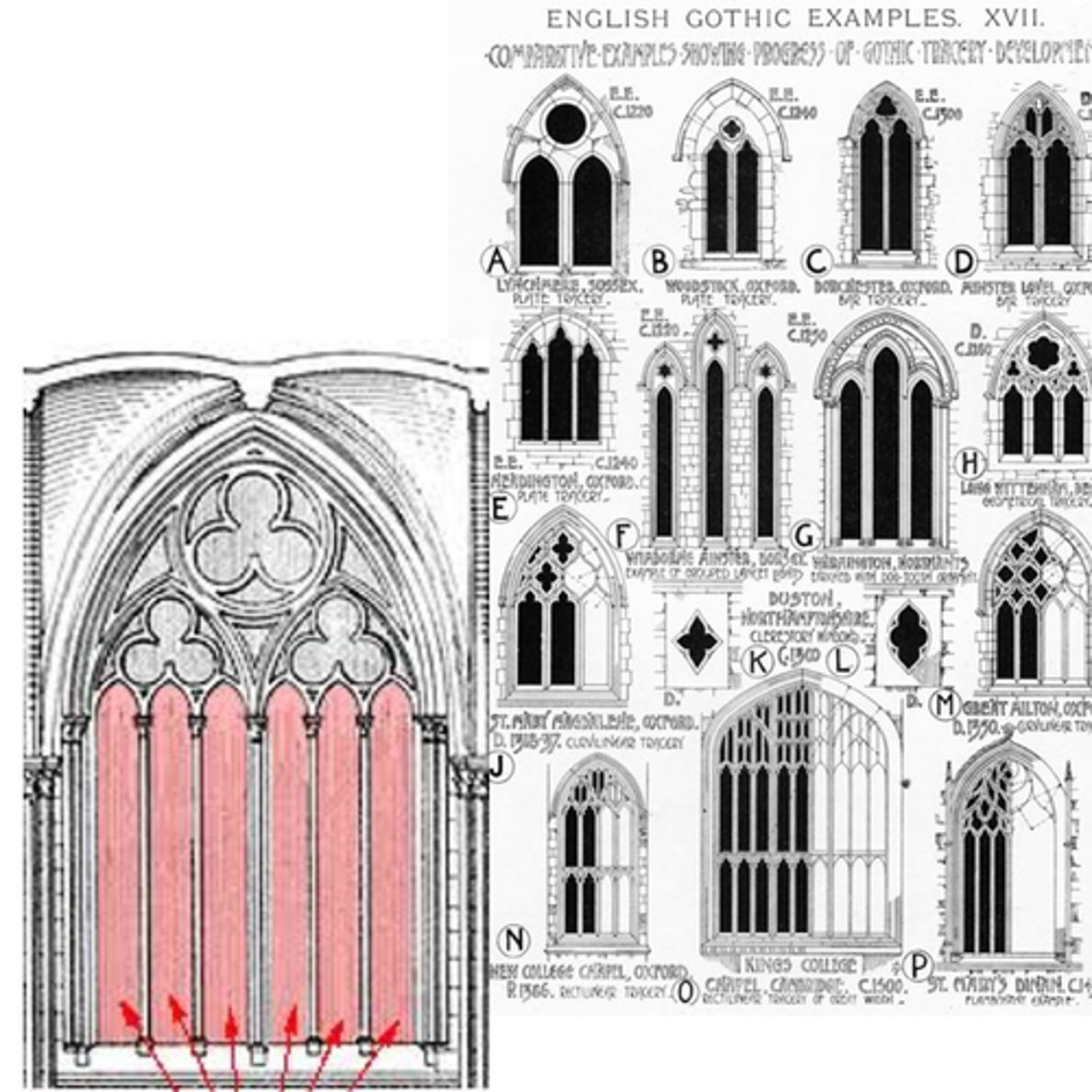
Lancet, Early English Gothic period
a style of Gothic architecture characterized by tall, narrow windows with a sharp, pointed arch at the top, resembling the head of a lance. This style is typical of the __________ period (13th century) and features simple, unadorned arches for windows, doorways, and niches. ______ windows were often grouped in multiples and were used to create more light and an illusion of greater height inside buildings like cathedrals.
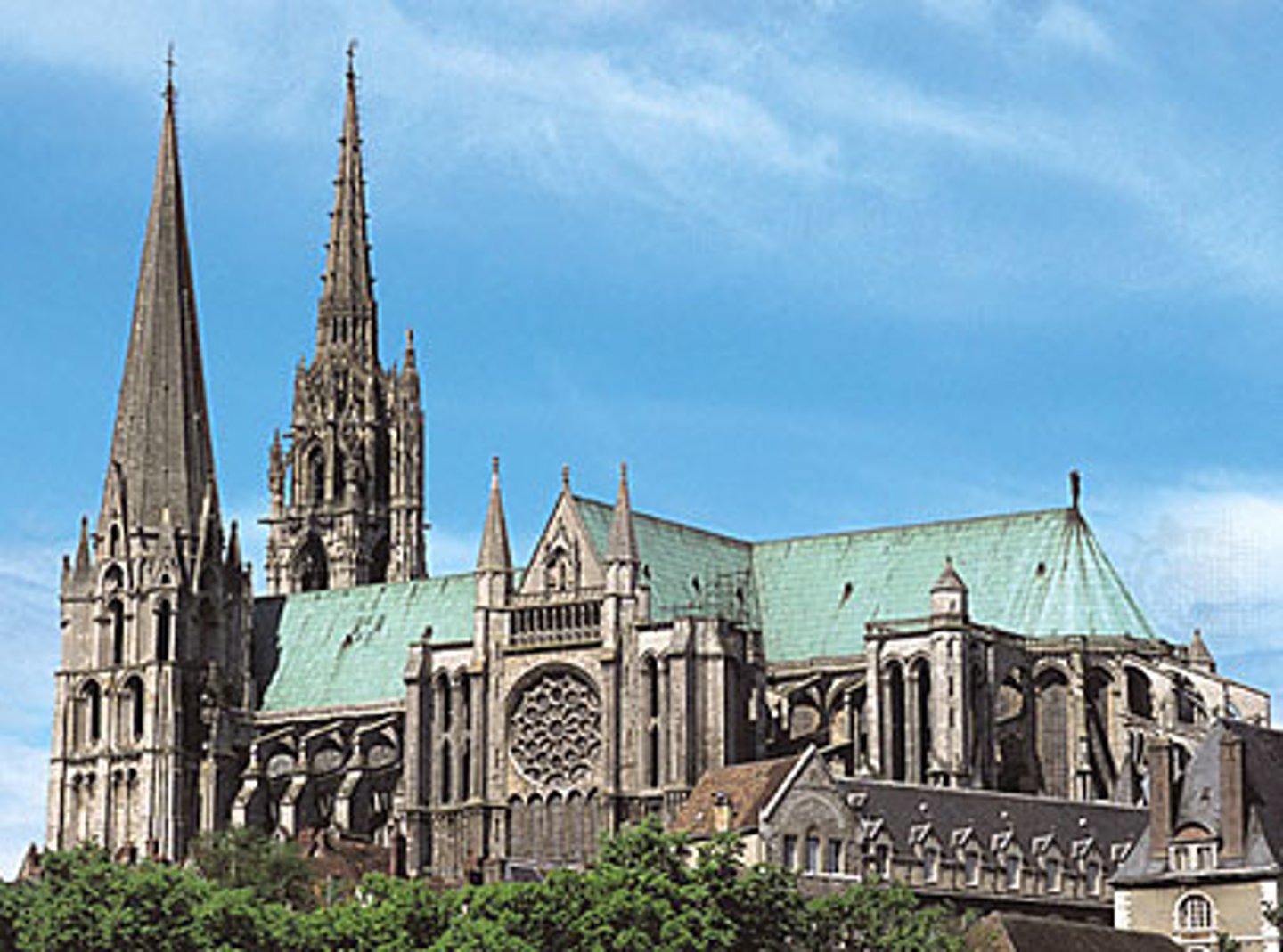
Cathedral Notre-Dame. Chartres, France. Parts of west facade 1145-55. Majority of the cathedral from ca. 1194 - ca. 1220. (exterior)
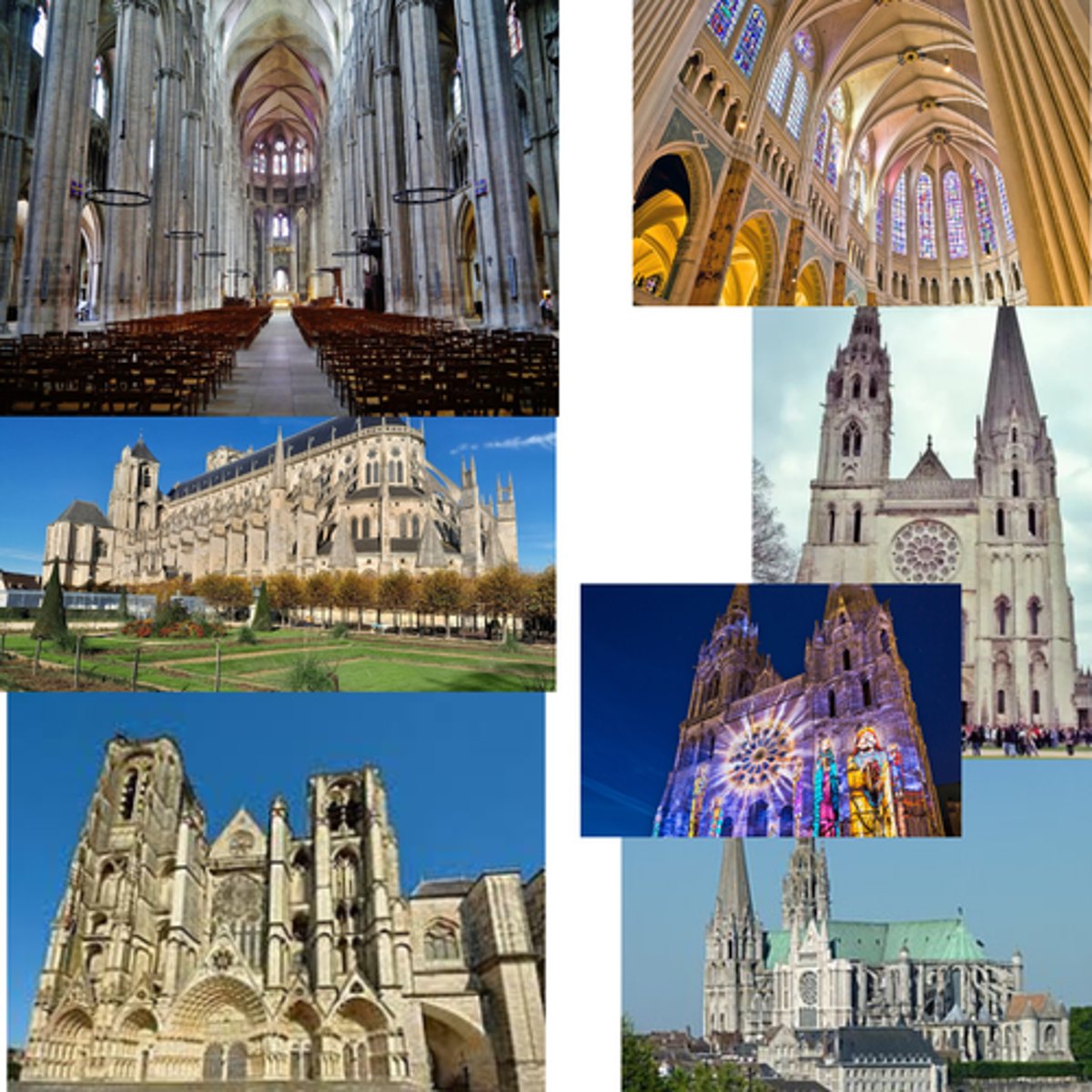
Cathedral Saint-Étienne. Bourges, France. Begun ca. 1195 and mostly complete by 1255. (Be able to contrast this building with the Cathedral Notre-Dame of Chartres).
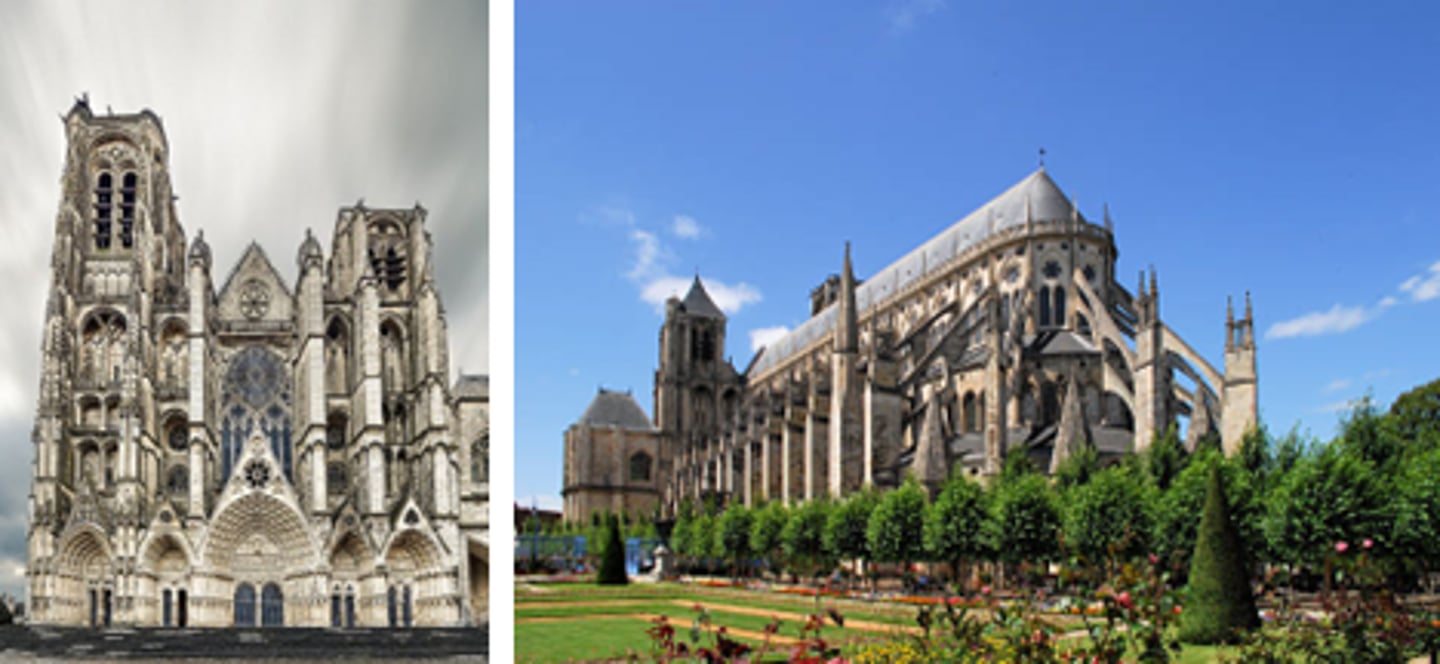
Saint-Étienne in Bourges, France (L) vs Notre-Dame of Chartres (R)
2 multiple choice options
Cathedral Notre-Dame. Reims, France. 1207-mid-13th century.
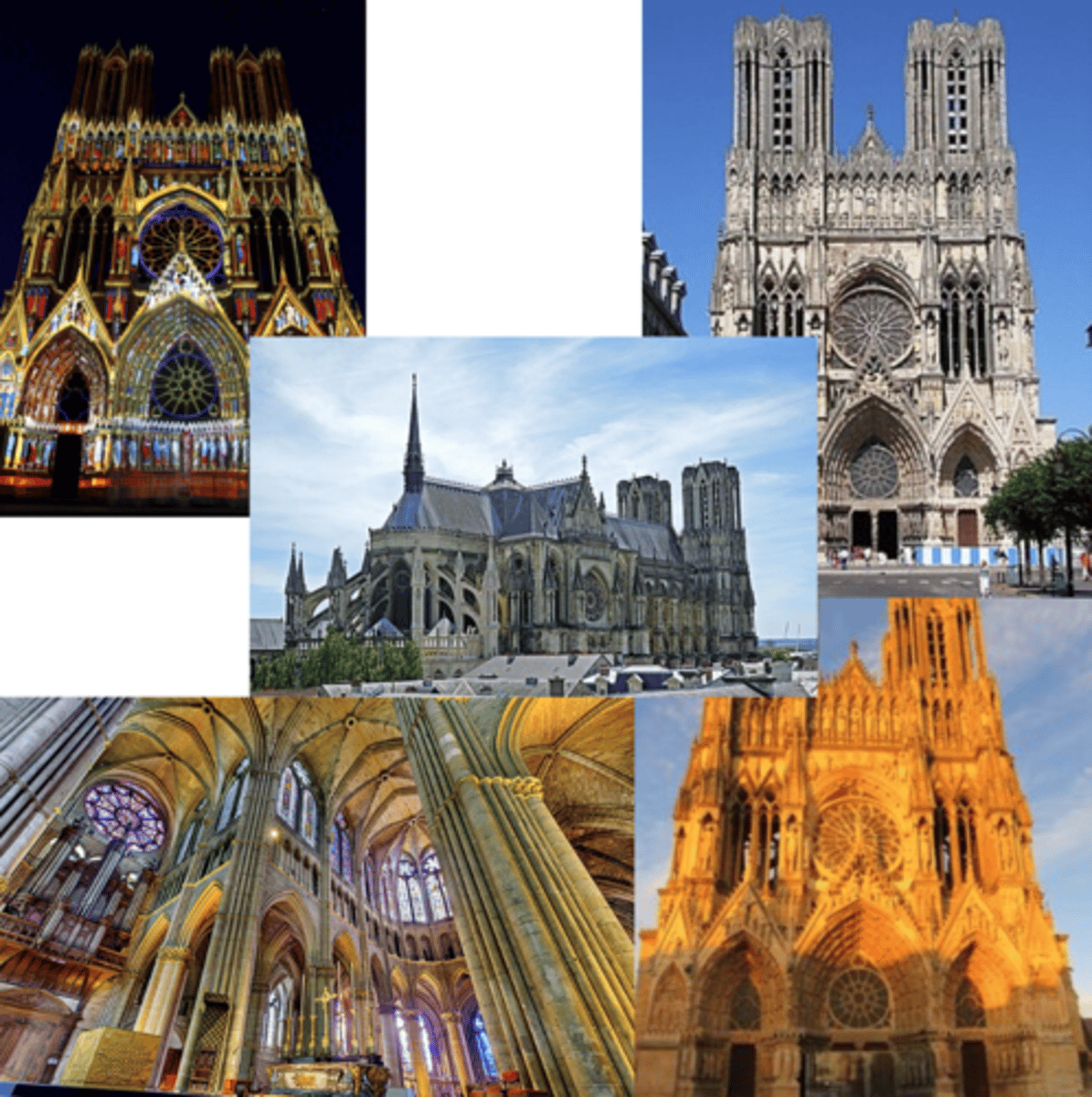
Cathedral Notre-Dame, Reims
Reims: Cathedral Notre-Dame
3 multiple choice options
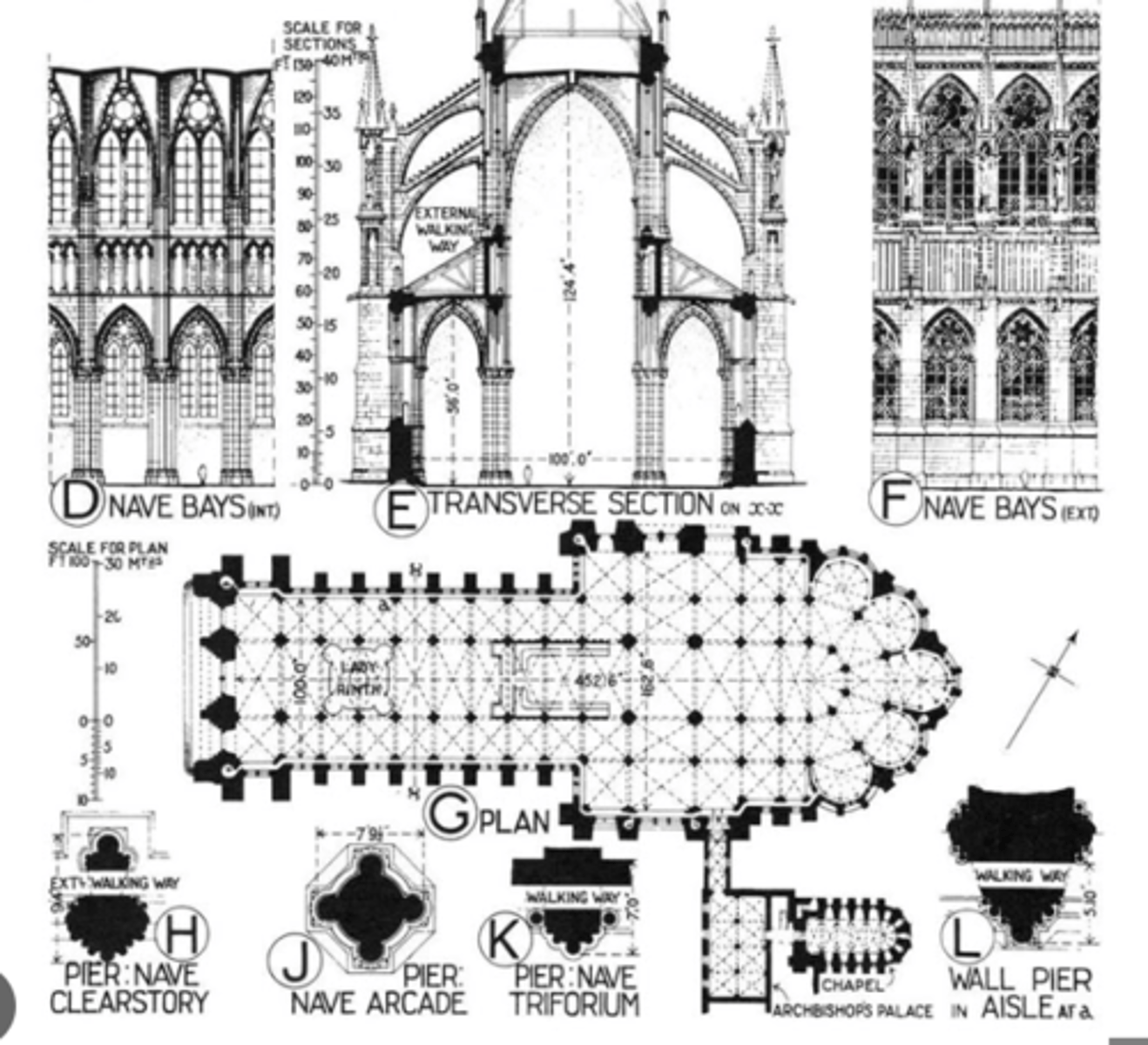
Geometrical matrix/Dynamic geometry
Gothic architecture used a dynamic geometry to create a sense of upward movement and spiritual ascent, moving beyond static, static forms. It combined Euclidean geometry for an overarching, proportional framework with fractal patterns for intricate details and the representation of nature. Key concepts include a method of building called "quadrature", which involves inscribing rotated squares within one another, and the use of geometric modules to scale designs from small components to the entire structure.
Modular plan
Gothic designers used a basic unit of measurement, or a "module," often derived from the dimensions of a key element like a wall thickness, to dictate the proportions of other parts of the building, creating a sense of unity and complexity through repeated geometric and arithmetical subdivisions
"progressive divisibility" or "progressive subdivision"
terms used in the context of sacred geometry to describe the concept of dividing a geometric form into smaller, self-similar shapes to create a sense of infinite complexity and order. This principle is evident in various art forms, including Gothic architecture, where it is believed to reflect the divine order of the universe and create awe-inspiring spaces.
Labyrinth
large, circular, and often floor-embedded designs found in Gothic cathedrals, most famously at Chartres Cathedral, that represent a symbolic pilgrimage or journey to God. These are not mazes but unicursal paths with a single, winding route to a central point, intended to serve as a form of meditation, a substitute for Holy Land pilgrimages, and a way to teach the illiterate masses the story of their spiritual quest.
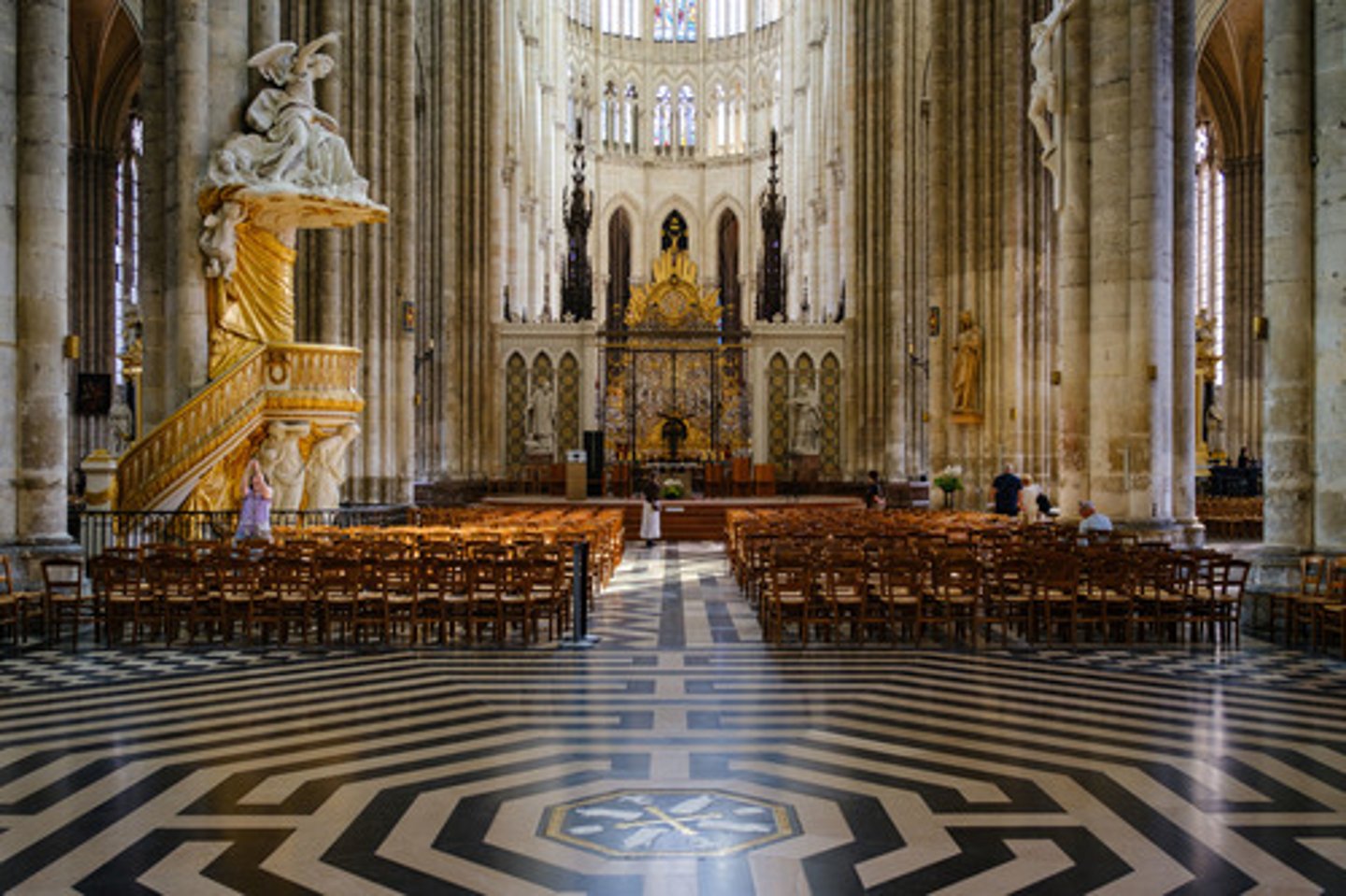
Cathedral Notre-Dame. Amiens, France. 1220s-1260s + modifications from 1290 (lateral chapels, western towers, structural intervention for sake of building stability).
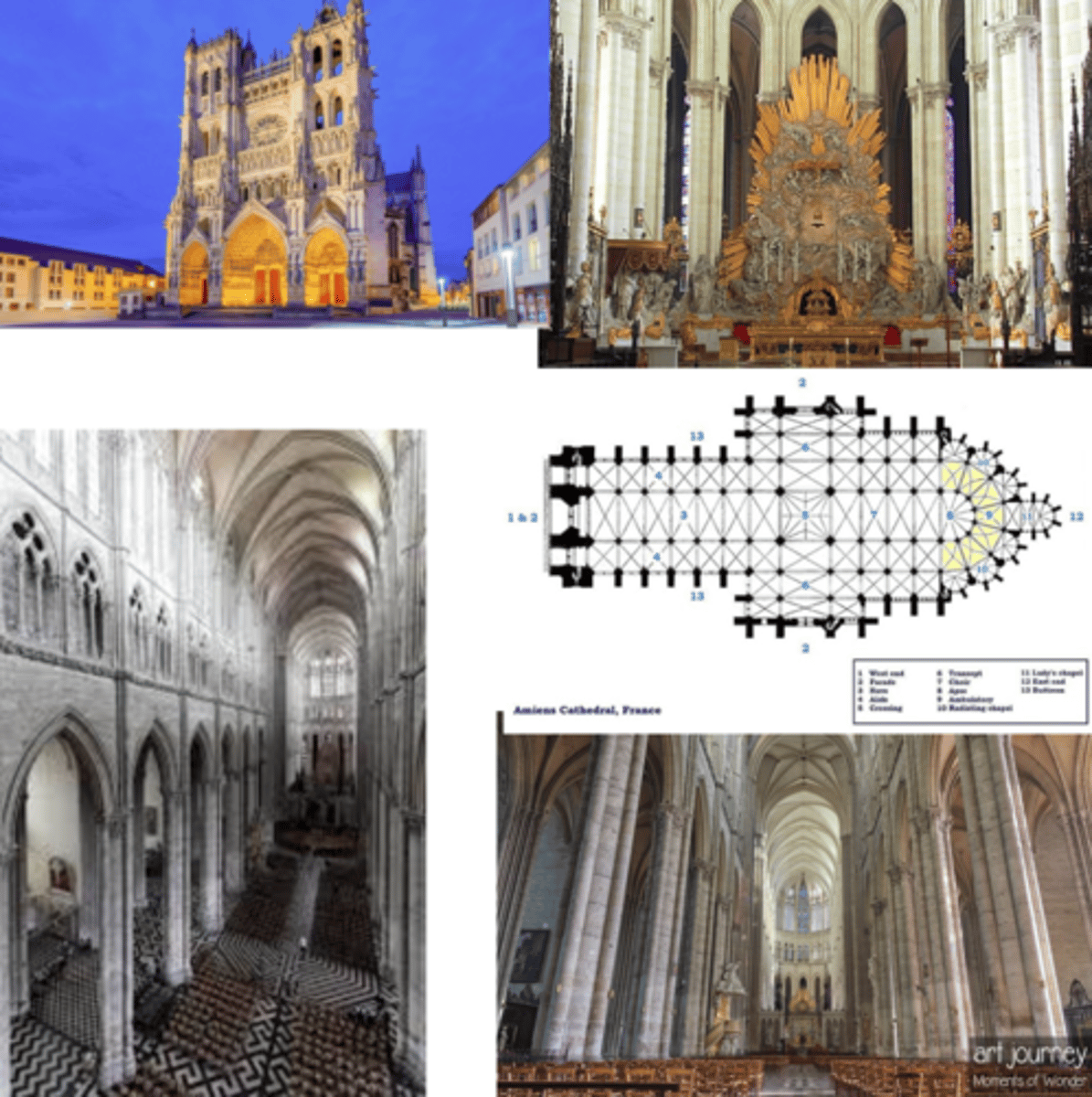
Robert de Luzarches
Contribution to Amiens was his design and initial construction of the Cathedral of Notre Dame, beginning in 1220 after the previous one was destroyed by fire.
He is credited with creating a new Gothic design that became a standard for later cathedrals, featuring a successful balance of weight and strength.
-revolutionizing construction with standardized, pre-fabricated stone pieces, simplifying and unifying the cathedral's plan.
Thomas de Cormont
#2: Took over as chief architect after first one died. He supervised the construction of the upper nave and belfries of the western towers and laid out the lower choir before his death around 1250. Son took over after he died.
Renaud de Cormont
#3: Main contributions to Amiens Cathedral were his experimental architectural designs in the upper transept and choir, which included a glazed triforium and more delicate openwork flying buttresses. He also designed the cathedral's labyrinth in 1288 and is credited with creating new decorative forms, although some of his structural innovations proved unstable and required later repair.
(Bastard son who messed Amiens up)
Structural fixes to Amiens cathedral
Issue: Buttresses too dainty, was pushing the columns out
Who fixed it? Early 1500s, Pierre Tarisel
How: Installation of a large, red-hot iron chain around the columns at the triforium level; as it cooled, the chain tightened to resist the outward forces. The structure also experienced stress in the transept crossing pillars and chevet in 1497, which was mitigated by the iron chain, additional flying buttresses, and later repairs.
(study guide lists this as: modifications from 1290 (lateral chapels, western towers, structural intervention for sake of building stability))
Rayonnant
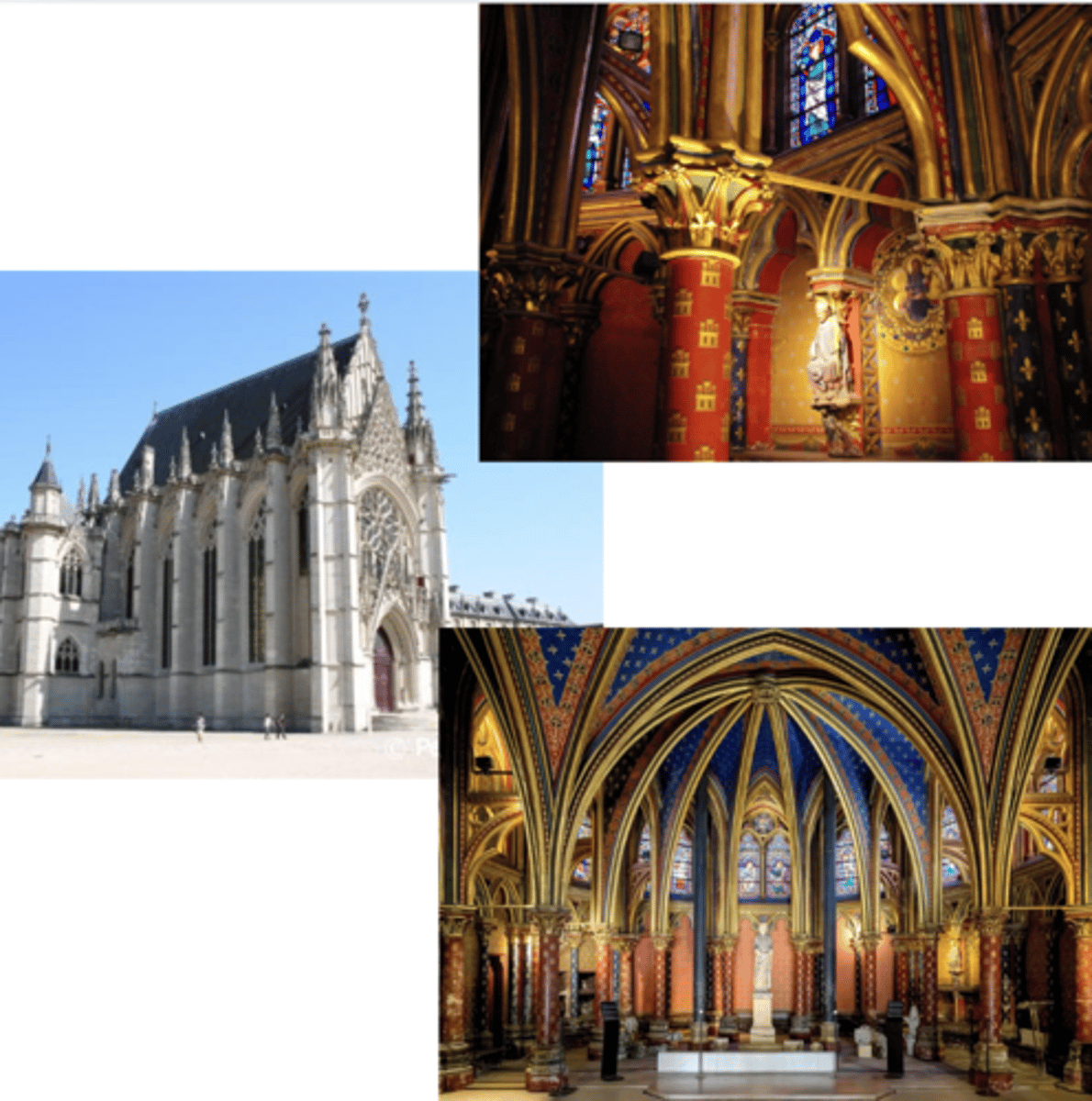
Style of French Gothic architecture from the period of about 1240 to 1350, characterized by its decorative emphasis on stained glass windows, especially the rose windows with radiating tracery, which gave the style its name. a transition from earlier Gothic, a focus on surface decoration and lightness, reducing masonry to create walls that appear almost entirely made of glass, supported by delicate, clustered columns and elaborate tracery. Key examples include the Sainte-Chapelle in Paris
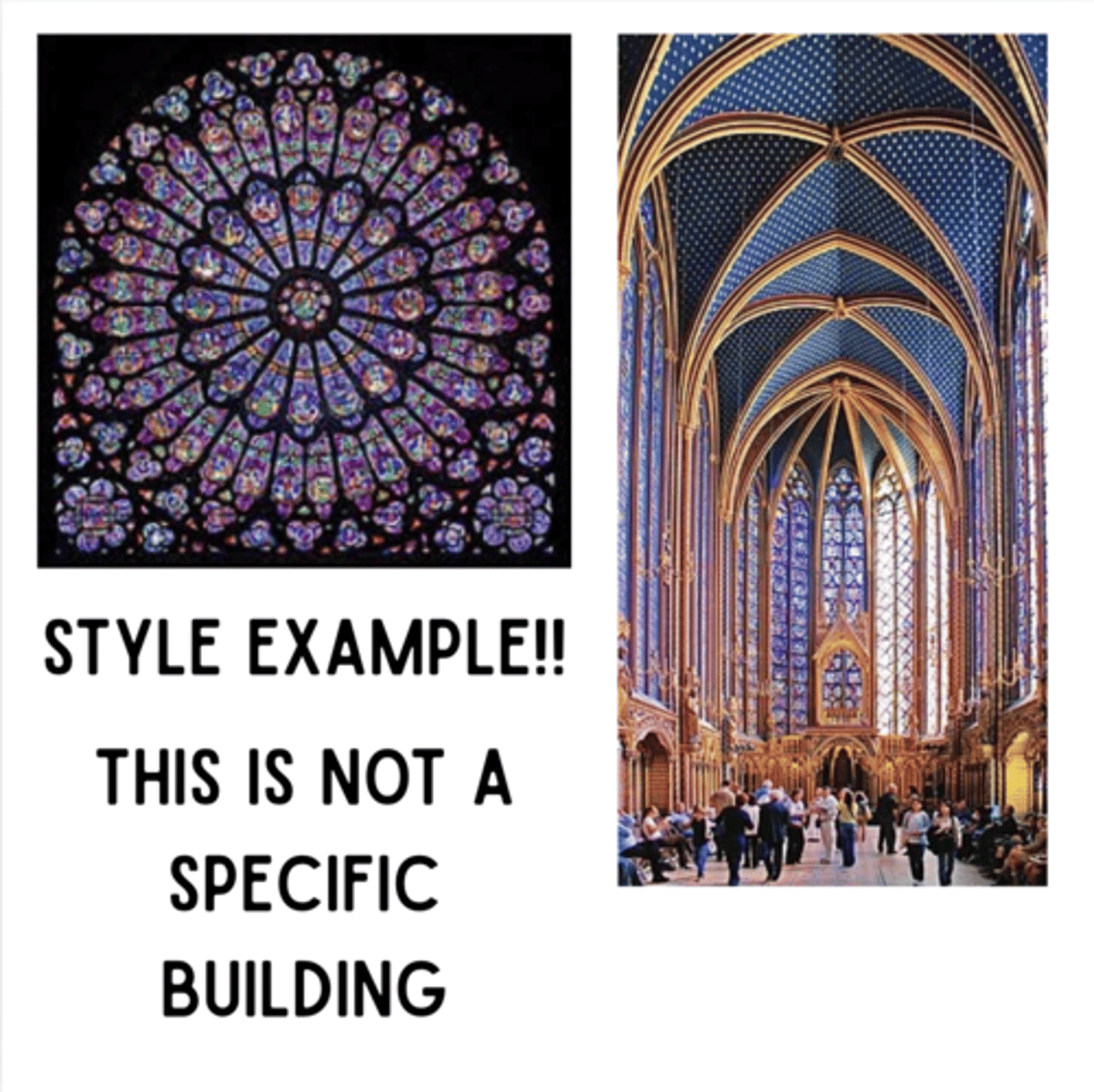
Crown of Thorns
-Rayonnant-style "masterpiece," "lantern of light"
-altar elevated to better display the Crown of Thorns
-Sainte-Chapelle in Paris was built by King Louis IX specifically to house the relic.
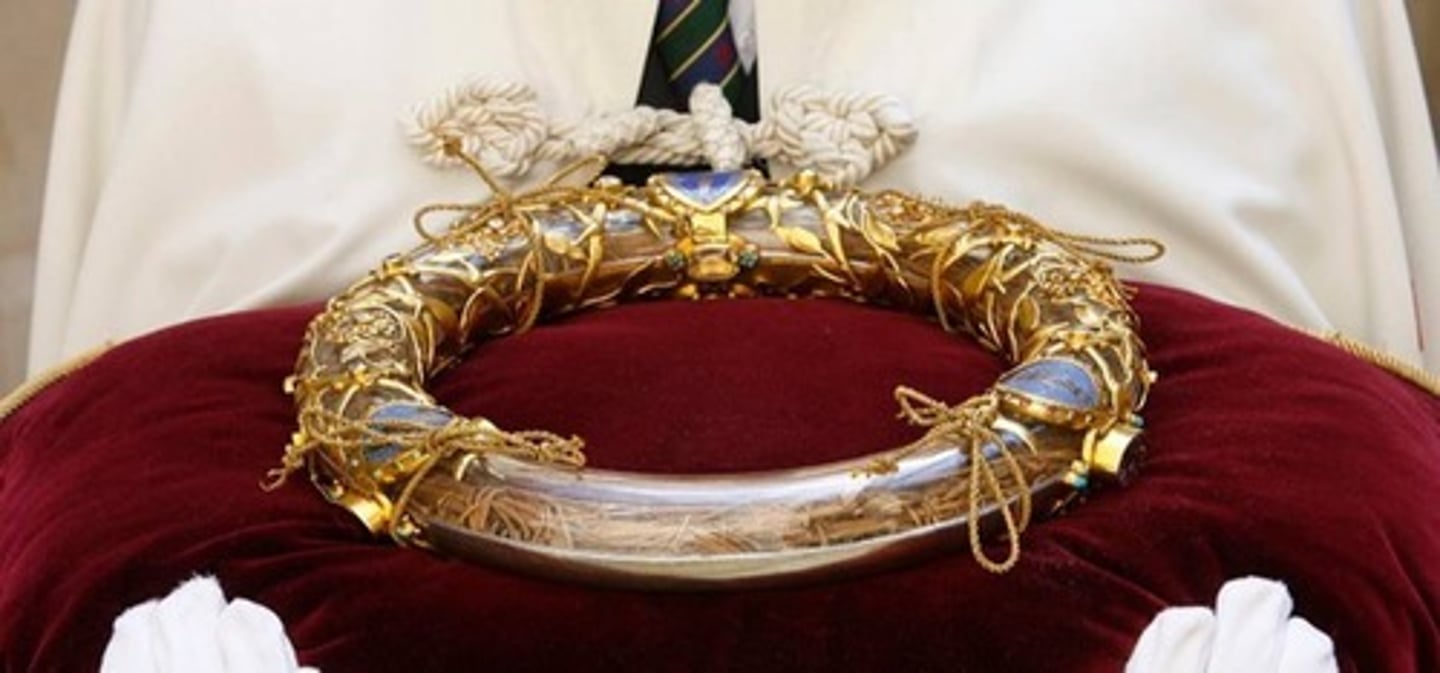
Louis IX King of France (Saint Louis)
Louis IX of France, also known as Saint Louis, was a major patron of Gothic architecture, most famously commissioning the Sainte-Chapelle in Paris to house Christian relics like the Crown of Thorns His patronage positioned France as a leading Christian kingdom and the Sainte-Chapelle served a political purpose by rivaling the Hagia Sophia and connecting to Charlemagne's legacy.
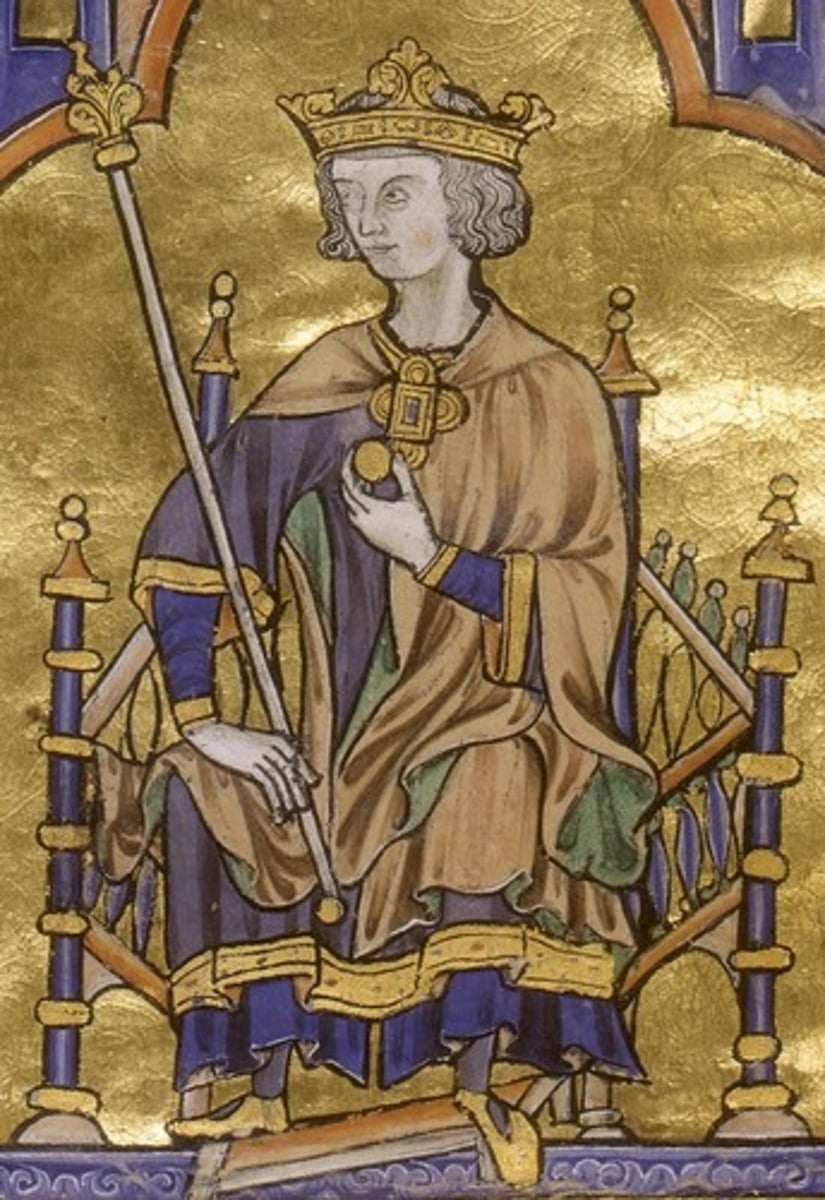
Trefoil/Quatrefoil
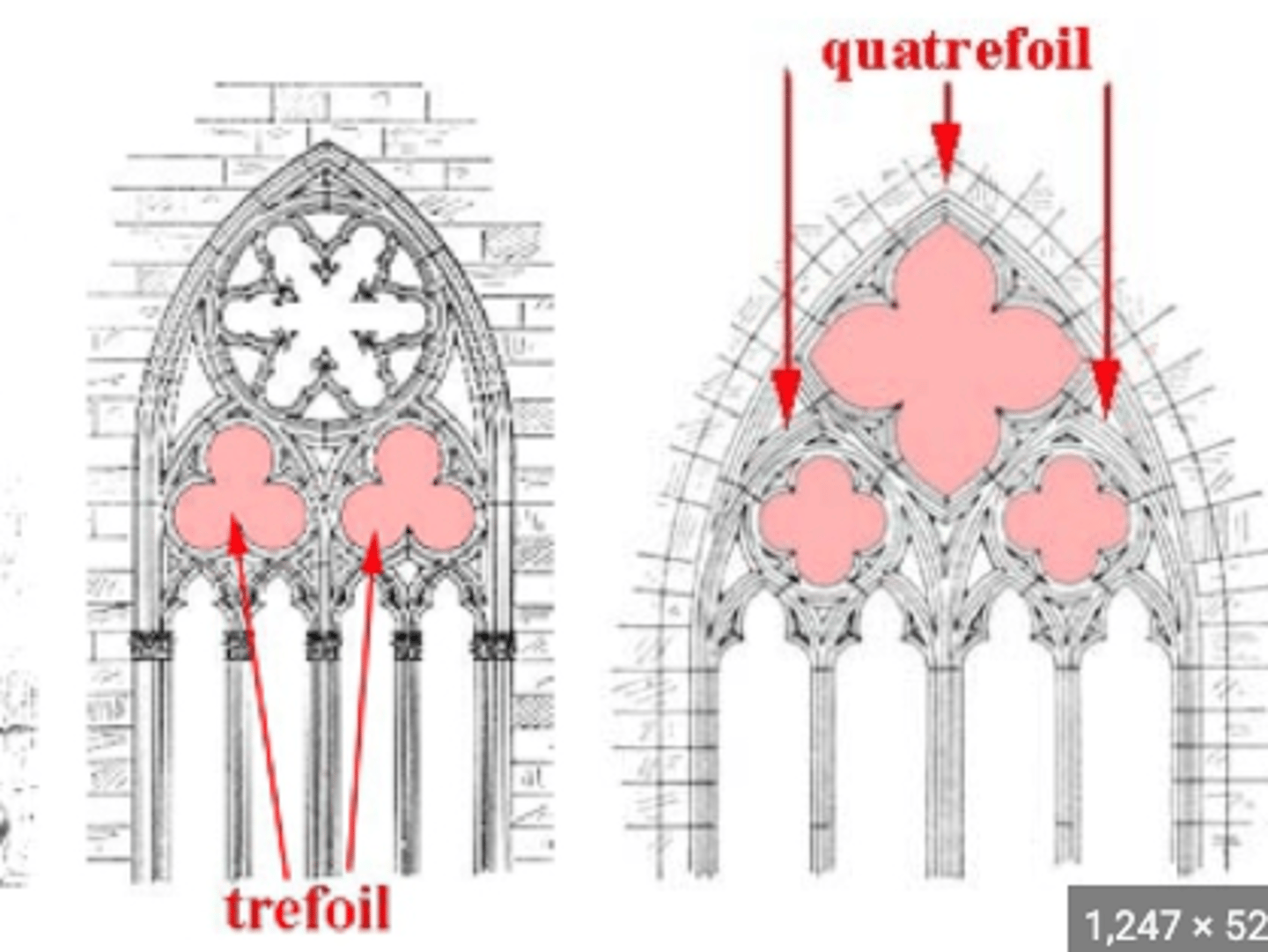
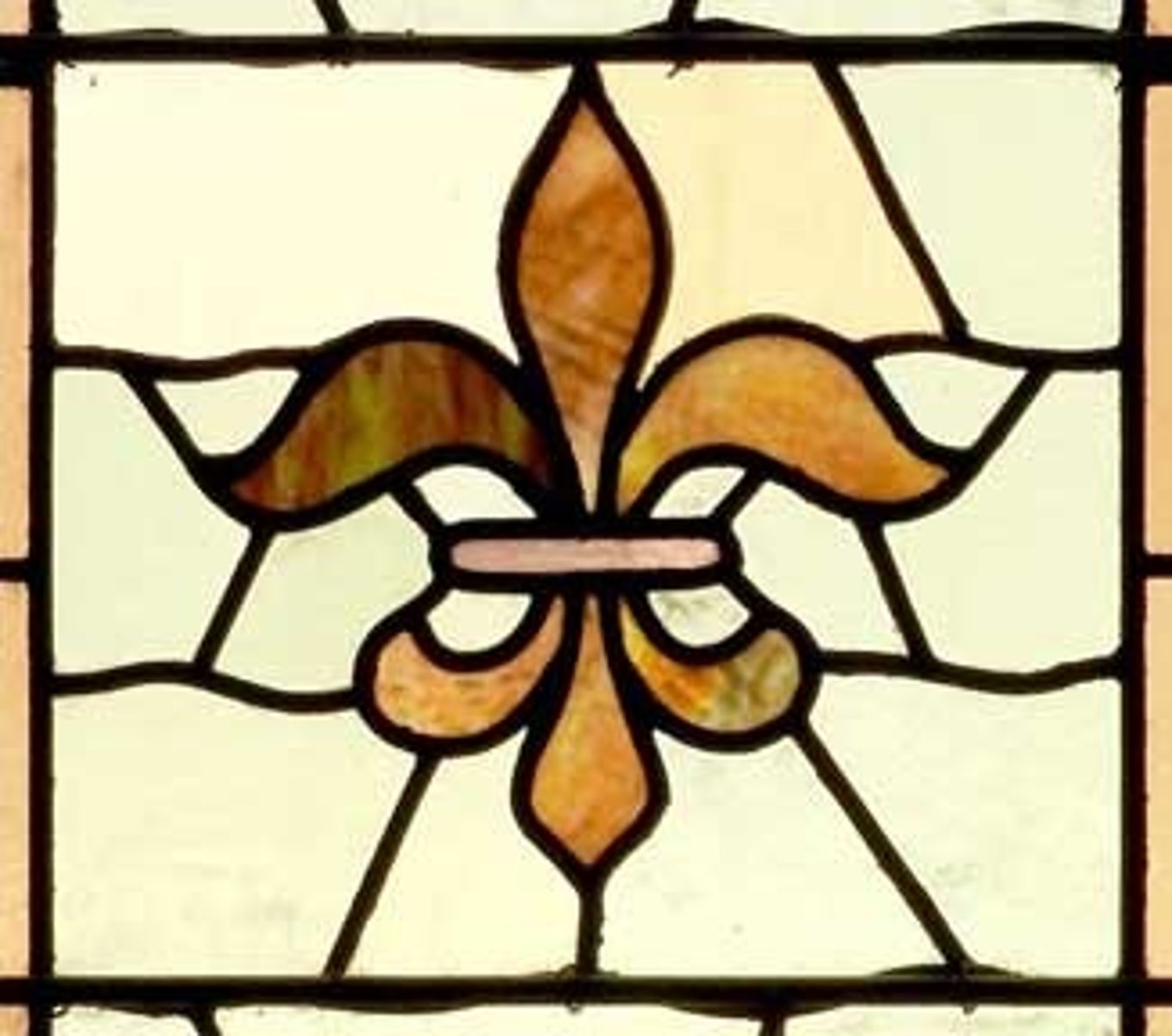
Fleur de lys
represents religious symbolism like purity and the Virgin Mary, the Holy Trinity, and royal power, appearing frequently in stained glass, on portals, and throughout cathedrals like Notre-Dame de Paris and Sainte-Chapelle. It was used as a royal emblem for French kings, signifying their divine right to rule, and was adopted by the Catholic Church to honor saints and religious figures.
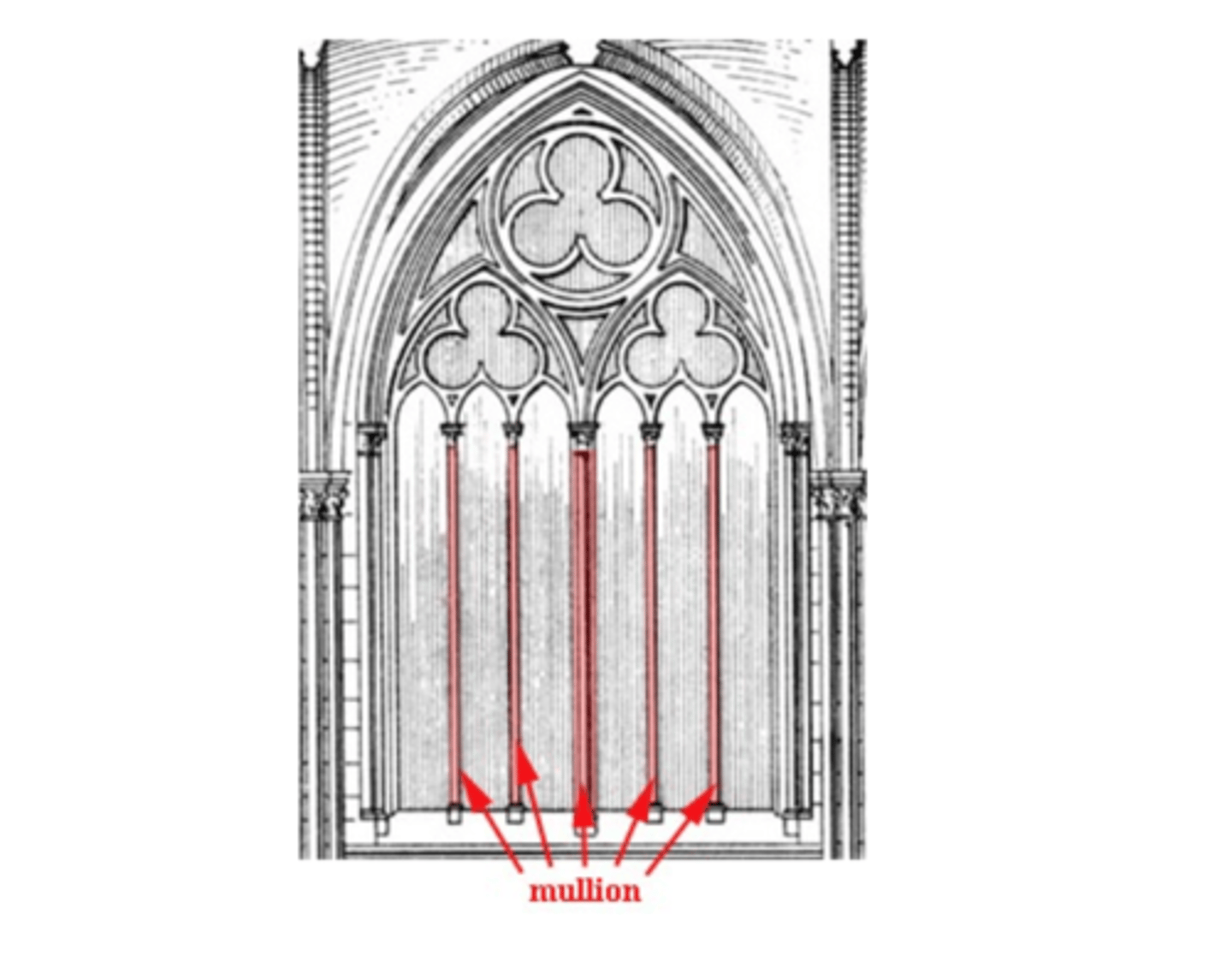
Mullion
vertical stone members that divided large window openings into smaller sections, serving both a structural and an ornamental purpose. They were essential for supporting the weight of the stone above and the glass itself, while also being intricately designed to create elaborate patterns, especially in stained glass windows.
Glazed triforium
a shallow, arcaded passageway in Gothic architecture that is filled with stained glass, located above the main nave arcade and below the clerestory. This innovation, developed after the structural role of walls became less crucial due to flying buttresses, replaced the traditional ____ triforium with windows to increase the amount of light and color inside the cathedral. The _____ triforium is a key feature of Rayonnant and Flamboyant Gothic styles, most famously seen in churches like Amiens Cathedral.
Sainte-Chapelle. Paris, France. After 1239-1248.
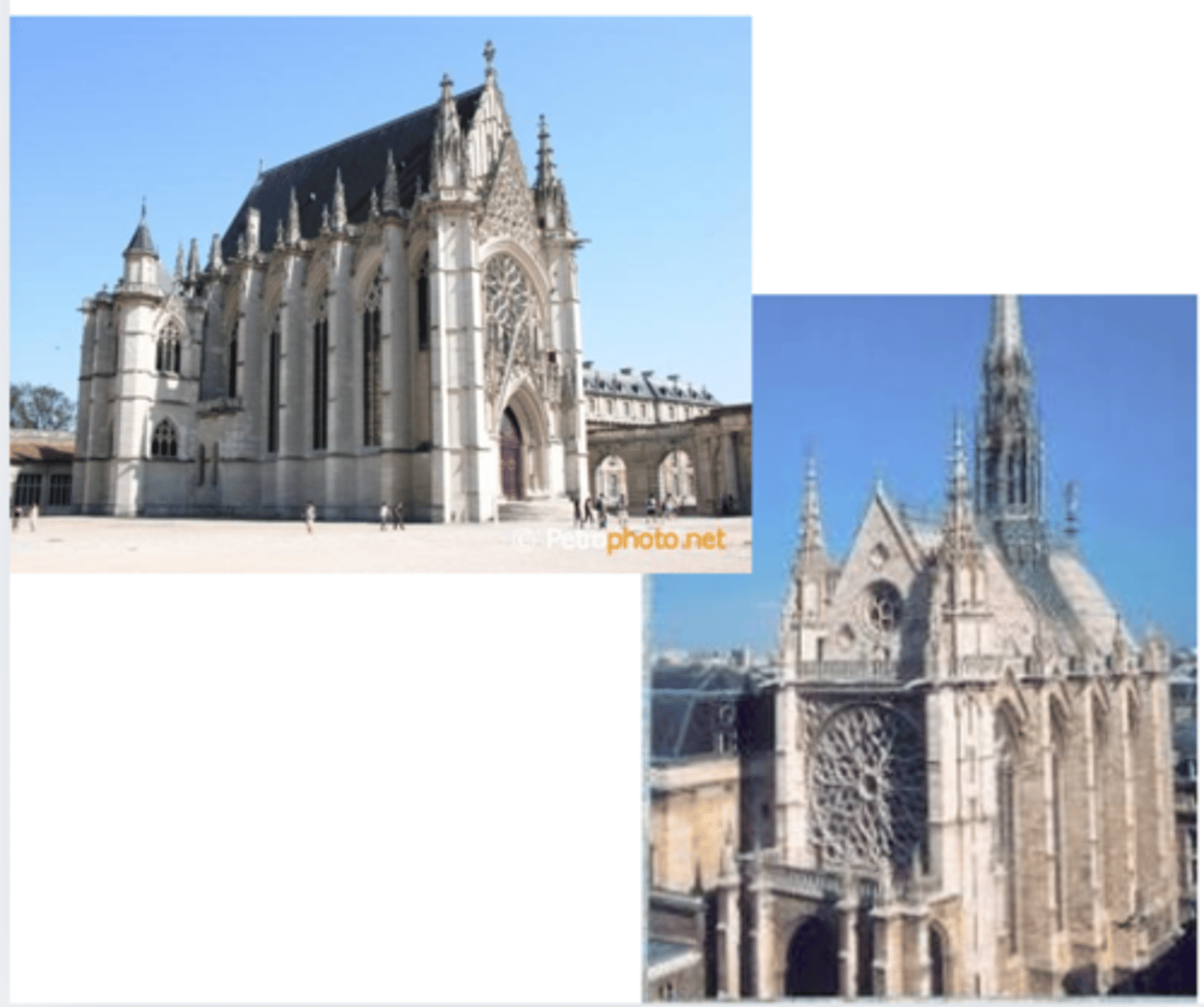
Sainte-Chapelle. Paris, France: UPPER chappel
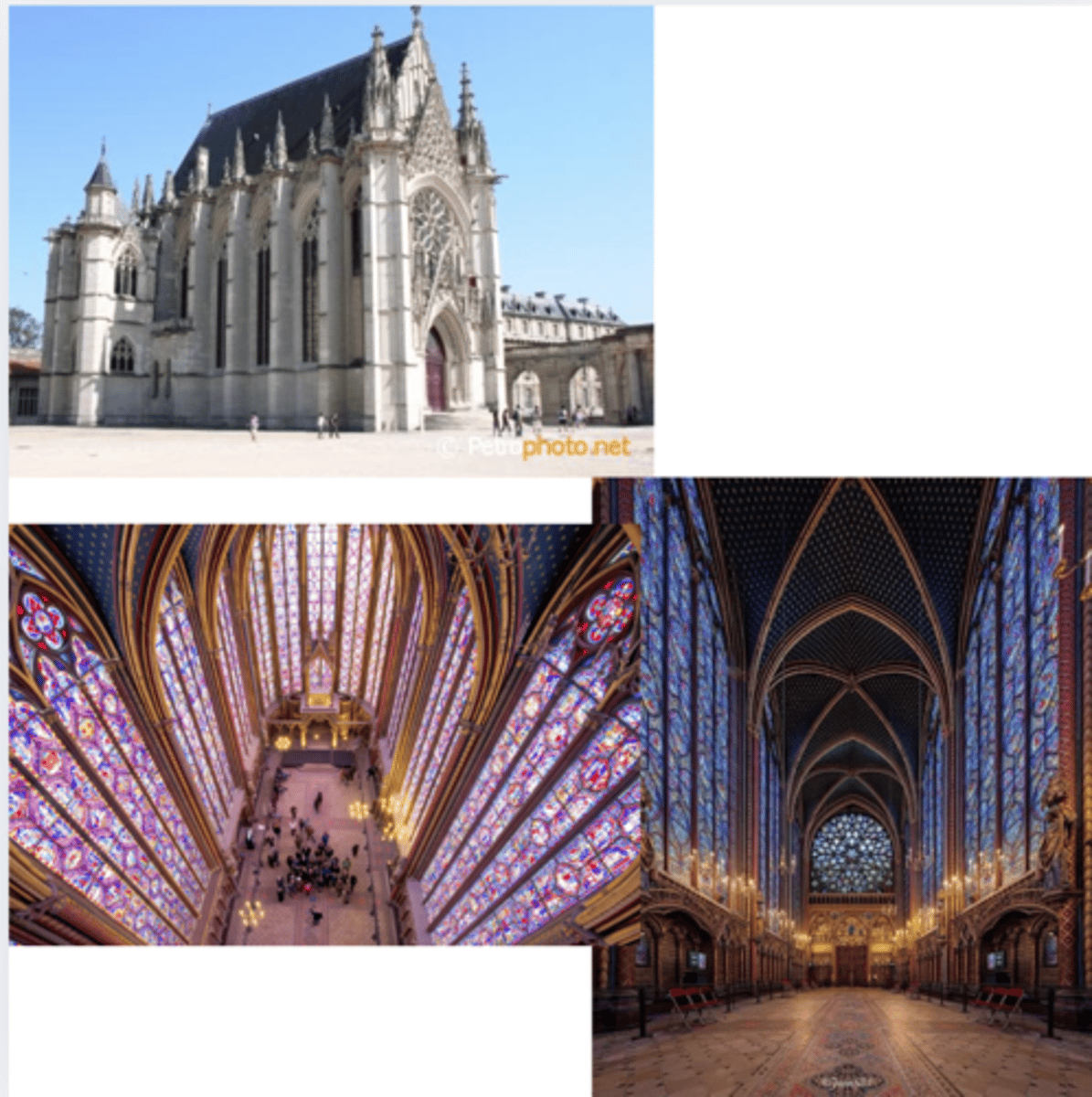
Sainte-Chapelle. Paris, France: LOWER chappel
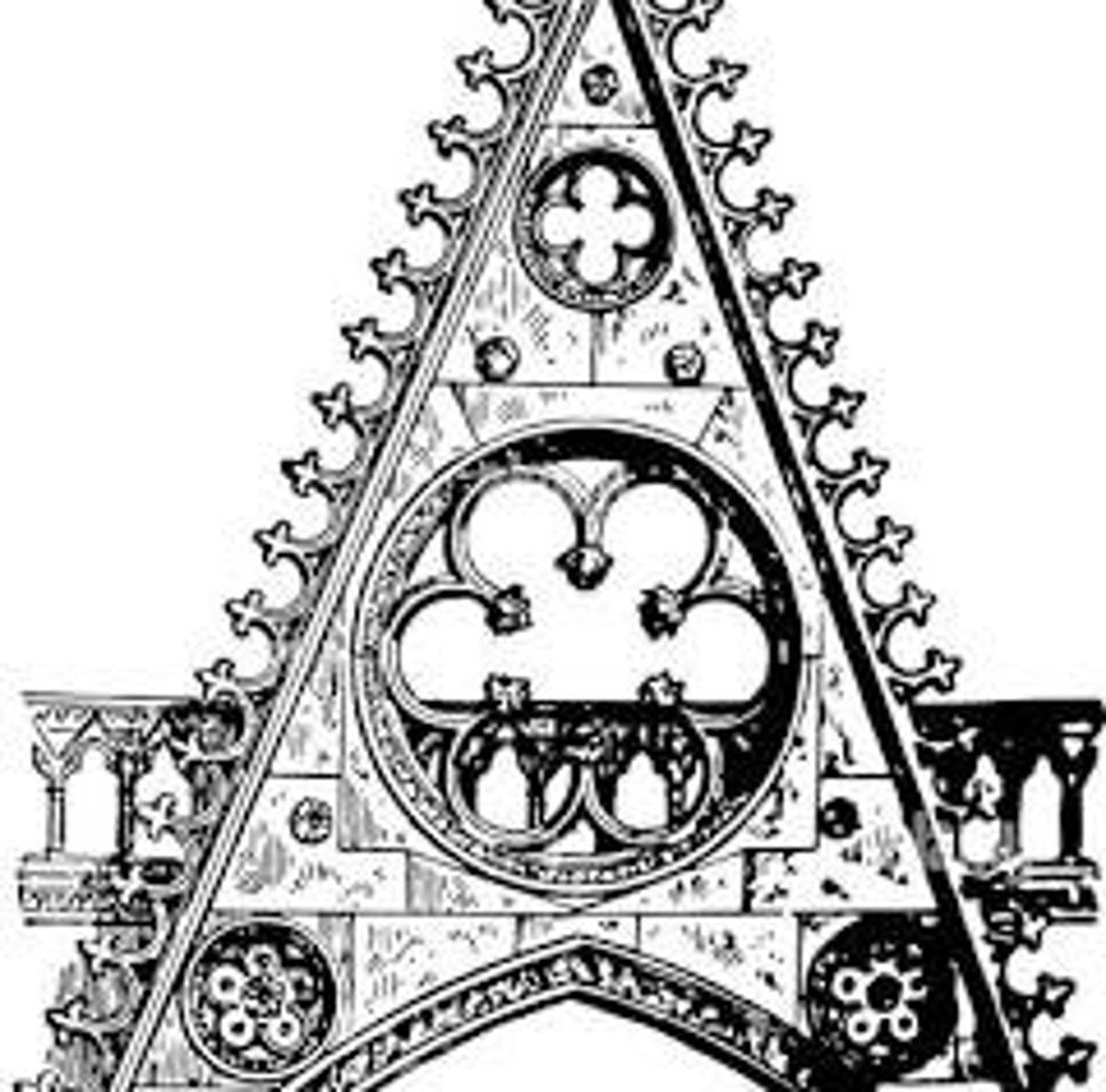
Blind tracery
PURELY decorative feature on a solid wall, resembling window tracery but without any open spaces for glass. It is applied to walls, gables, and other surfaces to create intricate patterns and visual interest, mimicking the effect of window tracery and sometimes forming blind arcades.
Gabel
typically refers to a wimperg, which is an ornamental, often pointed, gable that crowns a portal or window. While the term "gable" is more commonly associated with the triangular end of a roof, in Gothic design, this decorative, triangular feature can also be applied ornamentally to architectural elements above doors and windows.
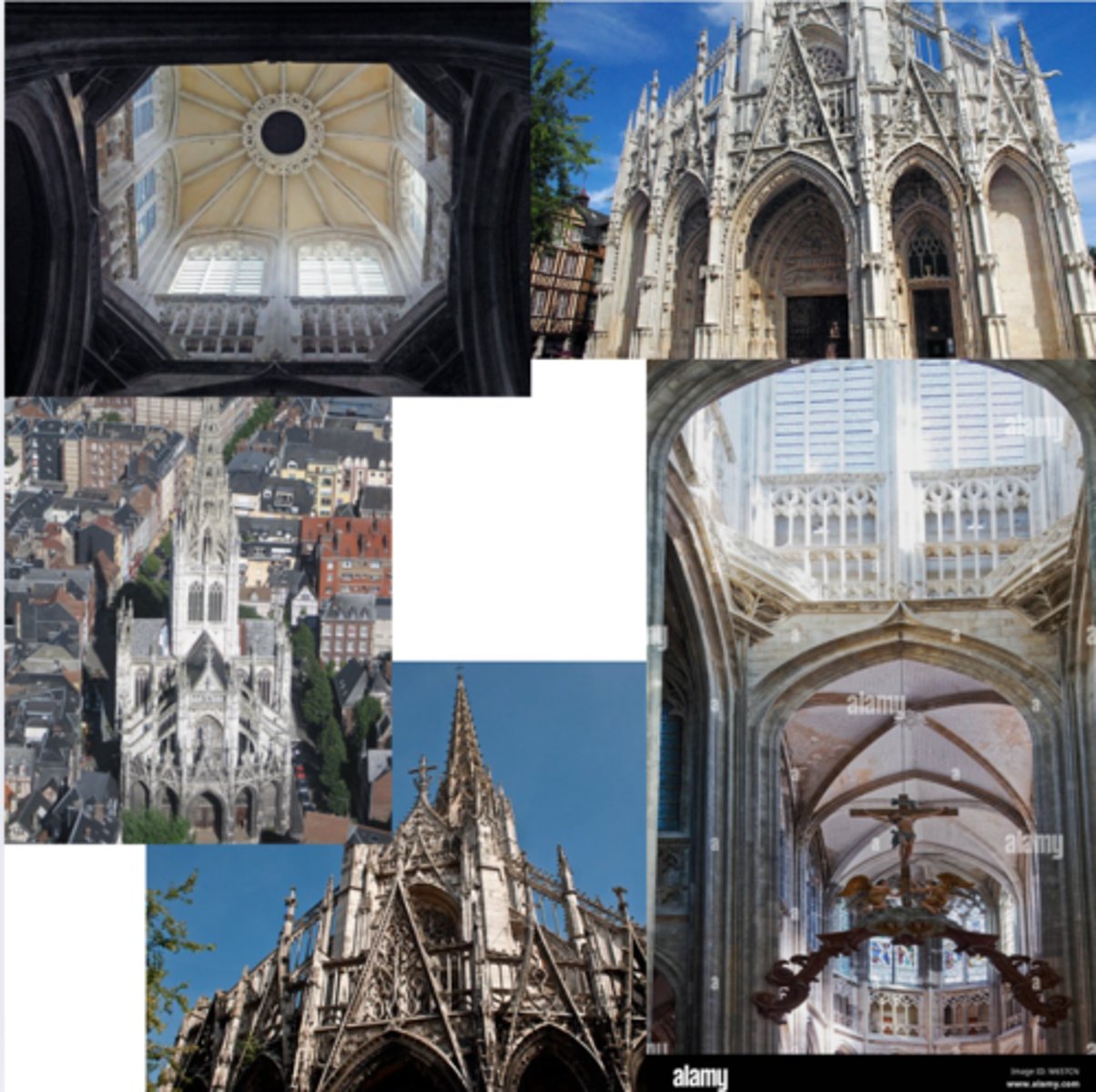
Flamboyant gothic architecture
phase of late Gothic architecture in 15th-century France and Spain. It evolved out of the Rayonnant style's increasing emphasis on decoration. Its most conspicuous feature is the dominance in stone window tracery of a flamelike S-shaped curve.
Fillet moulding
A fillet in Gothic architecture is a narrow, rectangular ribbonlike band used to separate or emphasize other moldings, adding depth and detail. It can be flat or have sharp edges and was frequently worked into larger moldings and column shafts during the Early English and Decorated styles of the 13th and 14th centuries. In some cases, like a roll-and-fillet molding, a fillet is used to emphasize the rounded form of the roll.
13TH CENTURY modifications to Abbey church of Saint Denis
Upper choir, transepts, nave, 1231-1281.
Modifications included rebuilding the nave and transepts to be even taller and thinner, filling the walls with enormous stained-glass windows (including in the triforium), and adding large rose windows to the transept ends. These changes, undertaken between approximately 1230 and 1280 under King Louis IX and his mother, Blanche of Castille, further emphasized light and height.
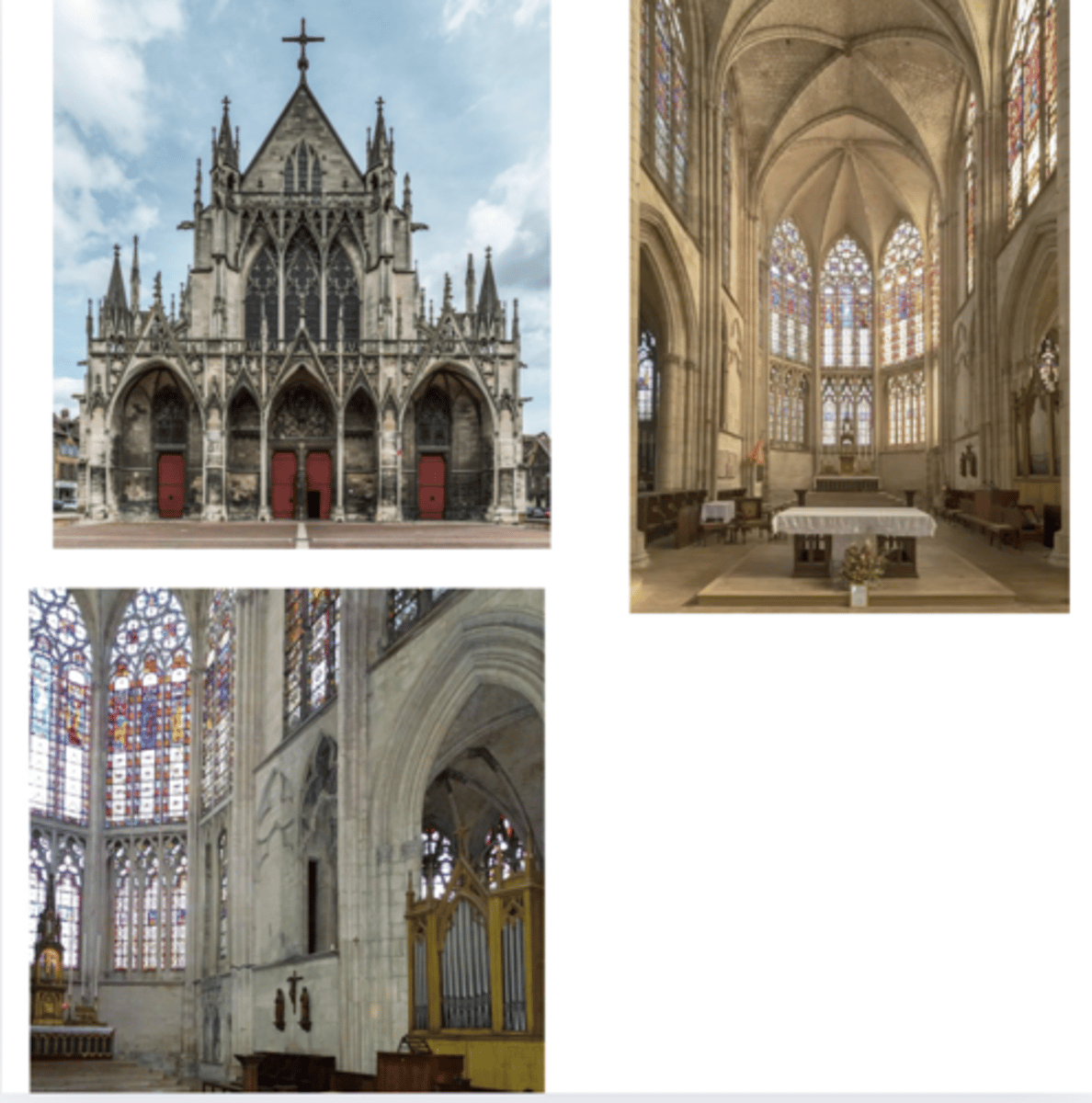
Church of Saint-Urbain. Troyes, France. Begun c. 1262. [East end only].
Pierre Robin, church of Saint-Maclou. Rouen, France. 1436-1521.
Pierre Robin, church of Saint-Maclou. Rouen, France. 1436-1521. (Floor plan specifically)
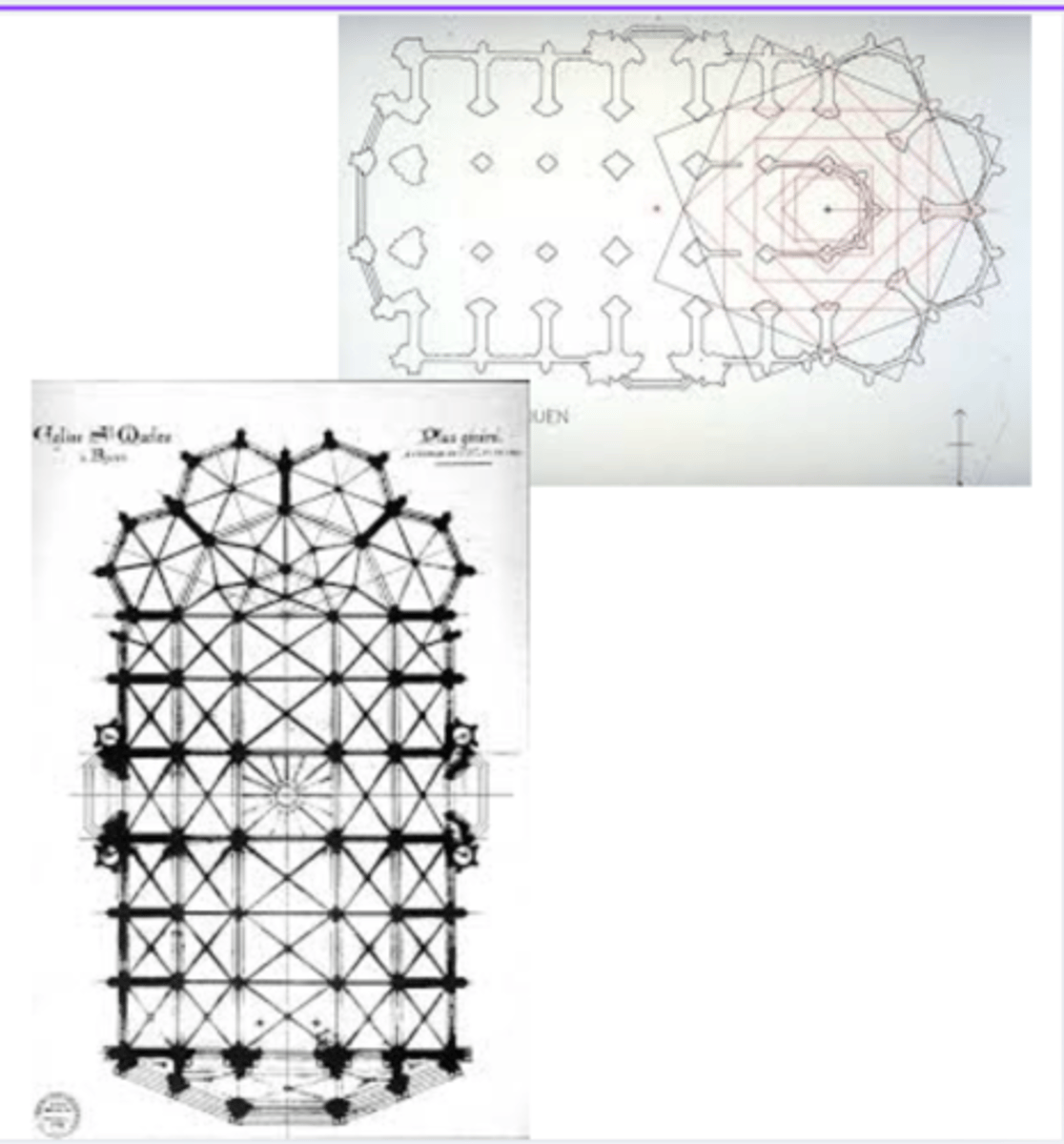
Rouen: Pierre Robin, church of Saint-Maclou. 1436-1521.
1) Majority public funding
2) Post-English occupation construction
3) Emphasis on French nationalism/pride
Amiens: Cathedral Notre-Dame. 1220s-1260s
1) Sort of planned, but also designed as they went (they were depending on things being figured out by the time construction actually got to it)
2) Biblical formulas were used: thought of as "encoding Heaven"
3) Specific to this church: annoying son who ruined everything
Villard (Villard de Honnecourt)
1) Sometimes over-credited, had some awesome drawings of Reims cathedral.
2) Drawings were kind of structurally impossible, sometimes he also just added his own take on the building (think of it as semi-canon fanfiction/fanart......)
Chartres: Cathedral Notre-Dame. 1145-55.
1) Famous for multimedia design
2) Also, visual "journey" depending on how you entered and navigated the church. Taking a shortcut for example might show you different holy "lessons"
3) Statues were important too!
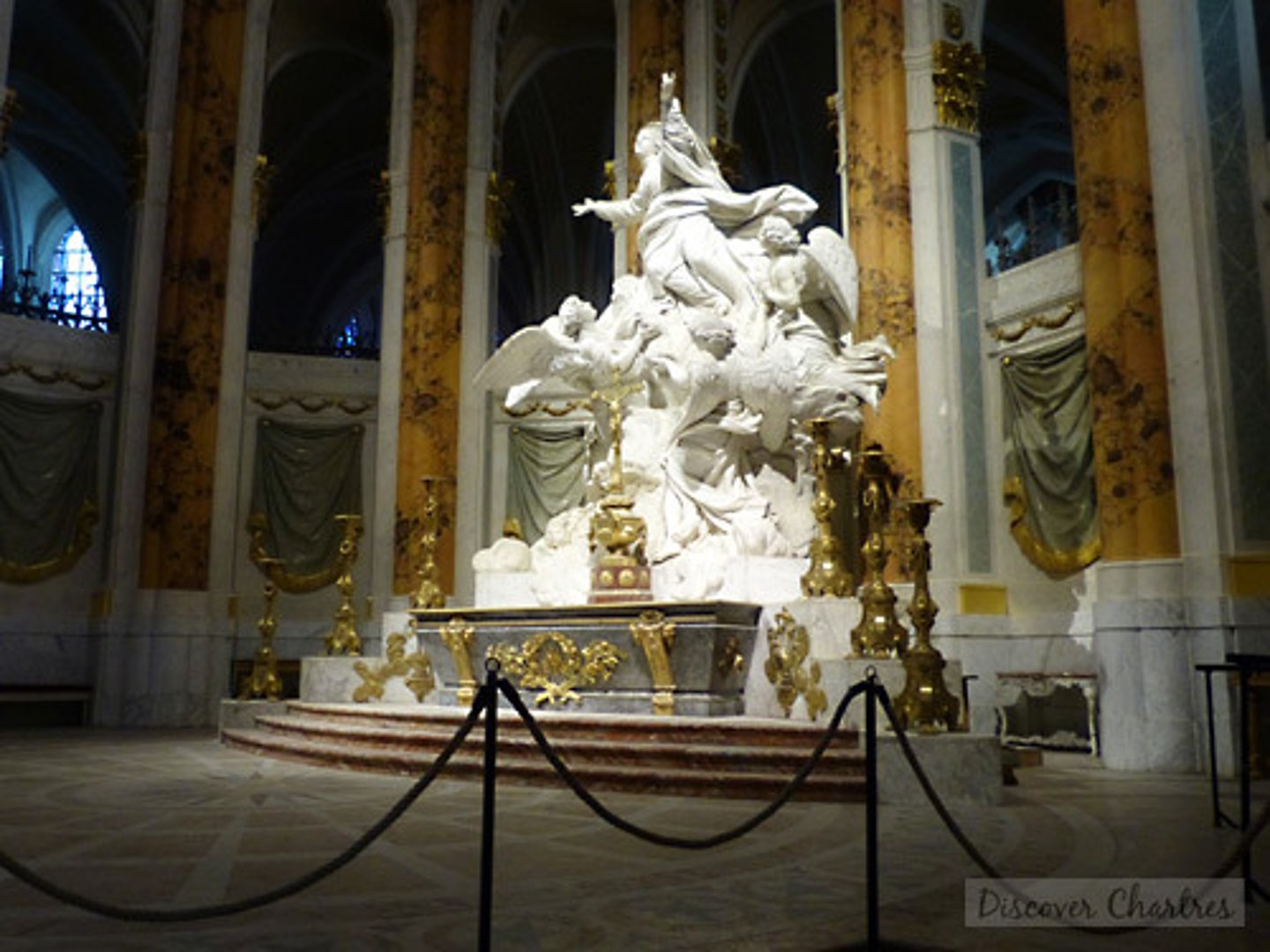
Canterbury, England: Cathedral of Christ Church, Choir and Trinity Chapel. 1174-84.
-Reconstruction based off of Becket
-Red and white
-Layout of building tells a story and forces visitors to navigate it as if they are in said story.
Saint-Denis: Abbey Church of Saint-Denis. 1135-40 and 1140-1144.
-Very ornate!
-Kings, princes, etc would remove their rings and say that the materials from their riches need to be used to make this church. (letting go of personal vanity to be closer to God)
-Value of sacrifice
-Also, showing off how well-off the French elite were...
 Note
Note  Flashcards (58)