psych 1101 exam 3
 Call Kai
 Learn
Learn Practice Test
 Spaced Repetition
 Match
Match Flashcards
 Knowt Play
1/164

There's no tags or description
Looks like no tags are added yet.
Name | Mastery | Learn | Test | Matching | Spaced | Call with Kai |
|---|
No analytics yet
Send a link to your students to track their progress
165 Terms
neutral stimulus (NS)
stimulus that elicits no response before conditioning
preparedness
predisposition to learn particular associations
unconditioned response (UR)
unlearned, naturally ocurrring response (such as salivation) to unconditioned stimulus (US) (such as food in the mouth)
unconditioned stimulus (US)
stimulus that unconditionally (natually and automatically) triggers unconditioned response (UR)
conditioned response (CR)
learned response to previously neutral (but now) conditiones stimulus (CS)
conditioned stimulus (CS)
originally neutral stimulus that, after association with unconditioned stimulus (US), comes to trigger conditioned response (CR)
B. F. Skinner
psychologist influencing modern behaviorism expanded Thorndike’s law of effect, which states that rewarded behavior tends to recur
shaping behavior
gradually guiding behavior toward the desired behavior; when everyday behaviors are continually reinforced and shaped
successive approximations
responses that are increasingly close to the final desired behavior are rewarded
operant behavior
behavior that operates on the environment to produce rewarding or punishing stimuli
reinforcement
increases behavior
punishment
decreases the behavior
positive reinforcement
any stimulus that, when presented after a response, strengthens that response; a pleasant stimuluus (increases behavior)
negative reinforcement
any stimulus that, when removed after a response, strengthens the response; an unpleasant stimulus (increases behaviors)
immediate reinforcer
occurs immediately after a behavior
delayed reinforcer
involves a time delay between the desired response and delivery of the reward
continuous reinforcement schedule
reinforcement on every occurrence; rapid learning
partial (intermittent) reinforcement schedule
slower learning; resistant to extinction
fixed ratio (partial reinforcement schedule)
every so many: reinforcement after every nth behavior; i.e. buy 10 coffees, get 1 free, or pay workers per product unit produced
fixed interval (partial reinforcement schedule)
every so often: reinforcement for behavior after a fixed time; i.e. Tuesday discount prices
variable ratio (partial reinforcement schedule)
after an unpredictable number: reinforcement after a random number of behaviors; i.e. playing slot machines or fly fishing
variable interval (partial reinforcement schedule)
unpredictably often: reinforcement for behavior after a random amount of time; i.e. checking our phone for a message
positive punishment
presents a negative consequence after an undesired behavior is exhibited; administering an aversive stimulus
negative punishment
removes a desired stimulus after a particular undesired behavior is exhibited; withdrawing a rewarding stimulus
punishment
this technique only supporesses behavior, not forgotten, teaches discrimination among situations, can teach fear, may increase agression by modeling violence
skinner’s model
at school: students must be told immediately whether what they do is right or wrong; in sports: shaping starting with easier iterations; in computer programs: AI is reinforced by doing things right; at work: immediate reinforcement rather than monthly pay?; in parenting: catch kids doing things that are right
classical conditioning
learning associations between events we do not control, eliciting an involuntary and automatic response
operant conditioning
learning associations between our behavior and its consequencesl eliciting a voluntary response, operates on environment (consciously)
memory
persistence of learning over time through the encoding, storage, and retrieval of information
retrieval (recall)
recalling information
systems of learning
encoding, storage, retrieval of information, recognizing previously encountered information, relearning familiar items more easily

information-processing model
compares human memory to computer operations: encoding, storage, and retrieval
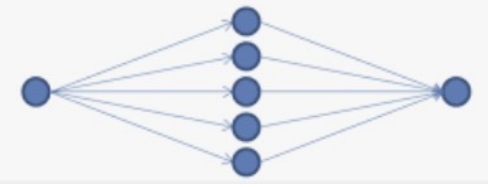
connectrionism information-processing model
focuses on multitrack, parallel processing—the processing of many aspects of a problem simultaneously; views memories as products of interconnected neural networks
Atkinson-Shriffin Model (1968)
3 processing stages: semsory memory, short term memory, long term memory
sensory memory
memory lasting seconds or fractions of a second: records immediate and momentary sensory information » iconic memory and echoic memory
short term memory
memory encoded through rehearsal: holds 5-7 items for about 15-20 seconds (briefly) before information is stored or forgotten—has capacity that varies by age and distractions at the time of memory tasks
long term memory
relatively permanent and limitless archinve of memory stored for years or even decades— includes knowledge, skills, and experiences
control processes
active processes that can be controlled by the person: rehearsal, strategies used to make a stimulus more memorable, strategies of attention that help you focus on specific stimuli
george miller (1956)
psychologist proposed the magical number 7 ± 2 items that can be stored in short term memory
baddeley and colleagues (1975)
psychologists confirmed that without distraction, we can recall about 7 digits, 6 letters, or 6 words
herman ebbinghaus
proposed the forgetting curve: practiced list of syllables and plotted memory of percent of information retained (savings) versus time elapsed since learning for the first time » decreasing exponential curve
memory retention
speed of relearning is one measure of this (Baddeley 1982) — more repetitions on day 1 lead to less time to relearn it on day 2 (Herman Ebbinghaus)
spaced practice
practicing/relearning information about when information is about to disappear to improve memory retention long-term
alan baddeley
psychologist stresses the active processing occurring in the second memory stage
working memory
memory concerned with the storage, processing, and manipulation of information; is active during complex cognition » set up to process different types of information simultaneously
sensation
provides the raw data about the environments; sensory receptors and nervous system receive and represent stimulus energies from our environment
perception
the experience resulting from stimulation of the senses; brain organizes and interprets sensory information, enabling us to recognize objects and events as meaningful — can change based on adding information
bottom-up processing
information processing that begins with the sensory receptors and works up to the brain’s integration of sensory information
top-down processing
information processing guided by the higher-level mental processes, as when we construct perceptions drawing on our experience and expectations
bottom-up processing
taking sensory information and then assembling and integrating it
top-down processing
using models, ideas, and expectations to interpret sensory information
motivation and emotions
perception can be influenced by these factor, i.e. walking destinations look farther away when fatigued
perceptual set
mental predisposition to perceive one thing and not another; a set of mental tendencies and assumptions that affects, top-down, what we hear, taste, feel, and see
schemas
organize and interpret unfamiliar information through experience— determine perceptual set
preexisting schemas
these perceptual sets influence top-down processing of ambiguous sensation interpretation, including gender stereotypes
context effects
when given stimulus may trigger different perceptions because of the immediate context or cultural context
senses
these receive sensory stimulation, often using specialize receptor cells; transform sensory stimulation into neural impulses and deliver neural information to our brain
transduction
conversion of one form of energy into another, such as stimulus energies (sights, sounds, and smells) into neural impulses our brain can interpret
signal detection theory
measuring how individuals make decisions under uncertainty, distinguishing signal from background noise
absolute threshold
in signal detection theory, the minimum stimulus energy needed to detect a particular stimulus 50% of the time— define the point where half the time a stimulus is detected and half the time it is not
subliminal
below threshold of signal detection theory
priming
activation association (often unconscious) that may impact signal detection theory
difference threshold
the minimum difference that a person can detect between any two stimuli half the time
weber’s law
states that for an average person to perceive a difference, two stimuli must differ by a constant minimum percentage (not a constant amount)
subliminal stimuli
stimuli are too weak to detect 50 percent of the time; below the absolute threshold
subliminal sensation
exists, but such sensations are too fleeting to enable exploitation with subliminal messages
subliminal persuasion
may produce a fleeting and subtle but not powerful or enduring effect on behavior
sensory adaptation
this tool can help with diminished sensitivity as a consequence of constant stimulation, focuses on reducing background chatter, and influences how the world is perceived in a personally useful way
novelty
our sensory receptors are very sensitive to this, and sensory adaptation can influence how we perceive emotions
light energy
our eyes receive and transduce this into neural messages that our brain creates for us to consciously see
hue, intensity
wavelength and amplitude of light correlate to how we perceive these with our eyes and brains
receptive cells
light-energy particles trigger chemical reactions in these cells, sending signals
cones
photoreceptor cells that are densely packed in the fovea and have high spatial resolution; red, green, and blue
rods
photoreceptor cells that have high sensitivity and low resolution
bipolar cells
cells that produce neural signals from light energy from photoreceptor cells and activate neighboring ganglion cells
ganglion cells
cells activated with visual information from neighboring bipolar cells and send signals to the thalamus via optic nerve pathways
photopic vision
high-acuity, color vision in well-lit conditions
mesopic vision
fuzziness happens in between photopic and scotopic vision
scotopic vision
low acuity and no color discrimination but works in low-light conditions
young-hemholtz trichromatic (three color) theory
theory that eye must have 3 corresponding color receptor types, each sensitive to red, green, and blue wavelengths
opponent-process theory (Hering’s hypothesis)
cones’ responses are processes by opposing retinal cells, so red perceives green, blue-yellow, white-black » leads to afterimages
blackemore & cooper
performed experiment that exposed kittens to vertical-only stimuli and overtime kittens were only able to perceive verticals in normal stimuli
specialized nerve cells
in the brain, these respond to specific features of the stimulus, such as shape, angle, or movement
ganglion cells
cells receive information from these cells in the retina and pass the information to other cortical areas where teams of cells (supercell clusters) respond to more complex patterns
face recognition
in social animals, such as humans, a large right temporal lobe area is dedicated to this crucial task
perceptual organization
gestalt psychologists proposed principles to organize sensations, including principle of similarity, principle of closure, continuity, and simplicity rules
perceptual organization figure-ground
organization of the visual field into objects (the figures) that stand out from their surroundings (the ground)
gestalt principles
tend to organize even novel stimuli into units
palmer (1977)
psychologist found participants could recognize the parts most rapidly when they were the segments predicted by the gestalt principles
oblique effect
we perceive verticals and horizontals more easily than other orientations
light-from-above assumption
we assume light comes from above because this is common in our environment— additionally perceive shadows as specific information about depth and distance
depth perception
the ability to see objects in 3 dimensions, although images that strike the retina are 2D— allows us to judge distance and is present (in part) at birth
binocular cues
two eyes help with perception of depth
convergence
inward movement of the eyes
retinal disparity
binocular cue for perceiving depth; by comparing images from the retinas in the two eyes, the brain calculates distance — used by 3D filmmakers
monocular cues
cues available to either eye alone, including relative height, size, interposition (overlap), linear perspective, light and shadow, relative motion, and perceptual constancy
color constancy
perceiving familiar objects as having consistent color, even if changing illumination alters the wavelengths reflected by the objects
brightness constancy
perceiving objects to have a consistent level of lightness or shade, regardless of changes in illumination or shadows that may alter wavelengths reflected by the objects
shape constancy
perceiving the form of familiar objects as constant even when our retinas receive changing images of them
size constancy
perceiving objects as having constant size even when distance from them varies

