W4 2(j) Co-ordination and response
 Call Kai
 Learn
Learn Practice Test
 Spaced Repetition
 Match
Match Flashcards
 Knowt Play
1/33

There's no tags or description
Looks like no tags are added yet.
Name | Mastery | Learn | Test | Matching | Spaced | Call with Kai |
|---|
No analytics yet
Send a link to your students to track their progress
34 Terms
Name the process that controls the internal environment of an organism. (1 mark)
homeostasis;
Name the process specifically controlling the concentration of water in the blood. (1 mark)
osmoregulation;
Compare the difference in how roots and stems respond to gravity. (2 marks)
M1: roots grow towards gravity (allow converse for stems);
M2: (roots are) positively geotropic / positively gravitropic;
Compare the difference in how roots and stems respond to light. (2 marks)
M1: roots grow away from light (allow converse for stems);
M2: (roots are) negatively phototropic;
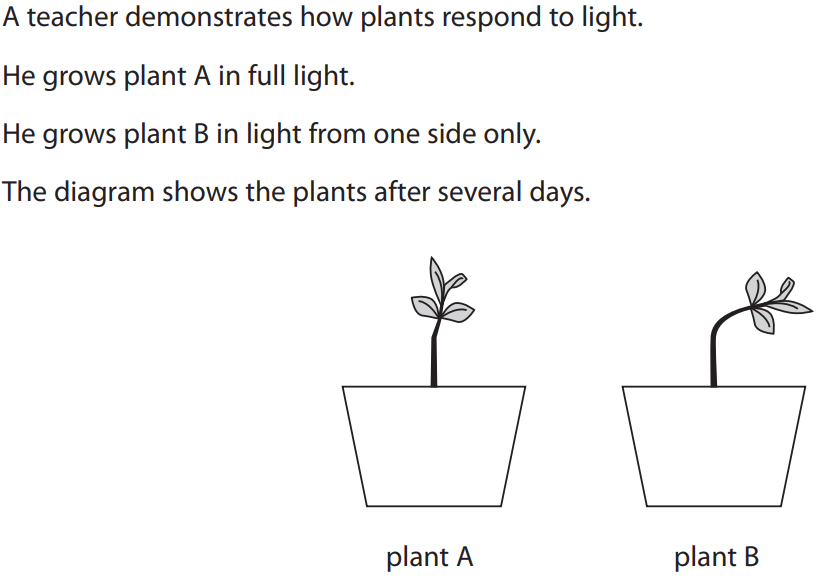
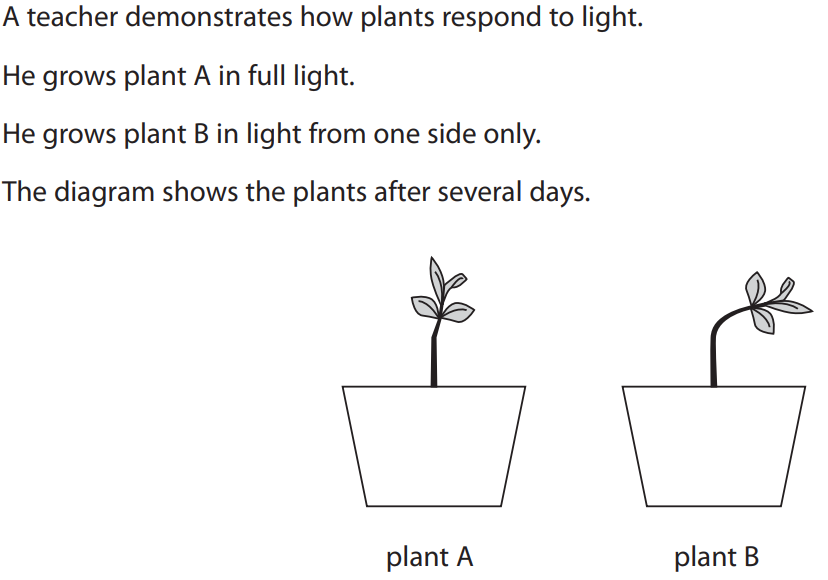
A teacher grows two plants: Plant A in full light and Plant B in light from one side only. Explain the results and advantages of this response. (5 marks)
M1: The response shown by Plant B is positive phototropism;
M2: (Advantage) allows the plant to get more light;
M3: (Advantage) to increase the rate of photosynthesis;
M4: (Method) to ensure light only hits from one side, use unilateral light / place in a box with a slit / place by a window;
Explain how a gravitropic response is brought about. (3 marks)
M1: auxin (is the hormone involved);
M2: (auxin) accumulates on the lower side (of the root/stem);
M3: causes growth / elongation of cells / cells take on more water (on the lower side);
Note: In stems, this accumulation causes the stem to grow upwards; in roots, it inhibits growth on the lower side to make the root grow downwards.
Describe the difference between how animals and plants respond to light. (4 marks)
M1 (Animals): Uses nerves / neurones / impulses to transmit information.
M2 (Animals): Involves specific organs/effectors like eyes, muscles, or the brain.
M3 (Plants): Involves chemicals / hormones / growth regulators (Auxin).
M4 (Plants): Response is a growth response (stems) and is much slower/longer in duration.
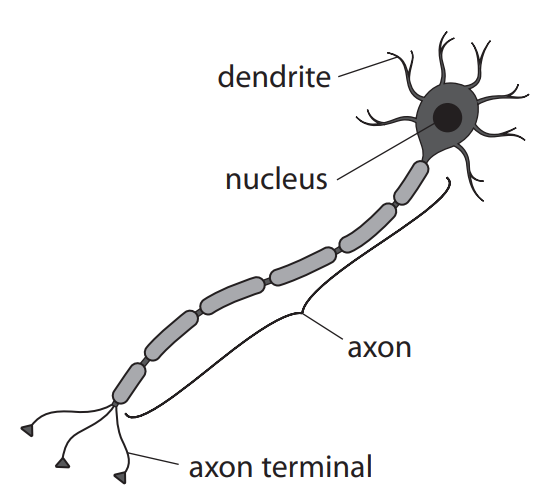
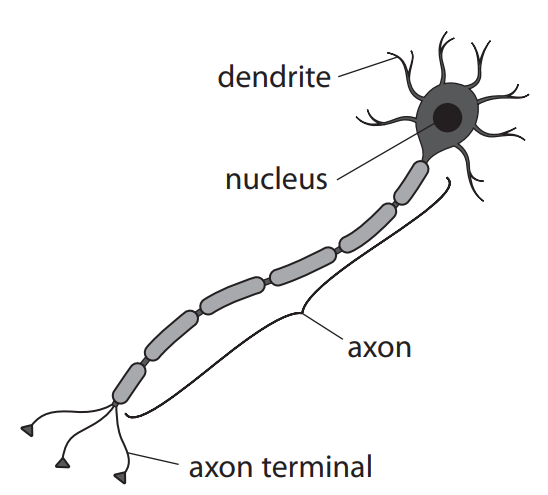
Describe the structure of a motor neurone. (3)
M1: Contains dendrites (to receive signals) and a nucleus.
M2: Has a long axon to transmit the impulse over distances.
M3: Ends in axon terminals to pass the signal to an effector (muscle/gland).
Explain the process of neurotransmission at a synapse. (6)
M1: neurones transmit electrical impulses
M2: the synapse is a gap between 2 neurones
M3: triggering the release of neurotransmitters
M4: which diffuse across the synapse
M5: as a chemical signal
M6: neurotransmitters bind to receptors on the next neurone
M7: triggering an electrical impulse in the next neurone
Describe the difference between how animals and plants respond to light.
(animal response) | (plant response) |
M1: 1. uses nerves / neurones; | M1: 1. phloem / cells |
M2: 2. involves eyes / muscles / brain / eq; | M2: 2. growth / stem |
M3: 3. electrical / uses impulses / eq; | M3: 3. auxin / chemical / hormone / growth regulator |
M4: 4. faster / nerve transmission faster; | M4: 4. response is slower |
M5: 5. short duration; | M5: 5. long duration |
Explain why impulse transmission slows at a synapse. (2)
M1: {The signal must} transmit by (chemical) diffusion
M2: of neurotransmitters {across the gap, which is slower than an electrical impulse}
Define the term reflex response. (1)
M1: {It is an} involuntary / automatic / does not involve the brain / spontaneous / without thinking / unconscious / eq
Describe the stages of a reflex arc. (7)
M1: receptors in skin surface detect stimulus / are stimulated
M2: {an electrical} impulse {is generated}
M3: {the impulse travels from} sensory neurone to relay neurone / CNS / eq
M4: via diffusion of neurotransmitters / eq (once)
M5: {across a} synapse (once)
M6: {then via} motor neurone to muscle / effector
M7: effector / muscle contracts eq
Explain the advantages of a reflex arc. (3)
M1: {The response is} fast
M2: {There is} no brain involvement / no thought / automatic / involuntary / eq
M3: {This results in} less damage / harm / eq {to the body}
Explain the role of the rod and cone cells in the retina. (4)
M1: {The retina contains} cone cells
M2: (cone cells) {are} responsible for colour vision
M3: {The retina also contains} rod cells
M4: (rod cells) detect intensity of light
M5: (both) send impulses to the brain
State the function of the optic nerve. (1)
M1: {To carry} impulses / signals to {the} brain / CNS
Explain the consequence of a detached retina. (2)
M1: loss of vision / no vision / blindness / cannot see / reduced field of vision / blurred vision / image not focussed / incomplete image / eq
M2: {because there is} no connection to {the} optic nerve
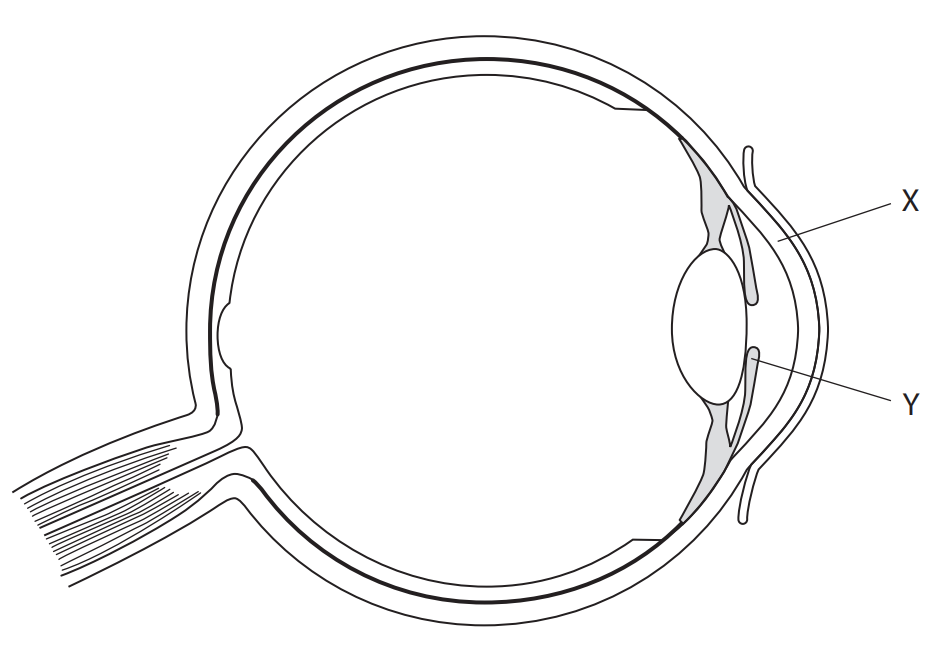
Label X and Y. (2)
M1 X = cornea
M2 Y = iris
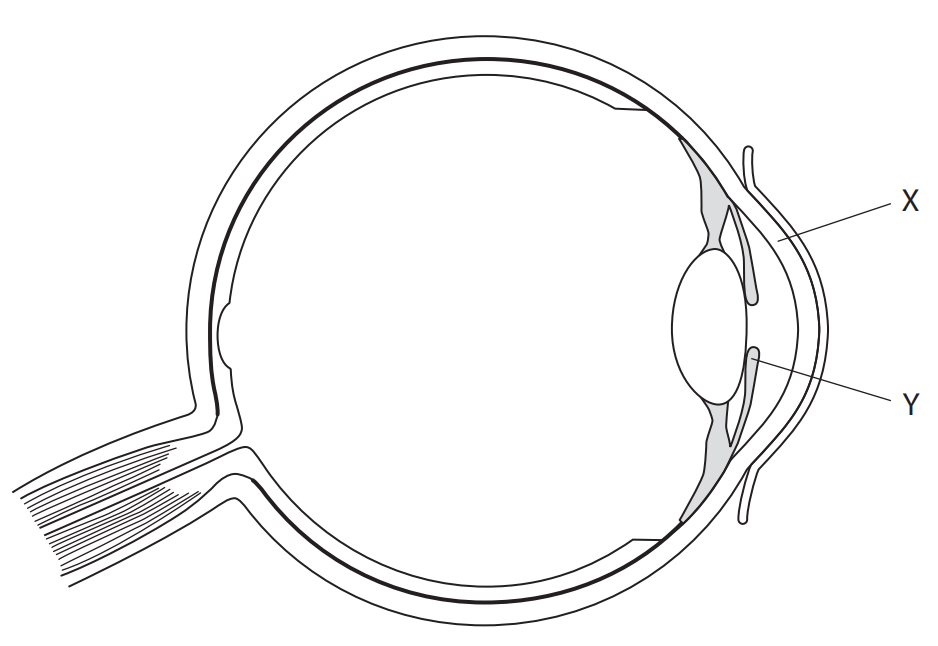
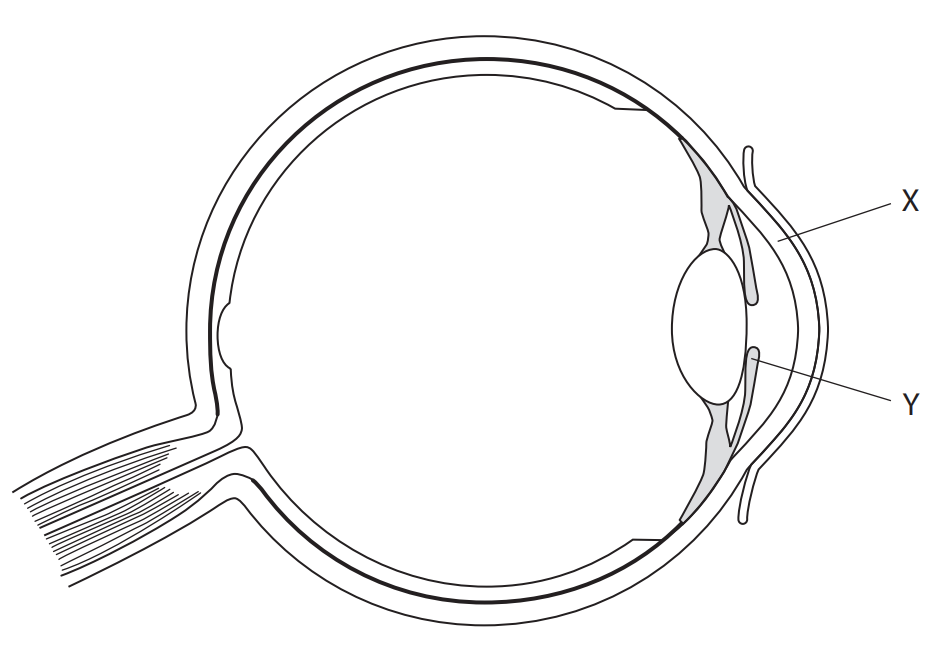
Describe how the iris (Y) responds to low light levels. (3)
M1: pupil widens / dilates / gets bigger
M2: radial muscles contract
M3: circular muscles relax
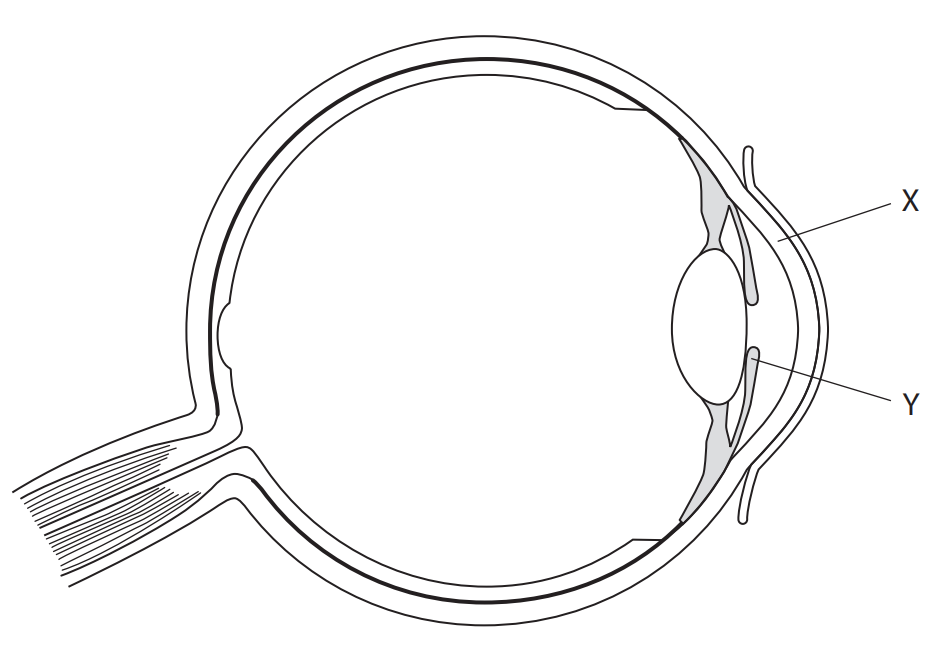
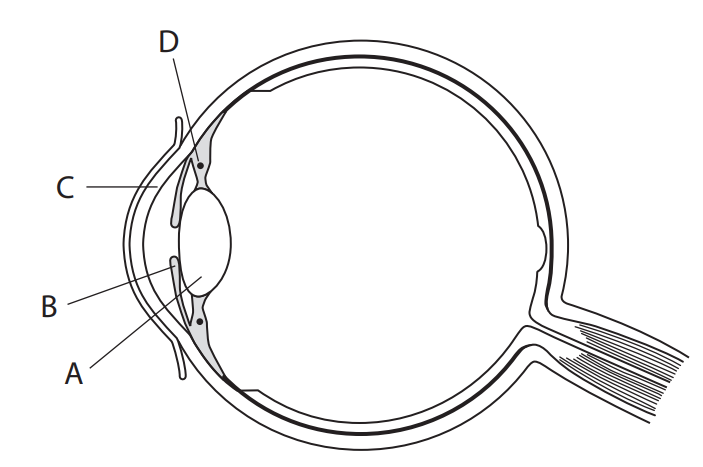
Label ABCD. (4)
M1 A = lens
M2 B = iris
M3 C = cornea
M4 D = ciliary body/muscle
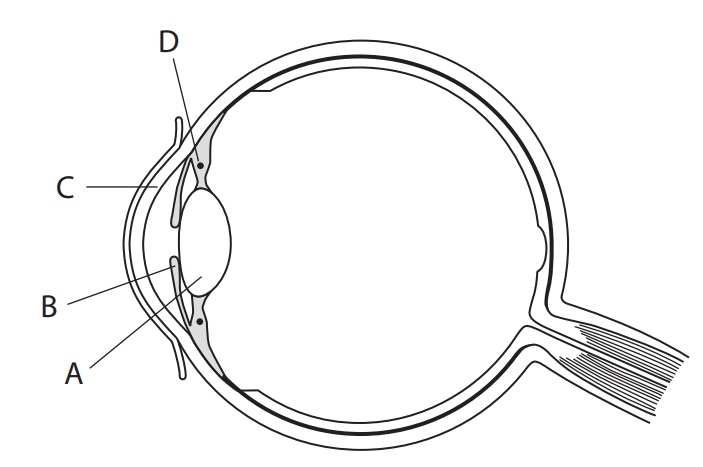
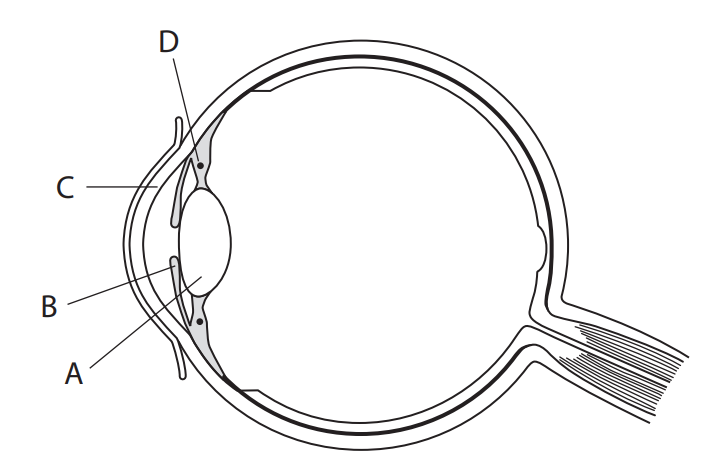
Explain the roles of the cornea (C) and ciliary muscles (D) in focusing on a near object. (4)
M1: (The) cornea / C bends / refracts light
M2: (The) lens / A becomes (more) curved / rounder / convex / thicker / eq
M3: (as) ciliary muscles / D contract
M4: (ciliary muscles / D) cause suspensory ligaments to relax (become) less taut / slacken / loosen / eq
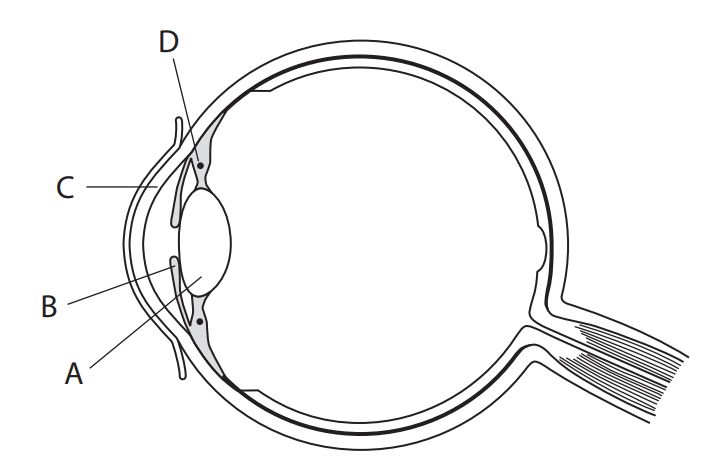
Explain how the iris reflex protects the retina in bright light. (4)
M1: circular muscles contract
M2: radial muscles relax
M3: pupil constricts / becomes smaller / eq
M4: less light enters eye
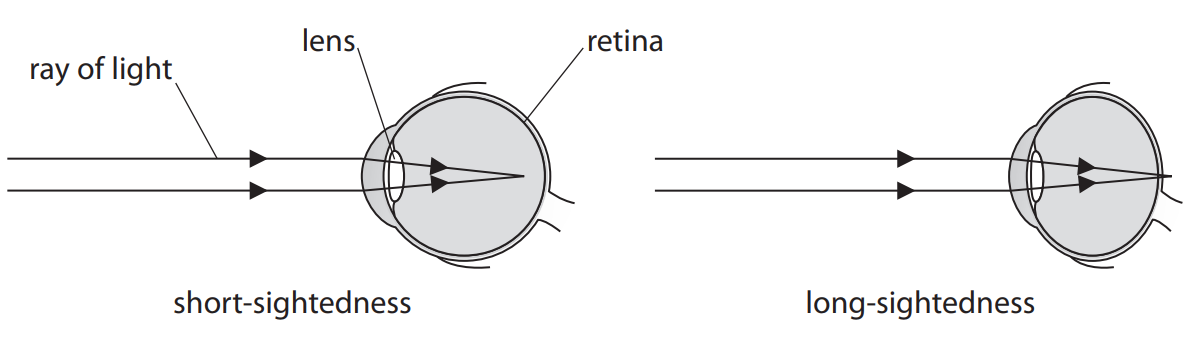
Explain the causes of short-sightedness. (3)
M1: eyeball too long
M2: cornea too curved / lens too curved / too convex
M3: light refracted too much (by cornea / lens)
M4: light rays not brought to a focus on retina / (light rays) focused in front of retina
MYOPIA short word
Explain the causes of long-sightedness. (3)
M1: eyeball too short
M2: cornea not curved enough / lens too thin / not convex enough
M3: light refracted too little (by cornea / lens)
M4: light rays not brought to a focus on retina / (light rays) focused behind retina
HYPEROPIA long word
Describe the changes that occur in the eye to focus on a distant object. (5)
M1: ciliary muscles relax
M2: suspensory ligaments (become) taut / (have) increased tension / tight / eq
M3: lens (becomes) less curved / thinner
M4: light refracted / bent less
M5: pupil dilates / expands / widens
Explain the role of lysozyme in tears. (2)
M1: (breaks down / digests cell walls of / kill / prevent growth of / remove / protect from) bacteria / fungi / pathogens / microorganisms / eq
M2: prevent infection / disease
Explain why it is important for tears to be kept at a neutral pH. (3)
M1: optimum (pH for lysozyme)
M2: prevent enzyme (being) denatured / change in active site / eq
M3: (to) break down cell walls / kill bacteria / work at fastest / fast rate / eq
M4: (too) acidic / (too) alkaline may damage eye / eq
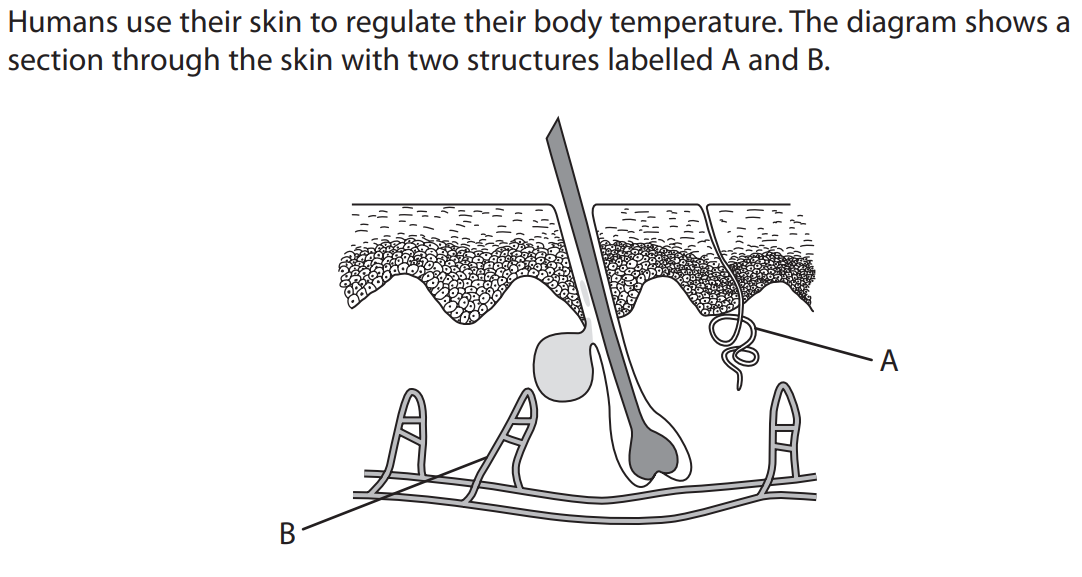
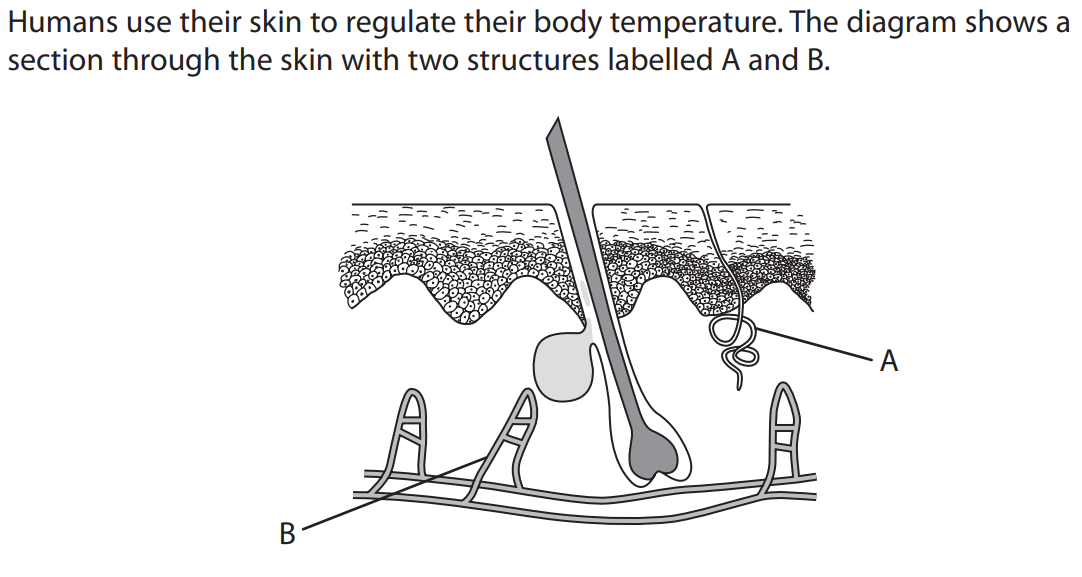
Label AB. (2)
M1 A = sweat gland
M2 B = capillaries
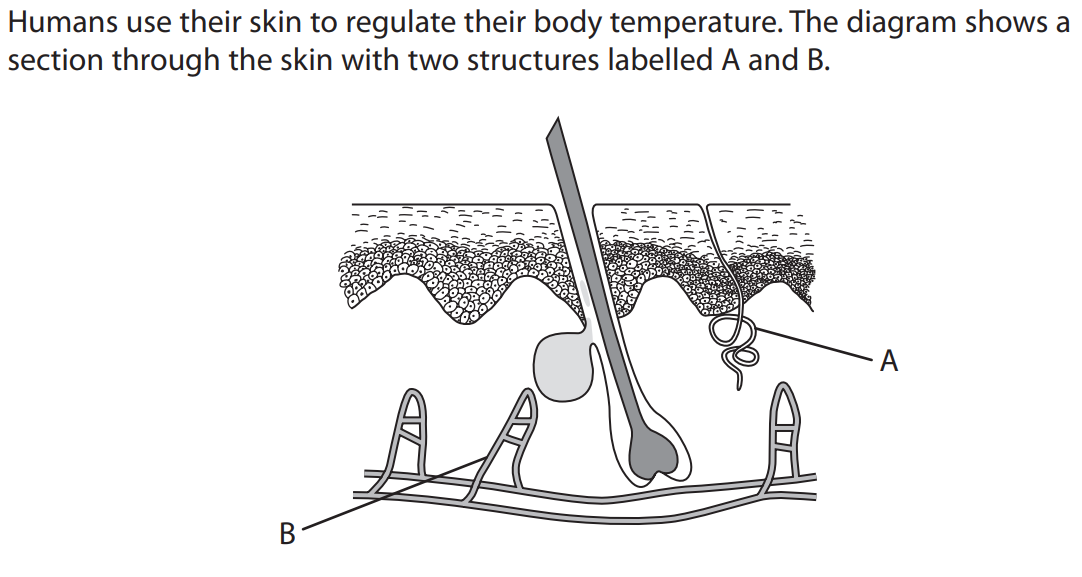
Explain how sweat glands respond when body temperature decreases. (2)
M1: less sweat released / eq
M2: less (sweat) evaporates / less cooling / less heat loss / eq
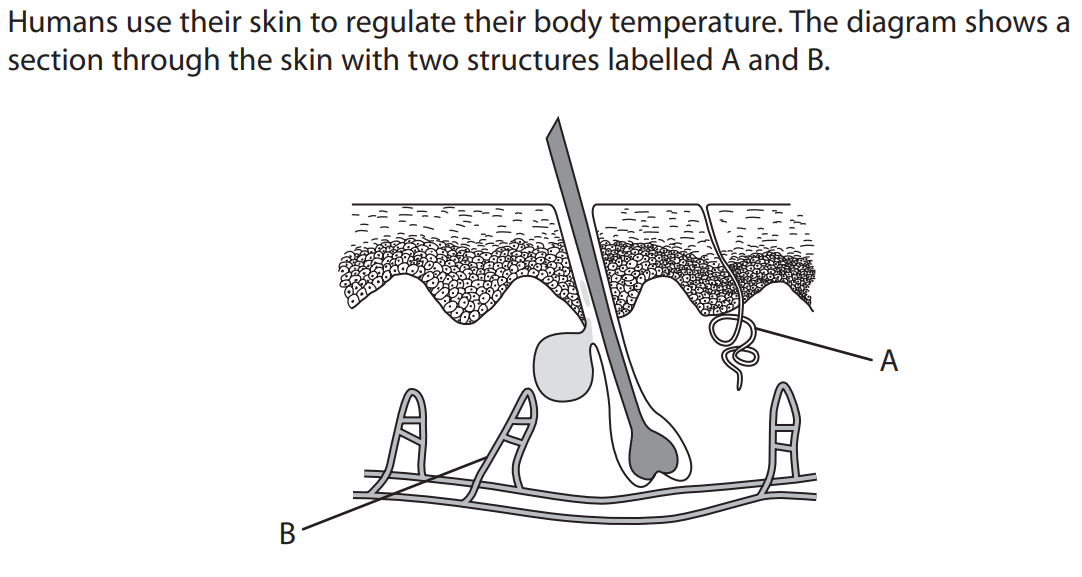
Explain the changes that take place to capillaries in the skin when a person gets cold. (3)
M1: (B / blood vessels to surface) constrict / vasoconstriction / eq
M2: less blood flows (to skin surface) / eq
M3: less heat loss / heat conserved / eq
M4: less convection / radiation
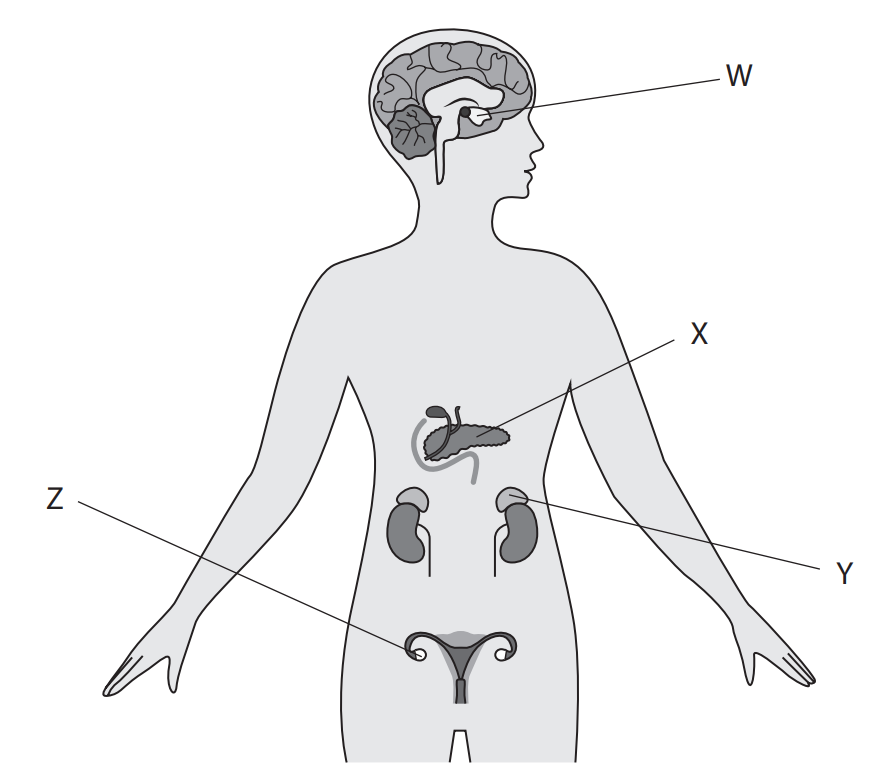
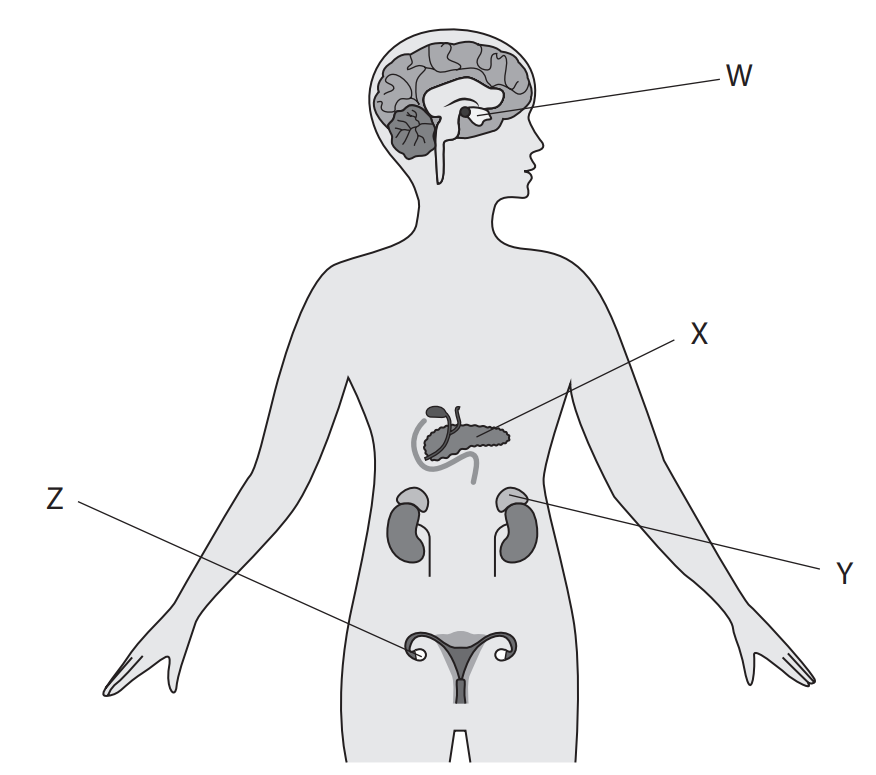
Label WXYZ. (4)
M1 W = pituitary (FSH, LH and ADH)
M2 X = pancreas (insulin and glucagon)
M3 Y = adrenal gland (adrenaline)
M4 Z = ovary (oestrogen and progesterone)
Describe how blood glucose levels are returned to normal after a meal. (3)
M1: insulin secreted / produced / released
M2: (produced) by pancreas
M3: glucose absorbed (by liver / muscles)
M4: stored as / converted to , glycogen
List the physical effects of adrenaline on the human body. (4)
M1: (it) dilates the pupil (in the eye)
M2: (it) increases heart rate
M3: (it) narrows small arteries in the intestine
M4: (it) converts glycogen into glucose (in the liver)
Explain the advantages to the body of the physiological changes caused by adrenaline. (9)
M1: (allows) (more) light into eye / retina
M2: (allowing the person) to see danger / be more aware of surroundings / eq
M3: (provides) more blood to lungs
M4: (provides) more blood to (leg) muscles / blood diverted to (leg) muscles
M5: (results in) more oxygen (to muscles)
M6: (results in) more glucose (to muscles / in blood)
M7: (allows for) more respiration / less anaerobic respiration / less lactic acid produced
M8: (provides) more ATP / energy
M9: (allows the person to) run faster / escape / contract muscles more / eq

