DNA replication
 Call Kai
 Learn
Learn Practice Test
 Spaced Repetition
 Match
Match Flashcards
 Knowt Play
1/9

There's no tags or description
Looks like no tags are added yet.
Name | Mastery | Learn | Test | Matching | Spaced | Call with Kai |
|---|
No analytics yet
Send a link to your students to track their progress
10 Terms
helicase
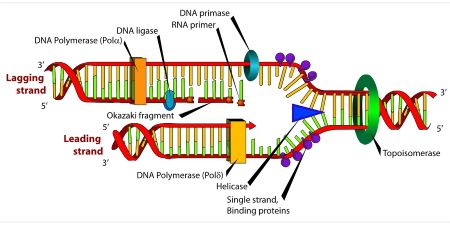
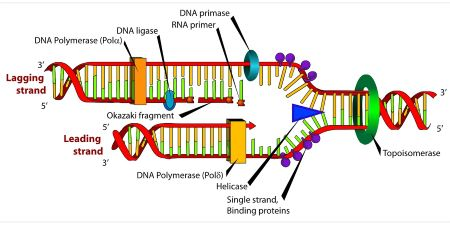
breaks hydrogen bonds between nitrogenous bases, unwinding DNA double helix
moves in both directions from origin of replication, forming a replication bubble with two replication forks at each end
origin of replication
specific DNA nucleotide sequence where DNA replication occurs, 1 in prokaryotes and thousands in eukaryotes
gyrase/topoisomerase
ahead of replication fork, relieves tension in DNA supercoil
single stranded binding proteins
hold DNA strands separate, stabilize unwound DNA
primase
adds RNA nucleotides to complementary base sequences, primer for DNA nucleotides as DNA polymerase can only add DNA nucleotides to another nucleotide
primers
short segments of RNA around 10 nucleotides long
DNA polymerase III
adds DNA nucleoside triphosphates to RNA primer sequence in a 5’ to 3’ direction on the daughter strand (reads template 3’ to 5’)
nucleosides
DNA bases with 3 inorganic phosphates, arrive with their own stored energy source needed to attach to DNA strand
DNA polymerase I
removes RNA primers and replaces them with DNA nucleotides
proofreading and correcting (repairing mismatched bases, removes abnormalities, etc.)
DNA ligase
joins okazaki fragments of lagging strand to form a single DNA strand

