BIO 130 exam 2: CH 11 + 12
 Call Kai
 Learn
Learn Practice Test
 Spaced Repetition
 Match
Match Flashcards
 Knowt Play
1/44

There's no tags or description
Looks like no tags are added yet.
Name | Mastery | Learn | Test | Matching | Spaced | Call with Kai |
|---|
No analytics yet
Send a link to your students to track their progress
45 Terms
4 criteria for genetic material
information
replication
transmission
variation
general DNA timeline
late 1800’s: chromosomes, biological basis of heredity
late 1920’s: Griffith, bacterial transformation
1940’s: Avery, MacLeod, and McCarty, DNA is genetic material
1953: Watson and Crick, double stranded helix and base pairing
late 1950’s: DNA reproduction models → Meselson and Stahl → semiconservative
Griffith’s experiment
streptococcus pneumonidae
smooth strains (S) secrete capsules (fatal) and rough strains (R)
mice injected with heat killed S mixed with R died because the heat killed S transformed the type R into type S
the transforming principle: the type S transferred genetic material into the type R, which gave them the capsule-secreting trait
Avery, MacLeod, and McCarty
interested in biochemical basis of transformation
added DNase, RNase, and protease → when DNase was added, no transformation took place
found that DNA is the genetic material
nucleotides
building blocks of DNA and RNA
strand definition
linear polymer of DNA or RNA
chromosome definition
DNA associated with an array of different proteins into a complex structure
discrete unit of genetic material
genome
the complete complement of genetic material in an organism
components of DNA
phosphate group
pentose sugar (deoxyribose)
nitrogenous base
purines
double ring structure, A and G
pyrimidines
single ring structure, C, T, and U
phosphodiester bond
the covalent bond between nucleotides
phosphate group bonds to 3’ carbon of one sugar and 5’ carbon of the other
DNA backbone
formed from phosphates and sugars, bases project away from the backbone
Watson and Crick
1953
proposed the idea of the double helix structure
connected the ideas from Rosalind Franklin’s x ray diffraction and Erwin Chargoff’s base pairing
found ball and stick model to be consistent with data
Rosalind Franklin
x ray diffraction suggested helical structure of uniform diameter
Erwin Chargoff
found amount of bases to be equal, suggesting base pairing
what direction does the helix go
it is right handed
how many nucleotides per helical turn
about 10
DNA width
2 nm
minor and major grooves
alternate small and large grooves in dna helix
proteins bind to major groove to affect gene expression
models proposed for DNA reproduction
conservative, semiconservative, and dispersive
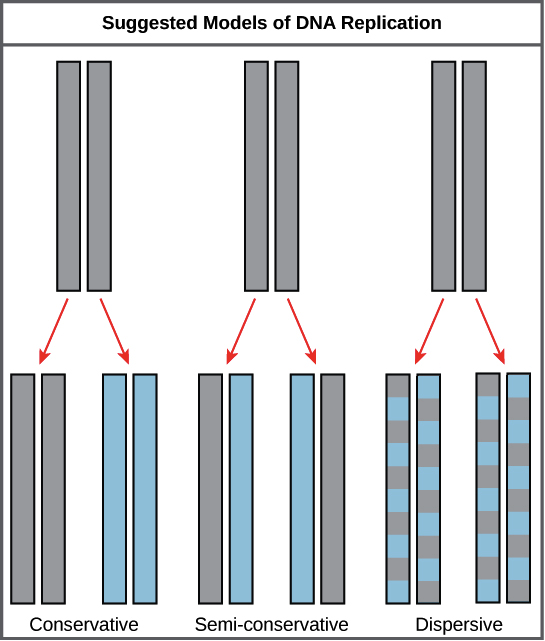
Meselson and Stahl
used light and heavy nitrogen to determine that DNA replicated according to the semiconservative model
how do you open DNA
heat or enzymes
DNA helicase
binds to DNA and travels 5’ to 3’ using ATP to separate the strands from each other
DNA topoisomerase
relieves additional coiling ahead of replication forks
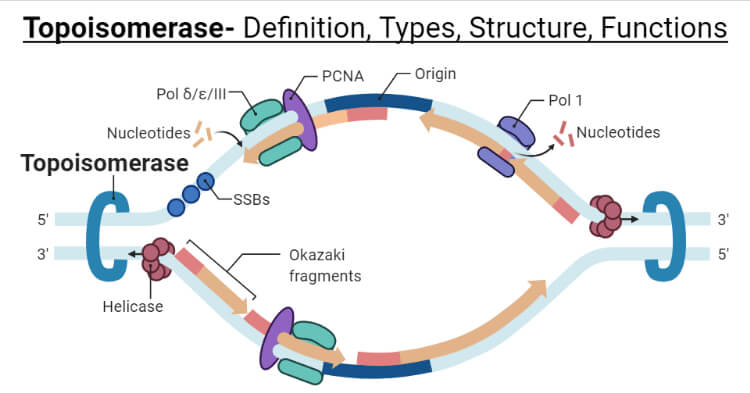
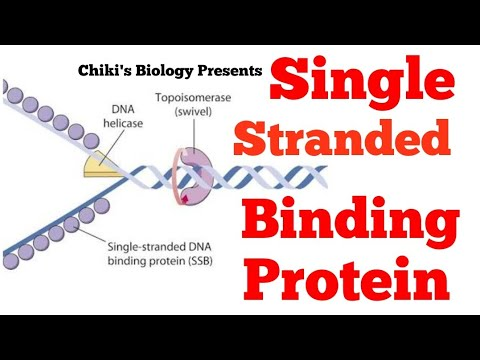
single strand binding proteins
keep parental strands open to act as templates during replication
deoxynucleoside triphosphates
free nucleotides with 3 phosphate groups
breaking covalent bonds to release 2 phosphates (pyrophosphate) provides energy to connect nucleotides
two important features of DNA polymerase
cannot begin synthesis on bare strand (requires RNA primer)
only works 5’ to 3’
leading strand
DNA synthesized in as one long molecule
single RNA primer
lagging strand
DNA synthesized 5’ to 3’ but as Okazaki fragments
multiple RNA primers
DNA primase
makes RNA primer
DNA polymerase III
elongates the strand (majority of replication)
DNA polymerase I
replaces RNA primer with DNA
DNA ligase
joins Okazaki fragments together
3 mechanisms for accuracy
base complementarity
active site of DNA polymerase is unlikely to form bonds if pairs are mismatched
proofreading: polymerase can back up and digest linkages, and there are other repair enzymes
DNA polymerases in humans
(e coli has 5)
humans have 12 DNA polymerases identified by greek letters
telomeres
series of short nucleotide sequences that are repeated at the ends of chromosomes in eukaryotes
telomere at 3’ does not have a complementary strand and is called a 3’ overhang
DNA polymerase cannot copy the 3’ end of the chromosome because there is no place to put the RNA primer, so telomerase attaches the telomeres so that our DNA would not get progressively shorter and shorter
telomerase activity decreases with age
telomerase is overexpressed in cancer
senescence
biological aging, gradual deterioration of functional characteristics in living organisms
chromatin
DNA protein complex
3 levels of chromosome compation
nucleosomes, 30 nm chromatin fiber, and radial loop domains
DNA wrapping
dna wraps around histones (8) to form nucleosomes
shortens 7 fold
30 nanometer fiber
asymmetric 3D zigzag of nucleosomes
shortens another 7 fold
radial loop domains
interaction betwen 30 nm fiber and nuclear matrix
each chromosome located in discrete territory
level of compation is not uniform
euchromatin
less compacted chromatin
hetrochromatin
more compact chromatin, occurs when cells prepare to divide (metaphase)

