Dual Credit US History - Unit 6
 Studied by 0 people
 Call with Kai
 Learn
Learn Practice Test
 Spaced Repetition
 Match
Match Flashcards
 Knowt Play
1/256

There's no tags or description
Looks like no tags are added yet.
Name | Mastery | Learn | Test | Matching | Spaced | Call with Kai |
|---|
No analytics yet
Send a link to your students to track their progress
257 Terms
Causes of World War 1
1. Alliances!
1A. Triple Entente
(Britain, France, and Russia)
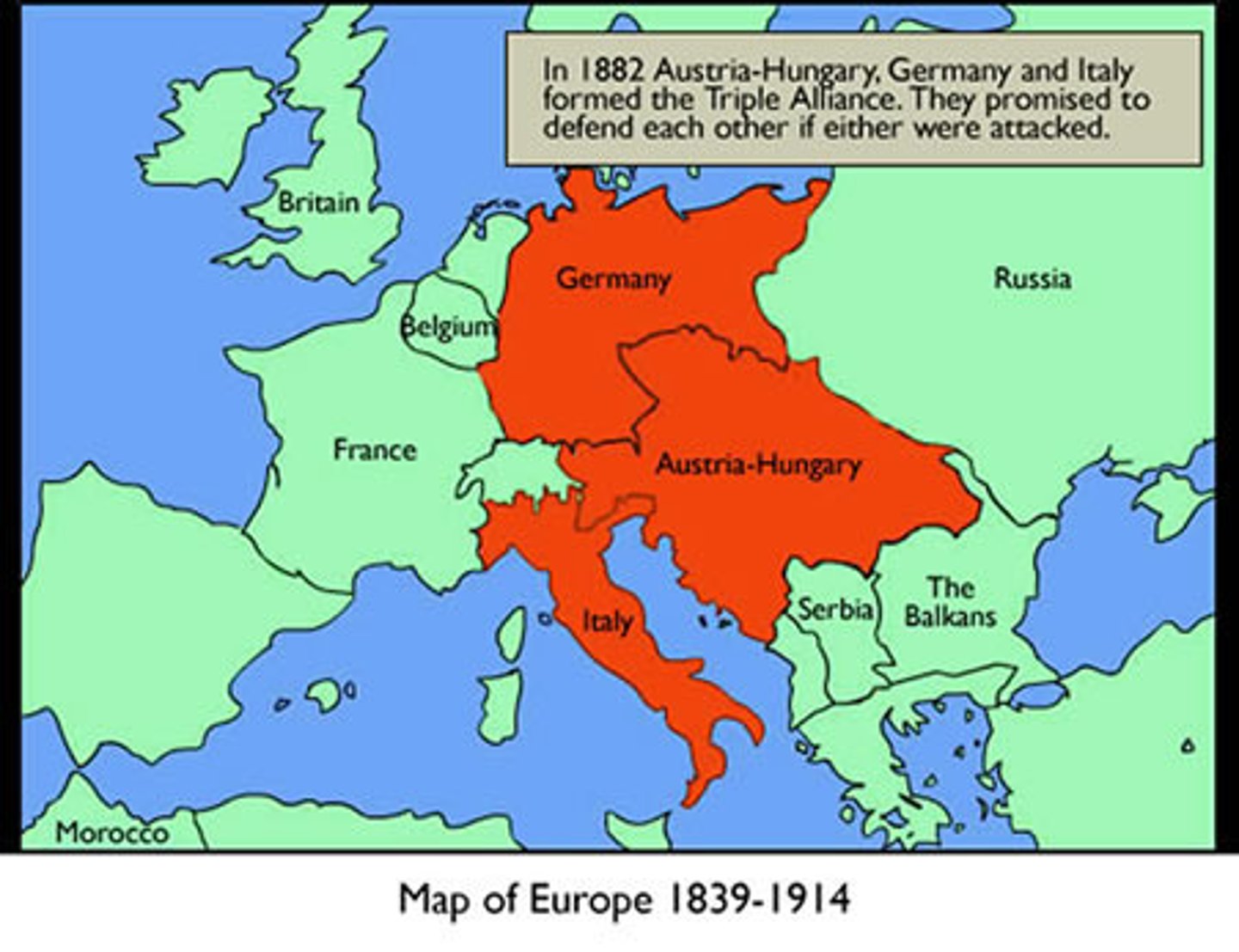
1B. Triple Alliance
(Germany, Italy, and Austria-Hungary)
2. Nationalism
3. Industrial Militarism
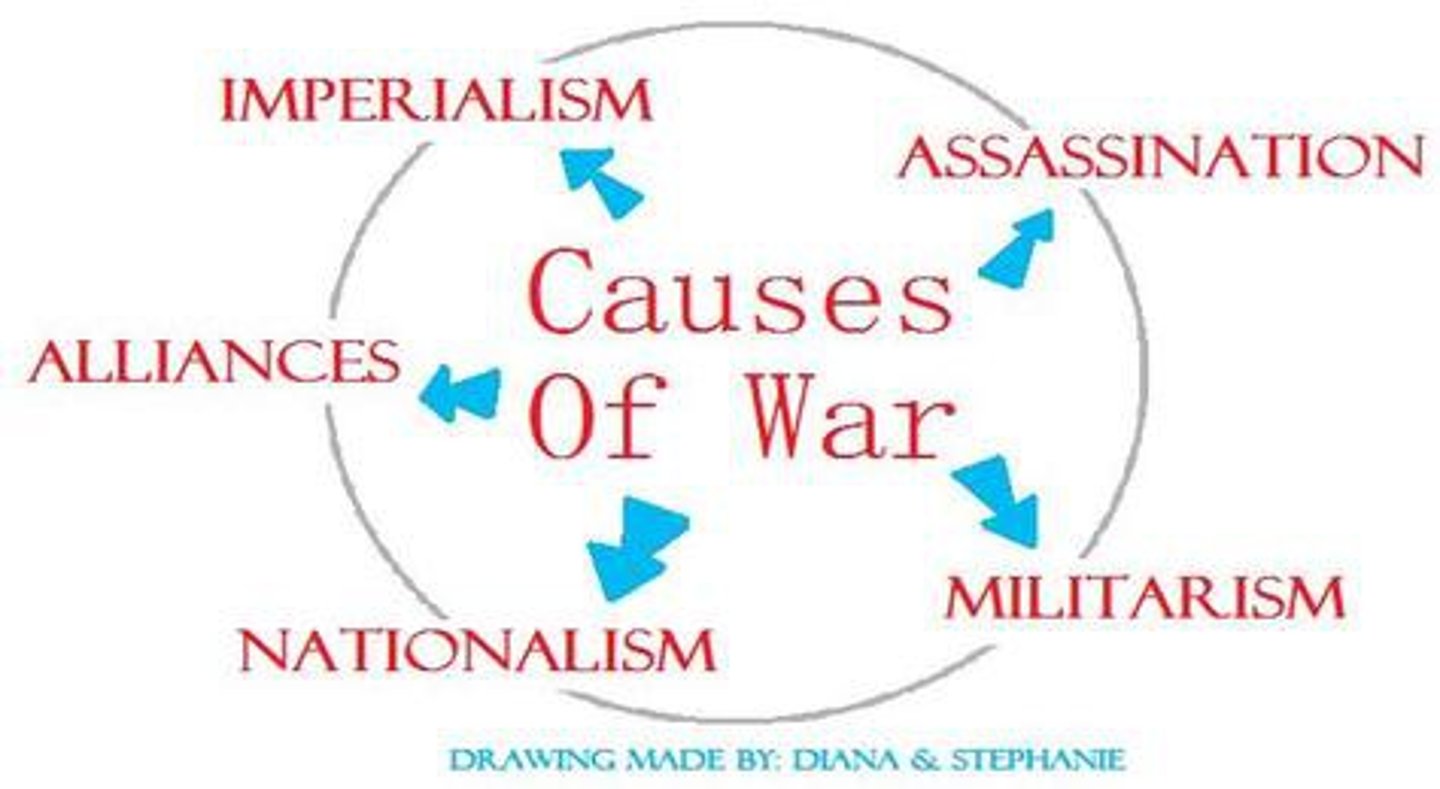
Industrial Militarism
Nations building up weapons through mass production.
(Related to Causes of World War I Slide!)
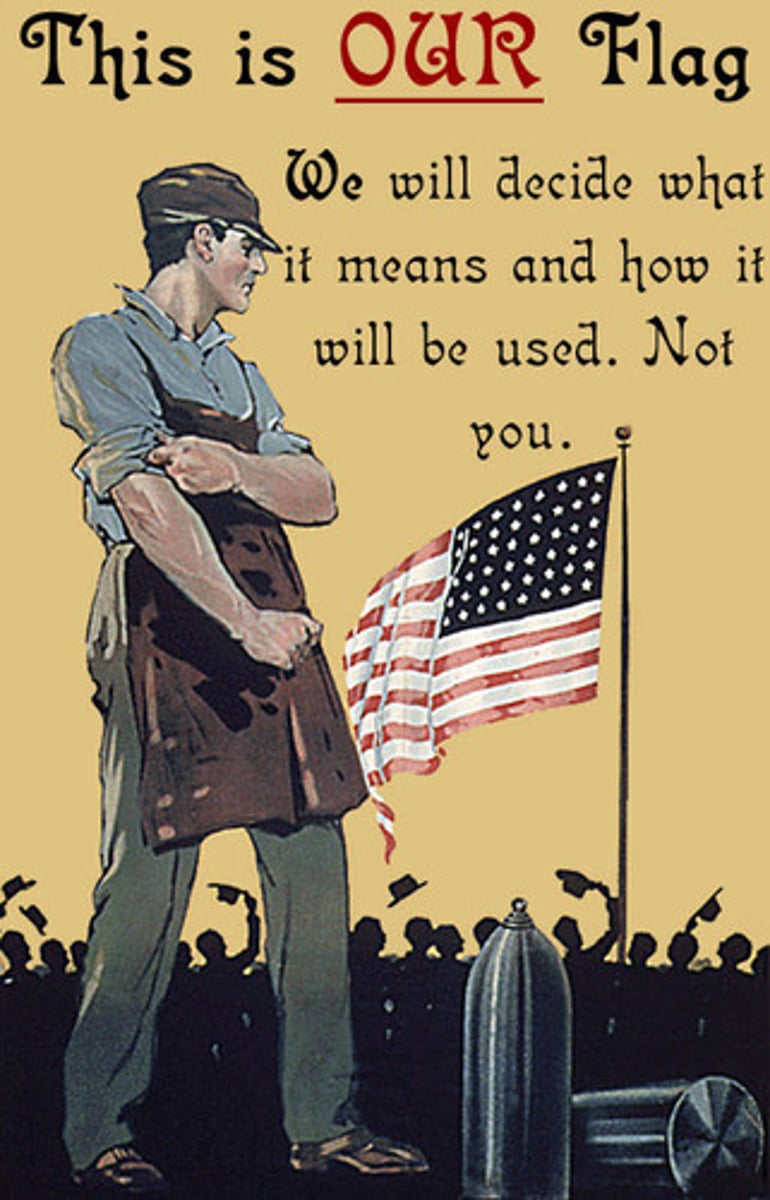
Nationalism
A strong feeling of pride in and devotion to one's country. Everyone wanted their own country.
(Related to Causes of World War I Slide!)
Triple Alliance (WW1)
Germany, Italy and Austria-Hungary Alliance.
(Related to Causes of World War I Slide!)
Triple Entente (WW1)
Britain, France and Russia Alliance.
(Related to Causes of World War I Slide!)
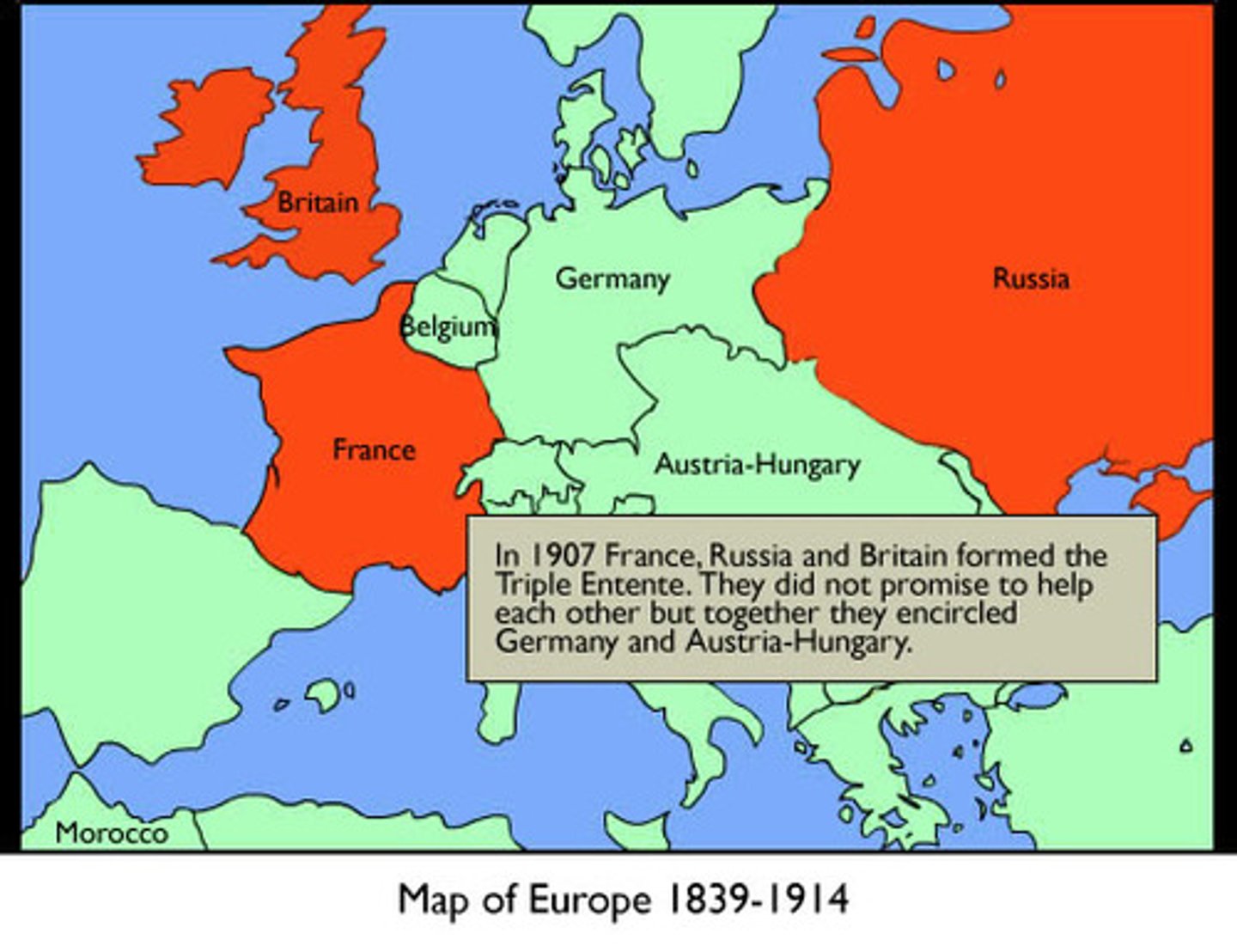
Sarajevo (Capital)
Austro-Hungarian Archduke (Prince) Franz Ferdinand was killed by Gavrilo Princip, a member of Black Hand, a terrorist group.
Austria then declared War on Serbia.
Germany declared war on Russia and France.
They then decided to invade Belgium, which brought Britain into the war.
Killer of Archduke Franz Ferdidnand
Gavrillo Princip, a member of Black Hand.
Black Hand
a terrorist group
Result of Frank Ferdinand Death
1. Austria declared war on Serbia.
2. Germany declared war on Russia and France, and invaded Belgium which brought Britain into the War.

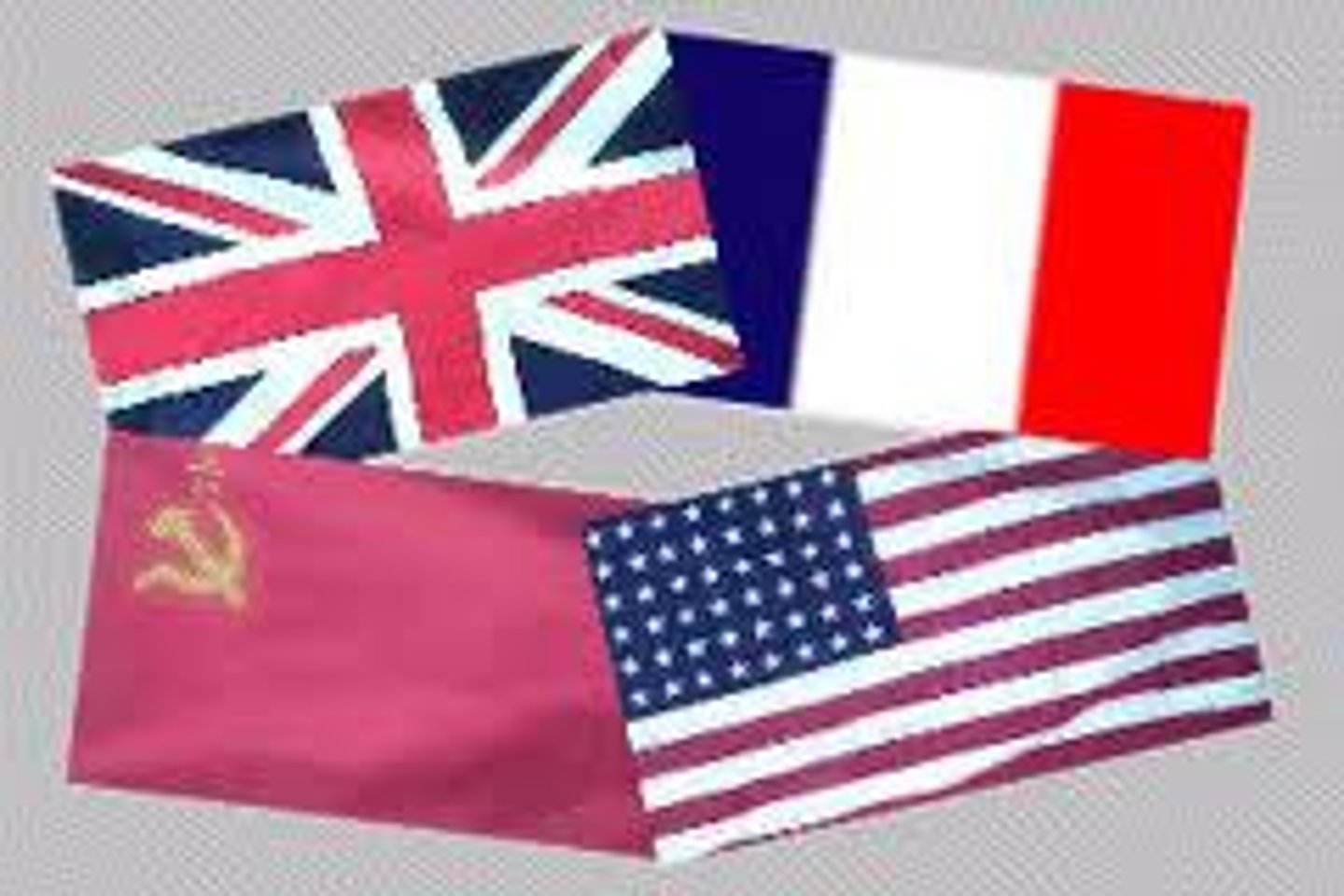
The Allies (WW1)
1. France
2. Great Britain
3. Russia
4. Italy. (for now)
They fought for the Triple Entente
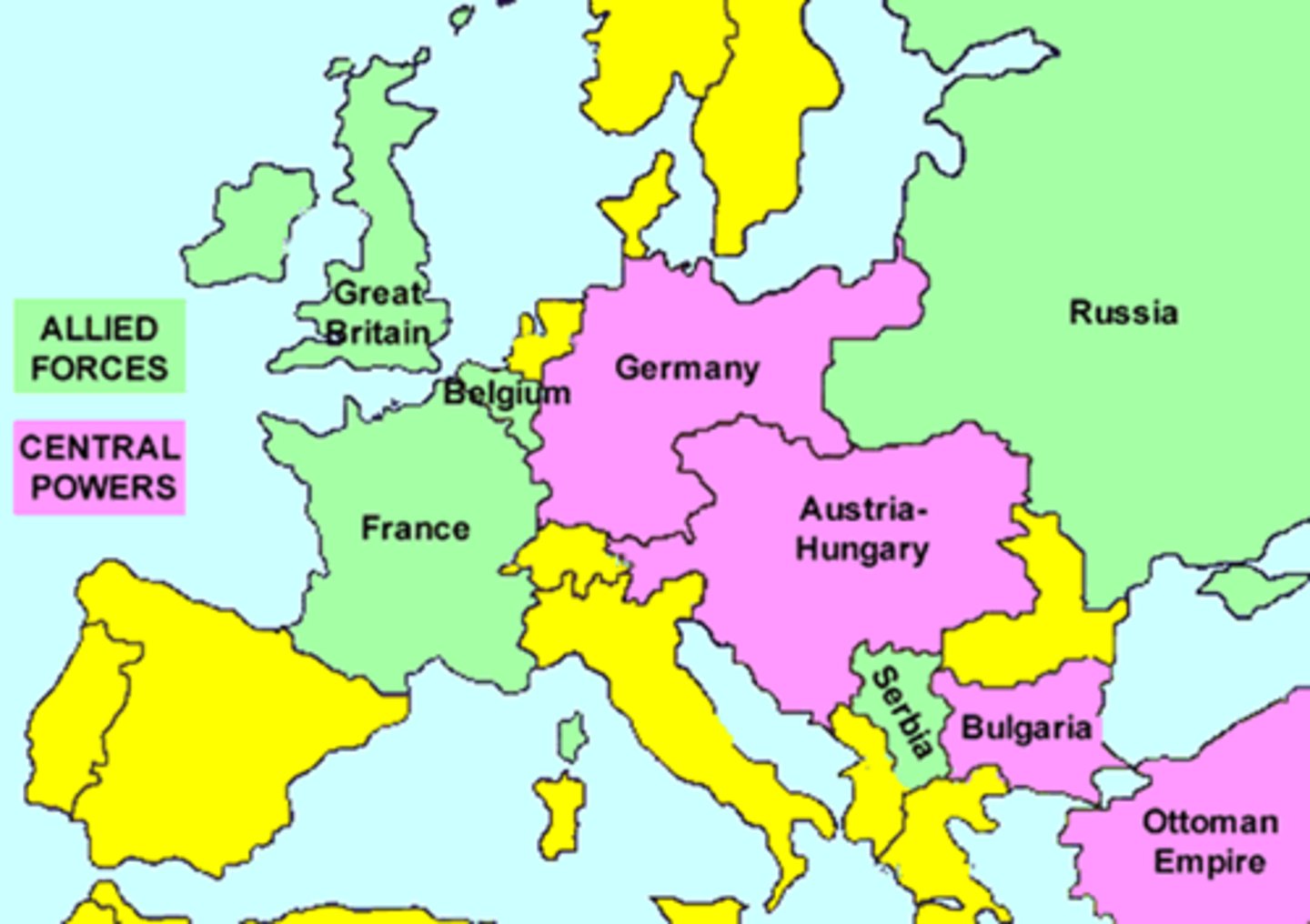
The Central Powers (WW1)
1. Germany
2. Austria-Hungary
3. Ottoman Empire
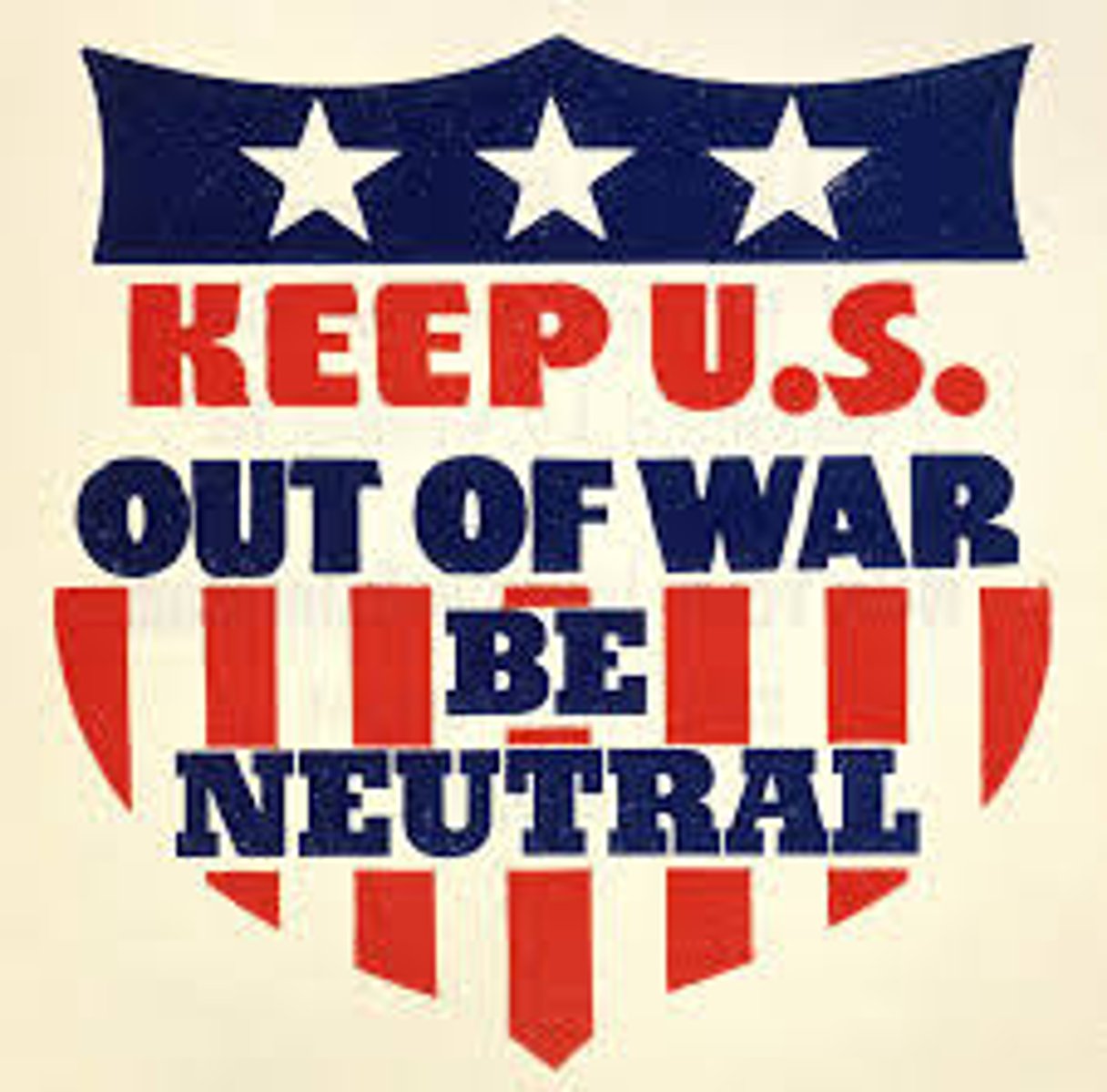
American Neutrality
President Woodrow Wilson and most Americans did NOT want war!
-The British had to use propaganda, information used to influence opinion, to gain United States Support.
-United States banks gave loans to the Allies, so United States prosperity was tied to the Allied victory.
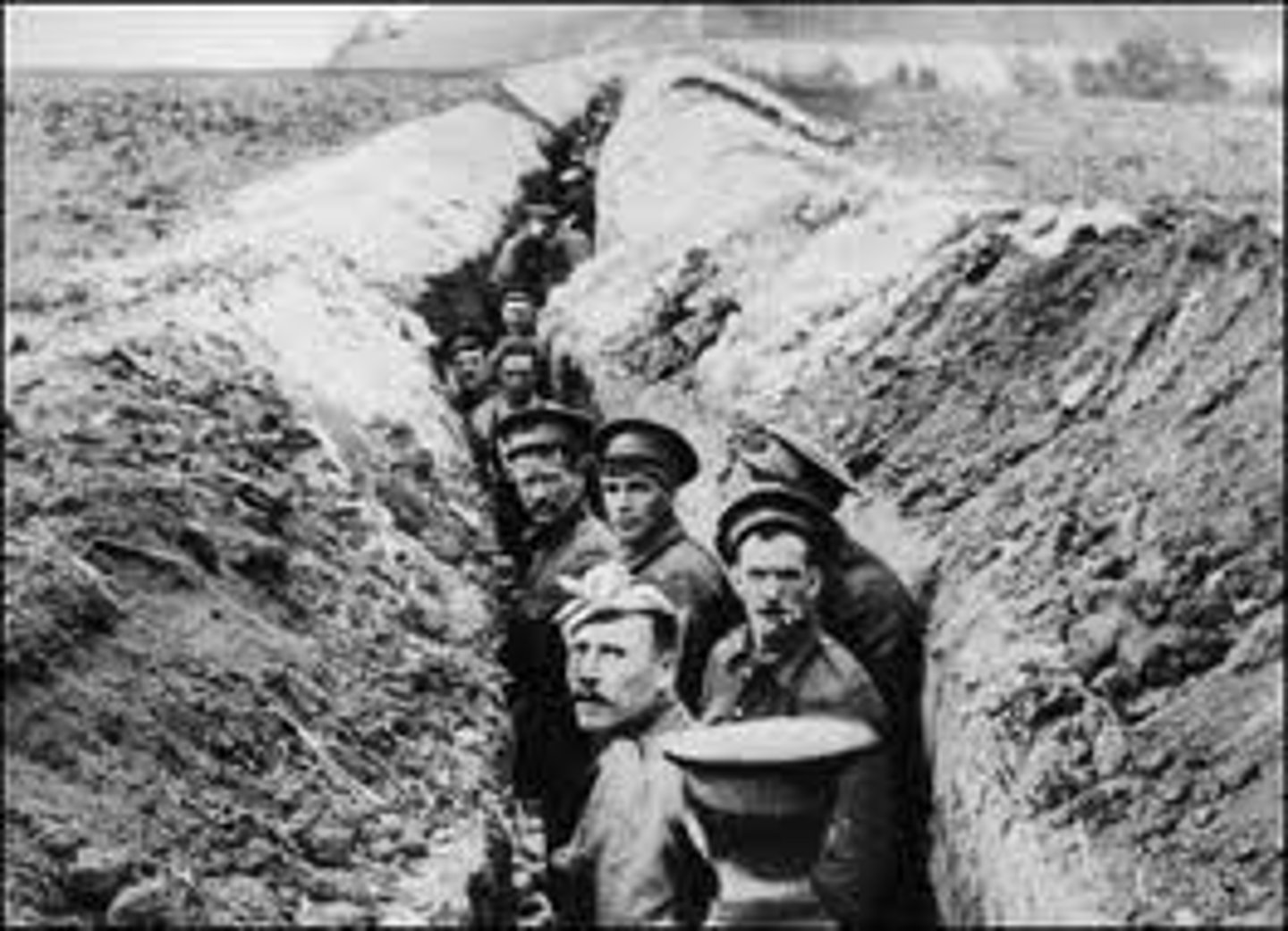
Trench Warfare (WW1)
Germany and France became locked in a stalemate along hundreds of miles.
“No man’s land,” is the area between opposing trenches. Both sides lose hundreds of men in Trench Warfare.
Poison Gas (WW1)
Louse (Lice) infestation ran at about 97% and made Trench Fever prevalent (widespread).
Others suffered from Trench Foot.
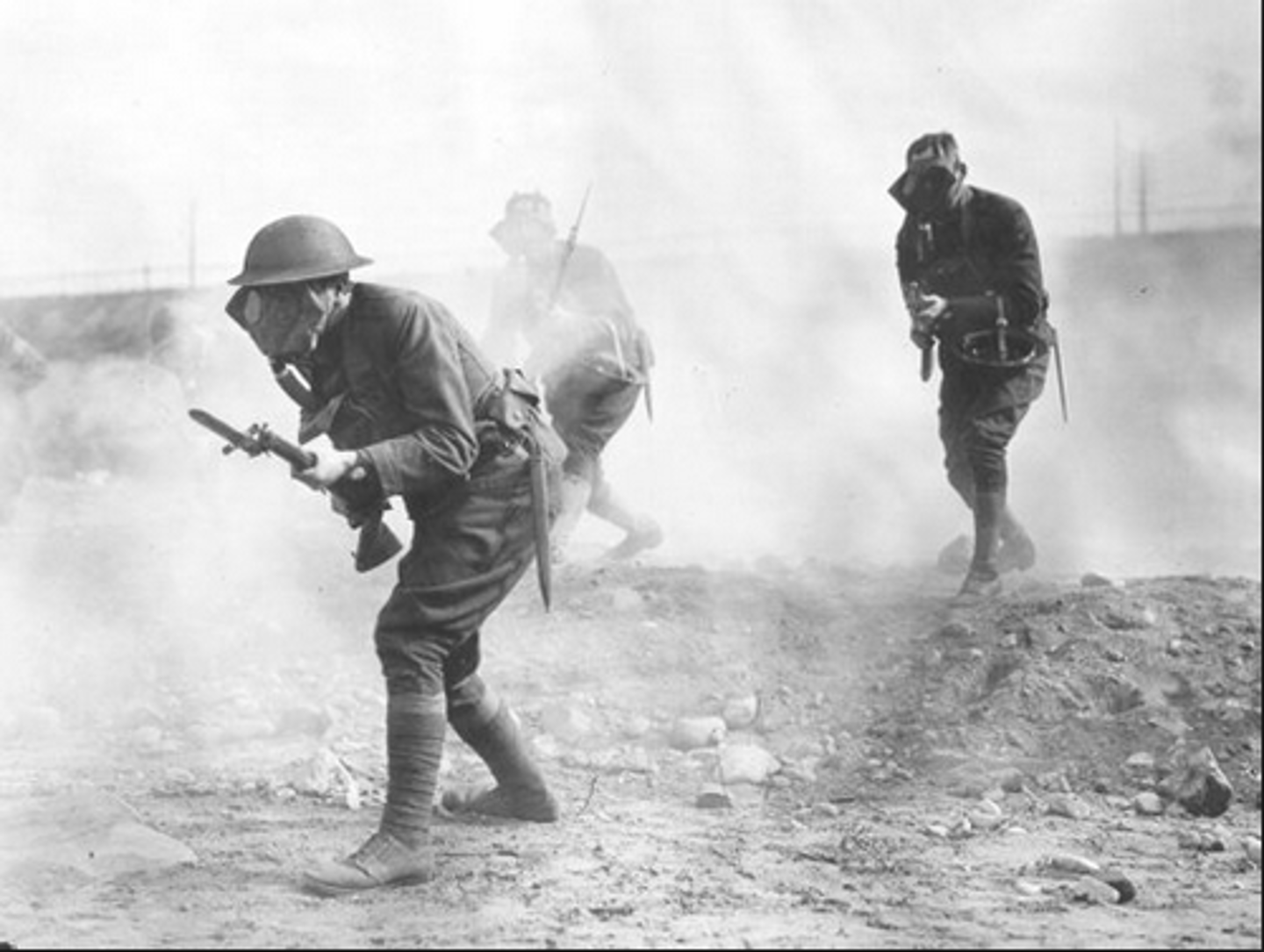
Germans used Poison Gas first, which caused vomiting, blindness, and suffocation
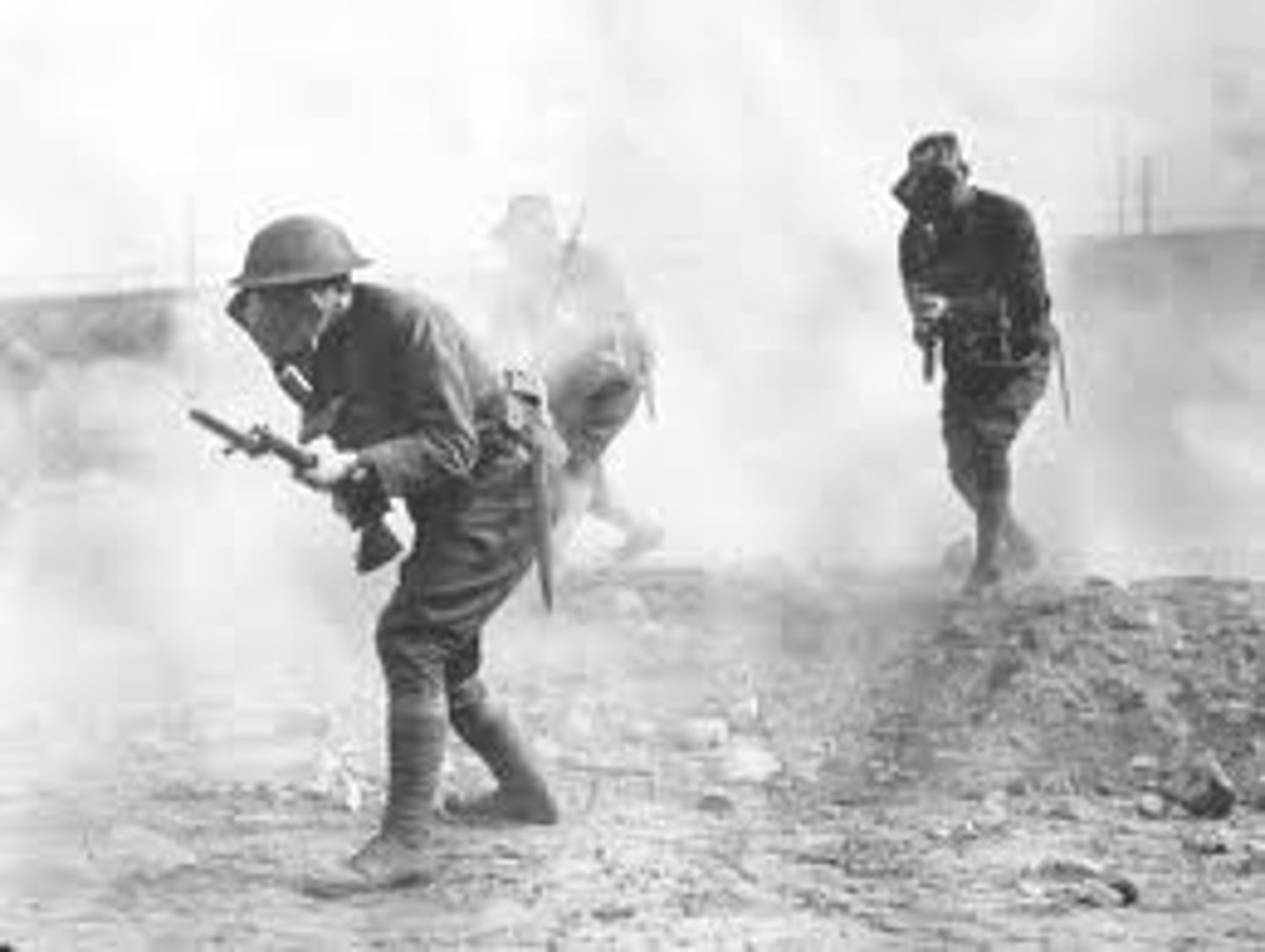
Warfare Weapons (WW1)
Zeppelin - Used to spy, go high distances
Machine Gun - fired 2 shots a second
Flame Throwers - burn 60 yards away
Tanks - ineffective
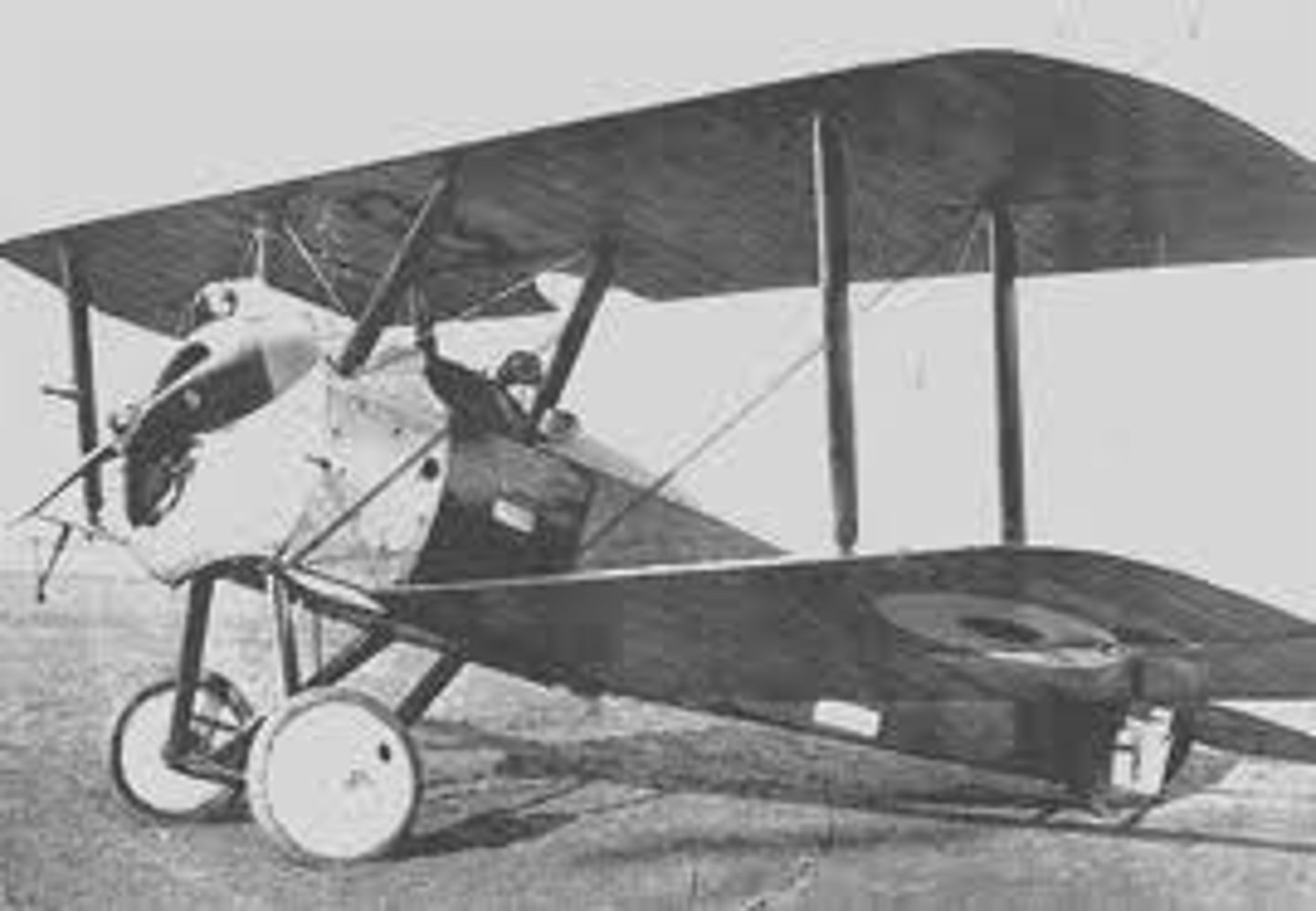
Airplanes (WW1)
Airplanes most often spied, dropped small bombs, and dog fights
Aces by Nation:
Germany -
Manfred von Richtoffen Red Baron”
France - Rene Pauk Fonck
United States - Rickenbacher
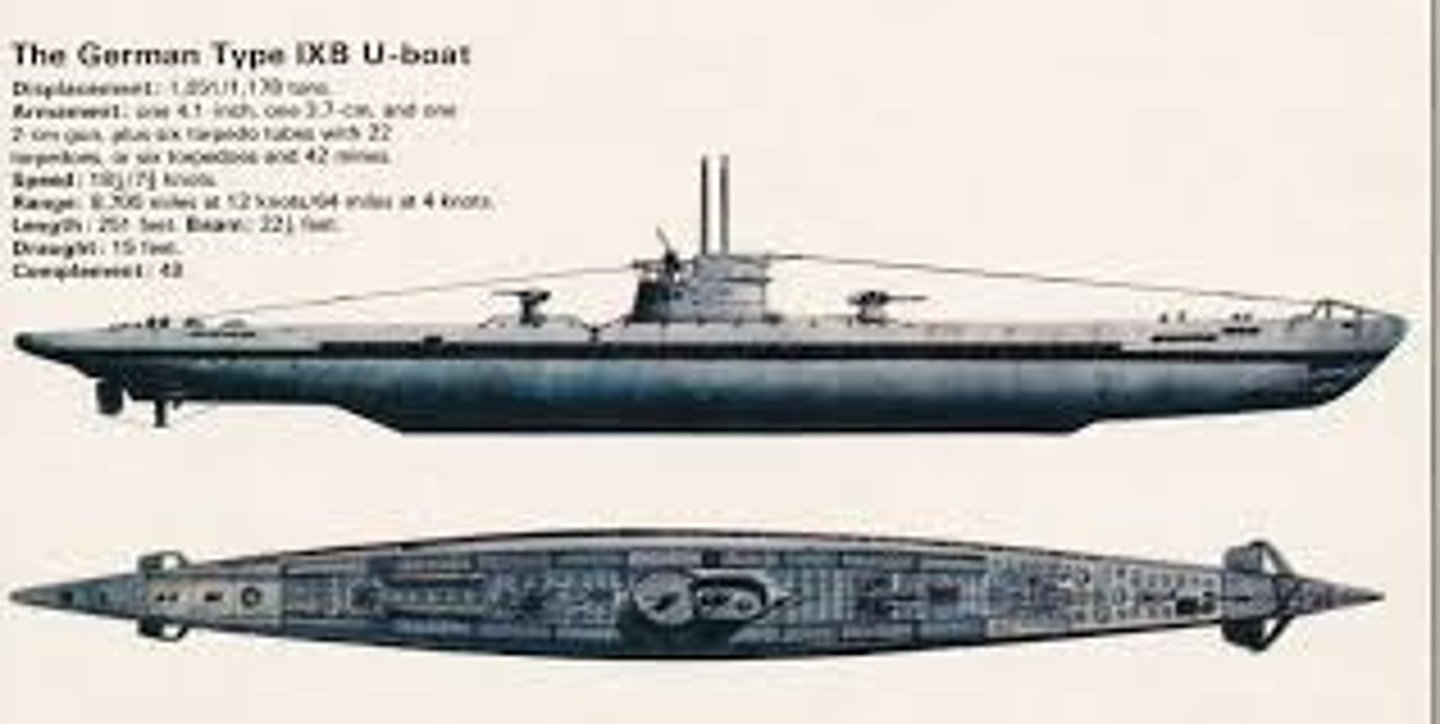
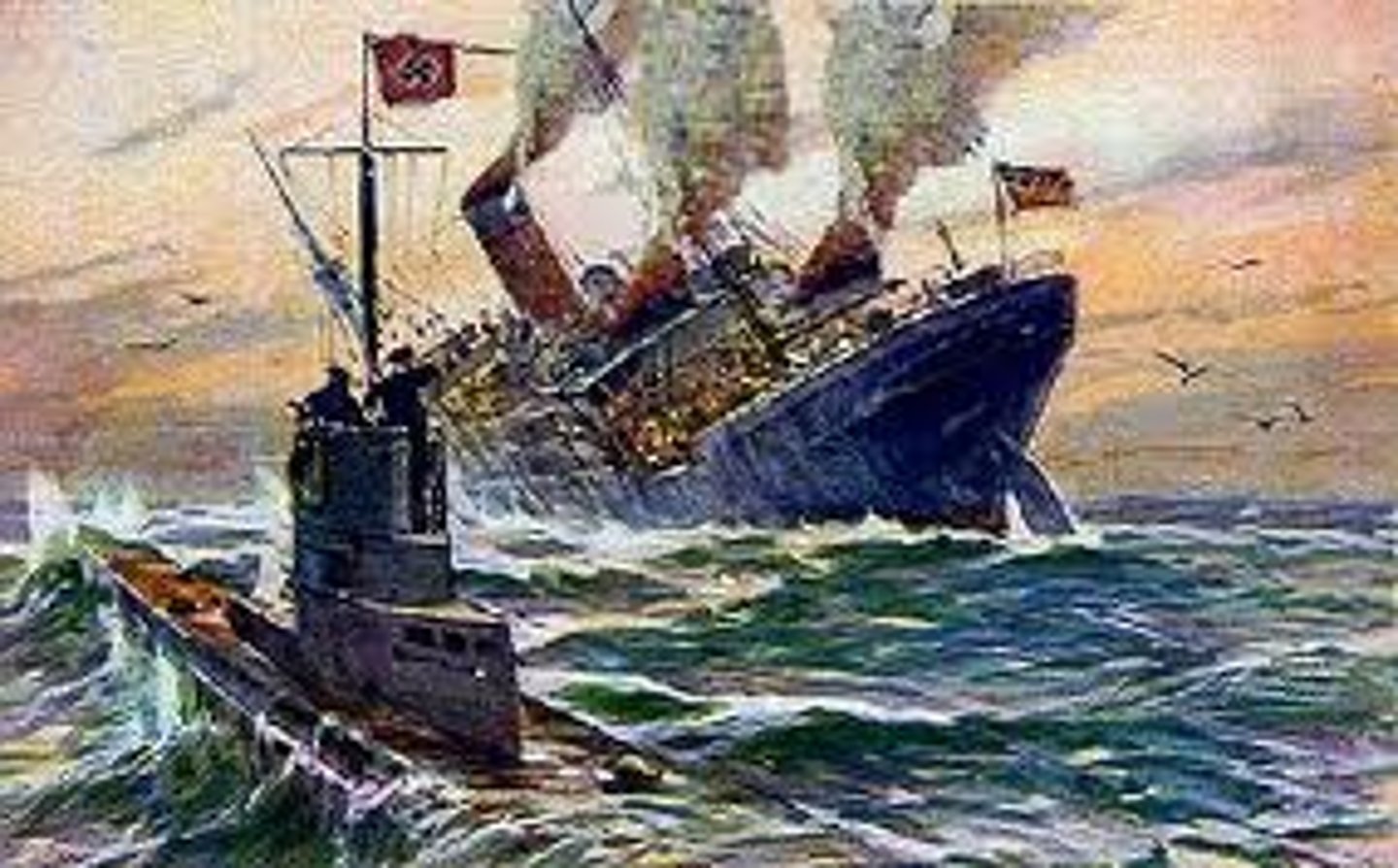
Unterseeboot, U-boat
British navy blockaded Germany.
Germany deployed U-boats or submarines to get around it. Germany threatened to sink any ship that entered the waters around Britain.
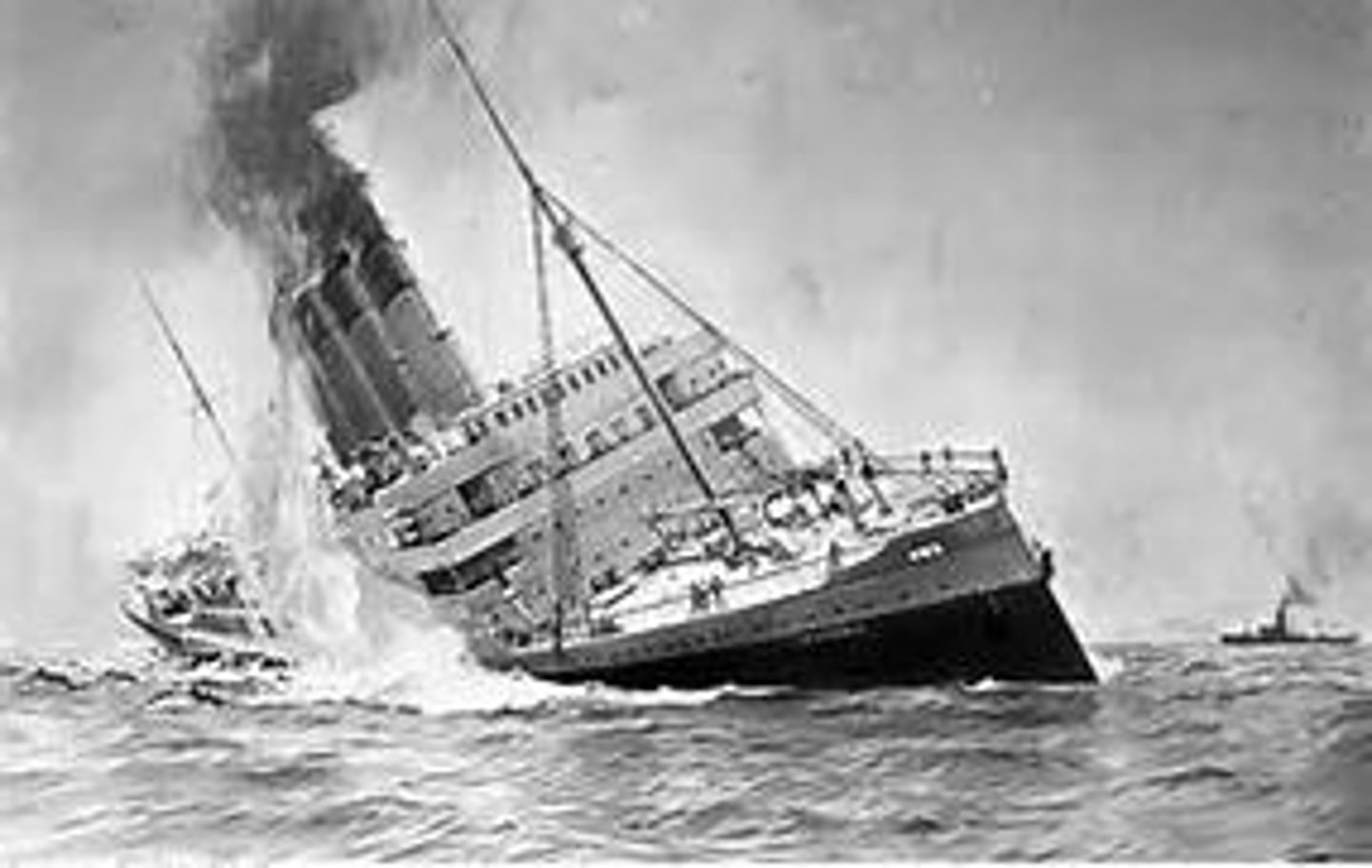
Germany sunk Lusitania, caused U.S to get into war.
Lusitania
A British Ship sunk by the Germans to avoid blockade. This caused 1198 people to die with 128 being Americans, causing the United States to enter the war.
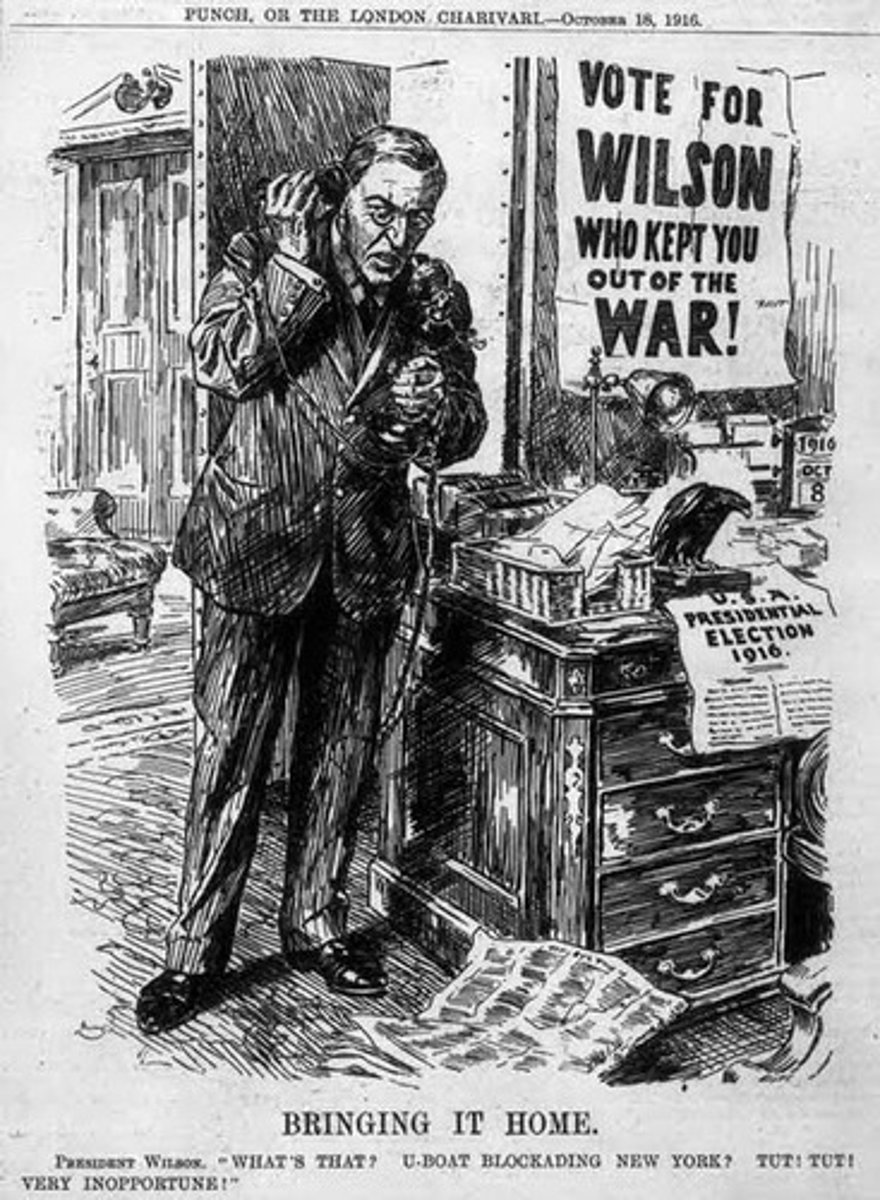
Election of 1916
President Woodrow Wilson was reelected from the slogan “He Kept Us Out Of War!”
Republican Charles Hughes changed his promises based on his audience.
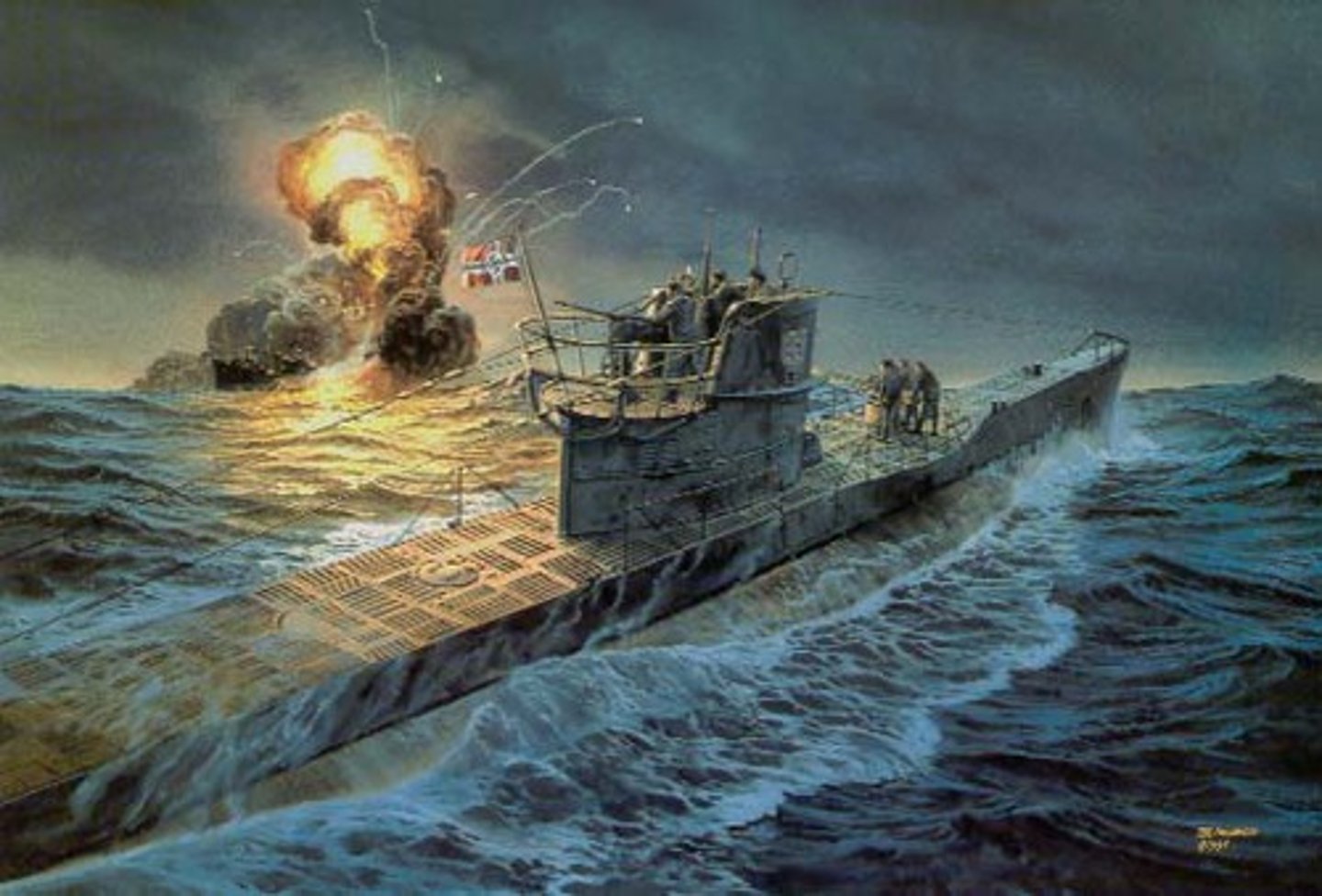
Sussex Pledge
Germany promised to stop sinking merchant ships because of Lusitania Incident. Germany wanted to keep United States out of the war.
In February 1917, Germany resumed unrestricted submarine warfare. President Wilson made a speech that war would make the world safe for democracy.
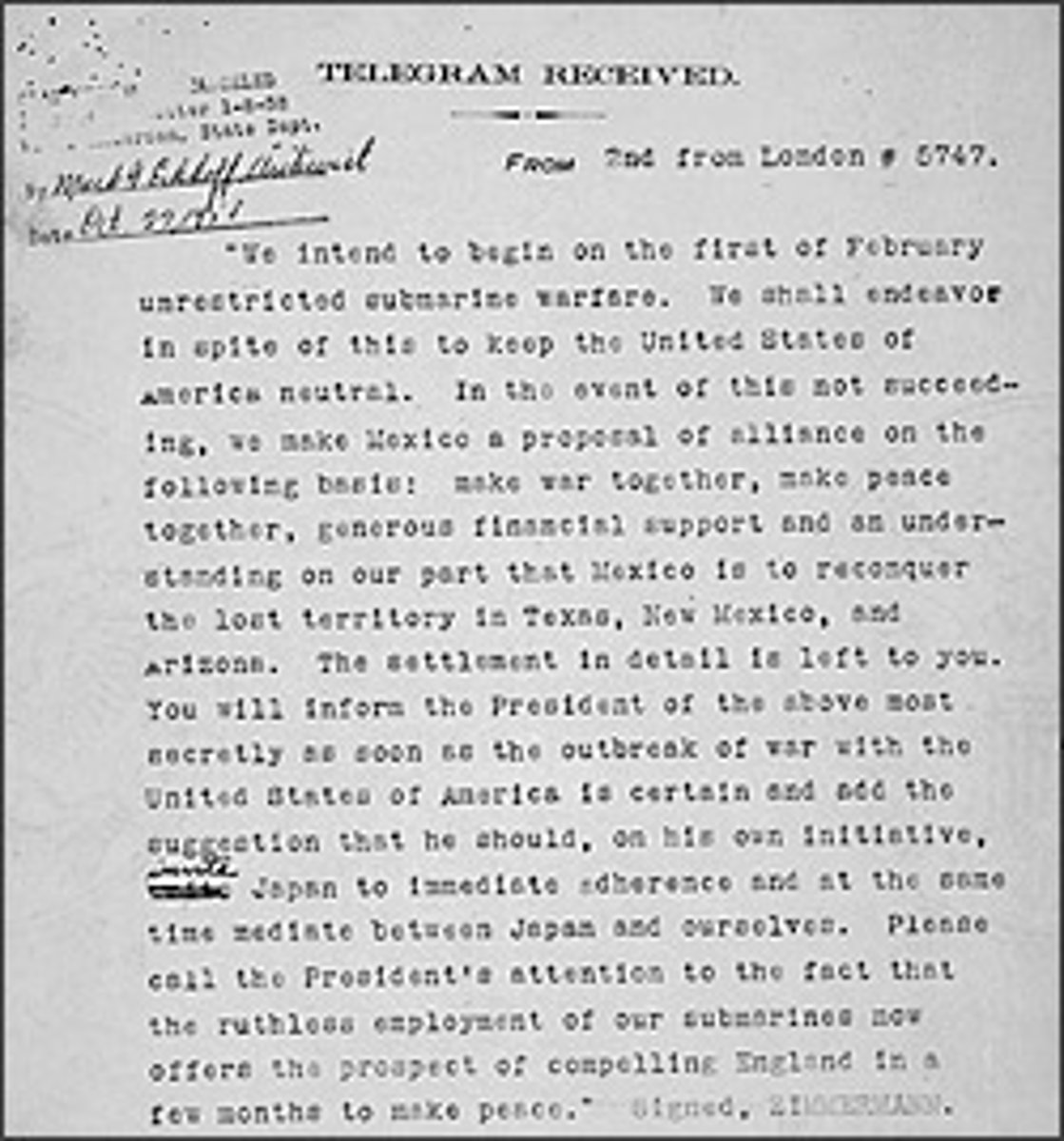
Zimmerman Note
German Diplomat Arthur Zimmermann proposed Mexico to ally itself with Germany for territory lost to the United States. The British intelligence leaked to United States newspaper.
On April 6, 1917, The United States declared war against Germany.
The 2 Reasons United States Joined The War
1. Germany's unrestricted submarine warfare
2. Zimmerman Note
George Creel
He was the Committee on Public Information.
Sold the war to the American people, four minute men gave speeches at local theaters.
Who was the Committee on Public Information?
George Creel
Anti-German Movement
8 million German Americans targeted because of war. One lynching.
Espionage Act
Espionage - Spying to acquire secret information.
This act carried the death penalty
Sedition Act
made it illegal to criticize the President or government
Schenck v. The U.S
This ruled limited freedom of speech if it constituted a "clear and present danger."
War Industries Board (WW1)
Bernard Baruch - coordinated the production of war materials
National War Labor Board (WW1)
Led by former President Taft.
This gave wage increases, an 8 hour workday, and right to organize unions, if the labor leaders agreed to no strikes.
Women took manufacturing factory jobs and railroad jobs because of men fighting!
Great Migration (WW1)
500,000 African Americans moved to the North for wartime jobs.
A riot broke out in St. Louis leaving 40 African Americans dead and 9 Women.
Selective Service
2.8 Million Americans were drafted in a lottery.
African American soldiers served in mainly non-combat units, but many received war medals. The navy enlisted 11,000 women, as clerics, radio operators, pharmacists, and torpedo assemblers.
Military army nurses were the only women to go to war.
U.S.S Recruit (1917)
A wooden battleship built by the Navy in Union Square in New York City to help encourage the recruitment of seaman to sell Liberty bonds
United States Admiral William Sims
Propose convoys, where merchants and troop transports would have warships as escorts, reducing shipping losses, safe arrival of United States troops.
Fuel Administration
conserve coal and oil
Daylight savings time
introduced to conserve energy
Liberty Bonds/Victory Bonds
sold to pay for the war, Americans loaned money that would be repaid with intrest
Food Administration
Under Herbert Hoover.
Was responsible for increasing food production while reducing consumption.
Hover encouraged Victory Gardens to produce more food.
Who was under the Food Administration?
Herbert Hoover
Conservatism (1905-1917)
Tsar Nicholas II ignored the Duma; suppressed political parties, token land reform passes. He was a weak man.
His wife Tsarina Alexandra ran everything and was under the influence of Rasputin, since he could treat her son. Scandals surrounding Rasputin served to discredit the monarchy.
Russian Military
Corrupt military leadership looked down on ordinary Russians. Average peasants uninterested in war. They were ill-trained, ineffective officers, poorly equipped and 2 million casualties by 1915.
Russia's Collapse
Tsar Nicholas II left for the military leaves to the front. His wife Alexandra and doctor Rasputin led chaotic government.
Rasputin assassinated complete.
There was mismanagement of the wartime economy, production plummeted, inflation, starvation increased and cities overflowed with refugees.
March Revolution
Tsar Nicholas III abdicated the throne.
Menshevik Alexander Kerensky headed the Provisional Government and freed political prisoners for a new era of Russia
October Revolution
Vladimir Lenin and Leon Trotsky took over Russia with the Red Army. The red army followers known as Bolsheviks were renamed to the Communist Party, and Russia united other countries and became the Soviet Union.
Treaty of Brest-Litovs
Russia gave Poland, Ukraine, Baltic Provinces, and Finland to Germany to peacefully leave World War I.
Russia Royal Family Incident (1918)
The Reds killed Tsar Nicholas III, and his family. Including the daughter Anastasia.
1921
The Civil War was completely over, the land and economy were devastated. Vladimir Lenin renamed his nation the USSR.
Doughboys
Nickname for United States soldiers, raised moral for Allies.
U.S General John Pershing
John Pershing commanded to keep a separate United States Army because they wanted a strong position if they won. This created the most massive attack in United States History at Battle of Argonne Forest. 10% or 120k troops died in battle causing German position after another to fall.
Alvin York
Alvin York killed 20 German soldiers and capture 132 others.
Glenn Curtiss
He mass produced planes for combat in WW1 for the United States and Britain.
November 11, 1918
Germany signed an armistice, or cease fire. The United States required Kaiser Wilhelm II (Germany)to step down before the armistice was agreed on.
Fourteen Points
President Wilson was considered the moral leader of the Allies. He wanted to abolish secret treaties, freedom of the seas (trade with nations without being brought into war/neutral), self-determination (choose their own country), and
League of Nations - a group of nations that would preserve peace and prevent wars
Big Four
France, Britain, United States and Italy led the negotiations to the
Treaty of Versailles. - ended the war accepted most of Wilson’s fourteen points. Germany lost land and had to pay reparations all of the allies.
Treaty of Versailles
ended the war accepted most of Wilson’s fourteen points. Germany lost land and had to pay reparations all of the allies.
German Consequences
1. War Guilt Clause
2. They lost their entire navy, air force, and reduced army to 100k.
3. Couldn’t united with Austria
4. Pay respiration or war damages
5. No troops in the Rhineland/border near land of France
Wilson's Fight for League of Nations
President Wilson negotiated without the Republican Congress.
Reservationist - Republicans led by Henry Cabot Lodge, supported the League but did not want to police the world.
Wilson went on a tour for support and has a massive stroke.
The United States sign a Joint Resolution.
Joint Resolution
Congressional treaty that officially ended WW1, 3 years later.
Spanish Flu Pandemic (1919)
The Spanish Flu kills 50 million to 100 million people, or 1 out of 17 people.
The Spanish Flu infected 20% of people.
General Strike (Seattle)
Started in Seattle, workers in other unions go on strike to support strikes to help them meet their goals.
Fueled the red scare!
Boston Police Strike (1919)
75% of the Police force go on strike for better benefits.
Massachusetts Governor Calvin Coolidge called in the National Guard to stop looting. Governor Coolidge fired the police, and hired replacements.
Red Scare
Americans saw communism as disloyalty as unpatriotic behavior.
This and strikes led to a fear of Communists or “Reds” taking control.
Unions and immigrants were targeted.
Mitchell Palmer
Attorney General used fears of both immigrants and communism to lead the crusade against Communism.
His home was bombed, so he rounded up 6,000 suspects and deported 249.
General Intelligence Division
Headed by J. Edgar Hoover investigated communist connections.
The postal service found explosive parcels to business and political leaders, no one took responsibility, but many felt it was Communists trying to destroy America.
National Women's Party
Started by Alice Paul.
They picketed and went on hunger strikes if arrested. The 19th amendment gave women suffrage or the right to vote. After 1920, many women worked outside the home, went to college women didn’t want to sacrifice wartime gains.
19th Amendment
Gave Women suffrage or the right to vote
Women's Flapper
Women’s fashion drastically changed with the flapper, a young, dramatic, stylish, and unconventional woman who danced to jazz.
Jeannette Rankin (1917)
First woman to hold a seat in Congress from Montana.
Election of 1920
Warren G Harding elected with the slogan “a return to normalcy”. He supported a 12 hour work day/6 day work week, results were first broadcasts on the radio.
James M. Cox
Ran for the Democrats to pass the League of Nations, with FDR as his running mate.
Election of 1920 James M. Cox
Ran for the Democrats to pass the League of Nations, with FDR as his running mate.
Ohio Gang
Harding college friends appointed to the cabinet
Andrew Mellon
Reduced government spending and cut the federal budget.
He applied supply-side economics to lower taxes so businesses and consumers could spend and invest their extra money, resulting in economic growth.
Harding's Scandals ***
Teapot Dome Scandal Secretary of the Interior Albert Fall took bribes to lease United States Navy oil reserved in Teapot Dome, Wyoming.
Albert Fall was the first cabinet officer to go to prison.
Where did Albert Fall lease navy oil from which reserves?
Teapot Dome, Wyoming
Who was the first cabinet officer to go to prison?
Albert Fall
Attorney General Harry Daugherty ***
Took bribes to sell a German owned company seized during World War 1. Daugherty Resigned.
Charles R. Forbes ***
Army deserter who led the Veterans Bureau stole $200 million from veterans hospital
Fordney-McCumber Tariff
raised import taxes, other countries raised tariffs against the United States.
(Causes trade wars & tried to save recession)
McNary-Haugen Bill
allowed for the government to buy farming surpluses and sell it overseas.
(helped farmers)
President Coolidge Vetoed!
Margaret Sanger
Started a birth control movement
National Women’s Party (1923)
campaigned for an equal rights amendment, starting in 1923
Ku Klux Klan (1924)
Targeted African American, Catholics, Jews, Immigrants, Pacifists and other groups believed to have “Un-American” values like communists, gays, gamblers, birth control, adulterers, and alcoholics.
The KKK had over 5 million members.
Scandals and poor leadership led to the decline of the Klan in the late 1920s.
The Birth of a Nation
Glorified the KKK & Reconstruction, attacked blacks and carpetbaggers.
They stated black people as oppressors, the men were referred as rapists and brutes who lusted over white woman.
Nativism
Nativists used eugenics, the false science of the improvement of hereditary traits for support. They emphasized human inequalities were inherited and said that inferior people should not be allowed to breed.
National Origins Act
800,00 European immigrant led to changes. This led to changes, limited immigration by nationality to 3%.
Sacco and Vanzetti
Ethnic prejudice was the basis of the Saco and Vanzetti case. Two immigrant ment were accused of murder and theft.
They were thought to be anarchists, or against all government.
They were sentenced to death and executed.
Culture of the Roaring 20's
Silent Movie Stars - Charlie Chaplin, Mary Pickford.
The National Broadcasting Company (NBS) started daily programming in 1926.
The Columbia Broadcasting System (CBS) set up coast-to-coast stations in 1928
The Jazz Singer
First talking picture in 1927.
WW1 Propaganda films helped popularize movies.
Sharecroppers
Many African Americans continued to work as sharecroppers in de facto slavery.
White landowners went bankrupt & forced African American off their land. African American migrated North for jobs changing the future of African Americans.
The Harlem Renaissance
This was a massive creative outpouring of African American arts. It started in northern cities, like Harlem, New York City. African Americans created environments that stimulated artistic development, racial pride, a sense of community, and political organization.
Bessie Smith “Empress of the Blues”
She sings about unrequited love, poverty, and oppression, which were classical themes in blues style music.
This soulful style of music evolved from African American spirituals.
Louis Armstrong (JAZZ)
He introduced Jazz!
He was influenced by Dixieland music and ragtime.
He became the first great cornet and trumpet soloist in jazz music!
African American Politics
The Great Migration made African Americans powerful voters, which influenced election outcomes in the North.
Oscar DePriest - was the first African American representative in Congress from a Northern state.
Oscar DePriest
Oscar DePriest - was the first African American representative in Congress from a Northern state.
NAACP
The National Association of Advancement of Colored People led the passage of anti-lynching legislation in the House of Representatives, but the Senate defeated the bill.
The NAACP also kept a racist judge out of the Supreme Court.
Marcus Garvey "Negro Nationalism"
*He glorified black cultures and tradition!
*Universal Negro Improvement Association - encouraged education to gain power, but wanted separations and independence from white.
*Back to Africa - was a planned settlement in Liberia for African Americans (lost support from this)
Universal Negro Improvement Association
encouraged education to gain power, but wanted separations and independence from whites.
Related to Marcus Garvey Slide
“NEGRO NATIONALISM”
Back to Africa
was a planned settlement in Liberia for African Americans.
Related to Marcus Garvey Slide.
“NEGRO NATIONALISM”
Farmers
United States Farmers lost markets in postwar Europe.
Farming efficiency led to increased food production, lower prices, bankers, repossessed farms, helping farmers to join the rest of society in the Depression.
Consumer Economy
People lived above their means through buying on credit or the installment plan.
 Note
Note  Flashcards (25)