Art Appreciation (copy)
 Studied by 27 people
 Call Kai
 Learn
Learn Practice Test
 Spaced Repetition
 Match
Match Flashcards
 Knowt Play
1/105

There's no tags or description
Looks like no tags are added yet.
Name | Mastery | Learn | Test | Matching | Spaced | Call with Kai |
|---|
No analytics yet
Send a link to your students to track their progress
106 Terms
It is a academic discipline that study aspects of human society and culture
What is HUMANITIES?
ART OR AESTHETICS
It is the Philosophical study of beauty and taste, concerned with nature of art and used as the basis for interpreting and evaluating individual works of art
PLATO
whose philosopher explained that the physical world is a copy of perfect, rational, eternal and changeless original which called FORMS?
HUMANITIES
It studies how people process and document the human experience using philosophy, religion, literature, art and history as their way of understanding and recording the world.
Aristotle
He stated that physical manifestation of beauty is affected by SIZE
ARTIST
A person who exhibits exceptional skills in the visual and/or the performing arts, more sensitive, very perceptive and more creative
ART
what constitutes one of the oldest and most important means of expression developed by man?
ARTISAN
he is a person who is involved in skilled trade which produces things by hand.
SCULPTURE
it is three-dimensional art form that is created through molding, carving, welding, casting and assembling.
ARCHITECTURE
Considered the most functional of all art forms?
LITERATURE
art form that uses words to express thoughts, ideas, and feelings
As the word came from the Latin ‘humanus’ which means human,culture and refined
why do we need to study HUMANITIES?
human nature is inherently good
individuals are free and are capable of making choices
human potential for growth and development is virtually limited
self-concept plays an important role in growth and development
individuals have an urge for self actualization
reality is defined by each person
individuals have a responsibility to both themselves and to others
What are the fundamental principles of Humanities?
Painting, Architecture, and Sculpture
what are the three classical branches of art?
express freely oneself
socially express his need for display, celebration and communication
physically express the need for utility of functional objects
Art is much needed avenue for people to?
the need for life to be better
architecture, weaving, furniture-making
applied art created for use
functional art forms
Non-functional art forms
the need to express aesthetics and beauty
painting, sculpture, music, literature, dance and theater
no utilitarian purpose
PHILOSOPHY
it is the field of discipline which has attempted to explain almost all aspects of human existence
it is the study of general and fundamental questions about existence, knowledge, values, reason, mind and language
Plato
428-347 BC
he loved and hated the art at the same time
art is imitation
art is dangerous
Plato’s ideas of the arts may be summed up by the truths according to him that;?
Immanuel Kant
1724-1804
he explained that TASTE can be both SUBJECTIVE AND UNIVERSAL
visual arts
literature
performing arts
culinary arts
What are major constituents of the arts
architecture, ceramics, drawing, filmmaking, painting, photography and sculpting
visual arts
fiction, drama, poetry, and prose
literature
performing arts
dance, music, theater
culinary arts
cooking, chocolate making and winemaking
PAINTING
application of pigments to a support surface that establishes an image, design or decoration
describes both the act and result
can be applied to different surfaces including paper,, wood, canvas, plater, clay, lacquer and concrete
DANCE
movement of body in a rhythmic way
a powerful impulse
a skillfully choreographed art practiced largely by a professional few
MUSIC
whose medium is sound
include common elements such as pitch (melody and harmony), rhythm (tempo, meter, articulation), dynamics (loudness and softness, and the sonic qualities of timbre and texture (termed the color of a musical sound)
THEATER
collaborative form of performing art that uses live performers, typically actor or actresses
present the experience of a real or imagined event before a live audience in a specific place, often a stage.
derived from the ancient Greek ‘theatron’ means “a place for viewing”
‘theaomai’- ‘to see’, ‘to watch’, ‘to observe’
Literature
any body or collection of written work
may be in a form of poetry, novel, short story, essay, epic and legends
oral or written and are also sometimes meant to performed before an audience
may be visual or performance
FALSE
TRUE or FALSE
The fundamental principles of humanities are associated with beliefs about freedom and that human beings are capable of making significant personal choices within the constraints imposed by heredity, personal history and environment.
FALSE/ SUBJECTIVE
TRUE or FALSE
Art is objective and employs the use of perception, insights, feelings and intuition.
FALSE/ NON FUNCTIONAL
TRUE or FALSE
Painting, sculpture, literature, music are examples of functional art forms
FALSE/ ARCHITECTURE
TRUE or FALSE
Sculpture is considered as the most functional of all the art forms.
TRUE
TRUE or FALSE
Individuals are free and are capable of making choices
FALSE
TRUE or FALSE
Arts studies how people process and document the human experience using philosophy, religion and history as their way of understanding and recording the world.
FALSE
TRUE or FALSE
Human potential plays an important role in growth and development.
FALSE/ ARTISAN, ARTIST
TRUE or FALSE
Artists practice a craft and may through experience and aptitude reach the expressive levels of an artisan.
FALSE/ FUNCTIONAL
TRUE or FALSE
Non-functional art is generally applied art - art created for use, not necessarily everyday use, but designed to serve a purpose and with an aesthetic in mind.
TRUE
TRUE or FALSE
Aesthetics is a branch of philosophy that deals with the nature of beauty and taste, as well as the philosophy of art.
FALSE/ PERFORMING ART
TRUE or FALSE
Music, Dance, Theater and Literature are visual art forms.
FALSE/ SUBJECTIVE
TRUE or FALSE
The Humanities and the Arts use an objective approach in the study of man and his being
TRUE
TRUE or FALSE
Painting and drawing are two - dimensional art forms.
TRUE
TRUE or FALSE
The aim of making the students learn to appreciate the arts is primarily to get the learner an engaging relationship with a particular art work and for one to understand the meaning behind an artistic creation.
TRUE
TRUE or FALSE
Art is not meant to be looked at only for what it is.
TRUE
TRUE or FALSE
Fiction can be further distinguished according to major forms such as the novel, short story, or drama
FALSE/ OR VISUAL
TRUE or FALSE
Literature as an art form can only be considered performing arts in nature
TRUE
TRUE or FALSE
In art appreciation, an art work must be perceived in the context of its history
TRUE
TRUE or FALSE
Philosophy is the study of general and fundamental questions about existence, knowledge, values, reason, mind, and language. Such questions are often posed as problems to be studied or resolved.
FALSE/ PERFORMING
TRUE or FALSE
The use of musical instruments in creating music is an example of visual art.
7 Art Forms
Architecture
Painting
Sculpture
Music
Dance
Literature
Theatre
Subject
The main idea that is represented in the artwork
Essence
The subject in art is basically the ______ of the piece
Representational art
refers to art which represents something, whether that be a tree in a landscape, apple in a still life, or figure in a portrait. Or in other words, it is art which is clearly identifiable as something which already exists in life.
Representational art
Generally refers to a painting or sculpture that is clearly recognizable for what it claims to be.
It is also referred to as Figurative Art, being that it is derived from real object sources.
Non-representational or non-objective art
Refers to compositions which do not rely on representation or mimesis to any extent. Abstract art, non figurative art, nonobjective art, and nonrepresentational art are related terms that indicate a departure from reality in the depiction of imagery in art
Non-representational or non-objective art
This art is highly subjective and can be difficult to define. We can focus on the elements of the artwork
Non-representational art
The personal expression of an artist's subjective experience.
The Sources of Subject
Nature
People
History
Legends
Religion
Mythology
Dreams and Fantasy
Technology
Nature
is equivalent to the natural world, physical universe, material world or material universe. Refers to the phenomena of the physical world, and also to life in general.
Considered the most commonly used source of art.
People
considered the most interesting subject of an artwork which may be real or imagined.
_____ as subjects may be presented as individuals or groups and may perform tasks as how they do in their everyday life.
History
depiction of factual events that occured in the past whose purpose is either to remember important events of long ago or to teach the learners about the lessons of the past.
legend
present to viewers of the art something tangible even when unverified. Art brings life to these stories.
Religion
played an enormous role in inspiring works of visual arts, music, architecture and literature through age.
Conveying their ideas and beliefs through their art works. It was also established that art is considered the handmaid of religion.
Mythology
sources of subjects that come from the stories of gods and goddesses of Ancient Greece, Rome, Norse and Egyptians.
Dreams and Fantasy
explain to the viewers the content of the art piece including the hidden meaning behind each work. The unconscious is being made to be understood by this source of subject.
Technology
modernity of the present is also an inspiration being used by artists as a source of subject. The wondrous use of machines, the towering skyscrapers, state of the art robotics technology, top of the line transportation machineries as cars, ships and motorcycles
B. History
Past events and memories
A. Religion
B. History
B. Mythology
Gods and goddesses
A. History
B. Mythology
B. Representational art
Subject of the artwork is evident
A. Realism
B. Representational art
A. Religion
Sacred texts
A. Religion
B. Mythology
B. Mangling
Cut, lacerated and mutilated
A. Distortion
B. Mangling
A. Cubism
Use of geometric figure
A. Cubism
B. Elongation
B. Elongation
Subject is stretched
A. Symbolism
B. Elongation
A. Fauvism
Bright colors showing comfort and joy
A. Fauvism
B. Dadaism
A. Realism
The subject as it is
A. Realism
B. Naturalism
A. Dadaism
“hobby horse”
A. Dadaism
B. Fauvism
A. Abstraction
Moving away from reality
A. Abstraction
B. Symbolism
D. Symbolism
Meaning conveyed is different from the literal
C. Abstraction
D. Symbolism
B. Surrealism
Activities of the subconscious
A. Expressionism
B. Surrealism
A. Distortion
Misshapen and twisted
A. Distortion
B. Elongation
A. Expressionism
Ruins and ills of society
A. Expressionism
B. Surrealism
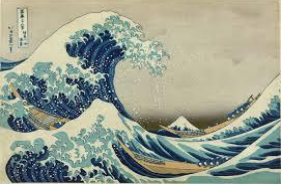
NATURE
What is the source of Subject?
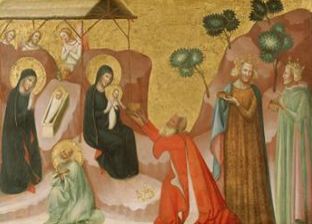
RELIGION
What is the source of Subject?
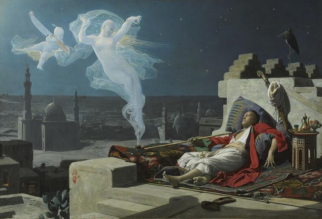
DREAMS and FANTASY
What is the source of Subject?
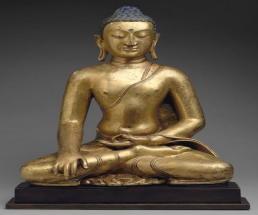
RELIGION
What is the source of Subject?
PEOPLE
What is the source of Subject?
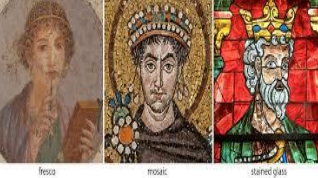
TECHNOLOGY
What is the source of Subject?
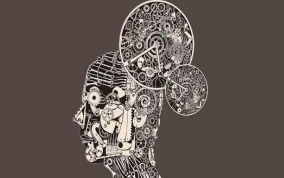
NATURE
What is the source of Subject?
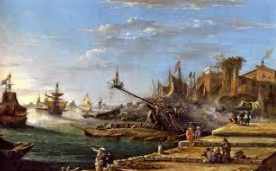
MYTHOLOGY
What is the source of Subject?
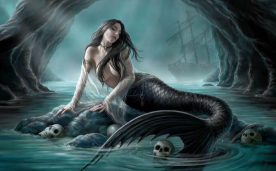
NATURE
What is the source of Subject?
DREAMS and FANTASY
What is the source of Subject?
NATURALISM
art refers to the depiction of realistic objects in a natural setting
began in the early Renaissance, and developed itself further throughout the Renaissance, such as with the Florentine School.
a type of art that pays attention to very accurate and precise details, and portrays things as they are
always depict pieces showing the idealized human form.
REALISM
the arts is generally the attempt to represent subject matter truthfully, without artificiality and avoiding speculative fiction and supernatural 45 elements
the accurate depiction of lifeforms, perspective, and the details of light and colour.
the most popular way of presenting art subjects.
ABSTRACTION
finds its roots in ‘intuition’ (of the artist) and ‘freedom’ (for the artist as well as for the viewer).
very simple way to understand the essence of _____ art is to think of it as a visual opposite of realistic art
method of presenting the subject where the artist moves away from reality
DISTORTION
the alteration of the original shape (or other characteristic) of something
any change made by an artist to the size, shape or visual character of a form to express an idea, convey a feeling or enhance visual impact
ELONGATION
when the art subject is lengthened, protracted or extended.
MANGLING
Artists show the subject as cut, lacerated, mutilated or hacked with repeated blows.
CUBISM
This is the presentation of abstract figures through the use of a cone, cylinder, sphere, triangle, square, cube and circle in place of real pictorial elements.
 Note
Note  Flashcards (42)