Unit 1 Organsims and life processes
 Call Kai
 Learn
Learn Practice Test
 Spaced Repetition
 Match
Match Flashcards
 Knowt Play
1/49

Earn XP
Description and Tags
-plants animals,protosctist,bacteria and viruses -basic life process -1.1-1.5
Name | Mastery | Learn | Test | Matching | Spaced | Call with Kai |
|---|
No analytics yet
Send a link to your students to track their progress
50 Terms
movement
An action by an organism or part of an organism causing a change of position or place
Respiration
the chemical reactions in cells that break down nutrient molecules and release energy for metabolism
where does respiration occur
mitochondria
how does respiration happen?
Respiration is a chemical reaction carried out in all living organisms
Energy is released from glucose either in the presence of oxygen (aerobic respiration) or the absence of oxygen (anaerobic respiration)
The reactions ultimately result in the production of carbon dioxide and water as waste products
Energy is transferred in the form of ATP
Sensitivity
the ability to detect or sense stimuli in the internal or external environment and to make appropriate responses
Growth
a permanent increase in size and dry mass by an increase in cell number or cell size or both
Reproduce
the process that make more of the same kind of organisms
Excretion
removal from organisms of the waste products of metabolism (chemical reactions in cells including respiration),toxic materials and substances in excess of requirement
what are the 4 things humans excrete
faecues( anus), urea (bladder via urethra), carbon dioxide and watervapour (lungs via mouth or nose)
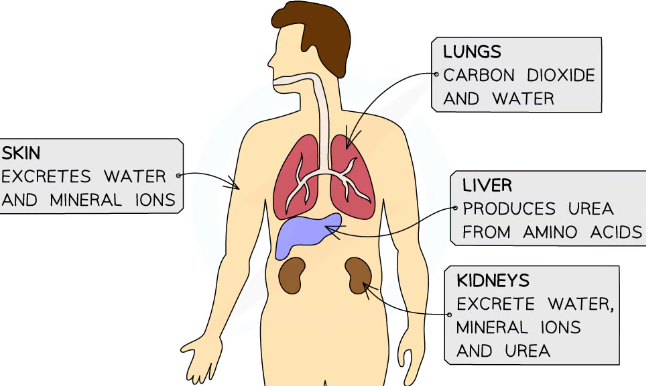
what is urine
urine is made from a chemical called urea and is excreted via the kidneys,bladder and urethra. Urea is a toxic waste product made from excess proteins.
what si carbon dioxide
Carbon dioxide is a product of respiration. It is toxic and a by-product of metabolism.
Nutrition
taking in of the food necessary (containg raw amterials or energy) for energy,groth,tissure repair and development.
what is control?
the process where an organism regulates various internal activities inside itself eg temeprature and wter content
Animals have nervous system (nerves) and endocrine system (hormones) to coordinate various activities.
Some plants also have hormones (such as auxins).
what is homeostsis in humans?
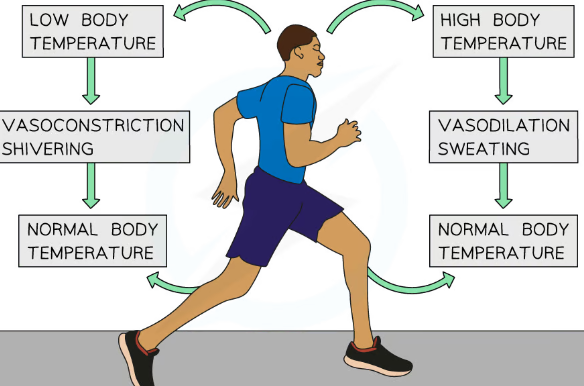
Living organisms must control their internal environment in order to keep conditions within required limits
Homeostasis in humans:
Thermoregulation refers to the control of body temperature
The optimum human body temperature is 37°C
If body temperature increases e.g. during exercise, mechanisms for control will be initiated to return the temperature back to the optimum
Mechanisms include sweating or vasodilation
Other homeostatic mechanisms in humans include glucoregulation (control of blood glucose levels) and osmoregulation (control of water levels)
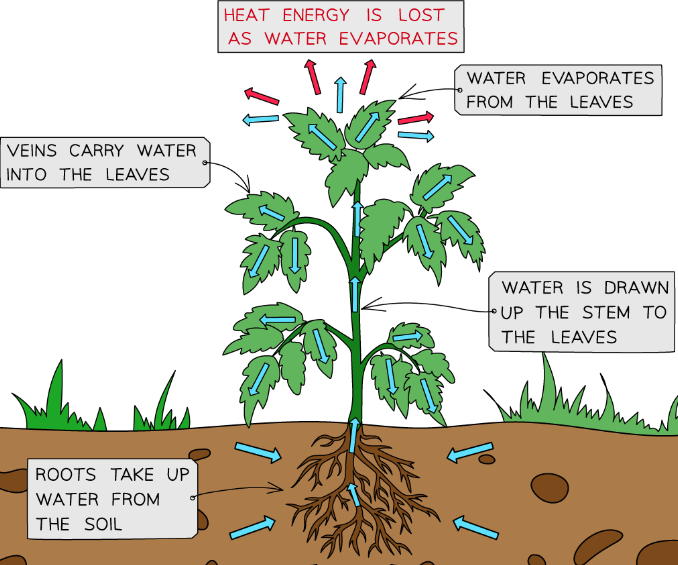
what is homeostasis in plants?
Plants use transpiration to maintain a suitable temperature
Water evaporates from the stomata on the underside of the leaf, leading to heat loss
what nutrients do animals need
organic compounds and ions and usually water
what nutrients do plants need
light,carbon dioxide,water and ions
what do all cells have
cell membrane, cytoplasm, DNA making up their genetic materials, ribosomes to help cells carry out aerobic respiration
What is a species?
a group of organisms that can reproduce together to produce fertil offspring.
What is the binomial system?
an internationally agreed system in which the scientific name of an organism is made up of two parts showing the genus and species
what is the order of classifications
-Kingdom
-phylum
-class
-order
-family
-genus-each ontaisn several species with similar characteristics
-species
What does classification mean?
putting things into groups. We sue common features shared by organisms to place them into groups
what techniques are used to organise living things now?
a method called cladistics which uses genetic information such as RNA and DNA sequencing and protein structure to show how cosely related organisms are to eachother and the rest of the world.
what is amde from DNA
chromosomes which is a gentic material passed from generation to generation
what are the 4 bases each DNA melcuel contains?
A,C,G and T
what do bases represent? (SIMILARITIES IN SEQUENCE OF AMINO ACIDS CAN BE SUE DINT HE SAME WAY)
the more similar the base sequences the more closely related the species are and the more recent common ancestor they share
can genus or any group after that interbreed other than species?
when organisms belonging to the same genus interbreed they produce infertile offsprings. Organisms are rarely able to interbreed beyond such groupings due to physiological or behavioral reasons.
what are the 5 kingdoms?
animals,plants,prokaryotes (bacteria),protoctists (protozoa),fungi
what are unicellular organisms?
viruses,prokayotes,protoctista,fungi
what are eukaryotes?
Animal, plants,fungi and protoctists can actually be grouped together as they are all eukaryotic organisms (kown as eukaryotes). Eukaryotic organisms can be multicellular or single-celled and are made up of cells that contain a true nucleus with a distinct membrane along with other membrane bound organelles such as mitochondri and chloroplasts.
what are prokaryotic organisms?
Prokaryotic organisms (also known as prokaryotes) are in a separate kingdom and are different from eukaryotes as they are always single-celled and do not contain a nucleus (instead, the nuclear material of prokaryotic cells is found in the cytoplasm),mitochondria or chloroplast
Bacteria are prokaryotic organisms
Prokaryotic cells are substantially smaller than eukaryotic cells
Animal Characteristics
multicellular, have a nucleus,feed on organic substances made by other living organisms,no cell wall or chloroplasts
Plants characteristics:
-these are multicellular organisms
- their cells contain chloroplasts and are able to carry out photosynthesis
-their cells have cellulose cell walls
- they store carbohydrates as starch or sucrose.
-Their cells contain a nucleus with a distinct membrane-They do not have nervous coordination Examples include flowering plants, such as a cereal (for example, maize), and a herbaceous legume (for example, peas or beans).
characteristics of viruses
-Not considered living things, can only reproduce when inside a host cel by takign over their genetic machinery l (are parasites-depends on other organisms to grow and reproduce)and is theri onyl living quality
-They are particles rather then cells
-Tehyc oem in lots of different shapes and sized and infect all types of living organsims
-are much smaller then bacteria cells and are between 0.01 and 0.1 micrometer in diameter
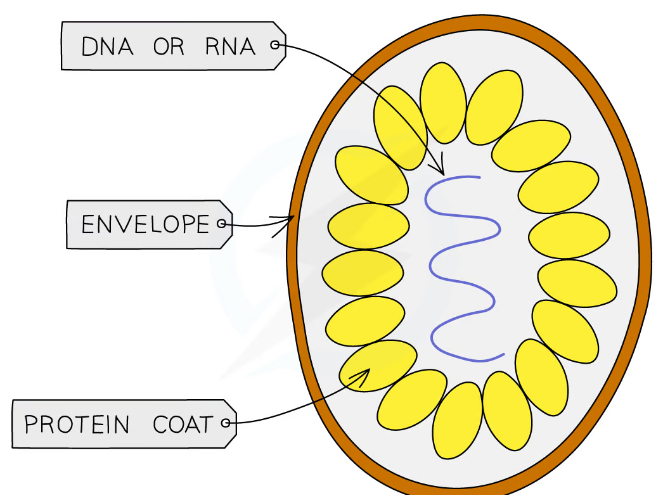
-made up of a central core of genetic information which can be either DNA or RNA surrounded by a protein coat known as a capsid made up of subunits of capsumers.
- They have no cytoplasm,nucleus,organelles or a cell membrane
Examples include the tobacco mosaic virus that causes discolouring of the leaves of tobacco plants by preventing the formation of chloroplasts, the influenza virus that causes ‘flu’ and the HIV virus that causes AIDS.
characteristics of prokaryotes (bacteria)
-carry out 7 life processes
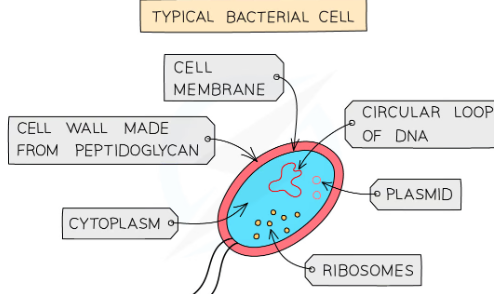
-cell wall made of protein,sugar and fats called murein,
- cell membrane made of fats and protein,
-cell contains cytoplasm and plasmids
-some can swim using a structure called flagella howevr many dont and cant mvoe by themselves
-Most feed off other living or dead organisms-decomposerts
-soem are pathogens
-no nucleus but they have genetic info as one large circular strand of coiled DNA called its chromosome whith smaller DNA circular strands known as plasmids, often unicellular,no mitochondria,DNA is 'free' in cytoplasm.
- Some bacteria can carry out photosynthesis despite having no chloroplasts. This is because they still possess chlorophyl and enzymes necessary to synthesize sugars from carbon dioxide.Most feed on other living or dead organisms (if they feed on dead organic matter then they are known as saprobionts or decomposers
-Examples include Lactobacillus bulgaricus, a rod-shaped bacterium used in the production of yoghurt from milk, and Pneumococcus, a spherical bacterium that acts as the pathogen causing pneumonia
what is cytoplasm
a jelly substance where all chemical reactions take place for the cell known as metabolism
Protoctista characteristics
- Dustbin kingdom they are a mixed group of organisms that do not fit anywhere
-share plant or animal qualities most unicellular but some multicellular eg seaweed
-have nucleous nd so are eukaryotes
-may or may not have cell wall and chloroplast -some autotrophic (photosynthesis) and some heterotrophic
-have cell membrane made of fats and proteins -have cytoplasm and may contain organelles
-have alrge quantities of genetic material in the form of (mostly) DNA and RNA in nucleus
Some, like Amoeba, that live in pond water, have features like an animal cell, while others, like Chlorella, have chloroplasts and are more like plants. A pathogenic example is Plasmodium, responsible for causing malaria.
fungi characteristics
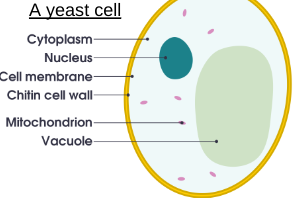
-have cytoplasm cotnaining vacuoles,oil droplets and glycogen granueles
-cell wall made of chitin
-soem single celled but others have hyphae
-have a membrane bound nucleus so are eukaryotes
-cytoplasm contiang vacuoles,oil droplets and glycogen granules
-cell membrane made if fats and proteins
-many membrane bound organelles
-reproduce sexually by spores
-these are organisms that are not able to carry out photosynthesis; their body is usually organised into a mycelium made from thread-like structures called hyphae, which contain many nuclei
-they are decomposers and feed by extracellular secretion of digestive enzymes onto food material and absorption of the organic products; this is known as saprotrophic nutrition; they may store carbohydrate as glycogen.
Examples include Mucor, which has the typical fungal hyphal structure, and yeast, which is single-celled.
structure of a yeast cell
Fungi groups share some common features:
They have the same basic cell structure, including a cell wall made of chitin
characteristics of animla kingdom
-multicellular
-no cell wall or chloroplasts
-cell membrane made of fats and proteins
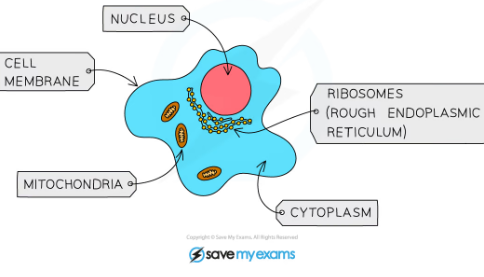
-proper nucleus with membrane so are eukaryotes+contain double stranded DNA
-cytoplasm site of chemical reactions/metabolism -mitochondria and glycogen granules
-heterotrophic-feed on other orgnaisms
-they can move around from one place to another
-They have soem kind of nervous coordination (which aids in movement in animals) which means they can rapidly to change sin tehir environmnet
-They often store carbohydrates as glycogen
what are the two groups animals can be divided into?
Vertebrates-those with backbones known as phylum chordata invertebrate-no backbone
what do all vertebrates have?
-bony backbone surroudnign spinal cord -two pairs of limbs -post anal tail
whata re angiosperms or flowerign palnts composed of
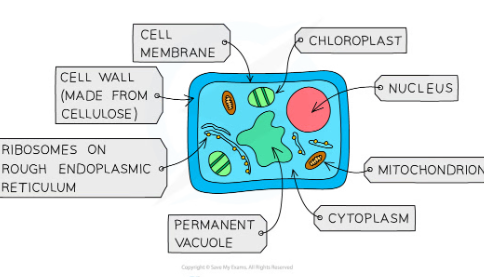
a cell wall made of cellulose a cell membrane made of fats and proteins. (All organisms have one) a nucleus and so are eukaryotes. It contains double stranded DNA. cytoplasm, site of chemical reactions or metabolism. organelles include vacuoles containing cell sap, chloroplast for photosynthesis and starch granules for storage of sugar.
what are pathogens?
A pathogen is any microorganism that causes disease in another organism (e.g. in plants or animals). They include soem fungi,protoctists and bacteria. Viruses are also pathogens.
Not all species within these groups (apart from the viruses) are pathogens, as many bacteria, fungi and protoctists are harmless and do not cause disease
However, all viruses are pathogenic as they can only exist by living inside the living cells of other organisms (or by using these cells to create more viruses)
exampels of pathogenic bacteria
Pathogenic bacteria do not always infect the hosts of cells, they can remain within body cavities or spaces
Pneumococcus which causes pneumonia
M. tuberculosis causes tuberculosis (TB) in humans.The bacteria infect the lungs, causing a chronic cough and bloody mucus.It is a disease often associated with poor hygiene and sanitation.M. bovine in cows can also transmit to humans to cause TB
exampes of pathogenic fungi
Fungal diseases are much more common in plants than animals
Cattle ringworm and athletes foot are fungal diseases that exist on the surface of the skin
Fungal diseases in plants tend to be much more serious and can threaten entire crops
exampels of pathogenic protoctists
Plasmodium falciparum is a protist that causes severe forms of malaria in humans. The parasite is spread by mosquitoes. Infected individuals experience fever, chills and fatigue
what is tobacco mosaic virus
Tobacco mosaic virus (TMV) was the first virus to be isolated by scientists
symptoms: distinctive mosaic patterns of discoloration of the elaves as it infects chloroplast. The plant will not grow as much due to the lack of photosynthesis so it reduces yield of crops
It spreads by plants direct contact with other palnts
No treatment-bes tprevention is good hygiene
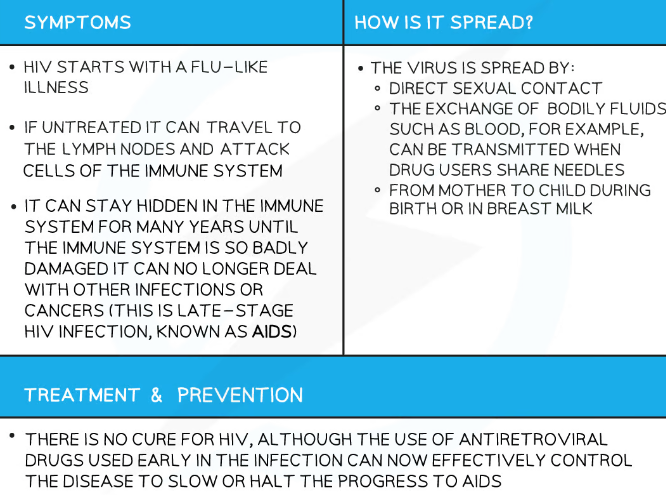
what si HIV
what si influenza virus?
Three different influenza viruses infect humans to cause the flu
Influenza A, influenza B and influenza C infect the cells that line the airways
They cause a high temperature, body aches and fatigue
Influenza A is the virus that causes the most cases of flu globally

