Canine and Feline Breeds and Life Stages
 Studied by 1 person
 Call Kai
 Learn
Learn Practice Test
 Spaced Repetition
 Match
Match Flashcards
 Knowt Play
1/120

Earn XP
Description and Tags
Lecture 2
Name | Mastery | Learn | Test | Matching | Spaced | Call with Kai |
|---|
No analytics yet
Send a link to your students to track their progress
121 Terms
What is a dog breed?
something that breeds true, you get the same thing every time
What are the dog breed groups?
sporting
working
herding
hound
toy
terrier
non-sporting
What breed group is naturally active and alert, make likable and well-rounded companions, need regular exercise, and have superior instincts in water and the woods?
sporting group
What group do spaniels, pointers, retrievers, and setters belong to?
sporting group
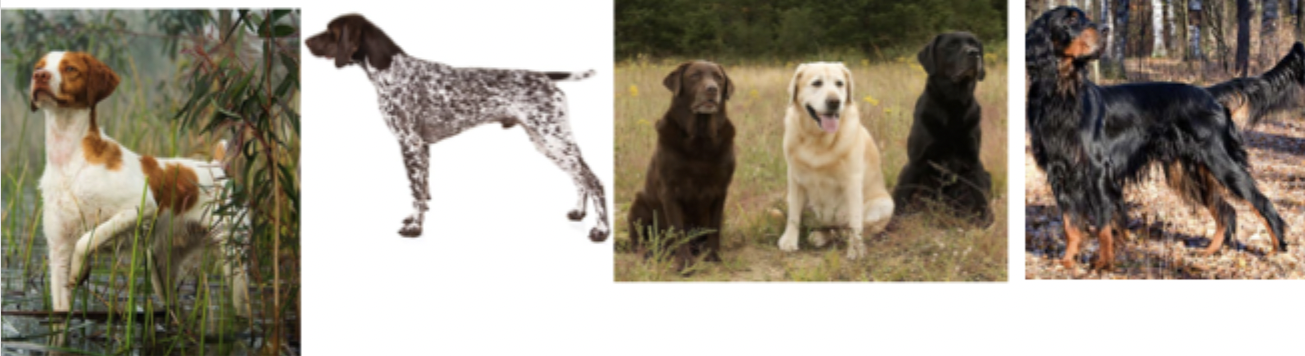
These dogs belong to which breed group?
sporting group
What breed group includes quick learners that are intelligent, strong, watchful, and alert, are bred to assist, excel at jobs such as guarding, pulling sleds, and performing water rescues, and are naturally protective so they require proper training and socialization?
working group
The great pyrenees, mastiff, great dane, siberian husky, cane corso, rottweiler, bullmastiff, saint bernanrd, boxer, and doberman pinscher are all in what breed group?
working group

These dogs belong to what breed group?
working group
What breed group has an instinctual ability to control the movement of other animals, is great at gthering, herding and protecting livestock, and includes intelligent dogs that make excellent companions and respond well to training exercises but bay try and herd family members and children?
herding group
The australian shepherd, Australian cattle dog, german shepherd, collie, border collie, cardigan welsh corgi, and belgian malinois are a part of what breed group?
herding group

These dogs belong to which breed group?
herding group
What breed group includes those used for hunting, their ability to follow a scent, stamina to run down prey, and some are able to produce a sound known as baying?
hound group
What breed group includes dachshund, treeing walker, beagle, bluetick coonhound, greyhound, collie, plott hound, and basset hound?
hound group
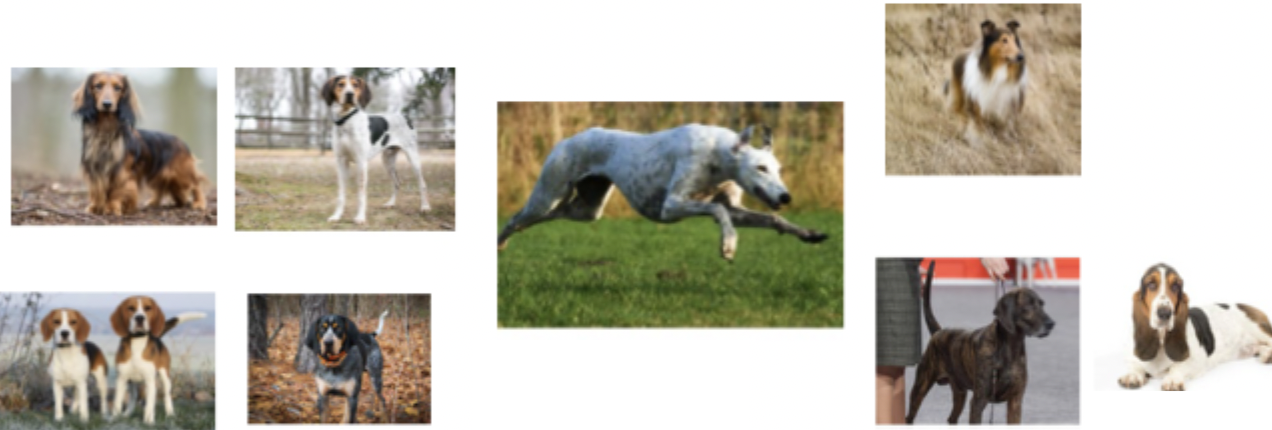
These dogs belong to which group?
hound group
What breed group is small in size but not short on personality, affectionate, sociable and adaptable, smart and full of energy?
toy group
What breed group is feisty and energetic, eager for an argument, breed to hunt and kill vermin and to guard families?
terrier group
What breed group includes brussels griffon, chihuahua, chinese crested, yorkshire terrier, havanese, japanese chin, maltese, miniature pinscher, pomeranian, toy poodle, shihtzu, and pug?
toy group
What breed group includes the staffordshire bull terrier, west highland white terrier, american staffordshire terrier, rat terrier, bull terrier, scottish terrier, cairn terrier, and airedale terrier?
terrier group

These dogs belong to which breed group?
toy group

These dogs belong to which breed group?
terrier group
Which breed group includes the dalmatian, chow chow, french bulldog, chinese star-pei, keeshond, bichon frise, bulldog, standard poodle, shiba inu, lhasa apso, boston terrier, schipperke, and american eskimo dog?
non-sporting group

These dogs belong to which breed group?
non-sporting group
What is known as the combination of elongated soft palate, stenotic nares, and everted laryngeal saccules?
brachycephalic syndrome
What is the term for “short nosed”?
brachycephalic
What is the term for “elongated nose”?
dolichocephalic
What is the term for “square skulled”?
mesocephalic
The american bully, affenpinscher, american bulldog, chow chow, french bulldog, bulldog, cane corso, boston terrier, bullmastiff, and boxer are all what?
brachycephalic “short nosed”

All of these dogs have what in common?
brachycephalic “short nosed”
Dolichocephalic “elongated nose” dogs are prone to what?
fungal disease (nasal Aspergillosis)
The standard poodle, dachshund, great dane, doberman pinscher, siberian husky, german shepherd, basset hound, whippet, greyhound, and italian greyhound are all what?
dolichocephalic “elongated nose”
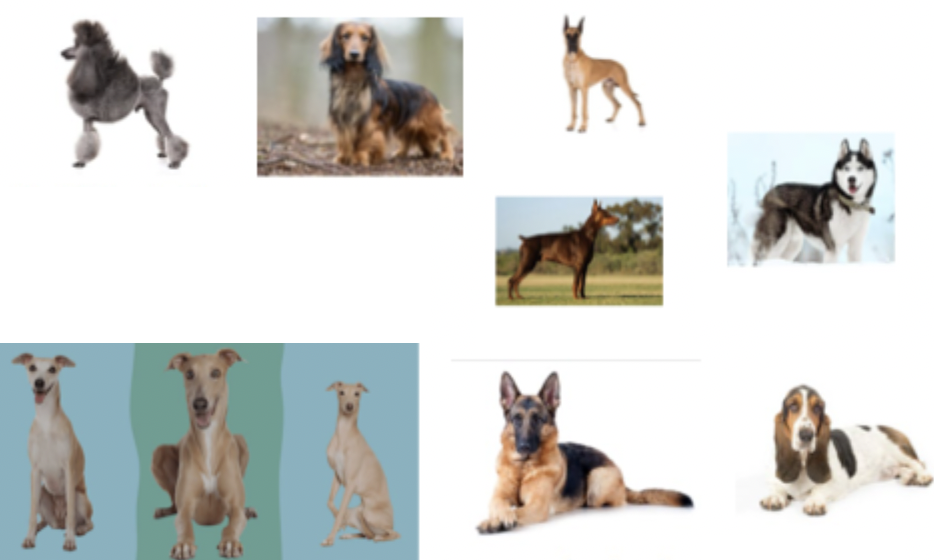
All of these dogs have what in common?
dolichocephalic “elongated nose”

All of these dogs have what in common?
mesocephalic “square skulled”
What canine life stage starts and birth and ends at 6-9 months of age or the end of rapid growth?
puppy
What canine life stage starts at 6-9 months of age and ends at 3-4 years of age which is when the completion of physical and social maturity occurs?
young adult
What canine life stage starts at 3-4 years of age and ends at the beginning of the last 25% of the estimated lifespan which is breed and size dependent?
mature adult
What canine life stage starts at the last 25% o the estimated lifespan and ends at the end of life?
senior
What are the three categories of the animal hospice care pyramid?
emotional
social
physical
What is considered in the emotional portion of the animal hospice care pyramid?
dignity
will to live
stress reduction
What is considered in the social portion of the animal hospice care pyramid?
engagement with family
engagement with other pets
mental stimulation
What is considered in the physical portion of the animal hospice care pyramid?
pain management
management of clinical signs
hygiene
nutrition
mobility
safety and environment
What is commonly used to differentiate cats?
color
Define polydactyl.
cat with too many toes
What are the common feline colors?
tabby
calico (orange/red, black, and white)
tortoiseshell (little to no white)
tuxedo (black and white)
solid/dilutes (black, white, grey, orange)
bi-colored/tri-colored
colors with points
What feline breeds are brachycephalic?
himalayan
persian
What feline breeds are mesocephalic?
bengal
maine coon
DLH
DSH
DMH
Are most cats brachycephalic, mesocephalic, or dolichocephalic?
mesocephalic
What feline breeds are dolichocephalic?
abysinnian
siamese
somali
sphynx
What feline life stage is from birth up to 1 year?
kitten
What feline life stage is from 1-6 years?
young adult
What feline life stage is from 7-10 years?
mature adult
What feline life stage is >10 years?
senior
What aspected of wellness should be considered at each life stage?
physical exam
patient safety
zoonotic disease
behavior
nutrition
parasites
vaccinations
dental health
reproduction
What should be discussed during the physical exam of a puppy?
identification such as microchipping
congenital disorders and examining every 3-4 weeks
vaccinations
What should be discussed during the physical exam of a young adult canine?
congenital disorders
special needs such as working/service dog
educate on osteoarthritis and discuss activity and examination every 6 months-1 year
What should be discussed during the physical exam of a mature adult canine?
working/service dog
signs of osteoathrtitis and examination every 6-12 months
What should be discussed during the physical exam of a senior canine?
educate client on osteoarthritis and more frequent examinations and appropriate diagnostic screening tests
cognitive function
What should be discussed during the physical exam of a kitten?
predisposition to diseases and congenital/genetic concerns
murmurs, hernias, dentition, weight, bus, spay/neuter, microchipping
What should be discussed during the physical exam of a young adult feline?
discuss vomiting, hairballs, diarrhea, grooming habits, and behavior
cardiovascular, dermatologic findings, periodontal disase and tooth resorption
spay/neuter
base line cbc/chem/ua
What should be discussed during the physical exam of a mature adult and senior feline?
minimum of yearly exams, every 6 months after 10 years and more frequently with disease
appetite, hydration, PU/PD/PP, vomiting, diarrhea
nocturnal activity, vocalization, cognitive decline
mobility, vision, grooming, masses
oral exam, abdominal palpation, opthalamic exam (fundic), cardiovascular, muscoloskeletal exam, thyroid and kidney palpation
pain assessment
lab work - cbc/chem/ua/t4
What should we consider as far as pet lifestyle and safety risks for senior canines?
environmental adaptations for mobility, sight, and hearing
What should we consider as far as pet lifestyle and safety risks for puppies and young adult canines?
increased awareness of hazards (plants, puppy proofing, foreign bodies)
What should we consider as far as pet lifestyle and safety risks for kittens and young adult felines?
toys and string
plants (true Lillies)
insecticides
rat poison
What should we consider as far as pet lifestyle and safety risks for mature adult and senior felines?
same as younger cats
human pain medications
ability to move around and get in/out of litter box
cognitive function
loss of sight or hearing
What should we consider as far as pet lifestyle and safety risks for all felines?
are they indoor or outdoor?
What should we discuss concerning behavior at the puppy stage?
socializing and handling
problem behaviors
trainers
address desensitization/grooming needs
discuss bite inhibition
discuss the benefits to crate training, housetraining, safety, and comfort
What should we discuss concerning behavior at the young adult canine stage?
evaluate current behavior, concerns from the owner
can be a cause of euthanasia
house training, separation anxiety, unruly behaviors, storm and nose phobias, aggression, social relationships
training classes for behavior, socialization, and well being
trainer
encourage adult training and active lifestyle based on individual
What should we discuss concerning behavior at the mature adult/senior canine stage?
same as young adult plus evaluation for cognitive changes, anxiety/phobias and cognitive dysfunction
What should we discuss concerning behavior at the kitten stage?
socialization
acclimating to handling, brushing, nail trimming, grooming and medication administration
acclimating to carriers, cars, and veterinary visits
hands and feet should not be used as toys - to prevent aggressive behavior in the future
encourage teaching using positive reinforcement
What should we discuss concerning behavior at the young adult feline stage?
inter-cat interaction may decline
human/cat interactions may change with maturity and following stressful events
continue to encourage manipulation of mouth/ears/paws and positive reinforcement
any changes
What should we discuss concerning behavior at the mature adult/senior feline stage?
needs may change, not “just an old age thing”
cognitive function
increased vocalization
eliminating outside the litter box
What should we consider for kittens as far as elimination?
litterbox setup, cleaning, and normal elimination behavior
litter preference
What should we consider for young adult felines as far as elimination?
litter box size
number of cats (determines number of litterboxes)
What should we consider for mature adult and senior felines as far as elimination?
litterbox size and location
DJD concerns
What should we consider for puppies as far as nutrition?
begin appropriate feed/water habits
What should we consider for young adult canine as far as nutrition?
breed and target weight
monitor weight after spay/neuter
emphasize weight control (dogs that are leaner live longer)
What should we consider for nature adult canines as far as nutrition?
breed/target weight
monitor MCS vs BCS
remind owner what is ideal
longevity and OA
What should we consider for senior canine as far as nutrition?
comorbidities (OA and obesity)
MCS and mobility
BCS and weight control
What should we consider for kittens as far as nutrition?
diet - quality, amount, frequency based on bcs and mcs
variety of textures and flavors
food storage toys and puzzles
What should we consider for young adult felines as far as nutrition?
weight gain, bcs, mcs
enrichment and play
disease predisposition
What should we consider for mature adult and senior felines as far as nutrition?
weight gain/loss, bcs, mcs
change in appetite or weight
therapeutic diets
During all life stages, what should we discuss with pet owners?
zoonotic diseases
What should be done for parasite control during all life stages?
year round control of intestinal parasites (routine IPS 1-4 per year)
year round heartworm preventative (test annually)
year round flea and tick control (test annually)
What is different for puppies/kittens in regards to parasite control compared to older life stages?
discuss prevalence with owners
multiple fecals needed (not just annual)
zoonotic potential
begin deworming at 2 wks of age and repeat every 2 wks until on year round control
start heartworm preventative as early as label allows
start on flea/tick control as early as label allows
Antibody titer testing is available in place of which canine vaccines?
CDV, DPV, CAV2
Canine non-core vaccines are boostered how often?
yearly as needed
Canine core vaccines are boostered how often?
after initial puppy vaccinations, booster at 1 year and then every 3 years
When is the FVRCP vaccine administered?
8, 12, and 16 weeks of age then booster at 6 mo-1 year then every 1-3 years
When is the FeLV vaccine administered?
12 and 16 weeks of age then boostered at 1 year and then every 1-3 years as needed based on risk
When is the feline rabies vaccine administered?
12 or 16 weeks of age depending on label then boostered at 1 year then every 1-3 years depending on the label and state/county/town laws
At what feline life stage to we begin to consider the risk/benefit of vaccinations?
senior (>10 years)
What should you discuss with owners regarding dental health at the puppy stage?
deciduous teeth, occlusion, extra or missing teeth
let client know puppies will lose teeth
What should you discuss with owners regarding dental health at the yound adult through senior canine life stages?
consider dental cleanings and radiogrpahs
evaluate gingiva, plaque, calculus, missing teeth
increased quality of life by allowing pets to have a pain free mouth
What should you discuss with owners regarding dental health at the kitten stage?
acclimatae to mouth handling, brushing or wiping teeth
What should you discuss with owners regarding dental health at the young adult feline stage?
preventative care, dental diet if needed, gingivitis, resorption lesions
What should you discuss with owners regarding dental health at the mature adult and senior feline stage?
preventative care, gingivitis, resorption lesions, masses, dental pain
What reproductive concerns should be discussed for canines?
should be discussed for all intact dogs, even at the puppy stage
discuss disease processes that can occur such as pyometra or enlarged prostate
if breeding pets, discuss brucellosis
as pets get older, monitor for signs of mammary neoplasia, testicular neoplasia an prostatic disease
What reproductive concerns should be discussed for felines?
should be discussed at the kitten stage
inform owners they can have multiple litters within a year
educate owners that cats are induced ovulators
What feline diseases require extra attention in young adults?
feline bronchial disease
cardiomyopathy
chronic enteropathy
feline cystitis, urolithiasis
atopic dermatitis, FAD, non-food allergic dermatitis
systemic fungal disease
FIP
What feline diseases require extra attention in mature adults and seniors?
GI lymphoma, IBD
chronic kidney disease
hyperthyroidism
diabetes mellitus
neoplasia
cognitive disease syndrome
periodontal disease and tooth resorption
DJD
What feline diseases require extra attention in abyssinian kittens?
renal amyloidosis
dilated cardiomyopathy
 Note
Note  Flashcards (22)