psych 205 psychology of work
 Studied by 0 people
 Call Kai
 Learn
Learn Practice Test
 Spaced Repetition
 Match
Match Flashcards
 Knowt Play
1/62

There's no tags or description
Looks like no tags are added yet.
Name | Mastery | Learn | Test | Matching | Spaced | Call with Kai |
|---|
No analytics yet
Send a link to your students to track their progress
63 Terms
What is I/O Psychology?
A branch of psychology that applies the principles of psychology to the workplace (Aamodt, 2010)
Industrial-organizational psychologists are able to apply psychological theories to explain and enhance the effectiveness of human behavior in the workplace (Canadian Psychological Association)
I/O psychologists “enhance the dignity and performance of human beings, and the organizations they work in, by advancing the science and knowledge of human behavior” (Rucci, 2008)
Fields of I/O Psychology
Personnel Psychology
Organizational Psychology
Human Factors/Ergonomics
Occupational Health and Safety
Psychology and Work
Applied area of psychology
Pyschology understood as discipline
Educational, Personnel, workplace, real life scenarios
When did psychology start?
during world war 1
Psychology of work can be understood as?
who fits what role?
4 applicable areas of psychology of work
Human resources, Organization, Human factors / ergonomics, occupational health and safety
Human resources
- How is the job is advertised?
- How is the hiring process?
- selective methods
- performance evaluations
- why is xyz paid more
Organization
of area (how is the area organized?)
How is work organized?
How is the organization efficient/effective
Who does this person report to?
Human factors / ergonomics
How do we do that?
affects motivation / productivity
Occupational health and safety
excludes finances
Occupational health and safety
excludes finance
Importance of research in workplace
They help with decision making
Research methods
surveys
interviews
observation
quantitative
qualitative (when cannot quantify)
no research method is perfect
Experiment method
control extraneous variables to see results
ex. placebo
measuring reaction time
manipulation of independent variables
Quasi experiment
attendance poor when color bright vs. high when color dull
multiple explanations for results
Survey
Unrtrue resultsd, unserious participants
is consistent
causation vs. correlation
not real life
Natural Observation
not reflective of true behavior
ex. under-cover boss
participant observation
one-way mirror observation
Archival method
looking at previous records / data (secondary data)
ex. employee records, payroll, sales, etc.
case study
look at their history / trajectory and how it relates to others
correlation
a relationship (can be weak/strong)
numerical values
does it correlate with a student having a good gpa?
Meta Analysis
how many studies found xyz true/false
Job analysis
what do they do?
How they do it?
When do they do it?
With what they do it?
Job description
How to compensate individual
If they do xyz, they need degree/experiences
If a secretary is supposed to help, they need compensation
Job titles must be…
legally compliant
Organizational analysis
Classify job
Knowledge
Abiliity
Something that is Born with
being gifted with height
Skill
As in using ability.
ex. using said height
Intangibles
“What gives you advantage over other applicants?”
“I have my driver’s license.”
others may not have it.
How do you compensate?
seniority
performance evaluation
responsibility
complexity / difficulty
skill
education
physical demands
work environment
Compensable factors
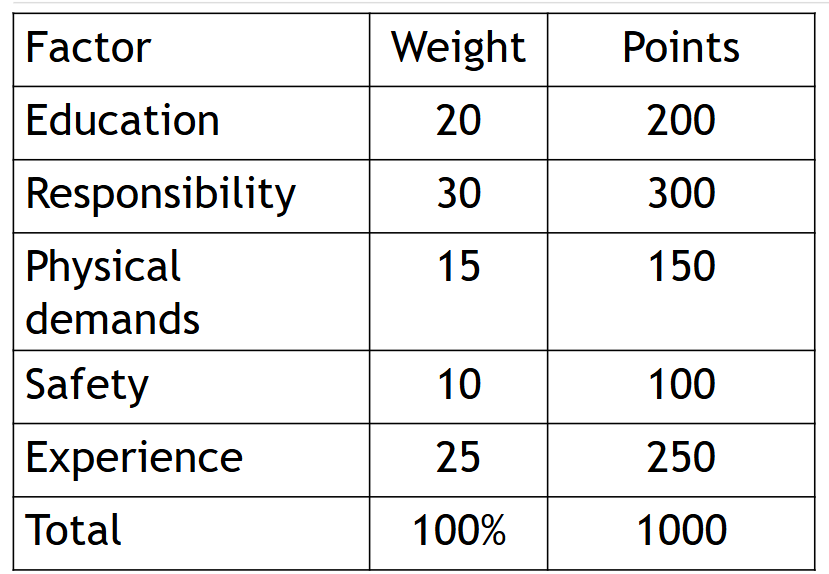
Internal pay equity
-fairness inside an organization
External Pay equity
fairness outside organization
BFOQ
Bonafide Occupational Qualification “this this practice legal?”
Quid pro quo
A favor or advantage expected in return
You don’t give second chances to quid pro quo because people know what they’re doing because of sexual harassment.
Hostile environment
A work environment that is hostile or unsafe
- A hostile work environment you can give a second chance to because of benefit of doubt, honest mistake, etc.
Is this quid pro quo?
A boss sleeps with employee or else no promotion
Is this quid pro quo?
An employee compliments another employee is not quid pro quo.
Is this a hostile work environment?
Girl repetitively asking coworker on date even after he says no is hostile work environment.
Is this hostile work environment?
male coworker calling female co worker honey is a hostile work environment
Is this invasion of privacy?
Store places camera in public places of store (except changing room) is not invasion of privacy.
Is this invasion of privacy?
Police department asking how many people they slept with in the past five years is invasion of privacy because it may not relate to the police’s job description.
Is this invasion of privacy?
Company searching employee lockers (with employees locks) in company policy is invasion of privacy.
Is this invasion of privacy?
Weekly drug testing policy where bosses observe participants TAKE the urine sample / peeing is invasion of privacy.
Disparate treatment
Intentional discrimination
Is a potential legal issue prominent?
if there’s a pattern there’s is a potential legal issue
Invasion of privacy is a potential legal issue in the workplace
Disparate impact (adverse impact) does it cause them emotional distress.
Compliant process
Report discriminatory act to hr
there is an investigation
resolution (internal, could take following steps)
Resolution process
dictate decision
mediate solution
arbitration / mediation
Arbitration
arbitration is like a private, mini trial where a neutral third party (an arbitrator, retired judge, or lawyer) hears arguments and evidence from two sides of a dispute and makes a final, legally binding decision, similar to a court ruling but usually faster, cheaper, and more private than going to court.
binding or non-binding,
non-binding allows person to pursue further legal action.
Equal employment opportunity commission
Federal government body where you report
States have their own laws that protect employees
Guidelines of eeoc
statute of limitations (report within particular period of time or else you cant get action)
report recieved, employer investigated
investigation completeled within 120 days
Outcome of eeoc investigation
reasonable cause eeoc will try to find solution
if reasonable cause, eeoc will try to find solution
if not eeoc can file lawsuit
letter issued aftewr report filed
180 days to file lawsuit if not found
no reasonable cause found
How do we know if discrimination has occurred?
microaggressions
if selection ratio is too high
If there was a search and seizure….
was it reasonable?
if not, does an exemption apply?
If constitutional is there a remedy?
How does stereotypes affect discrimination in the work place?
Preconcieved ideas about individuals based on gender, race, age, religion, or national origin can give unfair treatment to the individuals.
Leads in biased decision-making, unequal opportunites, unfair treatment in hiring, promotions, and daily interactions.
How do organizations discriminate in their actions
Overt discrimination
subtle discrimination
disparate treatment
retaliation
What factors are responsible for a hostile work enviornment?
unwelcome conduct based off of protected characteristics
severe/perversive behavior
leadership infraction
stress/burnout
toxic company culture
What are ways people can be discriminated?
Gender, Religion, age, sexual preference / sexuality, national origin, and disability are ways people can be discriminated.
Residency requirements
requirement where you are supposed to live in a specific city/state for a job
subtenfuse
What are ways people can be discriminated?
gender, religion, age, sexual preferences/sexuality, national origin, and disability are ways that people can be discriminated.
What are behaviors of discrimination?
Jokes , emails, behaviors that make others feel uncomfortable, etc.
Why do people discriminate?
Ignorance, they want power, putting other group down, hatreed, wanting to belong, etc.
there are many ways to discriminate.
What problems does discrimination cause?
emotional distress
decreases productivity
absenteeism
leads to turnover
causes physical distress
leads to illness
makes enviornment toxic
increases legal liability of company
How do we disencourage workplace harassment?
Dont laugh at offensive behaviors
do not say it dosnt concern you
let them know they are crossing the line and for them to not repeat it next time
talk to vicitm
tell hr
 Note
Note  Flashcards (117)