The Female Reproductive System
 Call Kai
 Learn
Learn Practice Test
 Spaced Repetition
 Match
Match Flashcards
 Knowt Play
1/40

There's no tags or description
Looks like no tags are added yet.
Name | Mastery | Learn | Test | Matching | Spaced | Call with Kai |
|---|
No analytics yet
Send a link to your students to track their progress
41 Terms
What are the 5 functions of the female reproductive system?
Produce female sex cells
Transport egg cell for fertilization
Provide environment for developing offspring
Move offspring
Production of sex hormones
Describe the structure of the ovaries
Small, paired, almond shaped organs near lateral walls of pelvic cavity
What are two functions of the ovaries?
Production of female gametes (ova)
Secretion of female sex hormones
Oogenesis
Production of ovum (egg)
Starting with primordial germ cell, what is the order of cells that will form during development of an ovum?
Primordial germ cell
Oogonium
Primary oocyte
Secondary oocyte
Ovum
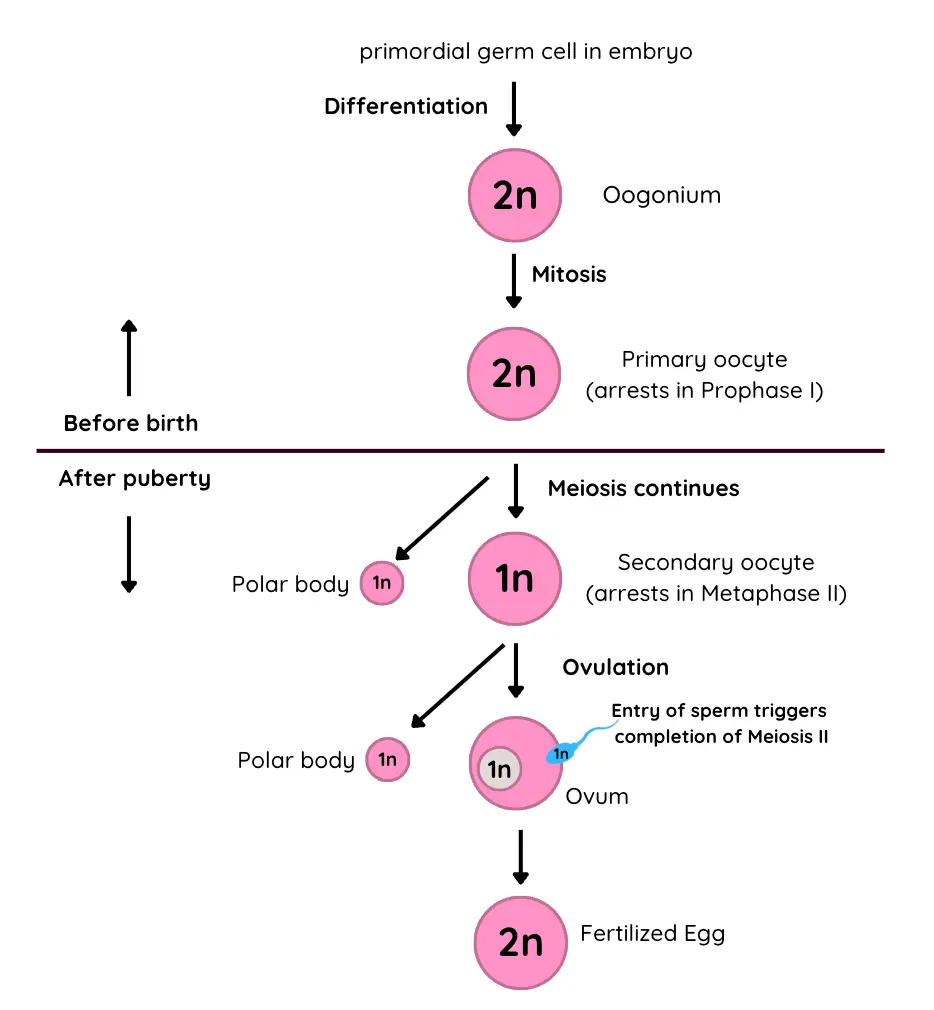
Oogonia
Diploid (2n) precursor cells in the ovaries
Formed from primordial germ cells that undergo mitosis to development in females
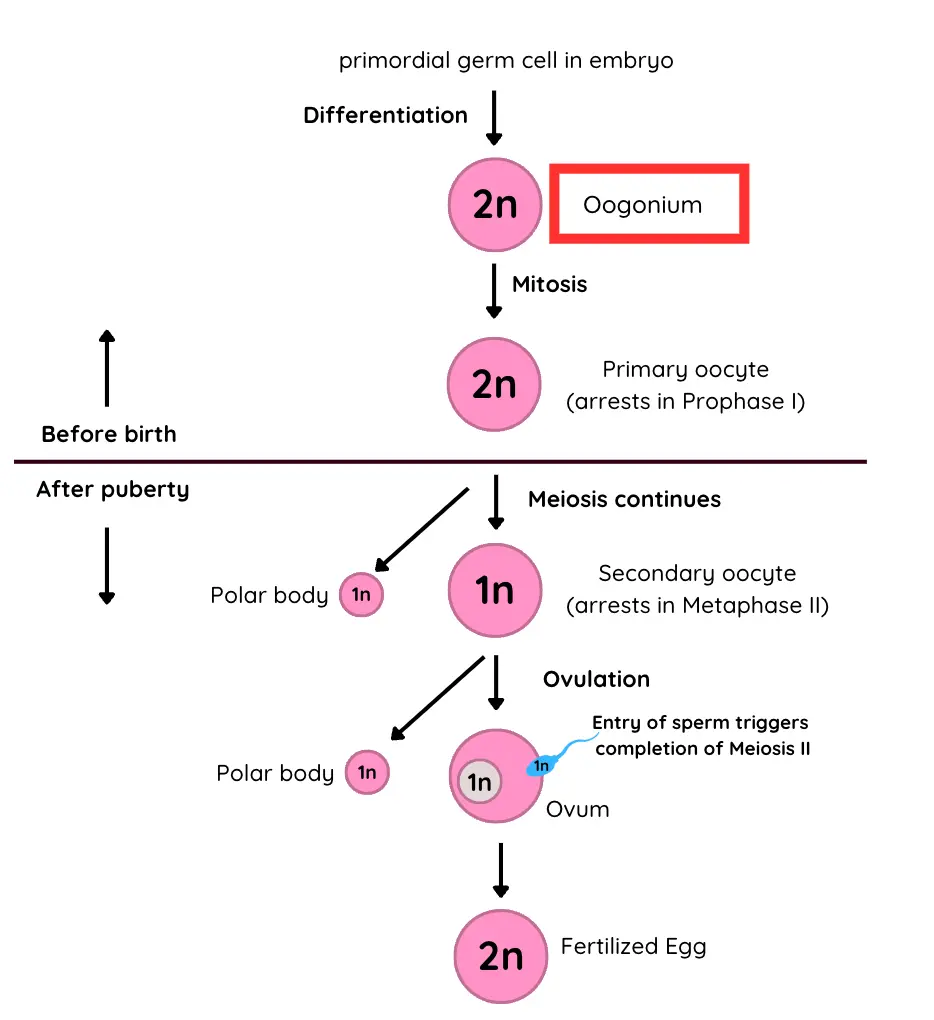
Primary oocytes
Diploid cells formed from oogonia in the ovaries, which begins the first meiotic division but arrest in prophase I until puberty, when they resume development during each menstrual cycle
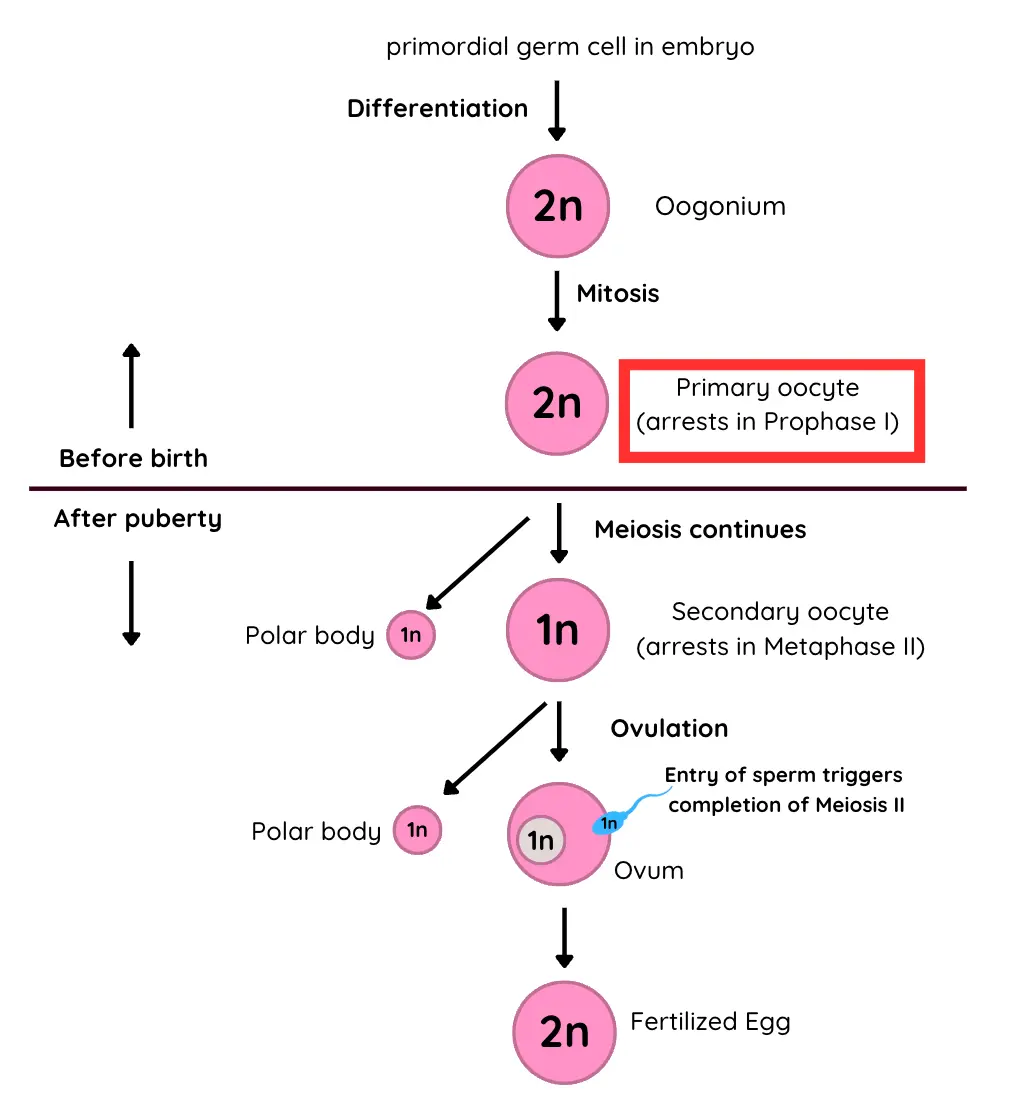
Secondary oocyte
A haploid cell resulting from the completion of the first meiotic division of a primary oocyte
It begins the second meiotic division but arrests in metaphase II
Released during ovulation to be fertilized by a sperm cell
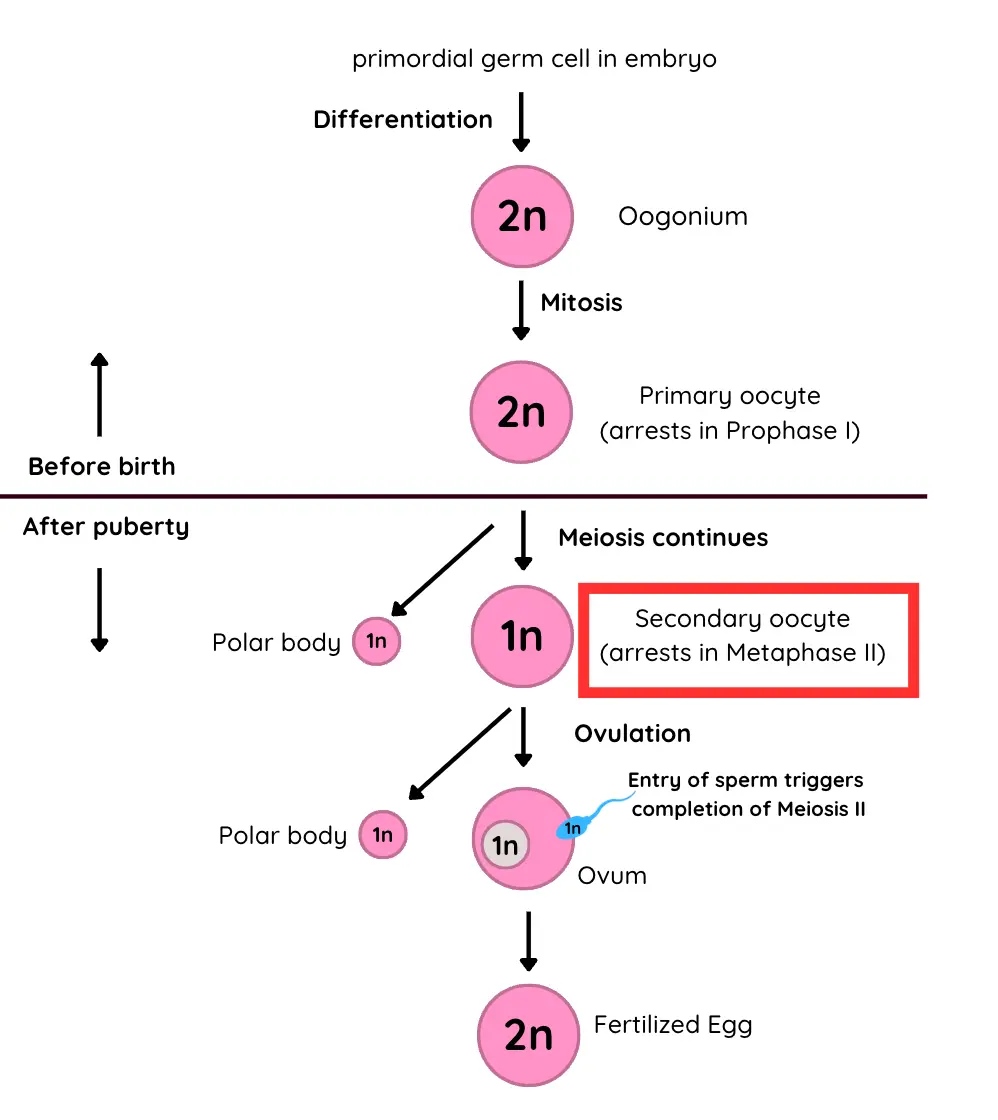
What event triggers the secondary oocyte to complete meiosis II?
Fertilization
What is a polar body?
Is a small cell that results from the unequal distribution of cytoplasm during meiosis during oogenesis
Where does the oogenesis occur?
Occurs in the cortex of the ovaries, specifically within the ovarian follicles located in this outer layer
Primordial follicle
Follicle cells the surround a primary oocyte
Earliest stage of follicle development in the ovaries
Ovarian cycle
Cycle of follicle growth resulting in ovulation and corpus luteum formation
List the steps of the ovarian cycle
Formation of primary follicles
Formation of secondary follicles
Formation of tertiary follicle
Ovulation
Formation of corpus luteum
Ovulation
Release of egg from the ovary into a uterine tube
Which hormone helps to trigger ovulation?
Luteinizing hormone (LH)
Which hormone will trigger the development of the follicles in the ovary?
Follicle-stimulating hormone (FSH)
What is the function of the corpus luteum?
To produce progesterone to maintain the uterine lining while it waits for implantation
What happens to the corpus luteum about 12 days after ovulation of fertilization doesn’t happen
It will degrade
(progesterone levels will decrease)
Describe structure of uterine tubes
Uterine tubes end closet to the ovary to form an expanded tunnel called infundibulum with numerous projections called fimbriae that extend into the pelvic cavity
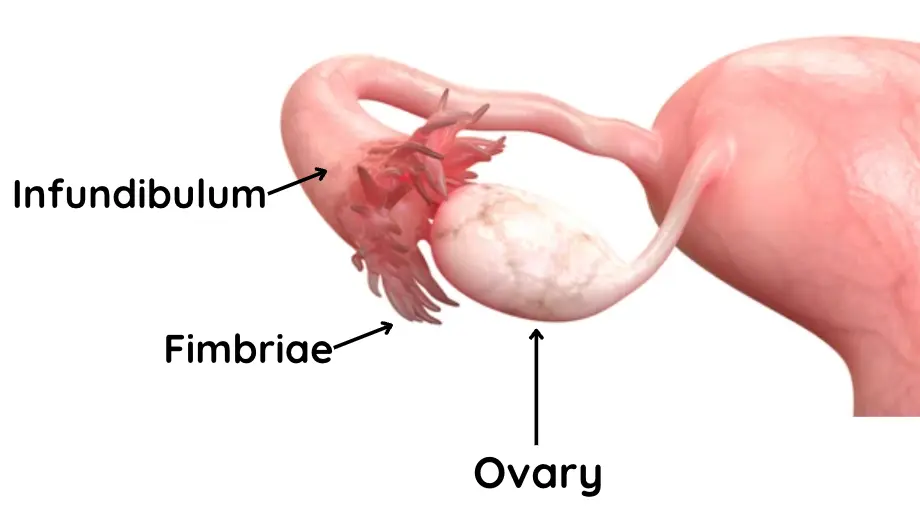
What helps move the egg through the uterine tube (fallopian tubes)
Tube is lined with ciliated epithelium that beat to move the egg
Peristaltic contractions by smooth muscle also help move egg
Describe the structure of the uterus
Muscular chamber with two regions - the body and cervix
Fundus
Superior portions of the uterus
Cervix
Inferior portions of uterus
Endometrium
Inner layer of uterus
Myometrium
Muscular layer of uterus
Perimetrium
The tough, membranous outer layer of the uterus
Uterine (menstrual) cycle
Cyclic series of changes in endometrium that occur in response to fluctuating ovarian hormone levels
Where does fertilization typically take place?
Uterine tubes
How long does the window of fertilization last for a secondary oocytes?
about 12-24 hours
Menarche
First menstrual period at puberty
List the 3 stages of the menstrual cycle and what days then span
Menstruation - days 1-7
Proliferative - days 7-14 (day 14 ovulations)
Secretory - days 15-28
Menstruation
Degeneration and shedding of superficial layer of endometrium
Triggered by decline in progesterone and estrogen levels as corpus luteum disintegrates
Proliferative Phase
Surviving endometrial epithelial cells multiply and spread across the surface of endometrium
Stimulated by rising estrogen levels
Secretory Phase
Uterine glands enlarge and endometrial lining reaches mac thickness - stimulated by progestins and estrogens from corpus lutuem
Describe the structure of the vagina
Elastic, muscular tube extending between uterus and vestibule (a space bounded by external genitalia)
Vaginal walls contain a network of blood vessels and layers of smooth muscle
Moist lining is maintained by secretions from cervical glands
pH is slightly acidic
Labia majora
Folds of skin that enclose external reproductive organs
Labia minora
Flattened longitudinal folds between labia majora
Clitoris
Small projection of sensitive erectile tissue that correspond to penis in males
Define lactation
Milk production
Mammary gland function
Specialized to secrete milk after pregnancy

