Genetic Engineering & GMO'S (1.7)
 Call Kai
 Learn
Learn Practice Test
 Spaced Repetition
 Match
Match Flashcards
 Knowt Play
1/75

There's no tags or description
Looks like no tags are added yet.
Name | Mastery | Learn | Test | Matching | Spaced | Call with Kai | Chat |
|---|
No analytics yet
Send a link to your students to track their progress
76 Terms
what is the organism that receives a new gene called (2)
genetically modified OR transgenic organism
what are the two things the process of genetic engineering does?
1.) gives organisms new traits (eg. pest resistant crops)
2.) replaces faulty/missing genes that cause disorder, ensuring the correct proteins is made
explain the process of genetic engineering (4)
1.) a useful gene is identified in a healthy cell and cut out of the DNA
2.) the gene is inserted into the target cell using a vector
3.) the gene becomes integrated into the organism’s genome
4.) the cell now produces the correct protein, and the desired trait is expressed in the phenotype
what are two examples of common vectors used
plasmid or virus
what is the result of genetic engineering? (2)
creates a new DNA sequence in the recipient cell called recombinant DNA that can now produce protein coded for by the new gene and GMO’S
what is the goal of GMO’s?
to improve quality of life and productivity
what are three examples of GMO’S?
microbes, plants, or animals
what are GMO’s used and important in? (4)
producing medicinal drugs (eg. insulin from bacteria)
developing new crop varieties with useful traits
stem cell research
cloning
explain the six steps of insulin production
1.) the insulin gene is cut from human DNA using restriction enzymes
2.) plasmids are removed from E. coli and cut open with restriction enzymes
3.) the insulin gene is inserted into the plasmid, DNA ligase seals it, forms recombinant DNA.
4.) the recombinant plasmid is placed into the host E. coli cell (transformation)
5.) the bacteria multiply rapidly and produce human insulin
6.) large amounts of insulin are extracted and purified for medical use
what are plasmids?
small circular DNA found in bacteria that carry extra genes
what are restriction enzymes?
an enzyme isolated from bacteria that cuts DNA molecules at specific sequences
what is transformation?
genetic engineering technique where DNA is introduced into cells, allowing them to produce new proteins
what’s used to to create viral antigens?
some bacteria and plants that are genetically modified
what are viral antigens?
a toxin or other substance given off by a virus which causes an immune response in its host
how are antigens used in vaccines?
they trigger an immune response where the body recognizes the antigens as foreign and produces antibodies which provide immunity against future infections
how do GM crops work?
genes for desirable traits are identified and isolated then inserted into plant cells which grow into adult plants with the new trait
what are the two way genes can be transferred?
1.) Gene gun: tiny metal pellets coated with DNA that are shot into plant cells
2.) Bacterial vector: a soil bacterium transfers recombinant plasmids into plant tissue
name four disadvantages of GM crops
1.) some GMO’s may cause allergies in humans
2.) biodiversity decreases when natural habitats are cleared for GM crops
3.) modified seeds can be very expensive
4.) biotechnology costs are high due to the specialized equipment required
Why do bacteria naturally have restriction enzymes?
they evolved as a defence mechanism to cut up viral DNA entering the bacterial cell
What is DNA ligase?
DNA ligase is an enzyme that joins DNA fragments together by forming phosphodiester bonds between nucleotides
How is a gene inserted into DNA using enzymes?
the target gene and plasmid are cut using the same restriction enzyme to create complementary sticky ends, and DNA ligase joins the gene into the plasmid
How is this related to mutations?
artificial genetic modification mimics mutation by changing DNA sequences, but it is directed and controlled rather than random
Why are plasmids useful in genetic engineering?
They act as vectors that carry foreign genes into bacterial cells.
Why are bacteria suitable for hormone production?
They reproduce rapidly, are cheap to culture, and can express foreign genes reliably.
Give two medical uses of plasmids.
Production of insulin and growth hormone.
What is the aim of gene therapy?
To correct the underlying genetic cause of disease rather than just treating symptoms.
What is a vector in gene therapy?
A vector is a carrier used to deliver a therapeutic gene into target cells.
Why are viruses used as vectors?
Viruses naturally inject their genetic material into host cells.
What are bacterial vectors?
Genetically modified bacteria that deliver genes into host tissues.
Difference between somatic and germline gene therapy?
Somatic affects body cells only; germline affects gametes and can be inherited.
: What is plant tissue culture?
A technique where plant cells or tissues are grown in sterile nutrient media to produce clones.
Define cloning in plants.
The production of genetically identical plants from a single parent.
Steps in plant tissue culture.
Explant removed → sterilised → placed in growth medium → cell division → plantlets → transferred to soil.
What is polyploidy?
The condition of having more than two sets of chromosomes.
Why is polyploidy useful in plants?
It increases size, vigour and sometimes fertility or disease resistance.
Positive and negative impacts of GM crops
Positive: higher yield, pest resistance, food security
Negative: reduced biodiversity, dependency on corporations
What is genetic counselling?
A process where individuals receive advice about inherited disorders and their probability of transmission.
Who benefits from genetic counselling?
Carriers of genetic diseases and families with inherited conditions.
How does genetic knowledge affect marriage and child-bearing?
It influences reproductive choices such as IVF, adoption or prenatal screening.
Ethical issue of genetic counselling?
Risk of discrimination or pressure to avoid reproduction.
What is Indigenous Knowledge in agriculture?
Traditional methods such as selective breeding and seed saving.
Argument that genetic engineering is modern.
Uses molecular tools unavailable historically.
Argument that it is based on Indigenous Knowledge.
Builds upon selective breeding and domestication.
Phases of drug trials.
Phase I safety, Phase II effectiveness, Phase III comparison, Phase IV monitoring.
Why do most drugs fail trials? (3)
Toxicity, inefficacy or unexpected side effects.
Ethical requirement of trials?
Informed consent.
Effect of GMOs on traditional farming?
Displacement of indigenous seed systems.
What is monoculture?
: Farming a single crop species over large areas.
Why is monoculture risky?
Increases vulnerability to disease and pests.
Human rights issues in GMOs. (3)
Labelling, consumer choice, biosecurity.
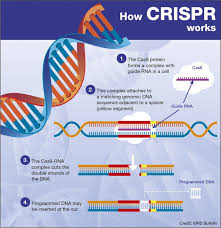
What is CRISPR?
A genome editing system allowing precise modification of DNA.
How does CRISPR work?
Guide RNA directs Cas9 enzyme to cut a specific DNA sequence.
Uses of CRISPR. (3)
Gene therapy, parasite control, crop modification.
What is cloning?
Production of genetically identical organisms.
What is SCNT?
Somatic cell nuclear transfer.
Define donor.
Organism providing the somatic cell nucleus.
Define surrogate.
Organism that carries the embryo.
: Define embryo.
Early stage of development after fertilisation or nuclear transfer.
Compare plant and animal cloning
Plants clone easily; animals require complex laboratory methods.
What is artificial selection?
Deliberate breeding of organisms with desired traits.
Difference between artificial and natural selection?
Artificial is human-directed; natural is environment-driven.
What is hybrid vigour?
Increased performance of cross-bred offspring.
Why does hybrid vigour occur?
Masking of harmful recessive alleles.
Risk of artificial selection?
: Reduced genetic diversity.
Why is bacteria used in genetic engineering? (3)
Bacteria are used because they reproduce rapidly and contain plasmids that can be used as vectors to insert foreign genes. They are simple organisms with easy to manipulate DNA.
what are the two nucleases?
restricition enzymes and Cas9
describe how CRISPR gene editing works
CRISPR gene editing uses a specially designed guide RNA (gRNA) that matches a target DNA sequence. The gRNA forms a complex with the Cas9 enzyme, which acts as molecular scissors. This complex scans the DNA and recognises a PAM sequence next to the target. Cas9 then cuts both strands of the DNA at that site. The cell’s natural repair mechanisms fix the break, allowing scientists to disable, delete, or insert new genes at that location
Genetic engineering
The deliberate modification of an organism’s genetic material by directly manipulating its DNA using biotechnology.
Transgenic organism
An organism that contains a gene from another species inserted using genetic engineering.
Vector
A carrier (usually a plasmid or virus) used to transfer genetic material into a host cell.
Plasmid
A small, circular DNA molecule found in bacteria, used as a vector in genetic engineering.
Restriction enzyme
An enzyme that cuts DNA at specific base sequences.
Genetic modification
The process of changing the genetic material of an organism to produce desired traits
Biotechnology
A scientific process that is used to benefit human.
Recombinant DNA
DNA formed by joining DNA molecules from two different sources (species) in a laboratory setting.
GMO
An organism whose genetic material (DNA) has been altered in a way that does not occur naturally through mating or natural recombination.