Final Study Guide (Second Half) - Love Actually
 Studied by 1 person
 Call Kai
 Learn
Learn Practice Test
 Spaced Repetition
 Match
Match Flashcards
 Knowt Play
1/130

There's no tags or description
Looks like no tags are added yet.
Name | Mastery | Learn | Test | Matching | Spaced | Call with Kai |
|---|
No analytics yet
Send a link to your students to track their progress
131 Terms
Health paradox of adolescence
Adolescence is physically the healthiest period of the lifespan
Improvements in strength, speed, reaction time, reasoning abilities, immune function
Increased resistance to cold, heat, hunger, dehydration
Yet: overall morbidity and mortality rates increase 200% from childhood to late adolescence
Why is there a health paradox of adolescence?
Role of intensifying affective (emotional and motivational) influences on behavior
How these influences interact with risk and risk-promoting social contexts
Due to the socio-affective changes that begin at puberty
Morbidity and mortality in adolescence
Primary sources of death/disability are related to problems with control of behavior and emotion
accidents, suicide, homicide
Dopamine
neurotransmitter that’s important in the reward system; indicates salience (important in love)
Lower levels of dopamine at baseline in adolescence
In adolescence there is increased activity in neural circuits that release dopamine in response to novel stimuli
4 features that characterize adolescent brain development (Dan Siegel)
NCIS
Novelty seeking: looking for new things, relationships, etc.
Increased emotional intensity
Creative exploration: creativity in terms of activities and thought (thinking outside-the-box)
Social engagement: having peer relationships
What are the implications for an increased drive for rewards in adolescents?
Increased impulsivity (increased behaviors occur without reflection)
Increased susceptibility to addiction
Shapes hyperrationality
Hyperrationality
Amplifying meaning/significance/importance of a positive aspect of an experience
Ex: racing a car on the highway
Pros: it’s fun, thrilling, earn street cred with peers
Cons: you could crash and die
With hyperrationality:
You evaluate the odds: 95% no crash, 5% crash
You correctly assess the probabilities
But you de-emphasize the severity of the negative outcome (because there’s only a small change it’ll happen)
In the end, you say, “chances are I’ll be fine” and do it
Changing ideas and behavior in adolescence
increased social engagement → enhanced drive for peer connectedness
increased emotional intensity → enhanced vitality for life
enhanced creative exploration → new conceptual thinking/abstract reasoning; questioning the status quo
Implications of neurobiological changes in adolescence
Profound changes in romantic interest, motivation, emotional intensity
Intensification of many types of goal-directed behavior (especially those related to social status)
Not necessarily a question of “immature” vs. “mature” brain
The features of neurobiology during adolescence (and the associated behaviors) may be adaptive and important to nurture in many ways
Identity vs Role Confusion
13-24 years
Main question: “who am I and where am I going?”
Virtue: fidelity (trueness to your sense of self after a period of experimentation)
The adolescent is newly concerned with how they appear to others. Superego identity is the accrued confidence that the outer sameness and continuity prepared in the future are matched by the sameness and continuity of one’s meaning for oneself, as evidenced in the promise of a career. The ability to settle on a school or occupational identity is pleasant
In later stages of adolescence, the child develops a sense of sexual identity. As they make the transition from childhood to adulthood, adolescents ponder the roles they will play in the adult world
Initially, they are apt to experience some role confusion - mixed ideas and feelings about the specific ways in which they will fit into society - and may experiment with a variety of behaviors and activities (e.g., tinkering with cars, babysitting for neighbors, affiliating with certain political or religious groups)
Eventually, Erikson proposed, most adolescents achieve a sense of identity regarding who they are and where their lives are headed. Erikson coined identity crisis
Each stage that came before and follows has its own ‘crisis,’ but even more so now, for this marks the transition from childhood to adulthood. This passage is necessary because “throughout infancy and childhood, a person forms many identifications. But the need for identity in youth is not met by these. This turning point in human development seems to be the reconciliation between ‘the person one has come to be’ and ‘the person society expects one to become.”
This emerging sense of self will be established by ‘forging’ past experiences with anticipations of the future
Intimacy vs Isolation
25-40 yrs
Main questions: “am I loved and wanted?” or “shall I share my life with someone or live alone?”
Virtue: love
This conflict is emphasized around the ages of 30. At the start of this stage, identity vs role confusion is coming to an end, and it still lingers at the foundation of the stage (Erikson, 1950)
Young adults are still eager to blend their identities with friends. They want to fit in
Erikson believes we are sometimes isolated due to intimacy. We are afraid of rejections such as being turned down or our partners breaking up with us. We are familiar with pain, and to some of us, rejection is painful; our egos cannot bear the pair
Once people have established their identities, they are ready to make long-term commitments to others. They become capable of forming intimate, reciprocal relationships (e.g. through close friendships or marriage) and willingly make the sacrifices and compromises that such relationships require
If people cannot form these intimate relationships - perhaps because of their own needs - a sense of isolation may result
Pruning
Neural connections gets whittled down
Process that can be intensified with stress
May reveal genetically or experientially vulnerable circuits
Most of the major psychiatric disorders—of thought, mood, and anxiety—have their major onset during this vulnerable period
“Use it or lose it” principle applies to adolescence
Myelin formation
Enables the remaining and connected neurons to communicate with each other with more coordination and speed
Permits the action potential—the ions flowing in and out of the membrane creating a flow of charge down the long axonal length—to move one 100 times faster
Resting time between firings, the refractory period, is 30 times quicker
Neural firing becomes 3000 times quicker with myelination
Practice lays down myelin to enable a skill
Identity formation
begins where the usefulness of identification ends
arises from the selective rejection and mutual assimilation of childhood identifications, and their absorption in a new configuration, which, in turn, is dependence on the process by which a society identifies the young individual, recognizing him as somebody who had to become the way he is, and who, being the way he is, is taken for granted
Psychosocial moratorium
A period during adolescence and young adulthood when a person postpones commitment to an identity and instead explores different roles, beliefs, and values
The college experience provides the moratorium described by Erikson in which the struggle for identity is conducted in a remarkable adult-free and relatively consequence-free atmosphere
Dunbar’s number
Noticed correlation between primate brain size and average social group size
Suggested “cognitive limit to the number of individuals with whom any one person can maintain stable relationships” (a group “where everyone knows everyone”)
Number of people one knows and keeps social contact with
Combines data from 38 different primate species and extrapolated results to propose that humans (based on neocortex size) should be able to have between 100-230 meaningful social relationships (150 is often cited)
The double flame on love and eroticism
Difference between eroticism and sexuality:
Eroticism is not mere animal sexuality
Includes ceremony, representation, sexuality transfigured
Imaginations turns sex into ceremony and rite
Sex act is for reproduction, but:
With sexuality → pleasure serves procreation
With eroticism → pleasure is an end to itself
What is the relationship of poetry and language?
Poetry : Language :: Eroticism : Sexuality → poetry is to language as to eroticism is to sexuality
What is the erotic? (according to Esther Perel)
The experience of sex; the meaning of it
A life force
An antidote to death
How do you re-invent, re-imagine yourself?
Bring an energy, a vitality, an aliveness back
Aliveness goes with meaning, purpose, creativity, playfulness, connection to oneself, to one’s family, to one’s partner, and to the world
What is desire?
Desire is to own the wanting
In order to own something:
There needs to be a sovereign self
That is free to choose
And feels worth of wanting
And feels worth of receiving
this is the reason why desire is so intimately connected to the sense of self-worth
Erotic intelligence
the ability of a couple to reinvent themselves on location and to create a new relational arrangement with each other
Need to change in order to stay alive
Novelty is needed
Novelty is not about new positions
Novelty is the new experiences of yourself in the world and of your partner in relationship to you in the world
That involved taking risks and having an active engagement with the unknown
Creates a sense of purpose, aliveness, joy, transmission
Stephen Mitchell: Strange Loops of Sexuality
Sexual events take on conceptual, emotional, psychological, spiritual dimensions in humans
Bodies and minds are inseparable dimensions of sexual experience
Pleasure for oneself is thought of as unloving, indecent, selfish, dangerous, or rude
Two approaches
Approach #1: Freudian Approach - Sexual Animals
Humans are both social and antisocial
Harkens back to Plato and human’s dual nature (ex: unicorn, griffin, sphinx, etc.)
Darwin argued that we come from “lower” forms of life → consciousness, reason, civilization, morality
Approach #2: Strange Loops
Freud and “psychical impotence”
“Where such men love, they have no desire and where they desire, they cannot love”
Madonna-Whore Complex
Love/attachment is related to familiar figures, and sexual love feels oedipal/incestuous
Freud suggested this was very common and may be somewhat inescapable in civilized society
Strange Loops
“The real adventure and risk of sexuality stem from the breach it creates in the conventional boundaries between self and other. We establish decency in intimate relationships to facilitate continuity, security, and attachment. But bodily states and pleasures are full of surprises. What is at risk of being considered indecent in the exposures of sex is not the beast in us but the me-ness in us.”
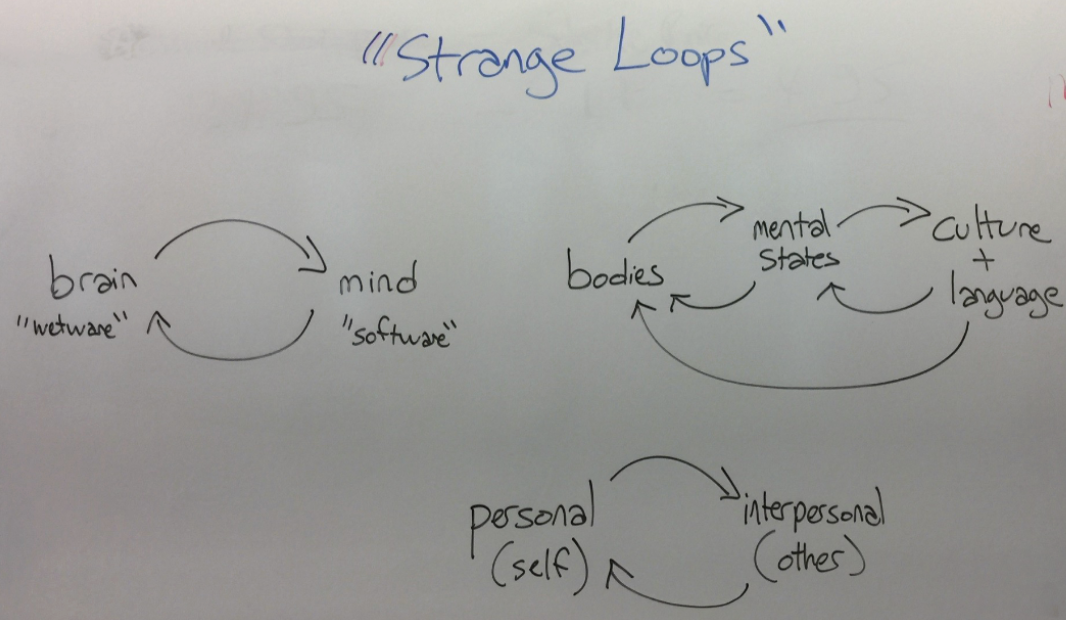
Self/Other
“Interpersonal relational processes generate private, interior processes, which reshape interpersonal processes, on and on, in a self-propelling strange loop, an endless Mobius Strip in which internal and external are perpetually regenerating and transforming themselves and each other.”
Ultimate conclusion of “Strange Loops”
Erotic passion destabilizes one’s sense of self
Partner makes possible unfamiliar experience of ourselves and we find their otherness captivating
We want to control these experiences and the others who inspire them
Make these safer because we’re attache
Unconscious attempts to make them safer makes also decreases their eroticism
Intimate Relationships on Sexuality (Ch. 9)
Sex doesn’t always involve romantic intimacy, but for most of us, romantic intimacy involves sex
Sexual satisfaction and behavior can therefore be dependent on the nature and health of those relationships
Current day attitudes towards sex
<25% report belief that premarital sex is wrong
Permissiveness with affection
Mixed feelings about hookups
Both sexes enjoy them less than they think other people do
Men and women differ in sexual attitudes/values, though gap is closing
Men more permissive; more likely to think sex without love is okay; more likely to regret inaction than action
May be due to continued cultural sexual double standard
Current day attitudes towards same-sex sexuality
Sizable shift in approval of same-sex relationships and same-sex marriage in many countries in recent years
Possible reasons include greater visibility of LGBTQ+ individuals and better understanding of different types of sexuality
Cultural differences in attitudes about sex
American attitudes are more conservative compared to Western European countries
More conservative beliefs about premarital sex, extramarital sex, and same-sex relationships
Sexual behavior in Americans
Estimated 97% of Americans have sex for the first time before marriage
Usually in a steady, close relationship
Some regret tends to follow if not in a relationship
Sex in relationships
Relationship status, age, and sexual orientation influence frequency of sex
Couples who have sex 1x/week report being just as happy as others who have more frequent sex
Infidelity
Men appear to cheat more than women
Men are more likely to have an unrestricted sociosexual orientation
Evolutionary perspective: Good genes hypothesis / sperm competition
Other perspectives: cheating is due to low relationship quality
Sexual desire imbalances
On balance, men do appear to have higher sex drive than women and may lead to conflict in heterosexual relationships
Safe/unsafe sex can be influenced by a variety of factors
Underestimates of risk, faulty decision making, pluralistic ignorance, inequalities of power, abstinence education, low self-control, concerns about intimacy and pleasure
Sexual satisfaction
Sexual interactions are rewarding when they fulfill needs for autonomy, competence, and relatedness
Traditional gender roles tend to undermine women’s choice and control in bed
Having sex for approach and not avoidance motives is better
Endorsement of sexual growth beliefs is desirable
Sexual communication
Direct and honest communication is associated with greater satisfaction
Good communication can also avoid misperceptions of sexual intent
Gay and lesbian couples discuss preference more openly and report enjoying better sex
Sexual Coercion
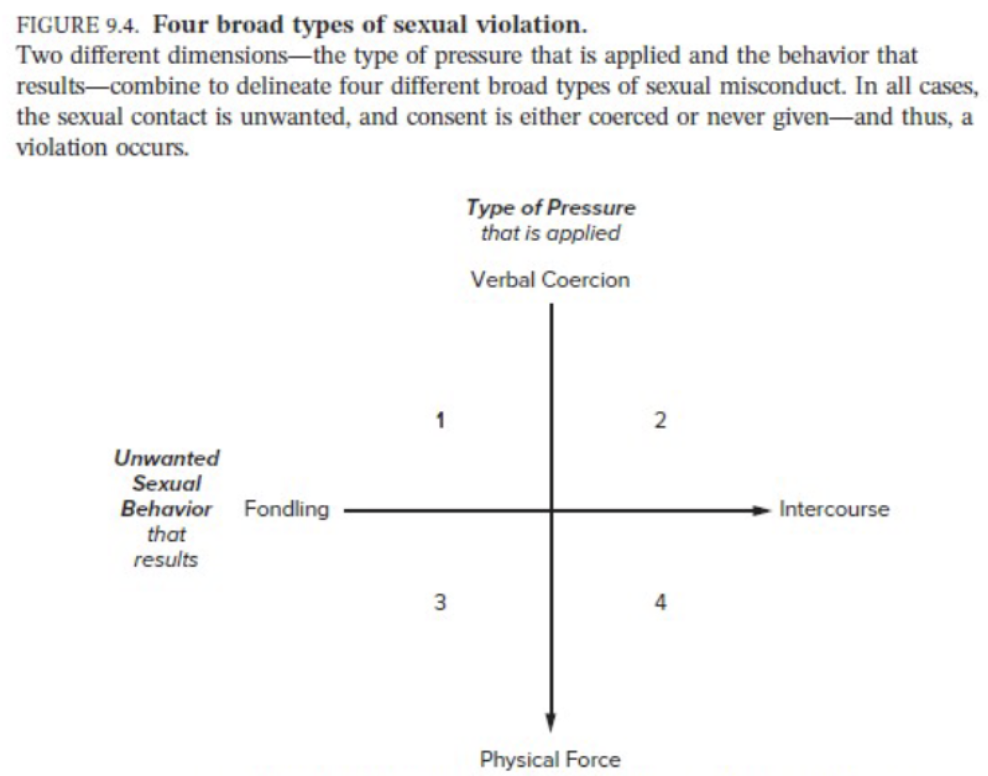
Ways to combat sexual coercion
Beware partners who view sex as a contest
Reduce the need for assertions by setting sexual boundaries before you start engaging in sexual behavior
Education around consent
Distinction between right and wrong is clearer when ground rules are discussed in advance
Consider your partner as an equal whose preferences and pleasure are important == respect and thoughtfulness is key
Singles and Casual Relationships
In 2010, 27% of adult Americans reported living single (unmarried and living alone)
Singlism: prejudice against singles
Being single viewed as a “deficit” identity
Sexuality among singles
Some may be fully or partially celibate
Most are sexually active
Hookups, FWBs, actively dating/pursuing committed relationships
TED Talk - Dr. Barry Schwartz takeaways
“Official dogma” in Western societies is that to maximize welfare of citizens, we want to maximize freedom
We maximize choice in order to maximize freedom
We can see how choices have permeated all aspects of our lives
Shopping at the supermarket
Health care decisions
Constructing our identities
Deciding on marriage and family
There are pros and cons to having so many choices. Pros may be more obvious, so he wants to discuss cons
Paralysis rather than liberation
Opportunity costs
Maximizers and satisficers
Maximizers want the best
Satisficers (combo of “satisfy” and “suffice”) want good enough
Maximizers seem to make better choices and do often get better outcomes (e.g., jobs with higher salary) but they are less happy/satisfied with them
The older you are, the less likely you are to be a maximizer
The paradox of choice and dating
“If you are in a big city or on an online dating site, you are flooded with options. Seeing all these options… are we now comparing our potential partners not to other potential partners but rather to an idealized person whom no one could measure up to?”
“How many people do you need to see before you know you’ve found the best? The answer is every damn person there is. How else do you know it’s the best? If you’re looking for the best, this is a recipe for complete misery.”
“To Fall in Love With Anyone, Do This” by Mandy Len Catron
“The 36 Questions That Lead to Love”
Based on the study by psychologist Arthur Aron and colleagues that explored whether intimacy between two strangers can be accelerated by having them ask each other a specific series of personal questions
36 questions in the study are broken up into three sets, with each set intended to be more probing than the previous one
Based on premise that mutual vulnerability fosters closeness
The Study (“Experimental Generation of Interpersonal Closeness,” 1997) - Study 1
Looked at effect on cross-sex and all female pairs
People had to be strangers
Counterbalanced different patterns of attachment styles
Didn’t match people who disagreed on an important value
Pairs did either small-talk or closeness-generating procedure
Results: pairs who did the closeness generating procedure did report feeling more close to partner in all groups/pairings
The Study - Study 2
Same as first, but put people together for task even if they disagreed on important issues
Disagreement didn’t seem to affect results: people still felt closer in the closeness manipulation task
Study 2 also examined whether telling people they were expected to like each other before the task increased feelings of closeness
No effect here either
Both studies found that those with avoidant/dismissive attachment styles experienced less closeness
But also found that perceptions of others might change if you experienced closeness with them
The Study - Study 3
Introverts might experience less closeness than extroverts, unless they were told the task was to get close
What are the characteristics of a good relationship?
Positive communication
John Gottman, PhD: ratio of positive to negative comments that emerge during an interaction = the strongest predictor of whether a relationship will succeed or fail
Successful relationships had 5:1 or better ratio
healthy sexuality
self-expansion
Healthy sexuality
partners who communicate about sex in general and during sex tend to be more sexually satisfied
Self-expansion
humans have a need to “expand” or grow the self over time; this can be accomplished by engaging in activities that are exciting and novel and developing new relationships
Incorporating certain characteristics of the partner with ourselves
Why You Will Marry the Wrong Person
“Pessimism can be a friend of love”
Survival of love over time depends on teaching each other to be the best versions of ourselves
Better question to ask when meeting on a first date: “How are you crazy? I’m crazy like this”
Sternberg Triangular Theory of Love
Intimacy: emotional dimension; sense of bondedness and connection
Passion: motivational dimension; physical attraction; sexual desire/attraction
Commitment: cognitive dimension; conscious decision to maintain a relationship over time
Each person has a unique ratio of different amounts of each component (intimacy, passion, commitment)
Ratios of components change over time
The more a couple’s ratios match, the more likely they are to be satisfied in the relationship
Love Languages by Gary Chapman
Physical touch: it can be sex or holding hands. With this love language, the speaker feels affection
Gifts: gifting is symbolic of love and affection
Quality time: expressing affection with undivided, undistracted attention
Acts of service: actions, rather than words, are used to show and receive love
Words of affirmation: expressing affection through spoken affection, praise, or appreciation
Investment model of commitment: contributors
SQIR
Contributors
satisfaction
quality of alternatives
investments
Consequences
relationship maintenance mechanisms
Satisfaction
Subjective evaluation of the relationship
Overall ratio of good things to bad things in a relationship
Evaluate one’s satisfaction relative to some comparison level (compared to satisfaction in past relationships; compared to friend’s satisfaction in relationships)
Quality of alternatives
Perception of how desirable all other people in the dating pool currently are
Comparison of alternatives
Includes different relationship states with current partner (e.g., more desirable to be friends? FWB?)
Investments
Both tangible (house, car, children, pet, bank account)
And Intangible (memories, shared moments, time and effort spent)
Relationship maintenance mechanisms
Accomodation: don’t fight fire with fire/rise to provocations
Willingness to sacrifice: don’t always pursue own self-interest in order to maintain relationship
Derogation of tempting alternatives: perceive other potential partners as less attractive
Shortcomings of investment model
Investment model doesn’t include the fact that forecasts (predictions about future satisfaction in the relationship) also affect commitment
Investment model assumes there’s only one type of commitment; others disagree
Theorized types of commitment
Personal commitment: committed to relationship because I’m happy and want to continue
Constraint commitment: I have to continue because it would be too costly to leave, but I would end it if I could
Moral commitment: it’s against my values to leave (e.g., believe in religious sanctity of marriage; feel strongly obligated to uphold vows)
Ch. 6 - Interdependency
Relationships are predicted on social exchange
I give you what you want and you give me what I want - we reward each other
Outcome = rewards - costs
We want the best possible outcomes
But we also compare outcomes in a relative way - outcomes cannot be measured “absolutely”
Each person has their own Comparison Level (CL) in a relationship
Based on past experiences
Satisfaction will be based on if your outcome is higher or lower than your CL (Outcomes - CL = satisfaction or dissatisfaction)
We also have a comparison level for alternatives (CLalt)
“Could I be doing better somewhere else?”
We won’t leave a current relationship unless we see better alternatives
CLalts therefore determine dependence (Outcomes - CLalt = dependence or independence)
Investments also influence whether we will stay or go
Even if we have options, we might lose tangible goods (e.g., furniture or dishes) or intangible benefits (e.g., respect from in-laws or friends) if we leave
People also don’t always perceive there to be alternatives
If you have low self-esteem
If you’re really satisfied with your partner
Reasons for Declines in Satisfaction in Long-Term Relationships
Lack of effort: we stop trying as hard when time goes by
Interdependency as a magnifying glass: we are more negatively affected by interactions with intimate partners
Access to weaponry: the people closest to us can hurt us the most
Unwelcome surprises: we don’t expect or foresee certain problems in our relationships
Unrealistic expectations: our relationships can’t be all sunshine and roses
Personality traits and styles
openness to experience
conscientiousness
extraversion
agreeableness
neuroticism
Openness to experience
Appreciation for adventure, imagination, curiosity
Conscientiousness
tendency to display self-discipline, strive for achievement, control impulses, regulate
Extraversion
getting energy from external activity/situations, enjoying interacting with people, perceived as having high energy, assert themselves
Agreeableness
Concern for social harmony; tendency to want to get along with others, willingness to compromise
Neuroticism
tendency to experience negative emotions (anxiety, anger, depression)
Low tolerance for stress or aversive stimuli
Attachment styles
Patterns of approaching and developing relationships with others
Develop at least in part out of early life experiences with primary caregivers
Relatively stable but can change as a result of new relationships/experiences
Securely attached individuals (anchor)
Secure as individuals
Have easy time getting close to others
Willing to commit and fully share with another
Don’t worry about being abandoned
Generally happy people
Adapt easily to the needs of the moment
Can help non-anchors become more anchor-like
Expect committed partnerships to be mutually satisfying, supporting, and respectful
Avoidantly attached individuals (island)
Independent and self-reliant
Not comfortable with intimacy
Take good care of themselves don’t want to become dependent on others
Productive and creative, especially when given space
Low maintenance
Do not look for affection from others
Tend to experience more interpersonal stress (sense a higher sense of threat in the presence of significant others or in social situations in general)
Can be overly sensitive to perceived intrusions by significant other
Tend to look toward the future (avoid focusing on present or past relationships)
Anxiously Attached Individuals (Wave)
Generous and giving
Worry that their partners may not want to get as close as they would like
Focused on taking care of others
Fear their partner doesn’t love them or may leave them
Happiest when around other people
Can be jealous
Able to see both sides of an issue
Can both want to connect but also be afraid of connecting
Desire in long-term relationships
First time in history of humankind we are trying to experience sexuality in the long-term
Sex over time for pleasure and connection, rooted in desire
What sustains desire in long-term relationships?
Humans need to reconcile two needs
Need for security/safety/dependability/permanence
Need for adventure/novelty/mystery/risk/surprise
What is the Real Problem with Long-Term Desire?
Crisis of desire ≈ crisis of imagination
The Relationship Between Love and Desire
Love = “to have”
Minimize distance
Contract the gap
Know the beloved
Minimize tensions
Be close
Desire = “to want”
Want an “other”
Need for space
“Fire needs air”
Not neediness, not care-taking (anti-aphrodisiac)
When are you most drawn to your partner?
When apart; when reunited. When one is able to get back in touch with one’s ability to imagine oneself with partner. Imagination rooted in absence and longing
When he/she is radiant, confident, self-sustaining; on stage; in his/her element; in the studio; holding court; seeing him/her from a comfortable distance; somewhat elusive
When surprised; when laughing; when there’s novelty (ex: tuxedo or cowboy boots)
What is play?
Play is when risk is fun
You can’t play when you are in a situation of danger, anxiety, or contraction
You have you feel safe in order to play
If you do not play, you won’t experience the erotic
Passion has phases
Passion is like the moon, it has intermittent eclipses
This notion that people will live in a permanent state of passion is impossible (nobody would go to work)
Successful couples have debunked the myth of spontaneity
Heartbreak / breakups
‘Tis better to have loved and lost / than never to have loved at all. - Alfred, Lord Tennyson from the poem “In Memoriam A.H.H.”
Heartbreak is part of love
Loneliness and ambiguous loss
Ambiguous loss: occurs w/o closure or understanding. This kind of loss leaves a person searching for answers, and can complicate and delay the process of grieving, and often results in unresolved grief
Examples
When a person is still physically present but psychologically gone (ex: a person with Alzheimer’s)
When a person who is physically gone but psychologically still present (ex: someone who has disappeared)
In both cases you cannot resolve the question of mourning and loss, because you don’t know if they are “here” or not
A new form of loneliness in relationships
Lying next to someone in bed who is scrolling through their social media feeds
A partner having literally another life with their phone
These examples are describing not the physical isolation of loneliness, but a loss of trust and social capital that partners are experiencing next to the person with whom they should not be feeling alone
Technology and relationships
Technology has also potentially added complications that can add stressors to relationships
Aforementioned lack of attention to partners when smartphones are always with us
Worries about public interactions on social media
“Official” relationship status
Your partner sees your activity
Might also worry about private interactions on social media
Possibility that technology makes it easier to cheat?
Snooping
More breakups via text/online messages
4 negative patterns that predict divorce
criticism
contempt
defensiveness
stonewalling
Criticism
verbally attacking personality or character
Contempt
attacking sense of self with an intention to insult or psychologically abuse
Defensiveness
seeing yourself as the victim in efforts to ward off a perceived attack and reverse the blame
Stonewalling
withdrawing as a way to avoid conflict in efforts to convey disapproval, distance, and separation
Stresses and strains on relationships
Ostracism
Jealousy
Deception/lying
Betrayal
Perceived relational value
Painful when we perceive our relational value is lower than we would like
Mild rejection from others usually feels just as bad as more extreme rejection
Decreases in acceptance (relational devaluation) may be worse than constant rejection
Rejection (social pain) lights up same areas in the brain as physical pain
Pain relieving medications also lower pain of social rejection
Self-esteem and attachment style play a role in pain you experience from social rejection/decreases in relational value
Ostracism
Ostracism = “cold shoulder” in relationships
Feels painful, cold, dehumanizing; time seems to pass more slowly; increases stress hormones (cortisol)
People who are ostracized respond in various ways
Work to regain regard/being compliant
Looking for new partners/friends
aggressive/antagonistic reactions
Self-esteem plays role in response
Higher self-esteem → won’t tolerate → will likely seek different friends when ostracized
Will likely be treated better as a result
Lower self-esteem will likely stick around and be spiteful
Carry a grudge and ostracize others in turn
Jealousy
Hurt, anger, and fear that results from prospect of losing someone / being cast aside for someone else
13% of all murders in the US result from one spouse killing another, commonly motivated by jealousy
Two types
Reactive
Suspicious
Who is prone to jealousy?
People who are more dependent (low CLalt)
People who feel inadequate in the relationship
Can happen even if you have high self-esteem
May be a reason why we tend to engage in matching
Preoccupied attachment tends to result in more jealousy
People higher in neuroticism more likely to get jealous, agreeable people are less likely to become jealous
Partners of those with “dark triad” traits (narcissism, Machiavellianism, psychopathy) are jealous more often
This seems to be for good reason
Psychopaths may purposefully try to get partners jealous
Who gets us jealous?
Romantic rivalry from a friend is more upsetting than from a stranger
But those who have high mate value will arouse more jealousy
Attractive competitors evoke more jealousy in men and women
Men more jealous of other men who are self-confident, dominant, assertive, and rich than simply those who are very handsome
We tend to overestimate how attractive our partners think our rivals are, so we might suffer more distress than warranted
Evolutionary theorists think that men and women in heterosexual relationships should be sensitive to different types of infidelity
Men should be more worried about sexual infidelity (because of paternity uncertainty)
Women should be more worried about emotional infidelity (because of parental investment)
This has found to seemingly be true in heterosexual individuals
Responses to jealousy
Can hurt partner, try to make them jealous in turn, spy and restrict freedom, straightforwardly try to make things work, try to make oneself more desirable to make relationship work
Attachment styles’ responses to jealousy
Secure and preoccupied (anxious) individuals – more likely to express concerns and try to repair
Dismissing or fearful (avoidant) individuals – more likely to avoid issue or deny distress (pretend nothing is wrong, act like they don’t care)
Men and women’s responses to jealousy
Women seek to improve the relationship by trying to compete
Women may be more likely to try to get partners jealous
Because they want to test relationship and get man to show he cares
However, men don’t tend to respond in this way, so this is likely to cause more problems in the relationship and drive them away
Men seek to protect their ego by confronting/threatening rival and/or pursuing other partners
Coping constructively with jealousy
When jealousy is justified…
Reduce connection between exclusivity of relationship and sense of self-worth
Reduce rumination and strive to maintain sense of self-confidence and independence
If struggling with reactive and suspicious jealousy…
Formal therapy can be helpful
Reduce irrational / catastrophic thinking about threats to relationship and/or harm that would result from loss
Enhance self-esteem of jealous person
Improve communication skills so that expectations can be clarified and partners can agree on boundaries/limits
Increase satisfaction and fairness in relationship
Deception and lying
Deception: intentional behavior (outright lying)
Other types of lying
Concealing info
Diverting attention from touchy subjects
Half-truths that are misleading
Lies can be common in everyday life and relationships
However, those who lie more will experience deceiver’s distrust – frequent liars will start to perceive others as more untrustworthy in turn
No single cue can indicate that people are lying (verbal, nonverbal, or physiological)
Tend to be extremely subtle signs that are hard to detect – and no specific pattern or general thing that gives away lying
How well do we detect a partner’s deception?
We know our partner’s idiosyncrasies, but…
Tend to have a truth bias that leads us to assume partners are being honest and we don’t detect lies at the time
People tell fewer lies in the relationships they find most rewarding
It isn’t easy, and it violates shared expectations
Betrayal
Disagreeable, hurtful actions by people we trusted and didn’t expect to violate our expectations
Could be: infidelity, revealing secrets, gossiping about us behind our backs, teasing us in hurtful ways, breaking important promises, failing to support us, spending too much time elsewhere, abandoning the relationship
People are rarely being deliberately malicious
Competing demands of relationships are often inescapable
Betrayal less frequent among those older, better educated, religious
Those who repeatedly betray others are more unhappy, resentful, vengeful, and suspicious
Men and women don’t differ in tendency to betray, but targets
Men: romantic partners and business associates
Women: family and friends
Those who betray often underestimate the harm they do
Betrayals are central complaints of spouses seeking therapy or divorce
 Note
Note  Flashcards (57)