Edexcel: Combined Biology (Paper 1)
 Call Kai
 Learn
Learn Practice Test
 Spaced Repetition
 Match
Match Flashcards
 Knowt Play
1/90

There's no tags or description
Looks like no tags are added yet.
Name | Mastery | Learn | Test | Matching | Spaced | Call with Kai |
|---|
No analytics yet
Send a link to your students to track their progress
91 Terms
Eukaryotic cells
Contain a nucleus and other organelles that are bound by membranes.
prokaryotic cell
cell lacking a nucleus and most other organelles
Nucleus
A part of the cell containing DNA and RNA and responsible for growth and reproduction
Cytoplasm
A jellylike fluid inside the cell in which the organelles are suspended
cell membrane
A cell structure that controls which substances can enter or leave the cell.
Mitochondria
An organelle found in large numbers in most cells, in which the biochemical processes of respiration and energy production occur.
Ribosomes
site of protein synthesis
cell wall
A rigid structure that surrounds the cell membrane and provides support to the cell. made of cellulose
Vacuole
Cell organelle that stores materials such as water, salts, proteins, and carbohydrates
Chloroplast
An organelle found in plant and algae cells where photosynthesis occurs
Plasmid DNA
A ring of DNA capable of replicating itself. Found in bacteria commonly.
Multicellular organisms
Organisms composed of many cells (Ex. tissue, humans, etc.)
sexual reproduction
A reproductive process that involves two parents that combine their genetic material to produce a new organism, which differs from both parents
egg cell
female reproductive cell
sperm cell
male reproductive cell
electron
microscope that can magnify objects 100s of 1000s of times
Magnification
the ratio of an object's image size to its real size
Enzymes
Catalysts for chemical reactions in living things
active site
The part of an enzyme where the chemical reaction occurs.
factors which affect the rate of reaction
-temperature
-pH
-substrate concentration
Denature
A change in the shape of an enzyme that can be caused by changes in temperature or pH
Pepsin
Enzyme that breaks down proteins
Amylase
enzyme that breaks down starch
lock and key
The idea that enzymes are specifically shaped to fit only one type of substrate
Carbohydrase
enzyme that breaks down starches into sugars
Protease
enzymes that digests protein
Lipase
enzyme that breaks down fat
Benedict's
detects the presence of sugars.
Starch test
Iodine is used. If it's present, the sample goes from brown/orange to blue/black
Lipids test
Emulsion test. combine substance with ethanol and pour into water. if it's present they will show as milky
Proteins test
Biuret test. If present, the solution will turn purple
Diffusion
Movement of molecules from an area of higher concentration to an area of lower concentration.
Osmosis
the net movement of water molecules across a partially permeable membrane from an area of high water concentration to an area of lower water concentration.
Partially permeable membrane
a membrane that allows only certain substances to pass through
active transport
the movement of ions or molecules across a cell membrane into a region of higher concentration, requiring energy.
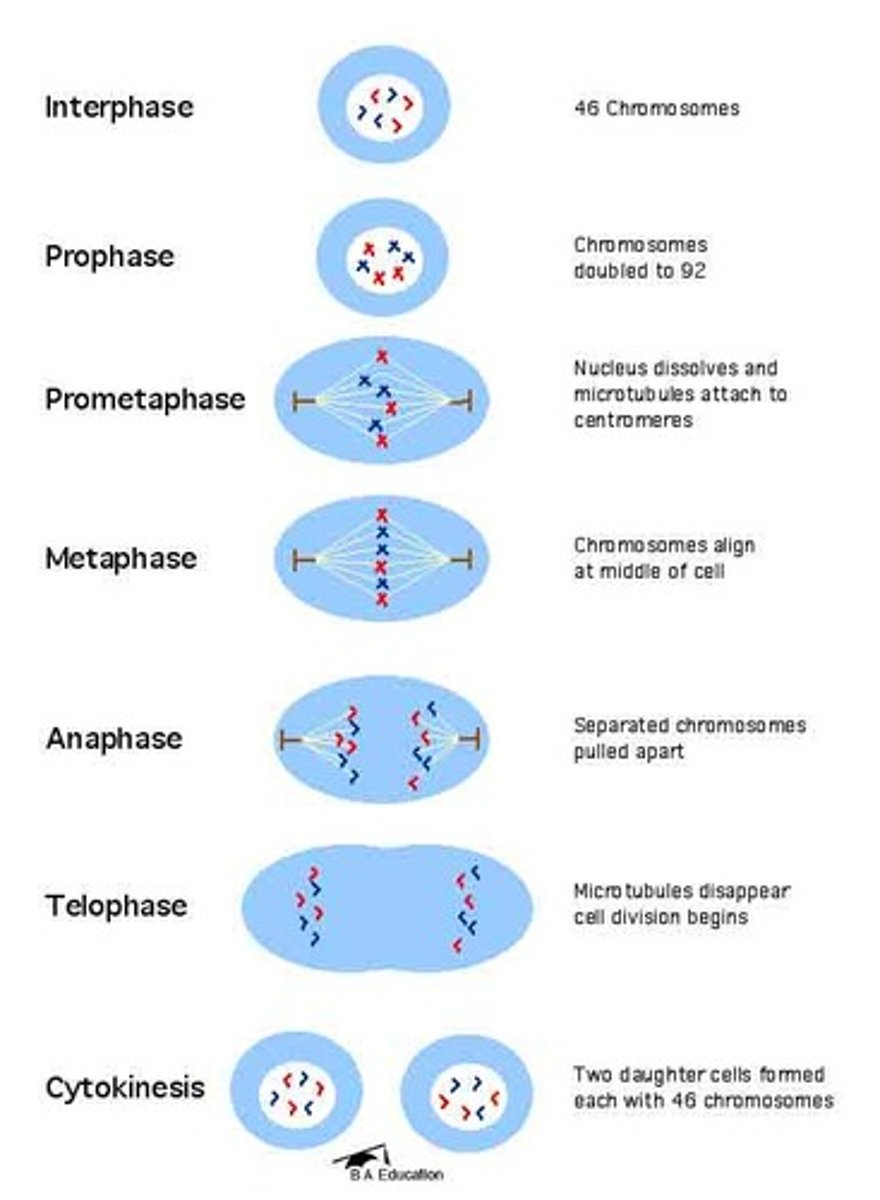
Mitosis
cell division in which the nucleus divides into nuclei containing the same number of chromosomes
Diploid
2 sets of chromosomes
Haploid
having a single set of unpaired chromosomes
cell differentiation
the process by which a cell becomes specialised for a specific structure or function.
Cancer
disorder in which some of the body's cells lose the ability to control growth
stem cells
unspecialised cells that retain the ability to become a wide variety of specialised cells
Stem cell uses
Therapeutic cloning- skin, treatment of cancers, and generation of tissues
Meristem
Plant tissue that remains embryonic as long as the plant lives, allowing for indeterminate growth.
CNS (central nervous system)
brain and spinal cord
nervous pathway
stimulus → receptor → sensory neurone → CNS → Motor neurone → effector → response
sensory neurones
neurones that carry incoming information from the sensory receptors to the brain and spinal cord
motor neurones
The neurones that carry electrical impulses from the CNS to effectors
relay neurones
Neurones that carry information from a sensory nerve cell to a motor nerve cell
Synapses
connections between neurones
Reflexes
specific patterns of motor response that are triggered by specific patterns of sensory stimulation
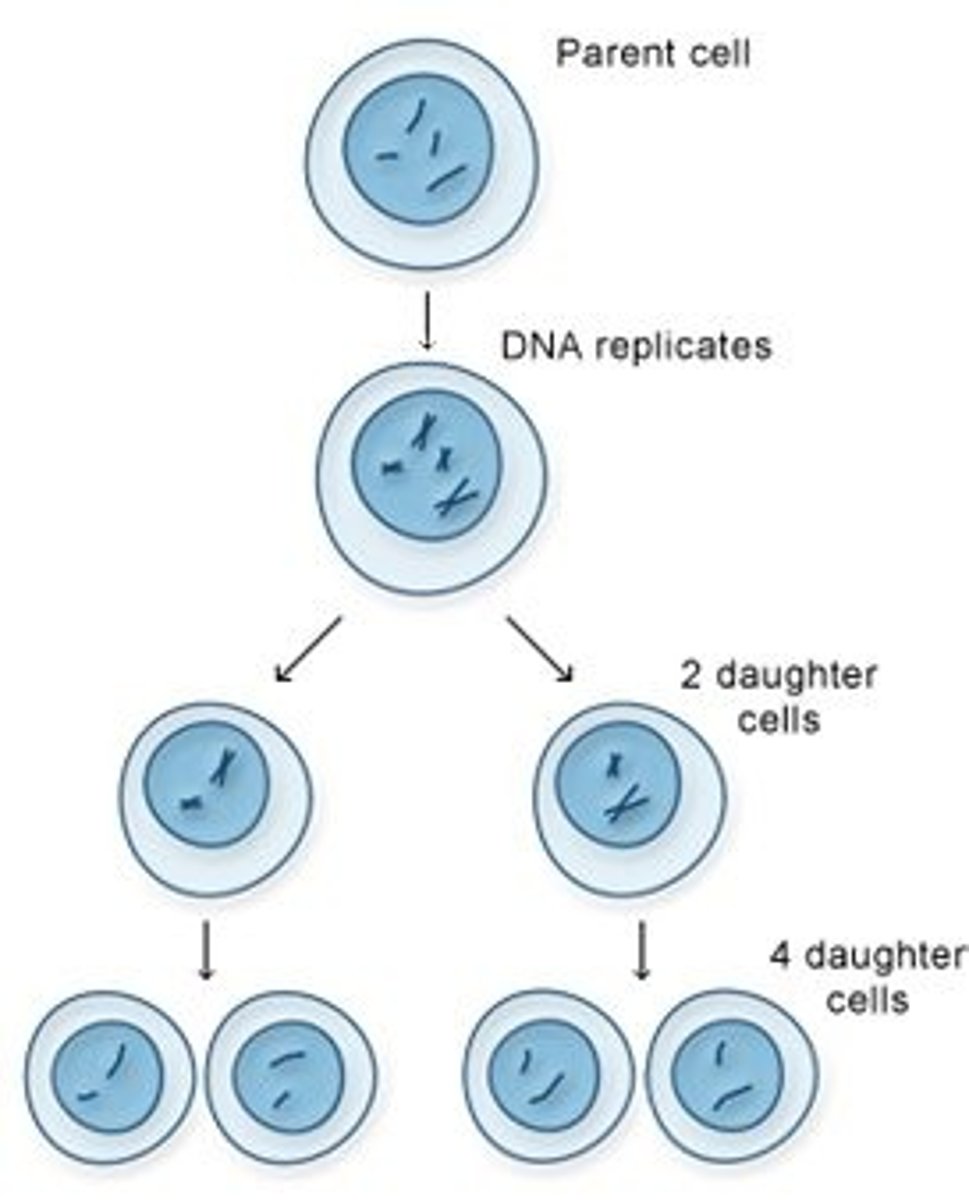
Meiosis
Cell division that produces reproductive cells in sexually reproducing organisms
Gametes
sex cells
asexual reproduction
A reproductive process that involves only one parent and produces offspring that are identical to the parent.
DNA
A complex molecule containing the genetic information that makes up the chromosomes.
DNA bases
Adenine, Thymine, Cytosine, Guanine (A-T, C-G)
chromosomes
threadlike structures made of DNA molecules that contain the genes
Gene
A segment of DNA on a chromosome that codes for a specific trait
Genome
All the genetic information in an organism; all of an organism's chromosomes.
Mutation
a random error in gene replication that leads to a change
double helix
two strands of nucleotides wound about each other; structure of DNA
Allele
Different forms of a gene
Dominant
An allele that is always expressed
Recessive
An allele that is masked when a dominant allele is present
Homozygous
An organism that has two identical alleles for a trait
Heterozygous
An organism that has two different alleles for a trait
Genotype
genetic makeup of an organism
Phenotype
An organism's physical appearance, or visible traits.
Zygote
fertilised egg
environmental variation
Variation among individuals that is due to differences in the environment.
natural selection
A process in which individuals that have certain inherited traits tend to survive and reproduce at higher rates than other individuals because of those traits.
antibiotic resistance
Resistance evolving rapidly in many species of prokaryotes due to overuse of antibiotics, especially in agriculture.
Fossils
Preserved remains of once-living organisms
Classification
The process of grouping things based on their similarities
kingdom, phylum, class, order, family, genus, species
kenny puts condoms on for good sex
Protists
A eukaryotic organism that cannot be classified as an animal, plant, or fungus.
selective breeding
The process of selecting a few organisms with desired traits to serve as parents of the next generation
communicable disease
a disease that is spread from one host to another
non-communicable disease
a disease not capable of being spread from one person to another
malaria
Protist which causes damage to red blood cells and can damage the liver. Spread via Mosquitoes
HIV
the virus that causes AIDS which destroys red blood cells
Chlamydia
A bacterial infection that affects the reproductive organs of both males and females
Antigen
A protein that, when introduced in the blood, triggers the production of an antibody
Antibodies
Proteins that attach to antigens, keeping them from harming the body
immunisation
Giving a vaccine that allows immunity to develop without exposure to the disease itself.
antibiotics
Drugs that block the growth and reproduction of bacteria
Preclinical testing
Drug tests carried out in a laboratory on cells, tissues and live animals.
clinical testing
another name for clinical trials
Risk factors of non communicable diseases
-smoking
-malnutrition
-alcohol
-lack of exercise
-obesity
cardiovascular disease
A general term for all diseases of the heart and blood vessels.
Stents
wire mesh cylinder inserted into a clogged artery to hold it open
Evolution
The gradual change in a species over time

