Extraoral and Intraoral Deviations
 Studied by 0 people
 Call Kai
 Learn
Learn Practice Test
 Spaced Repetition
 Match
Match Flashcards
 Knowt Play
1/32

There's no tags or description
Looks like no tags are added yet.
Name | Mastery | Learn | Test | Matching | Spaced |
|---|
No study sessions yet.
33 Terms
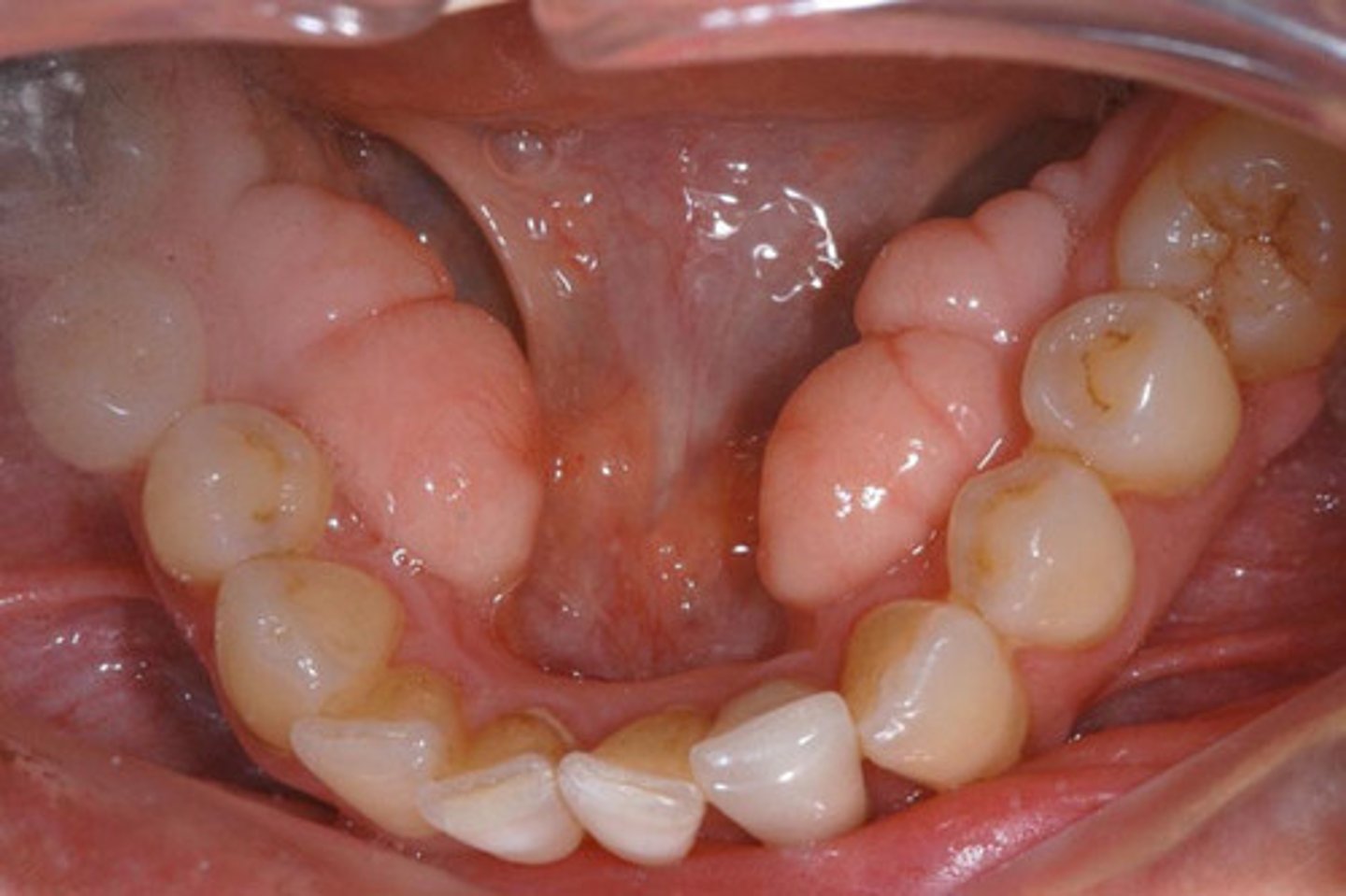
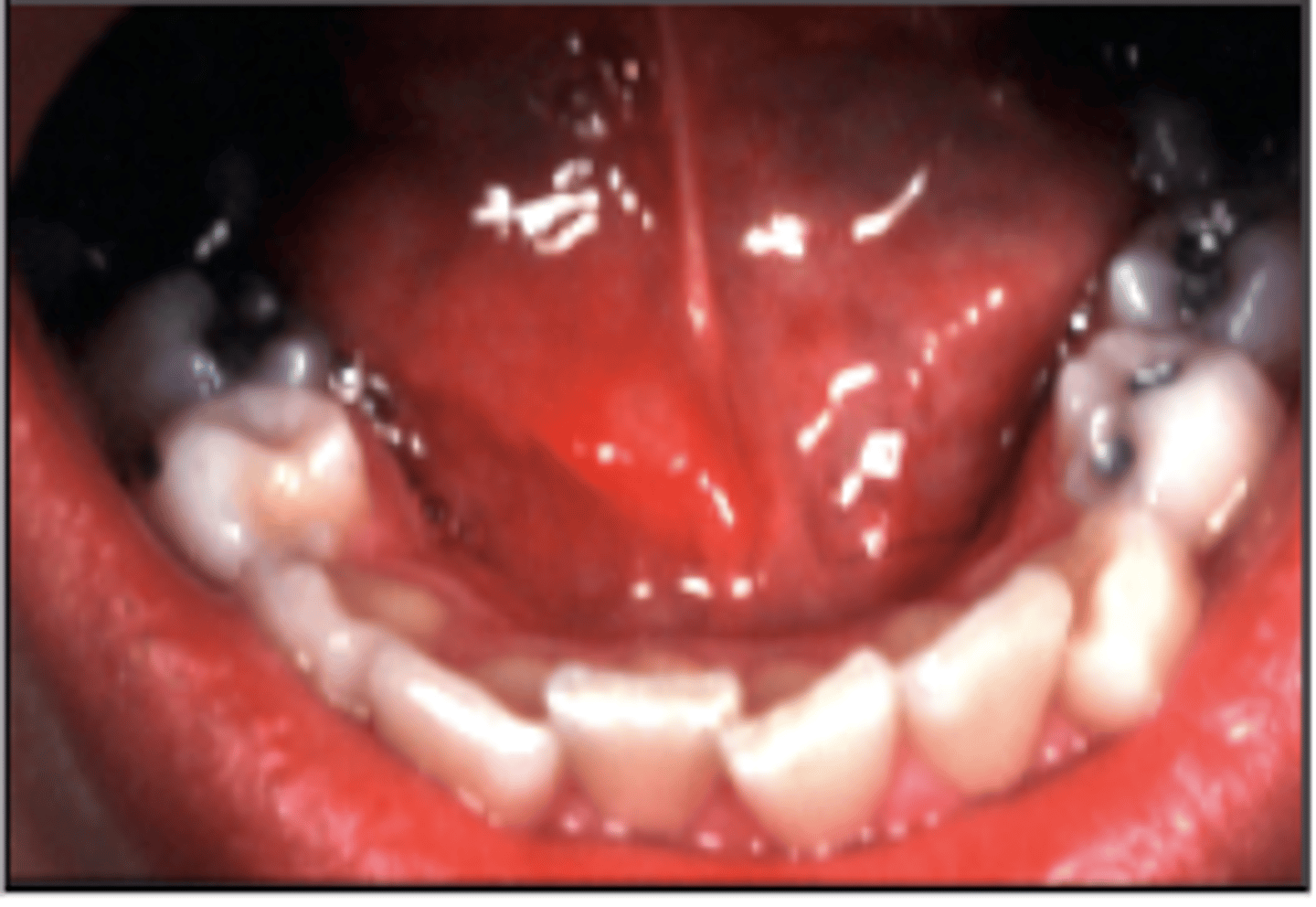
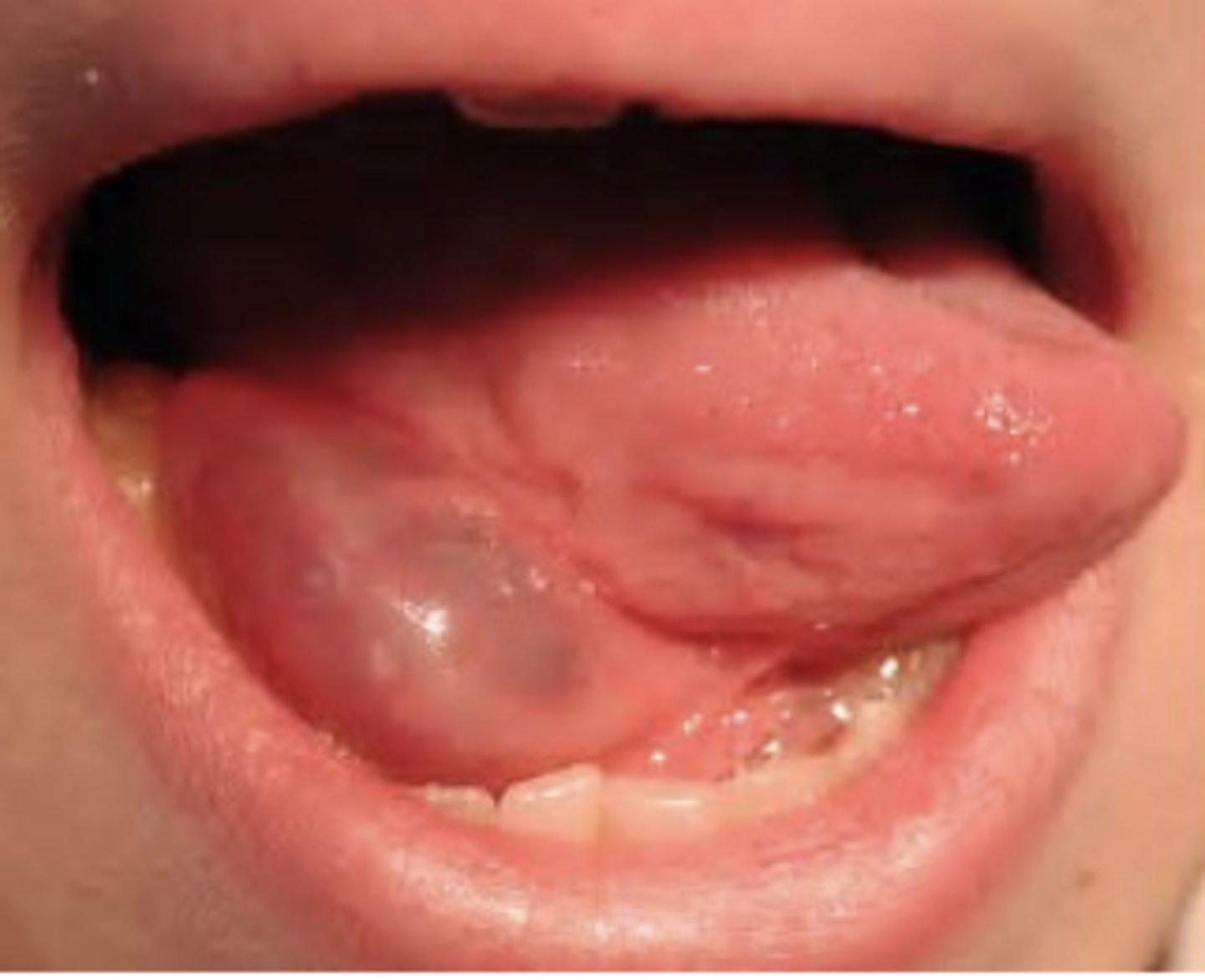
What are the intraoral deviations on the floor of the mouth?
Exostoses: mandibular tori
Trauma (eating?)
Enlarged salivary gland
What is the classification of Exostoses: mandibular tori? (floor of the mouth)
atypical
What is the classification of Trauma (eating?) (floor of the mouth)
atypical
What is the classification of Enlarged salivary gland? (floor of the mouth)
abnormal
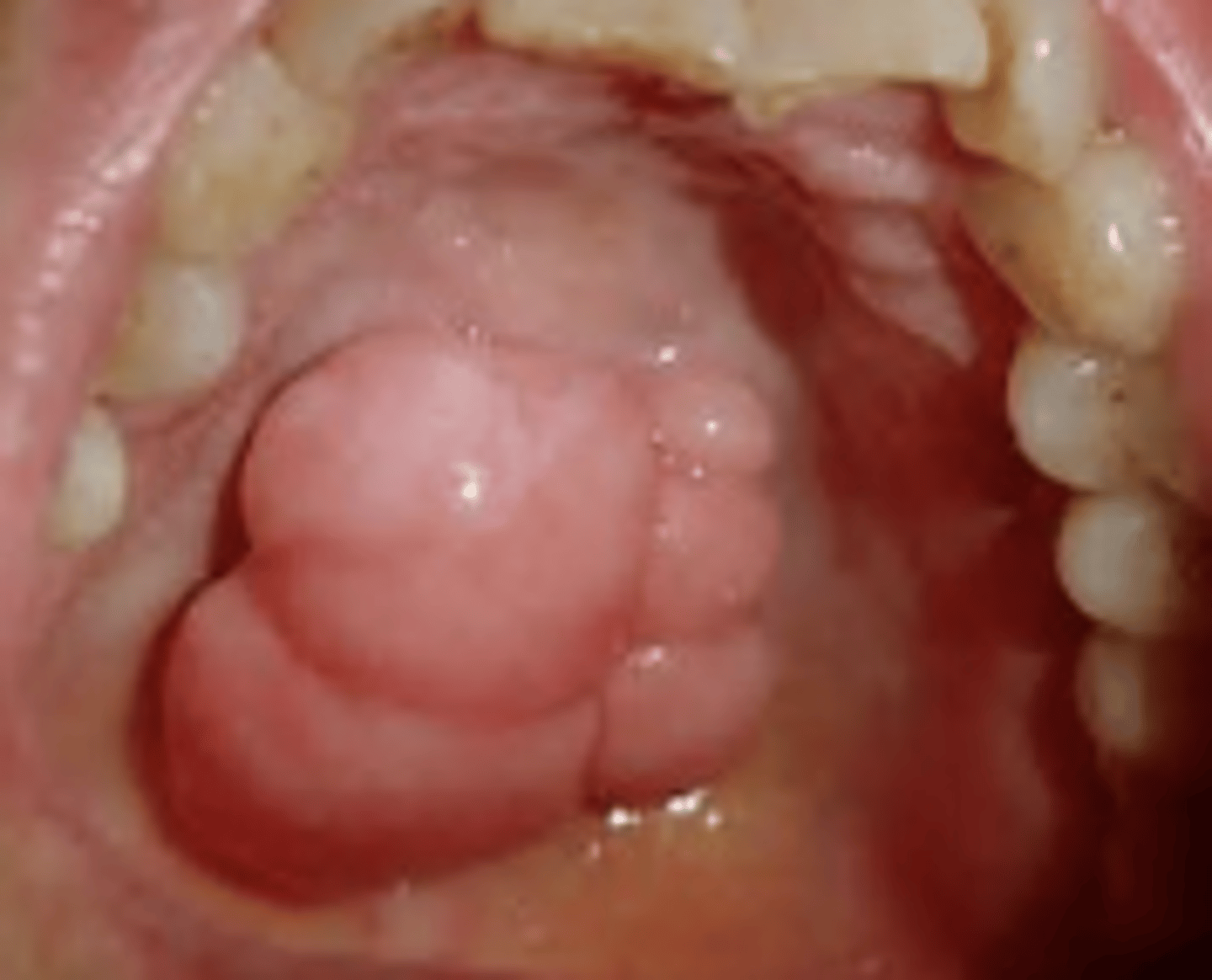
What are the intraoral deviations of the hard palate?
exostosis, trauma, nicotine stomatitis, petechiae
What is the classification of exostoses? (hard palate)
maxillary/palatal tori
atypical
What is the classification of trauma? (hard palate)
burns, atypical
What is the classification of nicotine stomatitis? (hard palate) Other descriptors?
atypical related to smoking
small papules (raised areas) with a background of grey or white tissue
treatment is to quit smoking
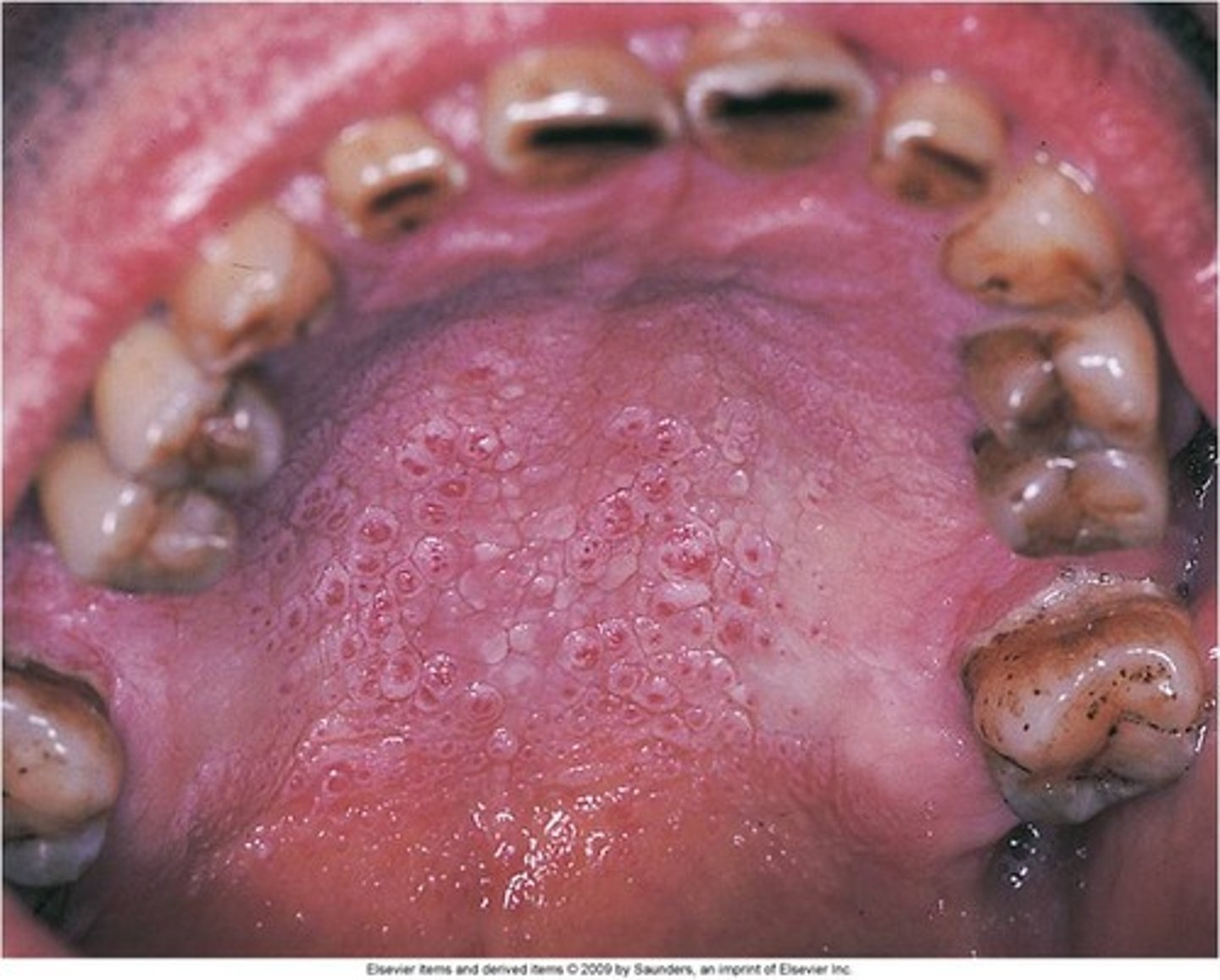
What is the classification of petechiae? (hard palate) Other descriptors?
atypical in general, but if concerned about connection to systemic condition, then refer
Tiny red spots caused by escape of small amount of blood
Trauma
Anemia
Leukemia
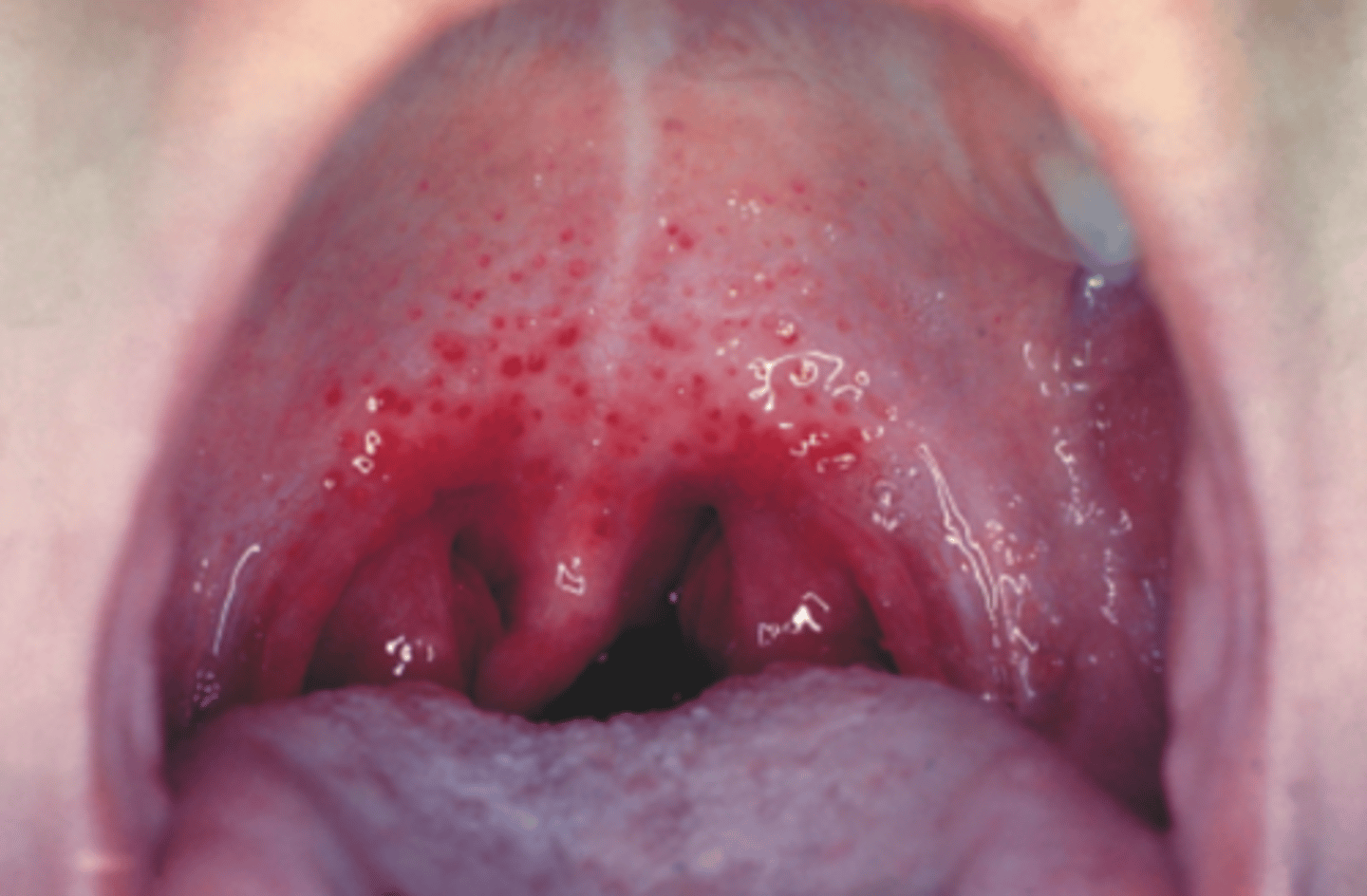
What are the intraoral deviations on the soft palate, pharynx, uvula?
Redness = Infection
Enlarged Tonsil
Infected Tonsil
Bifed uvula
What is the classification of Redness = Infection? (soft palate, pharynx, uvula)
atypical
What is the classification of enlarged and infected tonsils? (soft palate, pharynx, uvula)
usually atypical, but may require removal
cryptic tonsils are filled with debris, bacteria, hard stones
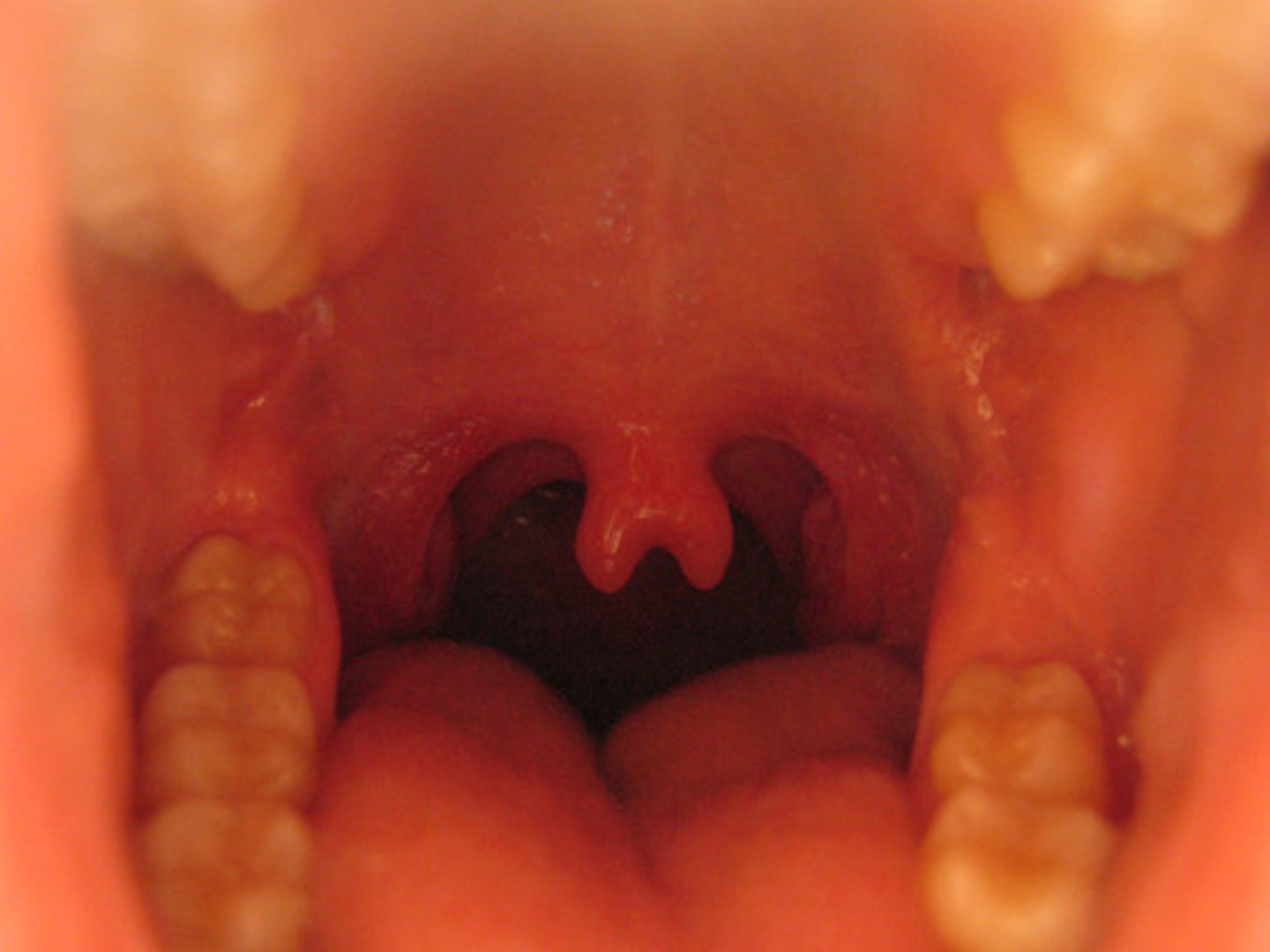
What is the classification bifid uvula? (soft palate, pharynx, uvula)
atypical
What is the classification of all tongue deviations?
normal or atypical
Intraoral deviation on the tongue: scalloped
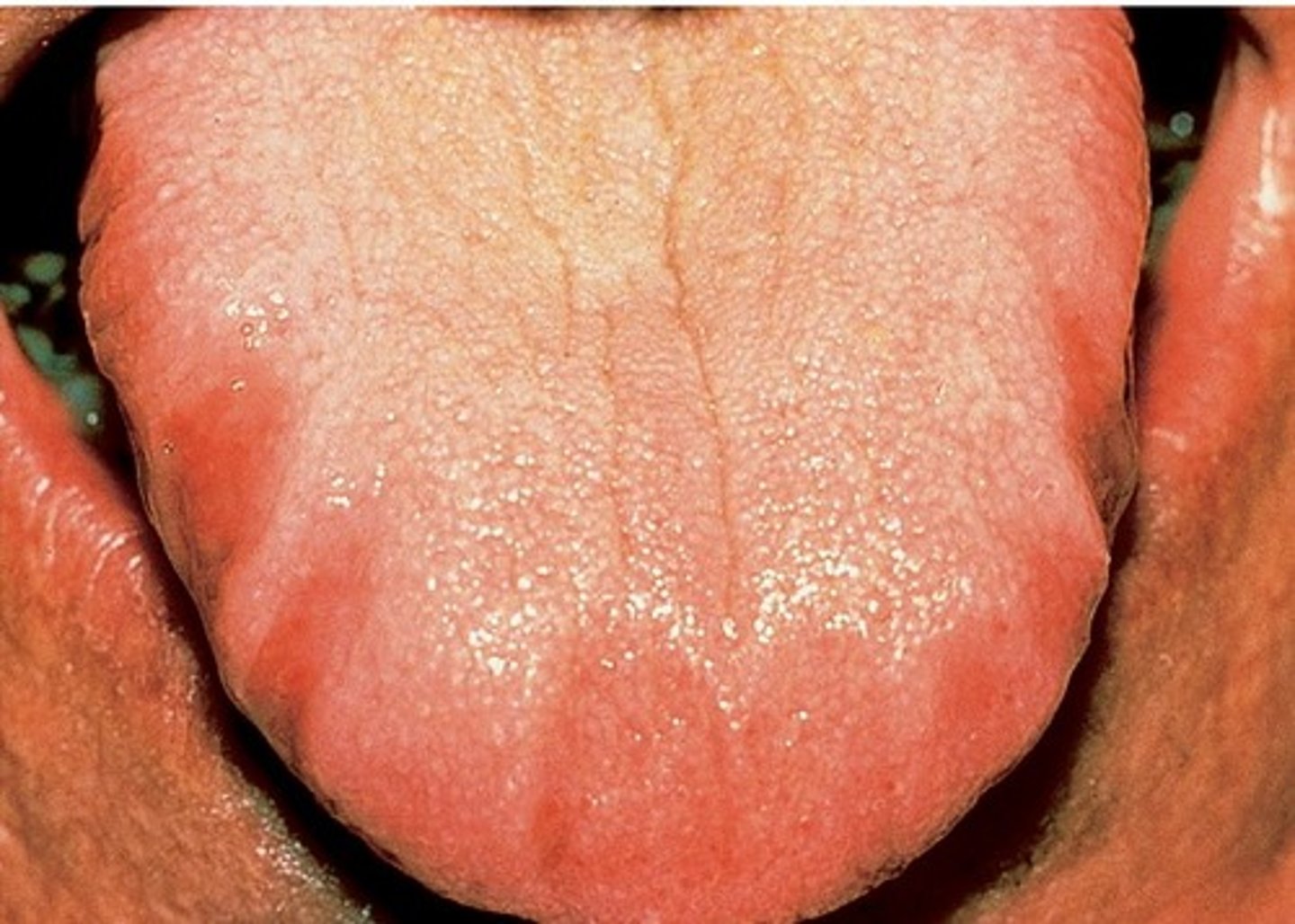
Intraoral deviation on the tongue: geographic
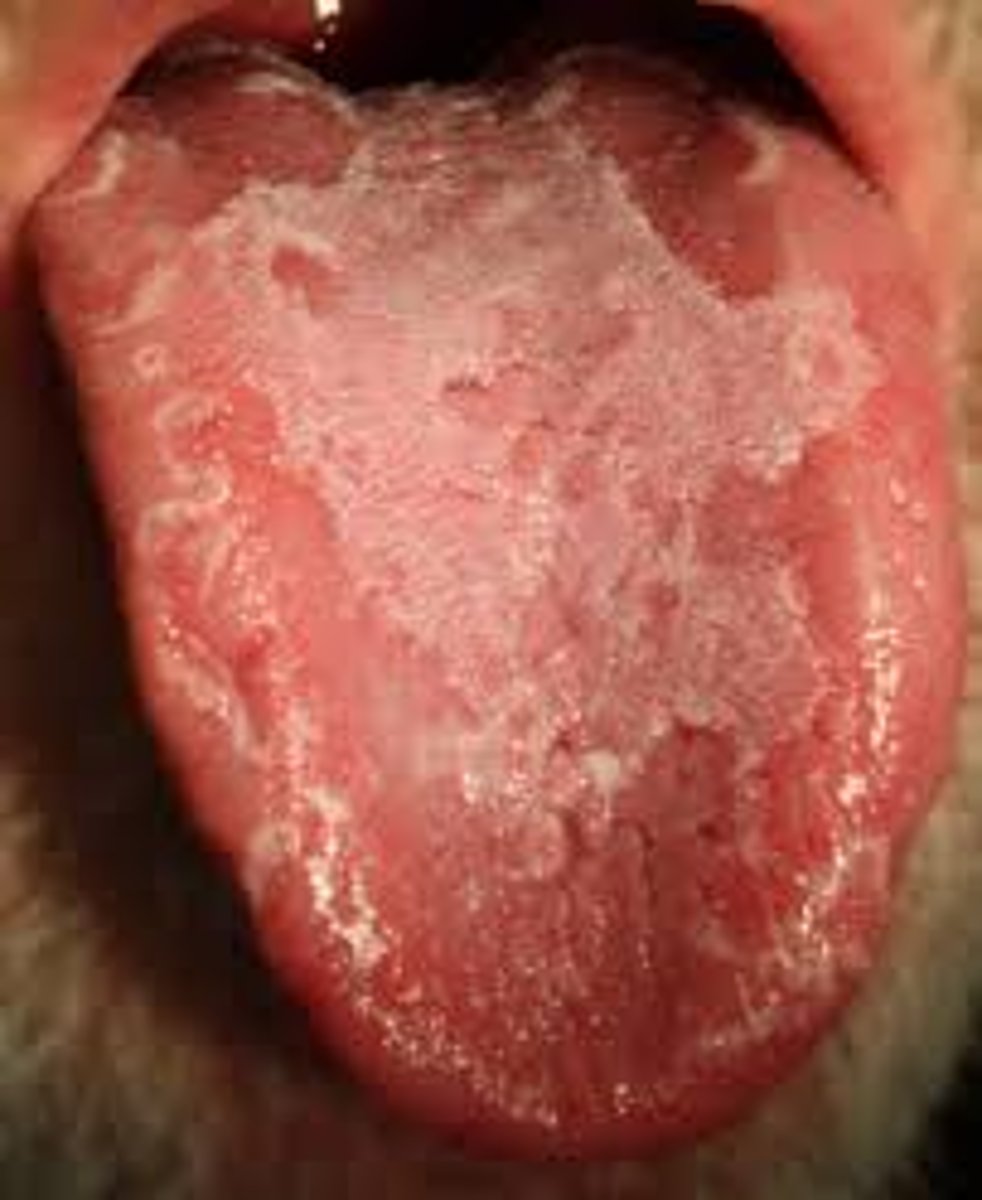
Intraoral deviation on the tongue: black hairy tongue
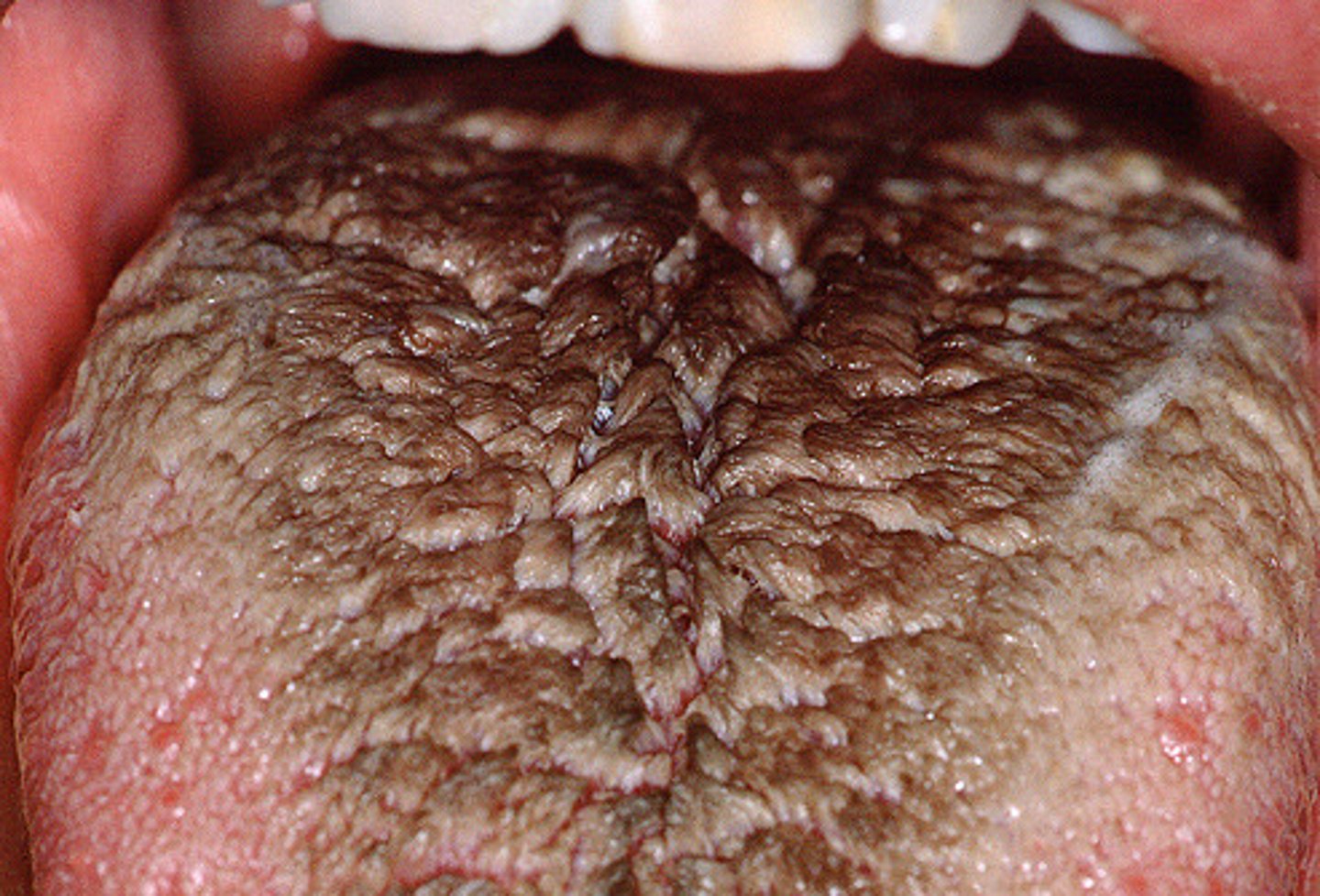
Intraoral deviation on the tongue: white hairy tongue
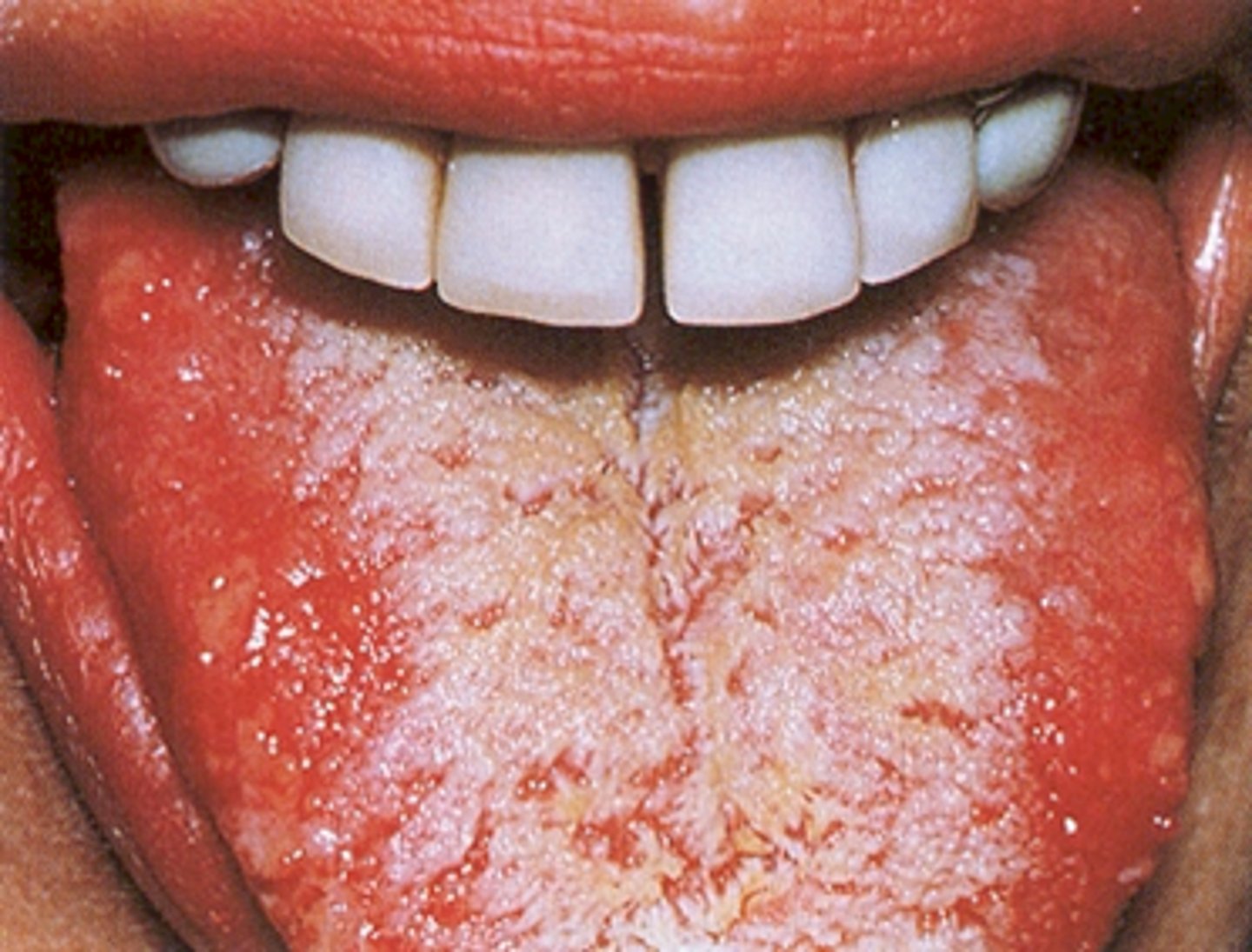
Intraoral deviation on the tongue: lingual variocosities (ventral surface)
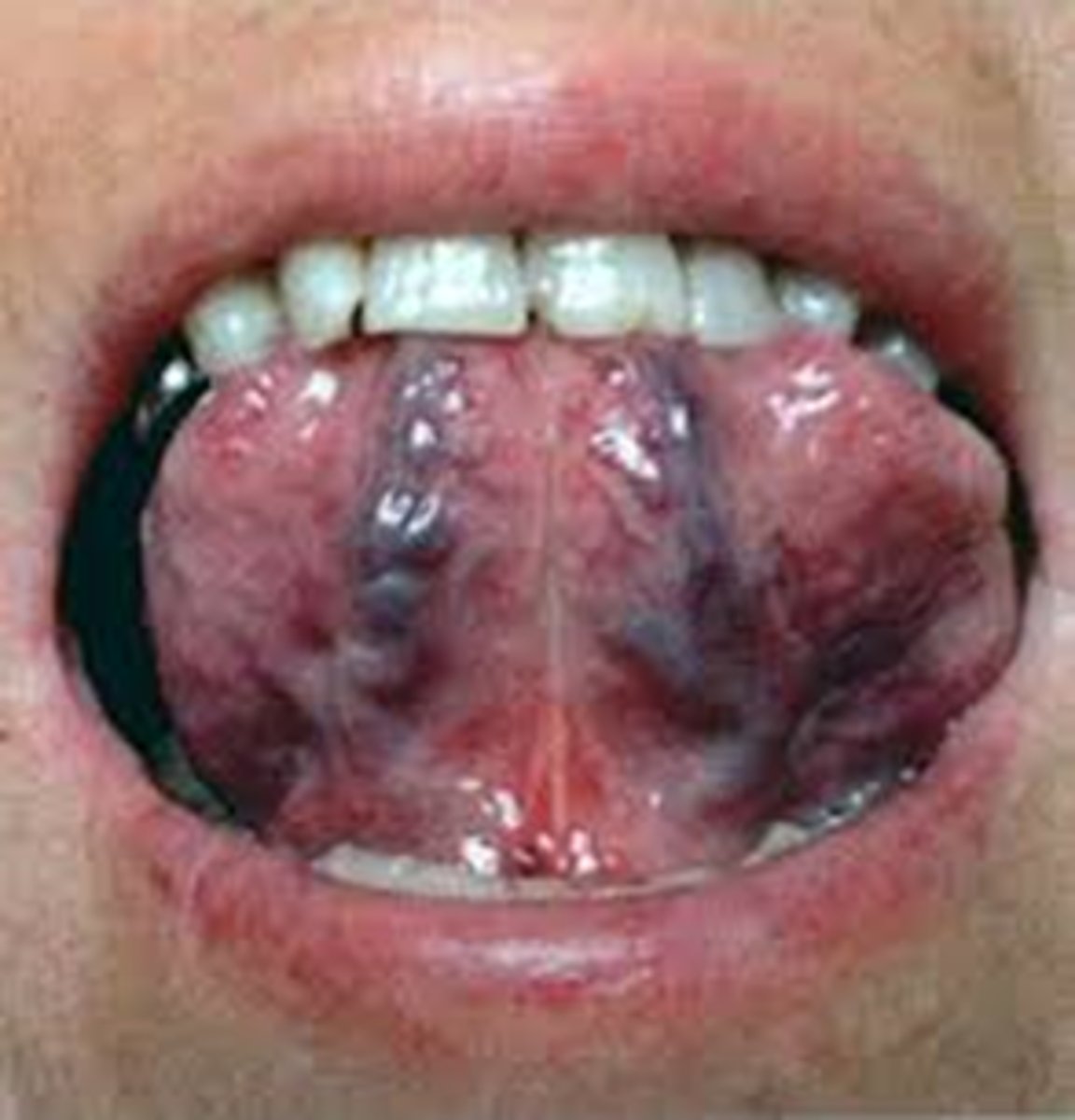
Intraoral deviation on the tongue: ankyloglossia
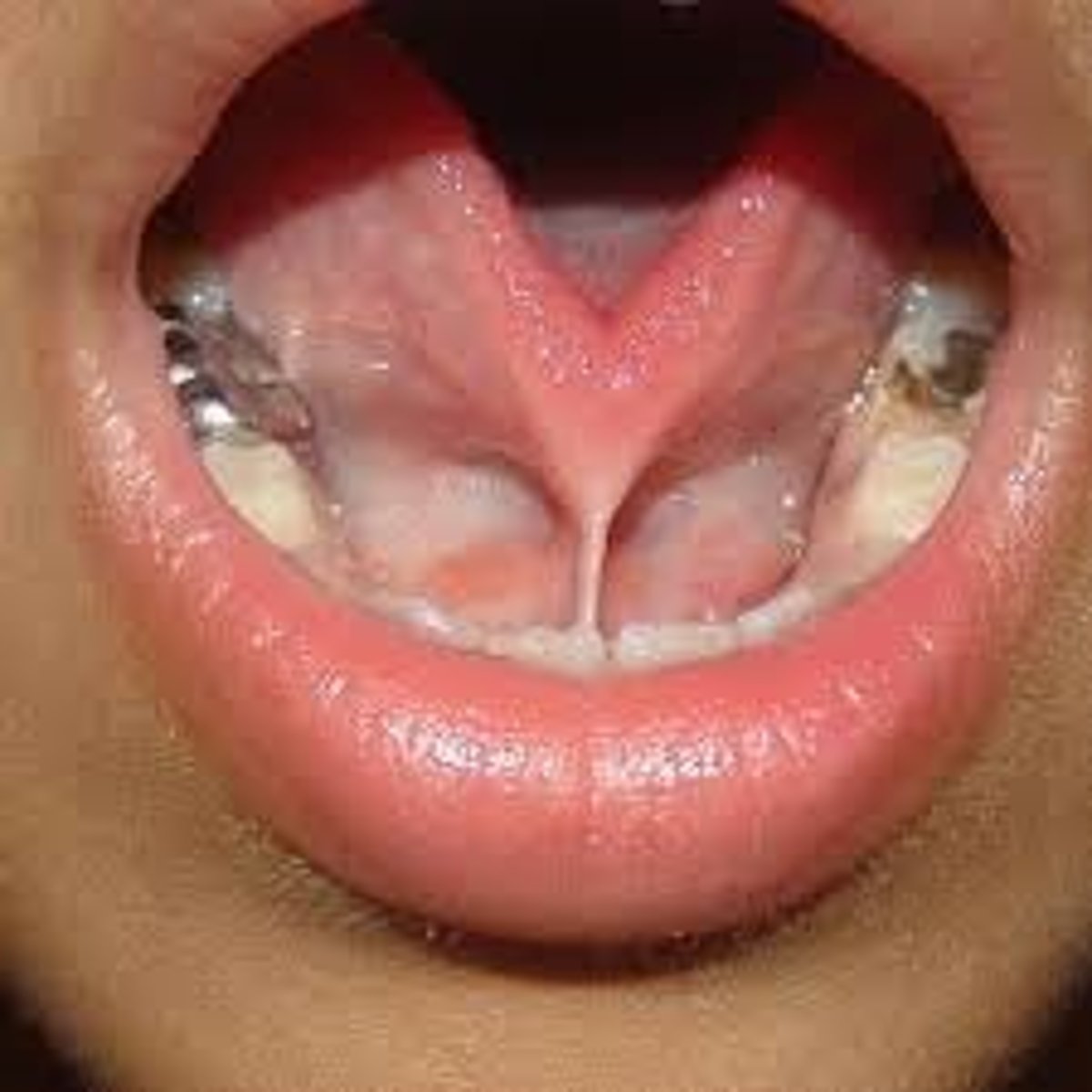
Intraoral deviation on the tongue: traumatic ulcer
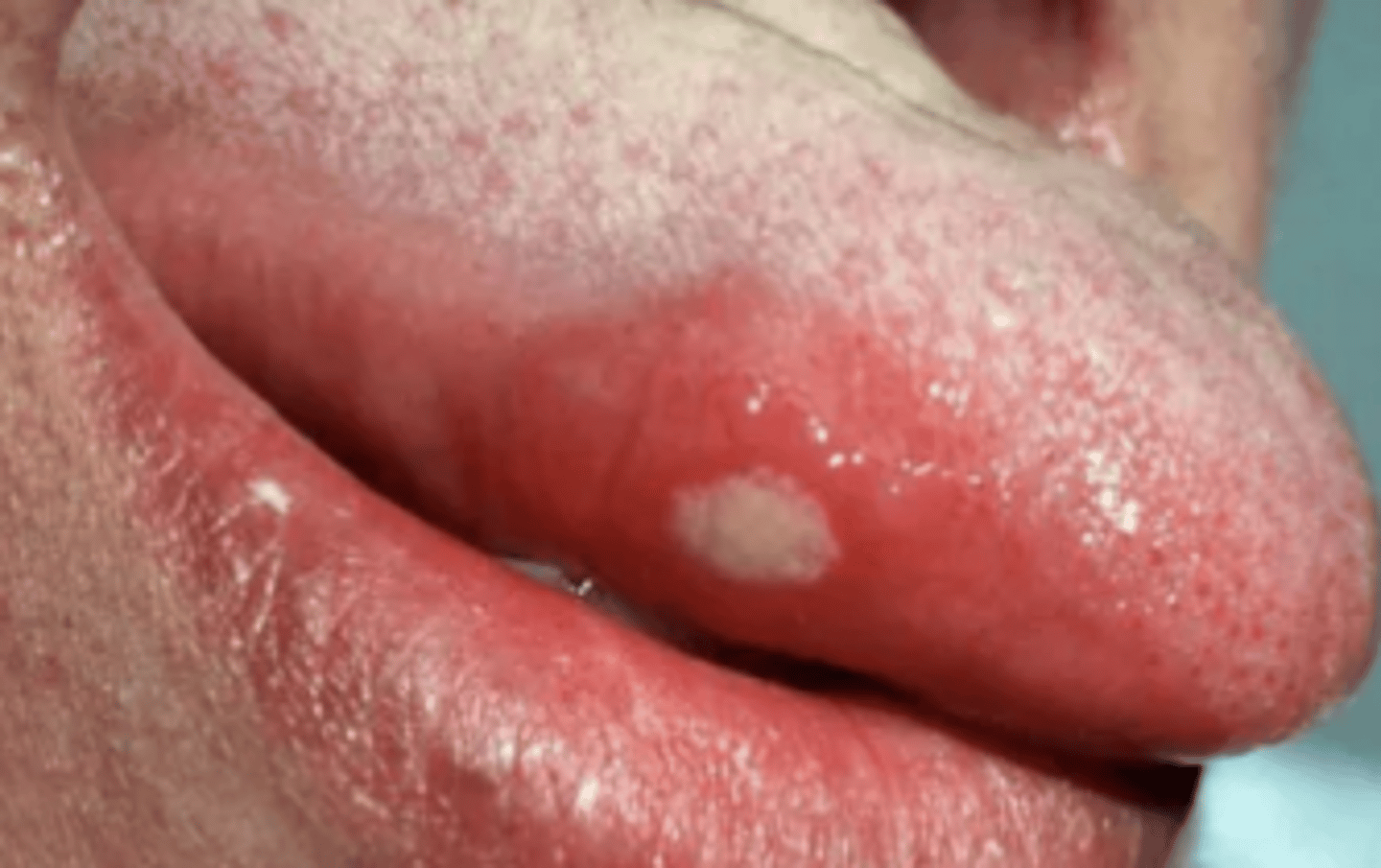
Intraoral deviation on the tongue: hairy leukoplakia
**diff classification
abnormal - needs referral because of medical condition if not already diagnosed
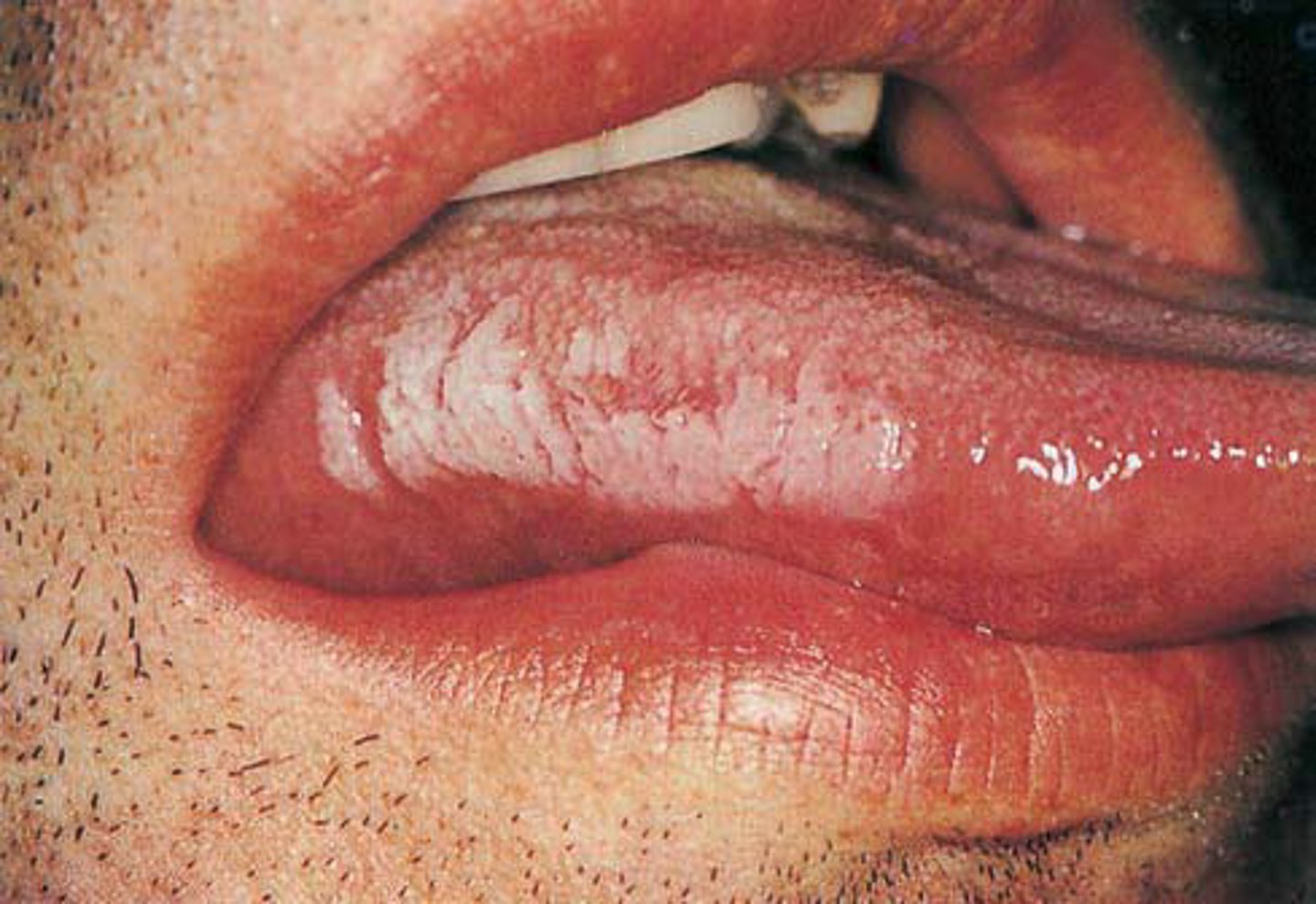
Intraoral deviation on the tongue: cancer
**diff classification
if still there after 2 week, need to investigate
abnormal
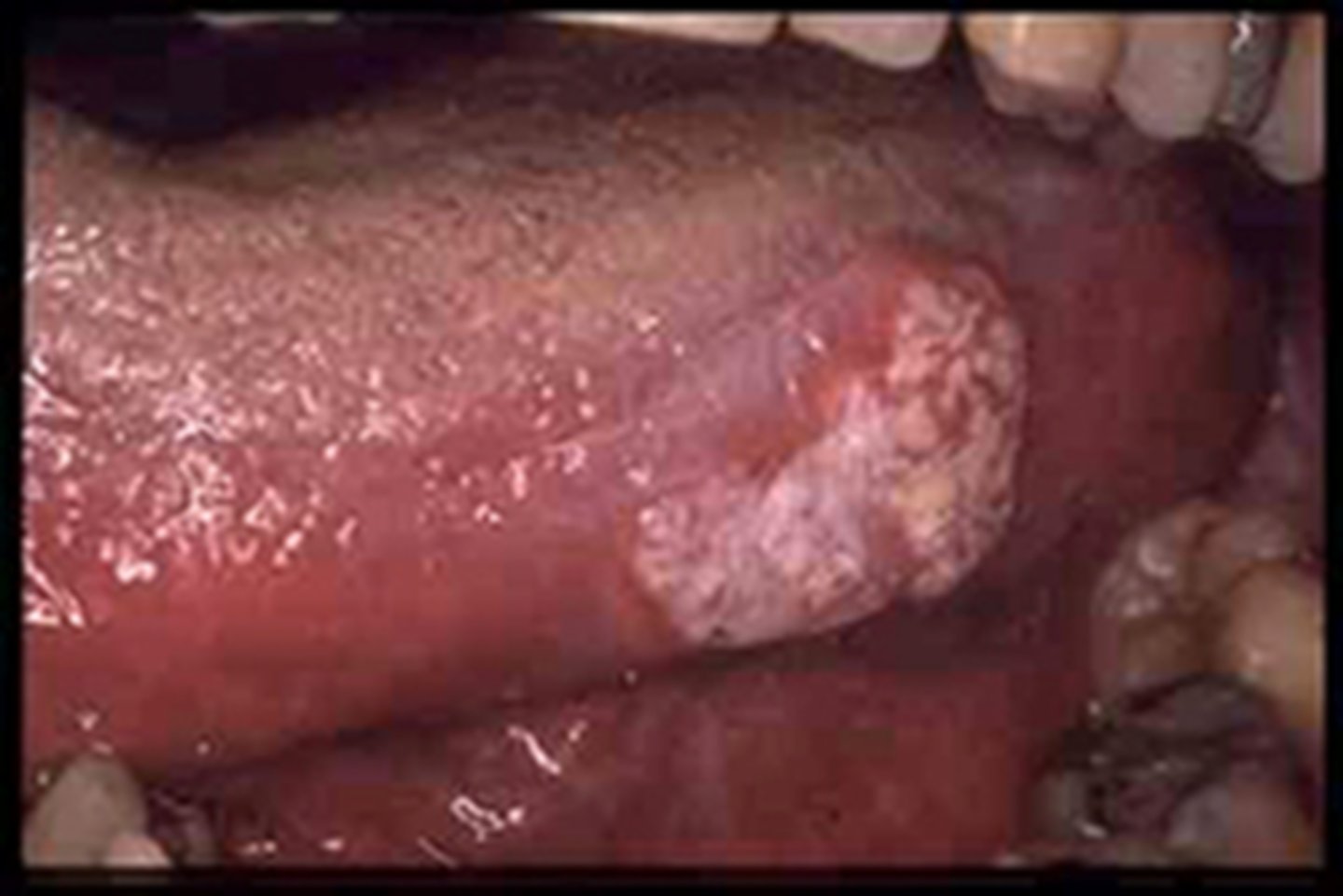
What are the effects of tongue piercings?
cracked molar, fractured edge of tooth, self inflicted trauma
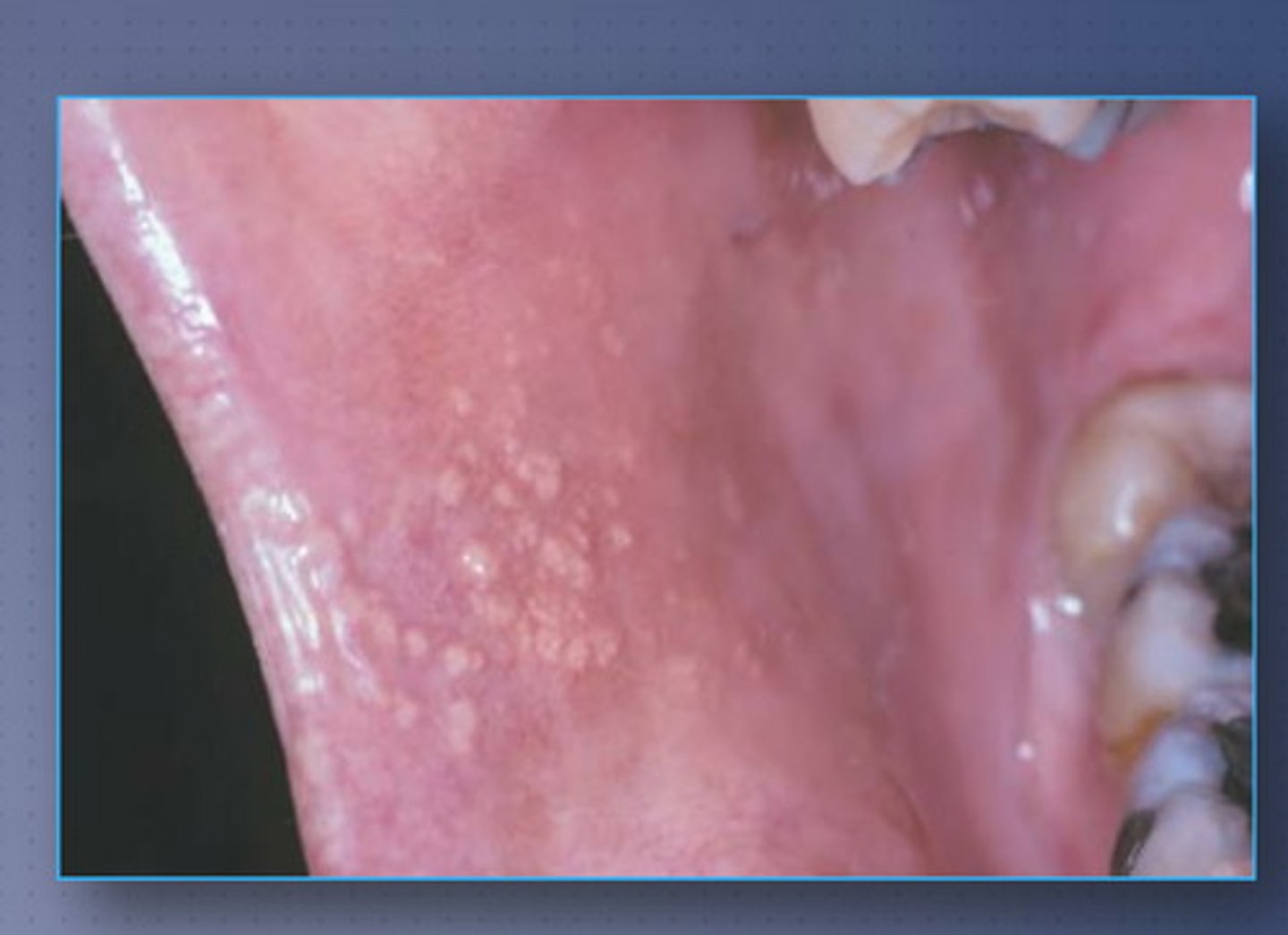
What is the intraoral buccal mucosa deviation?
fordyce granules
atypical
What should you record when you find something atypical/abnormal?
Description: location, size, color, texture/ consistency, symptoms
Need for referral?
Follow-up at later appts.
Patient to monitor
What is the purpose of self-examination for patients?
Promotes prevention
Early identification
Follow-up for lesions present
Similar observation and palpations
What should you inform patients to be aware of?
sores that do not heal within 2 weeks
white, red, dark patches
swelling, lump, bump, growth
repeated bleeding
pain or loss of feeling
How does early detection of oral cancer save lives?
5 year survival for localized disease is 76%
5 year survival for metastatic disease is 19%
80-90% survival rate when detected early!
What are the warning signs of oral cancer?
lesions with leukoplakia and erythroplakia
other:
1. Lump or thickening of oral soft tissue
2. Soreness or "lump" in throat
3. Difficulty chewing or swallowing
4. Ear pain
5. Difficulty moving jaw or tongue
7. Hoarseness
8. Numbness of tongue or mouth
9. Swelling of the jaw
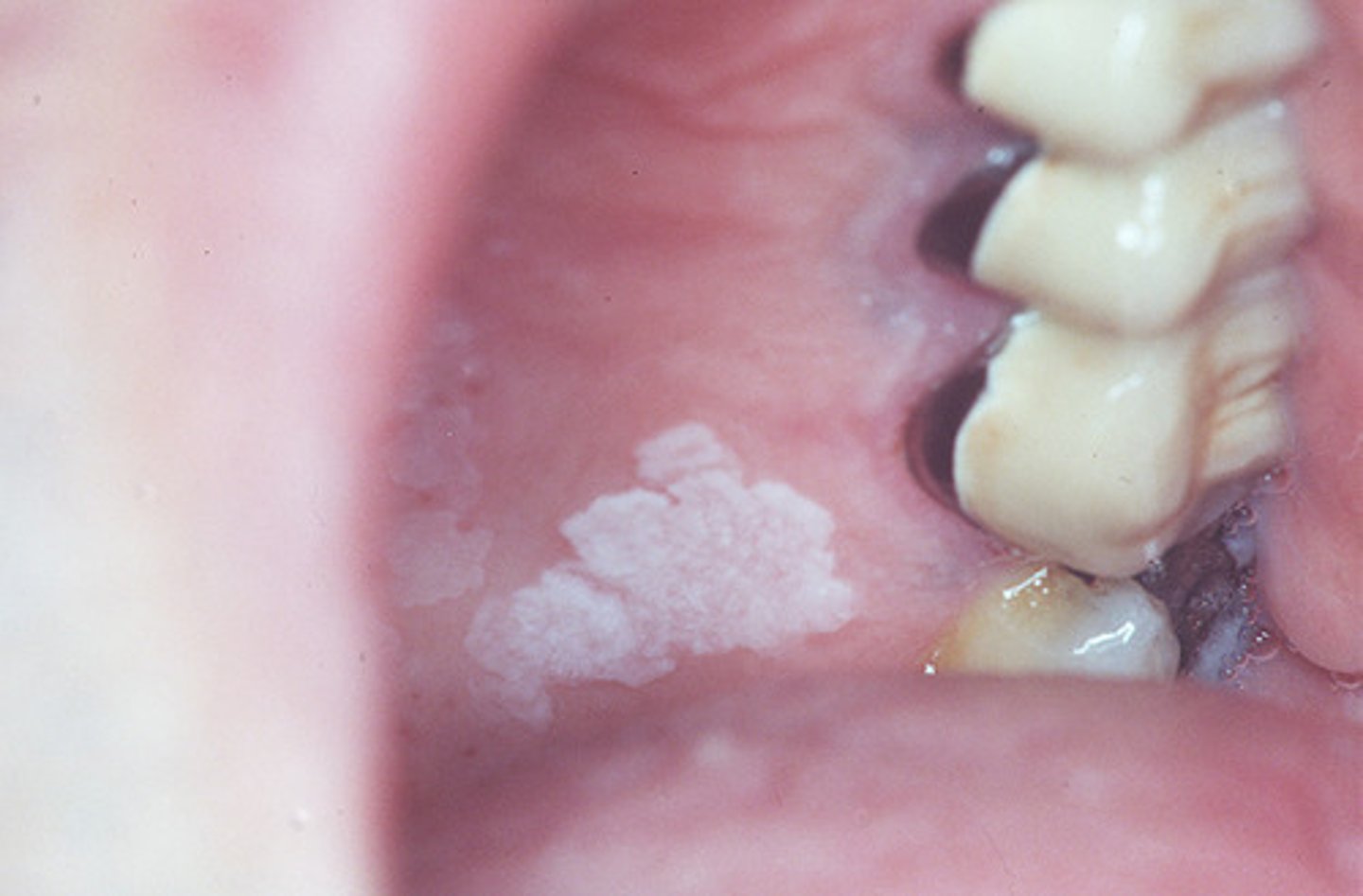
Leukoplakia
thickened, white, leathery-looking spots on the inside of the mouth that can develop into oral cancer
can be from smoking
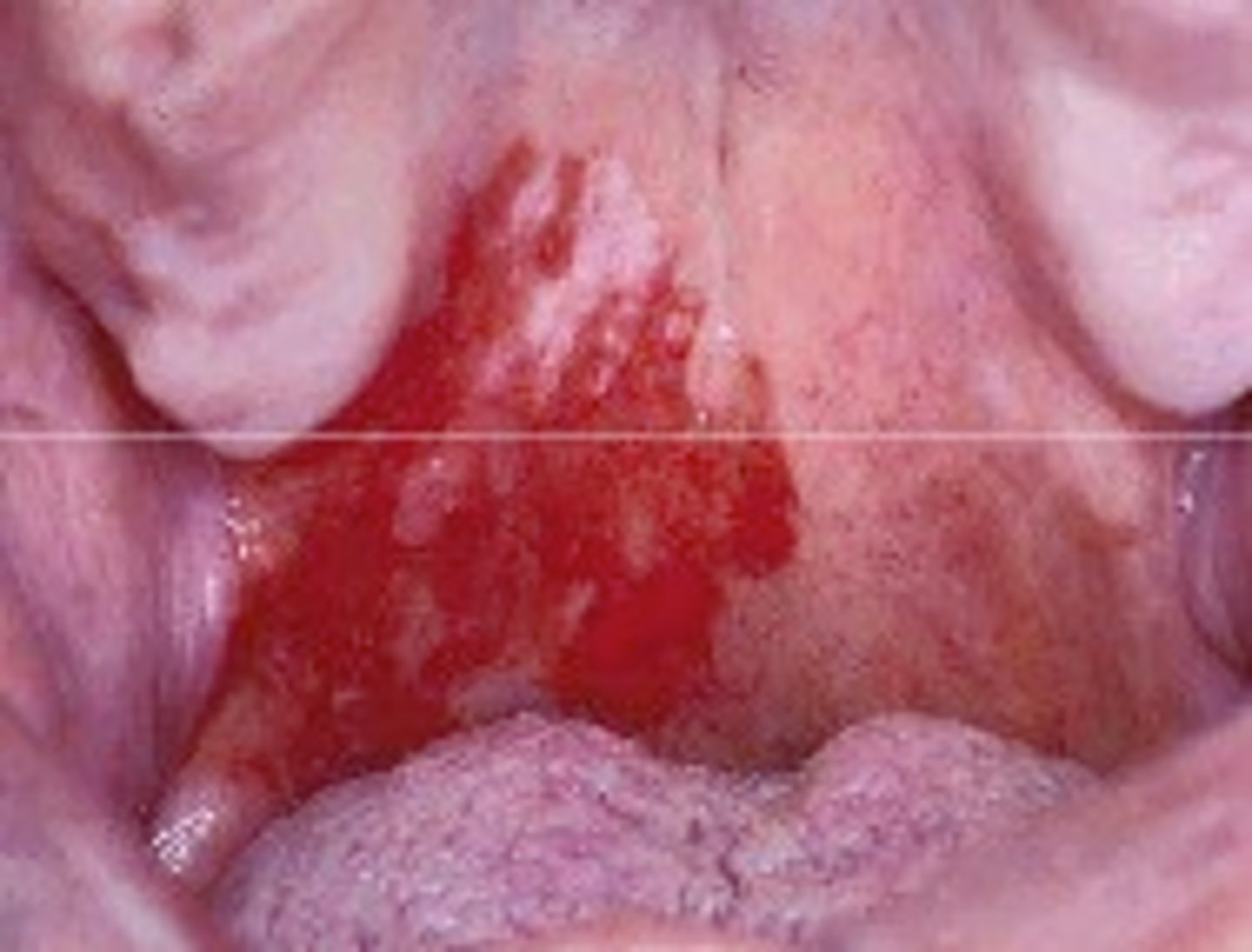
Erythroplakia
any red patch of tissue in the oral cavity that can signify oral cancer
What are some risk factors for oral cancer?
Tobacco use
Alcohol use
Exposure to sunlight (lips)
Age (40 and up)
Gender (males more common, white)
Race
 Note
Note  Flashcards (20)