The Romantic Period
 Studied by 0 people
 Call Kai
 Learn
Learn Practice Test
 Spaced Repetition
 Match
Match Flashcards
 Knowt Play
1/44

There's no tags or description
Looks like no tags are added yet.
Name | Mastery | Learn | Test | Matching | Spaced | Call with Kai |
|---|
No study sessions yet.
45 Terms
drawers —> chemise —> corset —> camisole —> petticoats
Sequence of what women wore
ferroniere
a chain with a jewel worn at the center of the forehead; neck ruffs or sleeve styles
bustles
small down- or cotton-filled pads that tied on around the waist at the back, held out skirts in back
morning dresses
generally the most informal, often being made of lingerie-type fabrics such as white cotton or fine linen with lace or ruffled trimmings.
Day dresses, promenade or walking dresses, and carriage dresses
lower waistlines, wide sleeves, and full skirts fastened either in front or in back.
mancherons
puffed at the shoulder then attached to a long sleeve, which was fitted to the wrist. Others consisted of a small puff covered by a sheer oversleeve
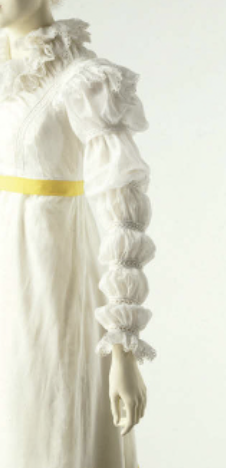
marie sleeve
full to the wrist, but tied in at intervals with ribbons or bands
demi-gigot sleeves
full from shoulder to elbow, then fitted from elbow to wrist, often with an extension over the wrist
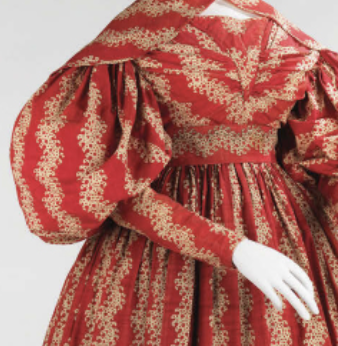
gigot or leg-of-mutton sleeves
full at the shoulder, gradually decreasing in size to the wrist where they ended in a fitted cuff
imbecile or idiot sleeves
extremely full from shoulder to wrist, where they gathered into a fitted cuff
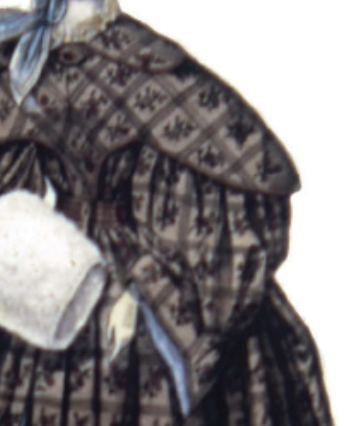
pelisse-robe
a name given to a dress for daytime that was adapted from something that was worn outdoors.
True
Women were showing their ankles when wearing their evening dresses. T or F
chemisettes or tuckers
Fillers raised the necklines of daytime dresses
pelerines
Wide, cape-like collars that extended over the shoulders and down across the bosom
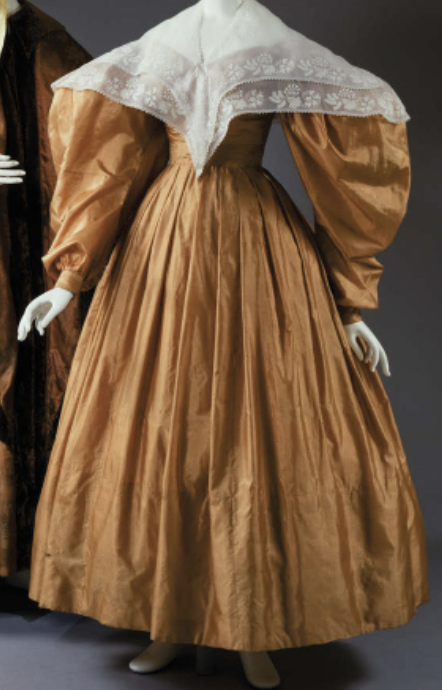
fichu pelerine
had two wide panels, or lappets, extending down the front of the dress and passed under the belt
santon
a silk cravat worn over a ruff
canezou
a small, sleeveless spencer worn over a bodice, and in others, as a garment synonymous with the pelerine.
à la Chinoise
about 1829 was created by pulling back and side hair into a knot at the top of the head, while hair at forehead and temples was arranged in curls.
capote
a bonnet that had a soft fabric crown and a stiff brim.
gilet corsage
imitation of a man’s waistcoat.
bishop sleeve
was made with a row of vertical pleats at the shoulder that released into a soft, full sleeve gathered to a fitted cuff at the wrist, was popular until about 1840.
ruchings
pleated or gathered strips of fabric—flounces, scallops, and cordings
berthas
wide, deep collars following the neckline
en coeur
off-the-shoulder necklines that extended straight across, made with a dip at the center
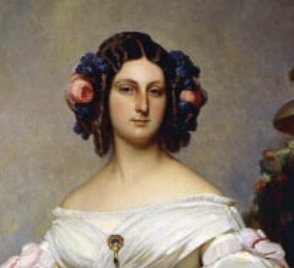
bavolet
ruffle at the back of the neck to keep the sun off the neck
drawn bonnets
made from concentric circles of metal, whalebone, or cane and covered in silk
mantle or shawl-mantle
a short garment rather like a hybrid between a shawl and a short mantle with points hanging down at either side of the front
pelerine-mantlet
with a deep cape, coming well over the elbows and having long, broad front lappets worn over, not under, a belt
burnous
a large mantle of about three-quarter length with a hood, the name and style deriving from a similar garment worn by Arabs who lived in the Middle Eastern desserts
paletot
about knee length and having three capes and slits for the arms
pardessus
a term applied to any of a number of garments for outdoor wear that had a defined waistline and sleeves and were from one half to three quarters in length.
chatelaines
ornamental chains worn at the waist from which were suspended useful items such as scissors, thimbles, button hooks, and penknives.
Jeanette
a narrow tress of hair or piece of velvet ribbon was used to suspend a cross or heart of pearls around the neck
Newmarket coat
differed from the tailcoat in that the coat sloped gradually to the back from well above the waist, rather than having a squared, open area at the front.
Husar front or beak
Waistcoats lengthened and developed a point at the front
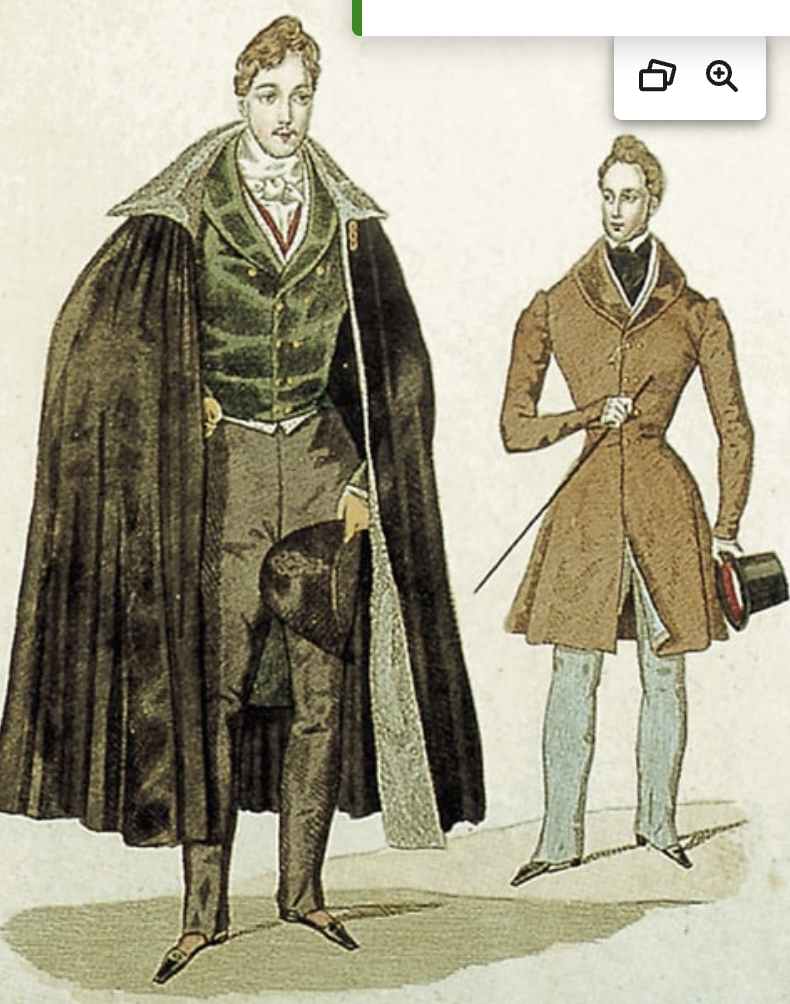
greatcoats
a general term for overcoats, With and without lapels, coats could be single or double breasted, they were often as long as to the ankle, and their collars had a deep roll.
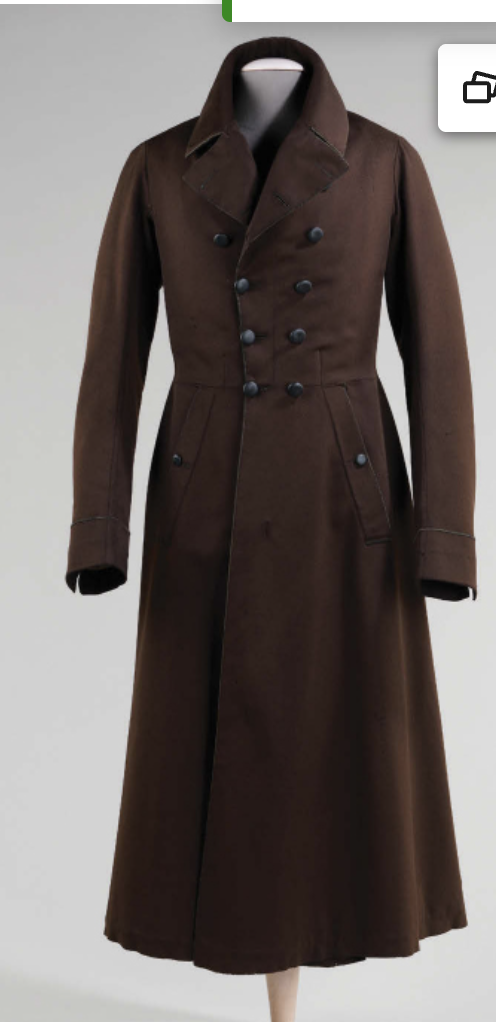
box coats, curricle coat
large, loose greatcoats with one or more capes at the shoulder. (In the 1840s, this coat was likely to be called a ______)
paletot
a term first used in the 1830s. The styles to which the term was applied vary over time. At this period it appears to have been a short greatcoat, either single or double breasted, with a small flat collar and lapels. Sometimes it had a waist seam, sometimes not.
Chesterfield coats
applied to a coat with either a single- or double-breasted closing, although the double-breasted closing has since been more closely associated with this term. The coat had no waistline seam, a short vent in the back, no side pleats, and often a velvet collar.
mackintosh coats
a waterproof coat made of rubber and cut like a short, loose overcoat. This new garment was named after its inventor, Charles Mackintosh. Waterproof cloaks and paletots are also mentioned. These early coats did not meet with universal approval, and waterproof garments return to favor in the 1850s with a peak in popularity in the 1880s and 1890s
gibus hat
a collapsible top hat for evening named for its inventor, was fitted with a spring so that the hat could be folded flat and carried under the arm.
derby hats or bowlers
stiff, round, bowl-shaped crowns with narrow brims.
leglets
White, lace-trimmed drawers, a sort of half-pantalette that tied around the leg, were worn under dresses.
Eton suit
a short, single-breasted jacket, ending at the waist for boys. The front was cut square, the lapels wide with a turned-down collar. The suit was completed with a necktie, vest or waistcoat, and trousers.
Tunic suits
consisted of a jacket, fitted to the waist where it attached to a full, gathered, or pleated skirt that ended at the knee. It buttoned down the front and often had a wide belt. Usually worn with trousers.
 Note
Note  Flashcards (120)