structural geology
 Studied by 0 people
 Call Kai
 Learn
Learn Practice Test
 Spaced Repetition
 Match
Match Flashcards
 Knowt Play
1/20

There's no tags or description
Looks like no tags are added yet.
Name | Mastery | Learn | Test | Matching | Spaced |
|---|
No study sessions yet.
21 Terms
what is structural geology?
focuses on how rocks are deformed
folds and faults are the main structures that result when rocks are deformed or changed
strike and dip are common geologic measurements (focuses on the angle/direction of rock beds)
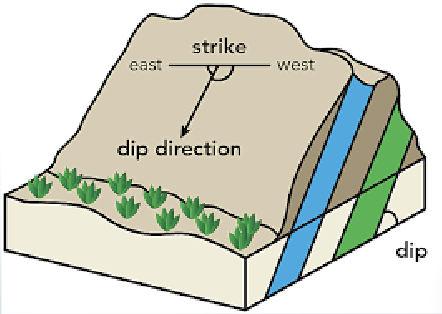
strike
can be thought of as compass direction of a planar (flat) geologic feature, when it intersects with the horizontal
givn in degrees or direction (ex: a strike facing exactly north would give a strike of 0 degrees or 360)
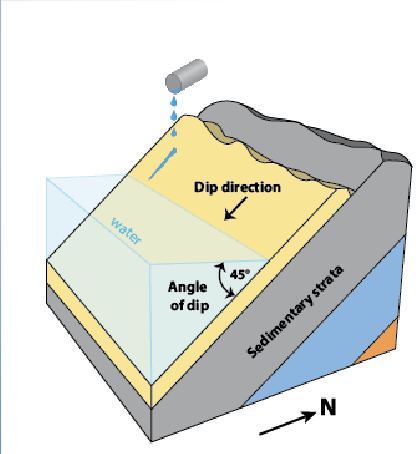
dip
the angle at which a rock layer/bed it inclined, or tilted, from the horizontal
geologic compasses
used to make field measurements of strike and dip
strike and dip symbol
T
principle of superposition
generally, rocks at the bottom are the oldest, those on top are the youngest
folds
are geologic structures generated by a compressive stress
fold axis
axial plane
limbs
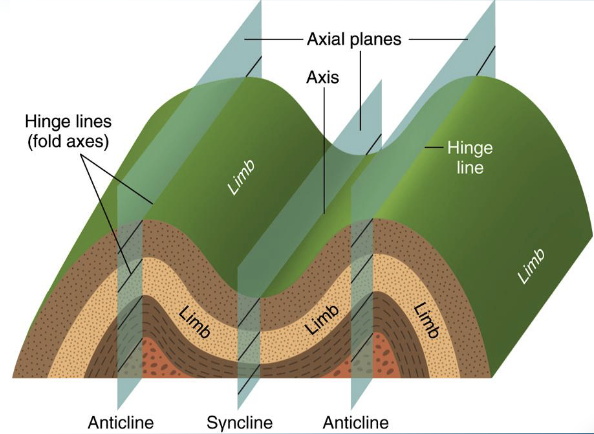
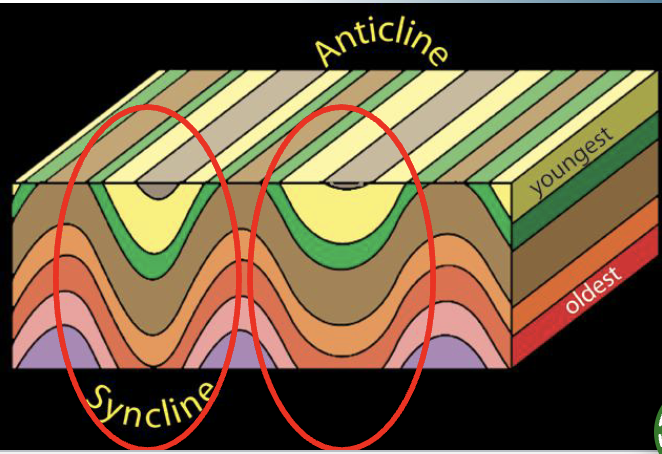
anticlines
an upturning fold (makes an A like shape)
youngest rocks are on the edges
oldest rocks closest to axial plane (middle) of fold
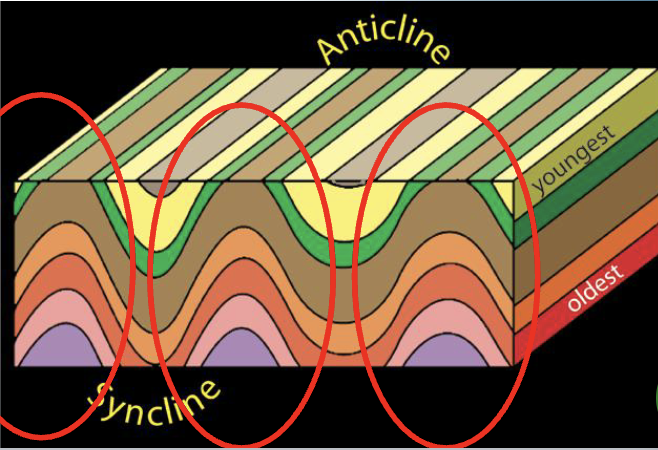
syncline
downturning fold (makes a U shape)
youngest rocks will be in the middle of fold near axial plane
oldest rocks are on the outside
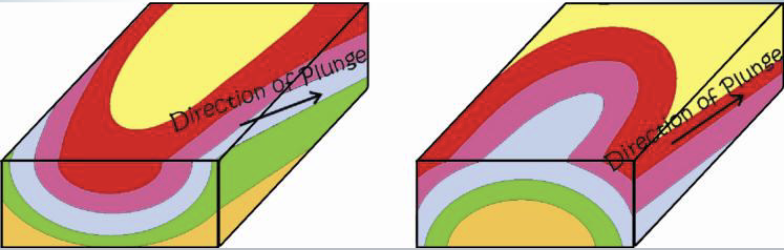
plunge
when the fold axis of an anticline/syncline is not completely horizontal
folds are not flat (planar)
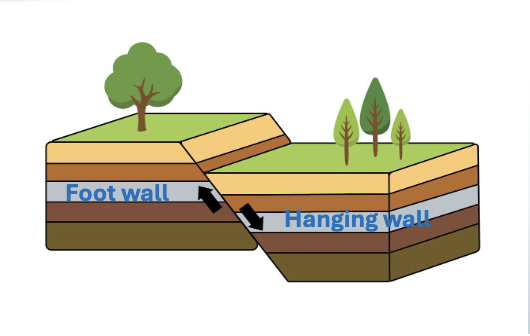
normal faults
rocks break (brittle deformation) which results in faulting
occur in rifting zones, form from extension (vertical displacement)
hanging wall moves down relative to foot wall
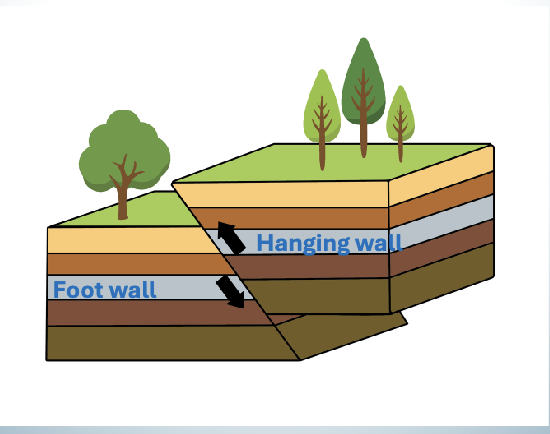
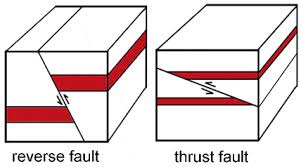
reverse faults
form from compression
hanging wall moves up relative to foot wall
thrust faults
type of reverse faults
low dip of faulting, think mountain building zones
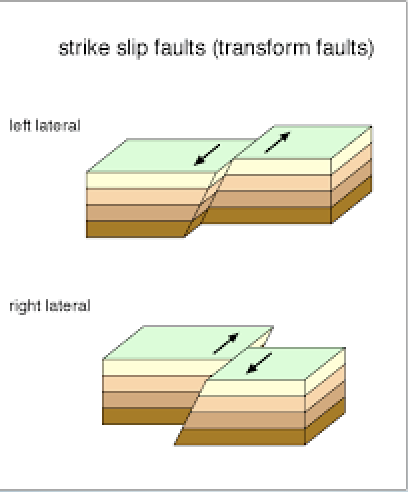
strike slip
formed by shear stress, side to side displacement rather than vertical
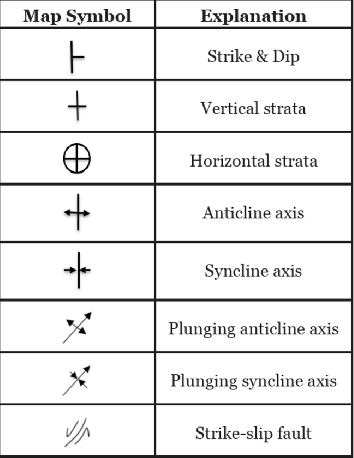
geologic map symbols
“strata” refers to rock beds
fold axis
where the bend of the fold is sharpest
axial plane
divides the fold along its axis
limbs
flanks of the fold
horizontal strata
 Note
Note  Flashcards (36)