APUSH Key Concepts: Judiciary, Economy, and Social Movements
 Call Kai
 Learn
Learn Practice Test
 Spaced Repetition
 Match
Match Flashcards
 Knowt Play
1/24

There's no tags or description
Looks like no tags are added yet.
Name | Mastery | Learn | Test | Matching | Spaced | Call with Kai |
|---|
No analytics yet
Send a link to your students to track their progress
25 Terms
Judiciary Act of 1801
This law reorganized the federal court system, getting rid of the Supreme Court's circuit court duties, reducing the number of justices, and also creating 16 new circuit court judgeships.
Marbury v. Madison (1803)
Marbury v. Madison was a landmark Supreme Court case which established the principle of judicial review. This meant the Supreme Court has the power to declare laws that are passed by Congress as well as actions of the President unconstitutional.
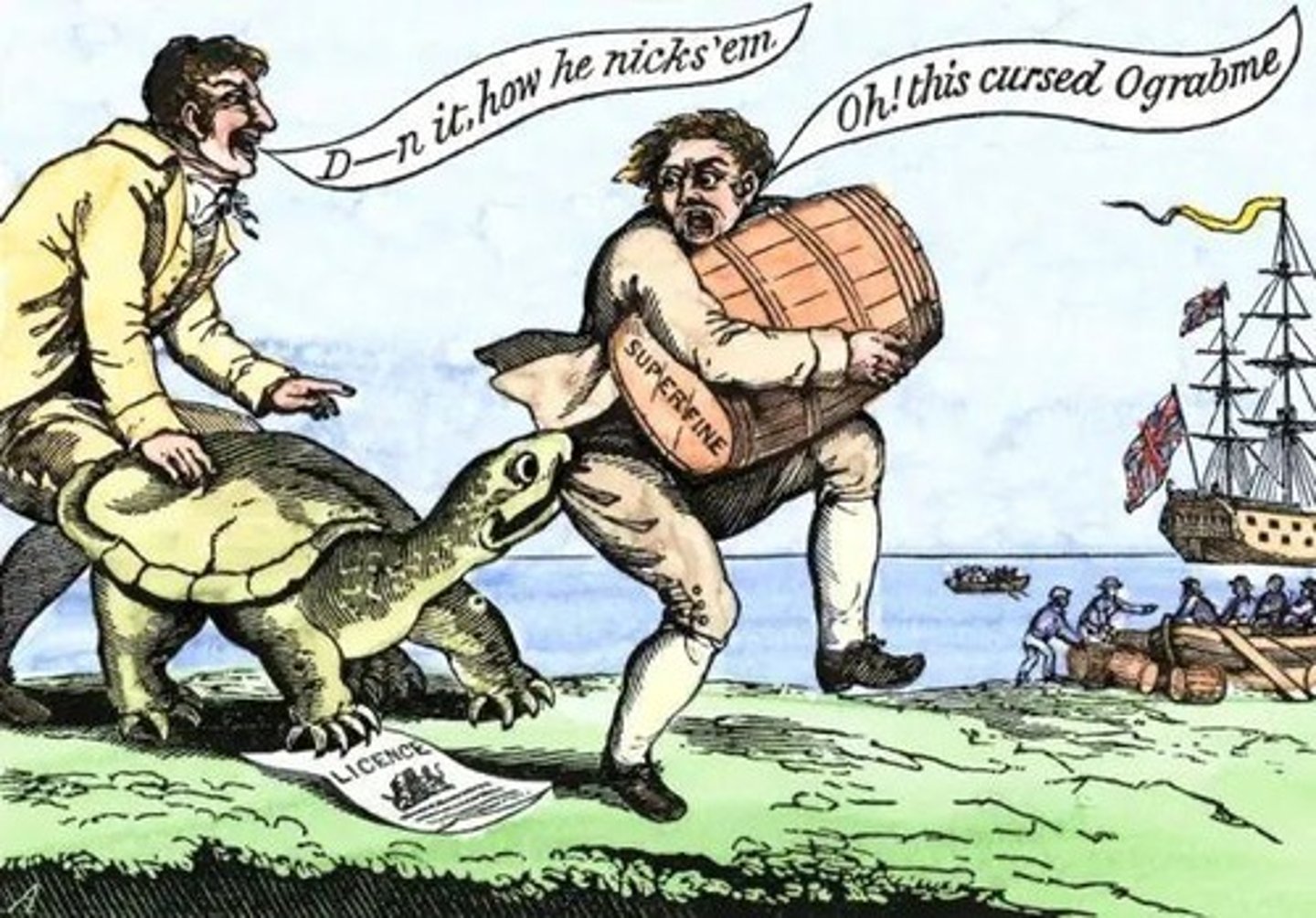
Embargo Act of 1807
The Embargo Act was a U.S law which banned American ships from exporting cargo to foreign ports.
McCulloch v. Maryland (1819)
McCulloch v. Maryland was a Supreme Court case established two principles: the government has 'implied powers' under the constitution and states can't tax or interfere with federal institutions.
Gibbons v. Ogden (1824)
Gibbons v. Ogden forbade states from executing any legislation that interfered with Congress's right to regulate commerce among states.
Market Revolution
The Market Revolution was a period of the early 19th century when the U.S economy shifted from agrarian to a commercial, factory-based economy.
Panic of 1819
The Panic of 1819 was the first major financial crisis in the U.S that was characterized by a collapse in the post-war economy, unemployment, bankruptcies, and an increase in poverty.
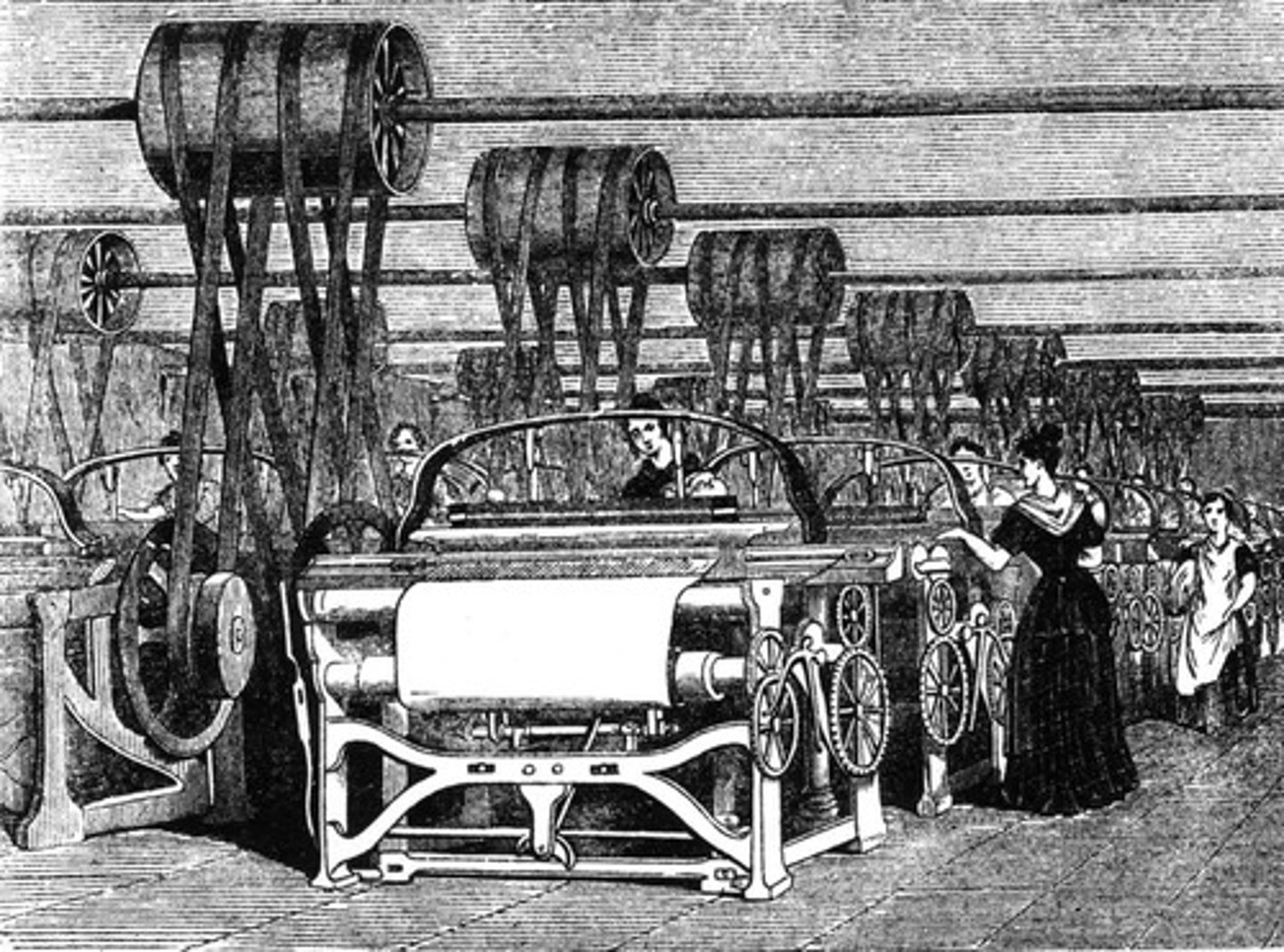
Waltham-Lowell System
The Waltham-Lowell System was a textile manufacturing system where all steps of cloth production occurred under one singular roof.
"Positive Good"
"Positive Good" was a pro-slavery argument which argued that slavery was beneficial for the enslaved and society, rather than viewed as a 'necessary evil'.
Paternalism
Paternalism is the idea which justified slavery by portraying slaveholders as father figures who provided care, guidance, and 'Christian morality' of the enslaved people, who were seen as 'incapable' of caring for themselves.
Missouri Compromise (1820)
The Missouri Compromise was multiple federal laws passed to maintain the balance of slave and free states in the U.S by admitting Missouri as a slave state and Maine as a free state.
American System
The American System was an economic plan by Henry Clay that consisted of three parts: a national bank, a protective tariff, and federal funding for improvements such as roads and canals.
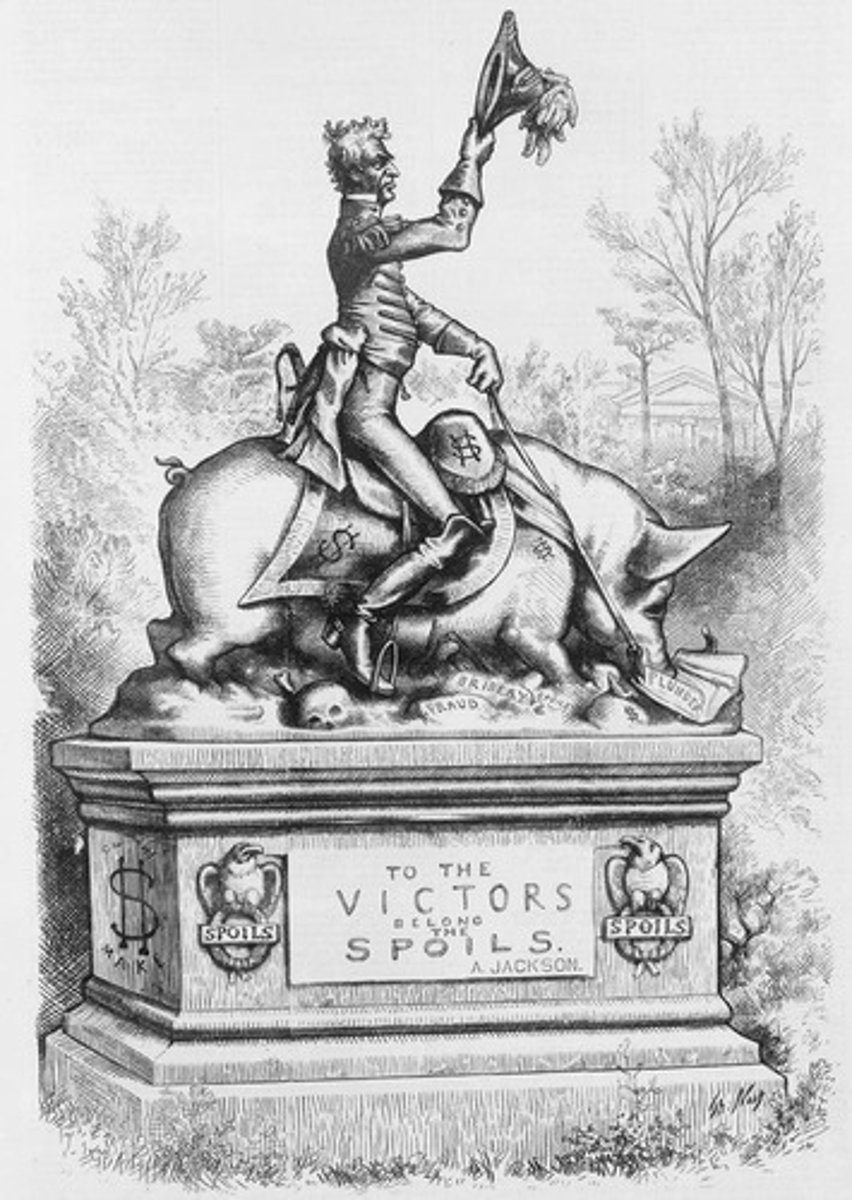
Spoils System
The Spoils System is the practice of a successful political party giving public office to its supporters.
Nullification
Nullification is the act of declaring something void or ineffective. Such as a state nullifying a federal law they deem unconstitutional.
Indian Removal Act (1830)
The Indian Removal Act of 1830 was authorized the government to negotiate treaties to remove indigenous tribes from their ancestral lands to territory in the west.
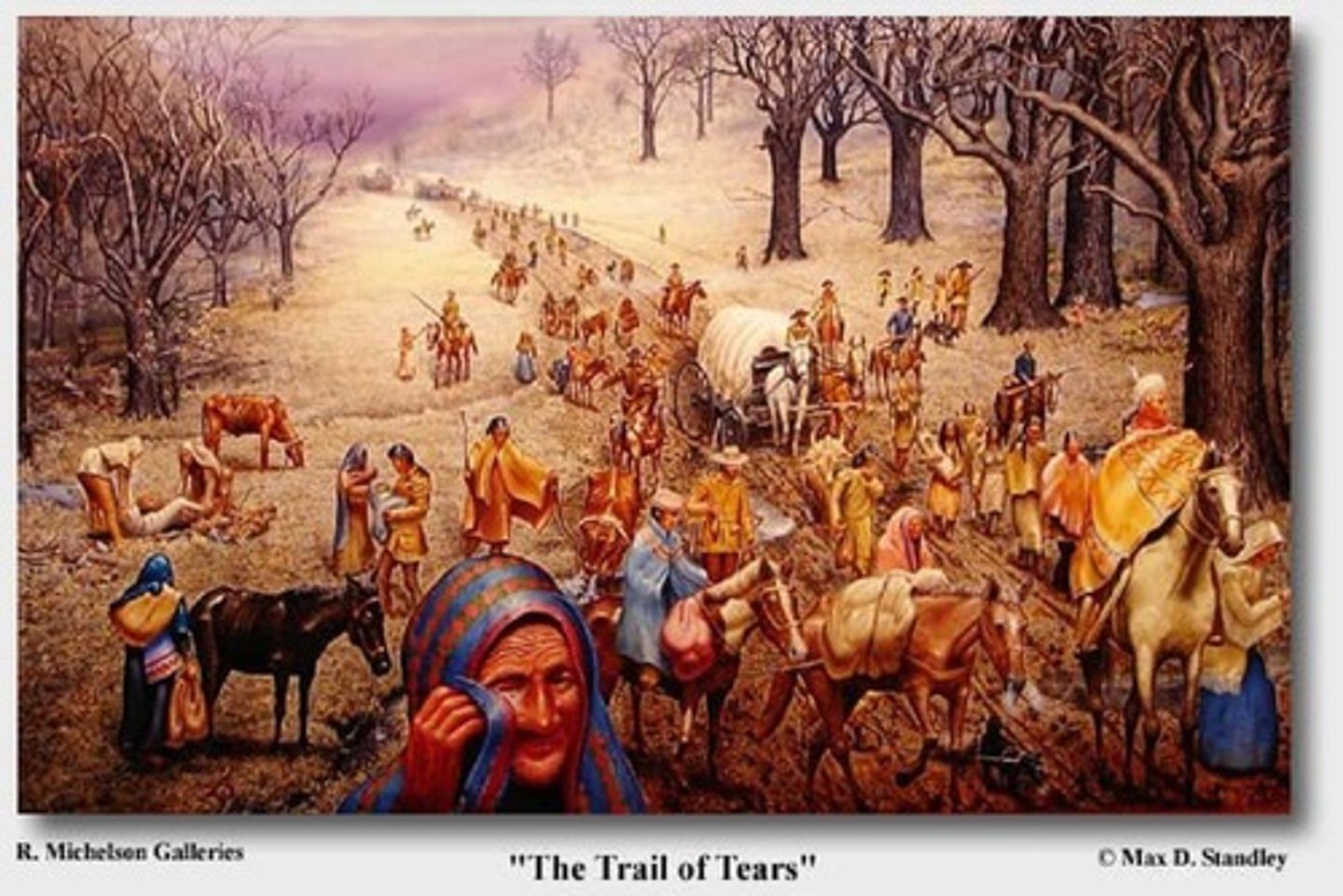
Trail of Tears
The Trail of Tears was the forced displacement of 60k people of the 'Five Civilized Tribes' between 1830 and 1850. And it resulted in widespread suffering, diseases, starvation, and death of thousands.
Whig Party
The Whig Party was a major political party that was formed in the opposition of President Andrew Jackson and his Democratic Party.
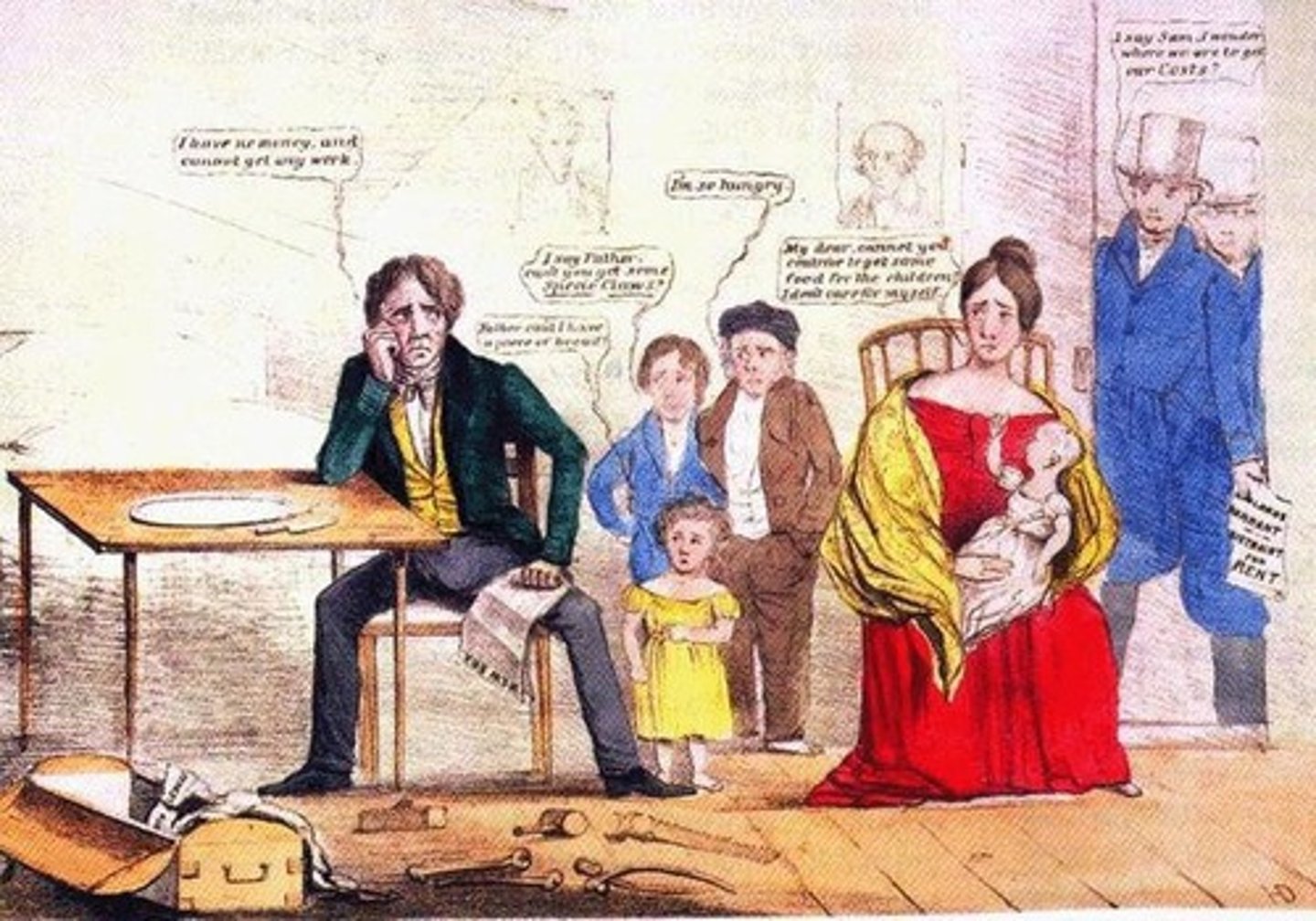
Panic of 1837
The Panic of 1837 was an economic depression in the U.S that was caused by multiple factors including the collapse of land and cotton speculation fueled by easy credit, and the Specie Circular order which required payment for public land in either gold or silver.
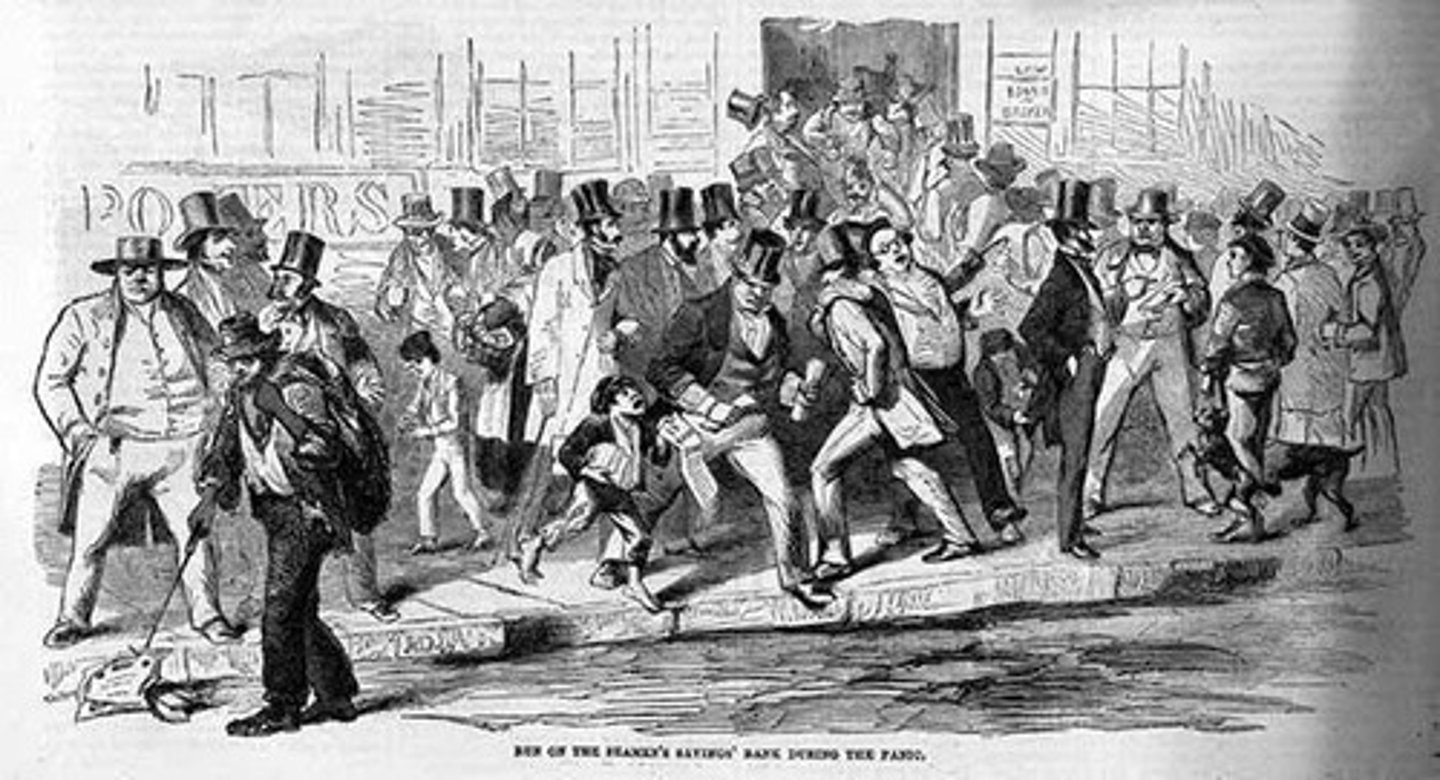
Specie Circular
The Specie Circular was an order by Andrew Jackson which required the payment of public lands to be made in either gold or silver, but not paper money. This order caused a financial crisis and was repealed in 1838.
Second Great Awakening
The Second Great Awakening was a Protestant religious revival movement in the early 19th century which placed a focus on emotional and individual religious experiences.
Romanticism
Romanticism was a literary and artistic movement that focused on emotion, individualism, and the beauty of nature over reason and logic.
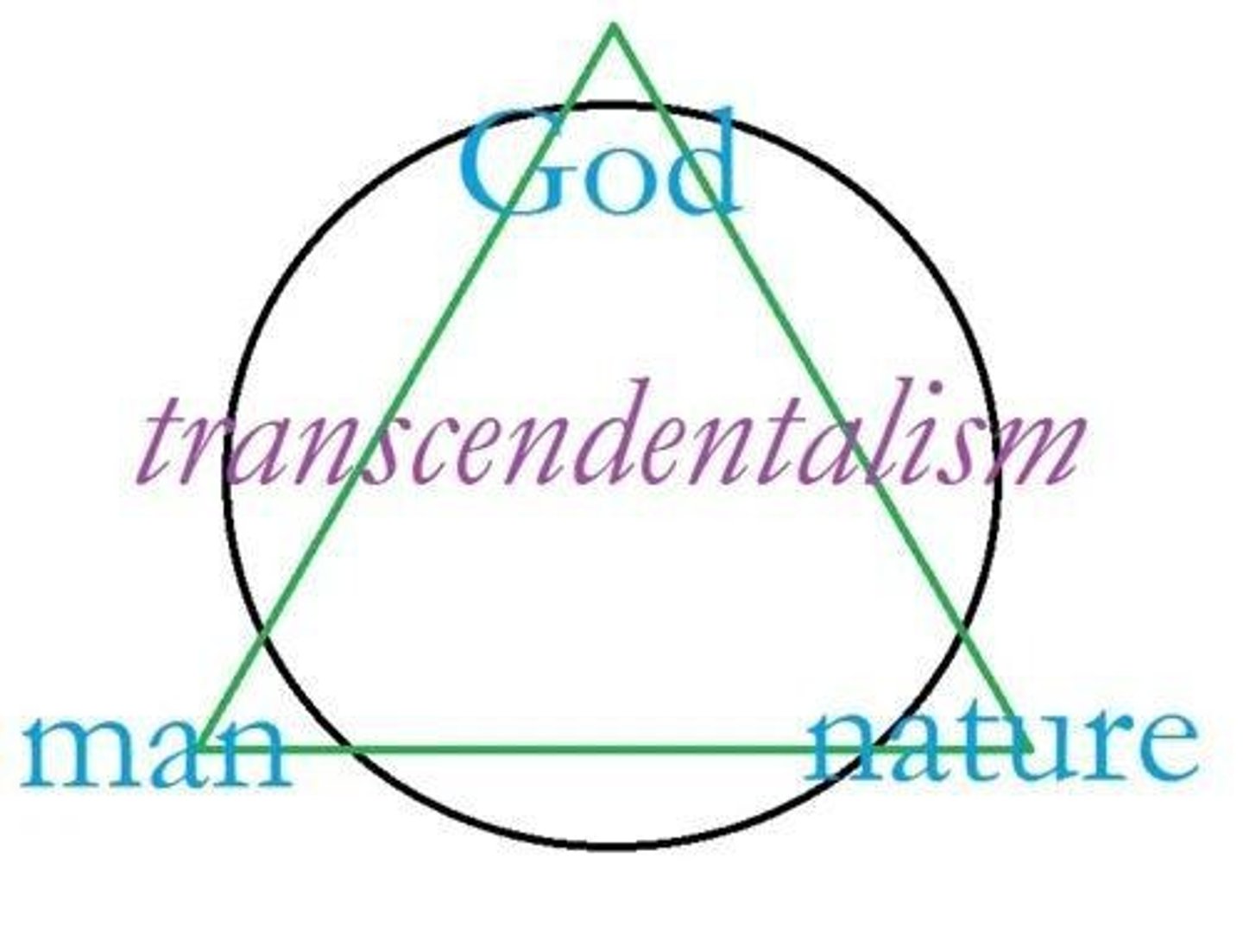
Transcendentalism
Transcendentalism was a New England philosophical movement which emphasized individualism, self-reliance, and the inherent good of people and nature.
Utopias
Utopias were experimental communities in the 19th century to create the ideal society surrounded by cooperative living.
Cult of Domesticity
The Cult of Domesticity was a 19th-century idea that defined women's roles as homemakers and caregivers that were responsible for moral guidance in the home.
Seneca Falls Convention
The Seneca Falls Convention of 1848 was a convention held by Elizabeth Cady Stanton that called for women's equality through the Declaration of Sentiments.

