Biol 1020 - Lectures 34,35,36: Population Genetics and Speciation
 Studied by 0 people
 Call Kai
 Learn
Learn Practice Test
 Spaced Repetition
 Match
Match Flashcards
 Knowt Play
1/59

There's no tags or description
Looks like no tags are added yet.
Name | Mastery | Learn | Test | Matching | Spaced | Call with Kai |
|---|
No analytics yet
Send a link to your students to track their progress
60 Terms
Population
a group of the same species living in a specific environment/area
each individual in a population has different combinations of alleles for each gene
some genes will only have one allele in the population
some genes will have a few alleles in the populatioon
some genes will have many alleles in the population
Microevolution
the change in allelic frequencies in a population over time
some genes will only have one allele in the population
some genes will have a few alleles in the population
some genes will have many alleles in the population
Natural selection works on ______, evolution works on ______
individuals: beneficial alleles lead too survival and reproduction, passing those alleles to progeny.
populations: as beneficial alleles get passed on and poor alleles dont, over generations the ratio of beneficial to detrimental alleles shift in the population
What does genetic variation cause?
changes in phenotypic variation based on changes in genes/DNA sequences
nucleotide variability results in a small fraction of phenotypic changes due to the preseence of introns presence between the coding regions of DNA exons
point mutations in introns result in neutral variation
Sources of genetic variation
new alleles arising through mutations
can be harmful or masked in the heterozygote
heritable changes in germline cells, non-heritable in somatic cells
errors in meiosis during gametogenesis
spontaneous mutations through errors in DNA replication
Induced mutations through exposure to mutagens
sexual reproduction during crossing over, independent assortment, and random fertilization
How did human globin genes evolve
duplication events
a single globin gene underwent duplication and divergeencee
mutations in the diverged globin genes resulted in two different functioning gens on two different chromosomes
Gene pool
consists of all copies of every type of allele at every locus in all members of a population
fixed alleles
occur when there is only one allele for a particular locus in a population (ie., all individuals are homozygous for that trait)
Hardy-Weinberg Equilibrium conditions
no mutations
must have random mating
no natural selection
population size must be large
no gene flow (iee. no migration of individuals in or out of the population)
HW: allelic frequencies
p+q = 1
determine alleles: a or A
p = proportion of dominant alleles
q = proportion of recessive alleles
HW: genotypic frequencies
1 = p2 + 2pq + q2
determine geneotype: AA, Aa, or aa
p2= proportion of homozygous dominant (AA)
q2= proportion of homozygous recessive
2pq = proportion of heterozygous (Aa)
Genetic drift
the change in frequency of an existing gene variant in the population due to random chance.
Think of a coin flip x10: more likely to get deviation away from 50% heads:tails, ie. 7:3 wouldn’t be surprising
The same thing happens in populations with small numbers of individuals. Just through chance alone the frequency of alleles can shift around. Alleles can even be lost in the population! This is NOT natural selection.
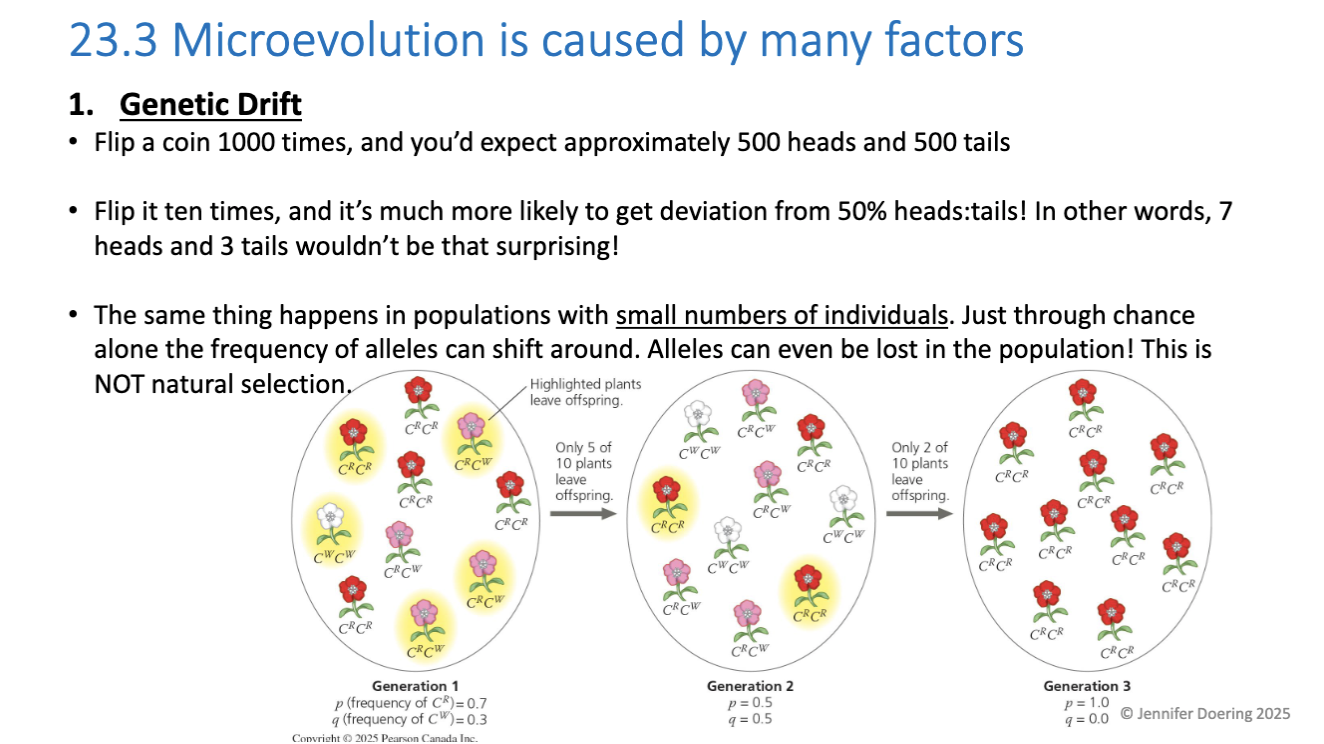
Bottle Neck Effect
an example of genetic drift
a sudden change in thee environment that randomly kills a large number of individuals (and the alleles they carry)
it is random which individuals die and which survive (has nothing to do with survivability)
this can drastically alter the population’s allele frequency
fires, floods, volcanic eruptions, deep freezes, etc, can all be bottlenecking events
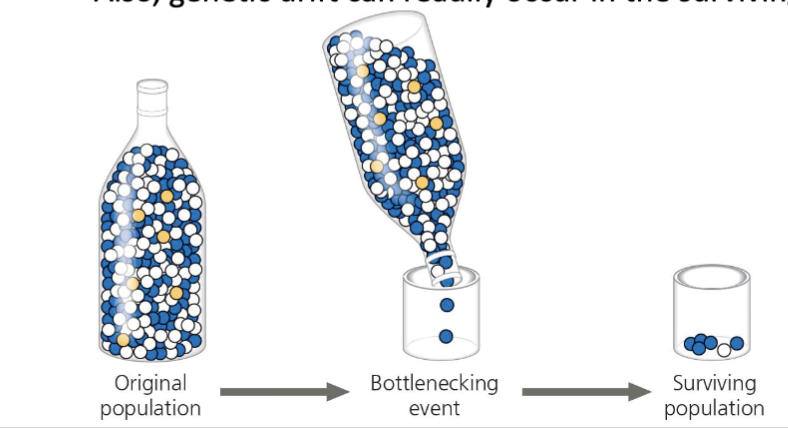
Founder effect
example of genetic drift
when a group of individuals and the alleles they carry move to a new ara and form a new population
original population where they came from still exists
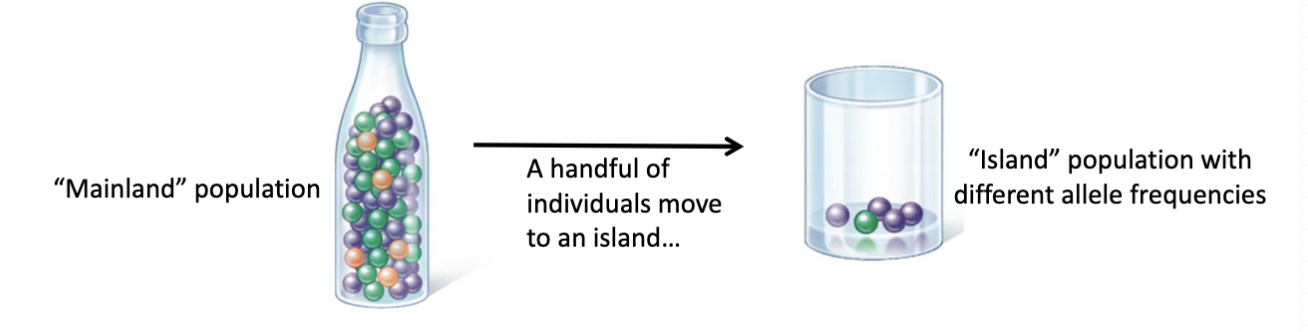
Summary of genetic drift
genetic drift is significant in small populations
chance eventss can cause an allele to be disproportionately over - or underrepresented in the next generation
smaller population = bigger effect
genetic drift can cause allelic frequencies to change at random
an allelee can increase one year due to drift, then decreasee the next year
the change year to year is not predictable
genetic drift can lead to a loss of genetic variation within populations
fluctuations over time can cause alleles to be eliminated in populations
less genetic variation → less evolution (bc natural selection can only act on variation
genetic drift can cause harmful alleles to be fixed
can be fixed at random due to drift
Gene Flow
Transfer of alleles into (immigration) or out of (emigration) population due to the movement of fertile individuals or their gametes (i.e., plant pollen)
Reduces genetic differences between populations because alleles are exchanged
Natural Selection
If a specific allele is beneficial, the frequency of that allele goes up in a population over generations
If a specific allele is harmful, the frequency of that allele goes down in a population over generations
Let’s pretend a new insect species arrives in the area where these plants grow, and it prefers to eat plants with red flowers
Over generations, the CR allele is selected against (because the insects eat those plants before they can make seeds)
The CW allele is selected for (because the insects ignore them, so they can produce seeds by crossing with another white flower or a pink flower)
What kind of selection is this (HINT think back to the beginning of the course)
Relative fitness
the contribution an individual maks to the gene pool of the next genereation relative to the contributions of other individuals
Directional selection
shifts the overall makeup of the population by favouring variants that are at one extreme of the phenotypic distribution
eg. peppered mothss
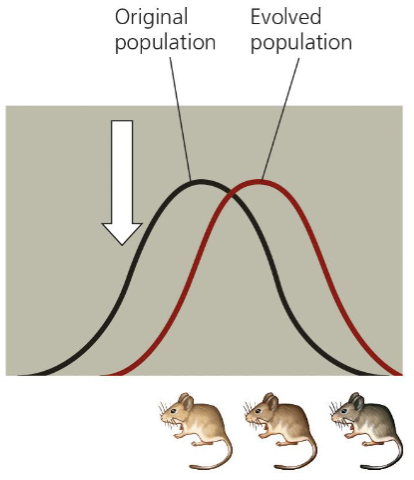
Disruptive selection
favours variants at both ends of the phenotypic extreme
eg. coho salmon: big and small good for fertilization, medium bad
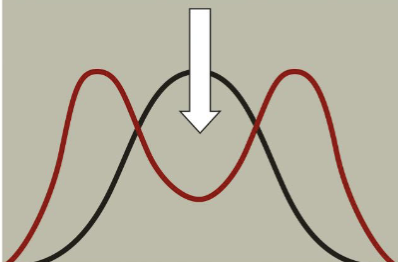
Stabilizing selection
removes extreme phenotypic variations from the population and preserves the intermediate types
eg. birth weight
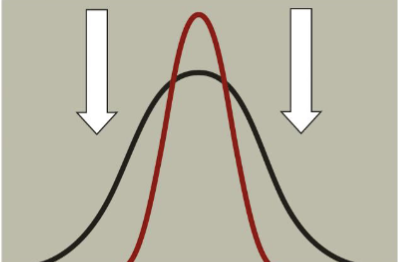
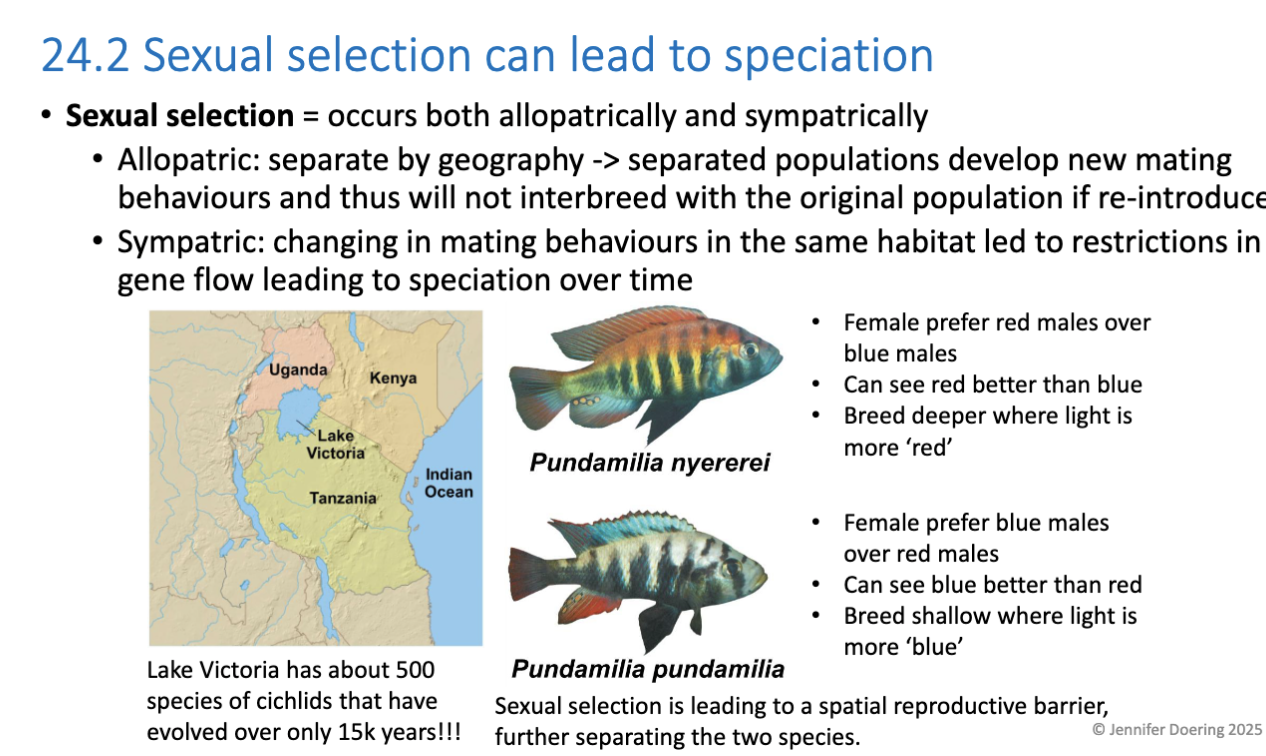
Sexual selection
individuals with certain inherited traits are more likely than others to obtain mates
can result in sexual dimorphism; differences in secondary sexual characteristics between males and females of the same species
Intrasexual selectioon
selection within the same sex where individuals compete directly for mates of the opposite sex
Intersexual selection
“mate choice”, individuals in one sex are choosy in selecting mates
Balancing selection
maintains two or more phenotypic forms in a population
Frequency dependent selection
the fitness of a phenotype depends on how common it is in the population
Heterozygous advantage
heterozygous individuals have great relative fitness than either of the homozygous individuals
natural selection will maintain two or more alleles at that locus
Species definition 1: Biological specieis concept
a species is a group of populations whos members have the potential to interbreed in nature and produce fertile offspring
organisms must reproduce sexually for this definition
must be able to see successful reproductiion (ie. doesn’t work with fossiil record)
formation of new species depends on reproductive isolation
can be a bit fuzzy since hybrids can occur
usually infertile or weak, and dont surivive except when they do (mules, grolar bears)
Species definition 2: Morphological species concept
classification of species based upon physical traits such as size, shape, or other features of morphology, etc
no observation of breeding needed
can use organisms with observation data
can be used for the fossil reecord
can lead to false classifications
some species have a lot of morphological variation (ie. dogs)
Species definition 3: Ecological species concept
views a species in terms of its ecological niche, the sum of how members of the species interact with nonliving and living things within its environment
can accomodate asexual and sexual species
emphasizes disruptive selection as organisms adapt to differeeent environments
What keeps species separate
for two species to be separate, a mechanism must be in place that keeps them from breeding and mixing their genes via gene flow
Prezygotic barriers
prevent mating or fertilization between species
Postzygotic barriers
operate after hybrid zygotees are formed
Habitat isolation
two species that occupy different habitats within thee same area may encounter each other rarely, even though they are not separated by obvious physical barriers (eg. mountains)
Prezygotic barrier
example:
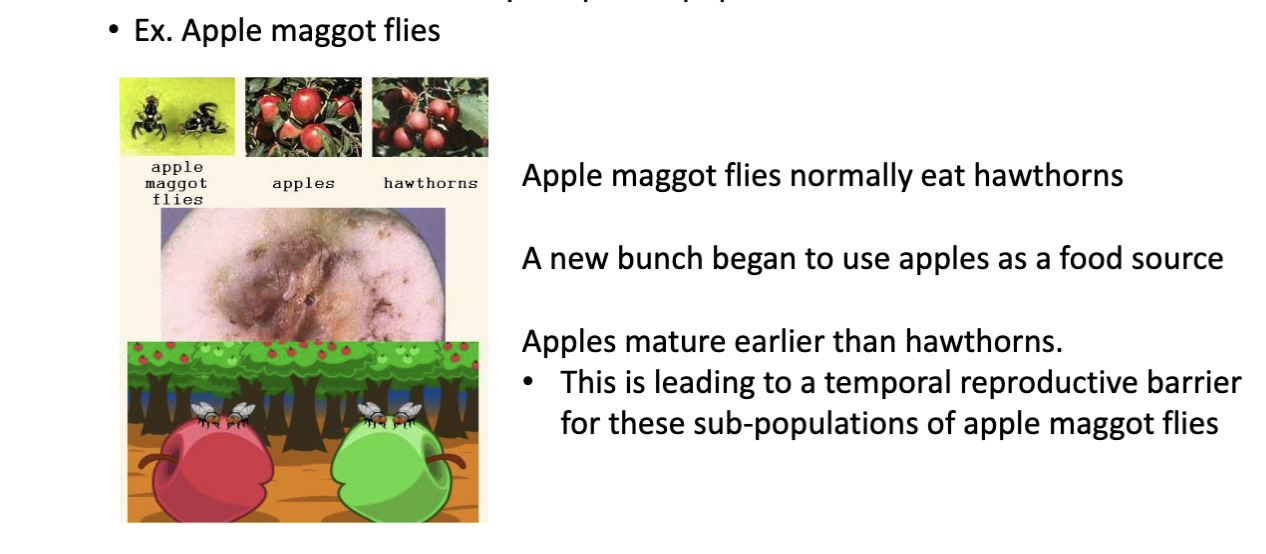
the apple maggot fly feeds on and mates on hawthorns and apples
the blueberry maggot fly feeds and mates on blueberries, even if in the same geographic range
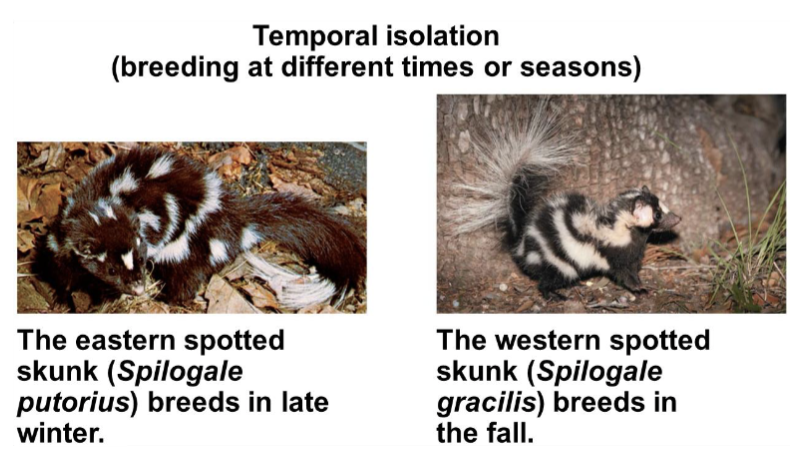
Temporal isolation
species that breed at different times in the day, different seasons, or different years cannot mix their gametes
Prezygotic barrier
eg.
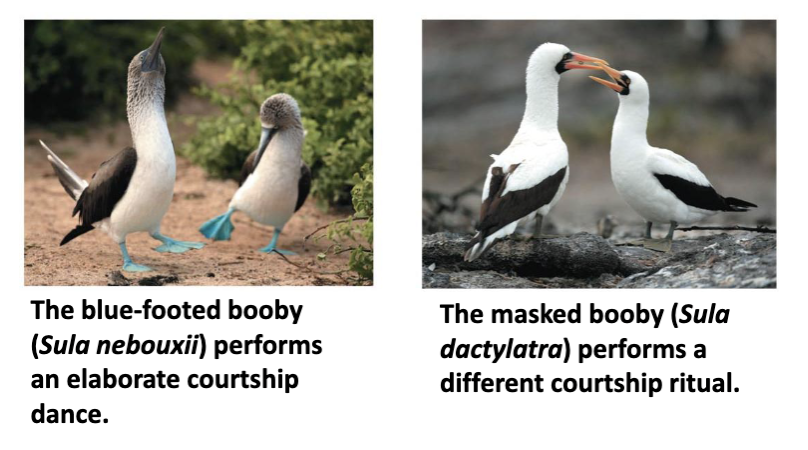
Behavioural isolation
species have different behaviours that are not preferred by individuals of other species
enables mate recognition
Prezygotic barrier
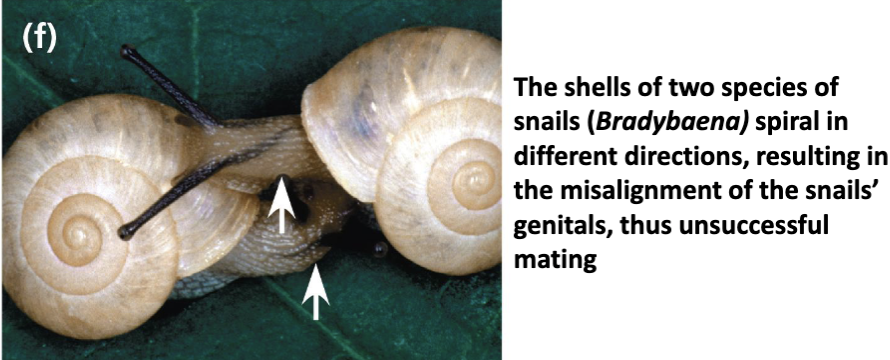
Mechanical isolation
physical incompatibility of reproductive parts; mating is attempted, but morphological differences prevent its successful completion
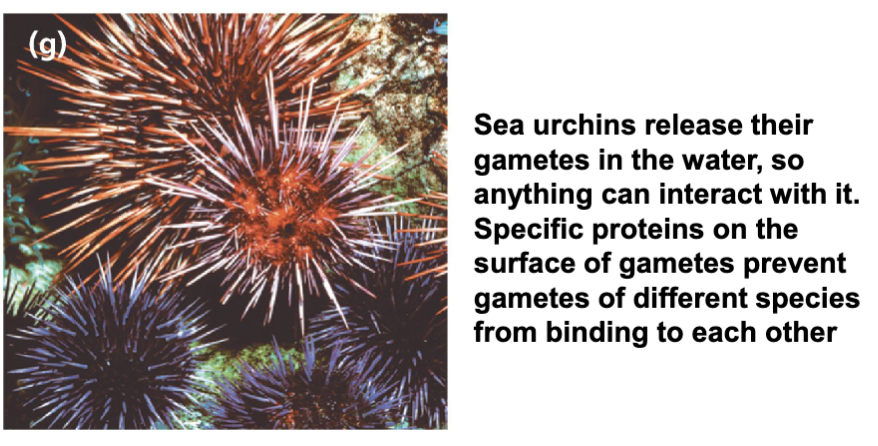
Gametic isolation
molecular incompatibility of eggs and sperm; mating is attempted, but molecular differences prevent its successful completion
sperm of one species might not be able to fertilize the egg of another
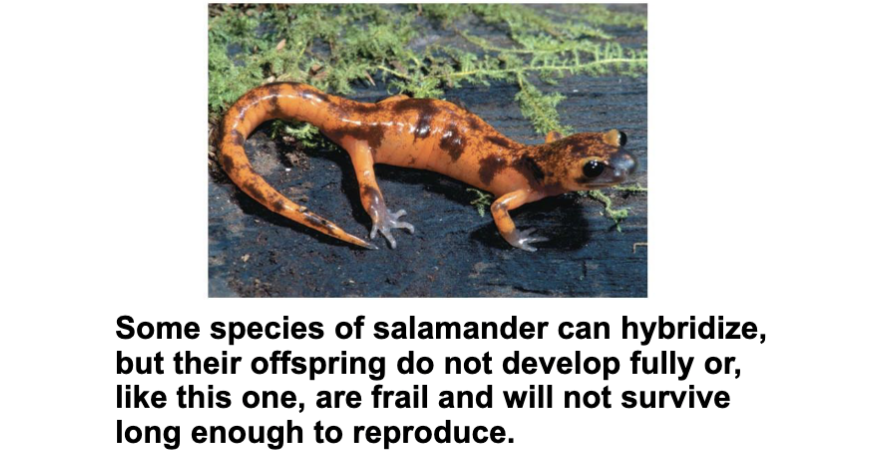
Reduced hybrid viability, development or survival
Postzygotic barrier
hybrids do not develop fully or are unable to reproduce due to interactiion of parental genes
Reduced hybrid fertility
Postzygotic barrier
hybriids, even if vigorous (healthy) cannot produce offspring
Hybrid breakdown
Postzygotic barrier
some first generation hybrids are fertilee and viablee, but when they breed with one another or with the parental species, the F2 generation are feeable or sterile
Allopatric speciation
when a population is divided into geographically isolated populatiions due to changes in geography or water bodies
a geographic barrier separates two populations of the same species, restricting gene flow
often, one population is small, leading to:
founder effect
genetic drift in common
differential environmental pressures between the two locations can trigger natural selection
allele frequencies shift, mutations can form new alleles, new genes through duplication, and new functions
Sympatric speciation
when a population is divided without geographic isolation
can arise through polyploidy, habitat differentiation, or sexual selection
polyploidy
cells/organisms contain more than two paired homologous sets of chromosomes
autoploidy
doubliing of chromosomes in the same species (most common in plants)
allopolyploidy
hybridization of two different species, followed by cell division error
habitat differentiaiion
when a subpopulation of a speciess start to exploit a habitat or resourcee not used by the parent population
In a population of peacocks, a peaheen selectively chooses a peacock bassed on how shiny and large his tail feathers are. Which assumption of Hardy Weinbeerg doees this violate?
a. random mating
b. large populatioon
c. no mutations
d. no gene flow
a. random mating
In canada, 1 in 12000 births result in a child with PKU. PKU iis a recessive inherited disease in which a person can’t metabolizee phenylalanine propeerly
What percentage of the population are heterozygote carriers of the diseasee causing recessive PKU allele
Which of the following describee the effect oon the gene pool following a catastrophic reduction in population size
a. founder effect
b. disruptive selection
c. bottleneck effect
d. mutation
e. gene flow
c. bottleneck effect
Which of thee following is not like the other
a. genetic drift
b. founder effect
c. bottleneck effect
d. gene flow
d. gene flow
A new insect arrivees in thee arae where snapdragon plants grow, and it prefeers to eat plants with red flowers, but not the pink or white oness. Over generations, the Cr allele is selecteed against (because the insects eeat thosee plants beforee they can make seeds). The Cw allele is selected for (because the insects ignore them, so they can produce seedds by crossing with a white or pink flower). What kind of selection is this?
a. disruptive
b. directional
c. balancing
d. stabilizing
b. directional
All the deviations from Hardy Weinberg Equilibrium we discussed causee thee alleliic frequencies in a population to changee, however all are not equal in their effect. Which of the following is the greatest driveer for microevoolutioon
a. genetic drift
b. gene flow
c. bottleneck effect
d. natural selection
e. mutatiioons
d. natural selection
Which species concept does not require evidence of reproduction
a. biological species
b. ecological species
c. morphological species
c. morphological species
Which is a way we can define a species
a. biological species
b. morphological speecies
c. chemiospeciees
d. ecological species
e. all of the above
f. none of the above
e. all of the above
sockeye salmon return to their spawning grounds with members of their own cohhort; those fish who hatched in the same year. The prezygotic barrier preventing salmon from different cohorts matiing with each other is called
a. temporal isolation
b. habitat isolatiion
c. behavioural isolation
d. mechanical isolation
e. gamete isolation
a. temporal isolation
Which kind of speciation does not require geographic isolation
a. allopatriic
b. sympatric
b. sympatric
Which kind of speciation would genetic drift have a more pronouncd effeect on thee population
a. sympatric
b. allopatric
b. allopatric
Which example can leead to both allopatric and sympatric speciiation
a. habitat differnetiation
b. sexual selection
c. polyploidy
d. geographic barrieres
b. sexual selection
 Note
Note  Flashcards (43)