CH 15 muscle movement types
 Call Kai
 Learn
Learn Practice Test
 Spaced Repetition
 Match
Match Flashcards
 Knowt Play
1/19

There's no tags or description
Looks like no tags are added yet.
Name | Mastery | Learn | Test | Matching | Spaced | Call with Kai |
|---|
No analytics yet
Send a link to your students to track their progress
20 Terms
4 factors affecting type of movement synovial joints can produce
muscle orientation + insertion
other muscles on same orientation + insertion
type of joint btwn bones
muscle tension/contraction
recap: name the 6 synovial joint subcategories
hinge
pivot
saddle
plane
condyloid
ball-and-socket
flexion and extension
flexion: bending neck/body
lateral flexion: bending left/right
extension: straightening from flexed position
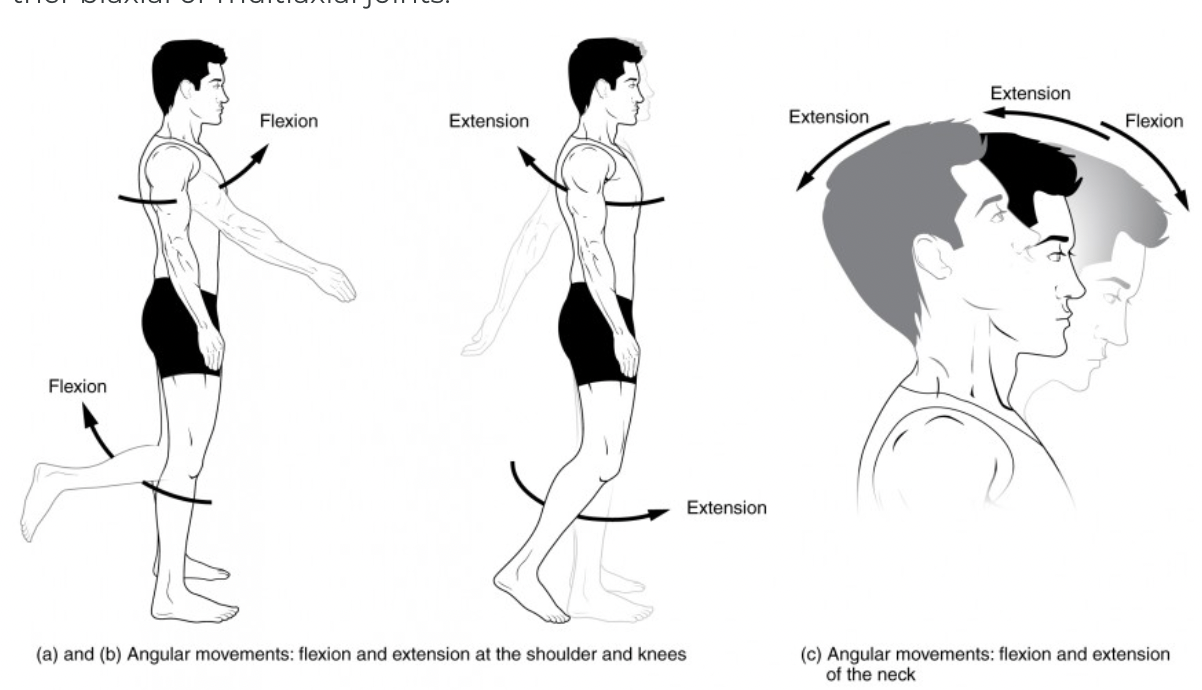
synovial joint types for flexion + extension
hinge (knee, elbow, ankle)
condyloid (metacarpophalangeal/knuckle, radiocarpal wrist)
saddle (sternoclavicular, first carpometacarpal of thumb)
ball-and-socket (shoulder joint, hip joint)
hyperextension, hyperflexion
hyperextension: abnormal extension of joint beyond normal ROM
hyperflexion: excessive flexion at a joint
common synovial joints for hyperextension
hinge joints: knee, ankle, elbow
abduction and adduction
abduction: moving limb laterally away from body midline
ex/ spreading fingers/toes apart
adduction: moving limb medially towards midline
ex/ bringing fingers/toes together
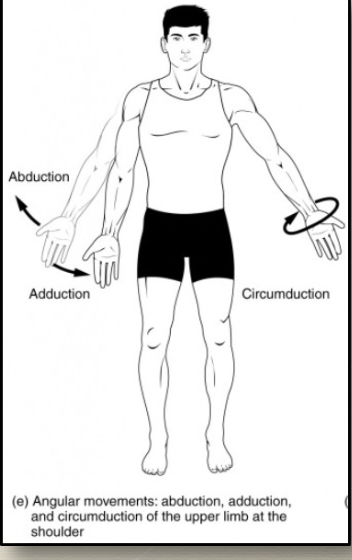
synovial joint types with abduction + adduction movements
condyloid
saddle: sternoclavicular, carpometacarpal of thumb
ball-and-socket: shoulder joint, hip joint
circumduction
movement in circular manner; one end stationary, other in circular motion
involves flexion + extension, adduction and abduction
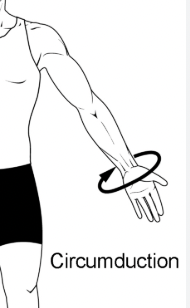
synovial joints involving circumduction
condyloid: metacarpophalangeal finger joints, radiocarpal wrist
saddle: sternoclavicular, first carpometacarpal of thumb
ball-and-socket: hip, shoulder joints
rotation
twisting movement of body part around vertical axis
ex/ shaking head no
moving humerus/femur toward (medial rotation) midline
moving humerus/femus away from (lateral rotation) midline
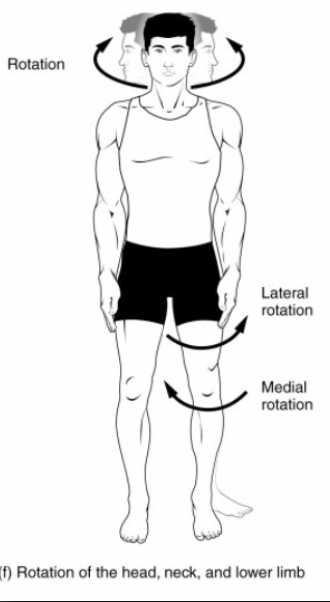
synovial joints with rotation occurring
ball-and-socket: shoulder, hip joints
pivot joint: atlantoaxial joint (C1, C2)
circumduction, difference btwn circumduction + rotation
circular movement; one end of body region stays stationary, other moves in a circular motion
difference btwn rotation + circumduction:
rotation = movement on a single axis, bone spins in place
circumduction = circular path of movement
occurs at both bi-axial and multi-axial joints
supination and pronation, supinated position and pronated position
(movement at forearm)
pronation: motion of forearm from anatomical position to palm-backward position
supination: motion restoration of forearm to palm facing anteriorly (anatomical position)
pronated position: palm faces backwards
supinated position: palm faces forwards (anatomical position)
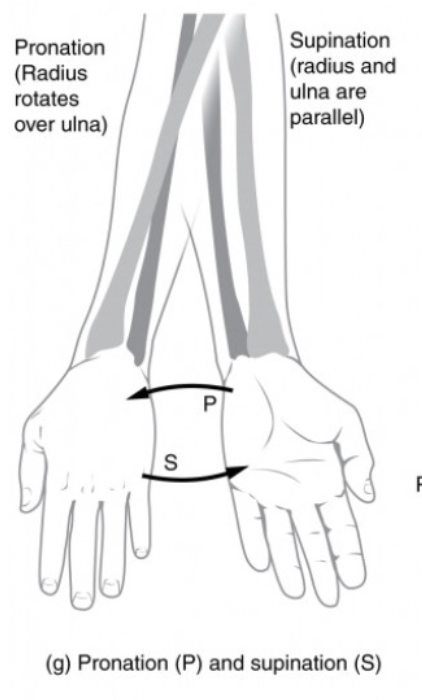
supination and pronation are a _____ movement type
in pronation the ___ rotates over the ____
in supination the ____ and ____ are parallel
[rotational]
[radius] [ulna]
[radius] [ulna]
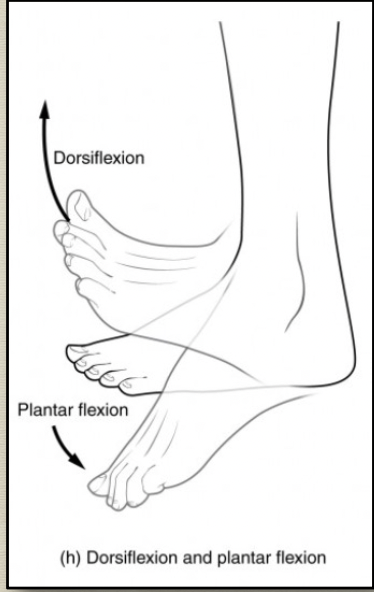
dorsiflexion and plantar flexion
(movement at ankle joint)
dorsiflexion: lifting front of foot
plantar flexion: pointing toes downward/lifting heel of foot
inversion and eversion
inversion: turning foot toward midline
eversion: turning foot away from midline
synovial joints involving inversion/eversion
plane joint: tarsal bones of foot
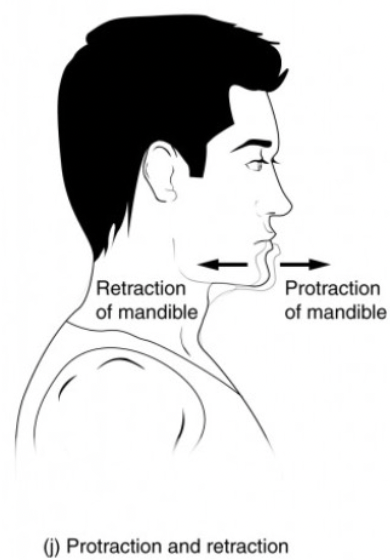
protraction and retraction
protraction: when scapula or mandible move forward
scapula pushing against something
sticking out mandible
retraction: when scapula or mandible move backward
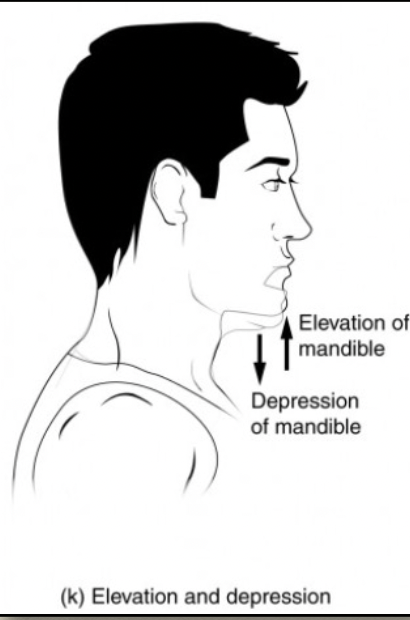
depression and elevation
depression: downward movement of scapula or mandible
elevation: upward movement of scapula or mandible
ex/ chewing something/shrugging shoulders