SDSU ART 259 FINAL EXAM
 Studied by 0 people
 Call Kai
 Learn
Learn Practice Test
 Spaced Repetition
 Match
Match Flashcards
 Knowt Play
1/44

There's no tags or description
Looks like no tags are added yet.
Name | Mastery | Learn | Test | Matching | Spaced | Call with Kai |
|---|
No analytics yet
Send a link to your students to track their progress
45 Terms
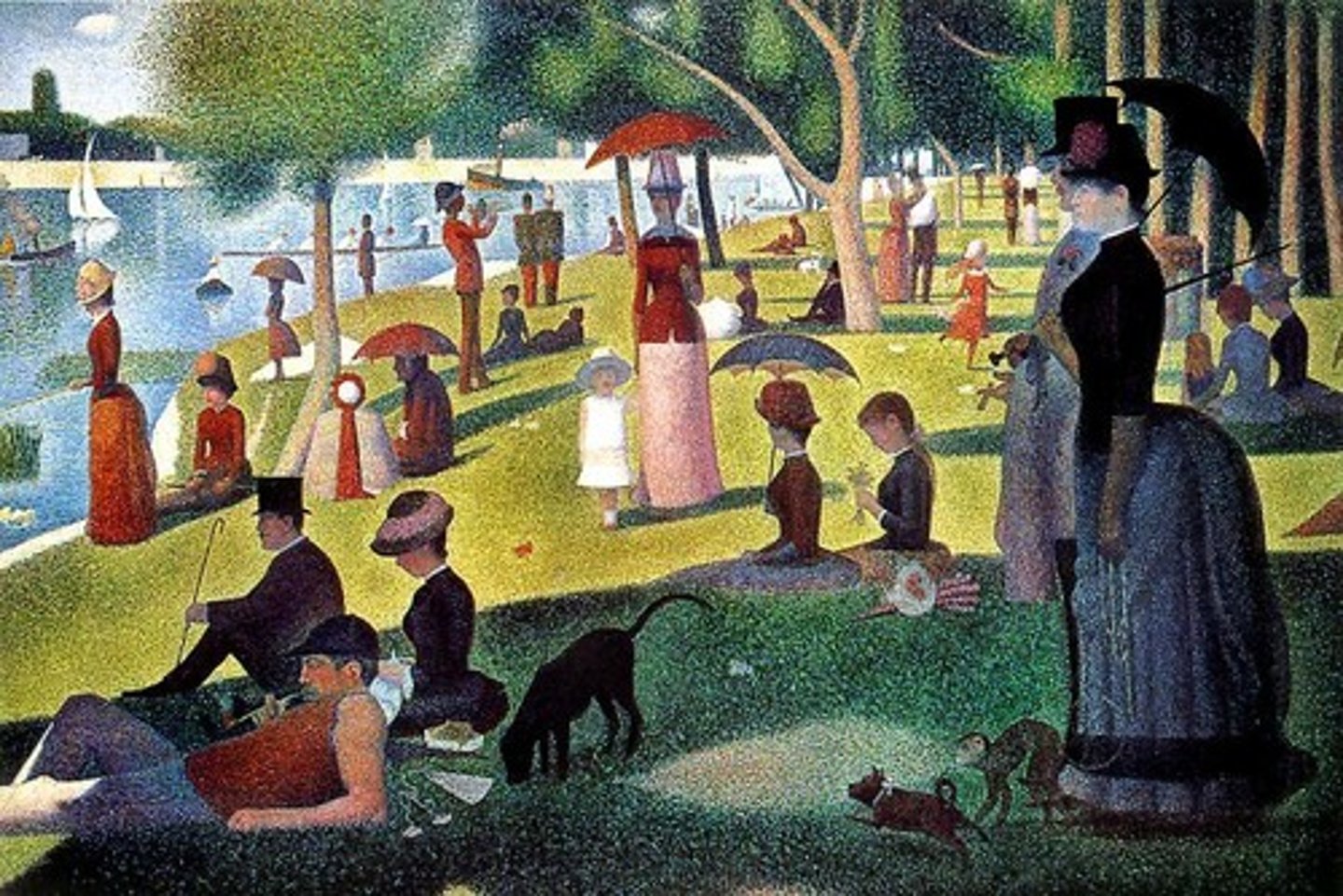
A Sunday on La Grande Jatte
Georges Seurat
1884
Post Impressionism
Medium: Oil on Canvas
Location: Art Institute of Chicago.
Artist: Style is pointillism or divisionism. Very influenced by color theorists. Quite wealthy, came from a stock broking family. Died young. Does scenes of Paris and people enjoying themselves.
Commissioner:
Original Location:
Characteristics: Uses little tiny dots and dashes that are precisely placed. With colors placed intentionally for blending together. Frozen figures. Uses figures and horizontal background to create a perspective grid. Figures are cylindrical.
Function: Trying to study color and light.
Subject: Parisians who have to gone to an Island of La Grande Jatte. Everybody looks at the river.
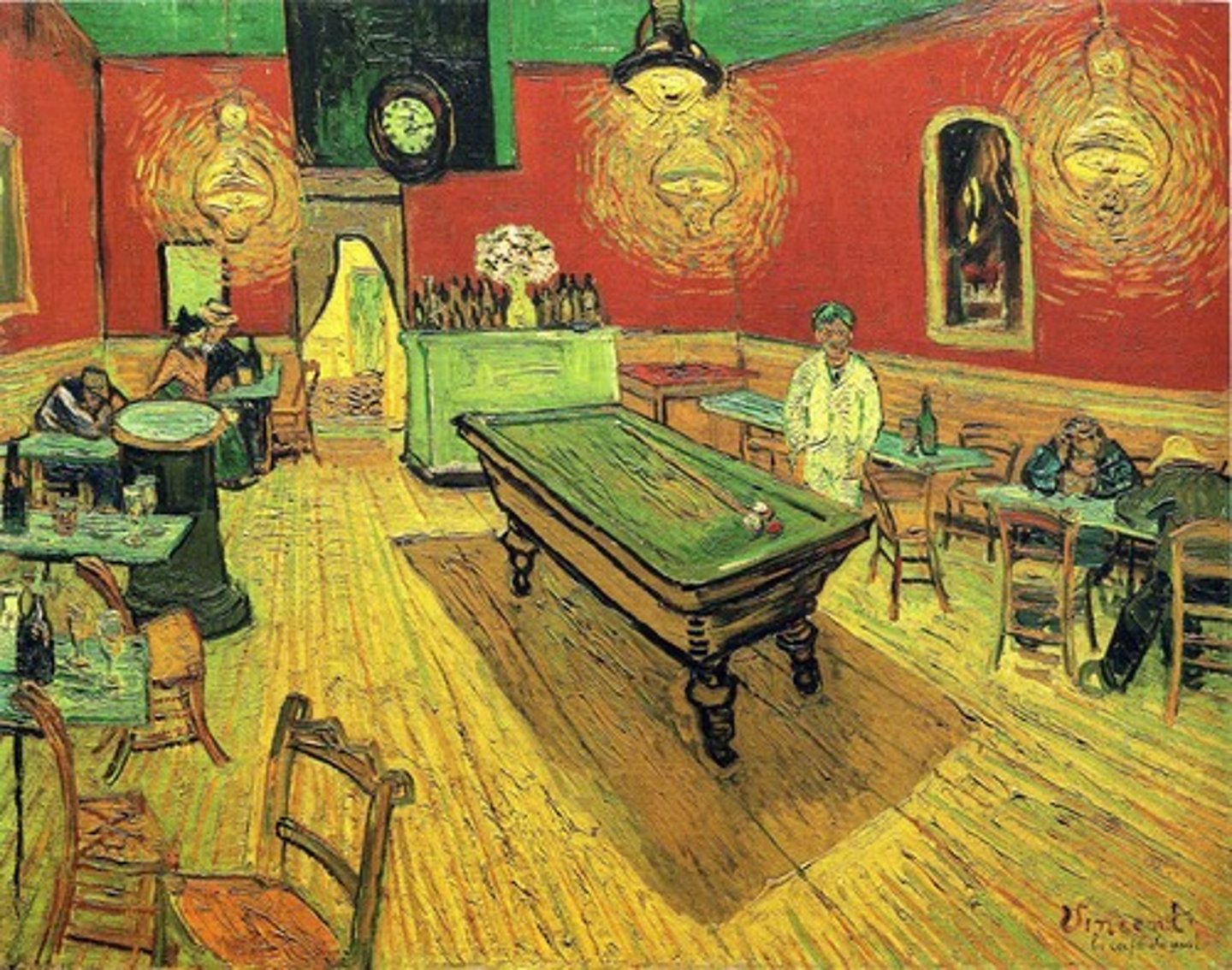
Night Café
Vincent Van Gogh
1888
Post Impressionism
Artist: Painting in which he wrote to his brother Theo about. "I have tried to express the terrible passions of humanity by means of red and green."
Commissioner:
Original Location:
Characteristics: Colors are not the actual colors. Intense greens and intense reds. Uses paint strokes to create rhythm in his paintings.
Function: Makes it uncomfortable to look at by shifting perspectives and intense colors.
Subject: Cafe at night when everybody has been drinking.
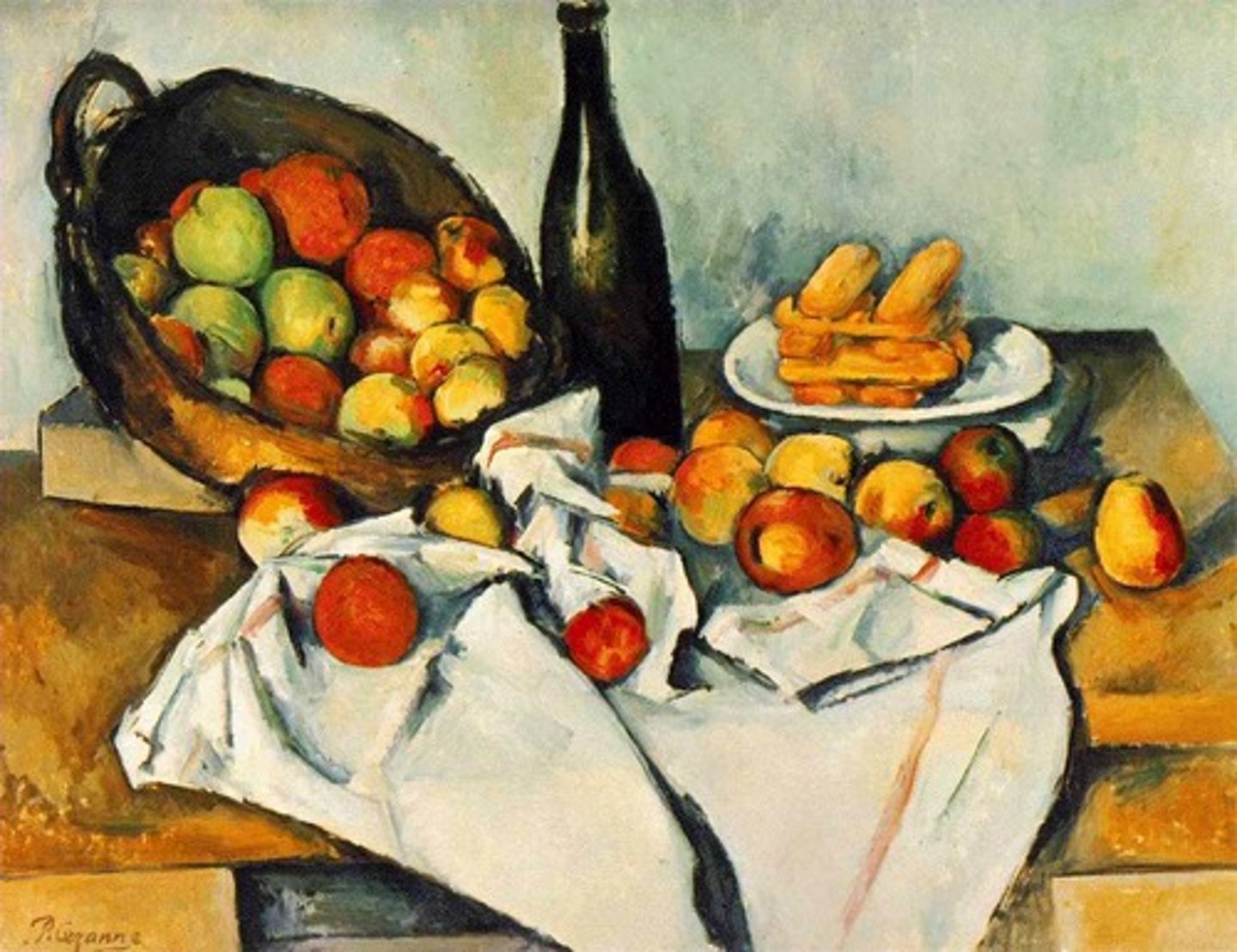
The Basket of Apples
Paul Cézanne
1895
Artist: Spent so long painting his still life paintings that he had to use wax fruits that wouldn't rot.
Commissioner:
Original Location:
Style: Post impressionism
Characteristics: Paints this in multiple perspectives. Posed. Doesn't try to depict reality. Everything is subsumed to his color palette. Table cloth spills over the edges without showing how the table edges don't meet up.
Function: Points of view are changing all the time. Speaks about the artificiality of painting and how paintings are on a flat surface all the time. Subject: Basket of apples and wine.
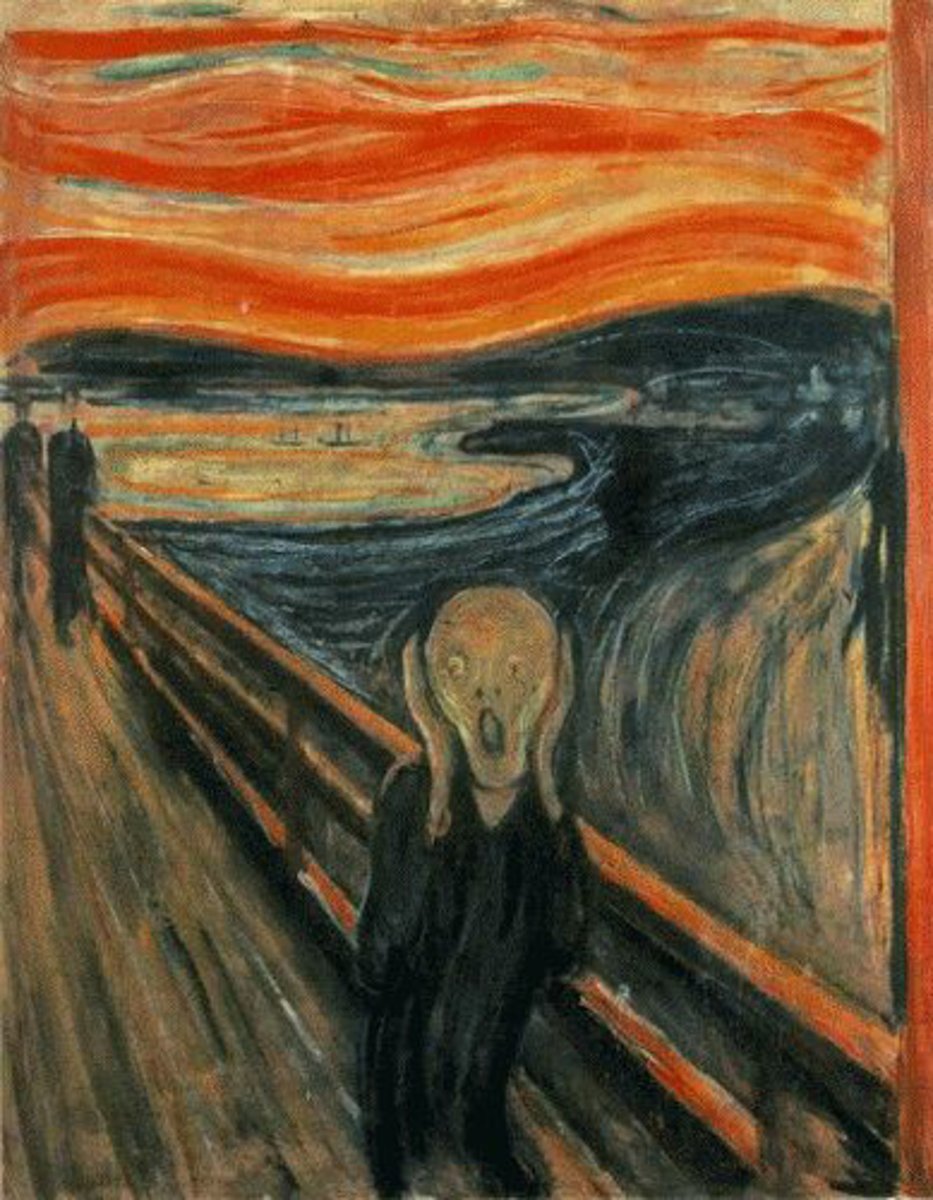
The scream
Edvard Munch
1893
Late Nineteenth-Century painting, sculpture, graphic design
other version 1910 (symbolism--precursor to expressionism) Henri Rousseau, The Dream, 1911.
Artist: From Norway. Considered a symbolist painter but also a precursor of expressionists. Felt pain of modern life. Self taught then won scholarship to study in Paris.
Commissioner:
Original Location:
Function: Originally named 'Despair.' Highlights existential crisis. Tormented by demons in distortion. Thinks about nature of existence and where do we fit.
Subject: Jetty and figure with hands over ears. Eyes and mouth wide open in fear.
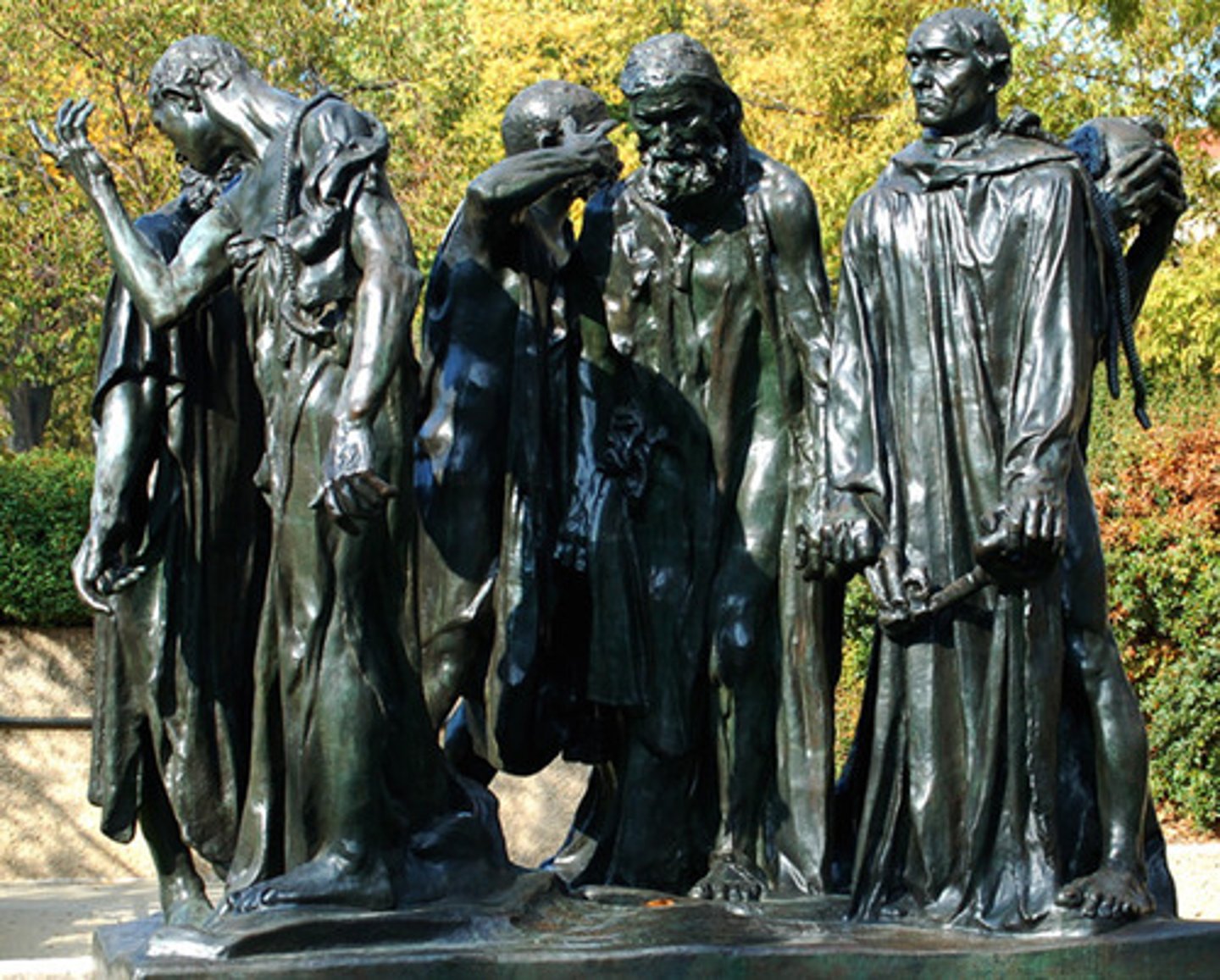
Burghers of Calais
Auguste Rodin
1884-89
Late Nineteenth-Century painting, sculpture, graphic design Artist: Pushed beyond idealized sculptures. Went into aesthetic modes of art at the time.
Commissioner: City of Calais. Public commissions not well received.
Original Location: Hirshhorn Garden, Smithsonian.
Characteristics: Wanted something heroic and greco-roman but Rodin gave them something not idealized. Grim-looking figures.
Function: Testament of sacrificing oneself for a greater cause.
Subject: British took control of Calais by taking siege and starving citizens. 6 of town council burghers sacrificed themselves up to the king so the citizens could survive. King was impressed so he let them live.
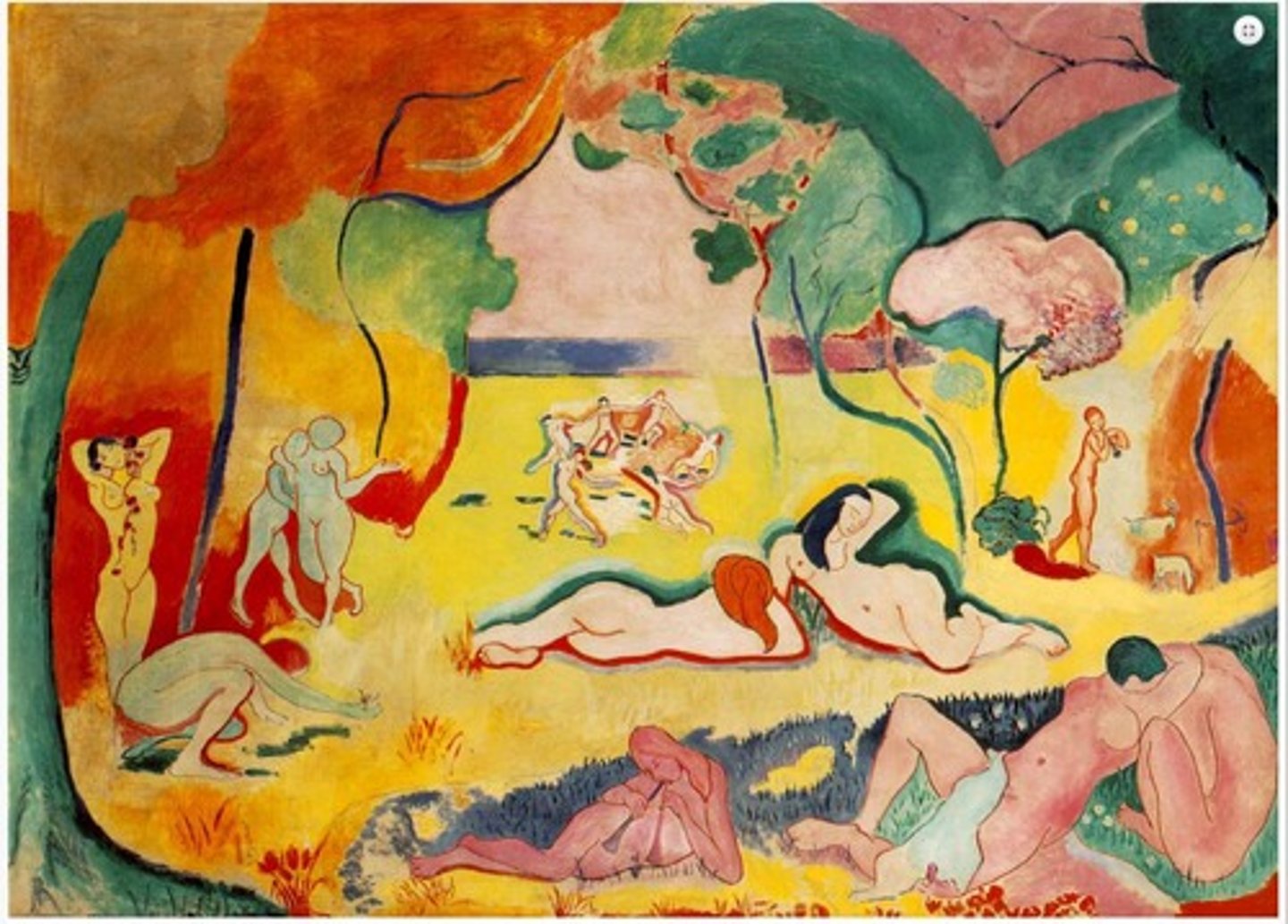
Le Bonheur de Vivre (The Joy of Life)
Henri Matisse
1905-6
Style: Fauvism
Artist: One of group of painters influenced by Cezanne and other post impressionists. Paint like wild beasts "Fauv" in French.
Commissioner:
Original Location:
Characteristics: Bright wild colors. Sense of line. No perspective background. Red, orange, yellow, and pink colors for uplifting.
Function: Thought modern life was going too fast and wanted to spark joy in paintings.
Subject: People enjoying life. Dancing people. Couples. Women. Musicians. All relaxing in wilderness setting bearing no relation in color scheme to natural world.
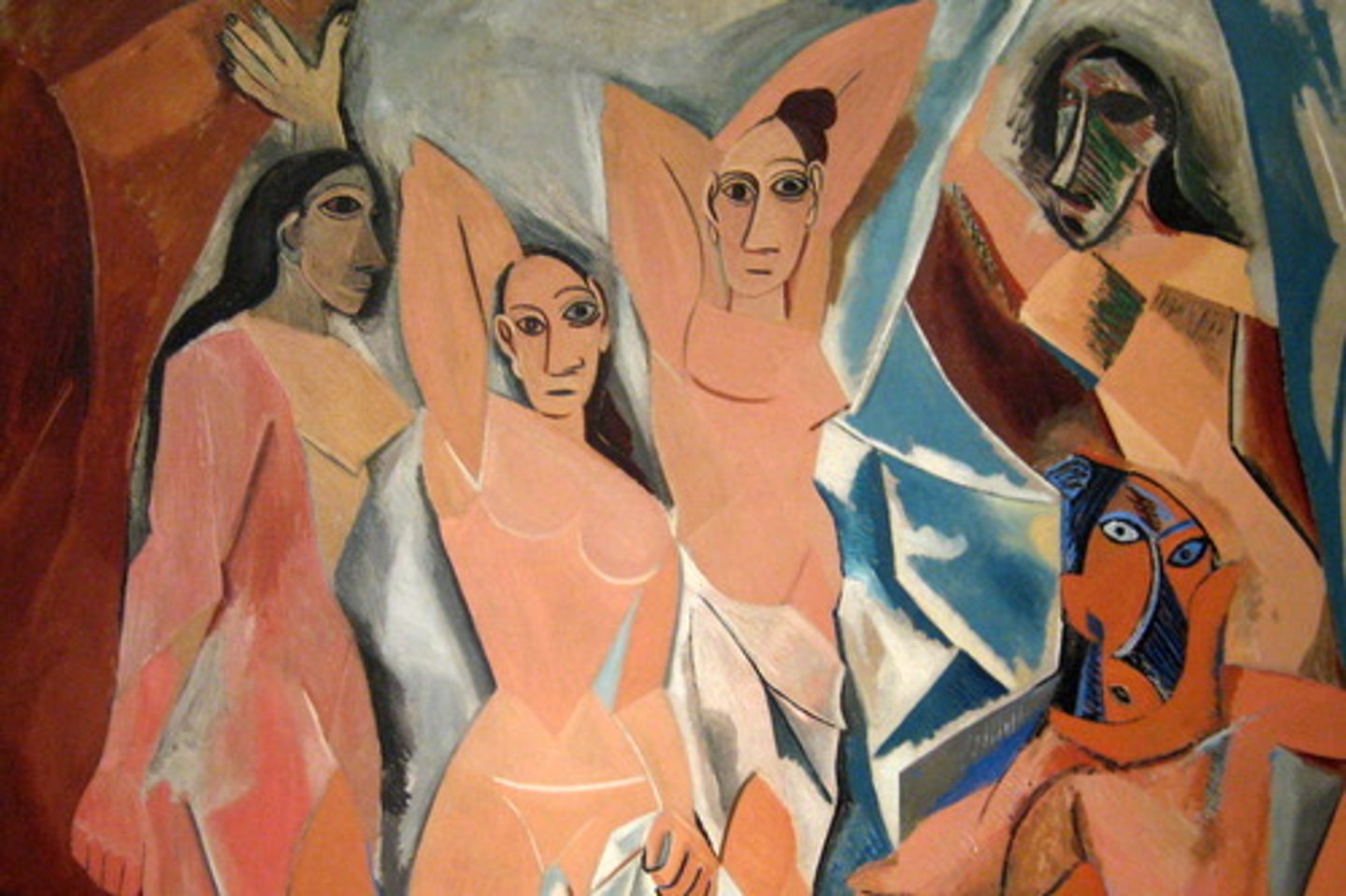
Demoiselles d'Avignon
Pablo Picasso
1907
Artist: Innovative. Tried to do something that didn't reflect back on greco-roman or classical art (borrowing from the past). Avante-garde, doing something very new.
Commissioner:
Original Location:
Style:Cubism
Characteristics: African masks when he looked at anthropological museums studying primitivism (bad way of describing African art). Distorted figures. Different perspectives - vision is a situation of multiplicity. Figures and curtains all collapsed into the front.
Function: Tries to be innovative with female nude. Rates of change in 20th century having to do with starting something new.
Subject: Time honored theme of female nude.
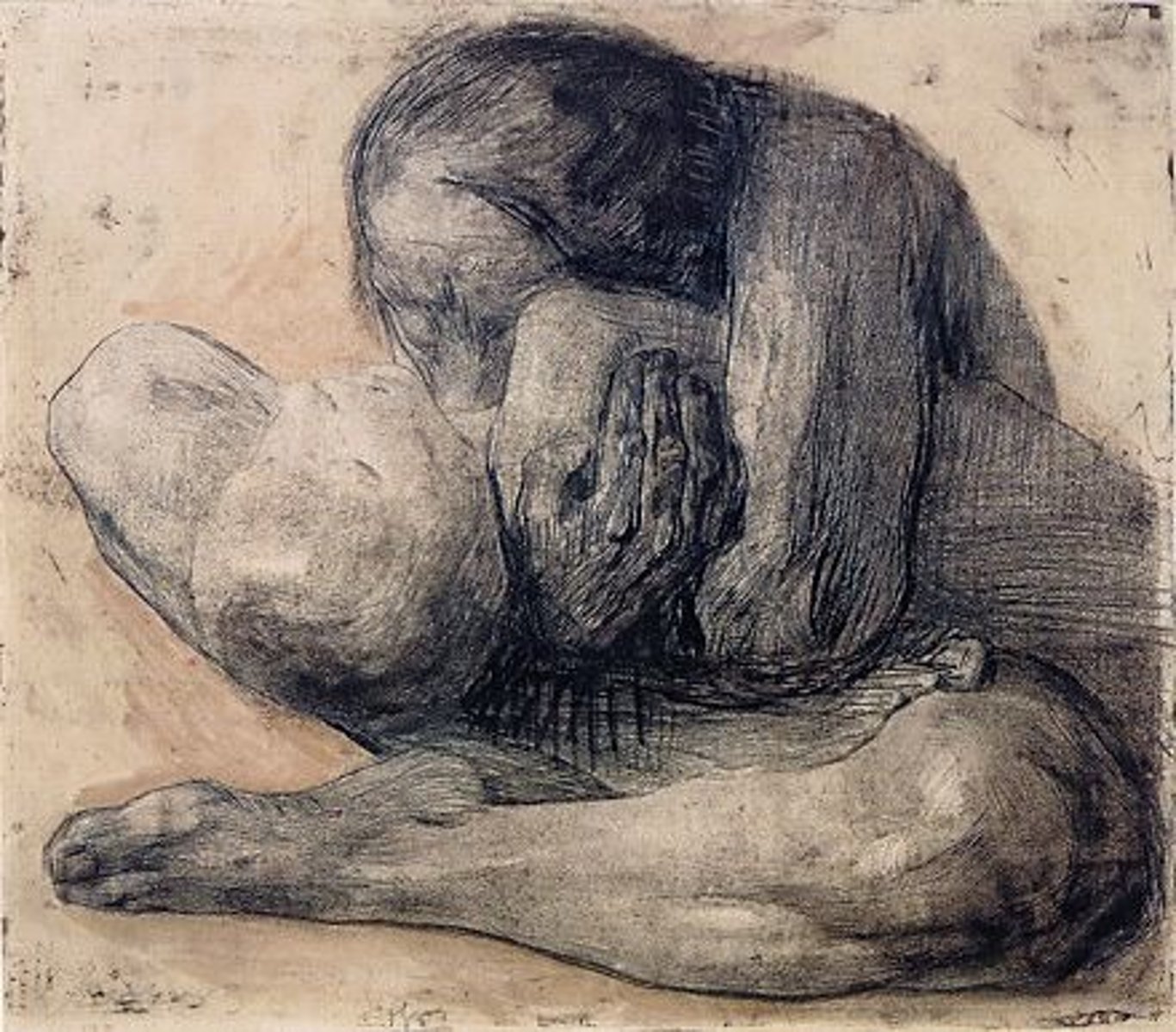
Woman with Dead Child
Käthe Kollwitz
1903
Artist: Socialistically oriented. Married to a doctor who worked among the poorer classes of Germany. Printmaker - used lithography and other media. First woman elected to the Prussian academy of arts and head of graphics there.
Commissioner:
Original Location: Germany
.Style: Expressionism
Characteristics: Not idealized. Hatching marks. Staged it and used her son as a model.Function: Reworked idea of the Virgin holding christ at his death. Knew the pain of losing children.
Subject: Woman whose child has just died. Scooped in child in her arms and hugging, kissing the child as if she wants to breathe life into the child again.
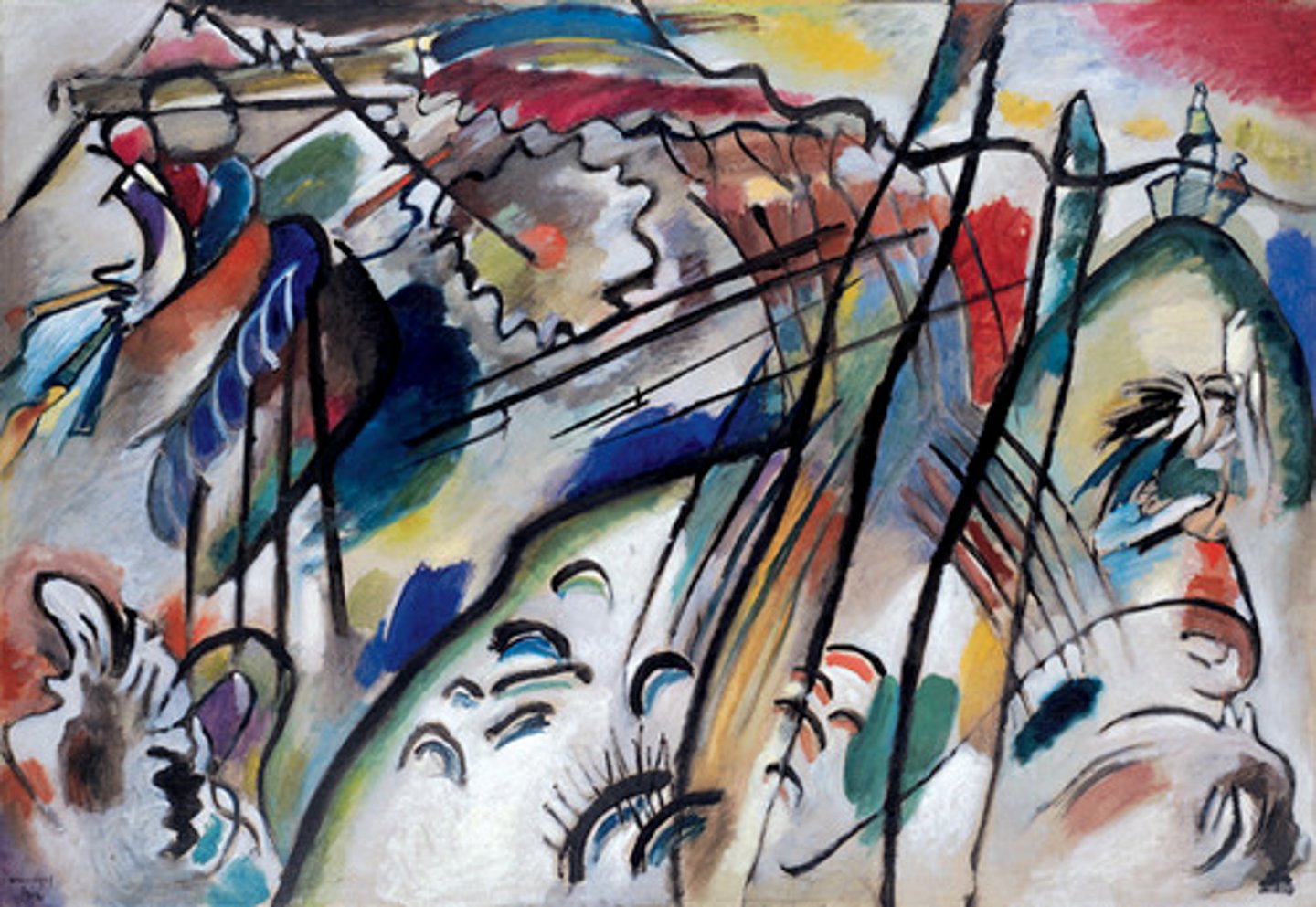
Improvisation 28
- Wassily Kandinsky;
1912(non-objective)
Medium: Oil on Canvas
- One of first to explore abstraction; eliminated representational elements and highlighted theosophy
- Explored atomic structure and mathematic philosophy
Artist: Russian. Trained as law professor. Movement, blue writer. Paints non-objective painting, when you don't want any natural things. Total abstraction.
Commissioner:
Original Location:
Style: Expressionism
Characteristics: One of a series he did playing with line and color.
Function: Wanted people to feel thing with the use of lines and colors without finding objects. Pure reaction to colors and lines.
Subject: Lines and colors.
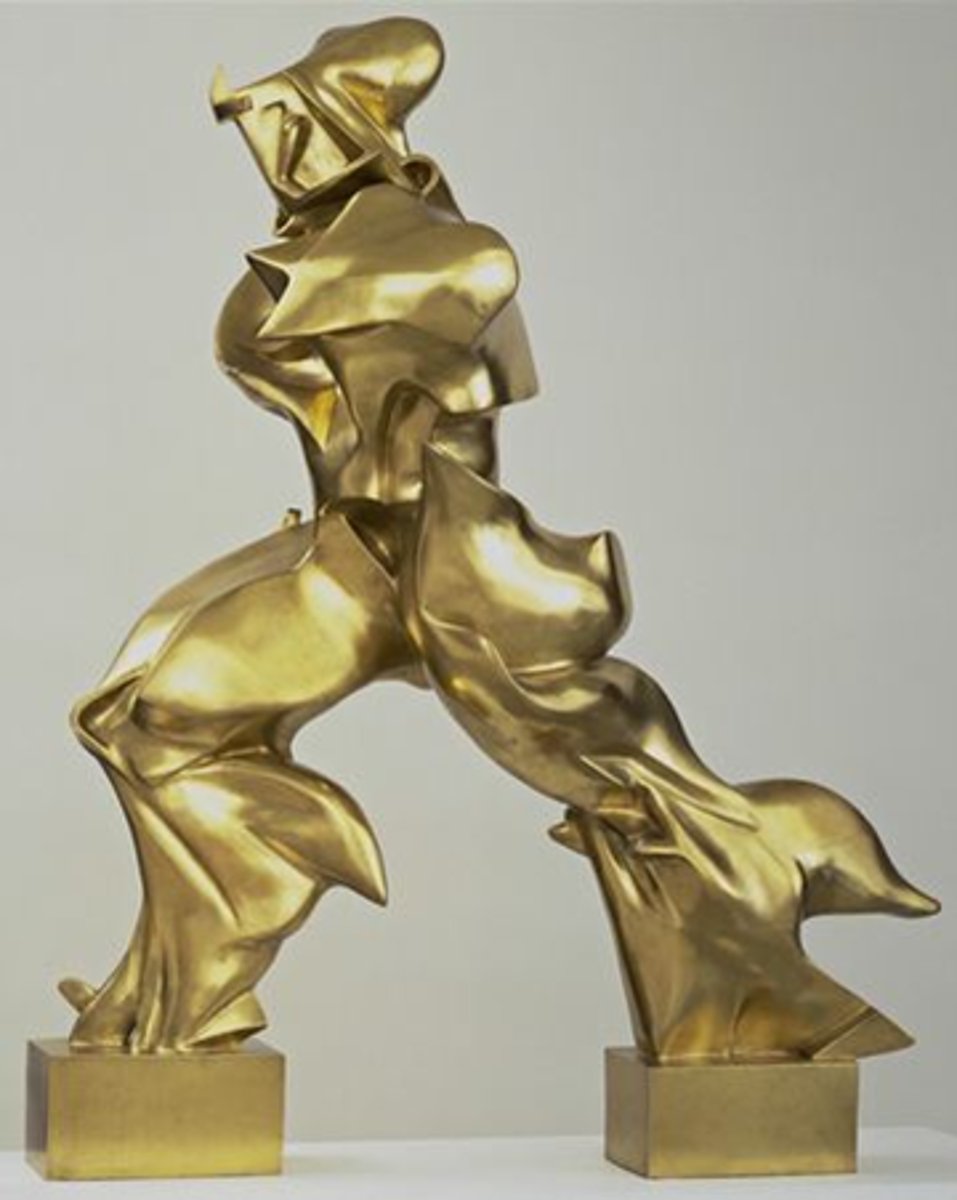
Unique forms of Continuity in Space
Umberto Boccioni
1913
Futurism
Artist: Did this as part of the futurist movement.
Commissioner:
Original Location: Italy
Style: Futurism
Characteristics:
Function:Subject:
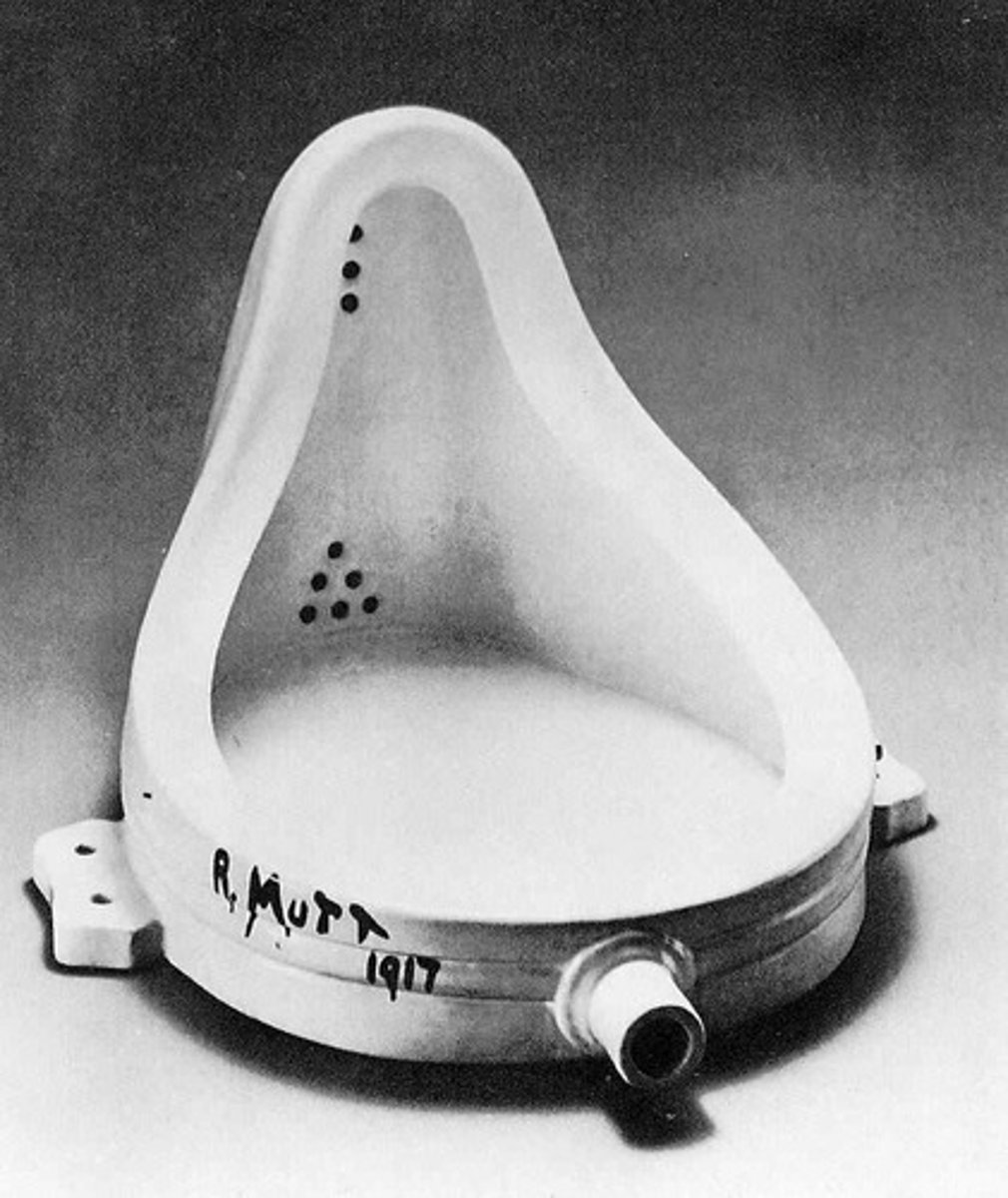
Fountain
Marcel Duchamp,
1917
Artist: He and other people founded the Dada movement 1916-1922 (direct reaction to WW1 and the loss of life).
Commissioner:
Original Location:
Style: Dada (French work - hobby horse)
Characteristics: Readymades. R. Mutt was his identity.
Function: Wanted to make it clear that all aesthetic values were made meaningless by WW1. Making becomes less important, and idea of artist's genius becomes more important.
Subject: Urinal turned on its side. Called it "Fountain." Fountains are part of public art.
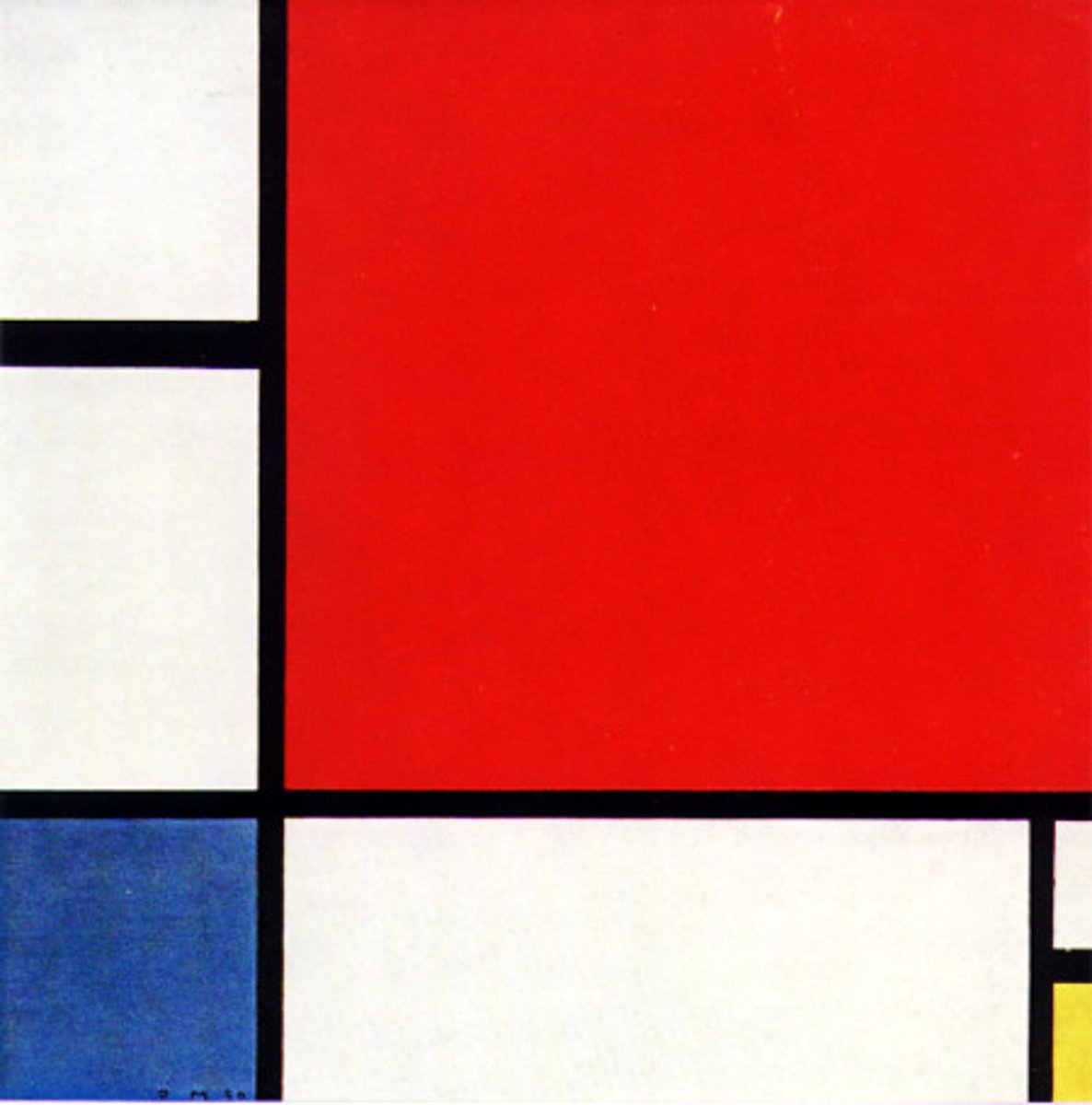
Composition in Yellow, Red, and Blue
Piet Mondrian
1927
Artist: Dutch artist. Between WW1 and WW2 - a time of instability and rebuilding. Restructuring politically. Germany is told that they have to pay all these reparations. Started as a landscape painter then picked up on cubism. Then wanted to paint rectangles and squares instead of things.
Commissioner:
Original Location:
Style: De Stijl (Movement)
Characteristics: Visual balance.
Function: Wanted to find the visual, intellectual rigor in this. Wanted to impart something spiritual. Classicism of non-objectivity, bringing art to its basics.
Subject: Rectangles. Primary colors of red, yellow, and blue.
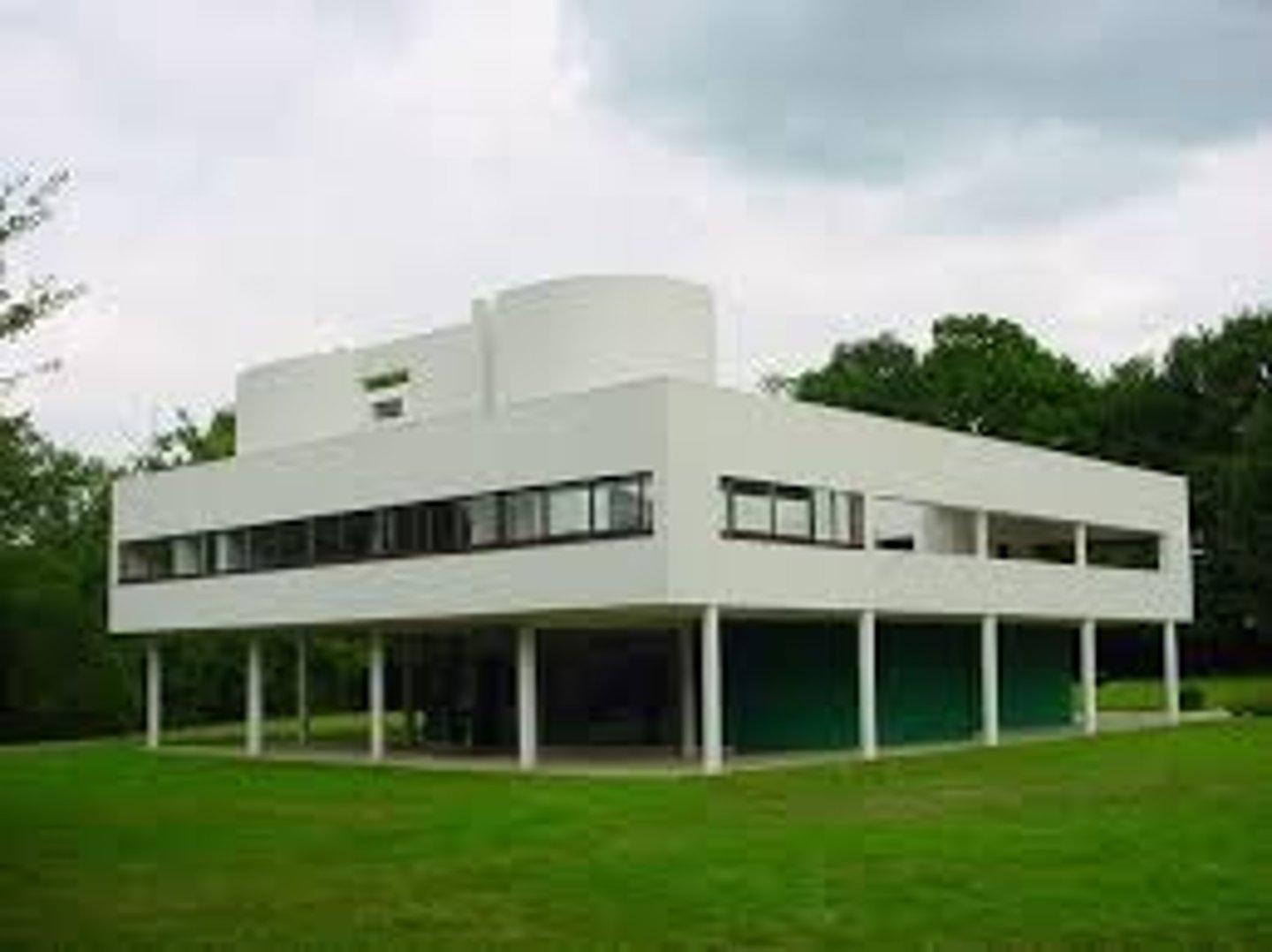
Villa Savoye
Le Corbusier
1930
France
Modernism in Architecture
Artist: French-Swiss architect. Worked in France and Switzerland but got commissions all over the world.
Commissioner:
Original Location: French countryside
Style: Modernism in Architecture (international style - fits anywhere and doesn't belong to one country)
Characteristics: Walls of building like curtain, non-supporting walls. Pilotis - stilts at the bottom.
Function: Livable building that could be built with new materials. Wanted people to be able to enjoy outdoors (hence large windows). Fresh air, light, space needed.
Subject: Sleek villa. Livable urban house out in the countryside.
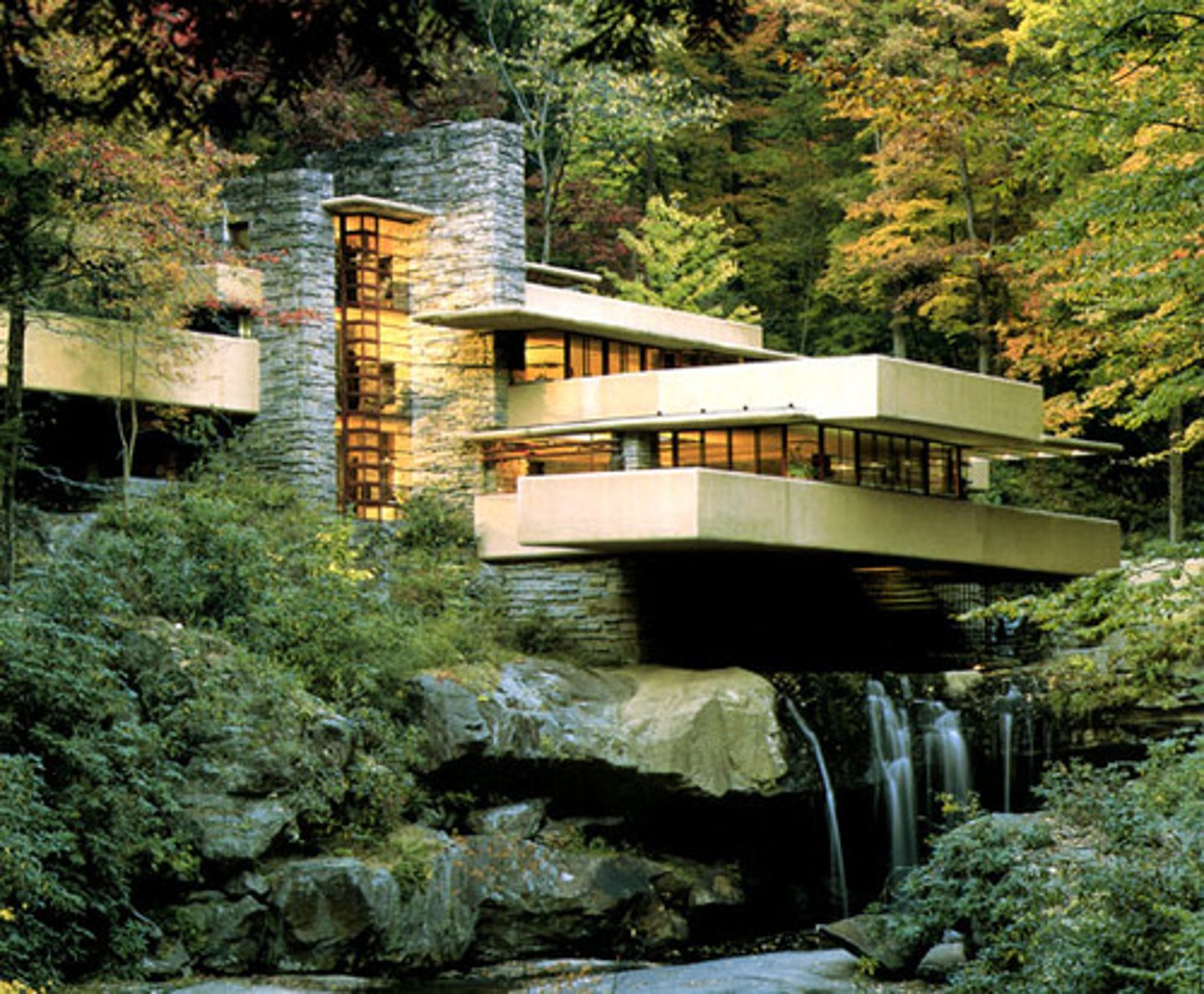
Kaufmann House (Fallingwater)
Frank Lloyd Wright
U.S.A,.
1936-9
Artist: Interested in wood, craft, and natural forms. Designed prairie houses.
Commissioner: Kaufmann
Original Location:
Style: Modernism in Architecture
Characteristics: Blocked and segmented. Big open plan. River starts at back, runs through property, underneath the house.
Function:
Subject:
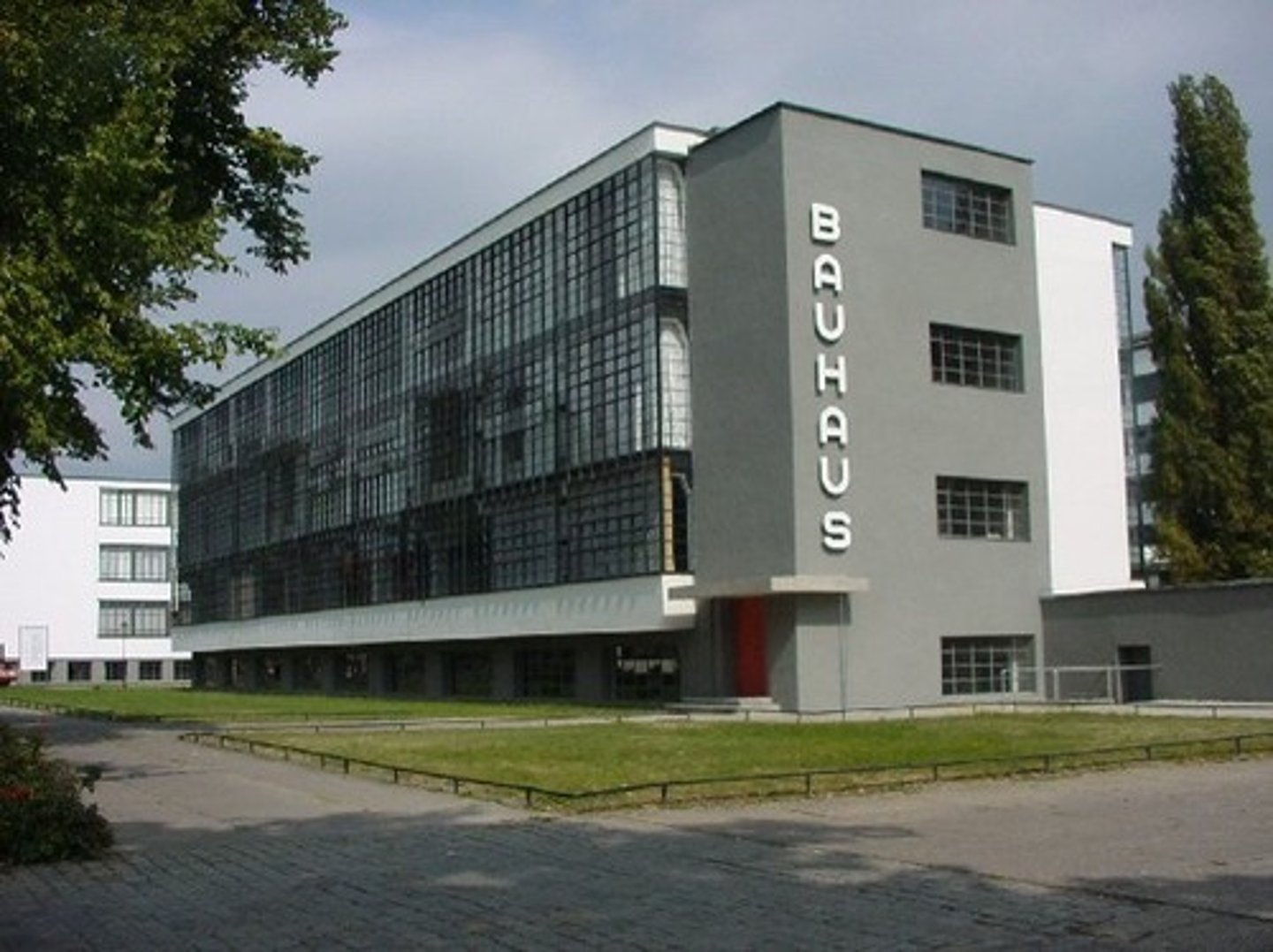
Shop Block, the Bauhaus
Walter Gropius
Germany
1925
Artist: Weimer school of arts and crafts. Bauhaus means building house when they added architecture to their curriculum. When Hitler came to power, modern artists were ridiculed. Gropius came to the US.
Commissioner:
Original Location: Germany
Style: Modernism in Architecture
Characteristics: Curtain walls of glass.
Function: Multifunctional.
Subject: Art school.
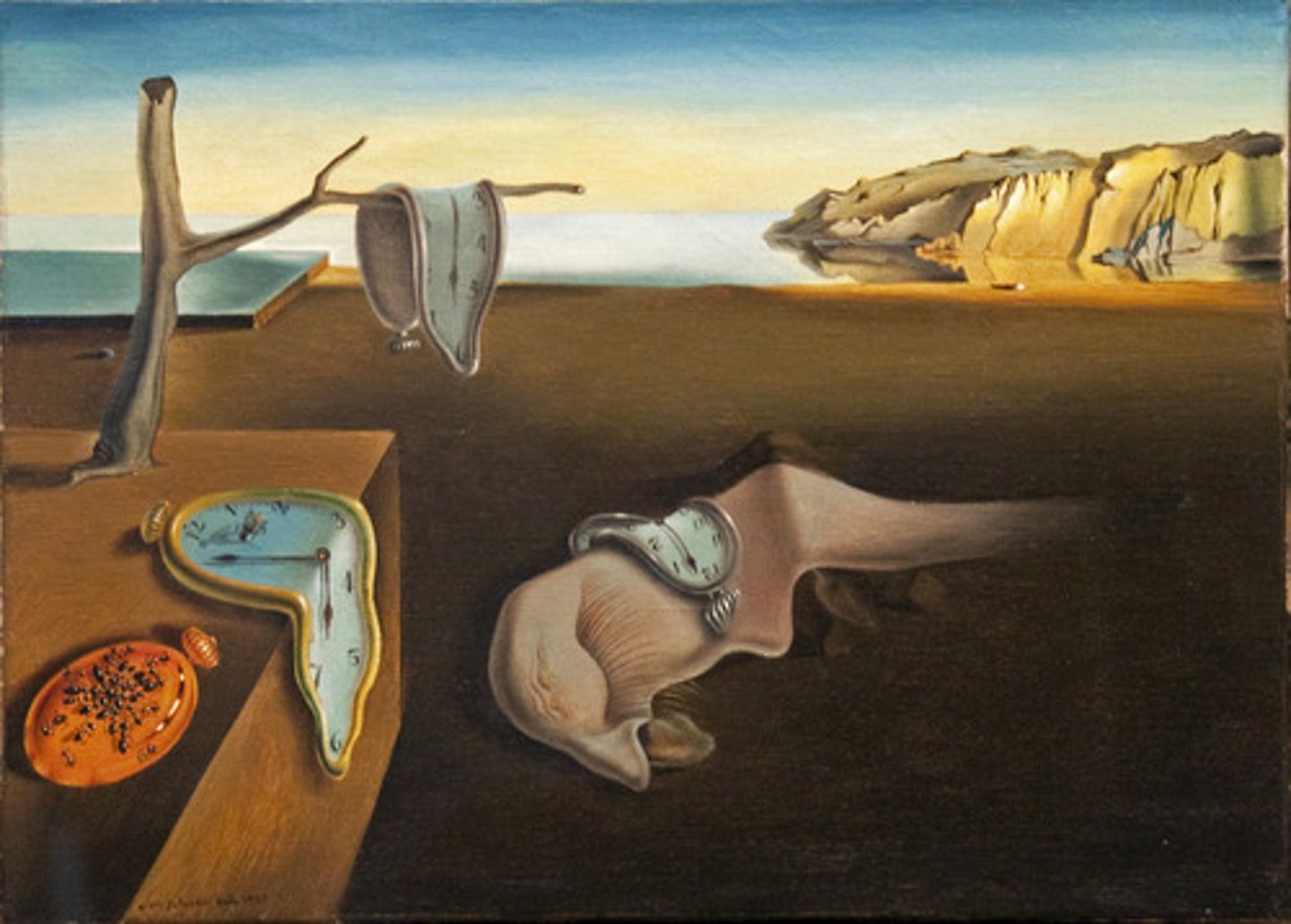
Persistence of Memory
Salvador Dali
Surrealism
1931
Story: Went to the art school in Madrid. Liked academic and romantic painters. Also liked precision. Surrealists want to tap into the unconscious? Subconscious. Developed his own iconography of feeling unease and not knowing what is going on. Started painting with one image he had in his mind and went from one to the next. Also involved in film making. Stable in personal life. Wanted to discredit reality.
Commissioner:
Original Location:
Style: Surrealism
Characteristics: Precision. Unforgiving quality of light. Hard edges.
Subject: Bare landscape with a beach. Foreground has a box or plinth with a dead tree. Floppy pocket watch over the tree and the edge of the box. Ants, flies, and time bending. Momento Mori item: dead tree, insects that attack you when you die.
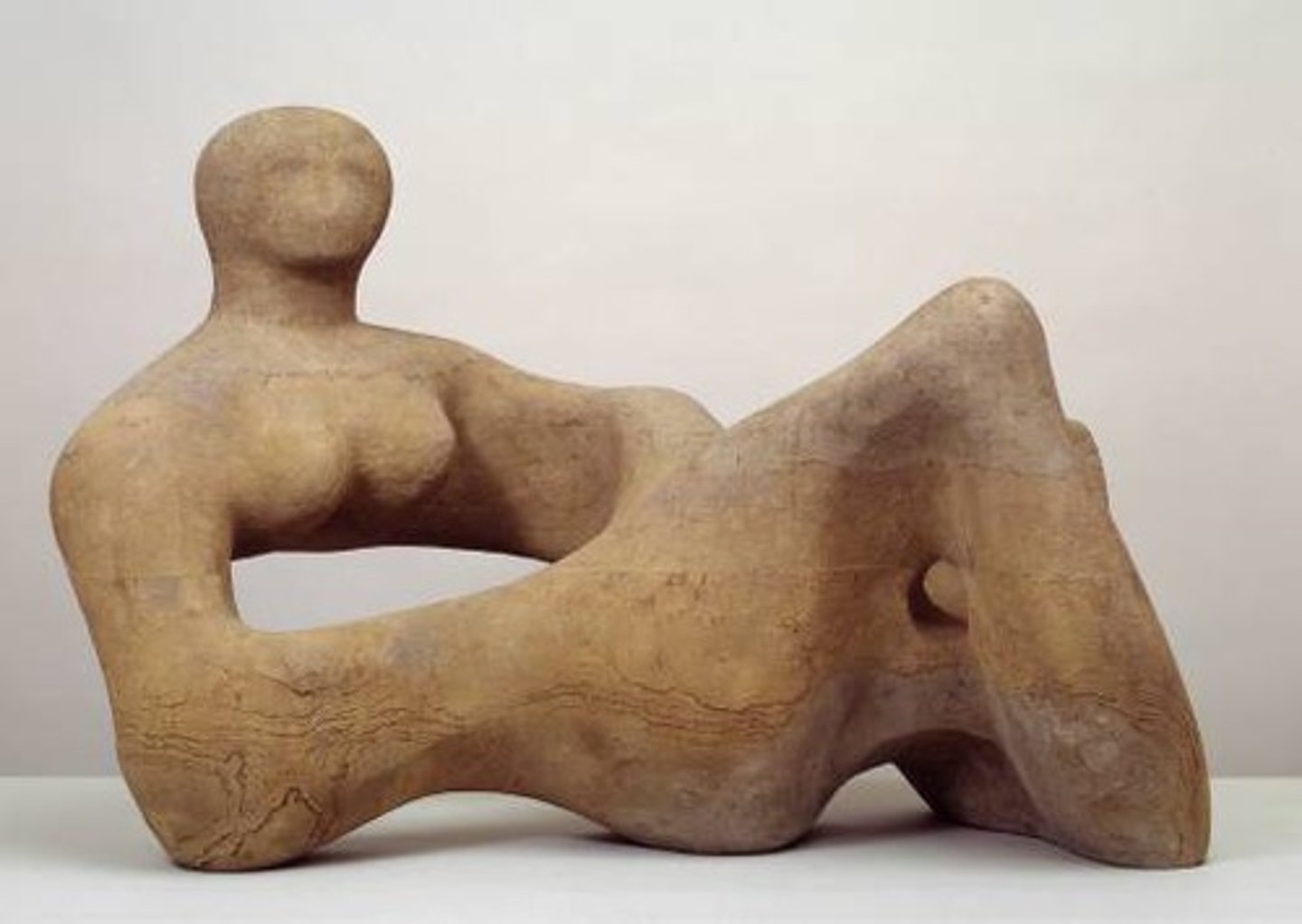
Recumbent Figure
Henry Moore
1938
Horton stone
Story: One of group of very well known sculptors. Moved outside of his academic training and was influenced by gargoyles. Loved to consider the materials.
Commissioner: For a back deck of a house of an architect, Serge Chermiaeff.
Original Location:
Style: Organic and Abstract Sculpture
Characteristics: Hornton stone which isn't suitable for a warmer climate like New York.
Subject:
Function: Addressed the nature of sculpture.
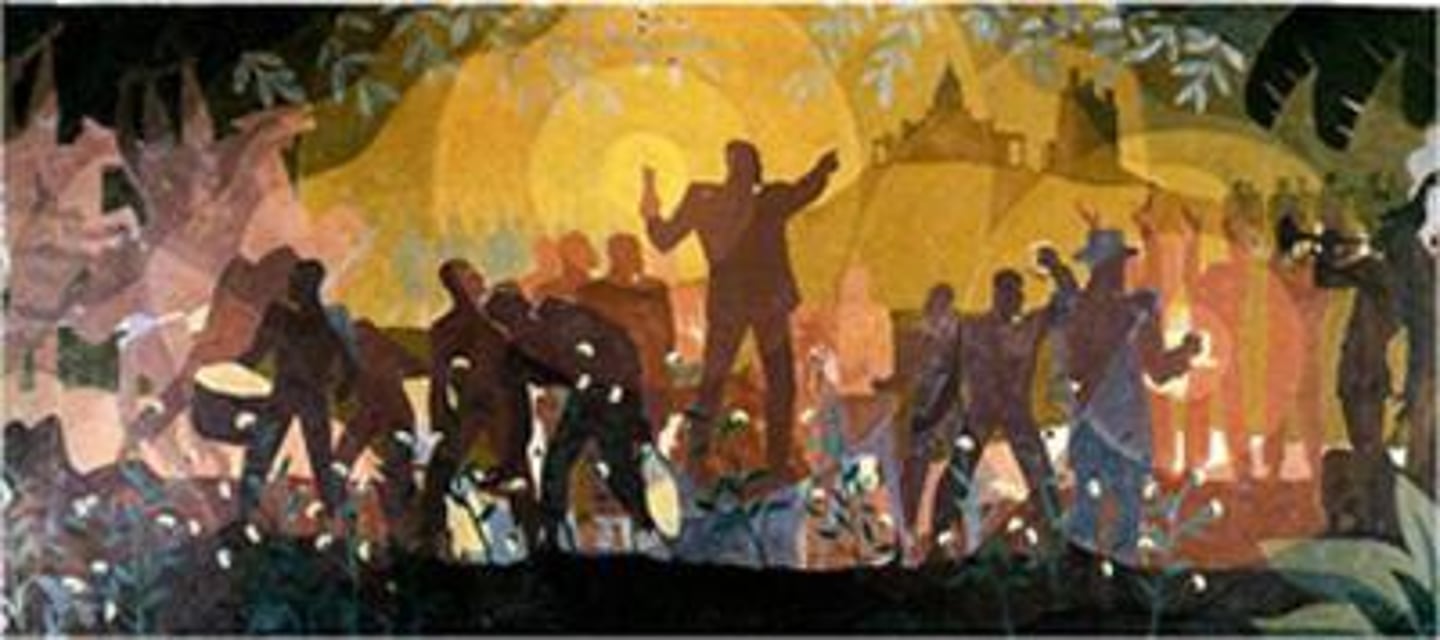
Aspects of Negro Life: From Slavery Through Reconstruction,
Aaron Douglas
1934
Art of America and Mexico
Story: Public works had to do with the 1930's and the great depression (stock market crash, droughts in the prairies, people losing their farms) people wanted to head to California, discovered there are too many people there for jobs.
Commissioner:
Original Location: Public works of art project of New York library? Still on display in the library.
Style: Cubism with monochromatic look. (Art of America and Mexico)
Characteristics: Monochromatic. Subject: Harlem Renaissance was a period in which African American artists, culture, music. Ku Klux Klan. African American politician pointing towards a building: we got the vote so go and vote.
Function: Shows slavery through reconstruction. Urged African Americans to use their voices. Promotes African American culture.
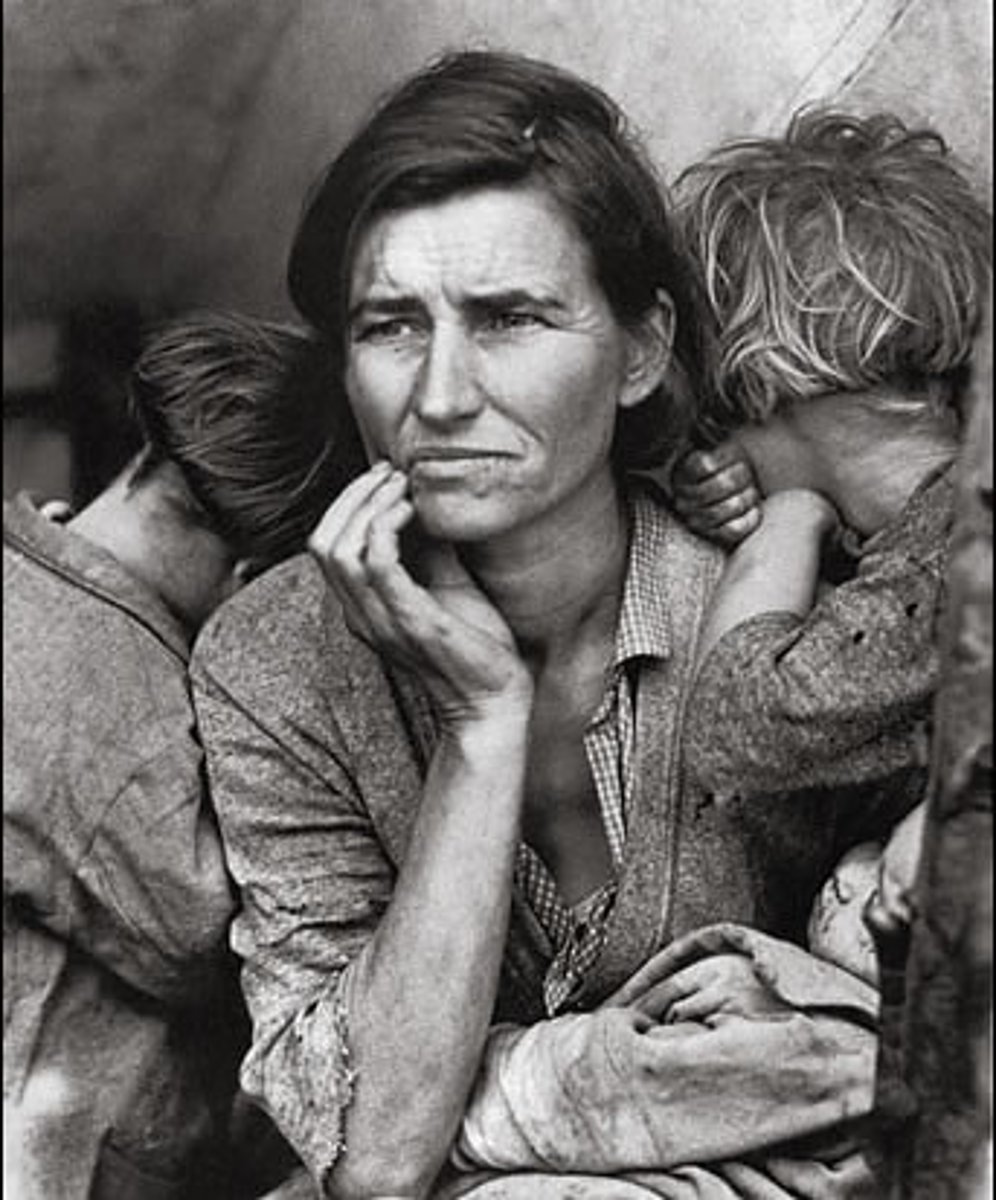
Migrant Mother, Nipomo Valley
Dorothea Lange,
1935
Art of America and Mexico
Story: Put to work to document migrant farmers. Worked for the farm administration. Photographed in the east Salinas valley. Incident of pea crops frozen on the field. This family sold their car tires for food. Photograph that marked the G.D.
Commissioner:
Original Location:
Style: Photography (Art of America and Mexico)
Characteristics: Light catches the woman's face. The kids both sides are burying their face in her. She also holds a little baby.
Subject: Woman and two kids with a baby.
Function: Sends it to the newspaper to be published. Made people aware. Donations and aid came in for this family. Social value.
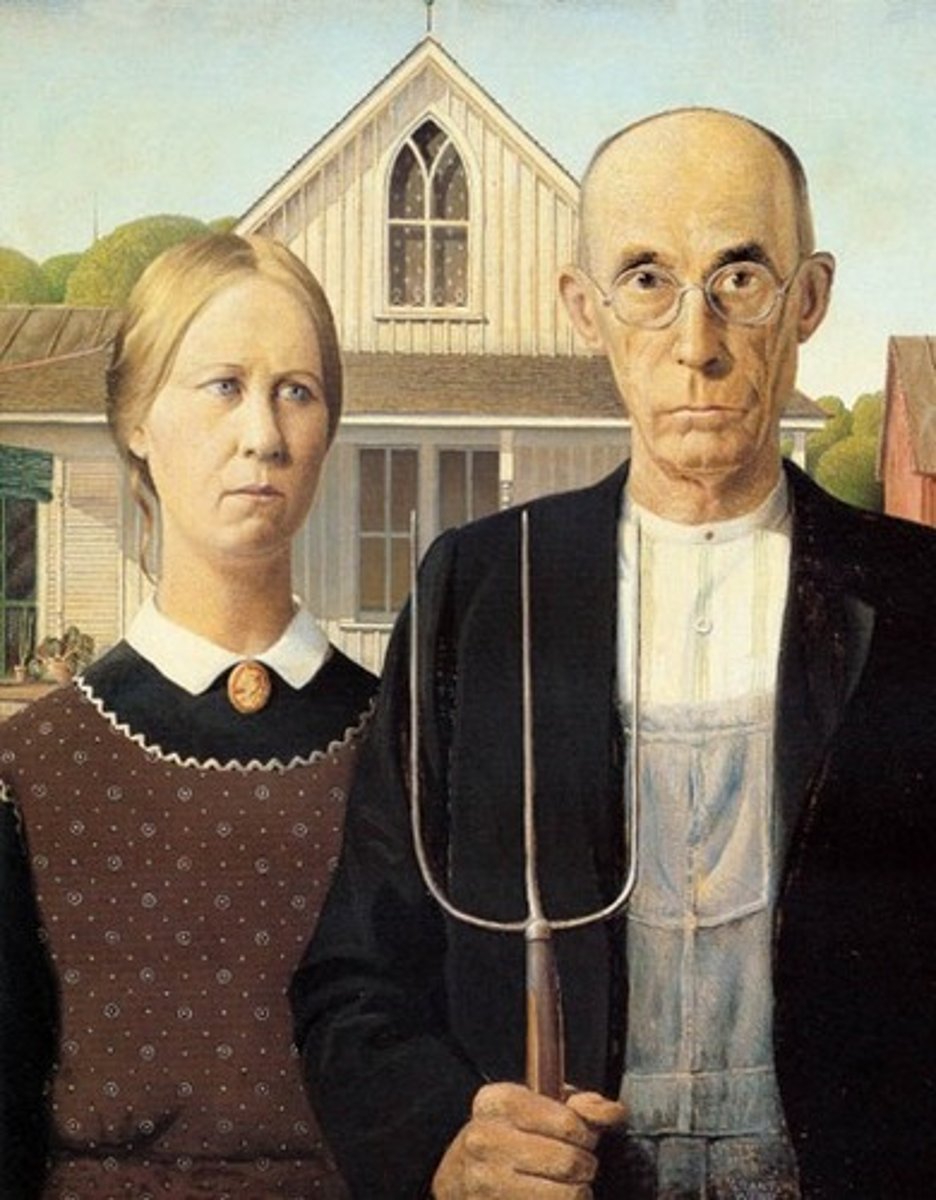
American Gothic
Grant Wood
1930
Art of America and Mexico
Story: Grew up in rural Iowa during the great depression. Went to Europe and loved the painting Yan van Eyck. Brought back those types of paintings capturing rural life.
Commissioner: Purchased by the Art Institute of Chicago.
Original Location: Iowa, United States.Style: (Art of America and Mexico)
Characteristics:
Subject: Farming couple in front of their farmhouse. Wife dressed in Sunday vest. Farmer had jacket with clean shirt with no collar and overalls with a pitchfork. Pitchfork shaped seen in his overalls. Called American Gothic because of the lancet windows on the house in the back. Sister and Dentist posed for Grant.
Function: Reflects the hardworking American.
The Two Fridas
Frida Kahlo.
1939
Oil on canvas
Art of America and Mexico
Artist:
Commissioner:
Original Location:
Style: (Art of America and Mexico)
Characteristics:
Function:
Subject:

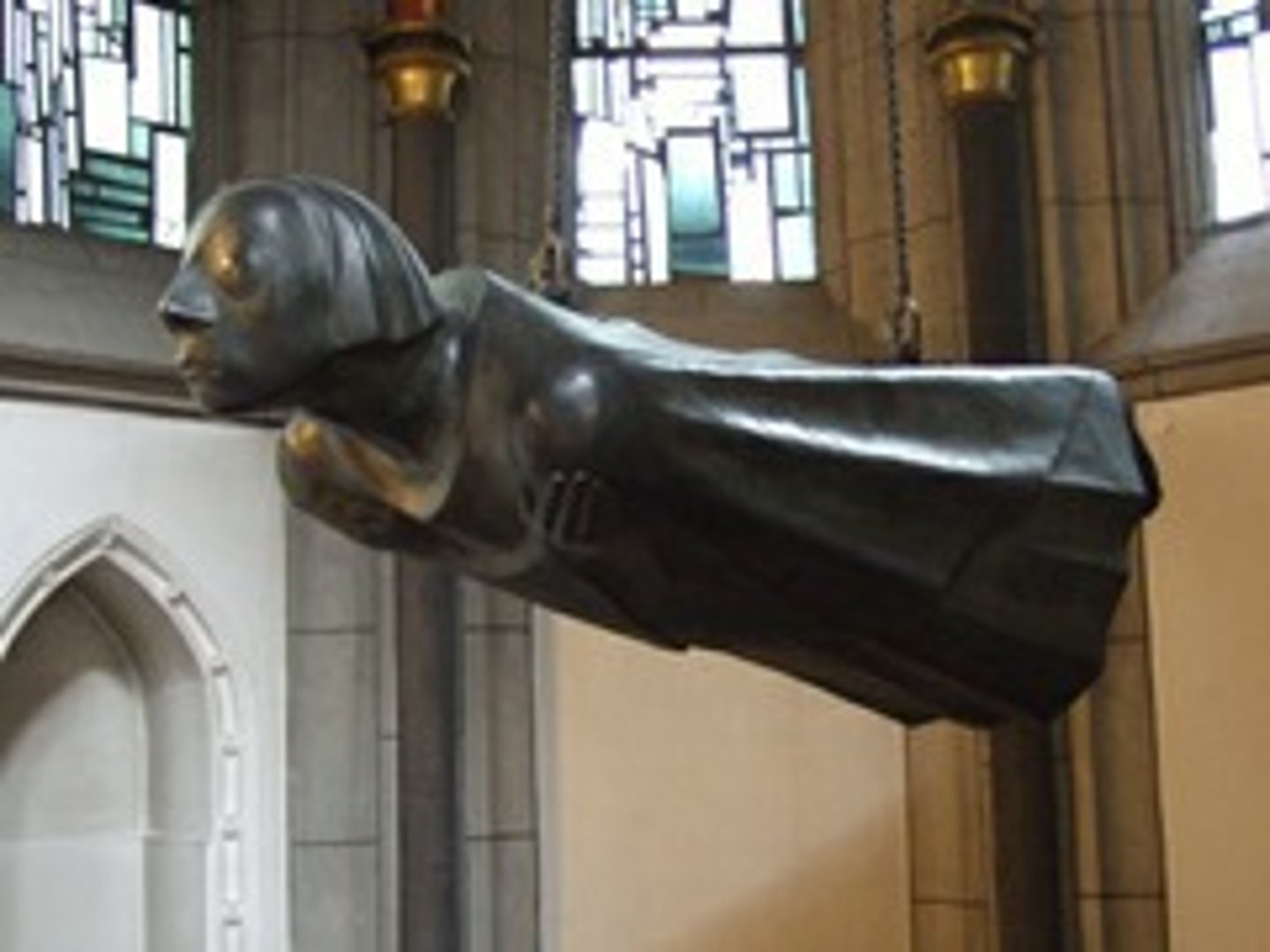
War Monument
Ernst Barlach
Cathedral, Güstrow, Germany,
1927
Story: A sculptor, illustrator, and playwright. By 1920's was leading sculptor. Thought of as degenerate art by Hitler? Forced to resign from Prussian Academy of Arts.
Commissioner: Gustrow Cathedral as a memorial for World War I.
Original Location: Gustrow Cathedral. Germany.
Style: German Expressionist. War memorial/monu. (Art between the WW's).
Characteristics: Figure suspended over air over a plain stone plinth that said the dates of WWI&II.
Subject:
Function: Melted down statue for weapons? Reminded people of what happened when you get aggressive (war).
Autumn Rhythm (Number 30)
Jackson Pollock
1950[gestural abstraction or action painting]
Commissioner:
Original Location:
Style: Abstract Expressionism (Art post WW2 1945)
Characteristics:
Function:
Subject:
![<p>Jackson Pollock</p><p>1950[gestural abstraction or action painting]</p><p>Commissioner:</p><p>Original Location:</p><p>Style: Abstract Expressionism (Art post WW2 1945)</p><p>Characteristics:</p><p>Function:</p><p>Subject:</p>](https://knowt-user-attachments.s3.amazonaws.com/9668f4c9-a8d7-44a3-a3c7-fe6bebacecbc.jpg)
Vir Heroicus Sublimis
Barnett Newmann
1950-51 [chromatic abstraction, or color field painting]
Abstract expressionism
Artist:
Commissioner:
Original Location:
Style: Abstract Expressionism (Art post WW2 1945)
Characteristics
Function:
Subject:
![<p>Barnett Newmann</p><p>1950-51 [chromatic abstraction, or color field painting]</p><p>Abstract expressionism</p><p>Artist:</p><p>Commissioner:</p><p>Original Location:</p><p>Style: Abstract Expressionism (Art post WW2 1945)</p><p>Characteristics</p><p>Function:</p><p>Subject:</p>](https://knowt-user-attachments.s3.amazonaws.com/bdf77aa6-ab42-491a-9b24-b0bb2d528287.jpg)
Flag
Jasper Johns
1954-55
Artist:
Commissioner:
Original Location:
Style: Pop Art (Art post WW2 1945)
Characteristics:
Function:
Subject:

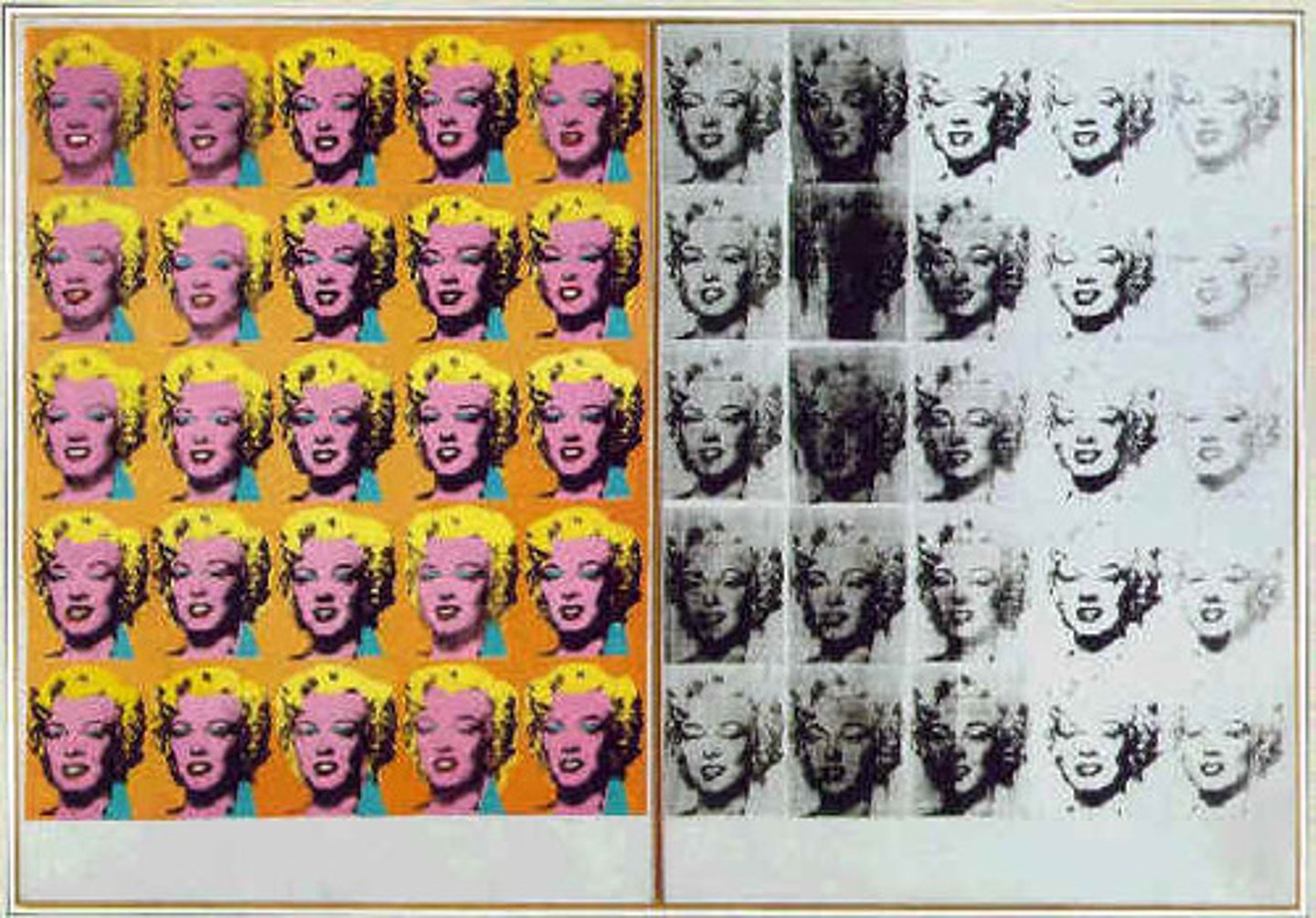
Marilyn Diptych
Andy Warhol
1962 C.E.
Oil, acrylic, and silkscreen enamel on canvas.
Pop Art
Notes: Knew that people loved fame and famous people.
Commissioner:
Original Location:
Style: Pop Art (Art post WW2 1945)
Characteristics: Partly silk screen printed. Multiplies Marilyn Monroes face. Right hand side like a news paper fading away - signals her dying away.
Subject: Marilyn Monroe.
Function:
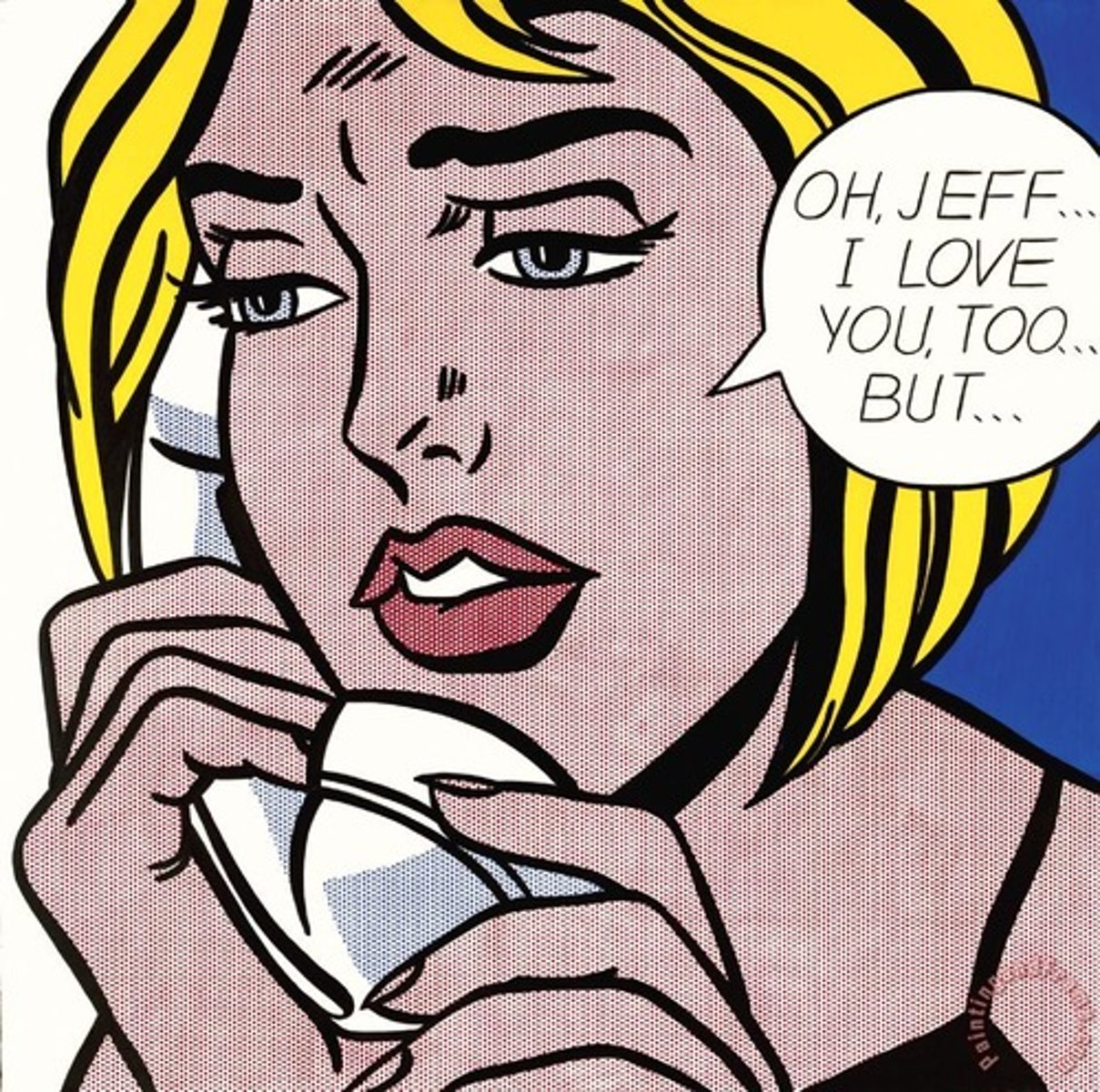
Oh, Jeff...I Love You Too...But...
Roy Lichtenstein
1964
Notes:
Commissioner:
Original Location:
Style: Pop Art (Art post WW2 1945)
Characteristics:
Subject:
Function:
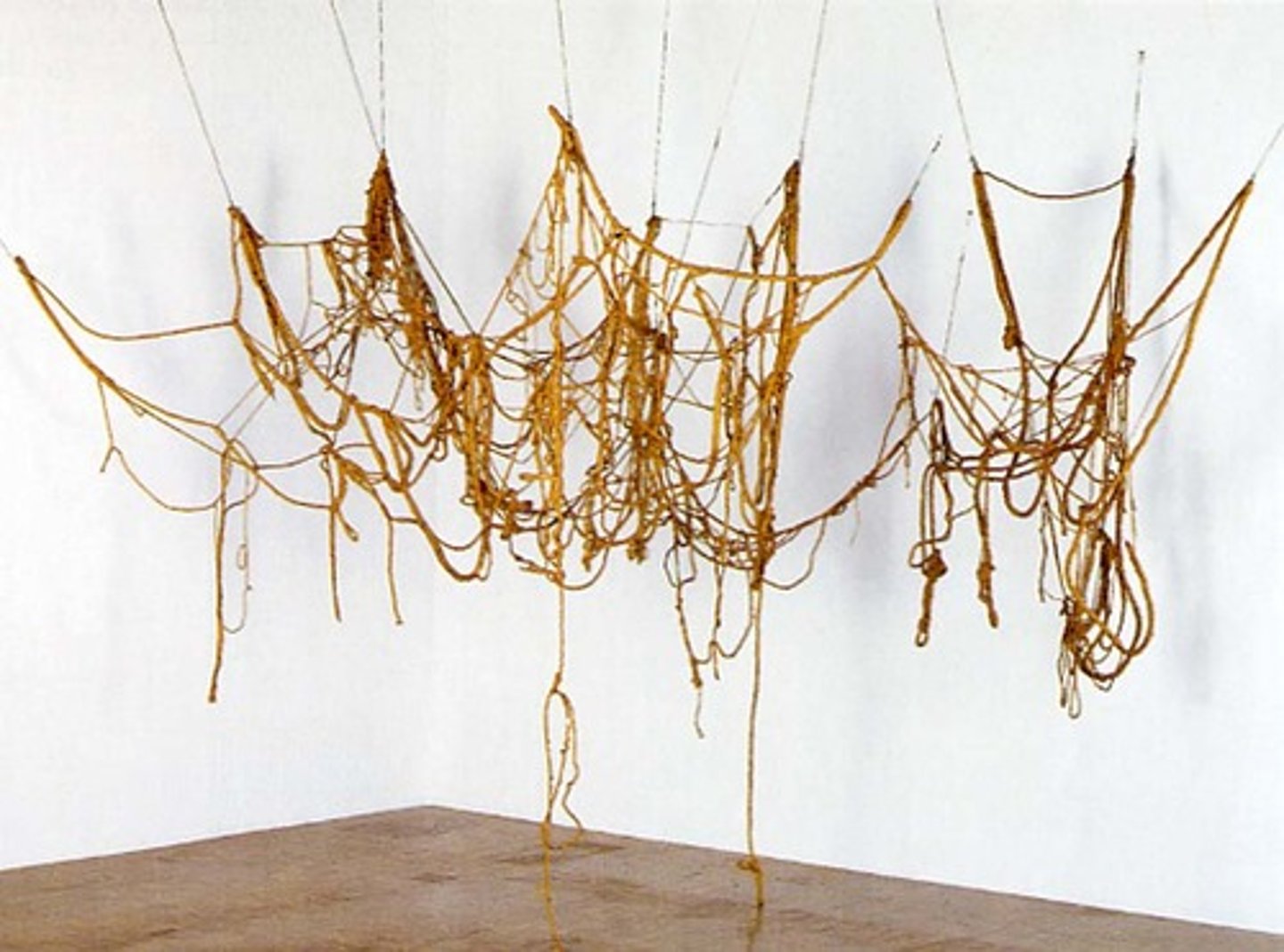
No Title
Eva Hesse
1970
Notes: Born in Germany. War started when she was a little girl so she had to leave to England. Started new life in New York. Parents divorced and mother committed suicide. Talented artist who went to Yale.
Commissioner:
Original Location:
Style: Abstraction, Non-objectivity. Abstract sculpture. (Minimalist and Post-minimalist sculpture)
Characteristics: Rubberized string suspended. Mutable sculpture. Qualities of line, realm of drawing.
Subject:
Function: If you wanted to display this work in a museum, you wouldn't know how to hang it. Never hung the same way twice. Uncertainty of the work of art.
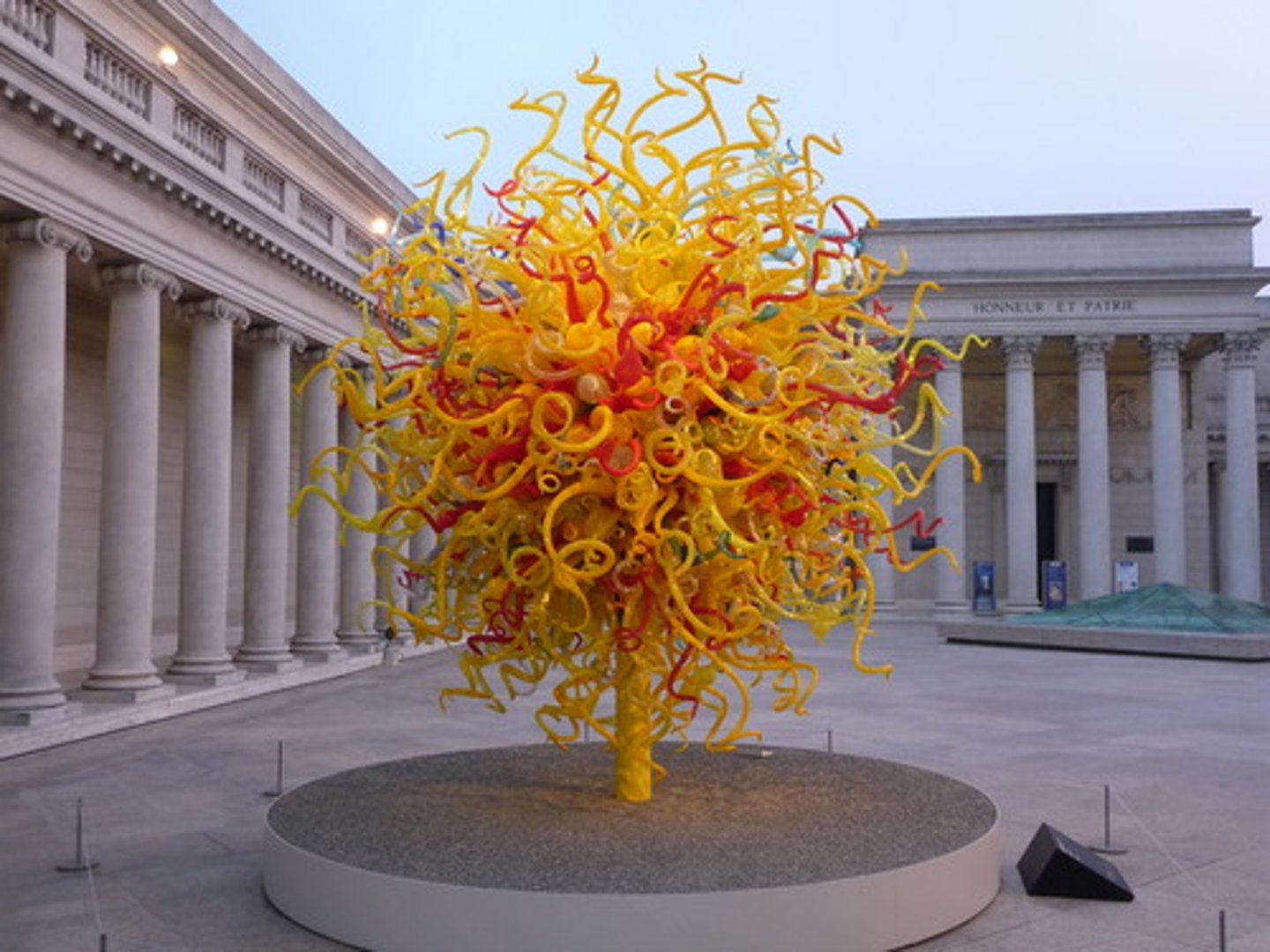
The Sun
Dale Chihuly
2006
Notes: Doesn't make his own work anymore because of a car accident that made him blind in one eye. Glass blowing internship in Venice. Calls his glass sculptures "forms." Mixing of colored glasses.
Commissioner:
Original Location: Seattle, Washington? In different locations like Arizona's botanical garden and San Diego Sulk Institute.
Style: Abstract sculpture. (Minimalist and Post-minimalist sculpture)
Characteristics: Metal pole with round form that allows glass tubes to be installed.Subject: Large glass structure.
Function: Craft into high art. Beautiful but fragile. Made to fit into the environment.
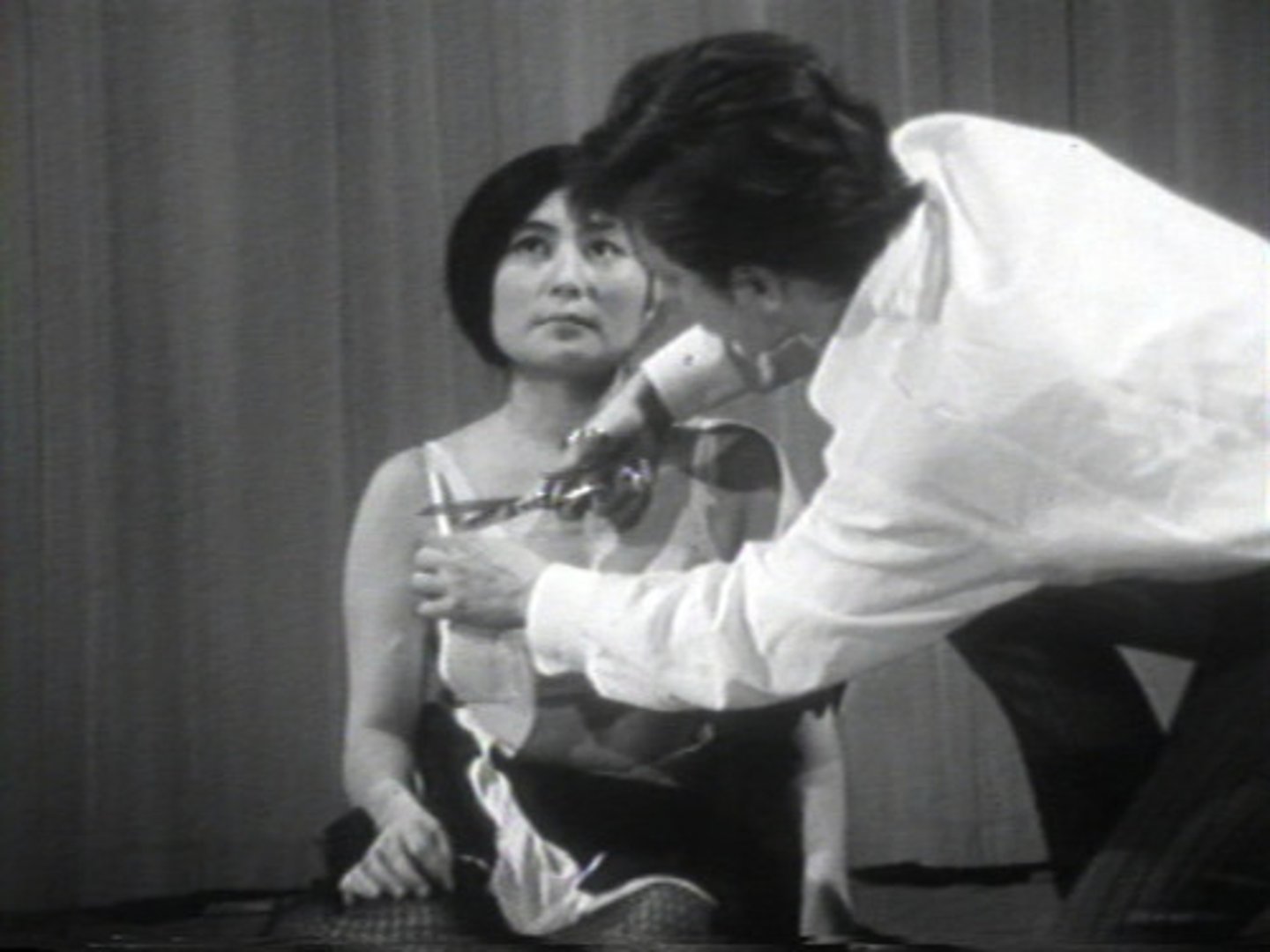
Cut Piece
Yoko Ono
1965
Notes: Fluxus. With Beuys. Avant Garde artwork. Is Japanese but spent a lot of time in the United States.
Commissioner:
Original Location: Tokyo, Japan. Restaged a couple of times since.
Style: Performance Art
Characteristics: Sat herself on the stage. People were invited to come up and cut a piece of her clothing until she was uncomfortable or until she said it was done. Wore her best suit in this.
Subject:
Function:
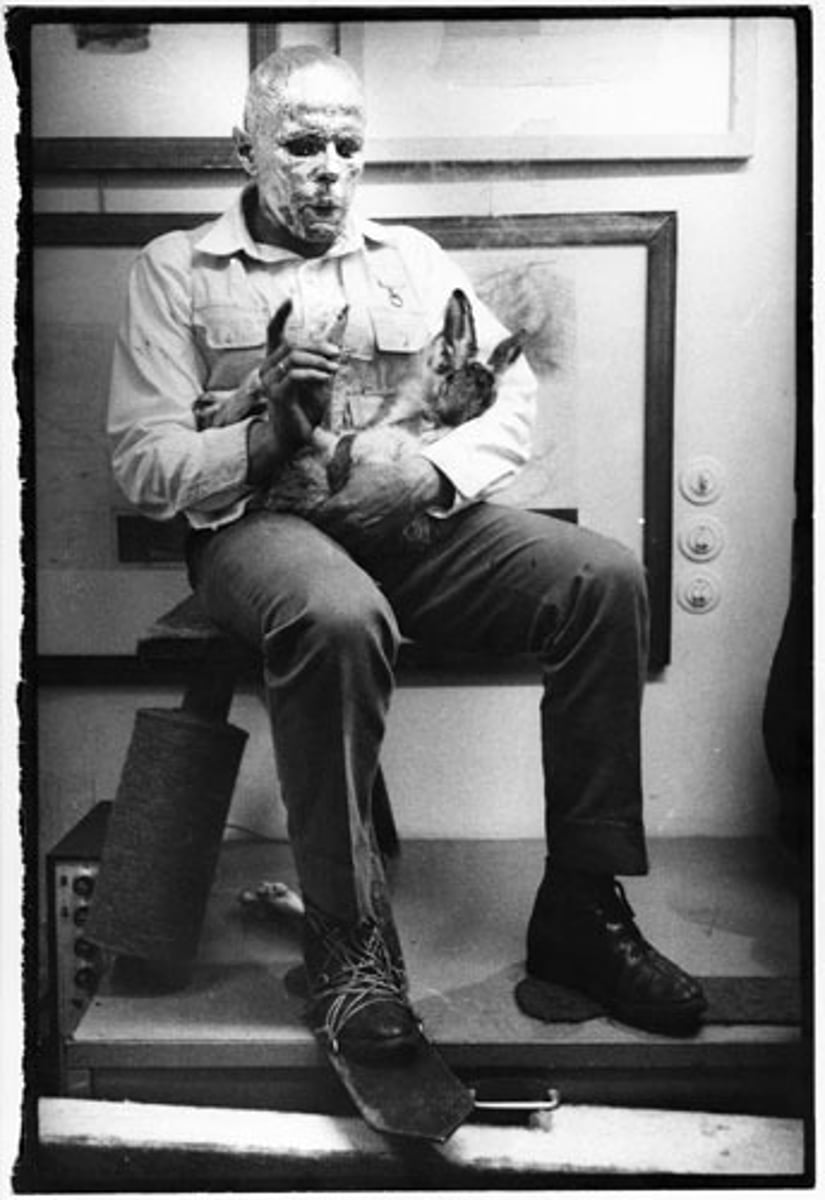
How to Explain Pictures to a Dead Hare
Joseph Beuys
1965
performance
Notes: German artist who taught at the art school in Deusseldorf. Both an artist and a sculptor. Shot down as a pilot in the army. Wanted his art to change the world and lead them into a good spiritual life.
Commissioner:
Original Location:
Style: Performance Art.
Characteristics: Covered himself in honey and gold life. Carried a stuffed dead hair. Went around the room and explained his drawings to a dead hare. Sat on a stool that was wrapped in felt. Held the hare in his hand. Honey is symbolic in Germanic culture — bees capacity to create honey like the artists capacity to create. Gold like the sun.
Subject:
Function: Personal symbolism.
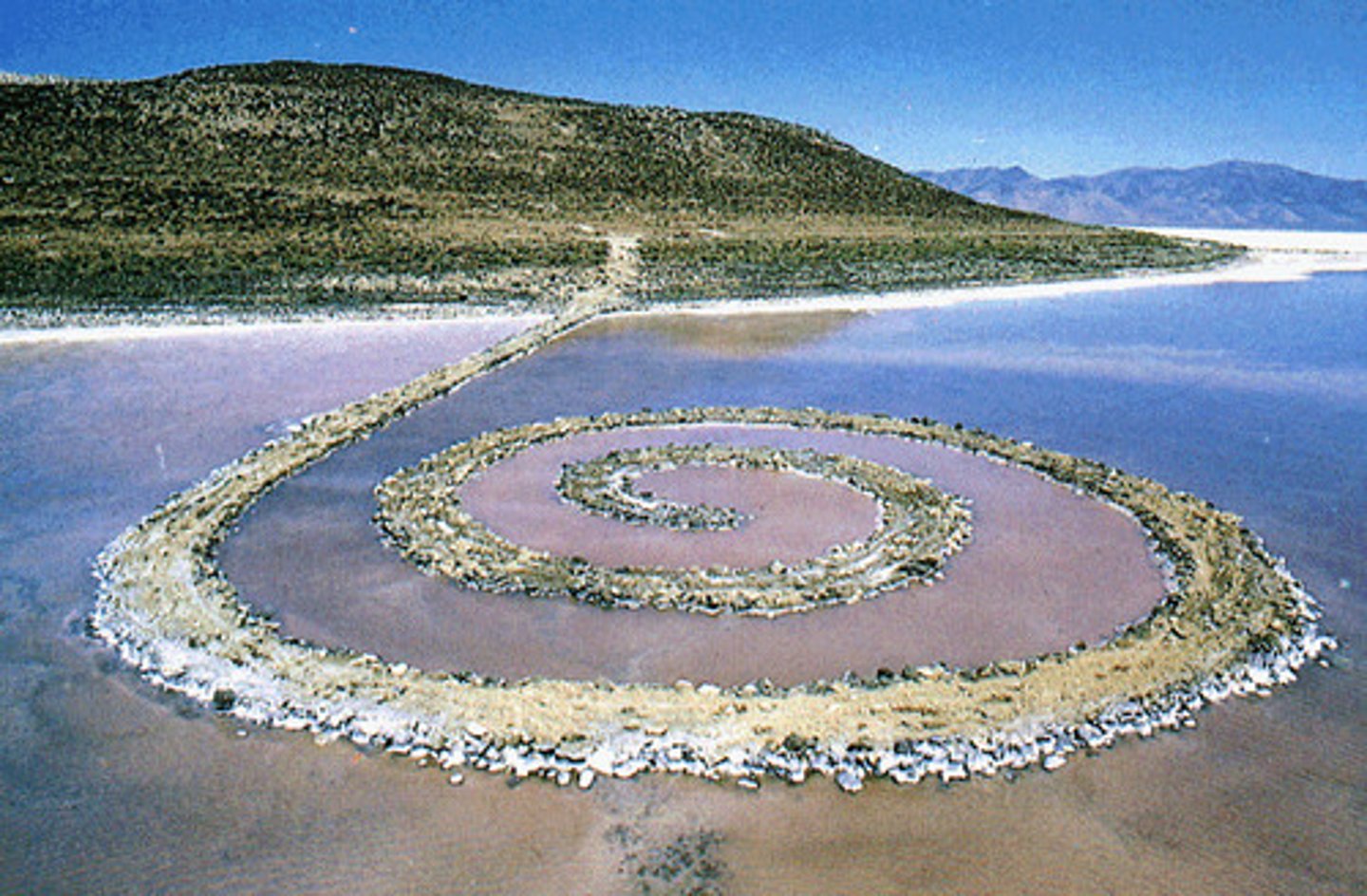
Spiral Jetty
Robert Smithson
1970
artworks/Site Specific Art
Notes: Concerns about legal issues, the weather, and water level of the salt like. DIA foundation bought this and is responsible for the upkeep
.Commissioner:
Original Location: Great Salt Lake Utah
Characteristics:
Subject:
Function:
The Gates
Christo
Central Park, New York
1979-2005
Notes: Took a long time to get permits. Bulgarian artist with his French wife who died a couple years ago. Wrapping in textiles. Needed team of environmentalists and lawyers.
Commissioner:
Original Location: Central Park, NY
Style: Earthworks/Site Specific Art
Characteristics:
Subject: Function: Might be inspired by orange gates in Japan.
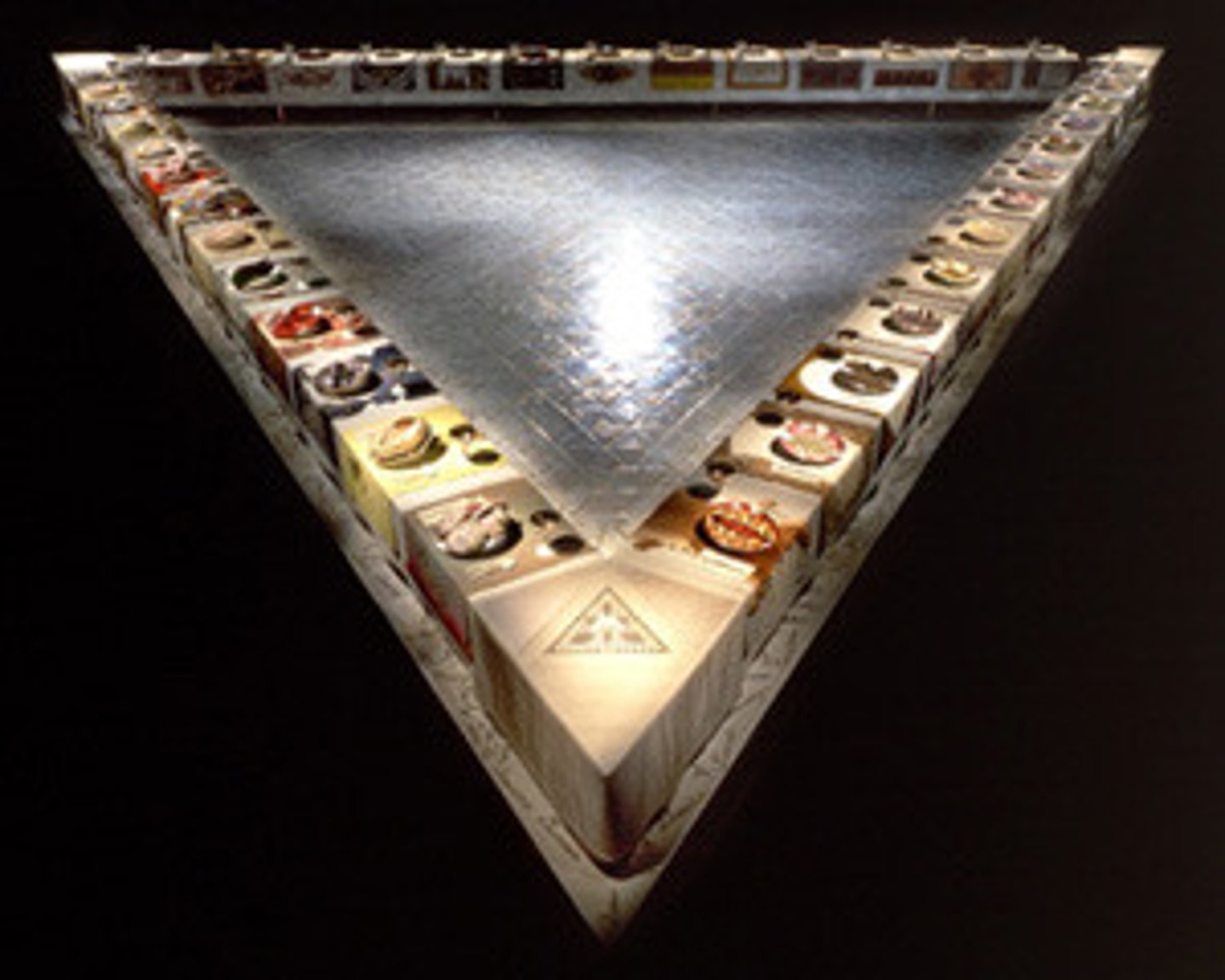
The Dinner Party
Judy Chicago
1979
detail of Georgia O'Keefe setting
Notes: Taught in Cal State system. SJSU? Women House group in the 70s. Started to think about women artists and how to reintroduce them into history.Commissioner: Purchased by Brooklyn Museum now.
Original Location:
Style: Feminist Art
Characteristics: Ceramics and embroidery. With 999 other famous women in history written on it. Traditional women's art form. Designs for each women a table runner and a plate. Glass is same all around. Plates start out as flat and then become more like reliefs as women become more prominent in history.
Subject: Last supper for 13 famous women. Instead a triangle of 39 women who each have their own plate settings at the table.
Function: Showed women as creative beings of art and of life.
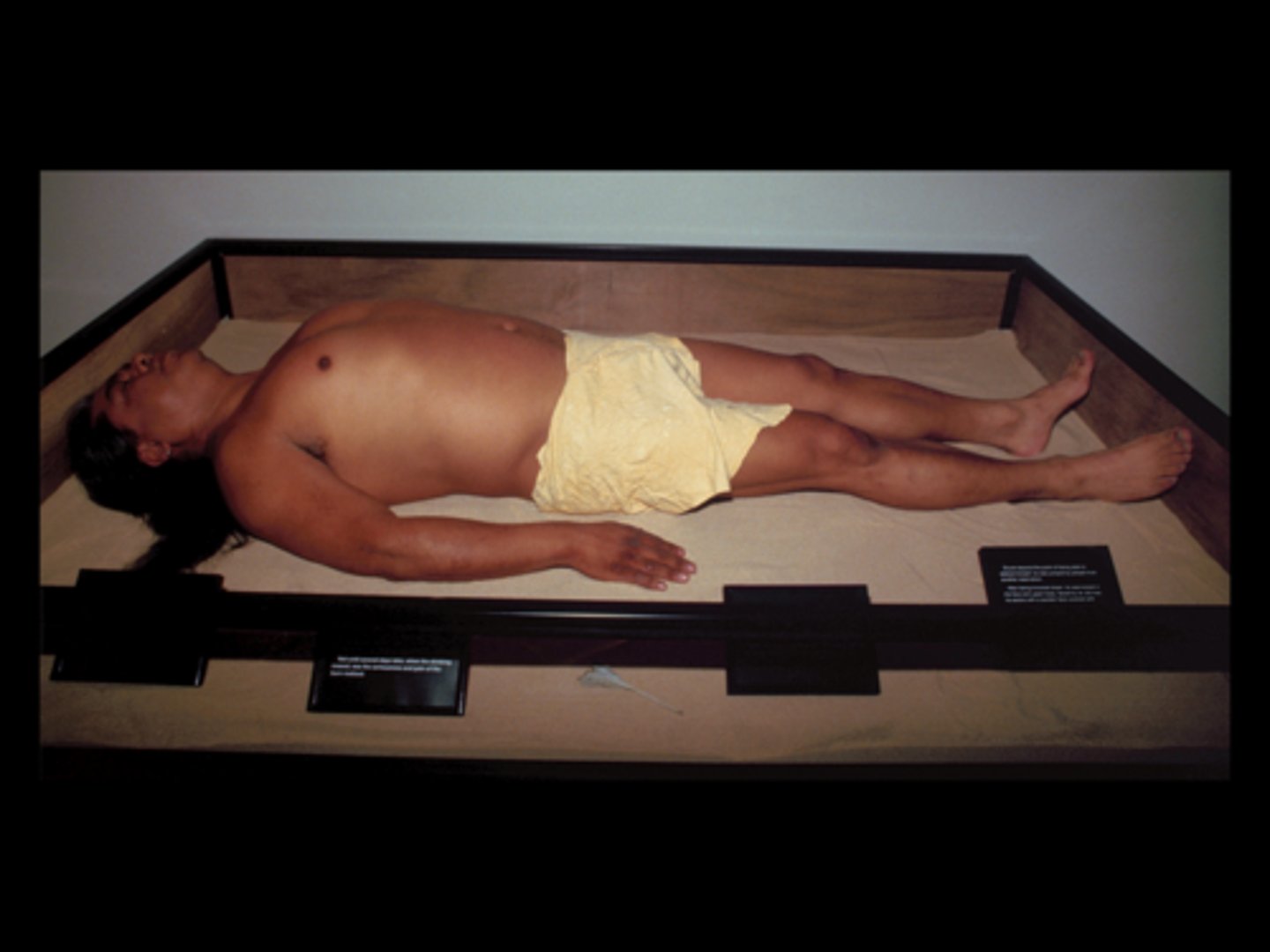
The Artifact Piece
James Luna
first staged 1987
dentity, the Body and Politics
Artist: Native American artist.
Commissioner:
Original Location:
Style:
Characteristics: Signs told of where he got the scars on his body from (accidents, fights?).
Subject: Performance Art? (Identity, the Body and Politics)
Function: People were surprised he was a real person and were poking at him. Vulnerability? When we think of Native American we think of people who live in reservations and museums. But we don't interact with Native American culture.
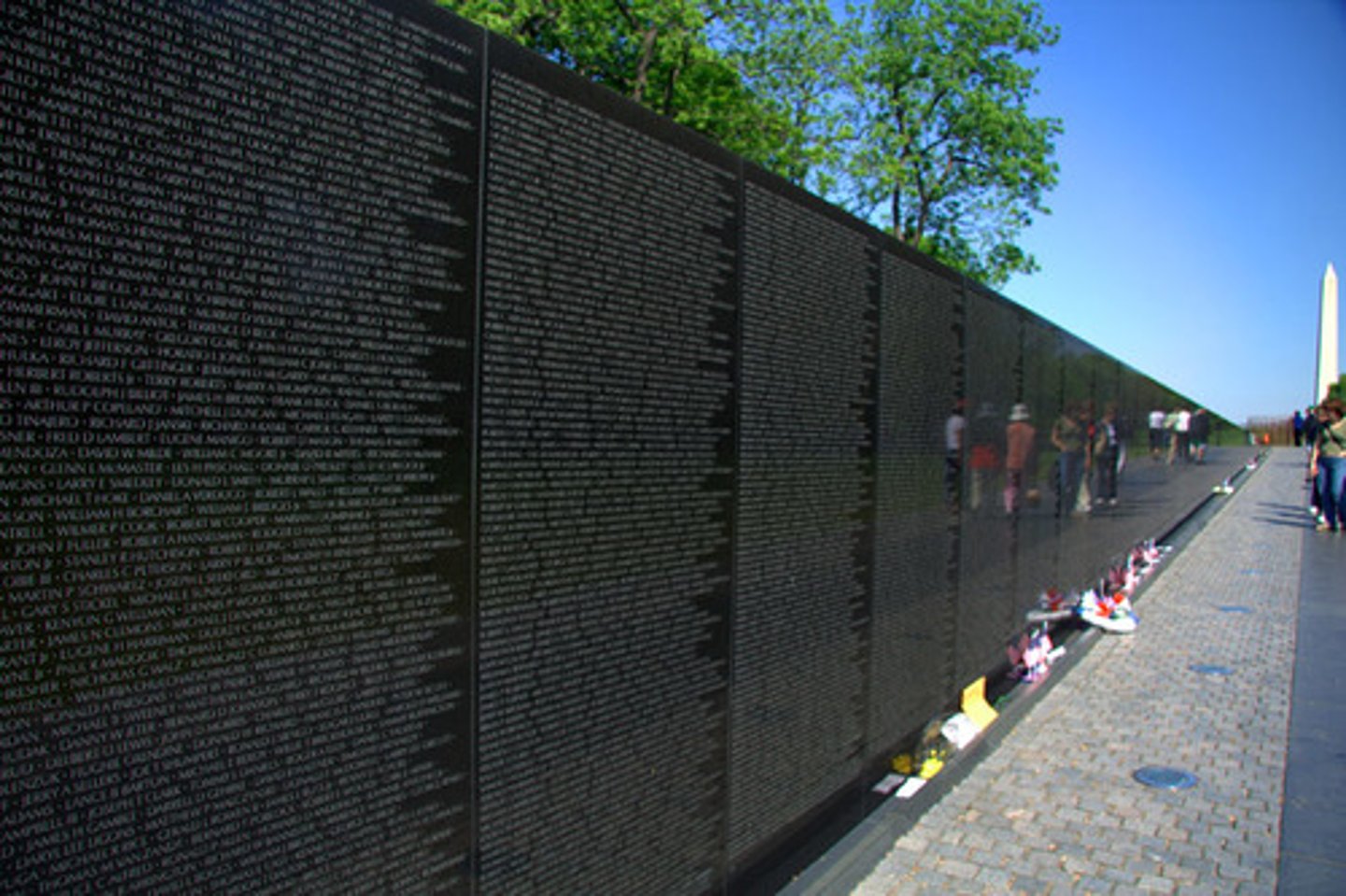
Vietnam Veteran's Memorial
Maya Ying Lin
1981-3
Identity, the Body and Politics
Artist: Maya Ying Lin — Asian AmericanCommissioner: Federal government wanted to open up a competition for the memorial. Blind open competition.
Original Location: Washington D.C.
Style: Minimalistic sculpture (Identity, the Body and Politics)
Characteristics: Black granite walls. Each wing 246' long. Names of dead and MIA on the walls.
Subject: Names of Vietnam War veterans.
Function: Walking meditation into history.
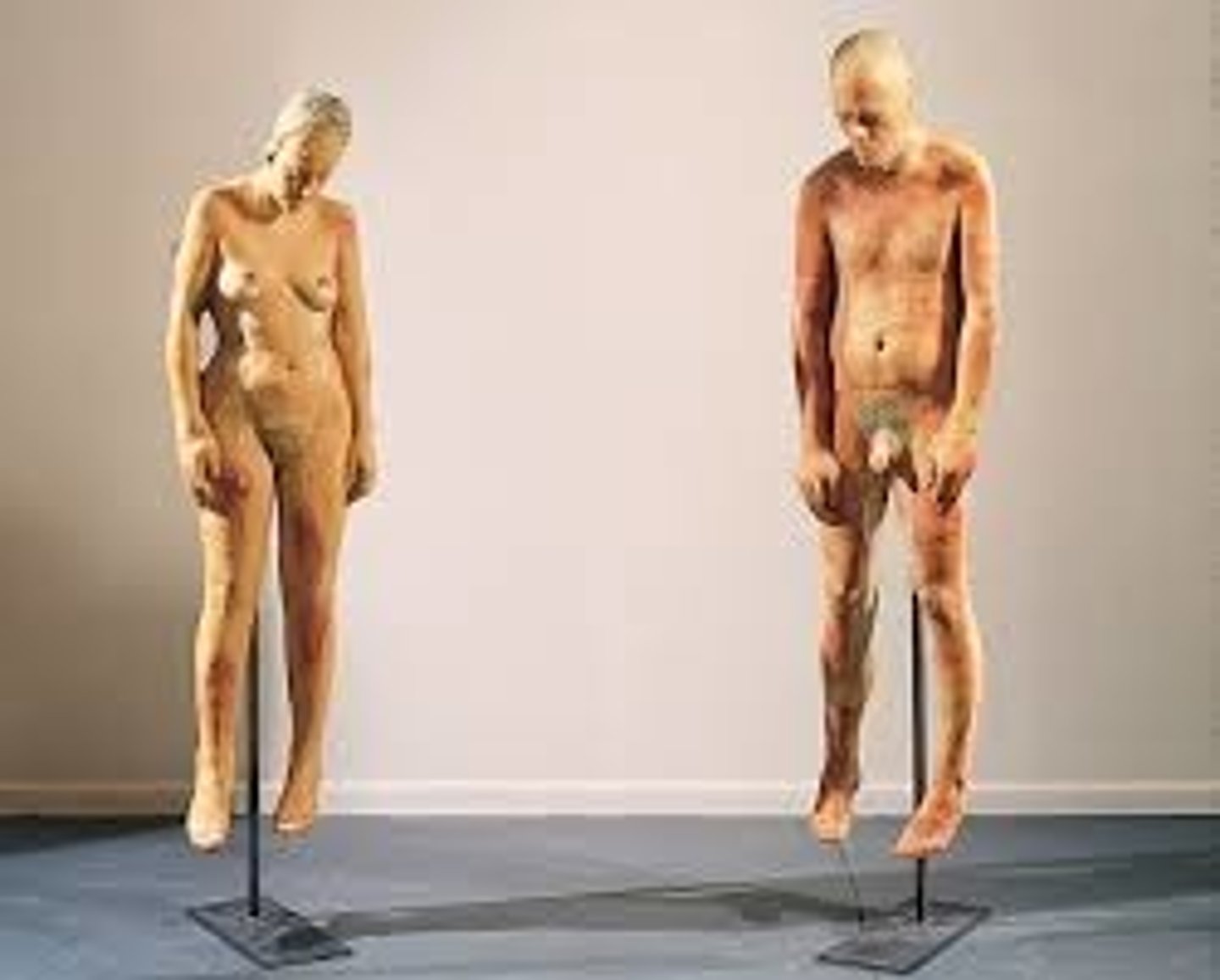
Kiki Smith, Untitled 1990
Kiki Smith
1990
Identity, the Body and Politics
Artist: Daughter of an opera singer and artist.
Commissioner:
Original Location:
Style: Sculpture. (Identity, the Body and Politics)
Characteristics: Crystalline beeswax figure with fluids coming out of it. Very naturalistic.
Subject: Male and female hanging dead with "life giving forces" coming out of them.
Function: Thinking of the life and death of her parents.
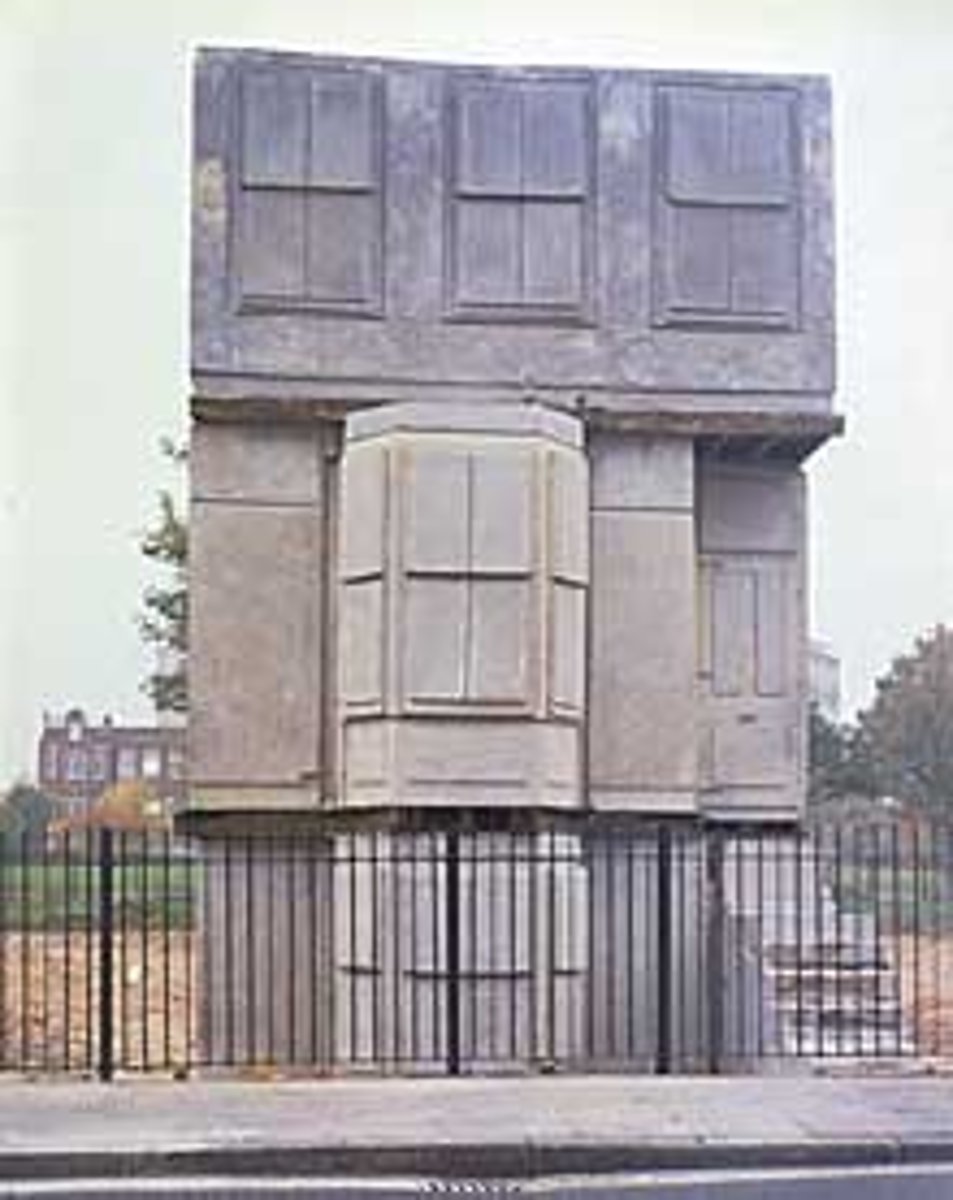
House
Rachel Whiteread
1993
Identity, the Body and Politics
Artist: Whiteread awarded the Turner Prize.
Commissioner:
Original Location: London, England
Style: Abstract Memorial. (Identity, the Body and Politics)
Characteristics: Plaster cast of Victorian British row house. Plaster cast, liquid concrete.
Subject: Victorian British row house about to be torn down.
Function: Victorian era homes were being torn down and apartment blocks were replacing it. Urban development didn't serve the community that was living there for generations. (Something gone no longer inside).
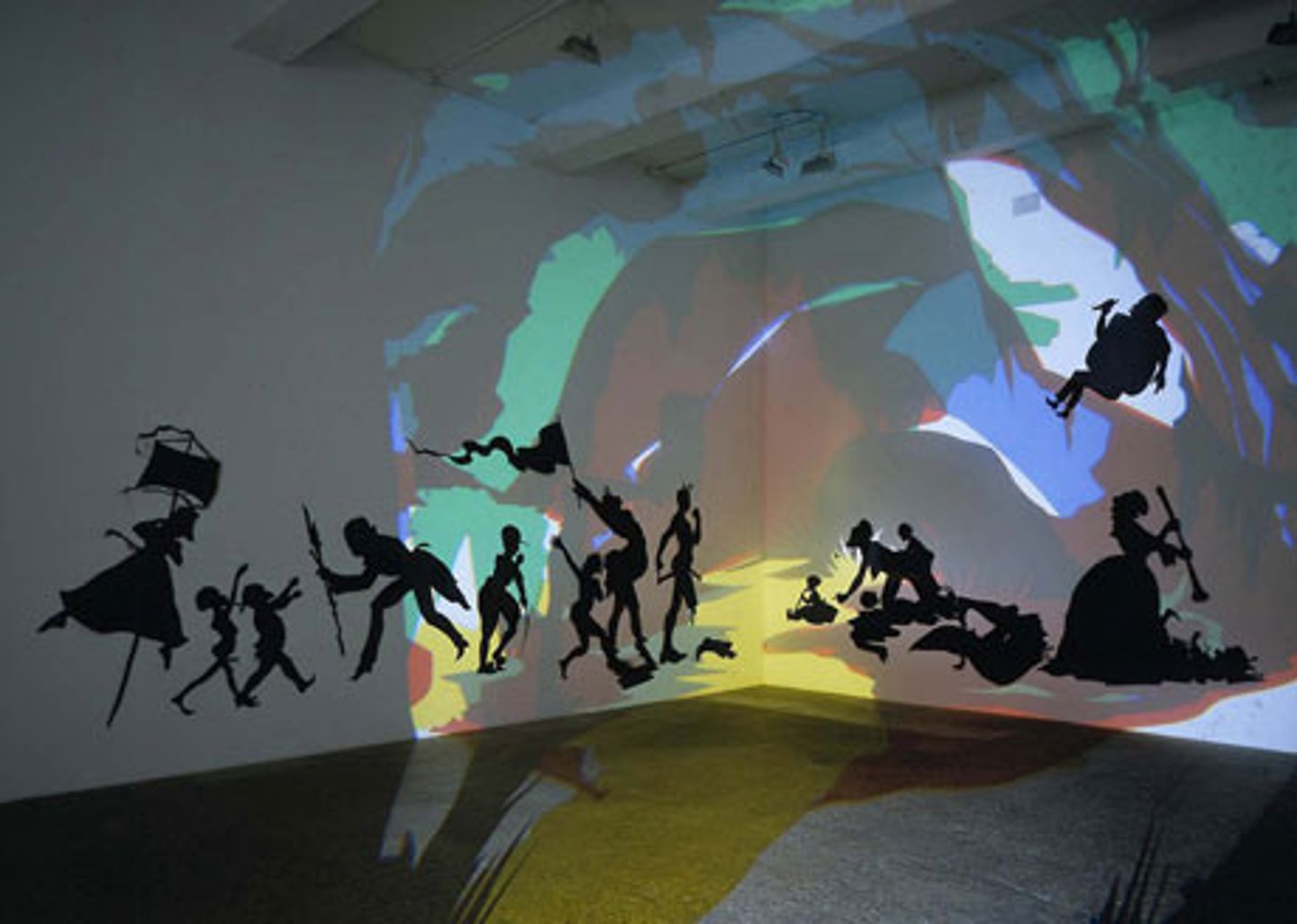
Darkytown Rebellion
Kara Walker
2001
Identity, the Body and Politics
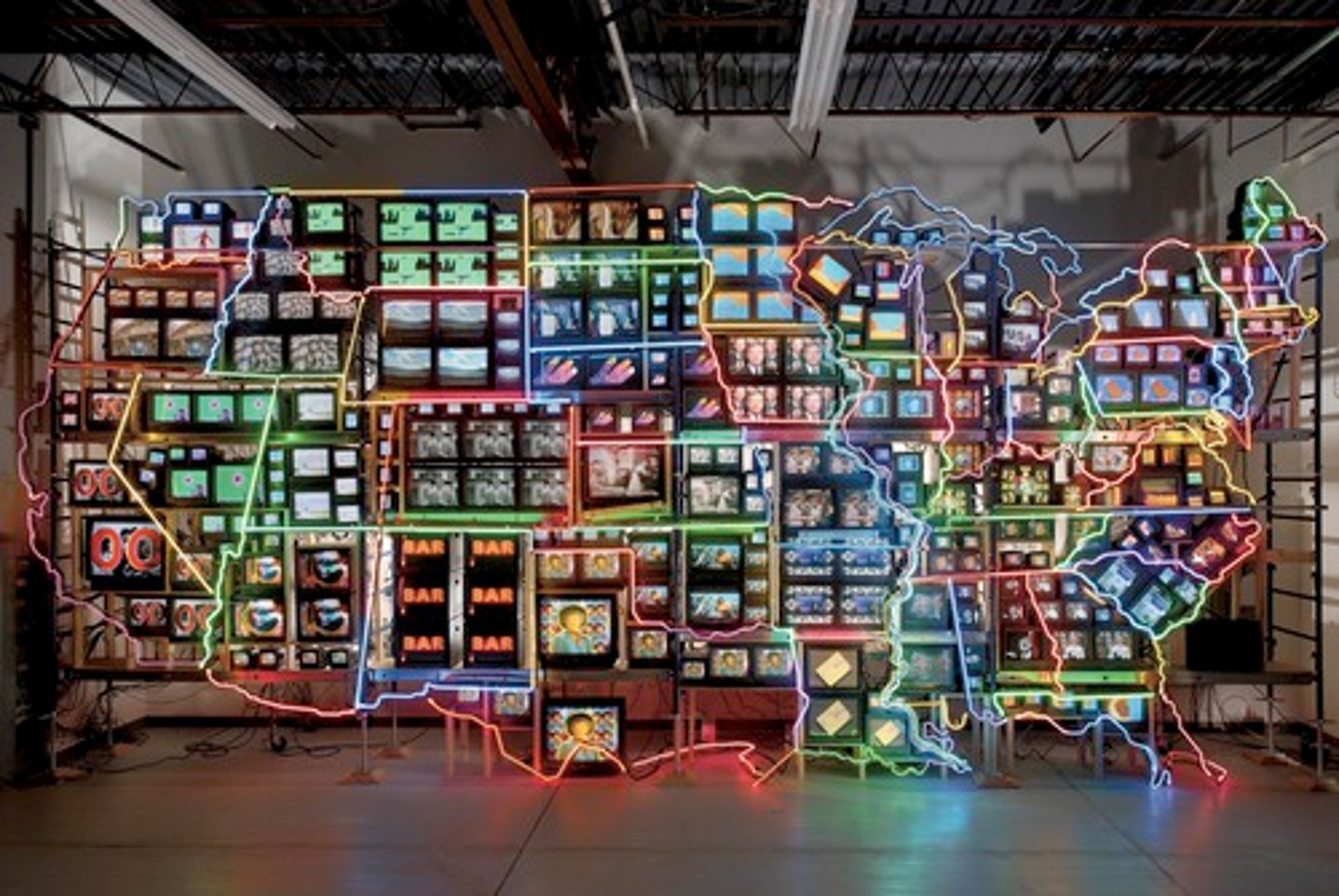
Electronic Superhighway: Continental U.S, 1995
Nam June Paik
1995
Video and Multimedia
Artist:
Commissioner:
Original Location:
Style: Video and MultimediaCharacteristics:
Subject:
Function:
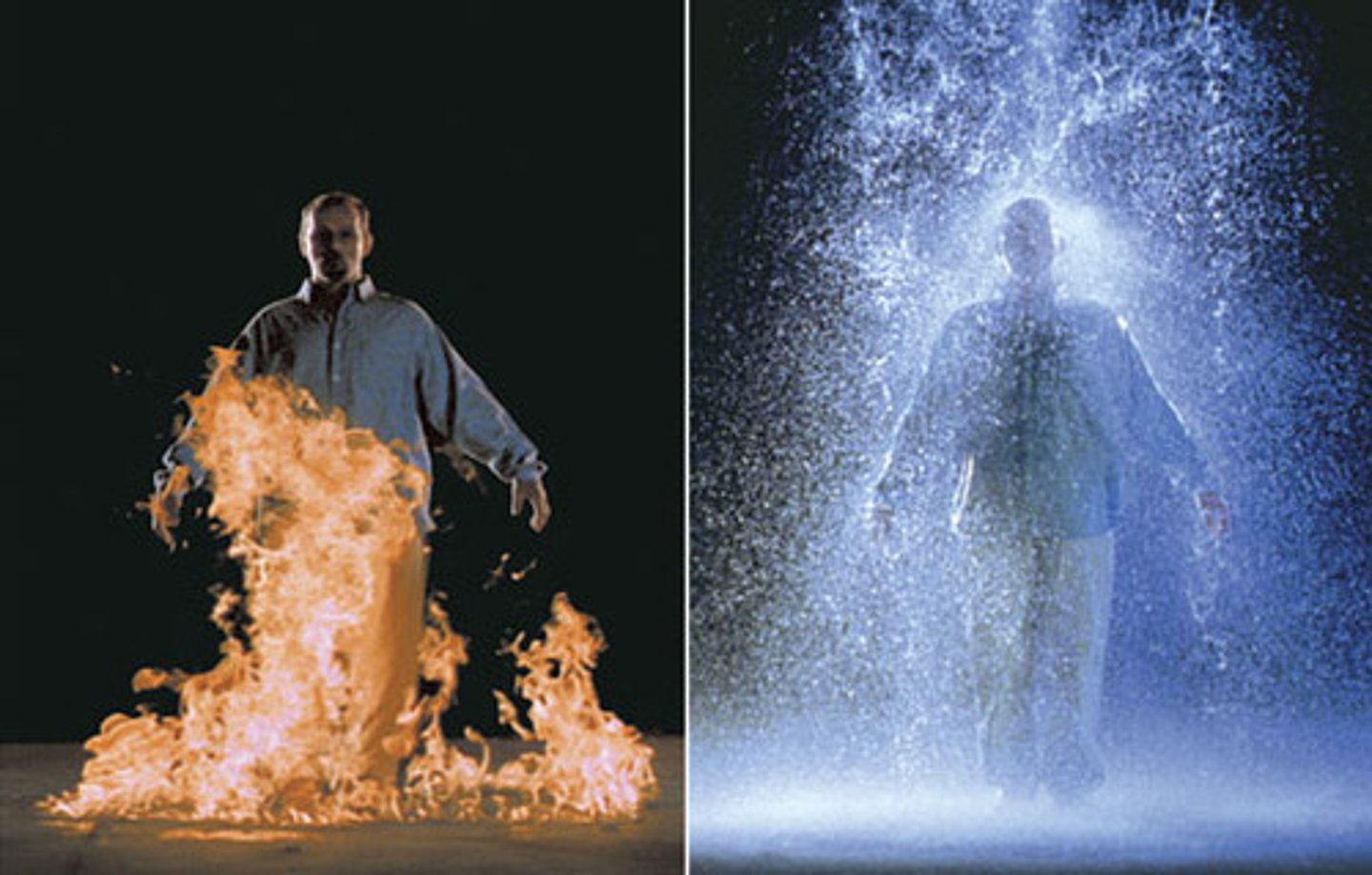
The Crossing
Bill Viola
1996
Video and Multimedia
Artist:
Commissioner:
Original Location:
Style: Video and Multimedia
Characteristics:
Subject:
Function:
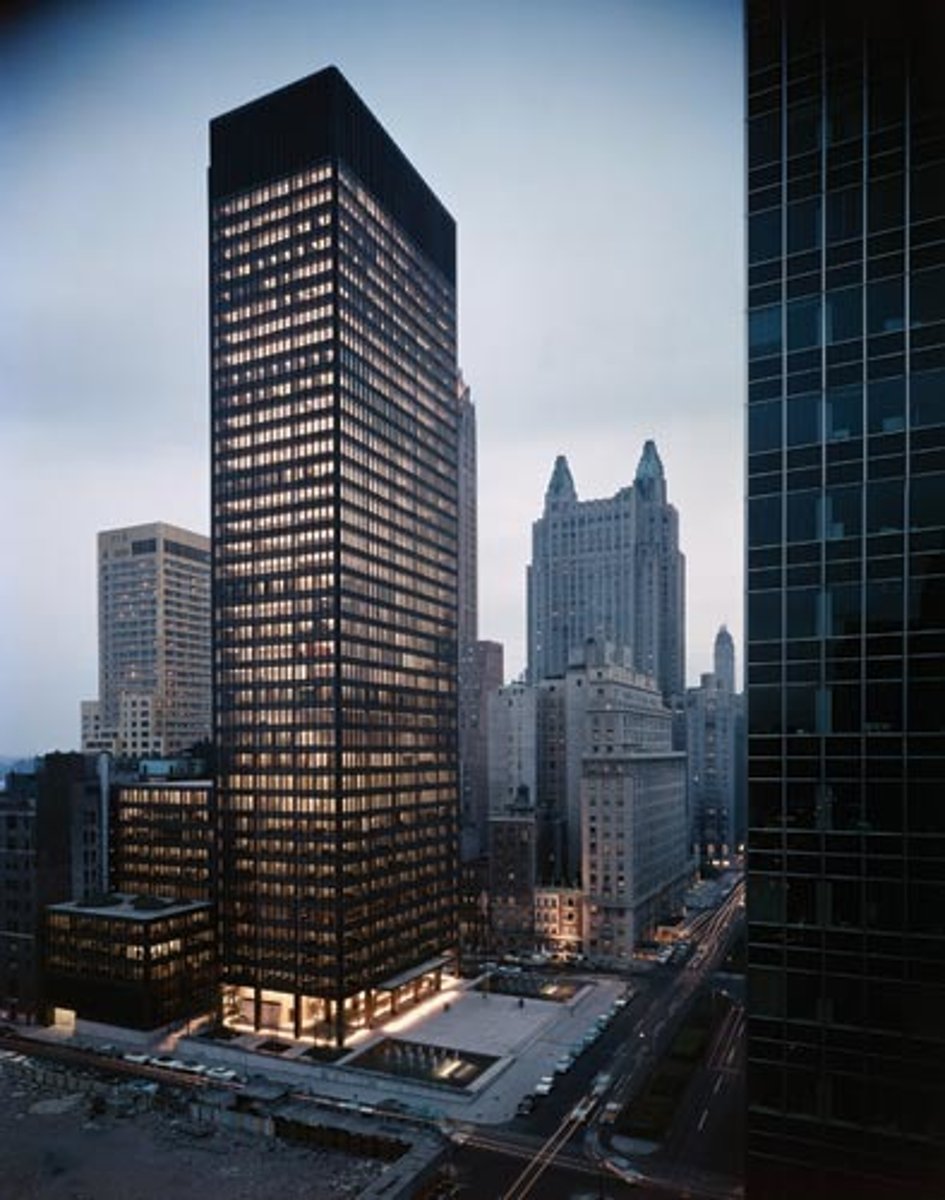
Seagram Building
Ludwig Mies van der Rohe, Philip Johnson
1956-8 (Modernism, International Style)
Modernism, Postmodernism and Deconstructivism in Architecture
Artist:
Commissioner:
Original Location: Manhattan, New York
Style: Modernist Architecture (skyscraper)
Characteristics: Modern and sleek for its time.
Subject:
Function: Didn't want to tower over a historical building so it didn't take up all of the block it was granted.
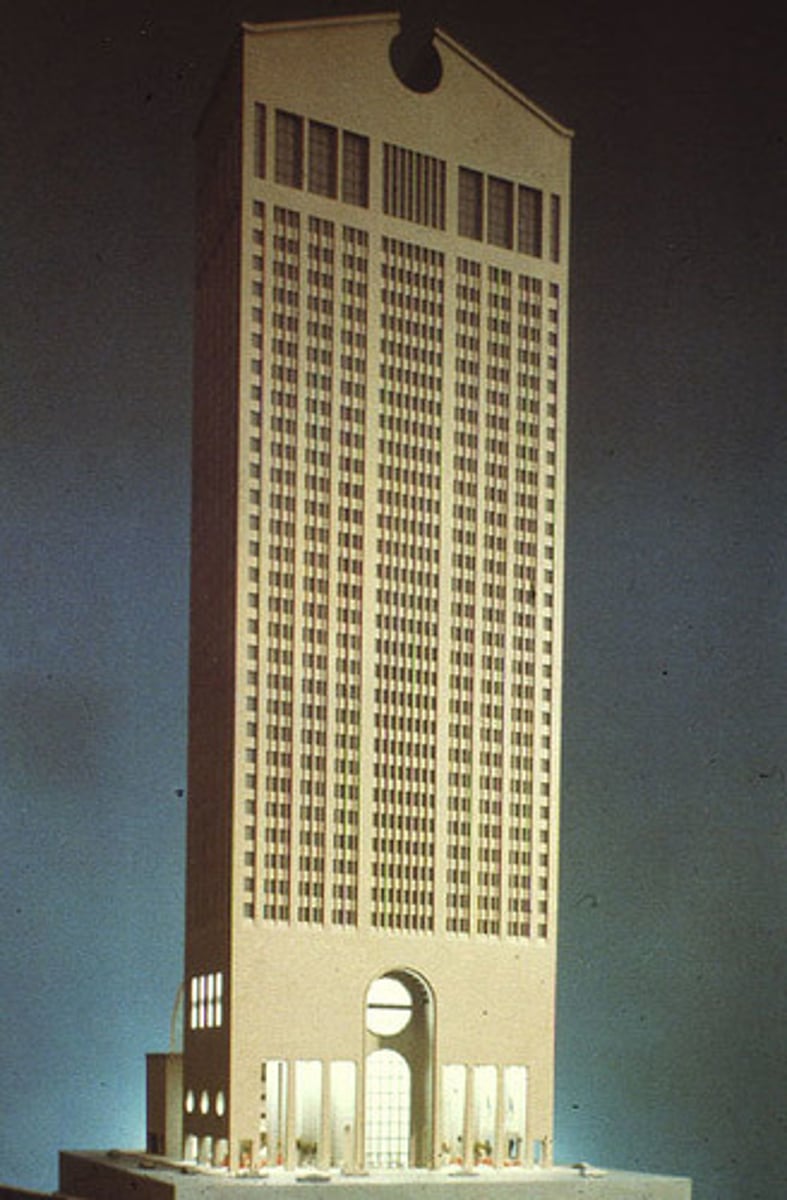
Model of the AT&T Corporate Building
Philip Johnson and John Burgee
1978-83 (Postmodern)
Modernism, Postmodernism and Deconstructivism in Architecture
Artist:
Commissioner:
Original Location:
Style: Postmodernist Architecture
Characteristics: Made to look like a telephone booth for reminiscence. Pilasters and thin ribs going up. Oculi on the bottom of the building.
Subject: References to a phone booth and renaissance buildings.
Function: Tired of sleek, modernist buildings so they decided they would back in imagery of the past.
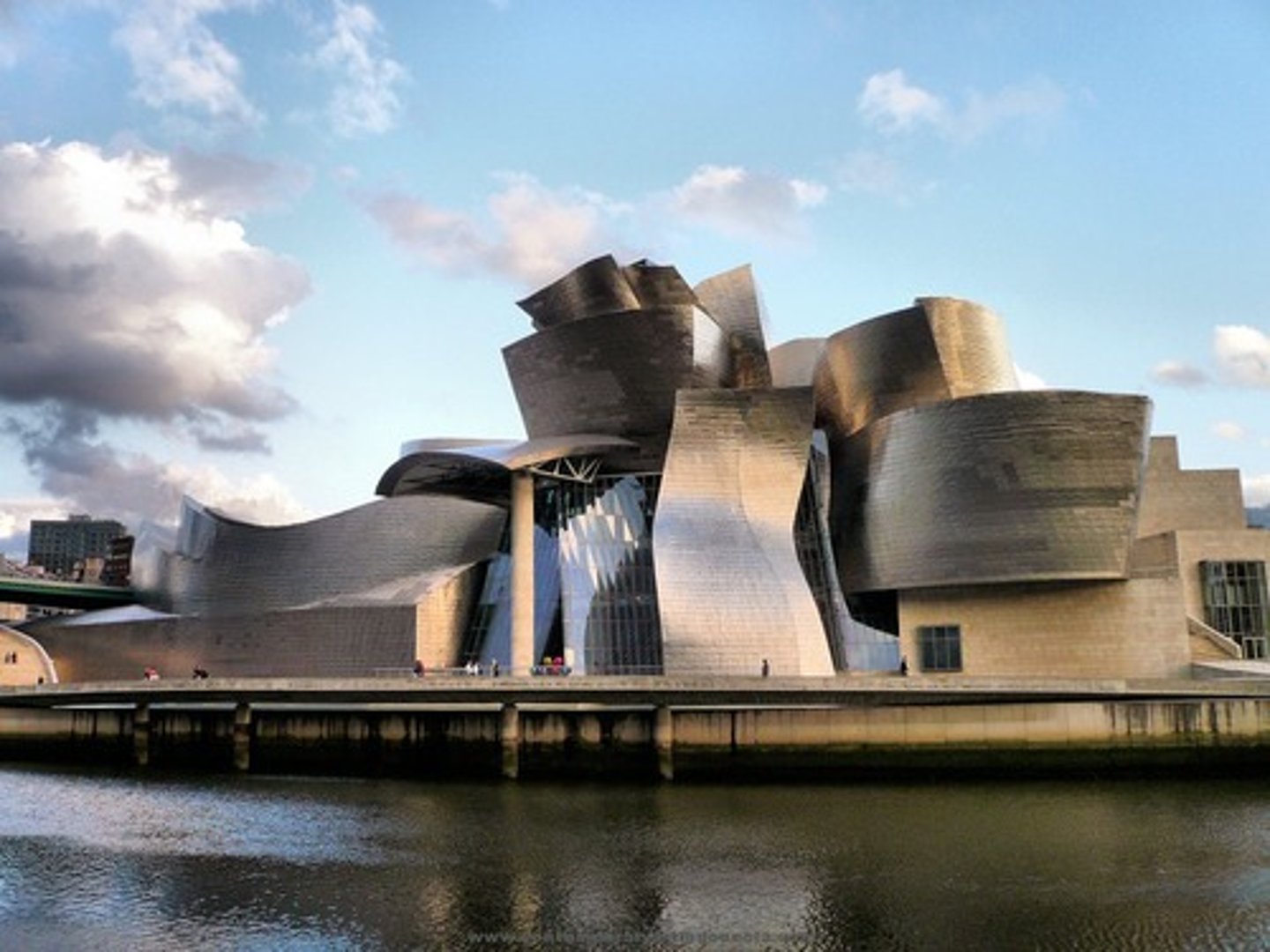
Guggenheim Bilbao Museo
Frank O. Gehry
Spain 1997 (Deconstructivist)
Modernism, Postmodernism and Deconstructivism in Architecture
Artist:
Commissioner:
Original Location:
Style: Deconstructivist Architecture
Characteristics:
Subject:
Function:
Water Lily Lamp
Louis Comfort Tiffany
 Note
Note  Flashcards (106)