WFC154L Herpetology Lab: Lab Practical I
 Call Kai
 Learn
Learn Practice Test
 Spaced Repetition
 Match
Match Flashcards
 Knowt Play
1/152

There's no tags or description
Looks like no tags are added yet.
Name | Mastery | Learn | Test | Matching | Spaced | Call with Kai |
|---|
No analytics yet
Send a link to your students to track their progress
153 Terms
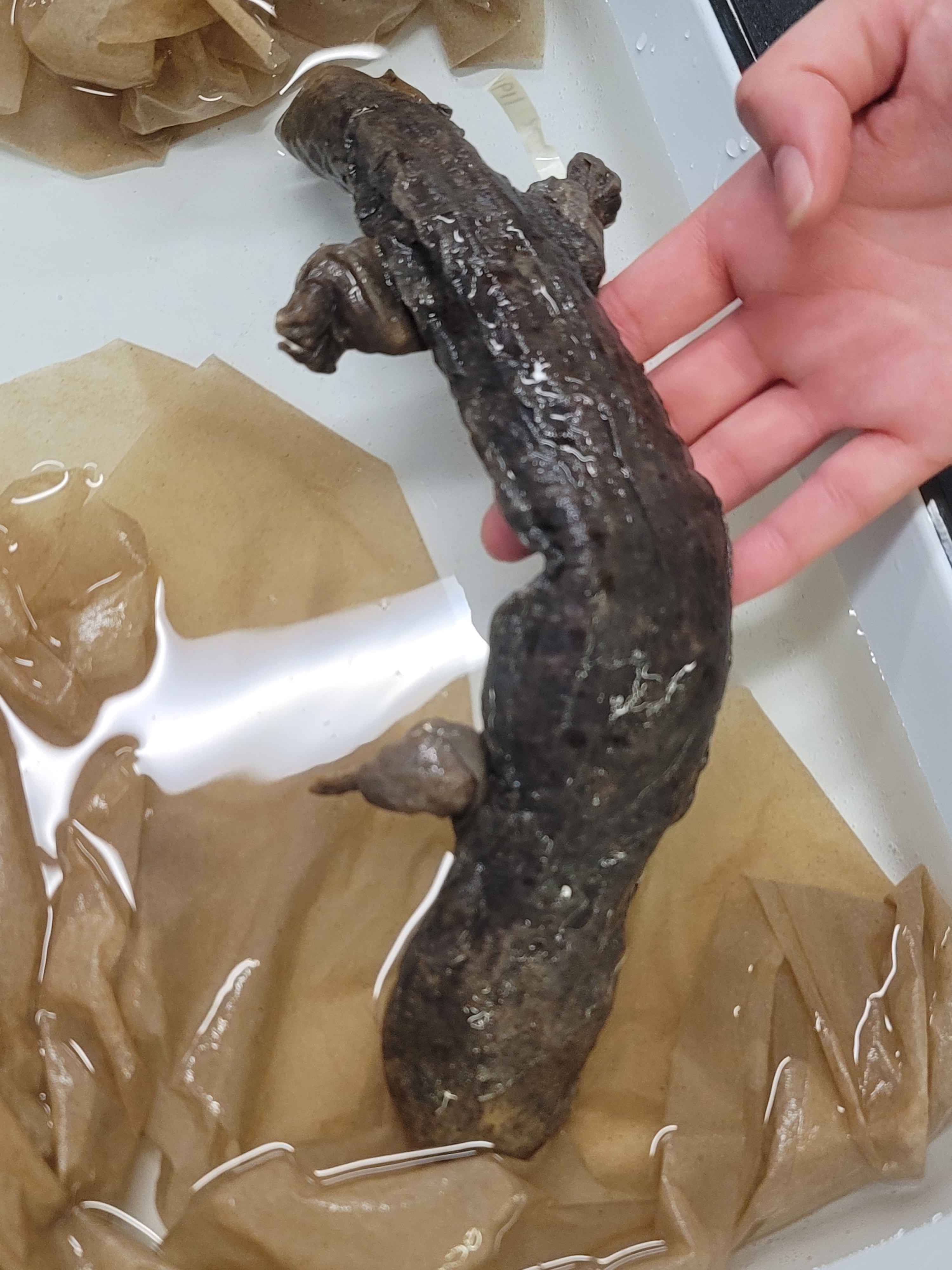
Cryptobranchidae
Distribution: eastern China, southern Japan, eastern United States
Traits
the largest salamanders
eyes are lidless,
baggy skin for cutaneous respiration
flattened body shape
incomplete metamorphosis
adults have hidden gill slit
suction feeders with no
tongueexternal fertilization
nest guarding by males.
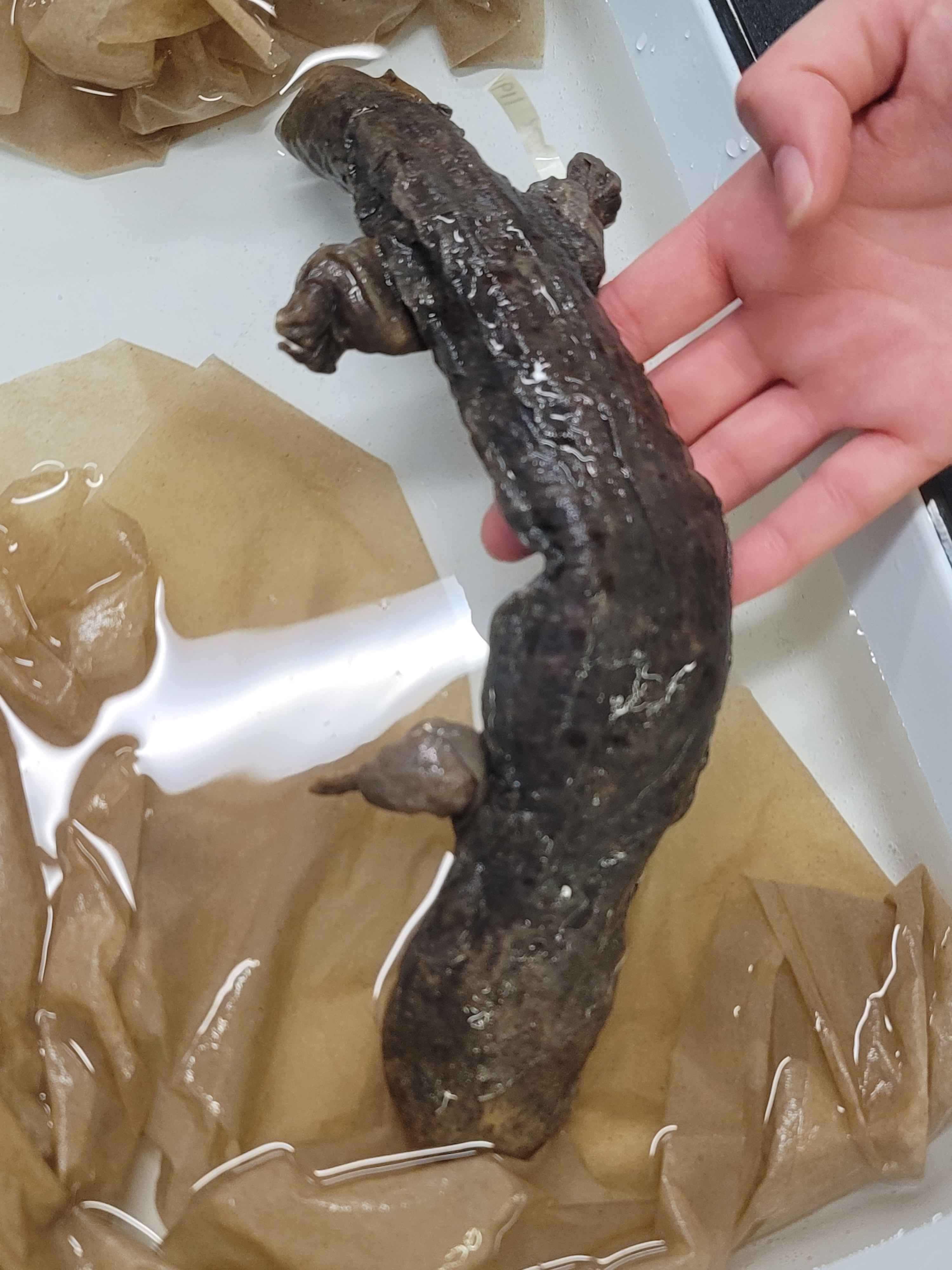
Cryptobranchidae
Hynobiidae
Traits:
Complete metamorphosis (no gills or gill slits)
typical terrestrial body plans
distinguished from other salamanders by osteology
Lungs reduced in some genera, and completely absent in
one genus
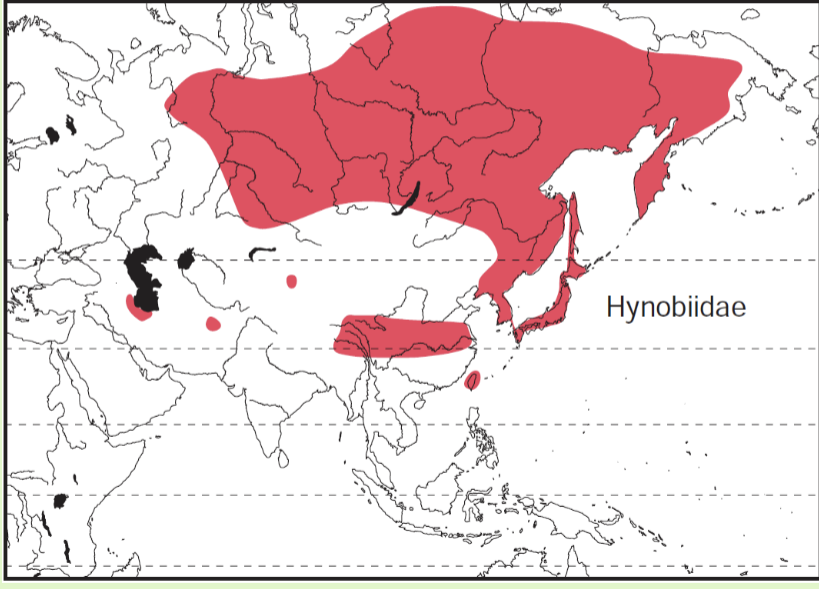
Hynobidae Distribution
Asia, from Ural Mountains to Pacific (including Japan and Taiwan), south to China, Afghanistan, and Iran
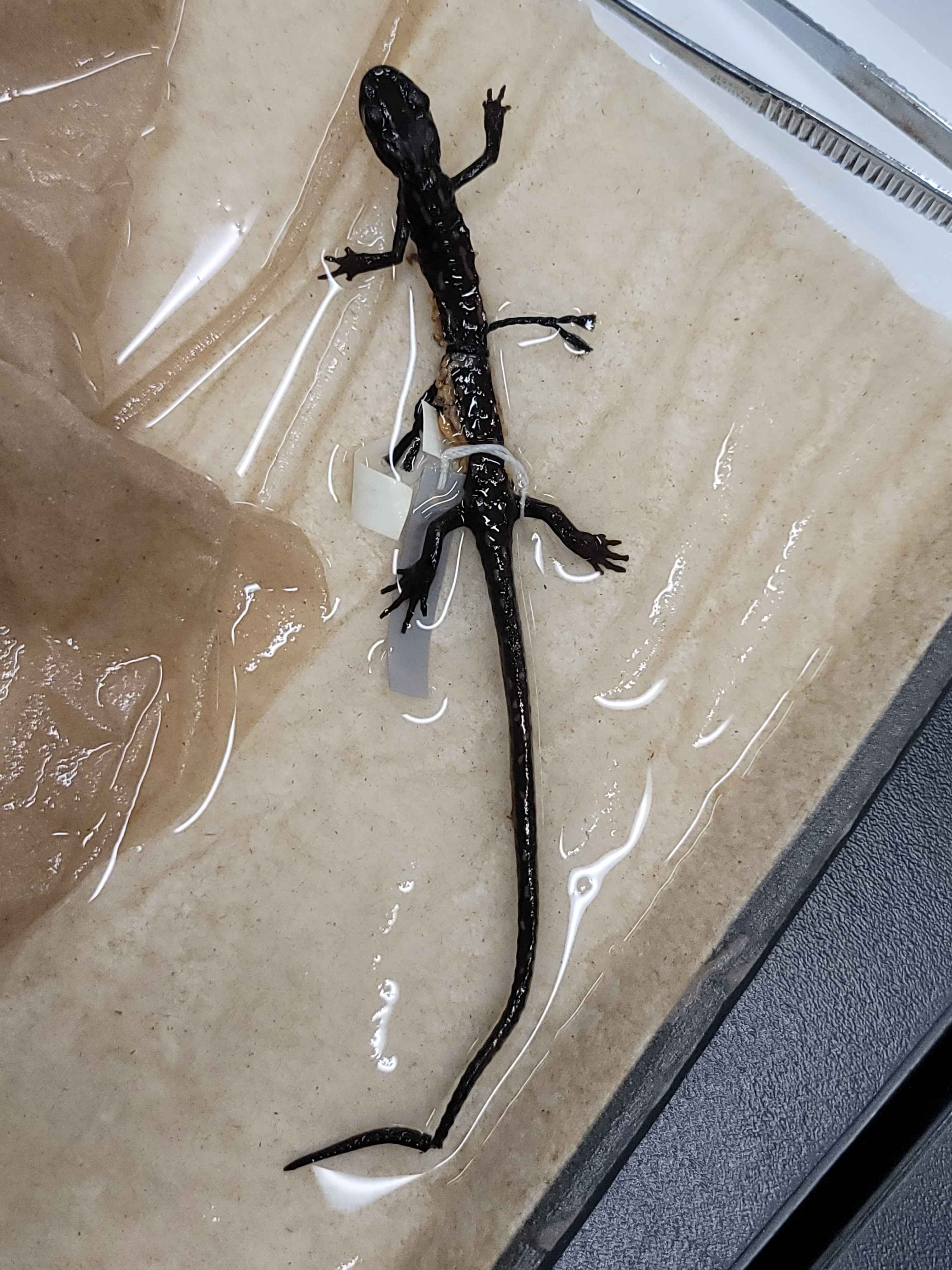
Hynobiidae
Sirenidae
Eel-like, incomplete metamorphosis (paedomorphic)
adults have external gills,
keratinized beak with nonpedicellate teeth
two forelimbs with reduced number of digits
no pelvic girdle
external fertilization,
paternal care
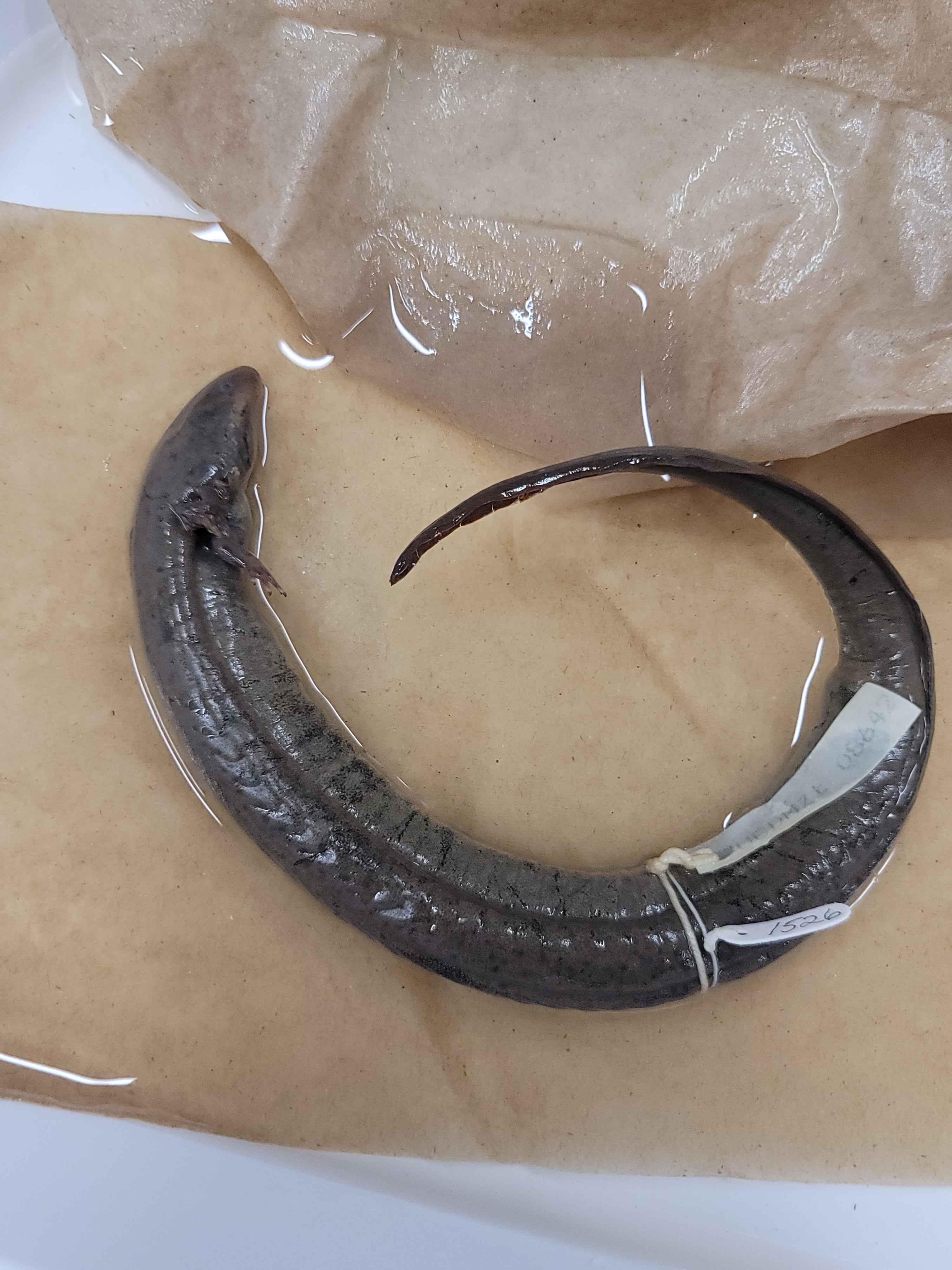
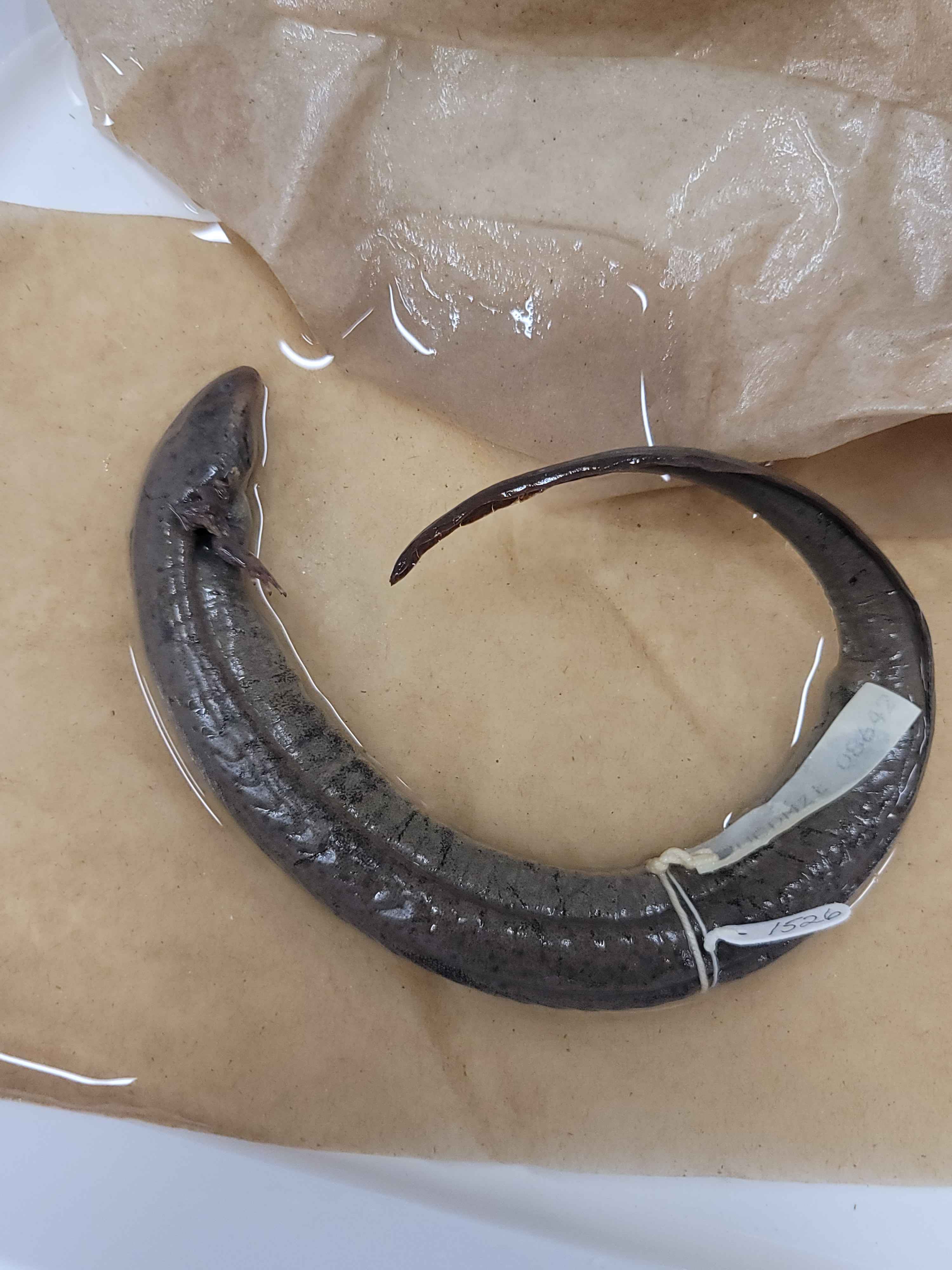
Sirenidae
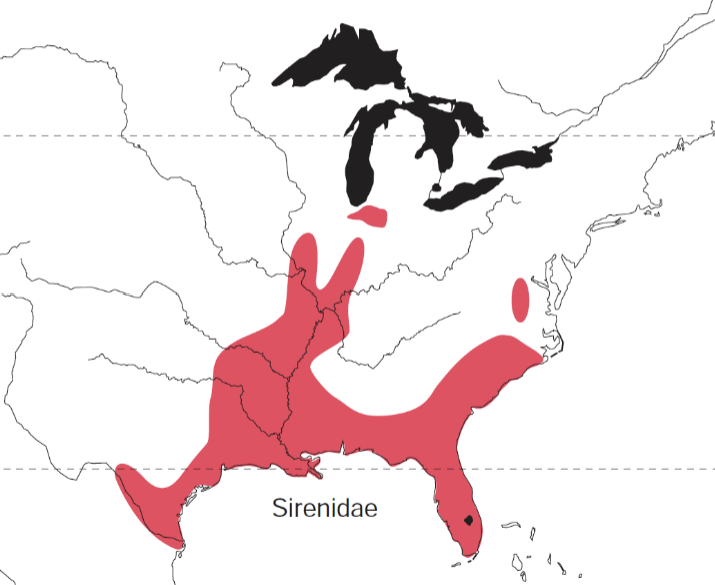
Distribution: Michigan, southeastern United States, and extreme northeastern Mexico
Sirenidae
Salamandridae
Traits:
Variable in external appearance
all have four good limbs
most have complete
metamorphosismany are aquatic with smooth skin and finss
terrestrial individuals with rugose
skinall have toxic skin secretions, often brightly colored.
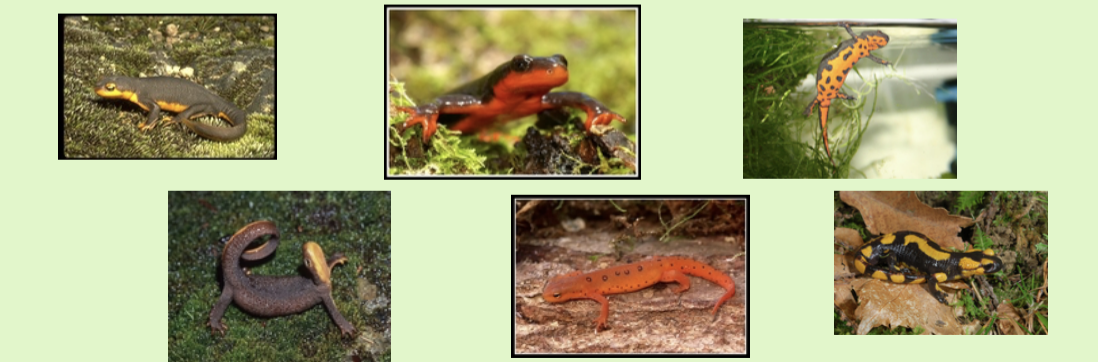
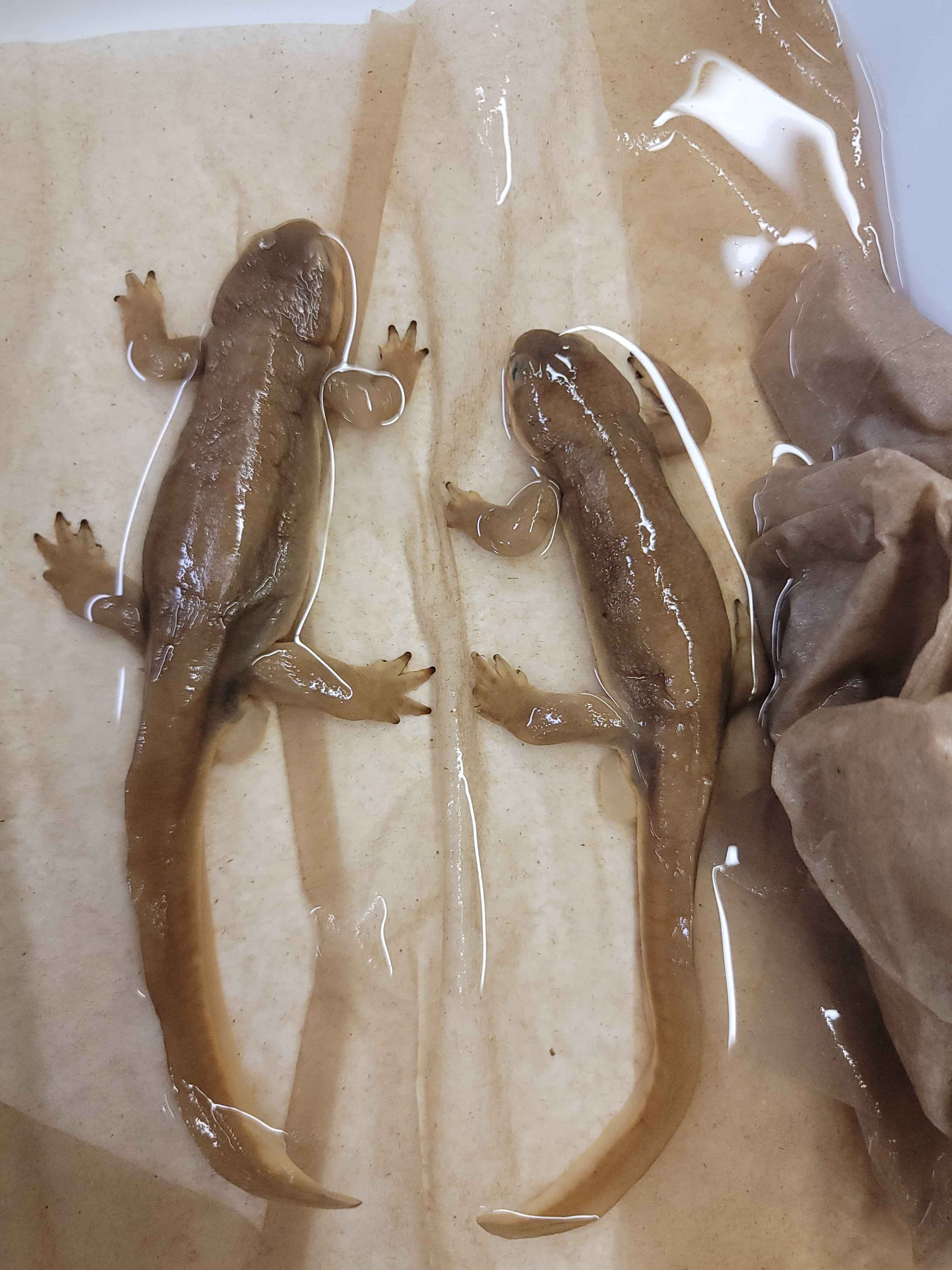
Taricha Torosa - Salamandridae
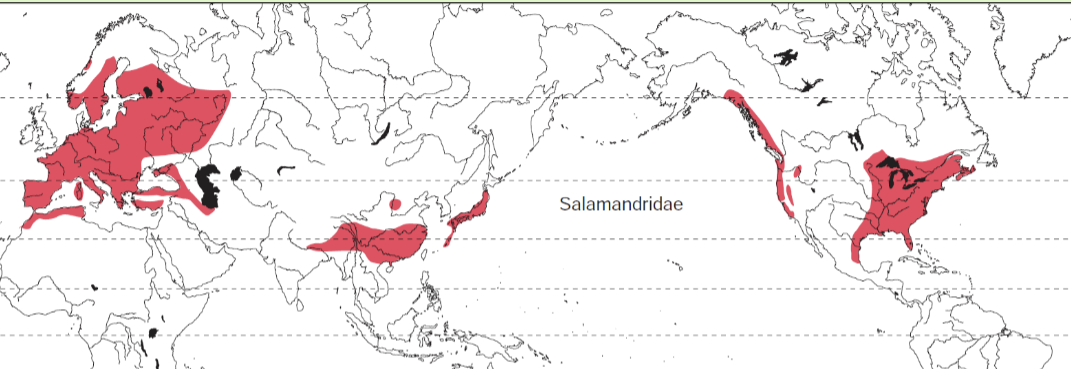
Salamandridae Distribution
Europe, Turkey and the Levant, southern China and northern Indochina, Japan,
northwestern Africa, and North America
Dicamptodontidae
Large, brown mottled with black, absent or facultative metamorphosis
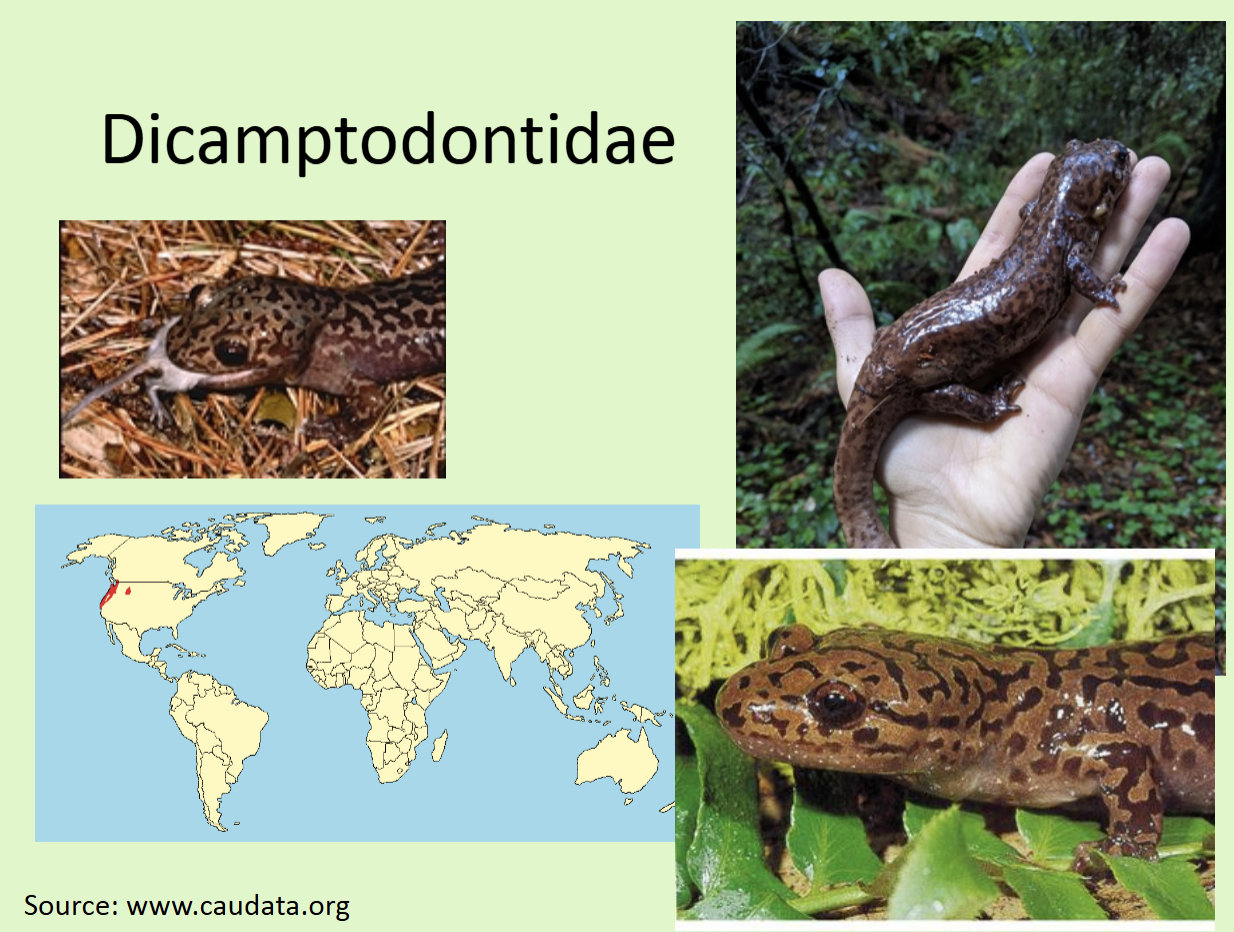
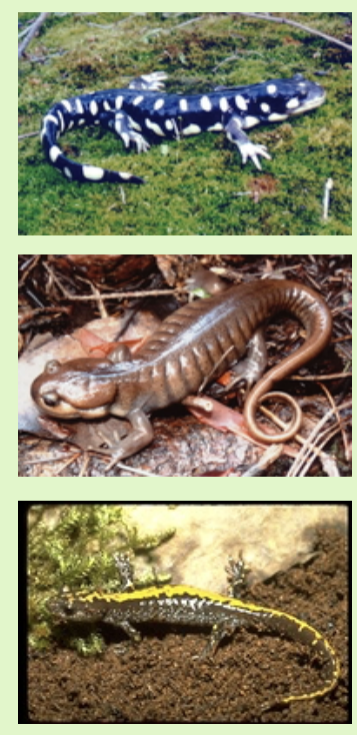
Ambystomatidae
Few distinctive characters, moderate size, smooth skin, robust body, short blunt head.
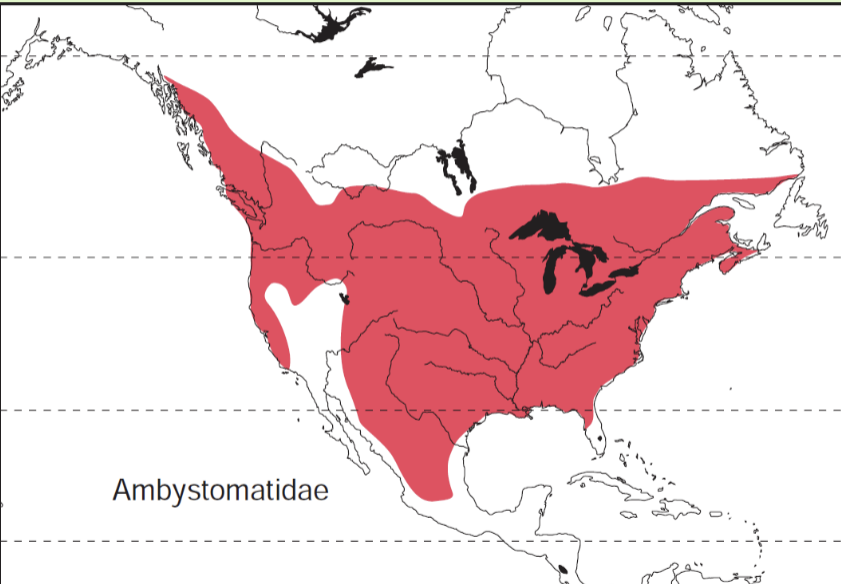
Ambystomatidae Distribution
North America, from Canada south to central Mexico and from the Pacific to the Atlantic
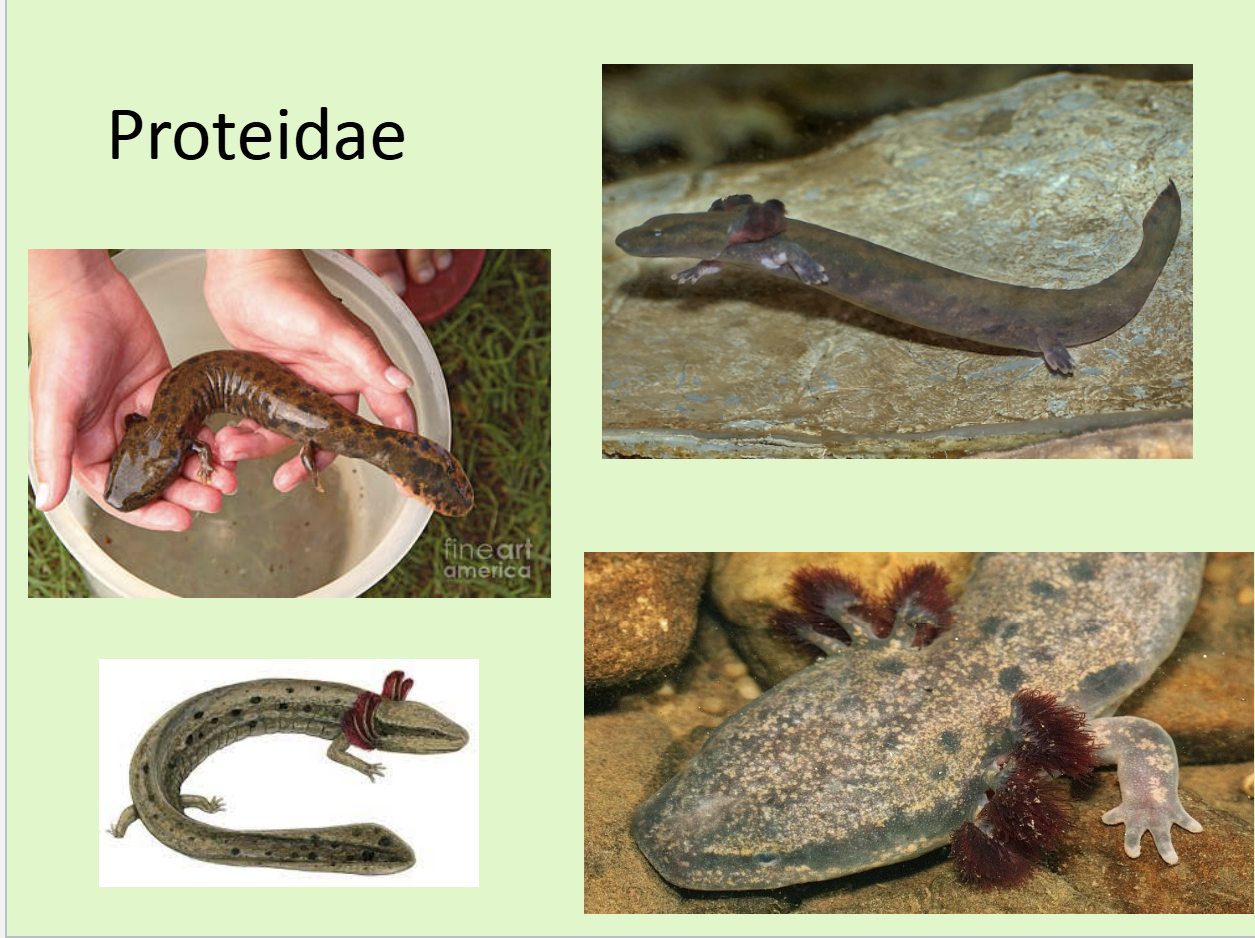
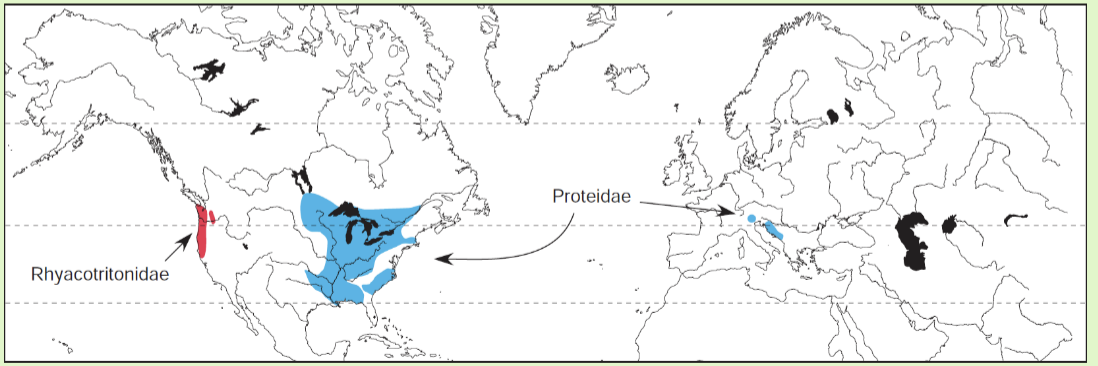
Proteidae
Paedomorphic, adults have large external gills caudal fin, no eyelids, no upper jaw
four good limbs
reduced number of digits on front & rear limbs. European species is cave- dwelling, Proteus anguinus
Proteidae Distribution
Eastern United States and Canada, east coast of Adriatic Sea
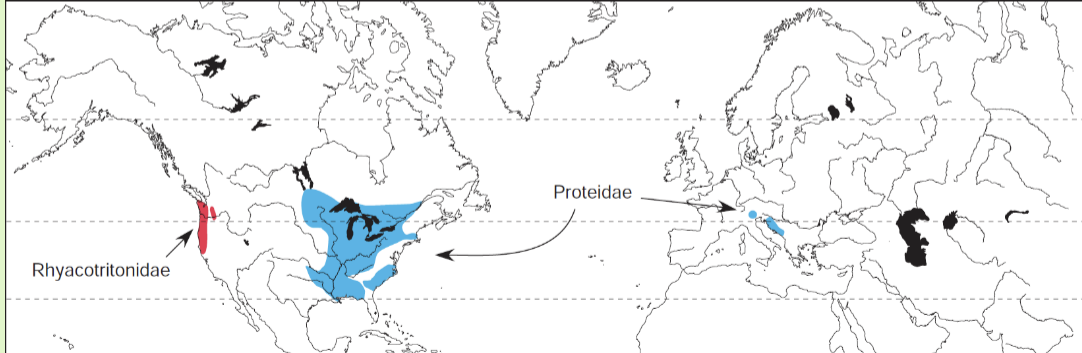
Rhyacotritonidae
Small (< 6 cm), semi-aquatic and found in fast-flowing streams
complete metamorphosis
reduced lungs
large eyes
square gland behind vent of males
plain brown or olive colored dorsum with mottling
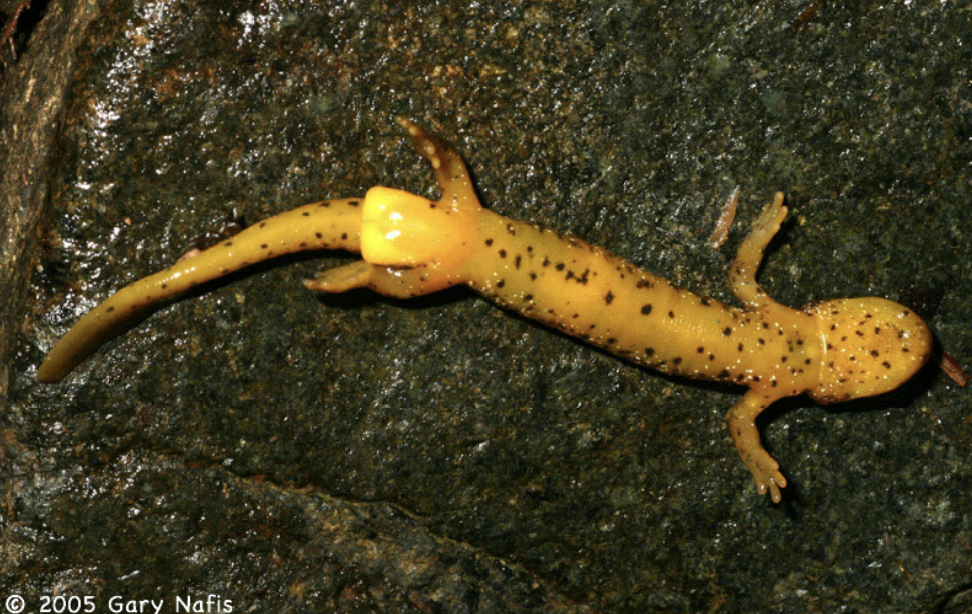
Rhyacotritonidae Distribution
Pacific Northwest from California to Washington
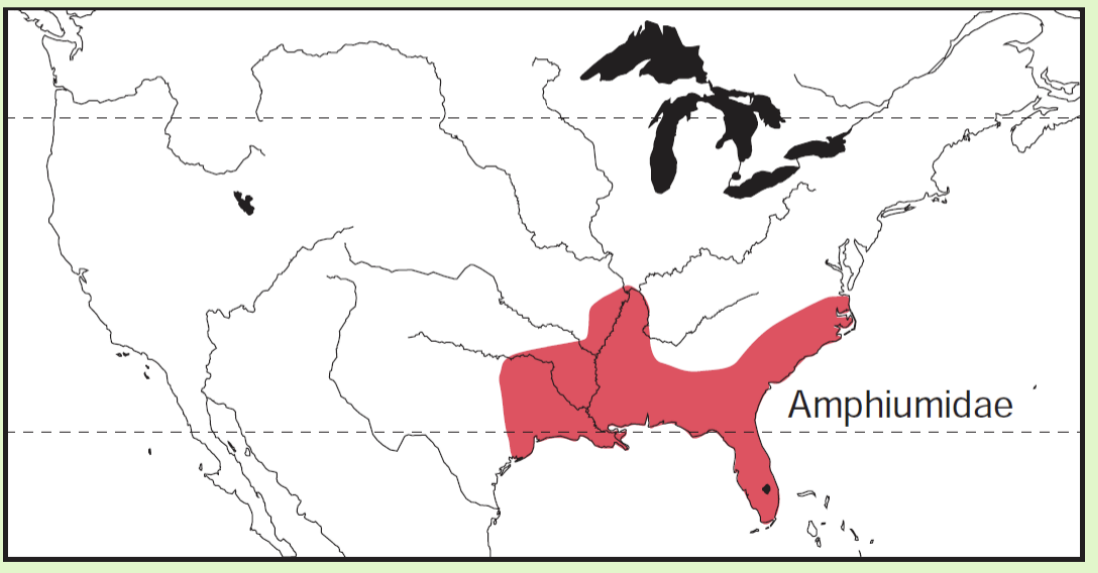
Amphiumidae
eel-like
incomplete metamorphosis
lack eyelids
adults do not have external gills (but
retain one pair of gill slits)four tiny legs with a reduced number of digits
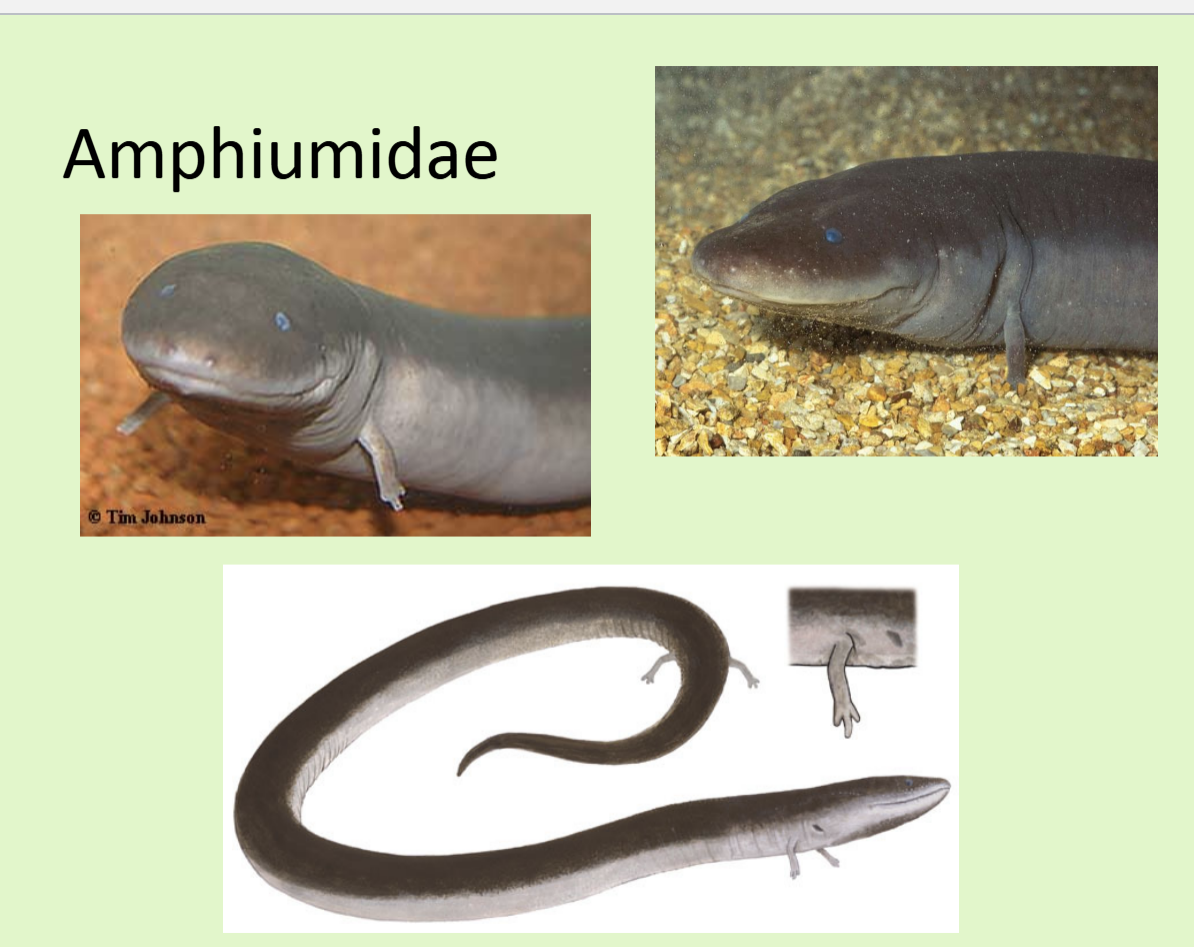
Amphiumidae
Southeastern United States
Plethodontidae
highly diverse, some are worm-like, some are arboreal, some are aquatic cave dwellers.
All lack lungs, all have nasolabial groove, and many have direct development
variety of nasolabial groove sizes
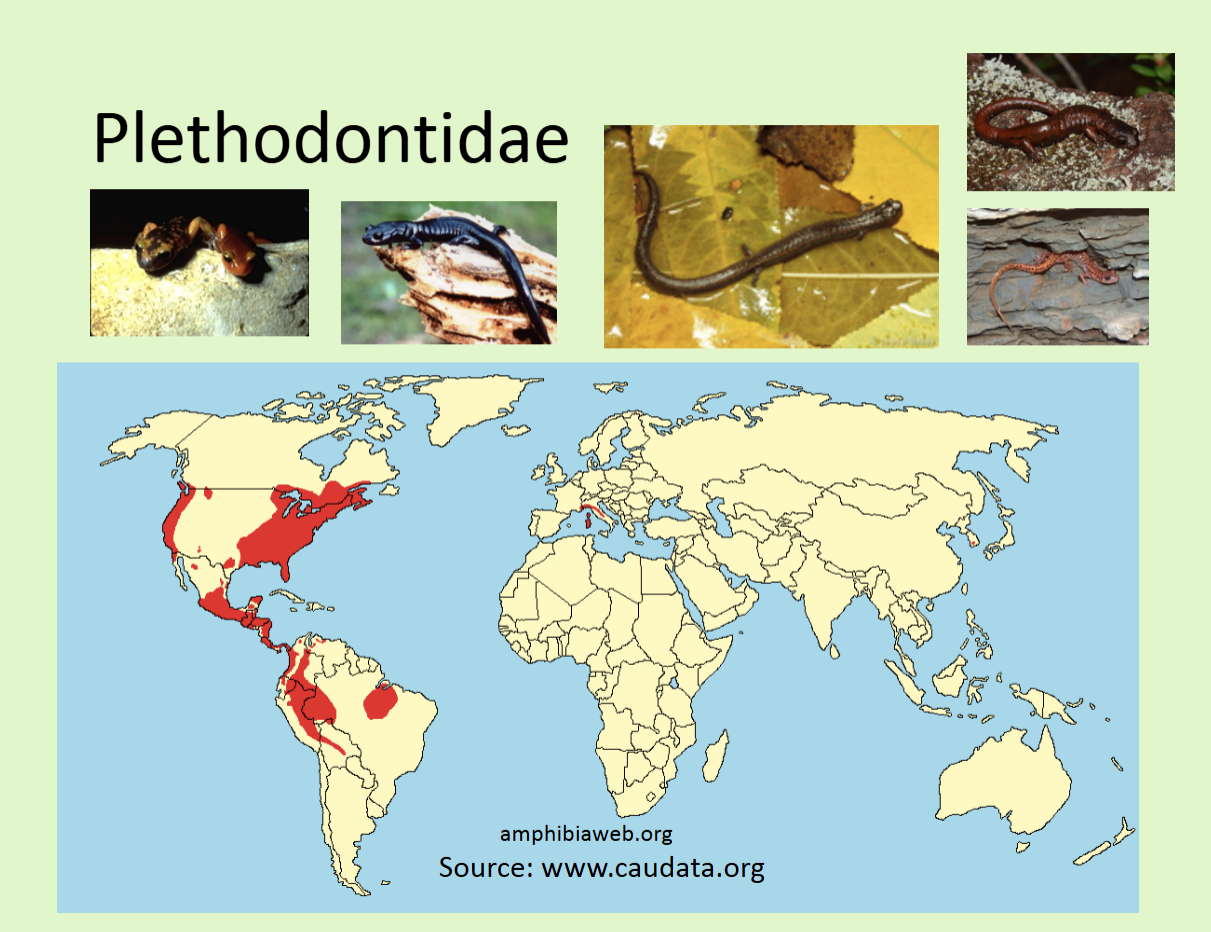
Plethodontidae Distribution
disjunct distributions in eastern and western North America, Latin America,
southern Europe, Korea
Order Gymnophiona (Caecilians)
pantropical; Central and South America, East and West Africa, southern India and Southeast Asia
They are elongate in body form with reduced eyes and some species have dermal scales. All
caecilians reproduce through internal fertilization.No limbs or limb girdles
• Annuli
• Greatly reduced tails
• Tentacles
• Some have dermal scales
• Heavily ossified skull
• All have internal fertilization
• Phallodeum – male
reproductive organ
Proteidae - Necturus Maculosus (Common Mudpuppy)
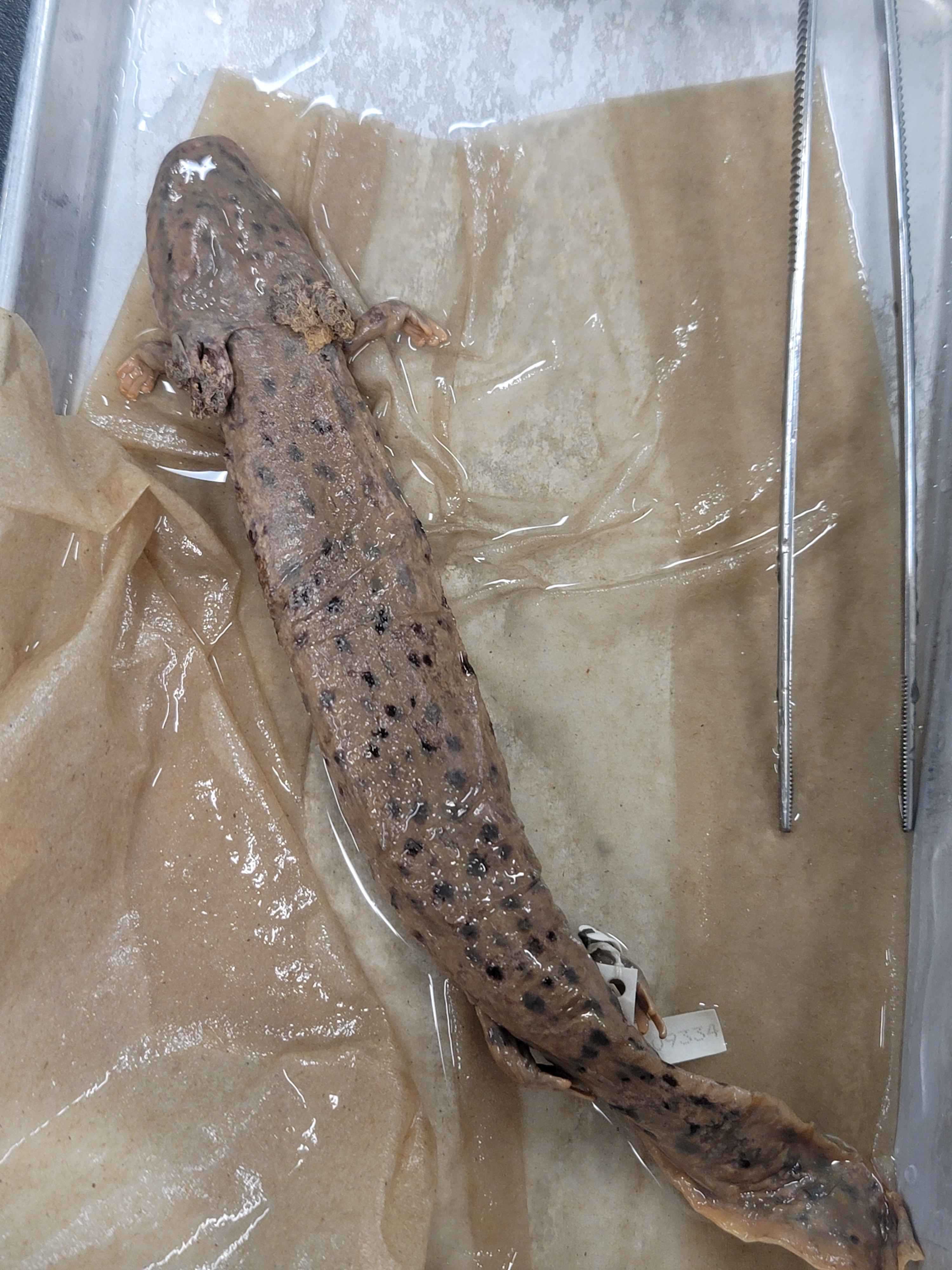
Cryptobranchidae - Cryptobranchus alleganiensis (Hellbnder)
Salamandridae
Newts. Noxious, no distinct costal grooves, rough skin (except in breeding males)
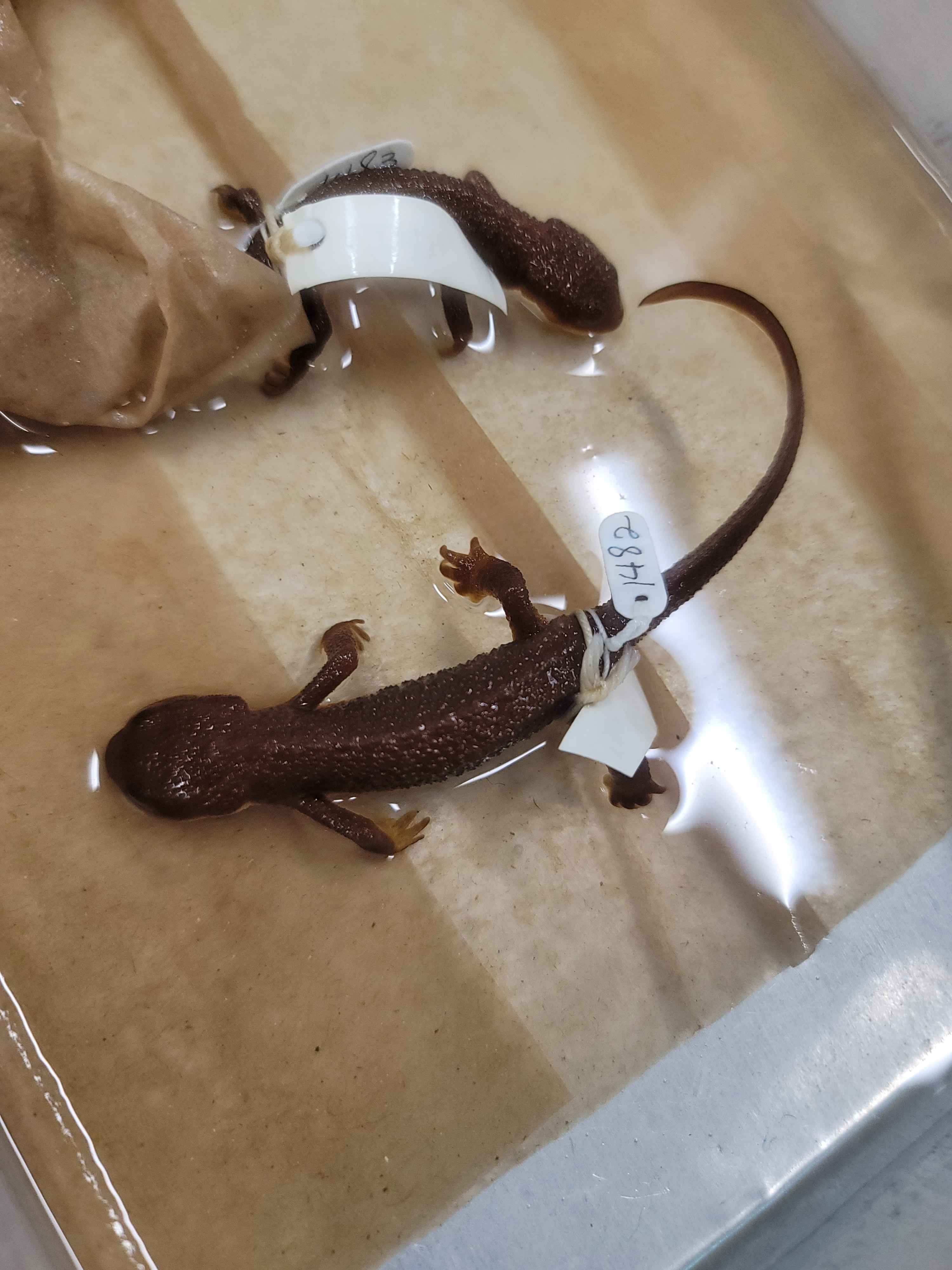
Taricha granulosa
Rough-skinned newt
Body brown above and orange below
dark under eye
eyes do not reach outline of head
unken reflex
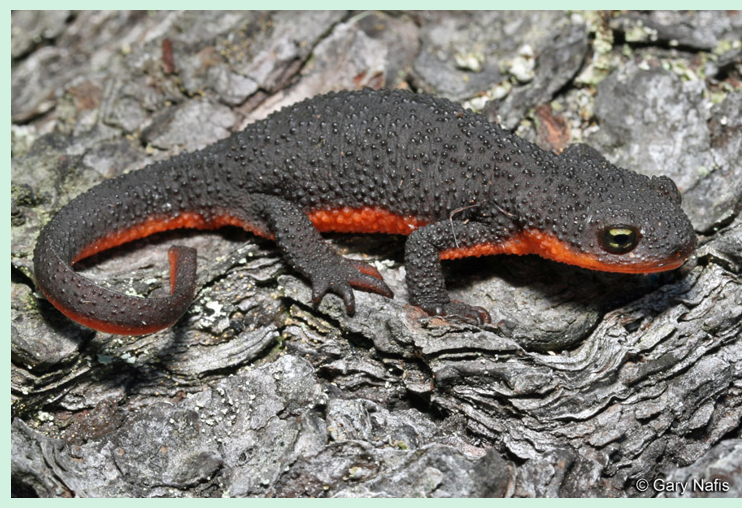
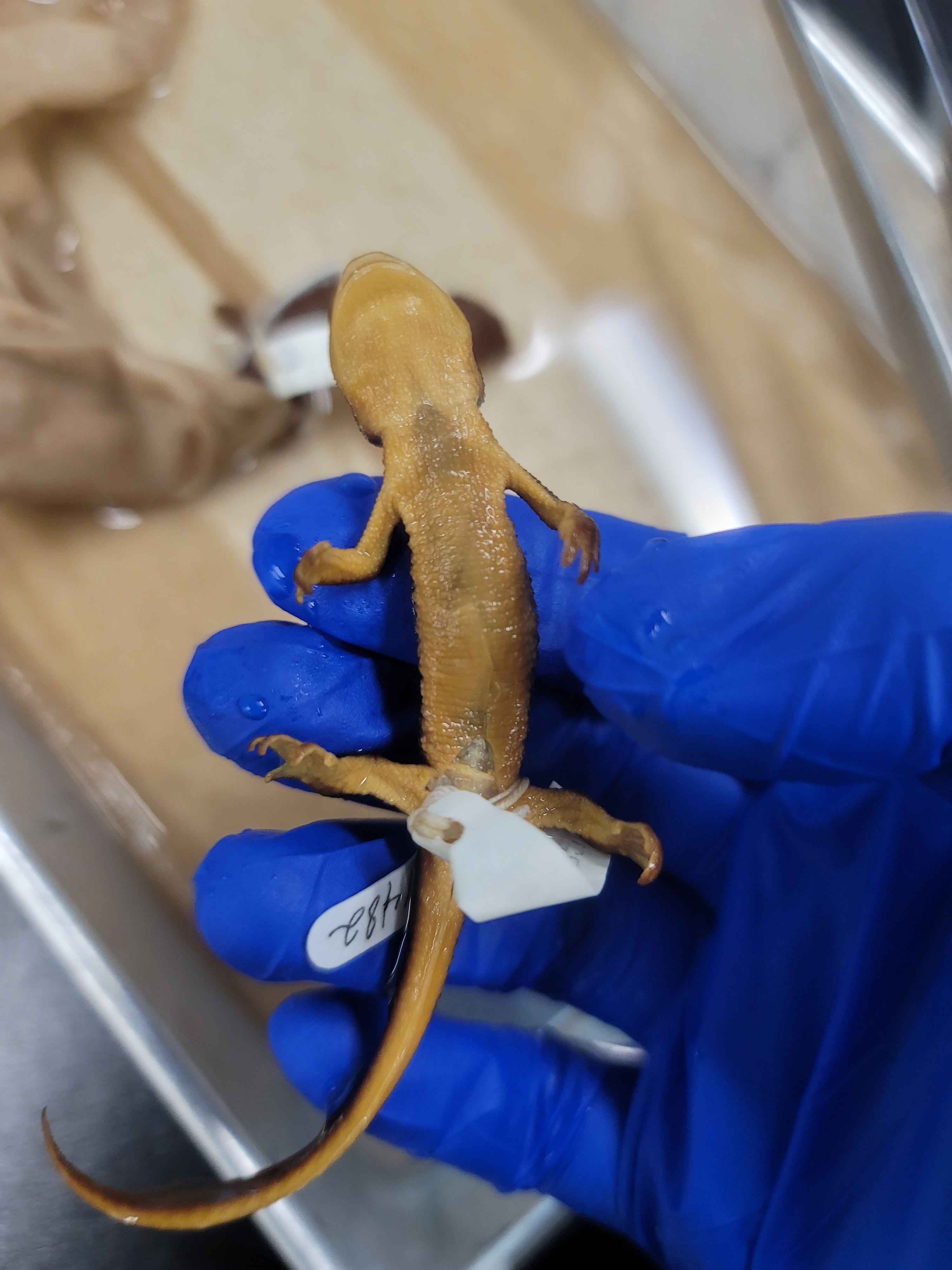
Taricha granulosa
Taricha rivularis
Red-bellied newt. Body black above and red below, dark eyes
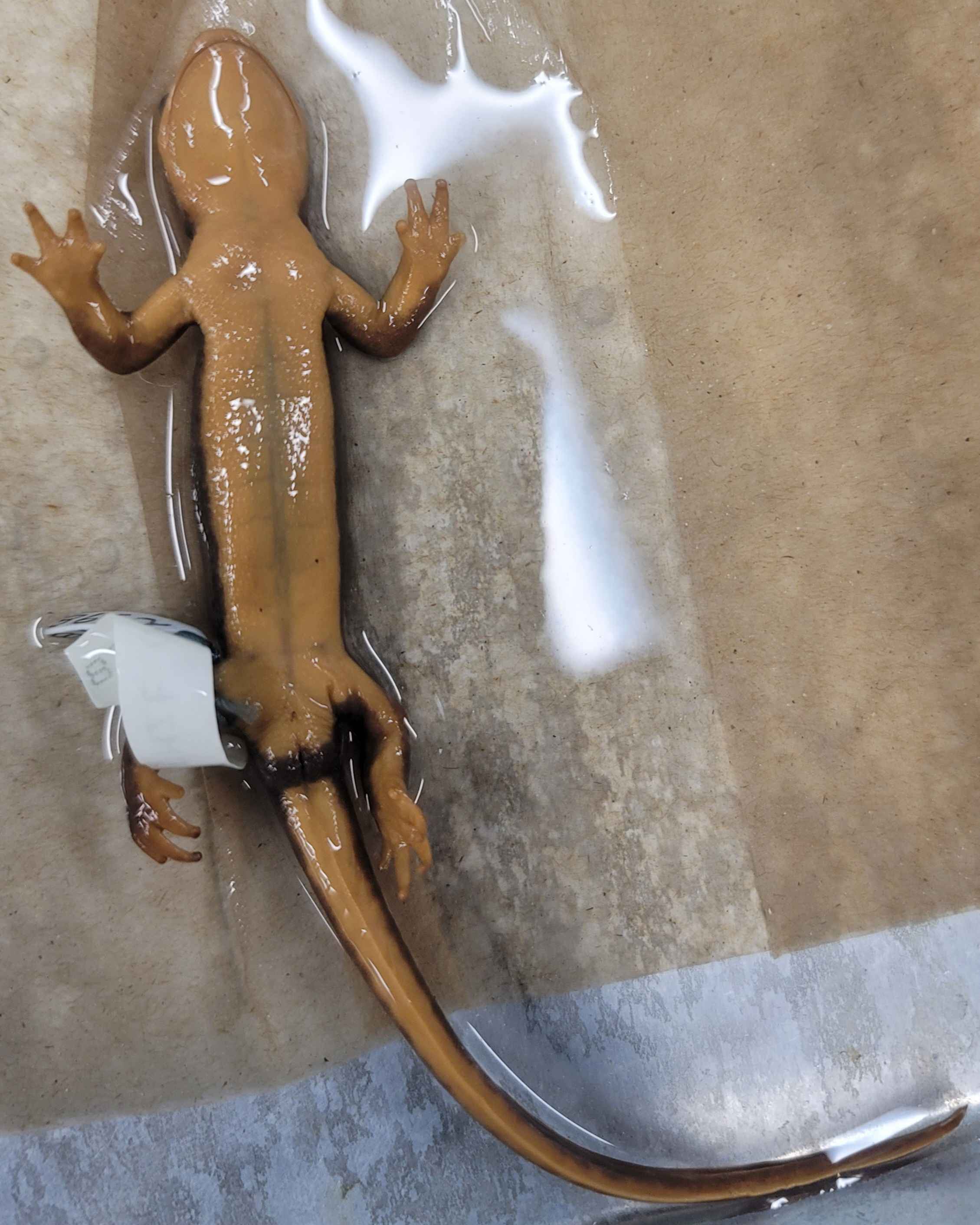
Taricha rivularis
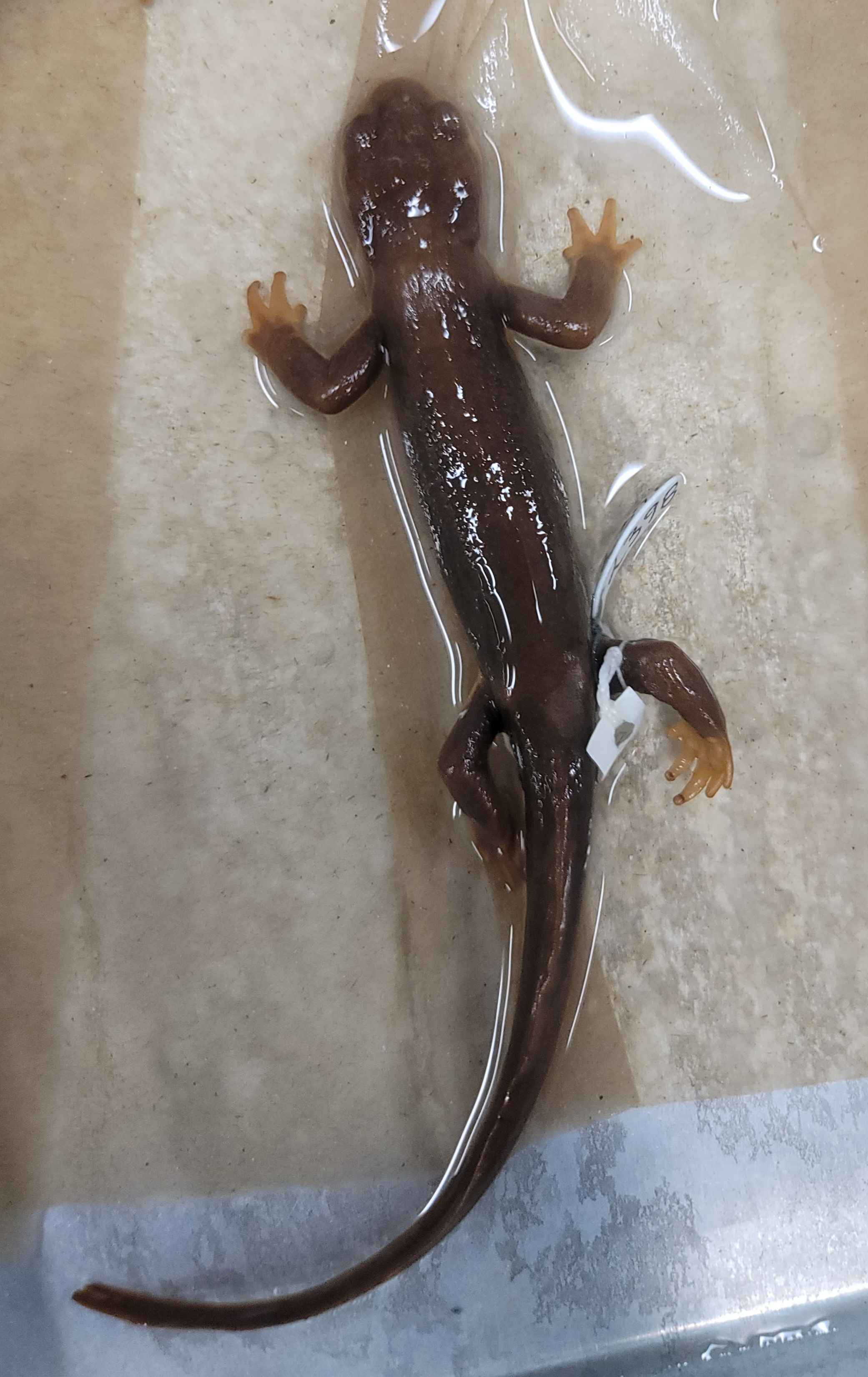
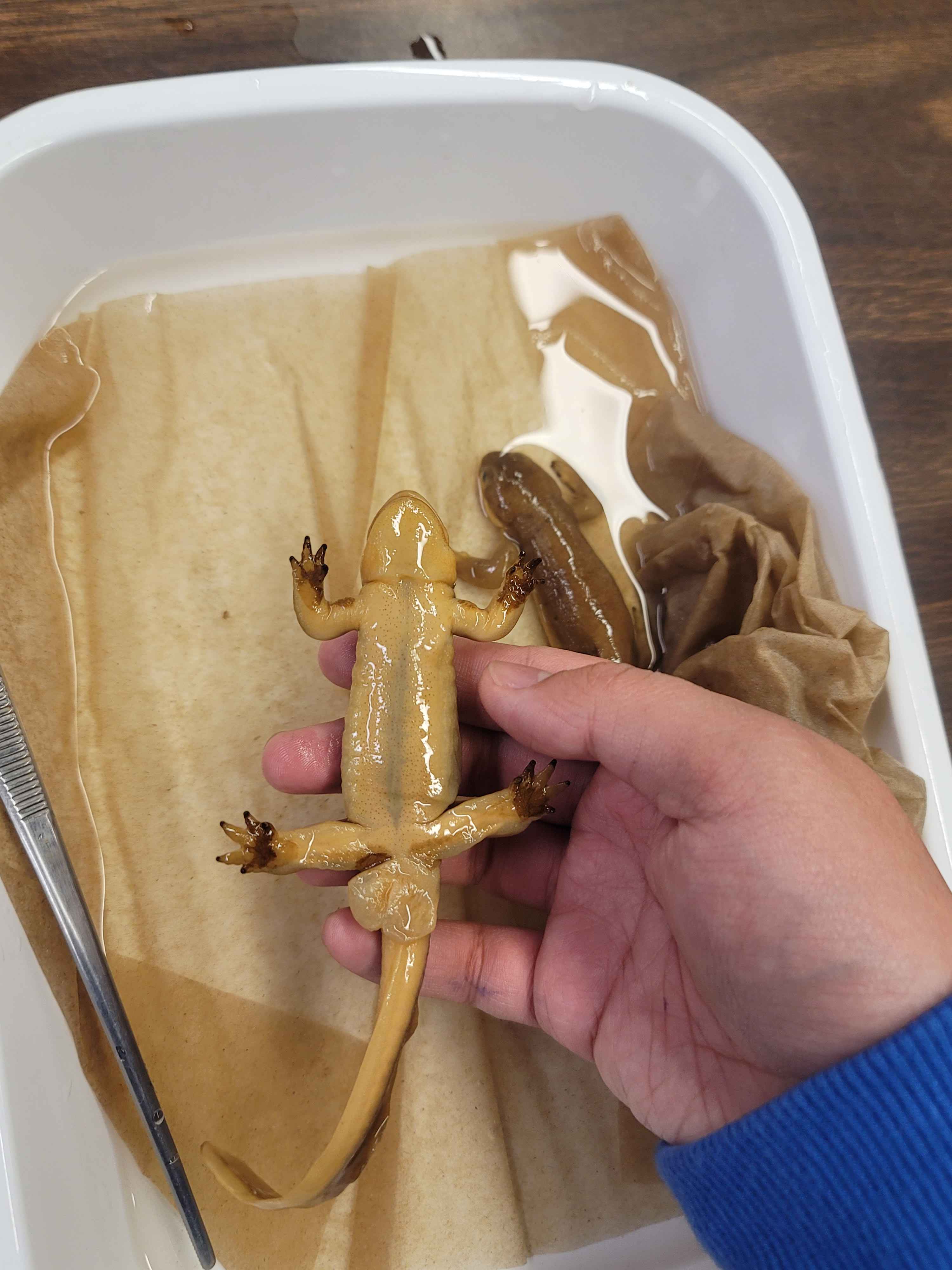
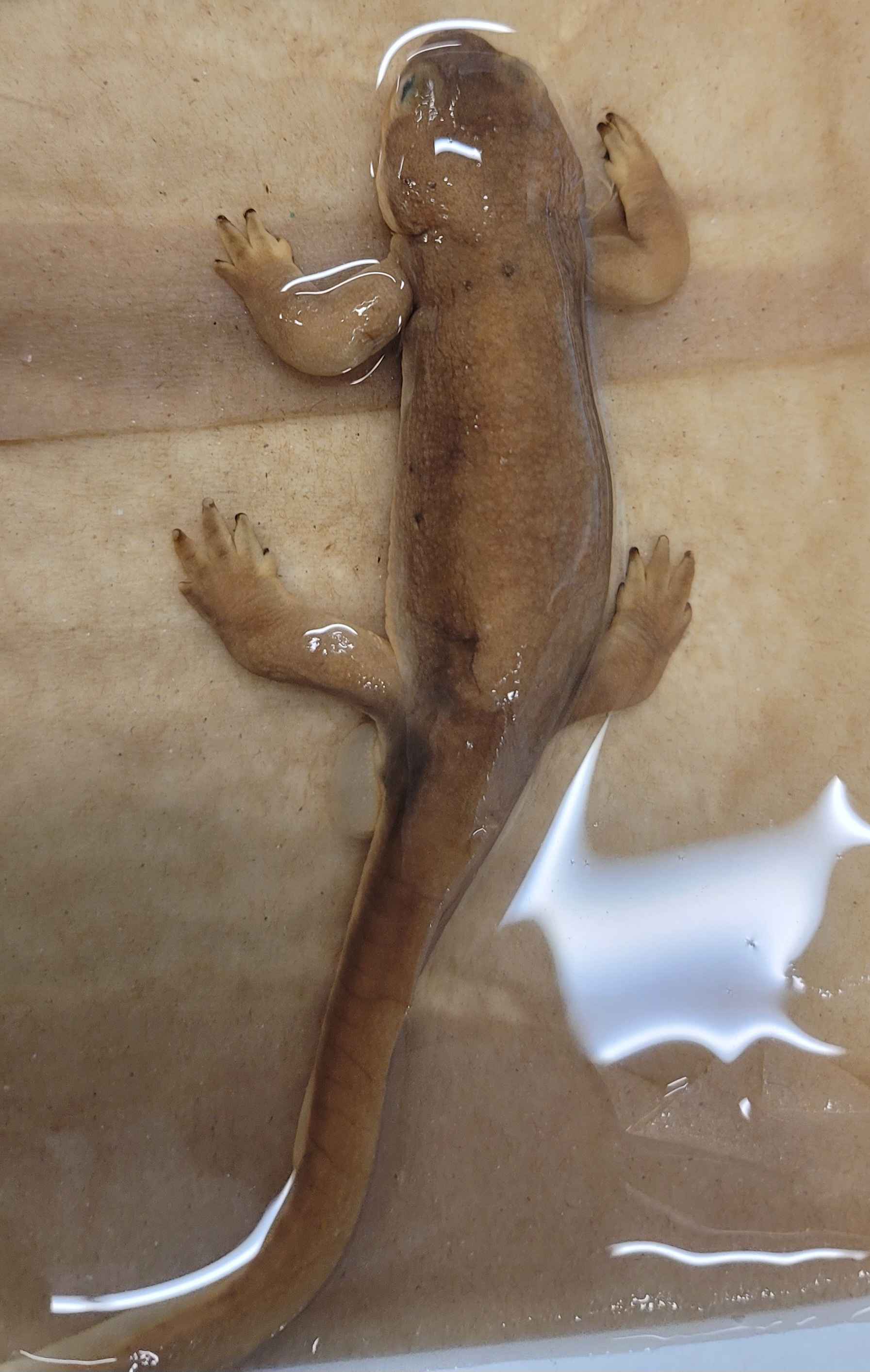
Taricha torosa
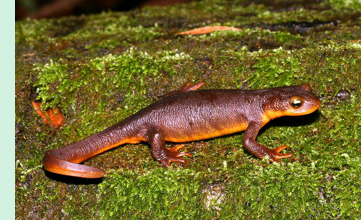
California newt
Body brown above and orange below
light under eye,
eyes reach outline of head.
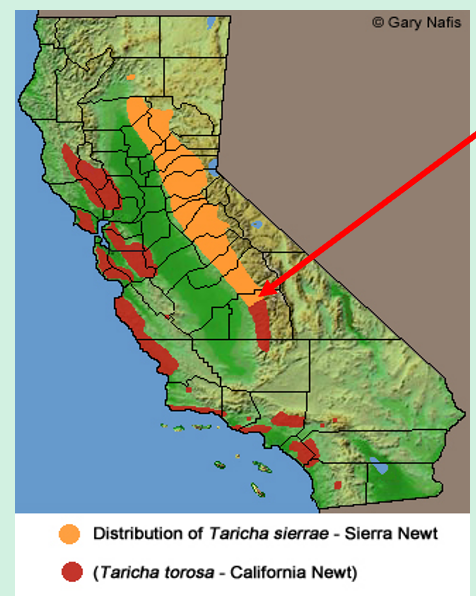
Taricha Torosa Distribution
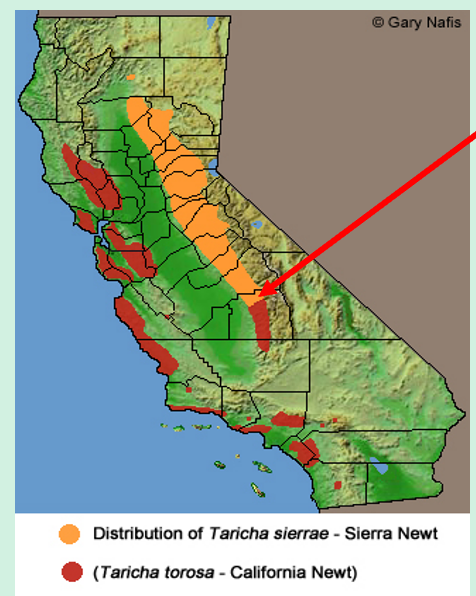
Western slope of the Sierra Nevada Mountains South of the Kaweah river.
•Coast range mountains Mendocino to San Diego county
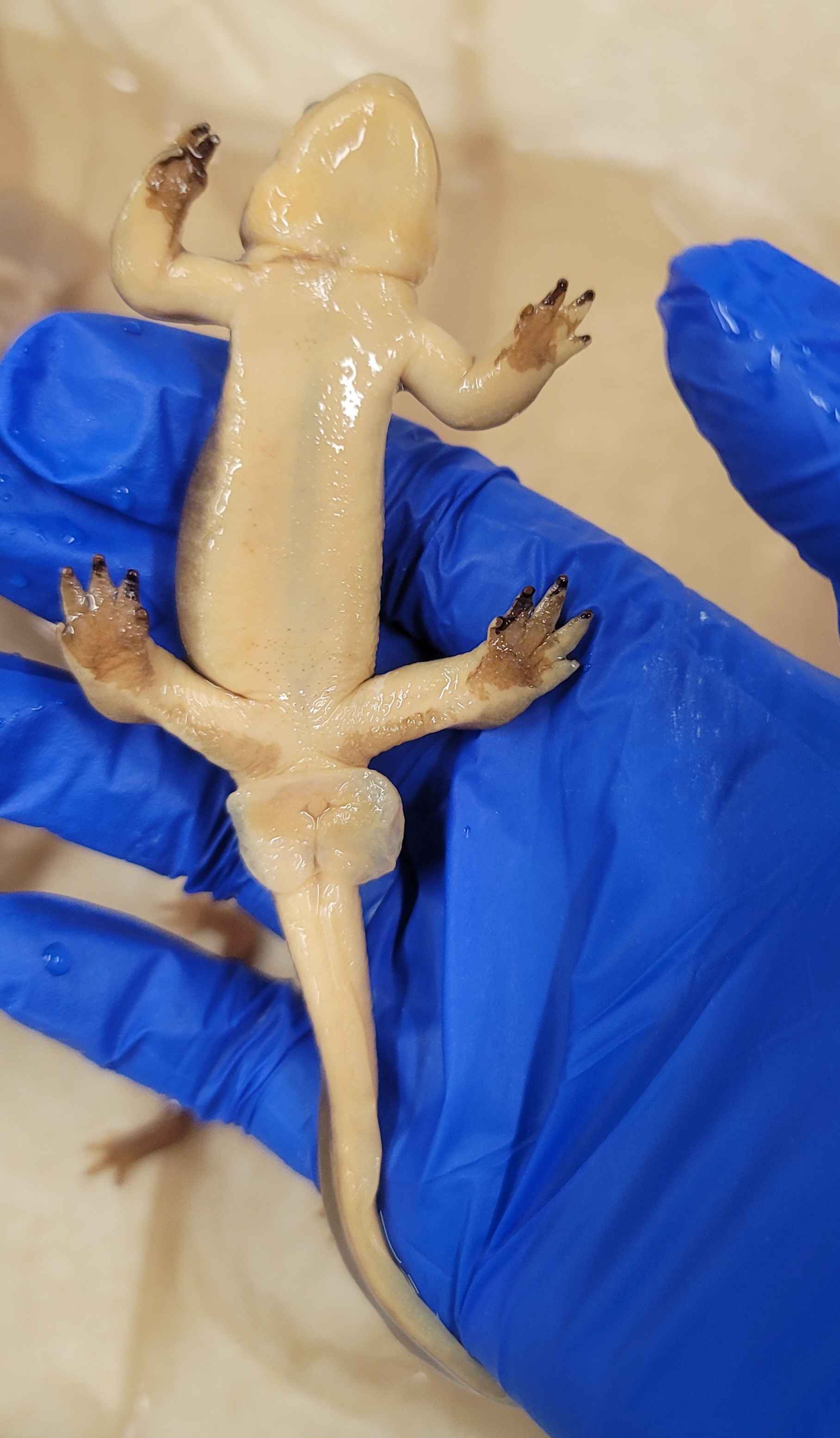
Taricha Torosa - California Newt
Taricha sierrae - Sierra Newt
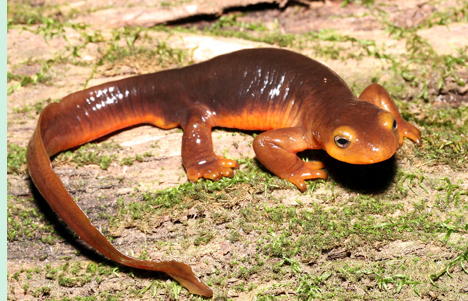
Appearance similar to T. torosa, though more ventral coloration extends onto the eyelids and snout.
Best differentiated based on locality
Taricha Sierrae
• Western slope of the Sierra Nevada Mountains North of Kaweah river
Ambystomatidae
Mole salamanders. Distinct costal grooves, robust body form
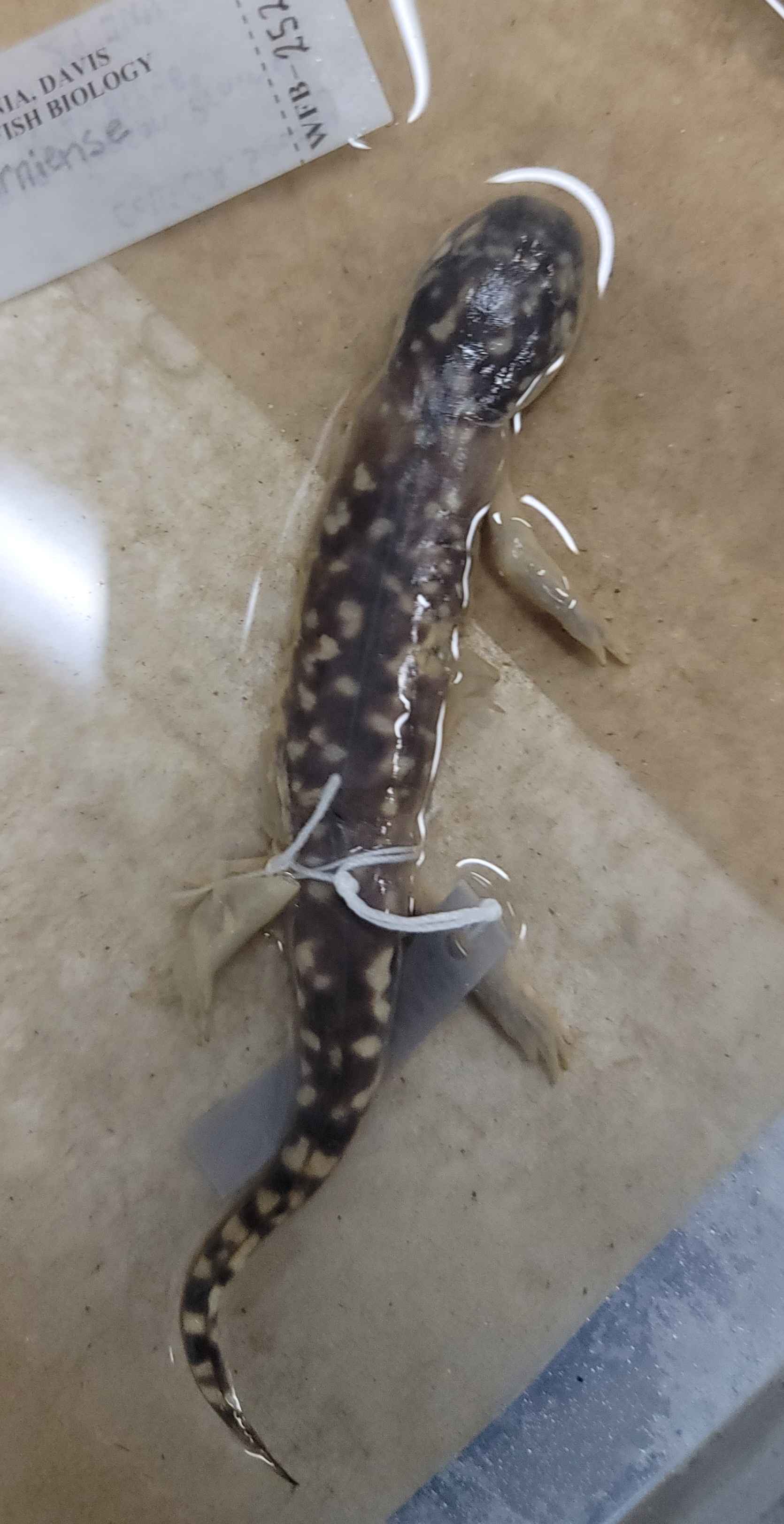
Ambystoma californiense
California tiger salamander. Big, black with whitish-to-yellow
spots
Ambystoma californiense
Ambystoma gracile
Northwestern salamander
Uniform color
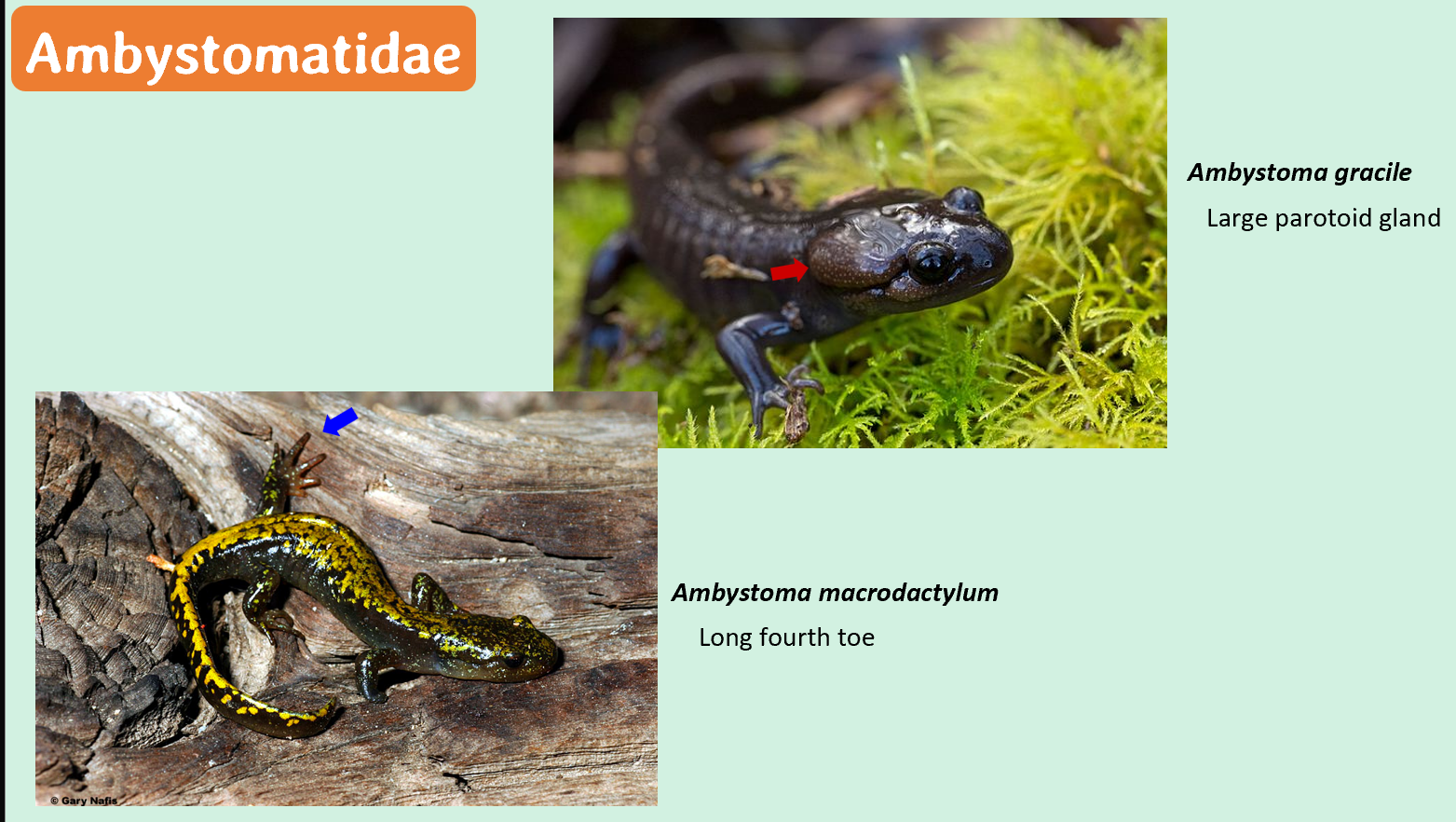
large parotoid glands
conspicuous poison glands along dorsal side of tail
lacks foot tubercles
head has big bumps that secrete toxins (the glands)
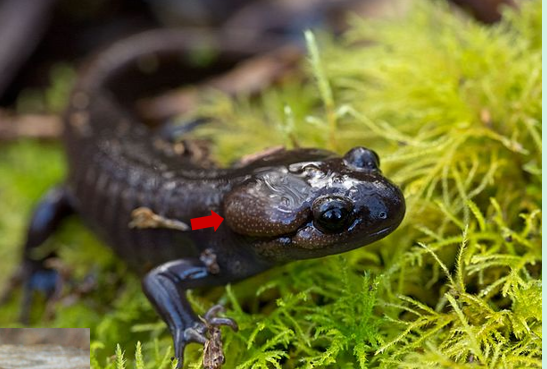
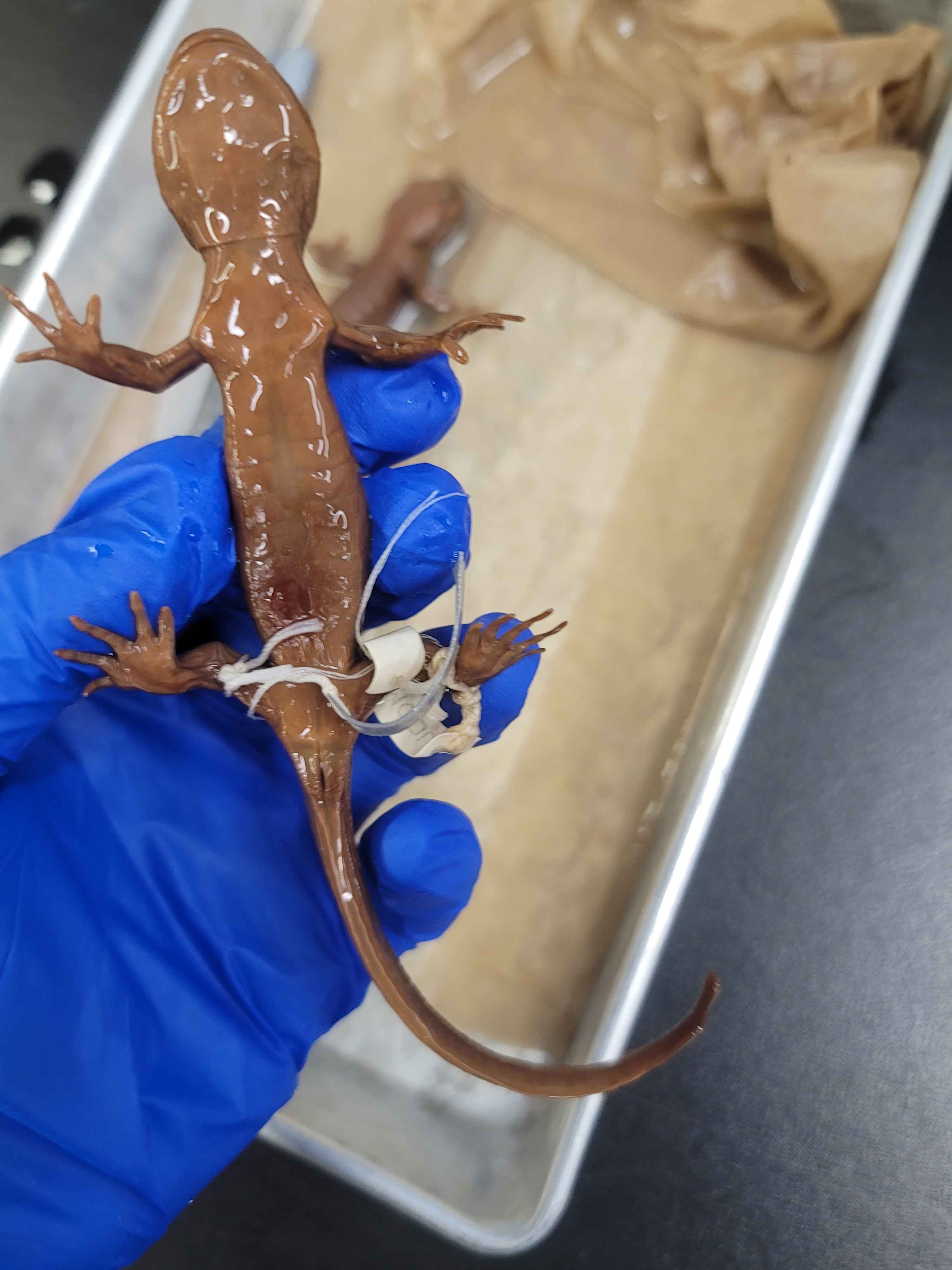
Ambystoma gracile
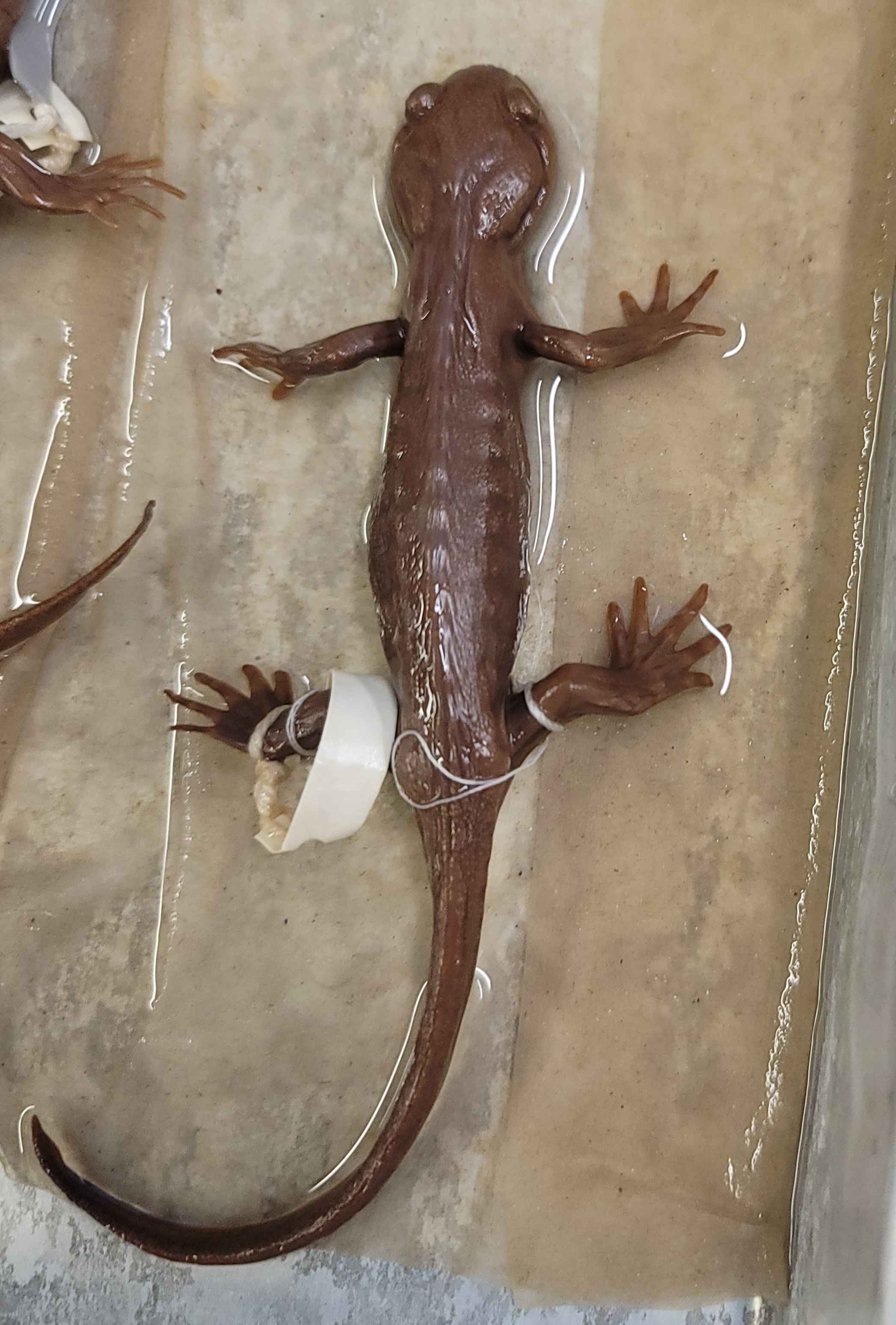
Ambystoma macrodactylum
Long-toed salamander. Yellow, tan, or olive green stripe or
blotches on back, long fourth toe
dorsal stripe patterning
4th toe long
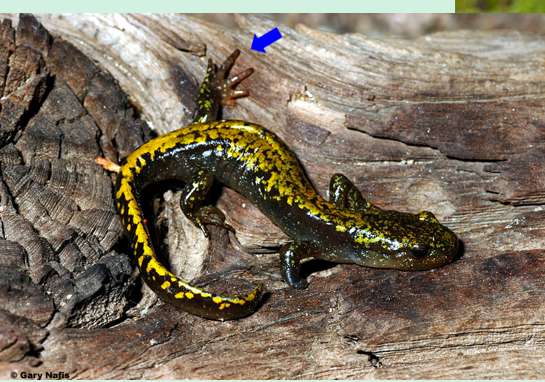
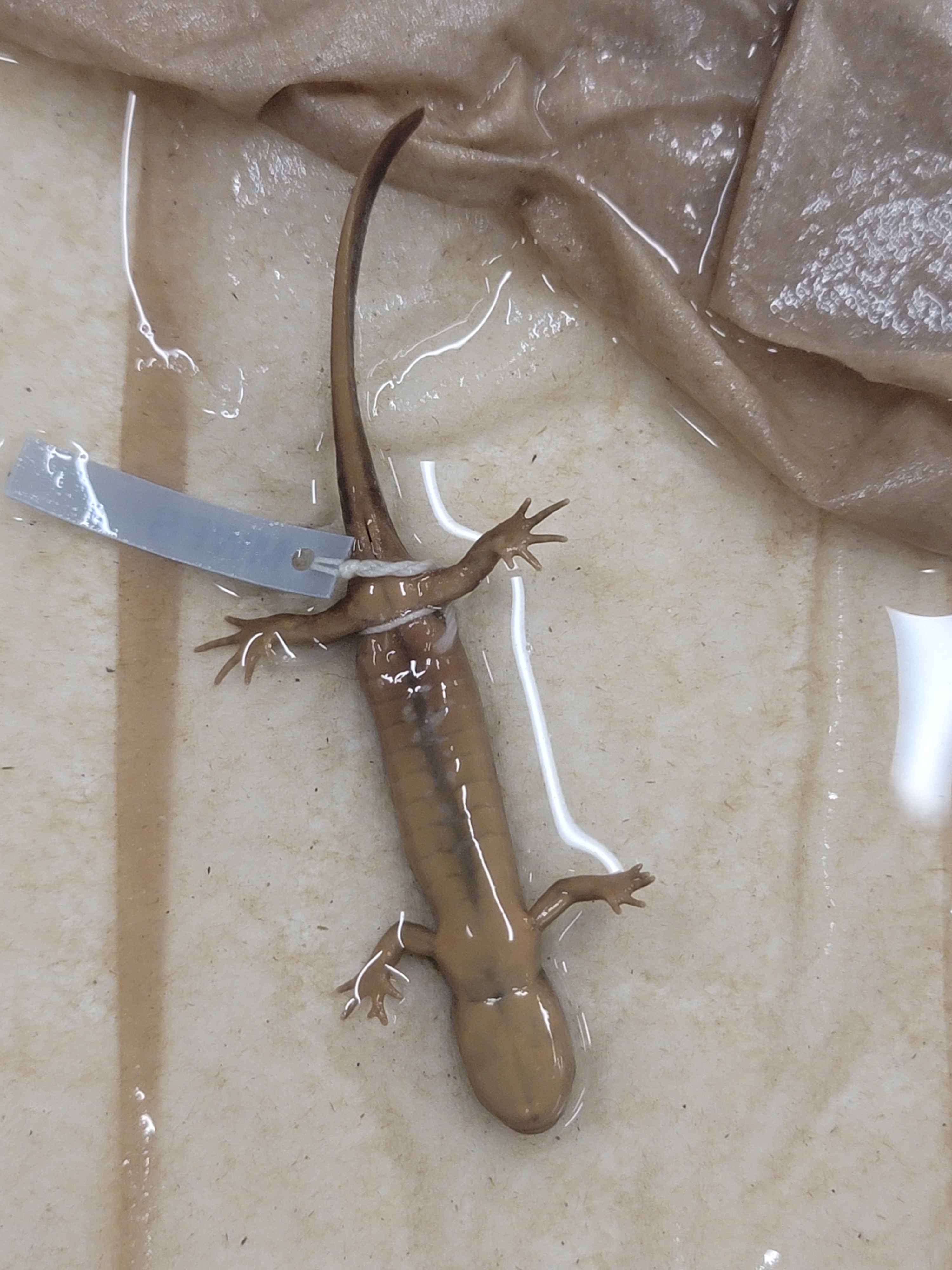
Ambystoma macrodactylum
California tiger salamander. Big, black with whitish-to-yellow
spots
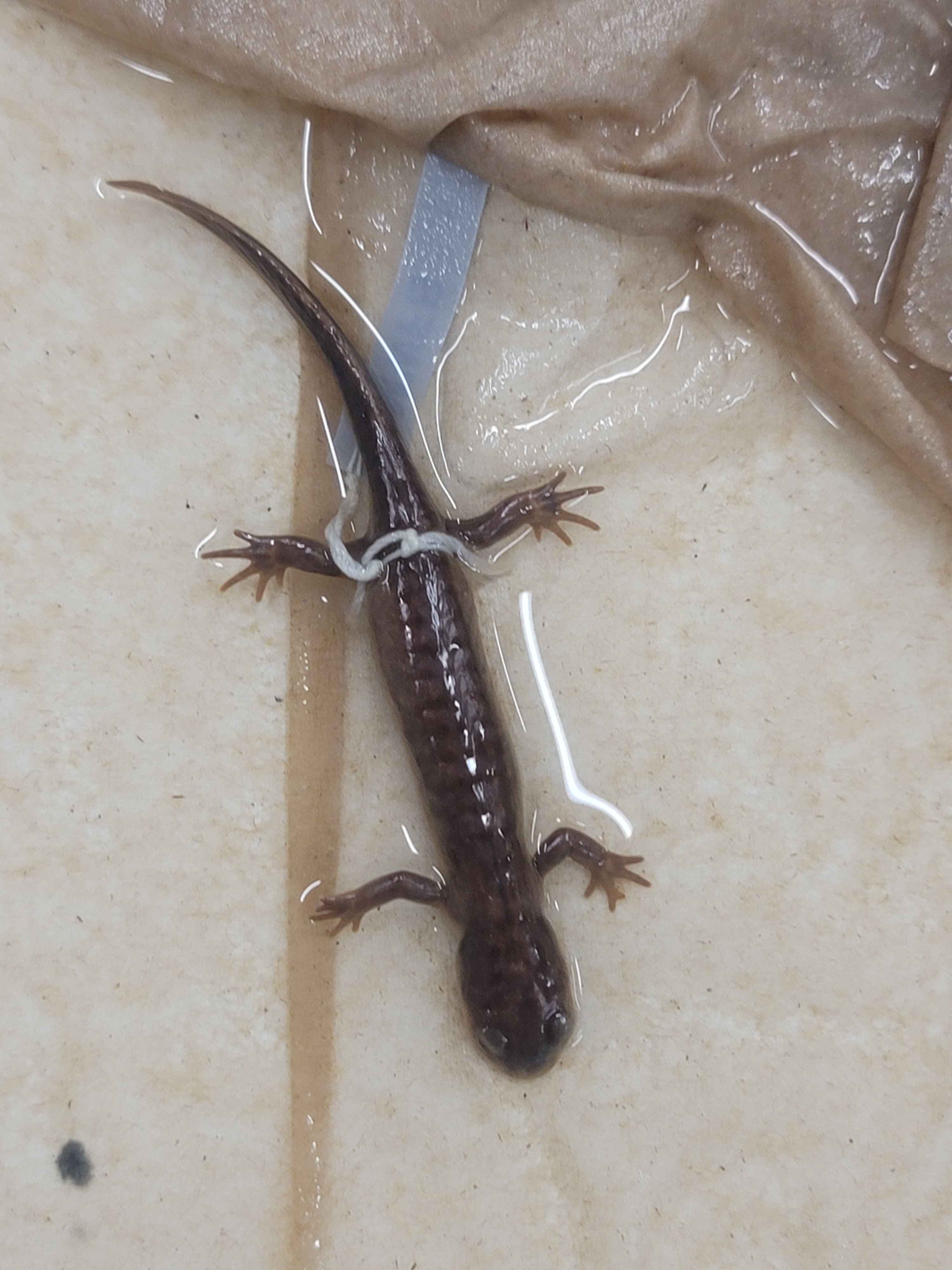
Ambystoma mavortium
Barred tiger salamander
Introduced species from Texas that
hybridizes with native A. californienseLarge, stout-bodied salamander with dark
background and yellow bars, less spotting
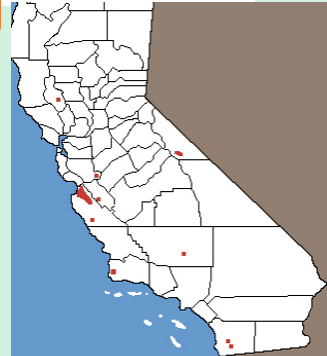
Ambystoma mavortium (distribution)
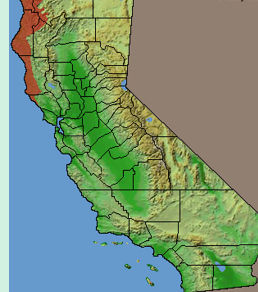
Ambystoma gracile (Distribution)
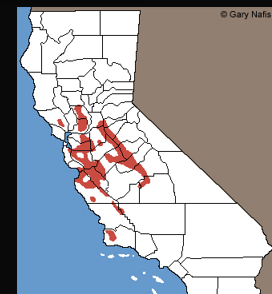
Ambystoma californiense (Distribution)
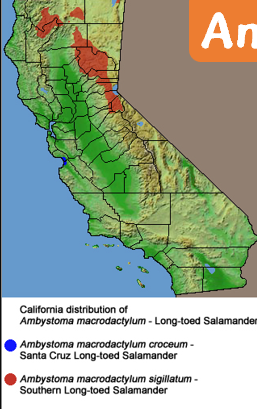
Ambystoma macrodactylum (Distribution)
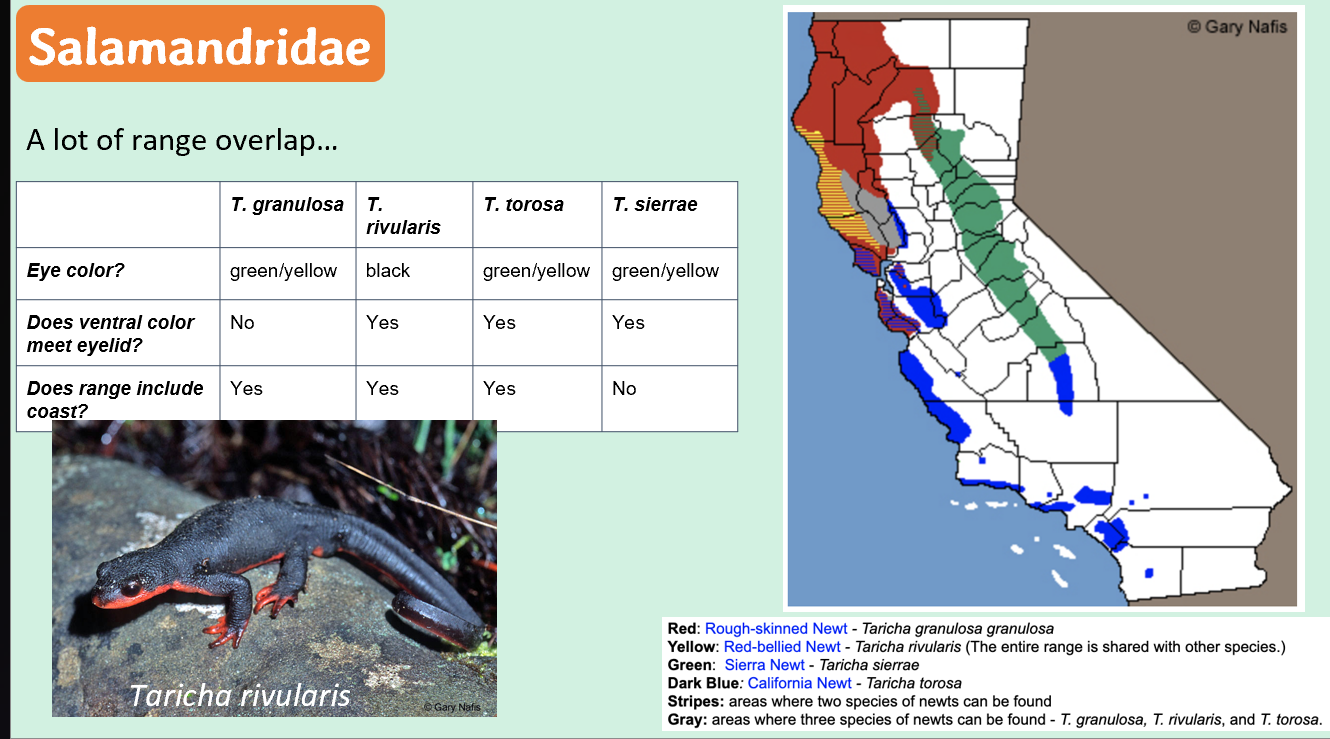
Salamandridae Overview
Dicamptodontidae
Pacific giant salamanders. Large robust salamanders, tan to reddish brown
above with copper to dark brown marbling. Best differentiated based on locality
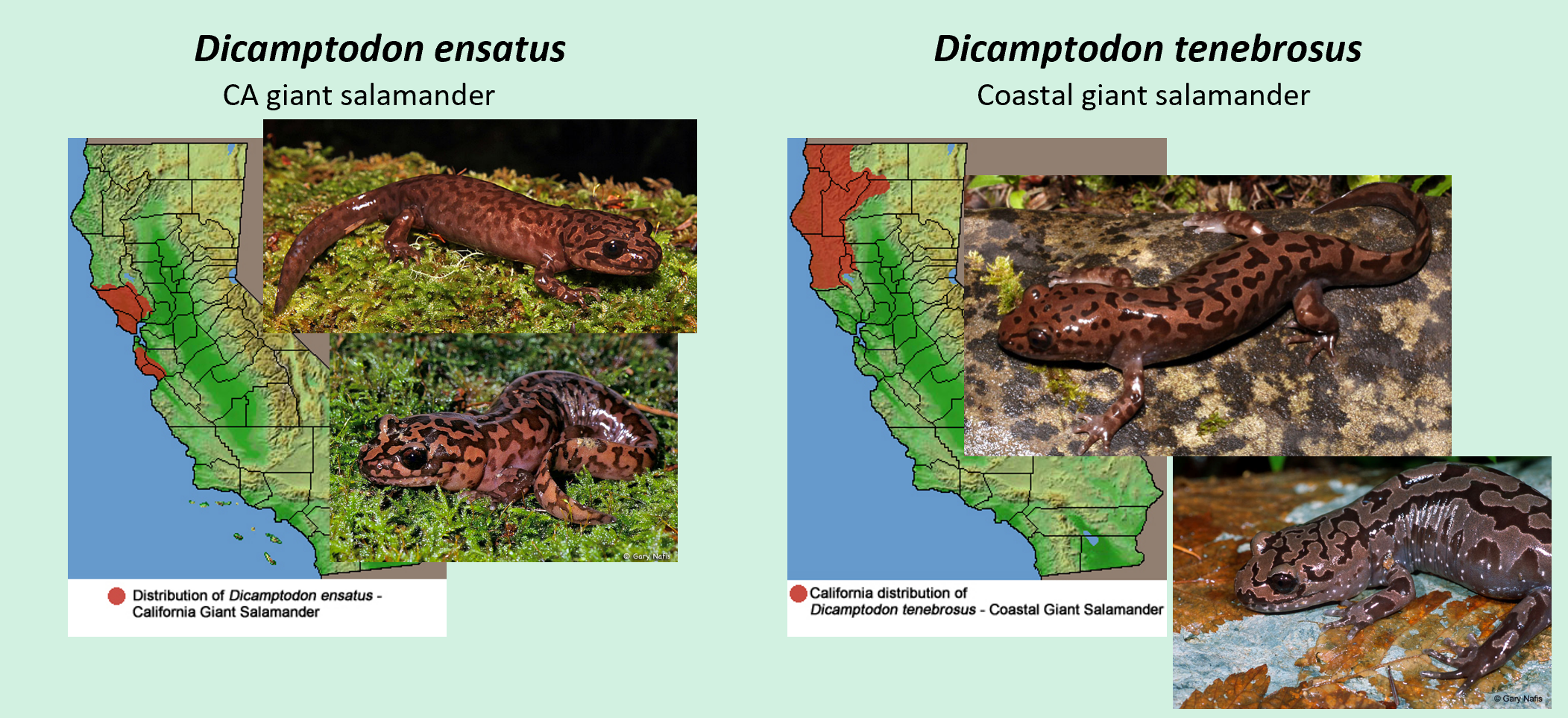
Dicamptodon ensatus
California giant salamander. Occurs from Santa Cruz County
through Sonoma County.
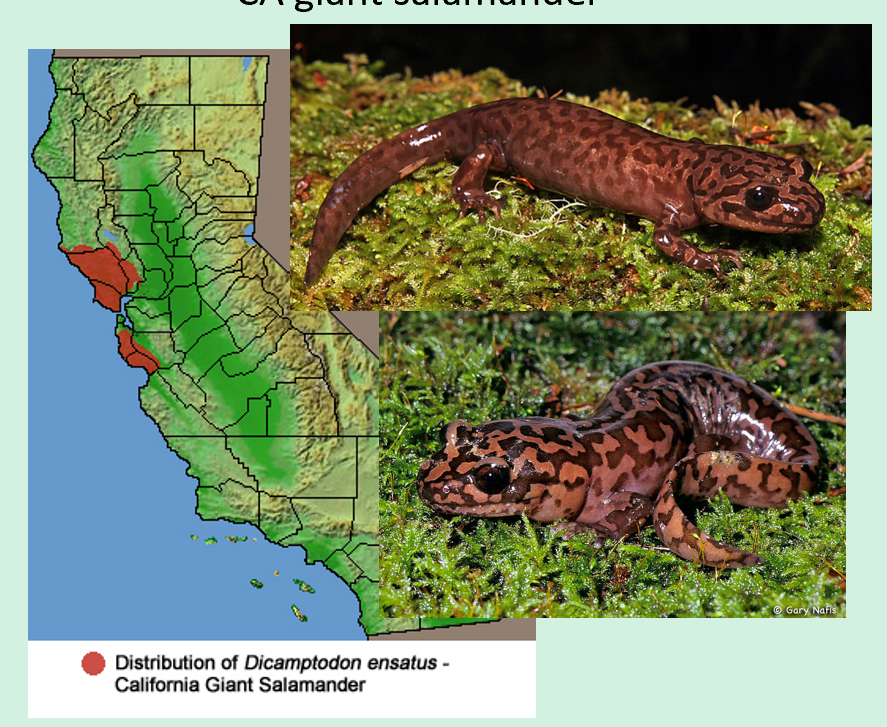
Dicamptodon tenebrosus
Pacific giant salamander. Occurs from Mendocino County
north.There is a narrow contact zone between the two species in southern Mendocino County
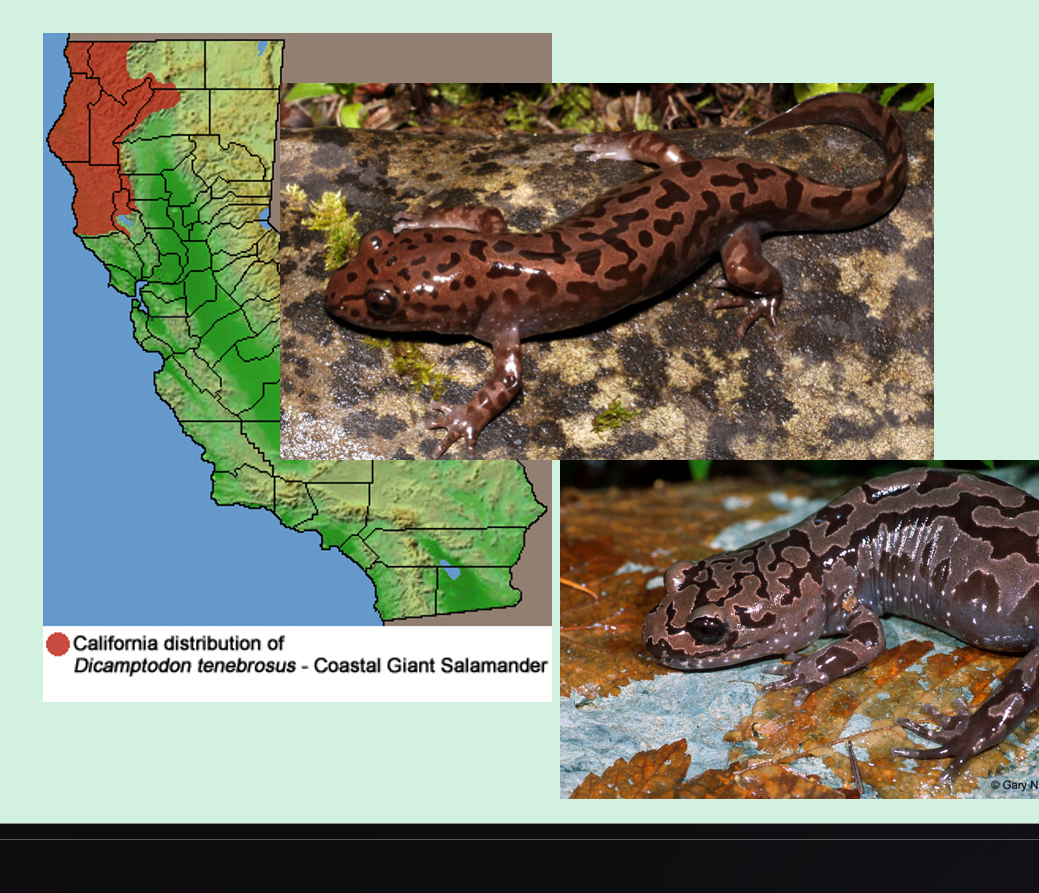
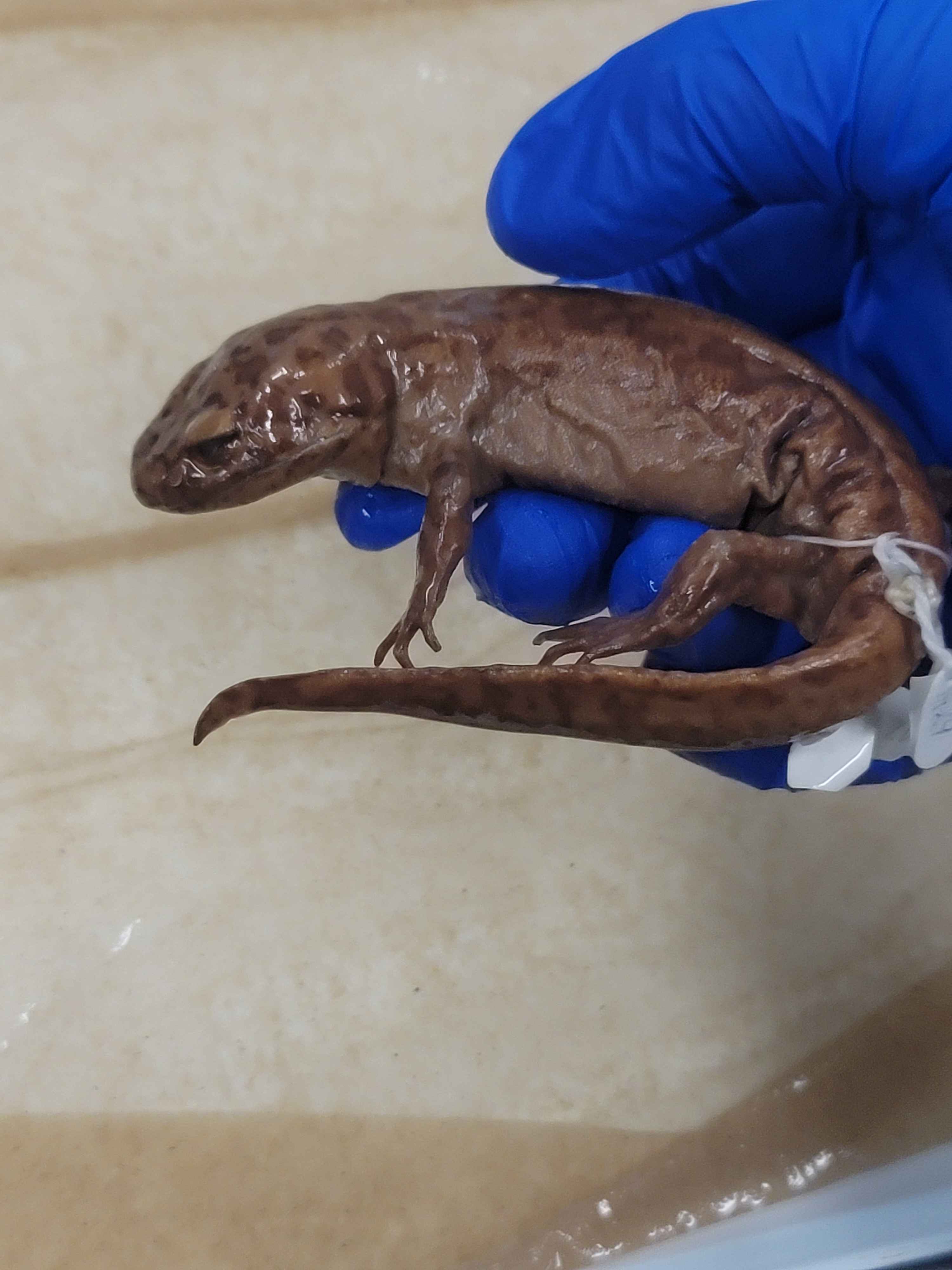
Dicamptodon ensatus
Santa Cruz through Sonoma County
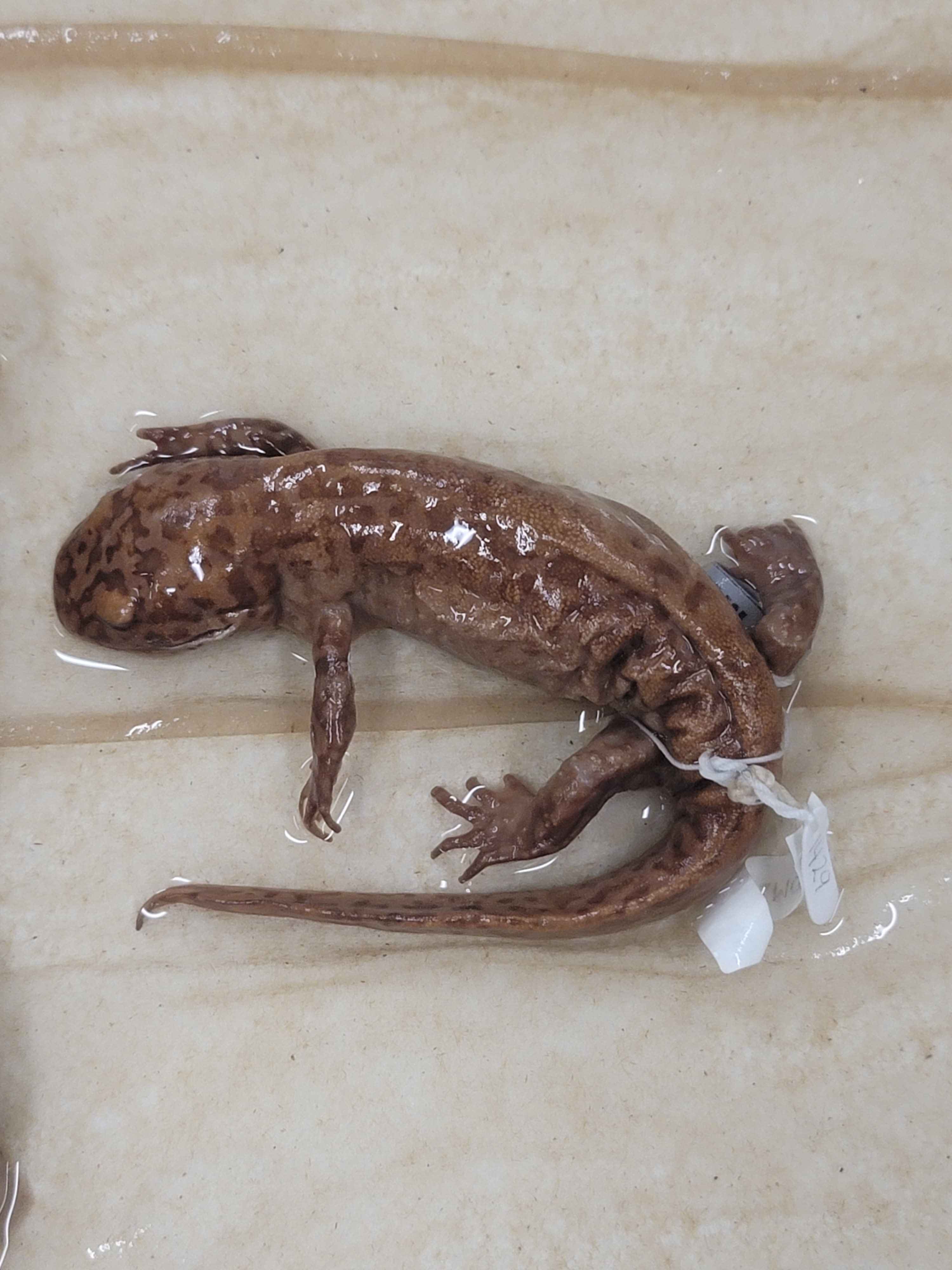
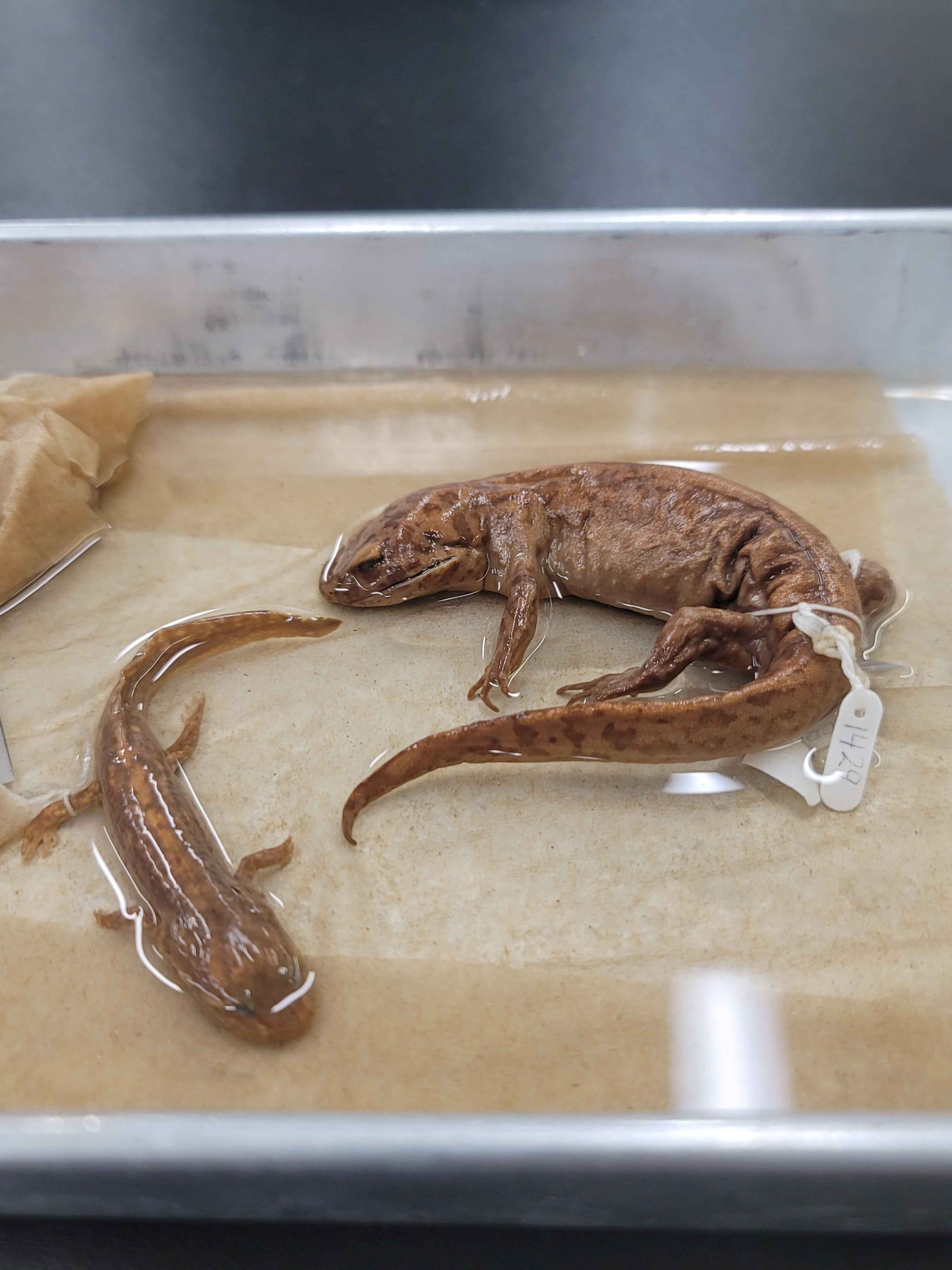
Dicamptodon tenebrosus
Pacific giant salamander. Occurs from Mendocino County
north.
There is a narrow contact zone between the two species in southern Mendocino County
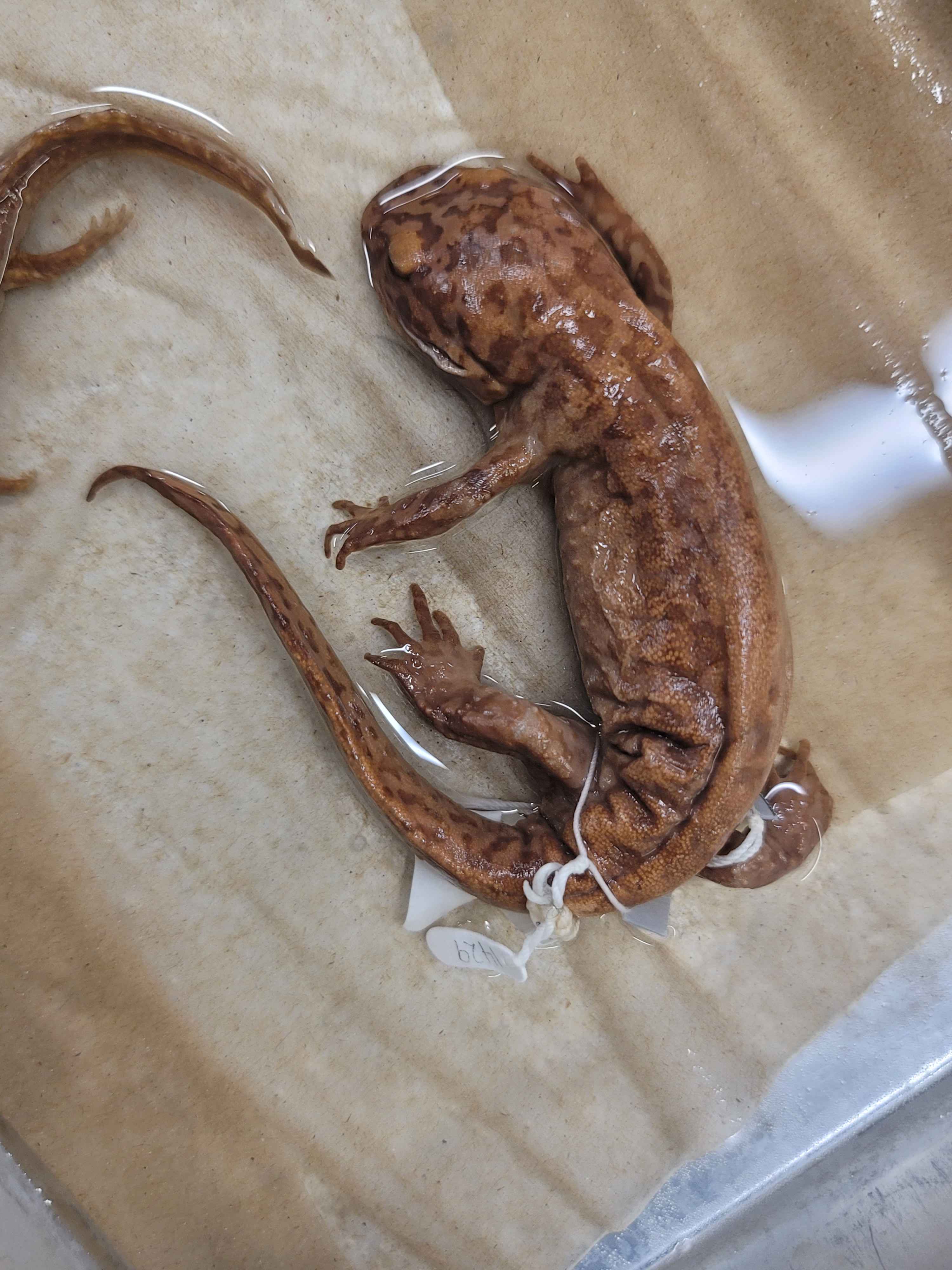
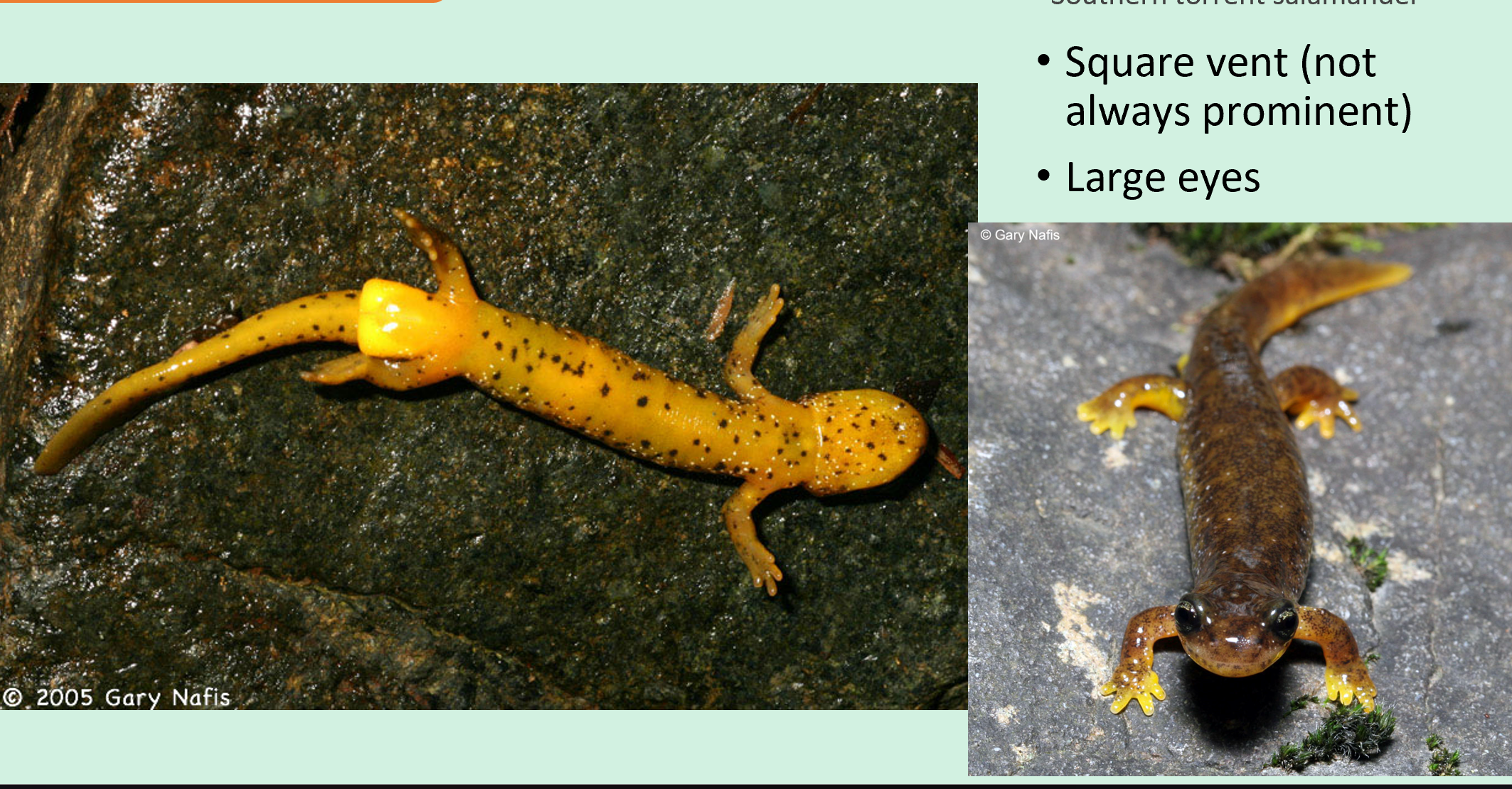
Rhyacotriton variegatus
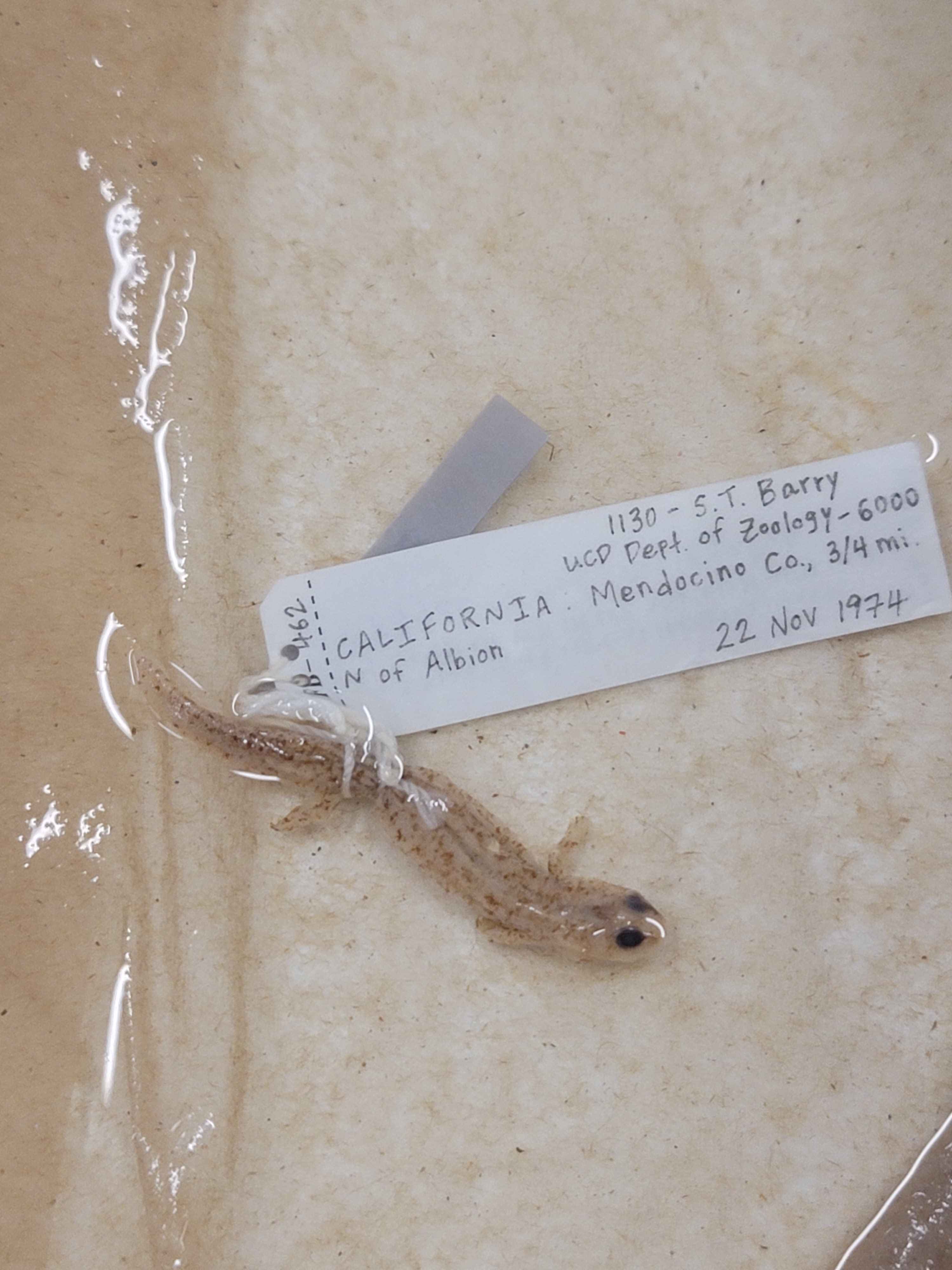
Southern torrent salamander.
Olive mottled with dusky above,
yellowish green below with black spotslarge eyes, tiny body
square gland behind vent of males.
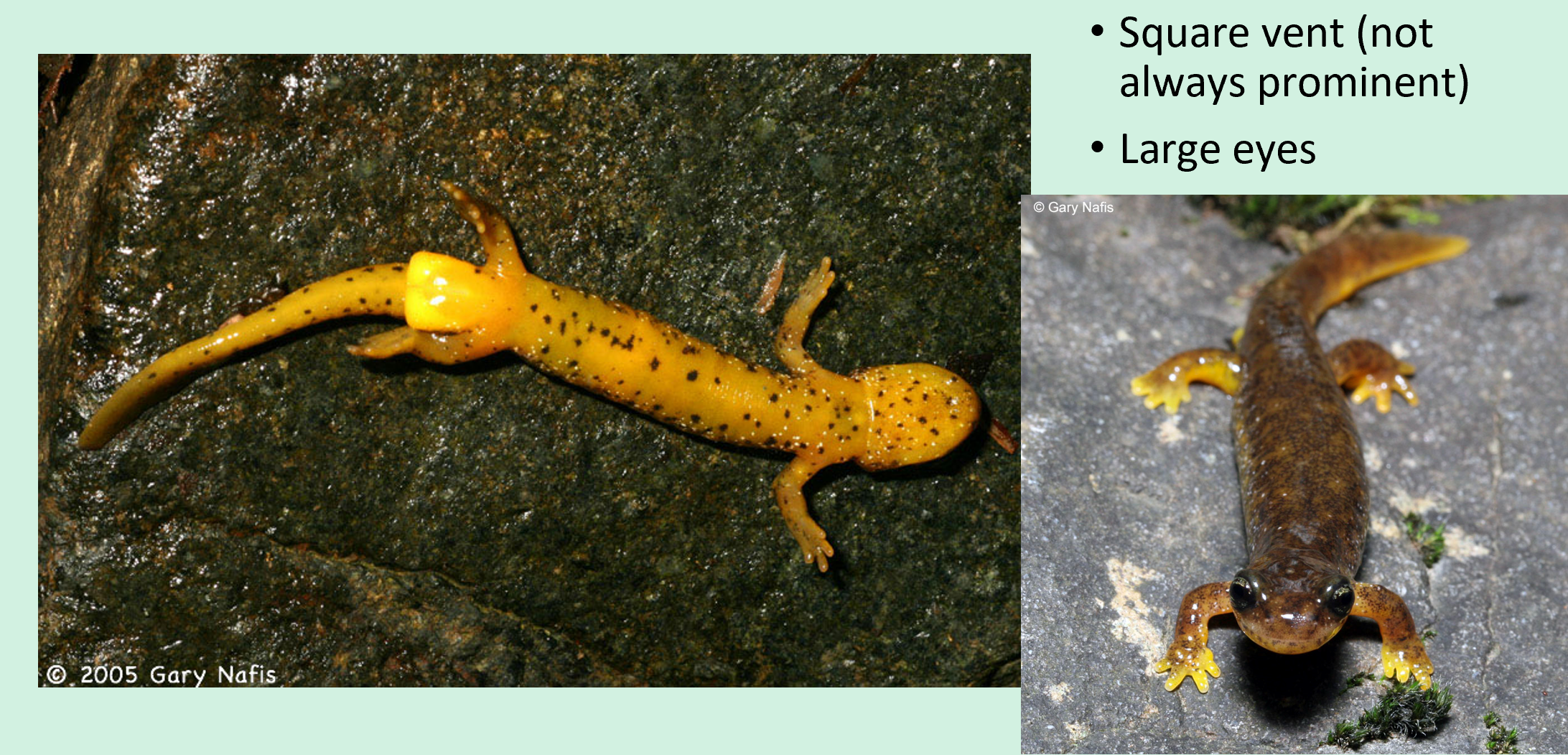
Rhyacotritonidae
Torrent salamanders.
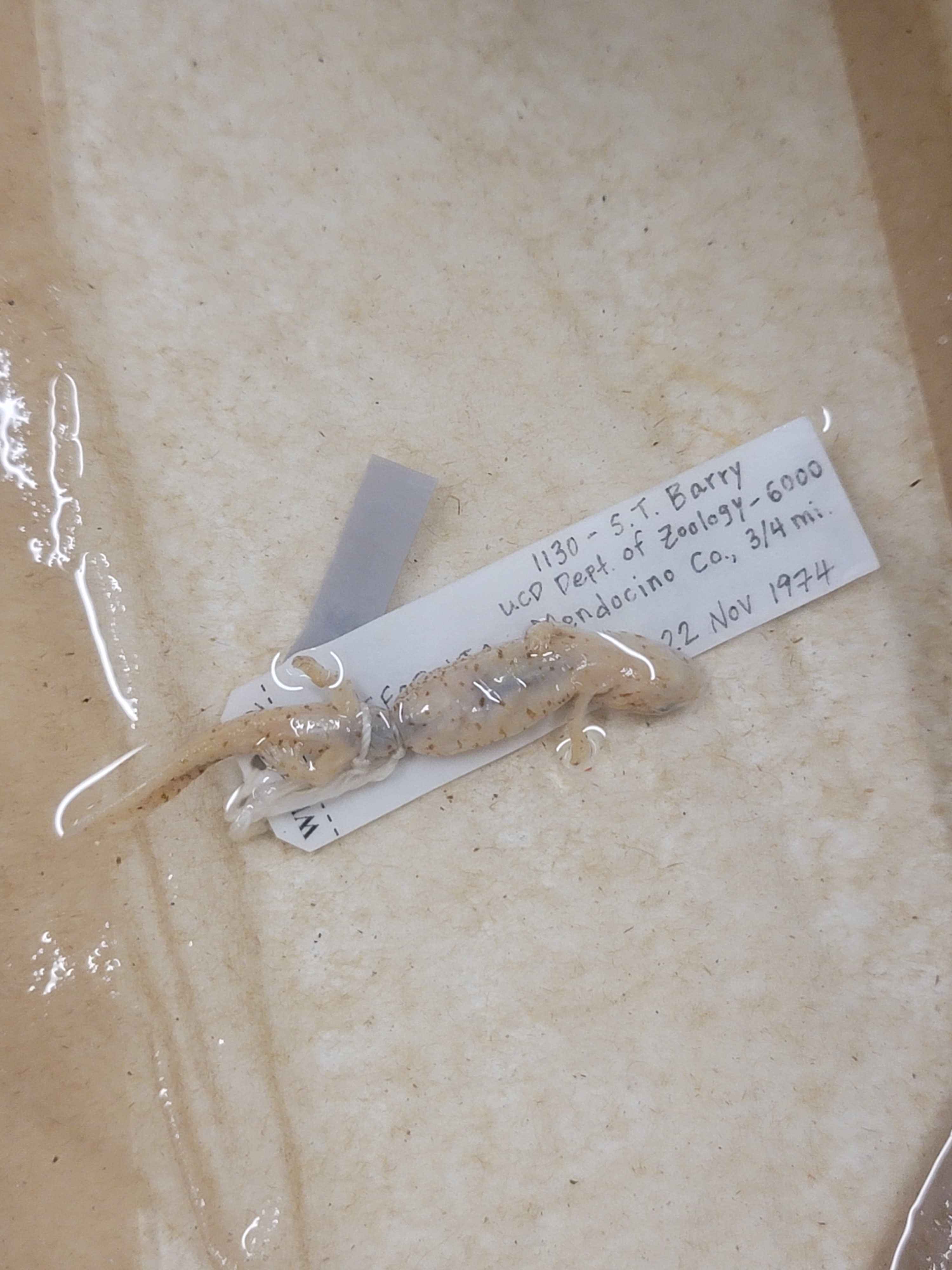
Rhyacotriton variegatus
Distinguishing Plethodontidae
Nasolabial groove, costal grooves, small terrestrial form
Plethodontidae
Lungless salamanders. Smooth skin, no lungs, nasolabial groove
Hydromantes
Batrachoseps
Hydromantes
Web-toed salamanders
Webbed toes
front and rear limbs overlap when adpressed
short tail.
arm and leg ratio to body more even
high in mountain elevation
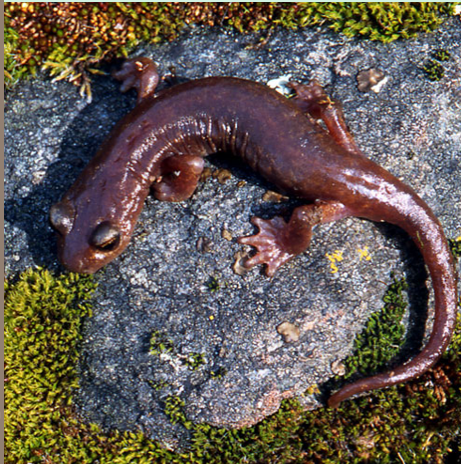
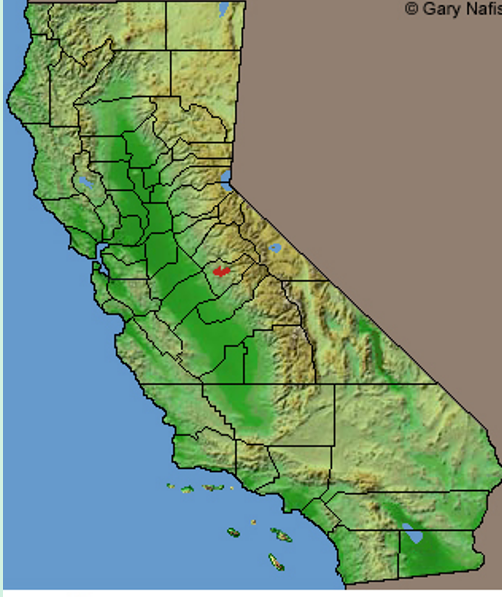
Hydromantes brunus
Limestone salamander. Plain brown above and pale below
Hydromantes brunus distribution
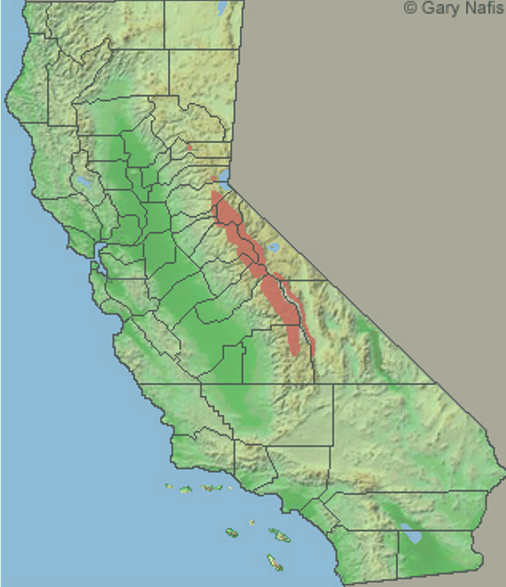
Hydromantes platycephalus
Mount Lyell salamander. Flattened head and body,
granite pattern.
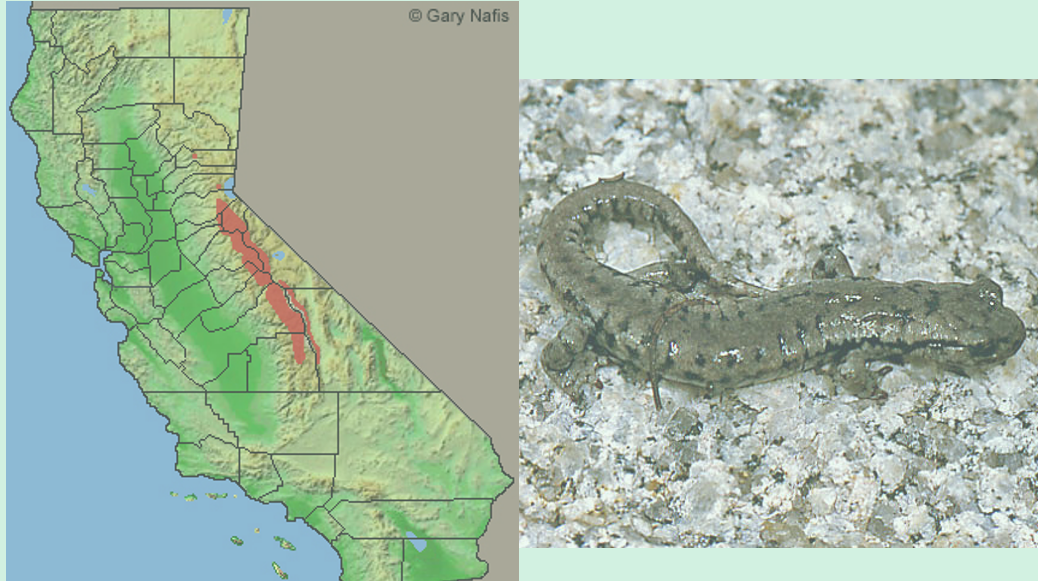
Hydromantes platycephalus
Batrachoseps
Plethonidae
Slender salamanders
Only four toes on hind feet
Two major clades
within the group.The B. attenuatus clade is uniformly slender and elongate,
“worms with legs”The B. robustus group is more robust, longer limbs, head
shape reminiscent of Hydromantes.
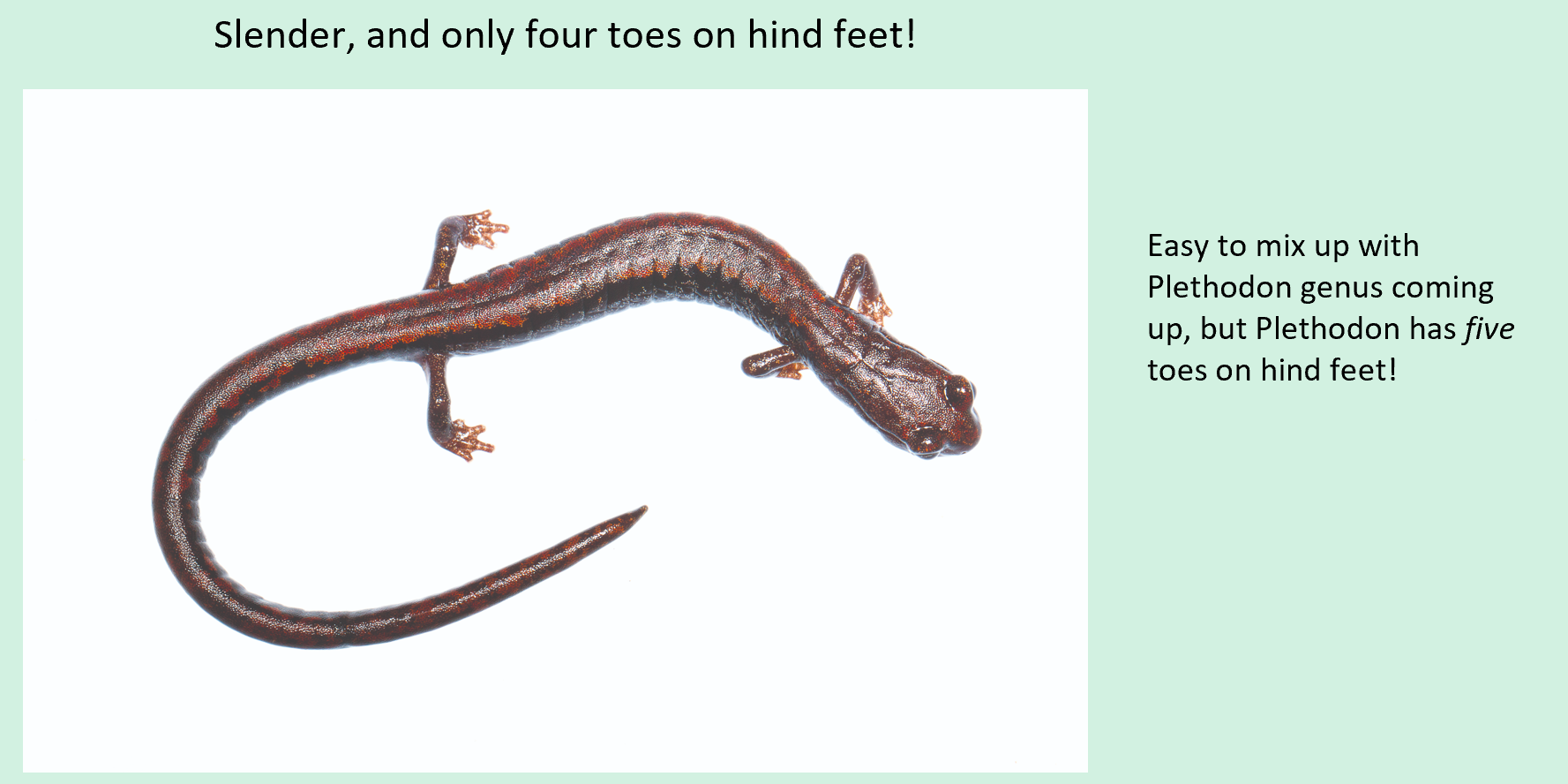
Batrachoseps attenuatus
California slender salamander
Small
narrow head
shorter legs
dark belly
slender abdomen
tail same length as body
4 toes hind feet
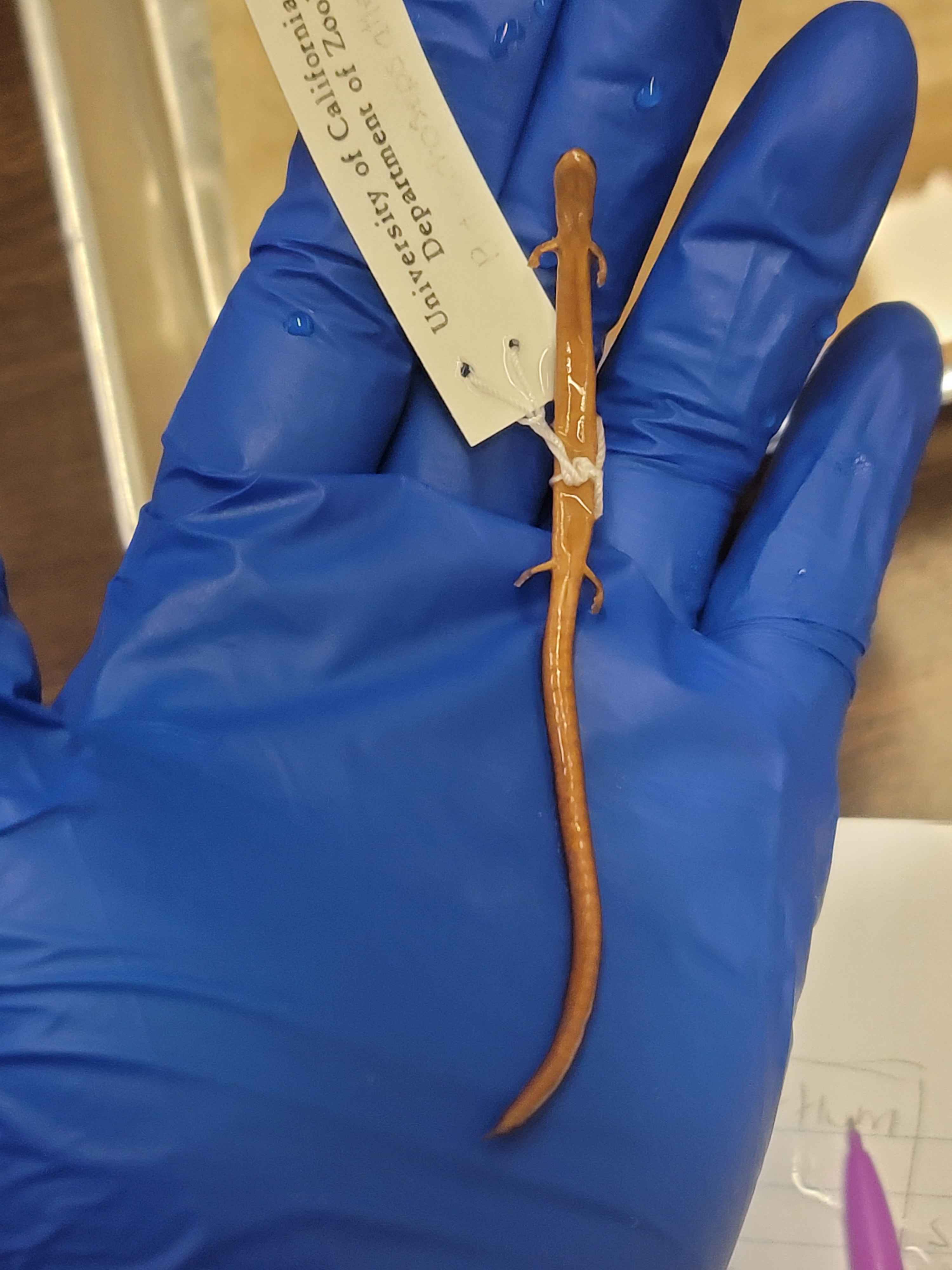
Batrachoseps attenuatus
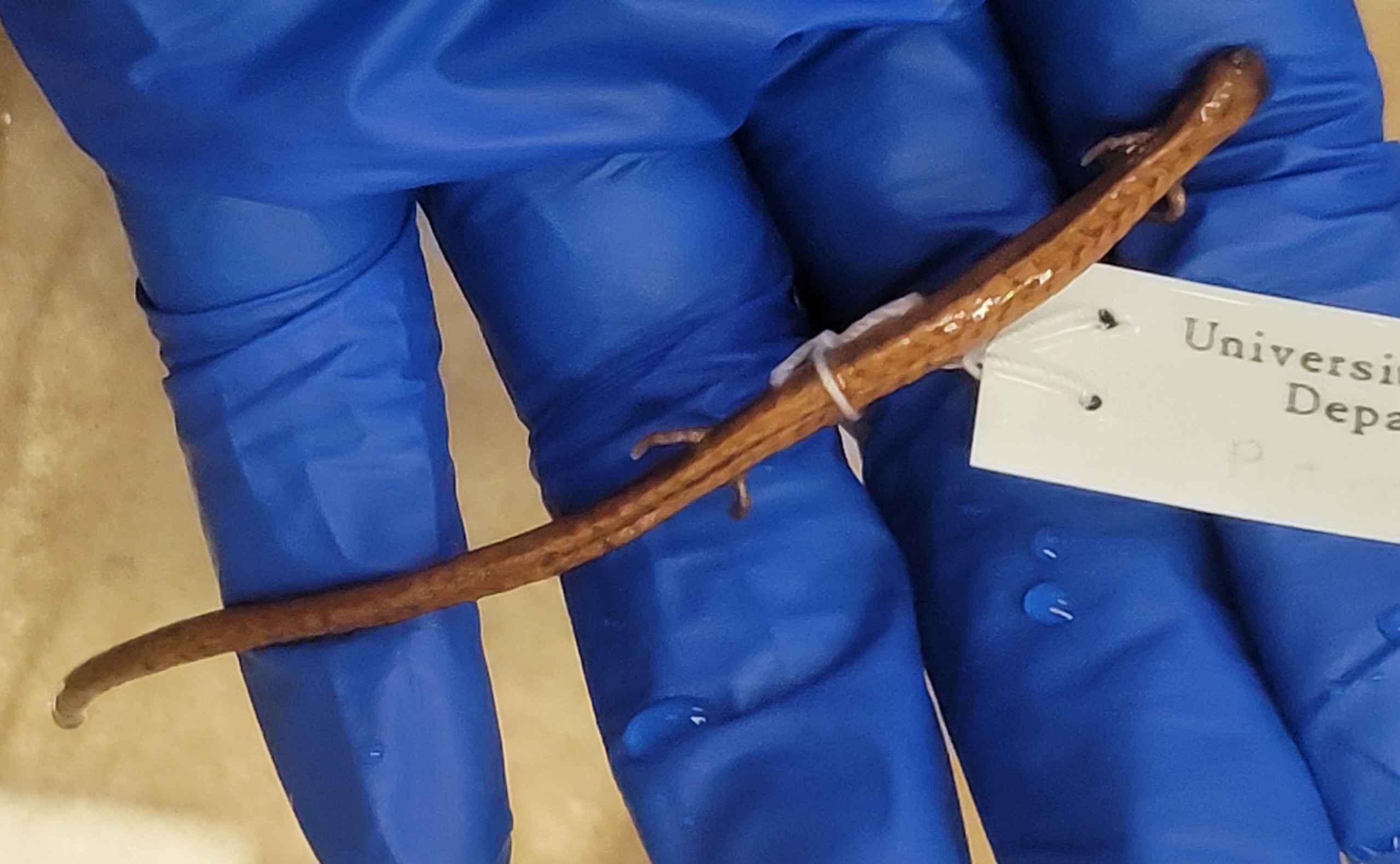
Batrachoseps robustus
Kern Plateau Salamander
Variable on dorsal side
underside dark
Stout, with larger limbs and feet.
larger/thicker than b. attenuates
tiny distribution in Kern Plateau
tail can be length of body, often smaller
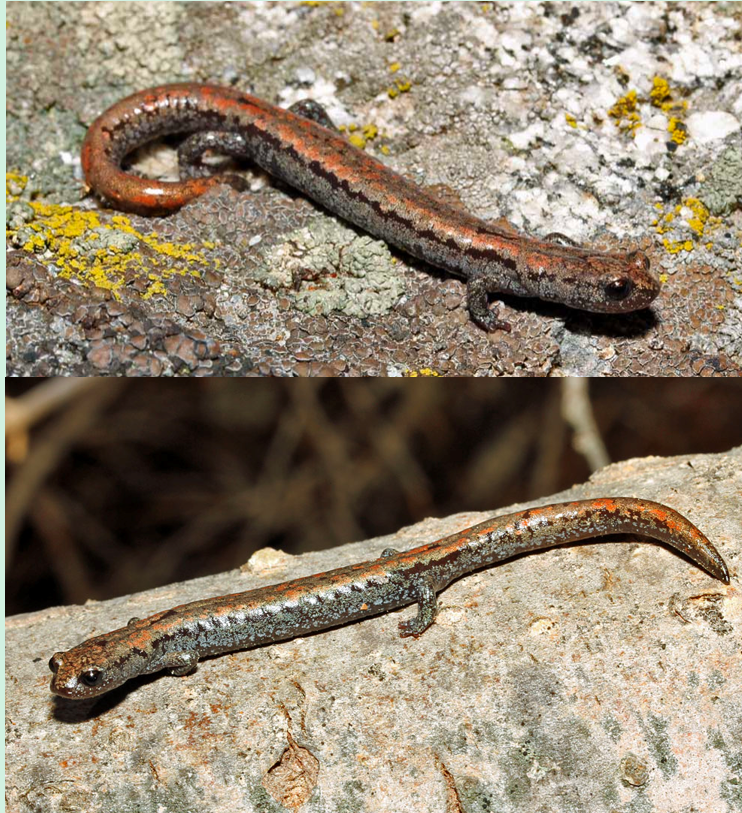
Batrachoseps robustus
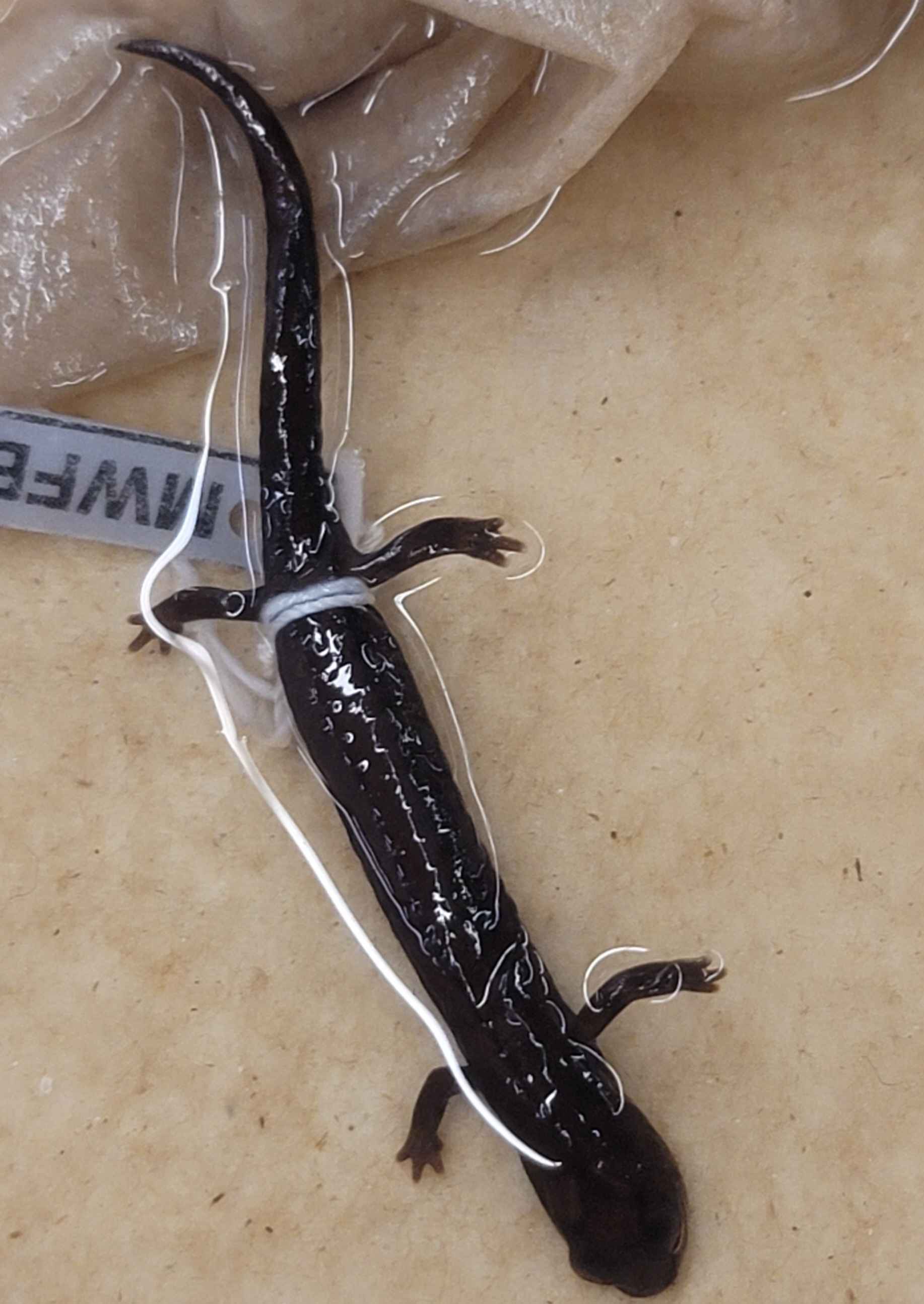
Subfamily Plethodontinae
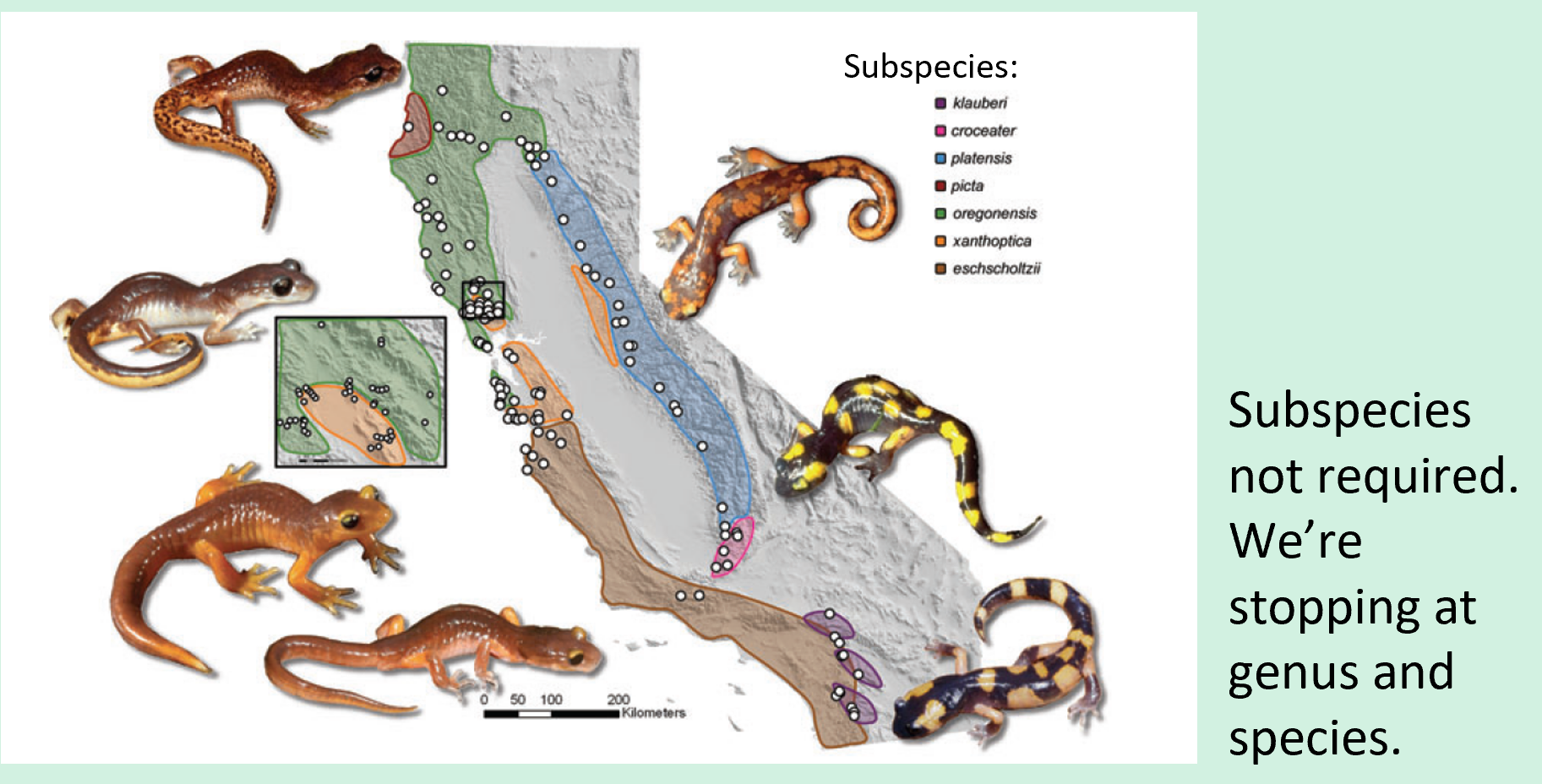
Ensatina eschscholtzii
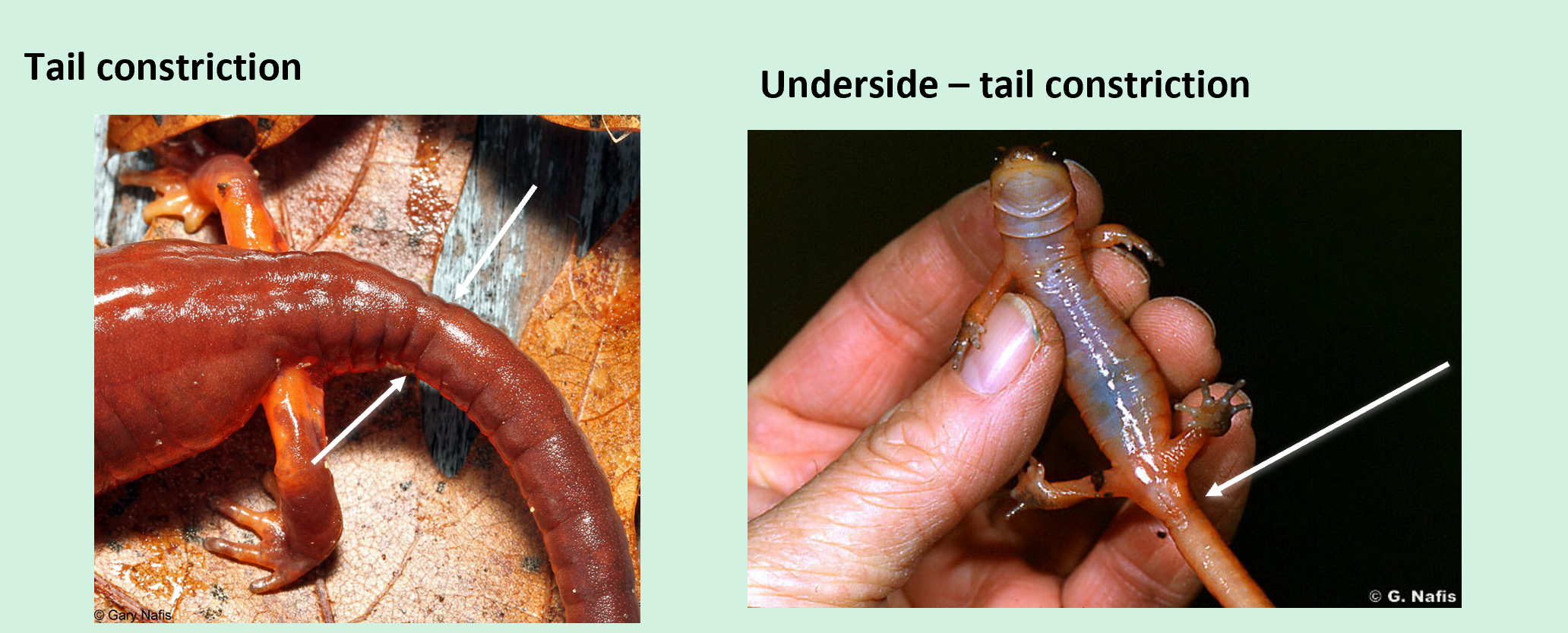
Basal constriction on tail
Ring species, 7 seven species (don’t need to know subspecies)
Reddish or pinkish brown above, lighter
belowtail consitriction
How to identify Ensatina
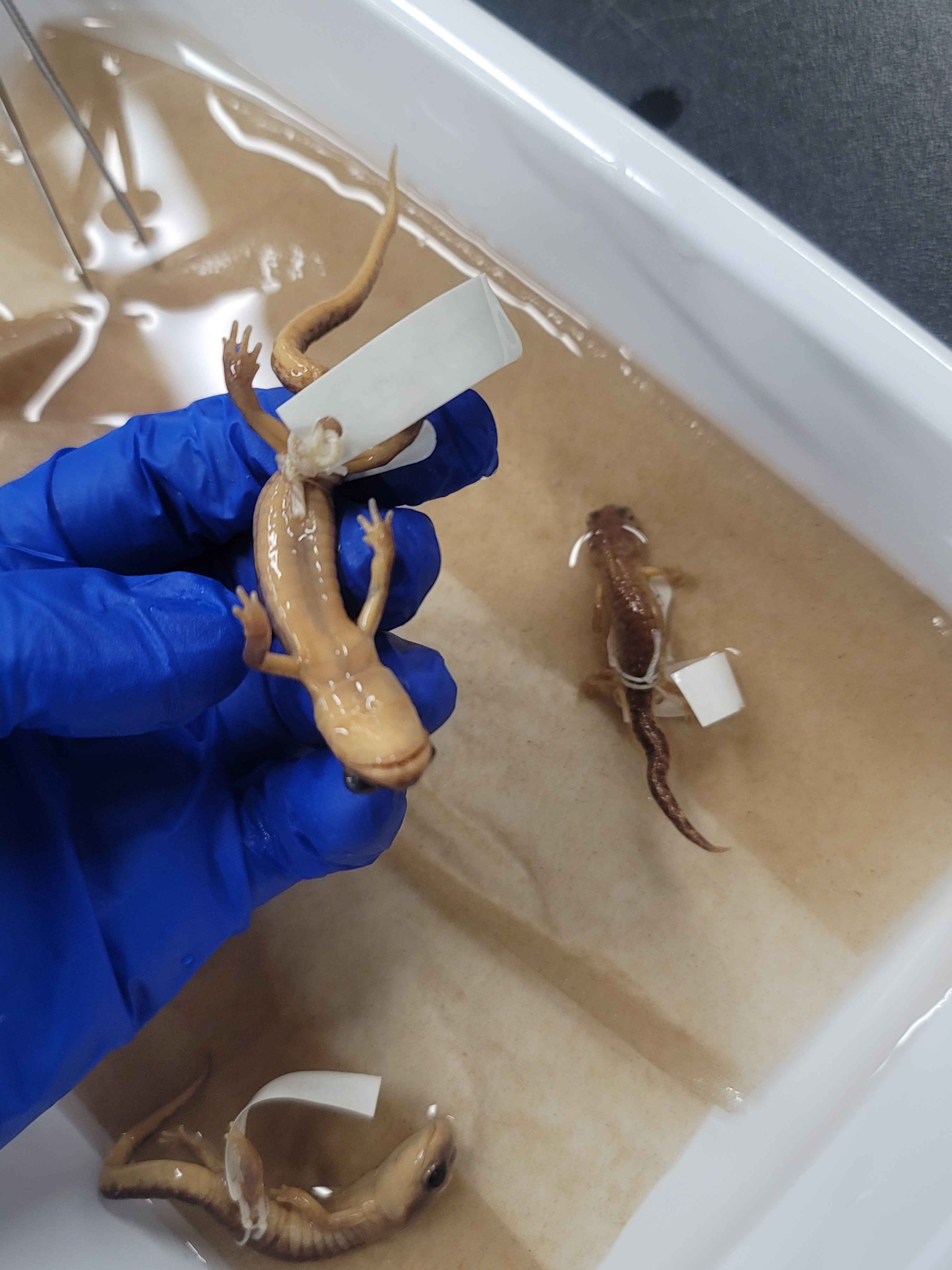
Ensatina eschscholtzii eschscholtzii (Monterey Ensatina)
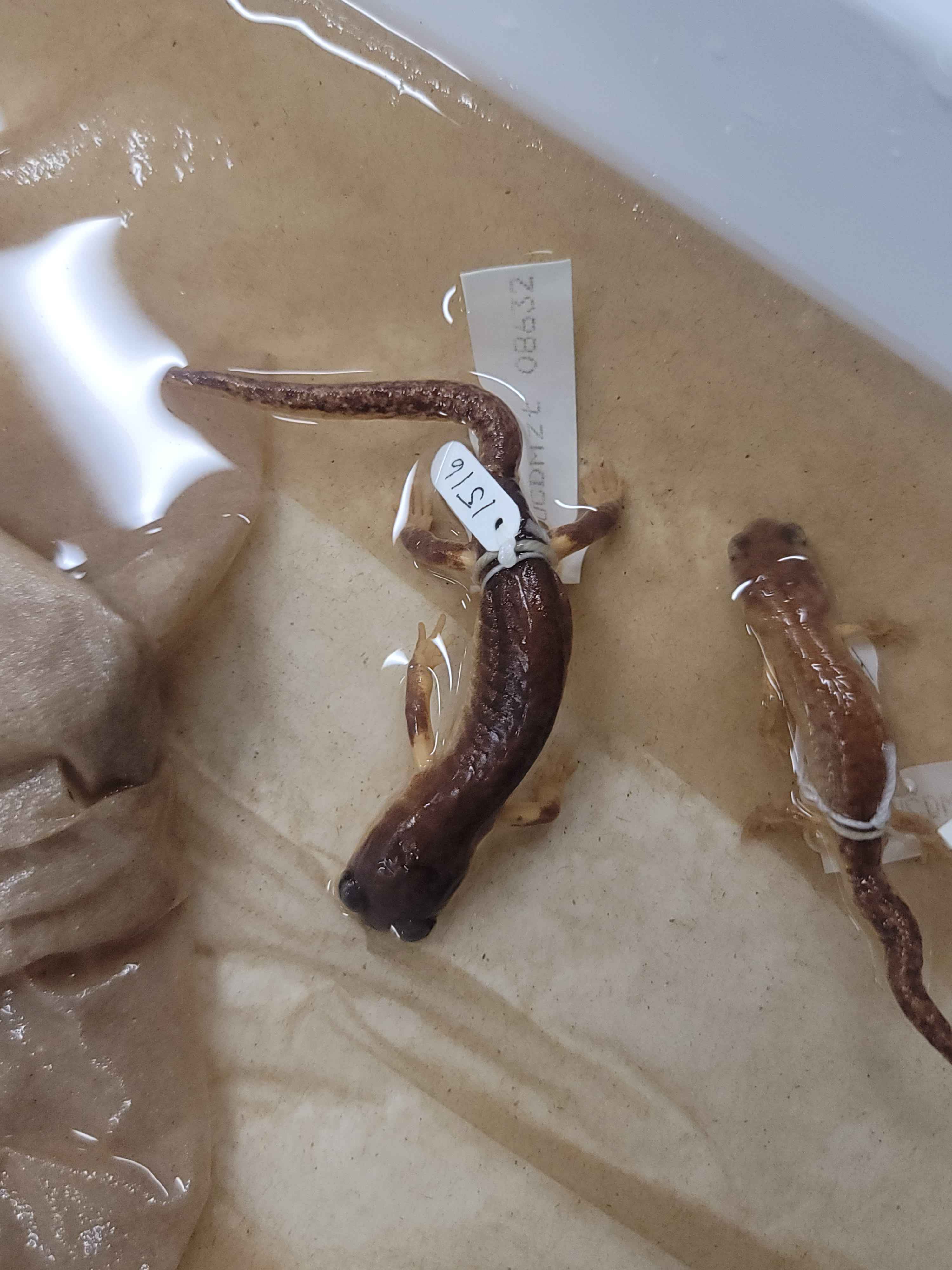
Plethodon
Woodland salamanders. Limbs don’t touch when adpressed, long tail
lack specialized traits to distringuish other 4 CA genera
costal grooves
5 toes on hind feet
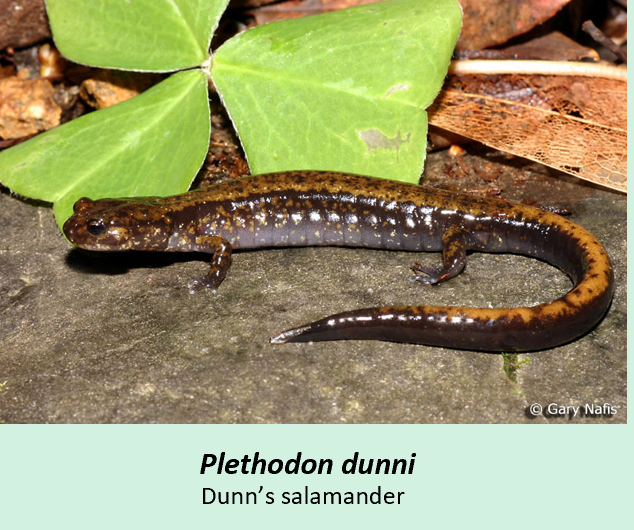
Plethodon dunni
Dunn’s salamander
15 costal grooves
no webbing between toes.
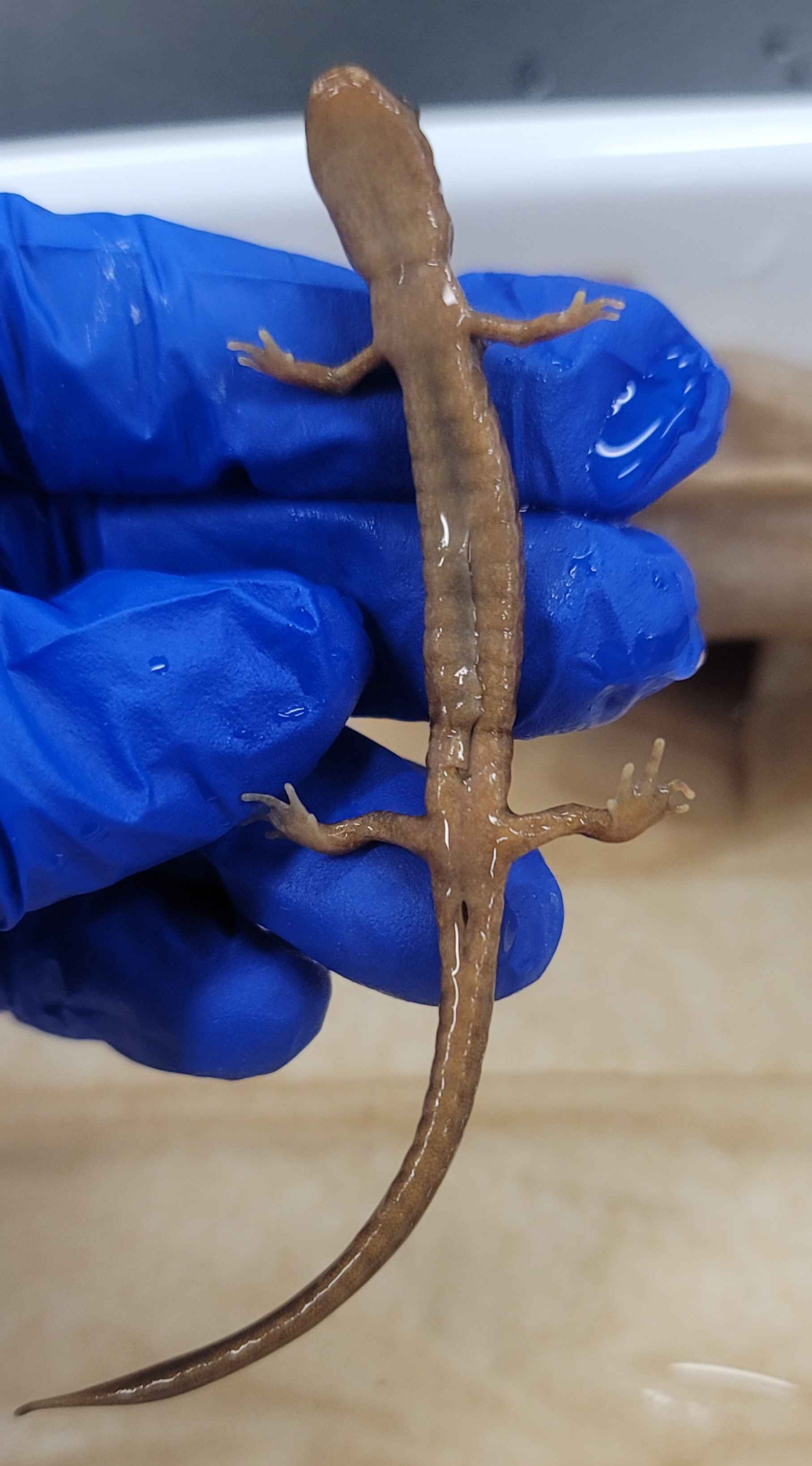
Plethodon dunni
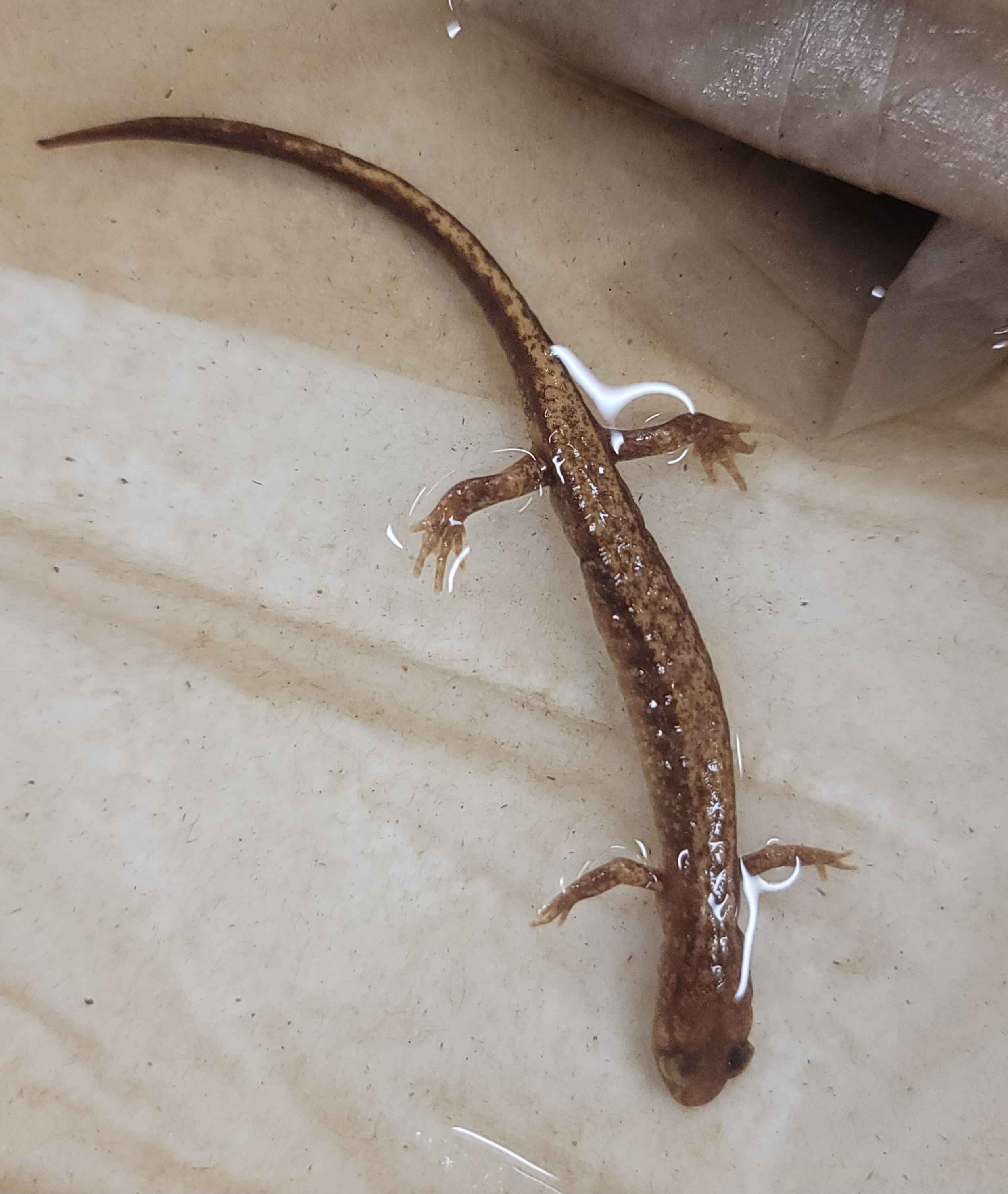
Plethodon elongatus - Del Norte salamander.
Toes short and slightly webbed
18 costal groove
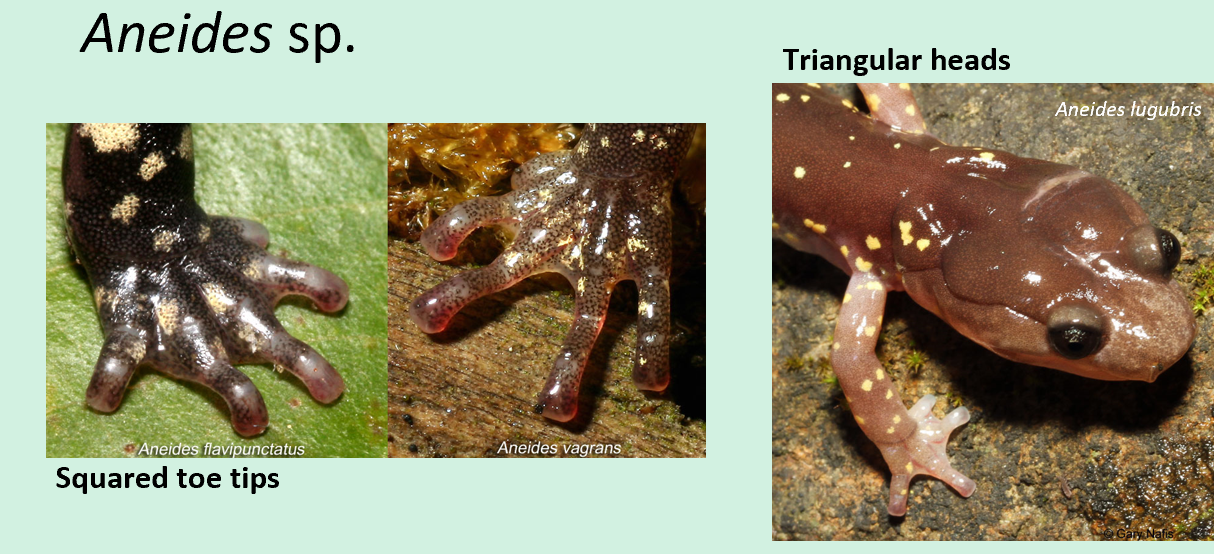
Aneides
Climbing salamanders
Triangular head
projecting upper jaw teeth
long toes with square tips (except A. flavipunctatus),
prehensile tails
climbing salamanders
found in trees and on tree trunks
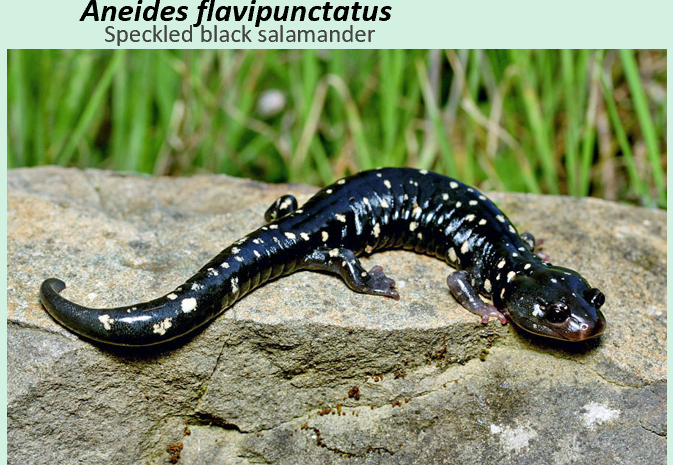
Aneides flavipunctatus
Black salamander
Black on back and belly, white or yellow flecks
toe tips rounded.
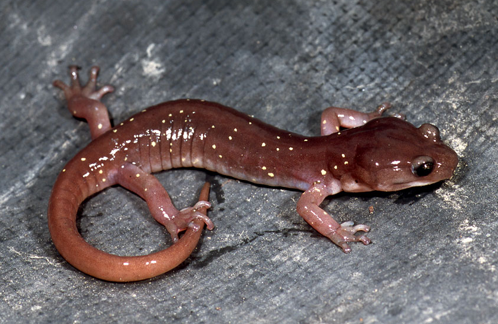
Aneides lugubris
Arboreal salamander.
Brown above sometimes with yellow spots
white belly
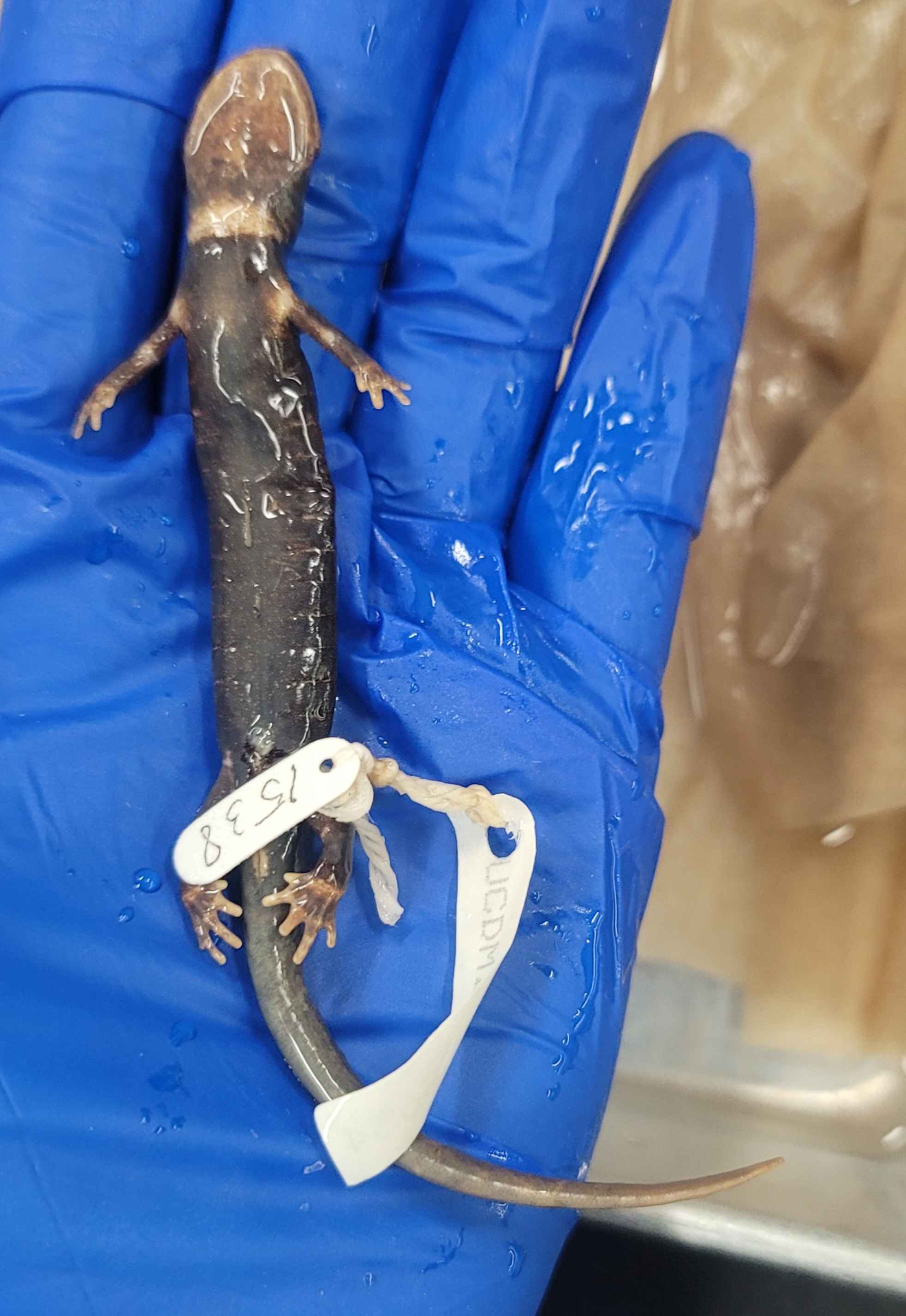
Aneides lugubris
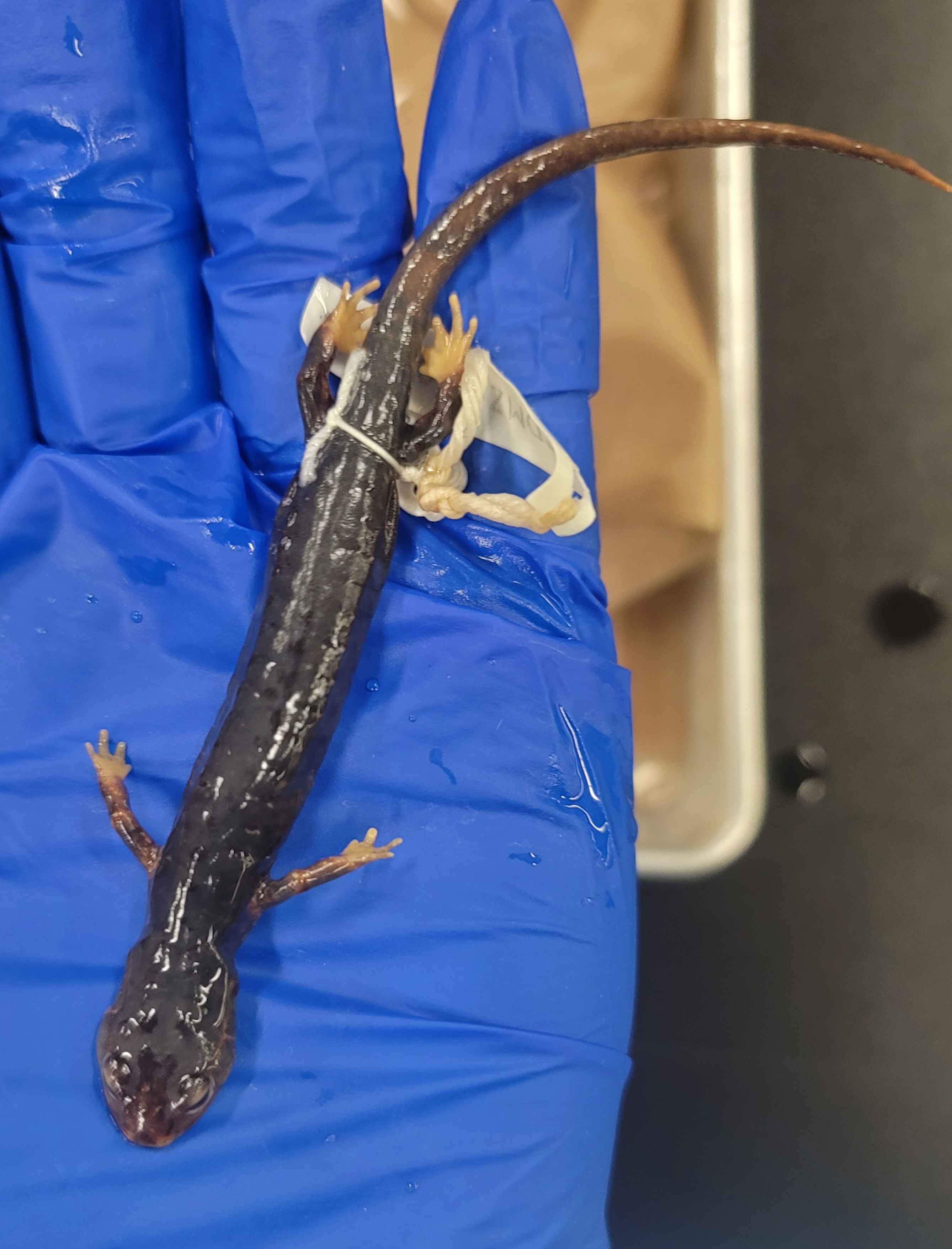
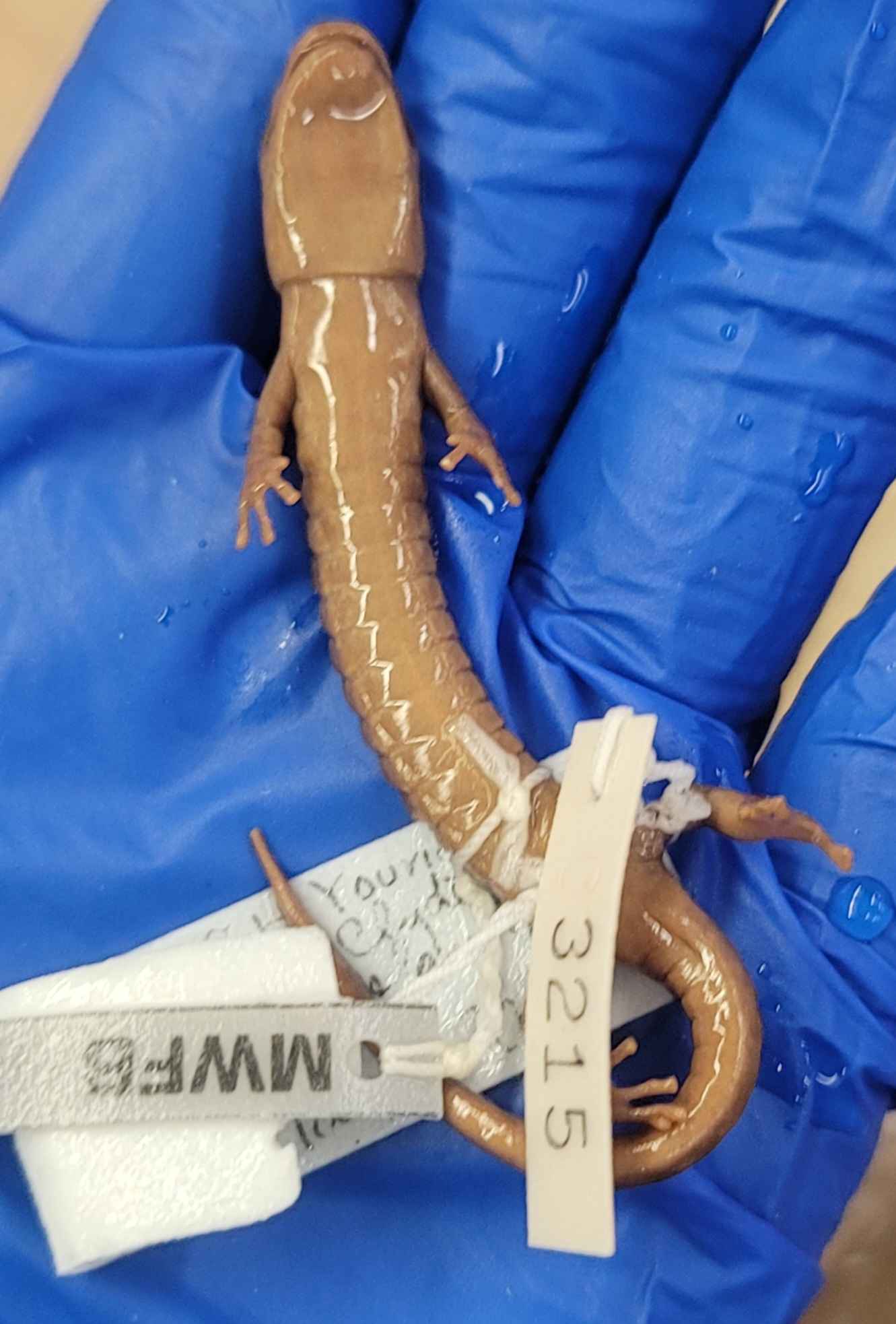
Aneides vagrans
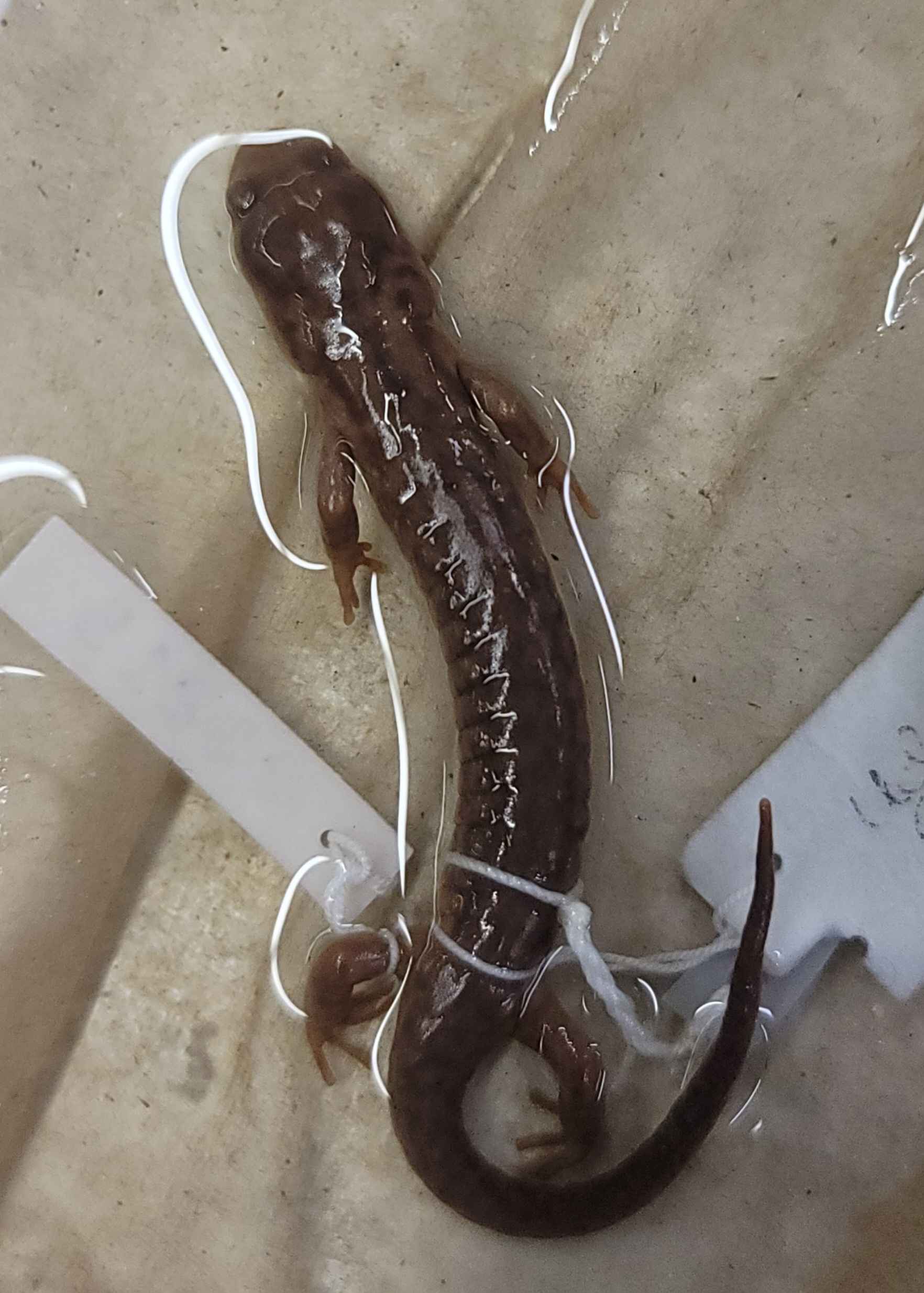
Aneides vagrans
Wandering salamander
Clouded above with mottled pattern of gray, gold or red.
Found south of Smith River, where it intergrades with A.
ferreus, and British Columbia
A. flavipunctatus
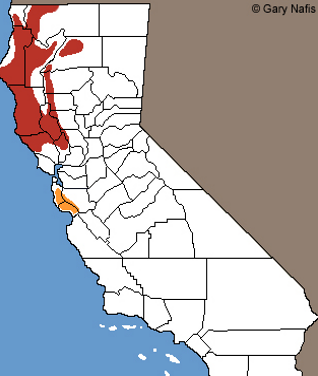
A. lugubris
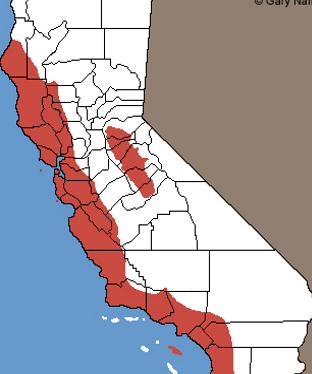
A. vagrans
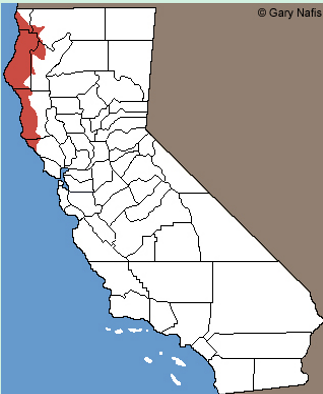
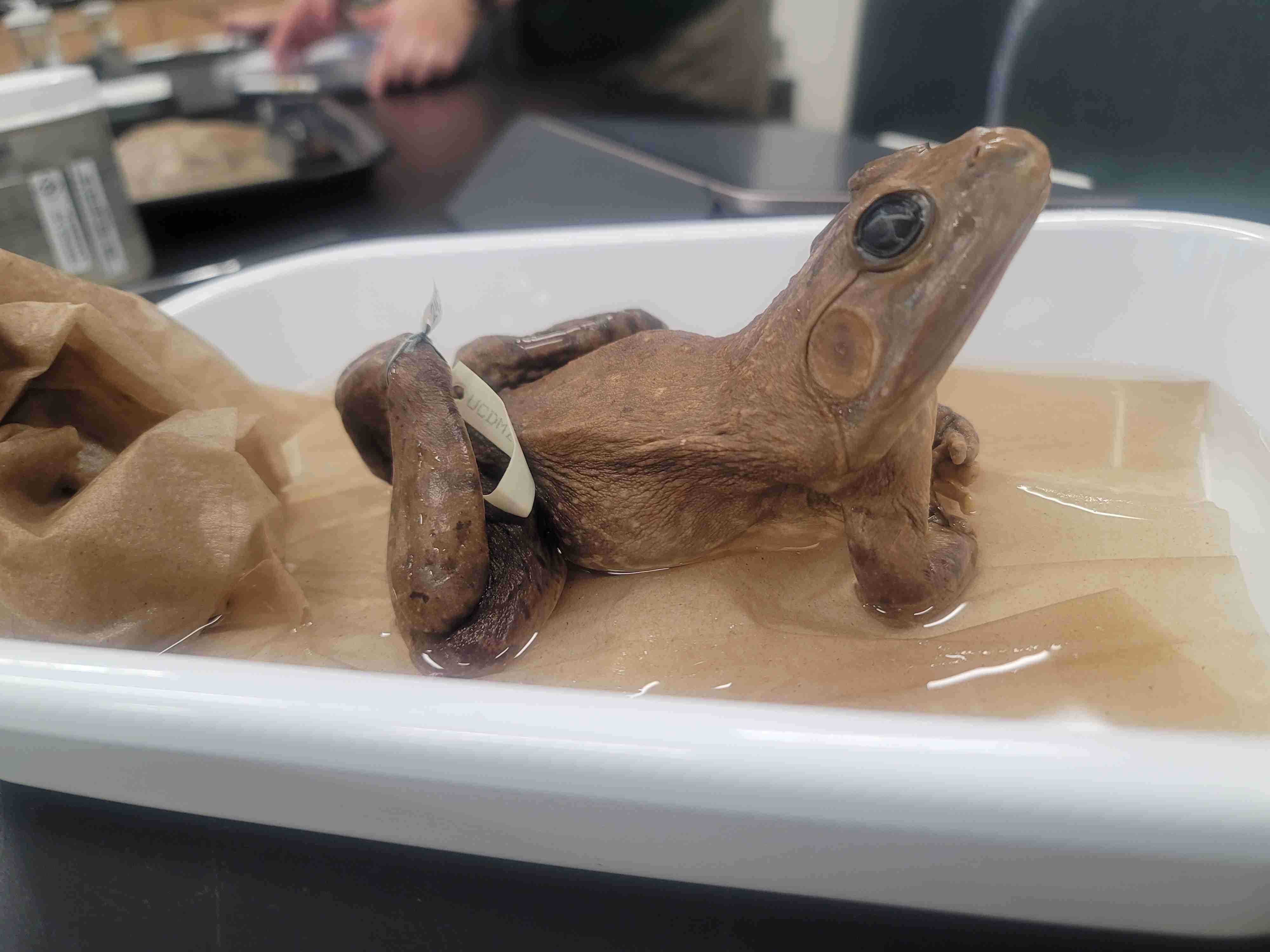
Rhacophoridae - Common Tree Frog
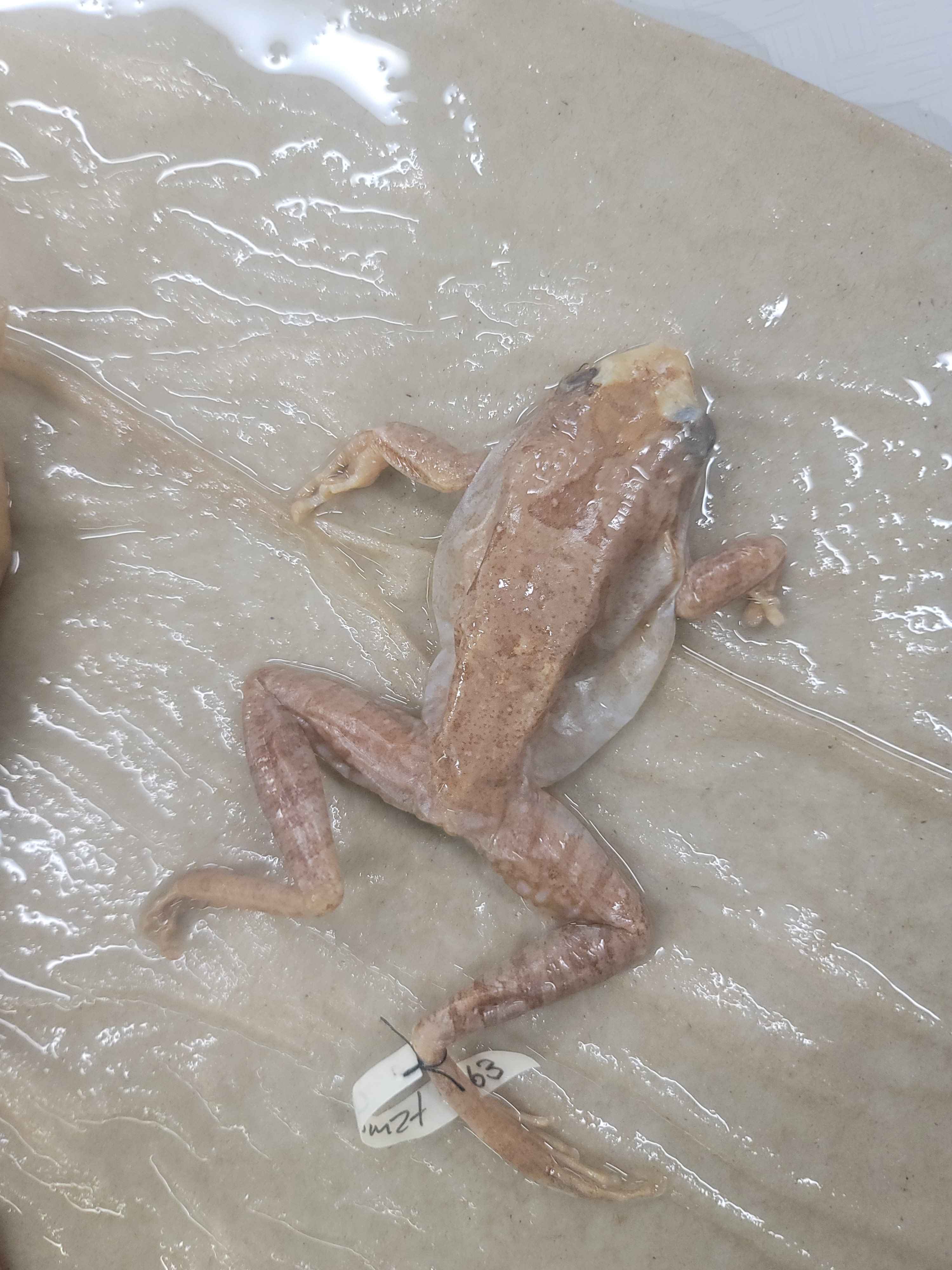
Ascaphidae Family
-Tailed frogs
-Males have "tail"
(intromittent organ for
internal fertilization
-prepubis not fused to
the pelvis, nine
presacral vertebra
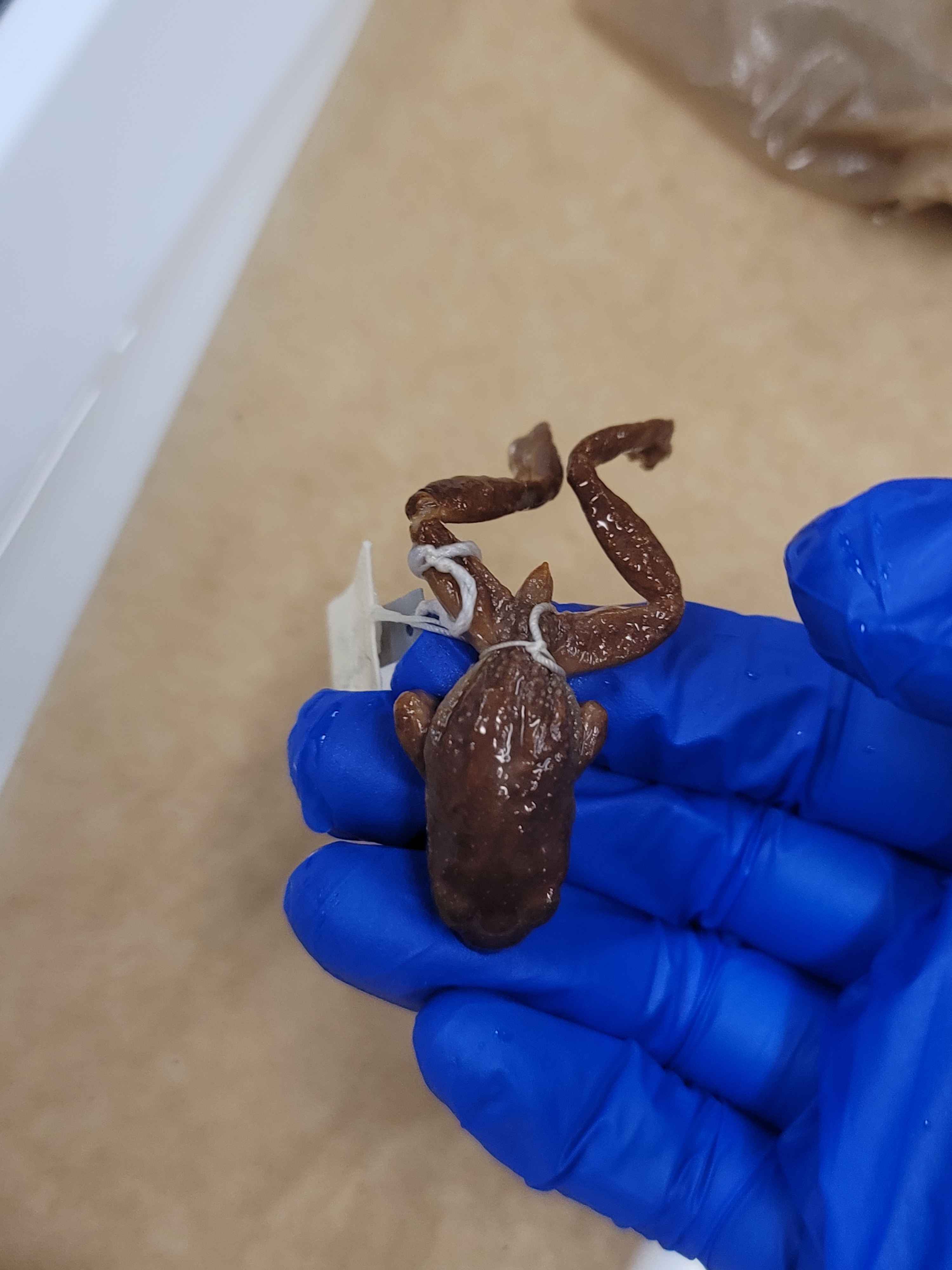
Ascaphus truei - Ascaphidae
Coastal tailed frog. Dark eye stripe, lacks toe pads, males have
“tail”.
Pipidae
Really flat, totally aquatic,
long legs, long webbed toes
with clawlike tips
Tongueless frogs.
Africa and South
America
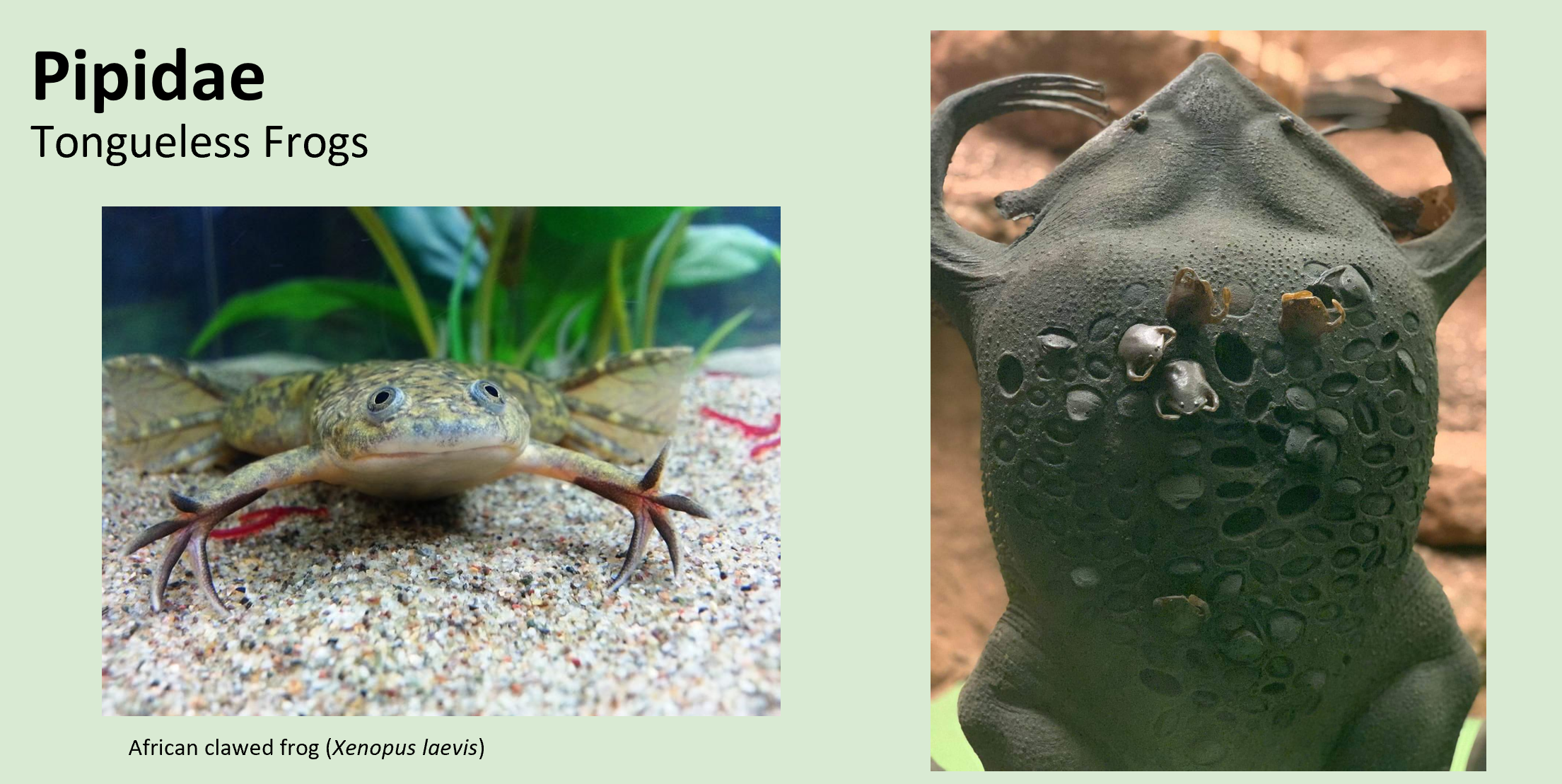
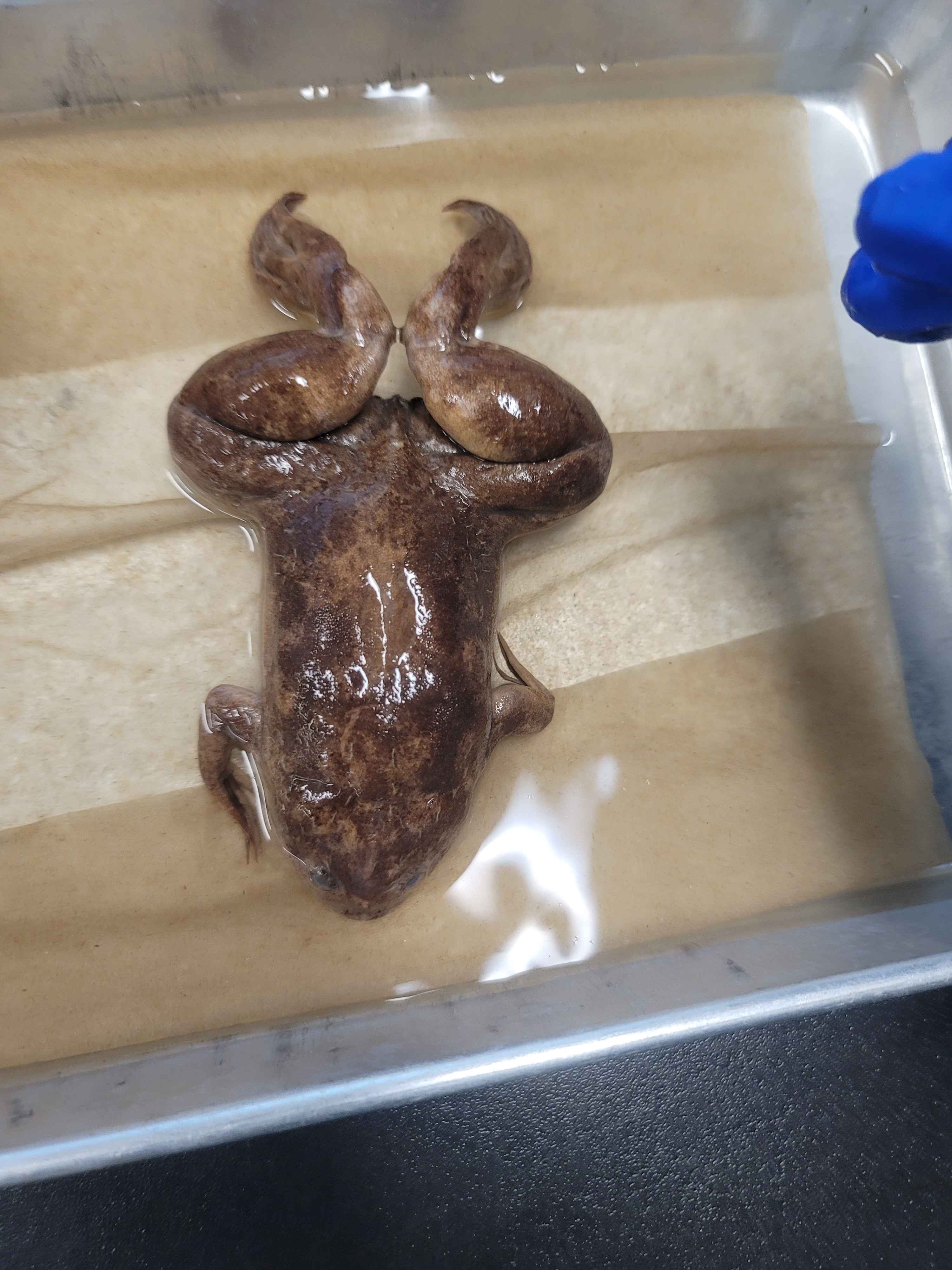
Xenopus laevis
African clawed frog (INTRODUCED species). Flattened body and
head, lidless eyes, claws on hind feet, hind feet fully webbed.
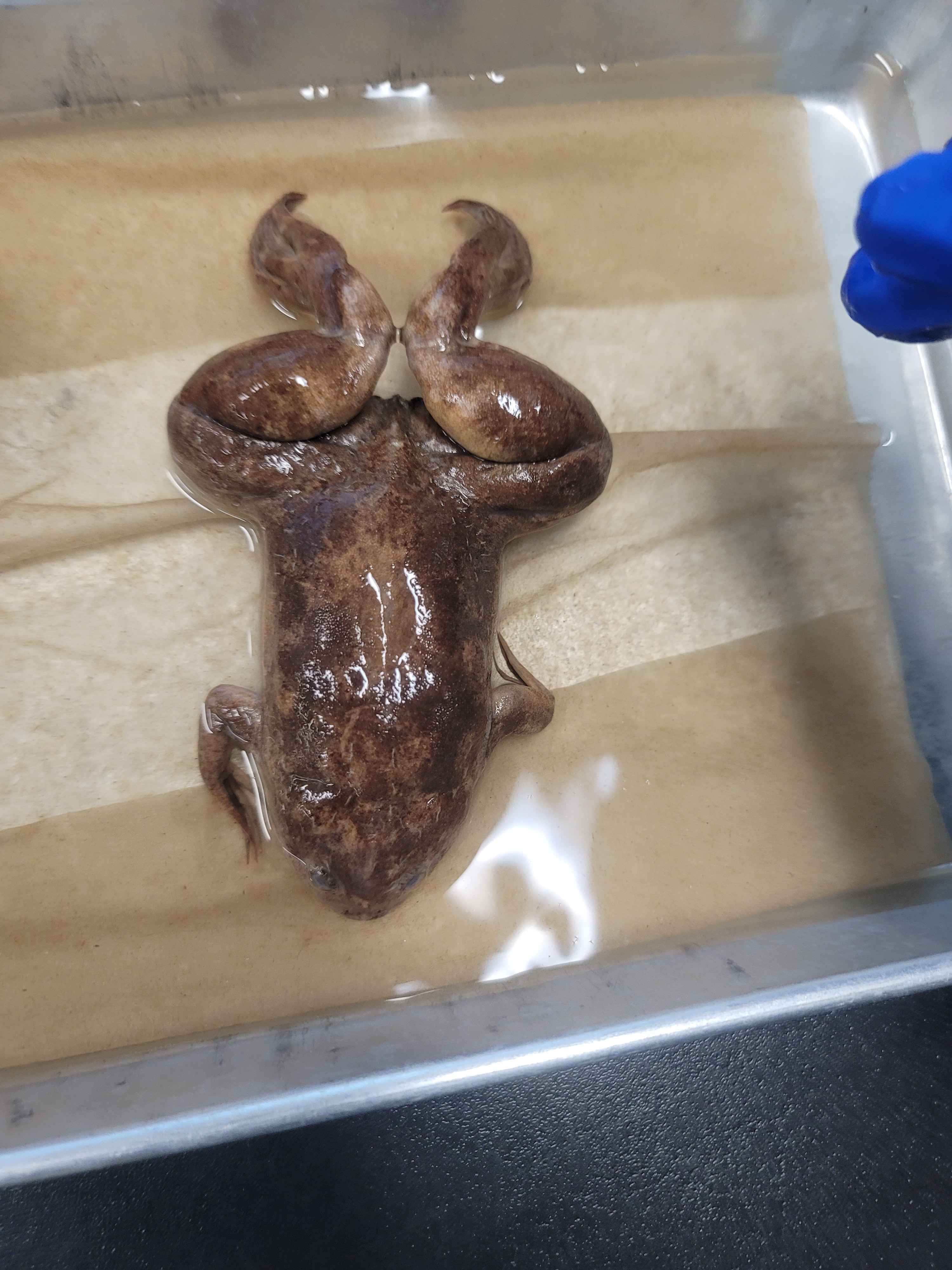
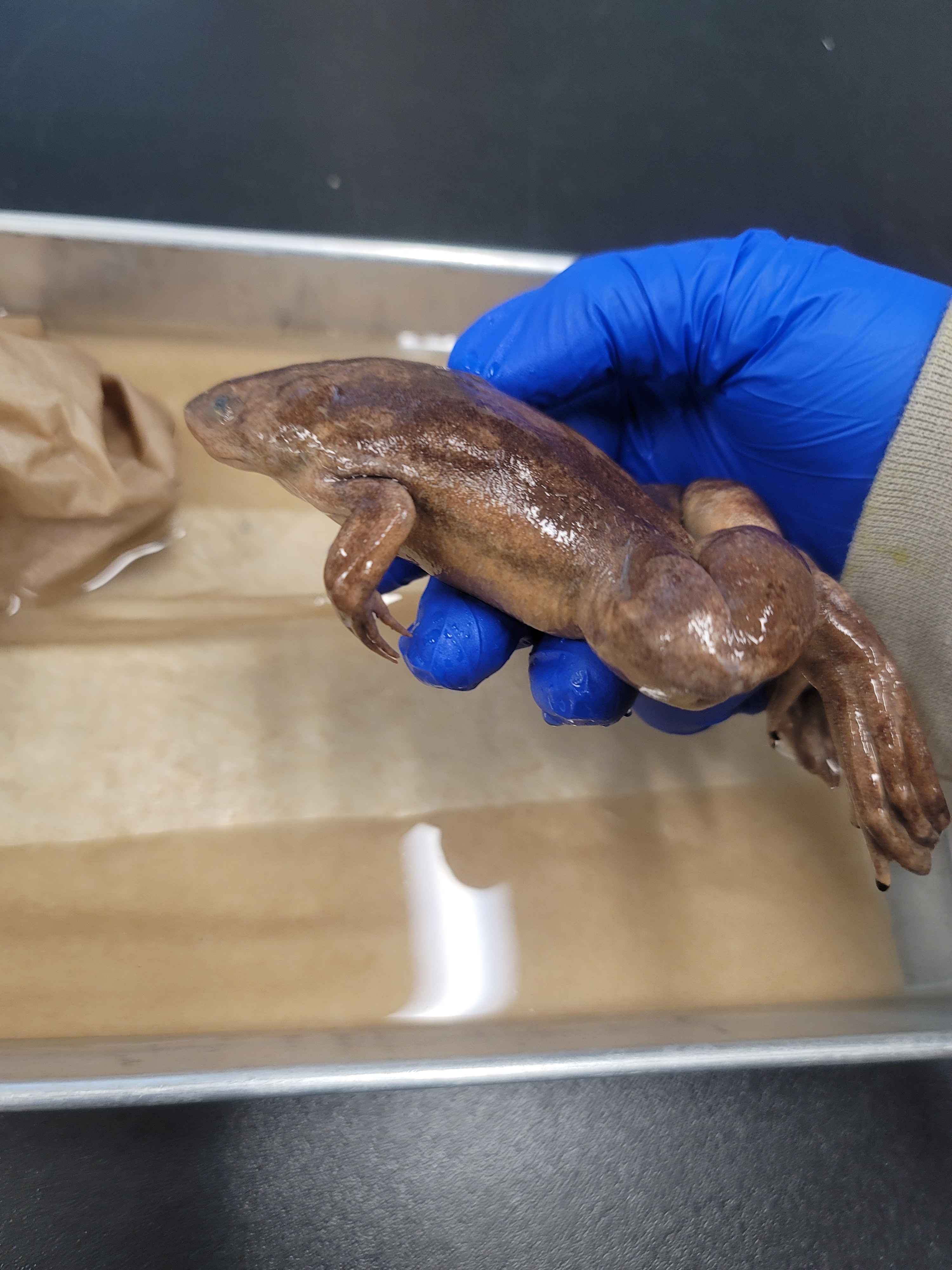
Xenopus laevis
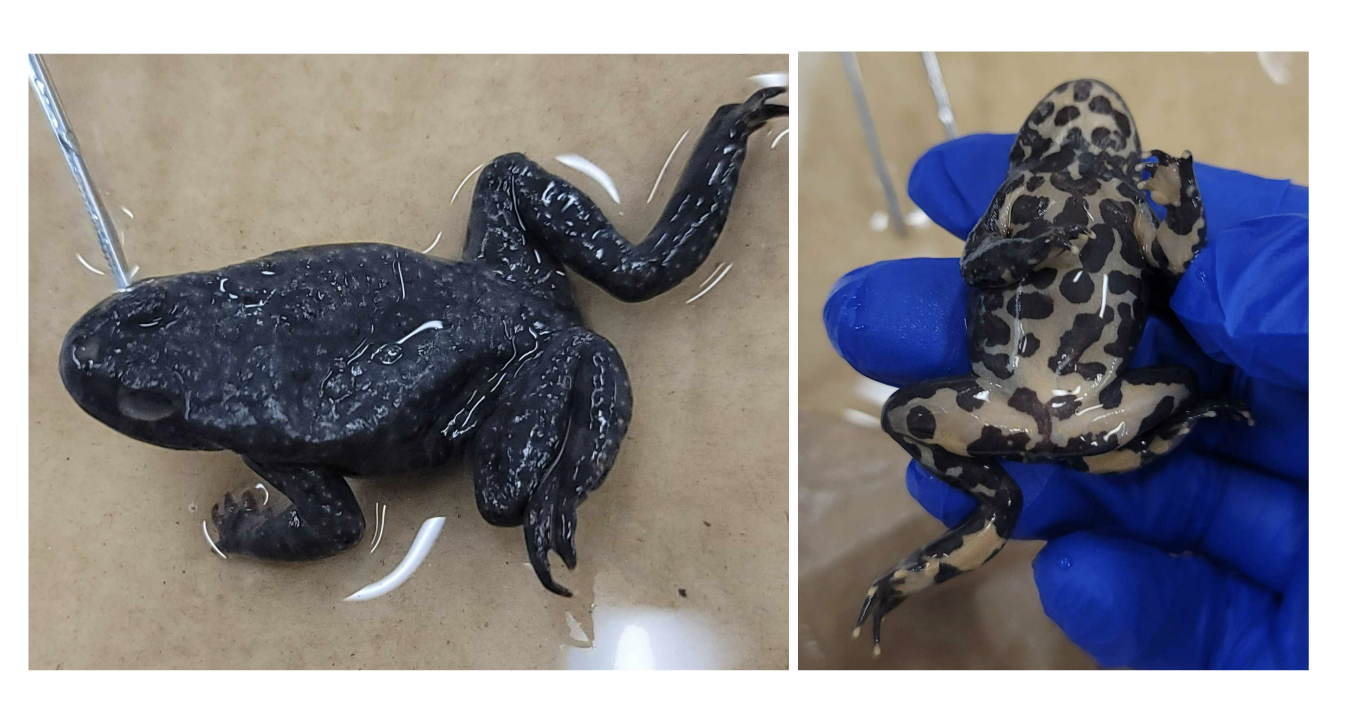
Bombinatoridae Family
Fire-bellied Toads
Europe, Asia
Bright orange or blue belly
in our specimens