heatwaves and drought
 Call Kai
 Learn
Learn Practice Test
 Spaced Repetition
 Match
Match Flashcards
 Knowt Play
1/19

Earn XP
Description and Tags
john
Name | Mastery | Learn | Test | Matching | Spaced | Call with Kai |
|---|
No analytics yet
Send a link to your students to track their progress
20 Terms
heatwave def
period of high temperatures relative to typical seasonal conditions for a location
anticyclones
large scale high pressure systems
light winds
descending air inhibits cloud formation
heat stress
humans need to shed 90W heat or core temperature rises leading to organ damage or death
lower temps- radiation, conduction, convection, perspiration
high temps- perspiration only
heatwaves and air pollution
temperature inversions inhibit connective mixing and trap emissions
clear skies- strong radiation enhance ozone production
2003- 21-38% of the total excess deaths due to “elevated ambient ozone and PM10 concentrations”
heatwaves and soil moisture
soil moisture deficits can increase the frequency, duration and severity of hot spells in moisture limited areas (S Europe)
In wetter climates, this relationship is weaker
low air humidity- reduced heat stress- mild reduction in heatwave mortality
2003 EU heatwave
over 25 degrees average temps
daily recorded deaths peaked at 4,500
16 EU countries including France, UK, Italy- >80,000 excess deaths
Vulnerability
VULNERABLE AGE GROUPS
>65 years
<5 years
OTHER
pre existing medical conditions
housing
economic circumstances
Mitigation: UK
heatwave alert levels (1-4)
‘beat the heat’
Mitigation- long term
urban green spaces
30-40% reduction of heat-related diseases
cool infrastructure
Global effects
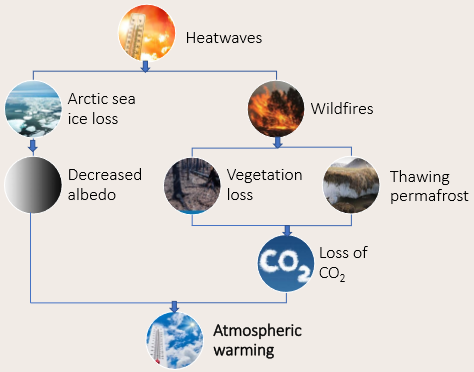
drought def
a moisture deficit relative to the average water availability at a given location and season
meteorological drought
period of lower rainfall
drought occurence
occurs globally
more common in areas with low rainfall levels
areas of tropics and subtropics experience distinct dry and wet seasons
environmental drought impacts
loss of wetlands
drying of seasonal water bodies
reduced vegetation cover
loss of wildlife habitat
soil erosion
wildfires
wildfire migration
disease
socio-economic drought impacts
(cash) crop failure
loss of livestock
irrigation costs
reduced water quality
(clean) water scarcity and supply disruptions
decreased water supply for energy sector
decreased soil fertility
unemployment
increased food (production) prices
risk of disease
mass migrations
hunger and famined
drought in the sahel- facts
semi arid 100-800mm/yr
dry and wet seasons
rainfall driven by tropical convection, west african monsoon, el nino
drought in the sahel- causes
REGIONAL FORCING
anthropogenic-
overgrazing, deforestation for agriculture
increased surface albedo, less solar energy absorbed
reduced moisture supply to atmosphere, less rainfall
unfavourable conditions for vegetation growth
REMOTE FORCING
changes in sea surface temperatures-
changes in SST
monsoon circulation weaker
drier, less vegetation
higher albedo, decrease in water input
other-
atlantic multidecadal oscillation
dust feedbacks
aerosol related forcing
Ethiopia
droughts related to existing vulnerability
exacerbated by:
rural destitution
environmental degradation
war and conflicts
1999-2000 crisis: 10 million in need of food assistance
mitigation and adaptation- droughts
collective transboundary management of grazing systems
conservation of rangelands and forests
community level soil and water conservation actions
agroforestry
irrigation improvements (drip irrigation, drought resistant crops)
difficult dur to conflicts
climate change
human influence has increased the chance of compound extreme events since the 1950s
including increases in frequency of heatwaves and droughts globally
every 0.5 degree of global warming increases the intensity and frequency of heatwaves and heavy precipitation as well as droughts

