AP Environmental Science Unit 6 Exam

0.0(0)
studied byStudied by 2 people
call kaiCall Kai
learnLearn
examPractice Test
spaced repetitionSpaced Repetition
heart puzzleMatch
flashcardsFlashcards
GameKnowt Play
Card Sorting

1/71

flashcard set

Earn XP

Description and Tags

lock the f in

Last updated 2:32 AM on 3/12/25
Name
Mastery
Learn
Test
Matching
Spaced
Call with Kai

No analytics yet

Send a link to your students to track their progress

72 Terms

1
New cards
Renewable and nonrenewable energy sources.
Renewable energy: sources include solar, wind, hydroelectric, geothermal, and biomass.
2
New cards

Nonrenewable energy sources

Coal, oil, natural gas, and nuclear.

3
New cards
Most commonly used source of fuel in developing countries.
Biomass, such as wood, charcoal, and animal dung
4
New cards
Country with the largest proven reserve of coal.
United States
5
New cards
Environmental issues associated with sulfur emissions.

Sulfur emissions contribute to acid rain, soil and water acidification, respiratory problems in humans and animals, damage forests, harm aquatic ecosystems, corrode buildings.
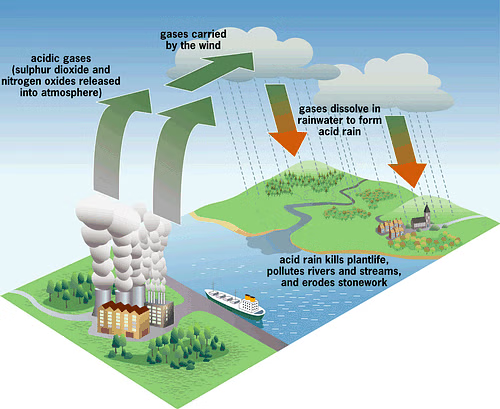
<p>Sulfur emissions contribute to acid rain, soil and water acidification, respiratory problems in humans and animals, damage forests, harm aquatic ecosystems, corrode buildings.</p>
6
New cards
Human health issues associated with coal-powered plants.
Coal power plants release pollutants like particulate matter, mercury, and sulfur dioxide, which can cause respiratory diseases (asthma, bronchitis), cardiovascular issues, and neurological damage from mercury exposure.
7
New cards
Two ways fossil fuel-burning power plants can reduce sulfur emissions.
Power plants can install scrubbers in smokestacks to remove sulfur dioxide before it reaches the atmosphere. They can also switch to low-sulfur coal or use alternative energy sources.
8
New cards
Two environmental benefits of using natural gas over coal.
Natural gas produces fewer COโ‚‚ emissions per unit of energy, reducing its contribution to climate change. It also releases fewer particulates and sulfur dioxide, leading to improved air quality.
9
New cards
Region of the world that has been the largest exporter of oil.
The Middle East (Saudi Arabia)
10
New cards
Activities associated with drilling oil in ANWR and their potential consequences.

1) Seismic testing can disrupt wildlife behavior and migration.
2) Infrastructure development (roads, pipelines) can fragment habitats and increase the risk of oil spills.

11
New cards
Characteristics that make Arctic tundra particularly fragile.

1) Slow growth and recovery - Arctic ecosystems take a long time to recover from disturbances due to short growing seasons.
2) Permafrost dependency - Damage to permafrost from drilling or warming can release methane and COโ‚‚, accelerating climate change.

12
New cards
Production of oil from tar sands.
Tar sands are mined and processed to extract bitumen. The bitumen is then heated or chemically treated to separate the oil, which is further refined into usable fuel.
13
New cards
Negative environmental consequences of oil production from tar sands.

1) Deforestation and habitat destruction - Large areas of land are cleared for tar sand mining.
2) Water pollution - Toxic waste from extraction contaminates local water sources.

14
New cards
Example of electrical cogeneration.
A factory that uses excess heat from electricity generation to provide heating for industrial processes or nearby buildings.
15
New cards
Natural oil contamination in the ocean.
Natural oil seeps, such as those off the coast of California, release oil into the ocean without human activity.
16
New cards
Pro and con of chemical dispersants used on oil spills.

Pro: Helps break down oil into smaller droplets, making it easier for microbes to degrade.
Con: Can be toxic to marine life and make oil sink to the ocean floor, harming ecosystems.

17
New cards
Common way to physically or mechanically clean up oil spills.
Booms and skimmers are used to contain and remove oil from the surface of the water before it spreads.
18
New cards
Economic and environmental problems from oil spills on coastal towns.

Economic: Loss of tourism and fishing industry revenue.


Environmental: Long-term damage to marine ecosystems and wildlife deaths from oil exposure.

19
New cards
Type of environment that would most likely yield oil in the future.
Sedimentary basins with organic-rich rock, such as deep-sea environments or Arctic regions.
20
New cards
Two end uses of oil and a conservation measure for each.

1) Transportation (gasoline, diesel) - Use fuel-efficient vehicles or public transport.

2) Plastics production - Recycle and reduce plastic use.

21
New cards
Why oil production doubled in the 1960s.
Technological advancements, increased global demand, new oil discoveries, OPEC's formation, and improved infrastructure led to the rise in production.
22
New cards
COMPARE the environmental benefits of running combustion engines on natural gas vs gas

Natural gas can offer life cycle greenhouse gas (GHG) emissions benefits over conventional fuels
23
New cards
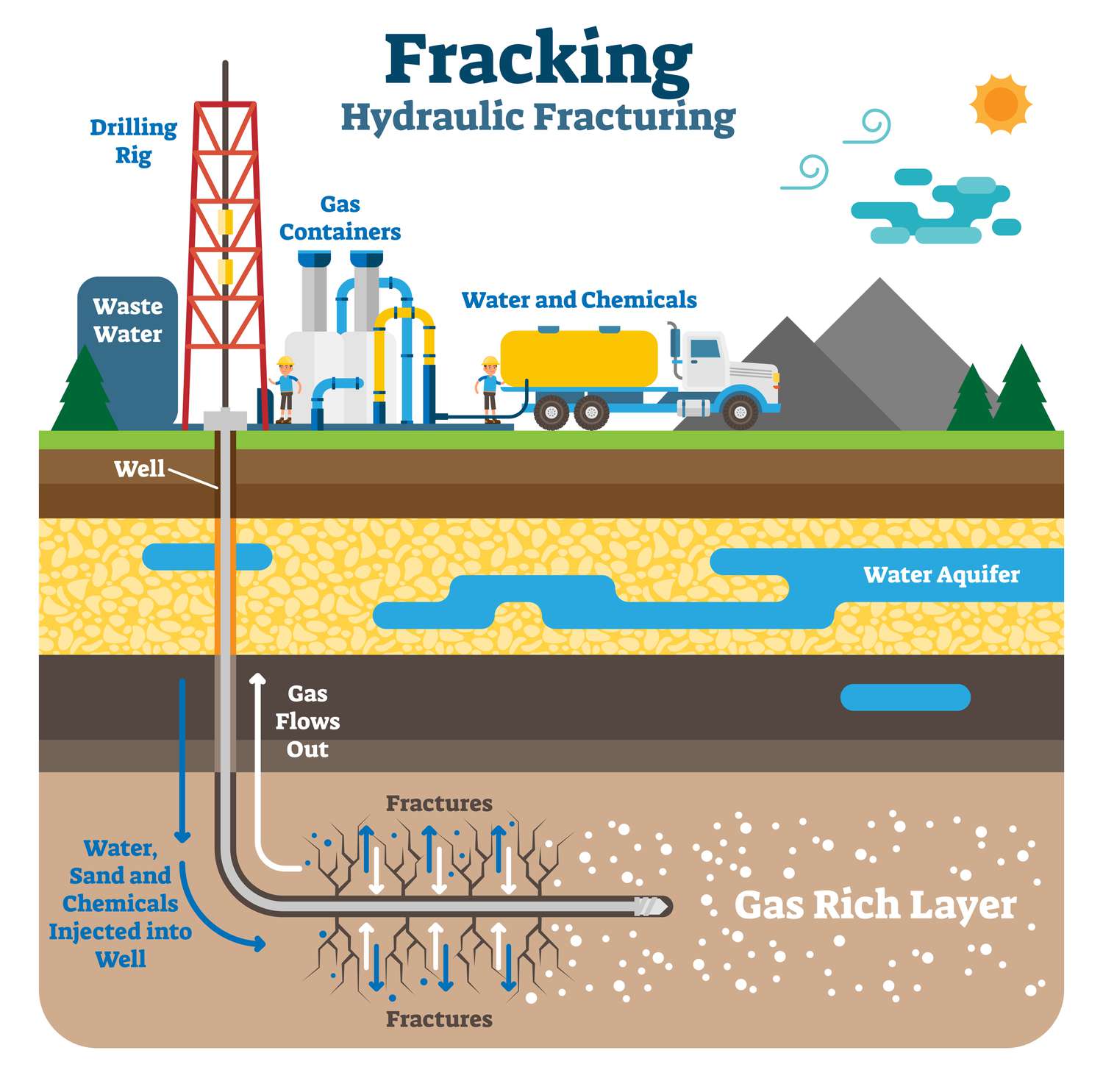
Process of fracking and how it gets natural gas
A process where a mixture of water, sand, and chemicals is pumped at high pressure into a deep underground well to create cracks in rock formations, allowing trapped natural gas to flow out and be extracted to the surface
24
New cards
Negative environmental consequence of fracking
Creates vast amounts of wastewater, emits greenhouse gases such as methane, releases toxic air pollutants and generates noise.
25
New cards
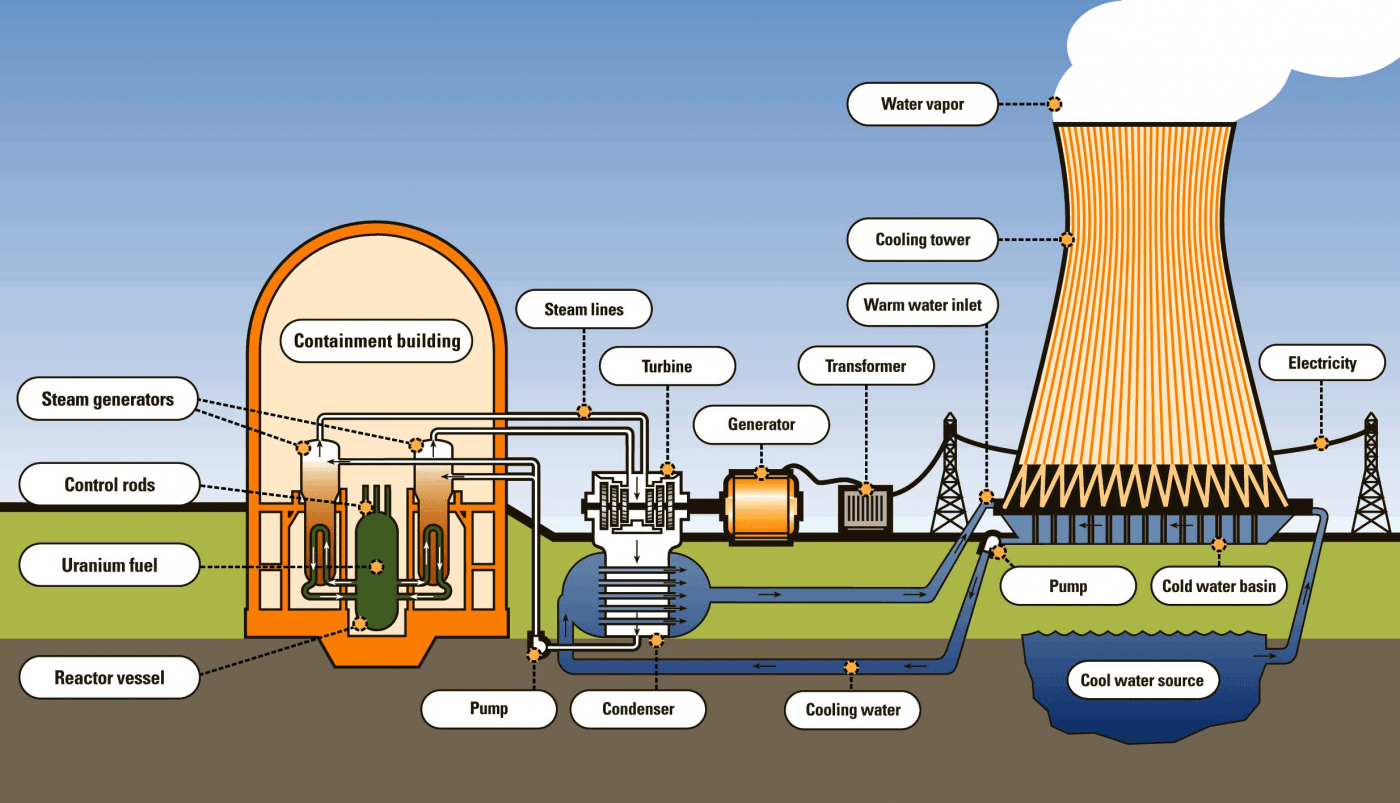
Parts and functions of a nuclear power plant.

โ€ข Reactor core - Contains fuel rods where fission occurs.

โ€ข Control rods - Regulate the fission reaction.

โ€ข Coolant - Transfers heat away from the core.

โ€ข Turbine - Spins to generate electricity.

โ€ข Cooling tower - Releases excess heat.

<p>โ€ข Reactor core - Contains fuel rods where fission occurs.</p><p>โ€ข Control rods - Regulate the fission reaction.</p><p>โ€ข Coolant - Transfers heat away from the core.</p><p>โ€ข Turbine - Spins to generate electricity.</p><p>โ€ข Cooling tower - Releases excess heat.</p>
26
New cards
Pros and cons of nuclear-generated energy.

Pros: Low greenhouse gas emissions, high energy output.

Cons: Radioactive waste, risk of meltdowns.

27
New cards
How nuclear power plants may cause thermal pollution.
Excess heat from cooling water is released into nearby rivers or lakes, disrupting aquatic ecosystems by lowering oxygen levels.
28
New cards
Human activity that produces high-level and low-level radioactive waste.

High-level waste - Used nuclear fuel from reactors.

Low-level waste - Medical equipment from radiation therapy.

29
New cards
Three characteristics of the proposed nuclear waste site in the Yucca Mountains.

1) Remote location to minimize human exposure.

2) Geological stability to prevent leaks.

3) Low water flow to reduce groundwater contamination.

30
New cards
Two other ways to dispose of high-level nuclear waste and their feasibility:

1. Deep Borehole Disposal: Drilling boreholes 3-5 km deep into stable geological formations and sealing waste inside. Feasibility: Technologically possible but expensive; political and geological challenges exist.

2. Sub-Seabed Disposal: Burying waste beneath the ocean floor in geologically stable regions. Feasibility: Technically feasible, but international treaties prohibit ocean dumping.

31
New cards
United States plan for long-term disposal of high-level nuclear waste:
The U.S. planned to store high-level nuclear waste at Yucca Mountain, Nevada, a deep geological repository. However, political and environmental concerns stalled the project. Currently, waste is stored on-site at reactors and in interim storage facilities while new permanent solutions are debated.
32
New cards
One of the three nuclear power plant accidents and the consequences:
Fukushima Daiichi (2011): A 9.0-magnitude earthquake and tsunami caused reactor meltdowns, hydrogen explosions, and radiation leaks. Consequences: Mass evacuations, contaminated land and water, economic losses, and long-term health monitoring for radiation exposure.
33
New cards
Sublethal health effect of radiation and how radiation causes this health effect:
Cataracts: Ionizing radiation damages lens proteins and DNA in eye cells, leading to clouding of the lens and impaired vision over time.
34
New cards
COMPARE high-level and low-level radioactive waste with a specific isotope for each:

โ€ข High-Level Waste: Comes from spent nuclear fuel and is highly radioactive. Example: Cesium-137 (Cs-137) (half-life ~30 years), a fission product emitting beta and gamma radiation.

โ€ข Low-Level Waste: Includes contaminated gloves, tools, and medical waste, with lower radiation levels. Example: Tritium (H-3) (half-life ~12 years), emitting low-energy beta radiation.

35
New cards
Concept of radioactive half-life:
Radioactive half-life is the time required for half of a radioactive substance to decay into a more stable form. It determines how long a material remains hazardous.
36
New cards
DEDUCE the half-life of an element from its graphically represented decay rates:

By analyzing a decay curve, identify the time at which the remaining quantity is half its original value. Repeat for additional half-lives to confirm consistency.

37
New cards
COMPARE fission and fusion:

โ€ข Fission: Splitting heavy nuclei (e.g., uranium-235) into smaller fragments, releasing energy. Used in nuclear reactors.

โ€ข Fusion: Combining light nuclei (e.g., hydrogen isotopes) to form heavier nuclei, releasing more energy than fission. Requires extreme temperatures.
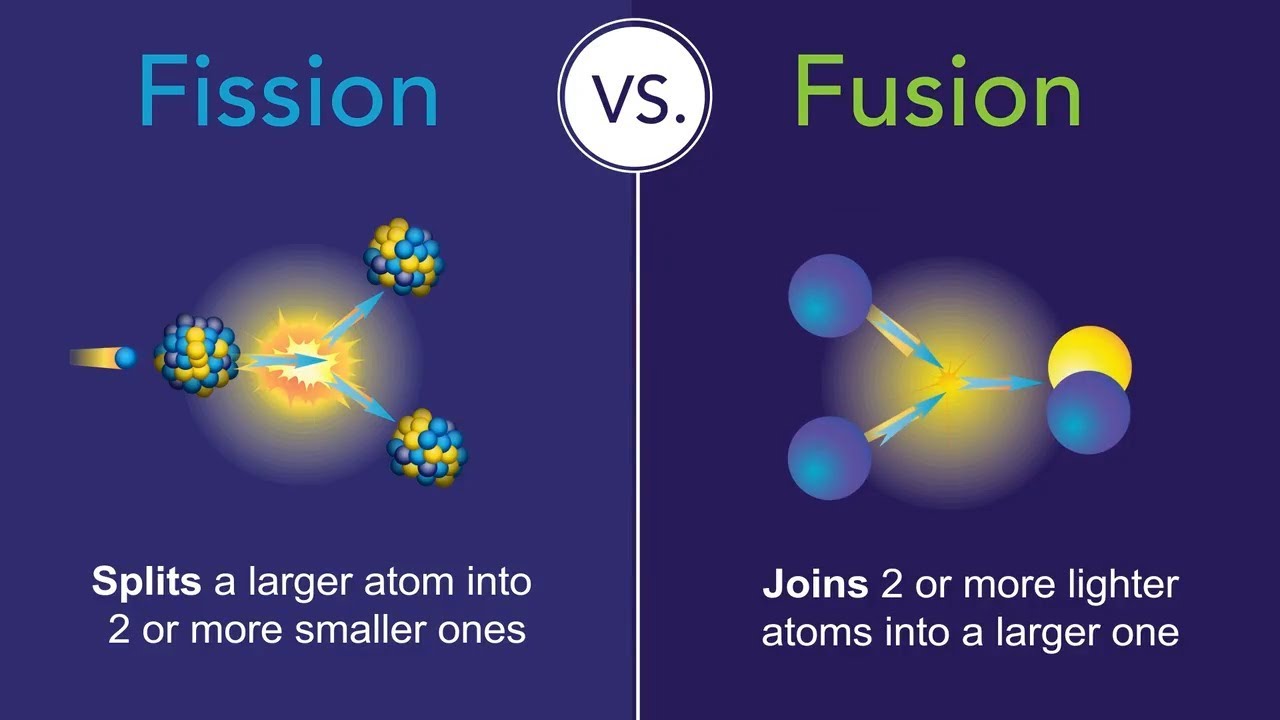
<p>โ€ข Fission: Splitting heavy nuclei (e.g., uranium-235) into smaller fragments, releasing energy. Used in nuclear reactors.<br></p><p>โ€ข Fusion: Combining light nuclei (e.g., hydrogen isotopes) to form heavier nuclei, releasing more energy than fission. Requires extreme temperatures.</p>
38
New cards
Why creating biodiesels from algae is considered carbon neutral.
Algae absorb COโ‚‚ during growth, offsetting emissions when the biofuel is burned.
39
New cards
Two economic or societal problems of producing fuel from corn.

1) Increased food prices - Diverts corn from food to fuel production.

2) High water and land use - Requires large agricultural areas and irrigation.

40
New cards
How PV (photovoltaic) cells produce electricity.
Sunlight excites electrons in a semiconductor, generating an electric current.
41
New cards
Example of passive solar energy design.
A home with south-facing windows to maximize sunlight absorption in winter.
42
New cards
Limitations of photovoltaic cells' ability to produce electricity.
PV cells depend on sunlight availability and have lower efficiency compared to other energy sources.
43
New cards
Environmental cost of PV cell production.
Mining for silicon and rare metals causes habitat destruction and pollution.
44
New cards
Suggest two governmental policies that would increase the use of PV cells.

1) Tax credits and rebates for homeowners and businesses that install photovoltaic (PV) solar panels.

2) Net metering policies that allow solar panel owners to sell excess electricity back to the grid, making solar power more financially attractive.

45
New cards
Pros and cons of hydroelectric power (dams).

Pros: Renewable, low greenhouse gas emissions, provides flood control.

Cons: Disrupts aquatic ecosystems, displaces communities, sediment buildup reduces efficiency.

46
New cards
Two economic benefits of dams aside from cheaper electricity.

1) Provides irrigation for agriculture.

2) Creates recreational opportunities such as boating and fishing.

47
New cards
How dams affect floodplains in a negative way.
Dams alter natural water flow, reducing sediment deposition downstream and disrupting ecosystems that rely on seasonal flooding.
48
New cards
Largest hydroelectric dam.
The Three Gorges Dam in China.
49
New cards
How the ocean can be used to generate electricity.
Tidal energy uses underwater turbines placed in areas with strong tidal currents to generate electricity, while wave energy captures the motion of waves to drive generators.
50
New cards
Outline the geothermal production of electricity.
Hot water or steam from underground reservoirs is used to spin a turbine connected to a generator, producing electricity.
51
New cards

Geothermal hot spot

Iceland, which generates most of its electricity from geothermal energy.
52
New cards
Two environmental benefits of switching from coal to wind-generated electricity.

1) Reduces greenhouse gas emissions.

2) Lowers air pollution, improving public health.

53
New cards
Economic and environmental benefit of offshore wind projects.

Economic: Creates jobs in renewable energy industries.

Environmental: Does not require land, reducing habitat destruction.

54
New cards
How hydrogen fuel vehicles work.
Hydrogen gas is fed into a fuel cell, where it reacts with oxygen to produce electricity, powering an electric motor. The only byproduct is water vapor.
55
New cards
Two energy conservation measures that can be applied in our homes.

1) Use energy-efficient appliances.

2) Install LED lighting to reduce electricity use.

56
New cards
Two water conservation measures that can be applied in our homes.

1) Use low-flow toilets and showerheads.

2) Fix leaks to prevent water waste.

57
New cards
Fuel efficiency standards.
Government regulations that set minimum miles per gallon (MPG) requirements for vehicles to reduce fuel consumption and emissions.
58
New cards
Two environmental benefits of electric vehicles over gas-powered vehicles.

1) Lower COโ‚‚ emissions.

2) Reduces air pollutants like nitrogen oxides and particulates.

59
New cards
Two governmental policies that would increase electric vehicle usage.

1) Tax credits and subsidies for EV buyers.

2) Investment in charging station infrastructure.

60
New cards
Ecological footprint
Measure of human demand on Earth's ecosystems, including land, water, and resources needed to sustain a person's lifestyle.
61
New cards
Subsidizing
When the government provides financial support to businesses or industries to lower costs and encourage production.
62
New cards
Tax incentives
Reductions in taxes to encourage certain behaviors, such as buying energy-efficient appliances or electric vehicles.
63
New cards
Identification
Recognizing and classifying environmental issues, species, or pollutants.
64
New cards
Denitrification
The process by which bacteria convert nitrates into nitrogen gas, returning it to the atmosphere.
65
New cards
Eutrophication
The excessive nutrient buildup in water bodies, leading to algal blooms, oxygen depletion, and aquatic ecosystem collapse.
66
New cards
Desertification
The process by which fertile land becomes desert due to drought, deforestation, or unsustainable agriculture.
67
New cards
Two ecological and economic services provided by forests.

Ecological: Absorb COโ‚‚ and provide habitat for biodiversity.

Economic: Timber for construction and jobs in forestry.

68
New cards
Point source and non-point source pollution.

Point source pollution comes from a single, identifiable location (e.g., factory discharge).

Non-point source pollution comes from diffuse sources (e.g., agricultural runoff).

69
New cards
Calculate percent change (no equation given).
Percent change = [(New Value - Old Value) / Old Value] ร— 100%
70
New cards
Deduce an explanation given a data table.
Look for trends, relationships, or anomalies in the data and explain possible causes or implications.
71
New cards
Analyze a line graph
Identify trends over time, peaks, declines, and any correlation between variables.
72
New cards
Analyze a bar graph
Compare different categories by evaluating bar height and distribution.

Explore top flashcards