Chapter 14 - Meninges and Blood Circulation of the Brain
 Call Kai
 Learn
Learn Practice Test
 Spaced Repetition
 Match
Match Flashcards
 Knowt Play
1/7

There's no tags or description
Looks like no tags are added yet.
Name | Mastery | Learn | Test | Matching | Spaced | Call with Kai |
|---|
No analytics yet
Send a link to your students to track their progress
8 Terms
Meninges. List them.
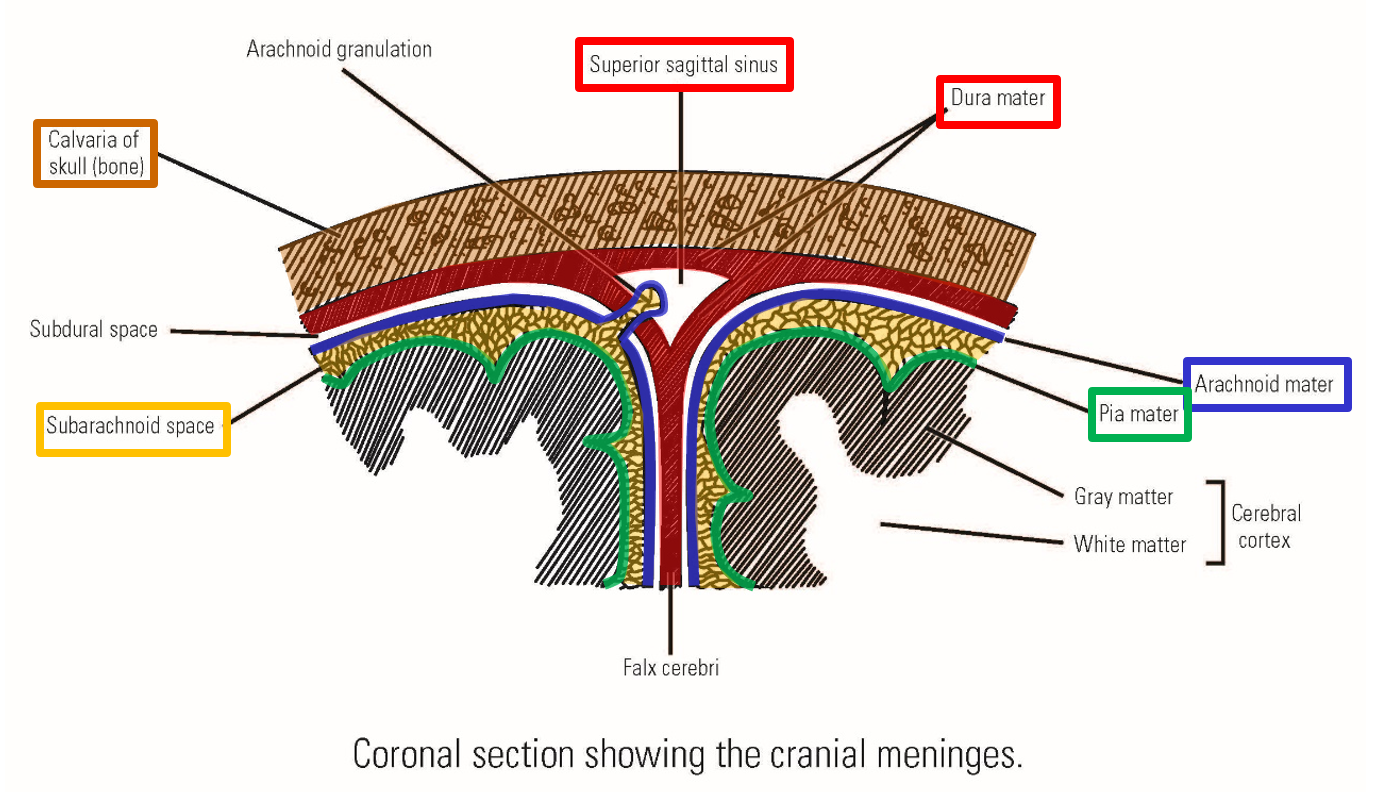
Meninges - three layers of protective, covering membranes that surround brain and spinal cord
Dura mater - outermost meningeal layer
Arachnoid mater - middle meningeal layer
Pia mater - innermost meningeal layer
Pia mater
–Very thin, innermost meningeal layer
–Tightly adherent to outer surface of brain & spinal cord
Follows all gyri and sulci of brain
Arachnoid mater
–Middle meningeal layer
–Separated from pia mater by subarachnoid space
Subarachnoid space is filled with cerebrospinal fluid - fluid serves as cushioning layer between brain and bony skull
Arachnoid trabeculae - thin, “spider-web” strands passing through subarachnoid space between arachnoid mater and pia mater
Dura mater
–Outermost meningeal layer
–Tough, fibrous layer - tightly adherent to inner skull
–At selected sites, dura splits into 2 layers:
Outer (periosteal) layer remains attached to bone of skull
Inner (visceral) layer separates and forms deep in-folding of dura mater that passes between parts of the brain
Separation of dural layers also forms dural sinus - pathway for flow of venous blood
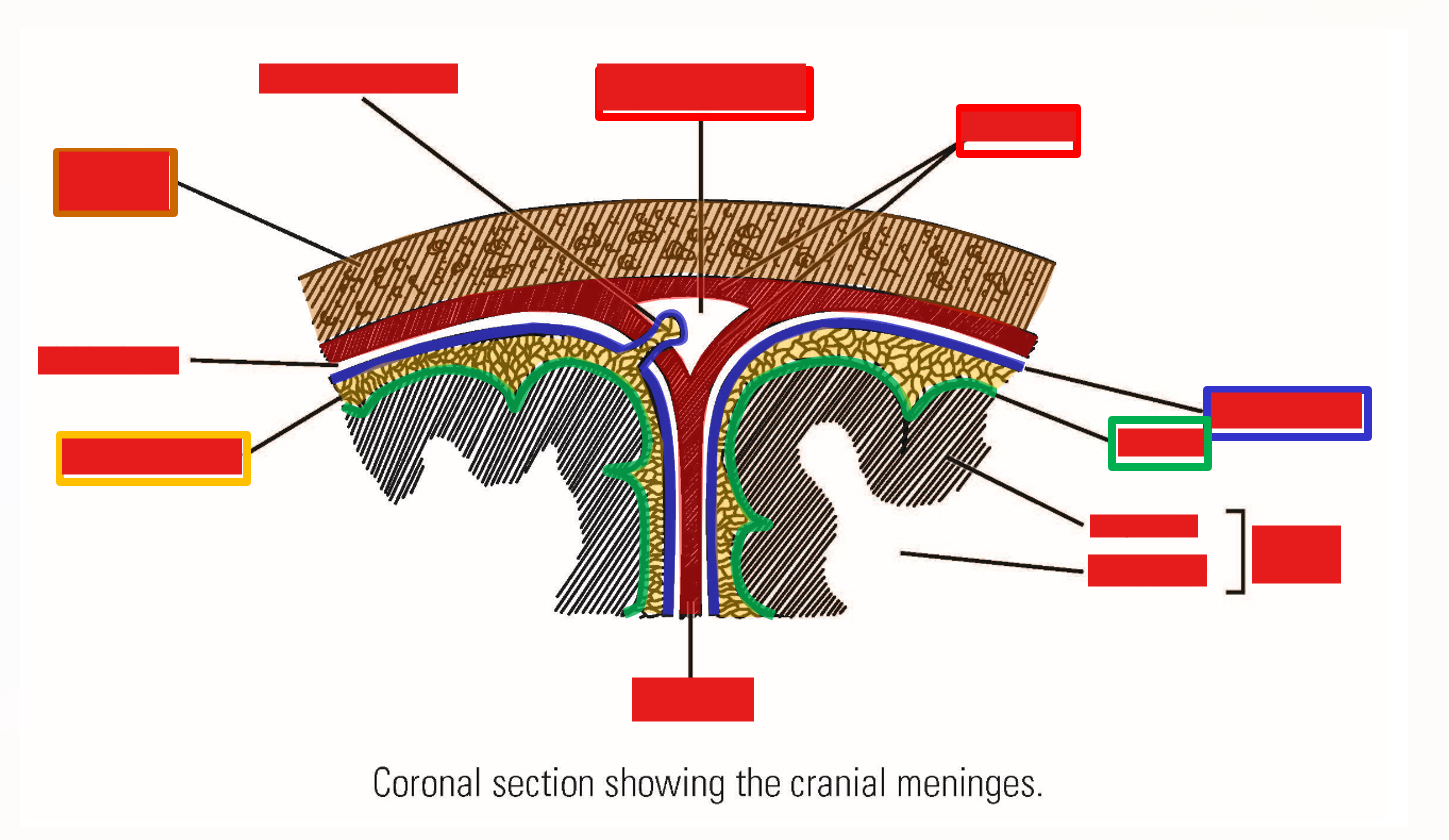
Dura Mater Infoldings
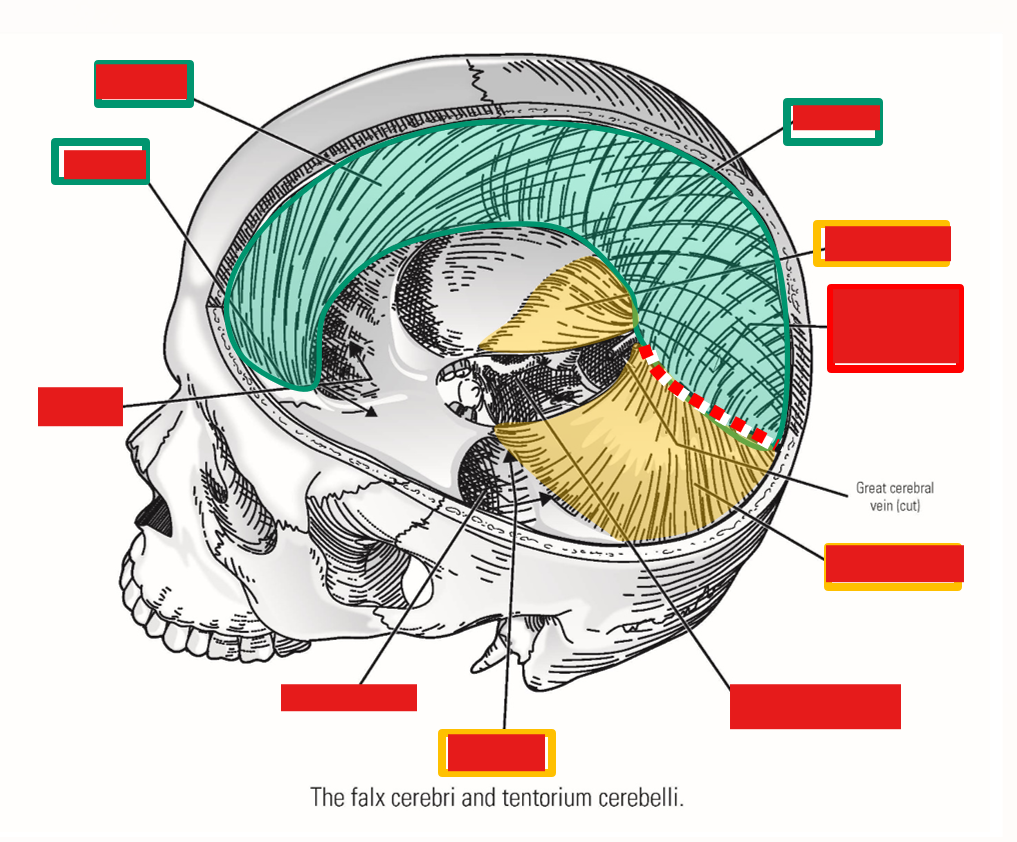
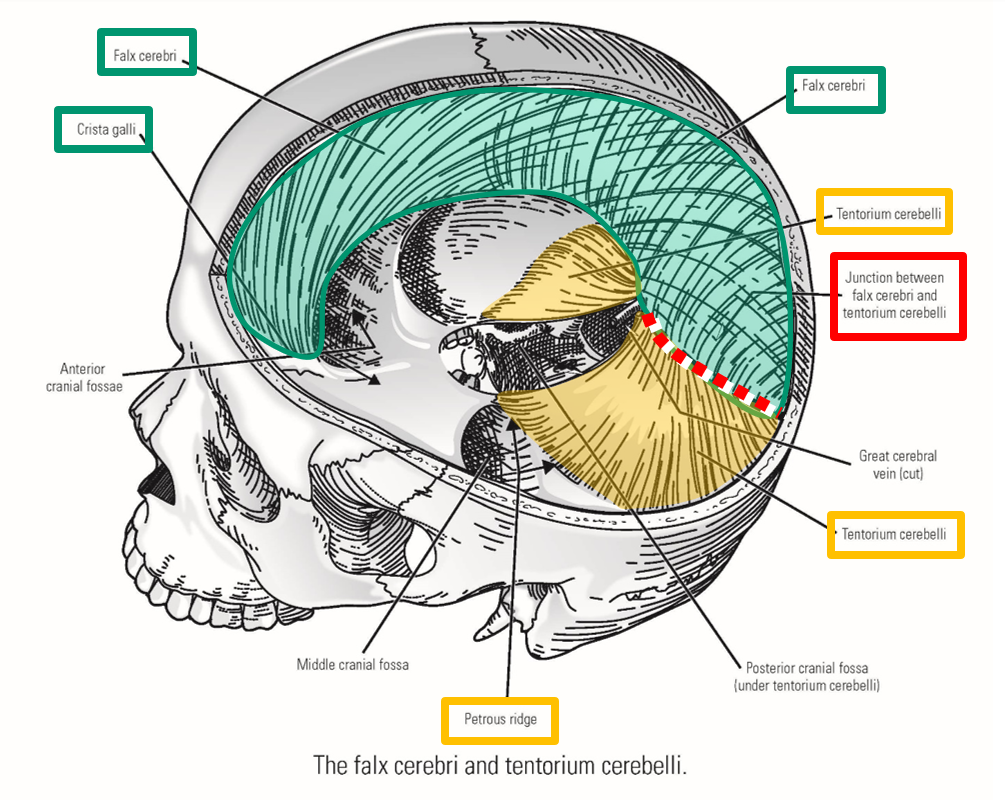
Falx cerebri
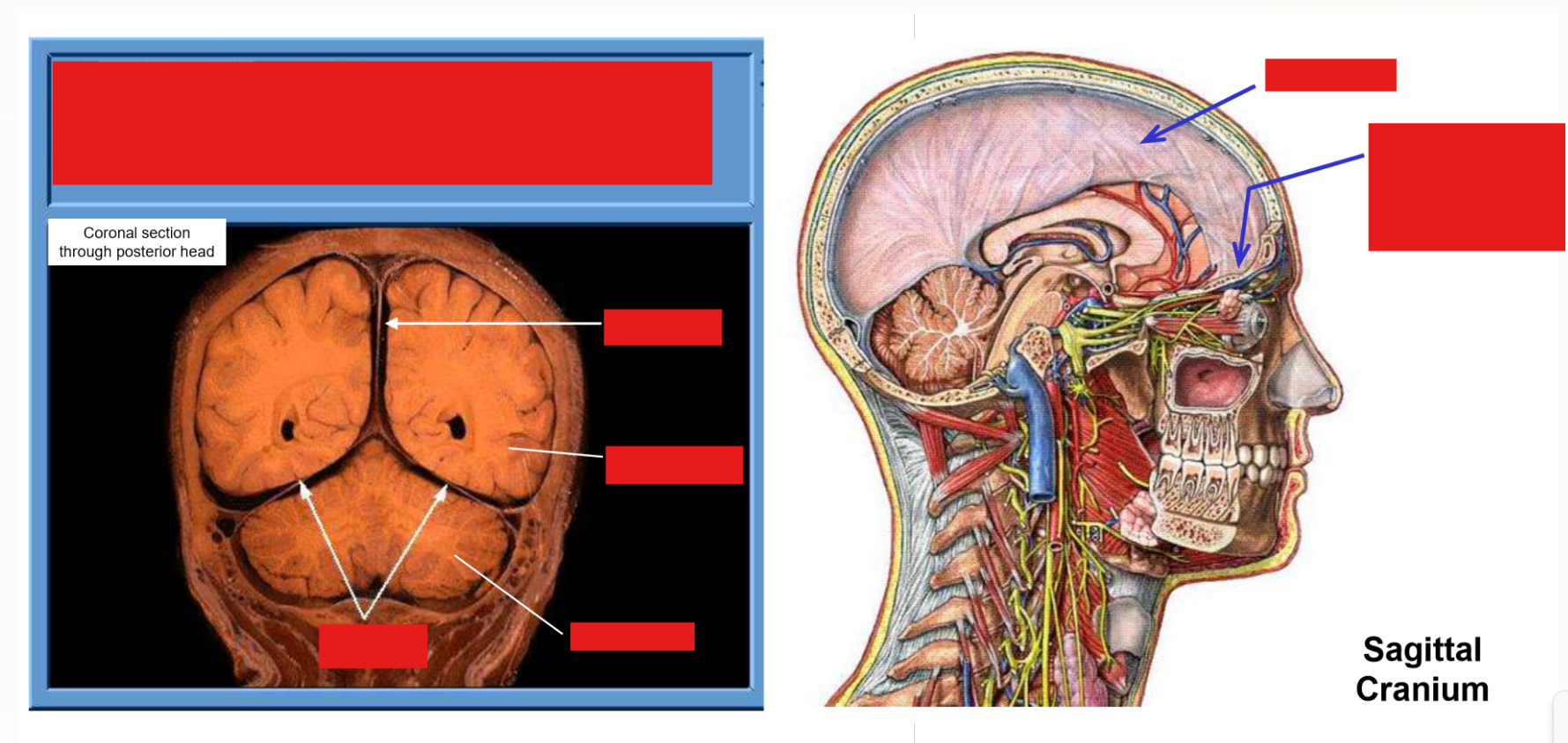
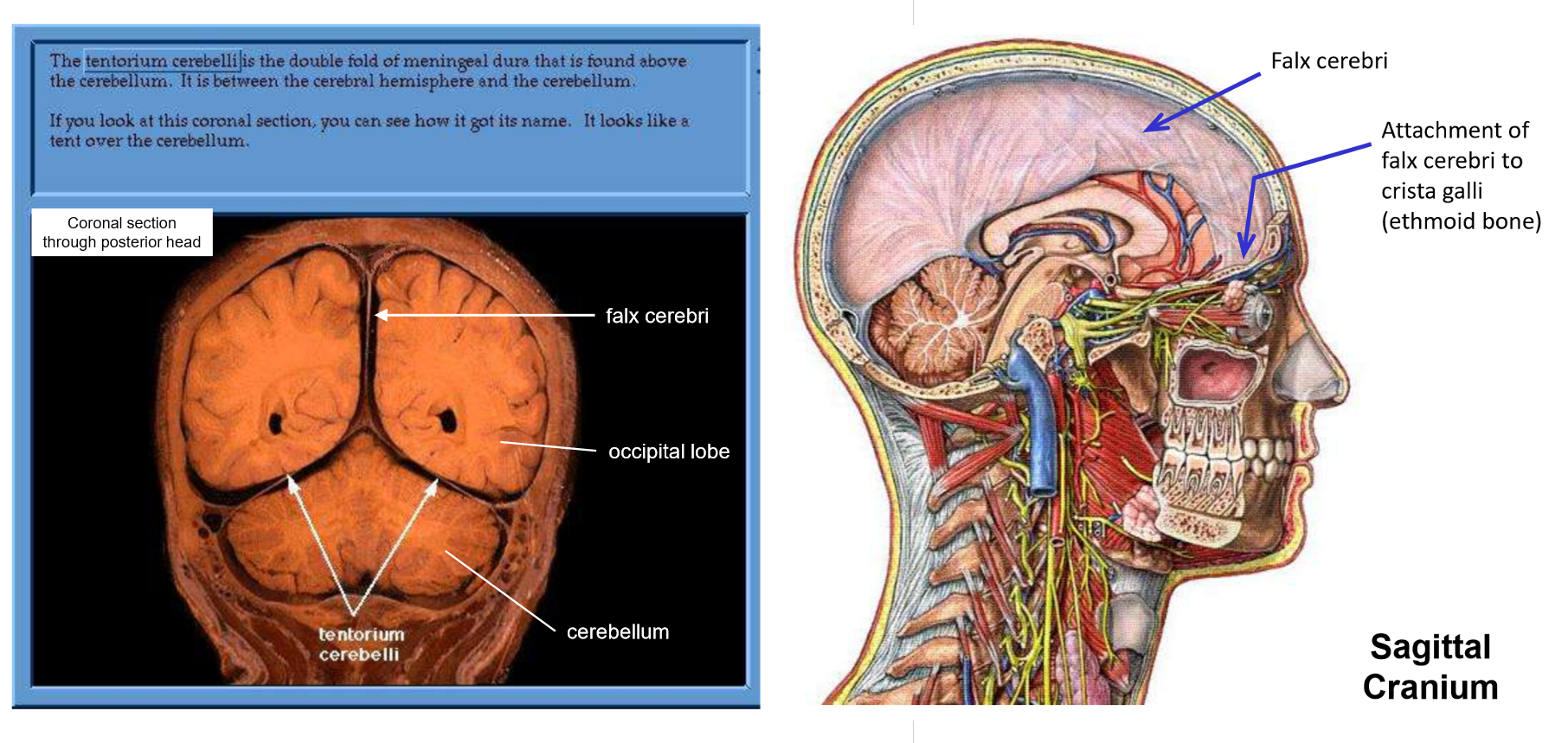
–Sickle-shaped in-folding of dura mater that passes between right & left cerebral hemispheres
Extends downward within longitudinal cerebral fissure
Inferior limit is just above corpus callosum
–Attached anteriorly to crista galli of ethmoid bone
–Joins posteriorly with tentorium cerebelli
Tentorium cerebelli
–“C”-shaped in-folding of dura mater that passes b/w occipital lobes (above) and cerebellum (below)
Forms “tent” over cerebellum
Central opening allows for passage of brain stem
–Attached to petrous ridges and inner wall of occipital bone
–Joins at mid-line with falx cerebri