Neurosensation: Somatic Senses
 Studied by 0 people
 Call Kai
 Learn
Learn Practice Test
 Spaced Repetition
 Match
Match Flashcards
 Knowt Play
1/33

Earn XP
Description and Tags
Match the description to the correct question.
Name | Mastery | Learn | Test | Matching | Spaced | Call with Kai |
|---|
No analytics yet
Send a link to your students to track their progress
34 Terms
What is proprioception?
Proprioception is the sensory ability to perceive the position and movement of one's own body parts, allowing for coordination and balance.
What is nociception?
Nociception is the sensory process that detects tissue damage or a threat to it.
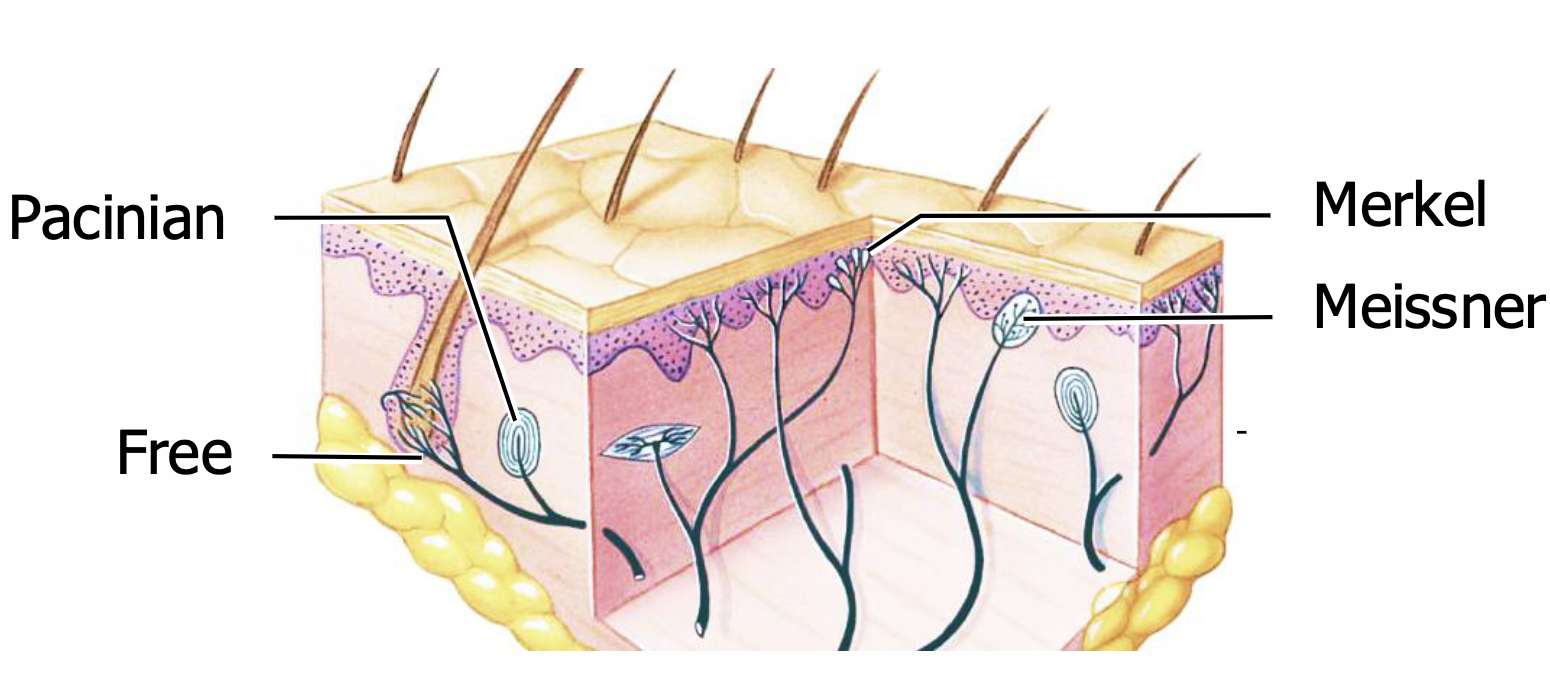
Based on the image, what is the role of the free nerve endings?
Free nerve endings are sensory receptors that respond to pain, temperature, and some tactile stimuli.
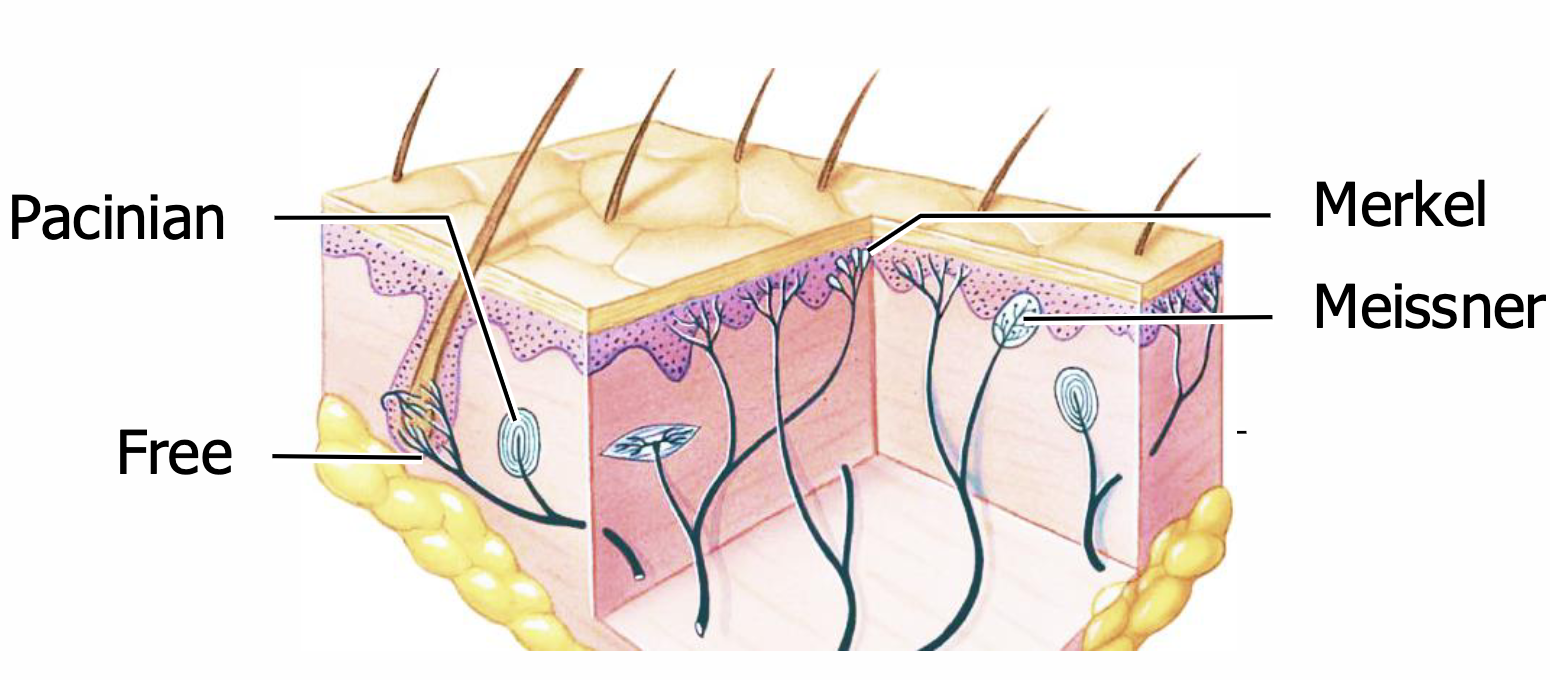
Based on the image, what is the role of the Merkel receptors?
Merkel receptors are specialized sensory cells found in the skin that detect fine touch and pressure. They are highly sensitive to skin deformation.
How are Merkel receptors tonic?
Merkel receptors are tonic because steady pressure keeps them continuously activated, allowing them to signal detailed information about texture and shape for as long as the touch lasts.
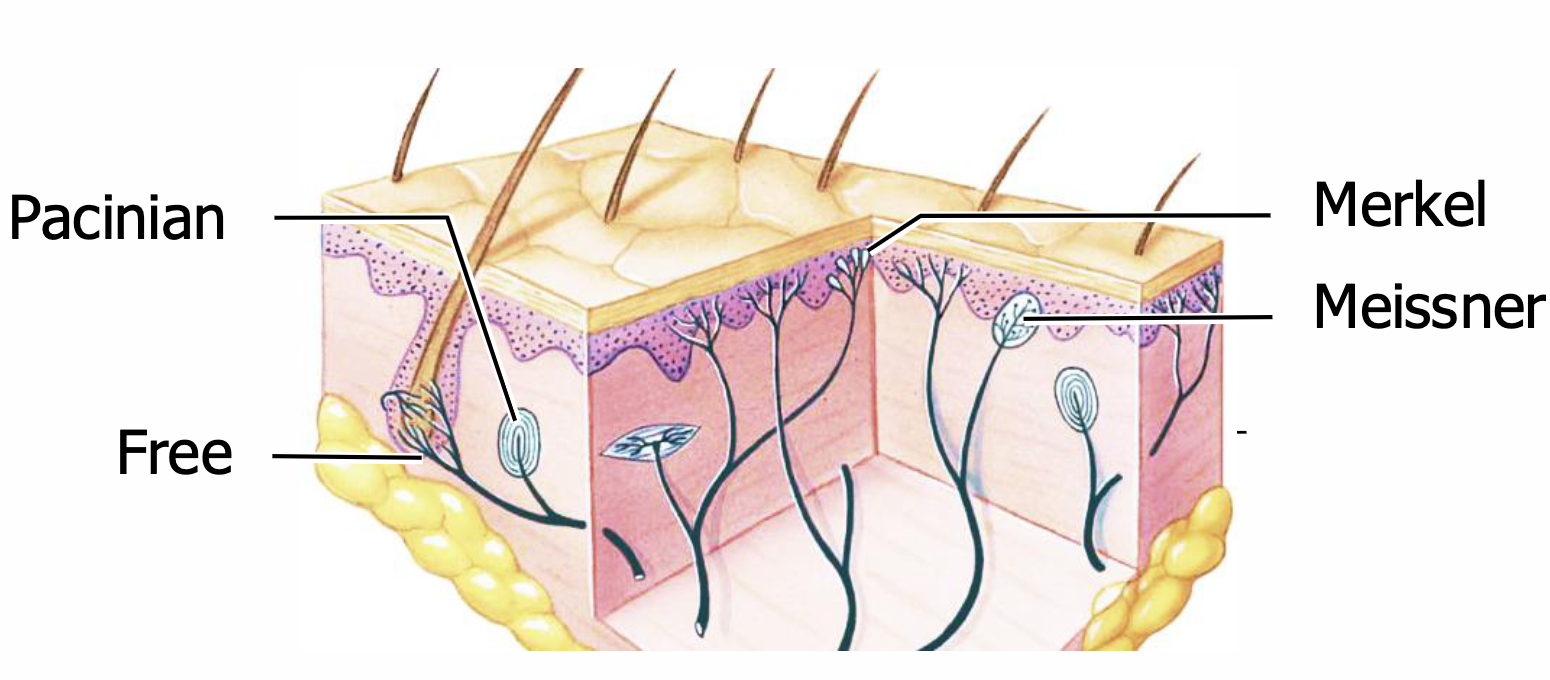
Based on the image, what is the role of the Meissner and Pacinian receptors?
Meissner receptors are responsible for detecting light touch and texture changes, while Pacinian receptors respond to deep pressure and vibration.
Where are Meissner corpuscles located?
They are located just beneath the skin surface, particularly in hairless skin areas like the palms and soles of the feet and the tongue.
Are Meissner corpuscles phasic or tonic?
Meissner corpuscles are phasic receptors that respond quickly to changes in light touch and texture, adapting rapidly to sustained pressure.
Where are Pacinian corpuscles located?
Located deep in the dermis.
Are Pacinian corpuscles tonic and phasic?
Pacinian corpuscles are phasic receptors that respond to deep pressure and vibration, adapting quickly to sustained stimuli.
Cold receptors respond maximally at 30ºC, and warm receptors respond maximally at 45ºC. How are they both phasic-tonic?
It’s because they both show a brief firing when the temperature changes but continue steadying their rate as long as their temperature is maintained.
How are nociceptors free nerve endings that respond to noxious stimuli?
They respond to mechanical stimuli, thermal stimuli, and chemical stimuli, signalling pain.
How fast are the small C fibres from the free nerve endings?
C fibres are slow-conducting, unmyelinated nerve fibres that transmit signals at a speed of 0.5 to 2 m/s.
How fast are the small A-delta fibres from the free nerve endings?
A-delta fibres are fast-conducting, myelinated nerve fibres that transmit signals at a speed of 5 to 30 m/s.
How fast are the large A-beta fibres from the free nerve endings?
A-beta fibres are fast-conducting, myelinated nerve fibres that transmit signals at a speed of 30 to 70 m/s.
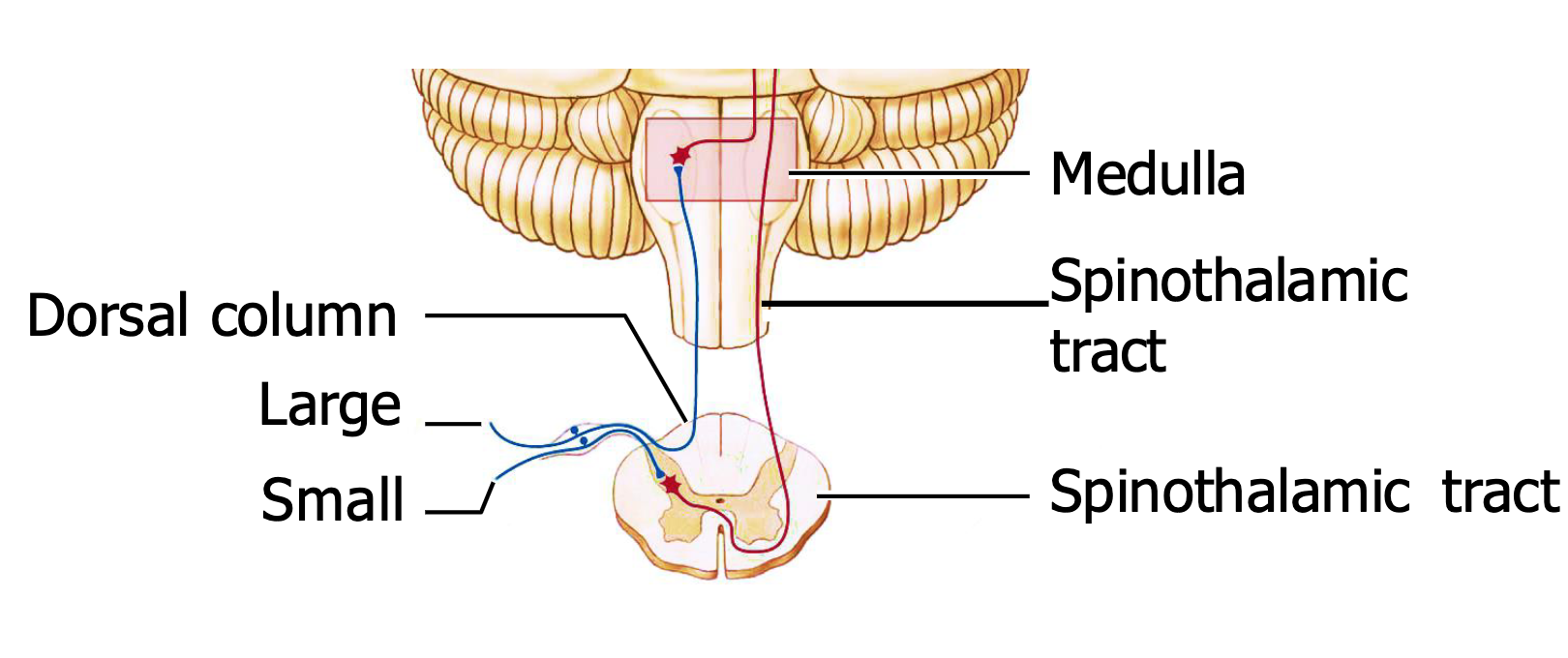
From this image, how do the large fibres synapse on cells in the medulla?
Large fibres will run up the ascending tracts of the dorsal column and synapse onto second-order neurons in the medulla.
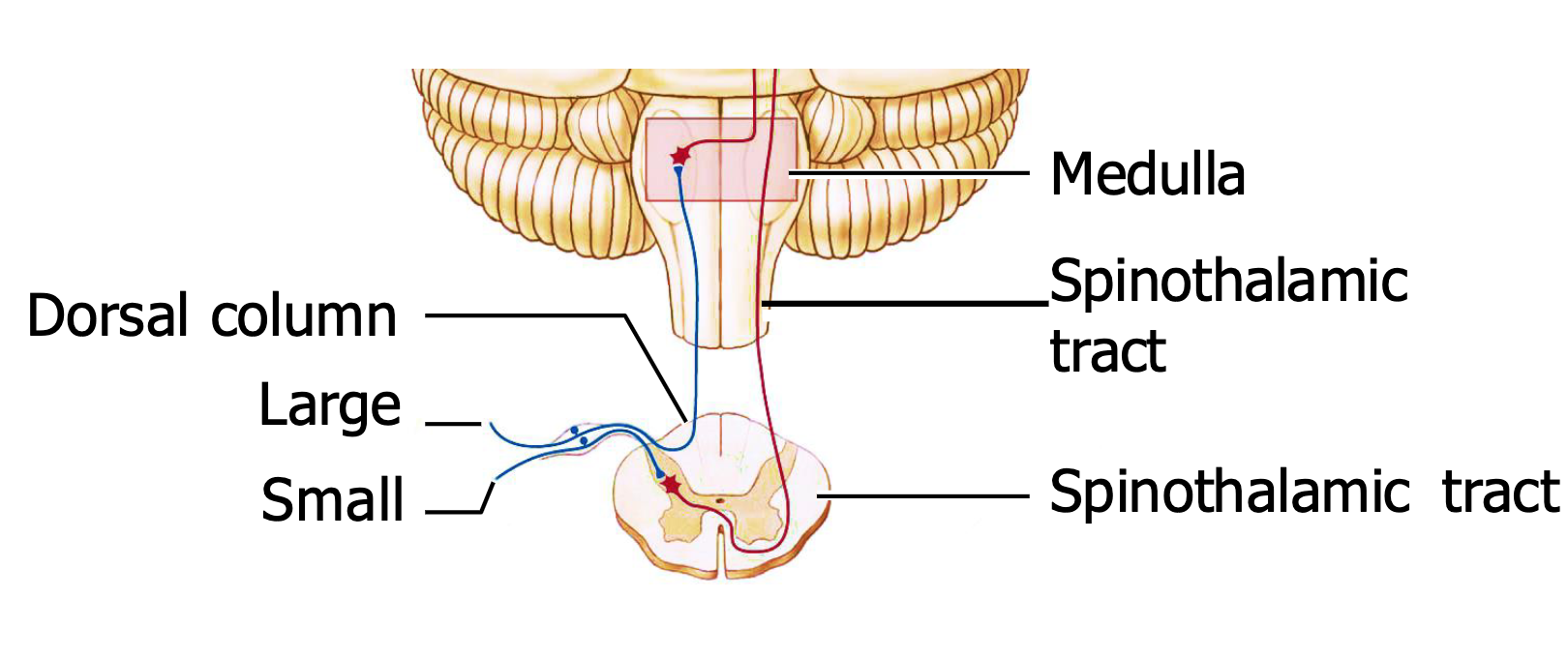
From the image, how do the small fibres synapse?
Small fibres synapse immediately in the dorsal horn and cross to form the spinothalamic tract, whereas large fibres ascend in the dorsal column and synapse later in the medulla.
Large fibers help the brain interpret…
Shape and texture of an object.
Small fibers help the brain interpret…
pain, sexual responses, and temperature sensations.

Explain how the signals travel from the spinal cord to the cortex.
Signals travel from the spinal cord through the spinothalamic tract and dorsal columns, ultimately reaching the thalamus before being relayed to the sensory cortex for processing.
Explain how the somatosensory cortex is somatotropic.
The somatosensory cortex is organized such that different body parts are mapped to specific areas of the cortex.
Where is the primary somatosensory cortex located in the parietal lobe?
It is located in the postcentral gyrus of the parietal lobe, just posterior to the central sulcus.
Explain the concept of the Chevreul illusion by using a somatosensory version.
If you step into a very hot bath, you feel the most discomfort in the line formed by the water’s surface, instead of your foot. This is because that is the temperature’s edge.
Fast pain is carried by what fibres?
A-delta fibers, which are myelinated and transmit sharp, localized pain signals rapidly.
Slow pain is carried by what fibres?
C fibers, which are unmyelinated and transmit dull, aching pain signals more slowly.
Why is it bad if we don’t have the ability to sense pain?
Without the ability to sense pain, we would be frequently injuring ourselves without realizing. Many people who experience this may not live past the age of 20.
Pulling your head away from a hot stove is an example of…
a spinal reflex action that protects against injury that does not need input from the brain.
What are TRP channels in nociceptors?
Transient receptor potential channels are ion channels that play a key role in sensing pain, temperature, and other sensory modalities.
How do TRP channels activate?
Na+ and Ca2+ ions flow into the nociceptor. This depolarizes the neurons, triggering action potentials that signal pain to the brain.
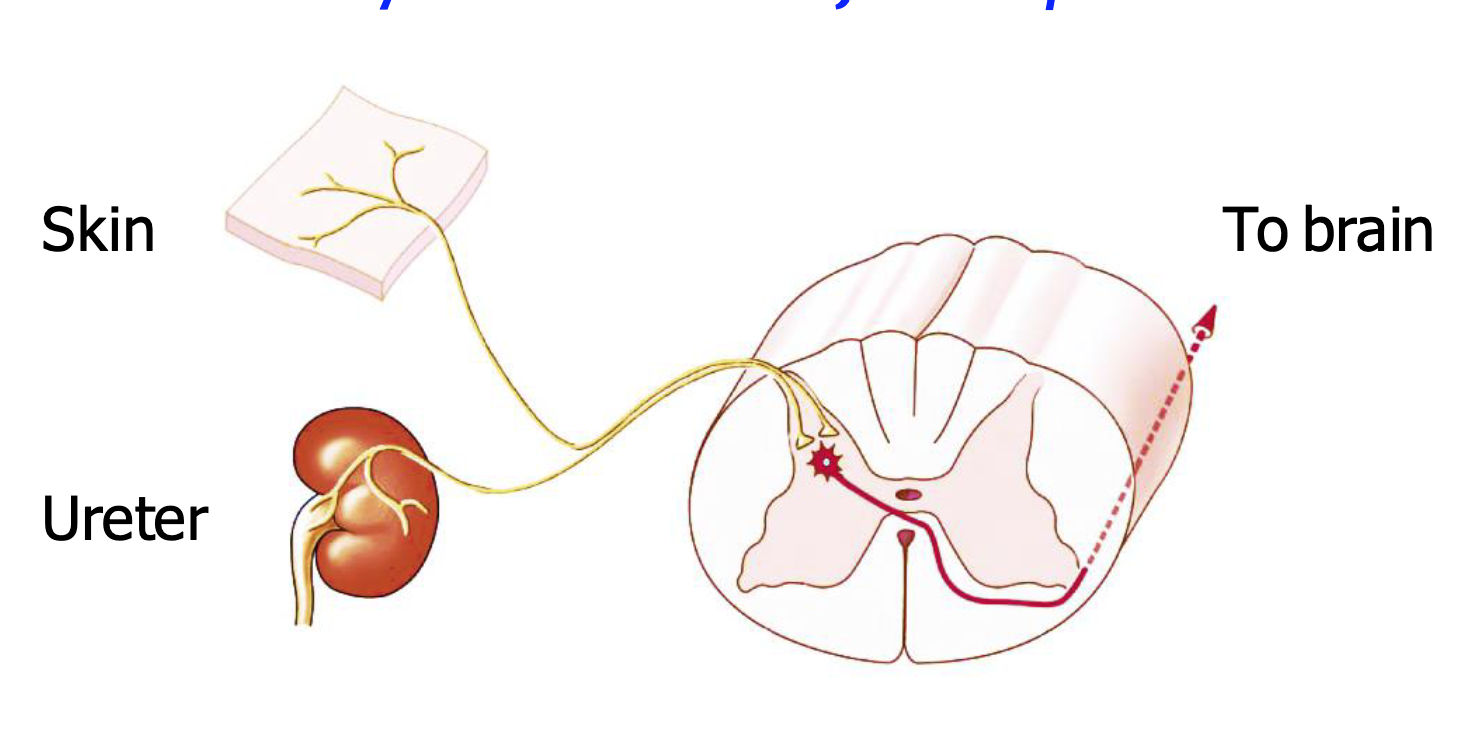
Speaking of referred pain, why it might difficult for the brain to specify where the pain is happening?
The visceral (internal organs) sensory nociceptive afferents and the somatic sensory proprioceptive afferents converge on the dorsal horn. 2. Pain is easier to pick up in the skin.
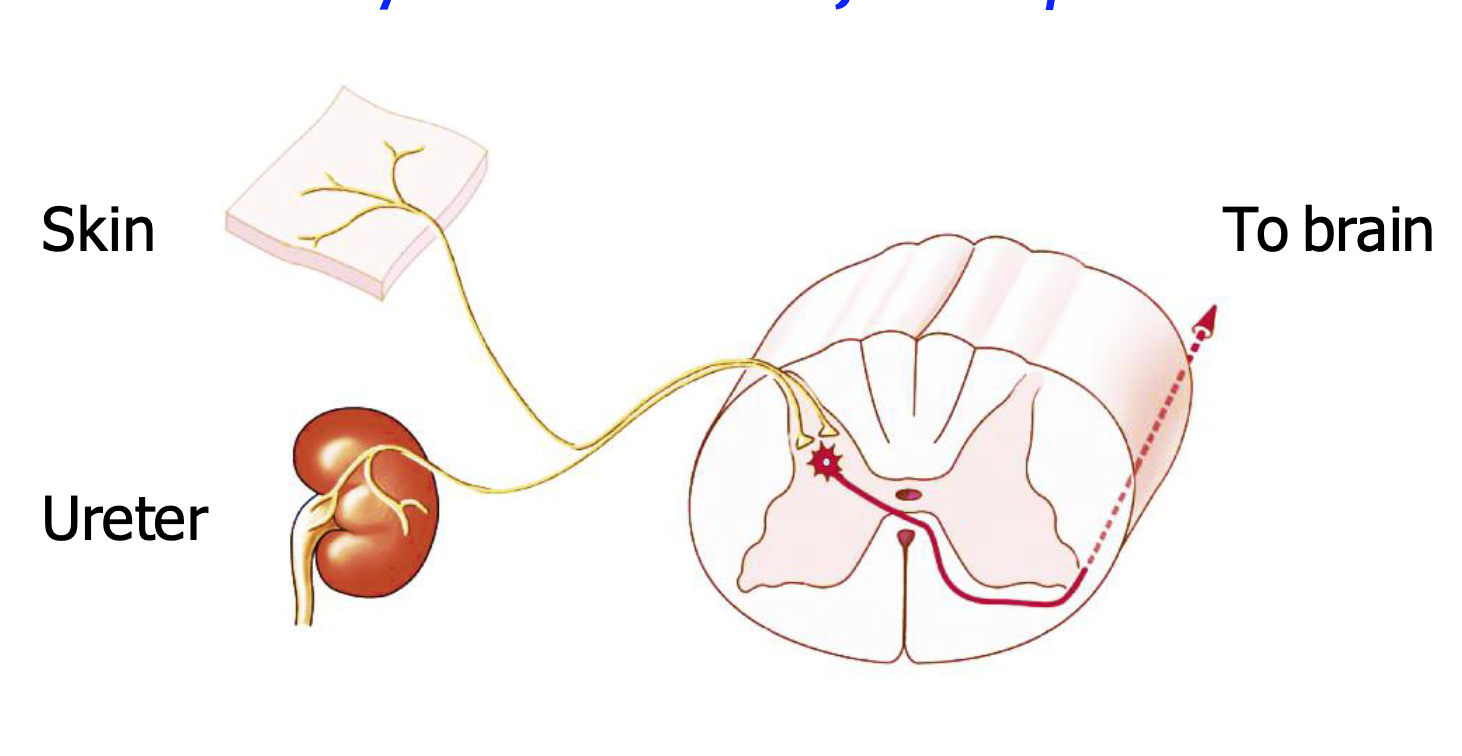
Explain “Heart ischemia” using the “referred pain” theory.
You have heart problems, but the brain would think that you are feeling pain in the left arm or chest. Why? This occurs because the sensory nerves from the heart and those from the arm share common pathways in the spinal cord.
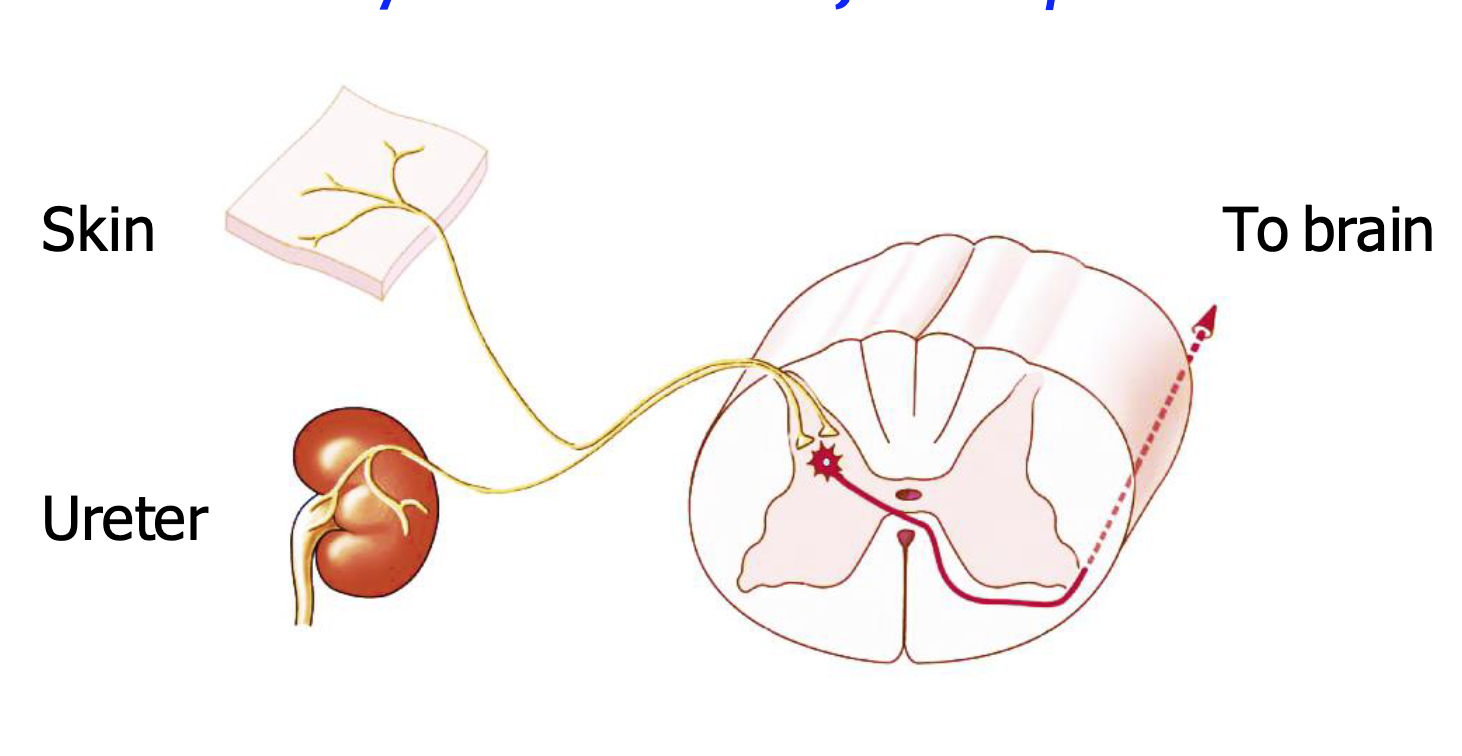
Explain kidney pain using the “referred pain” theory.
Your kidneys are damaged or inflamed, but your brain would think the pain is coming from the lower back or abdomen. The kidney sensory nerves and the abdomen and lower back nerves share common pathways in the spinal cord.
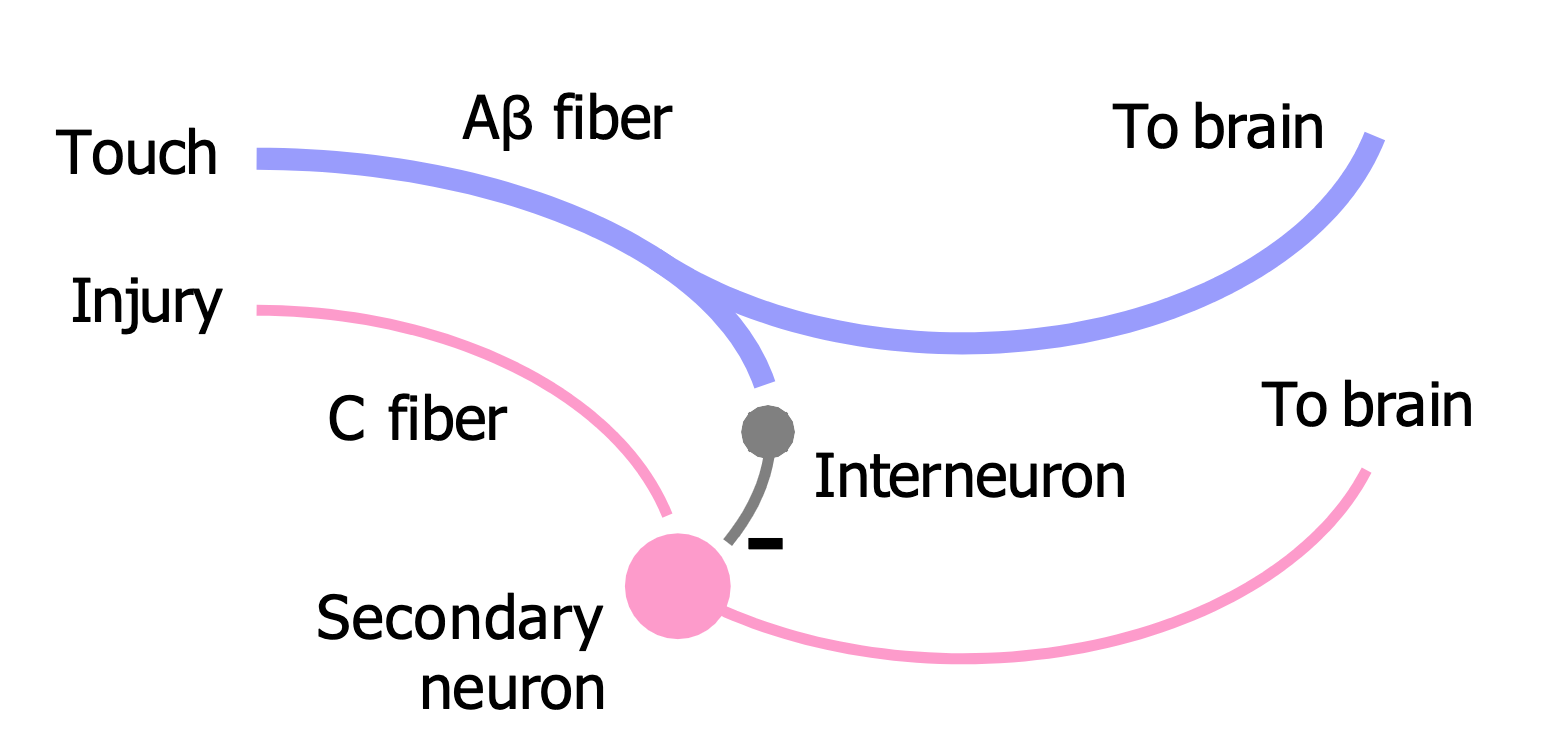
When are A-beta fibres released?
They are released through touch.
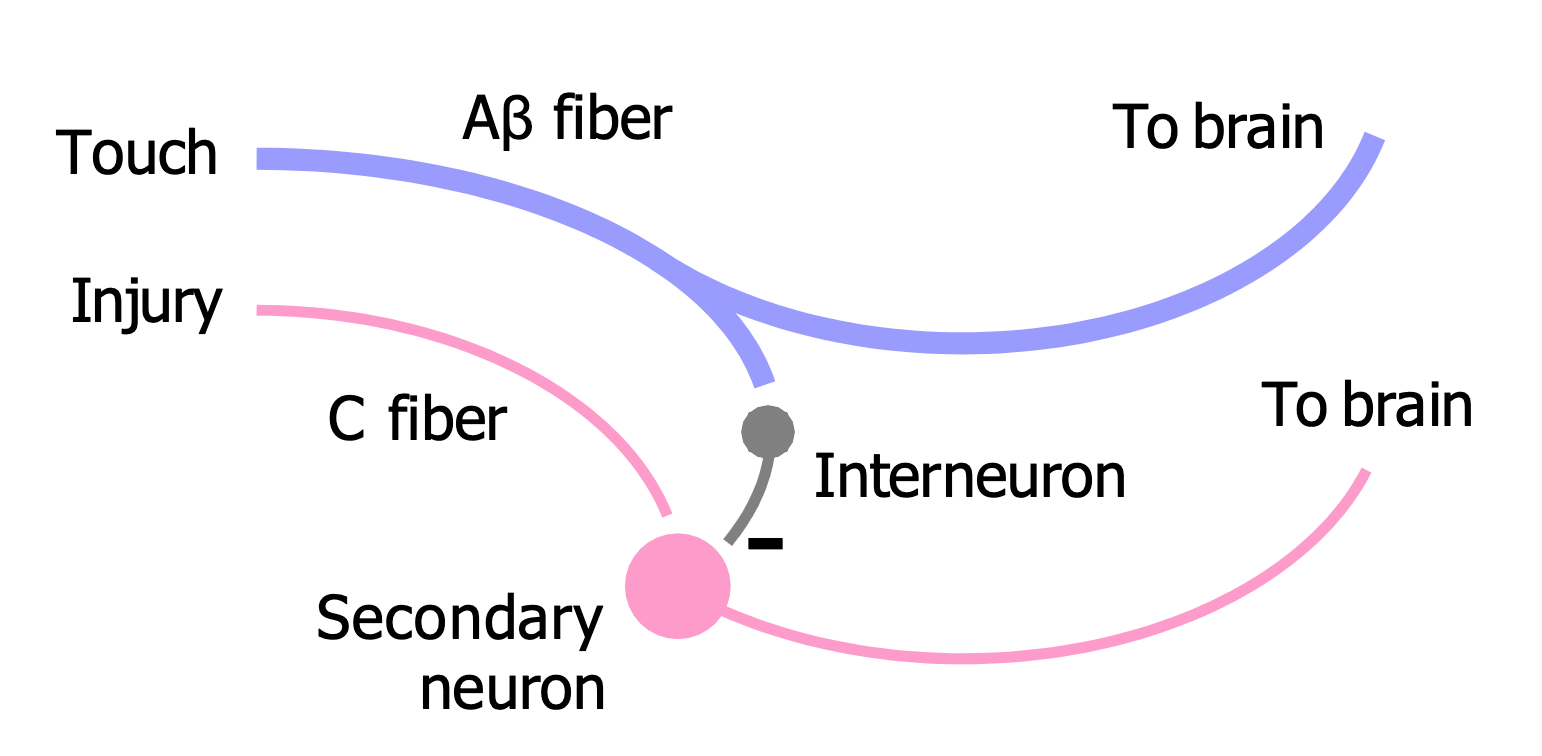
Use an example to explain how A-beta fibres could reduce pain intensity as the C fibres send injury signals to the brain.
For example, when you stub your toe, the C fibres transmit sharp pain signals to the brain. However, rubbing the toe activates A-beta fibres, which send signals (via the interneuron) that inhibit pain perception, leading to a reduced overall pain intensity.
 Note
Note  Flashcards (54)