Unit 7 Industrial and Economic Development

0.0(0)
studied byStudied by 0 people
call kaiCall Kai
learnLearn
examPractice Test
spaced repetitionSpaced Repetition
heart puzzleMatch
flashcardsFlashcards
GameKnowt Play
Card Sorting

1/51

encourage image

There's no tags or description

Looks like no tags are added yet.

Last updated 9:26 PM on 5/4/25
Name
Mastery
Learn
Test
Matching
Spaced
Call with Kai

No analytics yet

Send a link to your students to track their progress

52 Terms

1
New cards

Term

Explanation

2
New cards

Industrialization

The transformation of a society from an agrarian (agricultural) society to one focused on mechanized manufacturing resulting in higher output, lower prices, urbanization, demand for raw materials and markets, and fossil fuel use
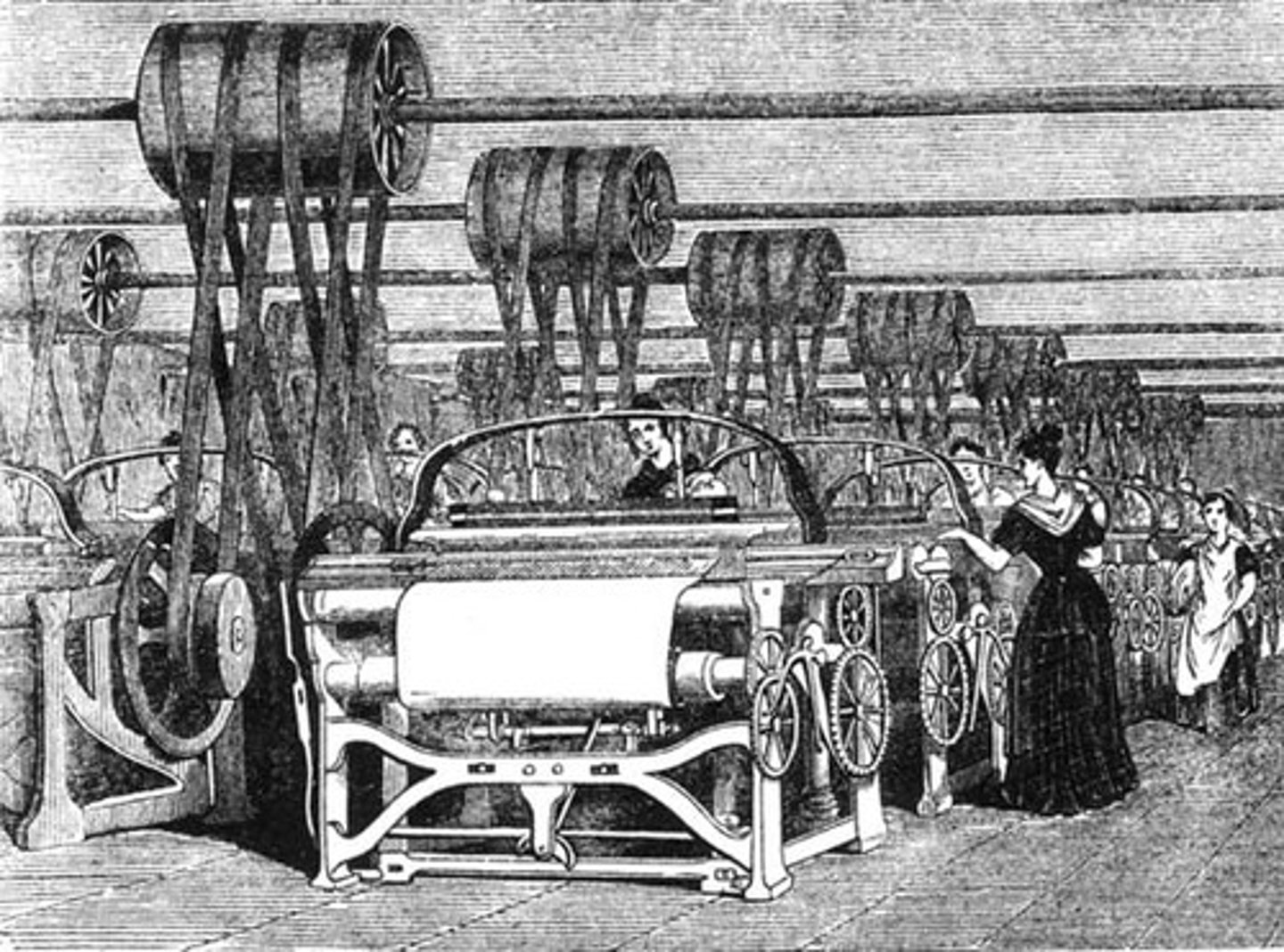
<p>The transformation of a society from an agrarian (agricultural) society to one focused on mechanized manufacturing resulting in higher output, lower prices, urbanization, demand for raw materials and markets, and fossil fuel use</p>
3
New cards

Primary Economic Sector

Any type of economic activity that involves the cultivation or extraction of natural resources; examples include farming, ranching, fishing, logging; tends to make up a larger portion of the economy in developing countries than it does in developed countries.
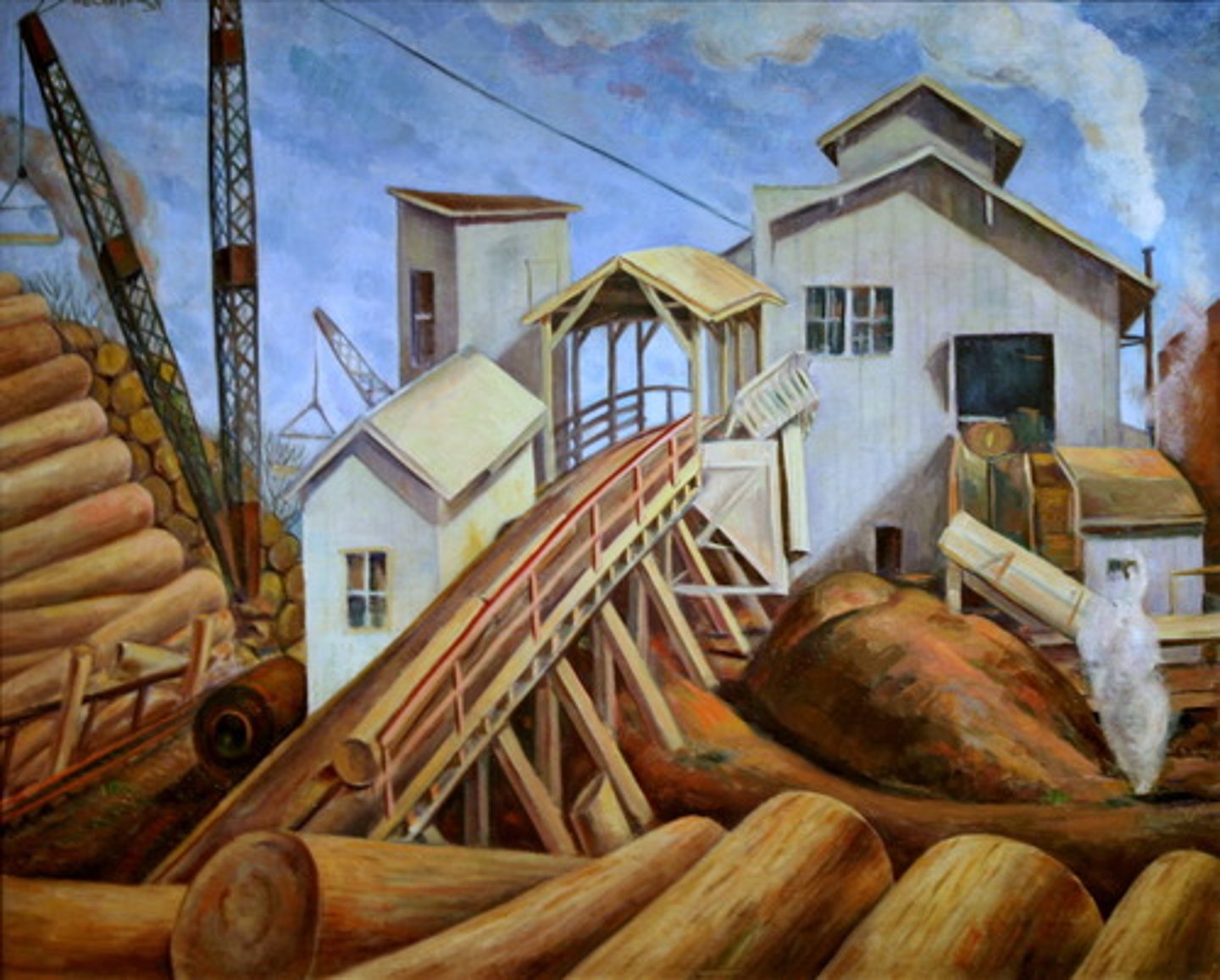
<p>Any type of economic activity that involves the cultivation or extraction of natural resources; examples include farming, ranching, fishing, logging; tends to make up a larger portion of the economy in developing countries than it does in developed countries.</p>
4
New cards

Secondary Economic Sector

Processes that take resources of the primary sector and turn them into finished goods; basically, manufacturing or industrialization; secondary activities bring greater wealth to a country than primary sector activities
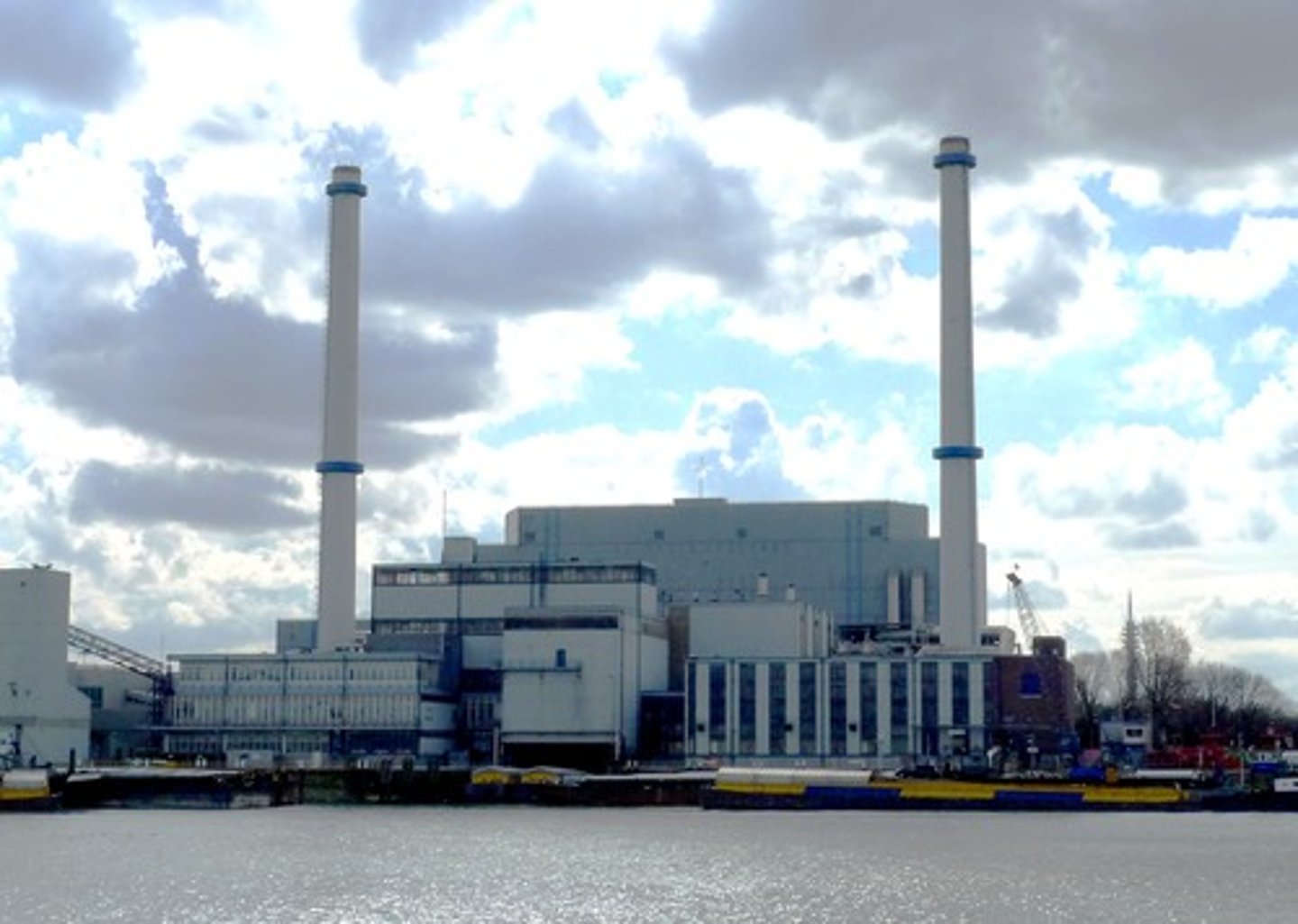
<p>Processes that take resources of the primary sector and turn them into finished goods; basically, manufacturing or industrialization; secondary activities bring greater wealth to a country than primary sector activities</p>
5
New cards

Tertiary Economic Sector (3rd)

The service sector where services rather than end products are provided; examples include barbers, cooks, teachers, fast-food workers, cashiers, bank tellers; a prominent sector in developed countries
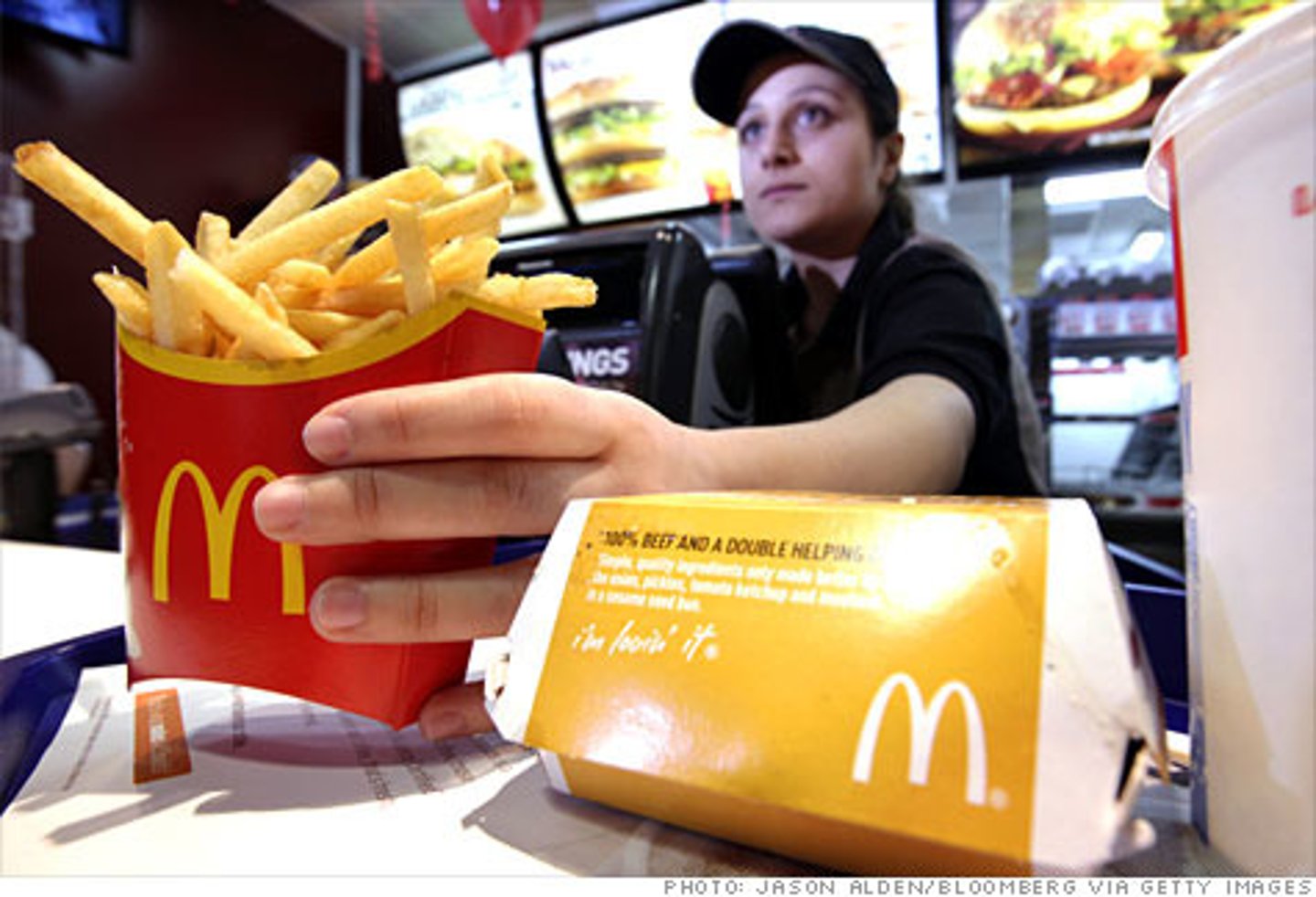
<p>The service sector where services rather than end products are provided; examples include barbers, cooks, teachers, fast-food workers, cashiers, bank tellers; a prominent sector in developed countries</p>
6
New cards

Quaternary Economic Sector (4th)

Economic activity that is associated with either the intellectual or knowledge-based economy; examples include information technology (IT), media, research and development, financial planning

<p>Economic activity that is associated with either the intellectual or knowledge-based economy; examples include information technology (IT), media, research and development, financial planning</p>
7
New cards

Quinary Economic Sector (5th)

Activities undertaken by decision-makers - executives or those in government

<p>Activities undertaken by decision-makers - executives or those in government</p>
8
New cards

Least Cost Theory

A theory explaining the location of manufacturing facilities in which costs are minimized by considering three factors: transportation costs, labor costs, and benefits from agglomeration; bulk gaining industries locate near markets while bulk reducing industries locate near inputs
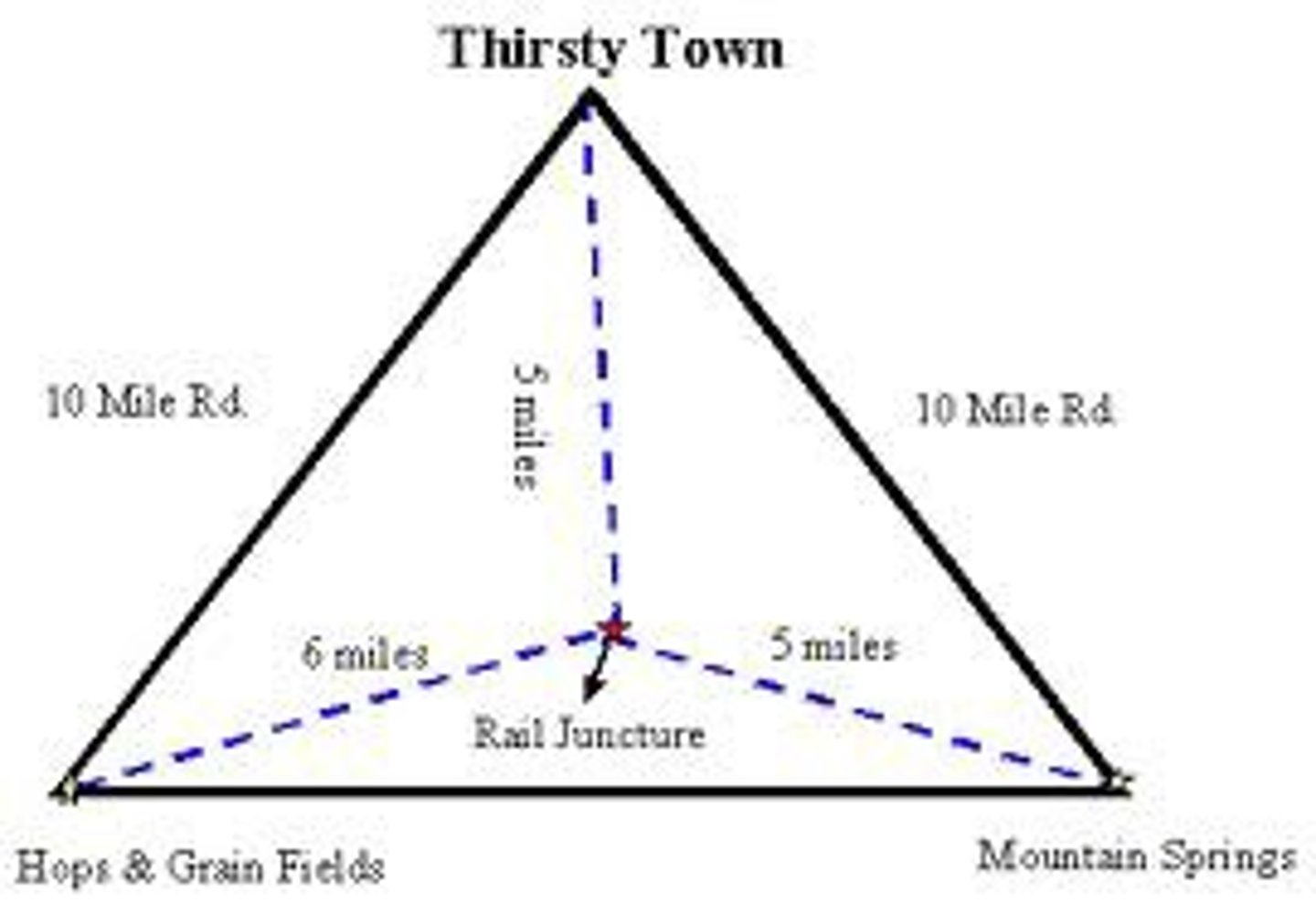
<p>A theory explaining the location of manufacturing facilities in which costs are minimized by considering three factors: transportation costs, labor costs, and benefits from agglomeration; bulk gaining industries locate near markets while bulk reducing industries locate near inputs</p>
9
New cards

Agglomeration

The advantages gained when businesses cluster in the same area and take advantage of the same infrastructure, labor pool, and support businesses, reducing costs; example: companies relying on IT specialists locating where universities cluster
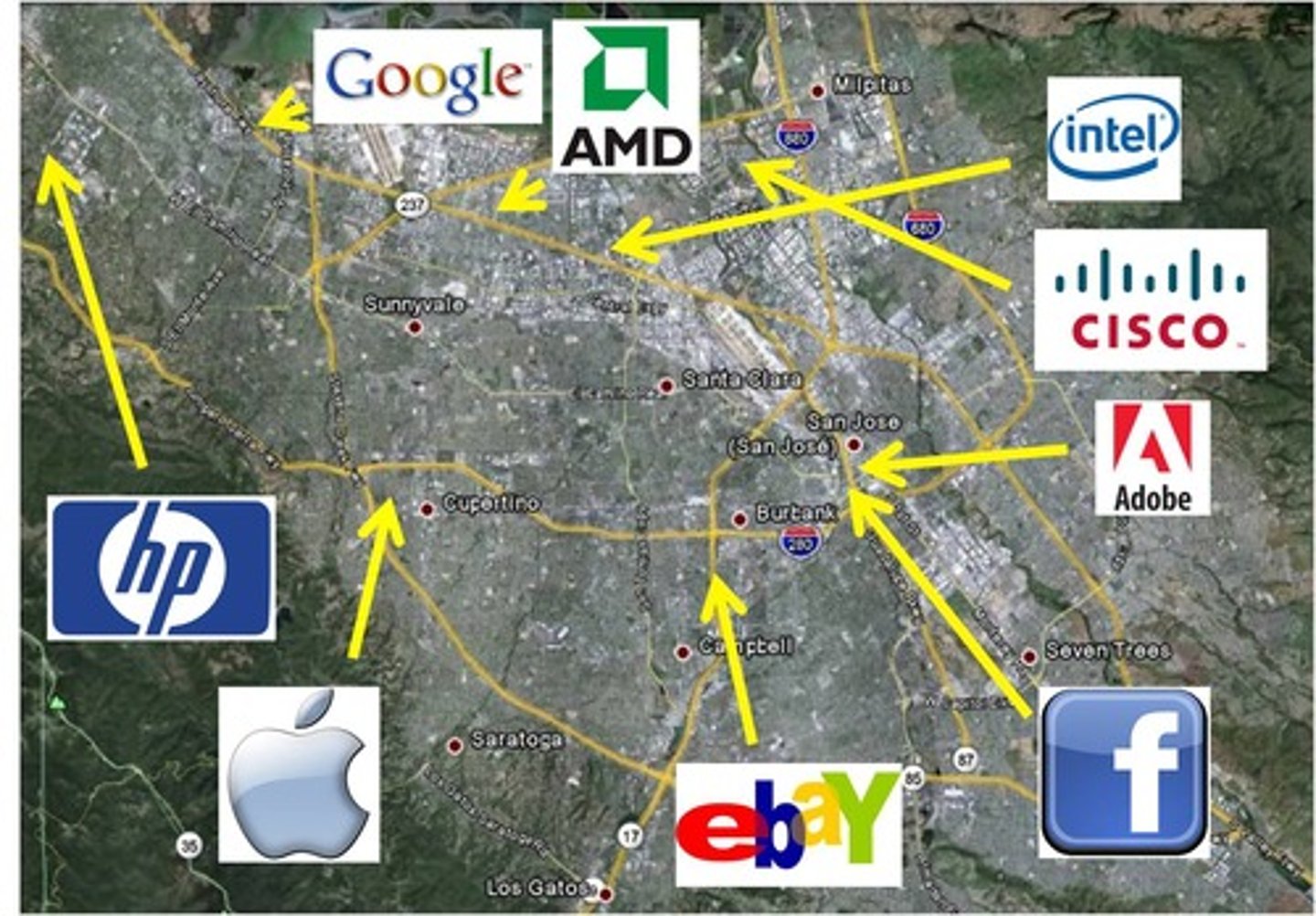
<p>The advantages gained when businesses cluster in the same area and take advantage of the same infrastructure, labor pool, and support businesses, reducing costs; example: companies relying on IT specialists locating where universities cluster</p>
10
New cards

Bulk-Gaining Industry

An industry in which the final product weighs more or comprises greater volume or fragility than the inputs; tend to locate near markets; e.g. soda

<p>An industry in which the final product weighs more or comprises greater volume or fragility than the inputs; tend to locate near markets; e.g. soda</p>
11
New cards

Bulk-Reducing Industry

an industry in which the final product weighs less or comprises a lower volume than the inputs; tend to locate near inputs (e.g. near mines or ports); e.g. steel
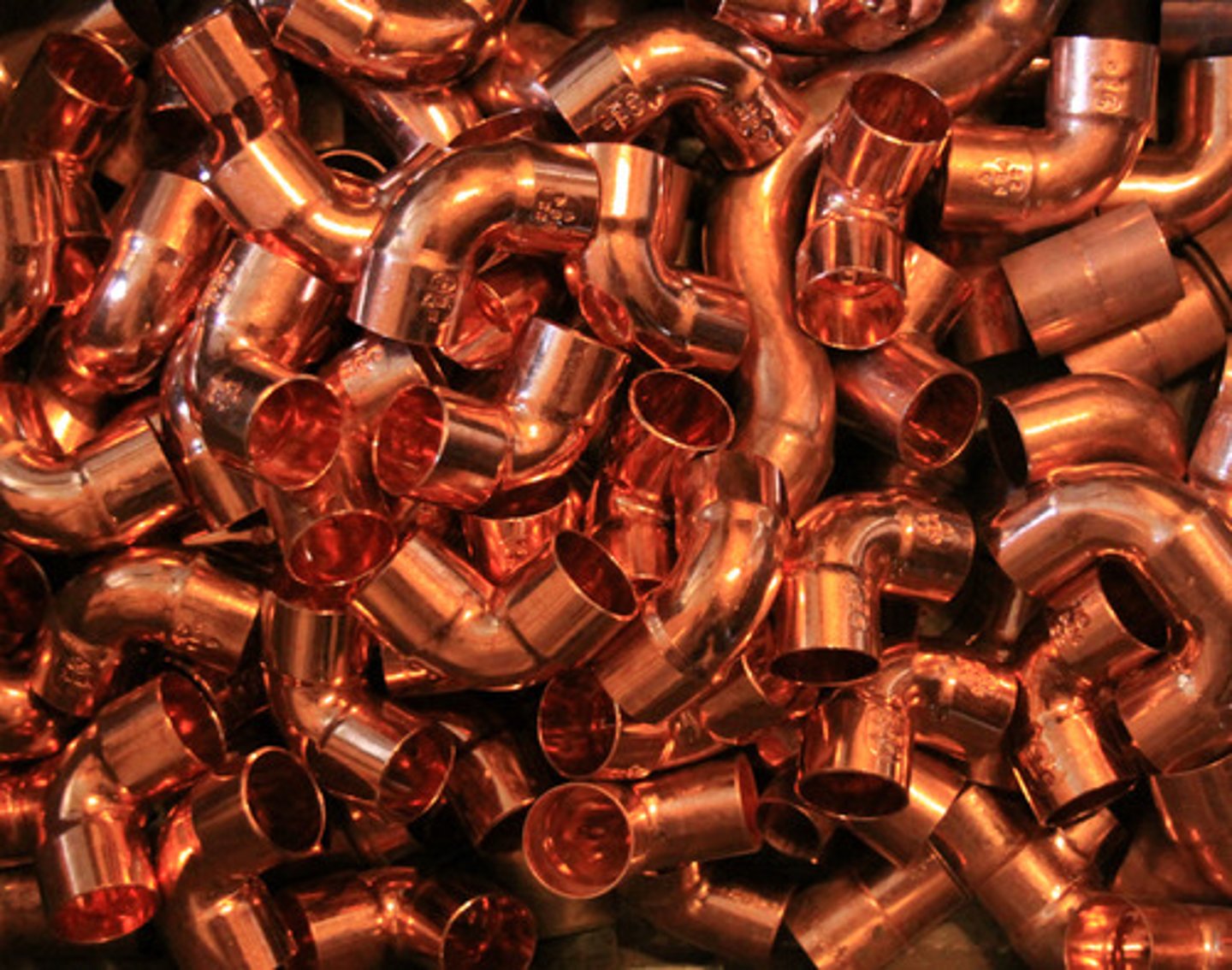
<p>an industry in which the final product weighs less or comprises a lower volume than the inputs; tend to locate near inputs (e.g. near mines or ports); e.g. steel</p>
12
New cards

Intermodal Shipping Container

A large, standardized container designed and built for intermodal freight transport, from ship to rail to truck without unloading and reloading its cargo; a key component of global trade reducing shipping costs
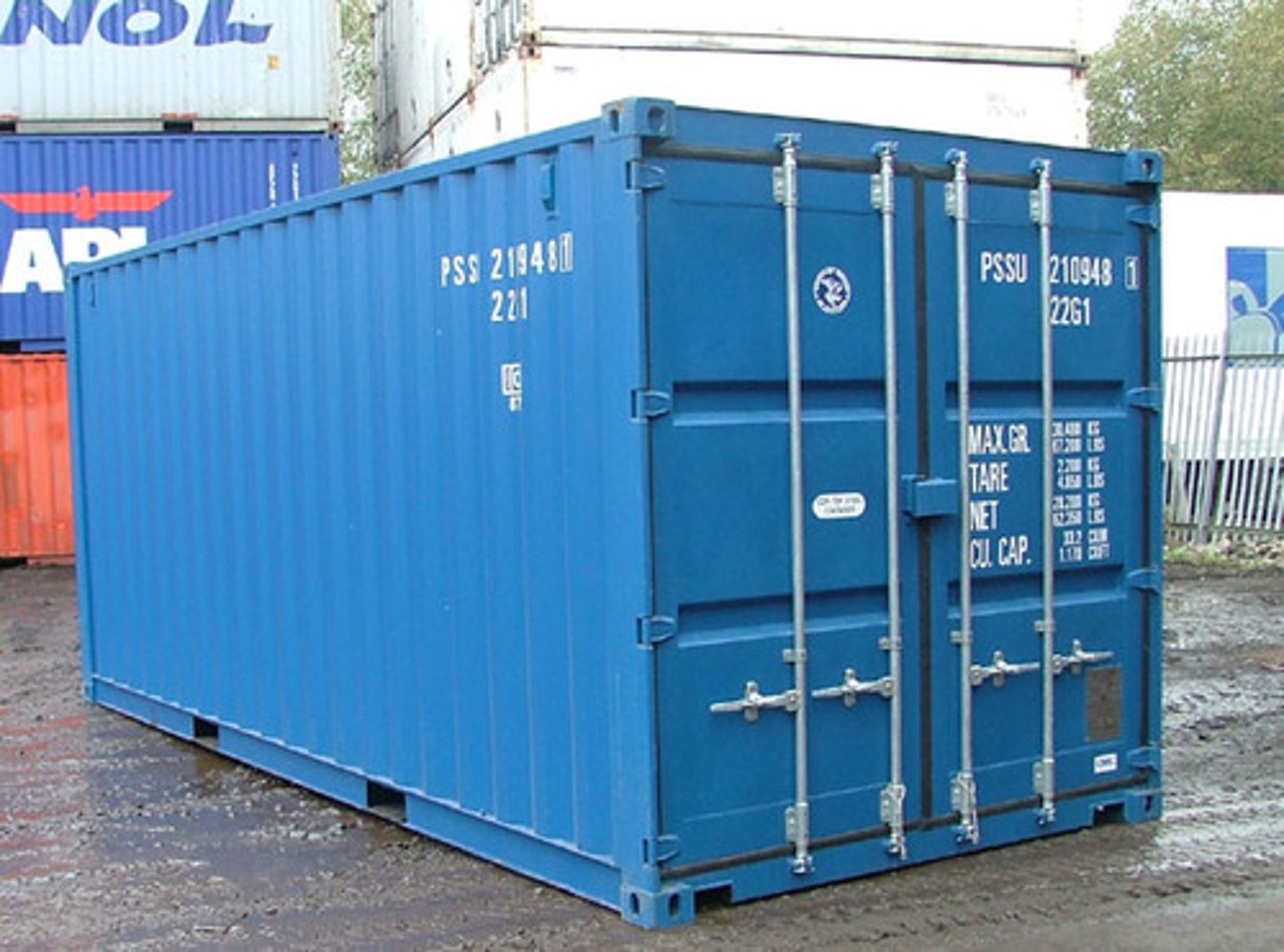
<p>A large, standardized container designed and built for intermodal freight transport, from ship to rail to truck without unloading and reloading its cargo; a key component of global trade reducing shipping costs</p>
13
New cards

Break-of-Bulk Point

A place where goods are transferred from one mode of transport to another, for example the docks where goods transfer from ship to truck or rail; increasingly automated
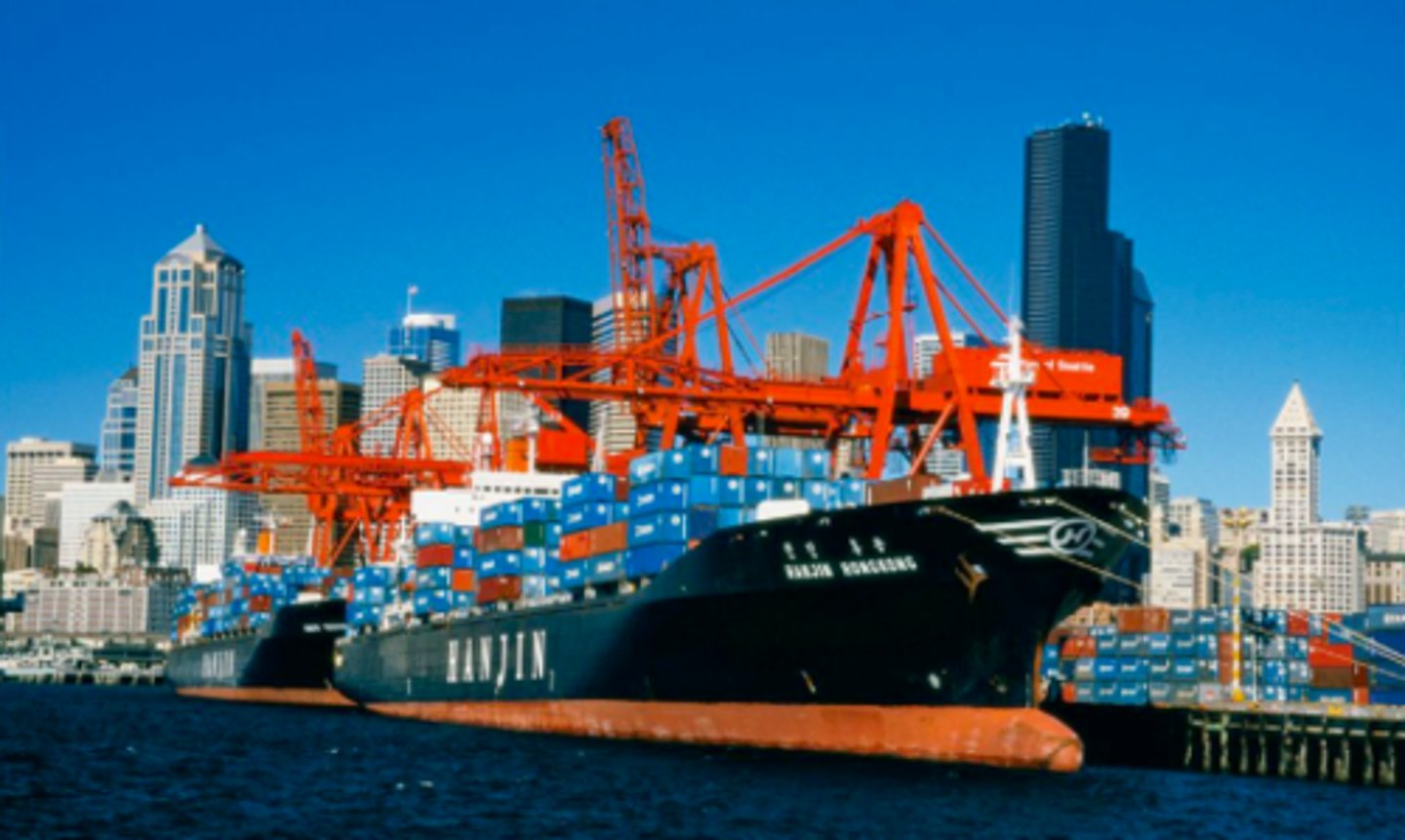
<p>A place where goods are transferred from one mode of transport to another, for example the docks where goods transfer from ship to truck or rail; increasingly automated</p>
14
New cards

Hotelling's Model of Locational Interdependence (1929)

The theory that businesses that sell similar products tend to locate near each other in order to lure consumers from their competitors
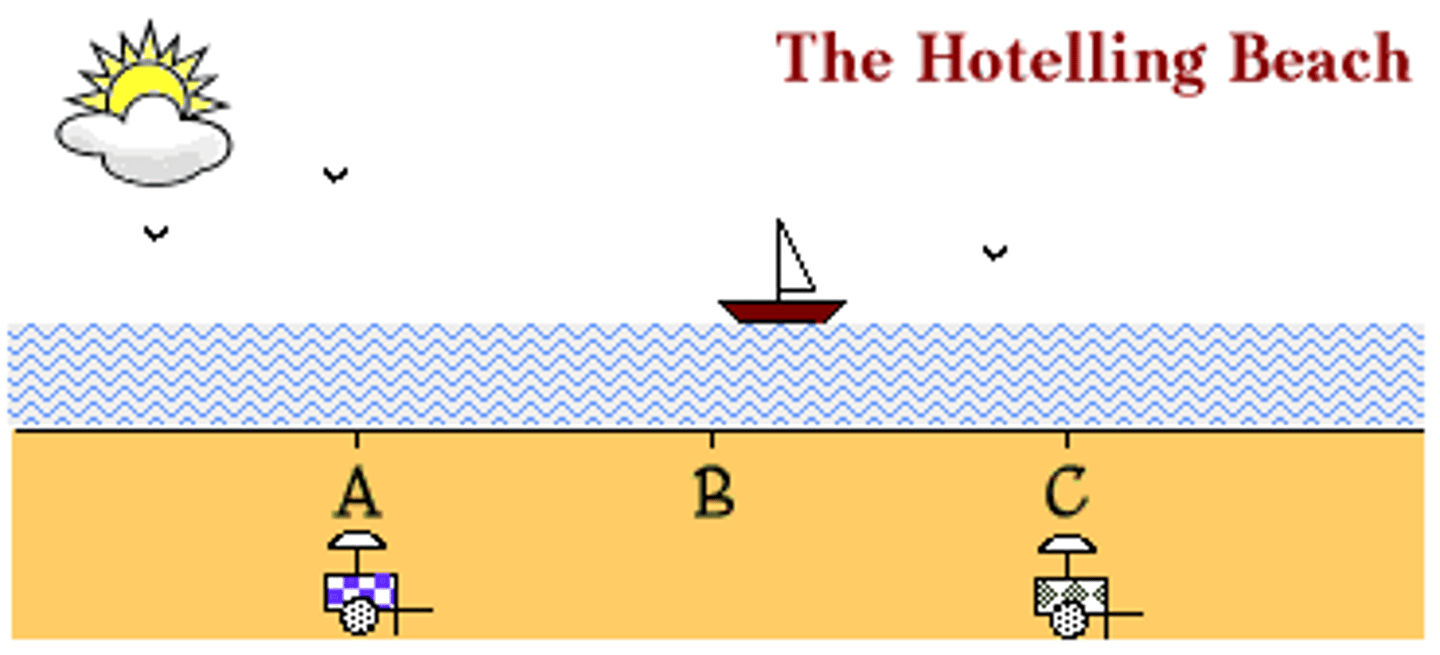
<p>The theory that businesses that sell similar products tend to locate near each other in order to lure consumers from their competitors</p>
15
New cards

Development

The measure of a country's ability to have a high standard of living and advanced technological infrastructure; some criteria for evaluating the degree of economic development are the gross domestic product (GDP) per capita at purchasing power parity (PPP), gross national income per capita (GNIP) at PPP, and the occupational structure of the labor force (% primary, secondary, and tertiary); the HDI ranking is also used to reflect the composite index of life expectancy, education, and income per capita.
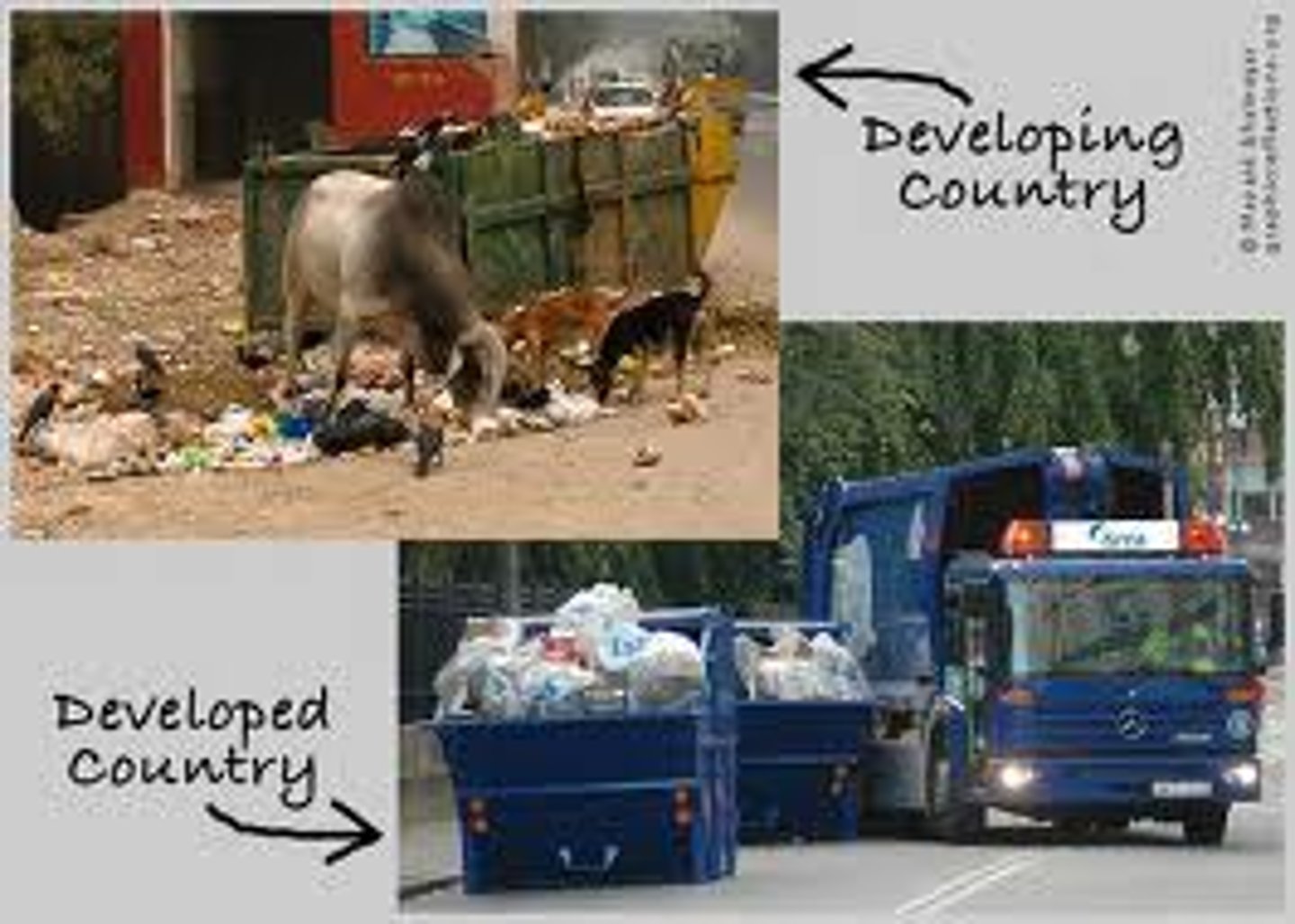
<p>The measure of a country's ability to have a high standard of living and advanced technological infrastructure; some criteria for evaluating the degree of economic development are the gross domestic product (GDP) per capita at purchasing power parity (PPP), gross national income per capita (GNIP) at PPP, and the occupational structure of the labor force (% primary, secondary, and tertiary); the HDI ranking is also used to reflect the composite index of life expectancy, education, and income per capita.</p>
16
New cards

Gross Domestic Product (GDP)

A monetary measure of the market value of all the final goods and services produced and sold in a specific time period by a country; often used as a measure of the size of a nation's economy; includes all sales on country's soil even if from foreign firms; does not include sales of a country's firms abroad; does not include informal economy transactions
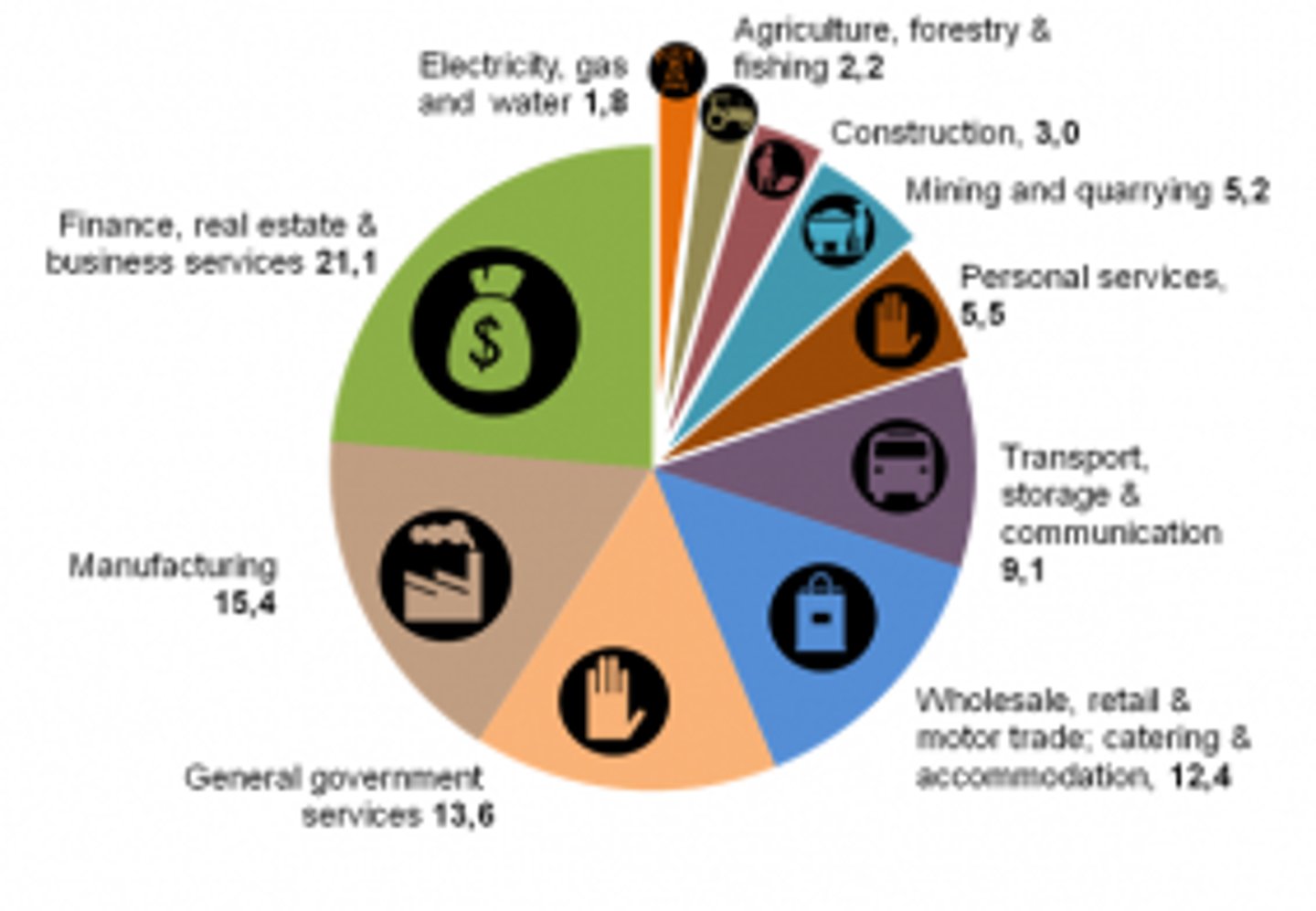
<p>A monetary measure of the market value of all the final goods and services produced and sold in a specific time period by a country; often used as a measure of the size of a nation's economy; includes all sales on country's soil even if from foreign firms; does not include sales of a country's firms abroad; does not include informal economy transactions</p>
17
New cards

Gross Domestic Product Per Capita

Gross Domestic Product divided by the country's population; often used as a measure of a country's average wealth, development, and/or standard of living; does not factor cost of living; does not address income inequality; (GDP Per Capita at Purchasing Power Parity (PPP) factors in cost of living differences)
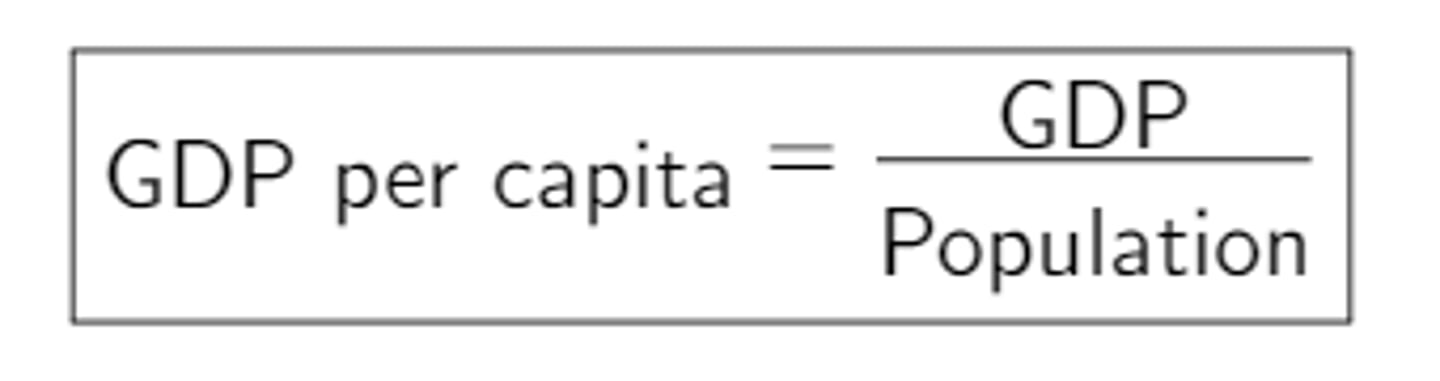
<p>Gross Domestic Product divided by the country's population; often used as a measure of a country's average wealth, development, and/or standard of living; does not factor cost of living; does not address income inequality; (GDP Per Capita at Purchasing Power Parity (PPP) factors in cost of living differences)</p>
18
New cards

Purchasing Power Parity (PPP)

A measurement of the price of specific goods in different countries and is used to compare how much the same amount of money will buy in different countries; allows for GDP comparisons to be more accurate

<p>A measurement of the price of specific goods in different countries and is used to compare how much the same amount of money will buy in different countries; allows for GDP comparisons to be more accurate</p>
19
New cards

Gross National Product (GNP)

The total value of all the final products and services turned out in a given period by the means of production owned by a country's residents; replaced by measure called Gross National Income (GNI)
<p>The total value of all the final products and services turned out in a given period by the means of production owned by a country's residents; replaced by measure called Gross National Income (GNI)</p>
20
New cards

Gross National Income (GNI)

Has replaced the term, GNP; the total value of all the final products and services turned out in a given period by the means of production owned by a country's residents

<p>Has replaced the term, GNP; the total value of all the final products and services turned out in a given period by the means of production owned by a country's residents</p>
21
New cards

Per Capita

Translates literally as "by the head," but it's used to mean "per person." In economics, business, or statistics, per capita is used to report average figures per person
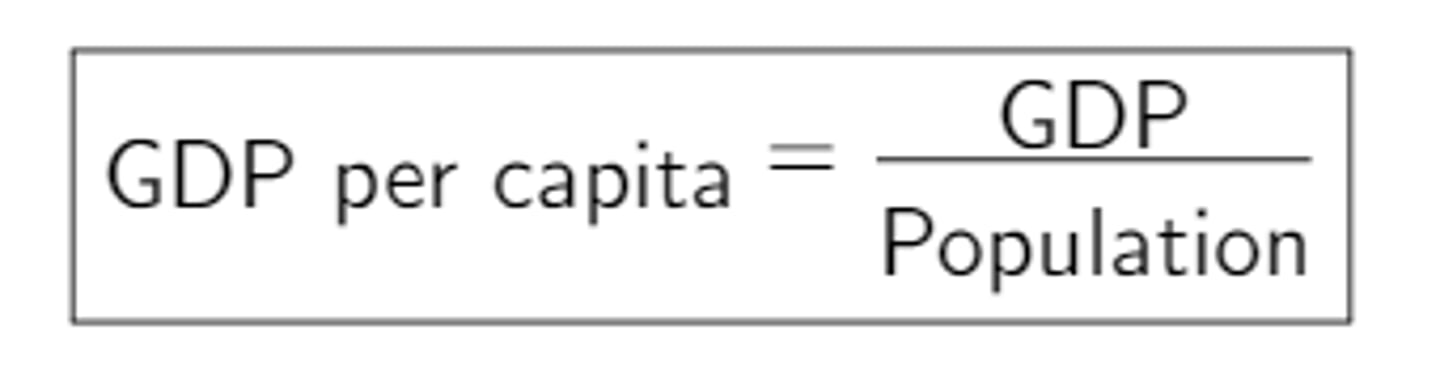
<p>Translates literally as "by the head," but it's used to mean "per person." In economics, business, or statistics, per capita is used to report average figures per person</p>
22
New cards

Occupational Structure of the Labor Force

A percentage of a country's workforce employed in the three main economic sectors: primary, secondary, and tertiary; used as a measure of development
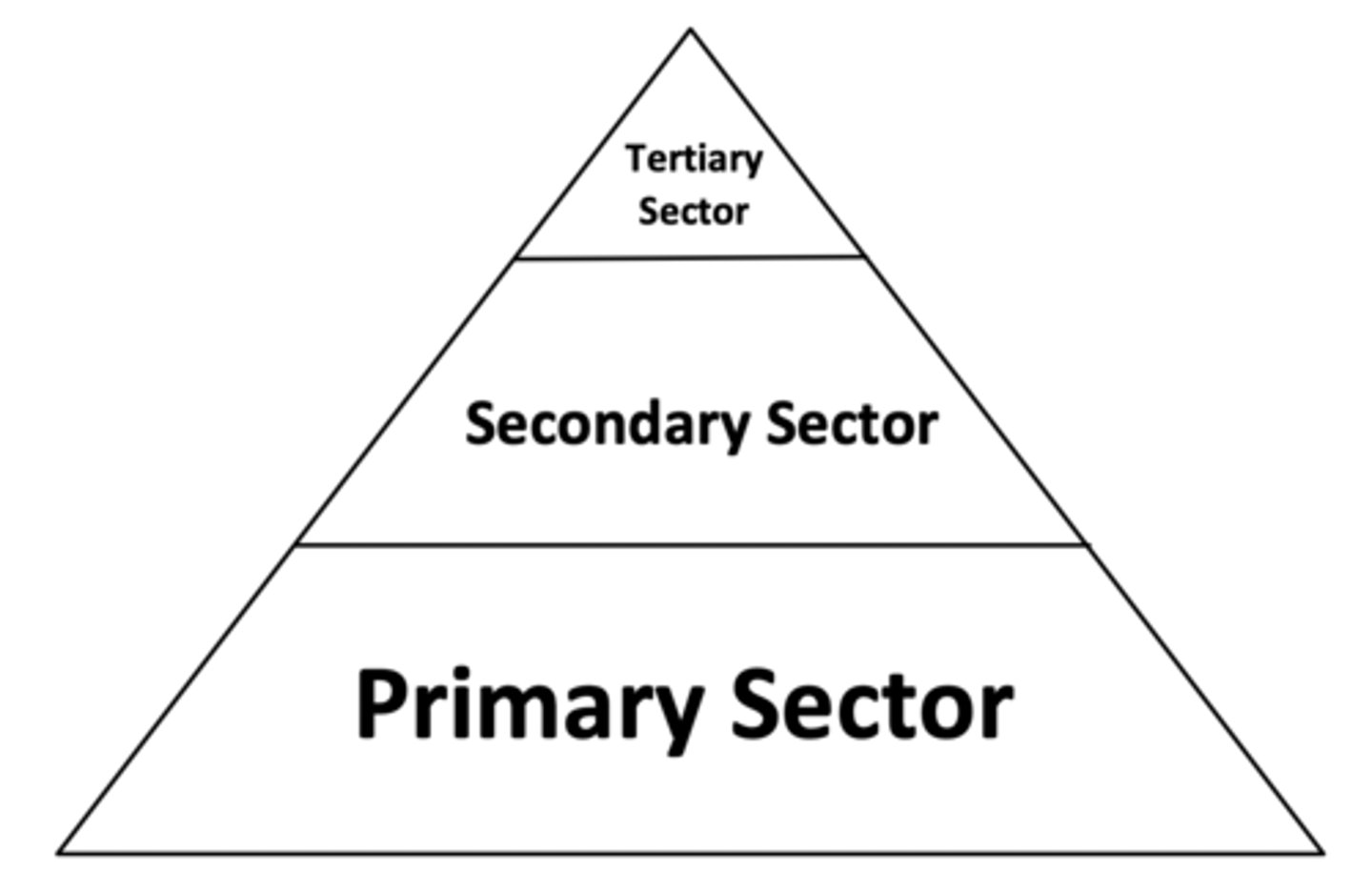
<p>A percentage of a country's workforce employed in the three main economic sectors: primary, secondary, and tertiary; used as a measure of development</p>
23
New cards

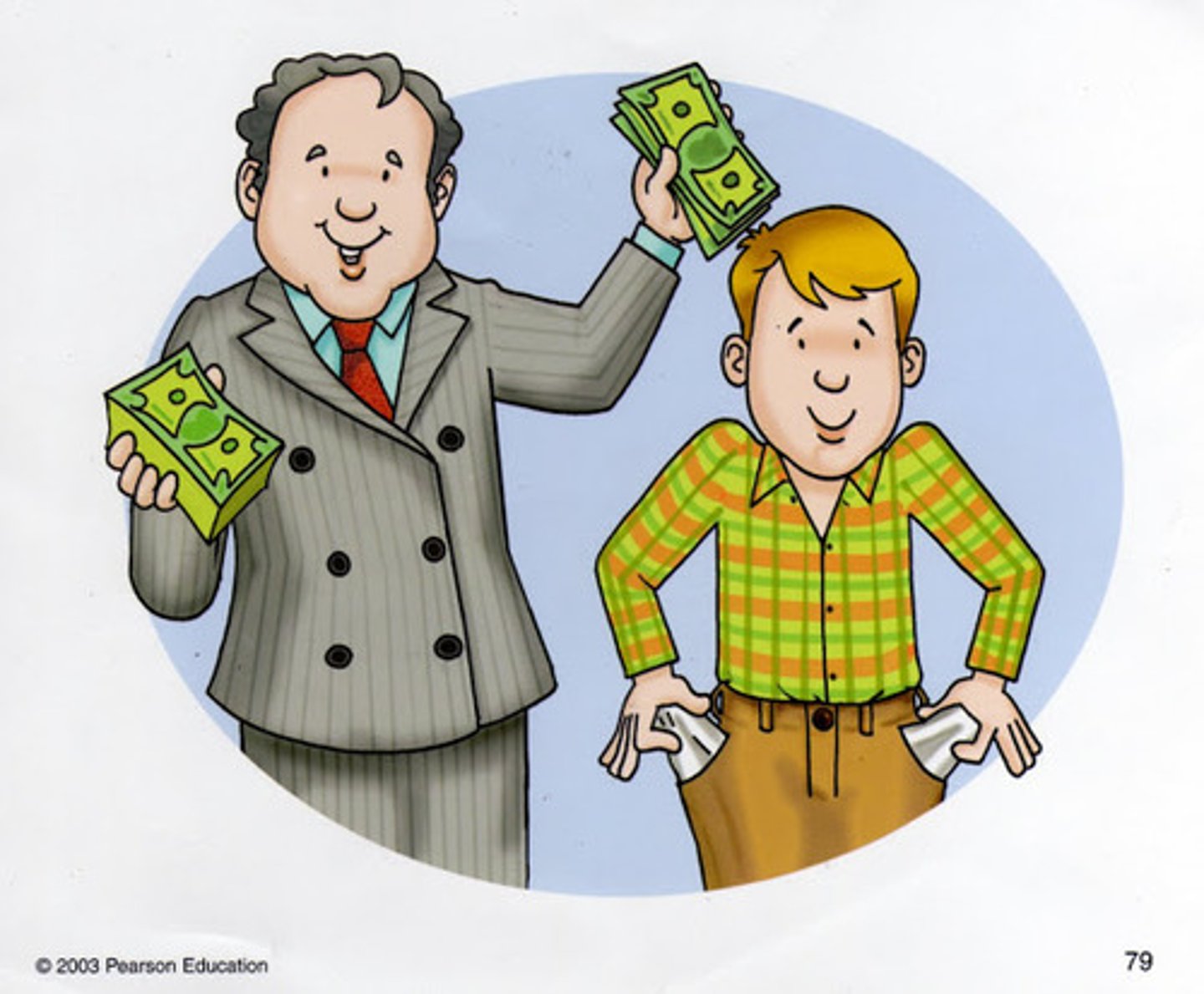
Income Distribution

How a country's total GDP is distributed amongst its population; Unequal distribution of income causes economic inequality; income tax policies are one contributor to income inequality
<p>How a country's total GDP is distributed amongst its population; Unequal distribution of income causes economic inequality; income tax policies are one contributor to income inequality</p>
24
New cards

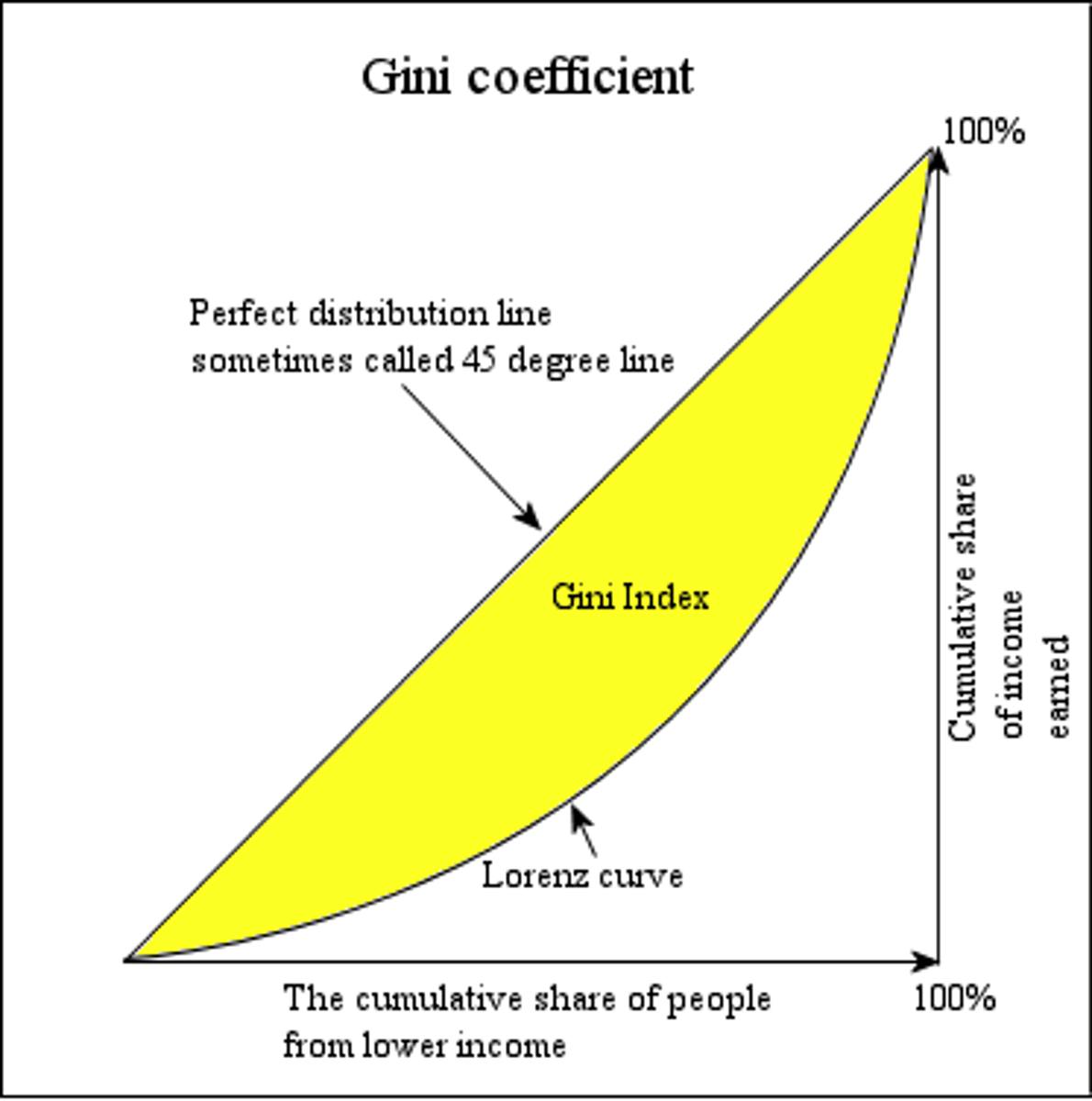
Gini Coefficient

A measure of the distribution of income across a population; used as a gauge of economic inequality; coefficient ranges from 0 representing perfect equality and 1 representing perfect inequality.
<p>A measure of the distribution of income across a population; used as a gauge of economic inequality; coefficient ranges from 0 representing perfect equality and 1 representing perfect inequality.</p>
25
New cards

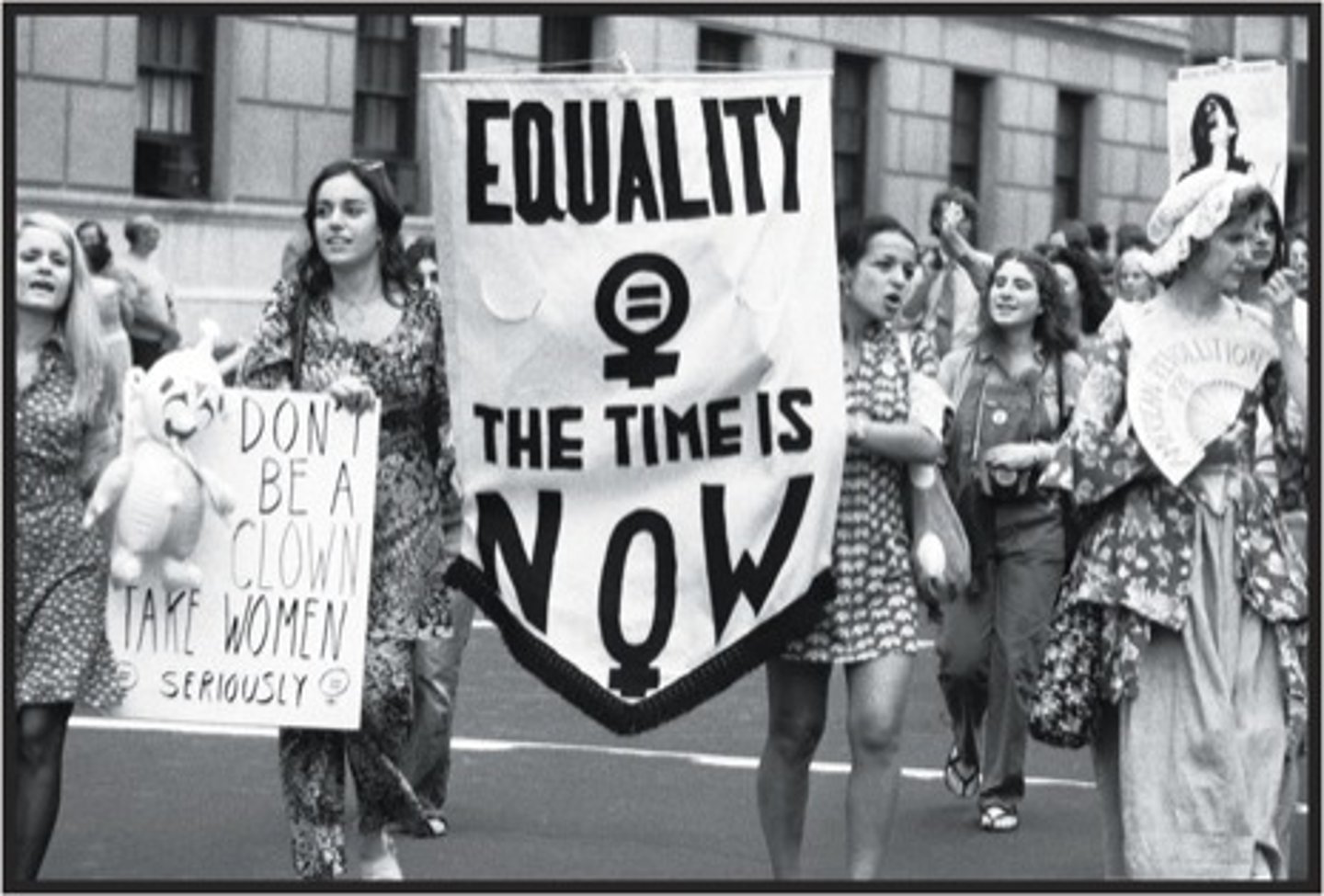
Gender Inequality Index (GII)

An index for measurement of gender disparity incorporating three measurements: reproductive health, empowerment, labor market participation.
<p>An index for measurement of gender disparity incorporating three measurements: reproductive health, empowerment, labor market participation.</p>
26
New cards

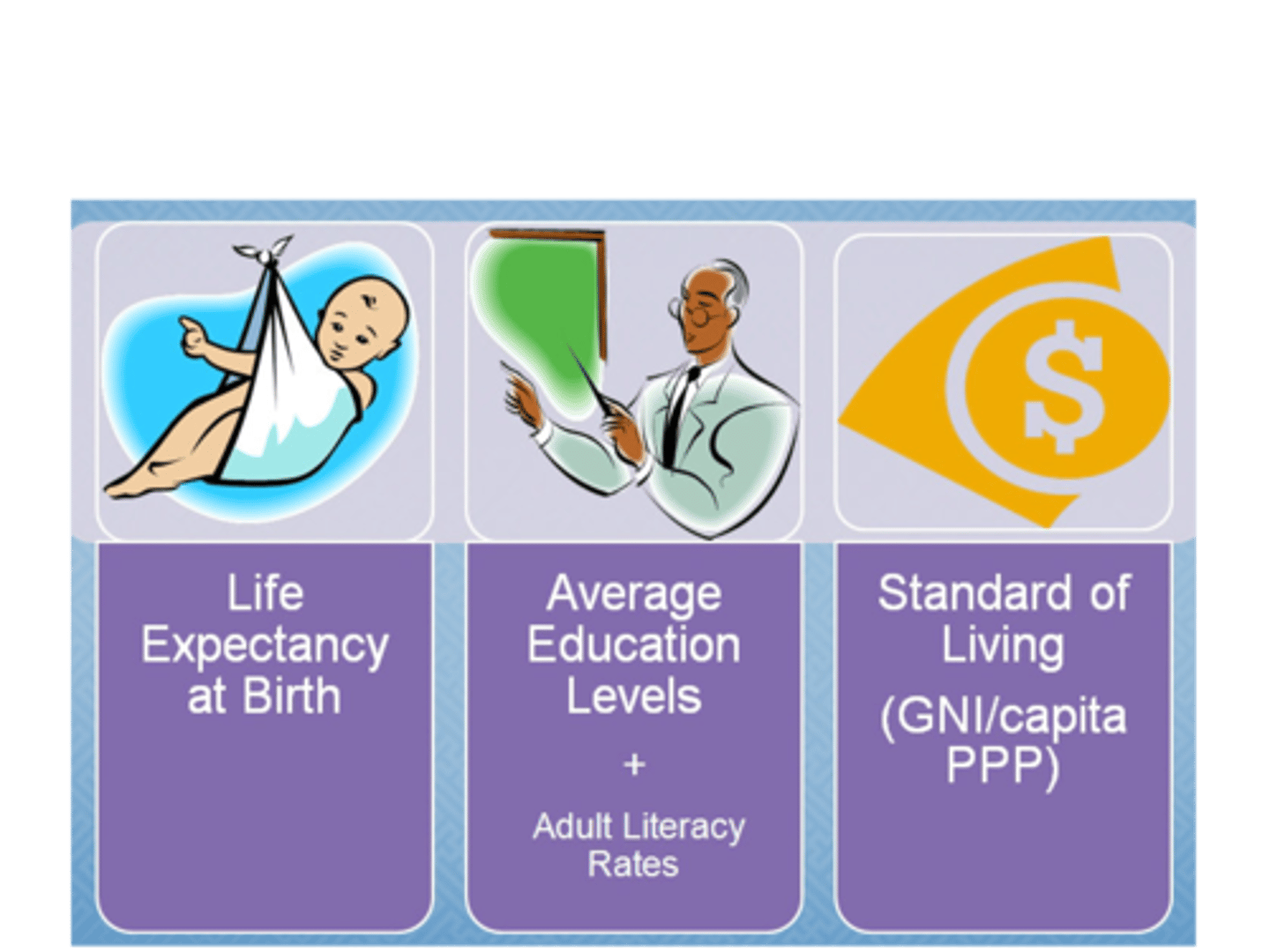
Human Development Index (HDI)

An index measuring achievement in key dimensions of human development: a long and healthy life (life expectancy at birth), being knowledgeable (mean years of schooling) and having a decent standard of living (GNI per Capita).
<p>An index measuring achievement in key dimensions of human development: a long and healthy life (life expectancy at birth), being knowledgeable (mean years of schooling) and having a decent standard of living (GNI per Capita).</p>
27
New cards

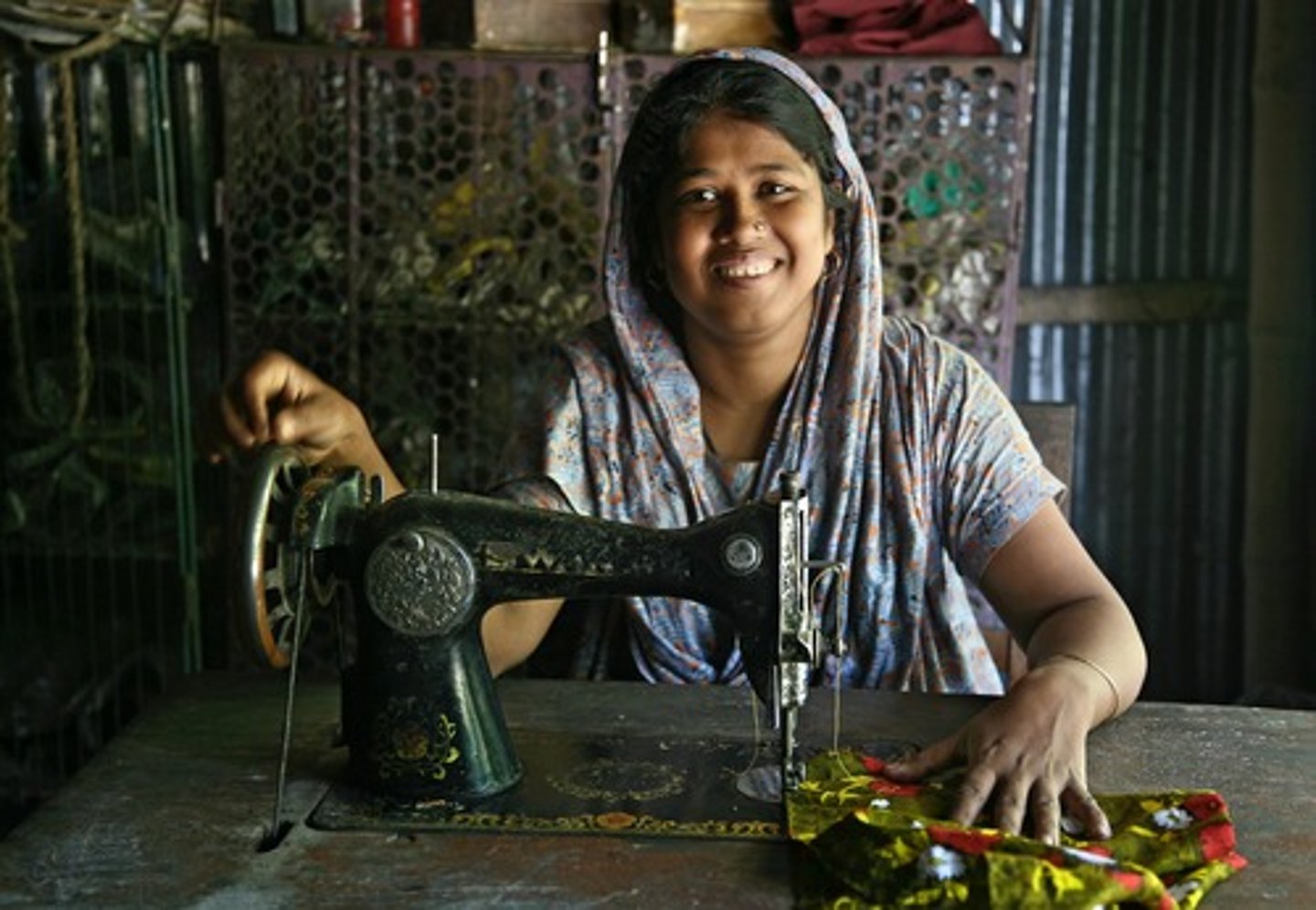
Microloans

Small-scale loans offered to the poor in the developing world in order to help bring people out of poverty; lenders often prefer women borrowers; a grassroots and direct version of aid
<p>Small-scale loans offered to the poor in the developing world in order to help bring people out of poverty; lenders often prefer women borrowers; a grassroots and direct version of aid</p>
28
New cards

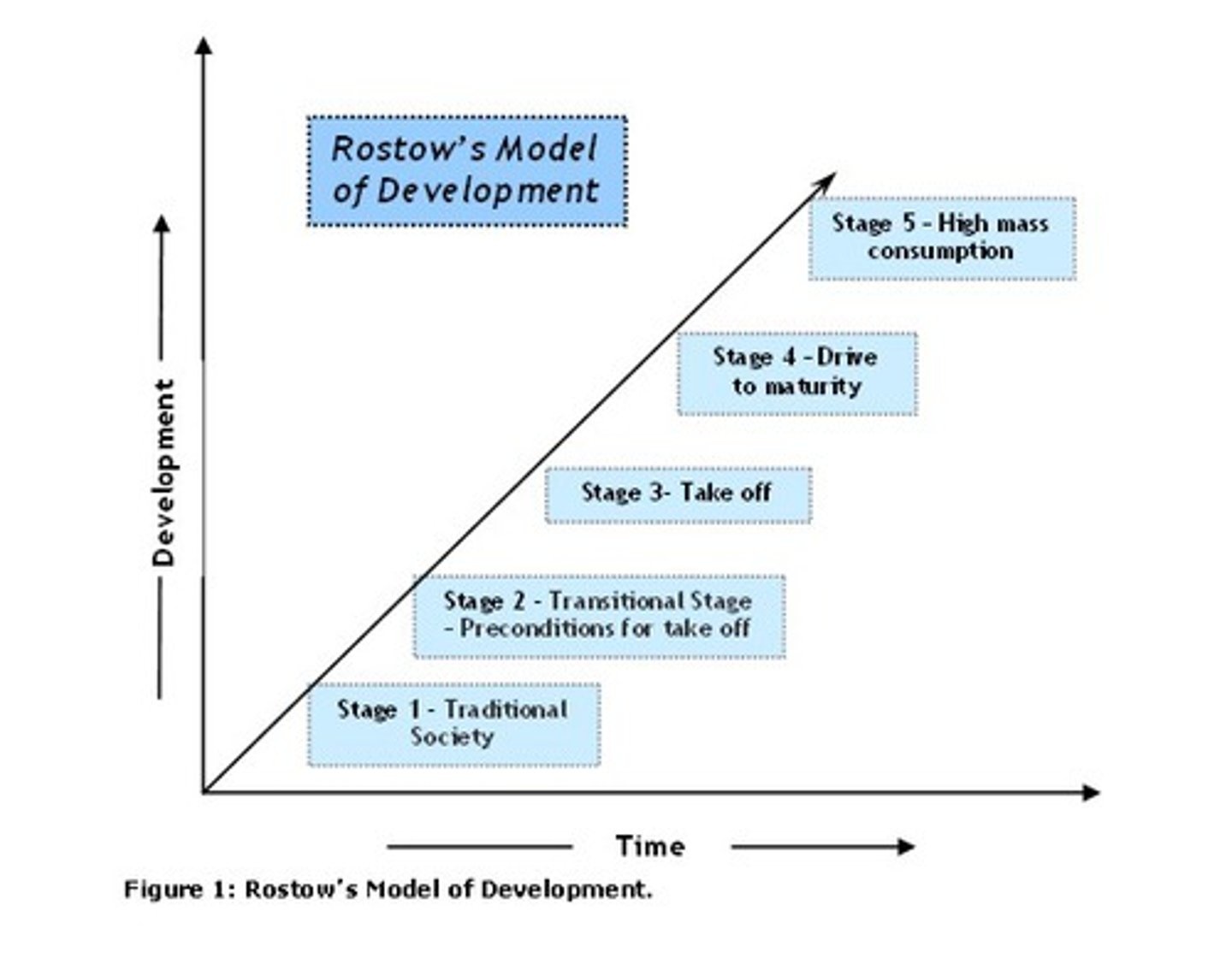
Rostow's Stages of Economic Growth

A theory of development positing that countries proceed in a linear fashion through 5 stages of growth:1. Traditional Society (Agrarian) 2. Preconditions to Take-Off (Early Manufacturing) 3. Take-Off (Industrialization) 4. Drive to Maturity (Advances in Technology) 5. High Mass Consumption (Wealth & Consumerism); Criticisms: Goals are industrialization, Westernization, and consumption; ignores differences in physical geography; ignores long-lasting structural impact of colonization; ignores sustainability
<p>A theory of development positing that countries proceed in a linear fashion through 5 stages of growth:1. Traditional Society (Agrarian) 2. Preconditions to Take-Off (Early Manufacturing) 3. Take-Off (Industrialization) 4. Drive to Maturity (Advances in Technology) 5. High Mass Consumption (Wealth &amp; Consumerism); Criticisms: Goals are industrialization, Westernization, and consumption; ignores differences in physical geography; ignores long-lasting structural impact of colonization; ignores sustainability</p>
29
New cards

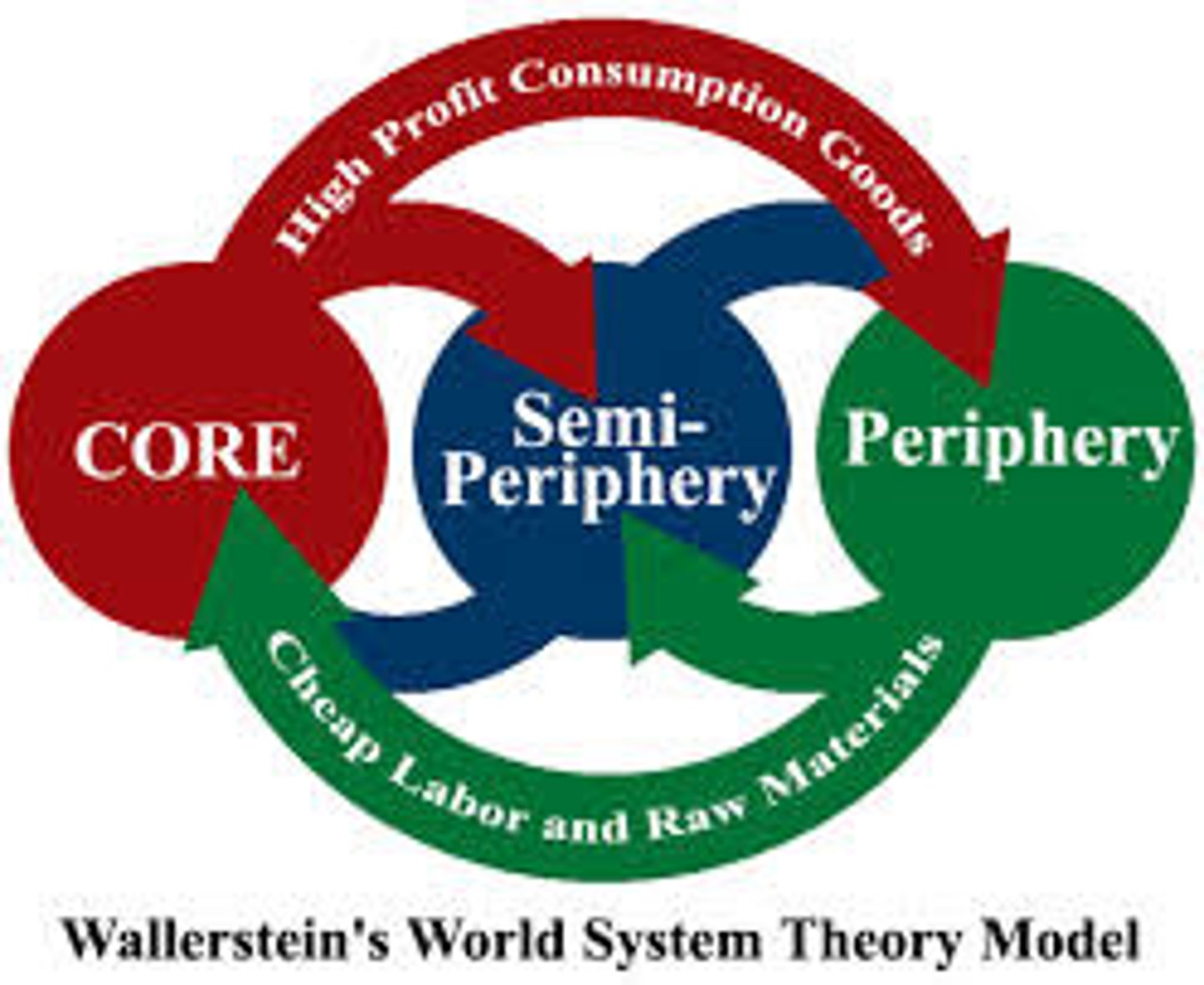
Wallerstein's World System Theory

A theory of development which emphasizes the importance of a global market and global division of labor, classifying states as belonging either to the Core, the Semi-Periphery, or the Periphery; Core countries focus on higher-skill, capital-intensive production, and Periphery countries focus on low-skill, labor-intensive production and extraction of raw materials; this dynamic constantly reinforces the dominance of the core countries.
<p>A theory of development which emphasizes the importance of a global market and global division of labor, classifying states as belonging either to the Core, the Semi-Periphery, or the Periphery; Core countries focus on higher-skill, capital-intensive production, and Periphery countries focus on low-skill, labor-intensive production and extraction of raw materials; this dynamic constantly reinforces the dominance of the core countries.</p>
30
New cards

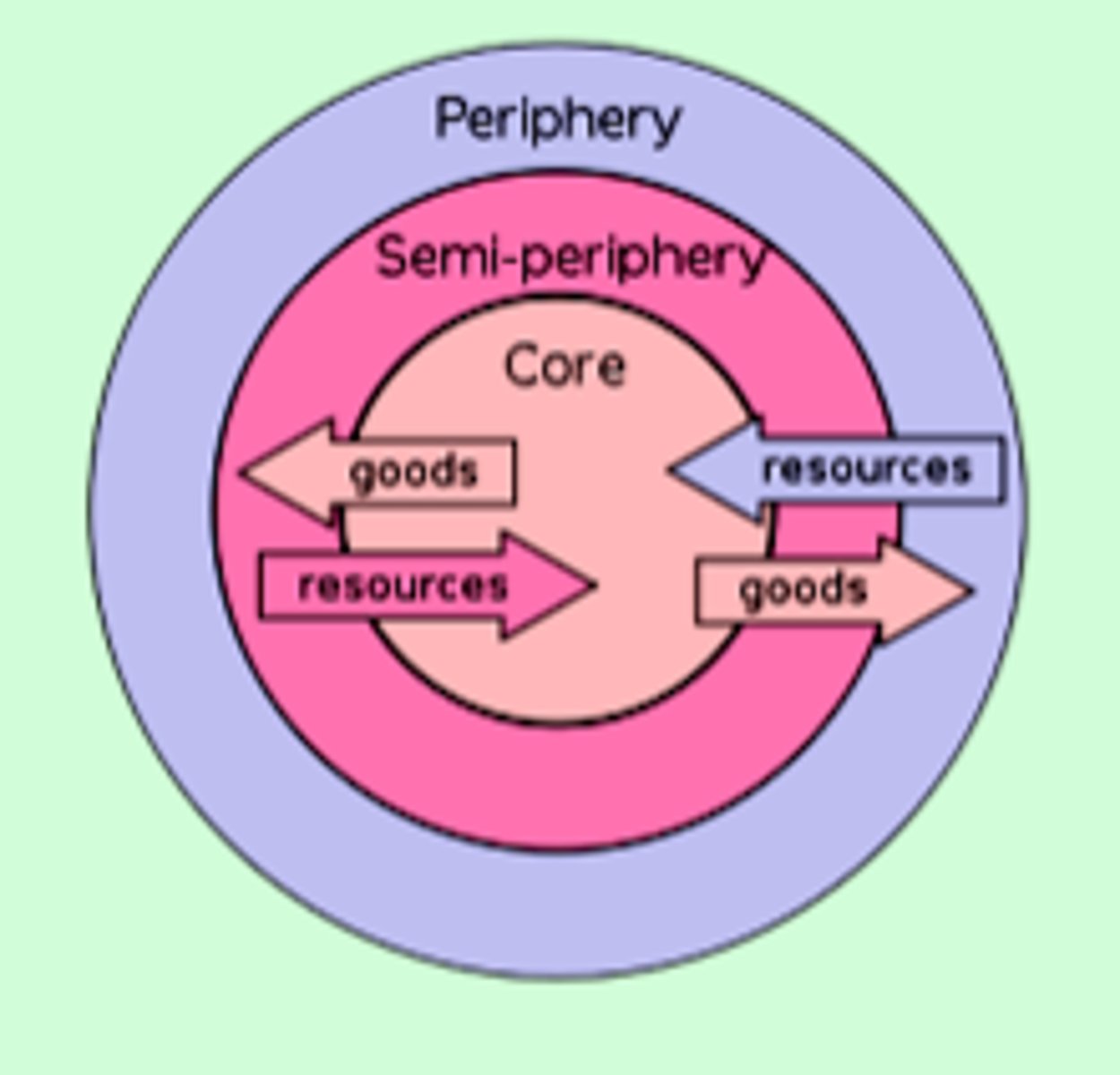
Dependency Theory

A development theory positing that resources flow from a "periphery" of poor and underdeveloped states to a "core" of wealthy states, enriching the latter at the expense of the former; major component of Wallerstein's World Systems Theory
<p>A development theory positing that resources flow from a "periphery" of poor and underdeveloped states to a "core" of wealthy states, enriching the latter at the expense of the former; major component of Wallerstein's World Systems Theory</p>
31
New cards

Neocolonialism

When developing countries that had formerly been colonies continue to be locked into exploitative economic relations with wealthier nations in spite of having gained independence from colonization; typically, this involves the exportation of commodities to the developed world and the importation of high-end manufactured goods
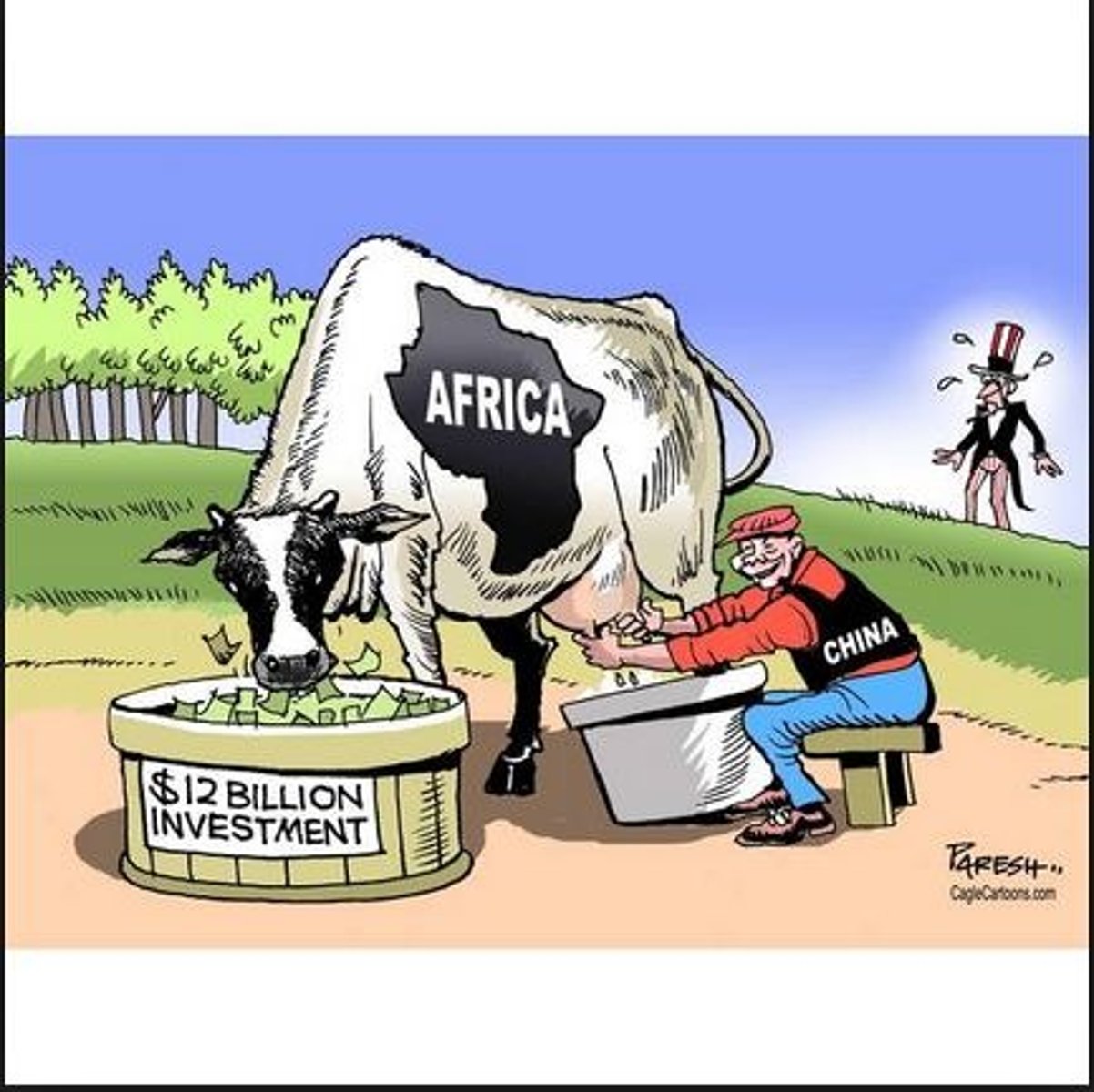
<p>When developing countries that had formerly been colonies continue to be locked into exploitative economic relations with wealthier nations in spite of having gained independence from colonization; typically, this involves the exportation of commodities to the developed world and the importation of high-end manufactured goods</p>
32
New cards

Commodity Dependence

When a country's exports are not diversified and heavily comprised of commodities that are undifferentiated from the same commodities of other countries; a measure of commodity dependence is if more than 60% of the merchandise a country exports, in value terms, are commodities; examples are coffee, petroleum, sugar, wheat; common with developing countries; countries become vulnerable to drops in world price of commodity
<p>When a country's exports are not diversified and heavily comprised of commodities that are undifferentiated from the same commodities of other countries; a measure of commodity dependence is if more than 60% of the merchandise a country exports, in value terms, are commodities; examples are coffee, petroleum, sugar, wheat; common with developing countries; countries become vulnerable to drops in world price of commodity</p>
33
New cards

Comparative Advantage

An economic concept related to free trade that says a country should specialize in certain products for export when they hold an advantage in producing those products, and import other products in which they do not have an advantage as compared to other countries; in theory everyone benefits from the specialization and gets richer; criticism: this will lock developing countries into commodity dependence
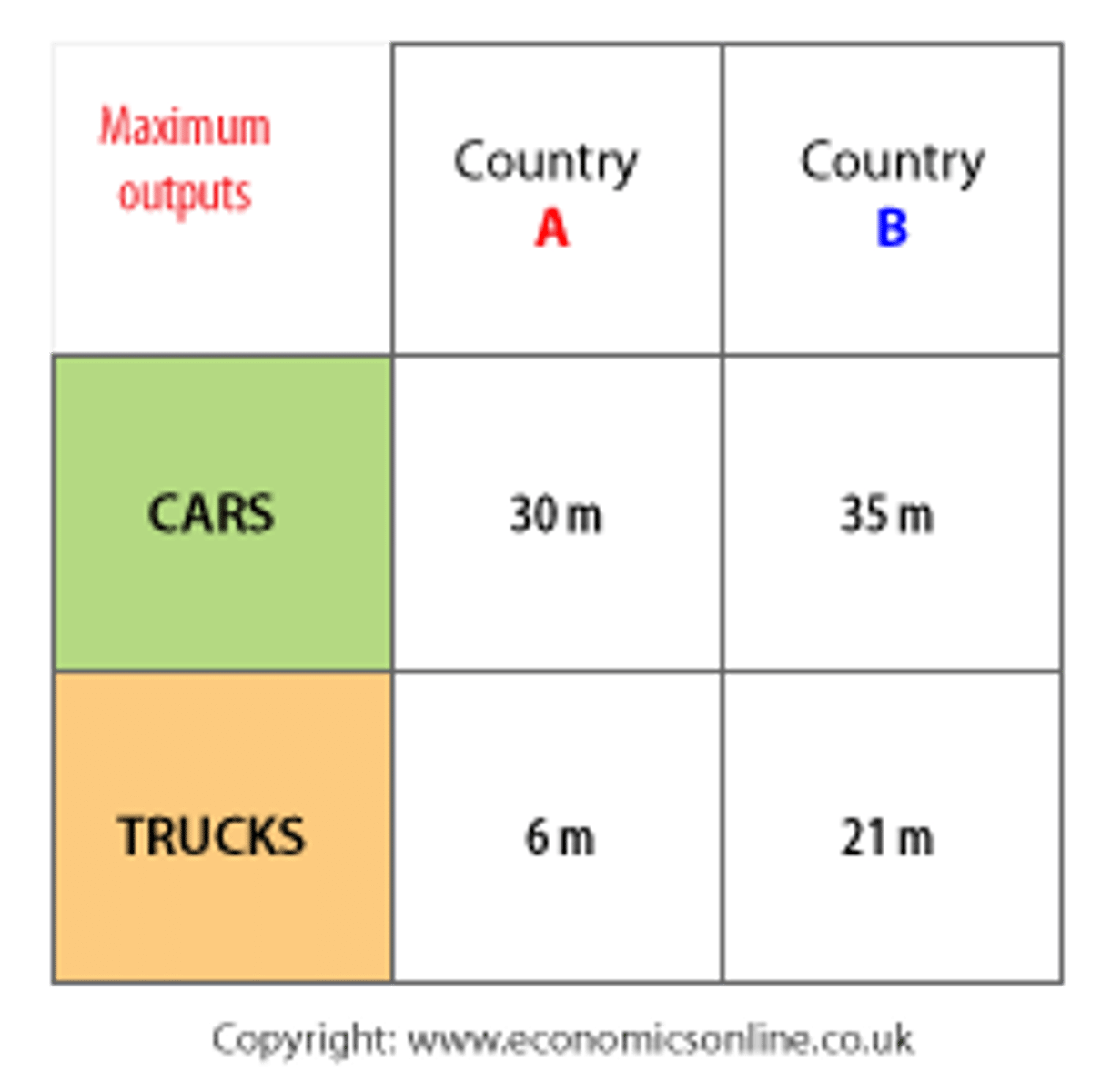
<p>An economic concept related to free trade that says a country should specialize in certain products for export when they hold an advantage in producing those products, and import other products in which they do not have an advantage as compared to other countries; in theory everyone benefits from the specialization and gets richer; criticism: this will lock developing countries into commodity dependence</p>
34
New cards

Complementarity

Simply stated, two places are said to exhibit a degree of complementarity if each offers something to the other that it needs or wants; at a basic level, it could be that one community produces things that another place is willing to purchase; in this situation, the first place has a product and the other place has money; thus, they exhibit a degree of complementarity.

35
New cards

World Trade Organization (WTO)

An intergovernmental organization of the United Nations that regulates and facilitates international trade and enforces the rules that govern international trade; the WTO is the world's largest international economic organization, with 164 member states representing over 98% of global trade and global GDP
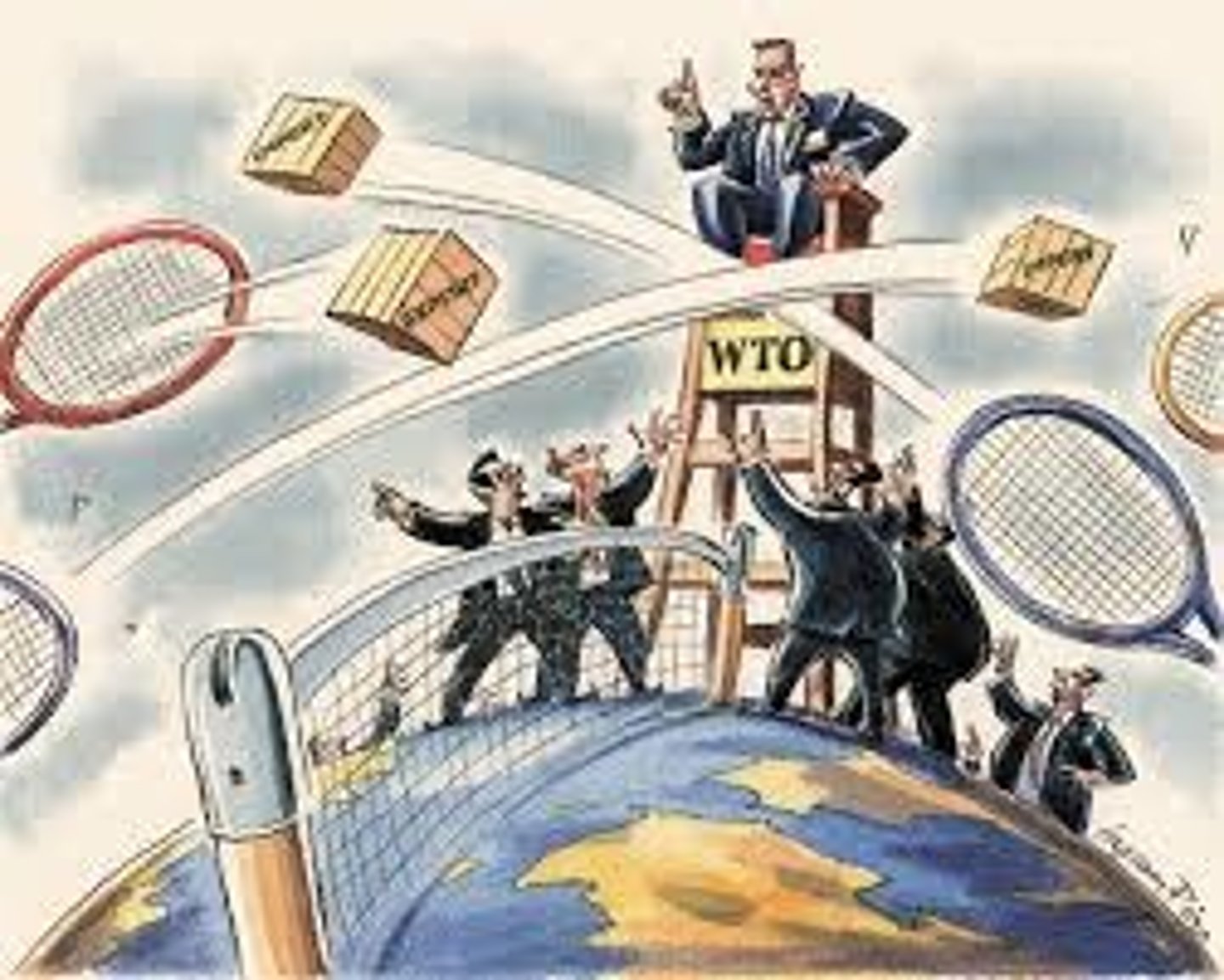
<p>An intergovernmental organization of the United Nations that regulates and facilitates international trade and enforces the rules that govern international trade; the WTO is the world's largest international economic organization, with 164 member states representing over 98% of global trade and global GDP</p>
36
New cards

Organization of Petroleum Exporting Countries (OPEC)

An organization enabling the co-operation of leading oil-producing countries, in order to collectively influence the global market and maximize profit by varying amount of petroleum available on world market; as of September 2018, the 13 member countries accounted for an estimated 44 percent of global oil production and 81.5 percent of the world's proven oil reserves, giving OPEC a major influence on global oil prices
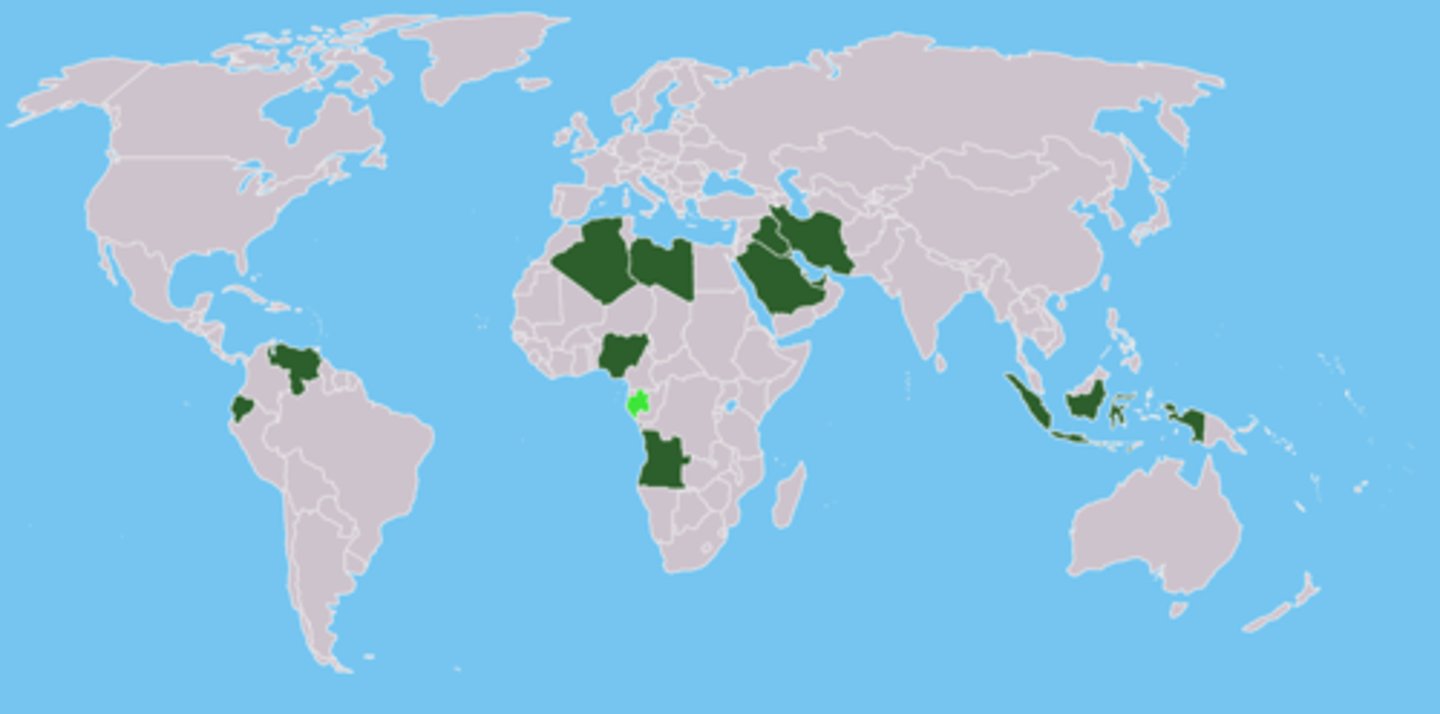
<p>An organization enabling the co-operation of leading oil-producing countries, in order to collectively influence the global market and maximize profit by varying amount of petroleum available on world market; as of September 2018, the 13 member countries accounted for an estimated 44 percent of global oil production and 81.5 percent of the world's proven oil reserves, giving OPEC a major influence on global oil prices</p>
37
New cards

Tariff

A tax imposed by the government of a country on imports of goods as a source of revenue, a form of regulation, and to encourage or safeguard domestic industry; can cause retaliatory tariffs by other nations
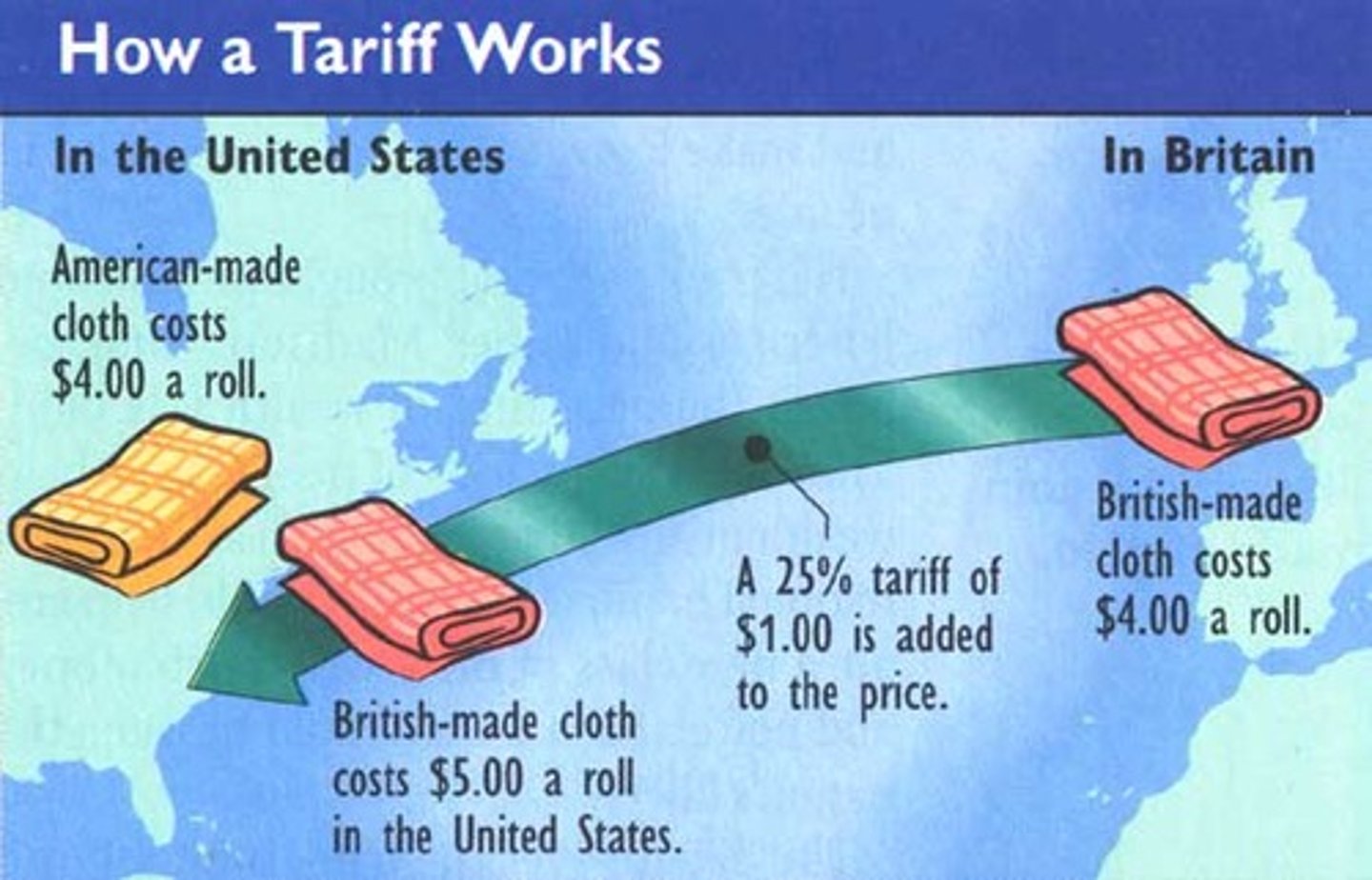
<p>A tax imposed by the government of a country on imports of goods as a source of revenue, a form of regulation, and to encourage or safeguard domestic industry; can cause retaliatory tariffs by other nations</p>
38
New cards

International Monetary Fund (IMF)

A major financial agency of the United Nations consisting of 190 countries with the stated mission of "working to foster global monetary cooperation, secure financial stability, facilitate international trade, promote high employment and sustainable economic growth, and reduce poverty around the world;" has controversial structural adjustment programs (SAPs) for developing world
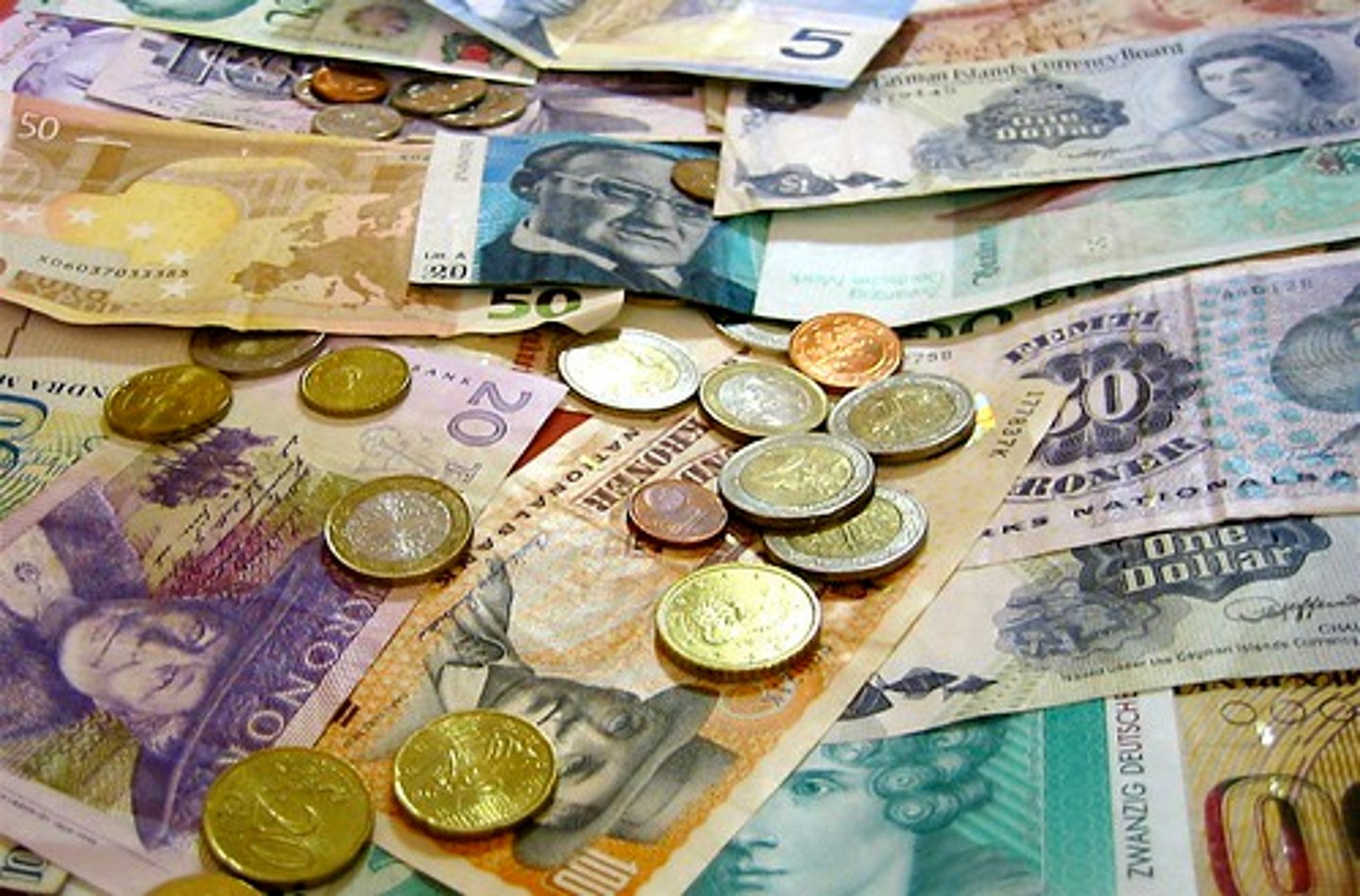
<p>A major financial agency of the United Nations consisting of 190 countries with the stated mission of "working to foster global monetary cooperation, secure financial stability, facilitate international trade, promote high employment and sustainable economic growth, and reduce poverty around the world;" has controversial structural adjustment programs (SAPs) for developing world</p>
39
New cards

Structural Adjustment Programs (SAPs)

Economic policies imposed on less developed countries by international agencies (like IMF) to create conditions encouraging international trade, such as lowering taxes on high earners, reducing government spending, reducing tariffs to promote trade, selling publicly owned utilities to private corporations and charging citizens more for public services.

<p>Economic policies imposed on less developed countries by international agencies (like IMF) to create conditions encouraging international trade, such as lowering taxes on high earners, reducing government spending, reducing tariffs to promote trade, selling publicly owned utilities to private corporations and charging citizens more for public services.</p>
40
New cards

Outsourcing

The business practice of having personnel outside of the immediate company, and sometimes outside of the country (offshoring), perform tasks often in the interest of lowering labor costs; examples include manufacturing, customer support (call centers), and IT jobs
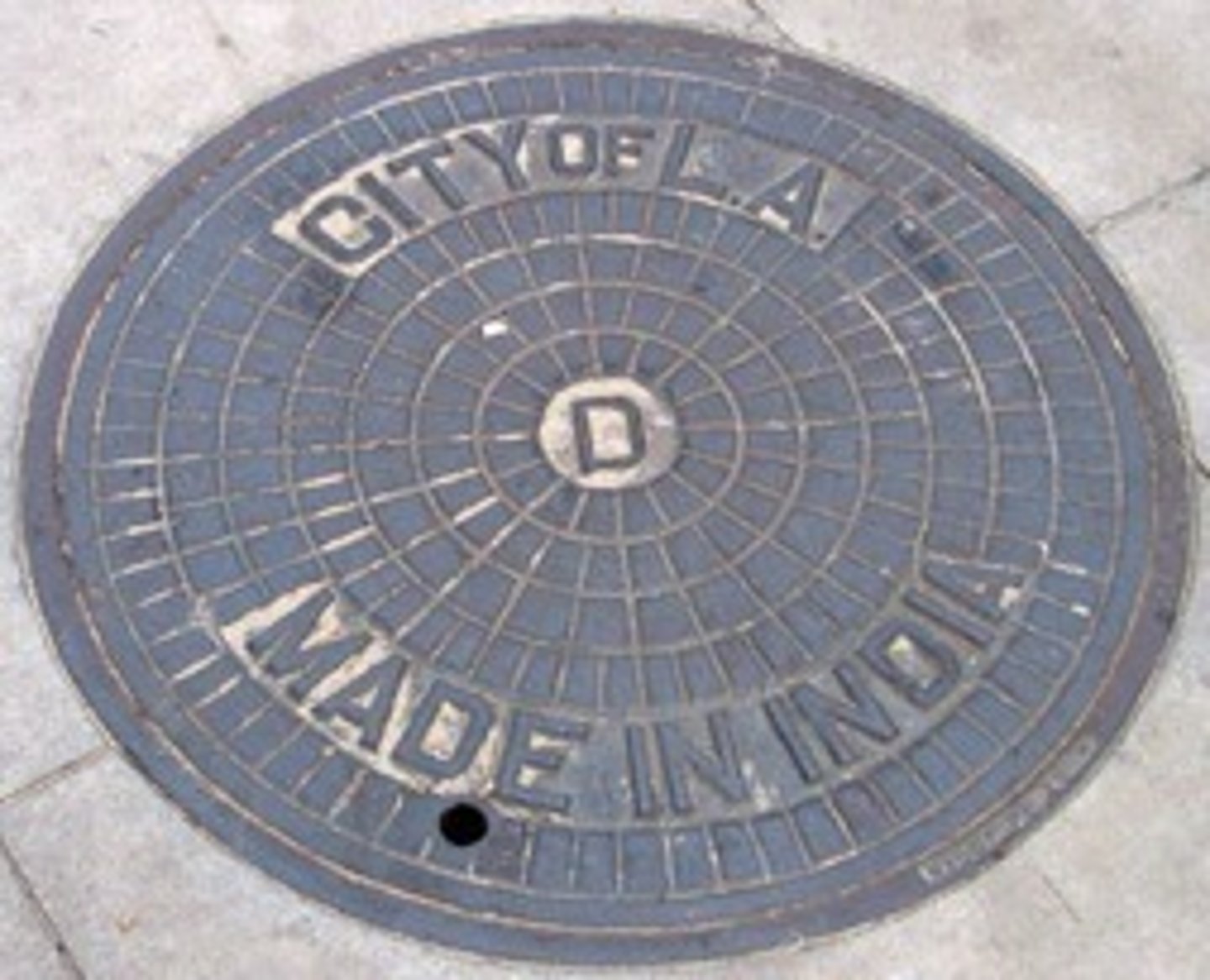
<p>The business practice of having personnel outside of the immediate company, and sometimes outside of the country (offshoring), perform tasks often in the interest of lowering labor costs; examples include manufacturing, customer support (call centers), and IT jobs</p>
41
New cards

Offshoring

When a company outsources jobs to a foreign country
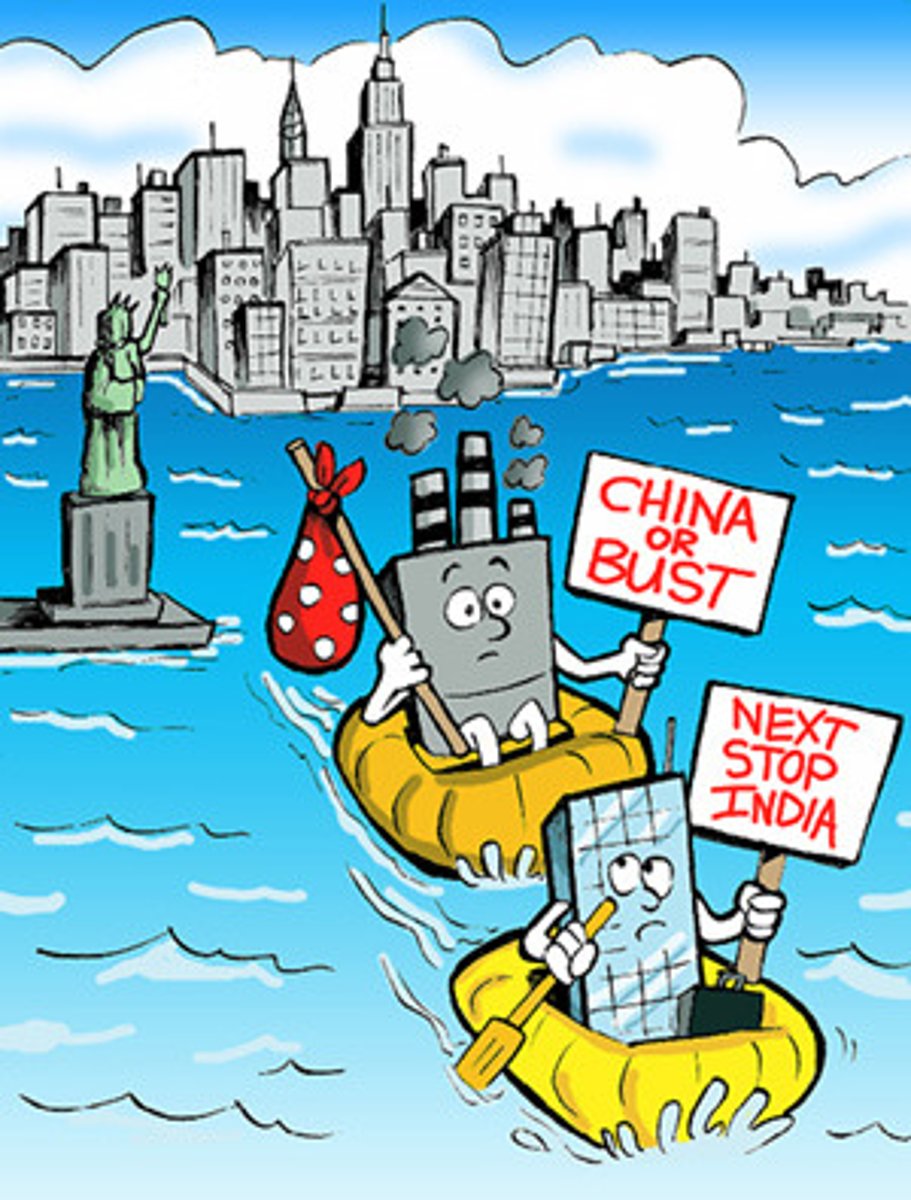
<p>When a company outsources jobs to a foreign country</p>
42
New cards

Special Economic Zones (SEZ)

An area within a country that is created to attract foreign direct investment (FDI) by offering economic incentives like tax breaks, that are not available in other parts of the country
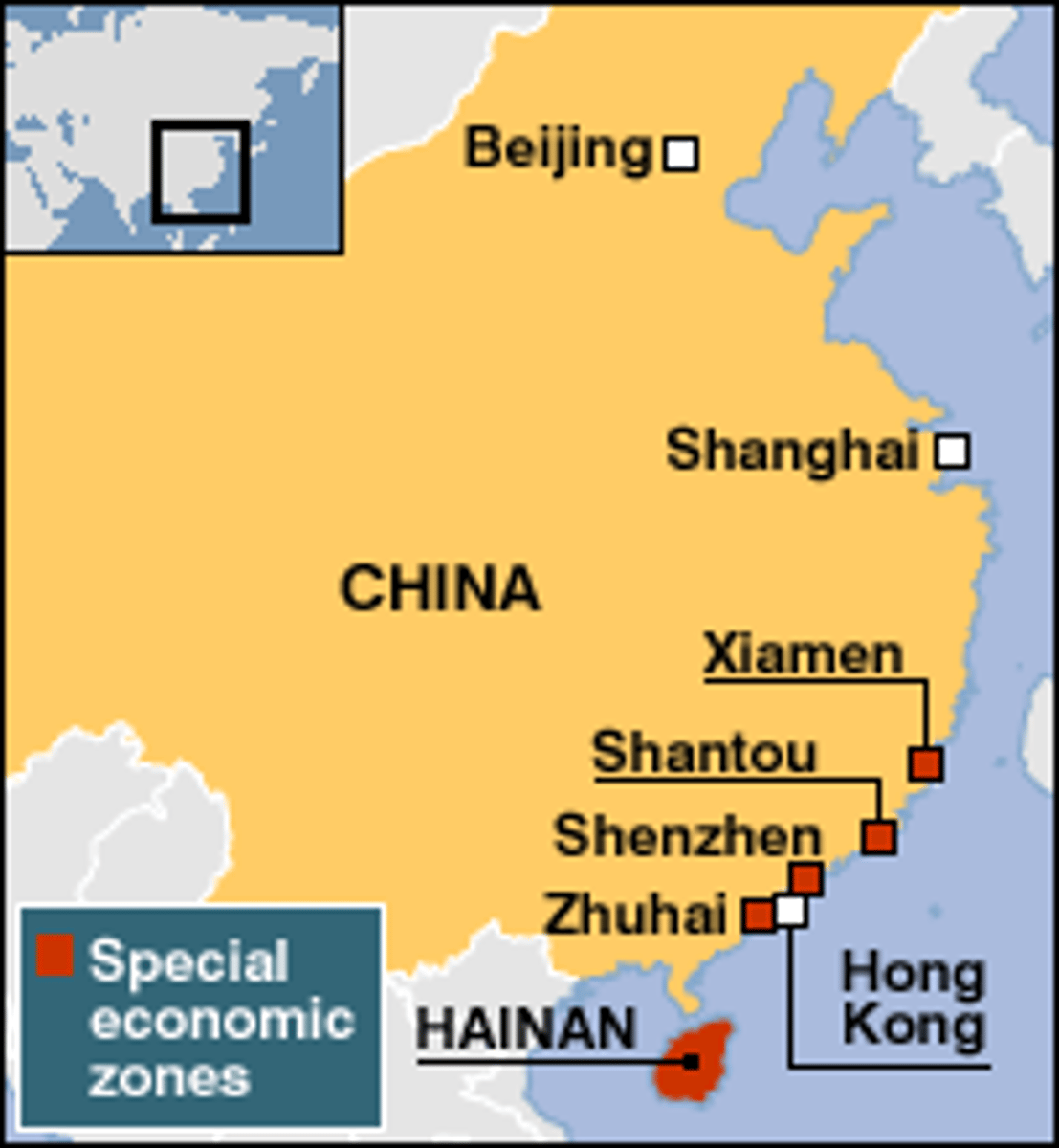
<p>An area within a country that is created to attract foreign direct investment (FDI) by offering economic incentives like tax breaks, that are not available in other parts of the country</p>
43
New cards

Free-Trade Zones

A class of special economic zone; a geographic area where goods may be imported, stored, handled, manufactured, or re-exported under specific customs regulation and are generally not subject to customs duty; generally organized around major seaports, international airports, and national frontiers
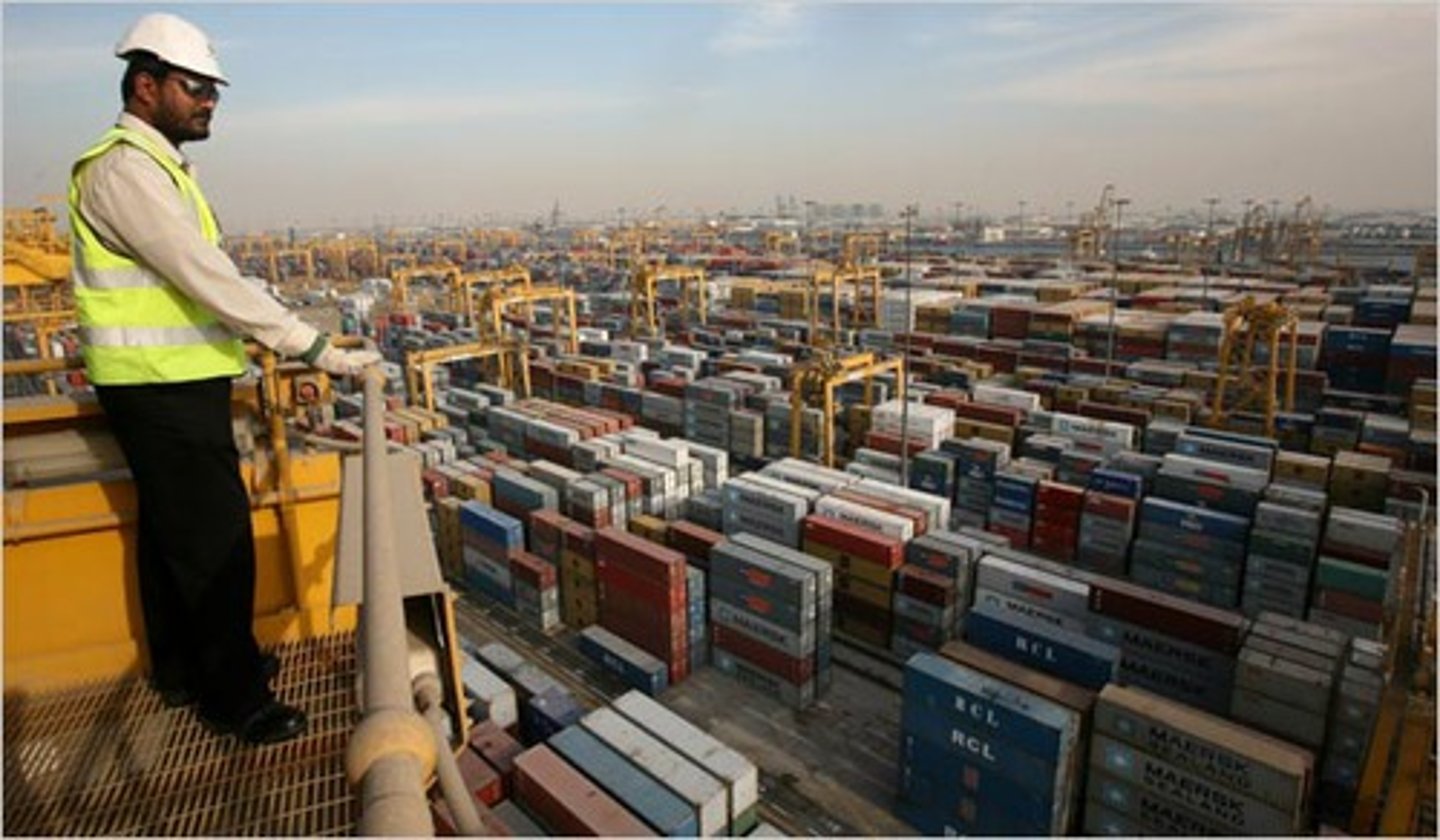
<p>A class of special economic zone; a geographic area where goods may be imported, stored, handled, manufactured, or re-exported under specific customs regulation and are generally not subject to customs duty; generally organized around major seaports, international airports, and national frontiers</p>
44
New cards

Export-Processing Zones

Industrial zones that are fenced in for producing manufactured goods for export; in short, they are trade enclaves that import raw materials, process them, and then export to the world market with the goals of generating employment, producing foreign exchange earnings, and promoting exports
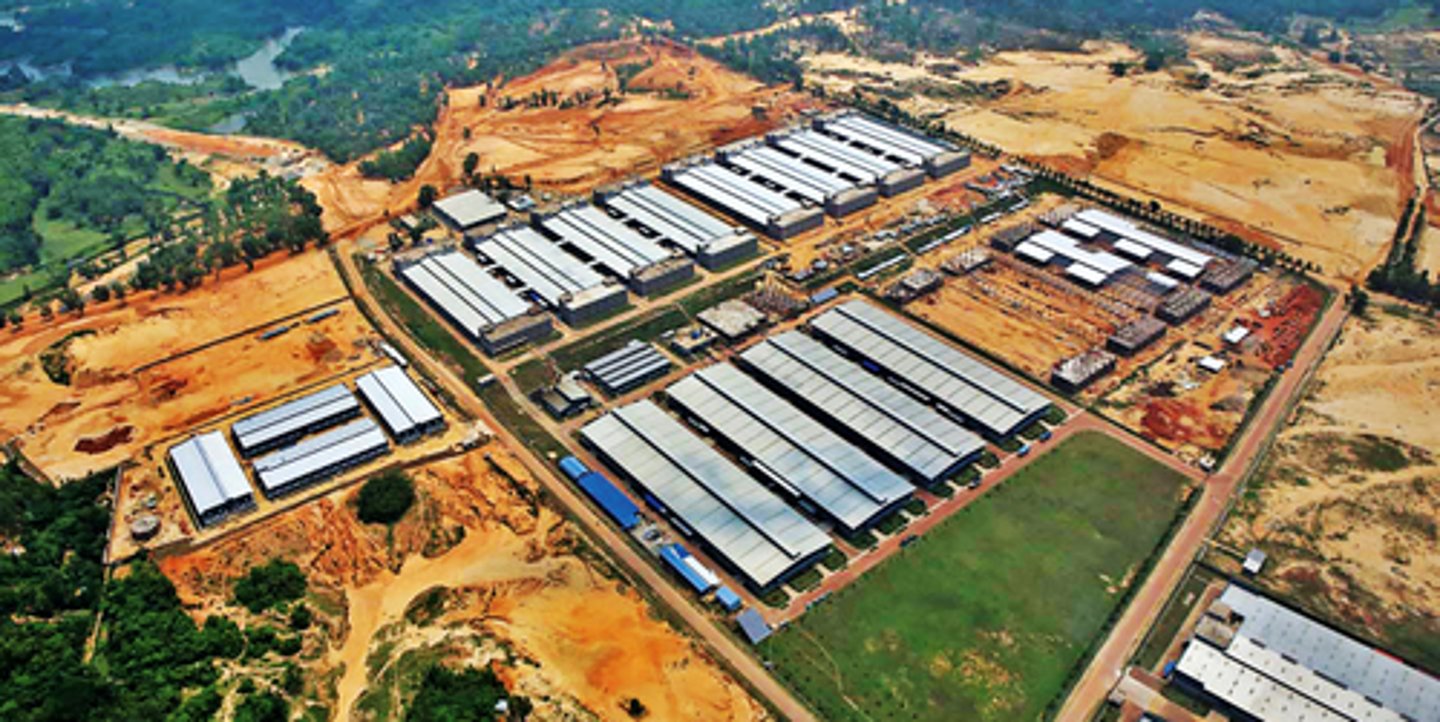
<p>Industrial zones that are fenced in for producing manufactured goods for export; in short, they are trade enclaves that import raw materials, process them, and then export to the world market with the goals of generating employment, producing foreign exchange earnings, and promoting exports</p>
45
New cards

Maquiladora

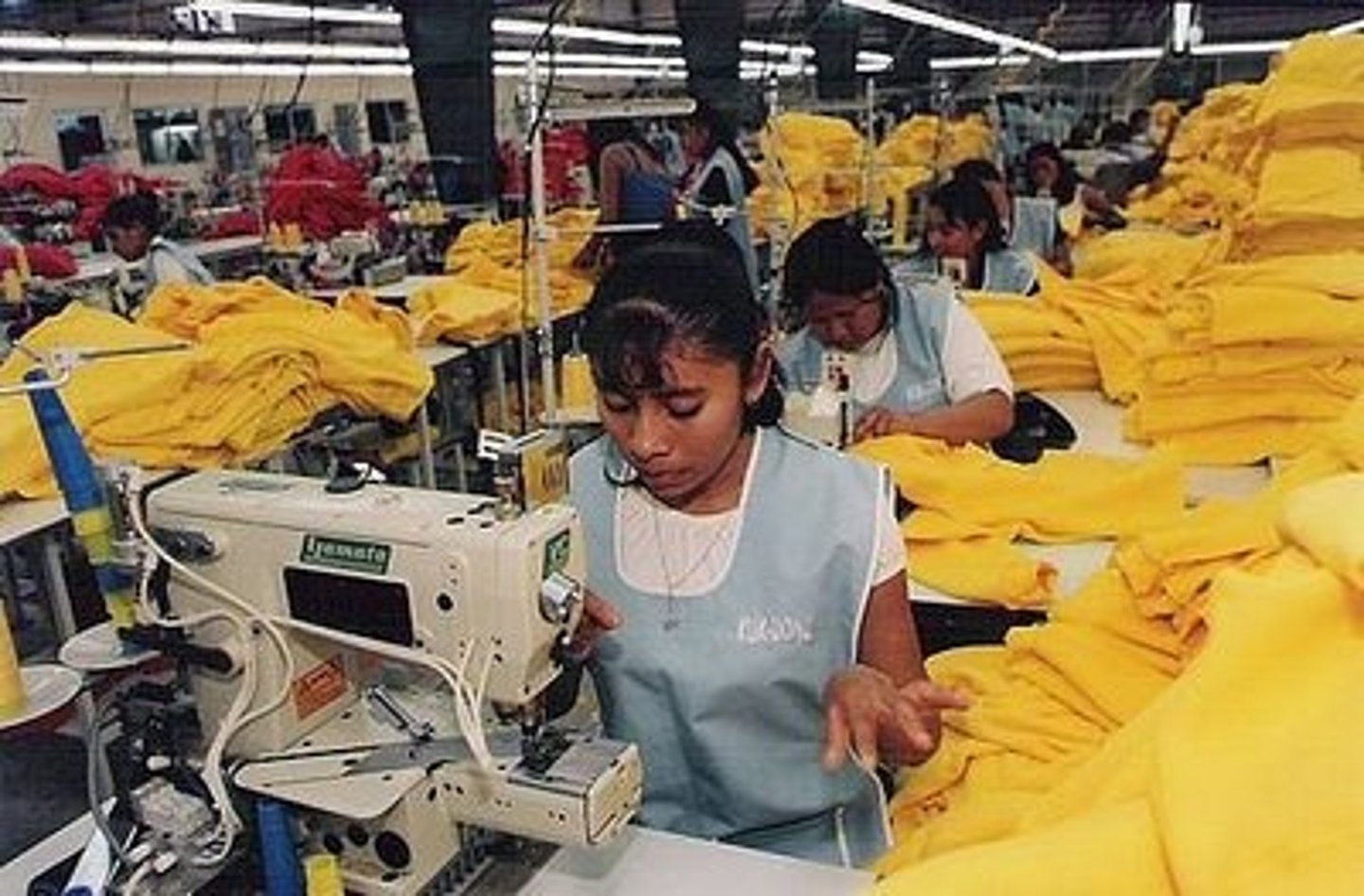
A factory built by a U.S. company in Mexico near the U.S. border to take advantage of much lower labor costs; started in 1960's; have more recently lost jobs to China even though NAFTA (North American Free Trade Agreement) increased the number in the mid 90's
<p>A factory built by a U.S. company in Mexico near the U.S. border to take advantage of much lower labor costs; started in 1960's; have more recently lost jobs to China even though NAFTA (North American Free Trade Agreement) increased the number in the mid 90's</p>
46
New cards

Post-Fordist Methods of Production

The growth of new production methods defined by flexible production, the individualization of labor relations and fragmentation of markets into distinct segments, after the decline of Fordist production methods; (Ford is referring to Henry Ford)

47
New cards

Multiplier Effect

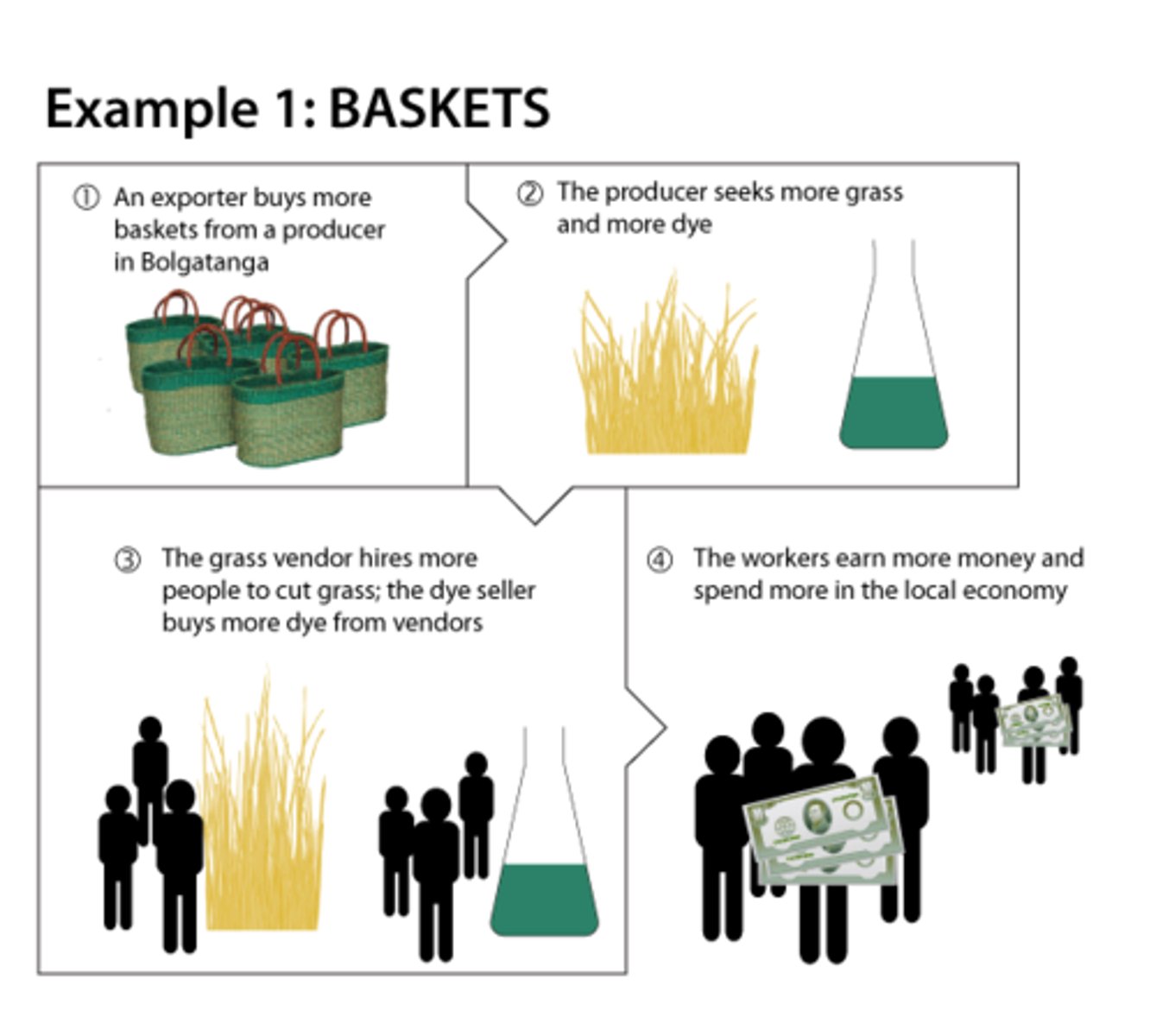
The idea that increased spending in a local economy will be returned to the local economy through profits and wages, which will increase consumption, thus keeping more money in circulation, and creating jobs and economic growth; this extends not only topeople, but also to firms that may complement each other.
<p>The idea that increased spending in a local economy will be returned to the local economy through profits and wages, which will increase consumption, thus keeping more money in circulation, and creating jobs and economic growth; this extends not only topeople, but also to firms that may complement each other.</p>
48
New cards

Economies of Scale

A proportionate saving in costs gained by an increased level of production.

<p>A proportionate saving in costs gained by an increased level of production.</p>
49
New cards

Just-In-Time Delivery

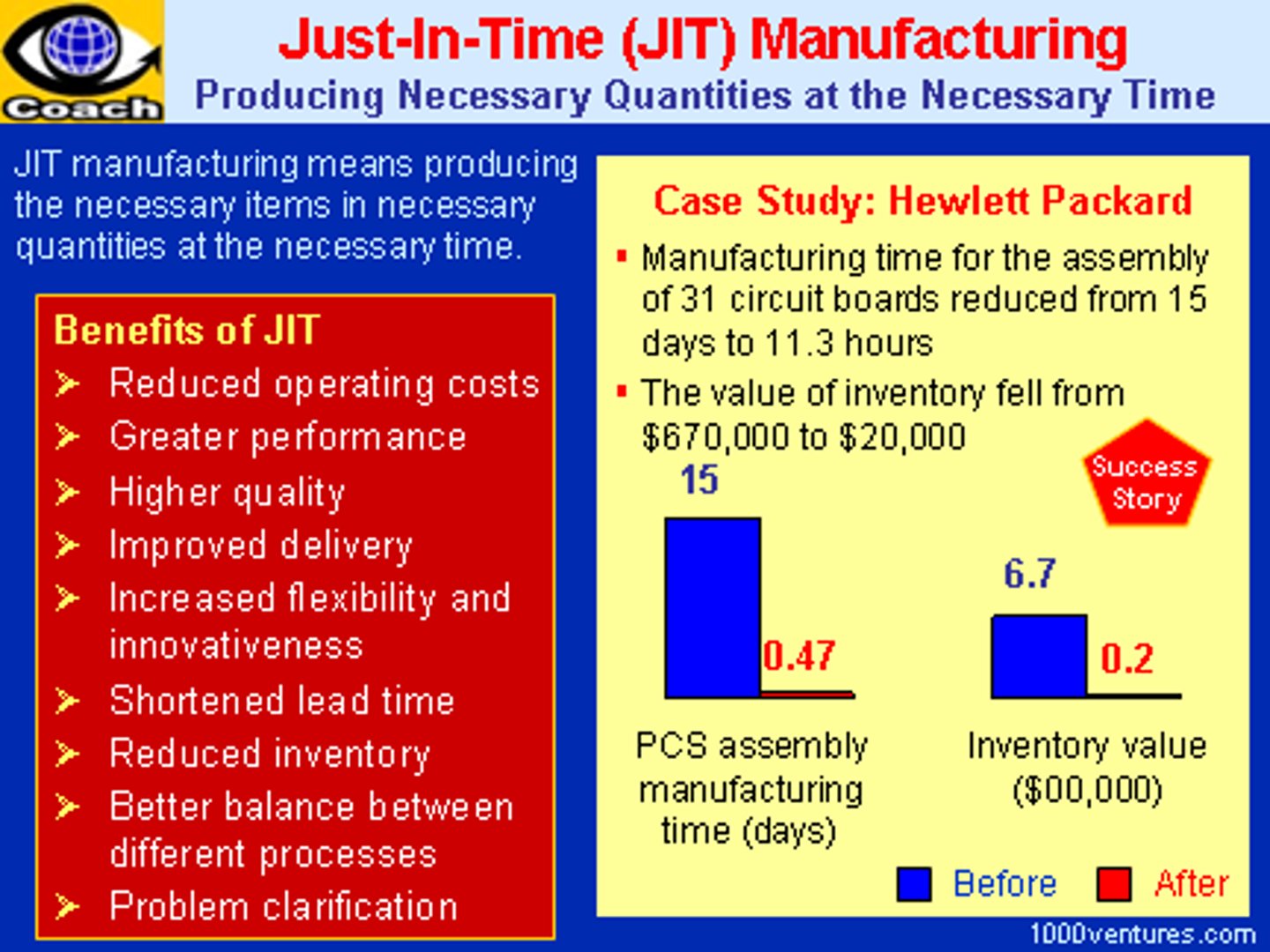
Method of inventory management made possible by efficient transportation and communication systems, whereby companies keep on hand just what they need for near-term production, planning that what they need for longer-term production will arrive when needed.
<p>Method of inventory management made possible by efficient transportation and communication systems, whereby companies keep on hand just what they need for near-term production, planning that what they need for longer-term production will arrive when needed.</p>
50
New cards

Growth Poles

A specific area or sector that drives economic development in a region; the idea behind a growth pole is that economic development in one area can have spillover effects that stimulate growth in other areas.

<p>A specific area or sector that drives economic development in a region; the idea behind a growth pole is that economic development in one area can have spillover effects that stimulate growth in other areas.</p>
51
New cards

Ecotourism

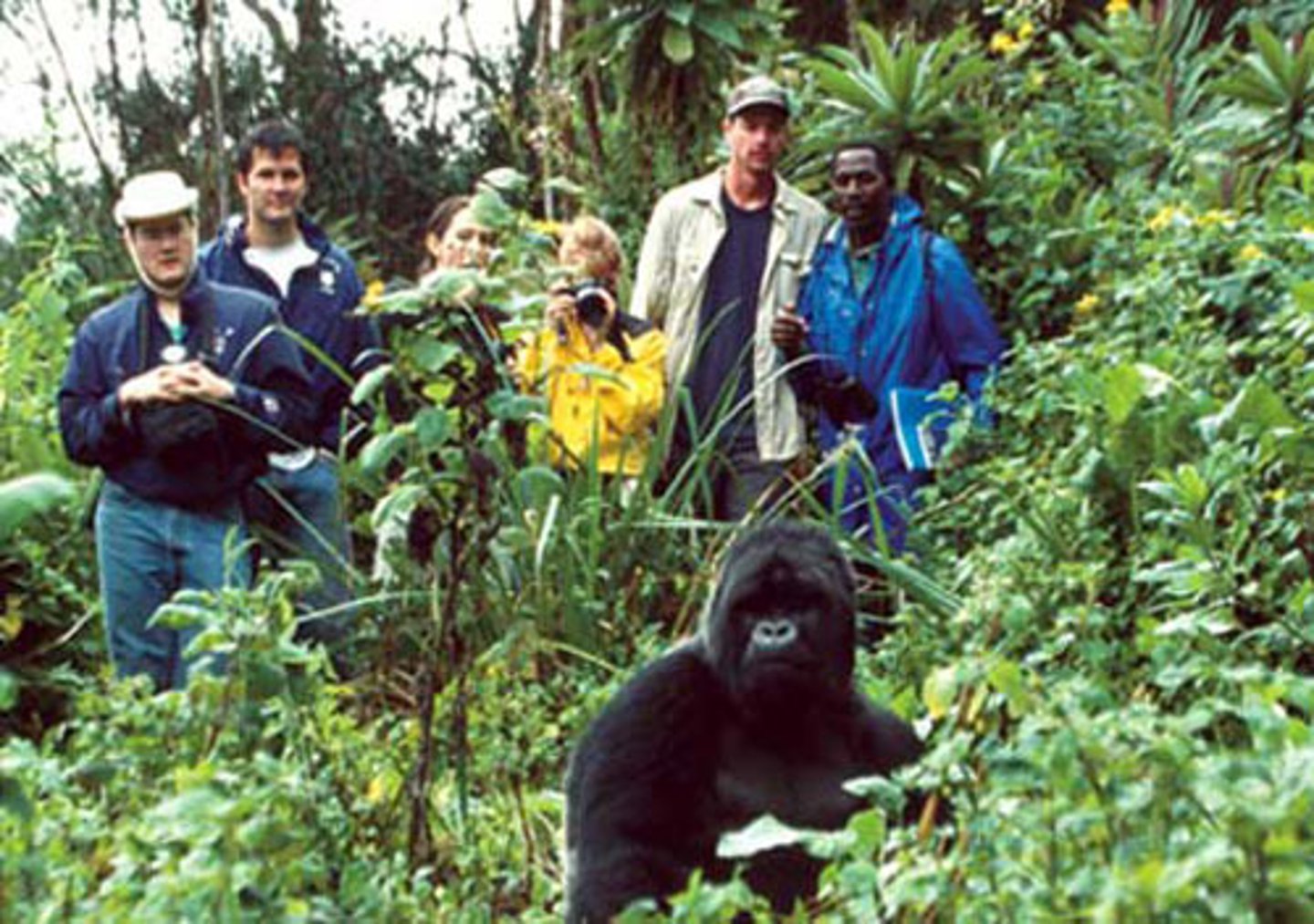
A form of tourism involving responsible travel (using sustainable transport) to natural areas, conserving the environment, and improving the well-being of the local people; its purpose may be to educate the traveler, to provide funds for ecological conservation, to directly benefit the economic development and political empowerment of local communities, or to foster respect for different cultures and for human rights.
<p>A form of tourism involving responsible travel (using sustainable transport) to natural areas, conserving the environment, and improving the well-being of the local people; its purpose may be to educate the traveler, to provide funds for ecological conservation, to directly benefit the economic development and political empowerment of local communities, or to foster respect for different cultures and for human rights.</p>
52
New cards

UN's Sustainable Development Goals

A collection of 17 interlinked objectives designed to serve as a "shared blueprint for peace and prosperity for people and the planet, now and into the future;" the SDGs are: no poverty; zero hunger; good health and well-being; quality education; gender equality; clean water and sanitation; affordable and clean energy; decent work and economic growth; industry, innovation and infrastructure; reduced inequalities; sustainable cities and communities; responsible consumption and production; climate action; life below water; life on land; peace, justice, and strong institutions; and partnerships for the goals.
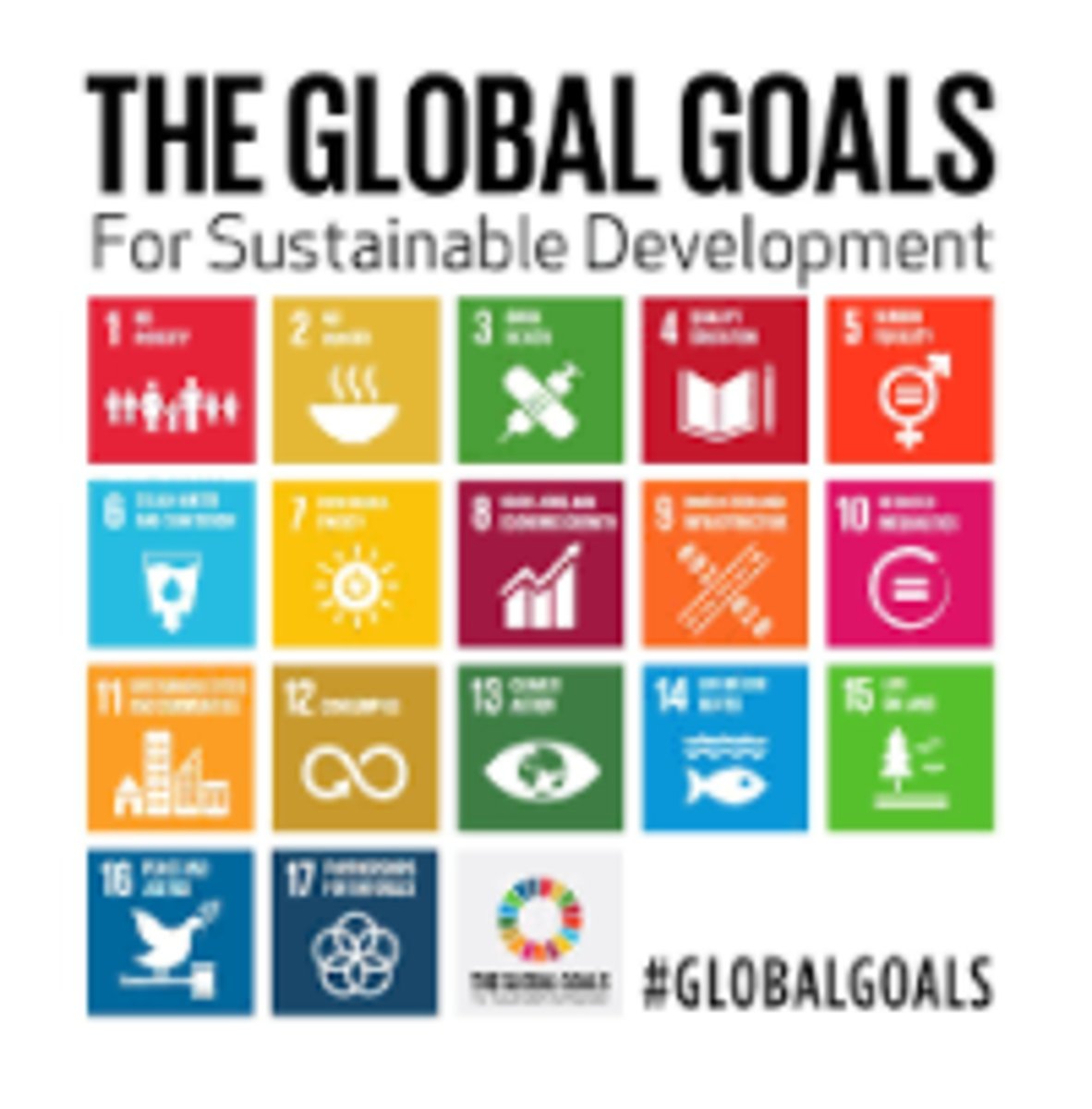
<p>A collection of 17 interlinked objectives designed to serve as a "shared blueprint for peace and prosperity for people and the planet, now and into the future;" the SDGs are: no poverty; zero hunger; good health and well-being; quality education; gender equality; clean water and sanitation; affordable and clean energy; decent work and economic growth; industry, innovation and infrastructure; reduced inequalities; sustainable cities and communities; responsible consumption and production; climate action; life below water; life on land; peace, justice, and strong institutions; and partnerships for the goals.</p>

Explore top notes

note
Pythagorean theorem
Updated 445d ago
0.0(0)
note
Chapter 10: Linear Equations
Updated 1149d ago
0.0(0)
note
Unit 5 The Periodic Table >
Updated 1053d ago
0.0(0)
note
6 IGOs
Updated 1229d ago
0.0(0)
note
Energy, Work and Power
Updated 1210d ago
0.0(0)
note
Pythagorean theorem
Updated 445d ago
0.0(0)
note
Chapter 10: Linear Equations
Updated 1149d ago
0.0(0)
note
Unit 5 The Periodic Table >
Updated 1053d ago
0.0(0)
note
6 IGOs
Updated 1229d ago
0.0(0)
note
Energy, Work and Power
Updated 1210d ago
0.0(0)

Explore top flashcards

flashcards
Integumentary System
45
Updated 1081d ago
0.0(0)
flashcards
Matter
23
Updated 470d ago
0.0(0)
flashcards
Crime and deviance
175
Updated 43d ago
0.0(0)
flashcards
Poetry Terminology
70
Updated 529d ago
0.0(0)
flashcards
AP Human Geography ALL TERMS
919
Updated 1074d ago
0.0(0)
flashcards
nt2 (prefi)
30
Updated 122d ago
0.0(0)
flashcards
Element Names & Symbols
57
Updated 946d ago
0.0(0)
flashcards
Integumentary System
45
Updated 1081d ago
0.0(0)
flashcards
Matter
23
Updated 470d ago
0.0(0)
flashcards
Crime and deviance
175
Updated 43d ago
0.0(0)
flashcards
Poetry Terminology
70
Updated 529d ago
0.0(0)
flashcards
AP Human Geography ALL TERMS
919
Updated 1074d ago
0.0(0)
flashcards
nt2 (prefi)
30
Updated 122d ago
0.0(0)
flashcards
Element Names & Symbols
57
Updated 946d ago
0.0(0)



