MAR 3391 - Professional Selling Exam 1
 Studied by 1 person
 Call Kai
 Learn
Learn Practice Test
 Spaced Repetition
 Match
Match Flashcards
 Knowt Play
1/39

There's no tags or description
Looks like no tags are added yet.
Name | Mastery | Learn | Test | Matching | Spaced | Call with Kai |
|---|
No analytics yet
Send a link to your students to track their progress
40 Terms
why learn about personal selling?
- the principles of selling are useful to everyone, not just people with the title of salesperson.
- developing mutually beneficial, long-term relationships is vital to all of us.
- people in business use selling principles all the time.
types of salespeople
field, inside, and missionary reps
field salespeople
spend considerable time in the customer's place of business, communicating with the customer face-to-face
inside salespeople
work at their employer's location and typically communicate with customers by telephone or computer
missionary reps
work for a manufacturer and promote the manufacturer's products to other firms
hunters
- independent and solution driven
- focused on quick acquisitions and big deals
- key skills: independence, initiative and networking
- 30-35% higher turnover
- typical jobs: account executive, field sales, and business development
farmer
- nurtures, leads, and client relationships
- cultivates strong customer loyalty
- key skills: collaboration, gaining loyalty, and building relationships
- typical jobs: account manager, customer service, and inside sales
characteristics of successful salespeople
- self-motivated
- dependable and trustworthy
- ethical sales behavior
- customer and product knowledge
- analytical skills
- ability to use information technology
- communication skills
- flexibility and agility
- creativity
- confidence and optimism
- emotional intelligence
the importance of selling yourself
everyone is different with different interest and activities but selling is something you do all the time
the communication process
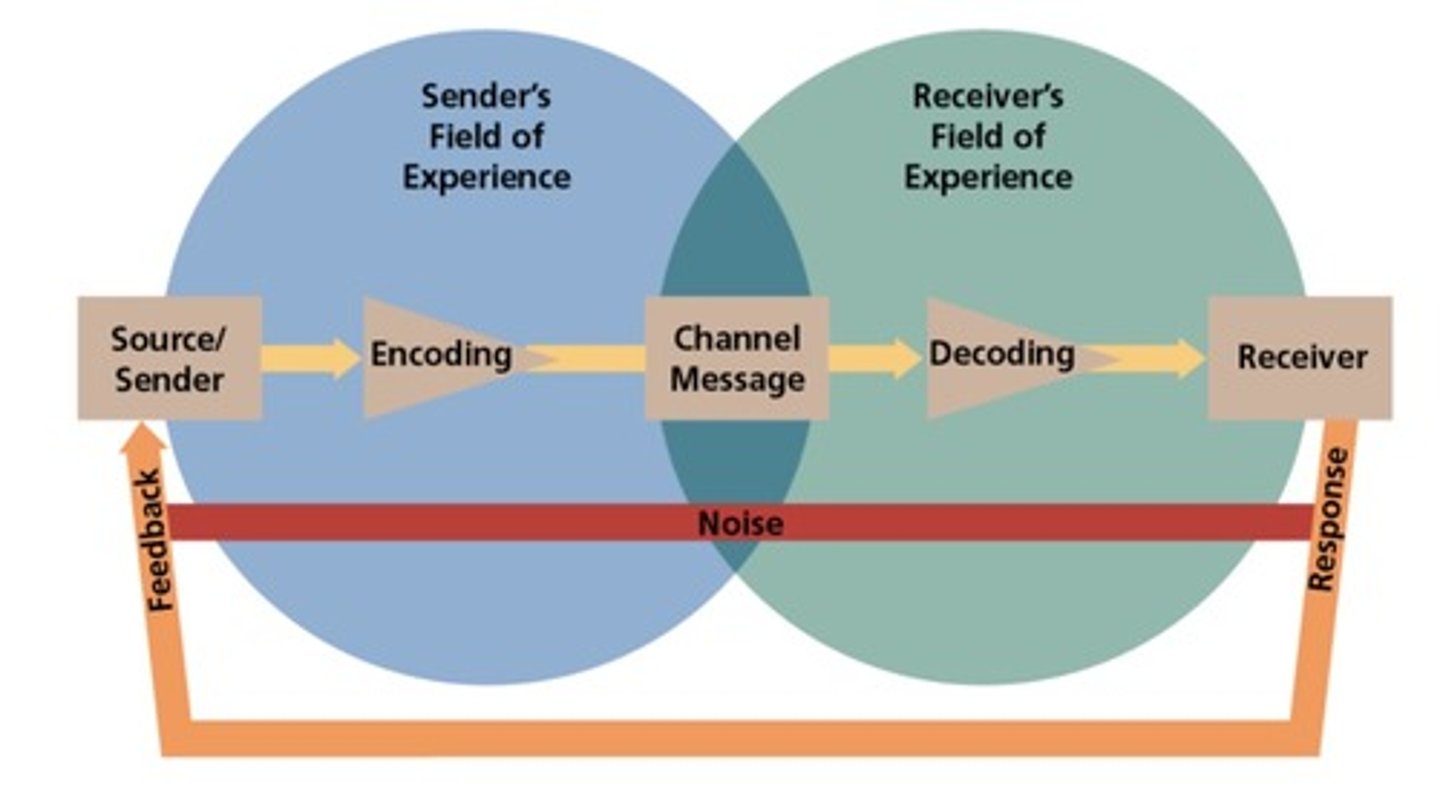
communication process breakdowns
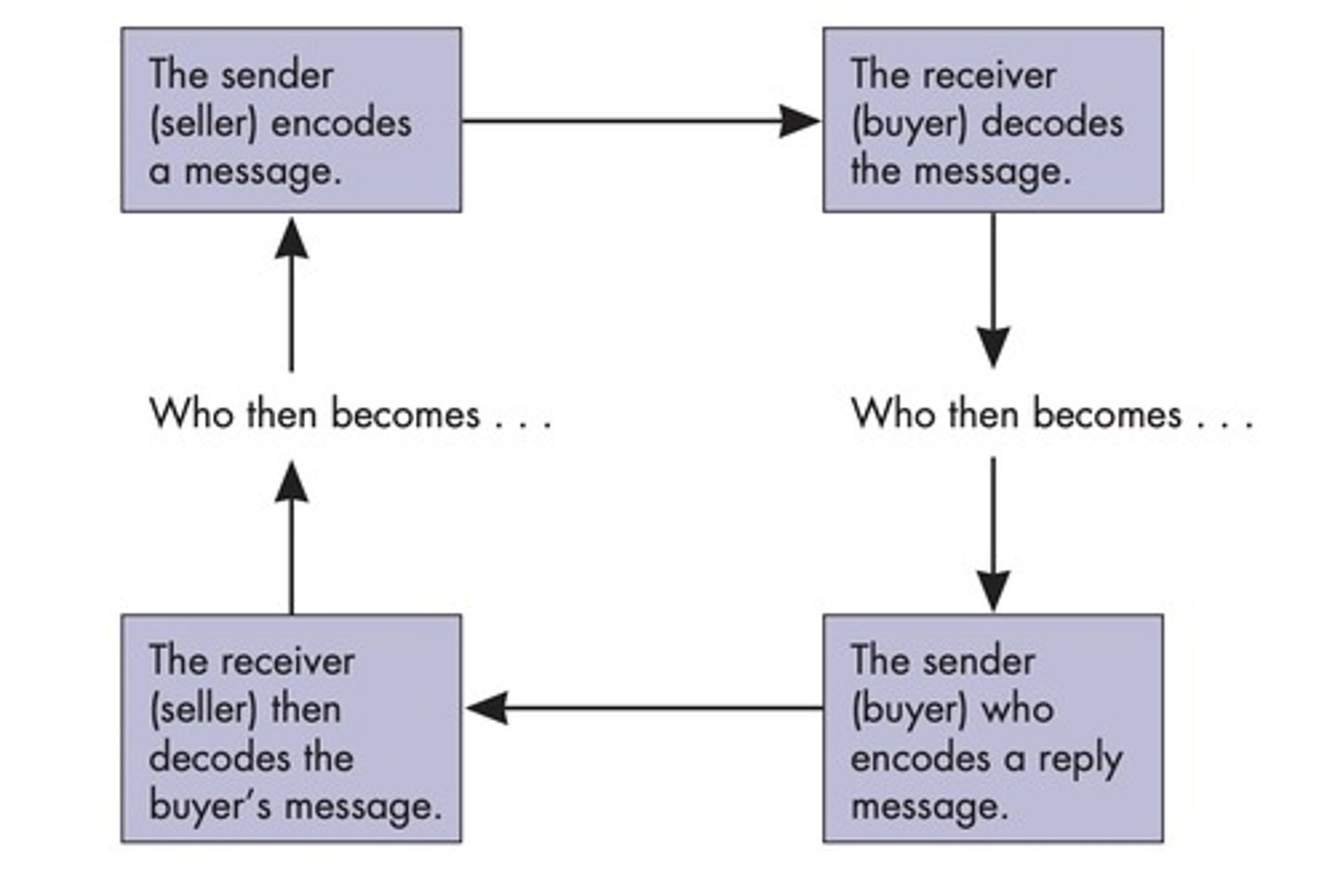
sending verbal messages effectively
choice of words, power of storytelling, voice characteristics
choice of words (negative vs. positive)
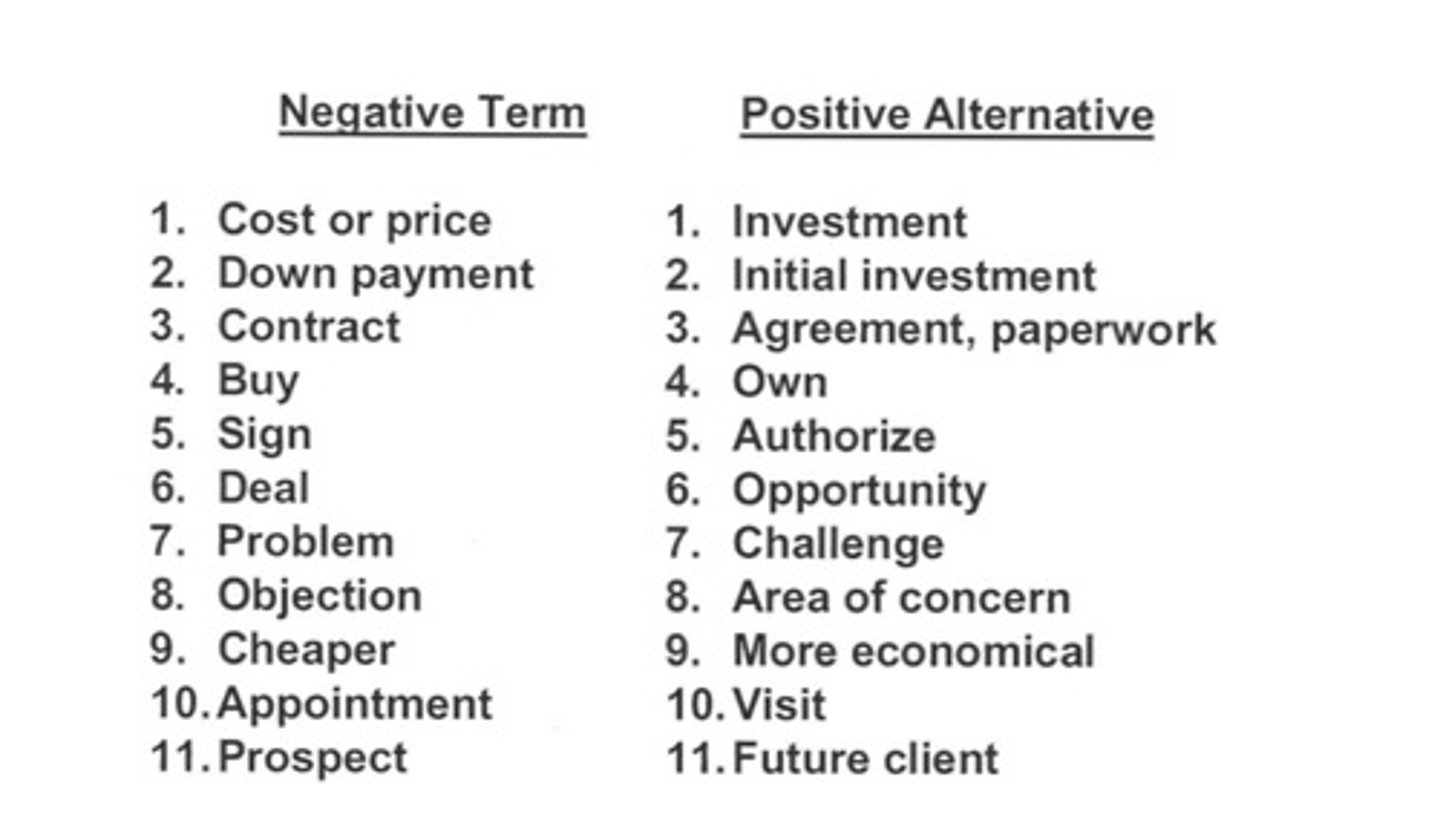
choice of words dos
- use positive words
- use action specific verbs (achieve, promote, save)
choice of words don'ts
- use "weak" words (guess, wish, maybe)
- use slang or jargon
- use words that have multiple meanings or idiomatic expressions
- use profanity or tell off color jokes
power of story telling
stories drive action through simulation (what to do) and inspiration (the motivation to do it)
active listening
project themselves into the mind of the speaker and attempt to feel the way the speaker feels (20% talking and 80% listening skills)
voice characteristics
pace, volume, and creating the right energy
pace
vary this to communicate emotions and slow down for greater understanding
volume
use your core and use this as a tool to accentuate a point (high or low)
creating the right energy
relax, smile in your voice, and enthusiastic, but not over eager
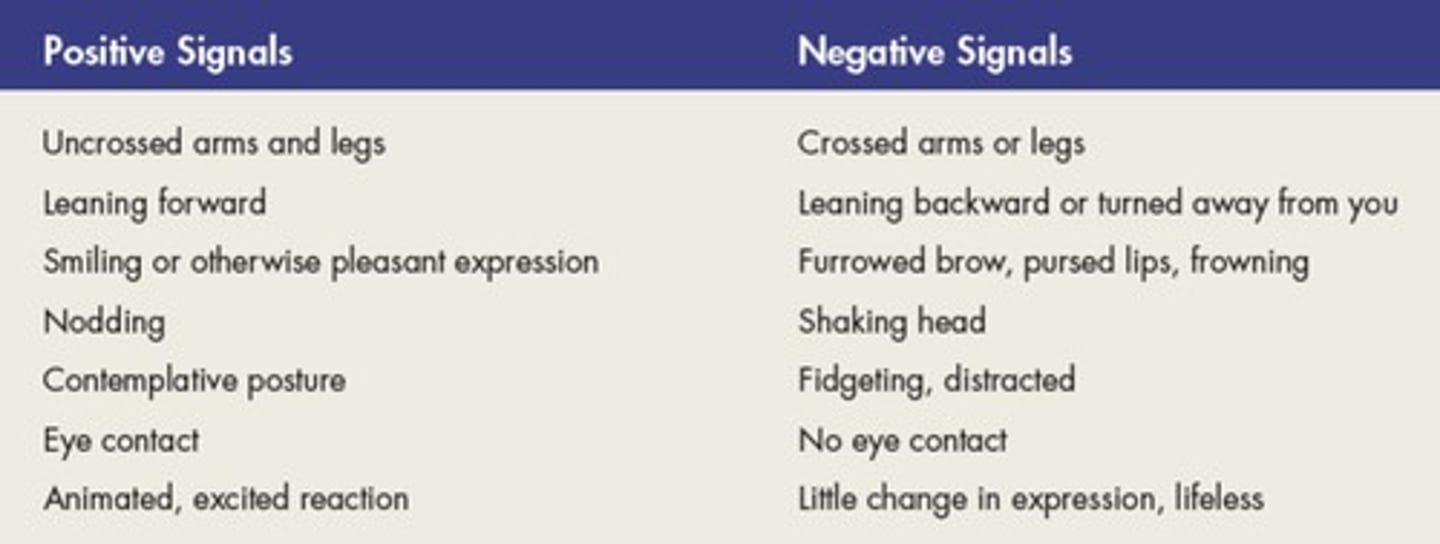
reading non verbal messages from customers
body angle, face, arms, hands, legs
handshake
- not too limp nor the death grip
- f
ull grasp of the hand
- "pumped" once or twice from the elbow
- lasts about three seconds
- hand is released after shake
- good eye contact maintained
appearance
1. getting customers to notice you in a positive way
2. getting customers to trust you
clothing
- dress to impress
- clean
- neatly pressed
- fits properly
- avoid big bold prints
- accessorize
hair and facial hair
should be clean and neat
hands
- clean fingernails
- sensible length
smell
- use fragrances sparingly
- no odors on clothes
- don't smell like smoke
- use deodorant
types of presentations
standard memorized, outlined, customized
standard memorized presentation
- completely memorized
- safe
- limited effectiveness
outlined presentation
- prearranged presentation that usually includes a standard introduction, standard answers to common objections raised by customers, and a standard method for getting the customer to place an order
- well organized
customized presentation
- detailed analysis of the customers needs
- adapt presentation
adaptive selling
altering the content and form of sales presentation so customers will be able to absorb the information easily and find it relevant to their situation
social style matrix
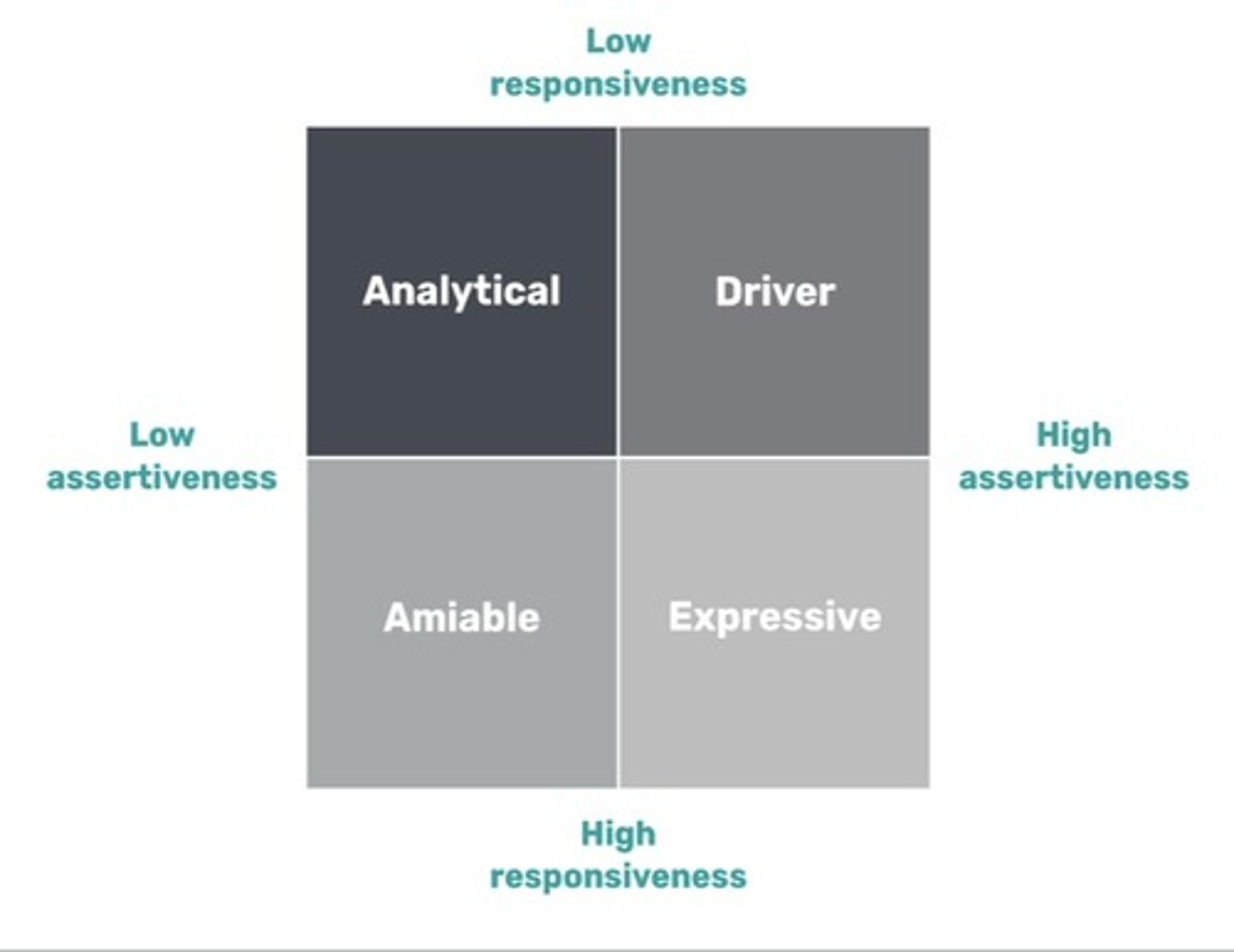
assertiveness
the degree to which people have opinions about issues and make their positions clear to others
responsiveness
based on how much control people show over their emotions
driver
- wants to be in charge
- action oriented
- swift efficient decision-makers
- independent worker
- focus on the present and appear to have a little concern with the past or future
expressives
- wants to be admired
- spontaneous
- exaggerates and generalizes
- dreamer
- works quickly, but jumps around
- persuasive
- focus on the future, directing their time and effort toward achieving their vision
- have little concerned for practical details andpresent situations
amiables
- wants to be liked
- slow decision makers
- achieve their objectives by working with people developing an atmosphere of mutual respect
- dislikes conflict
- good listener and counselor
- likes close personal relationships
analyticals
- wants to be right
- likes facts, principle, and logic
- Problem, solver
- organized and structured
- continuous with actions and decisions
- detail oriented
- works slowly and precisely
 Note
Note  Flashcards (64)