accounting ch. 1
 Studied by 0 people
 Call with Kai
 Learn
Learn Practice Test
 Spaced Repetition
 Match
Match Flashcards
 Knowt Play
1/21

There's no tags or description
Looks like no tags are added yet.
Name | Mastery | Learn | Test | Matching | Spaced | Call with Kai |
|---|
No study sessions yet.
22 Terms
investors
individuals or organizations that provide money to a business in exchange for ownership (such as stock) and expect to earn a return on their investment, usually through dividends and/or increase in the value of the business over time
creditors
individuals or organizations that lend money to a business and expect to be repaid, usually with interest, by a specific date
financing activities
transactions the company has with investors and creditors, such as issuing common stock and borrowing money from a local bank
investing activities
transactions involving the purchase and sale of resources that are expected to benefit the company for several years, such as the purchase of equipment or buildings
operating activities
include transactions that relate to the primary operations of the company such as providing products and services to customers and the associated costs of doing so, like rent, salaries, utilities, taxes, and advertising
income statement/statement of operations
summarizes a company’s revenues, expenses, and net income over a specific period of time
revenues
amounts a company is entitled to receive from its customers for the products sold and services provided during the current period
expenses
costs of providing products and services (and other business activities) incurred during the current period such as salaries, utilities, etc.)
net income
difference between revenues and expenses
net income/net loss =
revenue - expenses
balance sheet/statement of financial position
provides a snapshot of the company’s financial position at a specific point in time
assets
resources of a company expected to generate future benefits
liabilities
obligations of a company, including amounts owed to creditors
stockholders’ equity/owner’s salary
difference between assets and liabilities, representing the residual value available for the company’s owners after all the debts have been paid
common stock
(external source of equity) represents amount invested by stockholders (owners) when they purchase shares of stock
ending common stock =
beginning common stock + new issuances
retained earnings
(internal source of equity) represent all net income minus all dividends over the life of the company
ended retained earnings =
beginning retained earnings + net income - dividends
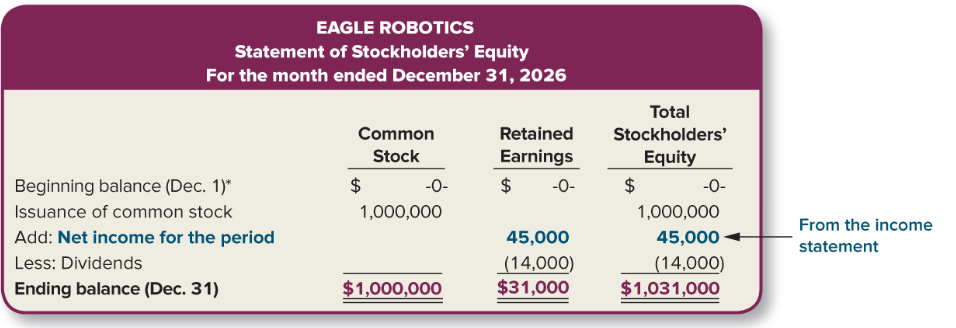
statement of stockholder’s equity example
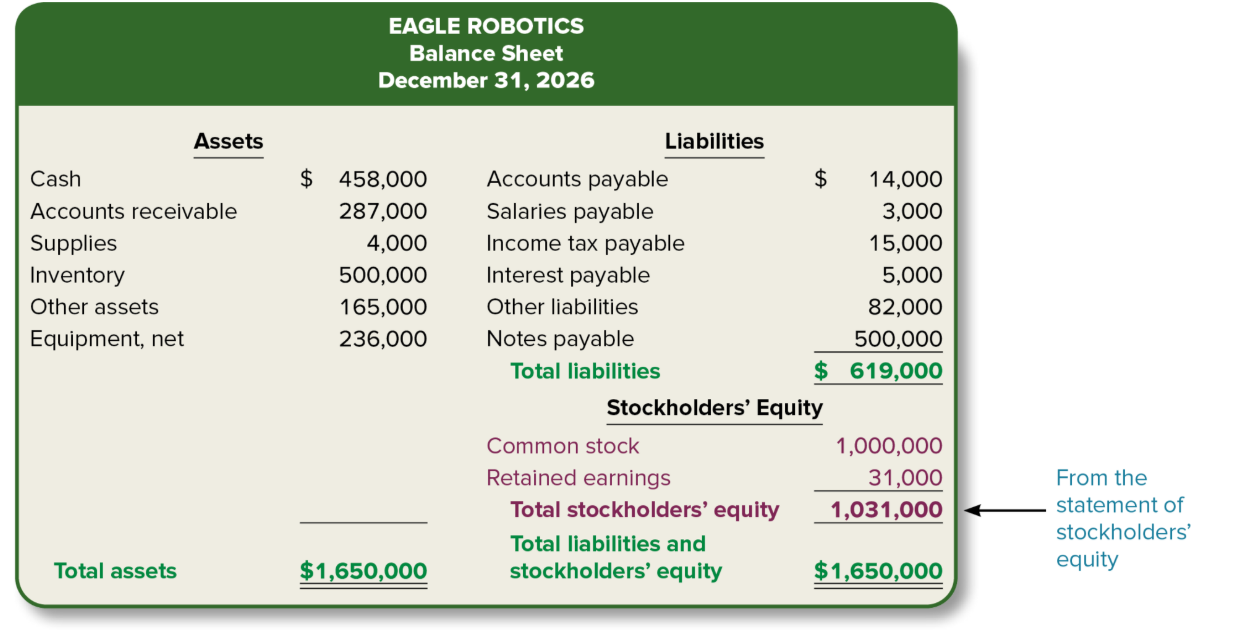
balance sheet example
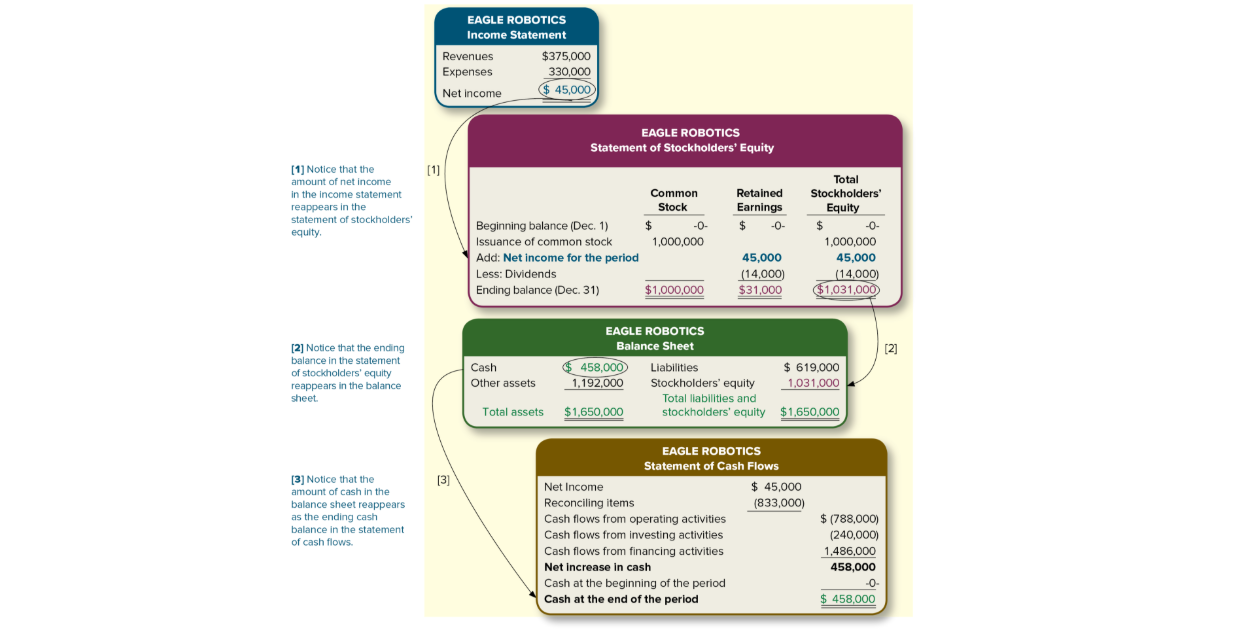
Links Among Financial Statements
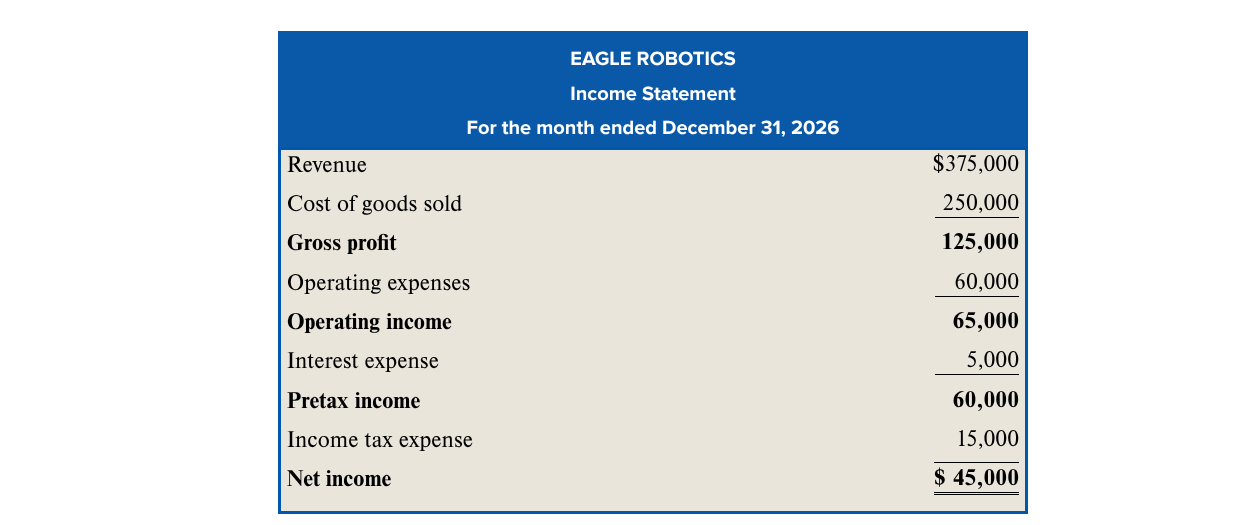
income statement example
 Note
Note  Flashcards (69)