Synapses and Neurotransmission
 Studied by 0 people
 Call Kai
 Learn
Learn Practice Test
 Spaced Repetition
 Match
Match Flashcards
 Knowt Play
1/30

There's no tags or description
Looks like no tags are added yet.
Name | Mastery | Learn | Test | Matching | Spaced | Call with Kai |
|---|
No analytics yet
Send a link to your students to track their progress
31 Terms
What is a synapse?
The point at which electrical signals pass from one neurone to another (or to a muscle cell).
Why are synapses clinically important?
Many drugs (e.g. antidepressants, anaesthetics, muscle relaxants) act by modifying synaptic transmission.
How do neurones communicate at synapses?
Action potentials reach the presynaptic terminal
Neurotransmitter is released
The neurotransmitter generates a graded potential in the postsynaptic cell (excitatory or inhibitory).
What types of postsynaptic potentials exist?
Excitatory postsynaptic potential
Inhibitory postsynaptic potential
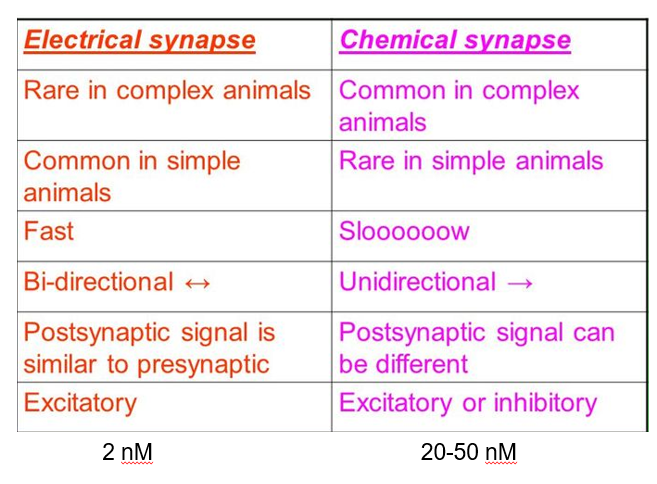
What is an electrical synapse?
A synapse where neurones are directly connected by gap junctions allowing ions to pass directly.
Key features of electrical synapses
Gap junctions (~2 nm)
Very fast transmission
Faithful signal transfer
Little modulation
What is a chemical synapse?
A synapse where neurones are separated by a synaptic cleft and communicate via neurotransmitters.
Key features of chemical synapses
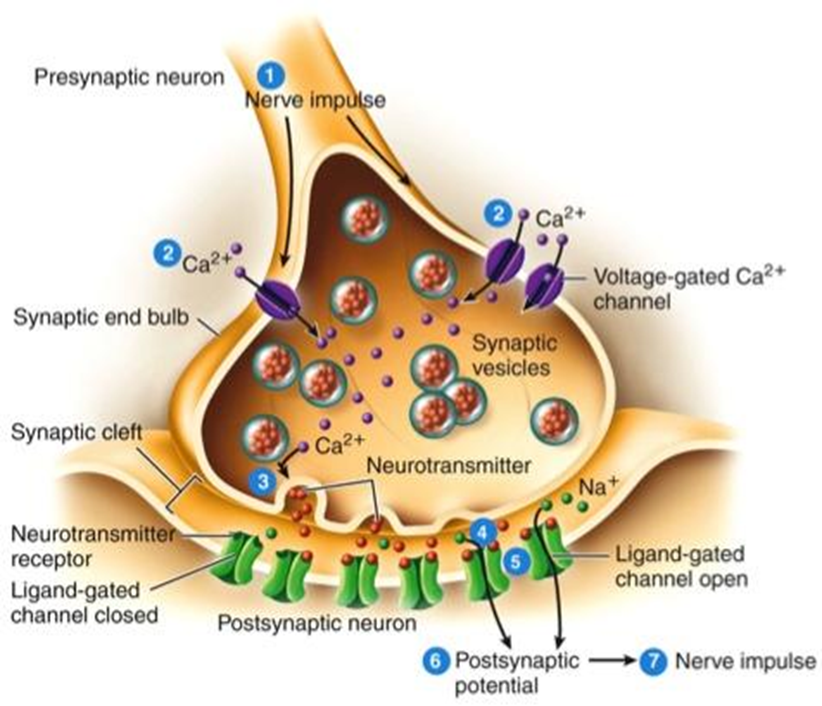
Presynaptic neuron
Synaptic cleft
Postsynaptic neurone
Electrical vs Chemical Synapses
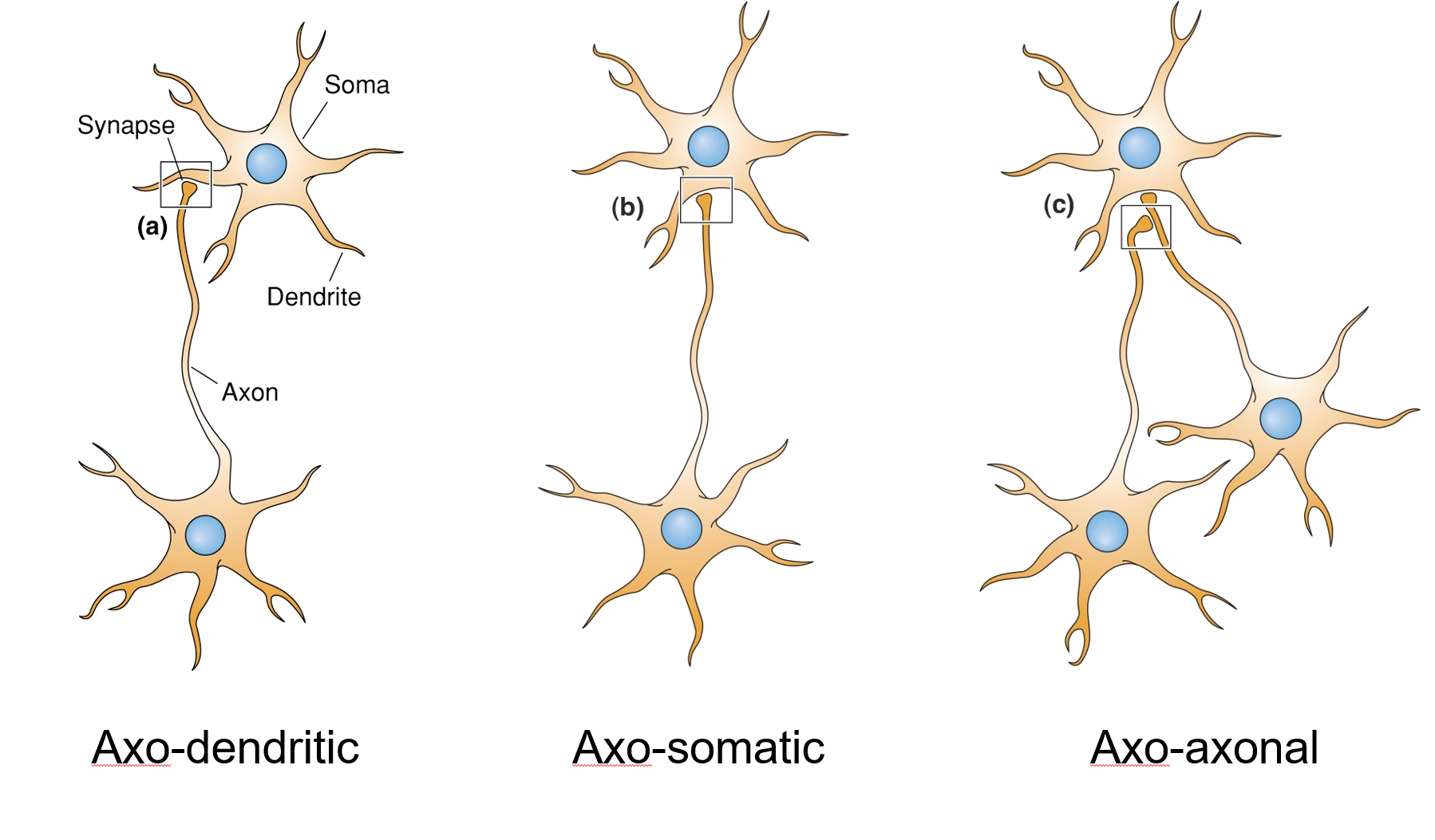
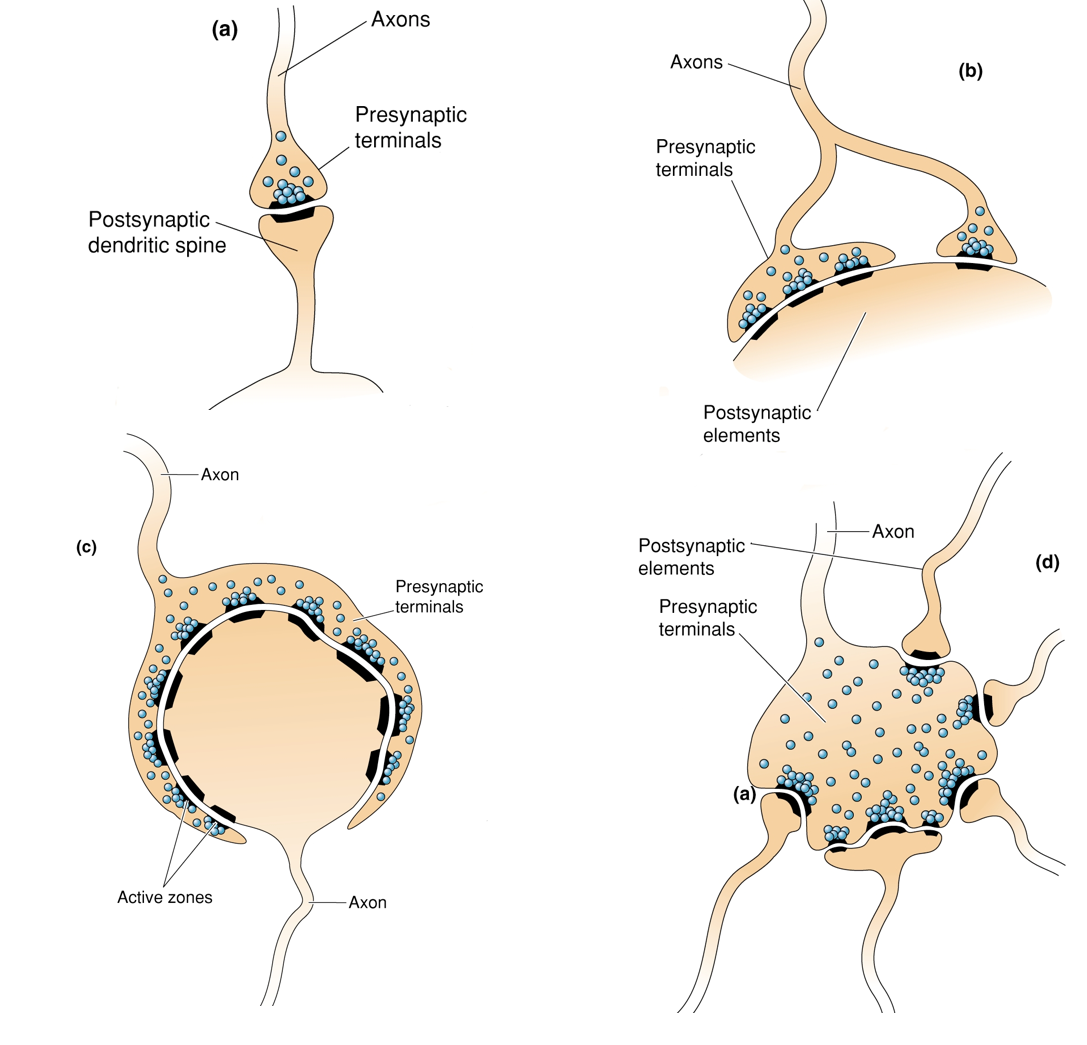
What are three main anatomical types of synapses in the CNS?
Axo-dendritic
Axo-somatic
Axo-axonal
What is found in the presynaptic terminal?
Synaptic vesicles clustered at active zones.
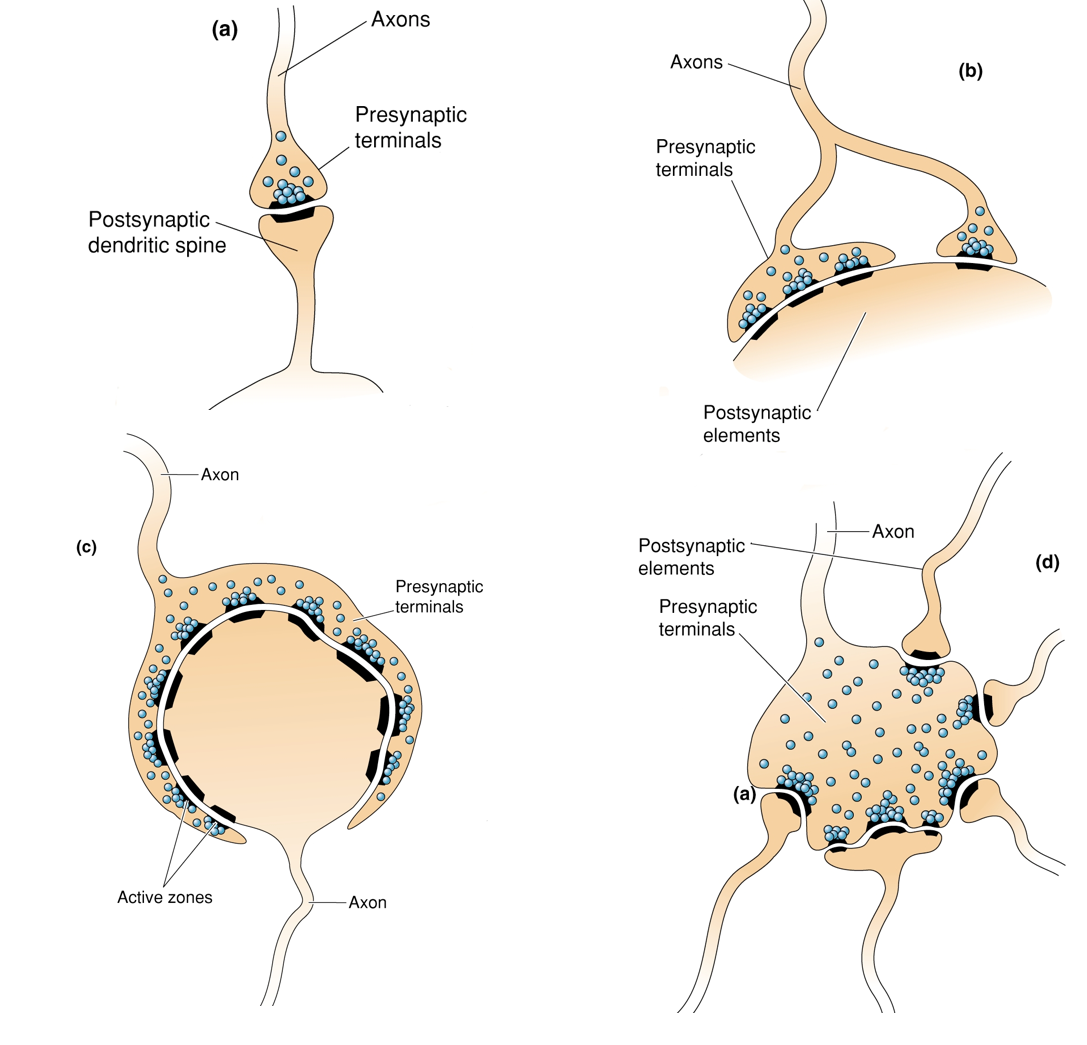
What is found in the postsynaptic membrane?
Clusters of neurotransmitter receptors and signalling proteins.
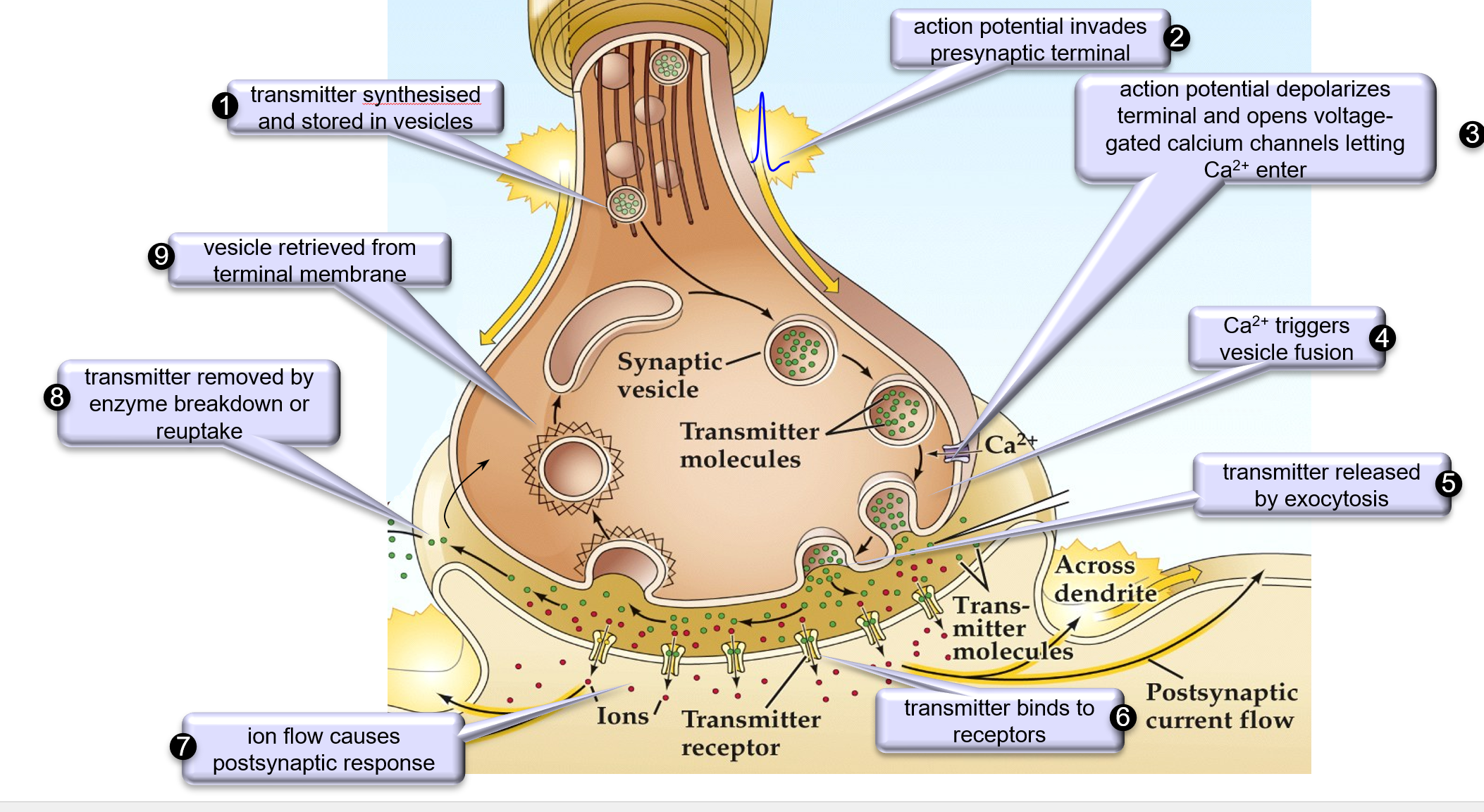
Outline the steps of neurotransmitter release
Neurotransmitters are synthesised and stored in vesicles
Action potential arrives at presynaptic terminal
Depolarisation opens voltage-gated Ca²⁺ channels
Ca²⁺ enters terminal
Vesicles fuse with membrane
Neurotransmitter released by exocytosis
Transmitter binds postsynaptic receptors
Postsynaptic response occurs
Transmitter removed (reuptake, breakdown, diffusion)
What criteria must a substance meet to be a neurotransmitter?
Present in presynaptic neurone
Synthesised there (enzymes present)
Released by action potential
Release is Ca²⁺dependent
Specific receptors on postsynaptic cell
Mechanism for removal or breakdown exists
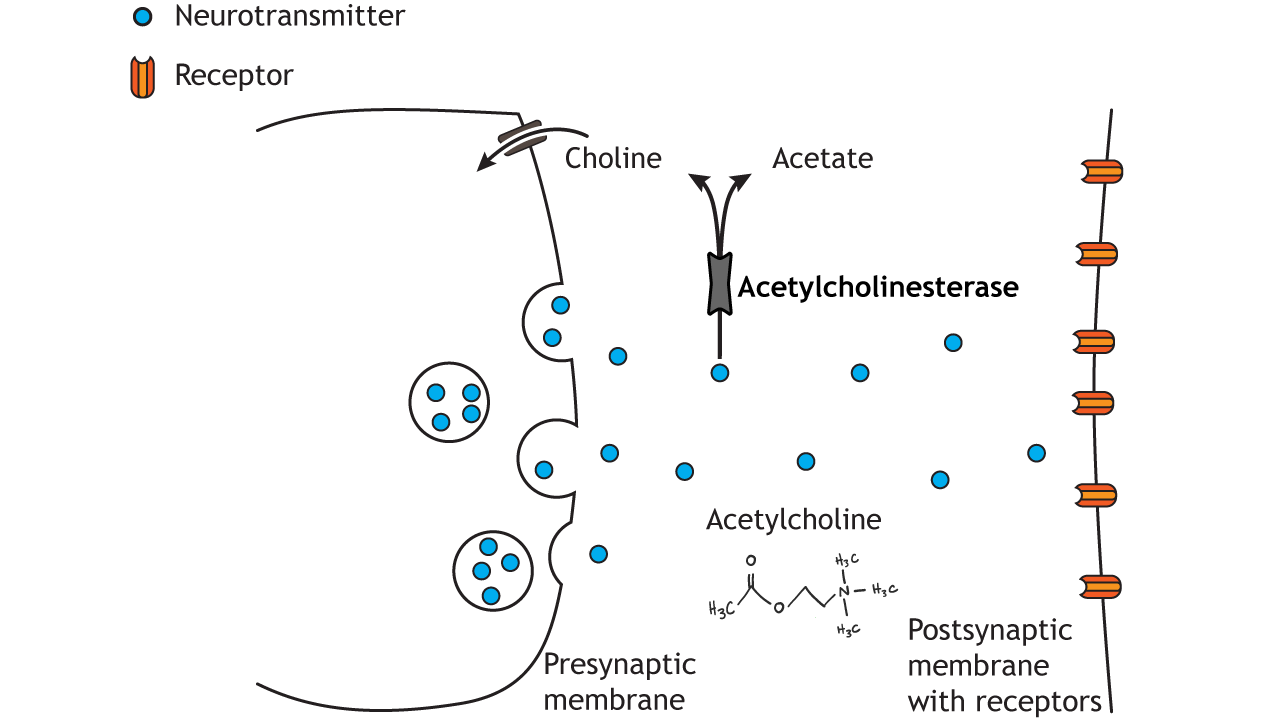
How are neurotransmitters removed from the synaptic cleft?
Reuptake - Actively transporting back into the presynaptic axon terminal for reuse
Degradation
Diffusion away from the receptor site
Enzymatically transforming the neurotransmitters into inactive substances
What are the 4 main classes of neurotransmitters?
Amino acids
Amines (catecholamines, indoleamines)
Peptides
Purines
What is an ionotropic receptor?
A ligand-gated ion channel that produces fast responses.
What is a metabotropic receptor?
A G-protein coupled receptor (GPCR) that produces slower, modulatory responses.
What is the neuromuscular junction?
The synapse between a motor neurone and a skeletal muscle fibre.
Which neurotransmitter is used at the neuromuscular junction?
Acetylcholine (ACh).
What receptor does ACh act on at the NMJ?
Nicotinic acetylcholine receptor (ligand-gated ion channel).
Where is ACh used as a neurotransmitter?
Both the peripheral and central nervous systems.
ow is ACh synthesised?
In the presynaptic terminal by choline acetyltransferase (ChAT).
How is ACh broken down?
By acetylcholinesterase (AChE) in the synaptic cleft.
What 2 receptors does ACh act on?
Nicotinic (ionotropic)
Muscarinic (metabotropic)
What is the main excitatory neurotransmitter in the CNS?
Glutamate
What is the main inhibitory neurotransmitter in the CNS?
GABA
What does an EPSP do?
Depolarises the membrane, making an action potential more likely.
What does an IPSP do?
Hyperpolarises the membrane, making an action potential less likely.
What is temporal summation?
Addition of postsynaptic potentials occurring at the same synapse over time.
What is spatial summation?
Addition of postsynaptic potentials occurring at different synapses simultaneously.
 Note
Note  Flashcards (57)