CHEM UNIT 1 AND 2
 Studied by 0 people
 Call Kai
 Learn
Learn Practice Test
 Spaced Repetition
 Match
Match Flashcards
 Knowt Play
1/65

There's no tags or description
Looks like no tags are added yet.
Name | Mastery | Learn | Test | Matching | Spaced |
|---|
No study sessions yet.
66 Terms
Group
Columns in the periodic table, Their valency is the same.
Period
The rows in the periodic table, the number of shells are the same
Valence Electrons
The number of electrons on the outermost shell
Oxidation Number
Valency with charge
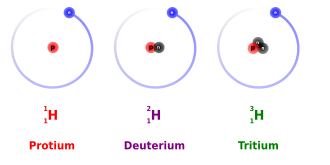
Isotopes
Same element, same atomic number, but different mass number, and different neutrons
Ions
Electrically charges particles, either has gained electrons or lost electrons
Ionization Energy
The energy required to remove an electron from the outermost shell, from a gaseous atom, because it is easies to remove electrons in a gas state
Increases up the group, and right across the period (Upper right corner)
Electronic Affinity
It is the energy change that occurs when a neutral atom in the gaseous state gains an electron to form a negative ion. It is a measure of how strongly an atom attracts an extra electron and is typically expressed in units like kilojoules per mole (kJ/mol)
Electronegativity
The tendency to attract a shared pair of electrons
Increases from left to right across a period, increases up the group (Upper right-hand corner)
Metals
Substances that can lose electrons (electropositive)
Non-Metals
Substances that can gain electrons (electronegative)
Alkali Metal Physical Properties
Soft, Silvery Metals
Low melting and boiling points
Low density
All properties of metals
Alkali Metals Chemical Properties
Highly Reactive
Form 1+ Ions
Reacts with oxygen and water
Transition Metal, Physical Properties
High Density
High melting and boiling points
Metallic Properties
Halogens, Physical Properties
Non-metals
Colored Gases
They are all soluble in organic solvents
Halogens, Chemical Properties
Highly Reactive
Strong oxidizing agents
In nature, they exist as diatomic particles
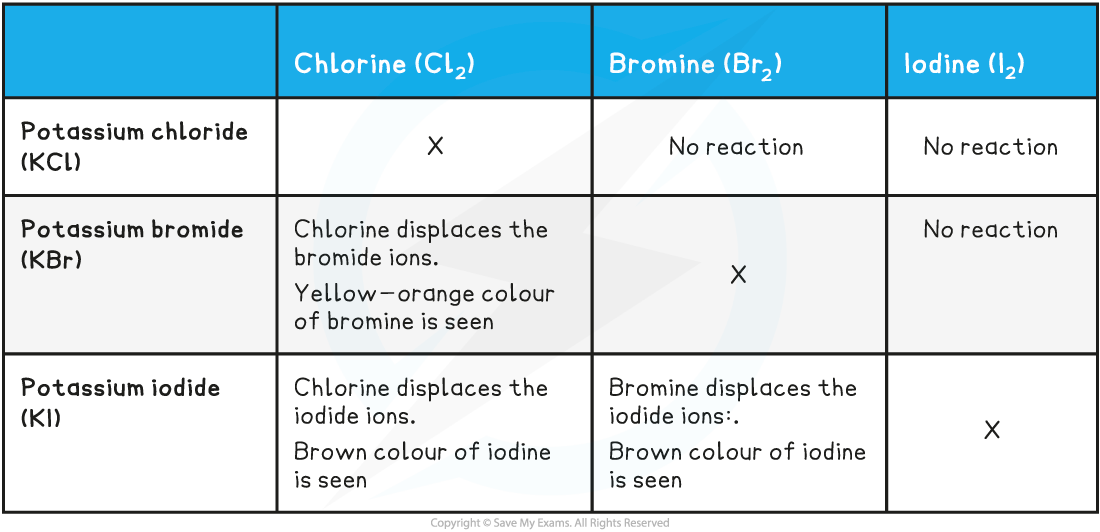
Bromine - Orange
Chlorine - Yellow-Green
Noble Gases
Colorless, Odorless, Tasteless
Under standard conditions, they are gases
Low solubility
Low melting/boiling points
Highly stable
Inert
Monatomic
Metal and Non-Metal Bonding
Ionic Bonding - transfer of an electron from a metal to a non-metal
They are non actually bonded but, have a very strong electrostatic force of attraction
Properties: Crystalline Solids, High melting and boiling points, Molten/Solution conducts electricity
Non-Metal and Metal
Covalent Bonds - no electrons are lost, both non-metals share them
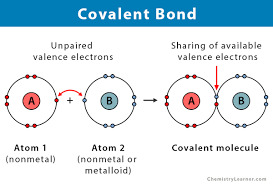
Properties: Are liquids/gases at RTP, Low melting/boiling points, Don’t conduct electricity
Metal and Metal
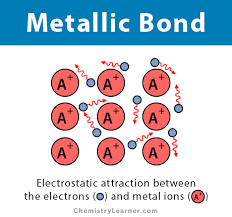
Metallic Bonding - attraction between the negatively charged, mobile electons
Electrons are free-roaming in the sea of electrons
Always the same element
Ammonium
NH4 Valency: +1
Hydroxide
OH Valency:-1
Sulfate
SO4 Valency: -2
Sulfite
SO3 Valency: -2
Carbonate
CO3 Valency:-2
Phosphate
PO4 Valency:-3
Nitrate
NO3 Valency:-1
Matter
Anything that has mass and takes up space
Pure Substances
Made up of only one type of particle
Impure Substances
Made up of multiple types of particles
Element
Anything that is made up of a single type of atoms
Element
Made up of one type of atom
Compound
Made of two or more elements that are chemically bonded in a fixed ratio
Mixture
Made of more than one element that is not in a fixed ratio
Homogenous Mixtures
Have a uniform composition
Heterogenous Mixture
Have a non-uniform composition
Solids
Solids have the highest intermolecular force of attraction, they have a fixed volume, vibrate in place, and they keep their form
Liquid
Liquids have the second highest intermolecular force, have a fixed volume, take the shape of their container, move semi-fast
Gas
Gases have the lowest intermolecular force, they move freely and quickly, with no fixed volume
Solid to Liquid
Melting
Liquid to Solid
Freezing
Liquid to Gas
Boiling/Evaporation
Differences between Evaporation and Boiling | |
|---|---|
Evaporation | Boiling |
Evaporation is a normal process that occurs when the liquid form changes into the gaseous form; while causing an increase in the pressure or temperature. | Boiling is an unnatural process where the liquid gets heated up and vaporized due to continuous heating of the liquid. |
Evaporation usually occurs on the heated liquid’s surface. | Boiling usually occurs on the entire mass of the liquid that gets heated up. |
Bubbling effect is not visible in evaporation. | Bubbling effect is visible during the process of boiling. |
The process of evaporation is slow. | The process of boiling is much quicker. |
Gas to Liquid
Condensation
Gas to Solid
Sublimation
Solid to Gas
Deposition
Crystallization
The process of boiling, removes soluble impurities from a liquid
Magnetic Separation
Separates magnetic materials from non-magnetic materials
Filtration
Separates insoluble solids from a liquid or solution
Tripod, Filter Paper, Filter Funnel, Beaker, Funnel
Chromatography
A separation process that is used to separate two solids is used to create the same ink.
Chromatography paper, Solvent, Beaker, Lid
Distillation
The action of purifying a liquid by the process of heating and cooling. It can be used to separate two liquids that have different boiling points by heating them to evaporate one of them and then cooling to condense it while the other remains a liquid.
Round-bottom beaker, Cork, Temperature, Condenser, Bunsen Burner
Fractional Distillation
Fractional distillation is a more advanced type of distillation that uses a fractionating column to separate liquids with closely related boiling points. The main difference lies in the apparatus: fractional distillation's column, often filled with packing material, allows for repeated vaporization and condensation cycles to achieve a more precise separation, which is necessary when the boiling point differences are small
Solubility
When two substances are combined within a solution, they can either be soluble and insoluble. A substance that is soluble, will ocmplet
Solvent
Substance that dissolves a solute (Greater Quantity)
Solute
A substance that dissolves in a solvent (Lesser Quantity)
Saturated Solution
Maximum amount of solute possible in the solvent possible at room temperature
Unsaturated Solution
An unsaturated solution contains less than the maximum amount of solute possible
Supersaturated Solution
Holds more solute than normally possible. This happens when the solution is heated to a high temperature, more solute is added, and then the solution is cooled quickly.
Colloid
A homogeneous solution is made up of larger particles, but the substance remains evenly distributed throughout. It is a combination of two substances, where the molecules of one substance are much larger than those of the other substance, but they are still evenly distributed throughout
Sol
Colloidal Suspension with solid particles in a liquid
Emulsion
Colloidal Suspension with liquid particles in liquid.
Foam
Colloidal Suspension with gas in liquid or gas in solid
Aerosol
Colloidal Suspension with solid or liquid particles in gas
Gel
Colloidal Suspension with liquid paritcles in solid
Solid Sol
Colloidal Suspension with solid in solid
Colloidal Suspension
A colloidal suspension is a mixture where tiny, insoluble particles are dispersed throughout a continuous medium, and they do not settle out over time.
Diffusion
Diffusion is the movement of particles from higher concentration to lower concentration
Factors that affect diffusion
Temperature
Pressure
When a substance is unevenly distributed, there’s a concentration gradient. The particles will undergo the process of diffusion until they reach a state of equilibrium.
 Note
Note  Flashcards (34)