Music: Classical Era
 Call Kai
 Learn
Learn Practice Test
 Spaced Repetition
 Match
Match Flashcards
 Knowt Play
1/20

There's no tags or description
Looks like no tags are added yet.
Name | Mastery | Learn | Test | Matching | Spaced | Call with Kai |
|---|
No analytics yet
Send a link to your students to track their progress
21 Terms
How long did the Classical era last?
1750 - 1820
Name 3 Classical composers
Mozarts, Beethoven, Haydn
What was different for the Classical Period compared to the Baroque period?
Instead of the ornate Baroque music (full of trills and sudden changes in style) Classical music was simple, balanced and non-emotional. Music had straight forward titles like “Symphony No. 1”, instead of flowery, descriptive titles. This was called absolute music because it was music for it’s own sake, not for dancing, etc.
What are balanced phrases and what do they do?
phrases are equal lengths, usually two or 4 bars long. It creates grace and beauty, and there is control and elegance.
What is the texture typically used in Classical?
Homophonic texture consists of a melody accompanied by chord. It is a lighter and clearer texture than Baroque and is less complicated.
What type of orchestra was in classical music?
Small orchestra.
What were the new instruments added in classical?
Clarinet, harpsichord replaced by piano, conductor also added, range of woodwind would play melodies
What is the structure of classical music?
Symphony - had 4 movements: Fast, slow, dance, fast
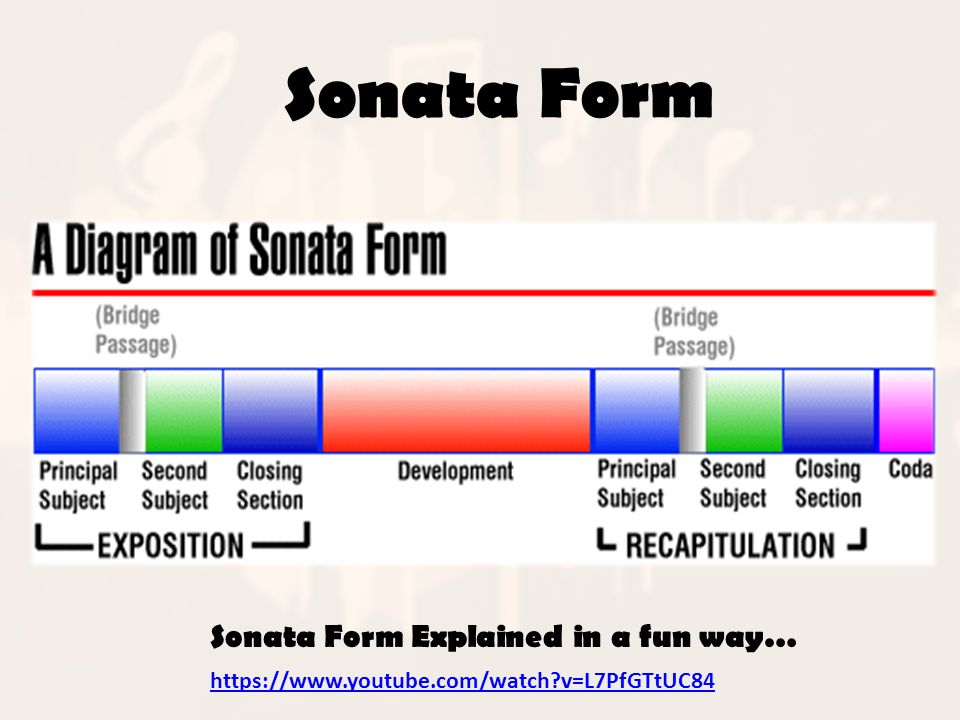
What structure was usually found in the 1st movement?
Sonata form. has 3 parts: Exposition, Development, Recapitulation.
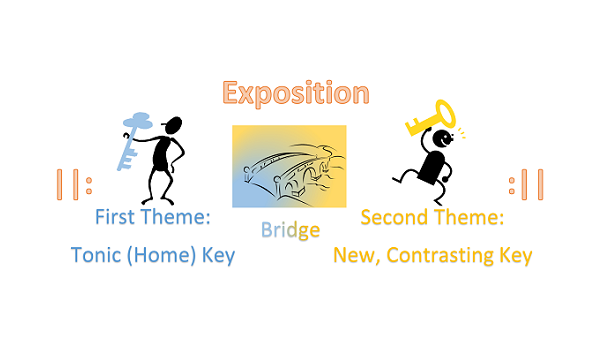
What are the characteristics of exposition?
Where the main themes are initially presented.
First theme is always the home theme.
The second subject contrasts to the first and is always in a related key to the first.
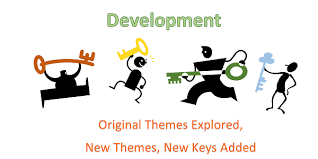
What are the characteristics of Development?
Where the composer ‘develops’ one or both ideas that were heard in the exposition.
The section features various keys but avoids using the tonic or the dominant.
Music in this section is often ambiguous and is constantly changing and feels restless because of the exploration of different keys.
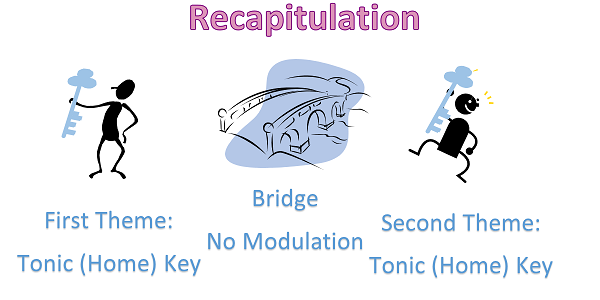
What are the characteristics of recapitulation?
Is a ‘recap’ of the exposition
The first subject is in the tonic key as it was in the exposition and the second subject is also in the tonic key and there is no modulation as the work draws to a close
Sometimes the work finishes with a small coda.
What is transition?
a passage of music composed to link one section of music to another
What is a motif?
a small collection of notes that captures the essence or idea of the piece. It is often changed around slightly or played in different keys
Is there less or more contrast in Classical Music?
There is more contrast as the development section switches keys, rhythms, dynamic and more instruments.
What types of passages are found in Classical?
Scalic Passages
What is alberti bass?
a type of broken chord accompaniment used in Classical. From the chord pattern it used the order of notes: lowest, highest, middle, highest.
How is the chamber music in Classical?
Over the years, it developed with the addition of other instruments along with the traditional String quartet.
What singing was added?
Opera! Mozart was the king of opera.
What is ostinato?
a short, persistently repeating musical phrase, rhythm, or melodic pattern that persists throughout a section or entire piece of music
What are key features to mention about classical?
Diatonic Harmony
Homophonic texture
Balanced Phrases
Crescendos and diminuendos
Small orchestra
Clarinet.
Explore top notes

