Peds 4 - The Development of the Dentition and Occlusion (Dr. Saavedra)
 Call Kai
 Learn
Learn Practice Test
 Spaced Repetition
 Match
Match Flashcards
 Knowt Play
1/132

There's no tags or description
Looks like no tags are added yet.
Name | Mastery | Learn | Test | Matching | Spaced | Call with Kai |
|---|
No analytics yet
Send a link to your students to track their progress
133 Terms
What ages do primary teeth erupt?
6 months to 2.5 years
If primary teeth erupt in rotated or spaced position, they will remain in that position unless affected by __________
External influences
Which ages do general growth of the jaw occur and retrognathic mandible decrease?
Birth to 2
At birth the jaws are edentulous. The mandible is _______ in relation to the maxilla
retrognathic
From birth to age 2, general growth of the jaws is occurring and retrognathic mandible decreases. For the next _______ years the child will function with his complete primary dentition until eruption of the first permanent molars.
four years ( 2-->6 )
What are the five types of primary teeth?
- Central incisor
- Lateral incsior
- Cuspid
- 1st molar
- 2nd molar
When do all primary teeth begin calcification?
before birth
Calcification of primary teeth is completed before the age of____
1
Sequence of calcification corresponds to the _________ sequence in the mouth
anterior-posterior
What is the only permanent tooth that begins calcification at birth?
1st molar
All primary teeth are partially calcified ______
at birth
The crowns of all permanent teeth are fully calcified by the age of ___ years except the 3rd molars
8
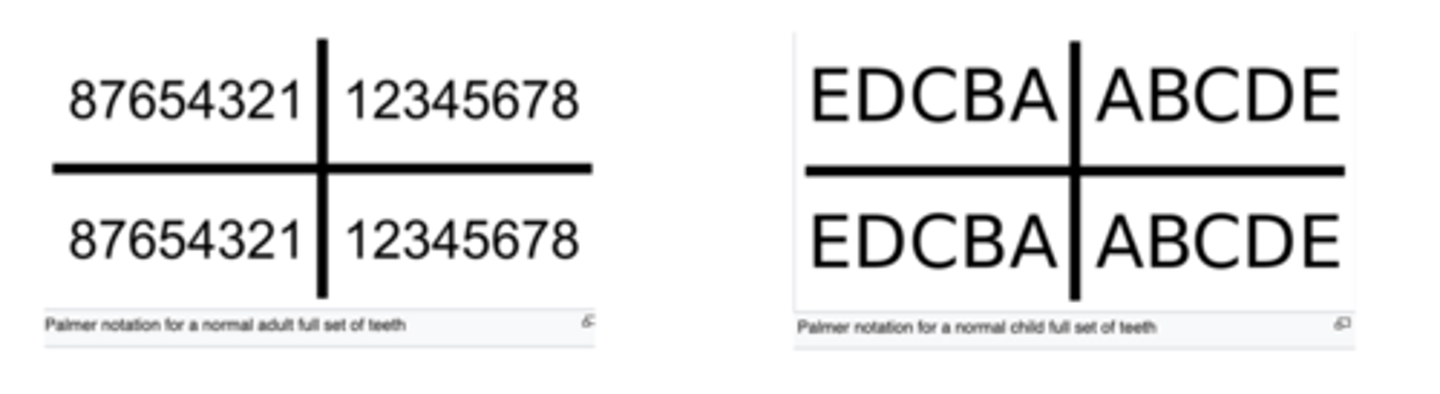
The palmer teeth nomenclature is the most preferred method used by most ____________
Orthodontist
In this course, we will use the ________ nomenclature when referring to space and interceptive orthodontics
Palmar
In the Palmer teeth nomenclature, what letter is the primary central incisor?
A
In the Palmer teeth nomenclature, what number is the permanent central incisor?
1
In the Palmer teeth nomenclature, what letter is the primary 1st molar?
D
In the Palmer teeth nomenclature, what number is the permanent 1st molar?
6
Using the Palmer Nomenclature method, what is the eruption pattern for the primary dentition?
A-B-D-C-E
Using the Palmer Nomenclature method, what is the eruption pattern for the permanent upper arch dentition?
6-1-2-4-5-3-7
Using the Palmer Nomenclature method, what is the eruption pattern for the permanent lower arch dentition?
6-1-2-3-4-5-7
The following are what type of variable that influence permanent tooth eruption?
- Familial: delayed pattern of eruption
- Race/ Ethnicity : African Americans and Hispanics have a slightly earlier eruption than whites
- Sex: Females before males
Genetic
The following are what type of variable that influence permanent tooth eruption?
- Low birth weight: delayed eruption
- Nutrition: little or no effect
- Prematurity delayed eruption with ventilator dependency
- Early loss / retention of primary predecessor
Environmental
The following are what type of variable that influence permanent tooth eruption?
- Endocrine: High correlation with hyperpituitarism and hypothyroidism ->delay eruption
Systemic
If a patient loses a primary tooth before age 5, it delays what tooth eruption?
Premolar
If a patient loses a primary tooth after age 8, it accelerates what tooth eruption?
Premolar
If a patient loses a primary tooth prior to crown completion, what does it result in?
Delay eruption
If a patient loses a primary tooth after crown completion of successor, what does it result in?
Accelerates eruption
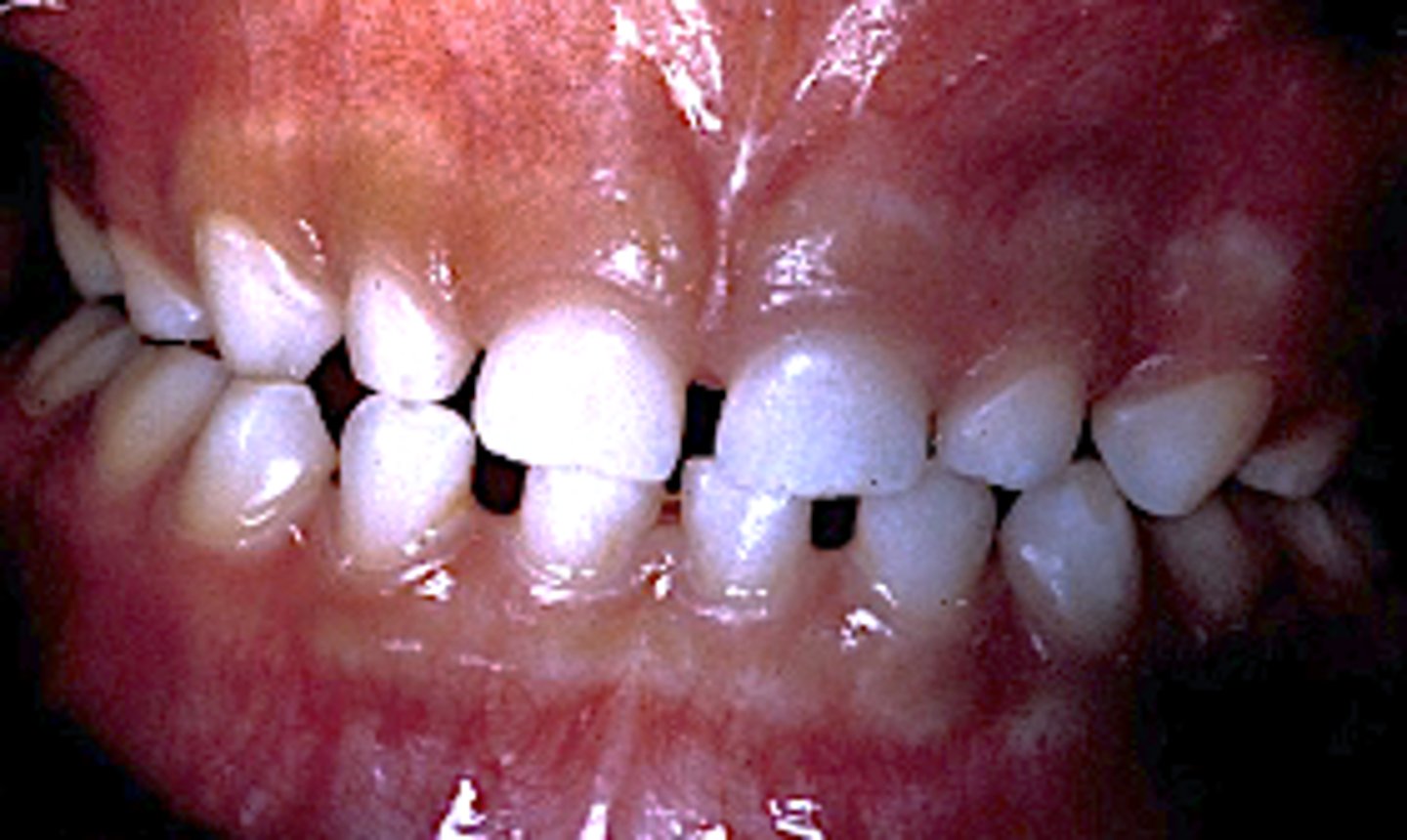
ID the Baume Type:
- With interdental spaces between the anterior teeth
- The length and width of the dental arches (during the period of the primary dentition) remain unchanged
- Both the mandible and maxilla are growing in length distally to accommodate the developing permanent molars
Baume Type I
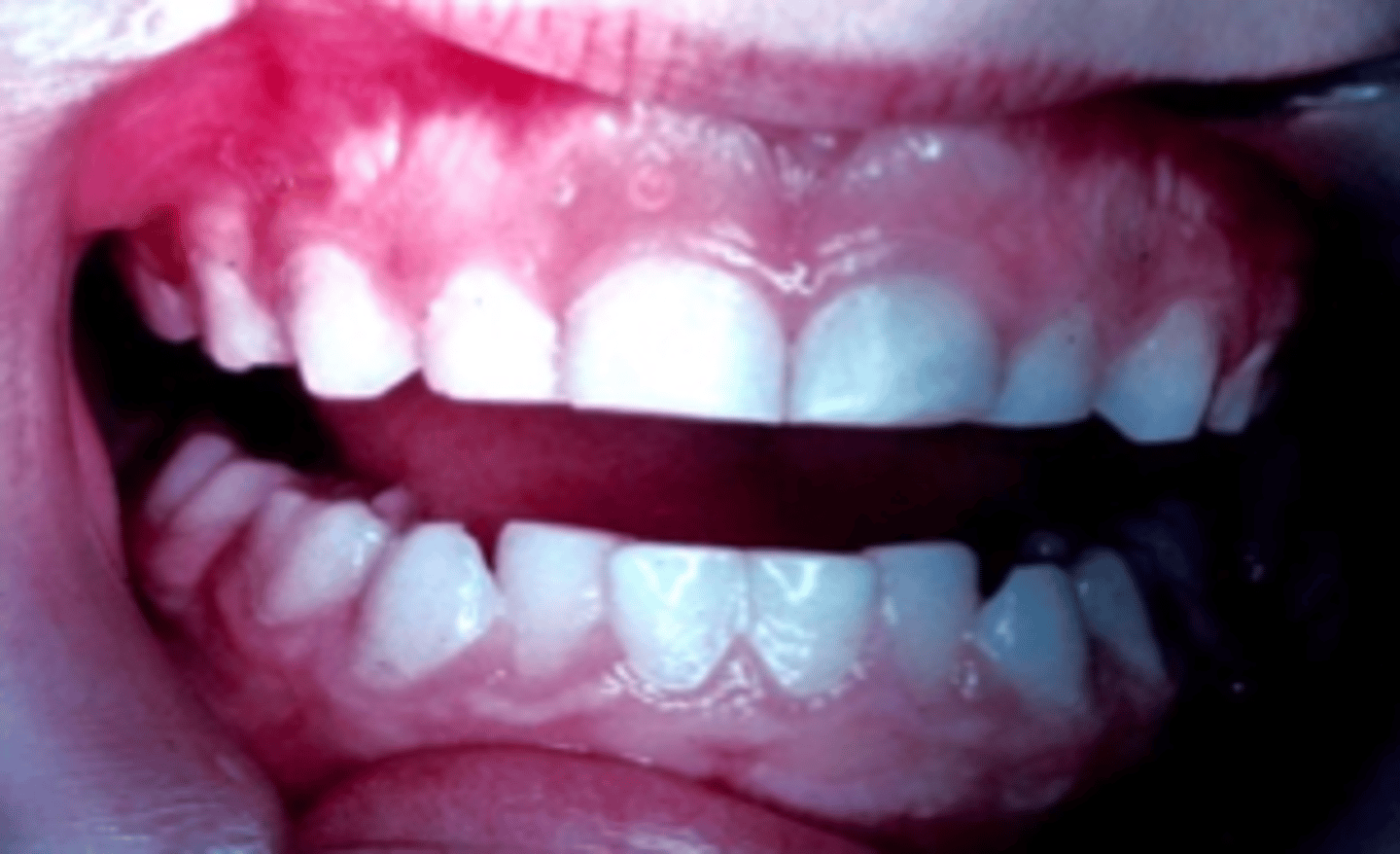
ID the Baume Type:
- Without interdental spacing
- Type II Arches were on average 1.5 mm narrower in the intercanine width
- Absence of space was due to either to large primary teeth, or smaller dental arches or a combination of both
Baume Type II
____% of primate spaces were seen in Type I dentitions
70%
In the maxilla, a primate space develops _________ to the canine
mesial
primate spacing between the primary lateral incisors and cuspids occurs in the _________
Maxilla
primate spacing between the primary cuspids and first primary molars occurs in the _________
Mandible
In the mandible, a primate space develops _________ to the canine
distal
Which Baume Type will lead to crowding 0% of the time?
Baume Type I
which Baume Type will lead to crowding about 57% of the time?
Baume Type II
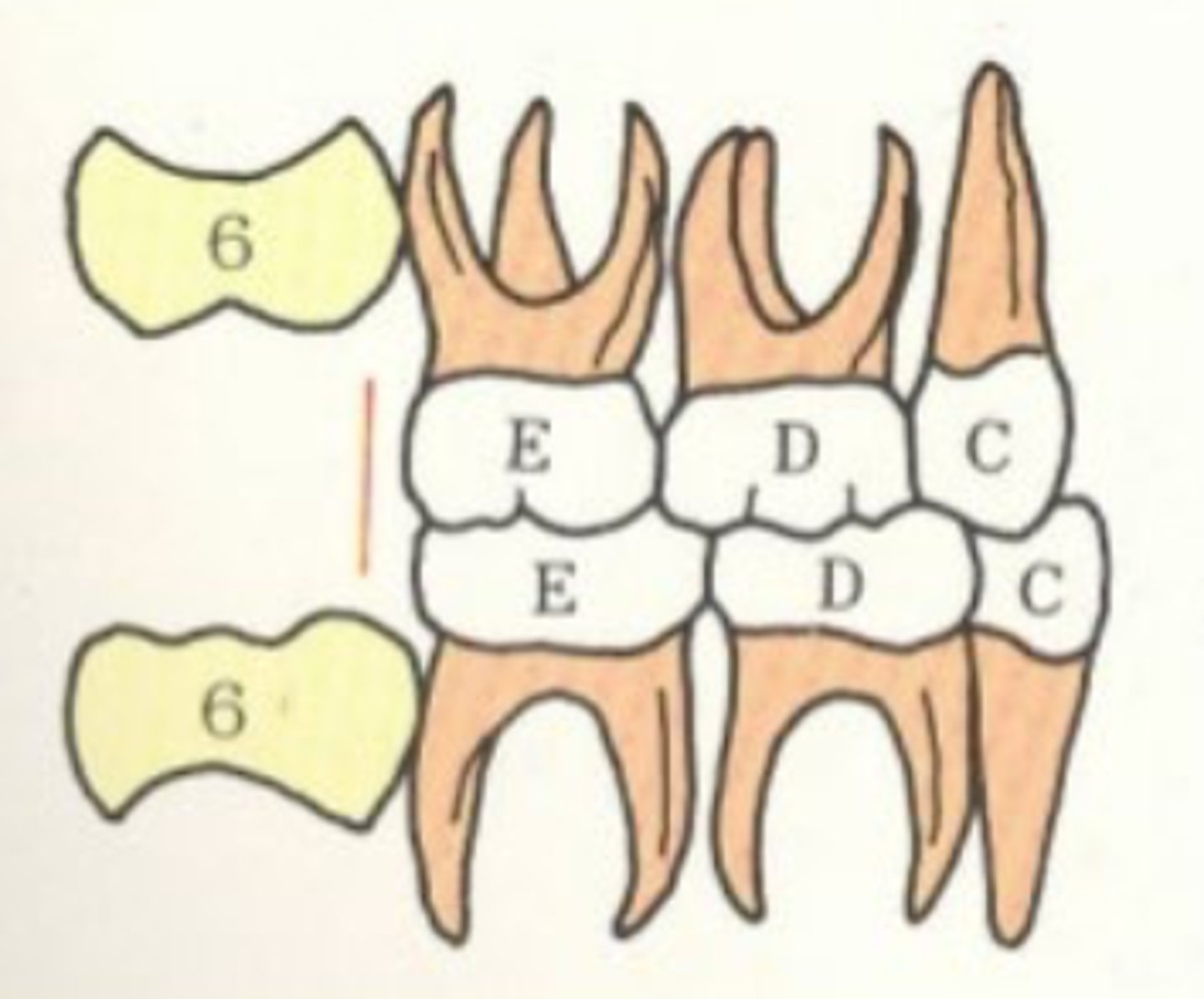
Which terminal plane?
flush plane
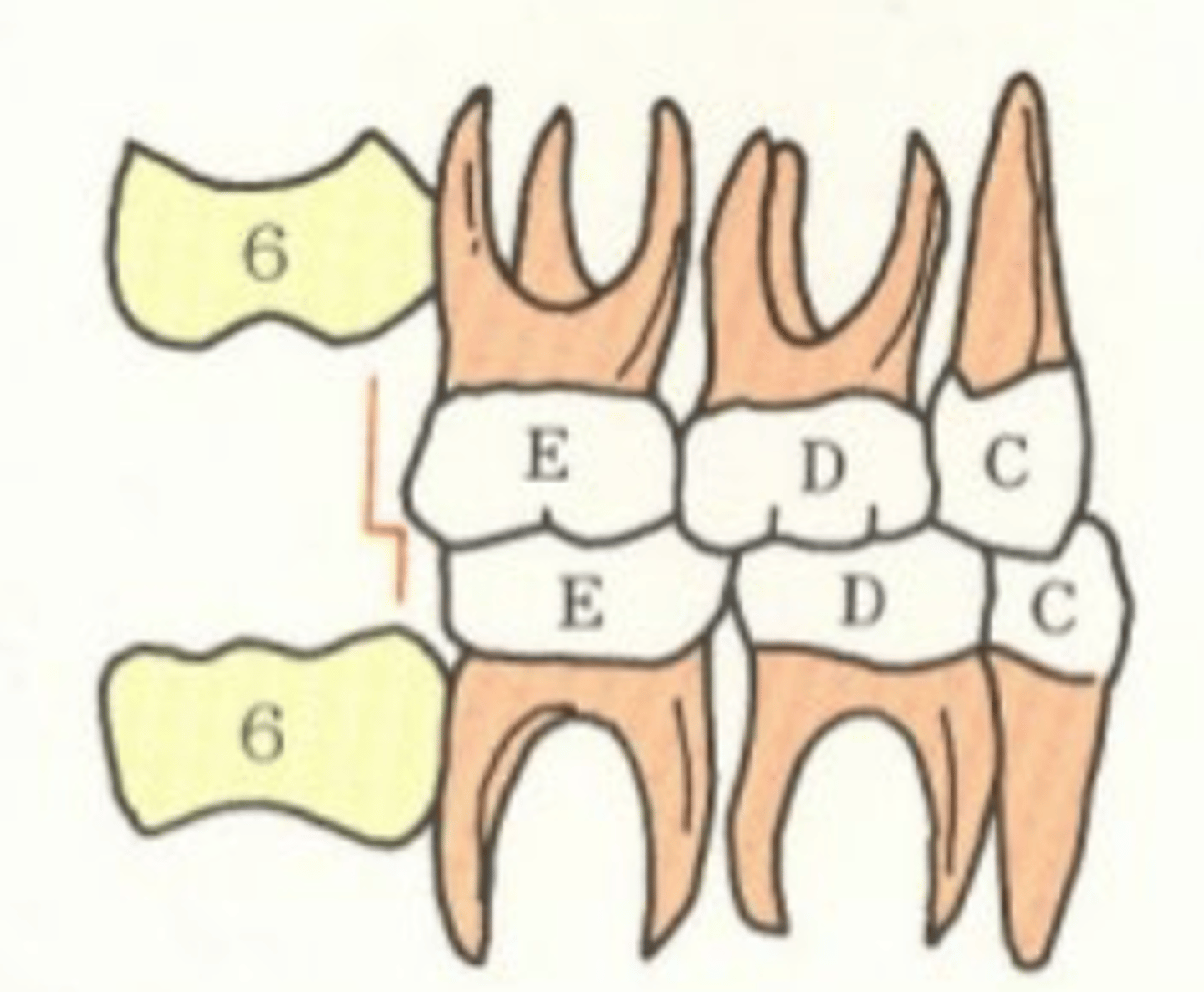
Which terminal plane?
mesial step
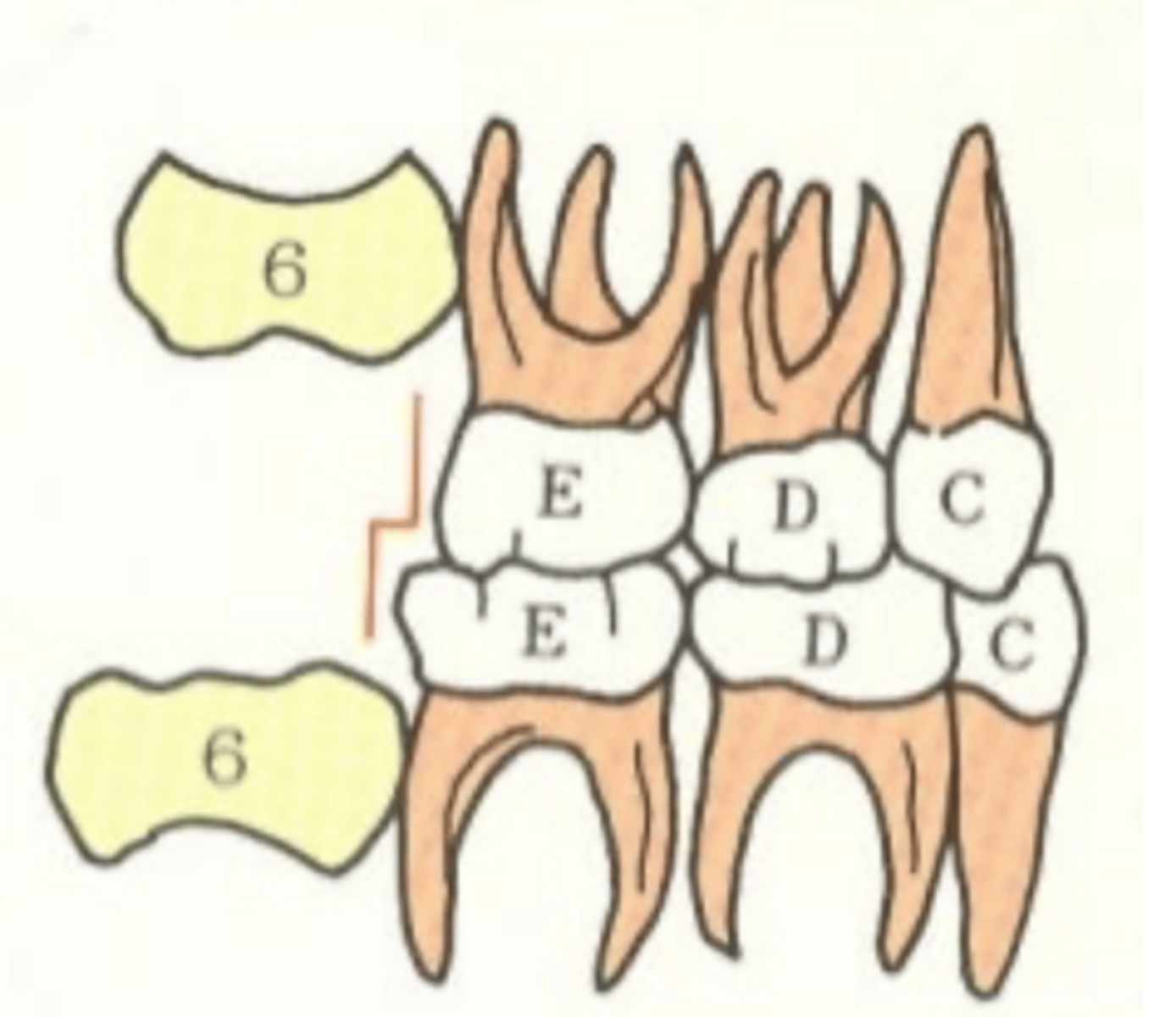
Which terminal plane?
distal step
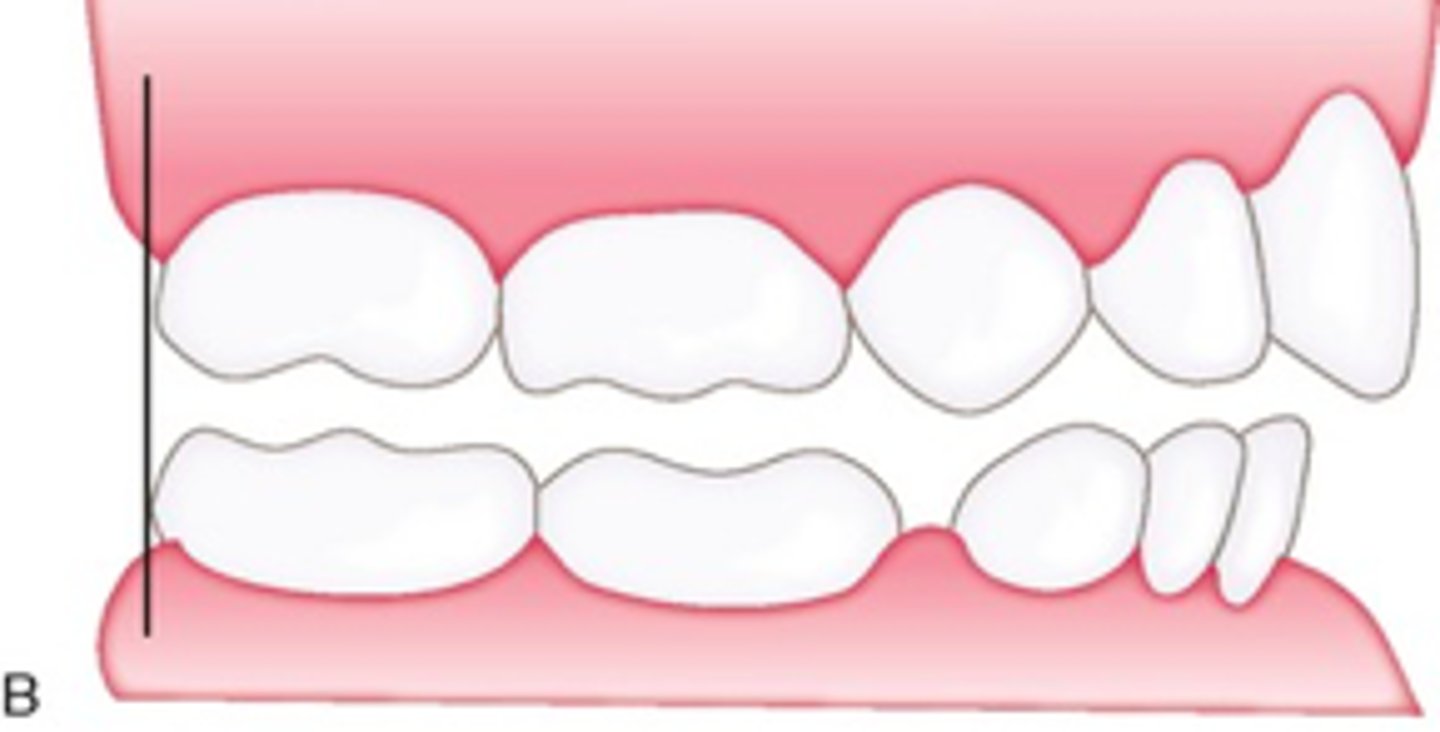
ID the terminal plane:
flush plane
What is the most common (76% of cases) terminal plane for primary teeth?
flush plane
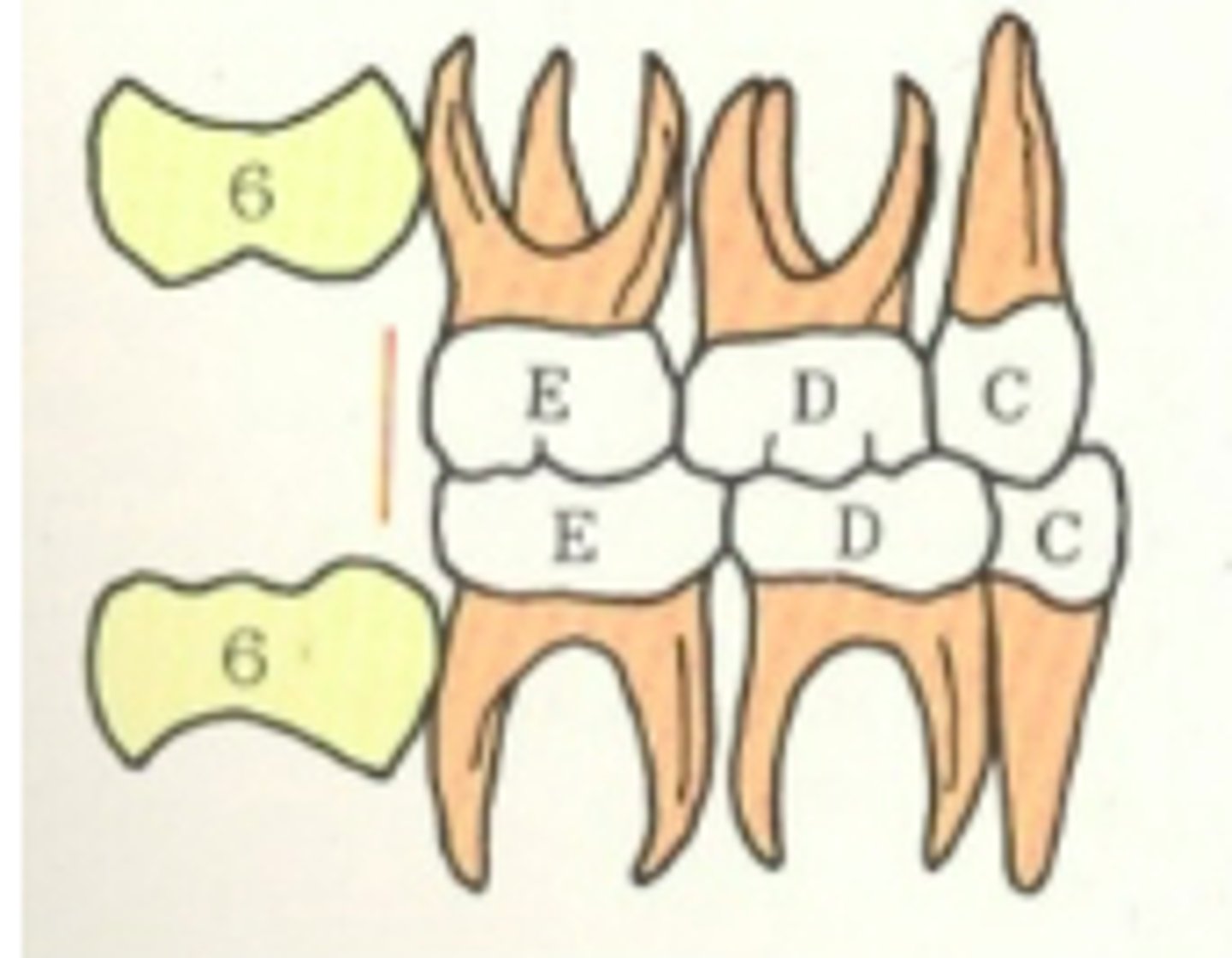
Why is the most common Terminal Plane (76% of cases) for primary teeth the flush plane?
the maxillary 2nd primary molar is shorter M-D than the mandibular
ID the terminal plane:
- The Distal surface of the maxillary and mandibular 2nd primary molars lie in a straight line
flush plane
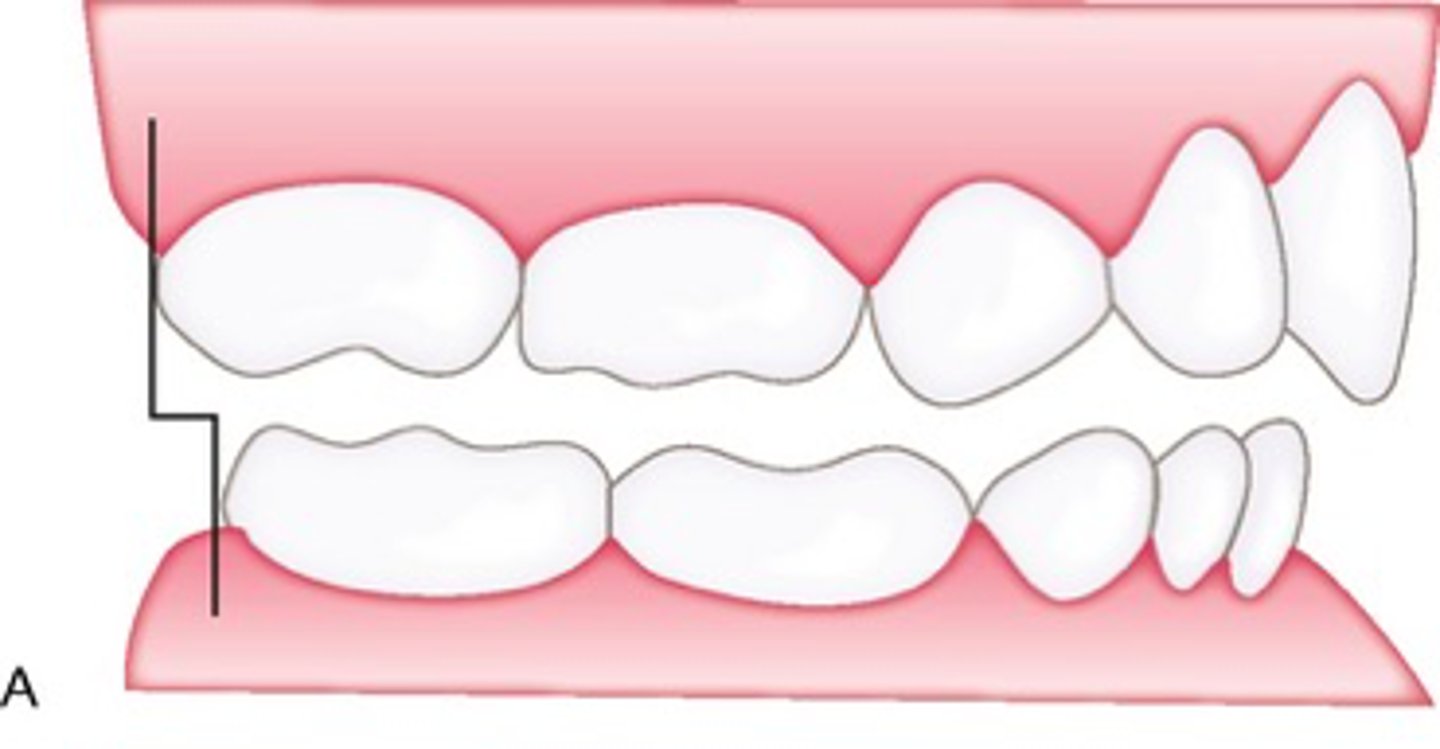
ID the terminal plane:
mesial step
ID the terminal plane:
- The distal surface of the mandibular 2nd primary molar is mesial to the distal surface of the maxillary 2nd primary molar
mesial step
Mesial step is associated with what class of occlusion?
Class I
ID the terminal plane:
- The distal surface of the mandibular 2nd primary molar is distal to the distal surface of the maxillary 2nd primary molar
distal step
At what age does the mixed dentition begin?
6
At about what age does the mixed dentition end?
12
Describe the 3 stages of mixed dentition
1. Eruption of first permanent molars
2. Exfoliation of primary incisors, replacement with permanent incisors
3. Exfoliation of the primary cuspids, first and second primary molars and their replacement by the permanent cuspids, and the first and second premolars
Eruption of the first permanent molar occurs approximately at _______ years of age
6 years
A mesial step terminal plane in the primary dentition most commonly leads to which permanent molar relationship?
Class I
The final molar relationship at eruption of the 6's depends primarily on what?
Type of primary dentition (spaced- non spaced) and the terminal plane relationship of the primary molars
A straight (flush) terminal plane in the primary dentition most commonly transitions to Class I via what?
Early mesial shift
The early mesial shift primarily occurs due to closure of which space?
Mandibular primate space
During early mesial shift, the distance between the distal surface of the mandibular canine and the mandibular second primary molar is reduced by approximately how much?
1-2 mm
Closure of the mandibular primate space results in which change to the terminal plane?
Flush terminal plane → mesial step
Why do the first permanent molars erupt into a Class I relationship after early mesial shift?
Maxillary first permanent molars erupt after mandibular first permanent molars
Straight terminal plane (Type I) to Class I occlusion is caused by what?
early mesial shift with use of primate spaces
Straight terminal plane (Type II) to Class I occlusion is caused by what?
late mesial shift with use of leeway spaces
a patient with Baume Type I has the chance of developing a Class 1 permanent occlusion by utilizing what spaces?
primate spaces
a patient with Baume Type II has the chance of developing a Class 1 permanent occlusion by utilizing what spaces?
Leeway spaces
Utilization of the primate spaces as the permanent 1st molar erupts will result in a _______
early mesial shift
Utilization of the Leeway spaces as the permanent 1st molar erupts will result in a _______
late mesial shift
The Sum of the mesio-distal width of the: permanent canine, 1st premolar and 2nd premolar is less than the width of the primary teeth that they replace. This gives rise to the __________
Leeway spaces
Which primary teeth participate in the Leeway space?
C-D-E
Which permanent teeth participate in the Leeway space?
3-4-5
The average leeway space for the mandible was ___ (unilateral)
1.7mm
The average leeway space for the maxilla was ___ (unilateral)
0.9mm
The average leeway space for the mandible was ___ (bilateral)
3.4mm
The average leeway space for the maxilla was ___ (bilateral)
1.8mm
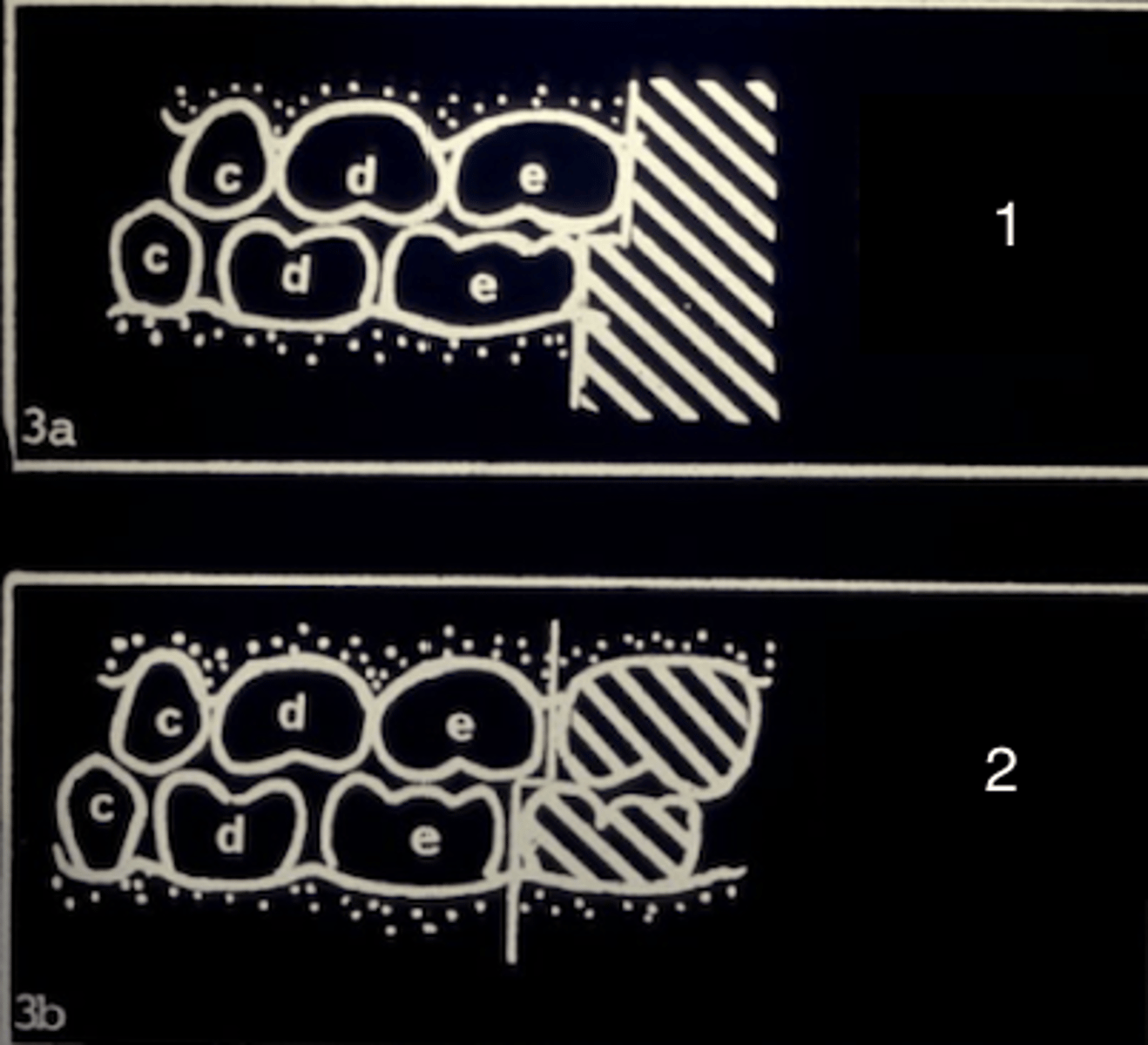
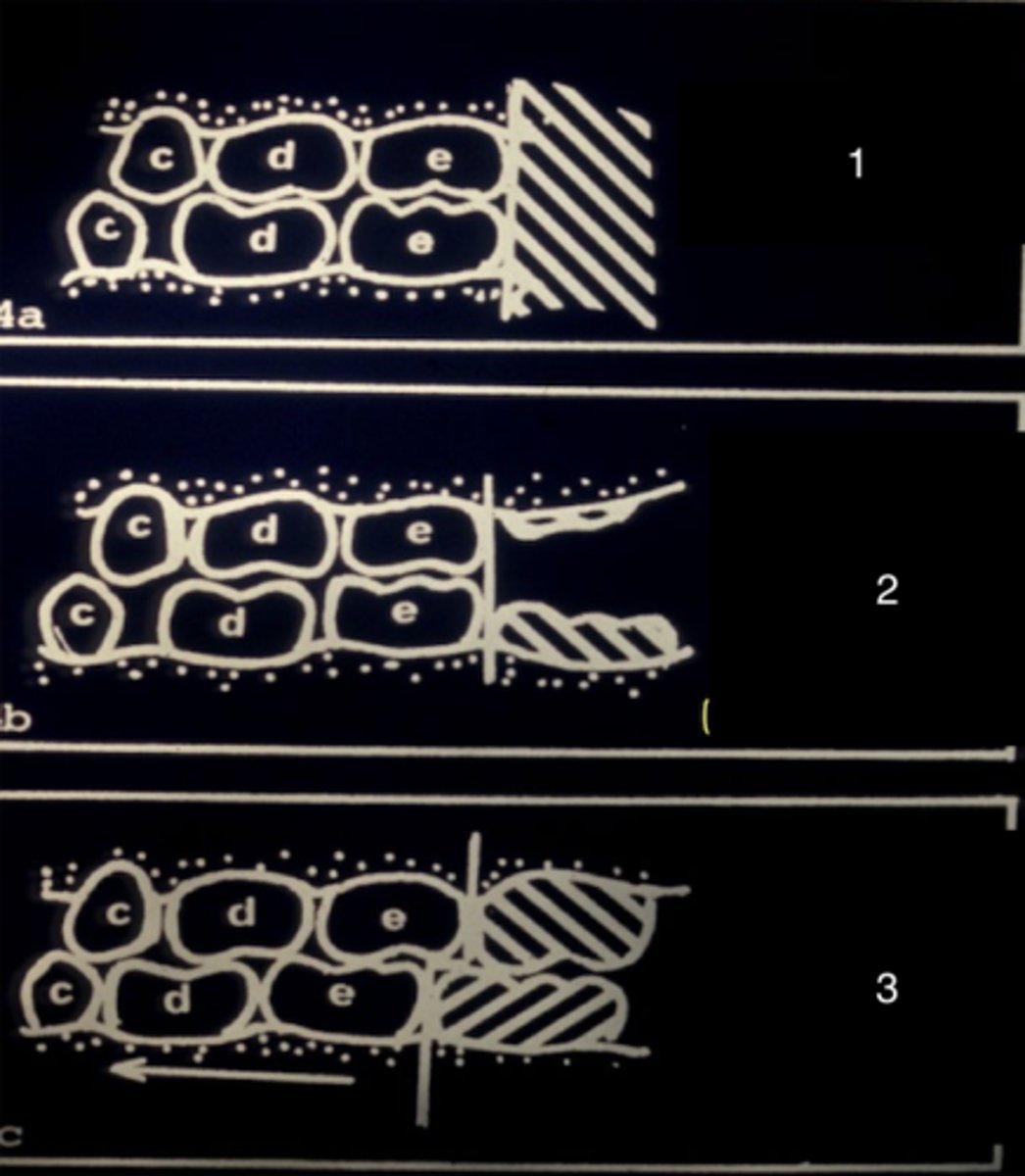
What type of terminal plane is seen in the primary dentition (1)?
mesial step
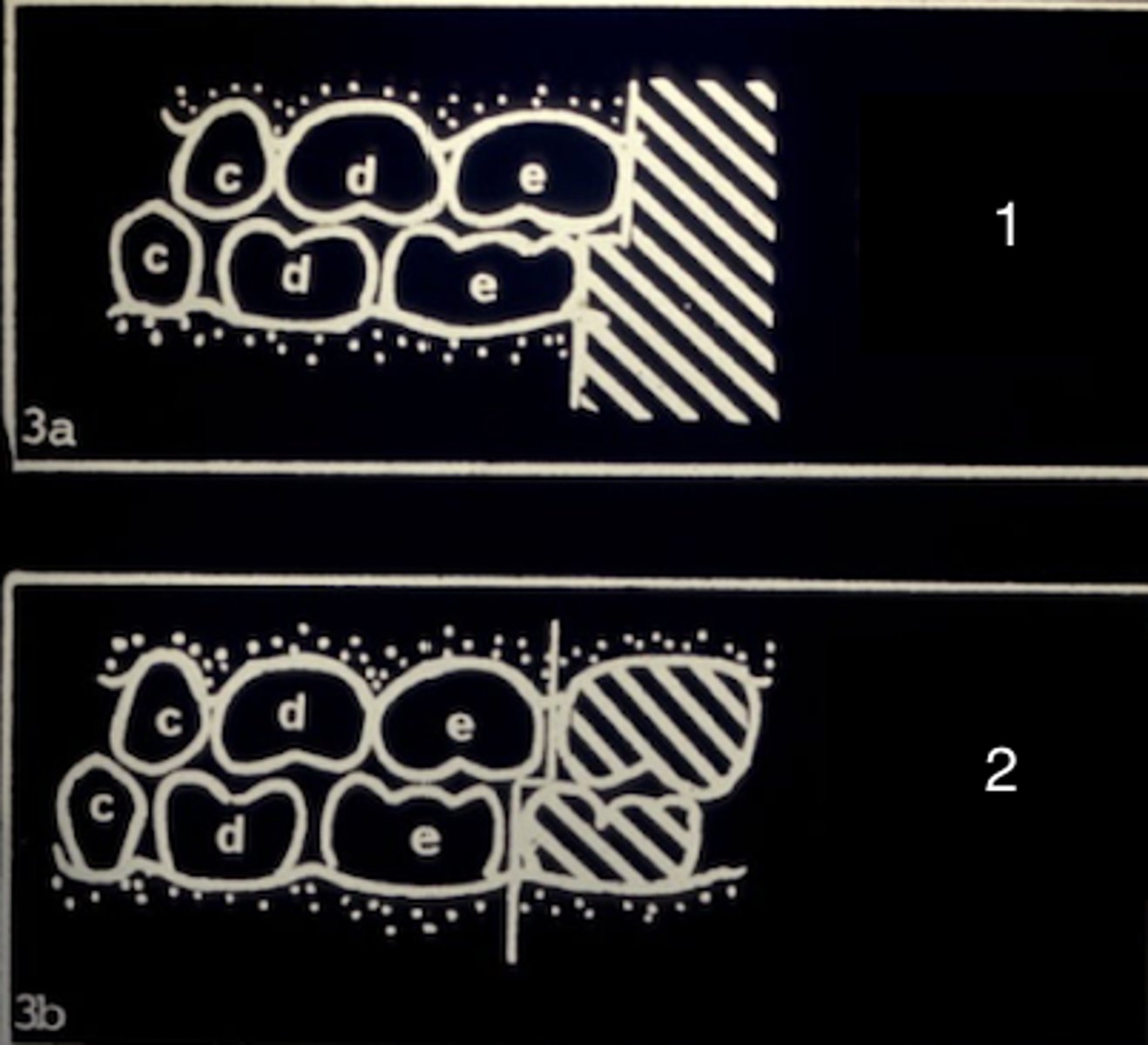
The permanent dentition are in what relationship (2)?
class I
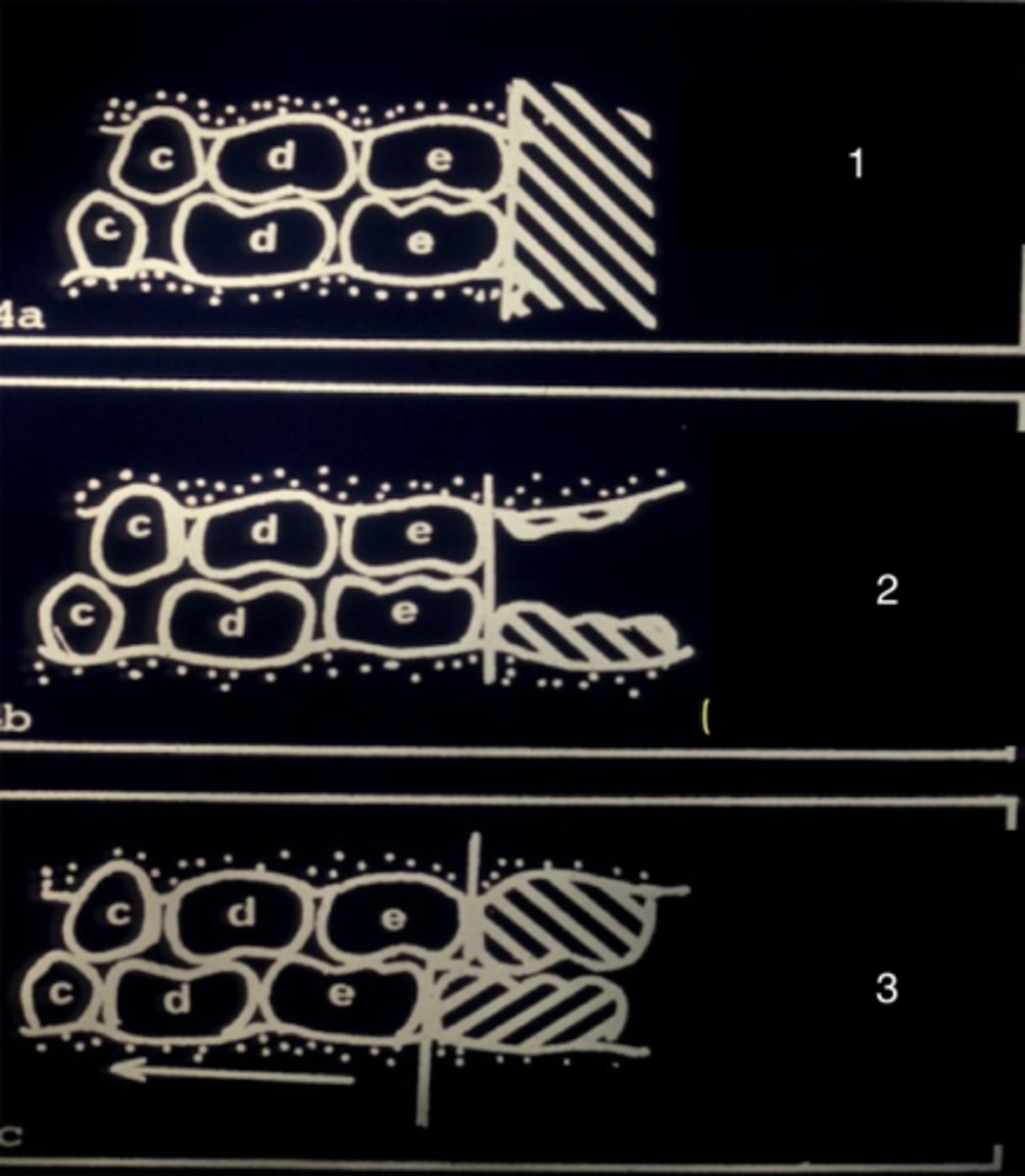
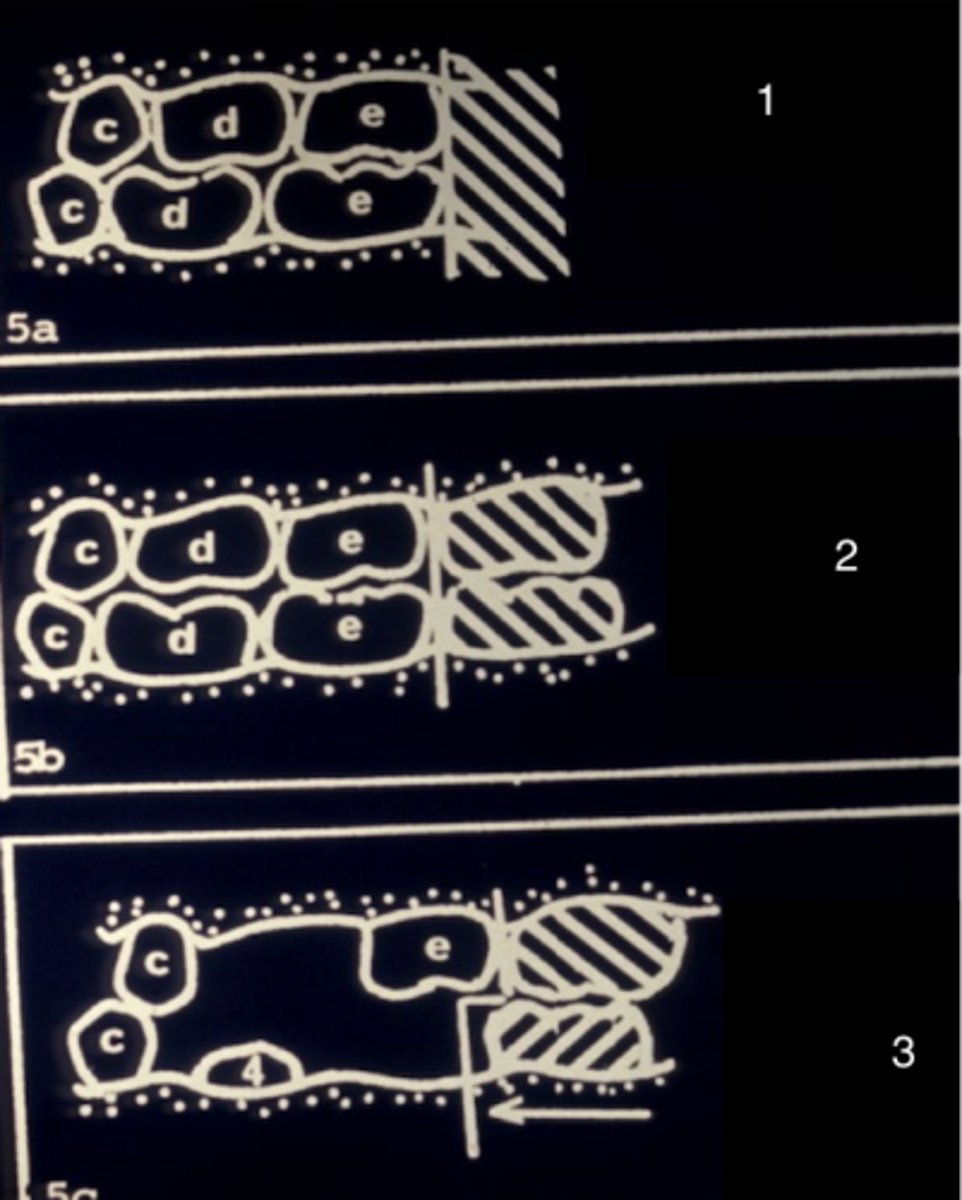
What type of terminal plane is seen in the primary dentition (1)?
straight
Picture 2 shows 6's erupting into what relationship?
end-to-end
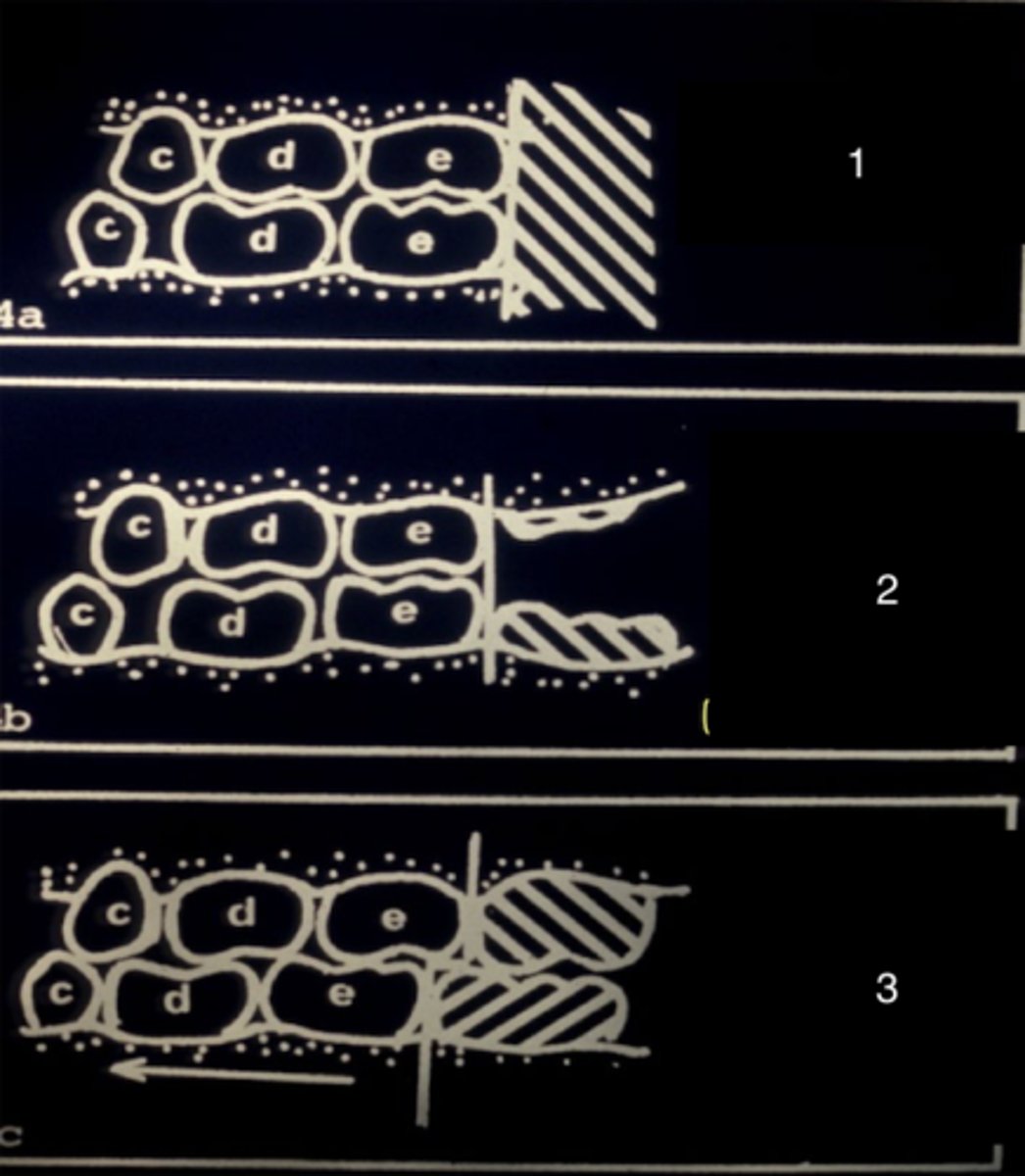
Picture 3 shows an early mesial shift due to what space closing?
primate space
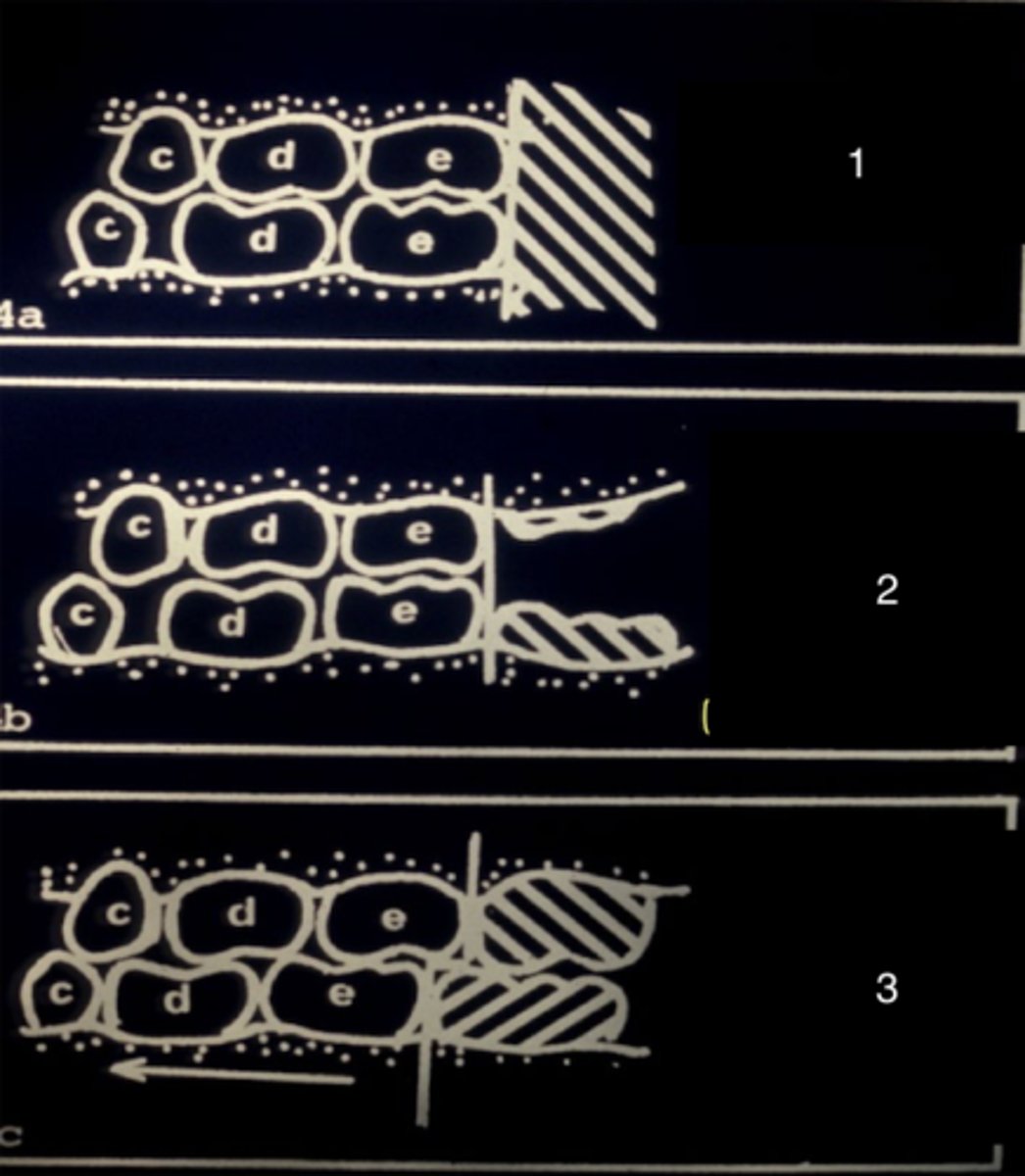
Picture 3 is now in what cuspal relationship?
class I
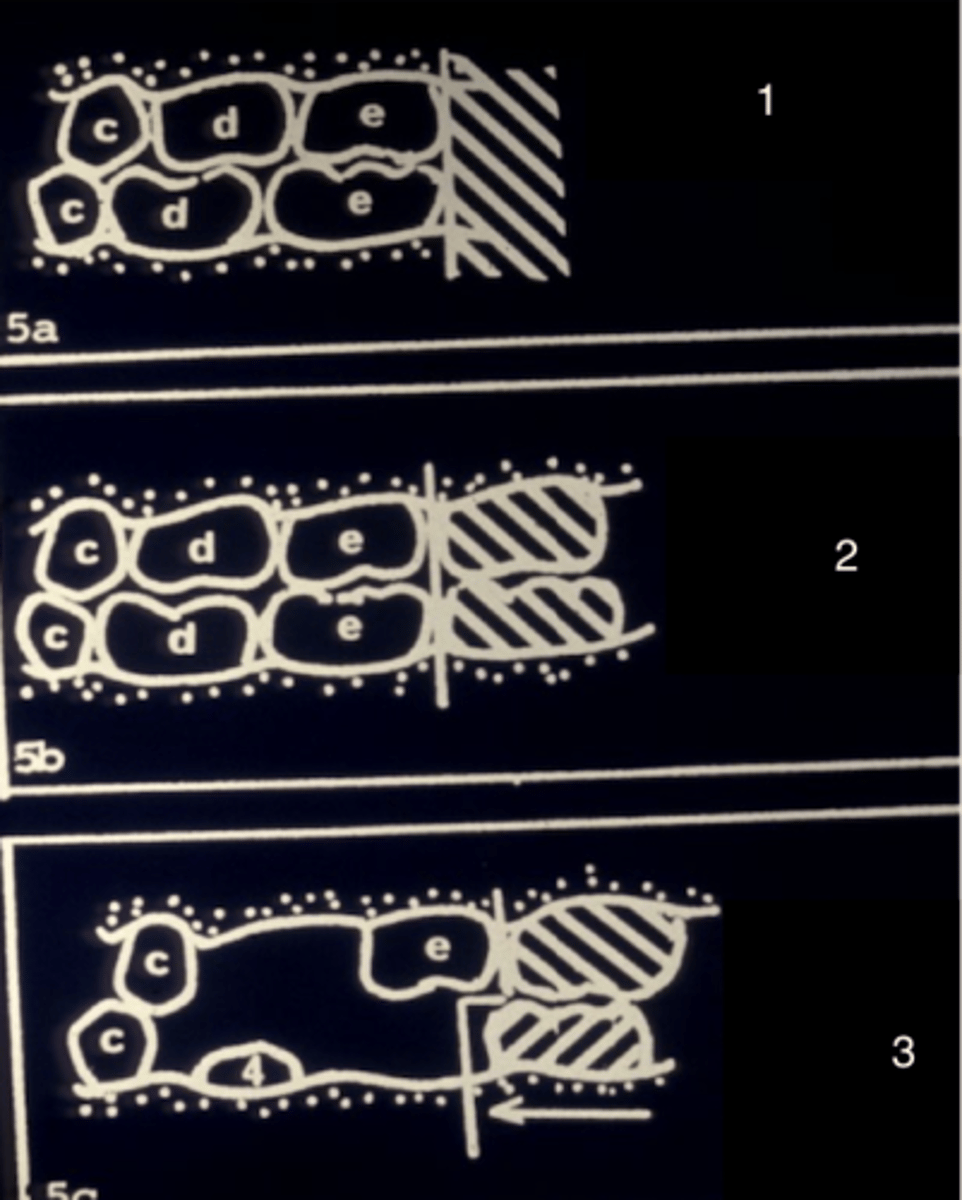
What type of terminal plane is seen in the primary dentition (1)?
straight
Picture 2 shows 6's erupting into what relationship?
end-to-end
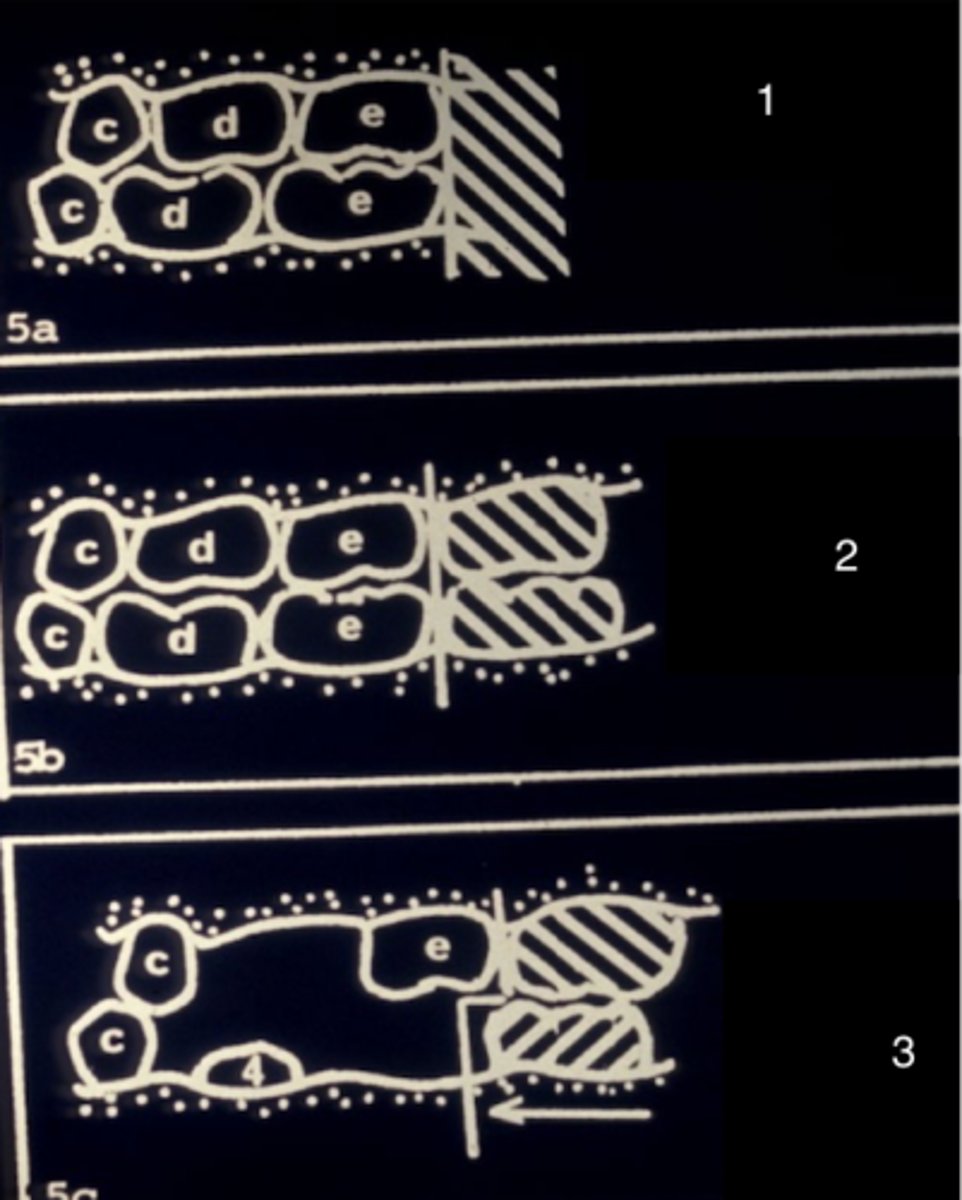
Picture 3 shows a late mesial shift due to what occuring?
primary mand. 2nd molars exfoliating and leeway space
A straight terminal plane (Type II) without primate spacing most commonly results initially in which molar relationship?
End-to-end relationship
In Type II straight terminal plane, why does an early mesial shift not occur?
Absence of primate space
In the absence of primate space, the first permanent molars are forced to erupt into what relationship?
End-to-end relationship
The transition from end-to-end to Class I molar relationship in Type II terminal plane occurs due to what?
Late mesial shift using leeway space
Late mesial shift occurs after exfoliation of which teeth?
Primary second molars
Late mesial shift allows the mandibular first permanent molar to migrate into the space left by which teeth?
Mandibular second primary molar
Which space is primarily utilized during late mesial shift?
Leeway space
What is the only way a straight terminal plane (Type II) can change to a Class I molar relationship?
Late mesial shift utilizing leeway space after exfoliation of the primary second molars
A flush terminal plane with mandibular primate spacing at age 5 most commonly results in a Class I molar relationship by what?
Early mesial shift closing the primate space (6–8 years)
Early mesial shift typically occurs at what age range?
6-8 years
A flush terminal plane without mandibular primate spacing will most likely achieve Class I molar relationship through what?
Late mesial shift utilizing leeway space
Late mesial shift most commonly occurs during which age range?
10-13 years
Which space is primarily utilized during late mesial shift?
Leeway space
Closure of the mandibular primate space leads to what?
Mesial migration of the mandibular first permanent molar
Which of the following scenarios is most likely to result in early mesial shift?
A. Flush terminal plane with mandibular primate spacing
B. Flush terminal plane with no spacing
C. Distal step terminal plane
D. Mesial step terminal plane
Flush terminal plane with mandibular primate spacing
Between what ages do permanent incisors develop?
6-9 years
The permanent mandibular incisors develop ______ to the resorbing roots of the primary incisors
lingually
As soon as they exfoliate, eruption of the permanent incisor and pressure from the tongue move the incisors ________ to their normal balanced position
Labially
Because the permanent incisors are larger than the primary ones, about how much space is needed to accommodate in the maxilla?
7mm

