Developmental Psychology, Developmental psychology
 Studied by 81 people
 Call Kai
 Learn
Learn Practice Test
 Spaced Repetition
 Match
Match Flashcards
 Knowt Play
1/56

There's no tags or description
Looks like no tags are added yet.
Name | Mastery | Learn | Test | Matching | Spaced | Call with Kai |
|---|
No analytics yet
Send a link to your students to track their progress
57 Terms
developmental psychology
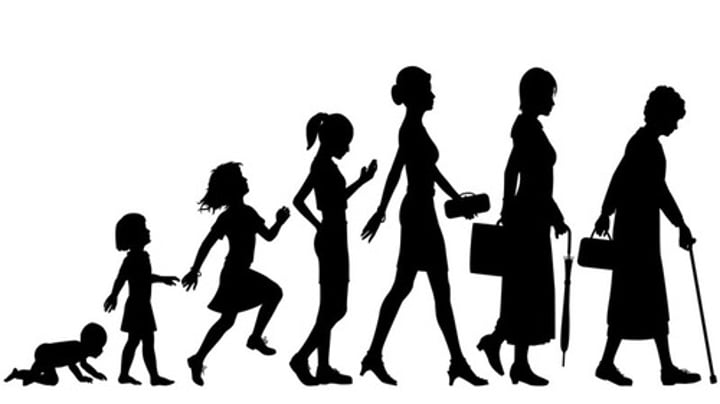
a branch of psychology that studies physical, cognitive, and social change throughout the life span.
maturation
biological growth processes that enable orderly changes in behavior, relatively uninfluenced by experience.
cognition
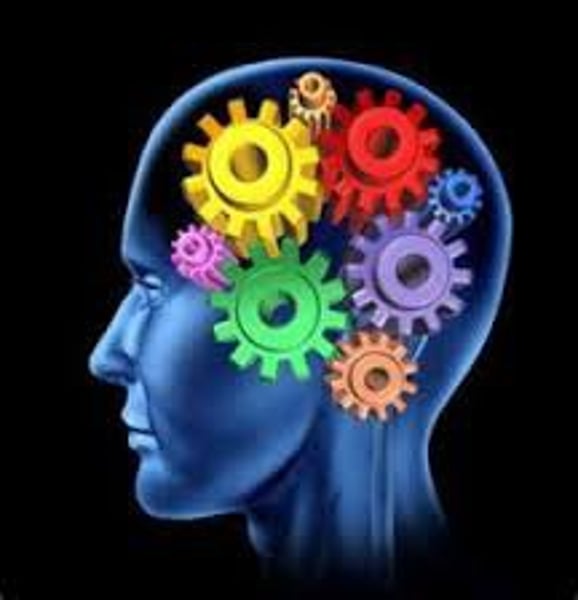
all the mental activities associated with thinking, knowing, remembering, and communicating.
sensorimotor stage
in Piaget's theory, the stage (from birth to about 2 years of age) during which infants know the world mostly in terms of their sensory impressions and motor activities.
object permanence
the awareness that things continue to exist even when not perceived.

preoperational stage
in Piaget's theory, the stage (from 2 to about 6 or 7 years of age) during which a child learns to use language but does not yet comprehend the mental operations of concrete logic.

conservation
the principle (which Piaget believed to be a part of concrete operational reasoning) that properties such as mass, volume, and number remain the same despite changes in the forms of objects.
egocentrism
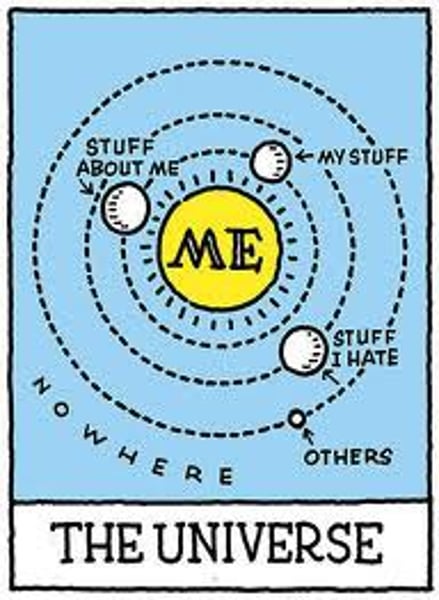
in Piaget's theory, the preoperational child's difficulty taking another's point of view.
concrete operational stage
in Piaget's theory the stage of cognitive development (from about 6 or 7 to 11 years of age) during which children gain the mental operations that enable them to think logically about concrete events.

formal operational stage
in Piaget's theory, the stage of cognitive development (normal beginning about age 12) during which people begin to think logically about abstract concepts.

attachment
an emotional tie with another person; shown in young children by their seeking closeness to the caregiver and showing distress on separation.
imprinting
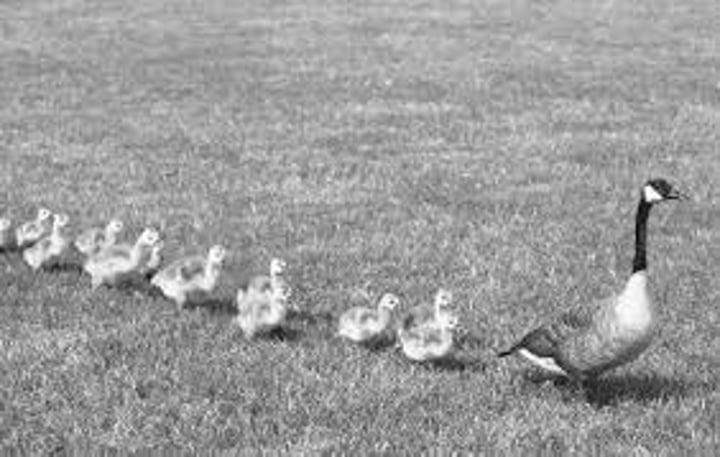
the process by which certain animals form attachments during a critical period very early in life.
temperament
a person's characteristic emotional reactivity and intensity.
adolescence
the transition period from childhood to adulthood, extending from puberty to independence.
puberty
the period of sexual maturation, during which a person becomes capable of reproducing.
identity v. role confusion
teenagers work at refining a sense of self by testing roles and then integrating them to form a single identity, or they become lost in their perception of self

pre-conventional stage of morality
"I hope I'm doing this right. I don't want to disappoint my teacher"
conventional stage of morality
"I just want to get through this speech without having anyone ask me questions."
post-conventional stage of morality
"My new approach to distributing food could end world hunger."
Lawrence Kohlberg
moral development; presented boys moral dilemmas and studied their responses and reasoning processes in making moral decisions. Most famous moral dilemma is "Heinz" who has an ill wife and cannot afford the medication. Should he steal the medication and why?

Jean Piaget
1896-1980; Field: cognition; Contributions: created a 4-stage theory of cognitive development, said that two basic processes work in tandem to achieve cognitive growth (assimilation and accommodation)
identity crisis
distress and disorientation (especially in adolescence) resulting from conflicting pressures and uncertainty about and one's self and one's role in society

Diane Baumrind
Found that parents who use consistent parenting styles are most likely to have children who have the best social skills in elementary school.
Harry Harlow
1905-1981; Field: development; Contributions: realized that touch is preferred in development; Studies: Rhesus monkeys, studied attachment of infant monkeys (wire mothers v. cloth mothers)
secure attachment
Infants use the mother as a home base from which to explore when all is well, but seek physical comfort and consolation from her if frightened or threatened
insecure attachment
Infants are wary of exploring the environment and resist or avoid the mother when she attempts to offer comfort or consolation
babbling
alternating vowel and consonant sounds that babies repeat with variations of intonation and pitch
precede first words
telegraphic speech
1st stage of combining words
pares down to essential words
Strange Situation
a behavioral test developed by Mary Ainsworth that is used to determine a child's attachment style
conservation tasks
Piaget
changing the shape of a substance to see if the child can go beyond the way the substance visually appears to understand that the amount is still the same
authoritative parents
parenting style
best
high nurturing and discipline
love
clear family rules
authoritarian parents
parenting style
parents provide plenty of rules but rank low on child-centeredness
stress unquestionable obedience
neglecting parents
parenting style
worst
parents provide little discipline
little nurturing or love
growth spurt
dramatic increase in height and weight that occurs during puberty
anorexia nervosa
life-threatening eating disorder
pathological dieting (severe weight loss)
distorted body image
bulimia nervosa
eating disorder
at least biweekly cycles of binging and purging
obsessive attempt to lose weight
clique
small peer group (6 people)
similar attitudes and activities
crowd
relatively large teenage peer group
identity statuses
Marcia's 4 categories of identity formation: diffusion, foreclosure, moratorium and achievement
identity diffusion
status where person feels aimless or totally blocked, no adult path
identity foreclosure
decides adult life path without any thought or active search
identity moratorium
identity status
person actively searches various possibilities to find a truly solid adult life path
mature style of constructing an identity
identity achievement
decides adult life path after searching out various options
crystallized intelligence
basic facet of intelligence
knowledge base
storehouse of accumulated information
ego integrity
Erikson: 8th stage
elderly persons decide that their life missions have been fulfilled and therefore accept impending death
age discrimination
illegally laying off workers or failing to hire or promote them on the basis of age
dementia
general term for any illness that produces serious, progressive, usually irreversible cognitive decline
Alzheimer's disease
age-related dementia characterized by neural atrophy and abnormal by-products of that atrophy (senile plaques and neurofibrillary tangles)
Ivan Pavlov
discovered classical conditioning; trained dogs to salivate at the ringing of a bell
classical conditioning
a type of automatic learning in which one learns to link two or more stimuli and anticipate events
unconditioned stimulus (UCS)
in classical conditioning, a stimulus that unconditionally—naturally and automatically—triggers a response.
conditioned stimulus (CS)
in classical conditioning, an originally irrelevant stimulus that, after association with an unconditioned stimulus (US), comes to trigger a conditioned response.
B.F. Skinner
Behaviorist that developed the theory of operant conditioning by training pigeons and rats
positive punishment
The application of an aversive stimulus after a behavior to stop that behavior
negative reinforcement
Increasing behaviors by stopping or reducing negative stimuli, such as shock. A negative reinforcer is any stimulus that, when removed after a response, strengthens the response. (Note: negative reinforcement is not punishment.)
positive reinforcement
Increasing behaviors by presenting positive stimuli, such as food. A positive reinforcer is any stimulus that, when presented after a response, strengthens the response.
primary reinforcer
an innately reinforcing stimulus, such as one that satisfies a biological need
 Note
Note  Flashcards (50)