Smooth Muscle Physiology
 Studied by 0 people
 Call Kai
 Learn
Learn Practice Test
 Spaced Repetition
 Match
Match Flashcards
 Knowt Play
1/78

There's no tags or description
Looks like no tags are added yet.
Name | Mastery | Learn | Test | Matching | Spaced | Call with Kai |
|---|
No analytics yet
Send a link to your students to track their progress
79 Terms
Where is smooth muscle located?
- walls of hollow organs
- including blood vessel (expect for capillaries)
What is the function of smooth muscle containing organs?
- to act as the body's conduits for the transport of gases, liquids and solids
What is the morphology of smooth muscle?
- cells are not striated
- worm shaped
What is smooth muscle regulated by?
- the autonomic nervous system (ANS)
- by hormones and locally released substances
- in the GI tract, rhythmic contractions are initiated by pacemaker cells
What are the smooth muscles like in blood cells?
- controls diameter, vascular resistance, distribution of blood flow and blood pressure
- also venous capacitance and central venous pressure
What are the smooth muscles like in GI tract?
- controls mixing and propulsion of GI contents
What are the smooth muscles like in the bladder (detrusor), ureters and urethre?
- sontrols storage and micturition
What are smooth muscles like in uterus (myometrium)?
- responsible for labour
What are the smooth muscles like in the respiratory system?
- controls diameter of airways
What are smooth muscles like in vas deferens and corpus caverosum?
- controls erection and ejaculation
What are smooth muscles like in the fallopian tube?
- mediates movement of eggs from ovaries to uterus
What are smooth muscles like in the iris and cailiary body?
- controls pupil diameter and focussing of the lens
Draw the structure of a smooth muscle cell
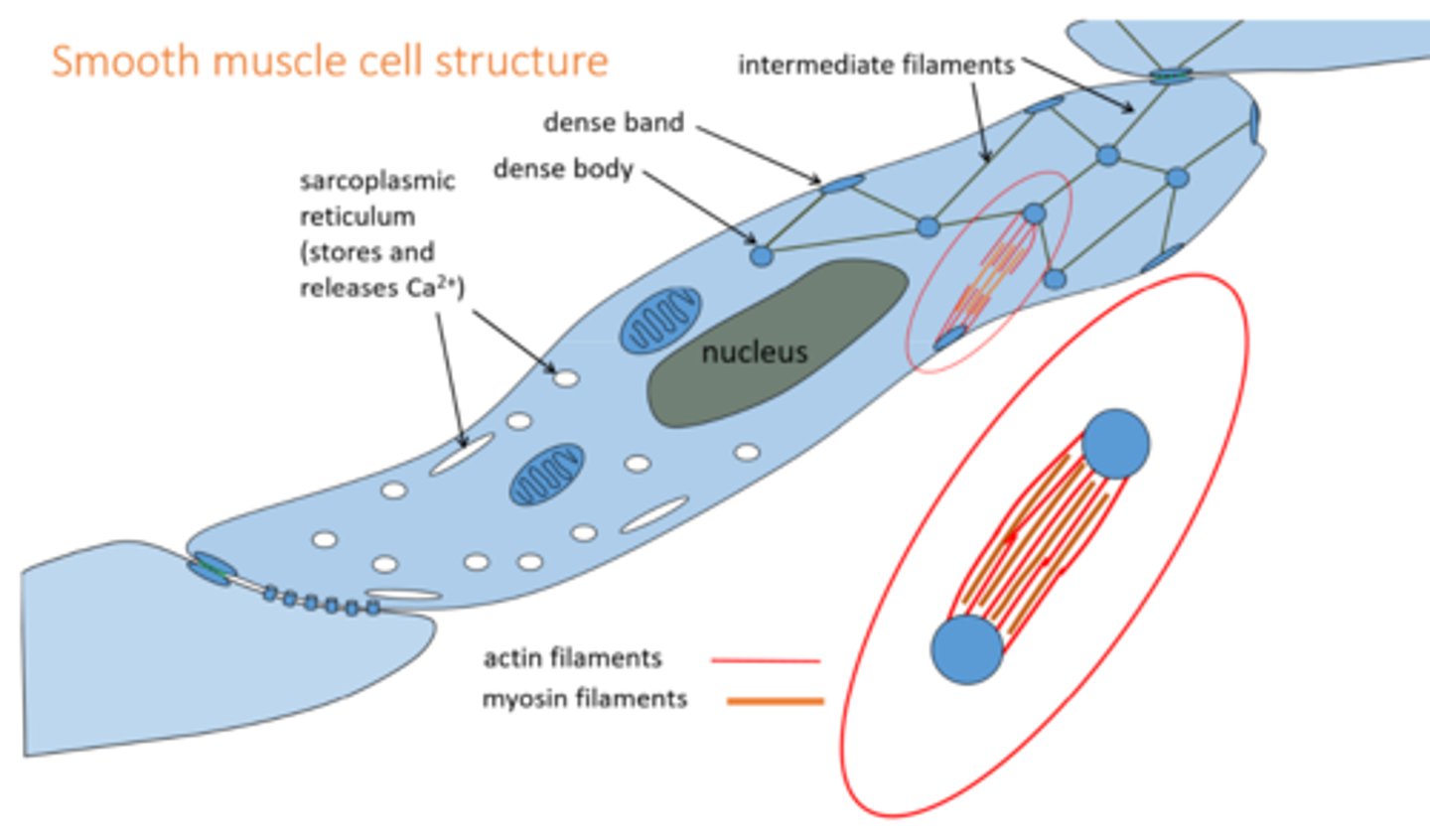
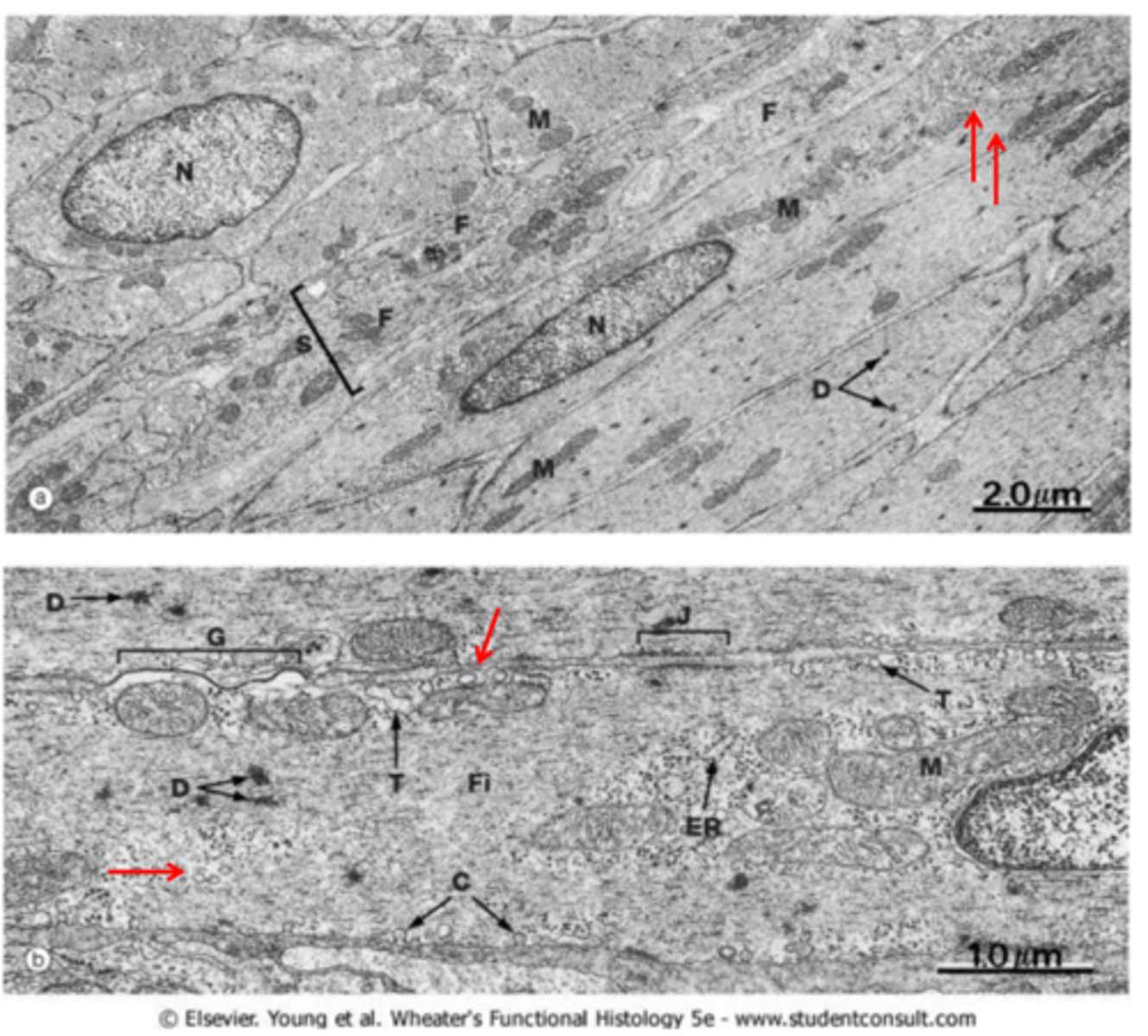
What are the characteristic structural features of smooth muscle cells?
- elongated shape
- lack of striations
- presence of dense bodies (D) which anchor actin filaments. Like cardiac Z-lines, theseare mainly composed of the protein a actinin
- presence of a endoplasmic/sarcoplasmic reticulum (ER) which stores Ca2+
- gap junctions between cells through which current an small molecules can flow from one cells to another
- higher ratio of aactin to myosin compared to striated muscle
What are autoaoids?
- also called hormones
- physiologically active factors released by cells which typically act in an autocrine or paracrine manner
What is the ANS?
- autonomic nervous system
- a branch of the nervous system that controls the activity of the heart, visceral organs, blood vessels and glands
What is the main stimulus of vascular smooth muscle?
- ANS
- autacoids released by the vascular endothelium or from tissue around the blood vessek
- hormones and other blood-borne substances
Are there action potential at vasucalr smooth muscles?
- sometimes
What is the main stimulus of airways amooth muscle?
- ANS
- mainly PNS and adrenaline
- autacoids
Are there action potentials at airways snooth muscle?
- no
What is the main stimulus for intestinal smooth muscle?
- interstitial cells of Cajal
- ANS (SNS, PNS, enteric)
- endocrine hormones
- autacoids
Are there action potentials at inestinal smooth muscles?
- Yes
What is the main stimulus for myometirum smooth muscles?
- intrinsic rhythmicity
- ANS
- prostaglandins (autacoids)
- oxytocin (pituitary hormone)
Are there action potentials at myometrium smooth muscles?
- Yes
What are the main stimulus for bladder smooth muscles?
- ANS
- autacoids from the urothelium
Are there action potentials at bladder smooth muscles?
- yes
Draw a flow diagram to show the regulation of skeletal muscle
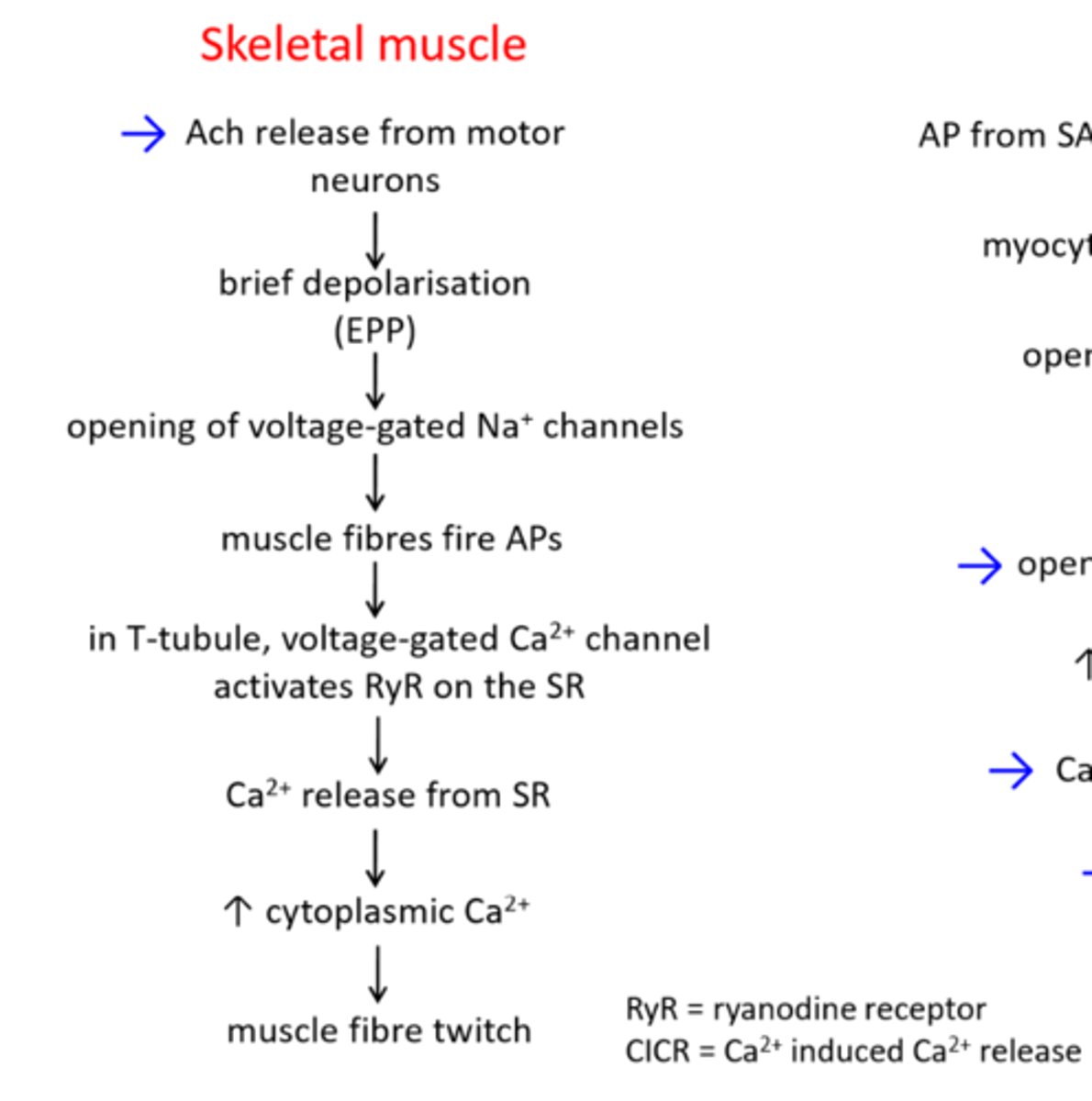
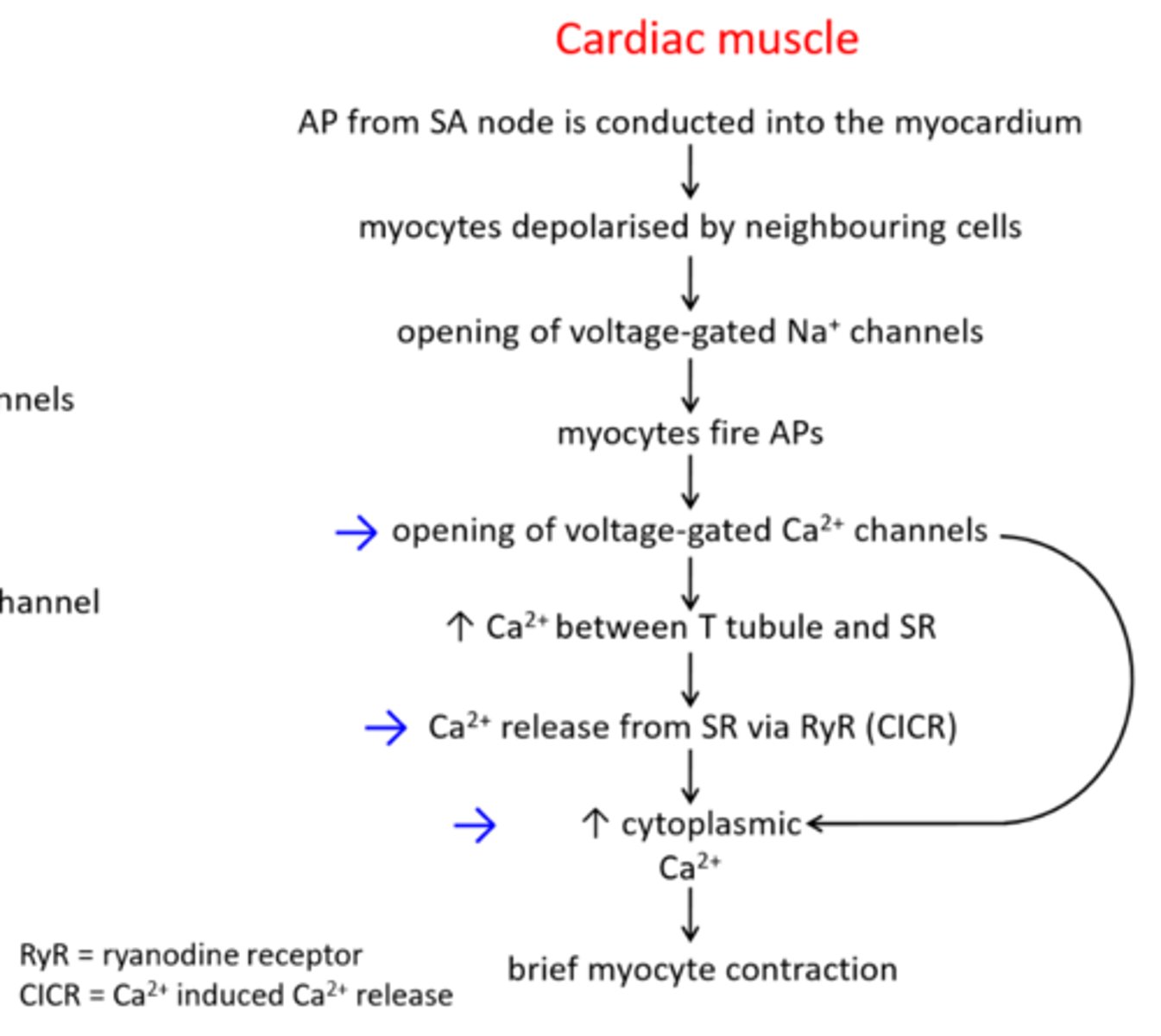
Draw a flow diagram to show the regulation of cardiac muscle
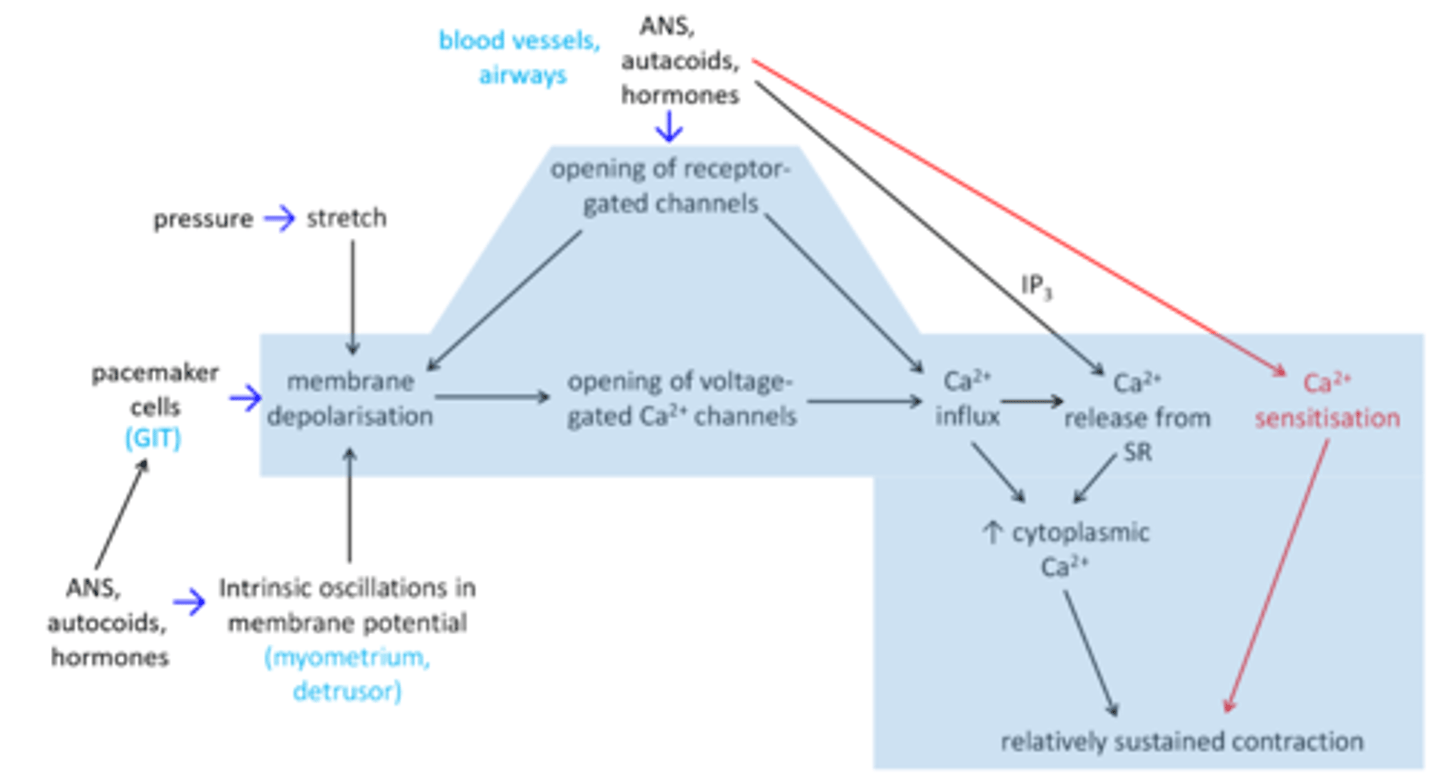
Draw a complicated flow diagram to show smooth muscle contraction
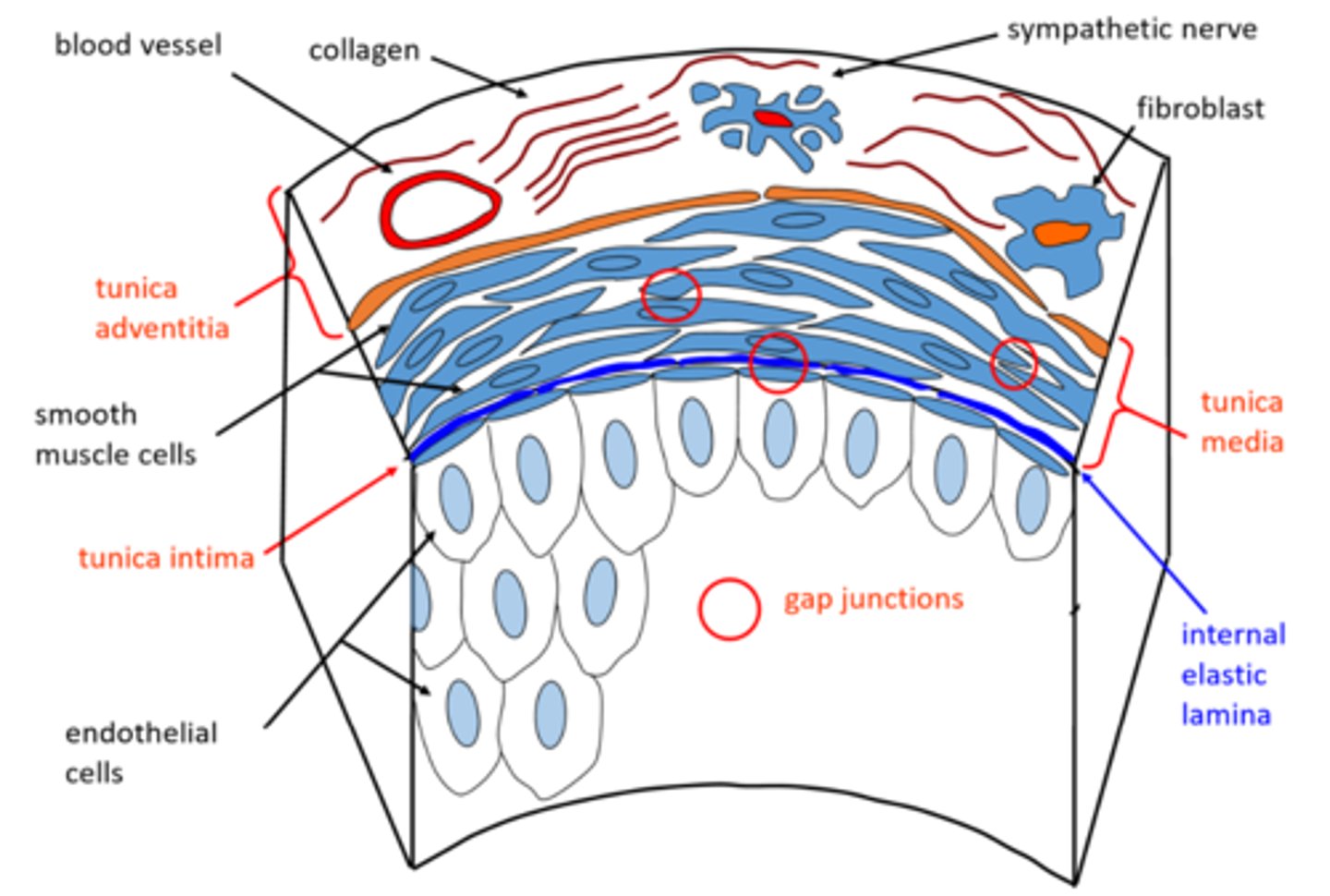
Draw a diagram of a typical muscular artery
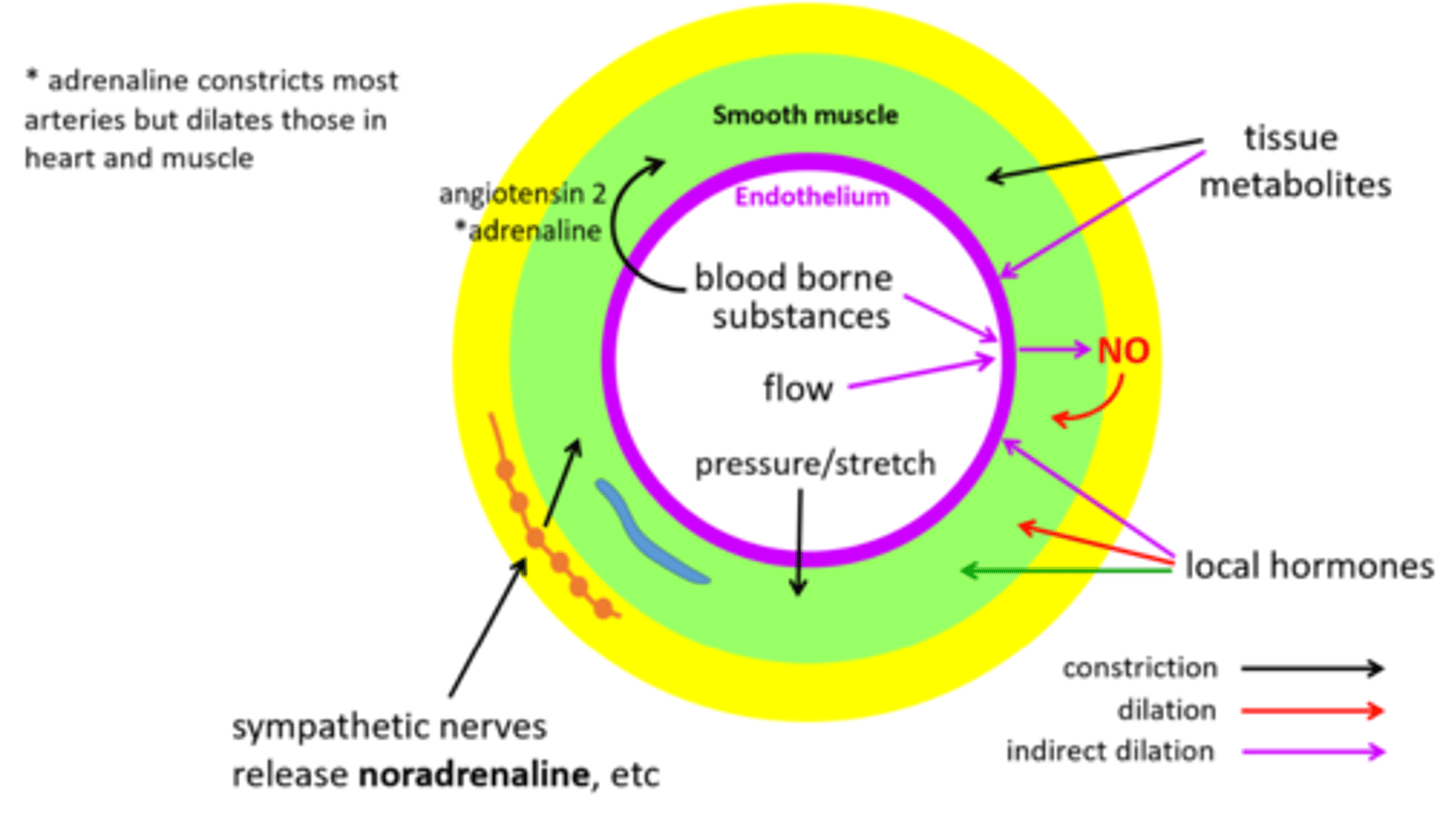
What is vascular tone the result of?
- a balance between various constricting and dilating influences
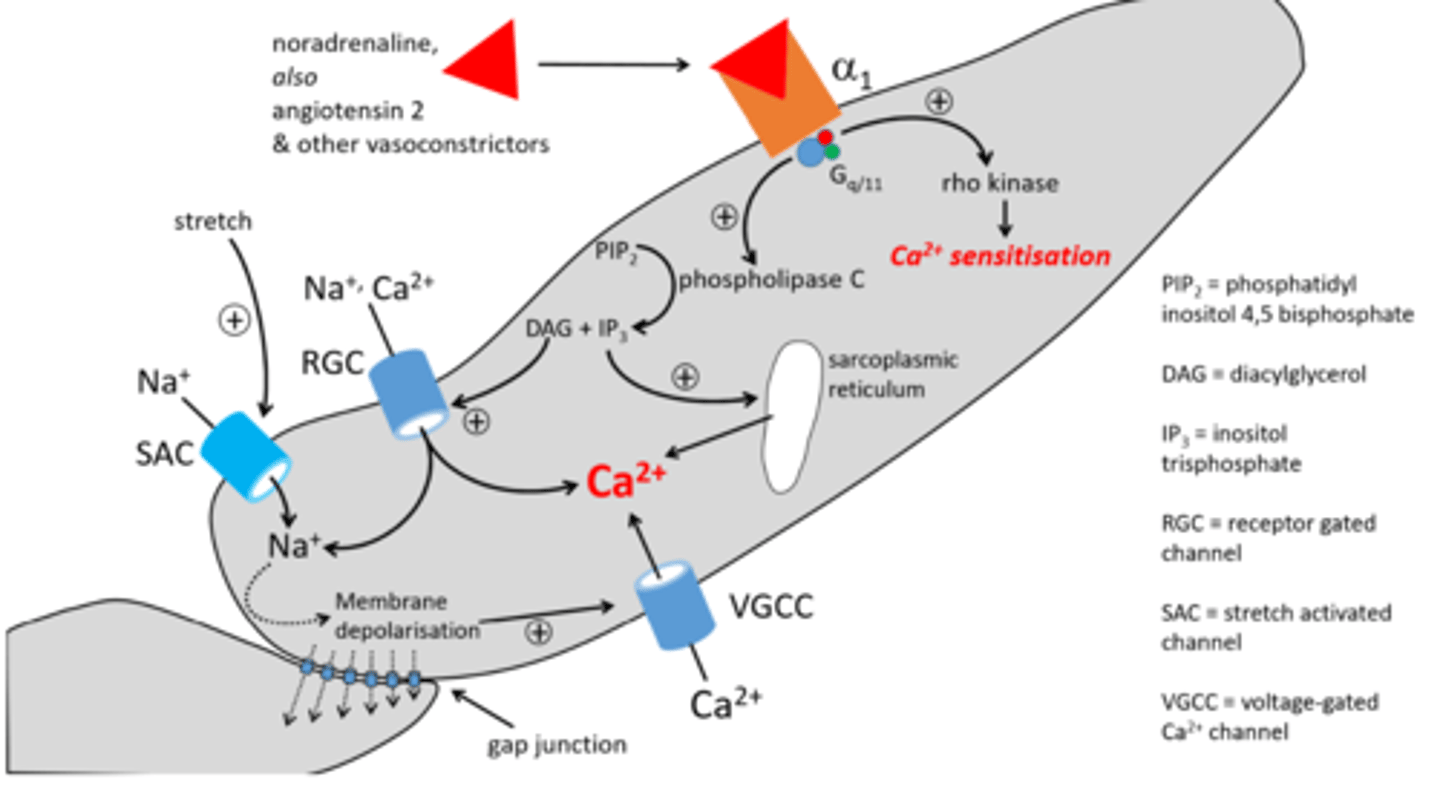
What is PIP2?
- phophatidyl inositol 4, 5 bisphosphate
What is DAG?
- diacylglycerol
What is IP3?
- inositol triphosphate
What is RGC?
- receptor gated channel
What is SAC?
- stretch activated channel
What is VGCC?
- voltage-gated Ca2+ channel
Draw a diagram to show vascular smooth muscle contraction
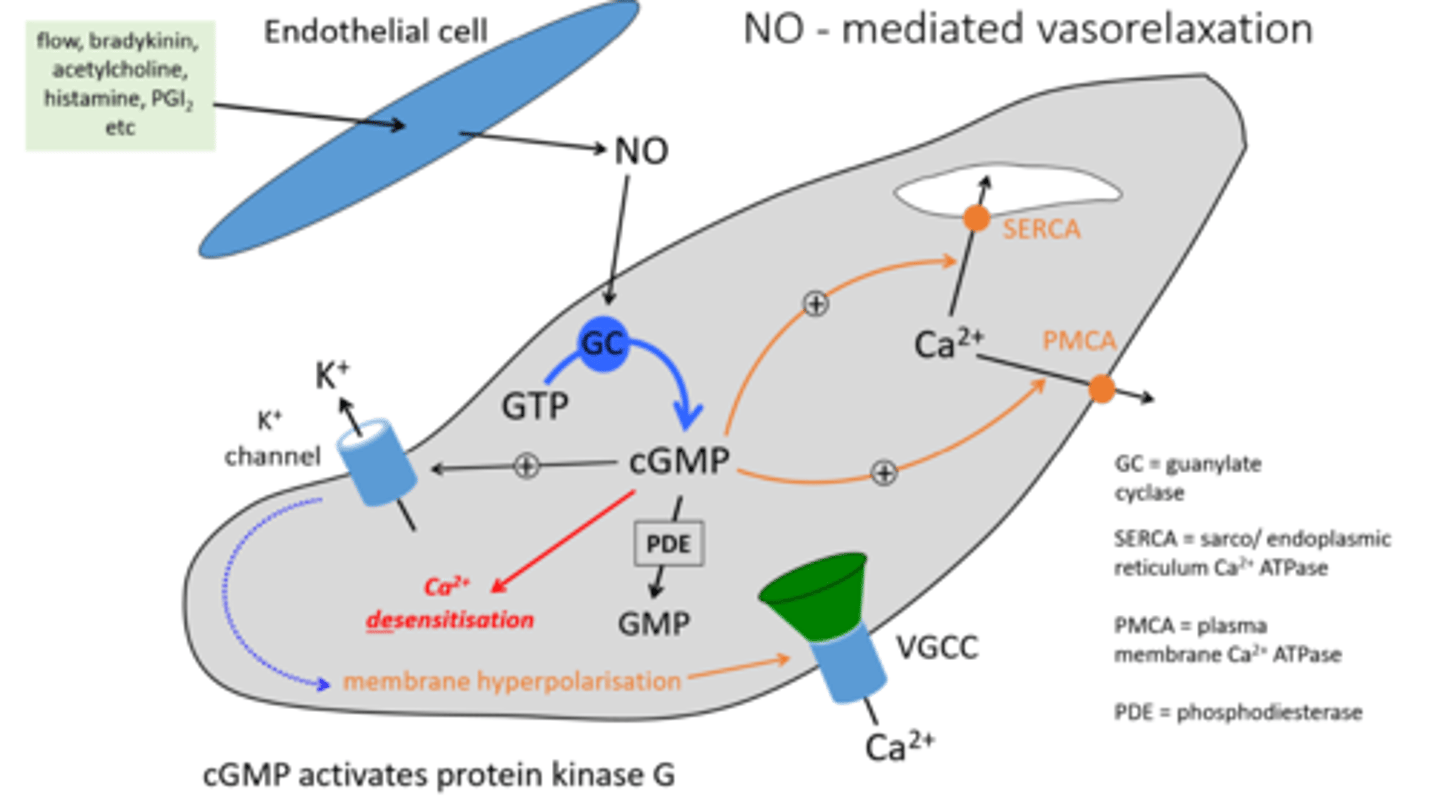
Draw a diagram of NO mediated vasorelaxation
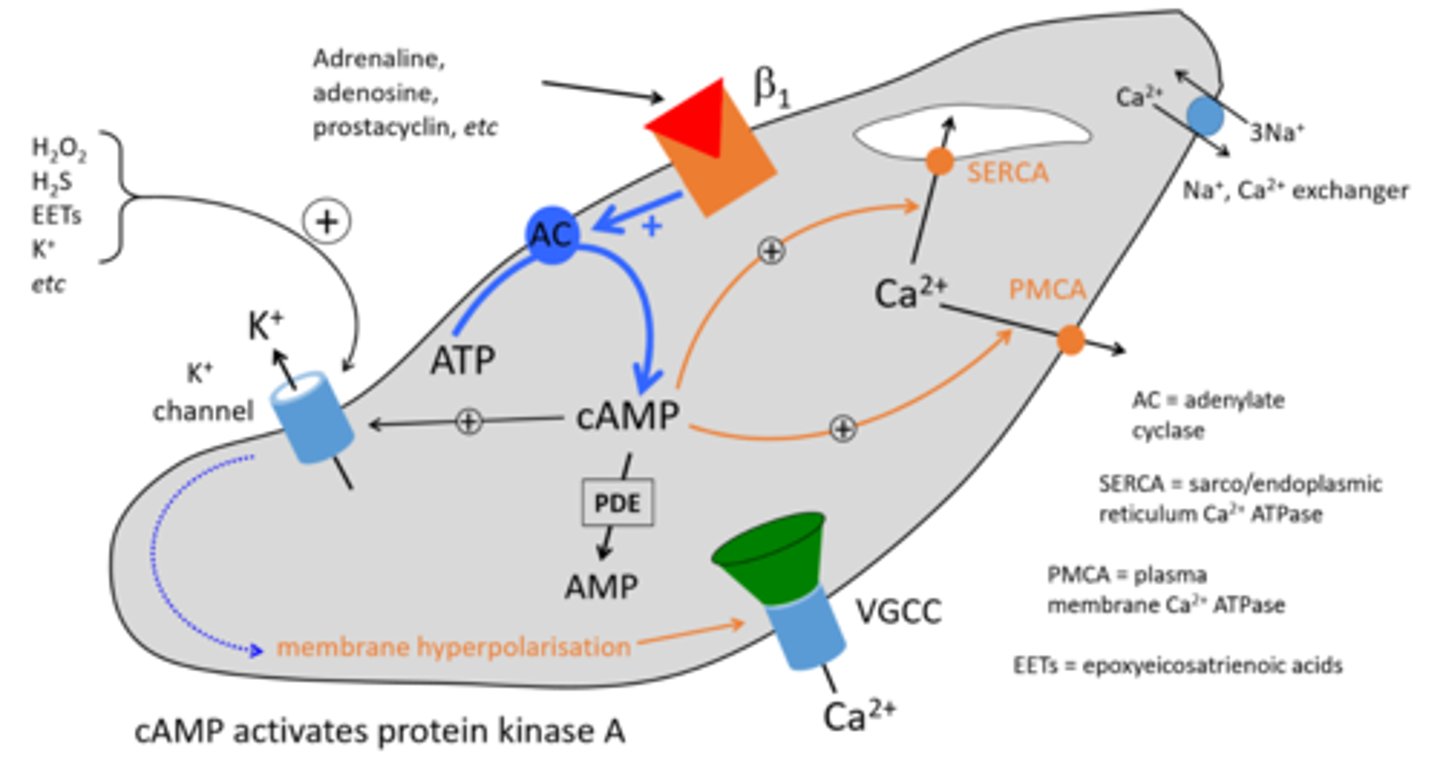
Draw a diagram of cyclic AMP - mediated vasorelaxation/opening of K+ channels
Is crossbridge cycling slow in smooth muscle?
- much slower in smooth muscle compared to striated muscle
- leads to a lower requirement ATP synthesis, smooth muscle can remain contracted indefinitely and does not fatigue
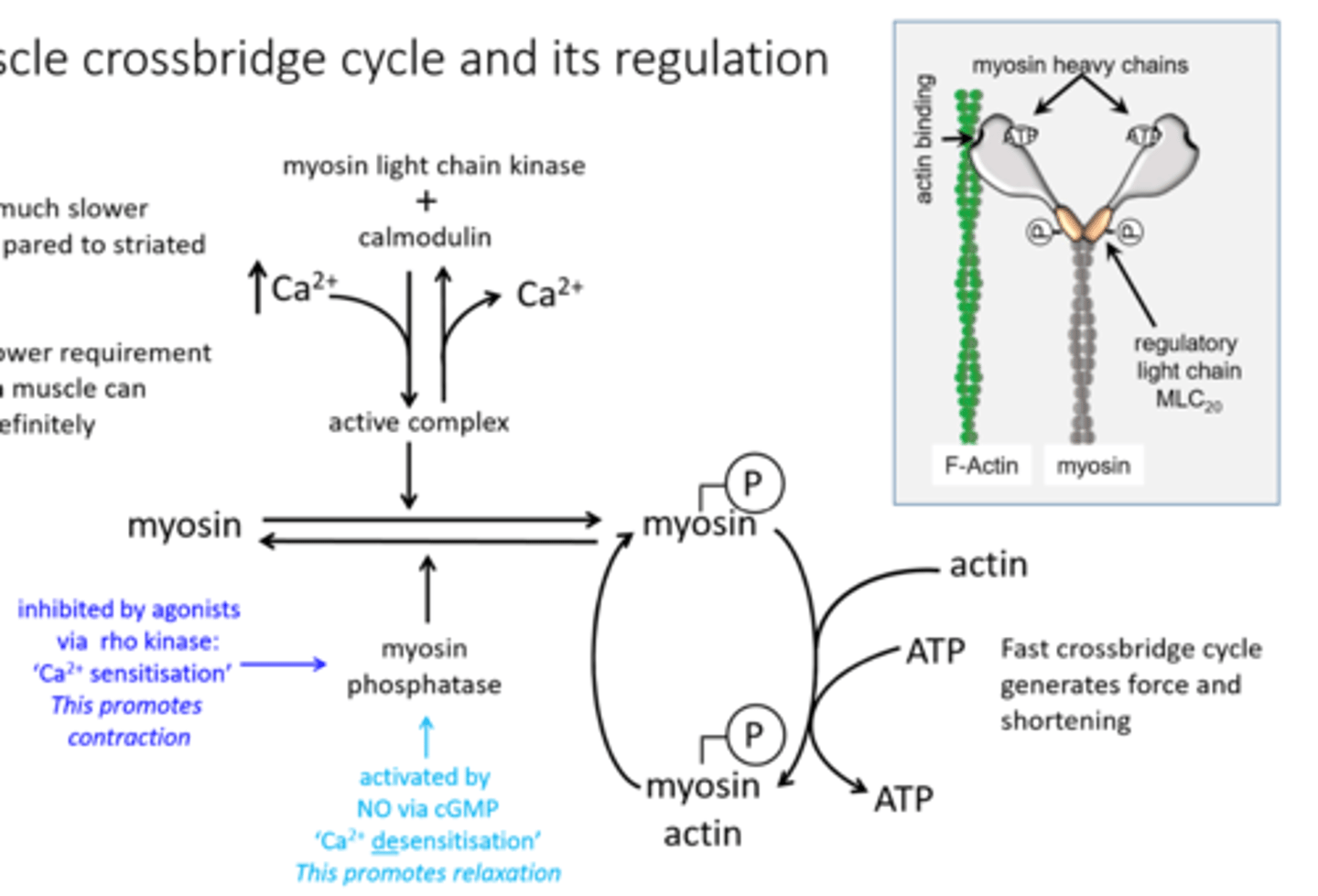
Draw a diagram of smooth muscle crossbridge regulation
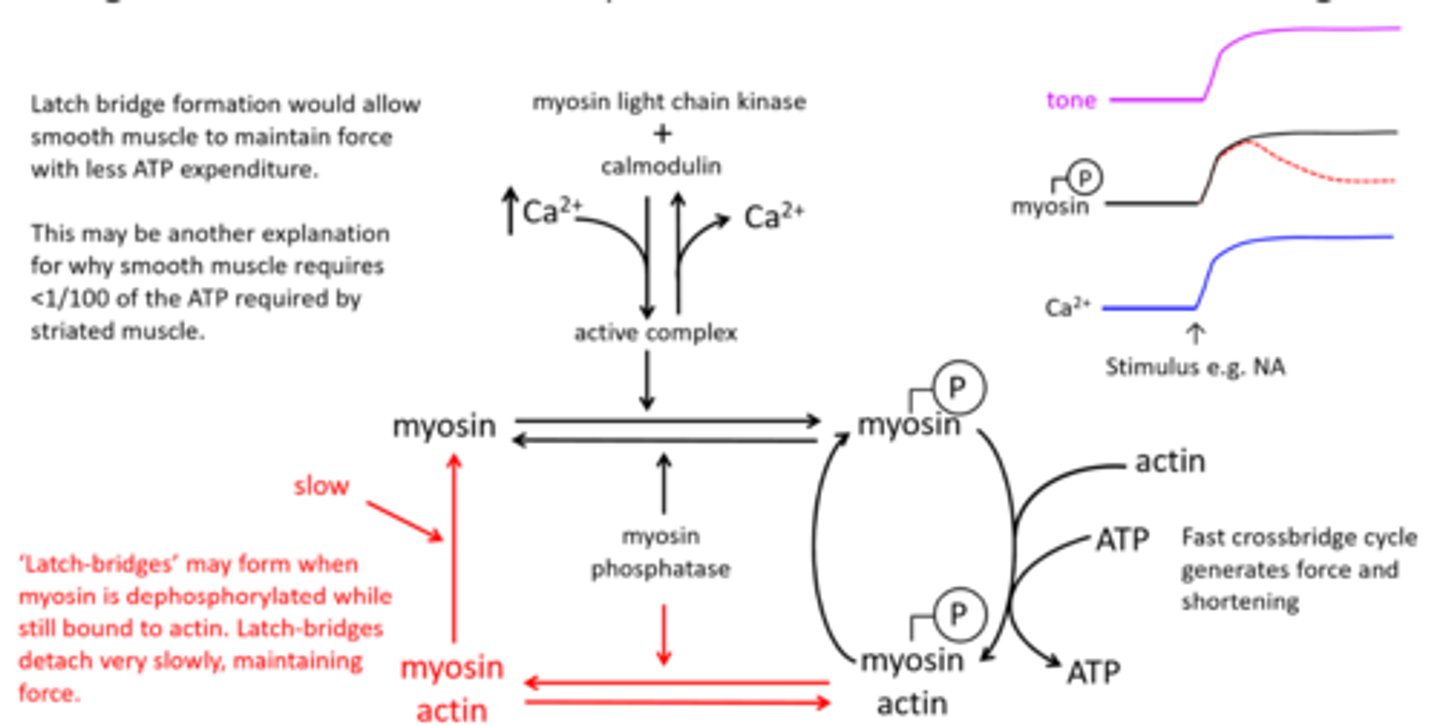
What does latch bridge formation allow?
- smooth muscle to maintain force with less ATP expenditure
- amy be another reason why smooth muscle requires less ATP than straited muscle
When many latch bridges form?
- when myosin is dephosphorylated while still bound to actin
- detach very slowly, mainting force
Draw a flow diagram to explain regulation of tension development in smooth muscle
does smooth muscle cell electrical activity vary between?
- organs
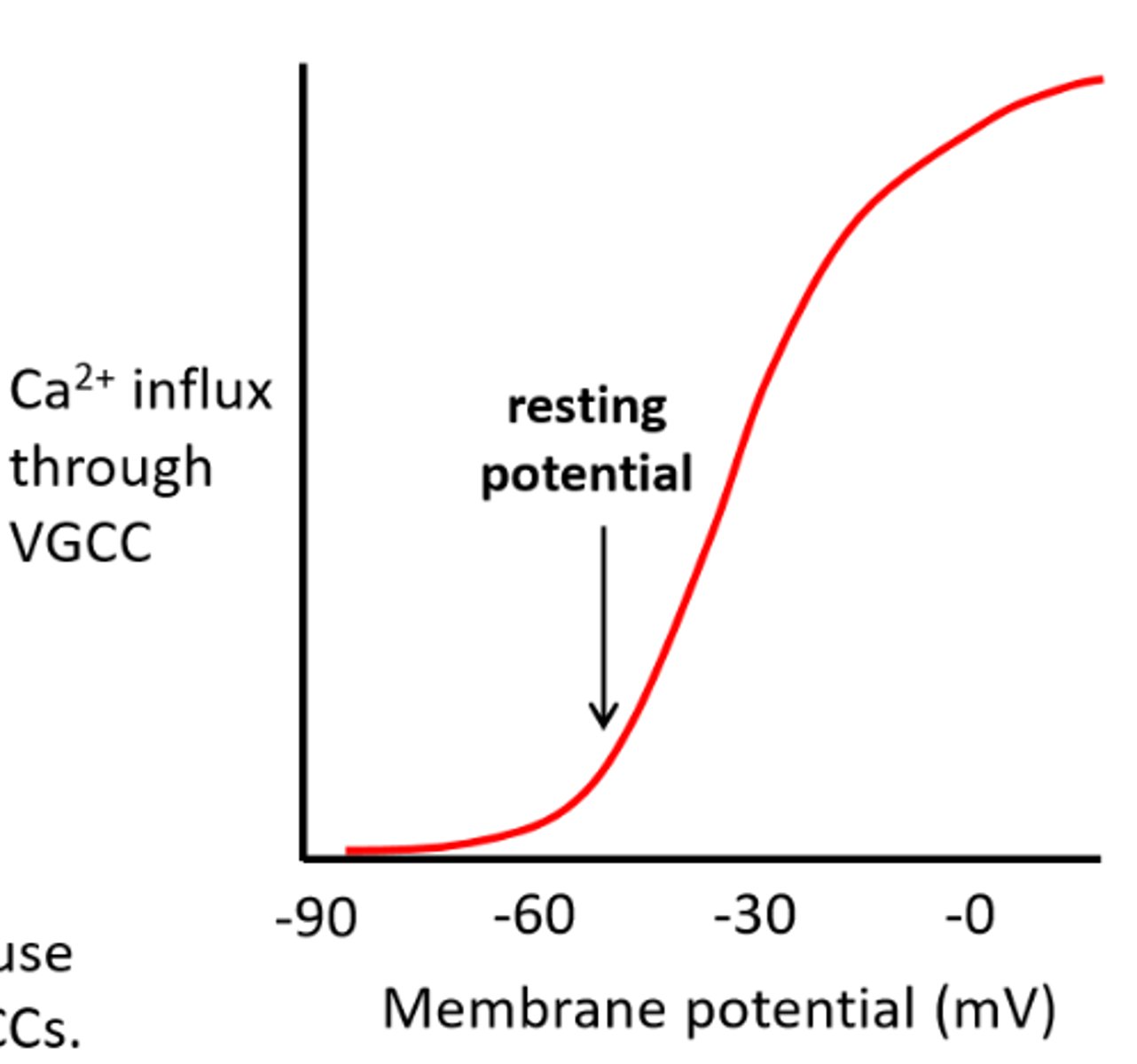
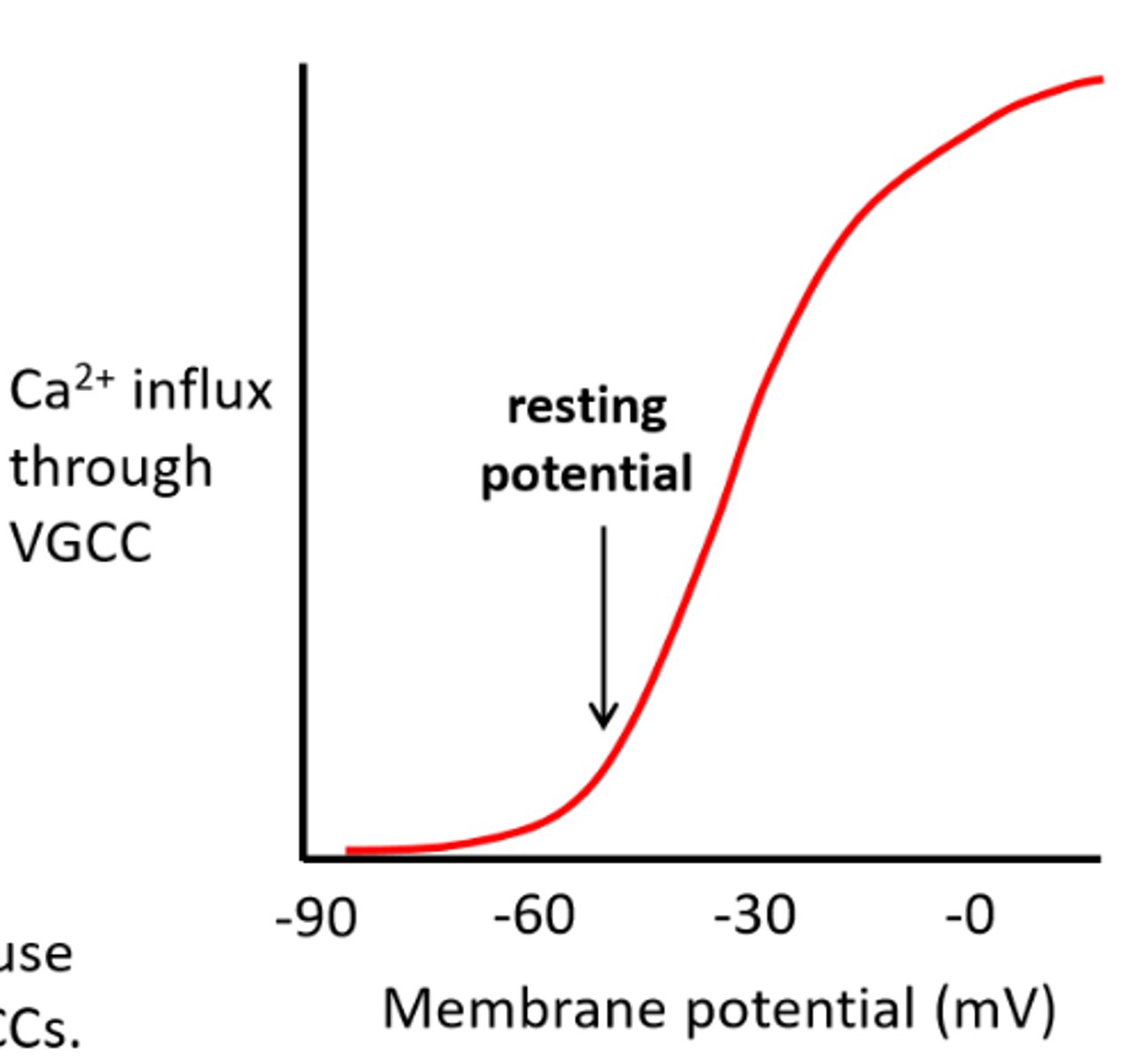
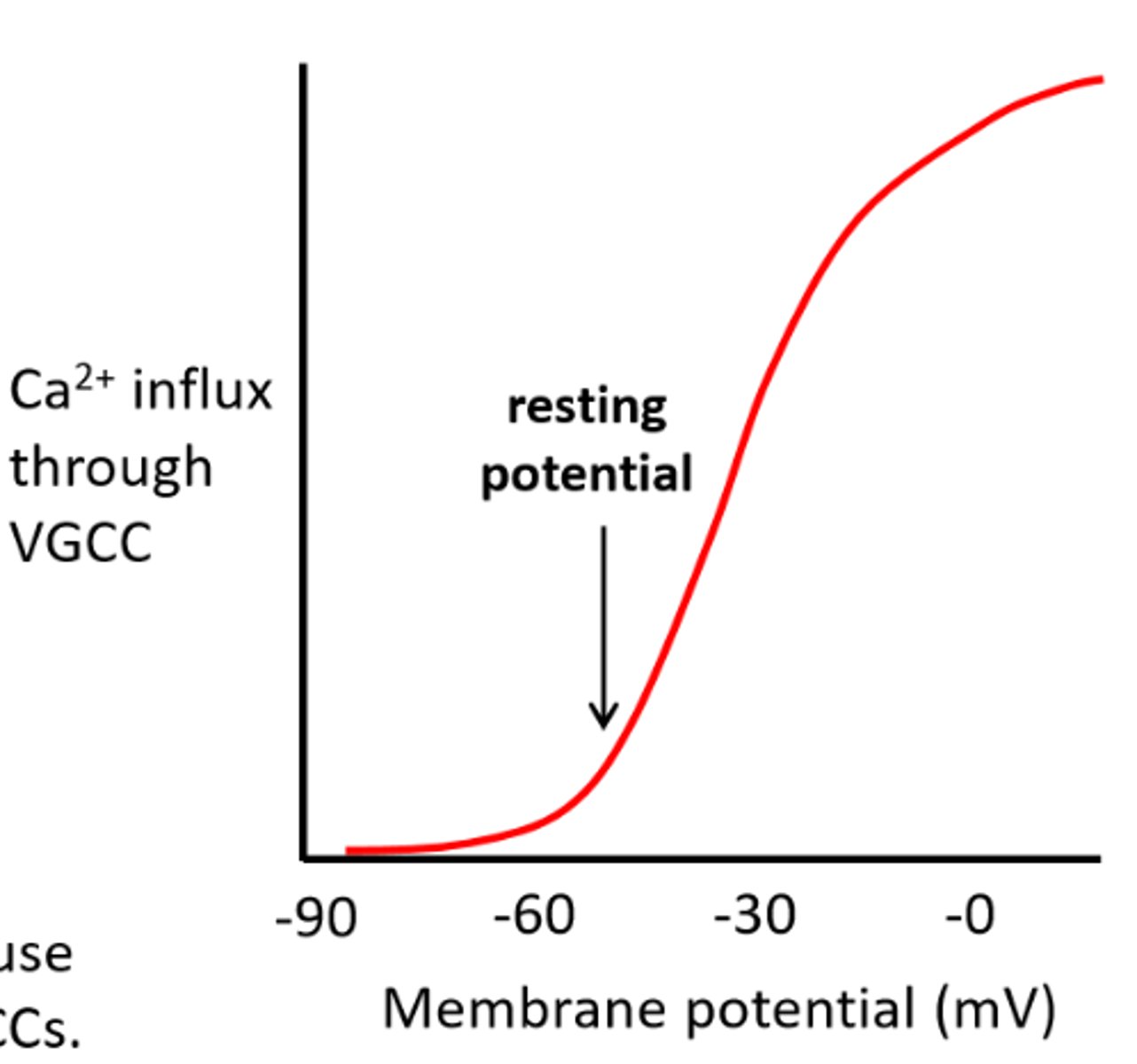
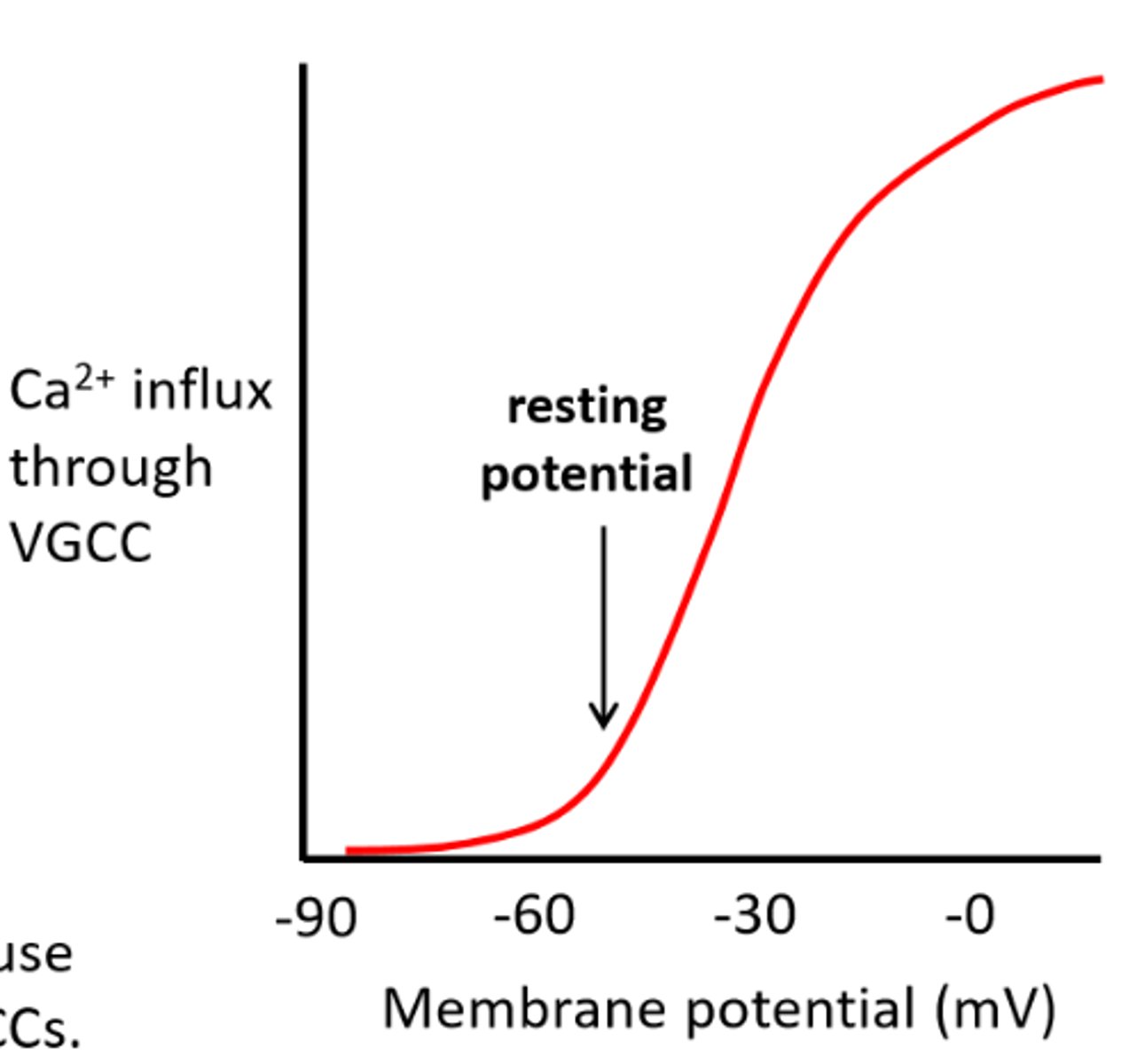
What is the membrane potential in vascular and airways smooth muscle cells?
- in the range of -50 to -70 mV
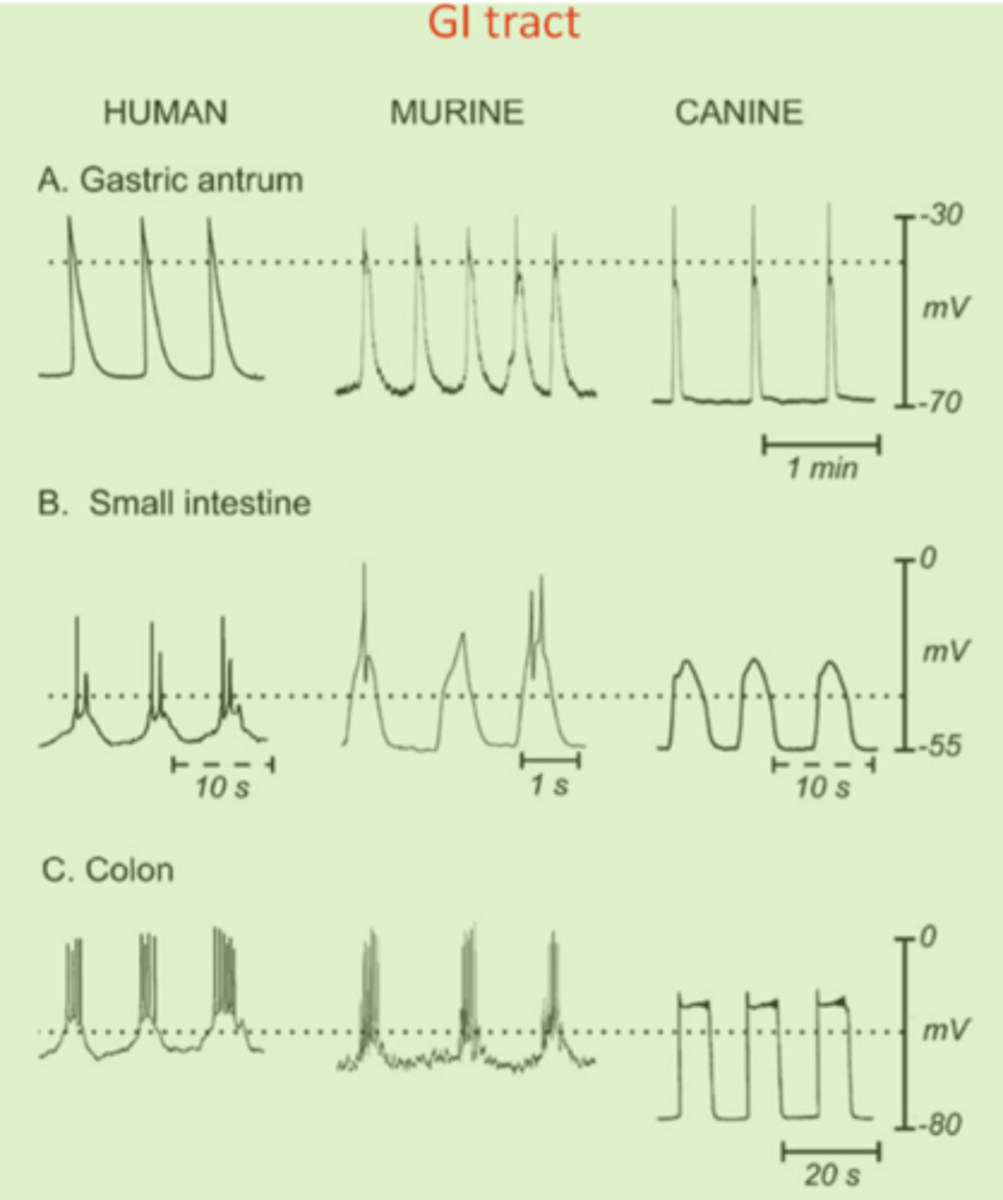
- other smooth muscles generally spontaneous oscillations, called slow wave
What are slow waves generated by?
- the smooth muscle cells themselves ( e.g. myometrium) or are driven by pacemaker cells (GI tract - interstitial cells of cajal)
What are action potentials like in smooth muscle cells?
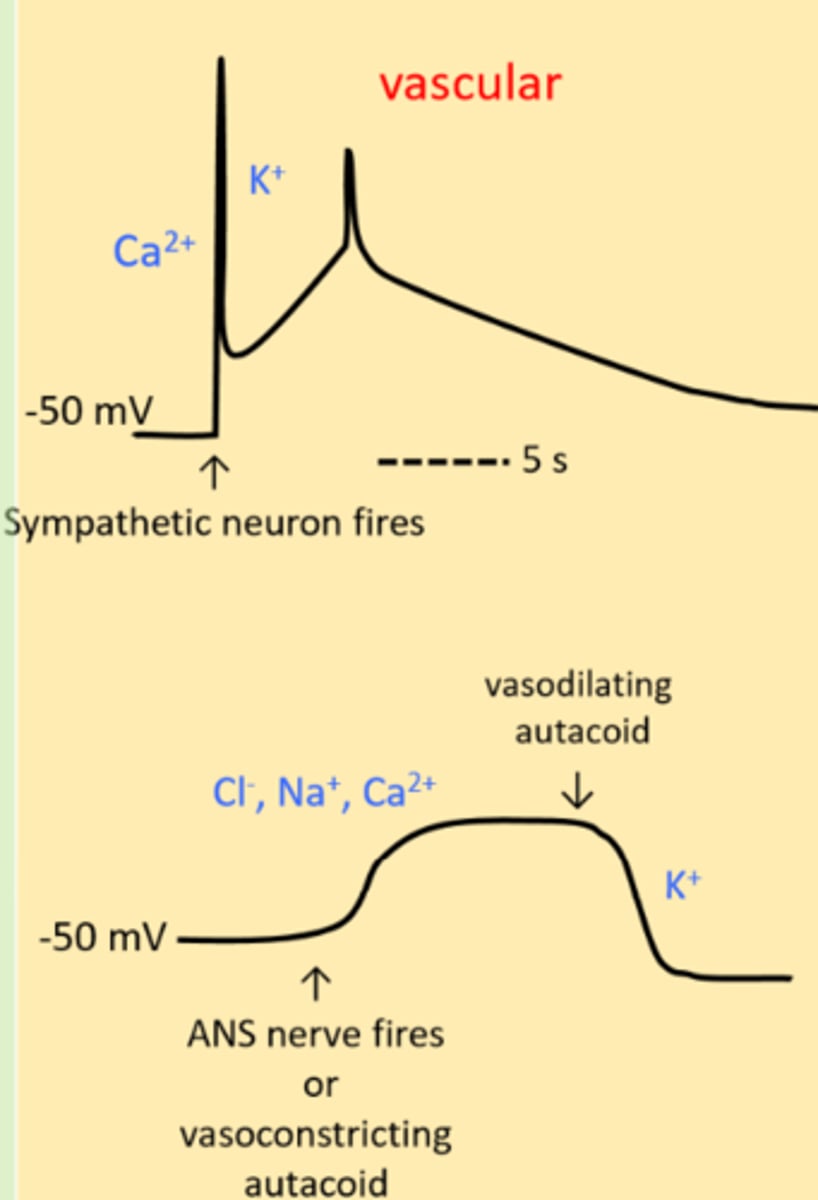
- occur in visceral SMSs and some vascular smooth muscles, and their frequency is increased by stimuli which cause depolarisation or increase the amplitude of slow wave
What is the AP upstoke almost always due to?
- voltage-gated Ca+ channels (VGCC)
What is repolarisation due to?
- K+ channels
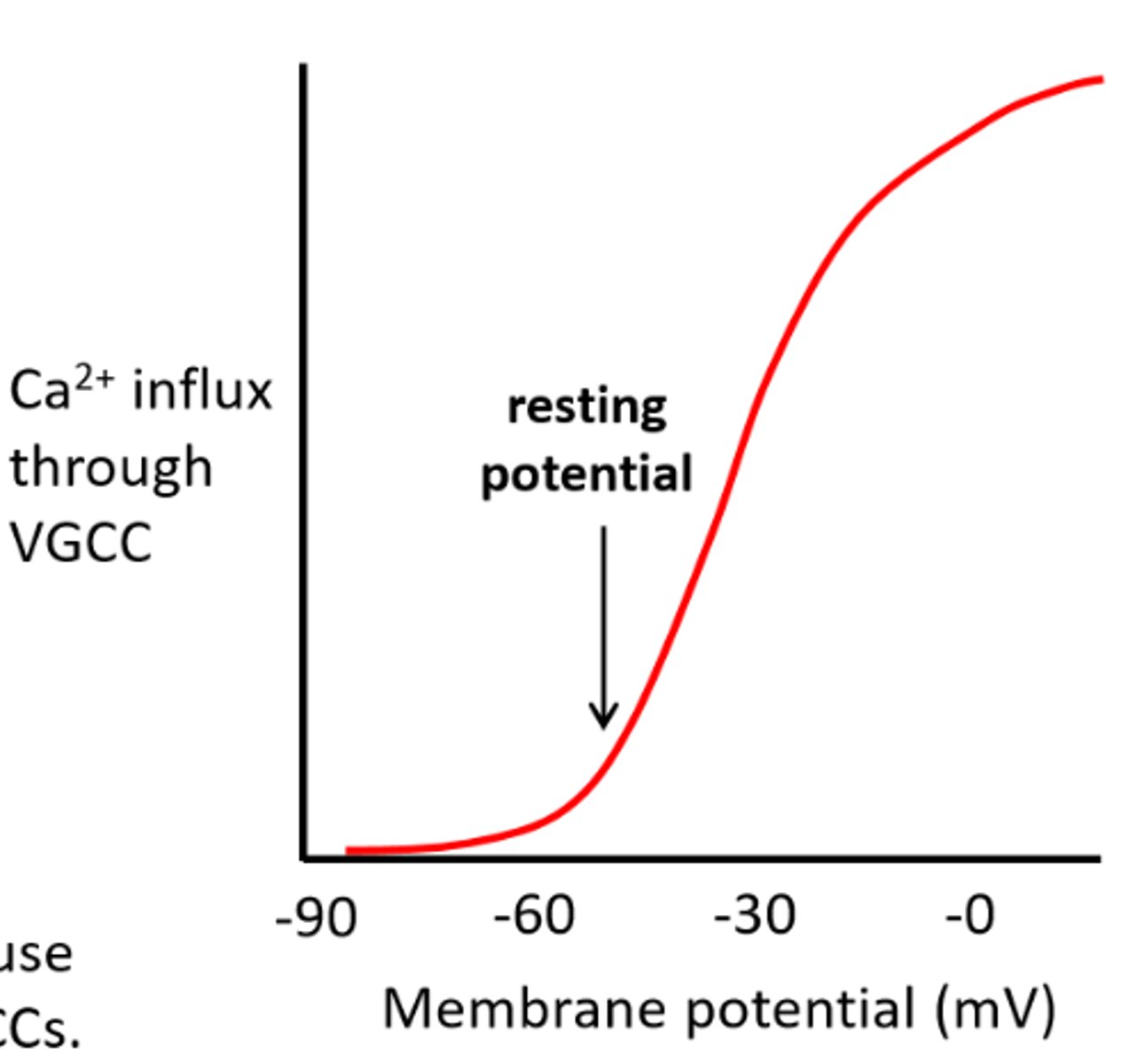
What may lower levels of stimuli which contract SMCs cause?
- graded depolarisation instead of APs
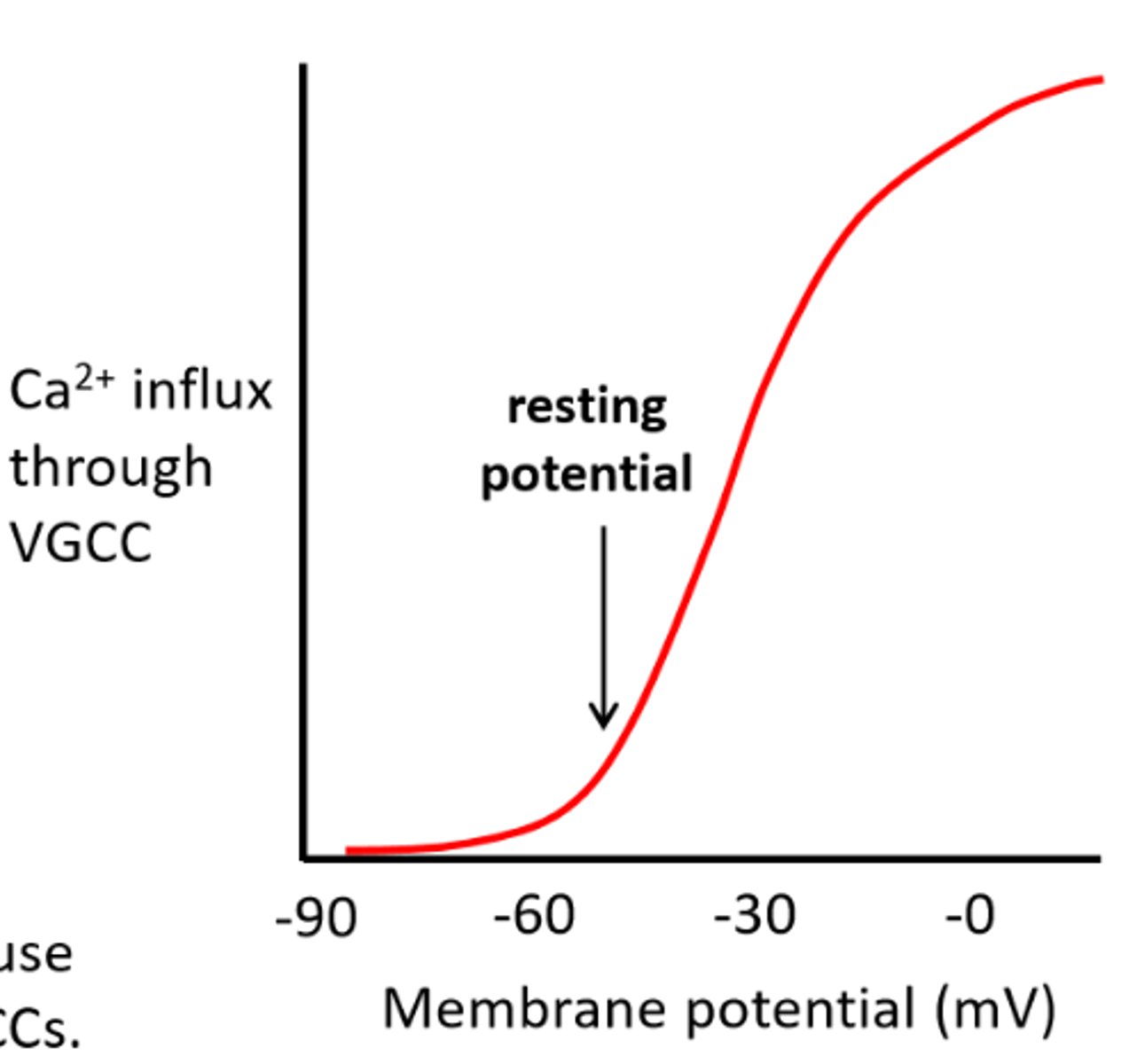
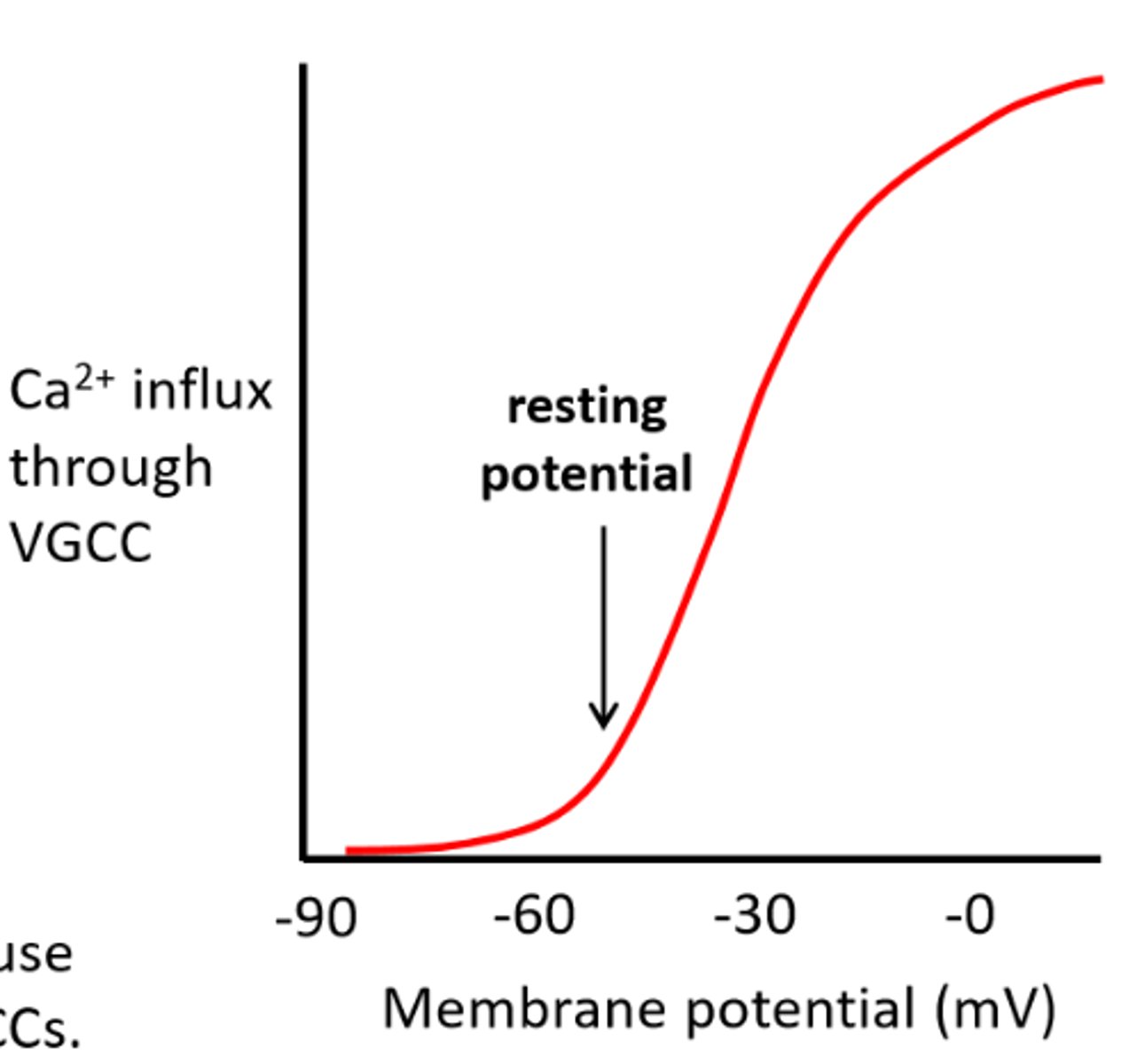
What does depolarisation always tend to open?
- VGCCs and cause contraction
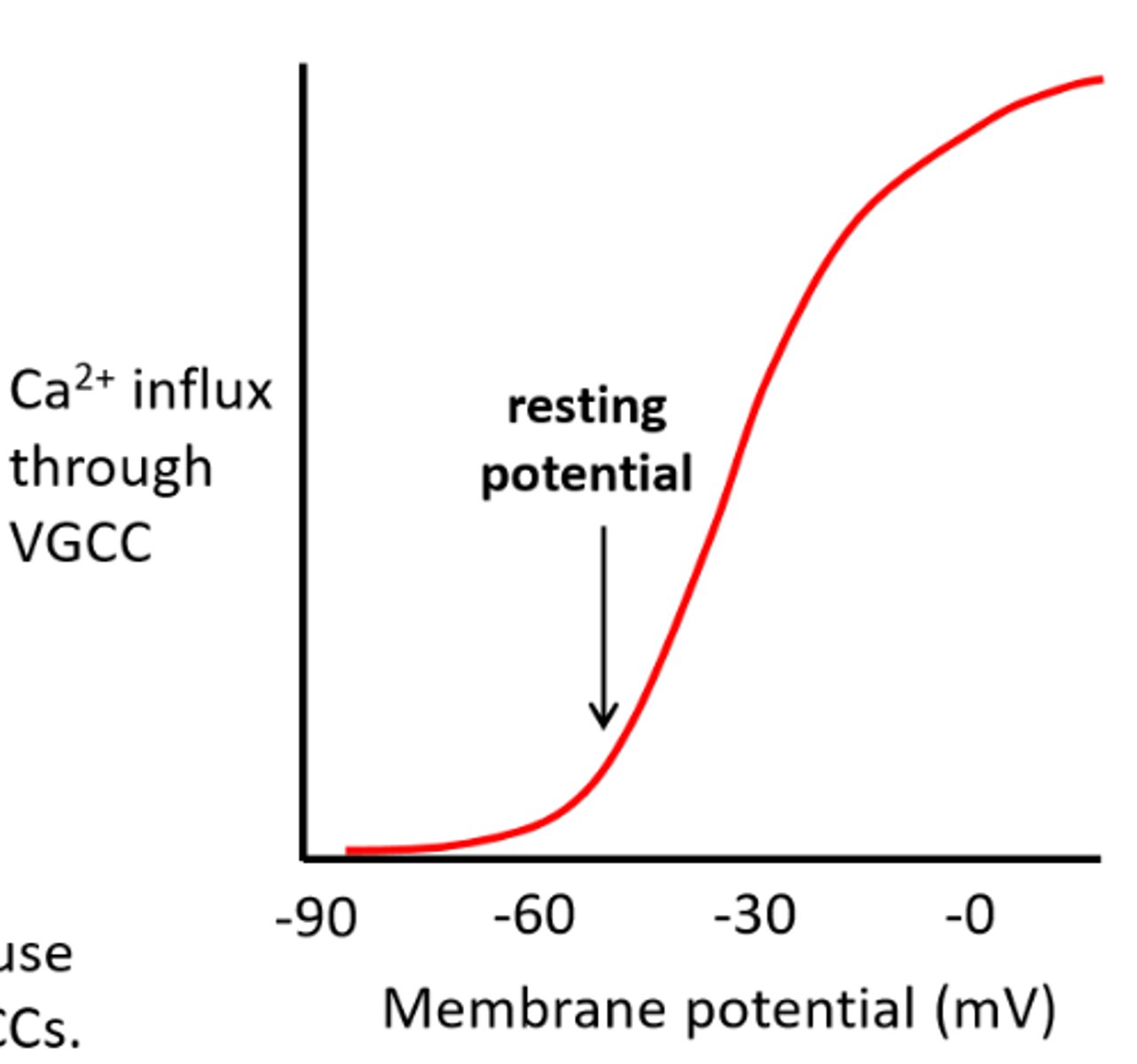
What can some stimuli also cause?
- hyperpolarisation
- this tends to cause relaxation
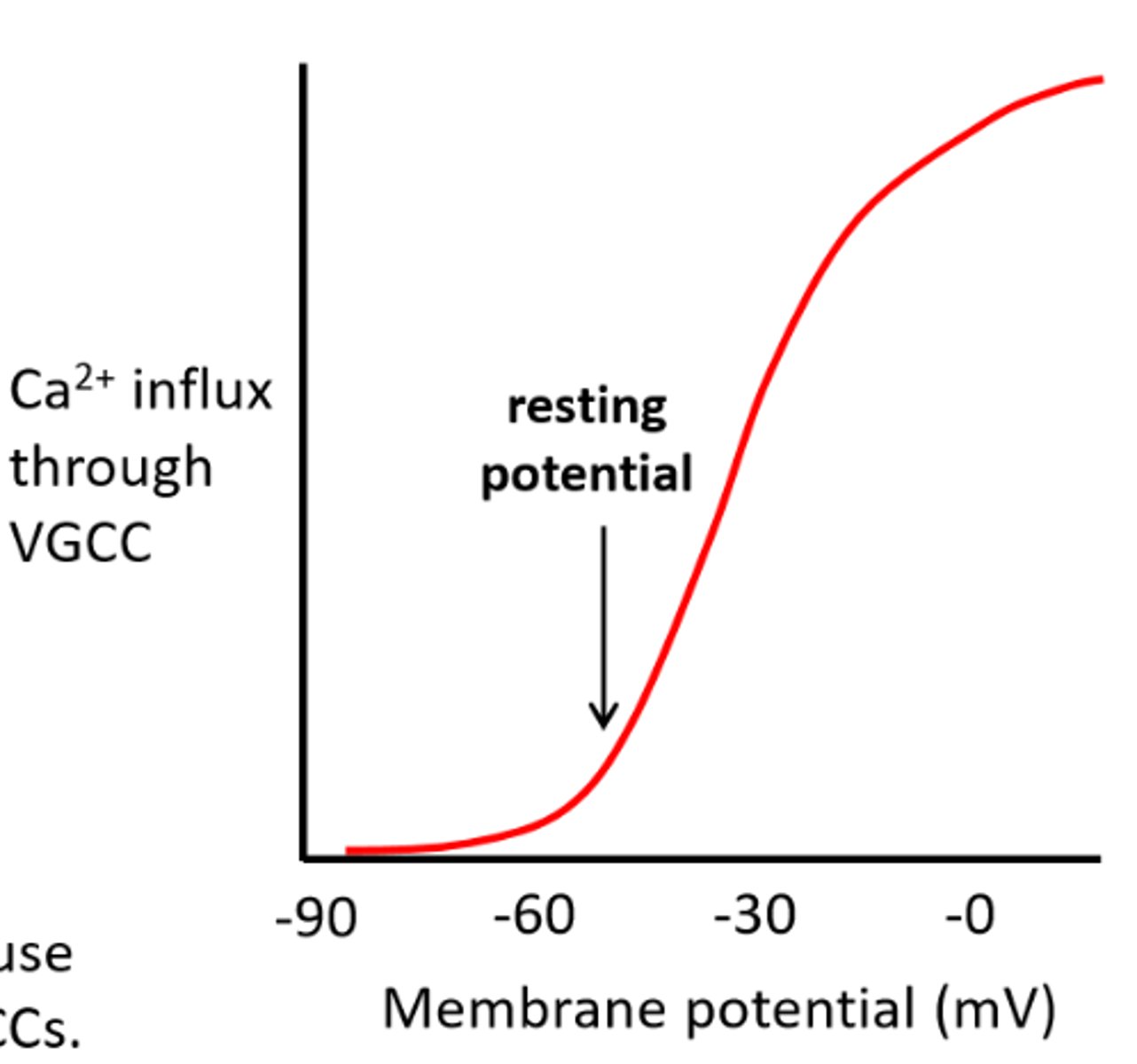
What may also cause contraction?
- most hromones, autacoids and neurotransmitters also activate pathways which cause contraction via pathways not dependent on depolarisation and the opening of VGCC
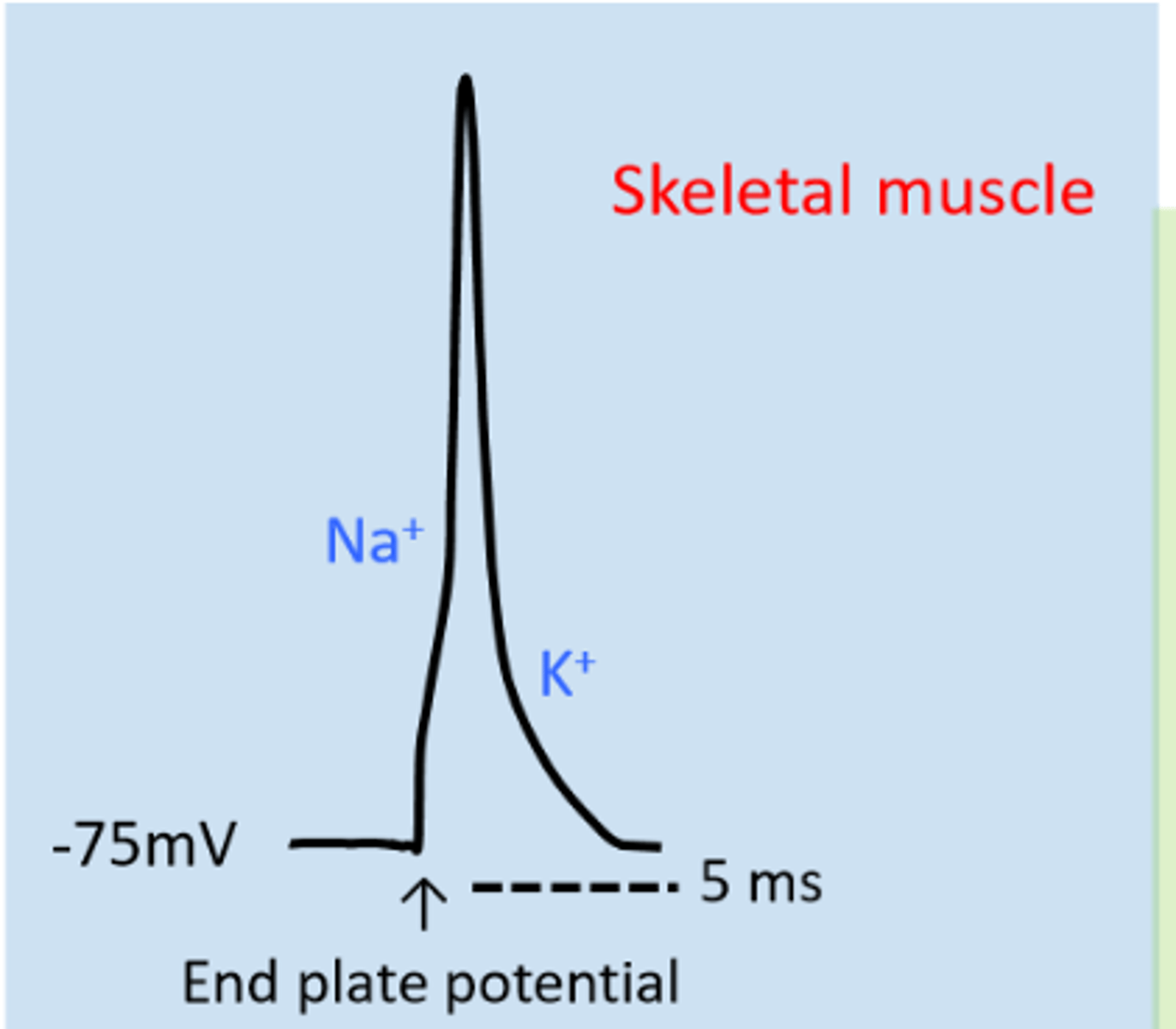
Draw the electrical activity in skeletal muscle
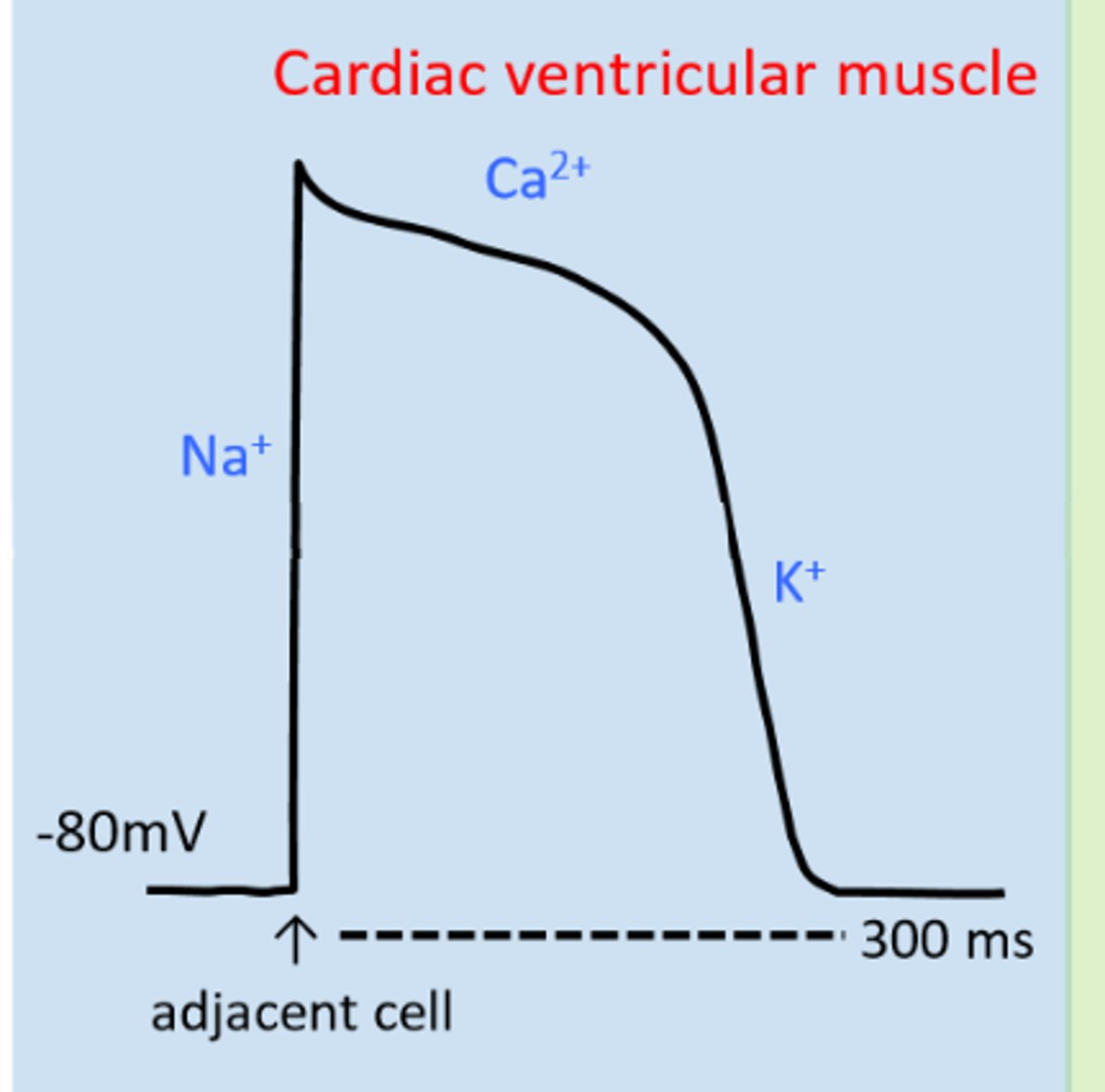
Draw the electrical activity in cardiac ventricular muscle
Draw the electrical activity in the GI tract
Draw the electrical activity in the vascular
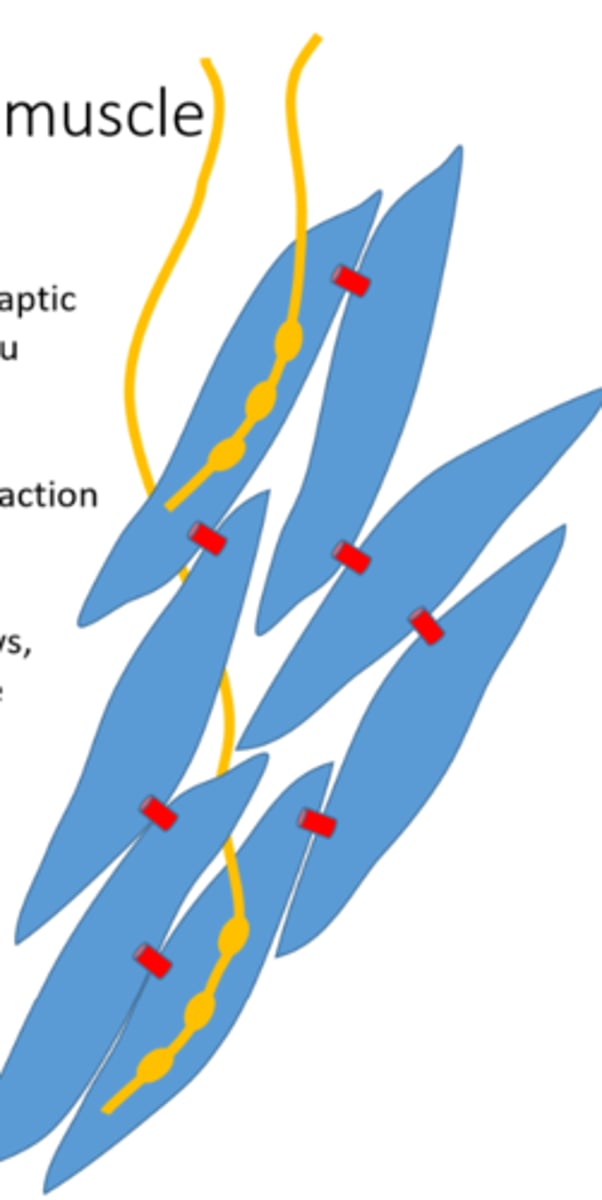
What is unitary smooth muscle?
- not all cells have synaptic input, excitation is spread through tissue by gap junctions
- allows for co-ordinated contraction of many cells
Where is unitary smooth muscle found?
- GI tract
- genitourinary
- airways
- most vascular smooth muscle
- walls of all visceral organs except heart
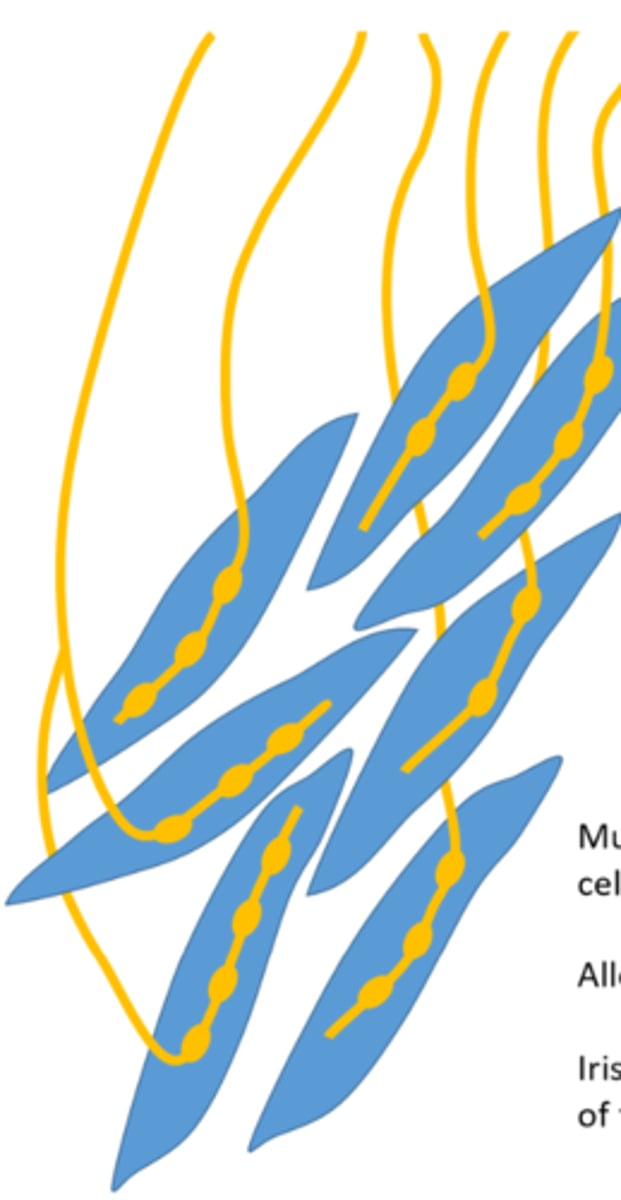
What is multi-unit smooth muscle?
- each smooth muscle cell has synaptic input
- allows for finer control of the muscle
Where is multi-unit smooth muscle found?
- iris
- ciliary body
- piloerector muscles of the skin
- some vascular smooth muscle
- large blood vessels
- respiratory airways
What is the smooth muscle regulated by centrally and locally?
centrally = by the ANS
locally = by diverse signals emanating from cells within the organ
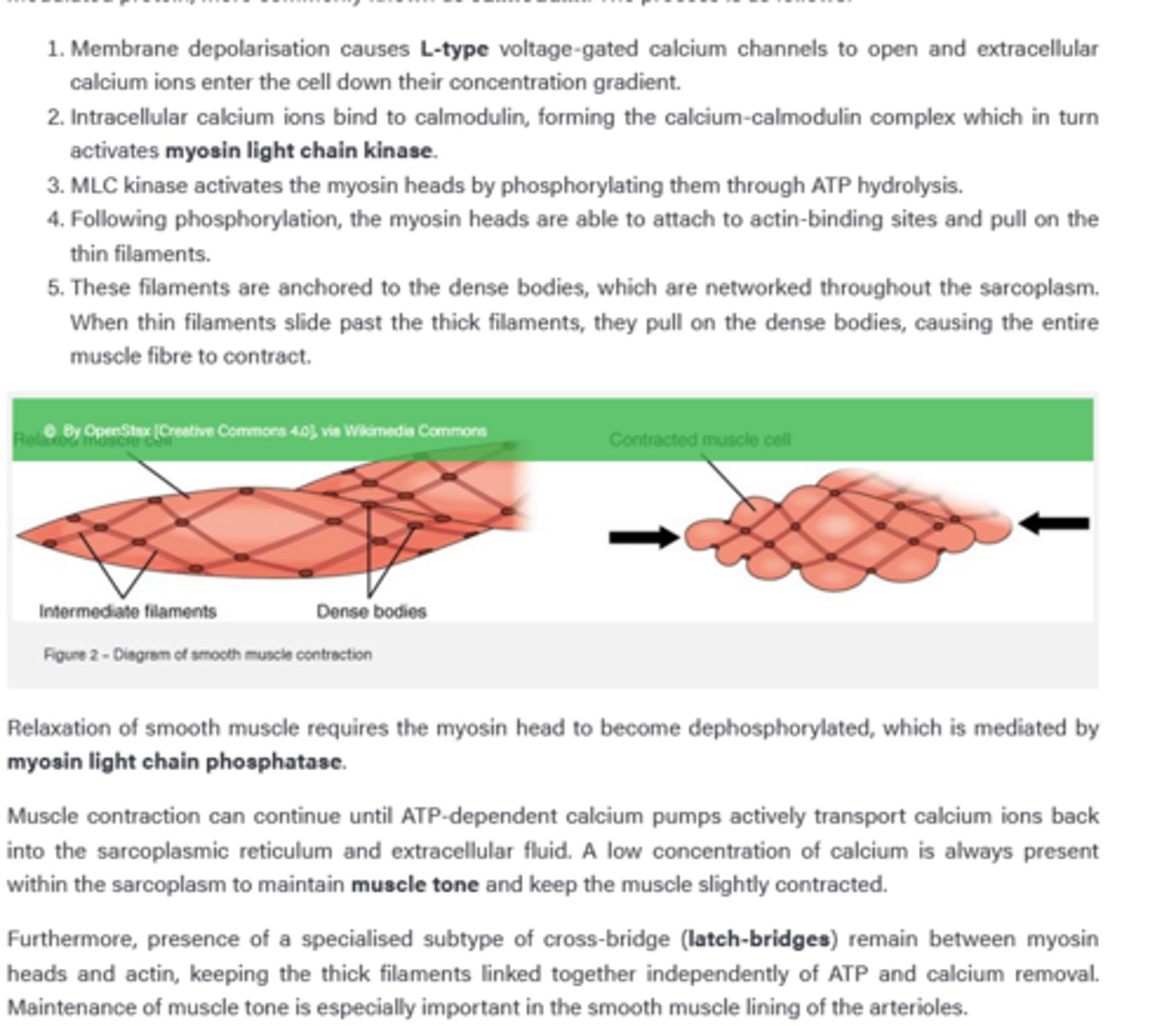
How is contraction induced in smooth muscle?
- by raising intracellular Ca2+ and causing Ca2+ sensitisation
What is the major pathway causing a rise in Ca2+ within smooth muscle cells?
- the opening of volatge-gated Ca2+ channels
- these are opened by depolarisation, which can occur as graded depolarisations and/or action potentials
What is the major pathway that causes relaxation of smooth muscle?
- cyclic GMP/PKG and cyclic AMP/PKA
- these act by reducing the cellular Ca2+. cyclic GMP/PKG also causes Ca2+ desenitisation
What does Ca2+ bind to in smooth muscle?
- binds to calmodulin rather than troponin
What is contraction controlled through?
- regulation of myosin phosphorylation rather than exposure of actin binding sites as in striated muscle
Does smooth muscle need more ATP than striated muscle?
- no, also never fatigues
- due to slower cross bridge cycling, and possibly to the development of latch bridges with sustained contraction
What do many stimuli cause?
- depolarisation of smooth muscle
What happens if depolarisation is sufficient?
- the smooth muscle fires action potentials
- regardless of whether action potentials occur, depolarisation causes Ca2+ influx and therefore contraction
- as action potentials cause substantial depolarisation, their firing tends to increase contraction
How are cross-bridges formed?
How is contraction controlled?
Is single unit (visceral) smooth muscle more common or less common compared to multiunit smooth muscle?
- singlw unit is more common
How does fibre coupling happen in single unit (visceral) smooth muscle?
- fibres joined by gap junctions
- therefore, are electrically coupled (if one fibre is stimulated to contract, they will all contract as a single unit)
How does fibre coupling happen in multiunit smooth muscle?
- don not possess gap junctions
- therefore, fibres are not electricaly coupled
- contraction doesn't spread between cels and is confined to the cell originally stimulated
What kind of contraction do single unit smooth muscles have?
- produces slow, steady contractions to allow substances to move through the body e.g. food in the GI tract
What kind of contraction does multiunit smooth muscle have?
- produces asynchronous contractions
 Note
Note  Flashcards (54)