US History Unit 7 Section 5 Test
 Call Kai
 Learn
Learn Practice Test
 Spaced Repetition
 Match
Match Flashcards
 Knowt Play
1/52

There's no tags or description
Looks like no tags are added yet.
Name | Mastery | Learn | Test | Matching | Spaced | Call with Kai |
|---|
No analytics yet
Send a link to your students to track their progress
53 Terms
What significant shift occurred in black voting during the 1932 election?
A shift from Republican to Democrat.
What was the main message of FDR's inaugural address?
The only thing we have to fear is fear itself.
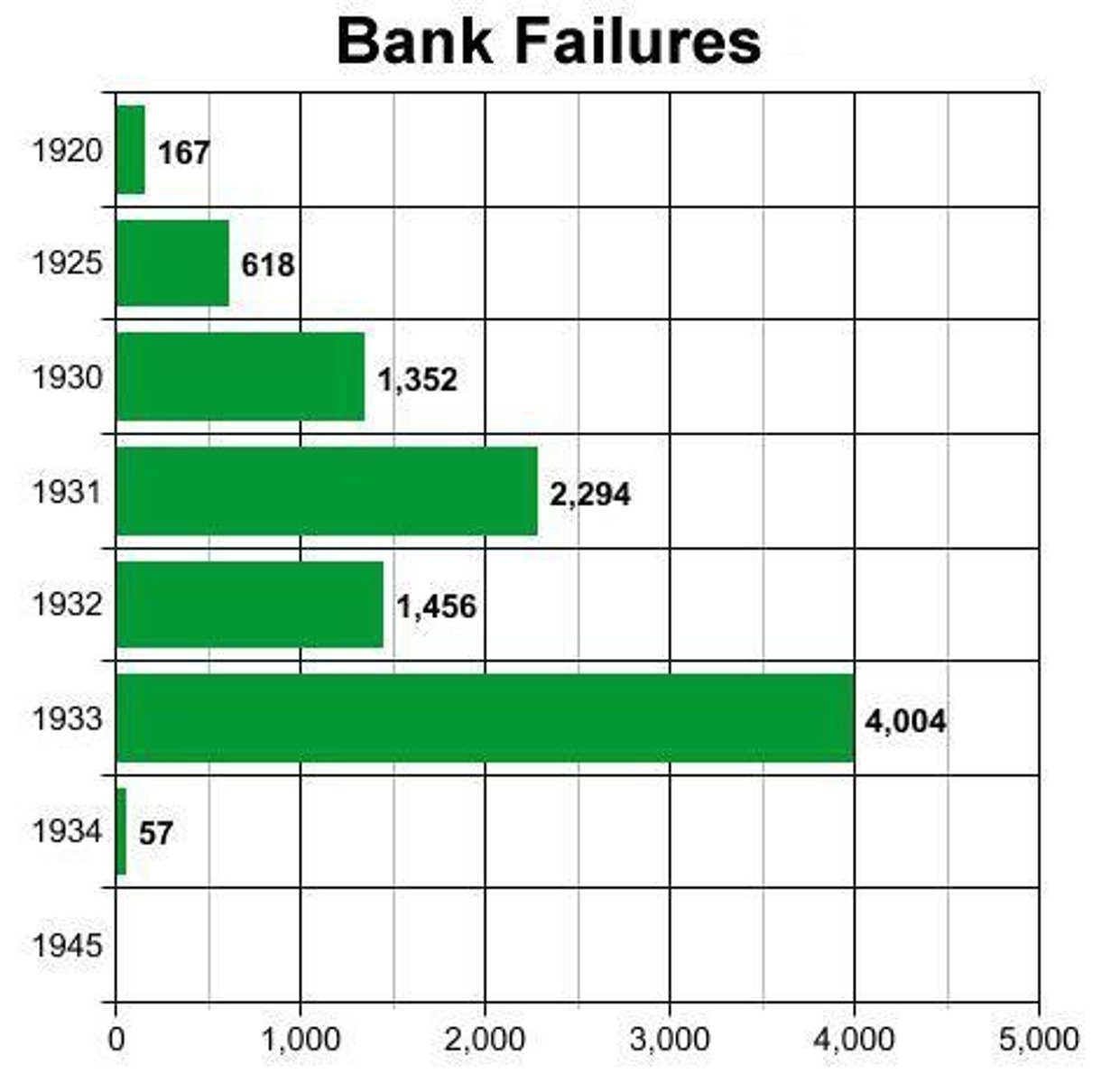
What act created the FDIC and aimed to end bank failures?
The Glass-Steagall Act.
What was the purpose of the currency reform during FDR's first hundred days?
To exchange all private gold holdings for paper money and go off the gold standard.
What were FDR's Fireside Chats?
Informal radio broadcasts that united and assured the public.
What was the main goal of the Civilian Conservation Corps (CCC)?
To employ 3 million men in reforestation, fire fighting, and swamp drainage.
What did the Federal Emergency Relief Administration (FERA) create?
The Civil Works Administration (CWA) for temporary employment.
What was the Tennessee Valley Authority (TVA) known for?
Building dams to create hydroelectric power and being seen as a 'radical' public utility.
What was the purpose of the Agricultural Adjustment Act (AAA)?
To pay farmers to grow less in order to drive prices up.
What did the Public Works Administration (PWA) aim to achieve?
Long-range recovery by spending $4 billion on public buildings and highways.
What did the Social Security Act provide?
Old age pensions and disability insurance.
What was the National Labor Relations Act (Wagner Act) designed to do?
Allow unions to strike and use collective bargaining.
Who founded the Committee for Industrial Organization (CIO)?
John L. Lewis in 1935.
What significant labor action did the CIO use in 1936?
Sit-down strikes at GM factories.
What did the Fair Labor Standards Act establish?
Maximum hours and minimum wage restrictions for companies engaged in interstate commerce.
What was the main criticism of the New Deal from radical figures?
Support for sweeping changes to society and the economy.
Who was Huey Long and what movement did he create?
He created the SHARE OUR WEALTH movement to raise taxes on the rich and give every family $5000.
What was Father Charles E. Coughlin's stance on FDR?
He turned against FDR when he refused to nationalize the banking system.
What was a significant departure represented by the Social Security Act?
It recognized the government's responsibility for the welfare of its citizens.
What was the Old Age Revolving Pension proposed by Francis Townsend?
A plan where every American over 60 would retire to open jobs for younger unemployed, requiring recipients to spend their $200 check within a month.
What was the stance of the American Liberty League?
A conservative group of wealthy business elites opposed to government intervention in the economy, labeling the New Deal as 'socialist.'
What natural disaster worsened the Great Depression?
The Dust Bowl, caused by over-farming and drought, leading to massive dust storms and farmer migration.
What was the significance of the photo circulated during the Great Depression showing a line of people?
It was mistakenly thought to depict an unemployment line but actually showed victims of the Ohio River flooding.
What were the main goals of the National Recovery Administration (NRA)?
To improve conditions for workers and establish fair competition codes for industries.
What was the outcome of the Agricultural Adjustment Act (AAA)?
It was declared unconstitutional in 1936 for creating 'subsidized scarcity' by paying farmers not to farm.
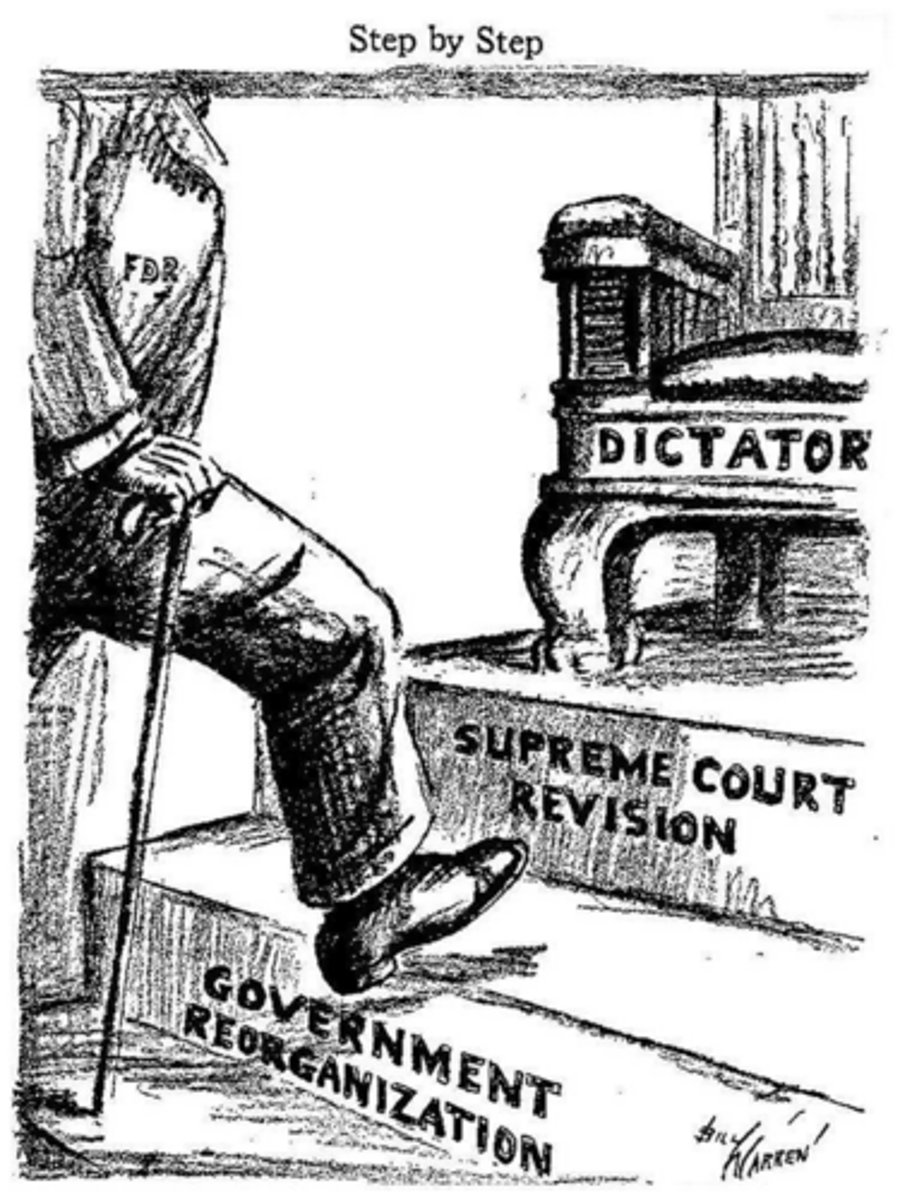
What was FDR's court-packing controversy?
FDR's attempt to add more liberal justices to the Supreme Court after it ruled against New Deal measures.
How did the New Deal change government involvement in citizens' lives?
It significantly increased the government's role in guaranteeing the well-being of its people.
What was the purpose of the London Economic Conference in 1933?
To coordinate an international response to the global depression, though FDR did not want it to interfere with U.S. recovery plans.
What was the Good Neighbor Policy?
A policy stating that America would not interfere with Latin American countries, leading to the withdrawal of marines from Haiti.
What were the Neutrality Acts of 1935, 1937, and 1939?
Laws that made it illegal for Americans to sell arms to countries at war and required cash payment for non-military goods.
What was the Quarantine Speech?
FDR's speech condemning Japan's invasion of China and calling for a quarantine of Japan, showing a shift away from isolationism.
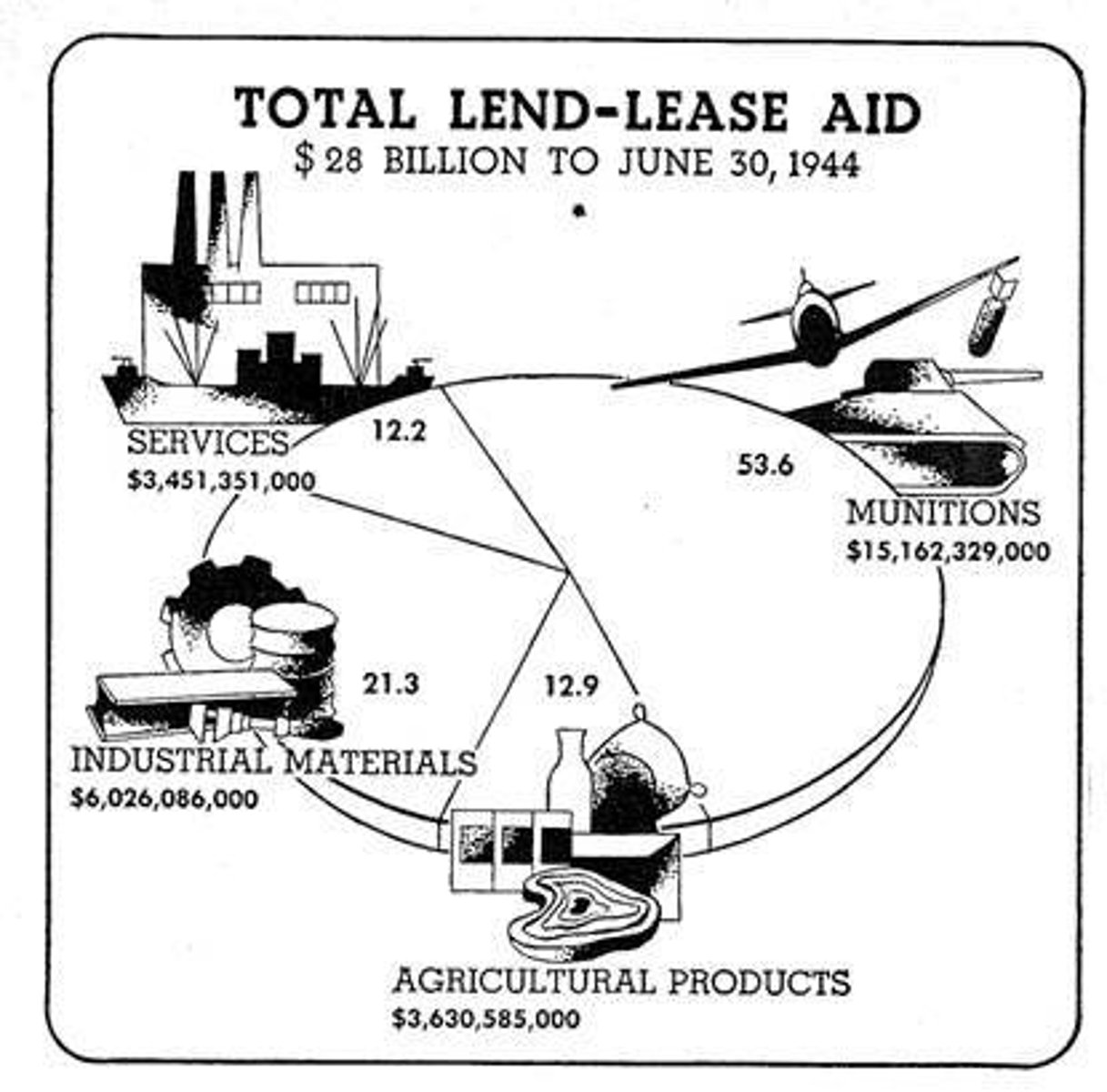
What did the Lend-Lease Act allow?
It permitted the sale or loan of war materials to any country whose defense was deemed vital to U.S. interests.
What was the Atlantic Charter?
A pledge signed by FDR and British Prime Minister Churchill to work for peace after WWII and not acquire new territory.
What event led to the U.S. declaring war in December 1941?
The Japanese attack on Pearl Harbor, which killed over 2000 people and destroyed multiple battleships.
What was the impact of the embargo imposed by the U.S. on Japan in 1940?
It was the first of several trade embargoes, leading to heightened tensions and ultimately the attack on Pearl Harbor.
What was the Dust Bowl's effect on farmers?
It forced many farmers to migrate west in search of jobs due to the destruction of their homes and livelihoods.
What did the Supreme Court rule about the NRA and AAA?
Both were ruled unconstitutional, with the Court stating Congress could not delegate legislative powers to the executive.
How did FDR's third-term election in 1940 break a precedent?
He broke the tradition set by George Washington of not seeking a third term, running and winning a third and later a fourth term.
What was the primary focus of FDR's presidency during the Great Depression?
Implementing the New Deal to provide relief, recovery, and reform.
What environmental disaster significantly impacted agriculture during the 1930s?
The Dust Bowl.
What was the purpose of the Supreme Court Packing plan proposed by FDR?
To increase the number of justices in order to secure favorable rulings for New Deal legislation.
What are the three 'R's of the New Deal?
Relief, Recovery, and Reform.
What did the FDIC stand for and what was its purpose?
Federal Deposit Insurance Corporation; it insured bank deposits to restore public confidence in the banking system.
What was the significance of the Wagner Act?
It protected workers' rights to unionize and bargain collectively.
Who were key members of FDR's 'Brain Trust'?
Harry Hopkins and Francis Perkins.
What were 'Fireside Chats'?
Radio broadcasts by FDR to communicate directly with the American public.
What economic theory influenced the New Deal policies?
Keynesian Economics, which advocated for increased government spending to stimulate the economy.
What was the outcome of the 1932 Election?
FDR won in a landslide, defeating incumbent Herbert Hoover.
EBA
The Emergency Banking Act (EBA) of 1933 was a landmark piece of New Deal legislation signed by President Franklin D. Roosevelt on March 9, 1933, to stabilize the failing U.S. banking system during the Great Depression
FLSA
The Fair Labor Standards Act (FLSA) is a federal law establishing minimum wage, overtime pay, recordkeeping, and child labor standards for private and public sector employees
WPA
Provided work for jobless writers, artists, and musicians; extended jobs to men and women through the construction of hospitals, schools, and airports
SEC
Securities and Exchange Commission--regulates the stock exchange
FERA
Federal Emergency Relief Administration--offered direct relief to jobless workers
Explore top notes

