Topic 6.2 - 6.4: Climate Change and Ozone
 Call Kai
 Learn
Learn Practice Test
 Spaced Repetition
 Match
Match Flashcards
 Knowt Play
1/28

There's no tags or description
Looks like no tags are added yet.
Name | Mastery | Learn | Test | Matching | Spaced | Call with Kai |
|---|
No analytics yet
Send a link to your students to track their progress
29 Terms
define climate change
long term shift in termperature and weather patterns
identify some causes of climate change
burning fossil fuels, deforestation, industrial processes
describe the climate as a system
evaporation: heat energy → water evaporation → moves heat from surface to atmosphere
precipitation: air cools → water vapour condenses → falls as rain
ocean currents: move heat across planet
identify some human activities that impact CO2
energy - burning fuels for power
agriculture - livestock production, land use
industry production
deforestation - trees as carbon sinks
identify ways people study historical climate data
ice cores
trapped air bubbles show CO2 concentrations
tree rings
wider rings = warmer wetter
sediment cores
reveals microfossils for past climate conditions
describe the greenhouse effect process
Solar energy → absorbed by Earth's surface → re-radiated as heat → greenhouse gases (CO₂, methane) absorb and re-radiate heat.
identify the 2 factors used to measure the planetary boundary for climate change
atmospheric CO2
radiative forcing (balance between sun’s incoming energy / outgoing energy from earth)
if it is > 1, means that there is global heating
describe the implications of crossing planetary boundaries
irreversible climate change
melting ice sheets
ecosystem disruption
explain some strategies of decarbonization
carbon neutrality - balance between emitting/absorbing carbon
carbon sequestration - removing CO2 from atmosphere and storing it
net zero - CO2 emissions completely countered
carbon positive - entity that absorbs more emissions that it emits
carbon offsetting - reducing carbon usage somewhere else
identify some mitigation strategies on the personal level
reduce consumption levels
increase household efficiency
switch to renewable energy
reduce flights
describe some mitigation strategies for reducing GHG production
subsidies for building renovations
strict emissions specifications for transportation
transition to renewables
electrification of society - lower carbon energy
describe some mitigation strategies for agriculture
reduceing farm vehicle use
reduce tillage
cover cropping
reduce inorganic fertilizers
reduce waterlogging (managing rice patties that use lots of water)
define adaptation strategies
aim to reduce adverse effects and maximize positive outcomes. Addresses both immediate and long term challenges, recognizing that some impacts are unavoidable.
define adaptive capacity
the ability of a society/location to cope with climate change
identify structural adapative strategies
flood defence
desalination plants
sea walls
mangroves
floating infrastructure
identify some non-structural strategies
agricultural practices
biotechnology to cope with climate extremities
green cities
controlling population density
higher energy efficiency
explain and evalute a case study on structural adaptation strategies
Netherlands self-healing sea wall
made of modular interlocking blocks filled wiht special limestone-seeding concrete
each time it gets hit by a wave it becomes stronger
releases calcium ions that attract shell-building organisms (barnacles, osyters)
helps create biolayer tougher than rock
benefit:
- sustainable protection → forming new ecosystems
challenge:
- difficult for large-scale production → expensive initial cost
explain and evalute a case study on non-structural adaptation strategies
Kenya drought resistant crops
changes in climate/weather patterns → decline in food production and security
drought resistant crops → rely on minimal water → reduces risk of harvest failure
benefit:
can increase total yield
reduce food poverty
reduce total crop failure
challenges:
smaller farms struggle to get seeds
lead to “fake” seeds
public resistance/culture against GMO drought crops → safety + long term environmental impact
describe what stratospheric ozone does
protects living organisms from negative effects of UV radiation
distinguish between the 2 types of ozone
good ozone (reflect UV) - stratosphere
bad ozone (local air pollutant) - troposphere
describe/draw how ozone reflects different types of UV radiation
shorter UV wavelengths (B & C) are more harmful, thus ozone absorbs it before it can cause harm.
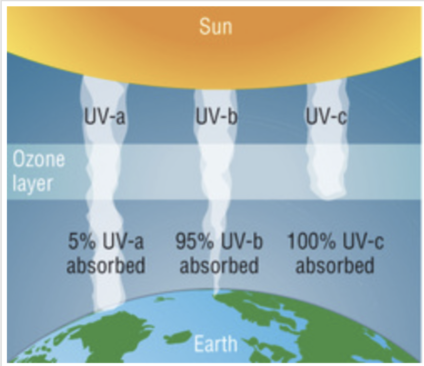
describe some impacts on human health of UV exposure
skin cancer - DNA damage → uncontrolled cell growth
cataracts + eye damage - blindness
immune system suppression - susceptible to infection and reduce immune system ability
describe some impacts UV can have on aquatic ecosystems
phytoplankton reduction - reduces their productivity → affects food chain
coral reef damage - damages the symbiotic algae living in corals → coral bleaching → disrupt reef ecosystems
describe some impacts UV can have on terrestrial ecosystems
reduced plant productivity - damage plant issues and photosynthesis → crop yields + food security
species composition - changes tolerance range → UV species dominant → alter ecosystem balance
identify some benefits of UV radiation
production of vitamin D
can treat certain medical conditions
sterilizer for water bodies
industrial use in lasers, lighting etc
distinguish between ozone depletion and climate change
climate change:
caused by GHGs
change in global avg temp
ongoing issue
ozone depletion:
CFC emissions
loss of protective layer in upper atmosphere
mostly felt in polar regions
resolved issue
define CFC and other ozone-depleting substances
Chlorofluorocarbon (CFC)
typically found in spray cans, foam, refrigerants
Hydrochlorofluorocarbon (HCFC)
replacement of CFC
fire extinguisher
pesticides
cleaning equipment
explain the process of ozone depletion (chemically)
UV radiation breaks down chlorine from CFC atom
Chlorine attacks ozone → destroys ozone
results in oxygen + chlorine monoxide (CIO)
CIO is attacked by oxygen, creating more oxygen
Chlorine able to attack and destroy other ozone
Chlorine is able to do this to thousands of ozone molecules
explain why polar ozone depletion is more common
ozone hole forms each spring due to unique polar conditions
more efficient bcs cold temp + polar stratospheric clouds (PSC)
PSC form in extremely cold conditions → surface for activating chlorine
when sunlight returns in spring → chlorine is able to destroy

