🥛 Posterior Pituitary + Thyroid + Parathyroid
 Call Kai
 Learn
Learn Practice Test
 Spaced Repetition
 Match
Match Flashcards
 Knowt Play
1/14

There's no tags or description
Looks like no tags are added yet.
Name | Mastery | Learn | Test | Matching | Spaced | Call with Kai |
|---|
No analytics yet
Send a link to your students to track their progress
15 Terms
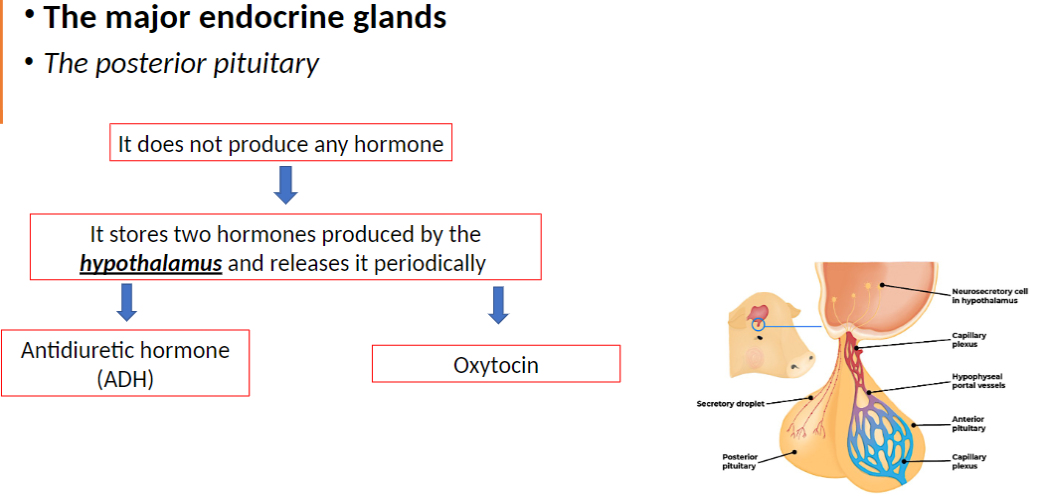
Posterior Pituitary – Function
Hormone Production
Does not produce hormones
Hormone Storage and Release
Stores two hormones produced by the hypothalamus
Releases hormones periodically
Stored Hormones
Antidiuretic hormone (ADH)
Oxytocin
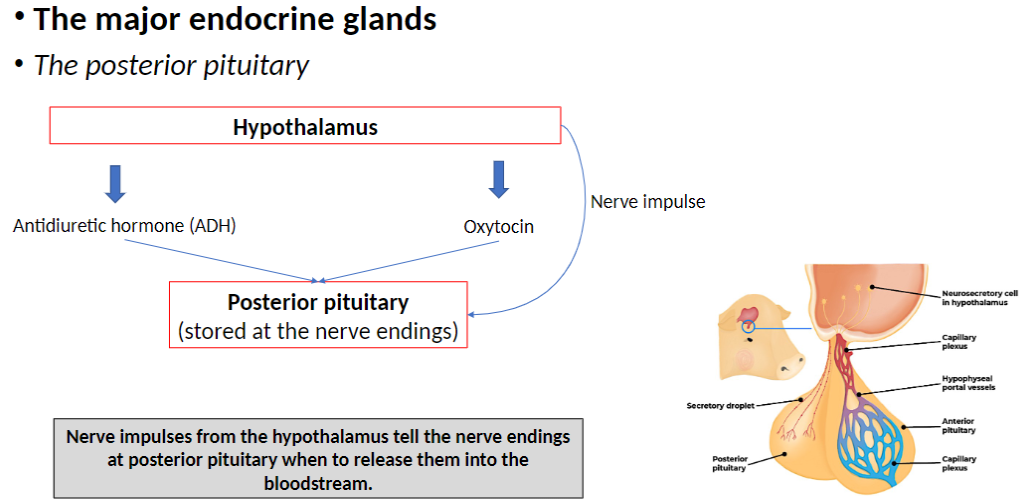
Posterior Pituitary – Hormone Release Mechanism
Hormones
Antidiuretic hormone (ADH)
Oxytocin
Storage
Stored in nerve endings at the posterior pituitary
Release Control
Nerve impulses from the hypothalamus signal the posterior pituitary
Hormones are released into the bloodstream when needed
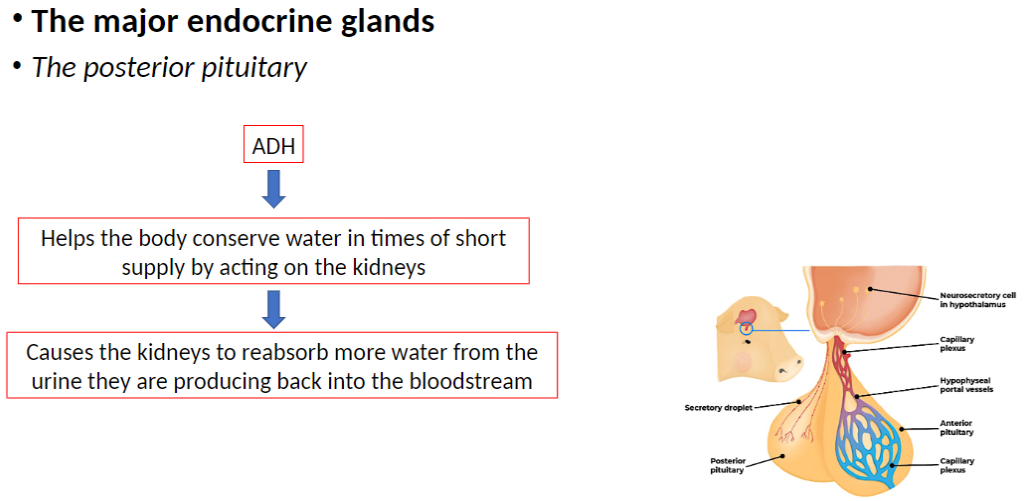
Antidiuretic Hormone (ADH) – Function
Function
Helps the body conserve water during short supply
Mechanism
Acts on the kidneys
Causes reabsorption of water from urine back into the bloodstream
Oxytocin – Function
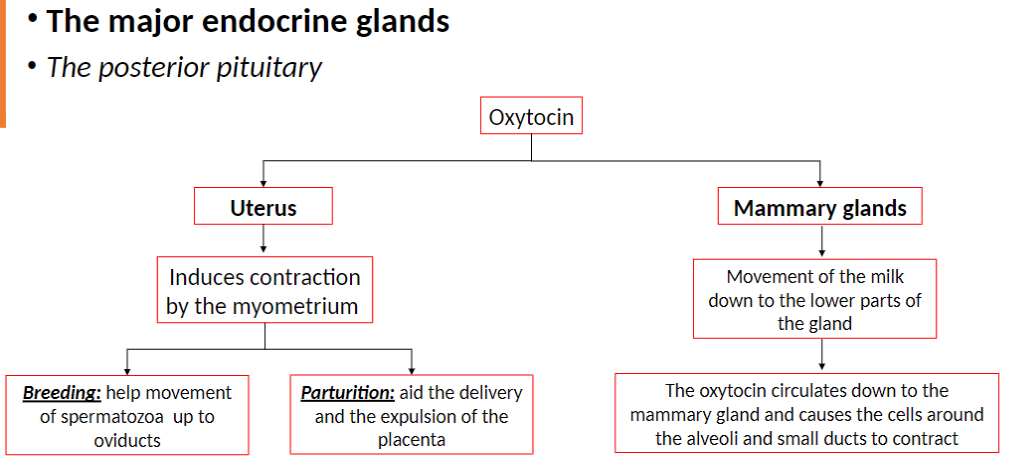
Uterus
Induces contraction of the myometrium
Breeding: helps spermatozoa movement to oviducts
Parturition: aids delivery and placenta expulsion
Mammary Glands
Facilitates milk movement to lower parts of the gland
Causes cells around alveoli and small ducts to contract
Mechanism
Oxytocin circulates from posterior pituitary to target tissues
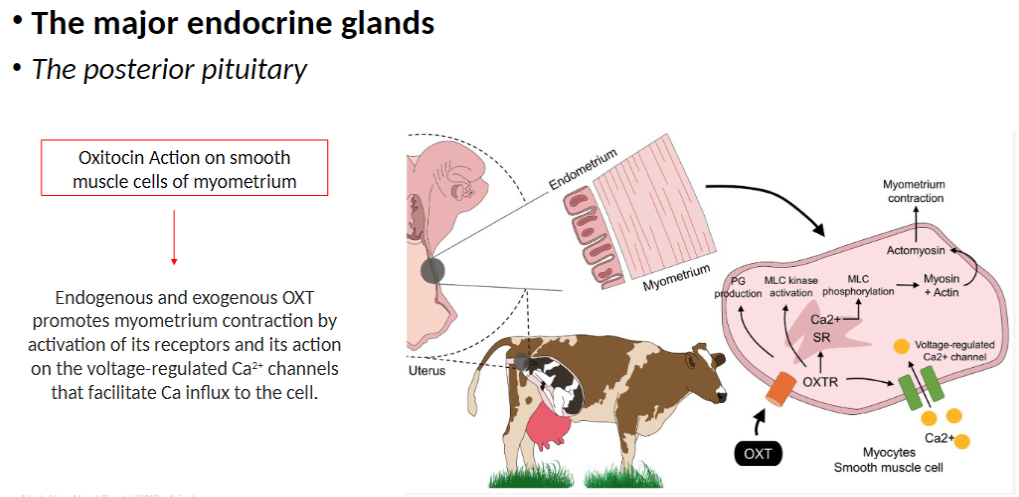
Oxytocin – Mechanism of Action
Function
Promotes myometrium contraction in the uterus
Mechanism
Endogenous (produced by body) and exogenous (administered externally) oxytocin activate oxytocin receptors
Acts on voltage-regulated Ca²⁺ channels
Facilitates Ca²⁺ influx into smooth muscle cells of the myometrium
Increased Ca²⁺ triggers muscle contraction
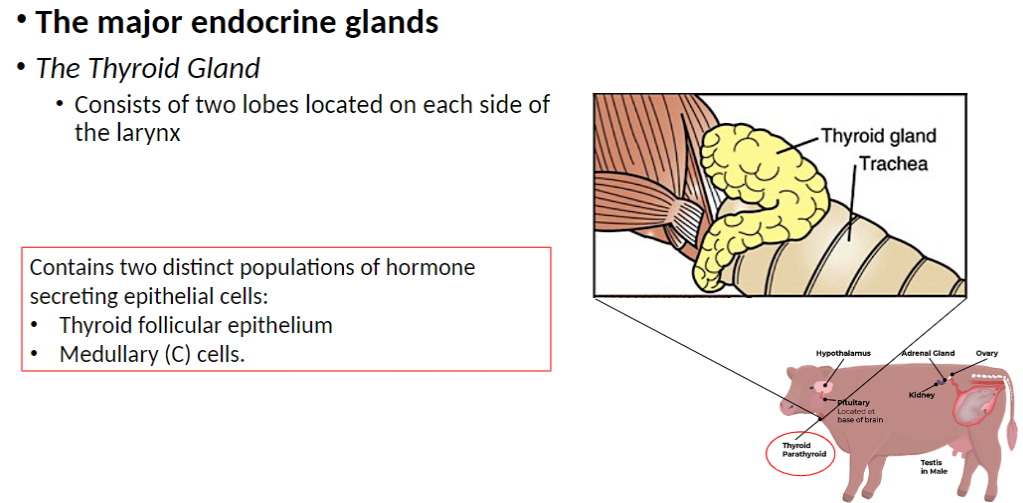
Thyroid Gland – Structure
Location
Consists of two lobes on each side of the larynx
Cell Types
Thyroid follicular epithelium – secretes thyroid hormones
Medullary (C) cells – secrete calcitonin
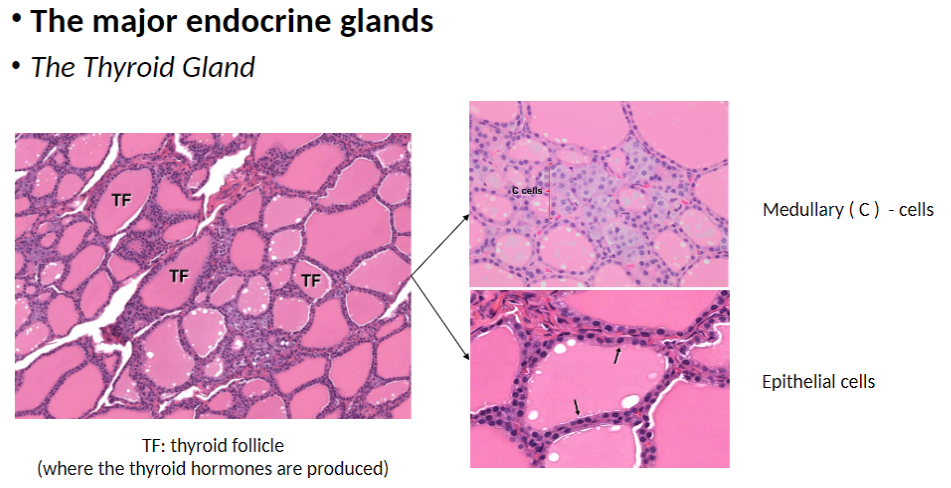
Thyroid Gland – Cellular Organization
Thyroid Follicle (TF)
Site where thyroid hormones are produced
Epithelial Cells
Line the thyroid follicles and secrete thyroid hormones
Medullary (C) Cells
Produce calcitonin, involved in calcium regulation
Thyroid Hormones – Production and Activation
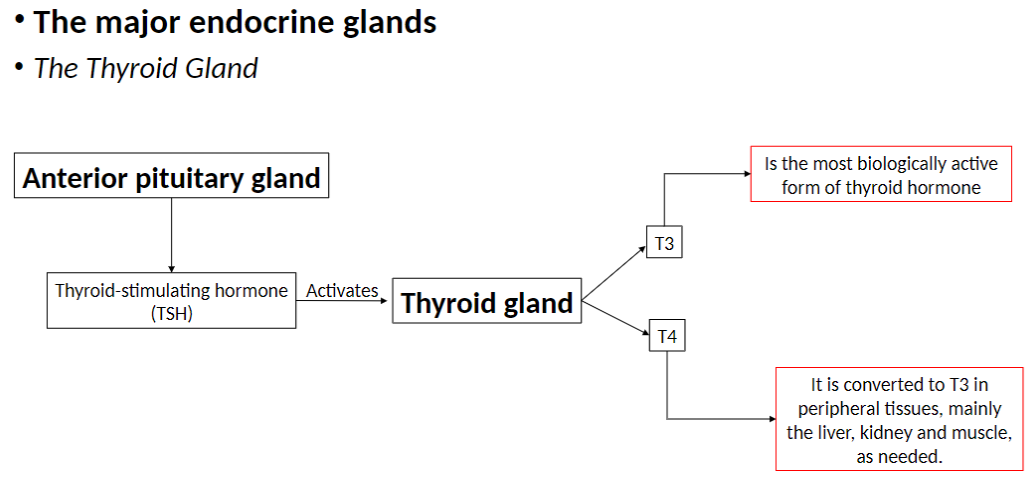
Anterior Pituitary Gland
Produces Thyroid-stimulating hormone (TSH)
TSH Function
Activates the thyroid gland to produce thyroid hormones
Thyroid Hormones
T4 – main hormone secreted by the thyroid
T3 – most biologically active form
Conversion
T4 is converted to T3 in peripheral tissues (mainly liver, kidney, and muscle) as needed
Thyroid Hormones (T3 and T4) – Effects
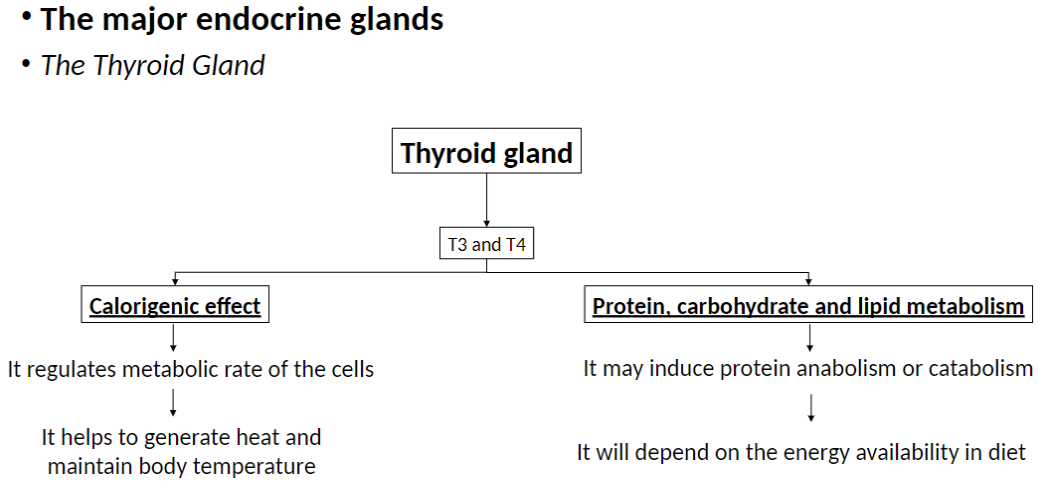
Calorigenic Effect
Regulates cellular metabolic rate
Helps generate heat and maintain body temperature
Protein, Carbohydrate, and Lipid Metabolism
May induce protein anabolism (building) or catabolism (breakdown)
Depends on energy availability in the diet
Thyroid Gland – Body Temperature and Metabolism Example
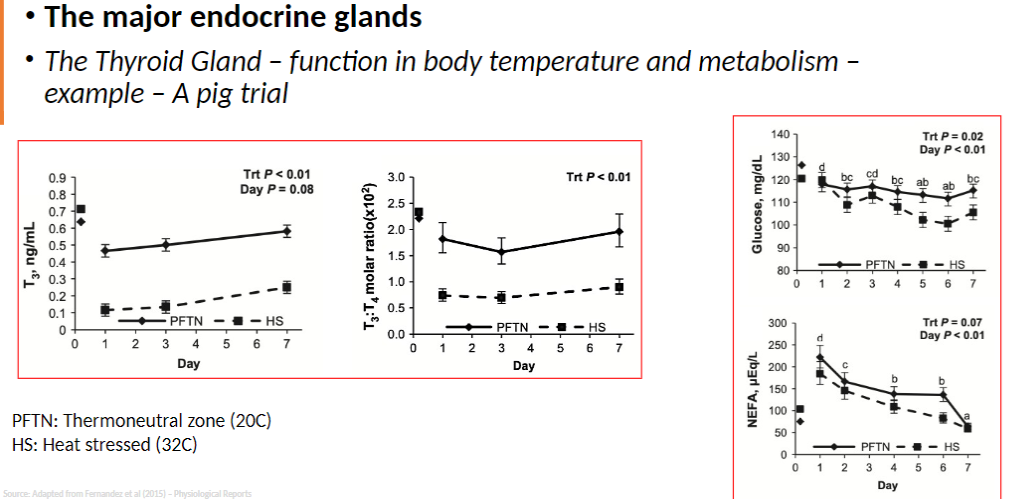
Experiment Setup
PFTN: Thermoneutral zone (20°C)
HS: Heat-stressed condition (32°C)
Purpose
Demonstrates the calorigenic effect of thyroid hormones (T3 and T4)
Shows how thyroid activity regulates metabolic rate and helps maintain body temperature under different environmental conditions
Calcitonin – Thyroid Hormone
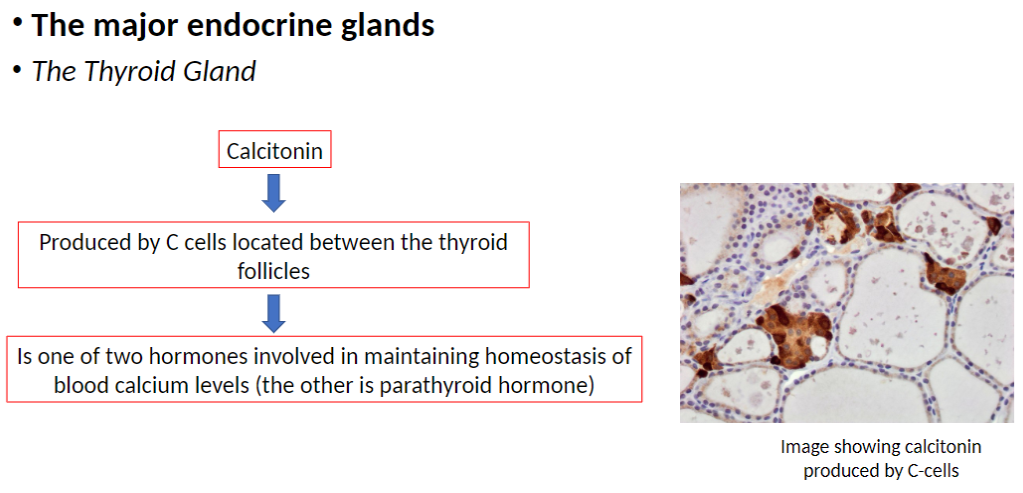
Production
Produced by C cells located between thyroid follicles
Function
Helps maintain blood calcium homeostasis
One of two key hormones for calcium balance (other: parathyroid hormone)
Parathyroid Gland – Structure and Function
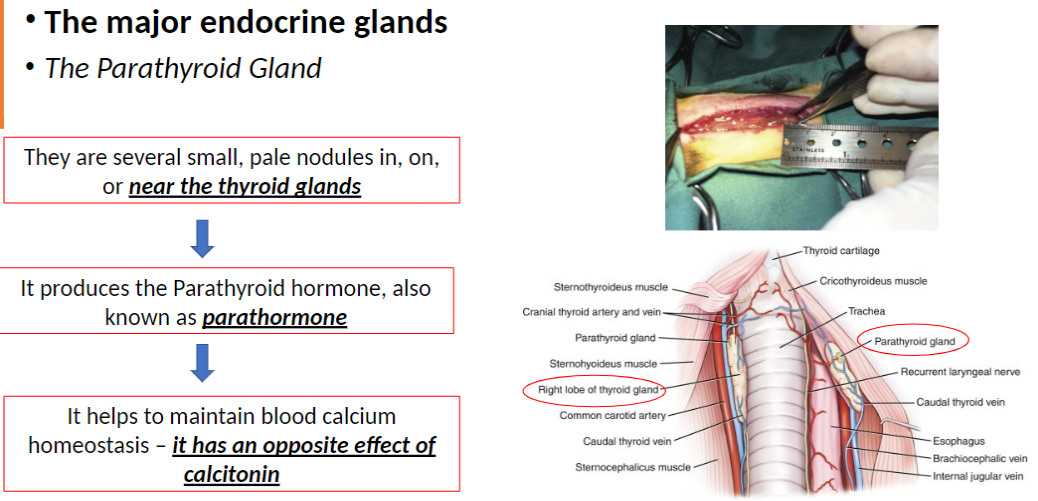
Structure
Several small, pale nodules located in, on, or near the thyroid gland
Hormone Produced
Parathyroid hormone (parathormone)
Function
Helps maintain blood calcium homeostasis
Has an opposite effect to calcitonin
Calcitonin vs Parathyroid Hormone (PTH) – Calcium Homeostasis
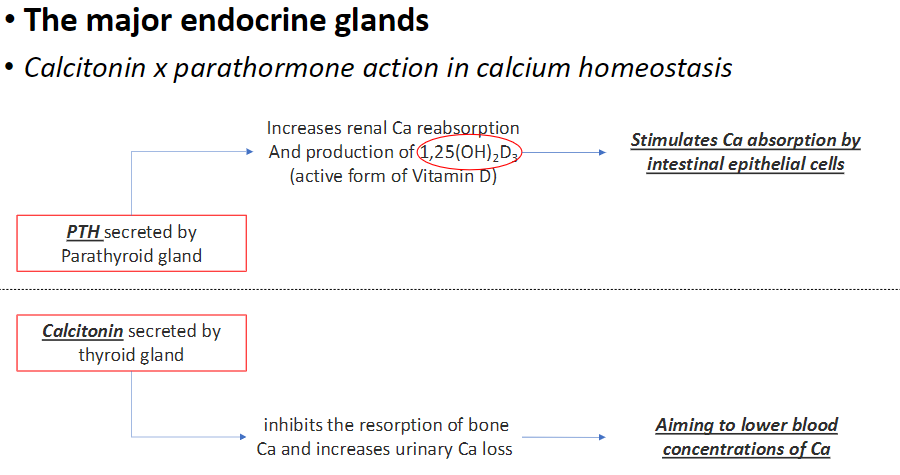
Parathyroid Hormone (PTH)
Secreted by parathyroid gland
Increases renal Ca reabsorption
Stimulates production of 1,25(OH)₂D₃ (active vitamin D)
Enhances Ca absorption by intestinal epithelial cells
Overall effect: raises blood calcium levels
Calcitonin
Secreted by thyroid gland (C cells)
Inhibits bone Ca resorption
Increases urinary Ca loss
Overall effect: lowers blood calcium levels
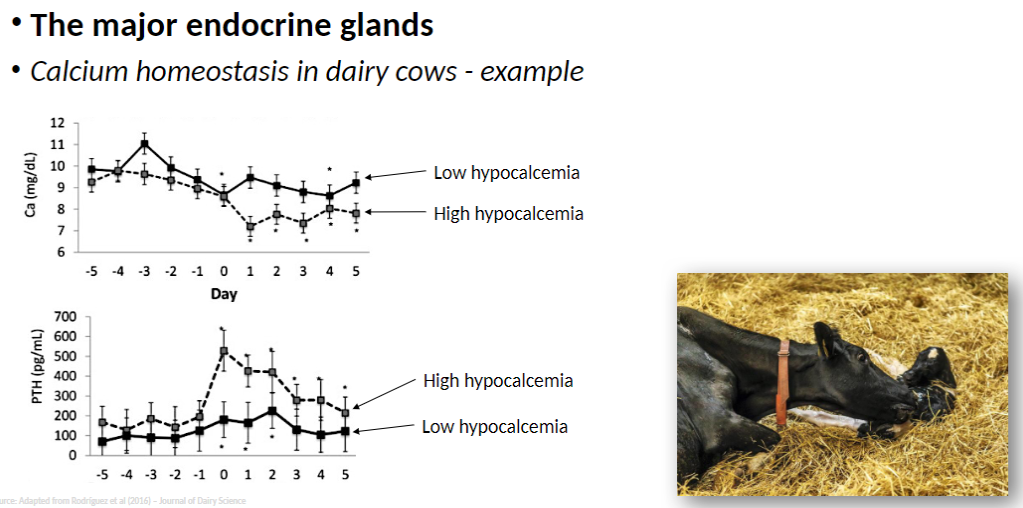
Calcium Homeostasis in Dairy Cows – Example
Condition
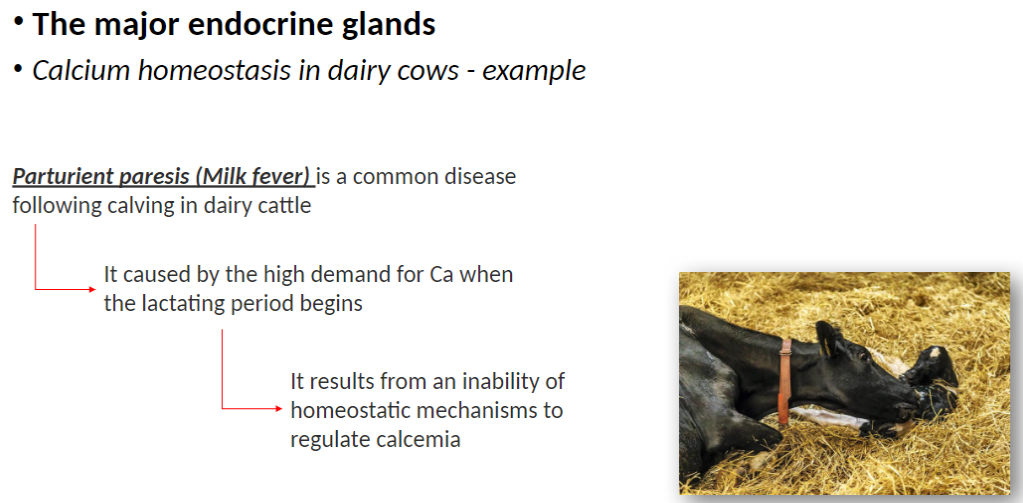
Parturient paresis (Milk fever) – common after calving
Cause
Failure of homeostatic mechanisms to regulate blood calcium (calcemia)
Due to high calcium demand at the start of lactation
Calcium Homeostasis in Dairy Cows – Hypocalcemia Levels
High Hypocalcemia
Severe low blood calcium, often at onset of lactation
Low Hypocalcemia
Milder reduction in blood calcium
Purpose of Example
Demonstrates variation in calcium levels and the importance of homeostatic regulation during lactation