Oh my god, I hate this class
 Call Kai
 Learn
Learn Practice Test
 Spaced Repetition
 Match
Match Flashcards
 Knowt Play
1/16

There's no tags or description
Looks like no tags are added yet.
Name | Mastery | Learn | Test | Matching | Spaced | Call with Kai |
|---|
No analytics yet
Send a link to your students to track their progress
17 Terms
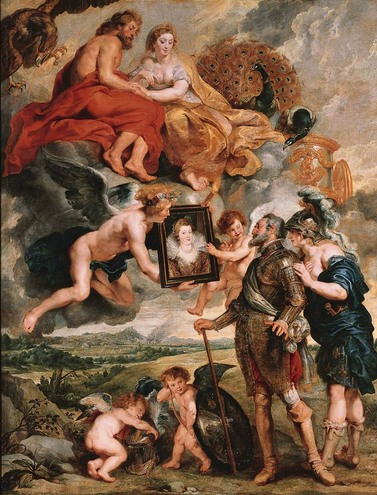
In the work shown, Rubens included the mythological figures of Jupiter and Juno to
A
comment satirically on the arrogance of the king and queen
B
appeal to the civic pride of the Florentine public
C
represent divine approval of the king and queen’s marriage
D
subvert the authority of the Roman Catholic Church
C represent divine approval of the king and queen’s marriage
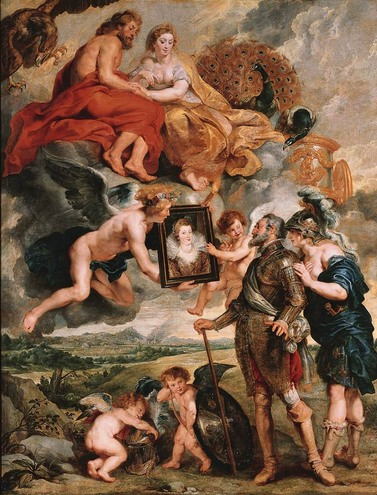
Marie de’ Medici, commissioned this work, as well as the larger cycle it belongs to, in order to
A
appease foreign governments during a time of war in France
B
support her husband’s rule and defend his unpopular decisions
C
celebrate her virtues and advocate her political position
D
justify France’s involvement in European military conflicts of the time
C celebrate her virtues and advocate her political position
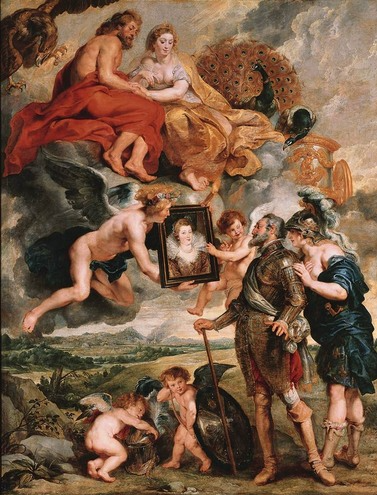
Which of the following is an aspect of the work shown that is characteristic of the Baroque style of Peter Paul Rubens?
A
The use of hierarchical scale
B
The use of a diagonal composition
C
The use of a flattened pictorial plane
D
The use of expressively distorted figures
B The use of a diagonal composition
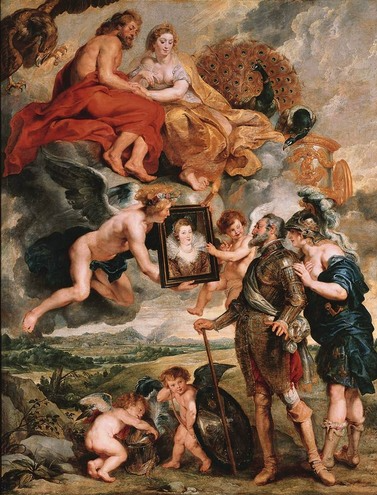
Diego Velázquez' Las Meninas, though influenced by Rubens' royal portraits, differs from them in which of the following ways?
A
Velazquez depicted royalty as solemn and spiritual.
B
Velazquez created a dense allegorical narrative to portray royalty.
C
Velazquez provided a formal, idealized portrayal of the royal family.
D
Velazquez showed the royal family in candid aspects of daily life.
D Velazquez showed the royal family in candid aspects of daily lif
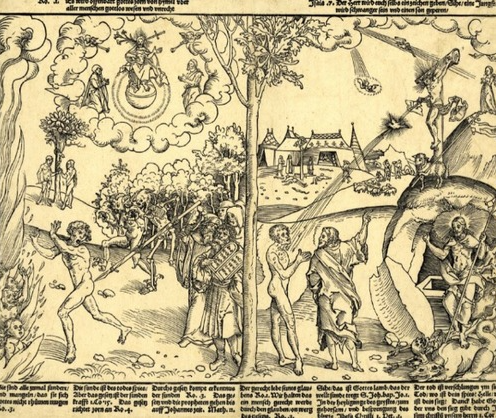
In in the work shown, Cranach used which of the following means of demonstrating that Luther’s radical ideas were still part of the Christian tradition?
A He included nude saints modeled after specific classical examples.
B He included several biblical scenes in a single image.
C He depicted several characters from classical mythology.
D He referenced the role of financial donations to the Church.
B He included several biblical scenes in a single image.
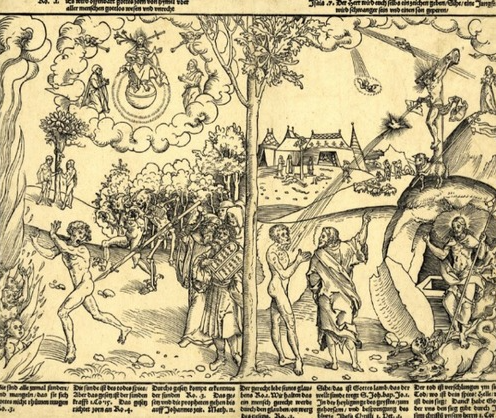
The right side of the work shown, Cranach’s Allegory of Law and Grace, can be interpreted as being an illustration of Protestant Reformation theology, because
A the connection made between the nude man on the right side and the crucified Christ shows that salvation can only be granted through God’s grace and sacrifice
B the depiction of Moses with the Ten Commandments next to the nude man on the left side shows that all those who obey God’s law will enter Heaven
C it contrasts with the depiction of chaos the left, showing that the upholding the hierarchy and order of the church by the faithful is essential for salvation
D it depicts New Testament scenes that complement Old Testament scenes shown on the left, foreshadowing Christ’s death and resurrection
A the connection made between the nude man on the right side and the crucified Christ shows that salvation can only be granted through God’s grace and sacrifice
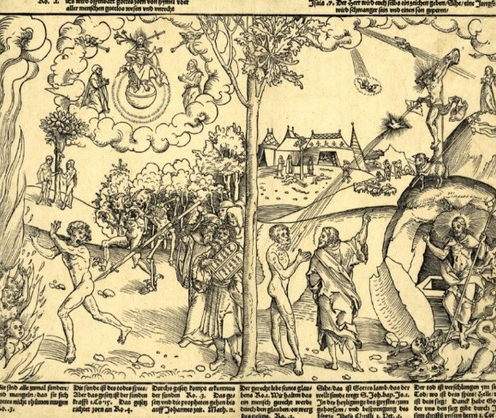
Works like Cranach’s Allegory of Law and Grace would have appealed to a wide audience because
A people believed that buying them would improve their chances of salvation
B people believed that they were holy objects that possessed healing properties
C prints on paper were a novelty and therefore considered to be status symbols
D woodcuts were inexpensive and could be reproduced in large quantities
D woodcuts were inexpensive and could be reproduced in large quantities
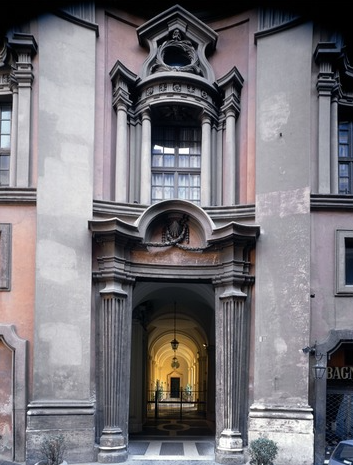
The design of the architectural work shown can be attributed to Francesco Borromini because of its
A careful re-creation of an actual facade from Roman antiquity
B bold and inventive use of coffers of varying shapes
C curved, undulating forms and broken entablatures
D combined use of molded concrete and carved stone
C curved, undulating forms and broken entablatures
Some art historians have theorized that Velasquez included a mirror in the background of Las Meninas in order to
A suggest that the viewer is seeing the painting from the perspective of the king and queen, whose presence it implies
B include a hidden portrait of himself in a painting depicting royalty, to document his important status as court painter
C warn the members of the royal court against the sins of vanity and emphasize the importance of valuing faith over worldly pursuits
D symbolize the wisdom of the young princess depicted in the painting by referencing the act of self-reflection
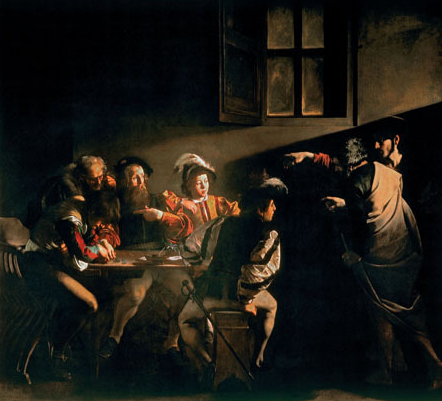
The outstretched hand of the figure on the far right is a visual homage to a famous painting by
A Giotto
B Michelangelo
C Leonardo
D Raphael
B Michelangelo
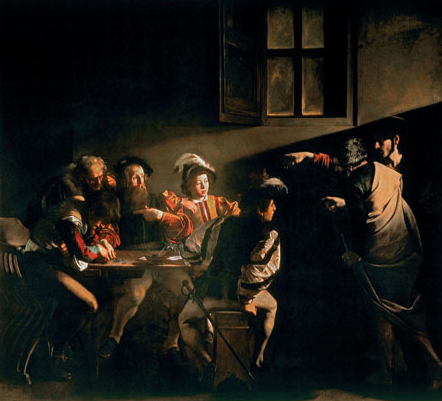
The painting was created as part of a larger decorative program for a
A tavern
B chapel
C palace
D prison
B chapel
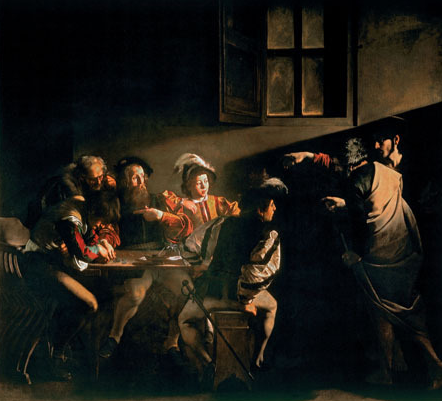
The painting depicts a subject recorded in the
A Decameron
B Divine Comedy
C New Testament
D Old Testament
C New Testament
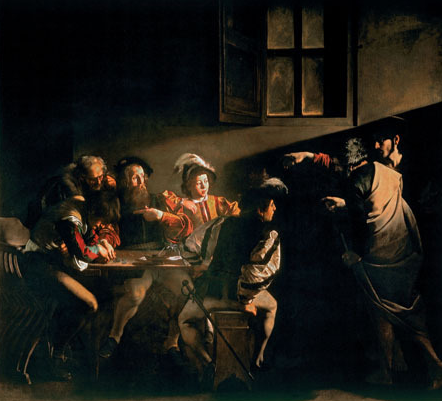
The painting is by
A Velázquez
B Vermeer
C Caravaggio
D Rembrandt
C Caravaggio
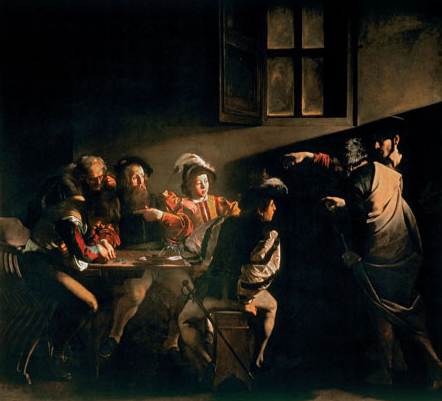
Stylistic aspects of the painting identify it as being from the
A Italian Renaissance
B Northern Renaissance
C Dutch Baroque
D Italian Baroque
D Italian Baroque
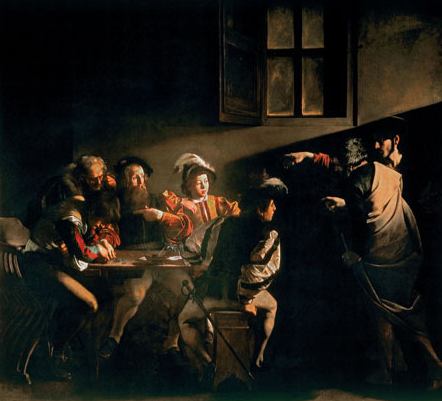
The drama in the painting is reinforced by the use of
A complex symbolism
B linear perspective
C tenebrism
D sfumato
C tenebrism
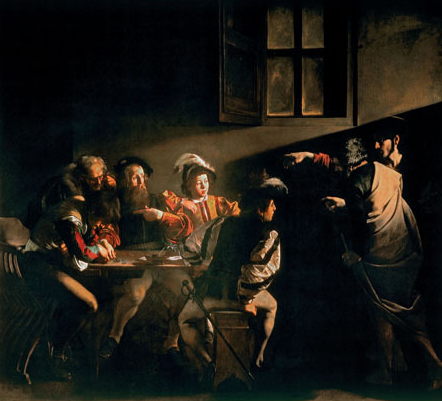
The use of light symbolizes a moment of
A conversion
B coronation
C damnation
D betrothal
A Conversion
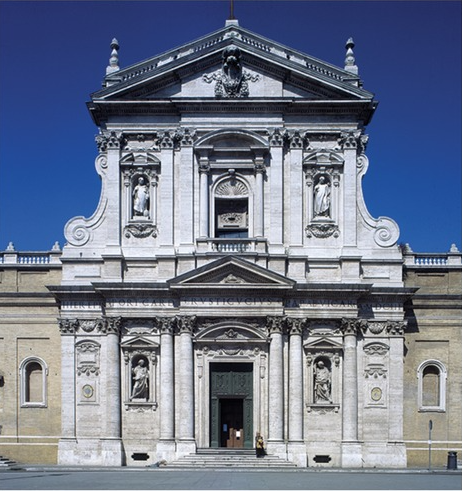
The facade shown contains which of the following architectural elements?
A Flying buttresses and a central spire
B Jamb statues and a recessed portal
C Horseshoe arches and intricate muqarnas D Engaged columns and decorative pediments
D Engaged columns and decorative pediment

