Formative Test - Biology > Cell Cycle; Stem Cells & Ethics (p3)
 Call Kai
 Learn
Learn Practice Test
 Spaced Repetition
 Match
Match Flashcards
 Knowt Play
1/15

There's no tags or description
Looks like no tags are added yet.
Name | Mastery | Learn | Test | Matching | Spaced | Call with Kai |
|---|
No analytics yet
Send a link to your students to track their progress
16 Terms
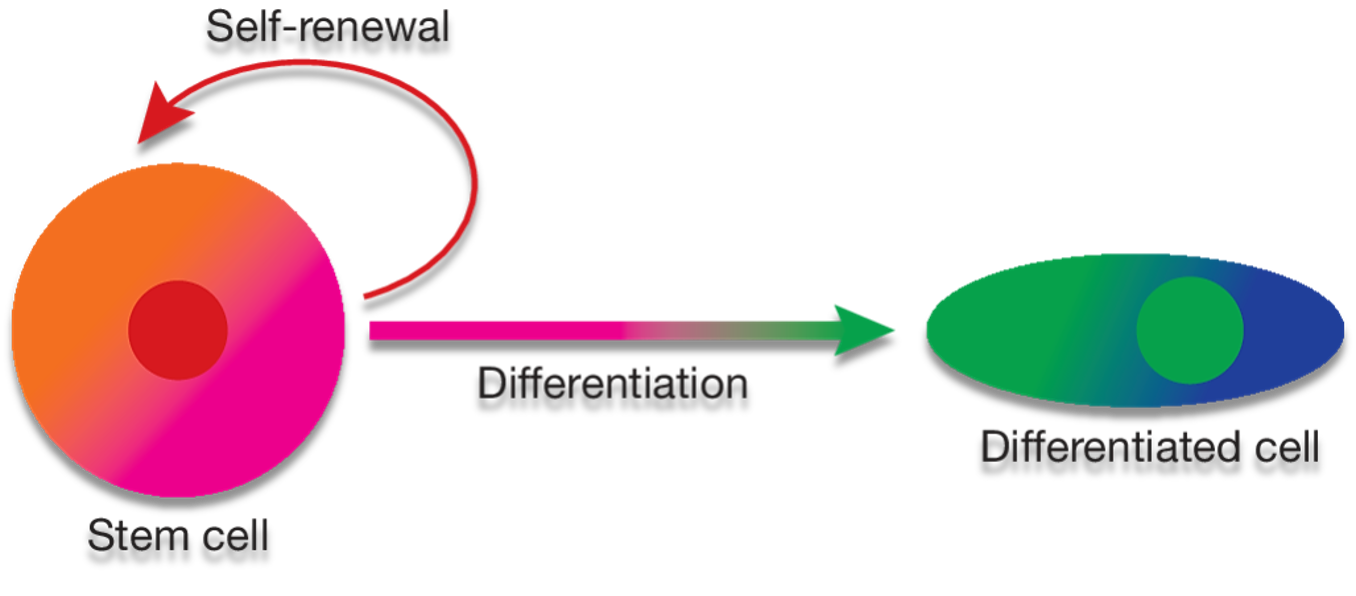
What are stem cells?
Stem cells are undifferentiated e.g. they have not yet developed into cells the preform a specific function
Definition and example of a totipotent stem cell:

Definition and example of a pluripotent stem cell:

Definition and example of a multipotent stem cell:

Definition and example of a oligopotent stem cell:

Definition and example of a unipotent stem cell:

What happens to each daughter cell when a stem cell divides?
Stay as a stem cell (self-renewal). This ensures there is an adequate supply of stem cells.
Becomes stem cell (differentiated). Once differentiated (e.g. liver cells) can’t be normally reverted to an undifferentiated state
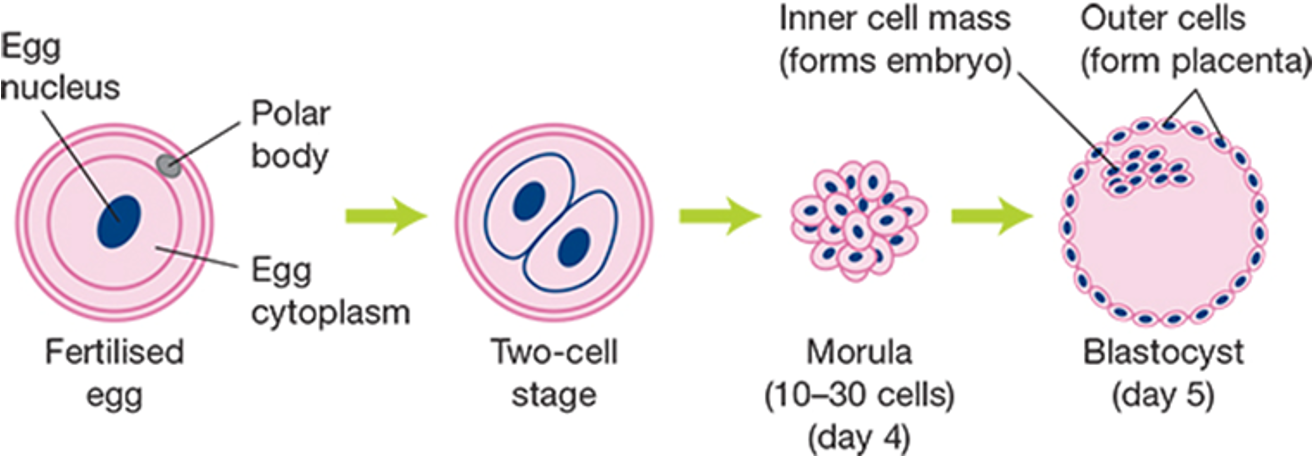
What are embryonic stem cells:
Embryonic stem cells are taken from the inner cell mass of a blastocyst
A single cell is isolated and grown in culture, dividing to form more stem cells
They are usually sourced from excess embryos created during IVF
Removing these cells destroys the embryo
What are adult (stomatic) stem cells:
Adult (somatic) stem cells are found in many parts of the body (e.g. bone marrow, skin, liver, brain, fat, and blood)
They can also be collected from umbilical cord blood after birth
They are multipotent, meaning they can develop into a limited range of specific cell types (e.g. blood or skin cells)
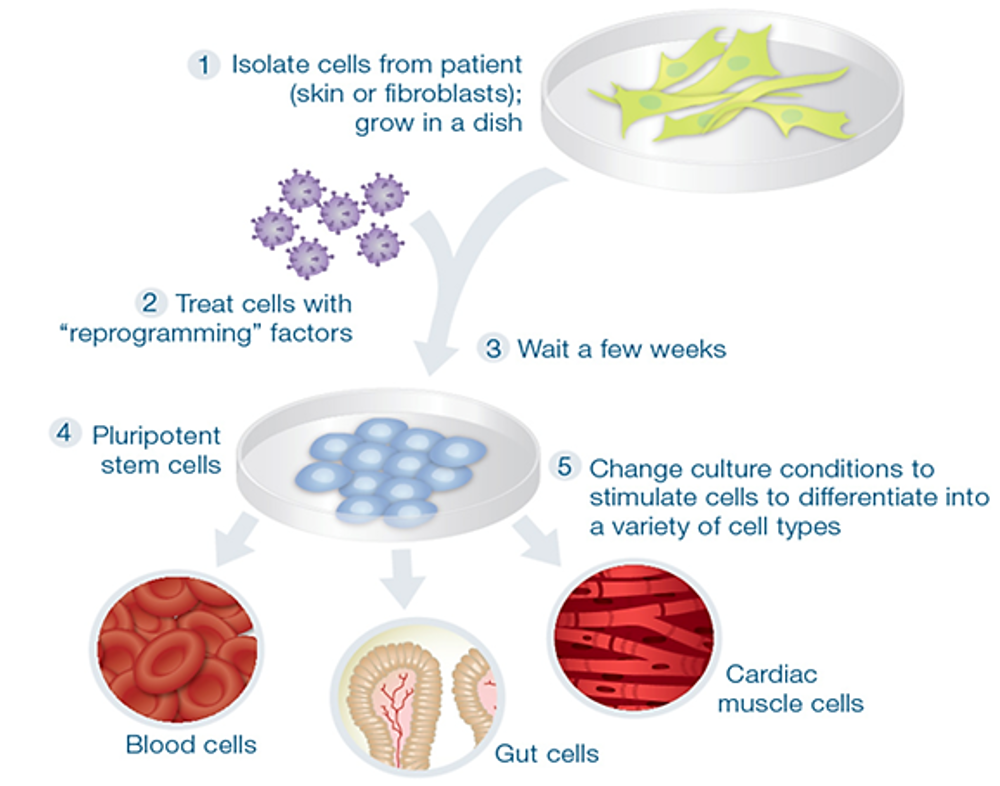
What are induced pluripotent stem cells
Some specialised adult somatic cells can be genetically reprogrammed to return to an undifferentiated embryonic state.
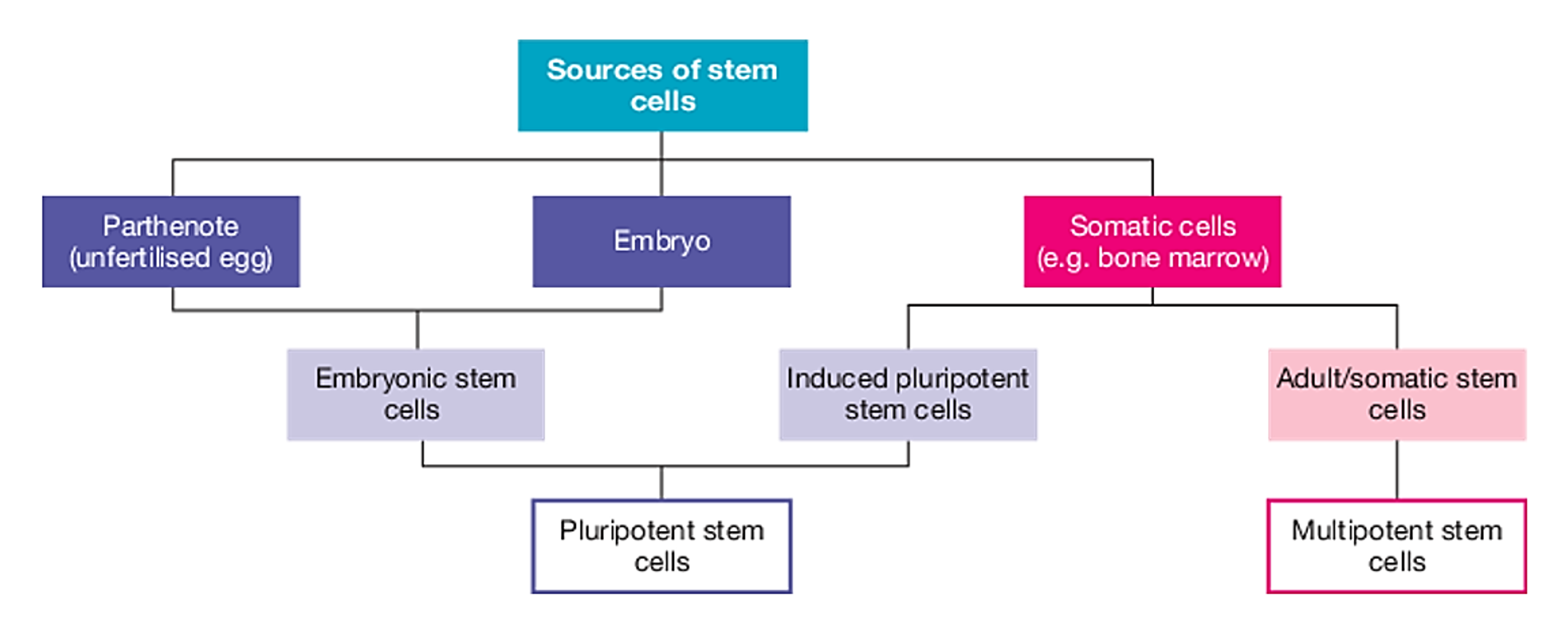
Sources of stem cells table:
What are adult stem cell transplants?
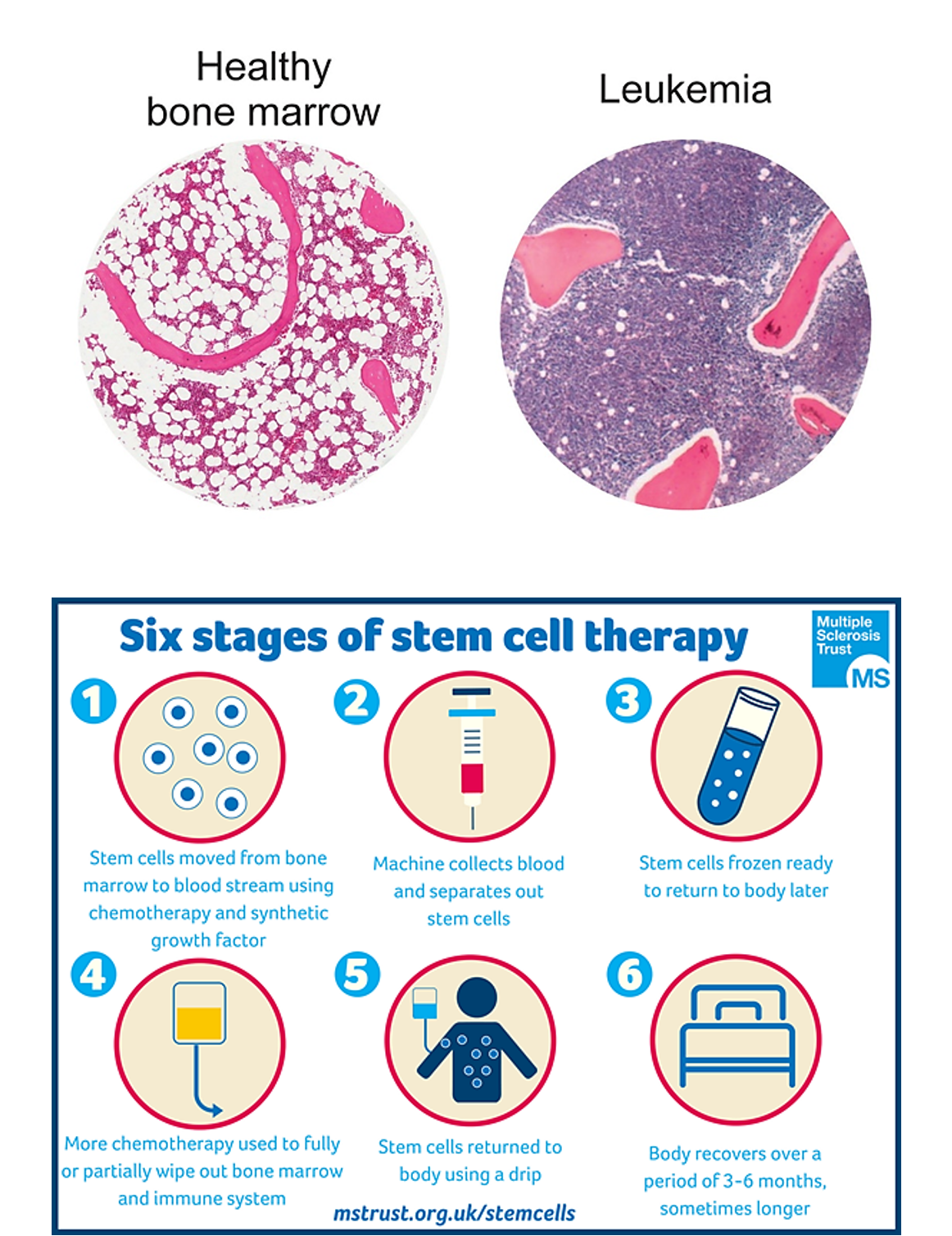
Stem cell transplants (therapy) are mainly used to treat blood disorders like leukaemia
Leukaemia is treated with chemotherapy and radiation to destroy diseased cells
These treatments also destroy healthy cells
Injected stem cells help replace and rebuild healthy blood cells afterwards
What is therapeutic cloning?
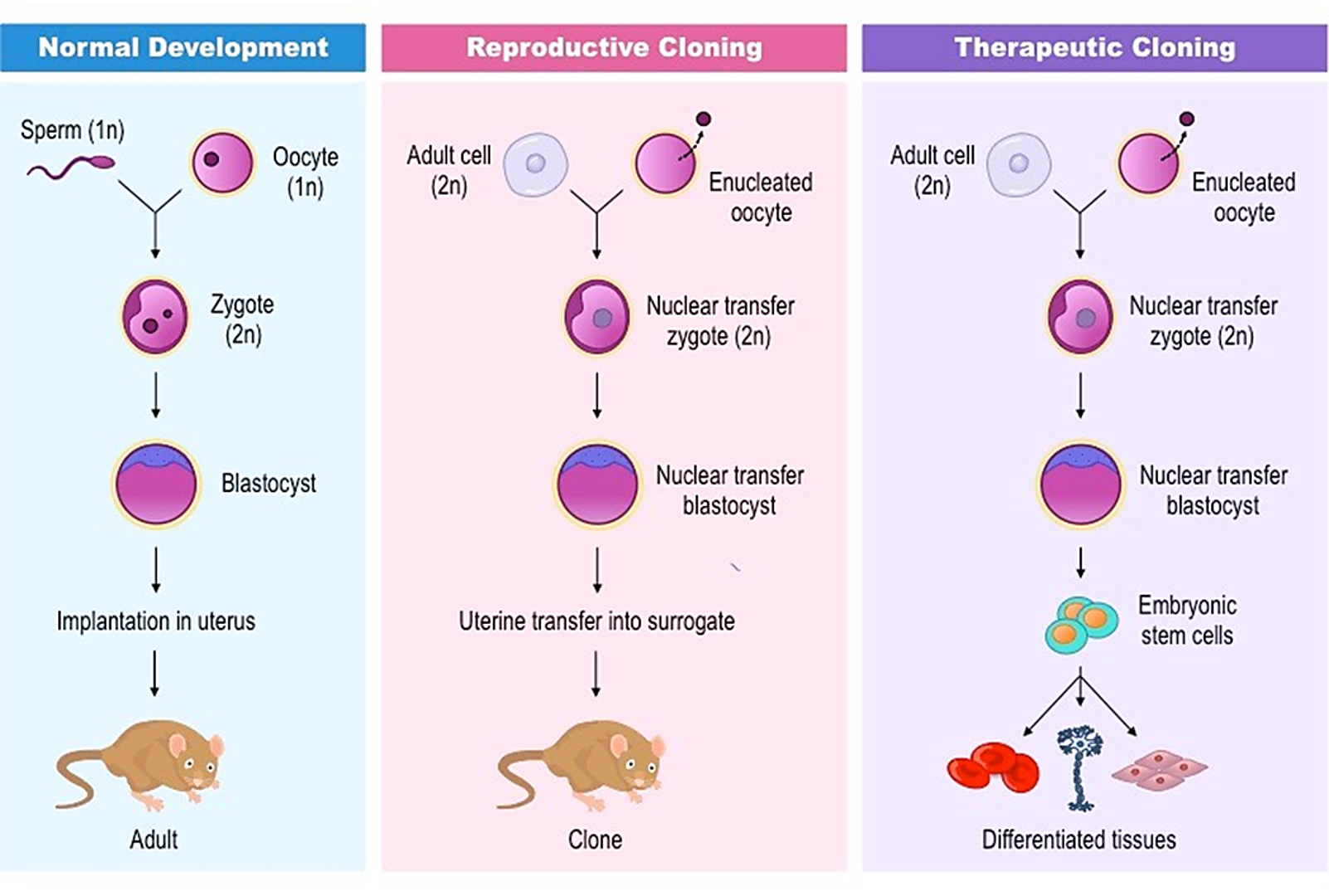
Therapeutic cloning creates an embryo to produce stem cells genetically identical to the patient
These cells are reprogrammed to form specific tissue types needed for treatment
It is legal in some countries, including the UK and Australia
How can therapeutic cloning be used?
Therapuetic cloning may someday be used in humans to:
Produce whole organs from single cells
Produce healthy cells that can replace damaged cells in degenerative diseases such as Alzheimer’s or Parkinson’s
Ethics of therapeutic cloning: Advantages vs disadvantages
Reduced risk of rejection (patient’s own cells) vs Ethical/religious concerns and embryo destruction
No need for a donor vs Concerns about cloning and lack of global agreement
Can become any tissue type (pluripotent) vs Risk of tumour formation if misused
Useful for studying diseases and testing treatments

