Lecture 4-Cellular Structure of Prokaryotic cells
 Studied by 0 people
 Call Kai
 Learn
Learn Practice Test
 Spaced Repetition
 Match
Match Flashcards
 Knowt Play
1/61

Earn XP
Description and Tags
Slides(1-34)
Name | Mastery | Learn | Test | Matching | Spaced | Call with Kai |
|---|
No analytics yet
Send a link to your students to track their progress
62 Terms
pre-nucleus
Prokaryote comes from the Greek word for __________
true nucleus
Eukaryote comes from the Greek word for _________
• Size
– small but varies
• Shape
– cocci and bacilli most common
– various others
• Arrangement
– determined by plane of division
– determined by separation or not
Size, Shape ,Arrangement of prokaryotic cells
• smallest – 0.3 μm (Mycoplasma)
• average rod – 1.1 -1.5 x 2 – 6 μm (E. coli)
• very large – 600 x 80 μm Epulopiscium, fishelsoni
list the measurement for smallest size(w/ example), Average size(w/ example, Very Large(w/ example) of Prokaryotes
Single bacillus
Name of this prokaryotic arrangement
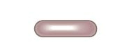
Diplobacilli
Name of this prokaryotic arrangement
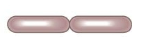
Streptobacilli
Name of this prokaryotic arrangement
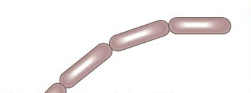
Coccobacilli
Name this prokaryotic arrangement
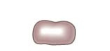
Diplococci
Name of this cocci arrangement

Streptococci
Name of this cocci arrangement
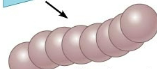
Tetrad
Name of this cocci arrangement
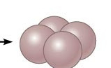
Sarcinae
Name of this cocci arrangement

Staphylococci
Name of this cocci arrangement(grape like structure)
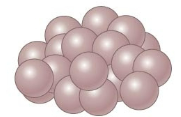
bacilli (s., bacillus)
prokaryotic rod name
coccobacilli
very short rods prokaroytes
vibrios
resemble rods, comma shaped prokarytoes
spirilla (s., spirillum)
rigid helices structure for prokaryotes
spirochetes
flexible helices for prokaryotic arrangement
b. staphylococci
Bacteria that divide and form grapelike structures are
a. streptococci.
b. staphylococci.
c. coccobacilli.
d. vibrios.
-Biochemical analysis, eg.
-subcellular fractionation
-Structural analysis
-Genetic analysis
Main techniques to study plant cells(4)
cytoplasm
In bacterial cells, __________ surrounded by envelope
nucleoid
bacterial cytoplasm contains DNA in __________
nucleoid
Non-membrane-bound area of the cytoplasm in prokaryotes that contains the chromosome in the form of looped coils
rare
Some bacteria have cytoplasmic organelles--but it is ______
envelope
Cell “________” around the outside of the cells(prokayotes)
Cell membrane
____________ directly surrounds the cytoplasm
“inner membrane”
Cell membrane directly surrounds the cytoplasm
-In Gram negative bacteria, this is the _____________
only membrane
Cell membrane directly surrounds the cytoplasm
-In Gram positive bacteria, this is the ____________
negative
In Gram-_______ bacteria, there is another membrane outside the cell wall
Cell wall
this is on the outside of the cell membrane
flagella
Many bacteria have a _______—rotary swimming motor
- Structural support
- Detection of environmental signals
- Secretion of virulence factors and communication signals
- Ion transport and energy storage
Membrane proteins serve numerous functions, including(4):
-Single unit—network of sugars and peptides
-Confers shape and rigidity on the bacterial cell
-“Sacculus” made of “peptidoglycan” aka “murein”
-Sugar chains wrapped in circles around cell
-“glyco” = “sweet”
-Sugar chains linked to each other by short polymers of amino acids
-short amino acid chain = “peptide”
The Bacterial Cell Wall
geodesic dome
The bacterial cell wall resembles this shape
vancomycin and penicillin
Peptide addition and crosslink formation can be blocked by these antibiotics
unique
Peptidoglycan is ______ to bacteria
-- Thus, the enzymes responsible for its biosynthesis make excellent targets for antibiotics
Penicillin inhibits the transpeptidase that cross-links the peptides of the peptidoglycan layer
how does penicillin work as an anti-biotic
Vancomycin prevents cross-bridge formation by binding to the terminal D-Ala-D-Ala dipeptide of the peptidoglycan layer
how does Vancomycin work as an anti-biotic
resistant strains
Unfortunately, the widespread use of such antibiotics selects for evolution of _________
Capsule (not all species)
-Polysaccharide(made of Glycosyl chains)
S Layer (not all species)
-Made of protein or glycoprotein
Thick cell wall
-9-amino acid crosslinks in peptidoglycan
-Teichoic acids for strength
-There can be proteins, including channels, that span the cell wall
Plasma membrane
describe the gram positive cell envelope(outer to inward)
Capsule (not all species)
Polysaccharide
Outer Membrane
Lipopolysaccharide
-In outer leaflet only
-Also known as ‘endotoxin’
-This makes most Gram-negative bacteria tougher and harder to kill than Gram- positive bacteria (unless they can form endospores)
Thin cell wall
-4-amino acid crosslinks in peptidoglycan
Plasma membrane
Describe the Gram-Negative Envelope
• Consists of three parts
– lipid A
– core polysaccharide
– O side chain (O antigen)
Lipopolysaccharide (LPS) has 3 parts
outer membrane
Lipopolysaccharide (LPS): Lipid A embedded in __________
extend out from the cell
Lipopolysaccharide (LPS): Core polysaccharide, O side chain _____________
• contributes to negative charge on cell surface
• helps stabilize outer membrane structure
• may contribute to attachment to surfaces and biofilm formation
• creates a permeability barrier
• protection from host defenses (O antigen)
• can act as an endotoxin (lipid A), is a PAMP (Pathogen associated molecular pattern)
Importance of LPS:
• Gram stain: purple.
• Thick peptidoglycan (more sensitive to certain antibiotics).
• One membrane.
• No periplasmic space
• No LPS
• Teichoic acids
Characteristics of Gram-Positive
• Gram stain: pink.
• Thin peptidoglycan.
• Outer membrane (two membrane).
• Large periplasmic space
• Lipopolysaccharide-LPS
• No teichoic acids
Characteristics of Gram-Negative
– Alcohol dissolves outer membrane and leaves holes in peptidoglycan.
– CV-I washes out
what does the alcohol step do to the Gram-negative bacteria
Gram Reaction: retain crystal violet dye and stain dark violet or purple
Peptidoglycan layer: Thick(multilayered)
Teichoic Acids:Present
Periplasmic Space:Absent
Outer Membrane:Absent
Lipopolysaccharide:Virtunally None
For gram postiive:
Gram Reaction:
Peptidoglycan layer:
Teichoic Acids:
Periplasmic Space:
Outer Membrane:
Lipopolysaccharide:
Gram Reaction: can be decolorized to accept counterstain(safranin) and stain pink
Peptidoglycan layer: Thin(single layered)
Teichoic Acids: Absent
Periplasmic Space: Present
Outer Membrane: Present
Lipopolysaccharide:High
For gram negative:
Gram Reaction:
Peptidoglycan layer:
Teichoic Acids:
Periplasmic Space:
Outer Membrane:
Lipopolysaccharide:
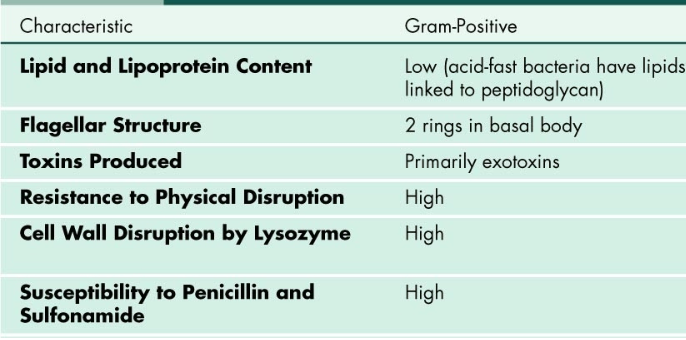
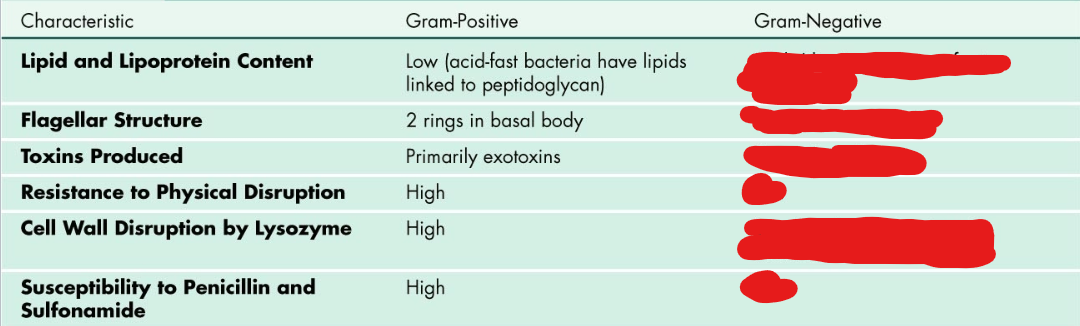
Fill in the graph
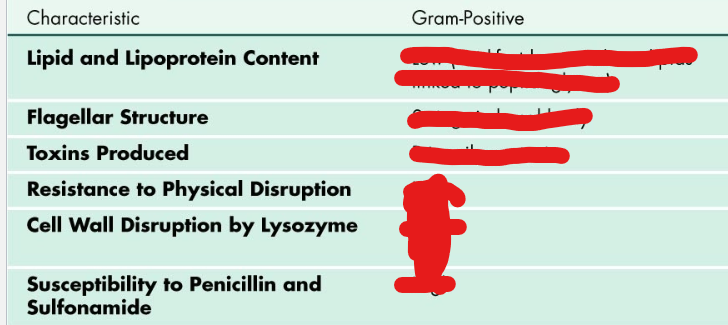
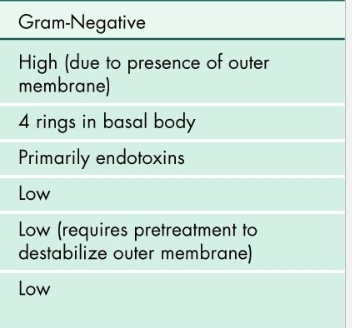
Fill in the graph
D. Endotoxin
The lipopolysaccharide (LPS) that is found in
the outer membrane of Gram-negative
bacteria is also known as
A. Exotoxin.
B. Teichoic acid.
C. Murein.
D. Endotoxin.
E. Antitoxin
d) Teichoic acids
Which of the following is found in the cell wall of
a Gram-positive bacterium but NOT in that of a
Gram-negative bacterium?
a) Peptidoglycan
b) Outer membrane
c) Lipopolysaccharides
d) Teichoic acids
e) Capsule
– Lack cell walls
– Sterols in plasma membrane
2 characteristics of Mycoplasmas
• Archaea
– Wall-less or
– Walls of pseudomurein (lack NAM and D amino acids)
– No peptidoglycan
3 characteristics of Archaea
lysozyme
___________ breaks the bond between N-acetyl glucosamine and N-acetylmuramic acid
penicillin
__________ inhibits peptidoglycan synthesis
lysozyme and penicillin
if cells are treated with either of these(2) they will
lyse if they are in a hypotonic solution
plasmolysis
water moves out of the cell, causing its cytoplasm to shrink
– solute concentration outside the cell is less than inside the cell
– water moves into cell and cell swells
– cell wall protects from lysis
3 characteristics of a hypotonic environement
– solute concentration outside the cell is greater than inside
– water leaves the cell
– plasmolysis occurs
– Salt and sugar have been used to preserve foods
what 4 things occur in Hypertonic environments
 Note
Note  Flashcards (47)