Chemistry - the earth's atmosphere
 Call Kai
 Learn
Learn Practice Test
 Spaced Repetition
 Match
Match Flashcards
 Knowt Play
1/27

There's no tags or description
Looks like no tags are added yet.
Name | Mastery | Learn | Test | Matching | Spaced | Call with Kai |
|---|
No analytics yet
Send a link to your students to track their progress
28 Terms
What was the Earth like 4.6 billion years ago?
- it was a molten body until gravity condensed the earth and a solid crust formed about 500 million years ago
- there waas no liquid water
- the average temperature was 400°C
What is the composition of gases in the current atmosphere?
- nitrogen ≈ 78%
- oxygen ≈ 21%
- carbon dioxide ≈ 0.05%
- traces of water vapour and argon
What is the composition of gases of the early atmosphere?
- mainly carbon dioxide and a bit of water vapour
- small amounts of methane and ammonia
Why did the amount of CO₂ in the atmosphere decrease?
1. as the earth cooled, the water vapour in the atmosphere condensed, forming oceans
- CO₂ dissolved in the oceans, reducing the amount of CO₂
2. Life also started to evolve
- plants absorbed CO₂ from the atmosphere and released oxygen during photosynthesis
- CO₂ became locked up in carbonates and fossil fuels
Why did the amount of O₂ in the atmosphere increase?
as life evolved on earth, plants absorbed CO₂ from the atmosphere and released oxygen during photosynthesis
Why did the amount of nitrogen in the atmosphere increase?
- oxygen was made by photosynthesis by plants
- the oxygen reacted with the ammonia to form nitrogen and water
What are greenhouse gases?
atmospheric gases that trap heat radiated from Earth's surface, preventing it from escaping into space
What are the greenhouse gases in the atmosphere?
- Carbon dioxide (CO₂)
- Methane (CH₄)
- Water vapour
- Nitrous oxide (N₂O)
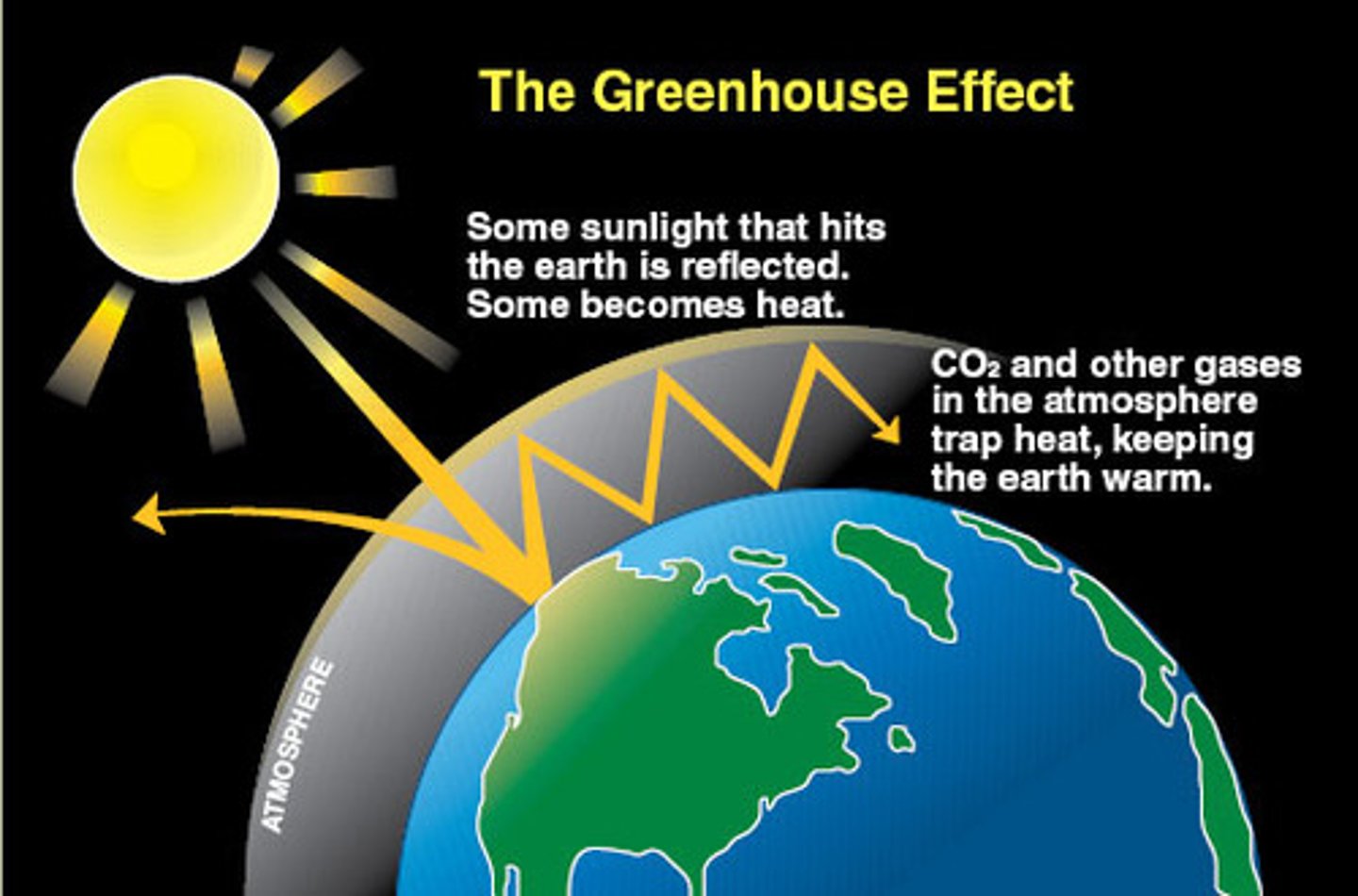
What is the greenhouse effect?
1. Energy from the Sun reaches Earth
- This energy is mostly visible light and some infrared
2. Earth absorbs the energy
- The surface (land and oceans) warms up
3. Earth gives off heat (infrared radiation)
- This heat tries to escape back into space
4. Greenhouse gases trap some of the heat
- Gases like carbon dioxide and methane absorb the heat
- They re-radiate it in all directions, including back to Earth
What is the ozone layer?
A layer of Oxygen which blocks harmful rays from the sun allowing organisms to evolve
What is the enhanced greenhouse effect?
the accelerated warming of Earth's atmosphere caused by human activities increasing concentrations of greenhouse gases (CO2, methane, nitrous oxide)
What human activities increase CO2 in the atmosphere?
- burning fossil fuels
- transportation,
- Deforestation
What human activities increase methane in the atmosphere?
livestock farming
What are the effects of climate change?
Rising global temperatures
Melting ice caps and glaciers
Sea level rise
More extreme weather (storms, droughts, heatwaves)
Loss of habitats and species
How can climate change be reduced?
Use renewable energy (solar, wind)
Plant more trees (reforestation)
Reduce fossil fuel use
Improve energy efficiency
How does acid rain affect the environment?
- it affects and harms aquatic life
- it changes the pH of the soil
- it damages the waxy cuticle of leaves
- it damages limestone structures
What causes acid rain?
Acid rain is caused by sulfur dioxide and nitrogen oxides dissolving in atmospheric water, forming sulfuric and nitric acids
How is carbon monoxide made?
by the incomplete combustion of fuels
How does carbon monoxide affect humans?
it is dangerous because it reduces the blood's ability to carry oxygen
How is sulfur dioxide made?
Released when burning fuels that contain sulfur impurities
How are nitrogen oxides (NOx) made?
Formed when nitrogen and oxygen react at high temperatures (e.g, in car engines)
What is smog?
a mixture of smoke and fog, primarily caused by burning fossil fuels
How is smog formed?
when air pollutants, primarily nitrogen oxides (NOx) from vehicle emissions react with sunlight and heat in the atmosphere
What is global dimming?
gradual reduction in sunlight reaching the Earth's surface caused by atmospheric particulates (soot/ash) reflecting sunlight back into space
What causes global dimming?
soot released into the atmosphere from burning fossil fuels
How are particulates (soot) made?
formed during the incomplete combustion of fuels
How do particulates affect the Earth?
- they can cause global dimming
- and can cause lung damage and breathing problems
How can pollution be reduced?
- Use cleaner fuels (low sulfur fuels)
- Fit catalytic converters in cars
- Use renewable energy
- Reduce vehicle use

