Models, Metaphors and Reflective Practice -Human Development Chapter 1
 Call Kai
 Learn
Learn Practice Test
 Spaced Repetition
 Match
Match Flashcards
 Knowt Play
1/41

There's no tags or description
Looks like no tags are added yet.
Name | Mastery | Learn | Test | Matching | Spaced | Call with Kai |
|---|
No analytics yet
Send a link to your students to track their progress
42 Terms
Big Picture Idea
Problems cannot be solved using only objective, scientific facts
Human behavior must always be understood within context.
Complex Human Issues—-Complex responses
Scientific knowledge + ur personal insight = effective care.
Reflective Practice
traditional teaching focuses on objective, scientific, information
Unique (Role of YOU in care) -Chapter 1
Every person is biologically and psychologically different,
Differences include: life experiences, cognitive processes, emotions, and DNA.
Just like you are unique, every patient is unique?
Authentic (Role of YOU in care) -Chapter 1
Being true to your knowledge, experiences, and emotional awareness.
Authentic interventions are more successful.
Reality- Reflective Practice
Human nature does not follow universal rules
Effective Care Requires?
Scientific knowledge
personal understanding
awareness of context.
Reflective (Dewy, 1933)
The active, careful consideration of beliefs or knowledge and the evidence that supports them, including their consequences.
Reflection-ON-Action -Types of Reflection
Happens after an event
Looking back to evaluate what happened.
Ex. Reviewing a patient interaction later.
Reflection-IN-Action -Types of Reflection
Happens during the events.
Learning and adjusting in real time.
“Thinking on your feet”.
Reflection-FOR-Action (Ultimate Goal) -Types of Reflection
Uses: Reflection-ON-action, and Reflection-IN-action.
Focuses on: improving future performance and applying lessons learned.
Leads to long-term growth
5 Stages if Refection (Ross, 1989)
Reflection is a process, not a single step.
Encourages deeper and more critical thinking over time.
Classic Stage Theories (Freud, Erikson, and Piaget)
Development occurs in distinct stages.
Change is qualitative (transformational).
Periods of growth followed by stability.
Differentiation- Margarnet Mahler: Separation- Individual Theory
5-10 months
Baby notices the external world but stays close to mom.
Practicing -Margarnet Mahler: Separation- Individual Theory
10-16 months
Crawling/ exploring, returns to mom for comfort.
Rapprochement -Margarnet Mahler: Separation- Individual Theory
16-24 months
More independence but still demands attention
Consolidation and Object Constancy -Margarnet Mahler: Separation- Individual Theory
24- 36 months
Accepting being separate, less anxiety.
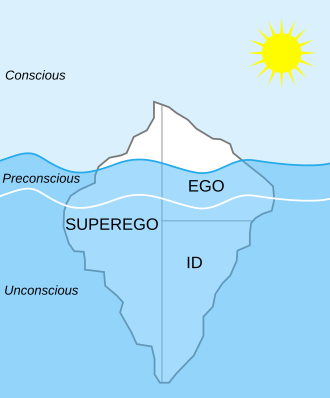
Freud’s Personality Structure
Id: Primitive, instinctual drives —Unconscious level
Ego: Rational, mediates between Id and Superego — Conscious level
Superego: Moral conscience —- Preconscious level
Anna Freud
Founder of child psychoanalysis
Focused on: ego defenses, how the mind protects itself from painful thoughts, and feelings.
Expanded understanding of child development.
Erik Erinkson
Emphasized social and cultural influences
1 of the only founders to address: minority status and social devaluation
Believed: external oppression affects development, and acknowledging reality helps overcome it internally.
Incremental (Continuous) Theories -Watson, Skinner, Bandura
Development is gradual and continuous
Emphasize: leaning, environment, and behavior
Critical and Sensitive Leaning Periods -Universality, Specificity, and Human Development
Some learning happens more easily at certain ages.
These time windows shape brain development and behavior.
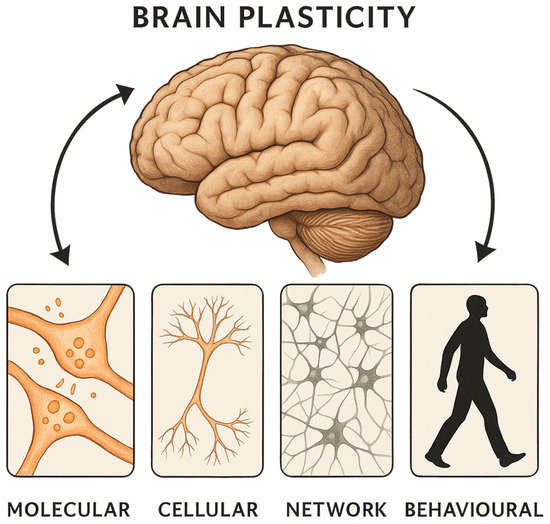
Neural Plasticity -Universality, Specificity and Human Development
The brain’s ability to change across the lifespan.
Nothing about the brain is static
Brain changes are continuous throughout life, and influenced by genetic + environment.
The rate and type of change var by brain region and function.
Sensitive Periods -Universality, Specificity and Human Development
Times when experiences have an especially strong influence.
Learning is still possible later, but effects are weaker.
Critical Periods -Universality, Specificity and Human Development
Limited time windows
Experiences (or lack of them) cause lasting changes
Once closed, the brain is less flexible in that area.
Brain Development Timeline
Brain develops back—front. Sensory areas first (vision, hearing), and higher-order thinking areas later.
Critical periods likely follow this same progression,
During periods, brain regions are extra flexible and experience strongly shapes neural connections.
What happens During a Critical Periods (Neurobiology)
Inhibitory (GABA) neurons strengthen
Excitation/ inhibition balance shifts toward inhibition.
This allows connections to: strengthen, weaken, and be pruned
Structural changes occur: myelin formation and perineuronal nets.
These changes close the critical period by reducing plasticity.
Sensory Development -Examples of Critical Period Learning
Vision and hearing rely in early experiences
Ex. Binocular vision depends on early visual input.
Skill Acquisition -Examples of Critical Period Learning
Motor and cognitive skills are learned more efficiently.
Ex. Music, sports, and skill-based learning.
Language Acquisition -Examples of Critical Period Learning
Critical period lasts until age 10
Easier to learn grammar and pronunciation.
After this period, language learning is harder, and native-like fluency is less likely.
Universality
Development looks the same across groups.
Key question: Are developmental changes the same across cultures, socioeconomic groups, genders, and historical periods?
Specificity
Development depends on culture, time, and context.
Key question: Are developmental changes the same across cultures, socioeconomic groups, genders, and historical periods?
Role of Culture
Culture included: customs, beliefs, social institutions, and shaped practices.
Cultural Shapes: development, behavior, and health outcomes.
Group Identity in Developmental Study
Possible categories include: race, socioeconomic status, gender, sexuality, religion, country of origin, and education level.
Cultural Competence (Applies to Nursing)
Key Components
Self-awareness
Knowledge of other cultures
practice skills
professional training
knowledge of systems
Important Skils
Understand ur own beliefs and values
Respect cultural differences
Recognize effects of stigma, discrimination, and oppression
advocate for equitable care and access.
Prevention: Key Concept
Timing of intervention is what distinguishes types of prevention.
Primary Prevention -Types of Prevention
Prevents problems before they start.
Targets the general population
Ex. Vaccinations, seatbelt laws, Head Start, and developmental guidance in schools.
Secondary Prevention -Types of Prevention
Tangents high-risk groups
Early detection and intervention
Ex. Screenings (pap smear, depression, and scales), learning disability tests, and suicide hotlines.
Tertiary Prevention -Types of Prevention
Focuses on rehabilitation
For individuals with established disorders
Ex. Diabetes glucose monitoring, detox programs, post-hospitalization care, and reentry programs after incarceration.
Selective -Universal, Selective and Indicated Prevention
Targets groups at higher risk.
Ex. Children of alcoholics and high-crime neighborhoods.
Indicated -Universal, Selective and Indicated Prevention
Targets individuals already showing early signs.
Ex. Prediabetes, behavioral problems, and early substance misuse.
Risk and Protective Factors
Increase the likelihood of negative outcomes.
Can be: biological, psychological, family-based, community-based, and cultural.
Protective Factors
Reduce or buffer risk
Act as positive counterbalances
Lower chances of negative outcomes.
Universal, Selective and Indicated Prevention
Applies to everyone
Ex. Speed limits, nutrition labels, masks, and exercise promotion.

