Bio 22 Exam 2
 Call Kai
 Learn
Learn Practice Test
 Spaced Repetition
 Match
Match Flashcards
 Knowt Play
1/180

There's no tags or description
Looks like no tags are added yet.
Name | Mastery | Learn | Test | Matching | Spaced | Call with Kai |
|---|
No analytics yet
Send a link to your students to track their progress
181 Terms
Aneuploidy
a variation in chromosome number where the organism lose or gains one or more chromosomes, but not an entire set
Euploidy
having more than one set of chromosomes. Polyploidy is two sets of chromosomes. Triploidy is three sets of chromosomes, usually fatal.
monosomy
loss of one single chromosome in a diploid gene, unmasks recessive alleles, 2n-1
trisomy
gain of a single chromosome in a diploid gene, 2n+1, trisomies for autosomes are often lethal
autopolyploidy
each additional set of chromosomes is identical to the parent species (AA → AAA → AAAA) and can arise from a diploid gamete or when two sperm fertilize one egg
EX: seedless fruit (triploid bananas)
Allopolyploidy
results from hybridizing two closely related species but are not the same, can produce a sterile organism which cannot produce viable gametes (mule creates from male donkey and female horse)
chromosomes are not homologous and cannot synapse in meiosis
what is prenatal amniocentesis
amniocentesis=chorionic villus sampling (CVS). This is when fetal cells are obtained from the amniotic fluid or cells of the chorion of the placenta
what is non-invasive prenatal genetic diagnosis
fetal cells and DNA are obtained from maternal circulation (blood test), the idea is that 11-13% of the DNA in the blood will be from the fetus
Haploinsufficiency
when one copy of a gene/chromosome is not sufficient for survival. This is a result of monosomy unmasking recessive lethal alleles
Trisomy 21
Down syndrome, form of aneuploidy where there is an extra 21st chromosome. The Down syndrome critical region is where genes are dosage sensitive and too much gene product is what leads to the associated characteristics. Ovum is the source for 95% of cases, due to nondisjunction in meiosis. Low muscle tone, small head, flattened facial profile. 1/800 live births
Patau Syndrome
trisomy 13, example of aneuploidy. Survive to term but results in severe malformation and lethality in the first days or weeks
Edwards Syndrome
trisomy 18, example of aneuploidy. Survive to term but results in severe malformations and lethality in the first days or weeks
Cri-du-Chat
result of a terminal deletion of chromosome 5, results in anatomical malformations. 1/50,000 live births.
How does Colchicine function
it is a chemical for studying polyploidy and interfere with spindle formation. It can be added to cells and then washed off to create cells with polyploidy.
types of chromosome rearrangements
deletions (terminal and intercalary) , duplications, inversions (paracentric and pericentric) , translocations (nonreciprocal and reciprocal)
chromosomal deletion
the chromosome breaks off in one or more places and a portion is lost. Terminal is near the end, and Intercalary is at the interior
chromosomal duplication
a repeated segment of chromosome, part of the chromosome has been duplicated. Arises from unequal crossing over (don’t line up properly) during synapsis in meiosis
EX: bar mutation in Drosophila that leads to narrow slit eyes
chromosomal inversion
part of the chromosome has switched order or “inverted”, broken in two places and then reinserted. Paracentric is when the length of the arms don’t change, centromere is not part of inverted segment. Pericentric is when the centromere is part of the inverted segment, length of the arms change.
chromosomal translocations
movement of a chromosomal segment to a new location in the genome, in non-homologous chromosomes. Nonreciprocal is when a portion of one chromosome is added to another. Reciprocal is when both chromosomes swap a portion of themselves to the other.
Compensation loop
occurs during synapses and it allows for the homologous chromosomes to line up properly after there has been a large intercalary deletion with one chromosome
Fragile-X Syndrome
common inherited intellectual disability caused by trinucleotide repeats in the FMR1 gene. Folate-sensitive site of X chromosome exhibit fragile-x syndrome
Diseases caused by trinucleotide repeats
fragile-x syndrome, Huntingtons disease, and myotonic dystrophy
what is a robertsonian translocation
when two nonhomologous acrocentric chromosomes break at extreme ends of the short arms and produce large submetacentric or metacentric chromosomes. A large portion of chromosome 21 is moved to chromosome 14.
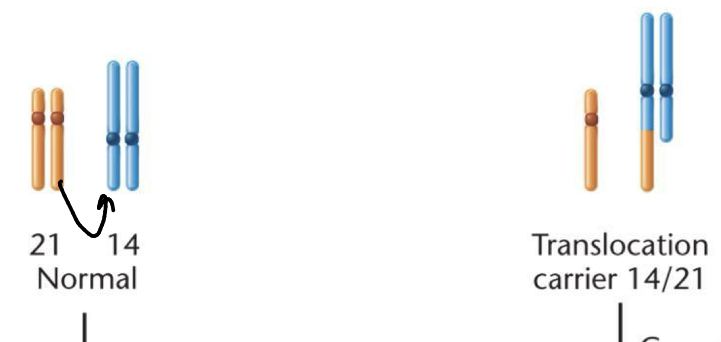
EX: familial Down syndrome
extranuclear inheritance
a non-mendelian inheritance pattern where the transmission of genetic information to offspring is through cytoplasm not nucleus- usually through one parent such as the mother and the ovum cytoplasm
organelle heredity
variation of extranuclear inheritance where the DNA contained in mitochondria or chloroplasts is what determines certain phenotypic characteristics of offspring
infection heredity
variation of extranuclear inheritance that results from symbiotic or parasitic association with a microorganism and the inherited phenotype is affected by the microbe in the host’s cytoplasm
heteroplasmy
variation in the genetic content of organelles, mutation in one or a few sill be diluted out by the many mitochondria without mutation and with normal function, adult cells have a variable mixture of normal and abnormal organelle
cpDNA
chloroplast DNA, circular, 70s, maternally inherited, genes encode for products involved in photosynthesis and translations
mtDNA
mitochondrial DNA, circular, 70s, maternally inherited, codes for proteins needed for cellular respiration, smaller than cpDNA
Chalmydomonas?
unicellular green algae that have streptomycin resistance (can be resistant R or susceptible S), the trait is passed through the female parent (mt+ mating type only)
all offspring will have the same trait (R or S) based on what the mt+ female has
4 O’clock plant variegation
plant has white, green, and variegated (mixed) leaves due to a mutation in chloroplast DNA, the ovule is the source of the chloroplast DNA and determines what color the leaf is
What leads to the poky mutation in Neurospora crassa
there is a mitochondrial mutation that leads to a slow growing mutant strain called poky that leads to decreased mitochondrial function. Mutation is due to the absence of several cytochrome C proteins needed to electron transport. Female genotype is what determines.
Saccharomyces cerevisiae yeast and the three types of mutations
Can have mitochondria mutations called petite because they form to small colonies which leads to deficients in cellular respiration and electron transport.
segregational petites, neutral petites, supressive petites
what are segregational petites in yeast
transmission is nuclear, genes have products that are transported to the mitochondria and result in petite colonies, crossing this petite with normal results in 50% petite and 50% wild type
neutral petites in yeast
transmission is cytoplasmic, zygote gets mtDNA from both parents, but since mtDNA from normal ascospores are present the zygote growth is normal. Crossing petite with normal leads to 100% wild type
suppressive petites in yeast
transmission is cytoplasmic, zygote gets mtDNA from both parents but the mtDNA mutation suppresses the normal mtDNA (dominant-negative mutation), crossing petite with normal leads to 100% petite
what are dominant negative mutations
when the mutation leads to a loss of wild type function while also blocking the normal unmutated DNA, even if one normal copy is present, one mutant copy results in all zygotes being mutants
what is the endosymbiotic theory
the idea that mitochondria and chloroplasts originally arose individually but then bacteria were engulfed by larger eukaryotic cells and a symbiotic relationship evolved. Bacteria lost ability to function autonomously and eukaryotic cells gained oxidative phosphorylation and photosynthesis
evidence for the endosymbiotic theory
mitochondria have two phospholipid bilayers like gram negative bacteria, mitochondria of today are similar in size to E. coli, mitochondria have 70s ribosomes even through eukaryotes have 80s ribosomes, mitochondria and chloroplast have their own circular DNA, mitochondria and chloroplasts do not have histones
why is mtDNA susceptible to mutations
it is more exposed because there are no histones for structural protection, no DNA repair mechanism, and high concentrations of ROS which is toxic
in order for disorders to be attributed to mtDNA it must what
have a maternal inheritance pattern, reflect deficiency in bioenergetic function of an organelle, have mutation in one or more mitochondrial gene
Three disorders that arise from mtDNA mutations
MERRF (Myoclonic epilepsy and ragged-red fiber disease), LHON (Leber’s hereditary optic neuropathy), KSS (Kearns-Sayre syndrome)
what is MERRF
myoclonic epilepsy and ragged-red disease result of mtDNA mutation, maternal transmission, lack of muscle control, and ragged-red skeletal muscle fibers
What is LHON
Leber’s hereditary optic neuropathy, caused by mtDNA mutation, sudden bilateral blindness, onset around age 27, usually no family history
what is KSS
result of mtDNA mutation, Kearns-Sayre syndrome, vision and hearing loss, heart conditions, can appear anytime from infancy to adulthood
what is MRT
mitochondrial replacement therapy, or three parent in vitro fertilization. This is when a mother with a mitochondrial defect wants to have a baby so they take a donors egg cell and remove the nucleus and replace it with the mother’s nucleus.
what is the tetra nucleotide hypothesis
DNA contains equal amounts of four nucleotides
Indirect evidence of DNA as genetic material
gametes and diploids have a close amount of DNA and number of chromosome set, UV light mutagenesis- the molecule that serves as genetic material is expected to absorb at a mutagenic wavelength which nucleic acids do at 260 nm.
direct evidence of DNA as genetic material
Recombinant DNA technology and eukaryotic DNA functional in bacterial cell- segments of eukaryotic DNA for specific genes were isolates and spliced into bacterial DNA and the bacterial cell was monitored and DNA was found to be present and functional in the bacterial cell, Transgenic animal example-green glowing rat
Retroviruses
replicate unusually, complementary synthesis of DNA by RNA-dependant DNA polymerase, a reverse transcriptase. RNA to DNA
Protein absorption spectrum
280nm
nucleic acid absorbance
260nm - can cause mutagenic effects such as thymine dimers
numbering system of carbons in ribose and deoxyribose.
6 carbons with carbon 1 being the carbon on the right, carbon 3 is where the phosphodiester bond is created
Ribose vs Deoxyribose with numbering
both have 6 carbons. Ribose has an OH and carbon 2 and 3. Deoxyribose has an OH only at carbon 3.
which nitrogenous bases are purine
pure as gold, 9 member rings, Adenine and Guanine
which nitrogenous bases are pyrimidines
cut in half, 6 member ring, cytosine, uracil, thymine
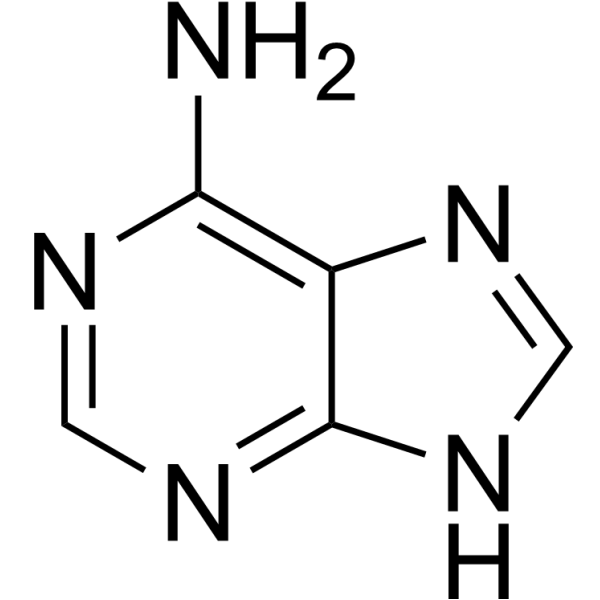
what is this
adenine
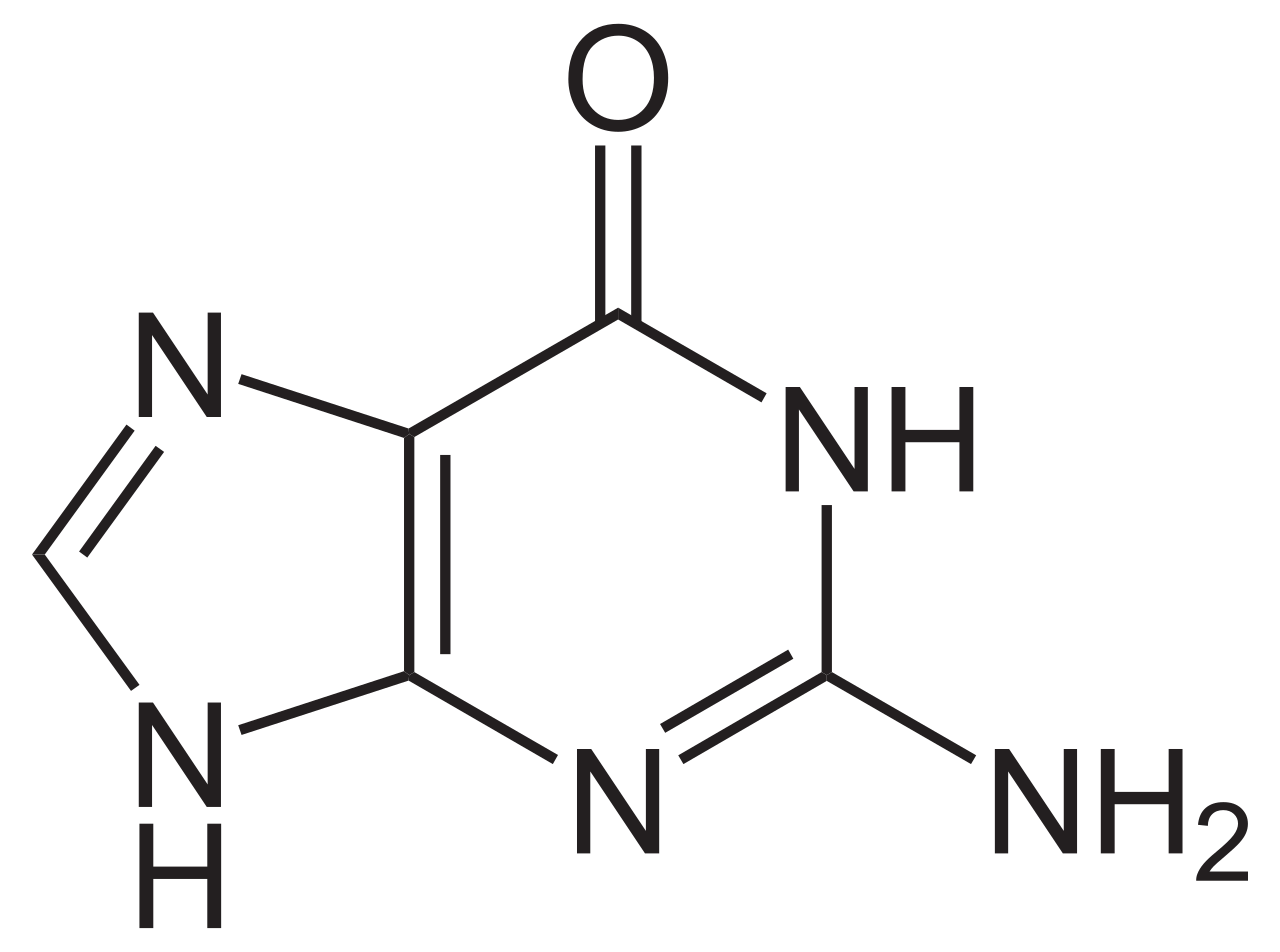
what is this
guanine
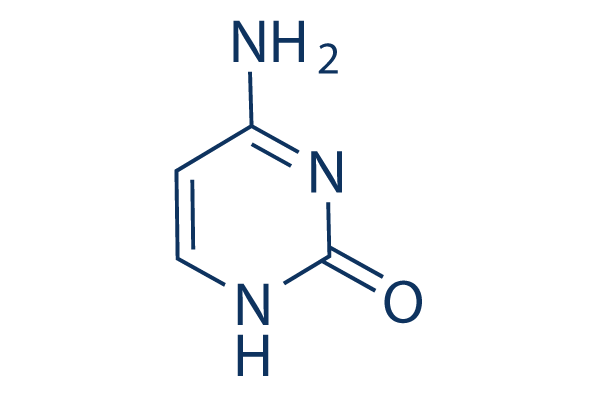
what is this
cytosine
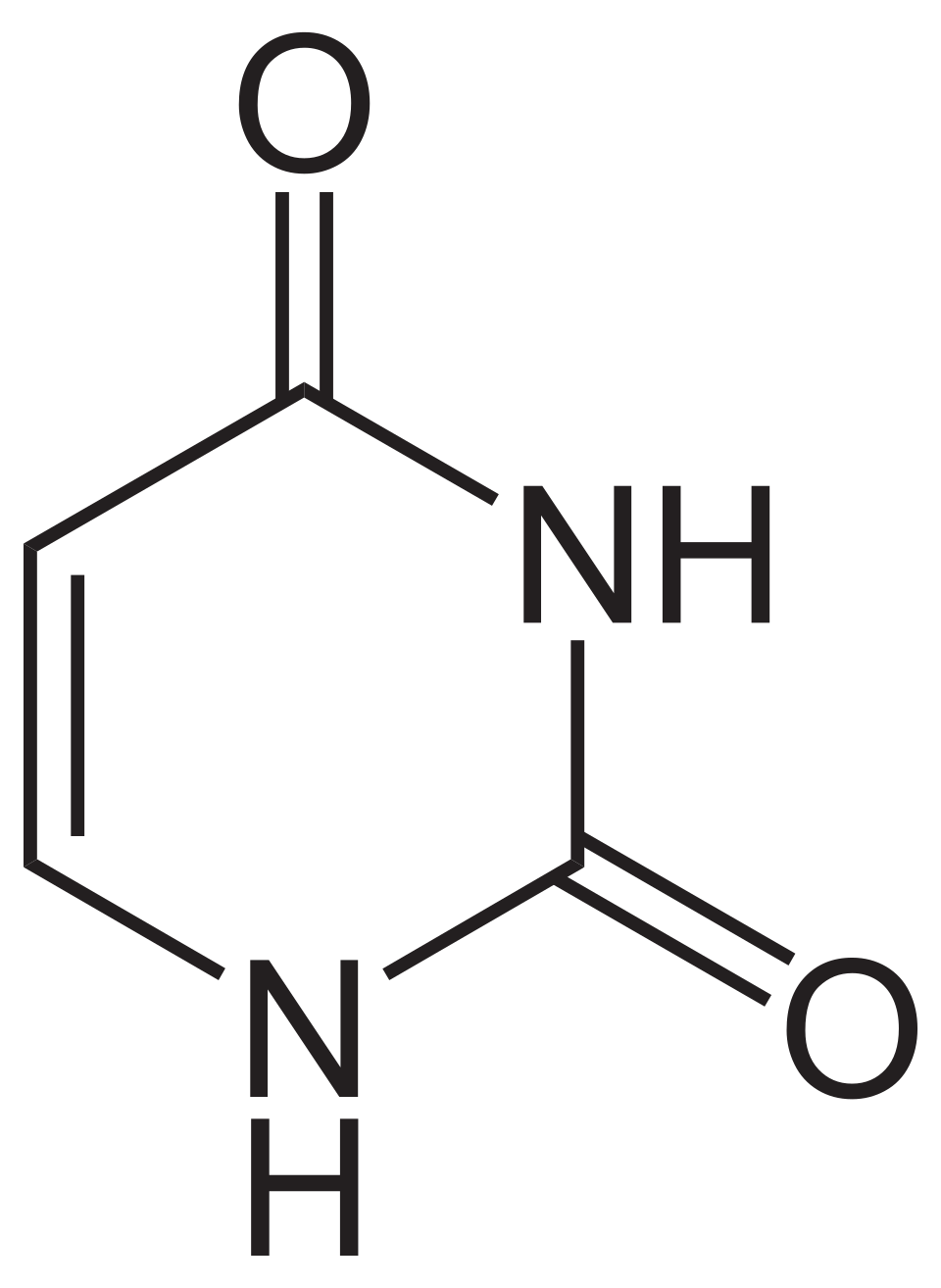
what is this
Uracil
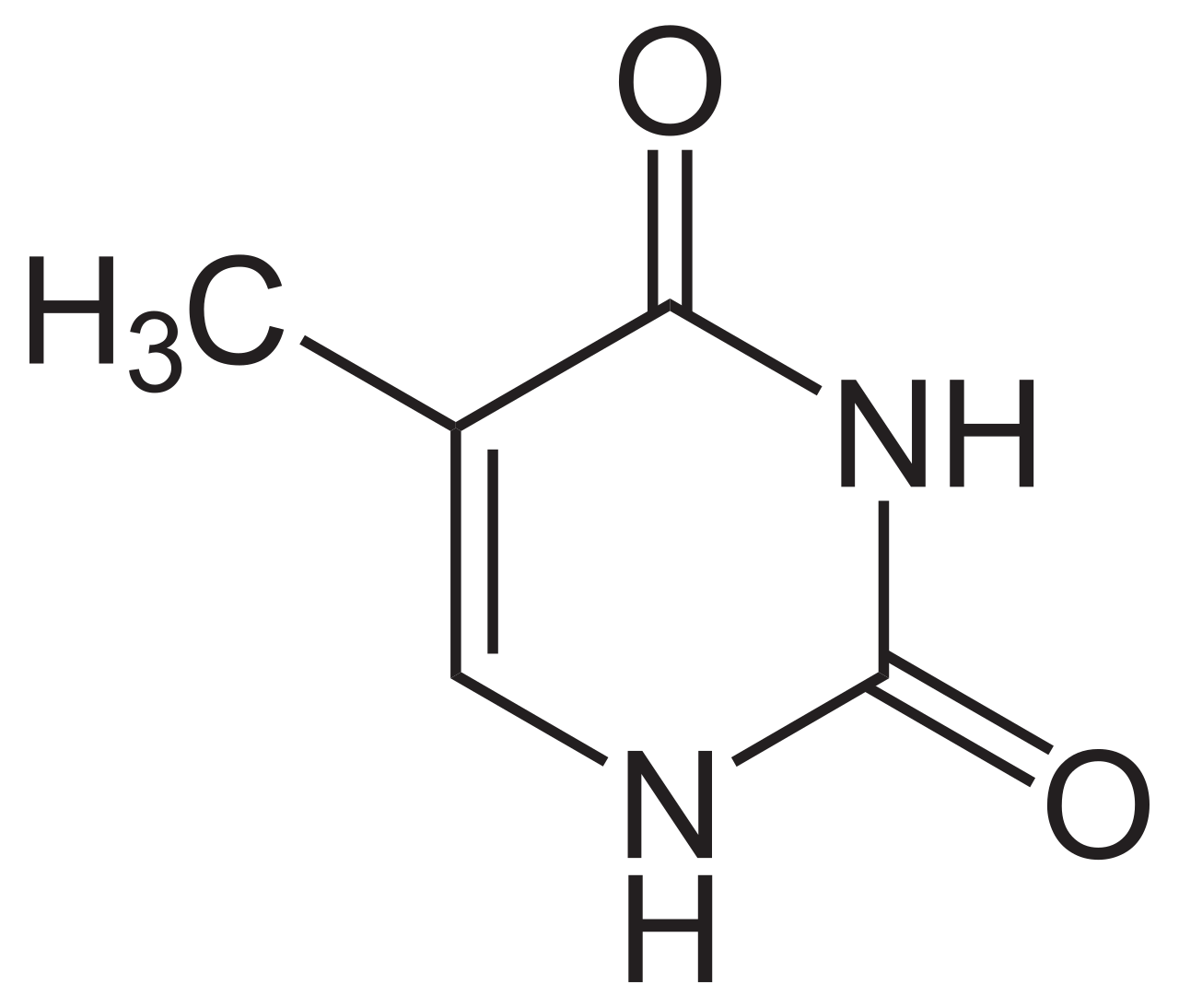
what is this
thymine
what type of linkage holds together nucleotides together on one strand of DNA
phosphodiester bond
What linkage holds nucleotides together between two strands of DNA
hydrogen bonds, C-G has 3, A-T has 2
nucleoside and types
just the nitrogenous base and a pentose sugar, no phosphate group
Nucleoside monophosphate-NMP nucleoside with one phosphate
Nucleoside diphosphate - NDP nucleoside with two phosphates
Nucleoside triphosphate- NTP nucleoside with three phosphates
Nucleotide
a nucleoside with a phosphate group, nitrogenous base with a pentose sugar with a phosphate group
What is the term used for the incoming monomer to be added to the DNA chain
dNTP= deoxynucleoside triphosphate
types of DNA
B-DNA, A-DNA, Z-DNA
what is B-DNA
the Watson and Crick model and what we see in cells, seen in aqueous low-salt conditions, right handed helix
what is A-DNA
more compact than B-DNA (smaller grooves), prevalent under high salt or dehydration conditions
what is Z-DNA
left-handed double helix
Review the conclusions from Chargaff's base-composition studies
the amount of A is proportional to T and same for G and C, percentage of G+C does not equal A+T
major features of the Watson-Crick model of DNA
DNA is a double helix, antiparallel strands connected by base paring, stacked nitrogenous bases, major and minor grooves (major = 22 Å and minor 12 Å), semiconservative model
Abundance of mRNA, rRNA, and tRNA in E. coli cells
rRNA=80%, tRNA= 15%, mRNA=5%
what is rRNA
ribosomal RNA, structural component of ribosomes for protein synthesis
what is tRNA
transfer RNA, smallest in size, carries amino acids for protein synthesis
what is mRNA
messenger RNA, template for protein synthesis, carries genetic information from gene to ribosomes
unique types of RNA and their function
Telomerase RNA and RNA primers- involved in DNA replication and chromosome ends
snRNA - small nuclear DNA, help pinch together exons and keep them together as controls are removed/process mRNA
Antisense RNA, microRNA, siRNA- involved in gene regulation
Analytical techniques for DNA and RNA investigation
Absorption of UV light (use of UV is critical to isolation of nucleic acids following separation), denaturation and renaturation of Nucleic Acids (DNA can denature due to heat or stress, hyper chromic shift is when there is an increase in UV absorption of heated DNA in solution as it goes from double stranded to single stranded), Molecular Hybridization (when single stranded DNA or RNA anneal after denaturation to complementary sequences and form double stranded hybrid molecules)
what is FISH
fluorescent in situ hybridization- uses fluorescent probes to monitor hybridization (when single stranded DNA is annealed to complementary sequences to form a double strand)
Probes are nucleic acids that will hybridize only with specific chromosomal areas
what is DNA electrophoresis
separates DNA or RNA fragments by size, smaller fragments move faster than larger, agarose gel is used as the porous matrix
what is semiconservative replication
each new DNA molecule consists of one “new” strand and one “old” strand
what is conservative replication
two newly synthesized strands come together and the original helix is conserved
what is dispersive replication
the parental stands are dispersed into two new double helices, patches of old and new strands are dispersed
What is the Meselson-Stahl experiment
proved that DNA replication is semiconservative. 15N-labled E. coli was grown in a medium with 14N in a flask. After replication each new DNA molecules consisted of one new strand and one old. This is seen via the centrifugation bands.
explain the Meselson-Stahl experiment centrifugation bands
swinging rotor buckets. plain 15N/15N strand band at the bottom (right). Generation 1 had 14N/15N strands band at the middle. Generation 2 had an even mixture of 14N/14N and 15N/14N. 14N/14N settles at the top (right), 15N/14N settles in the middle. Generation 3 was the same as 2 with more 14N/14N.
Understand the 5' and 3' ends of DNA
refers to the directionality of the strand, 5’ refers to where it is connected to the phosphate group, 3’ is where the OH group is and connected to the C5 phosphate, chain elongation goes from 5’ to 3’ direction, nucleotides need to be added into an exposed 3’ OH which is created by cleaving off two phosphate groups from dNTPs
How many DNA polymerases
5
DNA Polymerase I
removes the primer and replaces RNA nucleotides with DNA nucleotides, needs Mg2+ and cleaves off the two phosphate groups from the dNTP
DNA Polymerase II
involved in DNA repair and fixes mismatched pairs of nucleotides
DNA polymerase III
primary enzyme in vivo
structure of DNA Polymerase III
Two DNA Pol III cores at the top, T (Tau) subunit connects the two cores, siding DNA clamp loader (beta subunit), sliding DNA clamp
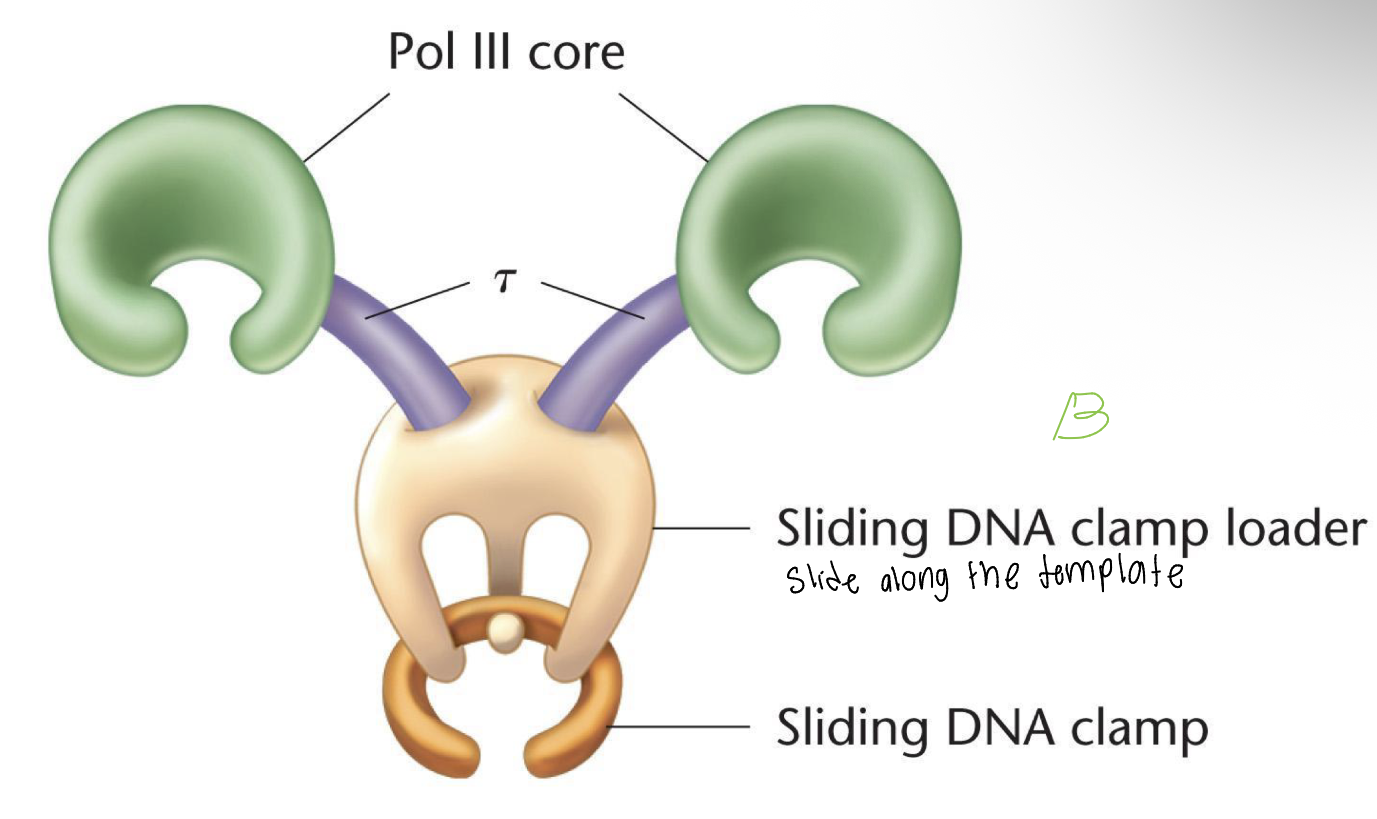
DNA polymerase IV
involved in DNA repair and fixes mismatched pairs of nucleotides
DNA polymerase V
involved in DNA repair and fixes mismatched pairs of nucleotides
telomeres
chromosomal ends that protect eukaryotic chromosomes from improper fusion or degradation, long stretches of short repeating sequences
telomerase
a ribonucleoprotein that adds repeats of a six-nuecleotide sequence to the 3’ end of chromosomes (telomeres), allows for telomere length to be maintained, not active in somatic cells but active in stem cells and malignant cells
Telomerase and aging
over time telomerase will lose its activity or lower greatly which means that the telomere will get shorter and shorter which can lead to genes being lost, too short and apoptosis will occur
telomerase and cancer
The cancer cells can have telomerase on constantly so the telomeres don't shorten and the cells can divide basically indefinitely leading to “immortality”
what is a Holliday Structure
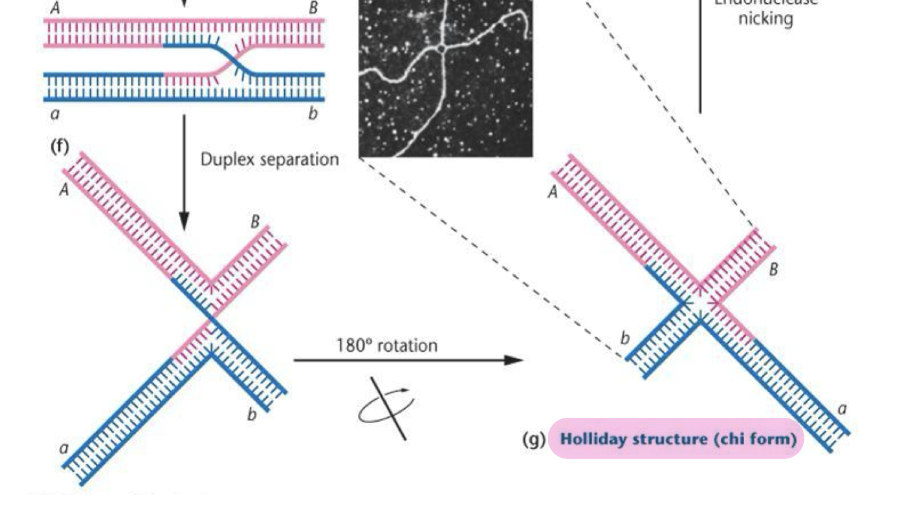
a cross shaped structure that is formed during genetic recombination, it occurs when two homologous DNA molecules exchange strands and those strands cross over forming an X shape
Supercoiling and linking number?
supercoiling of DNA allows for compaction
L= linking number. Linking number refers to the number of complete turns/crossover points. A linear DNA can have the ends sealed to make a real;axed circular DNA with a L of 20. The helix can be unwound by two turns making L=18. Now that the DNA is loosened it will undergo a conformational change and become supercoiled to make up for the loss of compaction. L=18 still after supercoiling.
Function of Topoisomerase
Topoisomerases are enzymes that cut one or both DNA strands, they wind or unwind the helix before resealing the ends. EX: DNA gyase in bacterial DNA replication

