Osmoregulation and Feedback Mechanisms in Human and Plant Systems
 Call Kai
 Learn
Learn Practice Test
 Spaced Repetition
 Match
Match Flashcards
 Knowt Play
1/26

There's no tags or description
Looks like no tags are added yet.
Name | Mastery | Learn | Test | Matching | Spaced | Call with Kai | Chat |
|---|
No analytics yet
Send a link to your students to track their progress
27 Terms
What is osmoregulation?
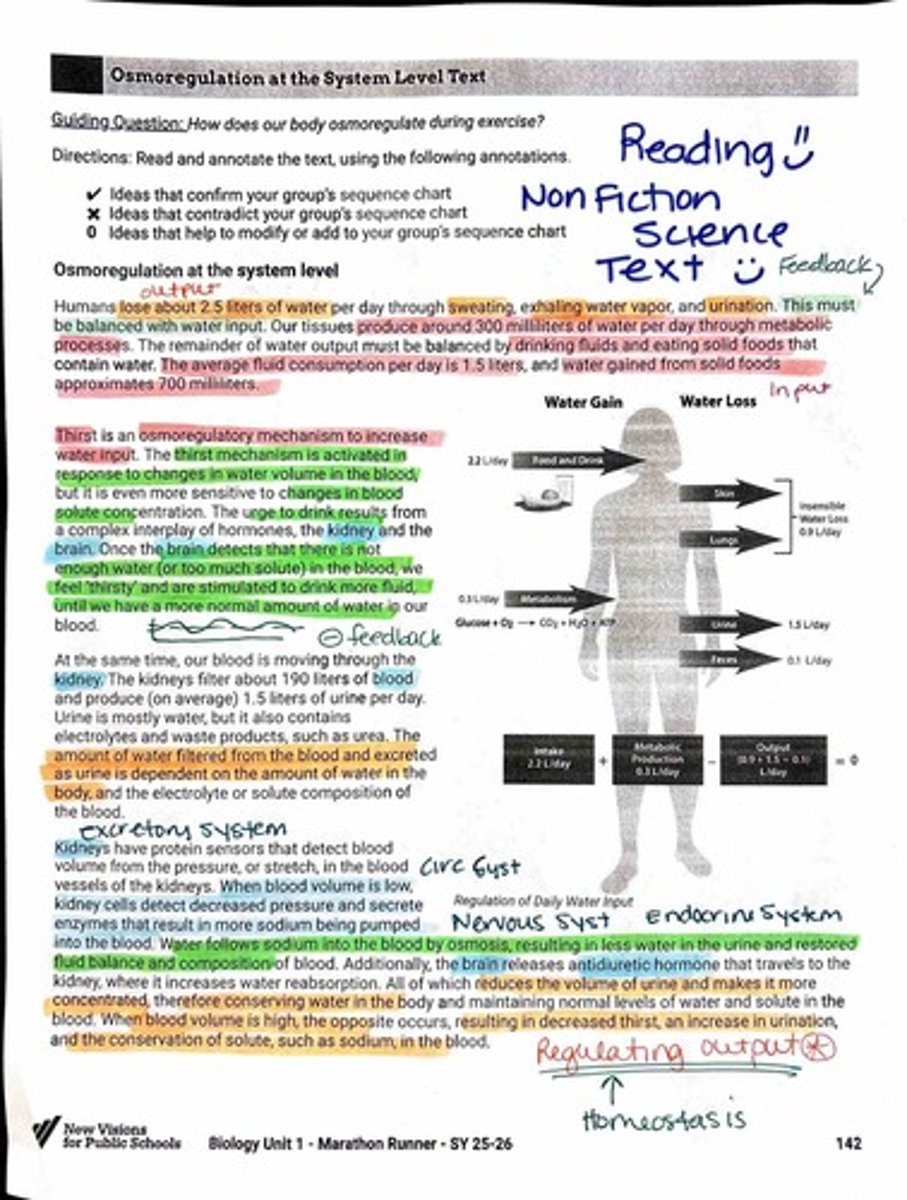
The process by which the body regulates water and electrolyte balance.
How much water do humans lose daily?
About 2.5 liters through sweating, exhaling, and urination.
What is the average fluid consumption per day for humans?
1.5 liters.
What triggers the thirst mechanism in humans?
Changes in water volume and solute concentration in the blood.
What role do kidneys play in osmoregulation?
They filter blood and produce urine, regulating water and electrolyte balance.
How much urine do kidneys produce on average per day?
About 1.5 liters.
What happens when blood volume is low?
Kidney cells detect decreased pressure, secrete enzymes to retain sodium, and increase water reabsorption.
What is the effect of antidiuretic hormone on the kidneys?
It increases water reabsorption, reducing urine volume.
What happens to cells when there is not enough water in the blood?
Cells may swell and burst due to excess water.
What happens to cells when there is too much solute in the blood?
Cells may lose water and shrink.
What is the importance of hydration during exercise?
It helps maintain water and solute balance in the blood.
What are sports drinks primarily composed of?
Water with dissolved solutes like salt, sugar, or electrolytes.
What is the role of guard cells in plants?
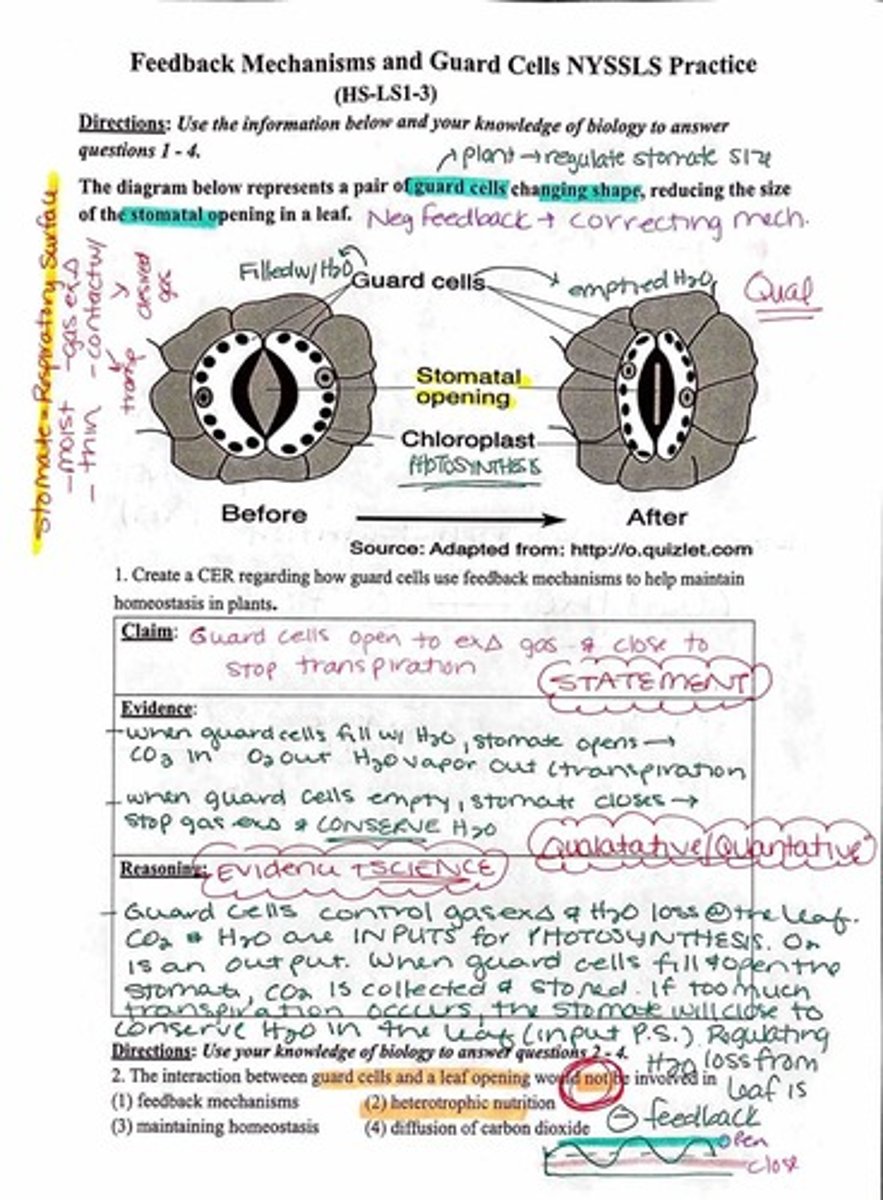
They regulate the size of stomatal openings for gas exchange.
What is a feedback mechanism in plants?
A process where guard cells change the size of leaf openings to regulate gas exchange.
What is the net flow of gases during photosynthesis on a sunny day?
Carbon dioxide moves in; oxygen moves out.
What is the consequence of excessive sweating during exercise?
Loss of both water and salts, which can disrupt homeostasis.
How do kidneys respond to high blood volume?
They decrease thirst and increase urination to conserve solutes.
What is the relationship between sodium and water in the kidneys?
Water follows sodium into the blood by osmosis, affecting urine concentration.
What is the significance of maintaining water balance in the blood?
It is crucial for cellular function and overall homeostasis.
What happens to urine concentration when blood volume is low?
Urine becomes more concentrated as the body conserves water.
What do guard cells do when the plant needs to conserve water?
They close the stomatal openings to reduce water loss.
What is the role of metabolic processes in water gain?
They produce about 300 milliliters of water per day.
What is the average insensible water loss for humans?
0.9 liters per day.
What is the impact of dehydration on the nervous system?
It can impair the body's ability to regulate thirst and fluid balance.
What factors influence the amount of water filtered by the kidneys?
The amount of water in the body and the electrolyte composition of the blood.
How do feedback mechanisms help maintain homeostasis in plants?
They adjust guard cell activity to regulate gas exchange and water loss.
What is the primary function of stomates in leaves?
To allow for gas exchange between the leaf and the environment.