9: Venus
 Studied by 0 people
 Call Kai
 Learn
Learn Practice Test
 Spaced Repetition
 Match
Match Flashcards
 Knowt Play
1/28

There's no tags or description
Looks like no tags are added yet.
Name | Mastery | Learn | Test | Matching | Spaced | Call with Kai |
|---|
No analytics yet
Send a link to your students to track their progress
29 Terms
how hot is venus?
would expect it to radiate heat from sun away with heavy atmosphere (maybe 50-60C)
in reality it is 420-440C
due to greenhouse effect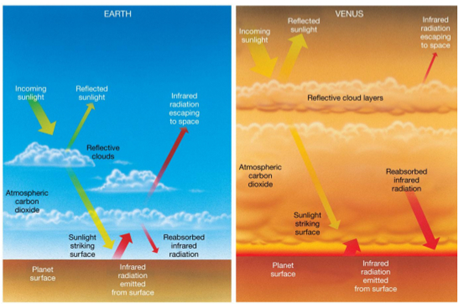
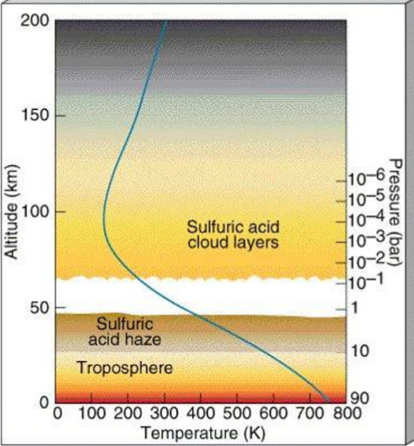
Venus clouds and the wind speed
super high wind speeds
atmos at cloud level rotates 60x faster than planet 100m/s
often occurs on rocky planets close to their stars
rotation = 243 earth days, atmos 4 days
dense - fluid like
little water vapour
water loss in past
Venus Geological history
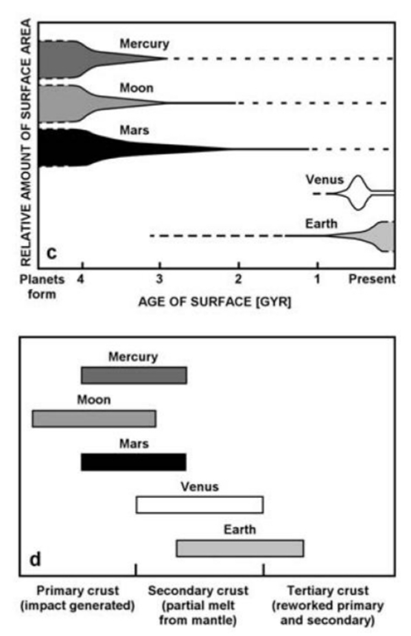
primary, secondary and tertiary crust
tectonism
no knowledge of interior
venus, earth and mercury formed from a similar part of propoplanetary disk
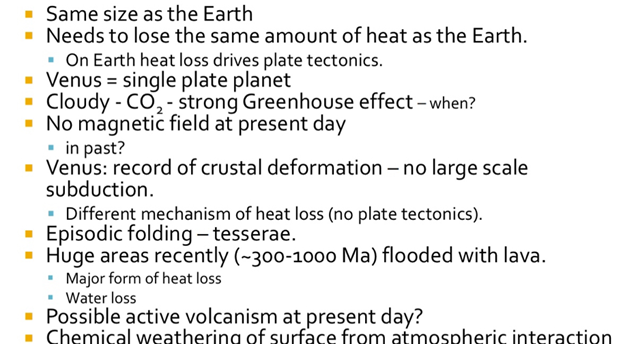
Why does Venus have no magnetic field?
slow rotation - lack of internal convection
any liquid metal portion could not be rotating fast enough
could have had in past
Why is Venus able to maintain its atmosphere?
The sun has stripped Venus’ atmosphere throughout history as there is no magnetic field to protect it (like earth). However it is not stripped, meaning it must be being replenished (active volcanic outgassing)
Describe the surface of venus
volcanic activity
no old terrain
long lived heating
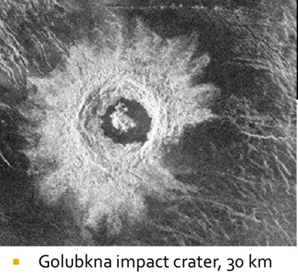
no impact craters
heavily tectonicised - fault systems
What impact craters are present on Venus?
small not seen: bias as they will be obliterated before surface due to high pressure
large craters (1000) >25km - young, complex
Venus geological timescale names
pre-fortunian
fortunian
guineverian
aurelian
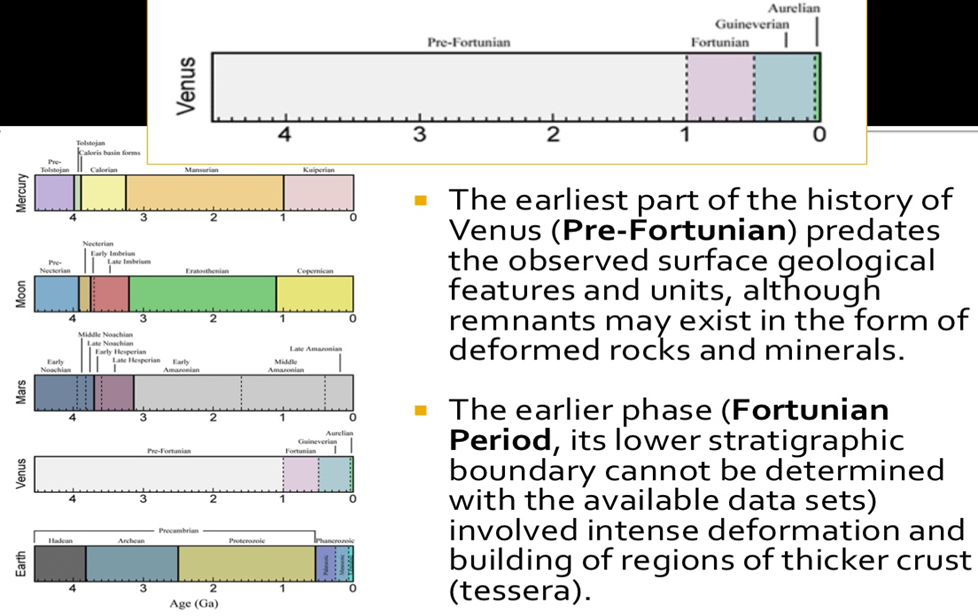
describe the Pre-Fortunian period
- predates the observed surface geological features and units
remnants may exist in the form od deformed rocks and minerals
Describe the Fortunian Period
GLOBAL TECTONIC REGIME
lower stratigraphic boundary cannot be determined with the available datasets
Describe the Guineverian period
GLOBAL VOLCANIC REGIME
distributed deformed plains
mountain belts, regional interconnected groove belts
global emplacement of vaast and deformed plains of volcanic origin
global wrinkle ridge formation
70% resurfaced
descrive the Aurelian period
NETWORK RIFTING VOLCANISM REGIME
formation of prominent rift zones and fields of lava flows
large shield volcanioes
earlier-formed coronae
16% resurfaced
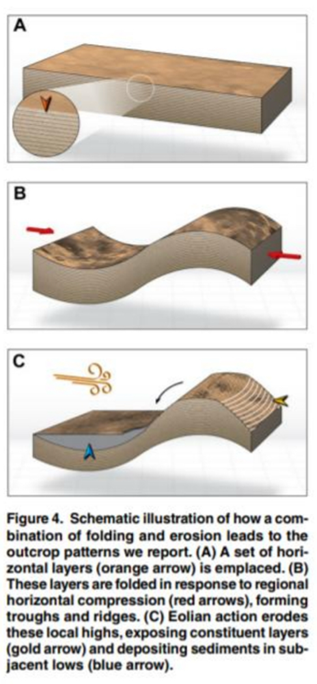
What are Tessera?
volcanic or sedimentary deposition, folding and erosion, rather than granitic
covered by younger lava flows
HEAVILY FOLDED - FORTUNIAN
7% venus surface
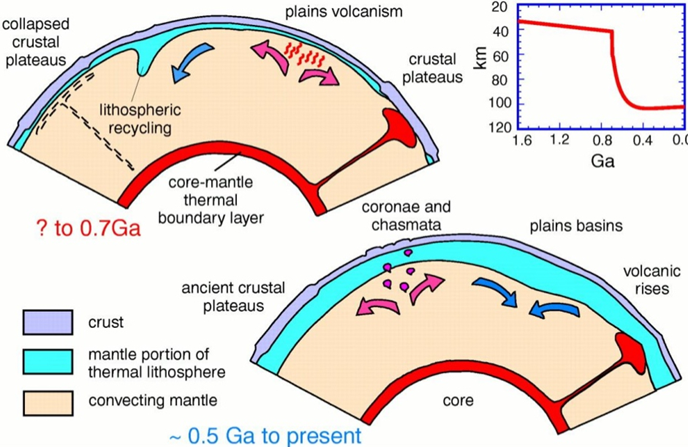
What is planet scale resurfacing
volcanism period
GUINEVERIAN AND AURELIAN
stagnant crustal lid
innermost mantle likely still convecting
melting of INTERIOR
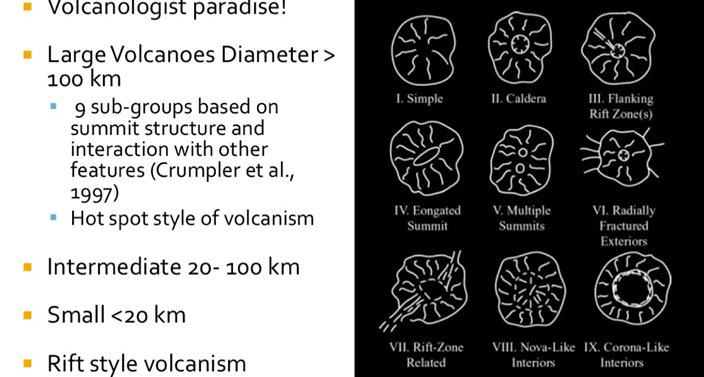
what volcano types are on Venus?
lots
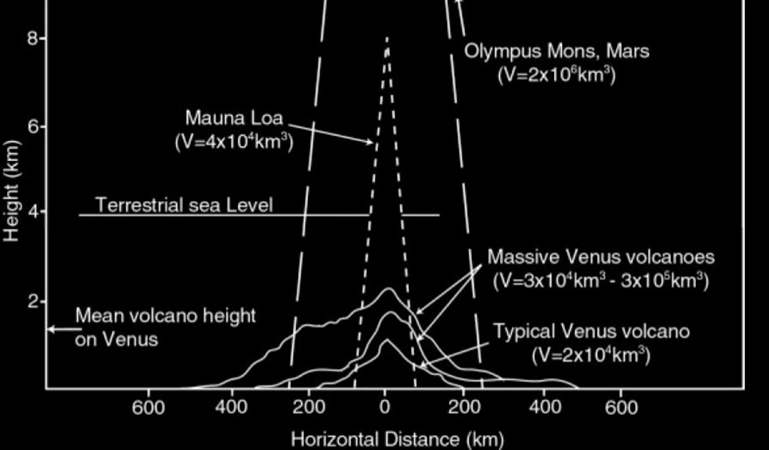
large d>100km
9 sub-groups
intermediate 20-100km
small <20km
rift style
Altitude of Venus volcanos?
low
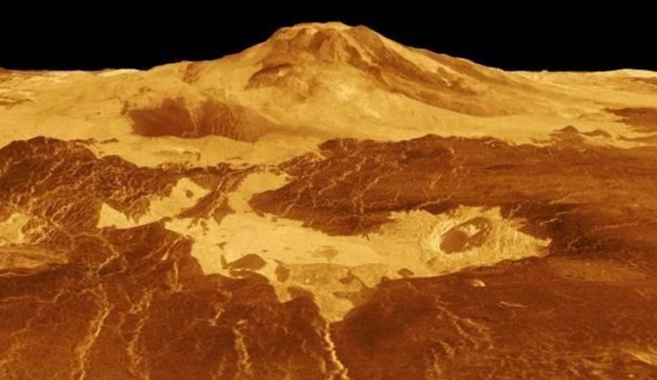
Maat Mons
aphrodite terra
low viscosity lava flows
395km diameter
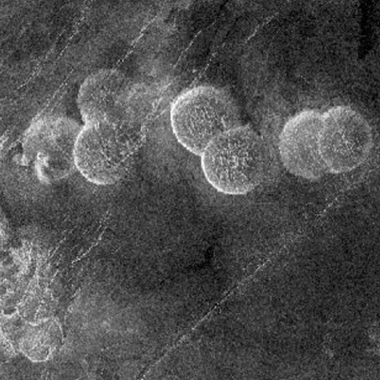
What are pancake domes?
viscous lava (more SiO2)
steep sides, cool skin forms
inside cools and lava withdraws - fractures
Domical Hills (tholi)
shield like
25km wide, up to 750m high
Alpha region
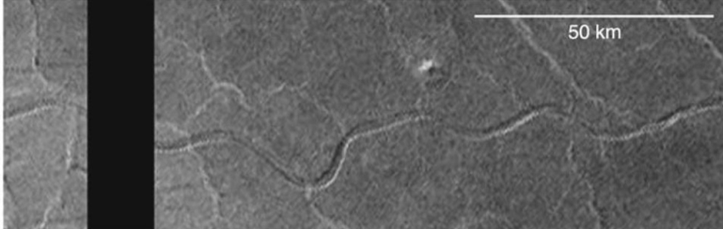
What are canali?
lava flows into channels
thermally eroded down into surrounding lava field
similar to Lunar Rilles
Runny, low viscosity
How to test for volcanism?
seismometer landing
thermal spectromeyter
land on lava flow
look for themal anomalies
detect sulfur
look through clouds for hotter areas
Nocae and Coronae
volcano tectonic interaction
200 on venus
range from 60-1000km
plume heads: form over upwellings in mantle of venus - uplifted, circular, extensional faulting
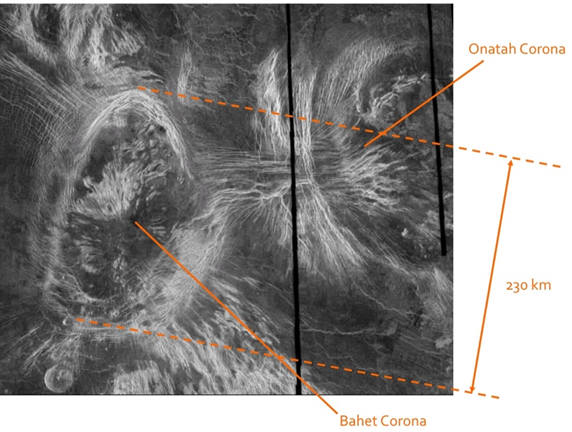
What are Coronae?
active volcano sites on venus
ring-like structures around some could indicate activity
of 133, 37 active in past 2-3Mya
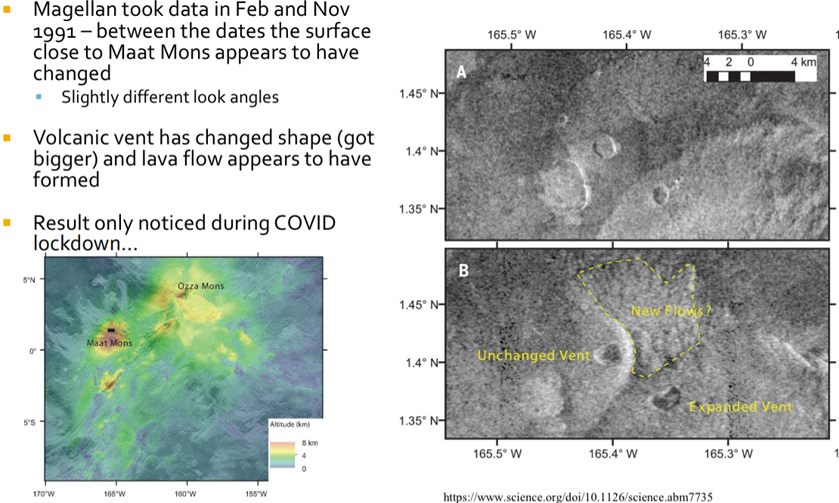
When have new lava flows been detected?
Magellan feb and nov 1991
surface appears to have changed
volcanic vent changed shape
lava flow formed
venus summary
Habitability on Venus?
need nutrients, water, pressure, temp, ph
what do models suggest about water on venus?
DID have stable surface ocean - oldest areas may have minerals present for water - sedimentary rocks - biosignatures
DID NOT have oceans - climate modelling
Life in Clouds?
test:
observations from earth using mm wavelengths of light
phosphene as biomarker in atmosphere
evidence of potential absorbtion where phosphene absorbs light
argument
scientists prove/disprove
Why is there a new era of Venus exploration?
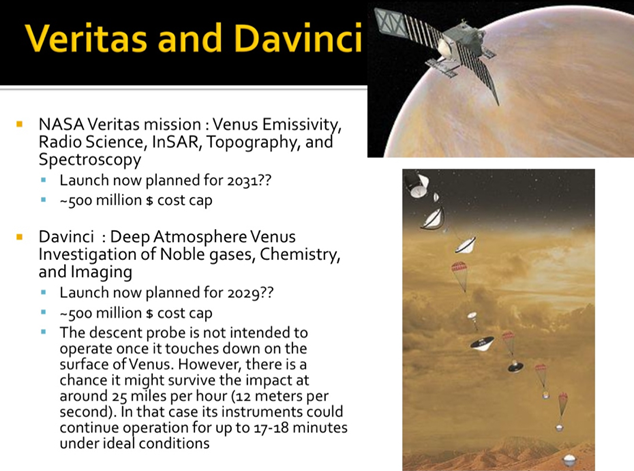
3 new missions
EnVision: 2031 launch, 6 year cycle
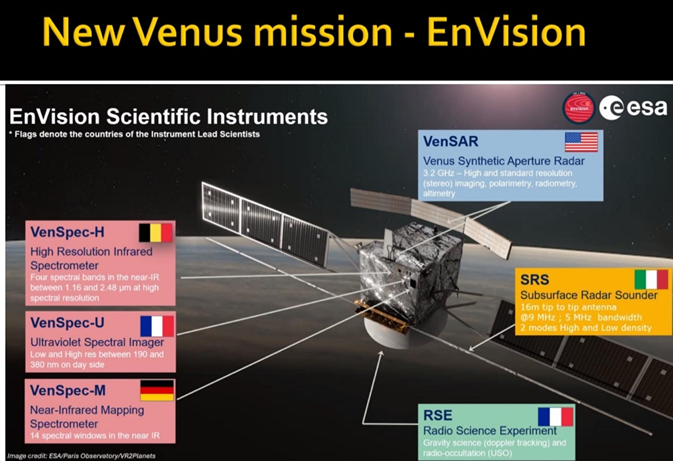
Veritas and Davinci
 Note
Note  Flashcards (81)