Modern History: Exam 2
 Studied by 0 people
 Call Kai
 Learn
Learn Practice Test
 Spaced Repetition
 Match
Match Flashcards
 Knowt Play
1/45

There's no tags or description
Looks like no tags are added yet.
Name | Mastery | Learn | Test | Matching | Spaced | Call with Kai |
|---|
No analytics yet
Send a link to your students to track their progress
46 Terms
What is a revolution?
Revolution- rapid and significant change class, religion, or politics in a society
Does not necessarily require wars or violence
Ex: Digital revolution (transitioning from analog to digital technology)
Requires mass participation and mass organization
Does not necessarily result in success
Ex: U.S. civil war where Southern states lost
The American Revolution vs. Revolutionary War
The American Revolution is different from the Revolutionary War
Revolutionary War was one component of the American Revolution
The American Revolution was a mass movement by colonists in British North America that wanted to establish their identity and independence
Describe the government in British North America. Who was the Royal Governor and Royal Council. Describe proprietary government.
The Royal government is technically at the top of the hierarchy
Was present in most colonies, BUT not EVERY single one
The main goal of the royal government was to ensure that the British Board of Trade and the Crown's policies are enforced
The Royal Governor was appointed in colonies to ensure that the King's interest was implemented
Could also veto any bill by colonial legislatures
The Royal Council was appointed by the royal governor to serve as his advisors
This was a way for the royal governor to by the Royal Council's loyalty to maintain control over the lives of everyday people
Proprietary government is where men were granted a whole colony and had authority to set up their own government
What are general assemblies?
Popularly elected legislatures, also known as general assemblies were able to draft and pass colonial laws
These laws included local taxes, Native American relations, voting rights, voting districts, etc.
General assemblies were dominated by colonial oligarchs
These oligarchs consisted of elite men in major cities, like Boston
Describe politics during the colonial period.
Elections could become heated and contested
There were proto-political parties
Came about due to shared economic or regional interest
There were no established political parties, like Democrats or Republicans
Except in Pennsylvania where they had more established political factions
There were more "freeholders" in the colonies than in England
Freeholders were people with voting rights (typically white men)
Who was really “in charge” in government or held the most power during the colonial period?
Colonial assemblies became increasingly more powerful
They paid the royal governor his salary
Royal governors were frustrated as legislatures were reluctant to pass unpopular laws that the Crown favored
Assemblies were very protective of their autonomy
Disagreements emerged over colonial assemblies' rank within Great Britian's political hierarchy
At this point, colonial assemblies were considered beneath any form of British government; however, it became more widely believed that they were at the same rank as Parliament
Were the colonists more free or politically advanced than other regions, like in England and Scotland?
Colonists in British North America were more freer than their peers in England and Scotland
Colonists in British North America were more politically advanced
What is the British Board of Trade?
The Board of Trade controlled trade coming in and out of Britain as well as the Caribbean
They were also creators of unpopular taxes like the tea tax, etc.
How did the Crown view British North America in terms of the trading market?
The general view of British North America in the perspective of the Crown was that it was a source of raw goods and served as a vital market for British manufacturers
Britain believed they should have first dips on tobacco (Virginia), sugar (Caribbean), and any other goods
The colonists were only able to buy things made from these raw goods, like clothes
What was the primary goal of the Navigation Acts? Give an example.
Ensured that the British colonies benefited primarily England/Britain
The Original Navigation Act (1651)- passed by Parliament that ensured that colonial goods were transported only in English-owned vessels (boats)
There were also additional laws passed that hurt colonial merchants by placing restrictions on colonial trade
Examples…
The Hat Act was passed so the British people could dominate the hat industry over New England's
Molasses Act- implemented a tax on molasses imported from non-British colonies
Describe the economy of New England during the American Revolution.
NEW ENGLAND
Freight carrying- ships that charged for the transportation of goods from one place to another
Included Caribbean sugar and enslaved West Africans
Domestic trade consisted of rum, sugar, flour, and shoes
Much of these goods was sold in New England, but also the South
Exports of fish, wood, whale products, and fish all went so specific places that the British Crown would allow the colonists to sell
Describe the economy of Mid-Atlantic during the American Revolution.
MID-ATLANTIC
Major ports were in New York and Philadelphia
Had a balanced economy
Very involved in freight services
Grain was the central export to the Caribbean, Southern Europe and the Southern colonies
Describe the economy of South during the American Revolution.
SOUTH
Tobacco was a major cash crop still in Virginia
All of this tobacco by law went to Great Britain
A lot of grain was also made in Virginia and exported to Europe and the Caribbean
South Carolina was still producing rice and also indigo
The Caribbean made much of the money for the British Empire when compared to British North America
Describe population levels in British North America. What caused this? Which colony was the most populous?
During the mid-18th century, population drastically increased
This was caused by…
A natural increase
Immigration (German-speakers from Rhineland and the Scots-Irish from Northern Ireland)
Increase in enslaved Africans
Viriginia was the most populous, followed by Pennsylvania and Massachusetts
Who fueled the Westward expansion? What was a consequence?
During the 18th century, colonies from Pennsylvania to South Carolina expanded westward
This Westward expansion was fueled by immigrant farmers (Germans and Scots-Irish)
This led to major divides culturally and politically
Western Counties were more rural with a small trading town, while eastern counties, were urban with surrounding farms
What was the Anglicization Paradigm?
Between 1740-1765, British colonists were very proud that they were British
They wanted to demonstrate that the colonies were fully developed British societies
Every colony had its own separate identity, but united because they were all British
British goods (like tea) played a major role in them celebrate their "Britishness" and colonists even loved the monarchy
How did the French & Indian War start (Seven Years’ War)? What is Fort Duquesne? Who won?
Both Britain and France wanted the Ohio country
The French built Fort Duquesne
The British sent George Washington to force the French to abandon Fort Duquesne
One of Washington's allies, an Iroquoian chief, started the fight with the French
Ben Franklin and other allies wanted to unite the colonies for defense, but this effort failed because each colony had its own identity and were not a collective other than they were all British (Anglicization Paradigm)
The war initially went very poorly for Britain, but eventually things began to turn around
In the Battle of Quebec, the British began to control the war and ended America's theater in the war
What is William Pitt’s role in the French and Indian War? What were some effects of the Seven Years’ War?
William Pitt (prime minister of Great Britain) put Britain into immense debt because he wanted to win the war
Effects…
Immigrant families, especially Germans and Scot-Irish, were decimated by Native raids
Built resentment amongst western counties against Eastern leadership
This built racism against natives
Natives in Ohio country refused to acknowledge British authority
Pontiac's War (1763)- a campaign against immigrant communities (Germans and Scot-Irish) in western counties where dozens were killed
Broke out after French and Indian War
Who were the Paxton Boys (1764)?
Angered at Quaker pacifists, a group of mainly Scots-Irish immigrants took up arms against Pennsylvania government and killed innocent Native people
They blamed the Quakers for failing to respond to Native raids that hurt immigrant families
The Paxtons also targeted Christian natives, Moravian Indians, because they believed they were also involved in Pontiac's war
The Moravian Indians were protected by the Quakers
What was the Regulator Movement?
The Paxtons inspired other small rebellions in Virginia
The Regulator Movement- angry colonists rising up against the royal government in the colonies (local government), not the Crown
What was a common complaint amongst the Westerners during the 1760s?
Upset at the lack of representation they had at local assemblies
Western immigrants were upset about their lack of representation in government
They made effort to give less representation to western counties
Describe strategic districting.
Strategic districting- when politicians intentionally draw county lines to where it would work in their favor and disperse votes for the opposing party
Modern day gerrymandering
What were some plans that Great Britain had for America after the Seven Years’ War?
The Board of Trade and Parliament reacted by deciding to take a more proactive approach to North America
Aimed to make Americans repay enormous war debts
Sought to gain more revenue through colonial taxation (passing Acts)
They wanted to decide where and how British North America expanded (Royal Proclamation of 1763)
What is the Royal Proclamation of 1763? Was it effective?
The Royal Proclamation of 1763- prohibited expansion westward of the Appalachian Mountains to mediate relations with the Native Americans
Incentivized settlement in Nova Scotia and Florida
They wanted to turn Florida into a major sugar producer
Western counties and speculators were upset by the Proclamation Line
They continued to move and purchase land beyond the line and moved westward
What is the Currency Act (1764)? List and describe other acts passed by Parliament that angered the colonists?
Sugar Act (1764)- intended to raise revenues to pay for the running the colonies and their defenses
Cut sugar tax in half; however, there was stricter enforcement and harsher treatment of smugglers
Currency Act (1764)- colonial merchants could not pay debts with colonial currency
Also limited the production of colonial paper money
Stamp Act (1765)- tax on paper (even cards)
Stamp taxes could NOT be paid in colonial currency, ONLY British sterling
Townshend Acts (1767-68)- series of laws meant to increase revenue for Great Britain and decrease smuggling
Implemented new taxes on glass, lead, paint, and tea
Ensured that colonial courts could not preside over cases involving smuggling or other violations
Tea Act (1773)- dictated that the East India Company could export directly to the colonies, instead of going to Great Britain first
This angered colonies because much of the tea going into the colonies was smuggled to avoid the tea tax
The East Indian Company sold tea cheaper than the smuggled tea!!!
Which act did the colonists first start protesting? Which state first protested the Stamp Act?
Colonists slowly protested these acts starting with the Sugar Act and eventually turned into a movement
Then, there were a series of Stamp Act protests
Virginia was the first state to show their dissatisfaction with the Stamp Act
People refused to follow the Stamp Act and did not use items that require stamped paper and stopped importing British goods
Franklin was called by Parliament to explain why the colonists were so upset about the Stamp Act
What was the Declaratory Act?
Result: Parliament repeals the Stamp Act and passed instead the Declaratory Act where Great Britain had right to tax any colony as they see fit
Which state first reacted to the Tea Act? What is the Boston Tea Party?
The reactions to the Tea Act were not only central in Boston, but also in New York and Pennsylvania
South Carolina started their first destruction of tea where locked it away and let it rot
A few weeks after this, the Boston Tea Party occurred
The colonists dressed as natives, and dumped all the tea from the Dartmouth ship
Dressed as natives made it apparent that "America" was doing this, but also to conceal their individual identities
A group in Philadelphia forced a tea ship to return to England
New Yorkers dumped tea from a ship into the Hudson River
What happened as a result of the Boston Tea Party? What is the Boston Port Act and the Committee of Correspondence?
Britain increased their military presence in Boston
The Boston Port Act- closure of the Boston Harbor in response to the Boston Tea Party
The Committee of Correspondence- it was a way for activists in Boston to communicate with people elsewhere in the colonies
Called for the creation of the Continental Congress and also they decided how to react to the Boston Port Act
The First Continental Congress passed a series of declarations and resolves
Americans began targeting the Boston Port Act and other laws that they disagreed with
First vs. Second Continental Congress
The First Continental Congress issued resolves and wanted to decide a new course for the colonies
The Second Continental Congress behaved as an extra legal semi-national government
Established themselves as the main authority in British North America
How did radical revolutionaries ensure that those who disagreed with them still followed the rules after winning the revolution?
Establishment of the committee system
The development of the Committee of Correspondence ensured that there was open communication between colonies and issued propaganda during the revolutionary movement
Committee of Inspection main goal was to ensure no one was importing or selling British goods
Public shaming was a common form of punishment for violators
Committees of Safety was the de facto local government of each county in each colony
They would pass wartime laws and function as basic courts
Describe the importance of Patrick Henry & Thomas Gage to the revolutionary cause.
Patrick Henry stated that the colonies are already at war and Boston was already occupied by British soldiers
He delivered his "Give Me Liberty or Give Me Death" speech
Thomas Gage, royal governor of Massachusetts, received orders from British forces to arrest revolutionary leadership, specifically John Adams and John Hancock
In response to this, Paule Revere, William Dawes, and Samuel Prescott were sent out to warn those who may be targeted
What events led up to escalation of the American Revolution?
The Crown declared Massachusetts in a state of rebellion due to the Massachusetts government assembling which was prohibited by the Crown
The Crown did not allow any form of assembly
The Battle of Lexington and Concord occurred (April 1775)
The First Continental Congress issued resolves and wanted to decide a new course for the colonies
The Second Continental Congress behaved as an extra legal semi-national government
Established themselves as the main authority in British North America
Encouraged all colonies to remove any remaining royal government and establish their own independent government
There was the creation of the Continental Army and George Washington was put in command
Radicals vs. Moderates in the American Revolution
There was a series of debates between moderates and radicals later in 1775
Moderates believed that the King was misled by his advisors and proposed the Olive Branch Petition
Radicals believed that they were already at war
King George refuses to acknowledge the Olive Branch Petition and declared all the colonies in a set of a revolution
What was Common Sense? What was its importance?
Common Sense was published by Thomas Paine in 1776
Wanted a revolution and targeted the Crown instead of just blaming British Parliament
Pushed many colonists to support the Radicals who wanted to separate from Great Britain
Describe the timeline of the Declaration of Independence
July 2, 1776, Congress voted on independence which passed
Only July 4, 1776, Congress accepts Jefferson's draft of the formal Declaration of Independence
On August 2 the document was signed by members of the Continental Congress
Describe what colonial American society looked like in terms of social class.
70% of white colonists were farmers
Elites accounted for 3-4% of the population
Lots of middling sorts, though, who were hyper-literate
These people had enough income to by British goods, and were also well informed
This was the target population to convince people to join the revolutionary cause because they were not necessarily hurt from prohibition of imports and also well read
Almost half of the population was under the age of 16
Give an estimate of the amount of people that supported, disapproved, or were undecided about the revolution
Between 40-45% of people supported the revolution (Patriots)
Loyalists, people who supported Great Britain, were 15-20% of the population
People who did not want any part or who could not decide were 35-45% of the population
Describe the types of punishment that people received for not supporting the revolutionary cause. What happened to James Rivington and Thomas Brown?
Public admission of guilt was a common form of punishment that would often result in non-violence
Committees of Safety targeted estates of men who refused to cooperate
Some forms of violence include destroying property of violators, such as that of James Rivington, who was a loyalist
Thomas Brown was also victim to violence who was almost burned by a fired and tarred and feathered to force him to sign a pledge of allegiance to the Patriots
Where was revolutionary propaganda present? What was usually publicized?
Was frequently published in newspapers and broadsides (one large sheet printed on one side for announcements)
There was a lot of freedom rhetoric published
Propaganda was also publicizing Great Britain's use of "proxy armies"
Proxy armies involved the hiring of German soldiers and Natives
Upset colonists because the British were hiring outsiders to fight for them. The British weren't even directly fighting the colonists.
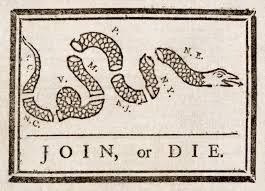
Why did Ben Franklin believe that the rattlesnake was a good American symbol?
Ben Franklin believed the rattlesnake was a good symbol for a America because it signified solidarity and each parts of the animal are distinctive yet together are firmly united
Individual parts of a whole are coming together which was important to America's identity
Describe the “Progressive” School in terms of historiography.
The "Progressive School"- these historians argued that a ruling class of merchants and landholders rebelled because British taxes and regulations were harming their businesses
Some people wrote that the American Revolution emerged from merchants acting in their own economic self-interest
The progressives believe that everything was about class warfare
Colonial businessmen (ruling merchants) and poorer classes (farmers/artisans)
Resulted in an era wanting to reform parts of American society, such as closing wealth gaps
Describe the Neo-Whigs in terms of historiography.
Neo-Whigs- group of historians that were more focused on ideology (forwarded ideas of the Whigs)
Ideology can refer to the science of ideas (positioning the revolution as a philosophical one focused on the exchange of ideas) OR it can be a set of doctrines or beliefs (positions that the revolution was based on how governments should and should not operate)
Edmund Morgan wrote about the Stamp Act in a book pertaining from a ideological perspective
His major point is that progressives were telling us to not take revolutionaries for their word; however, he thinks that probably the revolutionaries meant exactly what they said
Who were the Whigs?
Whigs- a British political party that consisted of politicians that believed in privacy in the House of Commons and monarchical systems were a form of tyranny
They favored the House of Commons because it checked the power of the Crown
The Ideological Origins of the American Revolution argued that revolutionaries did not act out of self-interest, but out of paranoia and revolutionaries believed that the British government was inherently corrupt
T.H Breen vs. Pauline Meier
Pauline Maier- she was a Neo-Whig historian that focused on how orderly the American Revolution was rather than its disorder
She believed it was structurally organized
T.H Breen- published a book that argued the opposite of Maier
He saw all hallmarks of a insurgency (violent armed rebellion carried out by small forces of armed men)
Insurgencies commonly use terrorism as a tactic
What is insurgency?
He saw all hallmarks of a insurgency (violent armed rebellion carried out by small forces of armed men)
Insurgencies commonly use terrorism as a tactic

